Tag Archives: Blog

News: 3 adtech and martech VCs see major opportunities in privacy and compliance

There seems to be plenty of activity in adtech and martech, particularly across the commerce ecosystem with tools that support monetization for small merchants.

Between a pandemic, the emergence of new media business models and upcoming privacy changes in iOS, this might seem like a terrible time to get into digital advertising and marketing. Nevertheless, we spoke to top venture capitalists who said they still see investment opportunities.

When we surveyed adtech and martech VCs last summer, we focused on the impact of COVID-19. This time, we asked them to update us on whether deal flow has recovered (MathCapital’s Eric Franchi said the last two quarters have been some of the firm’s most active yet) and to look ahead at the possibility of additional regulation and the most promising new tools.

Regulation, they agreed, presents both a risk and an opportunity. For example, Christine Tsai of 500 Startups noted that as advertisers face more restrictions, “The easiest way for marketers to comply with these rules will likely be through software.” And of course, we asked about what they’re looking for in their next investment. You can read their full responses below.

Here’s who we surveyed:


Digital advertising spend seems well on its way to recovering from the initial downturn during the pandemic. Are you seeing the same with adtech and martech deal flow?

Eric Franchi: Absolutely. Q3 and Q4 2020 were amongst the most active we’ve had in three years in terms of new investments and follow-ons. This seems to mirror the shape of many of our portfolio companies’ 2020 commercial results.

Scott Friend: There seems to be plenty of activity in adtech and martech, particularly across the commerce ecosystem with tools that support monetization for small merchants. Attentive (one of ours) continues to be a standout. I’m also seeing what appears to be a resurgence in digital OOH activity … maybe now’s its time?

How much time are you spending looking at adtech and martech startups right now? Are you more focused on one or the other?

News: SmartHop raises a $12M Series A to ease trucking logistics

If you are a founder and launched a startup last February of 2020 just before the pandemic hit, then you may have felt like you were living the ultimate business nightmare. But if your company serves to stabilize the supply-chain business, then, in fact, you may have hit the ground running at just the right

If you are a founder and launched a startup last February of 2020 just before the pandemic hit, then you may have felt like you were living the ultimate business nightmare. But if your company serves to stabilize the supply-chain business, then, in fact, you may have hit the ground running at just the right time. So is the story of Miami-based startup SmartHop, an AI-powered app that helps interstate truckers make their routes more efficient and lucrative, while removing a lot of the administrative hassle for drivers.

SmartHop announced today that it raised $12 million in a Series A round, bringing the company’s total funding to date to $16.5 million. The round was led by Union Square Ventures, whose past investments include Stripe, Twitter, Coinbase, Etsy, MeetUp, SkillShare and Duolingo, among others.

SmartHop takes a complex problem with lots of moving parts and offers a simple solution. To understand the gap in the market, you need to understand the hurdles that interstate truck drivers face. And since Garcia is a former truck driver himself (he was a pet food delivery driver while in college in his native Venezuela and scaled his business to a 500-person trucking company), he has a good grasp on the pain points and intricacies of the industry.

“I lived with my parents in Caracas and I asked my parents to empty their garage and that was my first distribution center,” said Guillermo Garcia, CEO and co-founder of SmartHop, of his experience starting his first trucking company. “The trucking market moves like the stock market,” he added, explaining that it’s ever-changing and therefore impossible to predict.

According to a 2019 study by The American Trucking Associations, the trucking industry is a $791.7 billion industry, representing 80.4% of the nation’s freight bill. Additionally, 91% of trucking companies are small businesses, meaning they have six trucks or fewer. Many are owner-operators. Traditionally, to get loads, truckers had to scour apps or websites of about 15,000 different brokers. It was a total uncoordinated, inefficient, free-for-all approach that left drivers unable to predict their monthly revenues, among many other things.

This is how SmartHop helps those drivers. Let’s say Bob lives in Atlanta and he has a single truck; he’s an owner-operator. He has a load that’s going to take him all the way to Seattle, and it’s going to take him several days to get there. Financially, it doesn’t make a lot of sense for Bob to start the trip without knowing what else he can pick up along the way, or if Seattle should really be his turnaround point. Maybe there’s not a lot of freight leaving Seattle these days, but there’s a lot going out of Chicago. There’s no way for Bob to know these things.

Before SmartHop, Bob had to pick up the phone, call brokers and make deals. Most of this work was done while on the road and Bob had no foresight into his next couple of weeks of work – or life, for that matter.

With SmartHop, Bob can enter details about his truck’s capacity, cities he doesn’t like driving through and other details, and SmartHop will recommend loads to him that optimize his profits and travel time. Think of it like when you’re driving and using Waze and it asks if you want to drive to Starbucks because it’s a couple of minutes out of the way. All you have to do is accept, and Waze does the rest. SmartHop operates similarly.

SmartHop technology giving a driver three load booking options, which the platform’s tech will negotiate and book (image: SmartHop).

“Some truckers don’t like to drive through New York City because there are a lot of tolls, bridges and traffic,” said Garcia, “So it doesn’t matter the value of the load, he’s just not going to pick it up,” he added.

But if you really want to go full autopilot, SmartHop can take over and autonomously book the loads for you – all you have to do is drive and take care of the truck, Garcia said.

The more a trucker uses SmartHop, the more the company learns the driver’s preferences and makes better suggestions or bookings.

SmartHop charges a transaction fee of 3% of the gross sale. “Our incentives are very aligned, so when they make money, we make money, and when they are taking days off, we don’t charge anything,” said Garcia.

“[Union Square Ventures] is focused on businesses that utilize technology to build networks and broaden access,” said Rebecca Kaden, managing partner at Union Square Ventures. “We were particularly excited to meet Guillermo and the SmartHop team, because that’s exactly what they are doing — software empowers the owner-operator trucking company to optimize their business and compete with players far bigger in number.”

Ryder, the Miami-based logistics company, also participated in the round through its new venture arm, RyderVenture. SmartHop is its first investment. Equal Ventures and Greycroft, from SmartHop’s seed round, also invested.

“A lot of startups have a lot of good technology and no one to test it on,” said Karen Jones, Ryder executive VP, CMO and head of new product innovation. “And the software doesn’t go very far if there is no one in the real world to try it.” Prior to the RyderVenture investment, Ryder partnered with SmartHop to test the product on its own trucks, of which they have 275,000.

The company, which was part of the 2019 New York City Techstars cohort, currently has 50 full-time employees and 100 trucks using the product. Each truck, on average, grosses between $10K – $15K per month.

The latest funding round will go toward product development as well as embedded financial products. Unlike big companies, smaller trucking companies don’t have the leverage to negotiate better rates on fuel or insurance, but with SmartHop’s volume of drivers, it can change that. Additionally, they’ll be offering to factor invoices, so drivers can sell a 45-day invoice and get paid within just 24 hours by SmartHop. “Because we have so much data, we become the ultimate underwriter so I’m able to underwrite in advance, and much smarter,” said Garcia.

News: Ramp secures $150M debt line from Goldman Sachs as the corporate spend market grows

This morning Ramp, a startup that competes in the corporate spend market, announced that it has secured a $150 million debt facility with Goldman Sachs. Ramp previously raised a $30 million Series B in late December 2020, after raising a $23 million Series A earlier in the same year. TechCrunch spoke with Ramp co-founder and

This morning Ramp, a startup that competes in the corporate spend market, announced that it has secured a $150 million debt facility with Goldman Sachs. Ramp previously raised a $30 million Series B in late December 2020, after raising a $23 million Series A earlier in the same year.

TechCrunch spoke with Ramp co-founder and CEO Eric Glyman about its new credit access. Glyman said that until it was secured, his company had previously financed customer corporate spend off its own balance sheet. That effort would have become more difficult and inefficient as Ramp secured more customers, something that its rapid-fire fundraising implies that it has.

Its larger startup category is growing, as TechCrunch has reported. Ramp, Brex, Airbase, Divvy, Teampay and others compete for the custom of companies’ spend; the startups provide credit to businesses usually on a charge-card basis, collecting interchange revenues and, in some cases, software incomes as well.

Ramp intends on using its new credit facility to boost its product work, Glyman said, noting that its new access to revolving debt will free up capital that it can invest into software.

So far Ramp’s model appears to be working. The company told TechCrunch that it saw 47% growth from November to December, a figure that measures not revenue but transaction volume. However, as Ramp monetizes off of transaction volume, we can infer that its revenue scaled rapidly during the same period.

The tingling feeling you have on the back of your neck is correct; Ramp is now big enough to share harder numbers than mere percentage growth metrics. We do know that the company reached the $100 million spend threshold — an aggregate metric, not a rate — in the fall of 2020 after being founded around 18 months earlier. From there you can math your way to an estimate of the company’s current spend base.

Ramp is betting its software package, wrapped around corporate cards, on a focus on savings; the startup helps customers root out repeat payments and other mal expense.

It has competition. Ramp’s rivals are also layering software on top of corporate card offerings. A question that TechCrunch has raised is whether all players in the maturing corporate spend space will wind up charging for their software layer on top of their credit offerings (TeamPay, for example, reported both software revenues and transaction volume results to TechCrunch.)

Corporate spend TAM would rise if so.

To grok what’s going on in the corporate spend management space, recall the changes in the world of venture capital over the last decade or so. In olden times, venture firms had money to invest in startups. There wasn’t much by current standards, and it was concentrated in only a few hands. It was rare. So, venture capitalists were able to make you come to them, charge more equity per dollar of investment and not offer modern-level services. Today, however, in venture-land money is plentiful, so investing terms are more generous. And, on top of merely offering access to capital, your local VC probably wants to help startups hire, and more.

Corporate spend is the same. Offering credit and corporate cards is now barely table stakes; the value of the software on top of the revolving charge card is the competition.

Let’s see how fast Ramp can grow its customer base, spend and revenue, while scaling its software. And how soon one of its rivals tries to one-up its latest with news of its own. This is a fun space to watch.

News: NeuReality raises $8M for its novel AI inferencing platform

NeuReality, an Israeli AI hardware startup that is working on a novel approach to improving AI inferencing platforms by doing away with the current CPU-centric model, is coming out of stealth today and announcing an $8 million seed round. The group of investors includes Cardumen Capital, crowdfunding platform OurCrowd and Varana Capital. The company also

NeuReality, an Israeli AI hardware startup that is working on a novel approach to improving AI inferencing platforms by doing away with the current CPU-centric model, is coming out of stealth today and announcing an $8 million seed round. The group of investors includes Cardumen Capital, crowdfunding platform OurCrowd and Varana Capital. The company also today announced that Naveen Rao, the GM of Intel’s AI Products Group and former CEO of Nervana System (which Intel acquired), is joining the company’s board of directors.

The founding team, CEO Moshe Tanach, VP of operations Tzvika Shmueli and VP for very large-scale integration Yossi Kasus, has a background in AI but also networking, with Tanach spending time at Marvell and Intel, for example, Shmueli at Mellanox and Habana Labs and Kasus at Mellanox, too.

It’s the team’s networking and storage knowledge and seeing how that industry built its hardware that now informs how NeuReality is thinking about building its own AI platform. In an interview ahead of today’s announcement, Tanach wasn’t quite ready to delve into the details of NeuReality’s architecture, but the general idea here is to build a platform that will allow hyperscale clouds and other data center owners to offload their ML models to a far more performant architecture where the CPU doesn’t become a bottleneck.

“We kind of combined a lot of techniques that we brought from the storage and networking world,” Tanach explained. Think about traffic manager and what it does for Ethernet packets. And we applied it to AI. So we created a bottom-up approach that is built around the engine that you need. Where today, they’re using neural net processors — we have the next evolution of AI computer engines.”

As Tanach noted, the result of this should be a system that — in real-world use cases that include not just synthetic benchmarks of the accelerator but also the rest of the overall architecture — offer 15 times the performance per dollar for basic deep learning offloading and far more once you offload the entire pipeline to its platform.

NeuReality is still in its early days, and while the team has working prototypes now, based on a Xilinx FPGA, it expects to be able to offer its fully custom hardware solution early next year. As its customers, NeuReality is targeting the large cloud providers, but also data center and software solutions providers like WWT to help them provide specific vertical solutions for problems like fraud detection, as well as OEMs and ODMs.

Tanach tells me that the team’s work with Xilinx created the groundwork for its custom chip — though building that (and likely on an advanced node), will cost money, so he’s already thinking about raising the next round of funding for that.

“We are already consuming huge amounts of AI in our day-to-day life and it will continue to grow exponentially over the next five years,” said Tanach. “In order to make AI accessible to every organization, we must build affordable infrastructure that will allow innovators to deploy AI-based applications that cure diseases, improve public safety and enhance education. NeuReality’s technology will support that growth while making the world smarter, cleaner and safer for everyone. The cost of the AI infrastructure and AIaaS will no longer be limiting factors.”

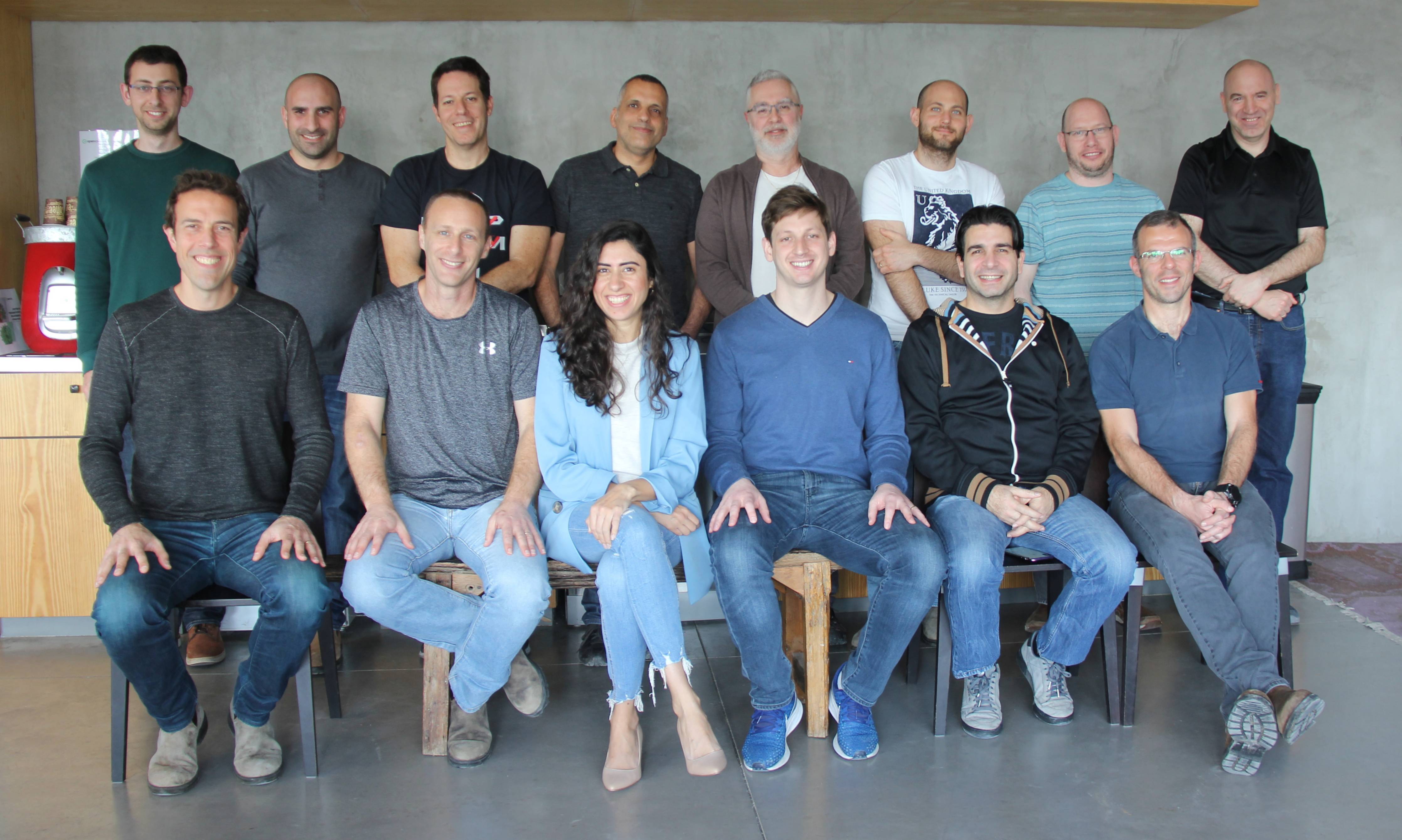
NeuReality team. Photo credit - NeuReality

Image Credits: NeuReality

News: Insight launches a customizable iOS browser with support for extensions

A new startup called Insight is bringing web browser extensions to the iPhone, with the goal of delivering a better web browsing experience by blocking ads and trackers, flagging fake reviews on Amazon, offering SEO-free search experiences, or even calling out media bias and misinformation, among other things. These features are made available by way

A new startup called Insight is bringing web browser extensions to the iPhone, with the goal of delivering a better web browsing experience by blocking ads and trackers, flagging fake reviews on Amazon, offering SEO-free search experiences, or even calling out media bias and misinformation, among other things.

These features are made available by way of Insight’s extensions, some of which are suggested during the app’s first launch. Others, meanwhile, can be browsed inside the app, where they’re organized into categories like Search, Shopping, Cooking & Dining, News, Health, and Reading. The browser can also make suggestions of extensions to try, based on your browsing behavior, if you opt into that experience.

One extension, for example, can block ads on Google, Amazon and in your social media feeds, like Twitter, Facebook, and Reddit. Another works with ReviewMeta to detect fake reviews on Amazon.com and lets you set price alerts with help from CamelCamelCamel’s price tracker. Others let you do things like enable dark mode experiences on sites that don’t offer the feature, check for bias in news via Media Bias Fact Check, or watch videos in picture-in-picture mode on YouTube and other video sites.

Image Credits: Insight

In total, the company has around one hundred extensions already created, but it offers tools that allow anyone — even non-developers — to create their own, too.

Using a simple interface similar to something like the iOS Shortcuts app, users can define the conditions for their extension using basic “if, then” logic. For example, “if I’m is on a page that matches this URL” or “is on this list of domains,” “then also show this other page.”

To make these sorts of features work on mobile took some creativity. Apple restricts what developers are able to do with WKWebView — which means a mobile browser can’t offer the same sort of extensions as you can find on the desktop web.

To work around this problem, Insight created a sort of “sub-tab” workflow where you navigate using swiping gestures. For example, when online shopping, you could view the product you’re interested in, then swipe over to see the available coupons, the trusted product reviews, or to comparison shop across other sites.

When looking for a recipe, you could limit searches to only a list of your favorite food blogs. And because you can use extensions together, you could also block the ads on the food blogs and then swipe over to view the site in a “reader mode.”

Image Credits: Insight

How this all works is up to you. It’s dependent on what extensions you have installed and enabled, and how they’re configured.

The idea for Insight actually arose from an earlier effort from a startup focused on building a custom search engine for doctors. The team had participated in Y Combinator’s winter 2019 session, where they developed a search engine that would filter out the junk medical content and other pages aimed at consumers from the web, in order to direct doctors to sources they could trust.

But things changed when the COVID-19 pandemic hit.

“A lot of the users we had been working with, up to that point, were medical students. And when the pandemic came to the U.S., medical students and medical schools were shut down and a lot of the students were sent home,” explains Insight co-founder and CEO Archa Jain. “Our user base disappeared overnight,” she said.

The team decided to refocus their efforts on another idea they had been tossing around internally for some time.

“We realized that the problem we were solving isn’t medicine-specific. The fundamental problem was that the internet is just not one-size-fits-all. So we thought, what if everyone could have this lability to customize their browser experience the way we’re doing for this one population? They could really mould their browser their own needs,” Jain said.

That’s how Insight came to life.

Insight was built by a small team, including Jain, whose engineering background includes time at Google, Uber and Calico, and fellow co-founders Abhinav Sharma, previously of Quora, Mozilla Labs, and Facebook, and Shubhi Nigam, previously a PM at Newgen Software.

The company is backed by a seed round of $1.5 million from Y Combinator, Heartcore Capital and Altair Capital.

Longer-term, Insight intends to layer on a pro version of the service on top of the existing offering available today. It also aims to bring the browser to the desktop, where it will work as an extension itself.

Since launching into beta testing in December 2020, the app’s top 10% most active users have been averaging over 1,000 pageviews on Insight per day, which indicates some loyal customers have perhaps shifted to using the app as their preferred mobile browser. Pre-launch, the app had also become the No. 1 most popular download for a time on Airport, an app store for beta products.

Insight is available today as a free download on the App Store.

News: TomoCredit raises $7M to help the cash rich and credit poor

It’s difficult to get credit if you don’t have credit. That’s the problem that startup TomoCredit is trying to solve. Co-founder and CEO Kristy Kim came up with the concept for the company after being rejected multiple times for an auto loan while in her early 20s. Kim, who immigrated to the U.S. from South

It’s difficult to get credit if you don’t have credit.

That’s the problem that startup TomoCredit is trying to solve. Co-founder and CEO Kristy Kim came up with the concept for the company after being rejected multiple times for an auto loan while in her early 20s.

Kim, who immigrated to the U.S. from South Korea with her family as a child, was disappointed that her lack of a credit history proved to be such an obstacle despite the fact she had a job “and positive cash flow.”

So she teamed up with Dmitry Kashlev, a Russian immigrant, in January of 2019 to create a solution for other foreign-born individuals and young adults facing similar credit challenges. That fall, the startup (short for Tomorrow’s Credit) was accepted into the Barclays Accelerator, powered by Techstars.

The San Francisco-based fintech offers a credit card aimed at helping first-time borrowers build credit history, based on their cash flow, rather than on their FICO or credit report ratings.

Today, Tomo announced a $7 million seed funding round that included participation from a slew of investors including KB Investment Inc. (KBIC) — a subsidiary of South Korean consumer bank, Kookmin Bank — along with Barclays, Knollwood Investment Advisory, BAM Ventures, Passport Capital, Ulu Ventures and Strong Ventures. 

Angel and individual investors also put money in the round, including: Backstage Capital founder Arlan Hamilton, ex-Venmo COO Michael Vaughan and James Kim, former head of finance at Tinder. 

More than 30 million young adults are considered “cash rich” but with limited credit histories, making their only option to use debit cards, according to the Consumer Financial Protection Bureau

TomoCredit is a credit card that operates with a debit card model that is issued by Community Federal Savings Bank, a member of the FDIC. Users make payments on a seven-day automatic payment schedule with no fees or APR applied. Credit limits average around $3,000, but can scale to a maximum of $10,000.  Borrowers can link to their investment accounts to increase their credit limits.  

“We set out to build something that wasn’t just more inclusive, but fundamentally different from existing consumer credit card offerings,” Kim said.

She emphasizes the card is not just for immigrants, but for anyone that is considered “no file or thin file” when it comes to credit history.

Getting rejected for the auto loan made Kim realize that in the U.S., “everything is really difficult without a credit score.”

“It doesn’t matter whether you have income or savings or not,” she said. “I thought it would be really nice if we could leverage different data sources, especially cash flow data, instead of credit history. We are living in 2021 and open banking is popular, so it’s easier to get access to open banking data. And we leverage your cash flow data to underwrite you.”

Another unique aspect of Tomo’s model, Kim believes, is that it makes money through merchant fees and not through the consumers who use its card. 

“Unlike incumbent credit card issuers, we aren’t incentivized by slapping fees on borrowers for making late payments — we make money as our cardholders spend — so we grow as you grow,” Kim added.

TomoCredit cards became available in late summer 2020.

“We didn’t expect much, to be honest, because it was our first launch and we didn’t do any marketing,” she recalls. “However, we are able to get over 300,000 people signing up, and then we are able to pre-approve half of them. Since then, we have been aggressively issuing cards.”

Demand for the company’s card skyrocketed last year after it “went viral” on YouTube and Reddit, Kim said.

“Right after we launch, we got huge jumps in traffic. We found out that many YouTubers were commenting and reviewing Tomo, and the comments were from people who were looking for our solution to build credit score fast and efficiently.”

Today, Tomo has over 10,000 active users and the company plans to issue cards to the remaining pre-approved applicants by this summer.

I was curious if Tomo had trouble convincing investors considering the risk it would be taking on. 

Kim acknowledged having to help them overcome the “emotional and psychological hurdle” of the risk involved with issuing a credit card to people with no credit history.

“I had to help them understand that the environment is changing,” she said. “When you look at the new generation of consumers, especially Gen Z and millennials, you will see that the majority of them have a thin file or no file at all. And that’s not their fault. People have different personal finance behavior than in the past, which makes it harder for traditional lenders to evaluate them.”

Backstage Capital founder Arlan Hamilton is one of the investors TomoCredit won over.

“I spend a lot of my time these days investing in and catalyzing products that right the wrongs that my family and so many others endured as I was growing up,” she wrote via email. “One of those themes is in establishing and maintaining good credit and having an alternative to predatory lending. Tomo Credit feels to me like it is tackling this in a hugely scalable, mainstream way.”

Mariquit Corcoran, group chief innovation officer at Barclays, said she was impressed by Kim’s “tenacity and passion” when she first presented her idea of solving “a real-life problem facing many people who have traditionally struggled to access credit and build a financial profile.”

I look forward to watching their growth and impact in changing the way an individual’s credit worthiness is determined,” she wrote via email.

Looking ahead, Tomo plans to use its new capital to triple its headcount of 15, mostly with the goal of hiring full stack and data engineers. Recently, it tapped a former LendingClub exec, Chaomei Chen, to serve as its acting chief risk officer. The startup also plans to use the money in part toward product development, such as adding more interactive features.

Tomo is not the only fintech with an alternative credit model. X1 Card sets limits based on your current and future income instead of your credit score. And, Grow Credit is a startup that launched in 2019 to help customers build out their credit scores by providing a credit line for online subscriptions like Spotify and Netflix.


News: Podz turns podcasts into a personalized audio newsfeed

Podz is the latest startup trying to solve the problem of podcast discovery, with backing from investors like M13, Katie Couric and Paris Hilton. “Even though podcasts have gained a lot of momentum — there are 100 million folks in the U.S. who listen to podcasts — we still haven’t seen that crossover behavior, where

Podz is the latest startup trying to solve the problem of podcast discovery, with backing from investors like M13, Katie Couric and Paris Hilton.

“Even though podcasts have gained a lot of momentum — there are 100 million folks in the U.S. who listen to podcasts — we still haven’t seen that crossover behavior, where audio becomes a part of everyday lives,” CEO Doug Imbruce argued. “We think that’s because the experience experience discovering and consuming podcasts is ancient. It literally feels like browsing the web in 1997.”

Imbruce’s name may be familiar to longtime TechCrunch readers, as he was previously the chief executive at Qwiki, which won the Startup Battlefield at TechCrunch Disrupt in 2010 (Cloudflare was one of the runners up), then acquired by Yahoo a few years later.

By Imbruce’s own admission, Qwiki never quite lived up to his hopes for remaking online media consumption, but he said that its vision of “machine-created media” offered “a taste of the future” — a future that he’s hoping to help usher in with Podz.

The problem that the startup aims to solve is pretty straightforward. Since podcasts often consist of 30 or 60 minutes or more of spoken-word audio, they’re difficult to browse, and when you discover new ones, it’s usually through word-of-mouth recommendations or clunky search tools.

While tools like Headliner makes it easier for podcasters to promote their content with short clips on social media, Podz automates that creation process and makes those clips the centerpiece of the listening experience.

Podz demo

Image Credits: Podz

In the Podz mobile app, users browse what the startup calls an “the first audio newsfeed,” consisting of 60-second podcast clips. These clips are designed to highlight the best moment from each podcast, making it easier to sample a much wider array of titles than the ones you currently subscribe to. Each clip should stand on its own, but if you want to dive deeper, you can save the full episode for listening later.

These clips are created automatically, and Imbruce said “the beating heart of the Podz platform” is a machine learning model that “identifies the most engaging parts of podcasts.” The model was trained on more than 100,000 hours of audio, in consultation with journalists and audio editors.

For example, here are the clips chosen from the three most recent episodes of the Original Content podcast — our reviews of “Soul,”, “The White Tiger” and “Bridgerton.” Each clip seems reasonably self-contained, and although I was a little dismayed to discover that they all focused on me (rather than my more eloquent co-hosts), a Podz spokesperson explained that’s because the app focuses on “the highest density speakers.”

The Podz newsfeed is personalized to your interests (and, if you choose, it can also draw on the podcasts you follow in Apple Podcasts and the accounts you follow on Twitter). Imbruce said it should become smarter over time as it observes listener behavior.

He added that the team is hoping to introduce more creative and monetization tools for podcasters over time: “We are really hopeful that we can both increase amount of audio being created by 10x and increase the monetization of audio by 100x.”

In addition to Imbruce, the Podz founding team includes CTO Seye Ojumu, Head of Design Rasmus Zwickson and iOS lead Greg Page. The startup has raised $2.5 million in pre-seed funding from M13, Canaan Partners, Charge Ventures, Humbition, as well as notable angel investors like Couric, Hilton (who’s launching her own podcast) and Mara Schiavocampo (The Trend Reporter).

“We are living in a golden age of audio, but only 1% of podcasts reach an audience of 5,000+,” M13 General Partner Latif Peracha told me in a statement. “Podz plans to grow the audience for existing audio but the real focus will be on growing new audio by leveraging their creator tools. Already, the average podcast listener subscribes to seven podcasts but follows almost 30 on Podz.  Early signals make us optimistic the team can build a transformative product in the category.”

News: Archer lands $1.1B order from United Airlines and a SPAC deal

Archer Aviation, the electric aircraft startup targeting the urban air mobility market, has landed United Airlines as a customer and an investor in its bid to become a publicly traded company via a merger with a special purpose acquisition company.  Archer Aviation said Wednesday it reached an agreement to merge with special purpose acquisition company

Archer Aviation, the electric aircraft startup targeting the urban air mobility market, has landed United Airlines as a customer and an investor in its bid to become a publicly traded company via a merger with a special purpose acquisition company. 

Archer Aviation said Wednesday it reached an agreement to merge with special purpose acquisition company Atlas Crest Investment Corp., an increasingly common financial path that allows the startup to eschew the once traditional IPO process. The combined company, which will be listed on the New York Stock Exchange with ticker symbol “ACHR,” will have an equity valuation of $3.8 billion. 

The company said it expected to receive $1.1 billion of gross proceeds, including $600 million in private investment in public equity, or PIPE, from investors such as United Airlines, Stellantis and the venture arm of Exor, Baron Capital Group, the Federated Hermes Kaufmann Funds, Mubadala Capital, Putnam Investments and Access Industries. Ken Moelis and affiliates, along with Marc Lore, who is one of Archer’s primary and initial backers, are investing $30 million in the PIPE.

The combined company will also hold about $500 million cash in trust. Prior to the SPAC deal, Archer had raised $60 million in a seed and Series A round.

Separately, the Palo Alto, California-based startup announced that United Airlines agreed to invest in the company. Under the terms of its agreement, United has placed an order for $1 billion of Archer’s aircraft. United has the option to buy an additional $500 million of aircraft. 

Archer has yet to mass produce its electric vertical take-off and landing aircraft, which designed to travel up to 60 miles on a single charge at speeds of 150 miles per hour. Archer plans to unveil its full-scale eVTOL later this year and is aiming to begin volume manufacturing in 2023. 

Archer Aviation Aircraft

Image Credits: Archer Aviation

The company is betting that its deal with United Airlines and a previously announced partnership with automotive conglomerate Stellantis combined with capital raised through its SPAC merger, will help speed up its efforts towards commercialization. 

United CEO Scott Kirby couched the investment has one of the ways the airline will help decarbonize air travel.

By working with Archer, United is showing the aviation industry that now is the time to embrace cleaner, more efficient modes of transportation,” Kirby said. “With the right technology, we can curb the impact aircraft have on the planet, but we have to identify the next generation of companies who will make this a reality early and find ways to help them get off the ground.”

It’s also an investment in a possible new business line that could eventually shuttle United passengers to and from an airport. United estimates that using one of Archer’s eVTOL aircraft could reduce CO2 emissions by up to 50% per passenger on a trip between Hollywood and Los Angeles International Airport — one of the initial cities the startup plans to launch their fleet.

The agreement to go public and the order from United Airlines comes less than a year after Archer Aviation came out of stealth. Archer was co-founded in 2018 by Adam Goldstein and Brett Adcock, who sold their software-as-a-service company Vettery to The Adecco Group for more than $100 million. The company’s primary backer was Lore, who sold his company Jet.com to Walmart in 2014 for $3.3 billion. Lore is now Walmart’s e-commerce chief.

News: Thrasio raises $750M more in equity for its Amazon roll-up play

The Amazon Marketplace roll-up play is well and truly underway. In the latest development, Thrasio — one of the biggest and earliest movers in the market to consolidate third-party sellers on the platform, with the promise to provide better economies of scale to manage and grow those businesses — announced that it has raised another

The Amazon Marketplace roll-up play is well and truly underway. In the latest development, Thrasio — one of the biggest and earliest movers in the market to consolidate third-party sellers on the platform, with the promise to provide better economies of scale to manage and grow those businesses — announced that it has raised another $750 million at a valuation that is likely to be over $3.75 billion.

The funding is being led by existing backers Oaktree and Advent, and it includes participation from previous unnamed investors. (That list of equity backers has included Peak6, Western Technology Investment, and Jason Finger, the co-founder of one of the early players in food delivery startups, Seamless.)

Thrasio said it will be using the money to continue its rapid pace of buying up more third-party sellers in the “Amazon FBA ecosystem”, a reference to smaller merchants that sell and distribute their products using the “Fulfilment By Amazon” service from the e-commerce giant.

“Thrasio continues its exceptional growth,” said Joshua Silberstein, who co-founded and co-leads the company with Carlos Cashman. “Over the past two months, we’ve been acquiring $1.5 million in revenue per day.” Those are his italics. “Thrasio is now closing two or three deals every week.”

Thrasio to date has acquired nearly 100 FBA businesses says that it reached that number by way of evaluating 6,000 possible companies and 14,000 “category-leading products.”

Six thousand may sound like a big number, but one estimate puts the number of third-party sellers on Amazon at around 5 million, a number that appears to be growing exponentially at the moment, with more than 1 million sellers joining the platform last year.

The size of the opportunity, plus the Amazon-proven promise of economy of scale in the world of e-commerce, are likely two reasons why we have seen so many startups emerging looking to roll them up.

Thrasio’s $750 million fundraise is an all-equity venture round. Based on its $3 billion valuation in January (when it closed a debt round of $500 million), this latest cash injection appears to be coming in at a $3.75 billion valuation, but quite possibly more.

“Quite possibly more” because the news comes at a particularly overheated time in this specific area of e-commerce.

Thrasio’s news came out yesterday afternoon, only hours after we reported on a new rival called Branded, which launched its own roll-up business on $150 million in funding and with a critical detail: one of the “co-founders” is the deep-pocketed European VC firm Target Global.

And that comes on the heels of others in this space — they include, in addition to Thrasio and Branded, Berlin Brands Group, SellerXHeydayHeroesPerch and more — collectively raising or committing from their own balance sheets well over $1 billion in aid of their own efforts to buy up small but promising third-party merchants.

For its part, Thrasio notes that the funding was raised quickly and diluted existing shareholders by 11.1%, and that it has now raised $1.75 in equity and debt.

We have asked Thrasio to confirm its valuation and will update as we learn more.

Thrasio products do not carry any kind of Thrasio branding. But I’m guessing that as Thrasio and its rivals look for a better edge and aim to give the impression of more quality (rather than the fly-by-night feeling that some of these sellers have today), we may see more of that coming out.

Brands that it owns include Vybe Percussion deep tissue massage gun, Circadian Optics bright light therapy lamps, and skincare products from Sdara Skincare, Thrasio said.

In the competition for the best of these, Thrasio claims its marketing and analytics can help these newcomers “compete with top household name labels, quickly becoming the trusted items that consumers turn to for their everyday needs.”

The feverish pace of fundraising in the area of FBA roll-ups feels very much like a bubble in the market — not least because none of these still-young companies have yet to prove that the strategy to buy up and consolidate these sellers is a useful and profitable one.

(The only one that has stated that it is profitable, Berlin Brands Group, has done so on its existing business model, which has involved building a variety of third-party sellers from the ground up itself, not buying up others, with whatever legacy baggage they may carry, good or bad.)

Thrasio is very much in the go-big-or-go-home stage of scaling with funding, and in its favor, although it’s only three years old (founded in 2018), that age has made it one of the oldest and more proven in this current wave.

“In ten years, omnichannel retail will be the backbone of the entire consumer products ecosystem – but today, it’s still in its genesis. Every day, the very fabric of this market is twisting as it continues to evolve,” said Cashman in a statement. “Our balance sheet isn’t built to win yesterday’s battles – it is designed to pursue the accelerating opportunities that accompany these kinds of seismic changes in an industry.”

News: Collective launches a SaaS marketplace for freelancer teams

Freelancers who work well together in teams are the target for Collective, a French startup that’s launching a software-as-a-service marketplace today. (Not to be confused with Collective, a US-based startup that offers back-office tools for the self employed running a business-of-one.) Collective (the French ‘teams’ edition) is co-founded by Jean de Rauglaudre and Vianney de

Freelancers who work well together in teams are the target for Collective, a French startup that’s launching a software-as-a-service marketplace today. (Not to be confused with Collective, a US-based startup that offers back-office tools for the self employed running a business-of-one.)

Collective (the French ‘teams’ edition) is co-founded by Jean de Rauglaudre and Vianney de Drouas, and is backed by the SaaS-focused startup studio/venture builder, eFounders, which covers expenses during the first 18 months (so how much it ends up investing depends but typically runs to at least a few thousand euros.)

“As a former freelancer, I was really attracted by this new way of working,” says de Rauglaudre, discussing why Collective is focusing on “independents teaming up by mutualizing skills, networks and work methodology in a quest to go faster, think bigger, and find more meaning”, as he puts it.

The startup points to notable Collectives that have emerged in recent years — such as ProductLed.Org and Knackcollective.com in the US, and Mozza.io, Alasta.io and Lookoom.co in France, as feeding the idea.

It argues that the indie ‘collectives’ phenomenon has only been accelerated as a result of the coronavirus pandemic — with companies faced with more uncertainty looking for more resilient and flexible options.

The pair of founders worked with eFounders to hone their fledgling idea. “We understood that collective was the ultimate next step on this market. Though, we noticed that those forms today do not scale (because of so many admin issues), do not shine (because they do not thrive under a standardized reality), and work alone (while solo freelancers have a lot of tools and benefit from a legal existence, collectives are still undeserved). Therefore, we ‘imaginated’ Collective!” de Rauglaudre tells TechCrunch.

For teams of skilled indie workers the lure of Collective is a promise that it combines the benefits of working in an agency — because its SaaS platform automates a bunch of back-office functions like proposals, invoices, contracts and payments — with the flexibility of still being freelance and thus able to pick and choose projects and clients.

“Exhaustive” back-office is the promise from de Rauglaudre. (Which — yes — does include chasing clients for late/non payment of invoices. When we checked that detail he dubbed the service “a perfect combination of flexibility (inherent to collective models) and security (related to our back-office)”. Late freelancer payments are of course an infamous pain-point that’s been targeted by other startups over the years; but Collective is coming with the full back-office package.)

Additionally, Collective offers freelancer teams marketplace visibility — and thus help with their client pipeline.

It’s been soft launched for one month at this point and in that time says 18 collectives have been formed on its marketplace, comprising more than 150 freelancers in total.

Early collectives operating on its marketplace are offering “varied” expertise — from software development, design, product management, and growth — and are already working with five companies. Collective also says it’s speaking with more than 80 companies as it starts its push for scale.

“We did not expect such huge interest in so little time, coming both from independents and companies,” adds de Rauglaudre in a statement. “This confirms our initial realization: That people and companies are looking for more flexible ways of working and that it is by joining forces that we can reach higher. What we’re seeing is the very beginning of the teamwork revolution.”

“While solo freelancers benefit from a legal existence and have dedicated platforms, collectives are still under-served,” says eFounders co-founder Thibaud Elziere in another supporting statement. “They all operate under different legal structures and struggle to find work because they don’t have the right tools. Collective aims to become the go-to solution to help collectives exist, find work and scale.”

In terms of the underlying trends Collective is aiming to tap into, de Rauglaudre points to “skyrocketing” rates of independent work over the past decade (150%+).

As they investigated further, he says they noticed that more and more freelancers are working together in various forms — suggesting that around a fifth of independents “work as a collective consciously or not”.

“We estimate that +10M freelancers are merging in collectives worldwide but with very various forms (structured or not). They want to team up to increase their revenues (competing against agencies and not solo freelancers) while improving their working mode (not alone any more),” he suggests.

In terms of target sectors/skills for the marketplace to serve (and serve up), he doesn’t think there’s a single template — but Collective is starting by focusing development (on the ‘collectives’ supply side) on design, product, tech, data and growth marketing; and (on the client demand side) on large scale-ups and tech companies.

The business model at this stage is for it to a charge markup (5%-15%) on the client side. The lower fee is charged is the platform isn’t providing the client; while the higher figure is if it is, per de Rauglaudre.

Once all the bells and whistles are ready with the SaaS — in about another month — he says it will also charge a monthly fee on the collective side.

Given the branding clash with the SF-based back-office startup Collective, the French team may want to take that time to consider a name change — maybe ‘Collectif’ could work? 🙃

WordPress Image Lightbox Plugin