Tag Archives: Blog

News: Wisetack raises $19M as its buy-now-pay-later service for IRL services scales

This morning Wisetack, a startup that provides buy-now-pay-later services to in-person business transactions, announced that is has closed a total of $19 million across two rounds, a seed investment and a Series A. Greylock led both rounds, with the seed round clocking in at $4 million and the Series A at $15 million. Bain Capital

This morning Wisetack, a startup that provides buy-now-pay-later services to in-person business transactions, announced that is has closed a total of $19 million across two rounds, a seed investment and a Series A.

Greylock led both rounds, with the seed round clocking in at $4 million and the Series A at $15 million. Bain Capital Ventures also took part in the company’s fundraising.

Notably both rounds were closed in 2019, making these amongst the more aged rounds that we’ve heard of in recent quarters. However, as much venture reporting was delayed last year due to the pandemic and political unsettlement, I am still willing to cover the occasional antique deal.

Wisetack caught our eye not only due to its fundraising activity, but also thanks the buy-now-pay-later (BNPL) space becoming all the more interesting in the wake of Affirm’s direct listing. Affirm is perhaps the best-known service of its type, making its liquidity moment — and post-IPO performance — impactful for its broader business category.

But while Affirm wants to offer point-of-sale BNPL services to online merchants, Wisetack is taking a different approach. It focuses on the in-person business world, helping finance consumer transactions involving things like home improvement and car repair; the sort of big transactions that your average family might not have the cash to cover but also doesn’t want to put on a credit card.

Wisetack partners with vertical SaaS players in different areas. Say, plumbing. This allows users of those vertical SaaS applications — the plumbers, sticking to the same example — to offer Wisetack’s BNPL service to their customers.

It’s well known that vertical SaaS has wide application. A favorite recent example is SingleOps, which provides software for the so-called “green industry,” the world of lawns and landscaping. There’s SaaS for all sorts of IRL work, which could mean that Wisetack has a good number of software providers to sell into.

The model appears to be working, at least thus far. Wisetack shared with TechCrunch that its loan volume rose 20x between January of 2020 and January of 2021. As the company generates revenues from merchants (loan processing costs), and consumer interest, it’s likely that its revenue scales with loan volume. If the relationship is even closer to direct, Wisetack grew quite a lot last year.

The startup also said that the number of businesses using Wisetack grew 25-fold last year to a number in the “thousands.”

Wisetack fits neatly into a number of recent trends. The first is its work with vertical SaaS, a notable slice of the software market. The second is that Wisetack is another example of an API-led business, offering its service as a tech-powered add-on to other bits of code. And, third, that Wisetack had the same lead investor twice in sequential rounds. This sort of doubling-down from the venture community has become common in recent quarters as the signaling risk of having the lead twice in a row has been zeroed out by general investor enthusiasm for more equity in what appear to be winning startups.

Finally, the Wisetack round is interesting as it is nearly a sort of vertical BNPL, or at least a vertically focused BNPL. The company was reticent to share notes on how it comes to credit decisions, but we presume that all BNPL players that do focus on a particular niche or segment.

News: Rode’s Wireless Go II delivers key upgrades to the best mobile mic for creators

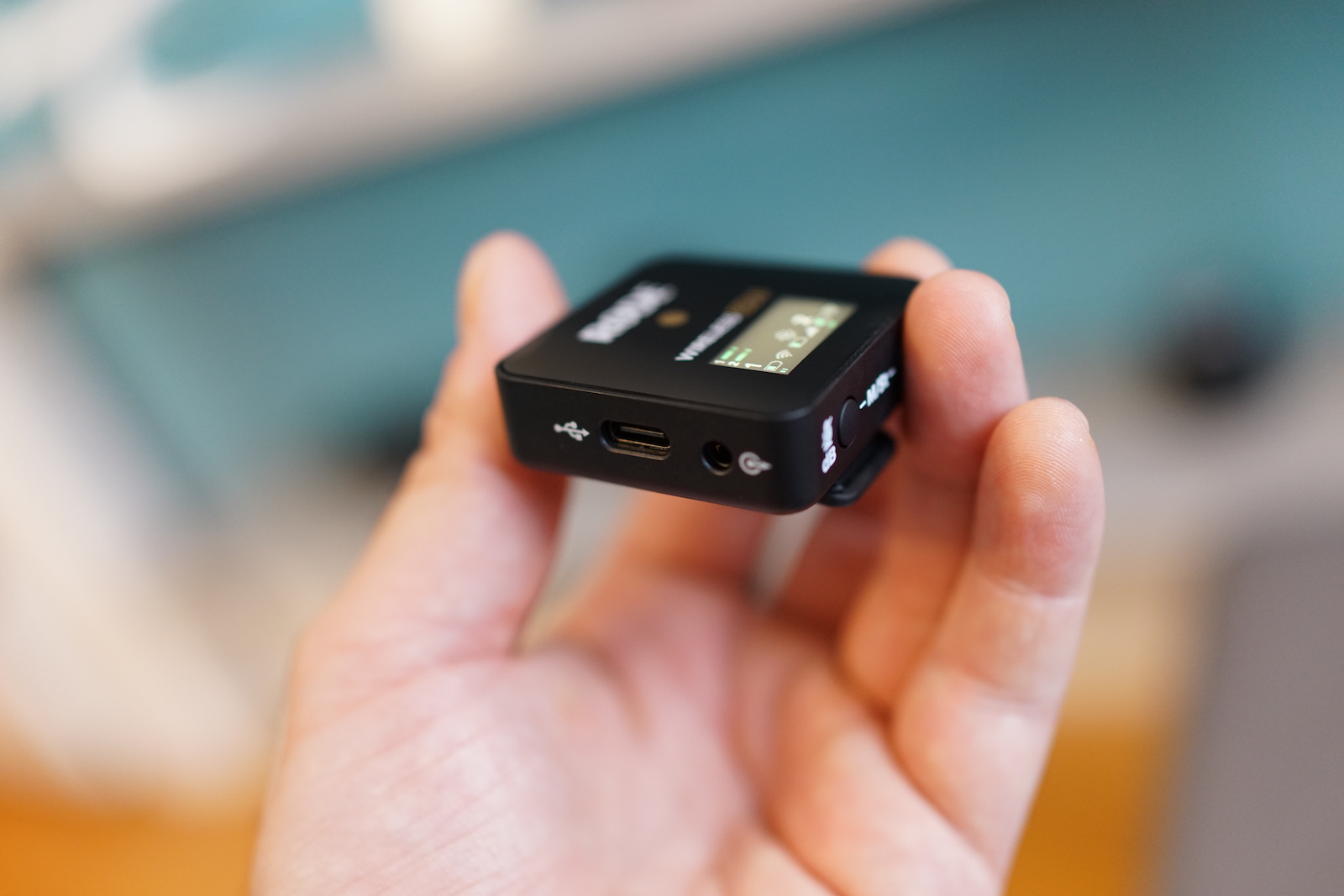
Rode Microphones has a new and improved version of its much-loved Go portable mic, the Wireless Go II, which uses the same form factor as the original but adds a list of new and improved features. Most notably, the Go II offers two transmitter packs that can simultaneously talk to a single receiver, letting you

Rode Microphones has a new and improved version of its much-loved Go portable mic, the Wireless Go II, which uses the same form factor as the original but adds a list of new and improved features. Most notably, the Go II offers two transmitter packs that can simultaneously talk to a single receiver, letting you record two individual speakers to the same camera or connected device.

Basics

The Rode Wireless Go II ($299) ships with everything you need to begin recording high-quality audio to a camera or anything else that can connect to a 3.5mm jack. The transmitter packs – there are two of them in the box – have built-in microphones that offer great sound on their own, or you can use them with any 3.5mm-equipped lavalier mic depending on your needs.

The receiver pack can output to 3.5mm TRS, but it can also transmit using USB Type-C (which is also for charging). This is new for this generation, and Rode also sells USB-C to USB-C and USB-C to Lightning cables so that you can use them with modern Android devices, iPhones, iPads, Macs and PCs.

Image Credits: Rode

Each of the three packs has a built-in rechargeable battery that can provide up to 7 hours of operating time on a single charge. You can independently adjust the gain on each of the transmitters, and mute each individually or both from the receiver pack. You can also swap between mono recording with each transmitter as a channel, and stereo recording modes.

The transmitters can operate at a range of 200 meters (roughly 650 feet) from the receiver, provided they have line-of-sight, and the receiver has a display to show you input levels, battery status, connectivity and more. The transmitters each have two LEDs that provide visual feedback for connectivity and gain. Each also automatically records locally, with the ability to store more than 24 hours of audio on built-in storage in case of dropouts in connectivity.

Design and performance

With this update, it really feels like Rode has thought of everything. You can get started immediately, for one, since the transmitter packs and receiver come pre-paired and assigned to left and right channels by default. They’re incredibly user-friendly, and while Rode has introduced a new Windows and Mac app for centralized control of them called Rode Central, you don’t actually need any additional software to get started recording with them.

This updated version also uses a new RF transmission tech that has 128-bit encryption built in, with a much farther line-of-site range for their use. This is designed to make them much more reliable in areas where there’s a lot of RF traffic happening already – like a busy shopping mall (once COVID times are behind us), conference halls, or other public areas with lots of people and smartphones around.

The onboard memory is also new, and means you’ll never have to worry about any potential dropped connections since you’ll always have a local file to rely on on the transmitter packs themselves. A similar peace-of-mind feature is a safety channel that records a back-up track at -20db, so that if you encounter any overloud sounds that cause peaking in your primary recording, you’ll have another option. Both of these features have to be turned on proactively in the Rode Central app, which Rode will also use to deliver future firmware updates for the Go II, but they’re very welcome additions.

Image Credits: Darrell Etherington

Meanwhile, the best new feature might be that you get all these improvements in the same great package. Rode’s original Go was remarkable in large part because it came in such a small, portable package, with transmitters that featured built-in mics as well as being great body packs. The size here is exactly the same, and these use the same integrated clips that make them compatible with all of Rode’s existing Go accessories.

Bottom line

There’s a concept of ‘lapping’ in racing, where you’re so far ahead of a competitor that you overtake them again. That’s basically what Rode has done with the Go II, which pads the lead for the best mobile video/field podcasting mic on the market, with smart features that address the few downsides of the original.

News: FarmWise plans to add autonomous crop dusting to its suite of robotic services

The robotics revolution in farming is set to continue as the autonomous crop cultivation company FarmWise looks to add new capabilities to its autonomous farming equipment. The San Francisco-based company is currently testing the application of fungicides and insecticides to row crops as an additional capability for its weed-killing robots, according to company chief executive

The robotics revolution in farming is set to continue as the autonomous crop cultivation company FarmWise looks to add new capabilities to its autonomous farming equipment.

The San Francisco-based company is currently testing the application of fungicides and insecticides to row crops as an additional capability for its weed-killing robots, according to company chief executive Sébastien Boyer.

It’s the latest advancement in robotics for the farm — a market that’s becoming increasingly crowded with the launch of new companies like Future Acres, which launched its support robot Carry today, and Mineral, the spinout from Alphabet (Google’s parent company) that provides crop analysis.

Rather than sell robots directly to farmers, FarmWise sells its robotics services to farms, and charges farms roughly $200 per acre inspected and weeded. “We show up on farmers’ fields with our own operators and our own equipment,” Boyer said.

It’s a business model that has attracted $24 million in outside funding from firm’s including Playground Global and the company is likely going to raise another round, targeted at $20 million, later this year, according to Boyer.

Boyer says the company already counts half of the largest growers in Salinas, Calif. among the company’s customers. These are farms for big consumer vegetable companies like Dole.

What FarmWise hopes to do is fill gaps of missing labor, according to Boyer. Along with co-founder Thomas Palomares, Boyer said he identified a need for farms to keep up with their output while dealing with a shrinking workforce. “It’s about helping farmers keep up with work while the pool of people willing to do these jobs is shrinking,” he said.

Using the robots isn’t just good for farms’ bottom lines, Boyer said. It also helps reduce the amount of fertilizer and chemicals used on the farm, which is good for the environment and creates a more sustainable food chain, he said.

“I was attracted by working on a large-scale sustainability problem,” Boyer said.


News: ChargeLab raises seed capital to be the software provider powering EV charging infrastructure

As money floods into the electric vehicle market a number of small companies are trying to stake their claim as the go-to provider of charging infrastructure. These companies are developing proprietary ecosystems that work for their own equipment but don’t interoperate. ChargeLab, which has raised $4.3 million in seed financing led by Construct Capital and

As money floods into the electric vehicle market a number of small companies are trying to stake their claim as the go-to provider of charging infrastructure. These companies are developing proprietary ecosystems that work for their own equipment but don’t interoperate.

ChargeLab, which has raised $4.3 million in seed financing led by Construct Capital and Root Ventures, is looking to be the software provider providing the chargers built by everyone else.

“You’ll find everyone in every niche and corner,” says ChargeLab chief executive Zachary Lefevre. Lefevre likens Tesla to Apple with its closed ecosystem and compares Chargepoint and Blink, two other electric vehicle charging companies to Blackberry — the once dominant smartphone maker. “What we’re trying to do is be android,” Lefevre said.

That means being the software provider for manufacturers like ABB, Schneider Electric and Siemens. “These guys are hardware makers up and down the value stack,” Lefevre said.

ChargeLab already has an agreement with ABB to be their default software provider as they go to market. The big industrial manufacturer is getting ready to launch their next charging product in North America.

As companies like REEF and Metropolis revamp garages and parking lots to service the next generation of vehicles, ChargeLab’s chief executive thinks that his software can power their EV charging services as they begin to roll that functionality out across the lots they own.

Lefevre got to know the electric vehicle charging market first as a reseller of everyone else’s equipment, he said. The company had raised a pre-seed round of $1.1 million from investors including Urban.us and Notation Capital and has now added to that bank account with another capital infusion from Construct Capital, the new fund led by Dayna Grayson and Rachel Holt, and Root Ventures, Lefevre said.

Eventually the company wants to integrate with the back end of companies like Chargepoint and Electrify America to make the charging process as efficient for everyone, according to ChargeLab’s chief executive.

As more service providers get into the market, Lefevre sees the opportunity set for his business expanding exponentially. “Super open platforms are not going to be building an EV charging system any more than they would be building their own hardware,” he said.

News: 3D model provider CGTrader raises $9.5M Series B led by Evli Growth Partners

3D model provider CGTrader, has raised $9.5M in a Series B funding led by Finnish VC fund Evli Growth Partners, alongside previous investors Karma Ventures and LVV Group. Ex-Rovio CEO Mikael Hed also invested and joins as Board Chairman. We first covered the Vilnius-based company when it raised 200,000 euro from Practica Capital. Founded in

3D model provider CGTrader, has raised $9.5M in a Series B funding led by Finnish VC fund Evli Growth Partners, alongside previous investors Karma Ventures and LVV Group. Ex-Rovio CEO Mikael Hed also invested and joins as Board Chairman. We first covered the Vilnius-based company when it raised 200,000 euro from Practica Capital.

Founded in 2011 by 3D designer Marius Kalytis (now COO), CGTrader has become a signifiant 3D content provider – it even claims to be the world’s largest. In its marketplace are 1.1M 3D models and 3.5M 3D designers, service 370,000 businesses including Nike, Microsoft, Made.com, Crate & Barrel, and Staples.

Unlike photos, 3D models can also be used to create both static images as well as AR experiences, so that users can see how a product might fit in their home. The company is also looking to invest in automating 3D modeling, QA, and asset management processes with AI. 

Dalia Lasaite, CEO and co-founder of CGTrader said in a statement: “3D models are not only widely used in professional 3D industries, but have become a more convenient and cost-effective way of generating amazing product visuals for e-commerce as well. With our ARsenal enterprise platform, it is up to ten times cheaper to produce photorealistic 3D visuals that are indistinguishable from photographs.”

CGTrader now plans to consolidate its position and further develop its platform.

The company competes with TurboSquid (which was recently acquired for $75 million by Shutterstock) and Threekit.

News: Electric raises $40M Series C to put small-business IT in the cloud

It would be an understatement to say that enterprise-focused startups have fared well during the pandemic. As organizations look to go remote, and the way we work has been flipped on its head, quickly-growing tech companies that simplify this transition are in high demand. One such startup has, in fact, raised $61.5 million in the

It would be an understatement to say that enterprise-focused startups have fared well during the pandemic. As organizations look to go remote, and the way we work has been flipped on its head, quickly-growing tech companies that simplify this transition are in high demand.

One such startup has, in fact, raised $61.5 million in the last 12 months alone. Electric, a company looking to put IT departments in the cloud, just announced the close of a $40 million Series C round. This comes after an extension of its Series B in March of 2020, when it raised $14.5 million, and then an additional $7 million from 01 Advisors in May of 2020.

This Series C round was led by Greenspring Associates, with participation from existing investors Bessemer Venture Partners, GGV Capital, 01 Advisors, Primary Venture Partners as well as new investors including Atreides Management and Vintage Investment Partners.

Electric launched in 2016 with a mission to make IT much simpler for small and medium-sized businesses. Rather than bringing on a dedicated IT department, or contracting out high-priced local service providers, Electric’s software allows one admin to manage devices, software subscriptions, permissions and more.

According to founder Ryan Denehy, the vast majority of IT’s work is administration, distribution, and maintenance of the broad variety of software programs at any given company. Electric does most of that job on behalf of IT, meaning that a smaller business only needs to worry about desk-side troubleshooting when it comes up, rather than the whole kit and caboodle.

Electric charges a flat price per seat per month, and Denehy says the company more than doubled its customer base in the last year. It now supports around 25,000 users across more than 400 individual customer organizations, which puts Electric just shy of $20 million ARR.

This is the first time Denehy has come anywhere close to sharing revenue numbers publicly, but it’s a good time to flex. The company has recently introduced a new lighter-weight offering that includes all of the same functionality as its more expensive product, but without access to chat functionality.

“The name of the game is just simplicity, simplicity, simplicity,” said Denehy. “Part of this is in response to the fact that people are realizing the permanence of hybrid work. During the pandemic, people stopped paying their landlords but they didn’t stop paying us. So in the summer, we started to focus on how we can create more offerings that we can get in the hands of more businesses and let them start their journey with us.”

Denehy says that a little less than half of Electric’s client base are tech startups, which makes sense considering the company launched in New York in a tech and media-centric ecosystem. As a way to expand into other verticals, Electric acquired Sinu, an IT service provider who happened to have an impressive roster of clients outside of Electric’s comfort zone, such as legal, accounting and non-profit.

Here’s what Denehy said at the time:

Organic market entry, even in adjacent markets can be extremely time consuming and expensive. Sinu’s team has done an excellent job winning and pleasing customers in a lot of industries where we currently don’t play but probably should. The combination of our two companies is a massive shot in the arm to our national expansion strategy.

Alongside growth, both of the Electric team and its customer base, the company is also investing in expanding its diversity programs and philanthropic efforts.

The Electric team is currently made up of just under 250 full-time employees, with 32.5 percent women and around 30 percent of employees being non-white. Specifically, nearly 12 percent of employees are Black and 10 percent are Latinx.

Denehy explained that he thinks of the company’s payroll, which is in the tens of millions of dollars, as one of the biggest ways he can make a change in the world.

“We will wait longer to fill a role to make sure that we have the most diverse pipeline of candidates possible,” said Denehy. “A lot of founders will say that nobody applied. Well, the reality is you didn’t look hard enough. We’ve just accepted that like it may take us longer to fill certain roles.”

This latest round brings Electric’s total funding to more than $100 million.

News: Ag monitoring startup Flurostat merges with soil carbon expert Dagan to form Regrow

Flurostat and Dagan, two startups that both are tackling the monitoring and management of agricultural inputs and outputs for a better understanding of the role sustainable agriculture can play in reducing greenhouse gas emissions, have merged and are launching a package of services under a new brand, Regrow. The merge, announced yesterday, will create a

Flurostat and Dagan, two startups that both are tackling the monitoring and management of agricultural inputs and outputs for a better understanding of the role sustainable agriculture can play in reducing greenhouse gas emissions, have merged and are launching a package of services under a new brand, Regrow.

The merge, announced yesterday, will create a company that combines Flurostat’s data driven agriculture management services with Dagan’s soil biogeochemical modeling technology, the companies said in a joint statement. 

The combined companies will have the ability to provide satellite collected data to optimize crop management and adoption of conservation practices along with site-specific analysis and custom interventions for different crops, fields, farms, and regions.

Dagan co-founder Dr. William Salas said that the combined companies will be able to have a better handle on the market for carbon emissions — thanks in no small part to Dagan’s work on soil carbon.

“Soil carbon sequestration is finally emerging as a globally relevant strategy for drawing down excess atmospheric carbon dioxide. Shortcuts, misconceptions and over-hyping have the potential to stunt the tremendous potential of soil carbon,” Salas said in a statement. “But the merger of FluroSat and Dagan will give the industry the confidence and integrity it needs with best-in-class soil health data that can prescribe site-specific strategies and provide accuracy and transparency that will help companies succeed in carbon markets.”

Terms of the merger were not disclosed, but FluroSat had previously raised roughly $8.6 million in equity and grant funding led by Microsoft’s M12 venture fund, according to data from Crunchbase.

“Over the next decade, we need to grow and produce enough food to nourish 10 billion people around the world in a way that protects our land and stems climate change,” says Ranveer Chandra, Chief Scientist, Azure Global at Microsoft. “Regrow’s computational agriculture, using machine learning and scientific modeling, will help improve the accuracy of accounting for soil carbon, and bring farmers closer to benefitting from carbon markets.”


News: The Midwest Fund launches, brings The Fund’s innovative investment strategy to a fifth market

A new investment fund is coming to Midwest cities, and it’s lead by names familiar to the local scenes. The aptly-named Midwest Fund targets early-stage startups from Pittsburgh to Chicago, from Detroit to Cincinnati, and everywhere in between. Unlike traditional venture capital funds, this one gets its funding from successful entrepreneurs looking for ways to

A new investment fund is coming to Midwest cities, and it’s lead by names familiar to the local scenes. The aptly-named Midwest Fund targets early-stage startups from Pittsburgh to Chicago, from Detroit to Cincinnati, and everywhere in between. Unlike traditional venture capital funds, this one gets its funding from successful entrepreneurs looking for ways to reinvest in their regions.

The Midwest Fund was born from The Fund, an NYC-based venture capital group. Founded in 2018 by an all-star cast of Jenny Fielding, Katie Hunt, Adam Carver, and Matthew Brimer, The Fund has since expanded with micro-funds in Los Angeles, London, and the Boulder/Denver region. And with each expansion, local founders and investors are tapped to lead each region.

The Midwest Fund’s founding general partners are familiar names to the Midwest. This includes Ted Serbinski and Tops Kataria of Detroit, Chris Bergman of Cincinnati, Lynsie Campbell of Pittsburgh, Jennifer Fried of Chicago. With this diverse team, The Midwest Fund follows the example set-out by The Fund of having equal gender representation on investment committees.

“The Fund has always set out to have equal gender representation on the investment committee,” said Ted Serbinski, a GP at The Midwest Fund, “and believed that this composition, not an explicit mandate, would lead to more balanced investing. Three years in and across the other geographies, The Fund has invested in over 40 percent female founders. We think the same will be true in The Midwest, and we’re excited to advance this mission.”

The Midwest area has long been a foundry of notable industries and startups, with more popping up every day. Nearly eight years ago, Ted Serbinki, then a partner at Detroit Venture Partners, mapped this area, calling it a diamond with key cities at each point. Now with The Midwest Fund, he’s part of a team ready to write seed-stage checks to young companies.

Serbinski tells TechCrunch this fund is unique to this area because of its speed. He explains the fund intends to invest in two Midwest companies a month for two years, which he believes would make it the most active in the region.

The Midwest Fund’s limited partners come from the local areas in which the fund operates including Chicago’s Amanda Lannert, CEO of Jellyvision, Pittsburgh’s Patrick Colletti, founder of Newthealth, and Cincinnati’s Charlie Key, founder of Losant. Across all six funds ran by The Fund, notable LPs come from Zillow, ClassPass, Soundcloud, Casper, Quartz, and InVision.

News: Maple launches with $3.5 million in funding to become the SaaS backoffice for the family

Much of our daily lives have been transformed in one way or another by technology – and often through intentional efforts to innovate thanks to the advent of new technology. Now more than ever, we rely on shared collaboration platforms and digital workspaces in our professional lives, and yet most of the changes wrought by

Much of our daily lives have been transformed in one way or another by technology – and often through intentional efforts to innovate thanks to the advent of new technology. Now more than ever, we rely on shared collaboration platforms and digital workspaces in our professional lives, and yet most of the changes wrought by tech on our home and family lives seem like the accidental effects of broader trends, rather than intentional shifts. Maple, a new startup launching today, aims to change that.

Founded by former Shopify product director and Kit (which was acquired by Shopify in 2016) co-founder Michael Perry, Maple is billed as “the family tech platform,” and hopes to ease the burden of parenting, freeing up parents, aunts, uncles, grandparents and kids to spend more quality time together. The startup, which is launching its app on iPhone and Android for all and onboarding new users from its waitlist over the next few weeks, has raised $3.5 million in seed funding – an impressive round for a company just about seven months into its existence. The round was led by Inspired Capital, and includes participation by Box Group, but is also supported by a number of angels who were Perry’s former colleagues at Shopify, including Shopify President Harley Finkelstein.

Perry and his co-founder Mike Taylor, who also co-founded Kit, decided to leave Shopify in order to pursue Perry’s vision of a platform that can help parents better manage their family lives – a platform made up of a social layer, a task-focused list of shared responsibilities, and a bourgeoning service marketplace that looks and feels a lot like the ecosystem Shopify has built for empowering e-commerce entrepreneurs. That’s by design, Perry says.

“I think you’re gonna see a lot of Shopify inspiration in this product – we think we’re the back office of every family,” Perry told me in an interview. “And we think we’re building the app ecosystem of apps, services, all kinds of things that are going to live on this platform that’s going to revolutionize parenting.”

In its current early incarnation, Maple’s primary interface for parents is a list of various tasks they need to take care of during the day. During onboarding, Maple asks parents what they’re typically responsible for in the household, and then uses some basic machine learning behind the scenes to build a customized schedule for getting those things done. Maple has signed on three initial partners to assist with accomplishing some of these tasks, including Evelyn Rusli’s Yumi food and nutrition brand for infants; Lalo, a DTC baby and toddler furniture and gear brand; and Haus, which will be providing date night packages for parents to enjoy for some getaway time.

Maple co-founder Micheal Perry with his son.

The platform will offer users the ability to tap others for help with tasks – these could be other family members added to the household, or the partners mentioned above (the plan is to bring on more, but to gate admittance initially while developing API endpoints that any company can potentially tap into). When interacting with family members, Maple also encourages smalls social interactions, like thanking someone for their help on a particular task or just showing general appreciation. Perry says this is a key ingredient he prioritized in product design.

“We have this cool thing that every day at eight o’clock, we give you an end of the day recap with your family,” Perry said. “So you click on it, and it will show me that, for example, Alex [Perry’s wife] completed three responsibilities for our family today, and how many I did for my family today, and how much help I received from other people today. And directly in app, you can send these cool little ‘Thank you ‘messages and say, you know, I love you, I appreciate you – we’re a great team. And Alex will get those messages. We believe in a world where this can be incredibly dynamic, in many different ways kto kind of bring some love and appreciation and make parenting feel more rewarding and easier.”

Perry is quick to note that what Maple offers today is only the beginning, and it’s clear he has bold ambitions for the platform. He talked about building “the family graph,” or a trove of data that can be used to not only build intelligent recommendations and develop ever more advanced machine learning to optimize family management, but also to provide partners with the tools they need to build products to best serve families. I asked Perry what that means for privacy, given that people are likely to be far more reluctant to share info around their families than they are about their work lives. He said the they team plans to go slow in terms of what it exposes to partners, when, and how, and that they’ll have user privacy in mind at each step – since, after all, Perry himself is a father and a husband and is wary of any incursions on his own private life.

For now, partners like Yumi only receive what users share with them through their own account creation and login mechanism, and they only pass back a basic attribution token – essentially letting Maple know the task was completed so it can mark it off in a user’s list.

Image Credits: Maple

Maple’s partners today are representative of the kind of businesses that might make use of the platform in future, but Perry has a much broader vision. He hopes that Maple can ultimately help parents handle their responsibilities across a wide range of needs and income levels. Right now, Perry points out, a lot of what’s available to parents in terms of support is only available to higher income brackets – ie., nannies and dedicated caregivers. Perry says that his experience growing up relatively poor with a single mother supporting the entire family led him to want to provide something better.

“You have 125 million households in America, you have 3 million children being born every year, you have 30% of the households in America being single parent-run households,” Perry said. “It’s hard. Some people are working one two jobs, most couples are working couples. Every industry that’s changed has been about making things more accessible. In the case of Shopify, at one point building, an online store required hundreds of thousands of dollars and a bunch of skilled people. Now you can start a store for $20 in five minutes – 20 years ago, that was unfathomable.”

For Perry, Maple represents a path to that kind of shift in the economics of parenting and a network of family services, including goods, care, leisure and more. The startup has plans to eventually enlist other parents to provide services, which Perry says will unlock part-time income generation for full-time parents, allowing parents to help each other at the same time.

I asked him if he thought people would be reluctant to treat their family lives with the same kind of optimization approach favored by enterprise and commercial platform tools, but he suggested that in fact, not taking advantage of those same technologies in our personal lives is a missed opportunity.

“We believe that, uniquely, we’re living through a generation where we can start creating more time for people,” Perry said. “I think what makes Maple so unique is that no company has approached this by asking ‘How do we create more time for you so that you can spend more time with your kids?’ in the consolidated way that we have.”

Disclosure: I worked at Shopify from 2018 to 2019 while Perry was employed there, but we did not work together directly.


News: Furniture startup Burrow raises $25M

Burrow, a startup that first launched with a modular sofa, eventually aims to sell you furniture for every room in your home. Today, it’s announcing that it’s raised $25 million in Series C funding. Burrow participated in the Y Combinator accelerator in 2016 with an initial aim of building sofas that, by virtue of being

Burrow, a startup that first launched with a modular sofa, eventually aims to sell you furniture for every room in your home. Today, it’s announcing that it’s raised $25 million in Series C funding.

Burrow participated in the Y Combinator accelerator in 2016 with an initial aim of building sofas that, by virtue of being modular, were easier to move and adapt to a variety of living spaces. Now its product lineup also includes armchairs, ottomans, tables, rugs, lights and other accessories. In fact, the company says it launched 19 new products last year, including a modular shelving system.

When I asked via email about this expansion, co-founder and CEO Stephen Kuhl told me that the company follows “a very rigorous research process” involving customer surveys, focus groups, online search data and more.

“The goal is to match the largest customer needs with the biggest market opportunities,” Kuhl said. “Once it’s clear what category to enter, we use our research to define how we’re going to develop the best version(s) of each product for our customer base, and how we’re going to build the best end-to-end customer experience around that product. I’m probably going to jinx it, but every single product we’ve ever launched has exceeded projections, a testament to our customer-centric, research-driven design process.”

Burrow says it saw triple-digit revenue growth last year, a trend it anticipates continuing in 2021. Kuhl suggested that the startup is also benefitting from broader trends accelerated during the pandemic, including the shift to e-commerce, an increased focus on the home and people moving to the suburbs (and buying more furniture in the process).

“Over the last 18 months, we launched innovative new products in every category of living room furniture,” he said. “In 2021, we’ll continue that expansion into every room of the home.”

The startup has now raised a total fo $55 million. Its Series C was led by Parkway Venture Capital, with Managing Partner Gregg Hill joining Burrow’s board of directors. NEA, Red & Blue Ventures, Winklevoss Capital and Michael Seibel also participated in the new round.

Burrow says it will use the new funding to launch new products while also investing in operations and building out its international supply chain.

“Parkway looks for brands that are changing how we live today as well as innovating to stay ahead,” Hill said in a statement. “We believed in Burrow’s business model from the beginning, having invested in their Series B round, and recognize all their future potential.”


WordPress Image Lightbox Plugin