Tag Archives: Blog

News: Calling Czech VCs: Be featured in The Great TechCrunch Survey of European VC

TechCrunch is embarking on a major project to survey the venture capital investors of Europe, and their cities. Our survey of VCs in the Czech Republic and Prague will capture how the country is faring, and what changes are being wrought amongst investors by the coronavirus pandemic. We’d like to know how the Prague, and

TechCrunch is embarking on a major project to survey the venture capital investors of Europe, and their cities.

Our survey of VCs in the Czech Republic and Prague will capture how the country is faring, and what changes are being wrought amongst investors by the coronavirus pandemic.

We’d like to know how the Prague, and the broader Czech, startup scene is evolving, how the tech sector is being impacted by COVID-19, and, generally, how your thinking will evolve from here.

Our survey will only be about investors, and only the contributions of VC investors will be included. More than one partner is welcome to fill out the survey. (Please note, if you have filled the survey out already, there is no need to do it again).

The shortlist of questions will require only brief responses, but the more you can add, the better.

You can fill out the survey here.

Obviously, investors who contribute will be featured in the final surveys, with links to their companies and profiles.

What kinds of things do we want to know? Questions include: Which trends are you most excited by? What startup do you wish someone would create? Where are the overlooked opportunities? What are you looking for in your next investment, in general? How is your local ecosystem going? And how has COVID-19 impacted your investment strategy?

This survey is part of a broader series of surveys we’re doing to help founders find the right investors.

https://techcrunch.com/extra-crunch/investor-surveys/

For example, here is the recent survey of London.

You are not in the Czech Republic, but would like to take part? That’s fine! Any European VC investor can STILL fill out the survey, as we probably will be putting a call out to your country next anyway! And we will use the data for future surveys on vertical topics.

The survey is covering almost every country on in the Union for the Mediterranean, so just look for your country and city on the survey and please participate (if you’re a venture capital investor).

Thank you for participating. If you have questions you can email mike@techcrunch.com

(Please note: Filling out the survey is not a guarantee of inclusion in the final published piece).

News: James Murdoch’s Lupa Systems leads $31 million investment in India’s Doubtnut

Doubtnut, an Indian startup that helps students learn and master concepts from math and science using short videos, has raised $31 million in a new financing round, months after it rejected an acquisition offer from India’s largest edtech firm Byju’s. The three-year-old Gurgaon-headquartered startup said SIG and James Murdoch’s Lupa Systems led the $31 million

Doubtnut, an Indian startup that helps students learn and master concepts from math and science using short videos, has raised $31 million in a new financing round, months after it rejected an acquisition offer from India’s largest edtech firm Byju’s.

The three-year-old Gurgaon-headquartered startup said SIG and James Murdoch’s Lupa Systems led the $31 million Series B funding round. Existing investors Sequoia Capital India, Omidyar Network India and Waterbridge Ventures also participated in the round, which brings the startup’s to-date raise to about $50 million to date.

The Doubtnut app allows students to take a picture of a problem, and uses machine learning and image recognition to deliver their answers through short-videos. These videos offer students step-by-step instructions to solve a problem.

The app supports multiple languages, and has amassed over 2.5 million daily active users who spend 600 million minutes a month on the app, the startup said. More than half of the users have come online for the first time in last 12 months, the startup said.

The startup said it has developed a bank of over 65 million questions in nine languages for students from sixth grade to high-school. Unlike several other popular edtech firms, Doubtnut said its app reaches students in smaller towns and cities. “85% of the current base comes from outside of the top 15 Indian cities, and 60% users study in state boards where typical medium of instruction is the local vernacular language,” the startup said.

TechCrunch reported last year that Byju’s was in talks to acquire Doubtnut for as much as $150 million. Byju’s later lowered its deal offer, after which the two firms ended their talks.

James Murdoch last month announced he was reuniting with Uday Shankar, an executive who helped him build the Murdoch family’s Star business in India, which was later sold to Disney. Shankar will work with Murdoch to “accelerate” Lupa’s efforts in India, Murdoch said last month. Lupa has backed nearly a dozen startups so far, including Indian news aggregator and social app DailyHunt.

“Doubtnut has been built with a vision to improve learning outcomes for all students, especially those outside the major Indian cities. We specialize in developing content in vernacular languages and use technology to create affordable solutions for people in this large target segment,” said Tanushree Nagori, co-founder and CEO of Doubtnut, adding,

“We are pleased to welcome onboard SIG and Lupa; SIG brings in strong experience of investing in ed-tech companies globally and Lupa Systems brings unparalleled experience of building world-class businesses and harnessing high-impact technologies,” she added.

The startup said it will deploy the fresh capital to add support for more language and broaden the scope of subjects it covers today. Doubtnut is also planning to introduce paid courses.

News: India unveils more stringent rules for social media, streaming services

India announced sweeping changes to its guidelines for social media, on-demand video streaming services, and digital news outlets on Thursday, posing new challenges for small firms as well as giants such as Facebook and Google that count the nation as its biggest market by users. Ravi Shankar Prasad, India’s IT, Law, and Justice minister, said

India announced sweeping changes to its guidelines for social media, on-demand video streaming services, and digital news outlets on Thursday, posing new challenges for small firms as well as giants such as Facebook and Google that count the nation as its biggest market by users.

Ravi Shankar Prasad, India’s IT, Law, and Justice minister, said in a press conference that social media companies will be required to acknowledge the request within 24 hours and deliver a complete redressal in 15 days. In sensitive cases that surround rape or other sexual nature, firms will be required to takedown the objectionable content within 24 hours.

These firms will also be required to appoint a chief compliance officer, a nodal contact officer, who shall be reachable round the clock, and a resident grievance officer. The firms will also be required to have an office in the country.

For social media companies, Prasad said they will be required to disclose the originator of objectionable content. “We don’t want to know the content, but firms need to be able to tell who was the first person who began spreading misinformation and other objectionable content,” he said. WhatsApp has previously said that it can’t comply with such traceability request without compromising end-to-end encryption security for every user.

Firms will also be required to publish a monthly compliance report to disclose the number of requests they received and what actions they took. They will also be required to offer a voluntary option to users who wish to verify their accounts.

The guidelines go into effect for small firms effective immediately, but bigger services will be provided three months to comply, said Prasad.

New Delhi has put together these guidelines because citizens in India have long requested a “mechanism to address grievances,” said Prasad. India has been working on a law aimed at intermediaries since 2018. This is the first time New Delhi has publicly shared an update on the specifics of the guidelines.

“India is the world’s largest open Internet society and the Government welcomes social media companies to operate in India, do business and also earn profits. However, they will have to be accountable to the Constitution and laws of India,” he said, adding that WhatsApp had amassed 530 million users, YouTube, 448 million users, Facebook’s marquee service 410 million users, Instagram 210 million users, and Twitter, 175 million users in the country.

Full guidelines for social media firms and other intermediaries. (Source: Indian government.)

For streaming platforms, the draft, which will be legally enforceable when it becomes a law, has outlined a three-tier structure for “observance and adherence to the code.” Until now, on-demand services such as Netflix, Disney+ Hotstar, and MX Player have operated in India with little to no censorship.

New Delhi last year said India’s broadcasting ministry, which regulates content on TV, will also be overseeing digital streaming platforms. 17 popular streaming firms had banded together to devise a self-regulation code. Prakash Javedkar, Minister of Information and Broadcasting, said the proposed solution from the industry wasn’t adequate and there will be an oversight mechanism from the government to ensure compliance of code of practices.

Streaming services will also have to attach a content ratings to their titles. “The OTT platforms, called as the publishers of online curated content in the rules, would self-classify the content into five age based categories- U (Universal), U/A 7+, U/A 13+, U/A 16+, and A (Adult). Platforms would be required to implement parental locks for content classified as U/A 13+ or higher, and reliable age verification mechanisms for content classified as “A”,” the Indian government said.

“The publisher of online curated content shall prominently display the classification rating specific to each content or programme together with a content descriptor informing the user about the nature of the content, and advising on viewer description (if applicable) at the beginning of every programme enabling the user to make an informed decision, prior to watching the programme.”

Digital news outlets will be required to disclose the size of their reach and structure of their ownership.

Industry executives have expressed concerns over the new proposed regulation, saying New Delhi hasn’t consulted them for these changes. IAMAI, a powerful industry body that represents nearly all on-demand streaming services, said it was “dismayed” by the guidelines, and hoped to have a dialogue with the government.

Javedkar and Prasad were asked if there will be any consultation with the industry before these guidelines become law. The ministers said that they had already received enough inputs from the industry.

This is a developing story. More to follow…

News: Maze raises another $15 million for its user testing platform

Maze has closed a $15 million Series A funding round led by Emergence Capital. The company lets you run user tests at scale so that you can get feedback before rolling out a design update or test copy. When you have a lot of users, you don’t want to roll out some changes before testing

Maze has closed a $15 million Series A funding round led by Emergence Capital. The company lets you run user tests at scale so that you can get feedback before rolling out a design update or test copy.

When you have a lot of users, you don’t want to roll out some changes before testing it first. Some companies run A/B tests on a small portion of users and gather feedback with custom forms and polls. But that involves some coding and complications in your roadmap. Other companies simply spend a lot of time talking one-to-one with some customers.

Maze lets you test something new based on a Figma, InVision, Adobe XD, Marvel or Sketch project. You can design something new in your favorite app and start a new test based on that project.

From your web browser, you can ask your user to do something in your app, provide some context and ask a quick question at the end of the test. After that, you get a link for your next testing campaign.

You can test it on hundreds or thousands of potential users and get a detailed report with a success rate, where your users drop off, answers to your questions and polls and more. Maze now also lets you test concepts without a design.

Essentially, Maze wants to empower product designers and product managers. They can be in charge of the product roadmap with actual numbers to back their claims. And everybody can collaborate on user tests as it’s a software-as-a-service product. It makes it easier to run a design-led company.

In addition to Emergence Capital, Jay Simons and existing investors Amplify Partners, Partech and Seedcamp also participated in today’s funding round. The company plans to grow the size of its team.

Over the past 12 months, Maze has grown its monthly recurring revenue by 600%. It now generates $1.5 million in annual recurring revenue and 40,000 companies are now using Maze. One million testers have completed at least one test on Maze. Customers include GE, Samsung, Vodafone, Braze and FairMoney

News: TreeCard raises $5.1M seed to plant trees as you spend

TreeCard, a U.K. yet-to-launch fintech offering a spending card made out of wood and the promise to fund reforesting via the interchange fees generated, has raised $5.1 million in seed funding. The round is led by EQT Ventures, with participation from Seedcamp and Episode 1. Angel investors also backing the startup include Matt Robinson (founder

TreeCard, a U.K. yet-to-launch fintech offering a spending card made out of wood and the promise to fund reforesting via the interchange fees generated, has raised $5.1 million in seed funding. The round is led by EQT Ventures, with participation from Seedcamp and Episode 1.

Angel investors also backing the startup include Matt Robinson (founder of GoCardless), Paul Forester (founder of Indeed) and Charlie Delingpole (founder of ComplyAdvantage). TreeCard says the funding will be used to hire talent, support the roll-out of its product across the U.K. and to expand into the U.S. and “key European markets”.

Aiming to become a “leading green finance brand”, TreeCard was founded in August 2020 by Thiel fellow Jamie Cox (who previously co-founded Cashew), Gary Wu and James Dugan. The team hit onto the idea of swapping loyalty points or cash back for tree planting, in a bid to create a fintech proposition with more societal impact.

Once signed up, you link the TreeCard app to your current bank accounts so you can begin routing your spending through the Mastercard-powered TreeCard. Purchases you then make — or, specifically, a portion of the card transaction fees your spending generates — is then put toward tree planting projects run by green search engine Ecosia, which is also a pre-seed investor in TreeCard.

“[At a] high level, the climate crisis is the biggest existential risk that humanity has faced in the last 200,000 years; we believe directing the flow of consumer finances is the most powerful way to affect change,” CEO Cox tells me. “We’re building a finance company that allows consumers to not just to do less damage with their spending, but to actively improve the world.

“We are building a free spending card that allows consumers to spend more responsibly. The card uses interchange to reforest as they spend and sophisticated analytics to help them identify healthy spending as well as destructive ones”.

Of course, consumer card interchange fees in the U.K./EU are very low compared to the U.S. Offering a spending card and account isn’t without overhead, so it isn’t clear how sustainable TreeCard could be on interchange revenue alone. Perhaps unsurprisingly, the U.S., where generated fees are higher, is seen as a key launch market for the startup.

“Interchange fees in the U.S. are significantly higher than in the EU so this presents a sufficient revenue opportunity for us to perform our reforestation investments and cover marketing and management costs,” explains Cox. “In the EU we’re going to be partnering with an existing retail bank who will provide all our banking infrastructure for free. This will mean that, even though our interchange fee cut is lower, it will be sufficient to cover our costs in the EU. We will announce the name of the bank shortly”.

Meanwhile, early backer Ecosia is described by the TreeCard founder as its “mother” company. “They’re our closest partner and we’ll be working very closely with them as we grow,” Cox says. “They invested the first cheque into the company and will be doing all our tree planting for us. Ecosia’s marketing team is extremely experienced and they will be helping us use their search engine as a core channel for user acquisition over the next few years”.

Comments Tom Mendoza, deal partner at EQT Ventures: “TreeCard has the potential to become a leading green finance brand, going where no brand has gone before in creating a de facto platform for impactful financial management. At EQT Ventures, we’re increasingly aware of the environment and the impact that our investments have on the world around us, so we’re really excited to support the TreeCard team, who are actively working with the financial system to create a better future for the planet”.

News: Infra.Market becomes India’s newest unicorn with $100 million fundraise

The newest unicorn in India is a startup that is helping construction and real estate companies in the world’s second most populated nation procure materials and handle logistics for their projects. Four year-old Infra.Market said on Thursday it has raised $100 million in a Series C round led by Tiger Global. Existing investors including Foundamental,

The newest unicorn in India is a startup that is helping construction and real estate companies in the world’s second most populated nation procure materials and handle logistics for their projects.

Four year-old Infra.Market said on Thursday it has raised $100 million in a Series C round led by Tiger Global. Existing investors including Foundamental, Accel Partners, Nexus Venture Partners, Evolvence India Fund, and Sistema Asia Fund also participated in the round, which valued the Indian startup at $1 billion.

The new round, which brings Infra.Market’s total to-date raise to about $150 million, comes just two months after the Mumbai-headquartered startup concluded its Series B round. The startup was valued at about $200 million post-money in the December round, a person familiar with the matter told TechCrunch. Avendus Capital advised Infra.Market on the new transaction.

Infra.Market helps small businesses such as manufacturers of paints and cements improve the quality of their production and meet various compliances. The startup adds its load cells to the manufacturing facilities of these small businesses to ensure there is no lapse in quality, and also helps them work with other businesses that can provide them with better raw material and provide guidance on pricing. It also works closely with businesses to ensure that their deliveries are made on time.

These improvements, explained co-founder Souvik Sengupta, help small manufacturers land larger clients that have higher expectations from the businesses with which they engage. He said the startup has helped small manufacturers reach customers outside of India as well. Some of its clients are in Bangladesh, Malaysia, Singapore and Dubai.

“We are bringing a service layer to these small manufacturers, enabling them to grow their business. We don’t own the asset and are creating private label brands,” he said in an interview with TechCrunch in December. Infra.Market works with more than 170 small manufacturers and counts the vast majority of major construction and real estate companies such as giants Larsen & Toubro, Tata Projects and Ashoka Buildcon as its clients. Sengupta said the startup sells to more than 400 large clients and 3,000 small retailers.

Sengupta said in December that the startup was on track to hit the ARR (annual recurring revenue) of $100 million before the pandemic hit early last year. This nearly cut the startup’s business in half for at least two early months of the pandemic. But the startup has picked up pace again, and is now on track to hit the ARR of $180 million. The startup aims to grow this figure to $300 million by March.

“We are delighted to partner with Souvik and Aaditya in the growth journey of Infra.Market which is reshaping India’s construction materials supply chain. With pioneering technology innovation and the ability to stitch together private label brands, Infra.Market is positioned for strong growth, healthy economics and profitability,” said Scott Shleifer, Partner of Tiger Global Management, in a statement.

Sengupta added today: “We are seeing rapid acceleration in demand as Infrastructure and real-estate companies are looking to shift their procurement to get consistent quality and minimize delays.”

News: Rainmaking launches Motion Ventures to boost innovation in the maritime industry

A new fund has launched, with backing from the Singaporean government, to support tech innovation for the maritime industry. Called Motion Ventures, it is targeting $30 million SGD (about $22.8 million USD) and has completed its first close, with Wilhelmsen, one of the world’s largest maritime networks, and logistics company HHLA as anchor investors. Motion

A new fund has launched, with backing from the Singaporean government, to support tech innovation for the maritime industry. Called Motion Ventures, it is targeting $30 million SGD (about $22.8 million USD) and has completed its first close, with Wilhelmsen, one of the world’s largest maritime networks, and logistics company HHLA as anchor investors.

Motion Ventures was launched by Rainmaking, the venture building and investment firm that runs accelerator program Startupbootcamp, and will jointly invest in startups with SEEDS Capital, the investment arm of government agency Enterprise Singapore.

SEEDS Capital announced in June 2020 that it plans to invest $50 million SGD in maritime startups, with the goal of creating more resilient supply chains and fixing issues underscored by the COVID-19 pandemic.

Shaun Hon, general partner at Motion Ventures and director at Rainmaking, told TechCrunch that the fund plans to invest in around 20 early-stage startups focused on AI, machine learning and automation, with check sizes ranging between $500,000 SGD to $2 million SGD.

“We’ve got our eyes on some of the maritime value chain’s biggest challenges including decarbonization, supply chain resilience and improving safety. In most cases, the technology to address the industry’s issues already exists, but the missing link is figuring out how to apply these solutions in the corporate context,” Hon said.

“That’s what Motion Ventures aims to address,” he added. “If we can bring a consortium of industry adopters together to connect with entrepreneurs early in the process, we’re setting everyone up with the best chance to succeed.”

In addition to capital, Motion Ventures plans to partner startups with well-established maritime firms like Wilhelmsen to help them commercialize and integrate their technology into supply chains. For mentorship, Motion Ventures’ startups will also have access to Ocean Ventures Alliance, which was launched by Rainmaking in November 2020, and now includes more than 40 maritime value chain industry leaders.

News: Stitch emerges from stealth with $4M for its API fintech play in Africa

Over the years, there has been a growing trend of fintech infrastructure players around the world. In Africa, a handful of startups have launched in the past three years to provide such services. Stitch, a South African fintech startup, is one of them and today, it is coming out of stealth and announcing its seed

Over the years, there has been a growing trend of fintech infrastructure players around the world. In Africa, a handful of startups have launched in the past three years to provide such services. Stitch, a South African fintech startup, is one of them and today, it is coming out of stealth and announcing its seed round of $4 million. This makes it the largest round raised by any API fintech startup in Africa at the moment.

Founded by Kiaan Pillay, Natalie Cuthbert, and Priyen Pillay, Stitch wants to provide full API access to financial accounts across Africa starting from its first market, South Africa. With its API, developers can connect apps to financial accounts. This allows users to share their transaction history and balances, confirm their identities, and initiate payments.

We’ve seen a wave of API-led financial services companies proliferating around the globe. Plaid leads the way in the U.S. Sweden-based fintech Tink has also been dominant across Europe, while Truelayer and Belvo are holding the forte in the UK and Latin America.

These companies provide engineering and developer tools that reduce the technical and operational effort needed for apps to connect to their users’ financial accounts. By way of APIs, they make it possible for other companies to integrate what are otherwise complex services to build from the ground up simply by adding in a few lines of code.

Like other financial infrastructure company, Stitch services allows companies and developers to innovate around other services like personal finance, lending, insurance, payments and wealth management.

The founders draw on prior experience building API products for local markets in the past. In 2017, Kiaan Pillay worked as the head of operations for South African insurance API platform Root. He left a year to Smile Identity, a San Fransisco-based identity API company. There, he worked with fintechs across Africa and discovered they faced infrastructural issues around compliance and identity.
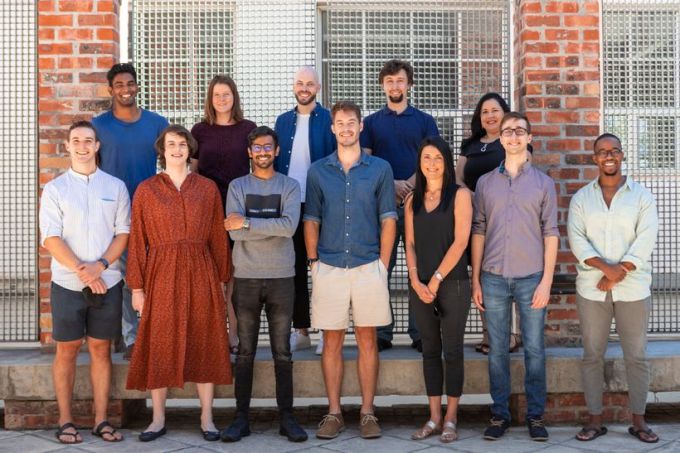
The Stitch team

At the same time, Pillay, Cuthbert — who was the CTO at Root — and Priyen were looking to build a Venmo for Africa, but after eight months, they soon discovered the solution was crappy. However, one feature on the platform seemed to work for the fintechs with infrastructural issues

“We got to the point where we could build any payouts for our clients so users could link and cash out their bank accounts,” Pillay tells TechCrunch. “We decided to automate this process using screen scraping. I must admit, it didn’t look good but we took it in our stride because we thought it served its purpose and was super cool.”

This set the team up to work on Stitch — Pillay as CEO, Cuthbert as CTO and Priyen as CPO. After working on building better functionality and technology, Stitch beta launched in September 2019 and secured a pre-seed round a month later. While in stealth, Stitch says it has gotten a handful of clients, which include Intelligent Debt Management, Momentum Velocity Club, Paystack, Flexclub, and two of South Africa’s biggest insurance players. The company is also beginning to attract some attention from corporate companies around consumer-facing products.

As of now, Stitch has a data and identity API product, and this month, a payment product will be added to its offerings. Like most API fintech startups, Stitch charges developers and companies per API call. However, for some products like budgeting or personal finance management apps, it also charges a fixed fee.

With wide and deep investor backing, Stitch will use the funding to consolidate growth in South Africa. There are plans to also launch operations in West and East Africa; the company’s statement reads.

Africa’s financial infrastructure space is heating up

These markets already have players, mainly Nigerian startups, in the API fintech space. They have raised sizeable rounds with enviable backings as well. Mono, a startup that only launched six months ago, is backed by YC; For Okra, it is Pan-African VC firm TLcom Capital; OnePipe has Techstars, and US-based but Africa-focused Pngme has attracted investment from Pan African VC firms EchoVC and Lateral Capital.

For now, these startups don’t operate in more than two countries. For instance, Mono, Okra and OnePipe are only live in Nigeria. Pngme says it’s operating in Nigeria and Kenya, while Stitch is only in South Africa. It will be interesting to see how competition and collaboration play out when they expand outside their markets. We might not wait long as Okra is currently in beta in Kenya and South Africa, and Mono is planning an expansion into Ghana and Kenya before the end of the year.

This doesn’t bother Pillay and his team at Stitch, though. He, alongside founders of these startups who I’ve talked to in the past year, believe competition is healthy for the market, and more founders should actually build similar companies. That said, Pillay adds that what might play out is each company creating a niche functionality at which they’re best.

“Unlike the U.S. where Plaid is dominant, I think the African market needs many players because the market is large. Europe is a good example; many sizeable companies are providing similar banking API services. For us, I think what we would start to see happen is that some companies will be known to do a particular functionality well like payments, data enrichment, or merchant identification.”

Image Credits: Stitch

Stitch has an impressive lineup of investors for this seed round led by London-based VC firm, firstminute Capital and SA-based investment firm, The Raba Partnership. Other investors who took part include both funds and angels.

The funds include CRE and Village Global, Norrsken (a fund by Klarna co-founder Niklas Adalberth), Future Africa (a fund by Flutterwave co-founder Iyinoluwa Aboyeji) and 500 Fintech. The angel cohort includes Venmo co-founder Iqram Magdon Ismail, some founding members at Plaid, executives at Coinbase, Revolut, Fast, and Paystack.

On how the startup still in stealth managed to get these investors on board, Pillay says it’s down to the company’s network in the US and the belief each investor have in the product.

“Spending a lot of time in San Francisco when working with Smile has helped us to get in touch with these globally world-class founders and investors. There’s an opportunity for us to provide a new generation of financial services in markets across Africa, and we’re really fortunate to have them back us.” 

For Brent Hoberman, co-founder and executive chairman of firstminute capital, the firm decided to back Stitch because it believes most online business in Africa will embed fintech capabilities in their applications — facilitating online payments, increasing lending capacity and streamlining KYC and identity checks — through Stitch.

“As a fellow South African, I’m excited to be partnering with a team of exceptionally talented local engineers with pan-African ambitions,” he added.

That said, Africa’s fintech sector is beginning to heat up after a slow January which saw agritech and cleantech sectors dominate funding rounds. This week, South African digital bank TymeBank raised a whopping $109 million to expand across the country and into Asia, extending the sort of large rounds we’ve seen in the past from a sector that attracted more than 30% of VC funding.

For Stitch, its seed round is the latest in a series of notable deals in the African API fintech space over the last two years, where other major players have raised between $500,000 to $5 million.


News: Plant-based food startup Next Gen lands $10M seed round from investors including Temasek

Singapore is quickly turning into a hub for food-tech startups, partly because of government initiatives supporting the development of meat alternatives. One of the newest entrants is Next Gen, which will launch its plant-based “chicken” brand, called TiNDLE, in Singaporean restaurants next month. The company announced today that it has raised $10 million in seed

Singapore is quickly turning into a hub for food-tech startups, partly because of government initiatives supporting the development of meat alternatives. One of the newest entrants is Next Gen, which will launch its plant-based “chicken” brand, called TiNDLE, in Singaporean restaurants next month. The company announced today that it has raised $10 million in seed funding from investors including Temasek, K3 Ventures, EDB New Ventures (an investment arm of the Singapore Economic Development Board), NX-Food, FEBE Ventures and Blue Horizon.

Next Gen claims this is the largest seed round ever raised by a plant-based food tech company, based on data from PitchBook. This is the first time the startup has taken external investment, and the funding exceeded its original target of $7 million. Next Gen was launched last October by Timo Recker and Andre Menezes, with $2.2 million of founder capital.

Next Gen’s first product is called TiNDLE Thy, an alternative to chicken thighs. Its ingredients include water, soy, wheat, oat fiber, coconut oil and methylcellulose, a culinary binder, but the key to its chicken-like flavor is a proprietary blend of plant-based fats, like sunflower oil, and natural flavors that allows it to cook like chicken meat.

Menezes, Next Gen’s chief operating officer, told TechCrunch that the company’s goal is to be the global leader in plant-based chicken, the way Impossible and Beyond are known for their burgers.

“Consumers and chefs want texture in chicken, the taste and aroma, and that is largely related to chicken fat, which is why we started with thighs instead of breasts,” said Menezes. “We created a chicken fat made from a blend, called Lipi, to emulate the smell, aroma and browning when you cook.”

Both Recker and Menezes have years of experience in the food industry. Recker founded German-based LikeMeat, a plant-based meat producer acquired by the LIVEKINDLY Collective last year. Menezes’ food career started in Brazil at one of the world’s largest poultry exporters. He began working with plant-based meat after serving as general manager of Country Foods, a Singaporean importer and distributor that focuses on innovative, sustainable products.

“It was clear to me after I was inside the meat industry for so long that it was not going to be a sustainable business in the long run,” Menezes said.

Over the past few years, more consumers have started to feel the same way, and began looking for alternatives to animal products. UBS expects the global plant-based protein market to increase at a compounded annual growth rate of more than 30%, reaching about $50 billion by 2025, as more people, even those who aren’t vegans or vegetarians, seek healthier, humane sources of protein.

Millennial and Gen Z consumers, in particular, are willing to reduce their consumption of meat, eggs and dairy products as they become more aware of the environmental impact of industrial livestock production, said Menezes. “They understand the sustainability angle of it, and the health aspect, like the cholesterol or nutritional values, depending on what product you are talking about.”

Low in sodium and saturated fat, TiNDLE Thy has received the Healthier Choice Symbol, which is administered by Singapore’s Health Promotion Board. Next Gen’s new funding will be used to launch TiNDLE Thy, starting in popular Singaporean restaurants like Three Buns Quayside, the Prive Group, 28 HongKong Street, Bayswater Kitchen and The Goodburger.

Over the next year or two, Next Gen plans to raise its Series A round, launch more brands and products, and expand in its target markets: the United States (where it is currently recruiting a growth director to build a distribution network), China, Brazil and Europe. After working with restaurant partners, Next Gen also plans to make its products available to home cooks.

“The reason we started with chefs is because they are very hard to crack, and if chefs are happy with the product, then we’re very sure customers will be, too,” said Menezes.

News: Paramount+ will cost $4.99 per month with ads

ViacomCBS executives held a virtual investor event today where they outlined the strategy for Paramount+, the streaming service set to launch on March 4 that’s basically a rebranded, expanded version of CBS All Access. In addition to launching in the United States, executives said the service will be available across Latin America and Canada on

ViacomCBS executives held a virtual investor event today where they outlined the strategy for Paramount+, the streaming service set to launch on March 4 that’s basically a rebranded, expanded version of CBS All Access.

In addition to launching in the United States, executives said the service will be available across Latin America and Canada on March 4, with a Nordic launch a few weeks later and an Australian launch also planned for this year.

And they said that Paramount+ will cost $4.99 per month with ads in the U.S. (less than the $5.99 charged for CBS All Access), or $9.99 without ads and with additional sports, news and live TV content. There are also plans to bundle this with the company’s premium subscriptions, such as Showtime.

Yes, it’s yet another streaming service with a plus in its name. But the company’s streaming president and CEO Tom Ryan said research has shown that ViacomCBS brands — not just Paramount and CBS, but Comedy Central, MTV, Nickelodeon and more — are well-known to viewers, and they’ll all be front-and-center in the new service. Plus, it’s worth noting that ViacomCBS already produces a number of hit streaming shows on other services, such as “13 Reasons Why,” “Emily in Paris” and “Jack Ryan.”

ViacomCBS executives also argued that Paramount+ will have a unique combination of live news, live sports and (to use a phrase repeated throughout the event) “a mountain of entertainment.” And from a product perspective, the service will offer originals in 4K, HDR and Dolby Vision, with easy downloads.

On the entertainment side, the service is supposed to have more than 30,000 TV show episodes and 2,500 movies. And the library will expand with new shows like a new version of “Frasier” with Kelsey Grammer returning to the role, as well as a “Halo” TV show that will now debut on Paramount+ instead of Showtime in early 2022. The service is also rebooting a variety of Paramount properties like “Love Story,” “Fatal Attraction” and “Flashdance.”

And like CBS All Access before it, Paramount+ will be home to new Star Trek shows — not just the already launched “Discovery,” “Picard” and “Lower Decks,” but also the upcoming “Strange New Worlds” and the kids animated series “Prodigy.”

On the movie side, Paramount CEO Jim Gianopulos said the company is still a big believer in the theatrical model, but it will be bringing some 2021 releases — including “A Quiet Place Part 2,” the first “Paw Patrol” movie and “Mission Impossible 7” — to Paramount+ in an accelerated fashion, 30 to 45 days after they come to theaters (a much less aggressive strategy than HBO Max, which will stream all Warner Bros. movies this year simultaneously with their theatrical release). And there will be new straight-to-streaming movies as well, starting with reboots of “Paranormal Activity” and “Pet Sematary.”

WordPress Image Lightbox Plugin