Tag Archives: Blog

News: Porter Road’s sustainable, whole animal butchery raises $10 million to expand across the U.S.

In the nearly ten years since it launched as a whole animal butchery out of a storefront in East Nashville, the founders of Porter Road have wanted to herd America’s meat industry down a new path. Now the company has $10 million in financing from investors including L37 Ventures, River Park Ventures, Middleland, FJ Labs,

In the nearly ten years since it launched as a whole animal butchery out of a storefront in East Nashville, the founders of Porter Road have wanted to herd America’s meat industry down a new path.

Now the company has $10 million in financing from investors including L37 Ventures, River Park Ventures, Middleland, FJ Labs, Kelvin Beachum along with previous investors MAX Ventures, Tribeca Venture Partners, and Slow Ventures to bring that mission to a broader swath of the country.

Since the company bought its own slaughterhouse back in 2015 and expanded to e-commerce in 2018 it has been shipping its selections of lamb, beef, pork, chicken and sausages from local farms to tables across the U.S.

The new money will be used to scale the company’s sustainable agriculture and its pasture-raised meat for the direct-to-consumer business, its shop in Nashville, and for wholesale distribution to restaurants around the country.

It’s going to expand its operations in Princeton, Ky with a new USDA processing facility that’s 4.5 times larger to meet new demand. That move will create 80 new jobs in the small town and is part of a broader agricultural renaissance in Kentucky.

“It’s easy to back founders who are as comfortable on the manufacturing line as they are in the boardroom, and who see the world differently and have the deep domain expertise to execute on that vision,” said L37 Partner Randall Ussery in a statement. “They have spent years perfecting the Porter Road way which no company nor incumbent can replicate overnight. They are a category killer in the meat industry and have built a moat around their brand.”

Porter Road delivery box of a selection of its steaks, sausages and bacon. Image Credit: Porter Road

One indication of the ways in which Porter Road differs from its larger competitors is in the way it handled the COVID-19 pandemic at its facilities.

Due to its limited production schedule and measures like staggered break times, mask requirements and social distancing rules, the company was able to avoid having any outbreaks at its facilities, according to the company’s co-founder and chief executive, Chris Carter. “We had a handful of people who got sick, but [COVID-19] didn’t spread in Princeton,” said Carter.

And despite the push for more plant-based diets, Carter says that his company’s focus on pasture-raised animals and whole animal butchery should appeal to folks who care about sustainable production. “We care about our farmers and we care about the way our animals are raised,” said Carter. “That’s the whole point of what we’re doing… Porter Road is about animal utilization. It’s about honoring the life of an animal so we find an outlet for every single piece.”

Porter Road is expanding its product line into cooking tallow and fats, and cross cut bones for bone marrow dishes, Carter said.

“The food system is broken and in need of a substantial change. Today’s consumer is demanding a deeper level of connection to their food and can see past misleading labels and buzzwords,” said  Carter, in a statement. “We are delivering trust, transparency, and flavor so no one has to compromise, all while supporting our farmers.”

News: Apple teams with Common Sense Media to curate podcasts for kids

Apple announced this morning it’s teaming up with Common Sense Media to curate a selection of kid-friendly podcasts in the U.S. in light of what appears to be growing interest in spoken word entertainment among families. That interest, in part, may have been prompted by the pandemic and parents’ desire to reduce kids’ screen time

Apple announced this morning it’s teaming up with Common Sense Media to curate a selection of kid-friendly podcasts in the U.S. in light of what appears to be growing interest in spoken word entertainment among families. That interest, in part, may have been prompted by the pandemic and parents’ desire to reduce kids’ screen time for entertainment.

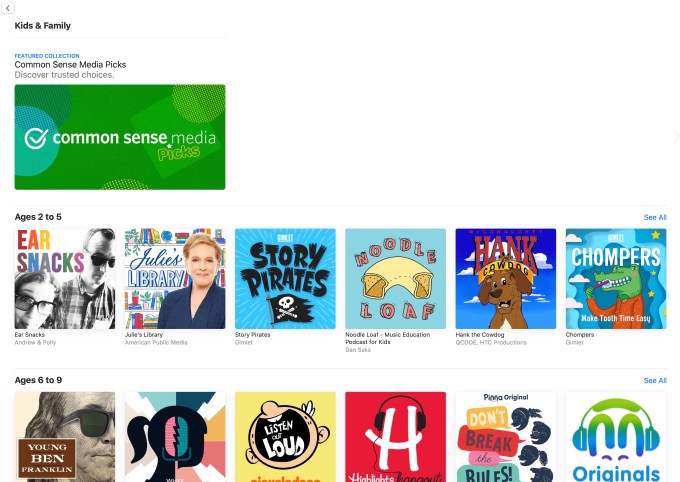
Via a new website at Apple.co/showsforkids (which launches Apple Podcasts), Apple has collaborated with Common Sense Media to group podcasts by age group as well as by theme. At launch, the collection features creators like Tinkercast, American Public Media, Gen-Z Media, Pinna, Tumble, Highlights, WNYC Studios, Rebel Girls, and Nickelodeon, among others.

In addition to groups by age, there are also four thematic collections available: Common Sense Media Picks, which are all-time family favorites; One More!, which features mysterious tales and action-packed dramas; Kids Know Best, which feature shows picked by kids themselves; and Story Time, which are story-driven shows.

Image Credits: screenshot of Apple Podcasts

The site will be updated monthly to feature new and popular shows and to introduce timely collections around historical and cultural moments, like Women’s History Month or Back to School ideas, Apple says.

The company also notes the selection of shows is curated using the same sort of research-backed approach that Common Sense Media applies to other entertainment, like TV shows, movies, books, apps and games.

The launch follows Apple’s recent debut of an “Apple for Kids” website that helps parents set up devices for kids and learn about Family Sharing options, highlighting an increased interest in catering to the needs of families.

But unlike with kids’ use of Apple devices, the current market for kids’ podcasts is small — none of Apple’s top 100 podcasts are directed towards kids, for example.

However, industry experts believe the kids market may grow alongside the overall adult podcast market. Plus, as Morning Consult recently reported, the COVID-19 pandemic has helped drive new interest in the audio format as parents struggled to keep kids entertained at home.

Case in point: one leading kids’ podcast, “Wow in the World” by NPR, saw 94% increase in downloads in the 13 weeks post-COVID compared with pre-COVID, the report said.

In another recent analysis, NPR’s 2020 Spoken Word Audio Report found that 15% of U.S. adults were now listening to children’s spoken word audio — an indication that many parents were already co-listening with kids. In addition, research from Kids Listen, a nonprofit advocacy group for kids’ podcast, found that 89% of kids who listen to podcast are ages 8 or under, Morning Consult pointed out.

Apple, it’s worth noting, has been rumored to be considering a new podcast subscription service to challenge Spotify, The Information reported year earlier this . In the weeks since that report, Apple has seemingly begun to pay more attention to the format, having launched a new editorial franchise, Apple Podcasts Spotlight, to highlight interesting creators.

Adding kids’ programing could play into Apple’s future ambitions, perhaps, as 64% of parents who listen to podcasts said they’re likely to purchase a paid subscription to podcasts for their kids.

The new collection is live in the U.S. in Apple Podcasts.

News: Europe’s Android ‘choice’ screen keeps burying better options

It’s been over a year since Google begun auctioning slots for a search engine ‘choice’ screen on Android in Europe, following a major antitrust intervention by the European Commission back in 2018. But despite hitting Google with a record-breaking fine over two years ago almost nothing has changed. The tech giant’s search marketshare remains undented

It’s been over a year since Google begun auctioning slots for a search engine ‘choice’ screen on Android in Europe, following a major antitrust intervention by the European Commission back in 2018. But despite hitting Google with a record-breaking fine over two years ago almost nothing has changed.

The tech giant’s search marketshare remains undented and the most interesting regional search alternatives are being priced out of a Google-devised ‘remedy’ that favors those who can pay the most to be listed as an alternative to its own dominant search engine on smartphones running Google’s Android OS.

Quarterly choice screen winners have been getting increasingly same-y. Alternatives to Google are expecting another uninspiring batch of ‘winners’ to drop in short order.

The results for Q1 2021 were dominated by a bunch of ad-targeting search options few smartphone users would likely have heard of: Germany’s GMX; California-based info.com; and Puerto Rico-based PrivacyWall (which is owned by a company whose website is emblazoned with the slogan “100% programmatic advertising”) — plus another, more familiar (ad)tech giant’s search engine (Microsoft-owned) Bing.

Lower down the list: The Russian ‘Google’ — Yandex — which won eight slots. And a veteran player in the Czech search market, Seznam.cz, which bagged two.

On the ‘big loser’ side: Non-tracking search engine, DuckDuckGo — which has been standing up for online privacy for over a decade yet won only one slot (in Belgium). It’s been come to be almost entirely squeezed out vs winning a universal slot in all markets at the start of the auction process.

Tree-planting not-for-profit search engine, Ecosia, was almost entirely absent in the last round too: Gaining only one slot on the screen showed to Android users in Slovenia. Yet back in December Ecosia was added as a default search option with Safari on iOS, iPadOS and macOS — having grown its global usage to more than 15 million users.

While another homegrown European search option — which has a privacy-focus — France’s Qwant, went home with just one slot. And not in its home market, either (in tiny Luxembourg).

If Europe’s regulators had fondly imagined that a Google-devised ‘remedy’ for major antitrust breaches they identified would automagically restore thriving competition to the Android search market they should feel rudely awakened indeed. The bald fact is Google’s marketshare has not even been scratched, let alone dented.

Statista data for Google’s search market share on mobile (across both Android and iOS; the latter where the tech giant pays Apple billions of dollars annually to be set as the default on iPhones) shows that in February 2021 its share in Europe stood at 97.07% — up from 96.92% in July 2018 when the Commission made the antitrust ruling.

Yes, Google has actually gained share running this ‘remedy’.

By any measure that’s a spectacular failure for EU competition enforcement — more than 2.5 years after its headline grabbing antitrust decision against Android.

The Commission has also been promoting a goal of European tech sovereignty throughout the period Google has been running this auction. President Ursula von der Leyen links this overrarching goal to her digital policy programming.

On the measure of tech sovereignty the Android choice screen must be seen as a sizeable failure too — as it’s not only failed to support (most) homegrown alternatives to Google (another, Cliqz, pulled the plug on its search+browser effort entirely last year, putting part of the blame on the region’s political stakeholders for failing to understand the need for Europe to own its own digital infrastructure) — but it’s actively burying the most interesting European alternatives by forcing them to compete against a bunch of ad-funded Google clones.

(And if Brave Search takes off it’ll be another non-European alternative — albeit, one that will have benefitted from expertise and tech that was made-in-Europe… )

This is because the auction mechanism means only companies that pay Google the most can buy themselves a chance at being set as a default option on Android.

Even in the rare instances where European players shell out enough money to appear in the choice list (which likely means they’ll be losing money per search click) they most often do so alongside other non-European alternatives and Google — further raising the competitive bar for selection.

It doesn’t have to be this way. Nor was it wasn’t initially; Google started with a choice screen based on marketshare.

However it very quickly switched to a pay to play model — throttling at a stroke the discoverability of alternative business models that aren’t based on exploiting user data (or, indeed, aren’t profit-driven in Ecosia’s case; as it uses ad-generated revenue to fund tree planting with a purely environmental goal).

Such alternatives say they typically can’t afford to win Google’s choice screen auctions. (It’s worth noting that those who do participate in the game are restricted in what they can say as Google requires they sign an NDA.)

Clearly, it’s no coincidence that the winners of Google’s auction skew almost entirely to the track and target side of the tracks, where its own business sits; all data-exploiting business models bandied together. And then, from a consumer point of view, why would you not pick Google with such a poorly and artificially limited ‘choice’ on offer — since you’re generally only being offered weaker versions of the same thing?

Ecosia tells TechCrunch it’s now considering pulling out of the auction process altogether — which would be a return to its first instinct; which was to boycott the auction before saying it felt it had to participate. A few months playing Google’s pay-to-play ‘no choice’ (as Ecosia dubs the auction) game has cemented its view that the system is stacked against genuine alternatives.  

Over two auction rounds when Ecosia has only ended up winning the one slot each time it says it’s seen no positive effect on user numbers. A decision on whether or not to withdraw entirely will be taken after the results of the next auction process are revealed, it said. (The next round of results are expected shortly, in early March.)

“We definitely realized it’s less and less ‘fun’ to play the game,” Ecosia founder Christian Kroll told us. “It’s a super unfair game — where it’s not only ‘David against Goliath’ but also Goliath gets to choose the rules, gets a free ticket, he can change the rules of game if he likes to. So it’s not amusing for us to participate in that.

“We’ve been participating now for nine months and if you look at overall marketshare in Europe nothing has changed. We don’t know the results yet of this round but I assume also nothing will change — the usual suspects will be there again… Most of the options that you see there now are not interesting to users.”

“Calling it a ‘choice’ screen is still a little bit ironic if you remove all the interesting choices from the screen. So the situation is still the same and it becomes less and less fun to play the game and at some point I think we might make the decision that we’re not going to be part of the game anymore,” he added.

Other alternative search engines we spoke to are continuing to participate for now — but all were critical of Google’s ‘pay-to-play’ model for the Android ‘choice screen’.

DuckDuckGo founder, Gabriel Weinberg, told us: “We are bidding, but only to help further expose to the European Commission how flawed Google’s rigged process really is, in hopes they will help more actively take a role in reforming it into something that actually works for consumers. Due to our strict privacy policy, we expect to be eliminated, same as last time.”

He pointed to a blog post the company put out last fall, denouncing the “fundamentally flawed” auction model — and saying that “whole piece still stands”. In the blog post the company wrote that despite being profitable since 2014 “we have been priced out of this auction because we choose to not maximize our profits by exploiting our users”.

“In practical terms, this means our commitment to privacy and a cleaner search experience translates into less money per search. This means we must bid less relative to other, profit-maximizing companies,” DuckDuckGo went on, adding: “This EU antitrust remedy is only serving to further strengthen Google’s dominance in mobile search by boxing out alternative search engines that consumers want to use and, for those search engines that remain, taking most of their profits from the preference menu.”

“This auction format incentivizes bidders to bid what they can expect to profit per user selection. The long-term result is that the participating Google alternatives must give most of their preference menu profits to Google! Google’s auction further incentivizes search engines to be worse on privacy, to increase ads, and to not donate to good causes, because, if they do those things, then they could afford to bid higher,” it also said then.

France’s Qwant has been similarly critical and it told us it is “extremely dissatisfied” with the auction — calling for “urgent modification” and saying the 2018 Commissio decision should be fully respected “in text and in spirit”.

“We are extremely dissatisfied with the auction system. We are asking for an urgent modification of the Choice Screen to allow consumers to find the search engine they want to use and not just the three choices that are only the ones that pay the most Google. We demand full respect for the 2018 decision, in text and in spirit,” said CEO Jean-Claude Ghinozzi.

“We are reviewing all options and re-evaluating our decision on a quarterly basis. In any case, we want consumers to be able to freely choose the search engine they prefer, without being limited to the only three alternative choices sold by Google. Consumers’ interests must always come first,” he added.

Russia’s Yandex confirmed it has participated in the upcoming Q2 auction. But it was also critical of Google’s implementation, saying it falls short of offering a genuine “freedom of choice” to Android users.

“We aim to offer high-quality and convenient search engine around the world. We are confident that freedom to select a search engine will lead to greater market competition and motivate each player to improve services. We don’t think that the current EU solution fully ensures freedom of choice for users, by only covering devices released from March 2020,” a Yandex spokeswoman said.

“There are currently very few such devices on the EU market in comparison with the total number of devices in users’ hands. It is essential to provide the freedom of choice that is genuine and real. Competition among service providers ultimately benefits users who will receive a better product.”

One newcomer to the search space — the anti-tracking browser Brave (which, as we mentioned above, just bought up some Cliqz assets to underpin the forthcoming launch of an-own brand Brave Search) — confirmed it will not be joining in at all.

“Brave does not plan to participate in this auction. Brave is about putting the user first, and this bidding process ignores users’ best interests by limiting their choices and selecting only for highest Google Play Store optimizing bidders,” a spokeswoman said.

“An irony here is that Google gets to profit off its own remedy for being found guilty of anti-competitive tying of Chrome into Android,” she added.

Asked about its strategy to grow usage of Brave Search in the region — outside of participation in the Android choice screen — she said: “Brave already has localized browsers for the European market, and we will continue to grow by offering best-in-class privacy showcased in marketing campaigns and referrals programs.”

Google’s self-devised ‘remedy’ followed a 2018 antitrust decision by the Commission — which led to a record-breaking $5BN penalty and an order to cease a variety of infringing behaviors. The tech giant’s implementation remains under active monitoring by EU antitrust regulators. However Kroll argues the Commission is essentially just letting Google buy time rather than fix the abusive behavior it identified.

“The way I see this at the moment is the Commission feels like the auction screen isn’t necessarily something that they’ve requested as a remedy so they can’t really force Google to change it — and that’s why they also maybe don’t see it as their responsibility,” he said. “But at the same time they requested Google to solve the situation and Google isn’t doing anything.

“I think they are also allowing Google to get the credit from the press and also from users that it seems like Google is doing something — so they are allowing Google to play on time… I don’t know if a real choice screen would be a good solution but it’s also not for me to decide — it’s up to the European Commission to decide if Google has successfully remedied the damage… and has also compensated some of the damage that it’s done and I think that has not happened at all. We can see that in the [marketshare] numbers that basically still the same situation is happening.”

“The whole thing is designed to remove interesting options from the screen,” he also argued of Google’s current ‘remedy’. “This is how it’s ‘working’ and I’m of course disappointed that nobody is stepping in there. So we’re basically in this unfair game where we get beaten up by our competitors. And I would hope for some regulator to step in and say this is not how this should go. But this isn’t happening.

“At the moment our only choice is to hang in there but at the moment if we really see there is no effect and there’s also no chance that regulators will ever step in we still have the choice to completely withdraw and let Google have its fun but without us… We’re not only not getting anything out of the [current auction model] but we’re of course also investing into it. And there are also restrictions because of the NDA we’ve signed — and even those restrictions are a little bit of a pain. So we have all the negative effects and don’t get any benefits.”

While limited by NDA in what he can discuss about the costs involved with participating in the auction, Kroll suggested the winners are doing so at a loss — pursuing reach at the expense of revenue.

“If you look at the bids from the last rounds I think with those bids it would be difficult for us to make money — and so potentially others have lost money. And that’s exactly also how this auction is designed, or how most auctions are designed, is that the winners often lose money… so you have this winner’s curse where people overbid,” he said.

“This hasn’t happened to us — also because we’re super careful — and in the last round we won this wonderful slot in Slovenia. Which is a beautiful country but again it has no impact on our revenues and we didn’t expect that to happen. It’s just for us to basically participate in the game but not risk our financial health,” he added. “We know that our bids will likely not win so the financial risk [to Ecosia as it’s currently participating and mostly losing in the auction] is not that big but for the companies who actually win bids — for them it might be a different thing.”

Kroll points out that the auction model has allowed Google to continue harvesting marketshare while weakening its competitors.

“There are quite a few companies who can afford to lose money in search because they just need to build up marketshare — and Google is basically harvesting all that and at the same time weakening its competitors,” he argued. “Because competitors need to spend on this. And one element that — at least in the beginning when the auction started — that I didn’t even see was also that if you’re a real search company… then you’re building up a brand, you’re building up a product, you’re making all these investments and you have real users — and if you have those then, if there was really a choice screen, people would naturally choose you. But in this auction screen model you’re basically paying for users that you would have anyway.

“So it’s really putting those kind of companies at a disadvantage: DuckDuckGo, us, all kinds of companies who have a ‘real USP’. Also Lilo, potentially even Qwant as well if you have a more nationalist approach to search, basically. So all of those companies are put at an even bigger disadvantage. And that’s — I think — unfair.”

Since most winners of auction slots are, like Google, involved in surveillance capitalism — gathering data on search users to profit off of ad targeting — if anyone was banking on EU competition enforcement being able to act as a lever to crack open the dominant privacy-hostile business model of the web (and allow less abusive alternatives get a foot in the door) they must be sorely disappointed.

Better alternatives — that do not track consumers for ads; or, in the case of Ecosia, are on an entirely non-profit mission — are clearly being squeezed out.

The Commission can’t say it wasn’t warned: The moment the auction model was announced by Google rivals decried it as flawed, rigged, unfair and unsustainable — warning it would put them at a competitive disadvantage (exactly because they aren’t just cloning Google’s ‘track and target for ad profit model’).

Nonetheless, the Commission has so far shown itself unwilling or unable to respond — despite making a big show of proposing major new rules for the largest platforms which it says are needed to ensure they play fair. But that raises the question of why it’s not better-enforcing existing EU rules against tech giants like Google?

When we raised criticism of Google’s Android choice screen auction model with the Commission it sent us its standard set of talking points — writing that: “We have seen in the past that a choice screen can be an effective way to promote user choice”.

“The choice screen means that additional search providers are presented to users on start-up of every new Android device in every EEA country. So users can now choose their search provider of preference when setting up their newly purchased Android devices,” it also said, adding that it is “committed to a full and effective implementation of the decision”.

“We are therefore monitoring closely the implementation of the choice screen mechanism,” it added — a standard line since Google begin its ‘compliance’ with the 2018 EU decision. 

In a slight development, the Commission did also confirm it has had discussions with Google about the choice screen mechanism — following what it described as “relevant feedback from the market”. 

It said these discussions focused on “the presentation and mechanics of the choice screen and to the selection mechanism of rival search providers”.

But with the clock ticking, and genuine alternatives to Google search being actively squeezed out of the market — leaving European consumers to be offered no meaningful choice to privacy-hostile search on Android — you do have to wonder what regulators are waiting for?

A pattern of reluctance to challenge tech giants where it counts seems to be emerging from Margrethe Vestager’s tenure at the helm of the competition department (and also, since 2019, a key shaper of EU digital policy).

Despite gaining a reputation for being willing to take on tech giants — and hitting Google (and others) with a number of headline-grabbing fines over the past five+ years — she cannot claim success in rebalancing the market for mobile search nor smartphone operating systems nor search ad brokering, in just the most recent Google cases.

Nonetheless she was content to green light Google’s acquisition of wearable maker Fitbit at the end of last year — despite a multitude of voices raised against allowing the tech giant to further entrench its dominance.

On that she argued defensively that concessions secured from Google would be sufficient to address concerns (such as a promise extracted from Google not to  use Fitbit data for ads for at least ten years).

But, given her record on monitoring Google’s compliance with a whole flush of EU antitrust rulings, it’s hard to see why anyone other than Google should be confident in the Commission’s ability or willingness to enforce its own mandates against Google. Complaints against how Google operates, meanwhile, just keep stacking up.

“I think they are listening,” says Kroll of the Commission. “But what I am missing is action.”


News: While eyeing a SPAC, Swedish autonomous EV company Einride nears $75 million in new funding

Swedish autonomous electric vehicle startup Einride is aiming to continue the momentum  sparked by partnerships with Oatly and Lidl,  by seeking additional capital, TechCrunch has learned.  Einride is seeking $75 million in new financing, while at the same time exploring the potential for a public listing through a special purpose acquisition company, according to people with

Swedish autonomous electric vehicle startup Einride is aiming to continue the momentum  sparked by partnerships with Oatly and Lidl,  by seeking additional capital, TechCrunch has learned. 

Einride is seeking $75 million in new financing, while at the same time exploring the potential for a public listing through a special purpose acquisition company, according to people with knowledge of the company’s plans.

SPACs, a mechanism in which a publicly traded shell company merges with a private business, have taken the U.S. capital markets by storm led, in part, by startups focused on the electrification of mobility.

Early successes of public listings for companies like Nikola (despite its dubious claims) helped set the stage for the SPAC boom. Canoo, Fisker Inc, ChargePoint and Lordstown Motors are just a few of the U.S. based EV companies that have gone public via a SPAC in the past year.

Unlike some newly minted SPAC companies, Einride has some fundamentals. The company has already piloted its technology through a partnership with Oatly, the Swedish oat milk maker.

Oatly began using Einride’s electric trucks on its delivery routes from each of its Swedish production sites in October 2020. Thus far, the trucks have driven over 8,600 electric km and as a result have saved over 10,500 kg of CO2 compared to diesel, according to a statement from the companies.

“Sustainability is at the core of everything we do, and we work hard to lower our emissions across the board. This includes our emissions for transports, which is why we are now shifting to electrical vehicles, which reduces our climate footprint by 87 percent on these routes,” said Simon Broadbent, Supply Chain Director at Oatly, in a statement at the time.

The deal with Oatly was just the beginning. As the ink dried on that partnership, Einride quickly signed other marquee Swedish businesses including the food shipping and logistics company Lidl and the electronics manufacturer Electrolux.

Big automakers have electric and autonomous plans of their own. Argo, a developer of self-driving technology, is now worth $7.5 billion thanks to an investment from Ford and the VW Group. Ad VW’s Traton Group is pushing low emission and electrification through a $2.2 billion investment announced in 2019.

Daimler, Paccar, and Volvo all have plans as well.

That’s just scratching the surface of the money that’s pouring in to autonomous, electrified transport. Of course, Tesla is in the game with its own semi truck and, in China, Plus AI, is automating a number of vehicles from Manbang, Suning, and FAW Jiefang.

All of this money is aiming to capture a portion of the market for autonomous, electrified vehicles that the consulting firm McKinsey estimated would save the trucking industry over $100 billion. It’s a potentially huge opportunity in the $260 billion U.S. trucking market alone. Worldwide, businesses spend about $1.2 trillion on trucking, according to McKinsey.

The benefits that would accrue to the industry are more than just financial. Trucking is a huge component of the greenhouse gas emissions that come from the transportation sector — which includes road, rail, air and marine transportation. In 2016, trucking and transport broadly contributed to roughly 24% of the world’s total greenhouse gas emissions — and that number has been steadily increasing.

Any reduction in carbon emissions from the transport sector would be a huge step forward on the path toward a more environmentally sustainable future.

No wonder venture investors are falling all over each other to invest in these companies. Einride counts  EQT Ventures and NordicNinja VC, a fund backed by Panasonic, Honda, Omron and the Japan Bank for International Cooperation, among its investors. Along with backing from Ericsson Ventures, Norrsken Foundation, Plum Alley Investments and Plug and Play Ventures the startup has raised $32 million to date.

News: Makers of ‘kid’s first virtual world’ Animal Jam targets Gen Z teens with Fer.al debut

Before kids graduate to the expansive virtual worlds in games like Roblox, Minecraft, and Fortnite, they often get their start in online social gaming with a game like Animal Jam. Here, kids learn to personalize their avatar, explore a world, chat with other players, and trade items in a safe environment with parental controls. Today,

Before kids graduate to the expansive virtual worlds in games like Roblox, Minecraft, and Fortnite, they often get their start in online social gaming with a game like Animal Jam. Here, kids learn to personalize their avatar, explore a world, chat with other players, and trade items in a safe environment with parental controls. Today, the company behind this popular title, WildWorks, is launching a new game, Fer.al, which builds on Animal Jam’s legacy while catering to a slightly older crowd of Gen Z teens.

“When we started talking about Fer.al, it was the idea of where do kids go when they age out of Animal Jam?,” explains Clark Stacey, co-founder and CEO of WildWorks. “Because there isn’t a transitional space between a completely walled garden like Animal Jam and…Instagram and the adult social networks and games that don’t have those same protections,” he continues.

“We knew we wanted to provide a place for these older kids to go where the walls are a little bit lower,” Stacey adds.

The new game is meant to cater to older kids — meaning young teens ages 13 to around 18 — who are now choosing their own games, have their own email address, and don’t need parental permission to play. The guardrails on chat also won’t be as high on Fer.al as on Animal Jam, and will focus more on preventing bullying and abuse than blocking words. Players will also be able to connect their online social accounts to their game accounts in the future.

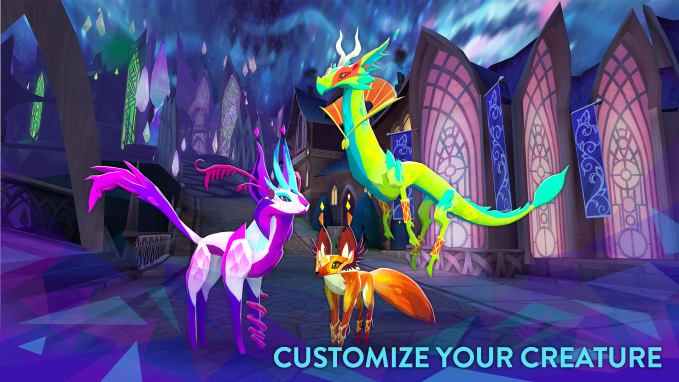
Image Credits: WildWorks

With Fer.al, WildWorks is introducing another animal-centered title, but this time it’s moving into the fantasy realm. Players choose between bipedal humanoid creatures based on folklore and myth including a Kitsune, Senri, Dragon, Jackelope, Werewolf, Kirin, or a Shinigami, with more to come i time.

The characters’ style was inspired by Animal Jam fan art, Stacey says, where kids would create animal avatars that were sort of a mix between manga, Animal Jam’s style, and other, older animation styles.

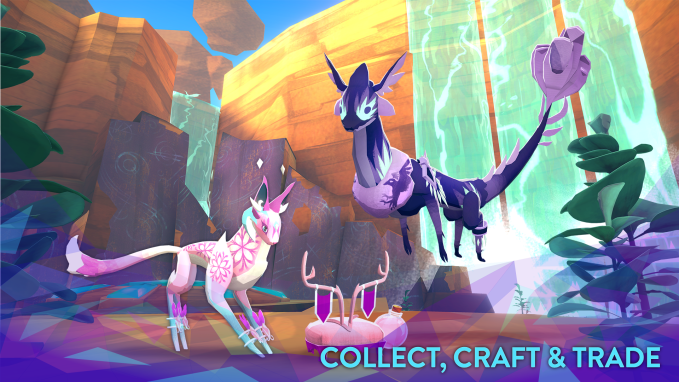
Like its predecessor, Fer.al players will also be able to personalize their character and change their appearance, design their personal space (this time, a “sanctuary” instead of a “den,”) discover a world where they can interact with other players, collect items and trade, and venture on quests. But the storyline has also evolved to reflect teens’ interests, including their growing understanding of social media and the desire to grow an online fan base.

The larger narrative involves a reality show where two warring queens, Aradia and Delilah — each with their own Instagram account, naturally — are angling for control. The company isn’t offering a lot of details as to how this narrative plays out in the long-term, but it will involve weekly and monthly contests as the game ramps up, in addition to the everyday missions and quests which are undertaken to gain ingredients to create new clothes or a new “glamour” (a rendering effect that goes around your character.)

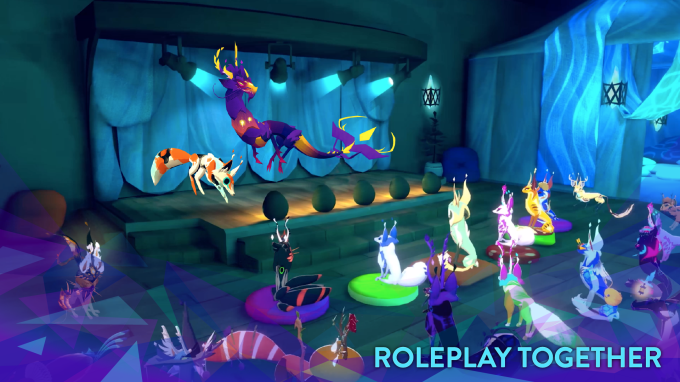
Image Credits: WildWorks

Much like Animal Jam — or even other virtual worlds like some Roblox games — players are meant to engage in cooperative gameplay to advance. There will be tasks you can’t complete on your own, meaning you’ll need to interact and chat. You will also be able to join factions, initially driven by the two queens, as the game advances.

Another notable aspect to Fer.al is that it’s largely designed to cater to girl gamers.

“It’s certainly not intended to be to the exclusion of boys who are in this age range,” explains Stacey. “But we recognize the fact that, among the most engaged Animal Jam players, it’s about 80% girls. We’ve leaned into that pretty heavily in Animal Jam — we’re trying to feature a lot of female scientists and working with them on causes that promote girls in STEM. So we know a lot of the built-in audience is coming from that,” he says.

“And I think the need that we recognized is that it’s not hard for adolescent boys to find online communities that jive with them. It’s pretty hard for girls to find the same thing. So, as we’re creating this this community — everything from the rules to the visuals — we are very conscious of that. And the people that we’re going to and asking for what works for you and what doesn’t, is primarily girls,” he adds.

Image Credits: WildWorks

Building off the Animal Jam fan base has been an advantage for getting Fer.al off the ground. Today, Animal Jam has anywhere between 2.5 million to 4 million monthly active users out of a total of 135 million registered accounts. The gulf between the registered and active figures is indicative of how many kids have since grew out of Animal Jam since its October 2010 launch. But Stacey admits the title has seen some decline since its peak usage, as well.

Still, there’s a lot of interest in what WildWorks does next, it seems.

Within a week of launching the Fer.al website, the game had 75,000 kids sign up to become beta testers. The testers were brought into the beta slowly, starting in April 2020, and initially on desktop only. Now, the beta version of the game sees daily actives in the low 10,000’s pre-launch. On the Apple App Store and Google Play, over 100,000 people have registered for the pre-release, as well.

Like Animal Jam, Fer.al will offer a freemium experience. But while Animal Jam generated nearly 80% of revenues through subscriptions, Fer.al will use a season pass model of monetization. Users buy the season — priced around $10 to $20 — via an in-app purchase, which will unlock unique items and experiences specific to that season. It expects to launch around 7 seasons per year.

Image Credits: WildWorks

The company didn’t offer seasons until later in the beta test, but Stacey says the conversion rate was at “the high end of our expectations so far on desktop.” If the mobile conversion rates remains as high as desktop, it will be in the range to start investing in user acquisition, he says. The company may also consider ads at a later date as well as merchandise, if all goes well.

Salt Lake City-headquartered WildWorks (formerly Smart Bomb Interactive) is majority owned by Signal Peak Ventures, which has invested $20+ million into the company over the years. The company shifted in 2008 to focus on its own IP, resulting in the launch of Animal Jam and other titles.

Over the past few years, WildWorks’ revenue — largely from Animal Jam and another game, Tag with Ryan — has ranged between $20+ million to below $30 million. If Fer.al is able to successfully capture the Animal Jam graduates who are looking to move up to “older kid” gameplay, it could grow that revenue base by a sizable amount.

Fer.al is launching publically today in all countries, and will be available initially in English. It can be played on PC, Mac, iOS and Android.


Early Stage is the premier ‘how-to’ event for startup entrepreneurs and investors. You’ll hear first-hand how some of the most successful founders and VCs build their businesses, raise money and manage their portfolios. We’ll cover every aspect of company-building: Fundraising, recruiting, sales, product market fit, PR, marketing and brand building. Each session also has audience participation built-in – there’s ample time included for audience questions and discussion.

News: A glimpse inside the minds of tech’s DEI leaders

Diversity and inclusion as an idea has been on the agenda of tech companies for years now. But the industry still lacks true inclusion, despite best efforts put forth by heads of diversity, equity and inclusion at these companies. At TC Sessions: Justice, I spoke with Uber Chief Diversity Officer Bo Young Lee, Netflix VP

Diversity and inclusion as an idea has been on the agenda of tech companies for years now. But the industry still lacks true inclusion, despite best efforts put forth by heads of diversity, equity and inclusion at these companies.

At TC Sessions: Justice, I spoke with Uber Chief Diversity Officer Bo Young Lee, Netflix VP of Inclusion Strategy for Product Wade Davis and Facebook VP of workplace diversity and inclusion Sandra Altine about the work that still needs to be done, the effects of California’s Proposition 22 and more.


On last summer’s racial justice uprising

Last summer, after the murder of George Floyd and the subsequent collective consciousness around racial injustice in the U.S., many tech companies spoke out about racism and equality. Davis said he was happy to see more people speaking about those issues but also a bit frustrated that “it takes something like that for folks to get truly engaged.”

Davis: And inside of Netflix, one of the things that I was really intentional about is to tell our employees who are not Black, right, to not ask our employees how they feel but for them to be much more introspective of what it felt like for them, right, as a white person, or however they identify for them to do the introspection. Because that’s what it means to be an ally — to not put the labor on the group that that is already feeling the impact and the oppression. And what we found was that many of our employees, for the first time had to wrestle with like, what it means to be white. What it means to be in a situation where you are seeing someone who looks like you take the life of someone who looks like me. So we really tried to switch the actual narrative and the conversation to not add more labor and trauma on our Black employees. (Timestamp: 1:10)

Lee said she was a bit skeptical at the time because we’ve seen this type of response before in light of the violent killings of Black people.

Lee: And then within a few weeks you see that interest and that focus wane once more. So I was skeptical that the enthusiasm would continue and enthusiasm in a way to try to solve all of our racism problems in a short period of time. I was surprised that it did continue. (Timestamp: 3:31)

In her conversations with her counterparts at Uber, Lee said she wanted to make sure that the company didn’t make such a wide commitment that “those commitments became nothing more than virtue signaling at the end of the day.”

Lee: I said to my leadership, if you really want to come out and make some bold statements about being anti-racist, I’m going to create almost a litmus test to make sure that you really understand what that means because I don’t want to go up as a company to say we’re going to be anti-racist and then do nothing about it because that just relives and rehashes the injustices that we’ve seen in the past. (Timestamp: 4:25)

So when Uber’s first post-anti-racism diversity report came out, and it showed Uber’s Black employee base declined, Lee said at the time that was not acceptable.

Lee: I think part of the commitments we made around being really anti-racist is transparency at all costs, even when we know that transparency could potentially make us look, not reflect as positively on us. So the question did go back, as you know, when we were putting together our diversity report is, ‘wow, these numbers are not where we want them to be. None of us are happy about it.’ But in our commitment of being accountable, you know, we want the public to hold us accountable. We want people to hold accountable, we want to be accountable to our workforce, we’re going to be as transparent about why that decline in black employees happened and underrepresented people happened, what the cause was and what we are doing. (Timestamp: 6:11)


On being early in the DEI journey

Netflix, despite having previously reported diversity numbers, only released its first official diversity report this year. That’s partly because the team has only been in place for the last three years, Davis said.

Davis: So we’re still at the awareness building phase, like from a foundational standpoint, and we’re really trying to double down so that folks know why I&D matters. Like, what it actually is, and how it impacts all of us. Because oftentimes, folks think of all of these isms and phobias as something that happens to other people. But if we can really make folks understand that there’s a cost to all these isms, and phobias to all of us individually, interpersonally, culturally, and and institutionally, then it makes it easier down the road when folks start to feel somewhat fatigued, right? Because there is always that fatigue factor. So we’re really trying to get ahead of that. And to have folks to think through like, what is in it for me, and what is in it for my colleagues. (Timestamp: 17:33)

Sharing the DEI load

Too often does the work of DEI fall on just a handful of people. At Netflix, Davis said it’s important that there is a shared load, and that all of its leaders are able to speak to the importance of diversity at the company.

Davis: And I would say our other largest goal is to make sure that all of our leaders can speak to the importance of AI and be more than just a talking point. So how do we build a model that’s a train the trainer model, where each of our leaders has a one to one inclusion coach, which requires them to have monthly sit downs with their inclusion partner, where they go on a real intensive journey, so that they can understand how does their leadership style need to evolve and adapt and expand and flex to meet the needs of a larger set of individuals and not the historical ones who folks have engaged with? And we found that to put our leaders on the spot, so that when someone calls me to give a talk, I can say ‘No, our COO Greg Peters is just as competent and capable to sit on this panel about inclusion as I am.’ And we feel that we’re modeling and signaling to our entire organization that this is not just a nice to have, but it’s part and parcel to your success as an employee, as a leader and to our success as an organization. (Timestamp: 18:26)


On Prop 22’s impact on people of color

Prop 22 went into effect in California earlier this year after a contentious battle where one side, including Uber, Lyft and other tech companies, wanted workers to remain independent contractors and the other side wanted gig workers to be made employees and therefore entitled to more benefits. Prop 22’s passage was a win for Uber and its counterparts, which collectively spent north of $200 million on its campaign efforts.

Some have wondered how Uber can reconcile its commitment to anti-racism given that many gig workers are people of color. Lee, however, pushed back on that characterization:

Lee: I would challenge some of those that believes that Prop 22 actually disproportionately hurts people of color. If you actually look at the way the civil rights organizations that came out in support of Prop 22, the NAACP of Northern California and Hawaii came out in support of Prop 22, most of the Hispanic civil rights organizations as well. (Timestamp: 24:59)

Prop 22, of course, was in response to the passage of AB 5, which set new standards of worker classification that were designed to make it harder for companies to classify workers as independent contractors.

Lee: And you looked at the way those exceptions were being made to AB 5, you saw that the exceptions were disproportionately being made for those IC — you know, independent contractor roles that were predominantly represented by white workers. And they were all getting exceptions from AB 5. And then you look at the roles that were predominantly represented by people of color, especially underrepresented people of color, and those roles were not getting exceptions in AB 5. […] For me, how I define racism isn’t based on intent but it’s based on impact. And when I see that kind of level of disparate, disproportionate impact, that’s when I think about, you know, what is racist or not. So I would challenge this notion that [Prop 22] actually disproportionately hurt people of color, especially given that we had civil rights organizations that said we support Prop 22. So, I don’t think there’s anything that really needs to be reconciled, from my perspective and from the organization’s perspective. (Timestamp: 24:59)

You can read the entire transcript here.


Early Stage is the premier ‘how-to’ event for startup entrepreneurs and investors. You’ll hear first-hand how some of the most successful founders and VCs build their businesses, raise money and manage their portfolios. We’ll cover every aspect of company-building: Fundraising, recruiting, sales, product market fit, PR, marketing and brand building. Each session also has audience participation built-in – there’s ample time included for audience questions and discussion.

News: Tesla’s utility-scale batteries are coming to Texas 

Elon Musk is bringing his utility-scale battery ambitions to the Lone Star state.  An under-the-radar Tesla subsidiary has been at work building a 100 MW energy storage project in Angleton, Texas, according to an application with the Public Utilities Commission of Texas and other documents. Bloomberg was the first to report on the documents and

Elon Musk is bringing his utility-scale battery ambitions to the Lone Star state. 

An under-the-radar Tesla subsidiary has been at work building a 100 MW energy storage project in Angleton, Texas, according to an application with the Public Utilities Commission of Texas and other documents. Bloomberg was the first to report on the documents and link a previously unknown subsidiary to Tesla. 

Gambit Energy Storage LLC applied for an application with the Public Utilities Commission of Texas, the regulatory body charged with overseeing the state’s electric utilities, in June of last year. Gambit said in the application, viewed by TechCrunch, that it intends to provide wholesale electricity and grid-balancing services on the Energy Reliability Council of Texas grid. The project is located in Angleton, a town about 50 miles west of Galveston near the Gulf Coast. 

The project’s proposed date of commercial operation is June 1, according to reporting from Bloomberg. 

The Texas grid has been under the microscope since mid-February, when an unprecedented blast of Arctic weather knocked 46,000 MW of power off line at its peak—more than a third of the system’s overall generation capacity. The disaster left millions of Texans in sub-freezing temperatures for days. The ERCOT Board of Directors fired its CEO and the chair of the PUCT resigned in the wake of the catastrophe, while legislators at the capital mull major changes to Texas power market operations.

Tesla already has contracts for battery storage systems with California Utilities Southern California Edison and PG&E, but this is the company’s first major project elsewhere. 


Early Stage is the premier ‘how-to’ event for startup entrepreneurs and investors. You’ll hear first-hand how some of the most successful founders and VCs build their businesses, raise money and manage their portfolios. We’ll cover every aspect of company-building: Fundraising, recruiting, sales, product market fit, PR, marketing and brand building. Each session also has audience participation built-in – there’s ample time included for audience questions and discussion.

News: Vendr raises huge $60M Series A as its SaaS-purchasing service scales

This morning Vendr announced a $60 million Series A round, a huge funding event led by Tiger Global, with participation from Y Combinator, Sound Ventures, Craft Ventures, F-Prime Capital, and Garage Capital. The outsized Series A comes after Vendr last raised $4 million in a mid-2020 seed round, with TechCrunch reporting that the company was

This morning Vendr announced a $60 million Series A round, a huge funding event led by Tiger Global, with participation from Y Combinator, Sound Ventures, Craft Ventures, F-Prime Capital, and Garage Capital.

The outsized Series A comes after Vendr last raised $4 million in a mid-2020 seed round, with TechCrunch reporting that the company was profitable at the time. Vendr had raised just over $6 million total before this latest round.

TechCrunch had a few questions. First, how the company had managed to attract so much capital so quickly. According to an interview with Vendr CEO Ryan Neu, his startup grew just under 5x in 2020, and was cash flow-positive last year as well. The startup’s model of standing between SaaS buyers and sellers, speeding up transactions while lowering their cost, appears to have fit well into 2020’s twin trends of rising software reliance and a focus on cost-control.

Second, how did the company manage to grow so much? Vendr charges its customers between 1% and 5% of their software spend that it manages, which can add up. Neu told TechCrunch that a somewhat standard 500 person company might spend $2 million to $3.5 million on software each year, which by our math would make that company worth no less than $20,000 to $35,000 in revenue for Vendr at 1% of spend. At Vendr’s midpoint 2.5%, those figures rise $50,000 to $87,500.

At those prices, Vendr can stack up annual revenue pretty quickly. But why would Vendr customers pay it to handle their software spend? Savings, effectively. So long as they save more than Vendr charges, they are coming out ahead. And as the startup claims that it can cut the time to buying, its own customers can reduce time spent on securing tooling.

Everyone wins, it seems, except for software sellers. After all, they are the ones losing a chance to get less-sophisticated buyers to pay more for their code, right? Neu said that his company’s model isn’t too bad for selling companies as they close deals much more quickly, at a higher rate of closure. That could save their sales team time, which might help balance the price differentia.

Pressed on what Vendr might be able to do for the selling side of the software market given its present-day buyer focus, the Neu declined to share any possible plans.

Returning to the round, why did Vendr raise the money at all if it was doing just fine sans new external funding? The company told TechCrunch that it has scaled its staff to 60 from 10 a year ago, and that it wanted a stronger balance sheet. That’s fine. We’d be hard pressed to find the startup that wouldn’t take such a large check from Tiger, given the valuation gain the raise implies for Vendr, so there isn’t too much mystery to unpack.

A theme that TechCrunch has explored in recent weeks has been the huge depth of the software market. Given the TAM for bits and bytes, Vendr may be able to keep up the hypergrowth that its new round implies its investors will expect. Let’s see how 2021 winds up for the company.


Early Stage is the premier ‘how-to’ event for startup entrepreneurs and investors. You’ll hear first-hand how some of the most successful founders and VCs build their businesses, raise money and manage their portfolios. We’ll cover every aspect of company-building: Fundraising, recruiting, sales, product market fit, PR, marketing and brand building. Each session also has audience participation built-in – there’s ample time included for audience questions and discussion.

News: Olo’s IPO could value the company north of $3B as Toast waits in the wings

Targeting $16 to $18 per share, Olo could raise as much as $372.6 million in its public offering.

Olo, the New York-based fintech startup that provides order processing software to restaurants, shared its initial IPO price range this morning. The company’s debut comes ahead of the expected IPO of Toast, a Boston-based unicorn with a similar market remit.

Targeting $16 to $18 per share, Olo could raise as much as $372.6 million in its public offering.


The Exchange explores startups, markets and money. Read it every morning on Extra Crunch, or get The Exchange newsletter every Saturday.


Unlike most companies going public in recent quarters that we’ve tracked, Olo has a history of growth and profitability, making its impending pricing all the more interesting. It’s unknown if Toast is profitable, but because most venture-backed IPO aren’t, we’re presuming it isn’t.

This morning, we’re doing our usual work: parsing the company’s pricing interval to get a valuation range for Olo. We’ll calculate both simple and fully diluted pricing and then do some quick work on its revenue scale to come to grips with its total scale.

Are investors willing to pay more for profits? And, if so, how much? This is a niche question because most IPOs look a bit more like Coursera than Olo, but it’s still worth answering.

Olo’s IPO valuation range

If you’d like to follow along, you can read the new S-1 filing here. Our first look at Olo is here, and its fundraising history is here, per Crunchbase.

The company is targeting $16 to $18 per share with an expected sale of 18 million shares. The company is also reserving 2.7 million shares for its underwriters. At the upper end of its range, not counting shares reserved for its bankers, Olo could raise $324 million in its debut.

Per the company, its total number of Class A and B shares outstanding after its IPO would come to 142,012,926, or what we calculate to be 144,712,926 shares, including its underwriters’ option. Using the latter — because we tend to look for valuation extremes — Olo would be worth $2.32 billion to $2.60 billion.

But what about its fully diluted valuation? Adding in shares that are currently tied to un-exercised but vested stock options bring Olo to around 188,085,714 shares. Add in the underwriters’ option and the total rises to 190,785,714 shares.

Using the latter figure, at $16 and $18 per share Olo could be worth $3.05 billion to $3.43 billion on a fully diluted basis.

Is that expensive?

Let’s find out! Digging back into Olo’s growth, we can see a business with rapidly expanding software incomes. And the same software revenues are improving in quality over time. From 2019 to 2020, for example, Olo’s “platform” revenues — a mix of subscription and transaction top-line from software — grew from $45.1 million to $92.8 million. Over the same time, the company’s platform revenue saw its gross margin improve from 73.6% to 84.5%.

News: Investors discuss alt-financing and the role of venture capital

There are so many ways to secure capital for your startup beyond traditional venture capital, from crowdfunding to debt financings to revenue-share agreements. But is all money created equal if you are on route to becoming a billion-dollar business? Dr. Astrid Scholz, the co-founder of Zebras Unite, Sydney Thomas, a principal at Precursor Ventures, and

There are so many ways to secure capital for your startup beyond traditional venture capital, from crowdfunding to debt financings to revenue-share agreements. But is all money created equal if you are on route to becoming a billion-dollar business? Dr. Astrid Scholz, the co-founder of Zebras Unite, Sydney Thomas, a principal at Precursor Ventures, and Brian Brackeen, the founding partner of Lightship Capital, joined us as TC Sessions: Justice to discuss alternative pathways to funding, and if the democratization of capital is a facade.


On the choice to stay away from traditional venture capital

Scholz is currently building out Zebras Unite, a founder-led cooperative that is focused on making startups more sustainable, ethical and inclusive. During the panel, she mentioned that the capital arm of Zebras Unite could have been a traditional fund, but the organization ultimately decided to pursue more creative alternatives, such as the Future Economy Lab. This lab, which focuses on helping founders find financing instruments that fit their sectors, took place in Montreal with a focus on climate tech.

Scholz shared why she went for this route, versus a traditional fund:

In the big scheme of things, [VC] really is just a tiny drop in the large capital pool of capital that’s out there. And then on the other extreme, you have bank loans. That may or may not be accessible to startup founders, especially if they’re from certain demographics in this country. Of course we have a massive racial wealth gap and access to capital.

To me, that sounds just like two flavors of capital: vanilla and chocolate. It’s not interesting, if that was an ice cream store, it was not interesting. At Zebras Unite, we’re looking to increase the diversity of capital, as well as the diversity of managers of capital. So we’re very interested in revenue based financing mechanisms. We’re very interested in non-dilutive early stage forms of support to entrepreneurs who don’t have friends and family wealth. We were looking at new sort of character-based lending instruments and a bunch of blended approaches, so there’s more room on the capital spectrum to color in, beyond the two ends of the spectrum. (Timestamp: 3:52)


On why venture capital paths can be formed around a more inclusive strategy

Now, venture capital isn’t the devil, and in a market as hot as right now it’s clear that there is a huge demand to back great ideas. The problem starts when you look at which ideas get backed versus which don’t, and underrepresented founders lose out at a disproportionately higher rate than white founders.

Standards help everyone get on the same page, and in venture, any clarity around how one investor cuts checks versus another can help curb signaling risk and help set expectations on early-stage founders. Lightship Capital uses traditional venture capital but applies it in a way Brackeen thinks is more inclusive to founders.

Oftentimes, VCs talk about designing your product for your customer, but then they don’t design themselves around the customer. They completely ignore what they tell people to do. And so we’re designed for the underrepresented founders. And for us, that’s women, minorities, lgbtq, plus disabled. And so the capital path for that founder is different from the white male Zuckerberg founder. Oftentimes, a Series A is very, very difficult, so we bridge that. We’ll write a smaller check – half a million dollars first – and then we’ll reserve $1.5 million so they can go out and get a Series A done. And so to do that, we don’t require board seats and things of that nature, we do require strong collaboration. (Timestamp: 7:03)


On how your first check could impact your next check

Thomas noted that Indie.VC, an alternative financing program that was aimed at slow-growth, bootstrapped founders, shutting down this past week could be a lesson for founders who look to finance their companies from the plethora of programs out there.

They were at the frontiers of building access to new capital. I think one of the things that we saw when we would talk to founders who were considering Indie.vc capital versus our capital was, ‘does the investor that you would like after you get that Indie.vc funding, if you decide to go to a more traditional VC firm? Can they actually even do revenue based financing investments, some people actually legitimately can’t because of the regulatory limits of their fund.(Timestamp: 16:28)

She went on to explain how this isn’t simply a one-off problem that could happen with. Precursor founding partner Charles Hudson penned a post, months ago, about the messiness in early-stage cap tables.

I don’t want to say it’s unfair, but you have to make a pretty final decision, pretty early on in what type of company you want to build. And I don’t think that allows for a lot of the flexibility that is the reality of building a startup. When you pivot like five to 10 to 20 to 30 times before you finally get to something that, you know, matters. And so how do we also allow for more flexibility between multiple different types of revenue structures? I just don’t think that exists right now. (Timestamp: 17:12)

Brackeen added that his form loves non-dilutive financing before, and after, they are nicest. Pitch competitions might help a startup launch, but it won’t help founders get from stage to stage. This banter basically answers the question that I set early on: is all capital created equal in the eyes of investors? A cap table filled with different types of financing structures and notes, as Thomas mentions, could lead to your next check investor declining to invest based on a semantic versus a lack of believing in your vision. One side effect we see here is recapitalizations, an event where startups restructure their entire cap table to squeeze out old investors, bring on new ones and shift the way equity and debt is managed.

Scholz chimed in about how startups should think about capital limitations, but also other corporate structures that could shape the trajectory of a startup.

I think that point about founders basically getting locked into a corporate structure and an investment strategy before they even really know what they’re building or how it’s selling is just so important. I always joke, you know, like 99 out of 100, corporate lawyers will tell you to incorporate as a Delaware C. [But] that may or may not be the right answer. There may be a good reason to become a cooperative, and incorporating as a Delaware C will make your life very difficult. (Timestamp: 17:46)


On if VC will be even more relevant five years from now

The conversation turned into a broader discussion on if venture capital will be as relevant as it is today, five years from now. While Scholz said that she doesn’t even think venture is that important today, the two venture capitalists on the panel – Brackeen and Thomas – were good sports about the future of the asset class they have bet their careers on.

Thomas: The IPOs just keep on coming, and they keep getting bigger. It’s crazy. I think that there is recreating an immense amount of wealth, and that we need to be thoughtful, we need to be careful. And we need to be just considerate of that fact. And so I plan to be in venture for the next ten years. But I Ithink, to Astrid’s point, we are not the only ones on the island. We are connected to all of these other different capital structures, and different communities. But my bet is still here. (Timestamp 25:14)

Brackeen: Capital will continue to play a large role in capitalism, because the two are hand in hand. And venture capital is a version of that. Watch what we do. To see billions of dollars go into these geographies, these communities, these groups, the value creation is outrageous. Morgan Stanley, and others say that racism and sexism cost this country somewhere between $4 trillion and $16 trillion in kind of untapped value. So venture capital can be a key lever in opening that faucet. (Timestamp: 25:52)

You can read the entire transcript here.


Early Stage is the premier ‘how-to’ event for startup entrepreneurs and investors. You’ll hear first-hand how some of the most successful founders and VCs build their businesses, raise money and manage their portfolios. We’ll cover every aspect of company-building: Fundraising, recruiting, sales, product market fit, PR, marketing and brand building. Each session also has audience participation built-in – there’s ample time included for audience questions and discussion.

WordPress Image Lightbox Plugin