Tag Archives: Blog

News: Investors get a rise out of Walmart’s agreement to stock more Beyond Meat

Beyond Meat shares soared today on the heels of an announcement that Walmart is beefing up its relationship with the purveyor of meatless protein patties, sausages, and balls. 900 stores will now be stocking Beyond Meat’s hot Italian sausages and its party packs of beefless burgers — those grilling delectations for the omnivores, vegetarians and

Beyond Meat shares soared today on the heels of an announcement that Walmart is beefing up its relationship with the purveyor of meatless protein patties, sausages, and balls.

900 stores will now be stocking Beyond Meat’s hot Italian sausages and its party packs of beefless burgers — those grilling delectations for the omnivores, vegetarians and vegans who no longer want to ask “Where’s the beef?”

Beyond Meat’s increased distribution at Walmart stores is the second jump in production over the past year and part of the company’s efforts to lock down the market for plant-based meat substitutes.

The company’s foods are now sold in over 28,000 stores, and it’s also pulling ahead in the food service industry, where it recently announced deals with Yum Brands and McDonalds.

Shares of the company’s stock ended the day up 3.16% or $4.28 as investors ate up the news.


“We are thrilled by the continued growth with Walmart and the opportunity to offer Walmart customers increased accessibility to a larger selection of our delicious and better-for-you plant-based products,” said Chuck Muth, Chief Growth Officer, Beyond Meat. “As more households continue to buy our products and buy them more frequently, we’re excited to satisfy the growing demand through increased product offerings and distribution.”

The partnership with Walmart, which dates back to 2015 is significant, but not nearly as attention grabbing as the company’s elaboration on recent agreements with McDonalds and Yum! Brands — the brains behind KFC and the two franchises that launched America’s greatest fast food hip hop anthem.

In late February, Beyond Meat opened up about its deals with Yum! Brands and McDonald’s that would see the company work to co-create plant-based protein menu items for KFC, Pizza Hut, and Taco Bell along with the famous golden arches fo McDonald’s.

That details of the agreement withYum! included the expansion of testing the company’s Beyond Fried Chicken in other U.S. cities with KFC. And the launch of the Beyond Italian Sausage Pizza and the Great Beyond Pizza nationwide, becoming the first national pizza chain to introduce a plant-based meat pizza coast-to-coast, the company’s said in a statement at the time.

The McDonald’s announcement fleshed out the meatless details of a partnership that was previously announced when the fast food giant unveiled its McPlant sandwich — a kind of face plant for Beyond given that it couldn’t confirm the details of the agreement at the time.

Now, other plant-based menu items — including options for chicken, pork, and egg products, have been unveiled as part of the broader McPlant platform, the companies said in February.

“Our new McPlant platform is all about giving customers more choices when they visit McDonald’s,” said Francesca DeBiase, McDonald’s Executive Vice President and Chief Supply Chain Officer, said at the time. “We’re excited to work with Beyond Meat to drive innovation in this space, and entering into this strategic agreement is an important step on our journey to bring delicious, high quality, plant-based menu items to our customers.”

It’s been a busy year for the branding geniuses at Beyond Meat, who also inked a deal with Pepsi to develop protein enhanced snacks and beverages under the tragically named PLANeT Partnership.


News: Daily Crunch: Dropbox acquires DocSend for $165M

Dropbox acquires a secure document-sharing startup, Sonos announces a new speaker and Google makes hotel listings free. This is your Daily Crunch for March 9, 2021. The big story: Dropbox acquires DocSend for $165M Dropbox already acquired electronic signature company HelloSign in 2019. By acquiring DocSend — which allows customers to share and track documents

Dropbox acquires a secure document-sharing startup, Sonos announces a new speaker and Google makes hotel listings free. This is your Daily Crunch for March 9, 2021.

The big story: Dropbox acquires DocSend for $165M

Dropbox already acquired electronic signature company HelloSign in 2019. By acquiring DocSend — which allows customers to share and track documents using a secure link — it’s giving its platform an end-to-end, secure document-sharing workflow.

“We’re announcing that we’re acquiring DocSend to help us deliver an even broader set of tools for remote work, and DocSend helps customers securely manage and share their business-critical documents, backed by powerful engagement analytics,” said Dropbox CEO Drew Houston.

One thing the two companies have in common: Both of them launched, years apart, at TechCrunch events.

The tech giants

Sonos goes full portable Bluetooth speaker with the $169 Roam — The smaller, lighter, more ruggedized and waterproof design puts it more in line with popular offerings from companies like JBL.

After similar moves for Shopping and Flights, Google makes hotel listings free — This change should give users a more comprehensive look into hotel room availability.

French startup lobby targets Apple with ‘privacy hypocrisy’ complaint — Apple is facing another privacy complaint in Europe.

Startups, funding and venture capital

Wefarm adds $11M to expand its network for independent farmers, now at 2.5M users — The startup has built a social networking platform to help independent farmers meet each other, exchange ideas and sell or trade equipment and supplies.

Entertainment payroll startup Wrapbook raises $27M round led by a16z — The money comes from noteworthy names in both the tech and entertainment worlds.

Eye surgery robotics startup ForSight raises $10M — ForSight looks to bring its offerings to international markets, pending the sorts of regulatory approvals that go into launching a robotic surgery platform.

Advice and analysis from Extra Crunch

Four ways startups will drive GPT-3 adoption in 2021 — The introduction of GPT-3 in 2020 was a tipping point for artificial intelligence.

Global-e files to go public as e-commerce startups enjoy a renaissance — The company’s business exploded in 2020.

(Extra Crunch is our membership program, which helps founders and startup teams get ahead. You can sign up here.)

Everything else

Memes for sale — We talk to Chris Torres, the Nyan Cat creator who has organized an informal collection of meme originators into a two-week-long auction of their works.

Backstage Capital’s Arlan Hamilton discusses how to find the next unicorn — Hamilton joined us at TC: Sessions Justice to chat about how she vets founders, the changing role of venture capital and how raising money from the community versus institutional LPs can impact Backstage strategy.

The Daily Crunch is TechCrunch’s roundup of our biggest and most important stories. If you’d like to get this delivered to your inbox every day at around 3pm Pacific, you can subscribe here.

News: Audience engagement startup Trufan raises $2.3M

Trufan, a startup selling tools helping marketers analyze their social followings and collect audience data, announced today that it has raised a $2.3 million seed round. Despite raising a relatively small amount of funding ($4.1 million total), Trufan has already made two notable acquisitions. First, it acquired the SocialRank product and business in 2019, allowing

Trufan, a startup selling tools helping marketers analyze their social followings and collect audience data, announced today that it has raised a $2.3 million seed round.

Despite raising a relatively small amount of funding ($4.1 million total), Trufan has already made two notable acquisitions. First, it acquired the SocialRank product and business in 2019, allowing it to offer capabilities like showing brands their most valuable social media followers. Then last year, it acquired Playr.gg, which marketers use to run giveaways that consumers enter by providing information such as their email addresses.

Across its products, Trufan says it has more than 10,000 free users and more than 600 paying customers, including Netflix, NBA, NFL, Sony Music and United Talent Agency.

Next up, the startup plans to integrate the two main products and launch a consolidated, privacy-compliant customer data and audience engagement platform with new branding and pricing. Co-founder and CEO Swish Goswami told me that the platform should be particularly attractive as regulators introduce new privacy regulations, Apple and Google add new restrictions to ad targeting based on third-party data and as consumers become more sensitive to how their data is used.

Trufan Founders

Trufan founders Aanikh Kler and Swish Goswami. Image Credits: Trufan

“People do not want to be tracked anonymously,” Goswami said. “People do not want their data taken away, but most of those people are attracted to the idea of data sharing if they get something in exchange.”

He added that it’s particularly important for brands to build up first-party customer data given the limitations of social networks: “You can have 50 million followers, but every time you post you don’t reach 50 million people.” If you’ve got 50 million email or phone numbers, on the other hand, you might actually reach most of those inboxes or phones.

The new funding comes from Moneta Ventures, with Moneta partner Sabya Das joining Trufan’s board of directors. GP Ventures, Protocol Ventures and Athlete Technology Group also participated, as did angel investors including Innovative Fitness founder Curtis Christophersen, Utah Jazz forward Derrick Favors and Chicago Bulls forward Thaddeus Young.

“Trufan is miles ahead in recognizing and removing roadblocks in the customer data space,” Das said in a statement. “We are excited to be backing them because they truly are all-star founders with an incredible team alongside them, and we believe in their conviction and ability to solve the first-party data problem.” 


News: Proactive CEOs should prioritize European expansion

The best CEOs are globally ambitious, and they know that unlocking Europe’s growth potential remains a critical step on the road to IPO.

Brennan O’Donnell
Contributor

As a partner in FrontlineX, Brennan O’ Donnell is focused on helping growth stages companies expand into Europe. Previously, he spent nearly a decade at Google, where he held multiple go-to-market leadership roles in the U.S. and EMEA, building teams across both the Cloud and Ads businesses.

In 2008, I was moving to London as the global financial crisis slammed the brakes on growth for millions of businesses.

Five years earlier, I had been sent to Dublin from headquarters in Mountain View to help manage Google’s European expansion, and despite our incredible growth, the macroeconomic situation put us in an immediate defensive posture and led us to throttle back our ambitious plans.

Nearly one year ago, faced with the uncertainty of a global pandemic, companies across the world again moved into triage mode. Employees were laid off, budgets were slashed and growth opportunities were pushed down the priority list.

However, as we enter the spring of 2021, the world is a dramatically different place. Tech stocks are stronger than ever amid record-setting IPOs, vaccines are here and revenue growth is again a top priority for B2B SaaS startups.

There are ultimately three ways to drive growth in a technology startup: extend your product offering, move into new segments or expand into new markets. Developing new products or moving into new segments may seem like a more comfortable path, but scaling a high-performing business into new markets represents massive financial upside, particularly when well-executed.

Look at some of the top-performing SaaS businesses of the past few years — 31% of Zoom’s revenue comes from outside the U.S. International revenue is 38% for Slack, 39% for Asana and 48% for Dropbox. If your company survived the past year, now is the time to shift from defense to offense and prioritize international expansion.

Your best growth lever is Europe

At $27.5 trillion, EMEA represents 38% of the world’s GDP and is the largest addressable market outside of America. Europe is the world’s second-largest B2B software market, and for more than two decades has been the location of choice when U.S. companies look beyond their own borders. With the democratization of software distribution, it’s now common for companies to discover 10-12% of their business comes from Europe organically.

By IPO, however, these same companies average 30% of their revenue from Europe. What changes, and how do you capitalize on this massive growth opportunity in a cost-effective way? High-performing companies are making the investment today and prioritizing European expansion despite the lingering challenges of the past year.

For example, Figma, one of the most exciting companies of the past several years, announced its new EMEA headquarters in September. *Clearbanc expanded into Europe in Q4 and will be investing £500m into UK startups over the next year. Nearly all growth-stage CEOs made the decision to postpone international expansion plans over the past 12 months, and for many, “testing remotely” has been an effective tactic — but it’s only a temporary solution.

The best CEOs are globally ambitious, and they know that unlocking Europe’s growth potential remains a critical step on the road to IPO.

Expand the moment you’re ready

After months of focusing on survival, it’s not always easy to recognize the right time to invest in growth. However, the key indicators that the time is right to expand into Europe are easy to identify.

First, your customer and revenue growth have stabilized and are accelerating again.

News: In a first for Europe, Passion Capital will crowd-fund part of its new $62M fund from retail investors

Passion Capital, one of the UK’s first early-stage VCs, is to crowd-fund the final stage of its latest £45 million fund ($62.5m), Passion Capital Fund III. TechCrunch understands this is the first time retail investors have been invited to become LPs in a VC fund, at least in Europe. Passion says it will use the

Passion Capital, one of the UK’s first early-stage VCs, is to crowd-fund the final stage of its latest £45 million fund ($62.5m), Passion Capital Fund III. TechCrunch understands this is the first time retail investors have been invited to become LPs in a VC fund, at least in Europe.

Passion says it will use the Seedrs platform, which is normally used by startups themselves for crowd-equity funding campaigns. The move is a highly unusual one for a VC, where LPs are normally drawn from Pension funds and family offices, rather than the ‘person on the street’.

Seedrs was previously used by the Seedcamp venture accelerator in the UK to allow its founders to participate in a fund-raise, but this was allocated privately. What’s different about Passion’s move is that almost anyone will be able to become an LP in their new fund, albeit even a very small one.

A £350,000 allocation will be made available to the public. The offer may well prove tantalizing to retail investors as their single investment would be applied across a range of startups rather than through the direct single company investment traditionally made via Seedrs.

Any investors who self-certifies as ‘high net worth’ or ‘sophisticated’ will be able to invest in the fund. Passion Capital’s portfolio of 81 tech investments is worth an estimated £3 billion and includes Monzo, GoCardless, Butternut Box, Adzuna, and Marshmallow. 

Passion says it has already made 11 new investments from Fund III, which investors via the Seedrs platform will automatically become a part of, with a further 15-20 new investments planned.

Eileen Burbidge, Passion Capital partner said in a statement: “Investment into a private venture fund is usually reserved for institutions. We are throwing our doors open to a much wider range of investors in this unique collaboration with Seedrs as we look to diversify our investor base and increase access for investors who might be interested in partnering with us.”

Jeff Kelisky, CEO at Seedrs, added: “This is a very innovative collaboration for both the venture capital and the equity crowdfunding space… It presents our community with another avenue to participate in SME equity finance that delivers additional investment opportunities and the potential for exceptional returns, beyond the direct investment campaigns we also run.”

Speaking to me in an interview, Burbidge added: “We’d been seeing what’s been happening in the States, with Angellist Rolling Funds and then the SEC expanding the definition of qualified investors, and, basically, this democratization of retail investors finally getting access to venture funds and to GPs. It’s kind’ve breaking down these age-old dynamics of where institutional investors pick and choose these age-old fund managers, and the whole notion that venture has been this elite, inaccessible asset class for retail investors.”

Burbidge said she talked to Angellist about doing something similar in Europe and realized it wasn’t legally possible right now, so she asked Seedrs, who confirmed they could do it.

“We closed the fund first in August 2019, it was 25 million, then August 2020 with another 20, so 45 million, which is the same size as our second fund. And during the pandemic.” But, she says, after dealing with their LPs, they eventually found they had a £350,000 allocation left over, so this became the germination of the crowdfunding idea.

“I thought, we’ve got 350,000 left, why don’t we crowd-fund it. This whole movement of letting retail investors get access to venture funds and invest – to get that exposure to a whole portfolio- I just think is a really good thing. I think it’s great for everyone involved. Obviously, as long as they’re educated and they know that capital is at risk and it’s not pensioners putting their last savings in, and those usual kinds of warnings about crowdfunding. But I love the idea of people getting exposure to tech, and not having to do £150,000 as a minimum check.”

Although Burbidge declined to comment further on the subject, there is of course the implication that this allocation could be increased, if the crowd-funding takes off.

She added: “There’s not a retail investor in the world who wouldn’t want access to the latest Sequoia fund, or the Accel fund right or Andreessen Horowitz funds… we think it’s great to give retail investors exposure to a portfolio. I think it’d be great if more funds did it.”

Burbidge believes actions like Passion’s will “increase the diversity of the LP base. It increases inclusion and gives people more access. It just creates more participation and breaks down the old barriers. We’ll have the Seedrs platform for Q and A’s. It is going to be up to us how much we want to engage with that community, the same as Monzo does with its crowdfunded investors. Monzo holds a public event every year for all of its crowdfund investors. I would love to do an event… it’d be great to meet people who have invested in this fashion.”

News: African payments company Flutterwave raises $170M, now valued at over $1B

The proliferation of fintech services across Africa remains in full swing as investors remain bullish about the opportunities that abound in the sector. Today we behold another unicorn: African payments company Flutterwave announced that it has closed $170 million, valuing the company over $1 billion. New York-based private investment firm Avenir Growth Capital and US

The proliferation of fintech services across Africa remains in full swing as investors remain bullish about the opportunities that abound in the sector. Today we behold another unicorn: African payments company Flutterwave announced that it has closed $170 million, valuing the company over $1 billion.

New York-based private investment firm Avenir Growth Capital and US hedge fund and investment firm Tiger Global led the Series C round. New and existing investors who participated include DST Global, Early Capital Berrywood, Green Visor Capital, Greycroft Capital, Insight Ventures, PayPal, Salesforce Ventures, Tiger Management, WorldpayFIS 9yards Capital

The Series C round comes a year after Flutterwave closed its $35 million Series B and $20 million Series A in 2018. In total, Flutterwave has raised $225 million and is one of the few African startups to have secured more than $200 million in funding

Launched in 2016 as a Nigerian and U.S.-based payments company with offices in Lagos and San Francisco, Flutterwave helps businesses build customizable payments applications through its APIs.

When the company raised its Series B, we reported that Flutterwave had processed 107 million transactions worth $5.4 billion. Right now, those numbers have increased to over 140 million transactions worth over $9 billion. The company, which also helps businesses outside Africa to expand their operations on the continent, has an impressive clientele of international companies. Some of them include Booking.com, Facebook, Flywire, and Uber.

Flutterwave says over 290,000 businesses use its platform to carry out payments. And according to the company’s statement, they can do so “in 150 currencies and multiple payment modes including local and international cards, mobile wallets, bank transfers, Barter by Flutterwave.”

While its website shows an active presence in 11 African countries, Flutterwave CEO Olugbenga Agboola, also known as GB, told TechCrunch the company is live in 20 African countries with an infrastructure reach in over 33 countries on the continent.

Last year was a pivotal one for the five-year-old company. Its second investment came just in time before the COVID-19 pandemic hit Africa, negatively impacting some businesses but not payments companies like Flutterwave.

Agboola says his company grew more than 100% in revenue within the past year due to the pandemic without giving specifics on numbers. It also contributed to its compound annual growth rate (CAGR) of 226% from 2018.  

According to the CEO, this growth resulted from an increase in activities in “COVID beneficiary sectors”  — a term used by Flutterwave to describe sectors positively impacted by the pandemic. They include streaming, gaming, remittance, e-commerce, among others. Agboola adds that the company plans to ride on these sectors’ growth and continue in that trajectory.

Besides, Flutterwave’s response in introducing the Flutterwave Store for merchants during pandemic-induced lockdowns was instrumental as well. The product, which went live across 15 African countries, helps over 20,000 merchants to create storefronts and sell their products online.
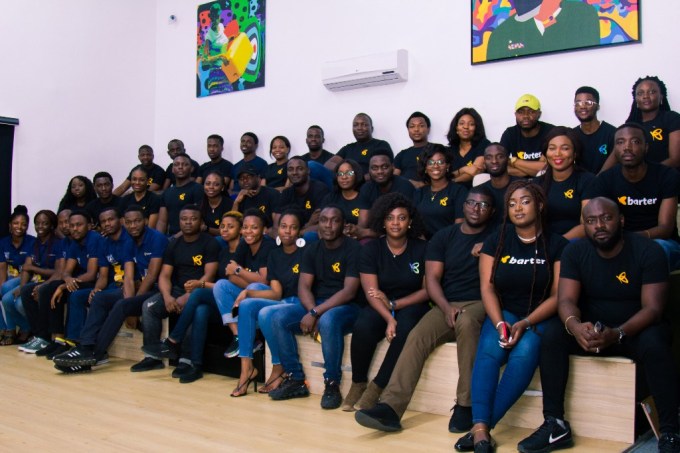
Image Credits: Flutterwave

Flutterwave wants to become a global payments company, and the Series C investment helps to reach that goal. The company says it plans to use the funds to speed up customer acquisition in its present markets. It will also improve existing product offerings like Barter, where it has over 500,000 users, and introduce new offerings. One such is Flutterwave Mobile, which in the founder’s words “will turn merchants’ mobile devices into a point of sale, allowing them to accept payments and make sales.”

In a statement, Agboola gives credit to the company’s more than 300 staff, investors, customers, and regulatory bodies like the Central Bank of Nigeria (CBN) for creating the backbone for Flutterwave’s success.

For some, it would come off as strange that the CEO mentioned the last stakeholder given the unfavourable and questionable regulations it has recently placed on fintechs in Nigeria.

However, Agboola thinks the reverse is the case. He makes a bold statement by saying that under the current CBN governor’s current administration, the Central Bank has shown a consistent regulatory framework that has allowed fintechs like Flutterwave to thrive.

“Flutterwave, for instance, launched when the governor just came in. We got our license and scaled our business because of a favourable regime that allowed it to be possible. There are so many trailblazing innovations that we don’t talk about a lot about Nigeria, like the BVN and the NIP system. Nigeria has consistently been at the forefront of payments innovation for over a decade, and all it was possible because of the forward-looking CBN policies,” he said.

On exits, acquisitions, and the billion-dollar club

One fintech company that has unquestionably championed payments in this timeframe is Interswitch. The payments giant is currently worth $1 billion after Visa acquired a 20% stake in 2019 and Flutterwave joins the company as the only fintechs in Nigeria to have reached that valuation. This number increases to four in Africa when including publicly traded African e-commerce company, Jumia and Egyptian payments company Fawry.

Flutterwave’s $170 million mammoth raise and its billion-dollar valuation represent a landmark achievement for the African startup scene. While the aforementioned companies’ valuations can’t be disputed, there are question marks on whether some are startups or others, African companies.

Interswitch, for instance, was founded in 2002, which doesn’t necessarily make it a startup despite still being private. Fawry was launched in 2007 but didn’t become a billion-dollar company until 2020, a year after going public. Jumia, albeit public, reached unicorn status as a private company in 2016; however, there are varying consensus if it is an African company or not.

Unlike the others, Flutterwave checks all the boxes of what a billion-dollar African startup should ideally look like — founded by Africans in Africa while reaching a $1 billion valuation in fewer than 10 years.

Most stakeholders in Africa’s tech ecosystem knew this would happen, but the timing expected was later rather than sooner. After raising $35 million in a Series B in 2020, who would have thought Flutterwave was going to raise almost five times that amount the following round and be valued at more than $1 billion the next year? Maybe just a few.

Well, these numbers rarely matter to Agboola, as I ask him what he thinks of Flutterwave’s new growth metric. “I’ll say valuation is both art and science. At some point, we were also the most valuable African company at YC, but it’s not really a metric we’re focused on at Flutterwave because they move up and down,” he smiles. “Our key metrics have always been revenue, customer growth and retention.”

Aptly said, but as the company continues to grow, questions around profitability and exit will become more frequent.

Paystack, another Nigerian payments company that is often compared to Flutterwave got acquired by Stripe for more than $200 million last year. At the time, there were also rumours of Flutterwave taking the same route, but this Series C raise suggests that the company is not looking to exit at the moment. However, if the YC-backed company indeed does, it might be through an IPO.

“Like every other startup, we’re thinking about ways to create exit tools for our investors. So, a listing is very much in our plans, but for now, we’re focused on giving the best value to our customers,” Agboola said. 

In the course of the company’s journey to this point, it has remained big on partnerships. In 2019, Flutterwave partnered with Visa to launch Barter and Alipay to offer digital payments between Africa and China. Then last year, the company announced a partnership with Worldpay FIS for payments in Africa.

Although Flutterwave has done this with bigger establishments, Agboola says the company will be looking to do the same with smaller companies, opening the doors to potential acquisitions.

We believe in payments in partnership as you have to partner to scale. So, if in the course of making partnerships and scaling and we identify promising companies with a similar ethos and have our vision in mind, that is in making Africa a country, an acquisition isn’t off the table,” he said.

After capturing much of Sub-Saharan Africa, Agboola says Flutterwave’s next plan is to go live in North Africa. There, it will likely face competition from a local leader, Fawry, but that doesn’t matter. The African fintech market is large enough to accommodate multiple players.

That’s one reason why it has also been a popular bet with investors. The sector, which is both local and international investors’ top destination, attracted between 25% to 31% of the total VC funding last year from varying sources.

But from the information on their websites, this is the first time Flutterwave’s lead investors —  Avenir Growth Capital and Tiger Global — are backing an African fintech startup. For the former, Flutterwave represents the first African startup in its portfolio, but Tiger Global is known to have invested in Nigerian media company iROKOtv and South African e-commerce company, Takealot.

Via their partners — Jamie Reynolds of Avenir Growth Capital and Scott Shleifer of Tiger Global, both firms said they’re backing Flutterwave on its quest to build a global and world-class payments company.

Looking into the future, Agboola insists that the company’s focus remains to support its 290,000 merchants and help them build global businesses.

“We look forward to increasing our investments across the continent and deepening the impact our platform has on lives and livelihoods as we take more businesses in Africa to the world, and at the same time continue to bring more of the world to Africa,” he said.


 

News: Audi’s all-electric Q4 e-tron crossover will have a dynamic AR windshield display

Along with a more spacious cockpit, more storage and some upgraded cupholders, Audi has packed in some serious new tech into its upcoming all-electric Q4 e-tron compact crossover, including an augmented reality head-up display (HUD) that’s reactive enough to accurately stick to a driver’s real environment.  Audi revealed Tuesday the interior of the Q4 e-tron,

Along with a more spacious cockpit, more storage and some upgraded cupholders, Audi has packed in some serious new tech into its upcoming all-electric Q4 e-tron compact crossover, including an augmented reality head-up display (HUD) that’s reactive enough to accurately stick to a driver’s real environment. 

Audi revealed Tuesday the interior of the Q4 e-tron, the fifth electric vehicle in its lineup and part of the German automaker’s plan to launch more than 30 EVs and plug-in hybrids by 2025. The Q4 e-tron has been expected for some time; it was first revealed as a concept at the 2019 Geneva International Motor Show.

The exterior of the production version of the Q4 is still camouflaged, but we know its dimensions. The takeaway: An electric vehicle that fits in the larger compact SUV segment with a short overhang and wheelbase of 9.1 feet — a combination that gives it a rather stout look. However, that allows for an interior of 6 feet in length, the kind of space found in a large full-size class SUV.

The underlying architecture of the vehicle is based on its parent company VW’s modular electric drive toolkit chassis, or MEB platform. This flexible modular system, first introduced by VW in 2016, was developed to make it more efficient and cost-effective to produce a variety of EVs. It has also given designers more room to play with thanks to the flat floor. And they took advantage of that space, popping in a center console with two cup holders, a 4.4-liter stowage compartment with a cover, two (or four as an option) USB-C sockets and the Audi phone box (which charges wirelessly and boosts your phone’s signal) upon request.

Head-up-Display. Image Credits: Audi

The real story here is the tech — and most notably an option to add an AR-enabled windshield. The AR windshield provides a wider field of view and more accurate and dynamic animations versus a standard windshield HUD. The Q4 e-tron will break down important displayed information via two sections: one for status and one for AR. The former, appearing about 3 meters ahead of the driver, will display the driving speed, traffic signs, the assist system and navigation symbols as static displays. 

With the AR section, the driver will perceive the floating symbols to be about 10 meters away. That’ll display information like lane departure warnings that superimpose a red line on the real-life lane marking and a colored stripe over an active car driving in front when in adaptive cruise control.

“Head-up displays aren’t new,” states Audi. “This just takes the field of vision farther out so it enables more active use.”

The AR will also display navigation information. Audi calls the turning arrows “drones,” probably because the arrows fly ahead when driving straight and then disappear, reappearing before the next point of action. When the driver approaches an intersection, the drone announces the turn before steering the driver onto the road with precision.

Head-up-Display. Image Credits: Audi

On the software side of things, the Q4 e-tron’s processing unit, called the AR Creator, picks up raw data from the car’s front camera, radar sensor and GPS navigation to render display symbols at a rate of 60 frames per second and adapt them to the surrounding environment. The quality of these displays, shown via a bit of advanced smoke and mirrors on what Audi calls the EV’s “picture generation unit (PGU)” — basically, a lot of mirrors — will obviously be key to how well it works in real life. With only simulations to show for it currently, it’s not clear how well Audi will pull this off. A wider frame with dynamic symbols must deliver on its promise to show up “just as clearly as their real-life environment” otherwise they’ll become a hindrance to the driver, and if they don’t pull off the depth effect exactly, they could even cause driver discomfort.

The Q4 e-tron also features updated natural-language voice control, activated by saying “Hey Audi.” The new car will also ditch physical buttons on the steering wheel in favor of touch-sensitive ones. But with a haptic feedback loop, it’ll still feel somewhat like you’re pressing a button. 

About 3% of the company’s sales in 2020, or 47,000 vehicles, were the electric e-tron SUV and the e-tron Sportback, a number that will surely increase as the company continues to roll out luxury EVs. 

News: MobileCoin, a cryptocurrency involving Signal founder Moxie Marlinspike, just raised venture funding

MobileCoin, a cryptocurrency that has received technical guidance from Moxie Marlinspike, the creator of private messaging app Signal, has raised $11.35 million in fresh venture funding across two rounds from Future Ventures and General Catalyst. The round, shared with us by a source familiar with the company, seems to suggest the cryptocurrency is one step

MobileCoin, a cryptocurrency that has received technical guidance from Moxie Marlinspike, the creator of private messaging app Signal, has raised $11.35 million in fresh venture funding across two rounds from Future Ventures and General Catalyst.

The round, shared with us by a source familiar with the company, seems to suggest the cryptocurrency is one step closer to its possible use on the Signal platform, where it does not appear to be available currently.

We were unable to reach Marlinspike today. MobileCoin founder Joshua Goldbard, who lists himself as “janitor” of MobileCoin on LinkedIn, declined to answer questions this afternoon after being reached on Signal. Investors pointed us back to the company when asked about how MobileCoin compares to other crypto-related outfits.

It was back in 2017 that Wired first profiled MobileCoin, describing it as on a mission to overcome many of the early, and in some cases, lingering, challenges with cryptocurrencies, including that they’re too complicated for most people and merchants to use, they aren’t adequately scalable and transaction times take too long.

For example, Dapper Labs, the company behind the ventures CryptoKitties and NBA Top Shot, developed its own blockchain and “Flow” token last year owing to scalability issues it encountered with Ethereum, as well as its interest in developing a platform that was more “consumer oriented.”

At the time, Wired noted that while it “may feel like the last thing the world needs is yet another cryptocurrency” — there are now more than 4,000 of them in digital circulation —  Marlinspike’s track record with Signal “makes this a project worth watching.”

Based on its website, MobileCoin’s ambition appears to be focused around privacy-protecting payments made through “near instantaneous transactions” over one’s phone, even while the risks involved in storing cryptocurrency on a phone include potentially losing that value if the phone is left unlocked or the radio on the phone is hacked or if, say, iOS itself is hacked. (It happens, despite the robust permissions system that iOS uses to grant apps access to particular services and information.)

According to the site, one feature of MobileCoin is that it allows users to “securely recover” their wallet if they lose their phone, though it isn’t immediately clear how without trusting a provider with private keys, which MobileCoin says isn’t necessary. (More on this soon, presumably.)

If MobileCoin becomes a de facto way to transact over Signal — Goldbard and Marlinspike told Wired they envisioned it first as an integration in chat apps like Signal or WhatsApp — its reach could potentially be massive.

Though Signal doesn’t disclose how many users are on the platform, an estimated 40 million people now use its encrypted messaging app, which saw a surge in downloads earlier this year, in the waning days of the Trump presidency. According to Sensor Tower, which provides mobile app analytics, Signal was downloaded 17.8 million times during the week of January 5, compared to the 50,000 downloads per day it typically sees.

Still, if heavy use over Signal is how MobileCoin aims to gain value, the currency — which became available to purchase on the exchange FTX after launching on the platform in early December — would seemingly have an upward battle.

While Marlinspike’s early involvement is a definite plus, cryptocurrencies and messaging apps haven’t historically mixed well together, owing to regulators. Kik Messenger, the mobile messaging app founded by a group of University of Waterloo students in 2009, created a digital currency called Kin for its users to spend inside the platform. The project ultimately led to a years-long battle with the Securities & Exchange Commission that nearly decimated the company, though it’s currently mounting a comeback.

(In fairness to MobileCoin, which has turned to venture capitalists, Kik tried raising money from Kin through an initial coin offering or ICO, a relatively untested and unregulated type of funding mechanism at the time.)

Telegram, a much bigger messaging app than Signal — it had an estimated 400 million users as of last April — similarly abandoned plans to offer its own decentralized cryptocurrency to anyone with a smartphone after years of battling with the SEC. Like Kik, part of Telegram’s drama dated to early sales of its tokens through ICOs.

Even Facebook, despite scaling back more ambitious plans around a new cryptocurrency and resolving instead to launch a single digital coin backed by the dollar, hasn’t launched anything yet, though it’s expected soon.

Possibly, MobileCoin simply plans to operate outside of the U.S. Indeed, in December, according to a public post on Medium, the MobileCoin Foundation wrote that the project is not available to U.S. users or “persons or entities in other prohibited jurisdictions.”

Either way, the new round is not, notably, MobileCoin’s first outside round. In May 2018, it disclosed in an SEC filing that it had raised a $29.7 million from investors. Reportedly, Binance Labs, the venture arm of the cryptocurrency exchange giant Binance, led that financing.

News: Former head of the World Resources Institute has a new role leading Bezos’ $10 billion Earth Fund

The $10 billion Bezos Earth Fund has a new chief executive and it’s Andrew Steer, the former head of the World Resources Institute — an organization that Bezos described as “working to alleviate poverty while protecting the natural world.” As the head of the fund, Steer will be responsible for spending that money down by

The $10 billion Bezos Earth Fund has a new chief executive and it’s Andrew Steer, the former head of the World Resources Institute — an organization that Bezos described as “working to alleviate poverty while protecting the natural world.”

As the head of the fund, Steer will be responsible for spending that money down by the end of 2030, according to a tweet from none other than Steer himself.

I am deeply honored to have been invited by @JeffBezos to become the first President and CEO of the $10B Earth Fund. It will address climate, nature and environmental justice. Jeff’s goal is to spend it down between now and 2030, the date by which the SDGs must be achieved. [2/5]

— Dr. Andrew Steer (@AndrewSteerWRI) March 9, 2021

“The Earth Fund will invest in scientists, NGOs, activists, and the private sector to help drive new technologies, investments, policy change and behavior. We will emphasize social justice, as climate change disproportionately hurts poor and marginalized communities,” Steer wrote.

With a $100 million award from the first rounds of grants the Bezos Fund issued in November, the World Resources Institute was one of the largest recipients of Bezos’ largesse. Other big recipients from the first block of grants included the Environmental defense Fund, The Natural Resources Defense Council, The Nature Conservancy and The World Wildlife Fund.

“I feel incredibly fortunate to join the Bezos Earth Fund as its CEO, where I will focus on driving systemic change to address the climate and nature crises, with a focus on people. Too many of the most creative initiatives suffer for a lack of finance, risk management or the right partnerships. This is where the Earth Fund will be helpful,” Steer said in a statement issued by the WRI.

While at the WRI, Steer oversaw its international expansion from an advocacy organization centered primarily in Washington to a global organization with offices in Indonesia, the UK and Colombia along with hubs in Ethiopia and the Netherlands. Steer also expanded the offices in Brazil, China, India, Indonesia and Mexico.

His tenure also involved creating coalitions and initiatives that changed the understanding around the economics of climate change, including the launch of a $10 million annual initiative to support the implementation of climate plans by 100 countries, according to a statement from the WRI.

“The $10 billion Bezos Earth Fund has the potential to be a transformative force for good at this decisive point in history. Andrew’s global reputation, deep technical knowledge and experience, and commitment to social justice make him a perfect leader for the fund,” said Christiana Figueres, co-founder of Global Optimism and former Executive Security of the UNFCCC.

News: Your deal flow is not diverse enough

Recognizing the issue is the first step to solving any problem. The increase in awareness and action is sure to bring forth important development that makes the future brighter for women entrepreneurs everywhere.

Michaela Villaroman
Contributor

Michaela Villaroman is the Media Relations Coordinator for Seedstars.

Alisee de Tonnac
Contributor

Alisee de Tonnac is co-founder and co-CEO of Seedstars, a Swiss-based group with a mission to impact people’s lives in emerging markets through technology and entrepreneurship. Seedstars group is present in 90+ countries with activities that include the largest entrepreneurship competition in emerging markets.

H2″ option to demote all headings by one level.

—–>

In light of Women’s History Month, we’re taking a look at the status of gender diversity in investment portfolios because women remain underrepresented in the field of entrepreneurship. Let’s delve into the numbers — and why your deal flow may not be diverse enough.

Women entrepreneurs and fundraising

There is an unmet need of $260 billion to $320 billion for women-owned company funding, according to a 2013 study conducted by the International Finance Corporation. A survey of women from 350 tech startups reinforced this: 72% of women respondents said that they faced difficulty attaining financial capital when they were starting their businesses and nearly 80% of them had to rely on personal funding. Furthermore, women founders receive less than 3% of all VC dollars.

The stark contrast between the ease of fundraising for men compared to women is apparent. Data show that men were four times as likely as women to access equity financing from angel investors or VCs (14.4% against 3.6%). The ease with which men tap into multiple sources for capital explains why they start companies with almost twice the capital of women founders on average.

So, why is fundraising harder for women-led startups?

Women’s struggle to attain capital can perhaps be explained by looking into the diversity in fund management firms. Fund managers’ lack of diversity ultimately contributes to the resulting funding inequality when it comes to their portfolios. Data from Women in VC show that only 5.6% of U.S. VC firms are women-led and only 4.9% of VC partners in the U.S. are women.

“Empowering women and people of color to drive the investment strategy of venture firms is the fastest and most effective course correction” for the lack of gender-diverse portfolios, the Women in VC report said. “Venture investors have extraordinary power to impact broader society norms. They decide what founders get funded, what businesses stand a chance at success, and what products get brought to market. These things, in turn, exert a determining influence on our culture.”

Investors must address the diversity issue within their ranks first; they must be aware of the existing unconscious bias and take extra actions toward improving their efforts in actively trying to source and invest in women-led startups.

Why is diverse deal flow important?

Diversifying an investment portfolio to include more women-led ventures means trusting in the leadership of women, which research has shown to be worth believing in. A 2012 study of company performance showed that more than 150 listed German firms excelled when they had at least 30% women representation on their executive boards.

Even more interesting, another study argues that women make better board directors than men. The findings revealed that women are more effective at accounting for multiple competing interests, solving problems creatively and building consensus. By comparison, male directors often made decisions based on rules, regulations and tradition.

Undeniably, companies managed by effective women leaders are set to provide a lucrative return on investment. Roy Adler, a Fulbright scholar and professor of marketing at Pepperdine University, conducted a 19-year study that found a correlation between companies with the best record of promoting women to senior positions and higher profitability — between 18% to 69% higher than the median Fortune 500 companies in their respective industries.

While the numbers prove that the financial returns can be promising, the bigger impact and importance of investing in gender diversity is the overall economic growth and prosperity that follows. Increasing opportunities for women entrepreneurs sets off a domino effect that local and global markets can benefit from.

McKinsey estimated that if total gender equality was achieved, the global gross domestic product (GDP) could be increased by up to $28 trillion globally by 2025. In fact, by not investing in women, the downsides prove to be quite massive. A study by the United Nations showed that the Asia-Pacific region, including China and the United States, loses at least $42 billion annually in GDP by not fully engaging women’s participation in their economy.

Seedstars, the Swiss investment holding group that focuses on investing in tech high-growth companies from emerging markets, provides a more in-depth view of the benefits of developing women entrepreneurship, specifically in developing countries.

The numbers make it evident that gender diversity is underutilized but highly valuable. In Melanne Verveer and Kim K. Azzarelli’s book “Fast Forward,” experts weigh in on the topic of gender inclusivity.

“The biggest destroyer of wealth creation is patriarchy,” Pax World Funds CEO Joseph Keefe said. “It’s not just up to women to ‘lean in’. Shareholders seeking better returns would do well to lean on companies to appoint and promote more women.”

“Women remain hugely underrepresented at positions of power in every single sector across this country,” Barnard College president Debora Spar noted. “We have fallen into what I call the 16% ghetto, which is that if you look at any sector, be it aerospace engineering, Hollywood films, higher education, or Fortune 500 leading positions, women max out at roughly 16%. That is a crime, and it is a waste of incredible talent.”

Moving gender inclusivity forward

Taking active measures to ensure that we are fully including women is necessary to make an impact. Since 2018, Seedstars has been actively working on gender equity within its core activities, highlighted in the group’s theory of change, such as sourcing of ventures, capacity-building programs and investment activities.

To date, Seedstars has supported more than 600 women-led enterprises and invested in 14 businesses co-founded by women. Additionally, Seedstars is working on gender equity when it comes to mentors, jury members and training delivery experts. Recent numbers show that about 30% of all Seedstars program participants are women, a number that Seedstars is proud to have increased over the past years (2018 numbers were more around 20%, depending on the region) and is committed to increasing that figure in the coming years.

Through the combined efforts of our own initiatives and those from investors who do their part in promoting gender diversity, the world is bound to reap the benefits of investing in what is proving to be one of the most powerful demographic groups the world is yet to fully embrace.

Recognizing the issue is the first step to solving any problem. The increase in awareness and action is sure to bring forth important development that makes the future brighter for women entrepreneurs everywhere.

WordPress Image Lightbox Plugin