Tag Archives: Blog

News: Wise’s Taavet Hinrikus and Teleport’s Sten Tamkivi partner in new investment firm — just don’t call it a VC fund

Taavet Hinrikus, the first employee of Skype and co-founder of fintech giant Wise (formerly TransferWise), is teaming up with Teleport co-founder and current Topia CPO Sten Tamkivi to create a new investment vehicle. Both are already seasoned investors — Hinrikus is one of Europe’s bona fide super angels, with over 100 investments to his name

Taavet Hinrikus, the first employee of Skype and co-founder of fintech giant Wise (formerly TransferWise), is teaming up with Teleport co-founder and current Topia CPO Sten Tamkivi to create a new investment vehicle.

Both are already seasoned investors — Hinrikus is one of Europe’s bona fide super angels, with over 100 investments to his name — and have already done a number of tickets together. The new as yet unnamed venture will see the pair’s investment activities formalised as an equal partnership and be supported by a team of six people based in Estonia, including an investment analyst.

Just don’t call it a VC fund.

“I’m still not setting up a fund, but am partnering to help do more of the same on the investing side,” Hinrikus told me last week in a text message.

For the last few years — perhaps prompted by swapping the role of CEO of Wise for chairperson — there’s been speculation within London’s increasingly chatty venture capital scene that he might raise a fund of his own or join an A-list VC firm as a partner. The Wise founder actually spent about a year as a venture partner at Mosaic Ventures, which ended last summer and went unreported.

“When you say fund, this means other people’s money and a specific mandate (i.e. invest in seed or late, in biotech or fintech, promise to return the money in a certain time, etc.),” Hinrikus said in an email earlier this week. He also explained that the new firm will not be seeking outside LPs and will be “evergreen”, enabling it to make considerably longer-term bets than many VC funds. Instead, Hinrikus and Tamkivi are happy to hold investments for 10-20 years.

“This structure is both liberating and differentiating, because without strict external mandates we can go after the missions we feel passionate about and be really patient about how long we stay involved in our companies,” said Tamkivi in an email.

“[We] will not be the one pushing a founder to sell,” underlines Hinrikus. “Will always stay on the founder’s side as we’ve been in that position ourselves”.

The pair’s combined portfolios focus mostly on Europe but also further afield, including the U.S., Japan and Singapore. Mutual investments (or shareholdings) include Wise, Bolt, Veriff, LHV, Xolo, Oyster HR, Pactum, Starship, Curve, Sunrise and Acapela.

Hinrikus and Tamkivi have also jointly contributed to several “mission driven” nonprofit endeavours such as Jõhvi School of Technology, Good Deed Education Fund or Vabamu Museum of Freedom and Occupations, which they, and the new firm’s back office, will continue to support. Most recently, Hinrikus co-founded Certific, which is building the rails for home health testing.

Hinrikus and Tamkivi say their new investment firm will back tech companies with a €250,000 to €1 million seed investment, but also has the freedom to follow on right up to an IPO. In most instances, it doesn’t expect to lead rounds but hopes to be seen as more collaborative than competitive.

“In short, we will be doing more of the same: give founder-backing to more upcoming founders,” said Hinrikus. “What excites us most is the future ahead and finding positive missions that improve our future. So far it’s been lots of future of work, future of finance, but in the future we’d love to think more about future of health and climate as well”.

“It will take a bit more conscious effort to figure out what our theses and strategy will be for completely new areas,” adds Tamkivi. “As humans, we both care about longevity, health, education, democracy — if we find ways how to move these huge problem spaces along with capital, we are very eager to learn”.

The pair are also willing to take positions in crypto tokens, real assets or any alternative financial instruments.

“On a high level you can think of DeFi as just a natural extension of our broader ‘future of money’ financial freedom thesis,” said Tamkivi. “When it comes to technical execution, we’ve benefited a lot from the freedom to invest not just in equity of established companies, but to also take token positions, use on-chain yield strategies or work with specialized venture funds. Whatever helps our founders”.

To that end, the new investment fund is breaking cover with very little fanfare — and, as mentioned, it doesn’t even have a name yet. “’Have you talked to Taavet and Sten yet?’ should work fine for now,” quipped Hinrikus, in his own deadpan style of humour I’ve become accustomed to over the years.

“More seriously, we are just getting started together,” clarified Tamkivi. “[We’re] still figuring out what kind of structure, processes, new talent and other things, such as additional branding, we’ll need as we scale up the activities from our lives as individual angels to date”.


Early Stage is the premier ‘how-to’ event for startup entrepreneurs and investors. You’ll hear first-hand how some of the most successful founders and VCs build their businesses, raise money and manage their portfolios. We’ll cover every aspect of company-building: Fundraising, recruiting, sales, product market fit, PR, marketing and brand building. Each session also has audience participation built-in – there’s ample time included for audience questions and discussion. Use code “TCARTICLE at checkout to get 20 percent off tickets right here.
News: South Africa’s FlexClub adds $5M to seed round to scale its car subscription marketplace

The traditional process of buying, insuring and financing cars across emerging markets can be challenging, and it defeats the purpose of building an all-around car shopping experience. Today, FlexClub, a South African company, has been provided with $5 million to improve drivers’ experience in these markets. FlexClub was founded in 2019 by Marlon Gallardo, Rudolf

The traditional process of buying, insuring and financing cars across emerging markets can be challenging, and it defeats the purpose of building an all-around car shopping experience. Today, FlexClub, a South African company, has been provided with $5 million to improve drivers’ experience in these markets.

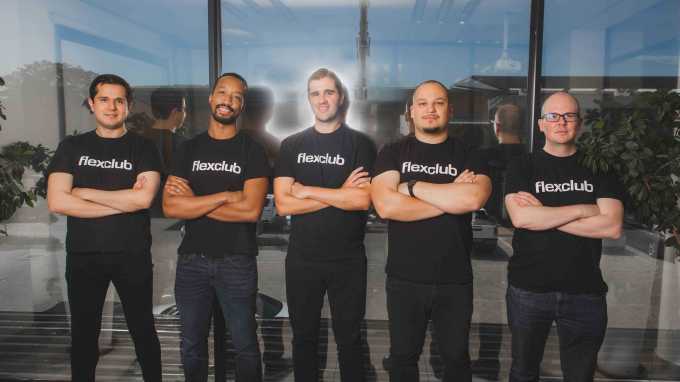
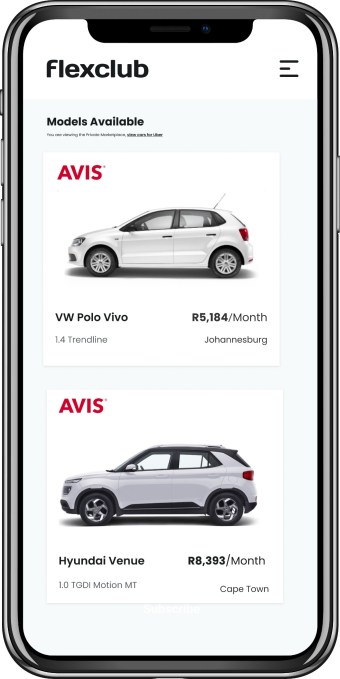
FlexClub was founded in 2019 by Marlon Gallardo, Rudolf Vavruch and Tinashe Ruzane. The company is an online marketplace that connects customers looking for flexible access to long-term cars with its partners, offering car subscriptions.

That same year, the company closed a $1.2 million seed round led by CRE Venture Capital. According to Ruzane, the company’s CEO, this $5 million (in equity and debt) is a seed extension round, bringing the total investment raised by FlexClub to over $6 million. The company says it will use the funding to improve its technology which protects and limit partners’ exposure to risk.

Across emerging markets in Africa, Latin America and Southeast Asia, most ride-hailing drivers don’t have access to car financing. Typically, they rent their cars via social media, classified sites, or connect with a car owner willing to rent. That was the model FlexClub launched in South Africa, and after raising $1.2 million, it expanded to Mexico.

Partnering with Uber in both countries and helping their community of drivers subscribe for cars, FlexClub claims to have garnered traction but wouldn’t divulge numbers. These customers, including those who use the cars for deliveries, are called commercial members by FlexClub. In December last year, the company decided to open up its product to another set of customers who are called private members.

“When we first started, we were focused on phase one of our strategy, which came from our knowledge about ride-hailing drivers because of our careers at Uber,” Ruzane said to TechCrunch. “We wanted to help a community of ride-hailing drivers that had been excluded from accessing cars. But right now, we’ve built the product to work for anyone and not just ride-hailing drivers.”

In FlexClub’s marketplace, cars are subscribed for between a hybrid of short- and long-term lease. It means customers pay an all monthly inclusive fee, and at any time, they can cancel a subscription, switch cars or buy it.

But to buy a car from FlexClub, drivers are encouraged to drive safely and comply with FlexClub’s recommendations while using the car. Doing that earns them points that accumulate over time, making cars cheaper to buy if they choose to.

This, alongside the use of banking, credit bureau and identity data, lets FlexClub assess its members’ risk profile and reward them when need be

Image Credits: FlexClub

Ruzane says last year was challenging for the company because of what it meant for mobility. At the peak of the first wave of the pandemic, ride-hailing members had financial difficulties. Still, the company partnered with delivery platforms to allow ride-hailing drivers to use their cars to transport goods and packages.

During that period, FlexClub was also able to partner with large brands like U.S. car rental company Avis to offer car subscriptions on its marketplace. Aside from Avis, Ruzane says the company’s partners range from small fleet owners to multinational fleet operators.

The pandemic made it possible for FlexClub to think outside the box and enlist these partners on its platform. However, it didn’t come easy as FlexClub has had to earn trust by building credibility.

“One of the challenges we have faced was that we had to build a reputation to be trusted in the industry. It took us two years to get a brand like Avis to see the value in putting their subscription offers on FlexClub. But with that established, it’s now a lot easier for us to continue investing in driving this new distribution model.”

Image Credits: FlexClub

He likens the distribution model of the automotive industry to how the music industry was decades ago. Then, CDs dominated music revenue but has now given way to streaming.

“If you look at what the music industry looked like 10 years ago, over 50% of music revenue was CDs. Now over 80% is streaming. The industry successfully transitioned from product-led distribution to service-led distribution. I think that’s what we can expect in the automotive industry over the next decade,” Ruzane remarked. “We can be an ally to the automotive industry in driving that evolution because we’ve tested our product in a marketplace with the segment of the population that people thought wasn’t a good profile of customers to serve.”

FlexClub’s expansion to Mexico instead of other African countries continues a series of global expansion that has become common for South African companies.

Two factors decided the move for FlexClub, according to the CEO. First, the founders are from both countries — Marlon Gallardo is Mexican while Rudolf Vavruch and Tinashe Ruzane are South Africans. Next, both markets have a lot of similarities in terms of how the automotive industry works.

South Africa and Mexico have large manufacturing bases and advanced secondary markets where brands can lease used cars. 

Kenya and Nigeria, on the other hand, have a different automotive value chain. Although there’s a growing manufacturing industry in both countries, it is still nascent as most vehicles are imported from countries like the U.S. and Japan.

That said, Tinashe says there’s an opportunity to take FlexClub to not only these regions but most emerging markets around the world. However, it is in no rush to do so.

FlexClub has been able to attract investors who are aligned with its mission of democratizing access to car financing and becoming a global mobility company.

Kindred Ventures, its lead investor, has backed mobility-first companies like Postmates, Uber and Virgin Hyperloop. Other VC investors include CRE Venture Capital and Endeavor. Angel investors like Matt Mullenweg, founder of WordPress; Federico Ranero, COO of KAVAK; Tariq Zaid, formerly of Shopify and Getaround; and Ron Pragides, formerly of Twitter and Salesforce, also took part in the round.

News: Ghana’s mPharma partners with Ethiopian conglomerate to enter its eighth market

mPharma, a Ghanaian health tech startup that manages prescription drug inventory for pharmacies and their suppliers, today announced its expansion to Ethiopia. The company was founded by Daniel Shoukimas, Gregory Rockson and James Finucane in 2013. It specializes in vendor-managed inventory, retail pharmacy operations and market intelligence serving hospitals, pharmacies and patients. In Africa, the pharmaceutical

mPharma, a Ghanaian health tech startup that manages prescription drug inventory for pharmacies and their suppliers, today announced its expansion to Ethiopia.

The company was founded by Daniel Shoukimas, Gregory Rockson and James Finucane in 2013. It specializes in vendor-managed inventory, retail pharmacy operations and market intelligence serving hospitals, pharmacies and patients.

In Africa, the pharmaceutical market worth $50 billion faces challenges such as sprawling supply chains, low order volumes, and exorbitant prices. Many Africans still suffer preventable or easily treated diseases because they cannot afford to buy their medications.

With a presence in Ghana, Kenya, Nigeria, Rwanda and Zambia, as well as two unnamed countries, mPharma wants to increase access to these medications at a reduced cost while assuring and preserving quality. The company claims to have served over 100,000 patients and distributed over a million drugs to Africans from 300 partner pharmacies across the continent.

CEO Rockson says that when mPharma started eight years ago, he wanted to own a pan-African brand with operations in Ethiopia, Kenya, and Nigeria from the get-go.

By 2018, mPharma went live in the West African country. In 2019, the health tech acquired Haltons, the second-largest pharmacy chain in Kenya, subsequently entering the market and gaining 85% ownership in the company. However, it seemed like a stretch to the Ghanaian-based company to expand to the East African country as it met several pushbacks. Rockson attributes this to the harsh nature of doing business with foreign companies.

“Ethiopia is one of the most closed economies on the continent. This has made it a bit hard for other startups to launch there just because the government rarely allows foreign investments in the retail sector.”

According to Rockson, most foreign brands operate in the country through franchising, a method mPharma has employed for its expansion into Africa’s second most populous nation.

The company signed a franchise agreement with Belayab Pharmaceuticals through its subsidiary, Haltons Limited. Belayab Pharmaceuticals is a part of the Belayab Group — a conglomerate that is also an official franchisee of companies like Pizza Hut and Kia Motors in Ethiopia.

Rockson says we should expect the partnership to open two pharmacies in Addis Ababa this year. Each pharmacy will offer the company’s consumer loyalty membership program called Mutti, where they’ll get discounts and financing options to access medication

Image Credits: mPharma

This franchising is a part of mPharma’s growth plans of enabling companies looking to enter the pharmacy retail sector. The plan is to provide access to a “pharmacy-in-a-box” solution where mPharma handles every infrastructure involved, and the pharmacy is just concerned about the consumer

“What we’ve done is that we enable these pharmacies with our software, and we have the backend physical infrastructure and warehousing,” he said. ‘They can rely on mPharma to do all the background work from getting the products into your pharmacy and also providing the software infrastructure to be able to run delivery services while they focus on clinical care.”

mPharma is one of the well-funded healthtech startups in Africa and has raised over $50 million. Last year when it secured a Series C round of $17 million, Helena Foulkes, former president of CVS, the largest pharmacy retail chain in the U.S., was appointed to its board. She joined Daniel Vasella, ex-CEO and Chairman of Novartis as members who have decades of experience in the pharmaceutical industry.

This sort of backing, both in expertise and investment, has proven vital to how mPharma runs operations. Rockson doesn’t mince words when saying the company wants to dominate African healthcare with Ethiopia, its toughest market to enter, already secured.

“There are issues of fragmentation in pharmacy retailing, poor standards and high prices that haven’t been fixed. The African opportunity is still huge, and we are still at the beginning stages of privatisation of healthcare on the continent,” he said.

News: Snyk raises $300 million at a $4.7 billion valuation as employees cash in and the security company beefs up

Snyk, a developer of application security technology, is now worth $4.7 billion after a new fundraising and secondary sale that totaled $300 million. In all, investors have poured $470 million into the company after this new investment, which was led by Accel and Tiger Global, with participation from a host of existing investors including Addition,

Snyk, a developer of application security technology, is now worth $4.7 billion after a new fundraising and secondary sale that totaled $300 million.

In all, investors have poured $470 million into the company after this new investment, which was led by Accel and Tiger Global, with participation from a host of existing investors including Addition, Boldstart Ventures, Canaan Partners, Coatue, GV, Salesforce Ventures, and funds managed by Blackrock.

New investors joining Accel and Tiger on the cap table included Alkeon, Atlassian Ventures, Franklin Templeton, Geodesic Capital, Sands Capital Ventures and Temasek.

Withe big valuation and very very late stage investors on the cap table, it’s likely that this will be Snyk’s last round before a public offering. And the markets for enterprise software companies have been white hot recently, so the reception for Snyk should be positive.

Snyk’s value and sky high valuation comes from its ability to offer an application security platform that the company said is designed to provide security visibility and remediation for every component of modern applications — including their code, open source libraries, container infrastructure and infrastructure as code.

Investors seem to believe the company’s claims and so do a clutch of key new hires including Chief Marketing and Customer Experience Officer Jeff Yoshimura, a former executive at Elastic; CIO Erica Geil, who previously worked at Groupon; and Vice President, Asia Pacific Japan (APJ) Sales, Shaun McLagan, who previously worked for EMC.

After the funding, Michael Scarpelli, the Chief Financial Officer of the enterprise software darling and last year’s blockbuster public offering, Snowflake, and Ping Li, a longtime enterprise software investor and a Partner at Accel.

“We first met the Snyk team at the start of their journey, as early investors,” said Li, in a statement. “Throughout our partnership, we’ve witnessed first-hand Snyk’s unshakeable dedication to developer and security teams and their original vision become a reality. We’re looking forward to supporting the successes of Snyk in 2021 and beyond.”

Snyk’s financing comes as application vulnerabilities are becoming an increasingly popular attack vector for hackers. Roughly 43% of data breaches have been linked back to flaws in applications, according to the company.

Meanwhile, a dearth of developers focused on security means that automation has to do more heavy lifting. Snyk says it provides that through automated remediation and the integration of security features directly into developer workflows. The company also offers real-time answers to coders’ security questions.

So far, that suite of services has meant more than 27 million developers around the world are using Snyk tools and the company also provides a marketplace for security coders to pitch their own tools on the Snyk platform.

“We believe Snyk’s developer-first approach to security is a fantastic tool for developers and organizations today,” said Chris Hecht, Head of Corporate Development, Atlassian. “Snyk has already showcased some amazing integrations with our tools, and we’re now thrilled to extend our partnership with them through an Atlassian Ventures investment.”

News: Chatbot startup Heyday raises $5.1M

Montreal-based Heyday announced today that it has raised $6.5 million Canadian ($5.1 million in US dollars) in additional seed funding. Co-founder and CEO Steve Desjarlais told me that the startup’s goal is to allow retailers to support more automation and more personalization in their online customer interactions, while co-founder and CMO Etienne Merineau described it

Montreal-based Heyday announced today that it has raised $6.5 million Canadian ($5.1 million in US dollars) in additional seed funding.

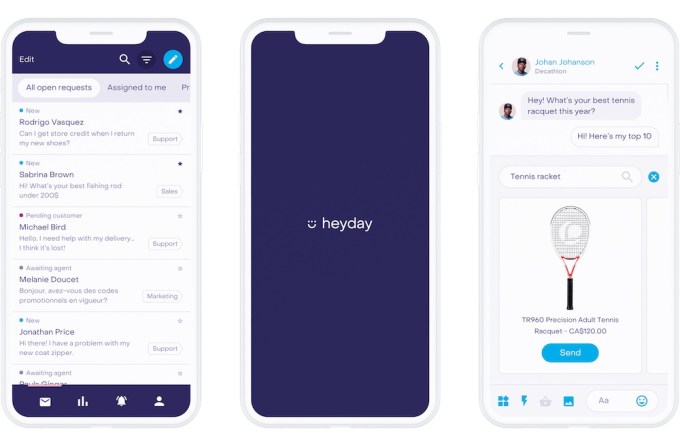
Co-founder and CEO Steve Desjarlais told me that the startup’s goal is to allow retailers to support more automation and more personalization in their online customer interactions, while co-founder and CMO Etienne Merineau described it as an “all-in-one unified customer messaging platform.”

So whether a customer is sending a message from Facebook Messenger, WhatsApp and Google’s Business Messages or just via email, Heyday brings all that communication together in one dashboard. It then uses artificial intelligence to determine whether it’s a customer service or sales-related interaction, and it automates basic responses when possible.

Heyday chatbots can provide order updates or even recommend products (it integrates with Salesforce, Shopify, Magento, Lightspeed and PrestaShop), then route the conversation to a human team member when necessary.

There are other platforms that combine customer service and sales, but at the same time, Merineau said it’s important to treat the two categories as distinct and trust that a good service experience will lead to sales in the feature.

Heyday screenshot

Image Credits: Heyday

“We believe that helping is the new selling,” he said.

Desjarlais added, “We’re really against the ticket ID system. A customer is not a ticket …
I truly believe that every single customer is a relationship with a brand that needs to be nurtured over time and that will give more value to the brand over time.”

Heyday was founded in 2017 and says that over the past two quarters, it has doubled recurring revenue. Customers include French sporting good company Decathlon, Danish fashion house Bestseller to food and consumer product brand Dannon — Merineau noted that the platform was “bilingual out of the box” and has seen strong international growth.

“Retailers who believe that [the changes brought about by] COVID-19 are temporary are in the wrong mindset,” he said. “The new mantra of future-forward brands is ‘adapt or die.’ … Brands obviously want to delvier great service, but they care about the bottom line. We help them kill two birds with one stone.”

The startup had previously raised $2 million Canadian, according to Crunchbase. This new round comes from existing investors Innovobot and Desjardins Capital. Merineau said the money will help Heyday “double down on the U.S. and scale.”

News: Daily Crunch: Apple announces a chip design center in Germany

Apple is making a big investment in Germany, Russia takes aim at Twitter and Roblox goes public. This is your Daily Crunch for March 10, 2021. P.S. Don’t forget to sign up for TC Early Stage 2021, a virtual event focused on operations and fundraising that we’re holding on April 1 and 2! Apple announces

Apple is making a big investment in Germany, Russia takes aim at Twitter and Roblox goes public. This is your Daily Crunch for March 10, 2021.

P.S. Don’t forget to sign up for TC Early Stage 2021, a virtual event focused on operations and fundraising that we’re holding on April 1 and 2!

Apple announces a chip design center in Germany

Apple said it will spend $1.2 billion to create its European Silicon Design Center, which will be based in Munich and focus on chip design for 5G and other wireless technologies.

This is not Apple’s first facility in Munich — in fact, it says it already employs 1,500 engineers in the city, making it the company’s largest engineering hub in Europe. These teams were initially focused on power management, but have subsequently expanded their focus to other areas of chip design.

You can see a rendering of the planned building above.

The tech giants

Russia is trying to throttle Twitter — Russian state agency Roskomnadzor said it’s taking the action after Twitter did not remove banned content.

Adobe delivers native Photoshop for Apple Silicon Macs and a way to enlarge images without losing detail — Adobe has been moving quickly to update its imaging software to work natively on Apple’s new in-house processors for Macs.

Facebook challenges FTC’s antitrust case with Big Tech’s tattered playbook — Facebook has challenged the FTC’s antitrust case against it using a standard playbook that questions the agency’s arguably expansive approach to defining monopolies.

Startups, funding and venture capital

Why Terry Crews is launching a social currency — With the help of social currency startup Roll, Crews is launching his own social currency, $POWER.

EV subscription service Onto partners with Shell to expand access to charging — The partnership will give Onto customers access to more than 3,400 Shell Recharge charge points in the U.K.

Rent the Runway’s first iOS team launches Runway, an easier way to coordinate app releases — With Runway, teams can connect their existing tools to keep track of the progress of an app’s release, automate many of the manual steps along the way and better facilitate communication among all those involved.

Advice and analysis from Extra Crunch

Welcome to Bloxburg, public investors — As Roblox began to trade today, the company’s shares shot above its reference price of $45 per share.

Dear Sophie: What are the pros and cons of the H-1B, O-1A and EB-1A? — The latest edition of “Dear Sophie,” the advice column that answers immigration-related questions about working at technology companies.

Proactive CEOs should prioritize European expansion — FrontlineX Partner Brendan O’Donnell argues that the EMEA region is your best growth lever.

(Extra Crunch is our membership program, which helps founders and startup teams get ahead. You can sign up here.)

Everything else

NFTs are changing cultural value creation — The latest episode of Equity is all about non-fungible tokens.

Passive collaboration is essential to remote work’s long-term success — The adjustment to a fully remote workforce has been challenging for everyone.

ADL CEO Jonathan Greenblatt dives into tech’s reckoning with online hate — We spoke with Anti-Defamation League CEO Jonathan Greenblatt on proposed policy solutions and tech’s coming era of accountability.

The Daily Crunch is TechCrunch’s roundup of our biggest and most important stories. If you’d like to get this delivered to your inbox every day at around 3pm Pacific, you can subscribe here.

News: Could Marc Benioff be the next CEO to move to executive chairman?

Last month Jeff Bezos announced he would step down as CEO of Amazon later this year, moving into the executive chairman role, while passing the baton to AWS CEO Andy Jassy. Could Marc Benioff, co-founder, chairman and CEO at Salesforce be the next big-name executive to make a similar move? A Reuter’s story published on

Last month Jeff Bezos announced he would step down as CEO of Amazon later this year, moving into the executive chairman role, while passing the baton to AWS CEO Andy Jassy. Could Marc Benioff, co-founder, chairman and CEO at Salesforce be the next big-name executive to make a similar move?

A Reuter’s story published on Monday suggested that could be the case. Citing unnamed sources, the story indicated that Benioff’s CEO exit could happen this year. Further those same sources suggested that current Salesforce president and COO Bret Taylor is the likely heir apparent.

We wrote a story at the end of last year speculating on possible successors to Benioff, were he to step away from the CEO role. There were a number of worthy candidates, several of whom, like Taylor, came to the company via an acquisition. All the same, we thought that Taylor seemed to be the most likely candidate to replace Benioff.

We asked Salesforce for a comment on the Reuter’s story. A company spokesperson told us that the company doesn’t comment on rumors or speculation.

While the entire scenario fits firmly in the rumor and speculation column, it is not entirely unlikely either. What would it mean if Benioff stepped away and what if Taylor was truly the next in line? And how would that swap compare with the Bezos decision were it to happen?

Similar yet different

Salesforce and Amazon are both companies founded in the 1990s, each looking to shake up its industry.

For Amazon, it was changing the way goods (starting with books) were bought and sold. And for Benioff the goal was changing the way software was sold. Bezos famously founded his company in his garage. Benioff built his in a rented apartment. From these humble beginnings both have built iconic companies and accumulated enormous wealth. You could understand why either could be ready to step away from the daily grind of running a company after all these years.

Bezos announced that veteran executive Andy Jassy, who runs the company’s cloud arm, would be his replacement when the handoff comes. Jassy knows the organization’s priority mix as he’s been working at the company for more than two decades. He’s locked into the culture and helped take AWS from idea to $50 billion juggernaut.

While Benioff hasn’t made any actual firm pronouncement, we have seen Bret Taylor — who joined the company in 2016 when Salesforce purchased his startup Quip for $750 million — move quickly up the ladder.

Laurie McCabe, co-founder and analyst at SMB Group, who has been following Salesforce since its earliest days, says that if Benioff were to leave, he would obviously leave big shoes to fill. But she agreed that everything seems to point to Taylor as his successor should that happen.

“Salesforce has been grooming Taylor for awhile. He has some stellar credentials both at Salesforce, his own start-up, Quip, that Salesforce acquired, and at Facebook. There’s no doubt in my mind he can lead Salesforce forward, but he’ll bring a different more low-key style to the role. And I’m sure Benioff will stay very involved […],” McCabe said.

Two different situations

Brent Leary, founder and principal analyst at CRM Essentials says that while he believes Taylor could be chosen as Benioff’s successor, and would be qualified to lead the company, he’s taken a very different path from Jassy.

“I think Benioff moving on could be different from Bezos in the sense that Jassy has been at Amazon for over 20 years and was there to basically see and be part of most of the story. […] But if Taylor were to succeed Benioff there’s not as much [history] at Salesforce with him not being on board until the Quip acquisition in 2016,” Leary said.

Leary wonders if this relatively short history with the company could create some political friction in the organization if he were chosen to succeed Benioff. “I’m not saying that this would happen, but choosing one of the many possible heirs that have come via a number of high profile acquisitions could possibly lead to high level turnover from those not picked to succeed Benioff,” he said.

But Holger Mueller, an analyst at Constellation Research says that if you look at the range of candidates available, he believes that Taylor would be the best choice. “I don’t expect any issue because there is no one with a similar or even better background, which is when there are problems — that or when people are in an open competition as it used to be at GE,” he said.

We don’t know for sure what the final outcome will be, but if Benioff does decide to join Bezos and takes the executive chairman mantle at the company, it makes sense that the person to replace him will be Taylor. But for now, it remains in the realm of speculation, and we’ll just to wait and see if that’s what comes to pass.

News: The Department of Defense is establishing a working group to focus on climate change

The U.S. Department of Defense is setting up a working group to focus on climate change. The new group will be led by Joe Bryan, who was appointed as a special assistant to the Secretary of Defense focused on climate earlier this year. The move is one of several steps that the Biden administration has

The U.S. Department of Defense is setting up a working group to focus on climate change.

The new group will be led by Joe Bryan, who was appointed as a special assistant to the Secretary of Defense focused on climate earlier this year.

The move is one of several steps that the Biden administration has taken to push an agenda that looks to address the dangers posed by global climate change.

Bryan, who previously served as deputy assistant to the Secretary of the Navy for Energy under the Obama administration, will oversee a group intended to coordinate the Department’s responses to Biden’s recent executive order and subsequent climate and energy-related directives and track implementation of climate and energy-related actions and progress, according to a statement.

The Department of Defense controls the purse strings for hundreds of billions of dollars in government spending and is a huge consumer of electricity, oil and gas, and industrial materials. Any steps it takes to improve the efficiency of its supply chain, reduce the emissions profile of its fleet of vehicles, and use renewable energy to power operations could make a huge contribution to the commercialization of renewable and sustainable technologies and a reduction in greenhouse gas emissions.

The Pentagon is already including security implications of climate change in its risk analyses, strategy development and planning guidance, according to the statement, and is including those risk analyses in its installation planning, modeling, simulation and war gaming, and the National Defense Strategy.

“Whether it is increasing platform efficiency to improve freedom of action in contested logistics environments, or deploying new energy solutions to strengthen resilience of key capabilities at installations, our mission objectives are well-aligned with our climate goals,” wrote Defense Secretary Lloyd Austin, in a statement. “The department will leverage that alignment to modernize the force, strengthen our supply chains, identify opportunities to work closely with allies and partners, and compete with China for the energy technologies that are essential to our future success.”

News: Superpowered lets you see your schedule and join meetings from the Mac menu bar

A newly launched Mac app called Superpowered aims to make it easier to stay on top of all your Zoom calls and Google Meets, without having to scramble to find the meeting link in your inbox or calendar app at the last minute. Instead of relying on calendar reminders, Superpowered offers a notification inbox for the

A newly launched Mac app called Superpowered aims to make it easier to stay on top of all your Zoom calls and Google Meets, without having to scramble to find the meeting link in your inbox or calendar app at the last minute. Instead of relying on calendar reminders, Superpowered offers a notification inbox for the Mac menu bar that alerts you to online meetings just before they start, which you can then join with a click of a button.

To use Superpowered, you first download the app then authorize it to access to your Google Calendar. The app currently works with any Google account, including G Suite, as well as your subscribed calendars.

Once connected, Superpowered pulls all your events into the menu bar, which you can view at any time throughout the day with a click or by using the keyboard shortcut Command+Y.

When you have a meeting coming up, Superpowered will display a drop-down notification to alert you, or you can opt for a more subtle halo effect instead to have it get your attention. You can also configure other preferences — like whether you want a chime to sound, how far in advance you want to be alerted, whether you want a meeting reminder as text to appear in the menu bar ahead of the meeting and so on.

When it’s time for the meeting, all you have to do is click the button it displays to join your Zoom call or Google Meet. The solution is simple, but effective. The startup plans to add support for more integrations going forward, including Microsoft Teams, Cisco WebEx and others.

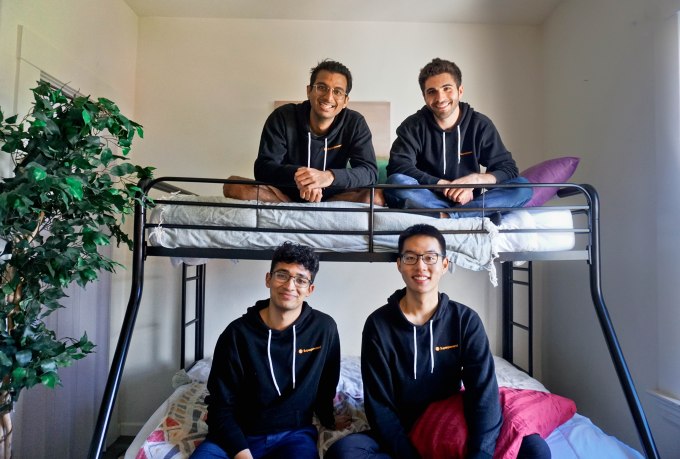
The idea for the app comes from four computer science and software engineering students from the University of Waterloo, who previously interned at tech companies like Google, Facebook, Asana and Spotify.

Team photo. Image Credits: Superpowered

Wanting to build a startup of their own, the team applied to the accelerator Y Combinator with an idea to build a lecture platform for professors. But they soon faced issues in keeping up with their own calendar appointments as they began to conduct user research interviews.

“We were struggling to keep up with each other’s calendars and balance all these meetings throughout the day,” explains Superpowered co-founder Jordan Dearsley, who built the service alongside teammates Nikhil Gupta, Ibrahim Irfan and Nick Yang. “We would be at lunch and be like, ‘Oh shoot, we have a meeting now — I have to run!’ or just completely miss it altogether,” he says.

Irfan had the idea to just put a button in the Mac menu bar to make it easier to join Zoom meetings and soon the team pivoted to work on Superpowered instead.

The product itself is very new. Development work began roughly two months ago and Superpowered opened up to users just last month — a quick pace that Dearsley says was possible because three of the four team members are engineers, and the other, Yang, is the designer.

Image Credits: Superpowered

Although it’s a paid product offered at $10 per month, Superpowered already has hundreds of users who are interacting with the app, on average, 10 times per day. Busier users, like product managers, are clicking on Superpowered as many as 20 to 40 times per day — an indication that it’s found a place in users’ workflows. In the month since its launch, the app has connected users with over 10,000 online meetings, the company says.

Superpowered is not the first to add calendar appointments to the Mac’s menu bar. It competes with a range of products, like MeetingBar, Meeter, Next Meeting and others. But users have been responding to Superpowered’s sleek, clean design.

The company also has a vision for the product’s future that extends beyond meetings. After solving this particular pain point, Superpowered plans to broaden its scope to fix other annoyances for knowledge workers — like Slack notifications, for example.

“It’s really annoying to be pinged all the time while I’m coding … and I don’t know if it’s something that’s worth seeing because Slack doesn’t really give me those controls or ability to peek,” explains Dearsley. Meanwhile, Mac’s built-in Notification Center isn’t smart enough to show you just those items that you really need to know about.

To address this, the team is now working on a Slack integration that will let you quickly check your messages and reply without having to launch the Slack app. Further down the road, the team wants to integrate support for other platforms — like Google Docs, JIRA and GitHub — which would all be pulled into Superpowered’s universal notification inbox.

For the time being, Superpowered is $10 per month for Mac users or $8 per month for those who sign up with a team. Annual pricing is not yet available.

News: Why Terry Crews is launching a social currency

Actor Terry Crews is going in on the blockchain. With the help of social currency startup Roll, Crews is launching his own social currency, $POWER. But first, let’s break down what that means. Anyone can create a social currency, which hundreds of creators have already done via Roll, to change their relationships with fans and

Actor Terry Crews is going in on the blockchain. With the help of social currency startup Roll, Crews is launching his own social currency, $POWER.

But first, let’s break down what that means. Anyone can create a social currency, which hundreds of creators have already done via Roll, to change their relationships with fans and users. Roll enables creators to mint and distribute their own social currency under the ERC20 standard and then determine the ways in which their communities can earn and spend that social currency.

“Anyone, anywhere, anytime can create their own content,” Roll founder and CEO Bradley Miles told TechCrunch. “We refer to this as mass personalization of content. Right now, Roll is experiencing the same thing with money itself. Anyone, anywhere, anytime can create their own money.”

The way I think of it is it’s almost like the process for earning and redeeming credit card points but minus the credit card company and plus the blockchain and creators. I haven’t run this analogy by Miles, but I’m going with it. Just how your credit card provider gives you points for using your card and then you can redeem those points for cash, airline tickets, etc., creators give fans social currency for engaging with their work in a variety of ways. Then, fans can redeem that social currency for more art, content or what have you.

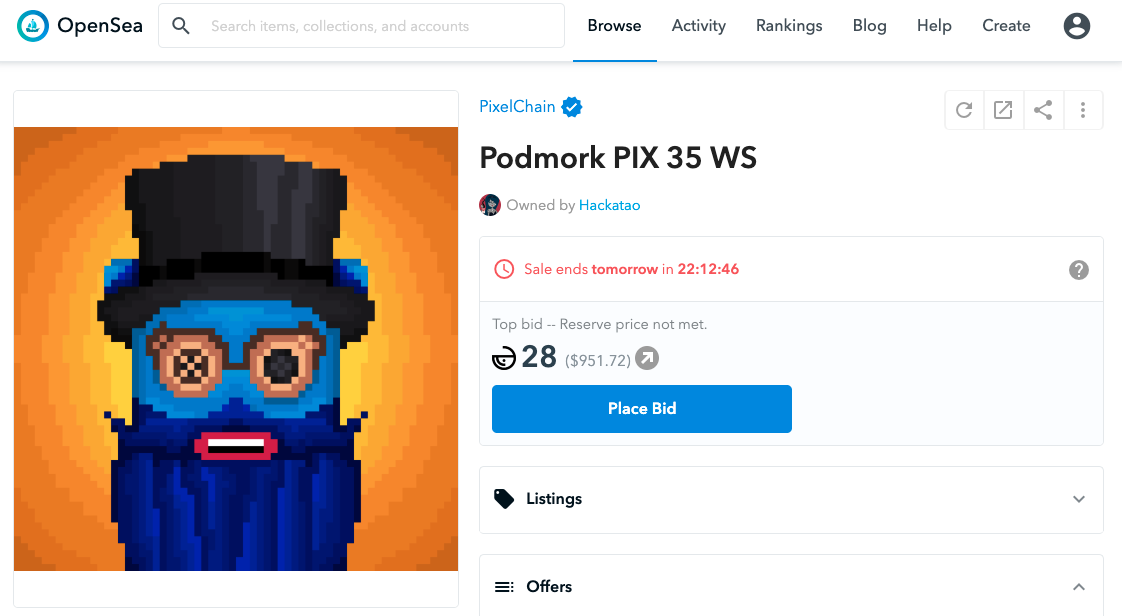
Currently, there are about 300 creators, including Crews, using Roll. Roll, which has $2.7 million in funding from investors like Balaji Srinivasan, Trevor McFederies and others, recently saw its social currency market cap surpass $1 billion. Bradley Miles gifted me .10 $WHALE (worth about $3) so I could get a better understanding of how creators are already using Roll. $WHALE is backed by tangible and rare non-fungible token assets, which means that I can use my $WHALE to buy NFTs. And because Roll enables users to trade their social currency for over 600 other digital assets, that means I could buy the below NFT over on NFT marketplace OpenSea.

Image Credits: Screenshot/OpenSea

However, you’ll see that the Podmork Pix 35 WS cost 28 $WHALE, so I will not be buying this NFT.

In the case of Crews, he envisions folks earning $POWER via blockchain art purchases, NFTs, physical goods and experiences. Initially, Crews is engaging with his $POWER community through Discord. Folks with 50 $POWER, for example, can access a special channel within Discord. To date, Crews had distributed $POWER to about 100 people, he said.

“If I give you $POWER, you own a piece of me,” Crews said. “There’s no other way to put it. And I want to be very careful about who is holding me, no puns intended.”

It’s still early days for $POWER, but Crews says he eventually wants to offer interest-free microloans to artists. The ultimate goal with $POWER is to empower artists.

“That’s our long-term plan,” Crews said. “To become this thing that this community can live and exist in. You could use it anywhere you are — at Target, the grocery store.”

Crews attributes his interest in this space to something that happened to him about four years ago.

While in Milan, Crews said he was trying to buy designer furniture from an artist he respected at Salone del Mobile. He realized he needed extra money to complete the purchase, but didn’t have enough cash in his checking account to cover it. So he got on the phone with American Express, he said, who told him to go to a local bank. American Express, on Crews’ behalf, then tried to explain the situation to the local bank manager so that Crews could get the funds he needed to complete the transaction. Crews said the local bank manager took one look at him and said, “no.”

“And I’m watching all these white men and women pass me in line, and they’re looking at me strangely,” Crews said. “I’d been standing there for 15 minutes and it slowly dawns on me that because I’m Black, I was not going to get my money,” he said. “That was the moment I knew everything had to change for me.”

Crews ended up going to a check-cashing place, in an area where he said his Uber driver refused to go, and got the funds to pay the fees.

“Bringing it up still makes me angry,” he said. “What I love about this new world of finance is that cryptocurrency does not know what race you are, how old you are.”

Through $POWER, Crews hopes to put power back in the hands of artists and creators, Crews explained.

“There’s no gatekeeper to tell us no,” he said.

Crews says he’s also going to start putting out his own content into the $POWER community, where the community will collectively own it together.

“This is bigger than me,” he said. “This is a new future.”

For Miles, he envisions a world in which $POWER is accepted at movie theaters or at Paramount Pictures properties.

“[Social currency] is not to replace the dollar,” Miles said. “It’s to complement [money] and do work that probably the dollar is not suited to do.”

I asked Crews if this means he’s leaving Hollywood and will solely focus on producing his own content for his $POWER community. But Crews said he left Hollywood when he sued William Morris Endeavor in 2017 alleging an executive from the firm groped him. Crews and WME settled the suit in 2018.

“And they were done with me,” he said. “But the deal is, is that I had my power. I still had my talent. William Morris threatened to end everything I’m doing. But everything I’m doing right now, you can’t take. So that’s when I separated from Hollywood. I’ve never felt like a Hollywood person, even to this day. But every artist out there probably feels the same way. They want their power.”


WordPress Image Lightbox Plugin