Tag Archives: Blog

News: Farmland could be the next big asset class modernized by marketplace startups

A growing number of companies are revolutionizing the way farm and forestland is acquired, developed and commercialized across the United States.

Jim Jackson developed timber and farmland in Eastern Washington, protected from coastal rains by the peaks of the Cascade mountains, building out a clutch of apple farms and other properties on the state’s sunny side for 40 years.

Traditionally, he raised money to expand operations for his farms through his existing network, which meant asking previous investors to pool together and come up with the cash.

But more recently, Jackson turned to a fundraising platform that operates entirely online. Like hundreds of other farmers, he’s using a service called AcreTrader to raise money for agricultural development projects. AcreTrader is one of a growing number of companies revolutionizing the way farm and forestland are acquired, developed and commercialized across the United States.

There’s lots of farmland in the U.S. Bill Gates, Microsoft founder and the world’s third-richest man, is the nation’s largest owner of farmland, holding roughly 242,000 acres. That number seems high until you compare it with the 897.4 million acres of land that are currently arable and used for farming in the U.S.

Another 823 million acres of forests dot the United States, the majority of which are privately owned.

Taken together, that’s a massive amount of real estate with economic potential that’s traditionally been accessible only to the ultra-wealthy to acquire and finance for development. Now, startups like AcreTrader and others including Tillable, ($8.3 million) FarmTogether ($3.7 million), and Harvest Returns are bringing marketplace models to the farming world — potentially bringing hundreds of thousands of investable acres to financiers looking to diversify.

News: Instagram adds new teen safety tools as competition with TikTok heats up

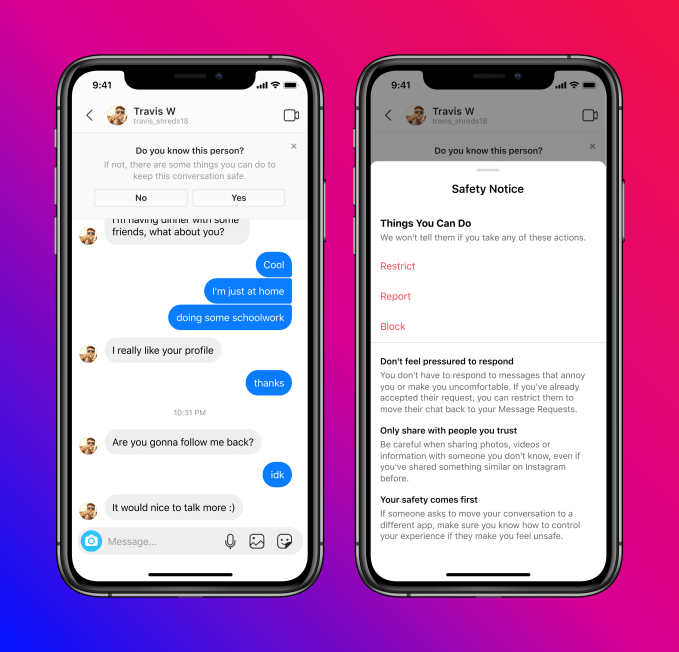
Earlier this year, TikTok made an update to its privacy settings and defaults to further lock down the app for its teenage users. This morning, Instagram followed suit with teen-focused privacy updates of its own. But the Facebook-owned social app didn’t choose to add more privacy to teen accounts by default, as TikTok did —

Earlier this year, TikTok made an update to its privacy settings and defaults to further lock down the app for its teenage users. This morning, Instagram followed suit with teen-focused privacy updates of its own. But the Facebook-owned social app didn’t choose to add more privacy to teen accounts by default, as TikTok did — it largely made it more difficult for adults to interact with the app’s teen users.

The company said it’s rolling out new safety features that would restrict adult users from being able to contact teens who didn’t already follow them. The exception to this rule would still allow the teen to interact with adult family members and other trusted adults on the platform, like family friends. In the case that an adult tried to DM a teen who didn’t follow them, they’d receive a notification informing them this wasn’t possible.

And if the teen has already connected with an adult and is DM’ing with them, they’ll be notified if that adult is exhibiting suspicious behavior — like sending a large amount of friend requests or messages to users under 18. This tool will also then allow the teen to end the conversation, block, report or restrict the adult from further contact.

Image Credits: Instagram

In addition, Instagram said it will make it more difficult for adults to find and follow teens in other places within the Instagram app, including Explore, Reels, and more. This will include restricting adults from seeing teen accounts in the “Suggested Users” section of the app, as well as hiding their comments on public posts.

The company also noted it’s developing new A.I. and machine learning-based technology that would make it possible to find teens lying about their age on the app. This could result in these features being applied, even if the teen in question had lied about their birth date when signing up for the app, but the technology isn’t fully live yet.

Other additions rolling out as part of today’s updates include new safety resources for parents in the app’s Parents Guide and educational material for teens that will better explain what it means to have a public account on the app, and encourage them to choose private options.

Image Credits: Instagram

The launch timing here is notable, as TikTok has recently focused on making its platform safer for teens — not only with the changes to its default settings, but also with the addition of parental controls last year. The company last year took the unusual step of bundling a parental control mechanism directly into its app that lets a parent link to a child’s TikTok account to control their profile’s privacy, what they’re allowed to do on the app, and even which feed they can view. The company has continued to expand these controls following their launch, indicating that it considers these core features. By making privacy and parental controls a key part of the experience, the app is more likely to be blessed by parents who would otherwise restrict their teens’ social media access — and that helps TikTok grow its user base and teens’ time spent in the app, sometimes at Instagram’s expense.

News: Google’s Soli radar returns to track sleep on the new Nest Hub

Talk about surprise comebacks. This morning Google announced the arrival of the next-gen Nest Hub. In spite of rebranding from Google Home Hub back in 2019, the smart screen hasn’t seen many changes since its 2018 introduction. Today’s arrival doesn’t represent a huge upgrade from its predecessor, but it does support a familiar — and

Talk about surprise comebacks. This morning Google announced the arrival of the next-gen Nest Hub. In spite of rebranding from Google Home Hub back in 2019, the smart screen hasn’t seen many changes since its 2018 introduction. Today’s arrival doesn’t represent a huge upgrade from its predecessor, but it does support a familiar — and largely forgotten — face.

We haven’t heard a peep from Project Soli since the technology was introduced with the Pixel in late-2019. The miniature, motion-sensing radar tech was positioned to be a major selling point, finally arriving on a device some four years after being announced. Applications were relatively few and far between — including gesture detection and a weird, one-off Pokémon app.

And then it just sort of went away. The Pixel 5 arrived the following year, without a trace of Motion Sense. Abandoning features certainly isn’t unheard of in consumer electronics, but it seemed odd for something in which Google had clearly invested time and resources.

Image Credits: Google

Soli’s reemergence in the new Nest Hub is certainly unexpected, but may ultimately make more sense than any of its attempted mobile applications. The primary use here is sleep tracking, the biggest update between the new Nest Hub and the original. As for why Soli, the answer goes deeper than the fact that Google was looking for a new home for its existing tech (though that no doubt also played a role).

Like the first-gen product, there’s no camera on the new Nest Hub. Google’s decision to keep the tech off the device is a breath of fresh air in a world where the new Amazon Echo uses figure tracking to actually follow you around the room. As before, you can always opt for the Nest Hub Max if that feature’s important to you. But the company rightfully noted that the first-gen model was often deployed at bedsides.

That means:

  1. Sticking a camera on the connected device raises some major privacy concerns.
  2. It’s an ideal spot for doing some sleep tracking.

Which leads us to:

  1. How do you do sleep tracking without a camera?

The easy answer is a wearable device. Google now has a much stronger foothold in that world now that its Fitbit acquisition has cleared. But that deal is going to take some time to fully take root. And besides, as someone who has tested a lot of wearables in my day, I can definitely say that, no matter how comfortable, I sleep better without one on my wrist. Certainly the irony of being kept awake by a sleep tracker has not escaped me.

Quick refresher on Soli tech, per Google:

Soli consists of a millimeter-wave frequency-modulated continuous wave (FMCW) radar transceiver that emits an ultra-low power radio wave and measures the reflected signal from the scene of interest. The frequency spectrum of the reflected signal contains an aggregate representation of the distance and velocity of objects within the scene. This signal can be processed to isolate a specified range of interest, such as a user’s sleeping area, and to detect and characterize a wide range of motions within this region, ranging from large body movements to sub-centimeter respiration.

Image Credits: Google

So, basically, you’re trading camera-based sensing for mini-bedside radar. It’s a weird thing to wrap your brain around, certainly. The biggest thing here is that the motion-tracking data is not collecting any images, just data based on movement.

The Sleep Sensing system was trained on more than 100,000 hours of sleep data, according to the company, with TensorFlow being used to analyze data. Among other things. It’s able to eliminate external movement like ceiling fans, after the initial calibration process is completed. In addition to tracking, the system leverages other sleep-centric features that were rolled out to the last Nest Hub via software update, including Sunrise Alarm and the ability to snooze your wake-up call with a gesture.

There are other software updates on-board as well, including a new smart home interface. On the whole, however, there really aren’t too many improvements beyond sleep tracking — which is actually okay, since the original remains one of the better smart screens on the market. The speaker got a little bit of love, with added bass, but even that is largely the same. The screen size remains the same at 7-inches, while the overall device footprint is a bit larger to accommodate the slight speaker improvement. The body is made from 54% post-consumer plastic.

At $99, the price is certainly right. Google shaved off $49 from the original Hub. It’s up for pre-order starting today and will be available for sale on the 30th.

Google Nest Hub Max review

News: Appfire, provider of Atlassian apps, raises $100M to continue its buying spree

Appfire, a Boston-based provider of software development apps, announced Tuesday that it has received a $100 million investment from growth private equity firm TA Associates. Founded in 2005, Appfire was bootstrapped until it got $49 million from Silversmith Capital Partners last May. Since that time, Appfire has acquired six companies in the Atlassian “ecosystem,” including

Appfire, a Boston-based provider of software development apps, announced Tuesday that it has received a $100 million investment from growth private equity firm TA Associates.

Founded in 2005, Appfire was bootstrapped until it got $49 million from Silversmith Capital Partners last May. Since that time, Appfire has acquired six companies in the Atlassian “ecosystem,” including Botron, Beecom, Innovalog, Navarambh, Artemis and Bolo.

The Boston-based company has been profitable for over a decade, according to Randall Ward, co-founder and CEO of Appfire. And while Ward declined to reveal valuation or hard revenue numbers, he did say that Appfire has seen its ARR more than double over the past year.

Since last June alone, the company says it has experienced:

  • A 103% year over year increase in ARR.
  • A 258% YOY increase in enterprise subscription revenue (data center only). 
  • A 182% YOY increase in all subscription revenue (data center and cloud).  

So why the need for institutional capital? With the latest funding, Appfire intends to extend its buying spree of complementary apps. 

Appfire has been acquiring businesses every six to eight weeks, and it plans to continue scooping them up at that pace, according to Ward.

It’s also looking to let shareholders cash in on their options.

Fun fact: Atlassian itself was bootstrapped for nearly a decade. The Australian enterprise software company was profitable from its inception in 2001 before taking its first round of external capital, a $60 million financing led by Accel, in July 2010. The financing was primarily secondary.

Some context

Appfire was initially a professional services company before transitioning into products in 2013. The company says it has “developed domain expertise in creating, launching and distributing apps” through the Atlassian marketplace. Today, the company has 85 products on that marketplace and more than 110,000 active installations globally spanning workflow automation, business intelligence, publishing and administrative tools. 

Specifically, the company’s Bob Swift, Feed Three and Wittified brand apps aim to help companies like Google, Amazon and Starbucks streamline product development through improved collaboration, security, reporting and automation.

“We started this business 15 years ago with the goal of building software applications for customers,” Ward told TechCrunch. “At that time, there were no marketplaces, so iTunes marketplace didn’t exist, Google Play didn’t exist, but yet we were seeing that applications were getting smaller in size, Mozilla was putting out plugins. My co-founder and I were sitting on the floor of a warehouse in Maynard, Massachusetts and we conceived of this company called Appfire, and boy did we pick the right name.”

The pair then stumbled upon a project by which a friend of a friend was looking for them to integrate two pieces of software with software from Atlassian.

“It was brand new to us — we had never heard of it — a software called JIRA and another piece of software called Confluence,” Ward recalls. “About three months later we launched a project and then got introduced to the co-founders of Atlassian.”

In 2017, Appfire decided it wanted to focus full time on becoming “the biggest app platform and aggregator.”

“So we decided to wind down all the other little special side projects for Atlassian delivering services to customers, and really put all of our eggs in this marketplace basket,” Ward recalls. 

It was at that point the company began looking for external capital. With this last raise, though, Ward says Appfire was not necessarily looking for more cash.

When approached by TA, Appfire asked if it could create more employee equity programs so the company could be an employee-led business. It also asked if it could take 1% of its equity and contribute to the Pledge 1% initiative.

“They said yes,” Ward said. “So that led us to this latest funding.”

Appfire is also moving into business intelligence and data analytics apps for Tableau and Microsoft Power BI.

As mentioned above, some of its latest funding will go back to existing shareholders, Ward said. The remainder will go into continuing to grow the business.

“We have a lot of organic and inorganic growth opportunities,” he added. “…That obviously takes some momentum.”

Michael Libert, a principal of TA Associates, said his firm had been tracking Appfire’s progress for “quite some time.” The company’s apps, he said, do not require complex training, allowing customers to improve productivity “at a low cost,” leading to further customer adoption and enabling “a solid land-and-expand strategy.”

“We found the company’s high-quality business model, impressive organic growth and recent significant acquisitive activity particularly attractive,” Libert told TechCrunch.


News: Noogata raises $12M seed round for its no-code enterprise AI platform

Noogata, a startup that offers a no-code AI solution for enterprises, today announced that it has raised a $12 million seed round led by Team8, with participation from Skylake Capital. The company, which was founded in 2019 and counts Colgate and PepsiCo among its customers, currently focuses on e-commerce, retail and financial services, but it

Noogata, a startup that offers a no-code AI solution for enterprises, today announced that it has raised a $12 million seed round led by Team8, with participation from Skylake Capital. The company, which was founded in 2019 and counts Colgate and PepsiCo among its customers, currently focuses on e-commerce, retail and financial services, but it notes that it will use the new funding to power its product development and expand into new industries.

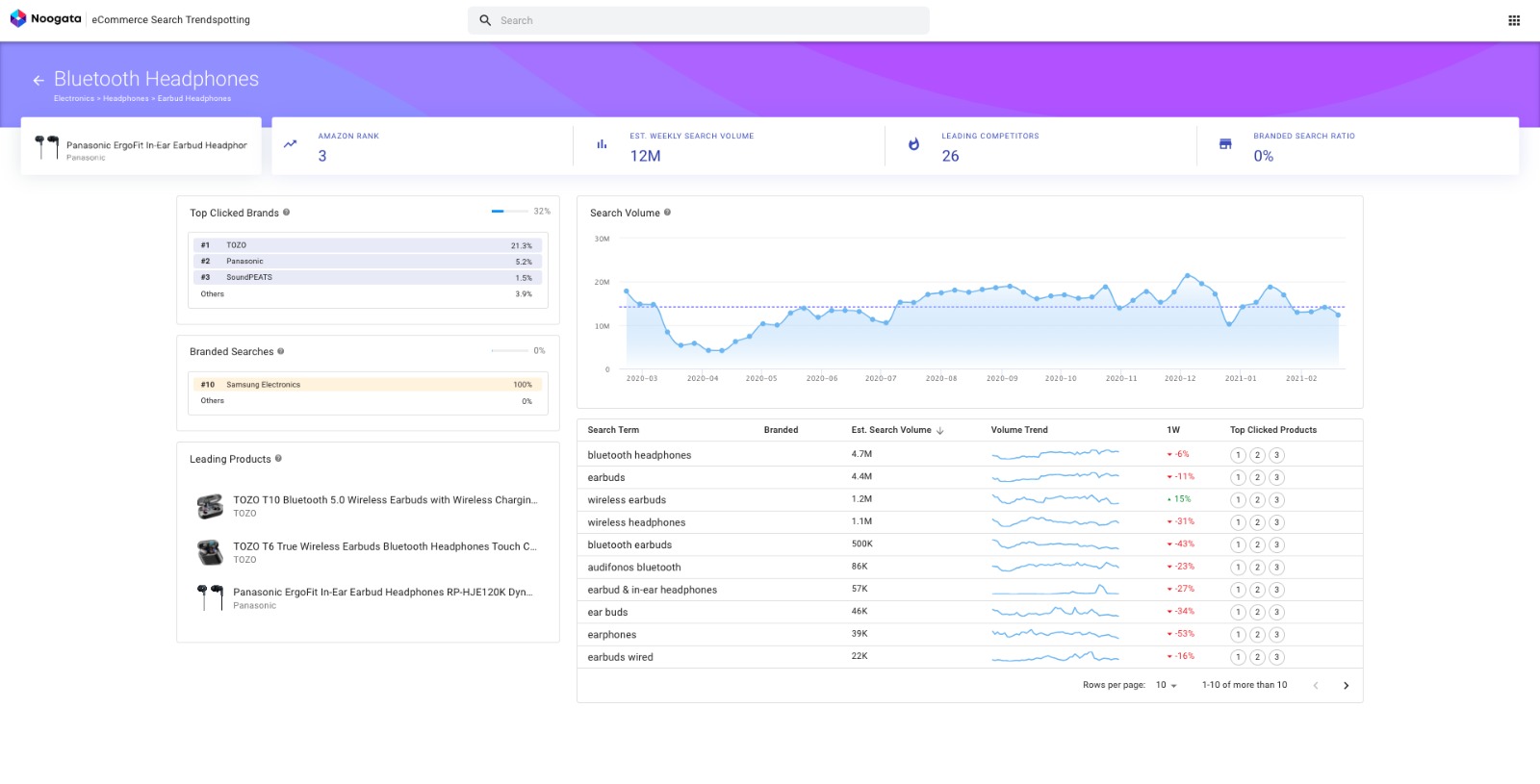
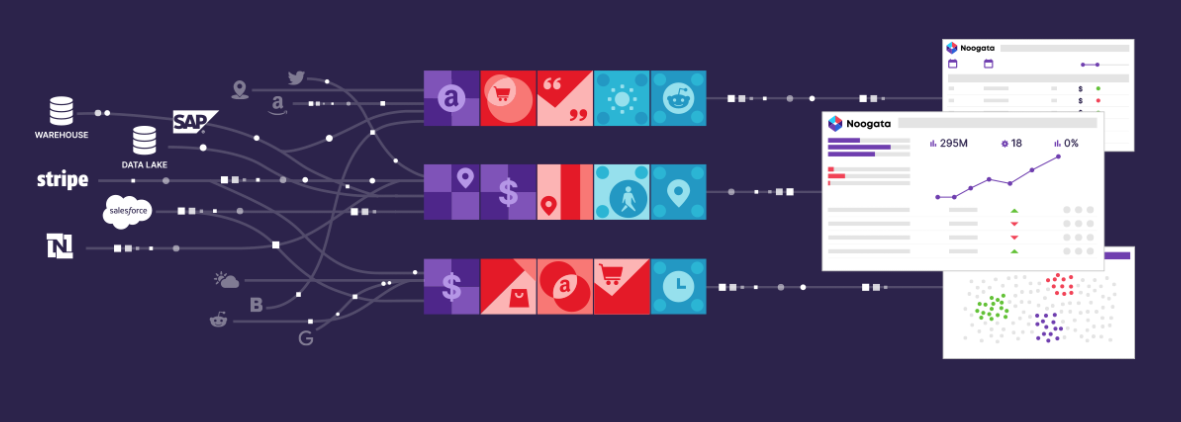
The company’s platform offers a collection of what are essentially pre-built AI building blocks that enterprises can then connect to third-party tools like their data warehouse, Salesforce, Stripe and other data sources. An e-commerce retailer could use this to optimize its pricing, for example, thanks to recommendations from the Noogata platform, while a brick-and-mortar retailer could use it to plan which assortment to allocate to a given location.

Image Credits: Noogata

“We believe data teams are at the epicenter of digital transformation and that to drive impact, they need to be able to unlock the value of data. They need access to relevant, continuous and explainable insights and predictions that are reliable and up-to-date,” said Noogata co-founder and CEO Assaf Egozi. “Noogata unlocks the value of data by providing contextual, business-focused blocks that integrate seamlessly into enterprise data environments to generate actionable insights, predictions and recommendations. This empowers users to go far beyond traditional business intelligence by leveraging AI in their self-serve analytics as well as in their data solutions.”

Image Credits: Noogata

We’ve obviously seen a plethora of startups in this space lately. The proliferation of data — and the advent of data warehousing — means that most businesses now have the fuel to create machine learning-based predictions. What’s often lacking, though, is the talent. There’s still a shortage of data scientists and developers who can build these models from scratch, so it’s no surprise that we’re seeing more startups that are creating no-code/low-code services in this space. The well-funded Abacus.ai, for example, targets about the same market as Noogata.

“Noogata is perfectly positioned to address the significant market need for a best-in-class, no-code data analytics platform to drive decision-making,” writes Team8 managing partner Yuval Shachar. “The innovative platform replaces the need for internal build, which is complex and costly, or the use of out-of-the-box vendor solutions which are limited. The company’s ability to unlock the value of data through AI is a game-changer. Add to that a stellar founding team, and there is no doubt in my mind that Noogata will be enormously successful.”

News: Leap raises $17 million to help Indian students study abroad

Hundreds of thousands of teenagers and young adults get on flights each year from India to a foreign land to pursue higher education. Upon landing, they face a myriad of challenges: They don’t have a local credit history, so they can’t avail a range of financial services including a loan or a credit card —

Hundreds of thousands of teenagers and young adults get on flights each year from India to a foreign land to pursue higher education. Upon landing, they face a myriad of challenges: They don’t have a local credit history, so they can’t avail a range of financial services including a loan or a credit card — at least not without paying a premium for it.

For banks and other financial institutions, there is an increased risk when they engage with foreigners, so they charge more. An Indian student studying in the U.S., for instance, borrows money at an interest rate over 13%, compared to their local peers who can secure the same amount of credit, if not more, at less than half of that interest rate.

Leap, a two-year-old startup with headquarters in San Francisco and Bangalore, is attempting to solve this problem and many others. The startup grants loans to students at fair interest rate by evaluating the data they generated — alternative and derived — in India itself.

Since the last time we wrote about Leap, the startup has evolved to address several other problems students face, explained Arnav Kumar, co-founder of Leap, in an interview with TechCrunch.

Kumar said Leap today is helping students with guidance on admission, visa, as well as test preparation. Leap has also developed a social network of sorts where over half a million students are talking to one another and use the platform’s other services to get admission in a college abroad.

About ten years ago, when I was looking to join an engineering college, I reached out to several individuals who were already studying in the colleges I had shortlisted. Turns out, over a million students in India do the exact same thing each year when they are about to begin their college life. (If I may complete the loop, I did graduate and have a bachelor’s degree in CSE somewhere in the house.)

Kumar said Leap’s community today is replicating the offline-behavior. Some students, to be sure, reach out to others on LinkedIn, or Facebook. But by just focusing on one problem, Leap is attempting to become the community for students who are looking to pursue higher education. (Its pages are indexed on Google search for better visibility.)

Leap Finance founders pose for a picture

There is a massive opportunity for startups to better solve these problems.

“India is the second-largest market globally for overseas enrolment, and in just a decade higher education enrolments are up by 8 million. This presents a huge opportunity in an otherwise fragmented landscape. Leap is addressing this huge opportunity through its end-to-end tech platform and a community-first approach,” said Amit Anand, Founding Partner of Jungle Ventures, in a statement.

Vaibhav Singh, the other co-founder of Leap, said in an interview that students from India take admission in over 5,000 schools and universities abroad each year to study tens of thousands of courses.

“So the choice spectrum is really, really wide and you need experts who can help you make the right choice. This is the most important decision you or your family will make,” he said.

Investors have spotted an opportunity in this space, too — and are backing Leap. The startup said on Tuesday that it has raised $17 million in its Series B round. The new financing round was led by Singapore-based Jungle Ventures, along with Sequoia Capital India and Owl Ventures. The startup has to-date raised $22.5 million.

The global pandemic prevented many Indian students from traveling abroad. This year, more than 700,000 students are estimated to leave India to pursue higher education. Leap co-founders said they are working to serve 150,000 of such students this year.

Leap said it plans to deploy the fresh capital to expand its tech team and reach more geographies. The startup currently helps students join colleges in several countries including the U.S., Canada, UK, and Australia. Singh said Leap is also looking to hire some tech and business talent.

“2020 was a tough year for international education with Covid related travel restrictions. We are impressed by the resilience of the Leap team during the last year, where not only have they served hundreds of students with their financing solutions but have also expanded with Leap Scholar providing counselling to thousands of Indian students looking to study abroad. This vertically integrated strategy has materially strengthened the moats for Leap,” said Ashish Agrawal, Principal at Sequoia India, which wrote its first check to Leap before the startup had a product.

News: The toilet paper startup backed by Marc Benioff, Dara Khosrowshahi, and Robert Downey Jr. now sells paper towels

Cloud Paper, the startup whose bamboo toilet paper (and celebrity and billionaire backers including Robert Downey Jr., Gwyneth Paltrow, Marc Benioff, Dara Khosrowshahi, and Mark Cuban) made a splash last year, is getting into the paper towel racket. Starting today, the company is taking pre-orders for its 12 pack boxes of sustainably sourced bamboo paper

Cloud Paper, the startup whose bamboo toilet paper (and celebrity and billionaire backers including Robert Downey Jr., Gwyneth Paltrow, Marc Benioff, Dara Khosrowshahi, and Mark Cuban) made a splash last year, is getting into the paper towel racket.

Starting today, the company is taking pre-orders for its 12 pack boxes of sustainably sourced bamboo paper towels, which will retail for $34.99.

The Seattle-based company was founded by two ex-Uber employees, Ryan Fritsch and Austin Watkins, who went on to take roles at the logistics startup Convoy, before launching Cloud Paper. Their toilet paper (and now paper towel company) is one of several businesses trying to get consumers to make the switch to bamboo-based consumer products.

Cozy Earth and Ettitude sell bamboo sheets and bedding; The Bamboo Clothing Co., Thought, Tasc, Free Fly Apparel, all make bamboo clothing; and Bite has a bamboo toothbrush to go with its plastic-free toothpastes and flosses.

But (I’m quoting myself here) Cloud Paper may be the only one to get such super wealthy, high profile investors to flush it with wads of cash. Even so, companies like Grove, Tushy, Reel, and the aptly named Who gives a crap, Inc. are all angling to wipe up a piece of the $10.4 billion market for toilet paper.

The company’s founders are on a mission to make the paper industry more sustainable, according to co-founder Ryan Fritsch, and they’re looking to do it one roll at a time.

While other companies look at bamboo as a replacement for cotton or plastics, the Cloud Paper co-founder said this company is squarely focused on toilet paper and paper towels because those products make up most of the crap that’s most wasteful in the paper industry.

The company has already ordered 1 million rolls of toilet paper for production and shipped hundreds of thousands of toilet paper, but the rationale for adoption has shifted, the company said.

“It definitely had its moment when the COVID shutdowns happened,” said Fritsch. “But [consumption] shifted from a TP panic to ‘There’s an easy and convenient, sustainable, option out there.’ It’s less of an all-out craze,” Fritsch said.

No less august a body than the National Resources Defense Council has come out swinging against how much waste is sacrificed to the commode.

For instance, the logging industry in Canada degrades over a million acres of its climate-critical forest, in part to feed U.S. demand for toilet paper, according to the NRDC. Demand from the U.S. has grown so substantially that, in recent years, Canada has ranked third globally in its rate of intact forest loss—behind only Russia and Brazil—mostly due to logging, the NRDC said.

Ninety percent of that is clearcutting, which exacerbates climate change. By the most conservative estimates, “logging in the boreal releases 26 million metric tons of carbon through driving emissions from the forest’s carbon-rich soils and eroding the forest’s ability to absorb carbon,” the NRDC wrote in 2020 report. “Toilet paper’s impact is even more severe because, since it is so short-lived, it quickly releases its remaining carbon into the atmosphere. That is why, according to the Environmental Paper Network, toilet paper made from trees has three times the climate impact as toilet paper created using recycled materials.”

That’s why wiping out forested paper can be a real boon in the climate fight.

“The lion’s share of usage is number one is toilet paper and number two is paper towels, after that the size of the market really really shrinks. We’re going to be continuing on the paper space,” said Fritsch. 

The company’s next act will be working with businesses like restaurants, hotels, and even stadiums and arenas to make the swithc.

“We launched the company as a B2B company. We were working with WeWork and restaurants and the market — if you look at where our paper products were being used,” Fritsch said. “So another big focus will be building products for our commercial customers where there’s higher capacity.”

Cloud Paper box of paper towels. Image Credit: Cloud Paper

News: Cyware nabs $30M to help organizations detect and stop advanced cyber attacks

Malicious hacking has become a pernicious and dogged fact of life for more organizations, and it’s a threat that has seemingly grown more complicated and sophisticated over time. One one effective approach to tackling that has been collaboration: not just applying an array of services to address the issue, but creating environments to help those

Malicious hacking has become a pernicious and dogged fact of life for more organizations, and it’s a threat that has seemingly grown more complicated and sophisticated over time. One one effective approach to tackling that has been collaboration: not just applying an array of services to address the issue, but creating environments to help those building cybersecurity to work better together. Today one of the startups building tools to do just that is announcing a round of funding, underscoring the opportunity and its own growth within that.

Cyware, a New York startup that has created a platform for organizations to build and operate virtual “cyber fusion centers” —
spaces for people to share threat intelligence, run end-to-end security automation, and orchestrate and execute 360-degree threat responses — has picked up $30 million in funding, a Series B that it will use to continue growing its business.

The funding is being co-led by Advent International and Ten Eleven Ventures. Advent made some waves in the cybersecurity industry last year when it partnered with Crosspoint to acquire Forescout for $1.9 billion. Ten Eleven, meanwhile, is a VC that specializes in cybersecurity startups. Prelude Fund (the venture practice at Mercato Partners), Emerald Development Managers, Great Road Holdings and cloud security firm Zscaler — a mix of financial and strategic investors — also participated. Before this, the startup had raised around $13 million, and it is not disclosing its valuation.

The story of the last year in the world of business has been about how everything has gone online: people and their companies have been working remotely; consumers are browsing, buying and entertaining themselves over the internet and with apps. Digital is where all the traffic is.

Unsurprisingly that has also played out in the world of cybersecurity: the threat landscape has grown, and so cybersecurity responses have grown with them. Cyware said that in the last year it saw 120% year-over-year growth in annual recurring revenue — although it doesn’t disclose actual revenue figures. Its customers are a mix of large enterprises, but also those who both collaborate with others to manage cyber security, such as information sharing communities (ISACs), as well as organizations that manage cybersecurity on behalf of a number of others, such as managed security service providers and computer emergency response teams.

Although many might have a stereotype of a malicious hacker in their heads who sits alone in a darkened room with a determined look in his/her eye, the reality is more likely to be a collaboration between a number of people, providing tips, technology, threads that are developed and so on. Cyware, in its focus on providing a platform for collaboration and creating operations centers, seems to take the same approach in what it has built, a platform to make collaborating easier and part of the solution.

It does so through security orchestration, automation and response (known as SOAR), used by teams to collaborate better and make more informed threat scoring, and to respond better to threat alerts. Indeed, a key part of the challenge for a lot of security services is that they cross multiple parts of organizations, including IT, compliance, trust and safety, and indeed security itself. One aim of Cyware is to create a platform for these all to meet and exchange information that could be helpful to others in one place.

“Over the past decade, security operations teams have had difficulty with trying to sift through copious amounts of threat data and lacked the humans’ role as part of their security orchestration strategies,” said Anuj Goel, Ph.D., cofounder and CEO of Cyware, in a statement. “Our goal with our Virtual Cyber Fusion platform is to help our customers unite their security teams to efficiently respond to high-priority threats by connecting the dots in their environments, and the momentum we’re experiencing is proof that we are executing on that mission. This Series B financing will help us continue to overdeliver for customers, expand our team, improve our platform and truly revolutionize how security operations and threat intelligence teams work together.”

Goel, who cofounded the company with CTO Akshat Jain, cut his teeth in a big security team, as head of global cyber strategy for Citi. He is also an advisor for the Centre for Strategic Cyberspace in London and has worked with other organizations on collaborative approaches to the problem and consequences of malicious hacking.

Investors will have not just been looking at the company’s growth, but also the list of customers — themselves also leaders in cyber — that are trusting Cyware.

“In our increasingly connected environment, companies of all sizes are demanding new and innovative cybersecurity solutions,” said Eric Noeth, Principal, Advent International, in a statement. “Cyware’s early traction among leading enterprises and major ISACs reflects its unique ability to bring together all key security functions to seamlessly anticipate, contextualize and remediate threats. We look forward to drawing on our experience in this sector to help the talented Cyware team make its Virtual Cyber Fusion platform the gold standard technology for enterprises around the world.”

News: Resilience is an ambitious bet to improve cancer treatment

Meet Resilience, a new startup that wants to help cancer treatment institutes as well as cancer patients at every step of the treatment journey. It’s an ambitious project founded by two well-known French entrepreneurs. They want to leverage their tech skills for this new healthcare startup. Behind the scenes, there are two co-CEOs — Céline Lazorthes

Meet Resilience, a new startup that wants to help cancer treatment institutes as well as cancer patients at every step of the treatment journey. It’s an ambitious project founded by two well-known French entrepreneurs. They want to leverage their tech skills for this new healthcare startup.

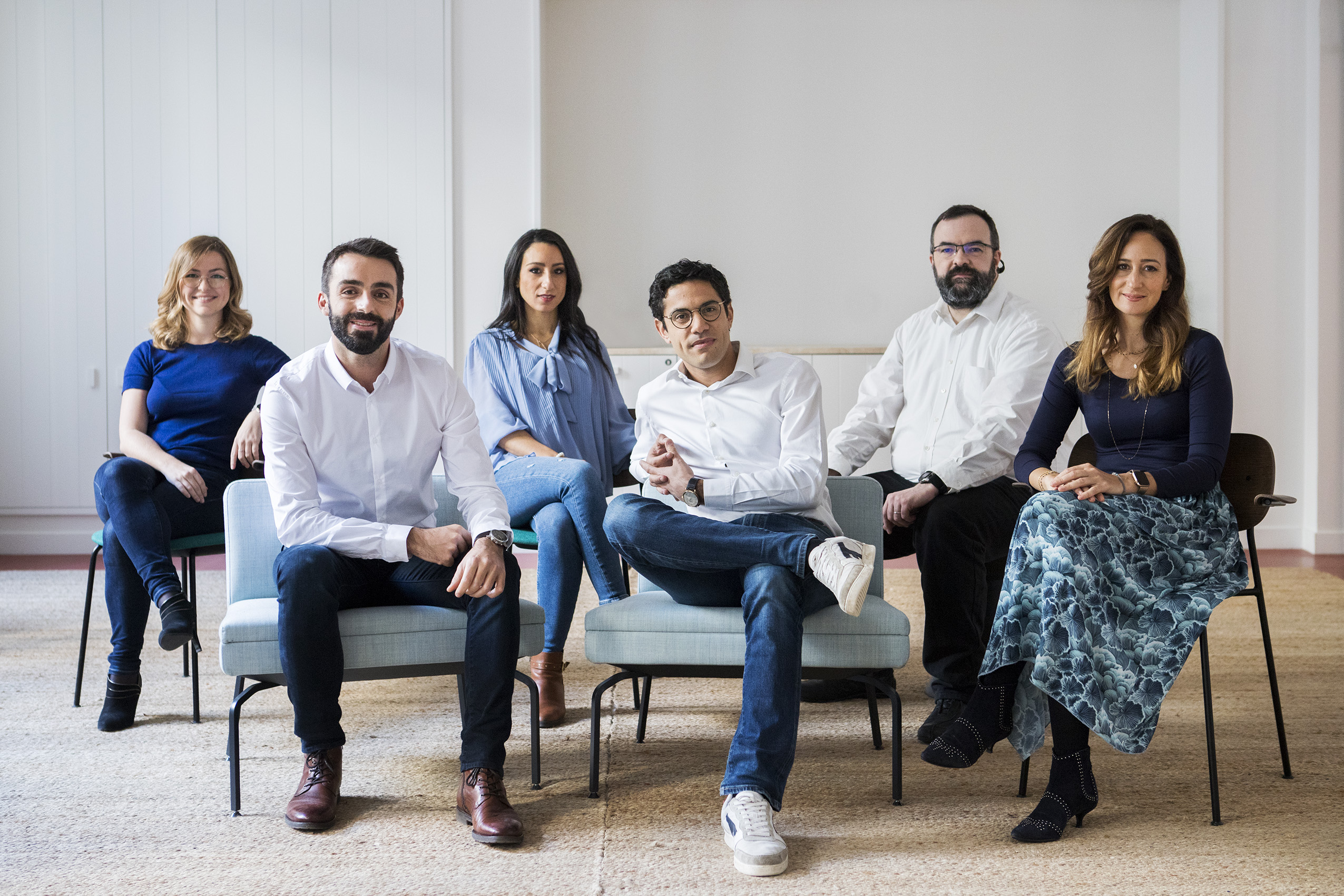
Behind the scenes, there are two co-CEOs — Céline Lazorthes and Jonathan Benhamou. Nicolas Helleringer and Matthieu Pozza are the two remaining co-founders acting as CTO and CPO respectively. Lazorthes previously co-founded Leetchi, the leading money pot company in France. She also started MangoPay, a marketplace payment solution, as a spinout company. Crédit Mutuel Arkéa acquired both companies.

Benhamou co-founded PeopleDoc, a cloud-based HR service. In 2018, his company was acquired by Ultimate Software. Following the acquisition, he served as an executive in the publicly quoted company. Shortly after, private equity firm Hellman & Friedman Capital Partners acquired Ultimate Software.

Last year, they both spent a lot of time working together on a nonprofit called ProtegeTonSoignant. Along with 140 people, they raised €7.4 million ($8.8 million) in donations to buy personal protective equipment and deliver it to hospitals in need. It was a fundraising and logistics challenge.

After spending a lot of time talking with healthcare professionals, they decided to “dedicate at least the next ten years to those who save lives,” Lazorthes said.

It seems like an ambitious bet, and they’re aware of that. “We don’t know anything about healthcare just like we didn’t know anything about HR and finance. We’re entering a market that is highly regulated,” Benhamou told me.

That’s why they chose to focus on one area in particular — cancer care. While research institutes have made some tremendous progress over the past few years, it has become increasingly more complicated to treat cancer. For instance, Benhamou says he expects to see 300 new treatments over the next three years. Treatment is slowly evolving from broad spectrum treatments to targeted treatments.

Cancer treatment facilities face three issues. First, “a human brain can’t assimilate all this data,” Benhamou said. Second, as life expectancy increases, there are more cancer cases every year. A tumor board is going to spend a minute and a half or two minutes on a specific case to make a therapeutic decision.

Third, as a result of the first two problems, patients are left on their own. For instance, they suffer from side effects because there’s no dosage adjustment in their treatment.

Image Credits: Resilience

Starting from there, Resilience wants to become a full-stack software solution for cancer treatment for both the medical team and patients. When it comes to practitioners, Resilience will be a software-as-a-service solution that can augment therapeutic decisions. The company will categorize scientific literature, use machine learning to find some similarities with past cases and surface clinical trials based on various criteria.

When it comes to patients, there will be a web and mobile app to access content and information about their cancer. In particular, Resilience could help you understand side effects and treat them.

“Our goal is to prove that the app can improve the quality of life of the patients,” Lazorthes said. Resilience also wants to leverage its app to ask questions and collect data to improve treatments.

The startup is already putting together a data science team. It will use natural language processing to parse scientific literature. It will also work with a medical team to double-check everything.

When it comes to finding similarities between patients, the company is signing partnerships with various hospitals to get data from past cases.

Resilience has raised a $6 million funding round (€5 million) led by Singular, the VC firm founded by former Alven partners Raffi Kamber and Jérémy Uzan. Tech business angels Nathalie Balla (La Redoute), Xavier Niel (Free), Jean-Charles Samuelian (Alan), Roxanne Varza (Station F) and more are also participating.

There are also some healthcare investors in today’s funding round, such as Charles Ferté (AstraZeneca), Philippe Dabi (Bioclinic) and Thomas Clozel (Owkin).

Resilience is a mission-driven company — the company is partnering with a scientific board and a patient board. Gustave Roussy, one of the leading cancer research institutes in the world, is also acting as a co-founder in Resilience.

That’s a lot of stakeholders, but it’s the right thing to do when you’re building a healthcare company. Resilience now has the right system of checks and balance to iterate on its product and roll out a product that has a chance of actually improving cancer treatment.

News: Inovia Capital raises $450M for second growth-stage investment fund

Montreal-headquartered Inovia Capital has raised $450 million for Growth Fund II, the firm’s second growth-stage investment fund. The close of this funding comes just a little over two years after the announcement of its first in February 2019, a $400 million pool of investment capital that marked Inovia’s first foray beyond the early stage deals

Montreal-headquartered Inovia Capital has raised $450 million for Growth Fund II, the firm’s second growth-stage investment fund. The close of this funding comes just a little over two years after the announcement of its first in February 2019, a $400 million pool of investment capital that marked Inovia’s first foray beyond the early stage deals it originally focused on.

Inovia now has investments across every stage of a company’s development — including retaining stakes in some of its portfolio companies that have had successful exits to the public markets, like Lightspeed, the point-of-sale and commerce company that went public in a nearly $400 million public offering on both the NYSE and the TSX last year.

As with Growth Fund I, the goal of Growth Fund II is to invest in companies with a focus primarily on Canadian startups, but also looking to targets in the U.S. and EU, where Inovia also maintains offices. The firms’ partners, including Chris Arsenault, Dennis Kavelman, and former Google CFO Patrick Pichette, have focused on building out a team of experienced operators to help their portfolio companies, and invest specifically in areas of particular need for startups outside the Valley, like sourcing high-demand, senior talent with high-profile tech industry experience.

Inovia’s original Growth Fund was based on an assumption that the firm could leverage its relationships and its experience to deliver value to its portfolio companies not just when they’re starting out, but across their growth cycles. Arsenault explained in an interview that Fund I was kind of a proof point that that this assumption was correct, which then paid big dividends when the firm went out to raise Fund II last year.

“We basically built the team around Dennis, Patrick and myself,” he said. “We really followed through on our key assumptions over why it made sense for Inovia to use its platform to actually build a growth stage fund that would benefit not only from insights into the portfolio, but also all of the relationships and the platform that we built over the last decade.”

What needed proving, Arsenault said, was that Inovia could stand toe-to-toe with the growth-focused firms that had acted as follow-on investors for its early stage deals over the years. That was no easy task, when you consider that Inovia provided deal flow to some of the most respected venture firms in technology, including Bessemer, KKR, TA Ventures and Sequoia.

Inovia hired a lot of operators with experience at high-growth companies, and focused on being able to shepherd its investments through challenges like building a real board, and engineering a cap table to properly manage and prepare secondary sales. With a plan to invest in between 10 to 12 companies with the $400 million in Fund I, Inovia began making deals – the first was with Lightspeed, and then they got into Forward (tech-enabled primary health care), Hopper and Snaptravel (two travel industry startups) and more.

Inovia Capital growth partners Chris Arsenault, Dennis Kavelman and Patrick Pichette (left to right)

Most of the companies that Lightspeed picked with Fund I (it did 10 deals in total) ended up having a very strong 2020 – including, surprisingly, all the travel-focused startups. Based on the strength of their performance, Arsenault and his partners decided to accelerate their timetable for raising Fund II, and found LPs more than willing. They ended up capping the fund at $450 million (with a target of between 10 to 12 investments, as with Fund I) given what Arsenault says felt like the right size for managing across the investment and operating team, despite available demand to likely raise quite a bit more.

Arsenault noted that most of the LPs contributing to this fund also had capital in the first, though some new investors have also signed on. And while Inovia’s focus is not strictly Canadian, he added that the firm’s success, along with the makeup of its investment partners and portfolio (two-thirds of the companies it has backed are Canadian) tells a story of a changing investment landscape north of the border.

“The majority of our LPs are Canadian, and I take it to heart that it’s important to create patterns of success, so that people can look towards models and either replicate or adapt to their own situation,” Arsenault said. “I think that we need more success stories that people can look at and say, ‘I can do the same thing, or I can do better.’ And the fact that our LPs came back with us, and when you look at, you know, what Georgian [Partners] is doing, and what Novacap is doing, and what OMERS Growth – this is nothing like the VC ecosystem and industry that I was in 10 years ago, right? We’re definitely on another level now in Canada.”

He added that there are examples at every stage of company-building, citing the new Backbone Angels collective led by a number of post and current Shopify employees including Arati Sharma, Atless Clark, Lynsey Thornton and Alexandra Clark. Arsenault also pointed to Lightspeed’s decision to list first on the TSX before the NYSE as a sign of newfound tech industry maturity in the Canadian context.

Finally, Arsenault credits an unusual ‘X’ factor in how Inovia has been able to put together this second fund and manage deep involvement in its very active portfolio companies over the last year: the mostly remote conditions brought on by the necessities of the pandemic.

“It would have been impossible to do what we did within the portfolio, with the portfolio, fundraising a new fund, generating our best year, in terms of exits last year, we had the New York Stock Exchange IPO for Lightspeed, we had a dozen transactions of acquisitions where our portfolio companies are doing the acquiring,” he said. “I don’t know how we would have done what we’ve done, had we been traveling and had a normal life.”

WordPress Image Lightbox Plugin