
Tag Archives: Blog

News: Nvidia raises GeForce Now subscription plan to $10 per month

Nvidia’s cloud gaming service GeForce Now has announced some changes when it comes to subscription plans. Starting today, paid memberships now cost $9.99 per month, or $99.99 per year — they are now called ‘Priority’ memberships. If you’re an existing ‘Founders’ member, you’ll keep the same subscription price as long as you remain a subscriber.

Nvidia’s cloud gaming service GeForce Now has announced some changes when it comes to subscription plans. Starting today, paid memberships now cost $9.99 per month, or $99.99 per year — they are now called ‘Priority’ memberships.

If you’re an existing ‘Founders’ member, you’ll keep the same subscription price as long as you remain a subscriber. If you stop your subscription at any point, you won’t be able to pay $5 per month again.

Last year, when Nvidia originally introduced paid plans for GeForce Now, the company was pretty transparent with its user base. You could pay $4.99 per month to access the Founders edition, but the company was going to raise the subscription fee at some point. And it sounds like Nvidia has made up its mind and thinks the paid subscription is worth $9.99 per month.

If you’re not familiar with GeForce Now, it lets you start a game on a powerful gaming PC in a data center near you. You get a video stream on your computer, mobile phone, tablet or TV of the game running in a data center — GeForce Now uses a web app on iOS and iPadOS and is available on a limited number of Android TV devices. When you press a button on your controller, the action is relayed to the server so that you can interact with the game. All of this happens in tens of milliseconds, making it one of the smoothest cloud gaming experience available right now.

Compared to Google Stadia and Amazon Luna, Nvidia isn’t starting its own game store. GeForce Now customers launch games that they already own. The platform supports Steam, Epic Games, GOG.com and Ubisoft’s launcher.

Game publishers have to opt in to GeForce Now, which means that you can’t launch all your games that you own in your Steam library. Right now, GeForce Now supports around 800 games that you can find on this page.

If you want to try GeForce Now, you can start playing for free. Nvidia offers a free membership that should be consdidered like a free trial. First, you have to wait in a queue until a free server is available — it can take five, ten of fifteen minutes.

After that, you’re limited to one-hour sessions. When you’ve played for an hour, you’re kicked out of the server. You can still start the game again, but you’ll have to go through the queue one more time.

If you become a paid member, games start nearly instantly and you can play up to six hours at a time. Similarly, you can start the game instantly after your six hours are up. Paid members also get RTX-enabled graphics.

When it comes to specifications, Nvidia has several configurations with different CPUs, graphic cards and RAM. If you play Fortnite, you might not get the best rig as you can get very high graphics on a medium-range PC. But if you launch Cyberpunk 2077, the service tries to prioritize better rigs.

Nvidia says it has attracted nearly 10 million users for its cloud gaming service. It’s unclear how many of them are paying for a subscription.

The company doubled the number of data centers in the last year. There are now more than 20 data centers operated by Nvidia or local partners. The company plans to expand capacity in existing data centers, add new data centers in Phoenix, Montreal and Australia.

There will be some quality-of-life updates as well, such as the ability to link games with your account to make it easier to launch them and more aggressive preloading of games.
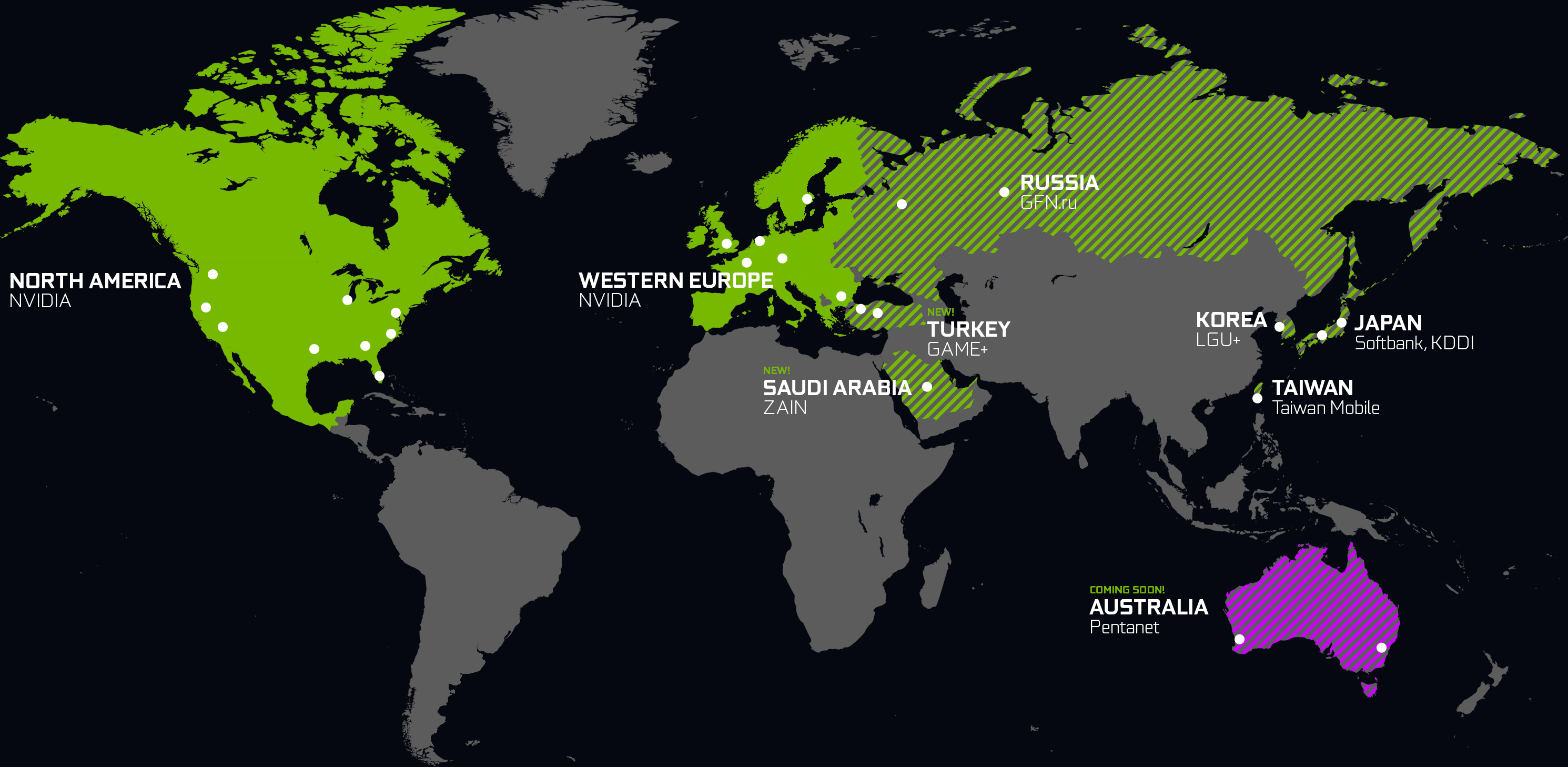
Image Credits: Nvidia


News: Homebrew backs Higo’s effort to become the “Venmo for B2B payments” in LatAm

The B2B payments space has been on fire for a while, and the COVID-19 pandemic has only fueled mass adoption of digitizing finances. In regions like Latin America, the need for innovation in the sector is even more paramount than in the United States with so many people still relying on outdated processes. One Mexico

The B2B payments space has been on fire for a while, and the COVID-19 pandemic has only fueled mass adoption of digitizing finances.

In regions like Latin America, the need for innovation in the sector is even more paramount than in the United States with so many people still relying on outdated processes.

One Mexico City-based startup, Higo.io, is out to transform B2B payments for SMBs (small and medium-sized businesses) in Latin America, starting with its home country.

Rodolfo Corcuera, Juan José Fernández and Daniel Tamayo founded the company in January 2020, recognizing that the process of paying vendors for business owners is largely “manual and cumbersome.”

“In Mexico, small businesses mostly handle payables with nothing more than spreadsheets and email and legacy bank accounts,” CEO Corcuera said.

The trio formed Higo to automate processes and provide visibility into cash flow, particularly for small businesses. “Informal” businesses make up about 23% of Mexico’s GDP, according to data from INEGI, the government’s National Institute of Statistics and Geography. Higo launched its SaaS platform last November.

And now the startup has raised $3.3 million from a group of U.S.-based investors including Homebrew (which led the round), Susa Ventures, Haystack and J Ventures. The financing is the latest in a string of fintech-related fundings in Mexico that TechCrunch has covered as of late.

Higo wants shake up the payments scene in the region by creating an alternative to traditional banking for businesses to pay each other. 

“We want to build the Venmo for B2B payments in Latin America,” Corcuera told TechCrunch. 

Ultimately, the goal is to help SMB owners deal less with tedious tasks and more on generating revenues and profits for their businesses. Customers so far include hundreds of small business owners and the company aims to have “thousands” of customers by year’s end.

“E-invoicing is ubiquitous in the States and in the U.S., receiving a PDF invoice is enough,” Corcuera told TechCrunch. “But in Mexico, it has to be electronic to be [tax] deductible by law. With our platform, invoices are automatically populated so businesses can have visibility into what has to be paid, what vendors they owe and when they owe.”

Corcuera is no stranger to running companies, having launched a housecleaning marketplace at the age of 23 in 2013. He also founded Tandem, an office management platform, in 2018, to help office managers streamline their procurement needs. As is often the case for founders, it was during the process of growing that company that Corcuera realized how painful and time consuming it was for businesses to manage their payables and receivables. That led him to come up with the concept behind Higo.io. 

Gallardo was previously COO at Swap, a Mexican challenger bank, and also was one of the founding members of Uber’s Mexican operations.

Looking ahead, Higo plans to use its new capital in part to boost its six-person staff, particularly beefing up its engineering team so that it can “scale as fast as possible,” according to Corcuera.

For now, the company’s efforts are focused exclusively on the Mexican market, which in of itself is huge.

“Later we will expand in Latin America. We see a very clear opportunity in similar markets across the region,” Corcuera said.

Homebrew Partner Satya Patel said his San Francisco-based VC firm believes there’s a massive opportunity in Latin America given the move to digital payments. The investment in Higo marks Homebrew’s third in the region in the past 18 months.

“This is an exceptional team focused on a problem that is visceral for businesses in Mexico in particular,” Patel told TechCrunch. “They are able to provide businesses with a real-time view of their cash flow and working capital. Without it, they are at risk. So the opportunity is to tackle this acute pain point being felt by a lot of businesses.”

The region’s payments ecosystem, he said, is still very nascent.

“Being the intermediary for B2B tax information gives Higo an opportunity to provide a real alternative to the traditional way Mexicans are used to doing banking and business,” Patel added.

News: OpenReel raises $19M to simplify remote video production

OpenReel, a startup that makes it easier for teams to record videos remotely, has raised $19 million in Series A funding. CEO Lee Firestone told me that he and CTO Joe Mathew first started a video agency together, but when they were given “a pretty significant project” that involved remote production, they weren’t satisfied with

OpenReel, a startup that makes it easier for teams to record videos remotely, has raised $19 million in Series A funding.

CEO Lee Firestone told me that he and CTO Joe Mathew first started a video agency together, but when they were given “a pretty significant project” that involved remote production, they weren’t satisfied with any of the existing solutions and ended up “spending over a year to build this technology.”

Of course, there are plenty of teams that have figured out their own approach to remote video production, particularly in the past year. (Here at TechCrunch, it’s mostly involved shipping cameras and lights to writers, followed by lots of tech troubleshooting conversations.)

But OpenReel’s “remote camera” technology is supposed to make the process much simpler, while also giving production members more control. The software allows a remote team member to control a webcam or mobile device, with up to four people viewing and directing the shoot in real time, with additional features like a teleprompter. The footage (which can be 4K quality) is stored locally, then automatically uploaded after the shoot.

“If you talk to our clients … they would have had to put together multiple different pieces of technology, shipping or not shipping things, and even with all that, they would not have gotten the quality and seamless experience for both sides,” Firestone said.

Not surprisingly, demand grew dramatically in 2020, with Firestone recalling that the platform went from supporting “thousands of video shoots a year” to “10 or 20 times that.”

In fact, the company said that annual recurring revenue has increased 12x over the past year as clients like Dell, HubSpot, ViacomCBS and TechCrunch’s parent company Verizon Media have used it to record things like marketing videos, internal communications, customer testimonials and more. It has more than 200 enterprise clients, as well as “hundreds” of small and medium business customers.

“There’s been a pent up demand for content in these organization that our technology sort of unlocks,” Firestone said. And he doesn’t anticipate that changing as in-person filming becomes safer post-pandemic.

The Series A comes from Five Elms Capital, bringing OpenReel’s total funding — debt and equity — to $23.9 million. Firestone said the money will allow the company to develop new product features (one possibility: support for livestreamed videos, rather than just pre-recorded footage), as well as continued global growth, after an international push last year that saw the platform launching across 125 countries.

“Five Elms loves investing in businesses that challenge the old way of doing things, and OpenReel does just that,” said Five Elms’ Thomas Kershisnik in a statement. “OpenReel has proven itself as an important component of the remote technology stack as well as a vital tool in the broader content creation toolbox empowering enterprises to enhance their content and create more of it.”

News: Talking robots with Ford

Before we get too far into this week’s roundup, I want to kick things off with an interview we haven’t published anywhere else. Earlier this week, we noted that Ford will be deploying some 100 researchers and engineers to the new $75 million facility at the University of Michigan, Ann Arbor. The automaker told TechCrunch

Before we get too far into this week’s roundup, I want to kick things off with an interview we haven’t published anywhere else. Earlier this week, we noted that Ford will be deploying some 100 researchers and engineers to the new $75 million facility at the University of Michigan, Ann Arbor.

The automaker told TechCrunch the set up is not an incubator, so much as “an extension of our global research and advanced engineering network.” Beyond the autonomous driving research, the company will be devoting a lot of research to how it can use third-party robots like Boston Dynamics’ Spot and Agility’s Digit, the latter of which was the centerpiece to a partnership Ford announced a couple of CESes ago.

Currently, the company currently has two Digit robots, purchasing the first two commercial units. Based on how the partnership pans out, Agility could, perhaps, be a prime acquisition target for a company more actively engaged with the robotics community.

Shortly after the event wrapped up, we hopped on the phone with Ford’s Technical Expert Mario Santillo, who will help head up the expanded robotics efforts. Some highlights below.

Ford Agility Robotics

Ford is partnering with startup Agility Robotics to research and test the use of is bipedal Digit robot. Image Credits: Ford/Agility Robotics

What kind of work is Ford doing in robotics, beyond the autonomous driving space?

We’re really looking at all area of robotics. My team is focused anywhere from the manufacturing environment to more customer-facing applications, like Digit getting out of some delivery vehicle to deliver a package to your doorstop. Working with University of Michigan, they’re really looking for us to provide better use cases. We would like to — not necessarily develop the robots — but use robots like Digit or Spot to make them smarter and deliver things that Ford really cares about and to ultimately help humanity.

How close are you actually working with the team at Agility?

We’re working very closely. We’re in almost daily stand-ups in terms of getting everything up and running. We just got our Digit in Dearborn, just a couple of months ago. We have another Digit, which is sitting out in Palo Alto, so they’re a little ahead of us, in terms of actually getting real use cases. We work very well with Agility Robotics. There’s nothing hidden from either side. We just want to come together in a partnership and similar to the University of Michigan, we want to come together to make this thing better, useful and safe.

In terms of the actual research, what role does the university play?

The university is starting with the teaching of the next generation of roboticist, so that’s a huge role. The work they’re doing really spans all areas of robotics: air, land, sea, space, you name it. It’s amazing to see how interconnected things are. The walking lab, they’re specifically focusing on doing rehabilitation robotics, and that can directly lead into our Digit being more capable walking over rough terrain.

For the moment, Digit is a primary focus.

Digit is a clear, direct link, but Ford has a lot of wheeled robots, and a lot of work can feed into how we might better use these, based on research that’s going on at the University of Michigan.

Is Ford actively looking into acquiring startups or technologies in the robotics space?

I think Ford is always interested in evaluating new needs and companies as they come. I wouldn’t necessarily say, “no.”

Image Credits: University of Waterloo

Some cool research coming out of the University of Waterloo in Canada, where a team of researchers are exploring wearable cameras and machine learning to help robotic exoskeletons and prosthetics interact more naturally with their users. Per one of the researchers, “Our control approach wouldn’t necessarily require human thought. Similar to autonomous cars that drive themselves, we’re designing autonomous exoskeletons that walk for themselves.”

A number of companies are currently producing exoskeletons for mobility and rehabilitation purposes. Work like this could be a key step toward removing the need for a smartphone app or other external control.

Image Credits: HAI Robotics

In fundraising news, Hai Robotics completed a “nearly” $15 million Series B+ that adds to the Series B it announced late last year. The Shenzhen-based producers of the Haipick shelving system are one of a number of Chinese logistics robotics manufactures worth following. The system is tall and skinny, capable of moving up to eight boxes at once.

The company says it’s capable of improving warehouse operating efficiency by up to 4x. Like a number of entrants in the category, the pandemic has proven a big opportunity, as more people turn to e-commerce and companies look toward automation to avoid unnecessary shutdowns.

Image Credits: Surfacide

And just because I’m excited about baseball happening again, the Red Sox announced that they’ll be deploying UV disinfecting robots at Fenway this year. At the moment, the team appears to have only purchased three robots from Surfacide (also the legal name for the murder of a proprietary Microsoft tablet). So this will likely be a small part of a larger effort focused on, “disinfecting close quarters like team clubhouses, training rooms, as well as higher-traffic fan areas such as suites and restrooms.”

The robotic umpires, meanwhile, will have to wait a while longer for their MLB debut.

News: Seven months after Drone acquisition, Harness announces significant updates

The running line from any acquired company CEO is that the company can do so much more with resources of the company that acquired it than it could on its own. Just seven months after being acquired, Drone, co-founder Brad Rydzewski says that his company really has benefited greatly from being part of Harness, and

The running line from any acquired company CEO is that the company can do so much more with resources of the company that acquired it than it could on its own. Just seven months after being acquired, Drone, co-founder Brad Rydzewski says that his company really has benefited greatly from being part of Harness, and today the company announced a significant overhaul of the open source project.

The artist formerly known as Drone is now called ‘Harness CI Community Edition’ and Rydzewski says the Harness CEO and founder Jyoti Bansal kept his word when he said he was 100% committed to continue developing the open source Drone product.

“Over the past seven months since the acquisition, a lot of community work has been around taking advantage of the resources that Harness has been able to afford us as a project — like having access to a designer, having access to professional writers — these are luxuries for most open source projects,” Rydzewski told me.

He says that having access to these additional resources has enabled him to bring a higher level of polish to the project that just wouldn’t have been possible without joining Harness. At the same time, he says the CI team, which has grown from the project’s two co-founders to 15 people, has also been able to build out the professional CI tool as it has become part of the Harness toolset.

Chief among the updates to the community edition is a new sleeker interface that has a much more professional look and feel, according to Rydzewski. In addition, developers can see how projects move along the pipeline in a visualization tool, while benefiting from real-time debugging tools and new governance and security features.

All of this is an embarrassment of riches for Rydzewski, who was used to working on a shoestring budget prior to joining Harness. “Drone came from very humble beginnings as an open source project, but now I think it can hold its own next to any product in the market today, even products that have raised hundreds of millions of dollars,” he said.

News: Secureframe raises $18M Series A to simplify cybersecurity compliance

Security compliance may not be the hottest conversation starter, but it’s a critical and often grueling process that companies have to endure every year to show that their security practices are up to par. It’s a burden that bogs down startups more than others, and so it’s fitting that startups are trying to find a

Security compliance may not be the hottest conversation starter, but it’s a critical and often grueling process that companies have to endure every year to show that their security practices are up to par. It’s a burden that bogs down startups more than others, and so it’s fitting that startups are trying to find a better way.

Enter security compliance startup Secureframe, founded by Shrav Mehta and Natasja Nielsen, which thinks it has.

The company is announcing it has raised $18 million at Series A, led by Kleiner Perkins and with participation from Gradient Ventures and Base10 Partners, which led its $4.5 million seed round less than a year after it was founded in January 2020.

Secureframe helps businesses maintain two key cybersecurity certifications, SOC 2 and ISO 27001, which many companies require before they will do business. Secureframe’s compliance platform integrates with dozens of the most used cloud providers and apps to understand its customers’ security posture. The benefit, the company says, is that it can help companies get their certifications and become compliant in weeks, rather than months.

Shrav Mehta, the company’s founder and chief executive, told TechCrunch that it’s paying off, with a tenfold increase in revenue growth over the six months alone, and with over a hundred new customers, like software house Hasura and Omni, a Y Combinator graduate from the summer 2020 batch.

Mehta said the fresh funding round will help the company grow beyond the two certifications into an enterprise-grade risk and compliance management platform, such as the U.S. health privacy rules like HIPAA, and PCI compliance for secure card processing.

In the long term, Mehta said, he wants the company to design and offer its own compliance certifications.

In remarks, Kleiner Perkins’s Josh Coyne said Secureframe is leading the effort to modernize security compliance. “Secureframe is turning the industry on its head by automating compliance certifications end-to-end, serving as the single source of truth for commercial compliance,” he said.

News: Sentry adds performance monitoring for React Native, Android and Xamarin

Sentry, the company that helps developers catch bugs before they result in downtime, has added support for React Native, Android and Xamarin to its Performance Monitoring software. The company, which reached unicorn valuation in its last funding, also updated its Flutter SDK with support for new languages. App monitoring platform Sentry gets $60 million Series

Sentry, the company that helps developers catch bugs before they result in downtime, has added support for React Native, Android and Xamarin to its Performance Monitoring software. The company, which reached unicorn valuation in its last funding, also updated its Flutter SDK with support for new languages.

Sentry’s Performance Monitoring software is used by development teams to trace bugs and performance issues to poor-performing API calls, database queries and other potential causes. Sentry’s Flutter SDK, originally built in partnership with Google, now supports Kotlin, Java for Android, Swift, Objective-C for iOS and C/C++.

Other new features for its Flutter SDK include the ability to symbolicate, or transform into a human-readable format, Flutter-obfuscated Android builds; capture breadcrumbs, or a detailed record of events that happened before an issue, for user interface events and HTTP requests; and fatal crash support and offline caching, so app developers still get reports even if a user’s device goes offline.

In a statement, Sentry chief executive officer Milin Desai said, “These additions further expand our footprint, ensuring that all developers have visibility into the impact of their code—from frontend to backend—closing the observability gap and ensuring superior user experiences across all platforms and frameworks.”

Sentry is currently used by about 68,000 organizations around the world, who need to monitor the performance of their apps and fix bugs, like slow-loading pages, that frustrate users and result in lost revenue. Its customers include Atlassian, Cloudflare, Disney, GitHub and Microsoft.

News: Google Area 120’s ThreadIt is bite-size video for team collaborations

The team at Google’s Area 120 in-house incubator says the idea for ThreadIt came well before COVID-19 made remote work a necessity for large swaths of the globe. Of course, the pandemic certainly accelerated interest in the product among the team behind it. “It’s adjusted the lens through which everyone sees it,” Keller Smith, general

The team at Google’s Area 120 in-house incubator says the idea for ThreadIt came well before COVID-19 made remote work a necessity for large swaths of the globe. Of course, the pandemic certainly accelerated interest in the product among the team behind it.

“It’s adjusted the lens through which everyone sees it,” Keller Smith, general manager and founder, ThreadIt, tells TechCrunch. “It was a trend that was growing even before COVID-19, but, of course, the whole world changed overnight.”

ThreadIt, which launches today as a browser-accessible service and Chrome plug-in, is an attempt to address a perceived hole in the market. The system, which allows users to record short video messages, is positioned to sit somewhere between long-form, live- video teleconferencing and short texts and emails.

The steps for getting started are pretty straightforward. You:

  1. Record yourself speaking (you can rerecord if you mess up the first time)
  2. Shoot the video off to selected colleagues.

The interface borrows some key features from other Google offerings, including a drop-down that lets you determine how recipients can interact with the video, be it just viewing or adding their own clip. The app threads together short videos, organizing things chronologically into a single video conversation. The team behind the app notes that it’s been dogfooding ThreadIt, having never actually met in person.

Certainly the zeitgeist is right. Remote work is going to continue to be a reality for many, even well after the pandemic has mercifully faded. And, of course, short-form video clips are once again having a moment. TikTok or Vine, for work, perhaps, only with more straightforward approach to making and watching short, informational video.

“We found that by adding a little bit of structure and allowing you to break it up and show little pieces of your work, that actually creates a much shorter message that’s much more on-point,” says Smith. “That was actually one gap we saw in what was out there today.”

The app, which is available to access starting today, is in kind of a public beta mode, as is Area 120’s custom. Essentially the team will gauge interest and collect feedback to see if the project is worth continuing to pursue. Services that have graduated include code education tool Grasshopper and travel app Touring Bird.

That means, among other things, that its still in early stage. As such, there are no doubt going to be a number of desired features that aren’t present. Having dealt with some health issues earlier this year that made speaking difficult, for instance, I would love to see a straight text-reply feature for those who can’t — or otherwise would prefer not to — appear on camera.

Deeper Google productivity app integration would make sense as well, though I suspect part of growing the app is deciding how much of a standalone to make it. Additional Gmail integration would be good, for example, but you don’t want to have to rely on that platform if the new app is designed to augment it.

The service can be accessed on smartphones via the mobile Chrome browser, but a standalone app would probably make sense down the road, as well. “That’s something that we would look at going forward,” says Smith. “That’s a great example of looking for the interest and response and then being able to go deeper with that.”


News: YouTube’s TikTok rival, YouTube Shorts, arrives in the US

YouTube Shorts, the company’s short-form video experience and TikTok rival, is launching today in the U.S. The feature allows creators to record, edit and share short-form video content that’s 60 seconds or less in length, optionally set to popular music. At launch, YouTube has deals with Universal Music Group, Sony Music Entertainment, Warner Music Group

YouTube Shorts, the company’s short-form video experience and TikTok rival, is launching today in the U.S. The feature allows creators to record, edit and share short-form video content that’s 60 seconds or less in length, optionally set to popular music. At launch, YouTube has deals with Universal Music Group, Sony Music Entertainment, Warner Music Group and Warner Chappell Music, Believe, Merlin, 300 Entertainment, Kobalt, Beggars, CD Baby, Empire, Peer, Reservoir, OneRPM and others.

Globally, YouTube has agreements with over 250 publishers and labels for use in the Shorts product, it says.

The YouTube Shorts product itself was first introduced in September and has been beta testing in India over the past several months, where it has since seen adoption triple.

Though you may have already encountered the YouTube Shorts “shelf” on the YouTube homepage, the ability to create YouTube Shorts videos was not live in the U.S. until today.

The experience of filming content for YouTube Shorts is very much like TikTok.

Creators have access to tools stop and start recording short video segments with a tap, much like the leading short-form app. They can also select the video’s backing music or sound and utilize a small handful of in-app editing features. At launch, these include speed controls to slow or speed the audio, a countdown timer, text timing capabilities to make text appear on the screen at certain times and, soon after launch, color adjustment filters.

Image Credits: YouTube

But while YouTube Shorts has a clever tool that lets you select the part of the song you want to use in your video, it’s lacking the more intelligent automatic sound-syncing feature that makes TikTok so accessible for beginners. YouTube’s product also at launch lacks a large catalog of special effects — like the AR features or green-screen options found on TikTok. Instead, like Instagram Reels, the initial goal with Shorts is to simply lower the barrier to entry for users who want to create and publish short-form video content on an existing social platform.

On the viewer’s side, the TikTok comparisons are even more obvious.

Currently, the experience can be launched via the YouTube Shorts shelf on the YouTube homepage, which has already been live in some markets, and, soon, from a dedicated Shorts tab in the YouTube mobile app.

Image Credits: YouTube

Once launched, you’ll be taken to a familiar full-screen vertical video experience where you can double-tap to like a video, tap into the comments or share the video with others. You can also subscribe to the creators’ YouTube channel from Shorts, if you find their content interesting.

You can also tap on hashtags in YouTube Shorts that will take you to a page with other videos using the same hashtag. (This, to be clear, is separate from the other YouTube hashtag pages announced recently, which will host both longer-form and short-form content.)

Image Credits: YouTube

Also like TikTok, you can tap on the music icon — in YouTube Shorts, a square icon, not a spinning record as on TikTok — to be taken to a page featuring that same sound. Here, you’ll find all the other Shorts using that sound and have the option to do the same.

Image Credits: YouTube

This “sound” could be a clip from a popular song, original audio or what YouTube calls “remixed” content. The latter refers to how Shorts creators can sample from other Shorts videos to make their own sounds. And, in the months to come, the company will expand this remixing capability across YouTube’s billions of longer-form videos. YouTube creators can choose to opt out of having their original audio remixed for Shorts’ clips, but by doing so they may limit themselves from finding a new audience.

YouTube suggests creators could remix videos to show themselves reacting to their favorite jokes, trying a YouTuber’s recipe or re-enacting a comedic skit, among other things.

Image Credits: YouTube

Since its launch in India, the YouTube Shorts player has passed 6.5 billion daily views globally. However, YouTube wouldn’t say how many creators had adopted the product, nor how many Shorts videos have been produced. But the Indian market is not representative of how Shorts may fare in the U.S. because the country banned TikTok last year, helping to boost other short-form video apps as a result.

YouTube, of course, isn’t the first social platform to copy TikTok. Instagram and Snapchat have done the same with Reels and Spotlight, respectively. But in YouTube’s case, it’s even more critical to offer support for short-form video to stay relevant in a market where TikTok has become one of the most downloaded mobile apps and a preferred tool for watching video content on mobile devices.

“I think Shorts and short-form video has come to feel like a natural progression for YouTube,” noted YouTube’s Todd Sherman, the product lead for YouTube Shorts. “We’re the original user generated video platform. And that was really based around video that’s created on the desktop — digital cameras, desktop computers and video editing software. Now, we’re really keen to take a step forward into this new world of video that’s really native to the phone,” he says. “And it’s really important that we build this in partnership with the creator community…and for that matter, even more broadly, the same goes for viewers and our partners in the music industry,” Sherman adds.

The YouTube Shorts product is still considered a beta, as YouTube expects to iterate on the Shorts experience over time, and respond to user feedback as it develops new features.

Longer-term, YouTube believes Shorts will differentiate itself from others on the market by way of its connection to the larger YouTube platform.

“There’s a two-way door here where we’re building a short-form video ecosystem,” explains Sherman. “You can take a step forward into YouTube or even YouTube Music in the foreseeable future. And then from YouTube, you could also initiate creation into Shorts. That bridging of ecosystems, I think is an important part of this,” he adds.

So far, however, TikTok rivals have often seen creators simply repurposing their TikTok videos for use on other platforms — not developing original content for each of the three: TikTok, Reels and Spotlight.

YouTube Shorts’ video creation tools will begin to roll out to U.S. users starting today, and will expand to all of the U.S. over the next several weeks, the company says.


News: Fleksy co-founder is suing Apple over lost revenue resulting from App Store scammers

Kosta Eleftheriou, a co-founder of the Fleksy keyboard app later sold to Pinterest in an acqui-hire deal, has been calling attention to Apple App Store issues like fake reviews, ratings and subscription scams, as well as malicious clone apps, after his own app, FlickType, was targeted by scammers. Now, the developer is taking the next

Kosta Eleftheriou, a co-founder of the Fleksy keyboard app later sold to Pinterest in an acqui-hire deal, has been calling attention to Apple App Store issues like fake reviews, ratings and subscription scams, as well as malicious clone apps, after his own app, FlickType, was targeted by scammers. Now, the developer is taking the next step in his App Store crusade: he’s filing a lawsuit against Apple.

The suit, which the developer claims was filed Wednesday in California Superior Court in Santa Clara county, alleges that Apple enticed developers to build applications for its App Store — the only place iOS applications can be legally sold — by claiming it’s a safe and trustworthy place, but doesn’t protect legitimate app developers against scammers profiting from their hard work.

What’s more, the suit says, Apple is disincentivized to do so because scammers are generating revenue for Apple via their use of subscriptions, which involve a revenue share with Apple.

Eleftheriou has been personally impacted by App Store scammers. He left a well-paying job at Pinterest to develop his FlickType app, an alternative swipe keyboard for Apple Watch. After its launch, the app targeted by copycat app makers who claim their apps offer the same feature set as FlickType does, but instead lock users into high priced subscriptions for their poorly designed software. They also flood their apps with fake ratings and reviews to make them appear to be a much better option when users are looking for an app in this space.

Meanwhile, FlickType sports a 3.5-star rating, as it’s often dinged for Apple Watch platform issues that are outside the developer’s control or missing features users want to call attention to. Eleftheriou engages with his app’s users, however — responding to complaints and letting users know when features they’ve requested were added or bugs have been fixed. Scammers simply buy enough 5-star reviews to keep their apps’ overall ratings higher.

In other words, Eleftheriou is doing the hard work of being an App Store developer carving out a category for swipe keyboards for the Watch, but his potential income is being shifted over to scam apps who have a falsified App Store presence.

In years past, Apple took issues of app quality seriously. It worked to clean up shady subscription apps and remove clones and spam from the App Store through regular sweeps. It even once went so far as to ban apps built using templates in an effort to raise the bar on app quality, which angered small businesses who didn’t have the resources or funds to build more professional apps. (Apple later revised its policy to be more equitable.)

But the new lawsuit alleges that Apple is now doing little to police scammers’ apps because it profits from developer misconduct. Eleftheriou also notes he has raised these issues to Apple via his company KPAW, LLC, but Apple did “next to nothing” to resolve the problem.

Eleftheriou’s story is even more complicated, though, because his app was rejected from the App Store numerous times after meeting with Apple special projects manager Randy Marsden over a possible acquisition. He tells TechCrunch numbers were discussed with Apple and his meetings had included a Director and a VP, among others. Apple was considering turning FlickType into an Apple Watch feature, the lawsuit notes.

Shortly thereafter, FlickType was pulled from the App Store over App Store Review Guidelines violations, even as a competitor’s app was approved. Eleftheriou appealed for his app through Developer Relations but was given no guidance on how to prevent the same problem in the future, he said.

Over the months that followed, FlickType continued to face rejections from App Store Review. Apple’s App Store Review said that the app offered a “poor user experience,” even though tech journalists at numerous outlets had praised it, and Apple had once considering buying it. App Review also told the developer that “full keyboard apps are not appropriate for Apple Watch,” while it continued to allow competitors to publish their own keyboard apps.

Apple’s App Review team also allowed third-party apps that were running FlickType’s integratable version of the keyboard to be approved without issues. These included Watch apps like Nano for Reddit, Chirp for Twitter, WatchChat for WhatsApp, and Lens for Instagram.

The App Store has a big problem👇

You: an honest developer, working hard to improve your IAP conversions.
Your competitor: a $2M/year scam running rampant.

1/🧵

— Kosta Eleftheriou (@keleftheriou) January 31, 2021

After Apple approved FlickType in January 2020, the company claims it had already lost over a year of revenue to competitor keyboards that were not constantly being rejected. Nevertheless, FlickType reached the App Store’s Top 10 Paid app list and generated $130,000 in its first month. As a result of its success, it was quickly targeted by scammers who launched watered down, barely usable competitors to the app, cutting into FlickType’s revenue. FlickType’s revenue dropped to just $20,000 per month. The competitors were also using fake ratings to get their app boosted and installed by unsuspecting users.

Eleftheriou’s story was not unique, as it turned out. In recent months, he has been documenting the App Store’s multimillion-dollar scams, including those he was facing as well as others brought to his attention by developers with similar struggles. Apple, in some cases, would take action against the scammers he highlighted on social media. In other cases, it would not. And it would sometimes only take down one of the developer’s scam apps, but allow others under the same developer account to continue to operate.

The new lawsuit aims to hold Apple accountable for the issues Eleftheriou faced by asking Apple to restore his lost revenue and pay out any other damages awarded by the court.

Apple has not responded for a request for comment at this time.

A copy of the lawsuit is below. It is not yet appearing in public record searches for verification purposes. We’ll follow up to confirm when the case appears online and update accordingly.

Kpaw, LLC v. Apple, Inc by TechCrunch on Scribd

WordPress Image Lightbox Plugin