Tag Archives: Blog

News: This Week in Apps: Google Play slashes commissions, Apple sued over scammy apps, YouTube launches a TikTok clone in the US

Welcome back to This Week in Apps, the weekly TechCrunch series that recaps the latest in mobile OS news, mobile applications and the overall app economy. The app industry is as hot as ever, with a record 218 billion downloads and $143 billion in global consumer spend in 2020. Consumers last year also spent 3.5 trillion minutes using apps on Android devices

Welcome back to This Week in Apps, the weekly TechCrunch series that recaps the latest in mobile OS news, mobile applications and the overall app economy.

The app industry is as hot as ever, with a record 218 billion downloads and $143 billion in global consumer spend in 2020.

Consumers last year also spent 3.5 trillion minutes using apps on Android devices alone. And in the U.S., app usage surged ahead of the time spent watching live TV. Currently, the average American watches 3.7 hours of live TV per day, but now spends four hours per day on their mobile devices.

Apps aren’t just a way to pass idle hours — they’re also a big business. In 2019, mobile-first companies had a combined $544 billion valuation, 6.5x higher than those without a mobile focus. In 2020, investors poured  $73 billion in capital into mobile companies — a figure that’s up 27% year-over-year.

This week, there was a lot of headline-making app ecosystem news, including Google’s impactful decision to drop its Play Store commissions, an App Store lawsuit over scammy apps with fake ratings, battles over Apple’s App Tracking Transparency and the arrival of a notable new feature on YouTube — a TikTok rival called Shorts.

This Week in Apps will soon be a newsletter! Sign up here: techcrunch.com/newsletters

Top Stories

Developer sues Apple over lost revenue due to App Store scams

Apple app store iOS

Image Credits: TechCrunch

Kosta Eleftheriou, a co-founder of the Fleksy keyboard app, has been raising awareness about App Store scams in recent weeks, after his own app was targeted by copycat subscription scammers leveraging fake ratings and reviews to gain traction. This week, Eleftheriou filed a lawsuit that attempts to hold Apple accountable for his own app’s lost revenue, saying that Apple promises developers a safe and trustworthy marketplace, but then allows these scammers to operate to the detriment of legitimate apps like his own. Though some news articles positioned the case as some sort of antitrust lawsuit, it’s really more focused on scammers and the accountability Apple has for how its App Store operates, which apps are listed and how well it’s managed and policed. Eleftheriou is asking Apple to compensate him for his lost revenue and other damages as a result of Apple’s ill-run app marketplace, as well as what he claims are unfair App Review rejections.

Google Play drops commissions to 15% on some earnings
Google Play Store screen

Google Play Store screen

Google has followed Apple’s lead in reducing commissions for the Google Play store. But in its case, it has dropped commissions from 30% to 15% on developers’ first $1 million in revenue. Apple, by comparison, starts charging 30% once the developer tops $1 million. Google said 99% of developers who sell goods and services through the Play Store will see a 50% reduction in fees. According to App Annie data, very few Google Play developers make more than $1 million — in fact, only 2,035 developers do on Google Play, compared with 3,611 on iOS. To put this in perspective in terms of revenue, developers making up to $1 million in consumer spend only comprised 5% of total Google Play consumer spend in 2020, the firm noted.

Apple’s ATT scores a win in France

Apple fended off an attempt by advertisers in France who wanted to derail the IDFA change in iOS, which will require users’ permission in order to track them. The complaint had attempted to contrast Apple’s ATT (App Tracking Transparency) requirements for third parties with Apple’s own, where its first-party apps are allow to track by default for the purpose of personalizing ads in various Apple apps. France’s competition regulator decided Apple’s plans “don’t appear to be abusive” and said it can’t intervene just because some apps may see a negative impact. But the authority did say it will investigate Apple further to determine if any of its changes are “self-preferencing.”

YouTube launches its TikTok rival in the U.S.

Image Credits: YouTube

The short-form video experience known as YouTube Shorts first launched in India, where TikTok has been banned, in September. It’s now coming to the U.S. in its first major expansion. The feature, still in beta, offers a very TikTok-like experience both in terms of recording content and viewing. Users can tap to record video segments for up to 60-second long videos, and use a small handful of editing features like text captions, countdown timers and speed controls. Meanwhile, viewing the videos is also presented in a TikTok-like format with vertical feeds of video where you can double-tap to like, duck into comments or tap on hashtags or sounds to participate in trends.

YouTube believes the feature has potential because it’s connected to the larger YouTube ecosystem, including YouTube Music and the main platform itself — you can subscribe to YouTube channels right from Shorts, for example. But Shorts lacks a lot of what makes TikTok successful for the time being, like its numerous AR effects and editing tools, sound sync and its ability for creators to react and respond to other videos through stitches and duets.

Weekly News

Platforms: Apple

Apple will allow the Russian government to pre-install apps on the iPhone starting on April 1, 2021. In accordance with a new law, Apple users will be shown a dialog box at setup that prompts them to install web browsers, antivirus, messenger and email apps. Users can choose to deselect these apps or delete them from the device later.

Report claims Apple may soon deliver standalone iOS security updates. According to code found in the latest iOS 14.5 beta, Apple could be preparing to introduce a way to update older iPhones with critical security updates without requiring users to download new versions of iOS. This could be helpful in patching older devices where users don’t download iOS updates for fear of slowing down their phone.

Apple says the App Store now supports 300K jobs in the U.K., up 10% YoY, as well as 250K jobs in Germany and another 250K in France. The figures were released in response to increased antitrust scrutiny by regulators, as a way to demonstrate the App Store’s contribution to local economies.

Platforms: Google
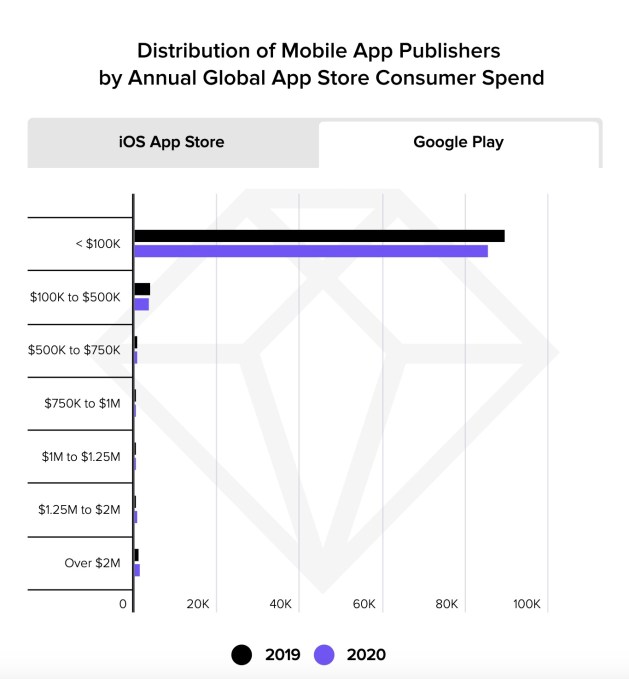
Image Credits: App Annie

App Annie data shows how few Google Play developers will pay the higher 30% commission after the policy change, announced this week. Google says developers’ first $1 million in revenue will be commissioned at 15%, not 30%. This covers the vast majority of the Play Store’s developer base, as only 2,035 developers make $1 million or more.

Google updates its People API, which will replace the Contacts API being deprecated on June 15, 2021. The new API will now support two new endpoints for batch mutates and Contacts searches, the company said.

Google updates its parental controls for Android, Family Link. The updates acknowledge that not all screen time is the same, by allowing parents to set some apps — like those used for virtual school — as “always allowed” and not counting toward daily limits. It also updated reporting to better show where kids were spending time outside of these necessary apps.

Google is now allowing third-party developers to build Tiles for Wear OS smartwatches. Tiles are small, fast-loading experiences that can deliver specific, timely information users need, but can be tapped to open a related app on the watch or phone for a deeper experience.

Image Credits: Google

E-commerce

Facebook’s Mark Zuckerberg said his company has been preparing for the Apple IDFA changes by investing in more commerce products on its own platforms, like Facebook and Instagram Shops. In a Clubhouse session on Thursday, he announced Facebook has 1 million active Shops which are used by 250 million people every month.

Social

Twitter is testing a way for users to watch YouTube videos from within the home timeline directly on iOS devices, instead of being redirected to YouTube. Finally! The test was made possible through YouTube’s iFrame Player API, which Twitter gained access to.

TikTok will no longer allow users to opt out of personalized advertising starting on April 15th. The app alerted users to the change via a notice that appeared on screen at launch. This means uses will see ads based on what they watch and engage with on TikTok.

TikTok may add a group chats feature sometime early this year, according to Reuters. The feature is already a part of the Chinese version of the TikTok app, Douyin, and would make the app more social.

Instagram adds new teen safety tools as competition with TikTok heats up. TikTok has been making its app safer for teens and this week Instagram followed suit — but instead of locking down teens accounts by default, it made it more difficult for adult predators to reach teens on Instagram, through a variety of alerts and blocking features.

Leaked recordings detail conservative donor Rebekah Mercer’s role at right-wing social app Parler, where she joined meetings to rally employees to fight against the shut down of free speech, and other matters, Bloomberg reports. 

Facebook is preparing to add an age-gate to Instagram that would allow for a curated, and likely COPPA-compliant, under 13 experience, according to a report from BuzzFeed. TikTok today does the same thing, following its FTC fines. Instagram could be doing the same to ward off any FTC investigation into underage use of its app as well as to better cater to the younger users who are already on Instagram today.

Messaging

China banned Signal. The encrypted messaging app became unavailable on the mainland on March 16, following a ban of the Signal website the day prior. The app had been one of the few Western social networks that was accessible in China without a VPN.

Telegram is working on an audio experience that allows users to create voice chats in Telegram Channels that you can join either with your personal profile or channel profile. The feature is in beta testing and no official announcement has been made.

And Telegram is bringing voice chats for channels now.
Clubhouse is everywhere 😱https://t.co/u5cSB6VSCy pic.twitter.com/WspFNlZI11

— WABetaInfo (@WABetaInfo) March 13, 2021

Streaming & Entertainment

Clubhouse hires Instagram alum Fadia Kader as its new head of Media Partnerships and Creators. The hire follows that of OWN and Netflix alum Maya Watson to serve as head of Global Marketing, and points to an increased interest in establishing Clubhouse in the world of media. Kader’s background is in music and tech, having led music partnerships at Twitter, and having worked at Def Jam.

Clubhouse promises its accelerator participants either brand deals or $5,000 per month during its three-month program. The company plans to work with around 20 creators to help them produce, book guests and promote their shows on the platform, as well as source brand deals.

Clubhouse is also currently being investigated by France’s privacy watchdog, CNIL, in an attempt to determine whether or not GDPR will apply to the app and how it’s complying with EU rules. Germany’s regulator last month was doing something similar, as it began looking into how the app was protecting the privacy of European users and their contacts.

Premium content, entertainment and streaming have helped drive up the prices of in-app purchases (IAPs). In 2020, the median price for IAPs among the top non-game apps was $5.99, up from $3.99 in 2017. The median price of subscription IAPs alone, meanwhile, has remained flat at $9.99 over the past four years, Sensor Tower found.

AT&T will begin counting HBO Max streams through the app against data limits. The company owns HBO via WarnerMedia and was previously exempting streams from data caps, but says a California net neutrality law will now no longer allow it to do so. AT&T spoke out against a patchwork of state regulations for net neutrality, saying they will create roadblocks to pro-consumer solutions.

Gaming
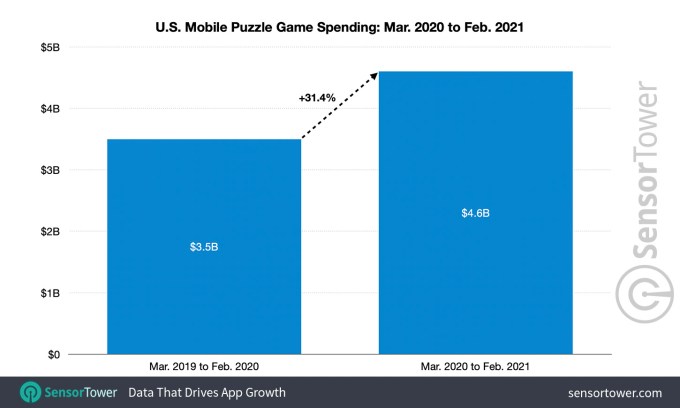
Image Credits: Sensor Tower

U.S. mobile puzzle game spending jumped 30% YoY to $4.6 billion in 2020, per a Sensor Tower report. The pandemic likely contributed to the rise, with top game Candy Crush Saga pulling in $643 million following by Homescapes and Gardenscapes.

Health & Fitness

Apple Maps has been updated with COVID-19 vaccine locations in the U.S. Apple is sourcing data from VaccineFinder, an initiative led by Boston Children’s Hospital, which is also one of the sources Google Maps is using. Apple is allowing healthcare providers, labs and other businesses to submit their information about vaccine locations.

Facebook will label all COVID-19 vaccine posts with a pointer to official, authoritative sources of information across Facebook and Instagram. It also said it will reduce the distribution of content from users who repeatedly violated policies on vaccine misinformation or who shared debunked claims, as well as any claims that fact checkers say are “Missing Context.”

Security & Privacy

Facebook expands support for security keys to mobile users on iOS and Android. The social network has supported the use of security keys, which generate encrypted, one-time security codes, for desktop users since 2017.

California passed new regulations that ban so-called “dark patterns,” or designs used by websites and apps to frustrate or trick users into doing things they wouldn’t normally do — like subscribing to a service they didn’t want or opting-in to sharing their data with the company, for example.

An iPhone app privacy report from cloud storage company pCloud showed how much personal data is being accessed by apps. The apps collecting the most data were Facebook and Instagram, while Klarna and Grubhub tied for second place, followed by Uber and Uber Eats.

Big tech, including Apple and Google, are ramping up their lobbying in U.S. state capitals, reports The WSJ, as a number of bills that could regulate their industries are arriving in state legislatures. One of these is an app store payments bill that is going to be debated in Arizona’s Senate in the next several weeks. If passed, developers would be able to use their own payment systems for in-app purchases instead of Apple’s and Google’s systems. Other legislation is being proposed in states including Maryland and Virginia.

A government-backed consortium of Chinese companies introduced a new method for tracking iPhone users as an alternative to IDFA (paywalled source: FT). The system could be a workaround for Apple’s App Tracking Transparency, as it won’t require user permission. Tencent and ByteDance are reportedly testing the system, known as CAID.

Google finally rolls out iOS privacy labels for Chrome and Google Search. Competitor DuckDuckGo trolled the company for its delay, saying “after months of stalling, Google finally revealed how much personal data they collect in Chrome and the Google app. No wonder they wanted to hide it.” Burn!

After months of stalling, Google finally revealed how much personal data they collect in Chrome and the Google app. No wonder they wanted to hide it.

Spying on users has nothing to do with building a great web browser or search engine. We would know (our app is both in one). pic.twitter.com/lJBbLTjMuu

— DuckDuckGo (@DuckDuckGo) March 15, 2021

Business, Enterprise and Productivity

App Annie partners with Snowflake and introduces a new Salesforce integration. The former allow data teams to access and transform a variety of mobile estimates, both live and continually updated. The new App Annie Intelligence Salesforce Connector, meanwhile, lets App Annie customers build a better pipeline through mobile-metric enriched CRM records.

Google Meet rolls out the tile view on iOS, to be soon followed by Android support. This view allows a user to see more of the people on the video call, even on the small screen. The app also introduced support for live captions in four new languages on mobile (French, German, Portuguese and Spanish, the latter for Spain and Latin America)

Funding and M&A

🤝 Snap acquired a Berlin-based clothing size recommendation engine Fit Analytics that helps online shoppers buy the right sized clothes. Deal terms were undisclosed. The acquisition will see over 100 Fit team members joining Snap as the company pushes into e-commerce.

💰 Riva Health raised $15.5 million in seed (!!) funding to turn your smartphone into a blood pressure monitor, in a round led by Menlo Ventures. The company is co-founded by scientist Tuhin Sinha and Siri and Viv (exited to Samsung) co-founder Dag Kittlaus. The system being developed would have users place their finger over the phone’s camera light, which would then flash, allowing the app to use the light to track the blood pressure reading.

💰 Mobile banking app Kuda raised $25 million led by Valar to become the neobank for all of Africa. The company today offers mobile-first banking services in Nigeria and has doubled its user base from its seed round to now 650,000.

💰 London-based mobile investing app Invstr raised $20 million to pair Robinhood-like commission-free stock trades with digital banking services and educational and learning tools. The app has over 1 million global users.

💰 Investing app Gatsby raised a $10 million Series A for its Robinhood competitor. The app is aimed at younger users, offering commission-free options and stock trading and is aiming to have more than 100K accounts by the end of the year.

💰 Digitail’s app for veterinary surgery practices raised $2.5 million in seed funding, in a round led by byFounders and Gradient Ventures (Google’s AI fund). The company currently has 2,000 vets in 16 countries using its services.

💰 Match Group makes a seven-figure investment in background check nonprofit Garbo. The Tinder parent company plans to integrate its apps with Garbo’s tools, which alert users to background checks of concern to daters like assault or stalking charges, among other things.

📉 Telegram is selling more than $1 billion in debt to investors to fund its operations and pay creditors, with the promises of discounted equity if the company later goes public. The messaging app owes its creditors around $700m by the end of April, The WSJ reported.

Downloads

Swell
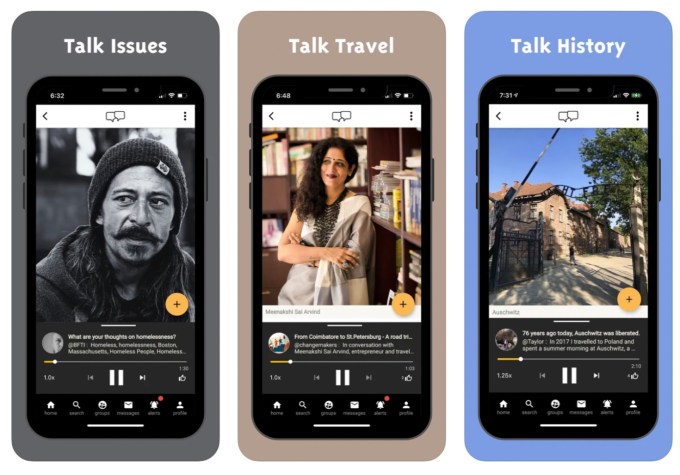
Image Credits: Swell

A new startup called Swell has a different take on voice conversations than Clubhouse. Instead of real-time conversations, Swell users engage in asynchronous chats where one user posts an audio clip of up to five minutes in length that others can listen to and then respond to with their own recording. These mini-podcasts can be private chats or public conversations. Swell is available as a free download on both iOS and Android.

1v1Me

1v1Me launches its app that lets anyone gamble on their ability to win in a player versus player game. The iOS app is now available in an invite-only mode, with the first invites going to creators who play games like Call of Duty and Fortnite — the first games that will be supported on the betting platform. Users can sign up for early access on the company’s website for the time being, then stalk the company on Twitter for invites.

Half Lemons

This clever iOS recipes app, Half Lemons, does that thing you’ve always wanted a recipe app to do: it serves up dish ideas using the ingredients you have at home. To use the app, you take a quick digital inventory of your kitchen in order to customize the app to deliver recipes that are specifically tailored to your own ingredients. You can then save or share the recipes, in addition to making them right away with a screen that stays powered on as you cook. Future versions of the app will help you shop for ingredients and plan meals.

Retrofy your iPhone
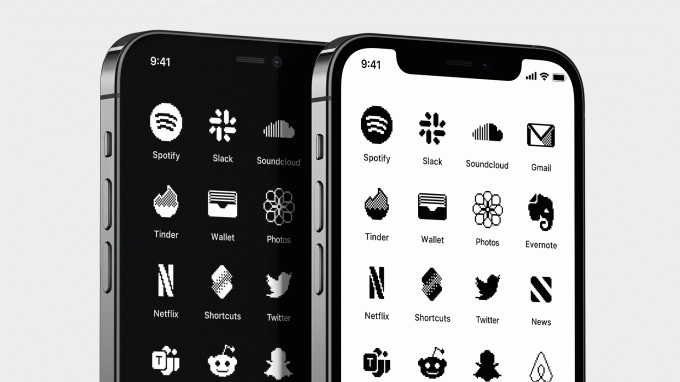
Bored with your iOS 14 customizations? Take your iPhone old-school with this super retro iOS 14 icon and wallpaper set featuring over 110 Mac OS ’84 icons and six monochromatic wallpapers. The set has been handcrafted by freelance digital product designer Ben Vessey, who many years ago had created a similar theme for “retrofying” your desktop screen. When he heard about the Shortcuts feature in iOS 14, he got to work to build a version of this retro experience for iPhone. The pack is £3.99, or £79.99 if you want to request five custom icons of your choice in addition.


 

News: Daily Crunch: Facebook shows off a wrist-based interface

Facebook develops a new way to interact with AR, Uber’s facial recognition policy faces scrutiny and SpaceX’s Starship rocket booster hits a major milestone. This is your Daily Crunch for March 19, 2021. The big story: Facebook shows off wrist-based interface This project comes out of Facebook Reality Labs and is supposed to present an

Facebook develops a new way to interact with AR, Uber’s facial recognition policy faces scrutiny and SpaceX’s Starship rocket booster hits a major milestone. This is your Daily Crunch for March 19, 2021.

The big story: Facebook shows off wrist-based interface

This project comes out of Facebook Reality Labs and is supposed to present an alternative computer interface on your wrist, with electromyography sensors to interpret motor nerve signals.

In a blog post, Facebook said a wrist-based device “could reasonably fit into everyday life and social contexts,” while allowing the company to “bring the rich control capabilities of your hands into AR, enabling intuitive, powerful and satisfying interaction.”

Facebook identifies this as a research prototype, so don’t expect it to turn into a commercial product anytime soon. But it’s still suggestive, particularly given the company’s sometimes-surprising hardware strategy and rumors that it might be working on an Apple Watch competitor.

The tech giants

India asks court to block WhatsApp’s policy update, says new change violates laws — The Indian government alleged on Friday that WhatsApp’s planned privacy update violates local laws on several counts.

Uber under pressure over facial recognition checks for drivers — Uber’s use of facial recognition technology for a driver identity system is being challenged in the U.K.

Instagram and WhatsApp hit by outage — The outage began around 1:40 p.m. ET and lasted for more than half an hour.

Startups, funding and venture capital

SpaceX nears final assembly of its first massive testing rocket booster for Starship — SpaceX has completed what’s known as the “stacking” of its first Super Heavy prototype.

Brazilian startup Tractian gets the Y Combinator seal of approval for its equipment monitoring tech — Throughout their lives, the founders had heard their parents complain about the sorry state of maintenance and heavy equipment in their factories.

Superpedestrian positions itself as the go-to partner for cities with new e-scooter safety upgrades — Superpedestrian is considered an up-and-coming player in the micromobility world because of how it handles safety issues.

Advice and analysis from Extra Crunch

It’s time to abandon business intelligence tools — Organizations spend ungodly amounts of money on business intelligence tools, but adoption rates are still below 30%.

The lightning-fast Series A (that was 3 years in the making) — Sounding Board’s Christine Tao discusses raising her Series A on the How I Raised It podcast.

Survey: Share feedback on Extra Crunch — Tell us what you think about Extra Crunch!

(Extra Crunch is our membership program, which helps founders and startup teams get ahead. You can sign up here.)

Everything else

Cloud infrastructure spending passed on-prem data centers in 2020 — That’s according to new research from Sydney Research Group.

Five trends in the boardrooms of high-growth private companies — Just as countless aspects of corporate life have been reshaped over the course of the last year, boards of directors are undergoing significant and lasting transformation.

Attend Disrupt 2021 for less than $100 — If three jam-packed days of TechCrunch Disrupt 2021 wasn’t enough to get your startup motor running, listen up.

The Daily Crunch is TechCrunch’s roundup of our biggest and most important stories. If you’d like to get this delivered to your inbox every day at around 3pm Pacific, you can subscribe here.

News: Deep science: AI is in the air, water, soil and steel

This column aims to collect some of the most relevant recent discoveries and papers — particularly in but not limited to artificial intelligence — and explain why they matter.

Research papers come out far too rapidly for anyone to read them all, especially in the field of machine learning, which now affects (and produces papers in) practically every industry and company. This column aims to collect some of the most relevant recent discoveries and papers — particularly in but not limited to artificial intelligence — and explain why they matter.

This week brings a few unusual applications of or developments in machine learning, as well as a particularly unusual rejection of the method for pandemic-related analysis.

One hardly expects to find machine learning in the domain of government regulation, if only because one assumes federal regulators are hopelessly behind the times when it comes to this sort of thing. So it may surprise you that the U.S. Environmental Protection Agency has partnered with researchers at Stanford to algorithmically root out violators of environmental rules.

When you see the scope of the issue, it makes sense. EPA authorities need to process millions of permits and observations pertaining to Clean Water Act compliance, things such as self-reported amounts of pollutants from various industries and independent reports from labs and field teams. The Stanford-designed process sorted through these to isolate patterns like which types of plants, in which areas, were most likely to affect which demographics. For instance, wastewater treatment in urban peripheries may tend to underreport pollution and put communities of color at risk.

The very process of reducing the compliance question to something that can be computationally parsed and compared helped clarify the agency’s priorities, showing that while the technique could identify more permit holders with small violations, it may draw attention away from general permit types that act as a fig leaf for multiple large violators.

Another large source of waste and expense is processing scrap metal. Tons of it goes through sorting and recycling centers, where the work is still mostly done by humans, and as you might imagine, it’s a dangerous and dull job. Eversteel is a startup out of the University of Tokyo that aims to automate the process so that a large proportion of the work can be done before human workers even step in.

Image of scrap metal with AI-detected labels for various kinds of items overlaid.

Image Credits: Eversteel

Eversteel uses a computer vision system to classify incoming scrap into nearly two dozen categories, and to flag impure (i.e., an unrecyclable alloy) or anomalous items for removal. It’s still at an early stage, but the industry isn’t going anywhere, and the lack of any large data set for training their models (they had to make their own, informed by steelworkers and imagery) showed Eversteel that this was indeed virgin territory for AI. With luck, they’ll be able to commercialize their system and attract the funding they need to break into this large but tech-starved industry.

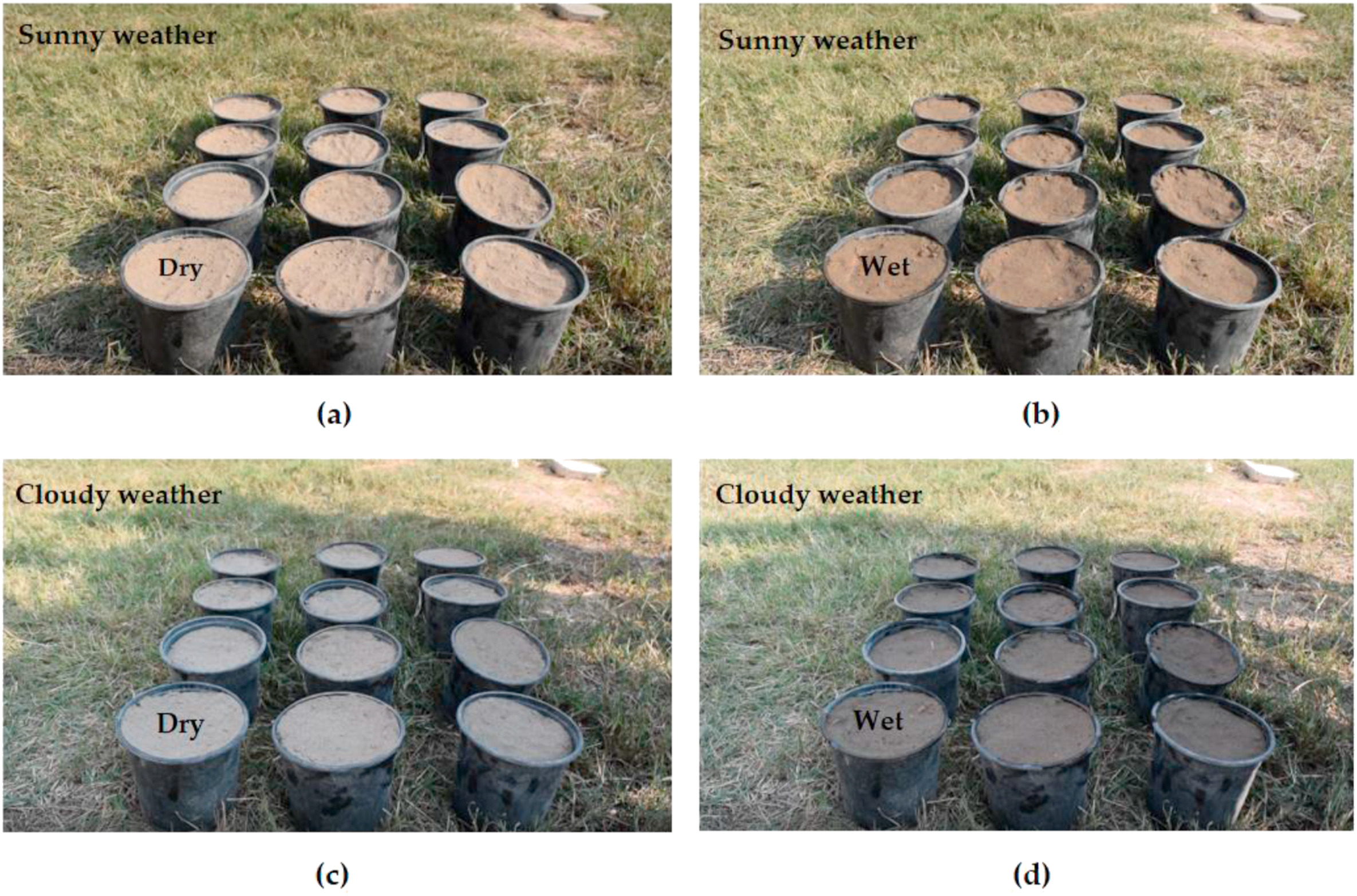
Another unusual but potentially helpful application of computer vision is in soil monitoring, a task every farmer has to do regularly to monitor water and nutrient levels. When they do manage to automate it, it’s done in a rather heavy-handed way. A team from the University of South Australia and Middle Technical University in Baghdad show that the sensors, hardware and thermal cameras used now may be overkill.

Buckets of soil shown under various lights.

Image Credits: UNISA/Middle Technical University

Surprisingly, their answer is a standard RGB digital camera, which analyzes the color of the soil to estimate moisture. “We tested it at different distances, times and illumination levels, and the system was very accurate,” said Ali Al-Naji, one of the creators. It could (and is planned to) be used to make a cheap but effective smart irrigation system that could improve crop yield for those who can’t afford industry-standard systems.

News: Extra Crunch roundup: AI eats fintech, fundraising visas, no-code transition tips, more

Most American retail banks are designed the same way: Customers must pass several desks set aside for loan and mortgage officers before they can talk to a customer representative. I only step inside a bank a few times each year, but even pre-pandemic, I can’t remember the last time I saw someone sitting at one

Most American retail banks are designed the same way: Customers must pass several desks set aside for loan and mortgage officers before they can talk to a customer representative.

I only step inside a bank a few times each year, but even pre-pandemic, I can’t remember the last time I saw someone sitting at one of those desks. Everyone I know who’s obtained a home or business loan in the recent past started with an online application process.

For this morning’s column, Alex Wilhelm interviewed Dave Girouard, CEO of Upstart, an AI-powered fintech lender that expects to see growth increase 114% this year.

A forecast like that suggests that retail banks have gotten comfortable with using automated tools to calculate risk, which may help explain all the empty desks at my local branch.

“If Upstart hits its 2021 numbers, we will be able to read into them broader adoption of AI among old-guard firms,” says Alex.

According to PitchBook, investors are also more bullish on AI: Q4 2020 saw record funding for AI and ML startups, and exit totals are increasing as well.

I wouldn’t mind adding a gently used desk to my home office; perhaps I should call my bank and see if they have one to spare.

Thanks very much for reading Extra Crunch. Have a great weekend!

Walter Thompson
Senior Editor, TechCrunch
@yourprotagonist


Full Extra Crunch articles are only available to members.
Use discount code ECFriday to save 20% off a one- or two-year subscription.


A crypto company’s journey to Data 3.0

young woman uses digital tablet on virtual visual screen at night

Image Credits: dowell (opens in a new window) / Getty Images

Data is a gold mine for a company. If managed well, it provides the clarity and insights that lead to better decision-making at scale, in addition to an important tool to hold everyone accountable.

However, most companies are stuck in Data 1.0.

Dear Sophie: What type of visa should we get to fundraise in Silicon Valley?

lone figure at entrance to maze hedge that has an American flag at the center

Image Credits: Bryce Durbin/TechCrunch

Dear Sophie:

A friend and I founded a tech startup last year. Like a lot of other startups, we’re looking for funding.

Should we come to Silicon Valley to meet with venture capitalists?

How should we begin that process? What type of visa should we get and how easy is it to get?

—Logical in Lagos

To solve all the small things, look to everyday Little AI

Numbers code panel with blue glowing on dark background.

Image Credits: Yuichiro Chino / Getty Images

Why are developers still solving everyday pain points with manual, archaic processes, as opposed to employing “Little AI”?

There are millions of everyday use cases for AI, where technology is empowered to learn and decide on a course of action that offers the best outcome for consumers and companies alike.

How to recruit data scientists without paying top dollar

Female scientists working on project data on whiteboard in research lab

Image Credits: Thomas Barwick (opens in a new window) / Getty Images

The increasing demand for AI and data science experts, driven in part by the pandemic’s economic impact, is showing no sign of abating.

Many employers are failing to identify viable job candidates, much less interviewing or hiring them. What’s holding them back?

Often, it’s a poorly drafted job posting.

3 steps to aid the transition to becoming a no-code company

Image Credits: Korrawin / Getty Images

No-code is changing how organizations build and maintain applications.

It democratizes application development by creating “citizen developers” who can quickly build out apps that meet their business-facing needs in real time, realigning IT and business objectives by bringing them closer together.

How can your company get ahead of the trend?

No taxation without innovation: The rise of tax startups

Image Credits: jokerpro / Getty Images

The idiosyncrasies of sales taxes are a burden on small- and medium-sized businesses, but a new legion of startups is emerging to help companies manage the intricacies of cross-jurisdictional taxes.

Snowflake gave up its dual-class shares: Should you?

Four business people used ropes to tighten their money bags, economic austerity, reduced income, economic crisis

Image Credits: VectorInspiration / Getty Images

Some founders and investors argue that these preferred shares protect them from the whims of the market, but the perspective isn’t universally accepted.

Dual-class shares are a controversial governance structure, and some wonder if they are setting up an unfair playing field by allowing a cabal to wield outsized power.

So why would Snowflake give up such a powerful tool?

MaaS transit: The business of mobility as a service

market-maps-public-transit

Image Credits: Bryce Durbin

As transit agencies seek to win back riders, a flurry of platforms — some backed by giants like Uber, Intel and BMW — are offering new technology partnerships.

Whether it’s bundling bookings, payments or just trip planning, startups are selling these mobility-as-a-service (MaaS) offerings as a lifeline to make transit agencies the backbone of urban mobility.

What eToro’s investor presentation and $10B valuation tells us about Robinhood

Israeli consumer stock-trading service eToro is going public in the United States via a SPAC. One thing that points to?

Trading platforms are being valued like high-margin video games.

The global inequity in venture backing is staggering

I knew African founders lacked the same access to capital as entrepreneurs based in Europe or the United States, but the numbers are far less favorable than I thought.

According to Dauda Barry, CEO of Adaplay Esports, African startups have raised $500 million so far in 2021. If that trend continues, he estimates that the region’s tech companies will exceed the $1.4 billion they raised in 2020.

For perspective: “Stripe raised more yesterday than Barry had reported for the entire African continent this year,” Alex Wilhelm noted in today’s column.

Digging deeper, he pulled numbers from Crunchbase and PitchBook to track VC activity in Africa over the last three months. Once he filtered private equity funding from nonequity investments, the numbers were “staggering.”

“I am surprised that more VCs aren’t investing in Africa,” says Alex. “It smells like investing arbitrage.”

Farmland could be the next big asset class modernized by marketplace startups

"A green row celery field in the Salinas Valley, California USA"

Image Credits: Pgiam (opens in a new window) / Getty Images

Companies that help farmers raise money for agricultural development projects are revolutionizing the way farm and forestland are acquired, developed and commercialized across the United States.

While private equity has gotten a lot of press for expanding the size of their farmland investments, those investments are still dwarfed by the size of the potential farm industry in the U.S., meaning there’s still plenty of opportunity for investors to provide additional capital.

The NFT market is just getting started, but where is it headed?

The crypto art craze might seem silly and expensive, but it could empower artists from emerging economies and underrepresented groups to access the global art market in ways that they couldn’t before.

Can it outlive the hype?

Olo raises IPO range as DigitalOcean sees possible $5B debut valuation

Green arrow going up with red background

Image Credits: jayk7 (opens in a new window) / Getty Images

That Olo raised its IPO price is not a huge surprise, given the software company’s rapid growth and profits. In the case of DigitalOcean, we have more work to do as its approach to growth is a bit different.

Stripe’s epic new valuation and the value-capture gap between public and private markets

Stripe’s $600 million round values the payments and banking software company at $95 billion, near the top end of the valuation range at which the company was said to be raising funds back in November 2020.

Sadly, Stripe is still being coy with growth metrics. The Exchange digs in, no matter how vague.

Julia Collins and Sarah Kunst outline how to build a fundraising process

Julia Collins, the first Black woman to co-found a venture-backed unicorn, and investor Sarah Kunst offer fundraising pointers on Extra Crunch Live.

Kunst says good design is critical, but:

If you’re not a graphic designer, then any incremental minute that you’re spending on trying to make your deck pretty is a waste of time. You need to be focusing on content. Hire somebody, pay them a tiny bit of money to be able to do a nice graphics pass on your deck, and it’s going to make it a lot easier for people to to get the information that you need them to know.

How nontechnical talent can break into deep tech

Image Credits: Getty Images

Startup hiring processes can be opaque, and breaking into the deep tech world as a nontechnical person seems daunting. This column offers tactical advice for finding, reaching out to, cultivating relationships with and working at deep tech companies as a nontechnical candidate.

News: Now approved in LA, Abodu’s backyard homes can now go from contract to completion in as little as 30 days

Abodu, one of a slew of startup companies pitching backyard homes and office spaces to Californians in an effort to help address the state’s housing shortage, has instituted a new “Quickship” program that can take an order from contract to construction and installation in about thirty days. Behind the quick turnaround time is a pre-approval

Abodu, one of a slew of startup companies pitching backyard homes and office spaces to Californians in an effort to help address the state’s housing shortage, has instituted a new “Quickship” program that can take an order from contract to construction and installation in about thirty days.

Behind the quick turnaround time is a pre-approval process that was first rolled out in Santa Fe and came to Los Angeles in recent weeks.

Abodu began installing homes through a pre-approval process back in 2019, when the city of San Jose created a program that allowed developers of alternative dwelling units to submit plans for pre-approval to cut the time for homeowners.

That approval process means that ADU developers like Abodu can be permitted in one hour. Other ADU developers pre-approved in San Jose, Calif. include Acton ADU, the venture backed Connect Homes, J. Kretschmer Architect, Mayberry Workshop, Open Remodel, and prefabADU. In Los Angeles, La Mas, IT House, Design, Bitches, Connect Homes, Welcome Projects and First Office have all had homes pre-approved for construction.

Beyond the cities where Adobu’s ADUs have received pre-approval, the company has built across California in cities ranging from, Palo Alto, Millbrae, Orange County, to LA and Oakland. Units in the Bay Area cost roughly $189,000 as a starting price, compared to the $650,000 to $850,000 it takes to build units in a mid-rise apartment building, or $1 million per unit in a steel-reinforced highrise, according to the company.

“Our Quickship program is the fastest way to add housing,” said John Geary, CEO at Abodu.  “Homeowners with immediate needs, be it family situations or those looking for investment income, can now complete an ADU project in as little as four weeks. A key mission for Abodu is to make a serious dent in our state’s housing deficit while providing people and municipalities the necessary blueprint to enact real change. ”

For Initialized partner (and former TechCrunch writer) Kim-Mai Cutler, who serves on the Abodu board of directors, the achievement of a 30 day construction milestone is almost a dream come true. Cutler wrote the book (or the equivalent of a book) on the housing crisis and its impact on the Bay Area and California broadly.

That piece led Cutler to work in public service “on boards and commissions overseeing the spending of federal dollars on homelessness and the proceeds of municipal bonds directed at financing affordable housing (because yes, for some segments of residents, you do have to explicitly subsidize housing at the local level.),” as she noted in a blog post about her investment in Abodu.

The interior of an Abodu home. Photo via Abodu.

Cutler backed the company because of her deep knowledge of the issues associated with housing.

“The reason this is a big deal is because Northern California has been the most expensive and unpredictable place to build new housing in the world. Projects typically take several years because of uncertainty with entitlements and materials,” Cutler wrote. “Over the past year, Abodu co-founders John Geary and Eric McInerney have put homes in the backyards of parents bringing kids home from college, a mother-and-son pair that each bought one for their homes in Millbrae, a couple looking to eventually house a grandmother in San Jose and on and on.”

The key inspiration that Abodu’s founders hit on was their concentration on granny flats, casitas and backyard dwellings. “While deliberations over mid-rise density were stalling in Sacramento, the state legislature (and legislatures up north in the Pacific Northwest) were passing bill after bill, including Phil Ting’s AB 68 and Bob Wieckowski’s SB 1069, to make it really easy to add backyard units,” Cutler wrote. “This is the kind of change that suburban America wants, is comfortable with and can politically pass and implement easily.”

To Cutler’s thinking, Adobu’s 30 day construction schedule will change consumer behavior, thanks to the fact that the home can be craned in and installed in less than a day on a foundation constructed in less than two weeks. Its incredibly low cost will enable a lot of opportunities to develop new inventory and the simple fact is that inventory remains a scarce commodity. As Cutler noted, only half as many homes are trading across the United States as were available a year ago, which is happening at the same time as when millennials are entering prime family formation years. 

News: It’s time to abandon business intelligence tools

Organizations spend ungodly amounts of money — millions of dollars — on business intelligence tools. Yet, adoption rates are still below 30%. Why is this the case? Because BI has failed businesses.

Charles Caldwell
Contributor

Charles Caldwell is VP of product management at Logi Analytics, which empowers the world’s software teams with intuitive, developer-grade embedded analytics solutions. He has more than 20 years’ experience in the analytics market, including 10+ years of direct customer implementation experience.

Organizations spend ungodly amounts of money — millions of dollars — on business intelligence (BI) tools. Yet, adoption rates are still below 30%. Why is this the case? Because BI has failed businesses.

Logi Analytics’ 2021 State of Analytics: Why Users Demand Better survey showed that knowledge workers spend more than five hours a day in analytics, and more than 99% consider analytics very to extremely valuable when making critical decisions. Unfortunately, many are dissatisfied with their current tools due to the loss of productivity, multiple “sources of truth,” and the lack of integration with their current tools and systems.

A gap exists between the functionalities provided by current BI and data discovery tools and what users want and need.

Throughout my career, I’ve spoken with many executives who wonder why BI continues to fail them, especially when data discovery tools like Qlik and Tableau have gained such momentum. The reality is, these tools are great for a very limited set of use cases among a limited audience of users — and the adoption rates reflect that reality.

Data discovery applications allow analysts to link with data sources and perform self-service analysis, but still come with major pitfalls. Lack of self-service customization, the inability to integrate into workflows with other applications, and an overall lack of flexibility seriously impacts the ability for most users (who aren’t data analysts) to derive meaningful information from these tools.

BI platforms and data discovery applications are supposed to launch insight into action, informing decisions at every level of the organization. But many are instead left with costly investments that actually create inefficiencies, hinder workflows and exclude the vast majority of employees who could benefit from those operational insights. Now that’s what I like to call a lack of ROI.

Business leaders across a variety of industries — including “legacy” sectors like manufacturing, healthcare and financial services — are demanding better and, in my opinion, they should have gotten it long ago.

It’s time to abandon BI — at least as we currently know it.

Here’s what I’ve learned over the years about why traditional BI platforms and newer tools like data discovery applications fail and what I’ve gathered from companies that moved away from them.

The inefficiency breakdown is killing your company

Traditional BI platforms and data discovery applications require users to exit their workflow to attempt data collection. And, as you can guess, stalling teams in the middle of their workflow creates massive inefficiencies. Instead of having the data you need to make a decision readily available to you, instead, you have to exit the application, enter another application, secure the data and then reenter the original application.

According to the 2021 State of Analytics report, 99% of knowledge workers had to spend additional time searching for information they couldn’t easily locate in their analytics solution.

News: Facebook showcases wrist-worn AR interface concept

Facebook’s hardware strategy often looks pretty opaque from the outside. The company has done fairly well with Oculus sales amid pandemic demand. Even its Echo Show competitor Portal has seen a bump as people have been forced to socially distance. The company’s smartphone partnership with HTC, meanwhile, fell flat eight or so years back. Earlier

Facebook’s hardware strategy often looks pretty opaque from the outside. The company has done fairly well with Oculus sales amid pandemic demand. Even its Echo Show competitor Portal has seen a bump as people have been forced to socially distance. The company’s smartphone partnership with HTC, meanwhile, fell flat eight or so years back.

Earlier this year, reports surfaced that the company was working on its own Apple Watch competitor. The smartwatch was said to have a health focus, running on an open-source version of Android. That, of course, would mark an interesting alternative from Google’s chosen wearOS.

This week, the company highlighted another wrist-based wearable. The specifics of the project don’t line up super closely with earlier reports, which could well mean two separate projects. Facebook is a big company, after all.

This particular project out of Facebook Reality Labs is more focused on providing an alternative computer interface. Specifically, it seems in line with the company’s augmented reality efforts.

Per yesterday’s blog post:

A separate device you could store in your pocket like a phone or a game controller adds a layer of friction between you and your environment. As we explored the possibilities, placing an input device at the wrist became the clear answer. The wrist is a traditional place to wear a watch, meaning it could reasonably fit into everyday life and social contexts. It’s a comfortable location for all-day wear. It’s located right next to the primary instruments you use to interact with the world — your hands. This proximity would allow us to bring the rich control capabilities of your hands into AR, enabling intuitive, powerful and satisfying interaction.

I will say that, based on the information presented, this seems more conceptual. As in, this could be the key to offering more seamless control for some future augmented reality system. And even still, it’s presented as a step on the way to a more deeply integrated human-computer solution. How deeply you want Facebook to integrate with your neurons is apparently a question we’re all going to have to ask ourselves in the not too distant future.

This interface specifically is designed to use electromyography (EMG) sensors to interpret motor nerve signals and interact with the interface accordingly. The subject interestingly came up during a Clubhouse event featuring Mark Zuckerberg last night. After Pebble founder/YC partner Eric Migicovsky discussed experiences dealing with Apple for his own smartwatch startup, the Facebook CEO said the following:

If you’re trying to build a watch, which we’re exploring as we talked about the wrist thing and I don’t want to call it a watch, but it’s the basic neural interfaces work that our Facebook reality labs team demoed some of our research about today. With the neural interface on the wrist, if you want that to integrate with the phone in any way, it’s just so much easier on Android than iOS. My guess is that this is an area where there probably should be a lot more focus. And I do think the private APIs are just something that makes it really difficult to have a healthy ecosystem.

“Exploring” seems like an operative word here. But it’s always cool/fascinating to see these projects in their early stages. Even if the promises might still seem a tad…overzealous.

EMG will eventually progress to richer controls. In AR, you’ll be able to actually touch and move virtual UIs and objects, as you can see in this demo video. You’ll also be able to control virtual objects at a distance. It’s sort of like having a superpower like the Force.


News: Sidekick Browser wants to be a productivity-honed ‘work OS’ on Chromium

The paradox of connected computing is how much information is made available to us in just a few clicks or taps — but also how this ocean of available data can overwhelm and lap over a particular bit of intel the moment we need to lay our fingers back on it. Fire up a web

The paradox of connected computing is how much information is made available to us in just a few clicks or taps — but also how this ocean of available data can overwhelm and lap over a particular bit of intel the moment we need to lay our fingers back on it.

Fire up a web browser and it’s hard to deny it’s the best of times for knowledge work. Yet working across multiple browser tabs and windows can feel like the friction-filled, frustrating worst.

This is the problem Sidekick Browser is taking aim at by adding a productivity-focused layer atop Chromium that it bills as a “work OS”.

Multiple tab hell? Sidekick’s answer is to let you work from inside apps that live in the browser, rather than scattered across multiple windows and tabs.

Apps like Slack and Skype and WhatsApp can be pinned in the sidebar in a vertical stack where you can easily find and switch between them. It also has support for multiple logins, granular notification controls and the ability to search across all these third-party apps (it offers “hundreds” currently but says users can add custom adds “which would function just like a bookmark”) right from the browser.

And for all those tabs you open up every time you go down an internet browsing rabbit hole, Sidekick offers a Sessions feature that lets you save them as a collective bundle for easy filing away — with ofc the ability to reopen and revisit again at a later click.

The built-in search also spans these Sessions so there’s no need to manually scroll back through the browser’s search history to try to track down where exactly it was you saw that reference to that randomly relevant bit of intel you breezed across one online day.

“Search across all your apps, tabs and workspaces in seconds,” is Sidekick’s alternative fix.

It’s also tackling productivity on the technical side — taking aim at browser-based lag with an “AI based tab suspension” feature that’s designed to improve on how Google’s Chrome browser hogs RAM by predicting which tabs the user is not going to use and dumping them from memory.

“Sidekick is the fastest browser built especially for work,” is its elevator-pitchy promise.

Collaboration is another core focus with features intended to help knowledge working teams be more productive as a unit; offering stuff like team role provisioning and custom workspaces to support different Session, app Sidebar and tabs set-ups, such as for a project or client.

There’s also remote configuration tools for device security; a baked-in password manager for collaborative convenience to support teams needing to share passwords; and an embedded video chat platform so you can do team chats right from the exact same browser-based workspace you’re all using.

Sidekick comes with its own ad blocker and anti-fingerprinting tech too — for a stated privacy purpose but also for an extra speed bump (i.e. via better page load times).

Also on privacy, the startup’s very public promise is “we’ll never sell your data” (and it further specifies this includes “searches, browsing history, or any personal information”).

The business model is SaaS and B2C for now, but Sidekick has designs on B2B — touting a pipeline of business-friendly features coming down the line.

And — yes, before you ask — Chrome extensions are supported.

Sidekick is announcing $2 million in seed funding led by KPCB — along with Remote First Capital and other angel investors.

Founder Dmitry Pushkarev has played and won at the startup game before, in some very different areas — having founded a DNA sequencing company (Moleculo) back in 2011, which was quickly acquired by Illumina.

Then in 2013 he left to found another business, ClusterK — focused on optimizing cloud computing resources across multiple cloud providers — which was acquired by Amazon in 2016, where Pushkarev stayed for a couple of years before getting the founder itch again.

A stint as entrepreneur in residence (EIR) at Kleiner Perkins investigating the future of work was where the germ of the idea for Sidekick was born.

The tool grabbed some early eyeballs a few months ago via Product Hunt — where Chris Messina was among its early fans, lauding the team for shaking up the browser space by combining “so many components that are essential to finding productivity as a modern knowledge worker!”.

Though Pushkarev was careful to course-correct Messina that it’s not building a full-fat browser to challenge Chrome itself (or any other internet browser).

“We do not intend to compete with browsers, they are a great choice for browsing,” he wrote. “Our goal is improve the browsing experience for work and productivity — something that, regretfully, browsers cannot do.”

The San Francisco-based startup says it’s now being used by teams at companies including Microsoft, Dropbox, Slack and Lyft. It has around 30,000 users at this point a few months after its November 2020 launch, per Pushkarev, who says the team is mostly focused on product (“activation, retention, virality”) at this early stage.

“The typical user is a knowledge worker — product managers, engineers, marketers, a fair number of students. Basically, prosumers who don’t just browse online, but do productive work and utilize communication tools,” he tells TechCrunch.

“During my EIR at KPCB, we thought a lot about the future of work, and one striking aspect of it is that today knowledge workers spend most of their time working in Browsers — a tool designed for Browsing,” he goes on, explaining the genesis of the idea for Sidekick.

“There are some important differences between how we browse and how we work, in particular — knowledge workers, spend more time working in web applications, with documents, using communications tools, accessing multiple accounts, and having to navigate a vast array of documents and projects. Unlike browsing — which is mostly search-based consumption of information.

“Clearly, these are very different use cases, but companies who make browsers today have no ability to invest in making browser better for work due to their business model — they are paid by Google or Microsoft for searches, and any complication of the UX would mean that millions of users would turn to simpler browsers and they will lose search revenue.

“We thought that it’s an unprecedented situation, where 200M professionals don’t have access to professional tools, and that the industry is so heavily disincentivized to build those. As a result, we decided to change this and invent a new category of software — Browser for Work, or how we call it internally — a Work OS.”

So what type of work/worker is Sidekick made for? “Online work with Web applications, lots of documents, communication apps, multiple accounts, and different work streams. It’s designer for prosumers and wouldn’t be the best choice for just browsing — something that would be better served by other browsers,” he says.

While the laser focus is work and productivity, Sidekick users can create multiple environments within the software — so could make other spaces more geared toward chilling out/downtime, or other purposes than work too, for use at other times.

While browsers do offer a variety of features like shortcuts and other elements aimed at increasing convenience, Pushkarev argues they simple can’t go as far as Sidekick intends to in honing a great work environment because their business model is too focused on search ads (in the case of Google Chrome) — or just because they need to be a more generalist tool for web browsing. Sidekick is therefore very much a “standalone business,” not just a nice set of enhancements any existing browser could make, in his view.

“Unfortunately, extending other browsers is not a viable path here, one has to go deep inside Chrome codebase and re-think performance, memory optimization, security, support for multiple accounts, and privacy to build a comprehensive solution,” he says.

One example of going above and beyond what a browser could or would do itself is the support it’s built for “hundreds” of third-party apps. “The reason we built this support is for better integrations — being able to display and control badges and notifications, integrate with our search, support multiple accounts and add helpful extensions,” he explains.

He also points to the New Tab Page (shown in the feature image at the top of this post), which is due to launch for all users by the end of the month and which displays “all documents that work with organized according to type, with human-readable titles, and instant search across it”.

“Without deep integration with these apps we wouldn’t be able to provide this experience and display barely usable browser history instead,” he notes.

On the business model front, Pushkarev is confident that SaaS can work — and that Sidekick doesn’t have to monetize like other browsers do (i.e. “through data and searches”) — arguing: “We are making a tool that saves hours to potentially millions of knowledge workers.”

“Another piece of the story is our B2B business, which we are building as we speak, but it’s still in early beta. In B2B, product browsers become a sort of company-provisioned remote workstations, that can be remotely configured and secured according to a role,” he adds.

“This is where the majority of our revenue comes from at the moment, but we are launching our first attempts at B2C monetization in March, by offering a subscription.”

News: The lightning-fast Series A (that was 3 years in the making)

It took Christine Tao, founder of Sounding Board, just over three years to recognize the value of executive coaching and get her company to a Series A. Here’s how she did it.

Nathan Beckord
Contributor

Nathan Beckord is CEO of Foundersuite.com, a software platform for raising capital and managing investors that has helped entrepreneurs raise over $2 billion since 2016. He is also the host of Foundersuite’s How I Raised It podcast.

Christine Tao runs Sounding Board, a business founded in 2016 that offers executive coaching services to leaders at major companies like Kraft and Heinz. But not long ago, she was the one in need of a coach.

But prior to that, Tao found herself in a new high-powered position at the mobile advertising company Tapjoy. Although she had plenty of sales experience, she was now working in an executive role leading the company’s entire sales staff. It was a tough learning curve. But the company’s board paired her with an executive coach, Lori Mazan, who ultimately helped Tao succeed.

“That really had a profound impact, not just on my professional development, but my personal development as well,” Tao said.

Show investors that you’re committed to following through. That makes all the difference.

Later on, Tao and Mazan teamed up to launch Sounding Board, a service with a proprietary algorithm that matches participants with coaches. Its capabilities-driven model can even measure the impact of the coaching.

At the beginning, Tao didn’t have many resources. Ultimately, she raised $15 million in a pre-seed and Series A round. An impressive group of investors got in on the action, including Roy Bahat of Bloomberg Beta, Charles Hudson of Precursor Ventures and Maha Ibrahim of Canaan.

On an episode of the “How I Raised It” podcast, Tao talked about raising money quickly, honing your strategy and getting back on your feet after all you hear is “no.”

Start out scrappy

From the very beginning, Tao had big ideas.

She wanted to make coaching accessible to all sorts of executive leaders. The service wouldn’t just be for correcting bad behavior, as coaching had been in the past, but about helping executives grow and develop so that they could lead their businesses with their best foot forward. Tao also aimed to make coaching available through remote technology.

The problem was, Tao didn’t quite have the resources to get started. Initially, turning those ideas into a functioning business seemed about as realistic as climbing Mount Everest.

News: Superpedestrian positions itself as the go-to partner for cities with new e-scooter safety upgrades

Superpedestrian, the startup that makes e-scooters equipped with self-diagnostic software, is upgrading its product as it prepares for a major expansion into 10 new cities within the next two weeks. Considered an up-and-coming player in the micromobility world, Superpedestrian says it has figured out how to build AI to monitor and correct scooter safety issues,

Superpedestrian, the startup that makes e-scooters equipped with self-diagnostic software, is upgrading its product as it prepares for a major expansion into 10 new cities within the next two weeks.

Considered an up-and-coming player in the micromobility world, Superpedestrian says it has figured out how to build AI to monitor and correct scooter safety issues, directly and in real time. The next-generation operating system that will provide those upgrades, codenamed “Briggs,” will be uploaded to its global fleet of LINK e-scooters. It includes improvements to geofencing capabilities and battery life, making Superpedestrian more attractive to cities looking for partners who can provide assurances around safety and reliability.

“The scooter market has shifted in its short lifespan from a B2C to, in a lot of ways, more like a B2G [business-to-government],” said David Zipper, visiting fellow at the Taubman Center for State and Local Government at the Harvard Kennedy Center. “The trend has been for cities to reduce the number of concessions they grant to scooter operators, which puts more pressure on scooter operators to get one of those declining numbers of contracts available. You can’t really overstate how important it is, which technologies will rise and fall, and how companies position themselves.”

Superpedestrian is currently one of the underdog e-scooter companies that are in the running for partnerships with cities like New York, which will soon be announcing the specifics of its e-scooter pilot program in the Bronx. Micromobility giants like Bird, Lime and Voi have also placed bids. 

The company currently operates in cities across the U.S., including Seattle, Oakland, San Jose and San Diego, as well as European cities like Madrid and Rome. 

“Cities love our 100% compliance record,” Ross Ringham, Superpedestrian’s EMEA director of communications, told TechCrunch. “We have never been censured, suspended nor expelled from any of our markets. We believe it is critical to work hand-in-hand with regulators to provide a successful service.”

City officials today are most concerned with complaints about scooters cluttering up sidewalks, so being able to clear the sidewalk or diagnose a broken scooter right away and summon someone to come and collect it would be an appealing value proposition for Superpedestrian, said Zipper.

The LINK scooters are powered by a Vehicle Intelligent Safety (VIS) system, which combines AI, 73 sensors and five microprocessors to run 1,000 vehicle health checks every second a ride is taking place. The software is constantly self-monitoring and self-correcting, looking out for things like brake issues, battery cell temperature imbalances, cut internal wires and water penetration. 

“VIS is as big a step-change in scooter safety as the seat belt was for cars, refined over four million miles of testing and service since 2013,” said Ringham. “As a result, we’ve had zero vehicle recalls or manufacturing defects globally.”

The new update also includes 22% faster geofence reaction, three time more capacity for onboard geofences and sevenfold more precision when it comes to geofence accuracy. That means the scooter is able to better recognize a no-ride zone, and improve rider compliance by slowing down speeds and prohibiting riding or parking in certain areas. 

The fact that these computations are done in real time, locally on the scooter itself, accounts for the speed and accuracy of LINK’s system, which reacts in as little as 0.7 seconds, and as few as 4.6 meters away from where a geofence-related issue was first detected. Other scooter companies tend to rely on cloud computing to calculate and enforce geofences, which can be too slow to stop riders from speeding through pedestrian areas or busy traffic. 

“Our competitors typically buy off-the-shelf products and commonly use white label apps,” said Ringham. “We do not outsource safety in this manner, meaning the information flows from our operations team and global fleets are used by our engineering teams to sustain continuous improvement.”

Companies like Bird, Atom and Joyride offer white label operating systems that allow independent operators to launch their own rideshares and manage fleets, but not many players offer the type of safety-focused tech you see with LINK.

Detailed logs are also pulled by engineering teams to enhance performance with each updates, so the scooters get smarter over time, according to founder and CEO Assaf Biderman. The aggregated and anonymized data collected from LINK’s onboard software is also shared with city partners to help them design better infrastructure to support this emerging transport form.

“If a city partner comes to us with a new idea, we can easily add that, thanks to VIS,” Biderman said in a statement. “This makes for constantly-improving vehicles for riders, better protection for pedestrians and more robust safety performance for cities. Cities should demand nothing less for their citizens.”

WordPress Image Lightbox Plugin