
Tag Archives: Blog

News: Is Substack really worth $650M?

Substack didn’t invent the paid newsletter, but the startup’s early success with the model is enticing previous backers to more than double down on the media startup.

Substack didn’t invent the paid newsletter, but the startup’s early success with the model is enticing previous backers to more than double down on the media startup.


The Exchange explores startups, markets and money. Read it every morning on Extra Crunch, or get The Exchange newsletter every Saturday.


Last evening, Axios reported that Substack is “raising $65 million in new venture capital” at a valuation of “around $650 million.” As you’ve already guessed, Axios goes on to report that Andreessen Horowitz (a16z) will likely lead the investment.

That we’re seeing a16z pour more capital into what we could call the alt-media space is not a surprise. The investing group is ladling even more cash into its in-house media efforts and has put a small archipelago of capital into audio-based social media app Clubhouse. Its internal publishing schedule is in part an attempt to get around traditional media; the Clubhouse universe is an inverted one in which tech investors are celebrities, producers and gatekeepers. And Substack is a place where publications have bled some well-known talent, shifting the center of gravity in media.

You can detect the theme.

Regardless, Substack’s new valuation and investment are eye-catching. This morning, I want to collect all that we can regarding Substack’s historical growth so that we can chew on its new valuation from the best vantage point. Let’s go!

 $650 million?

A little history to kick us off. Crunchbase counts Substack’s total funding to date at $17.4 million. PitchBook puts the number at $21.21 million, inclusive of debt. Both sources agree that the company’s most recent round came in July 2019. PitchBook pegs the company’s valuation at $48.65 million at that date.

Raising $17 million in cash around 20 months ago, regardless of debt, is an amount of capital that the company could easily have burned through by now. Raising more funds is therefore not a surprise.

But the size of the new round is notable, as is its constituent valuation. Series A and B rounds have been growing in size in recent years. But a $65 million Series B would stand out, even by 2021 standards. Not shockingly so, but enough that any company raising that sum at its implied level of maturity would demand our attention. That we’re all familiar with Substack only makes the sum more curious.
News: PayPal’s new feature allows U.S. consumers to check out using cryptocurrency

PayPal this morning announced the launch of Checkout with Crypto, a new feature that will allow consumers to check out at millions of online businesses using cryptocurrency. The feature expands on PayPal’s current investments in the cryptocurrency market, which include its partnership with Paxos to power its service that allows customers to buy, sell and

PayPal this morning announced the launch of Checkout with Crypto, a new feature that will allow consumers to check out at millions of online businesses using cryptocurrency. The feature expands on PayPal’s current investments in the cryptocurrency market, which include its partnership with Paxos to power its service that allows customers to buy, sell and hold a range of cryptocurrencies, and more recently, its acquisition of cryptocurrency security startup Curv.

According to PayPal, customers with cryptocurrency holdings in the U.S. will be able to check out using their cryptocurrency at PayPal’s 29 million global online businesses in the coming months. The feature will also work without any additional integrations or fees required by the businesses themselves.

Essentially, Checkout with Crypto allows the customers to sell their cryptocurrency through PayPal at the time of checkout, then settle the actual transaction in U.S. dollars. For the businesses, that means nothing really changes on their end — they’re still being paid in USD, not cryptocurrency. But PayPal’s feature makes it possible for this transaction to take place within the same checkout flow, making it easier on shoppers to quickly make their purchases using cryptocurrency.

At launch, the service will support Bitcoin, Litecoin, Ethereum and Bitcoin Cash — but only one type of cryptocurrency can be used for each purchase.

If the customer has enough cryptocurrency to pay for their online purchase, then the Checkout with Crypto feature will appear, alongside other traditional payment methods, like the customer’s bank account, PayPal balance, or credit or debit card. Like other payment methods, Checkout with Crypto will also include PayPal’s safety and security benefits, including fraud protection, return shipping and purchase protection on eligible items, PayPal notes.

After the transaction completes, the customer will receive both a record of the cryptocurrency sale, as well as their purchase receipt.

The company had announced its plans to launch support for checkout with cryptocurrency last year, when it first entered the cryptocurrency market. It said that after providing support for buying and selling cryptocurrencies, it would launch a checkout feature in 2021.

Today, PayPal makes makes money by charging transaction fees when customers buy or sell their cryptocurrencies, which is why it’s not placing any fees on their merchants themselves.

PayPal’s launch will help to dramatically expand the number of places where cryptocurrency can be used for real-world purchases, which could help accelerate mainstream adoption of digital currencies. The move comes shortly after last week’s announcement from Tesla, which said U.S. customers could now buy a car using bitcoin, and Japanese e-commerce giant Rakuten’s news earlier this month where it said users could check out with online merchants in Japan using cryptocurrencies.

“As the use of digital payments and digital currencies accelerates, the introduction of Checkout with Crypto continues our focus on driving mainstream adoption of cryptocurrencies, while continuing to offer PayPal customers choice and flexibility in the ways they can pay using the PayPal wallet,” said PayPal President and CEO Dan Schulman, in a statement about the launch. “Enabling cryptocurrencies to make purchases at businesses around the world is the next chapter in driving the ubiquity and mass acceptance of digital currencies,” he added.


News: NBA Top Shot maker Dapper Labs is now worth $2.6 billion thanks to half of Hollywood, the NBA, and Michael Jordan

From the early success of Crypto Kitties to the explosive growth of NBA Top Shot, Dapper Labs has been at the forefront of the cryptocurrency collectible craze known as NFTs. Now the company is reaping the benefits of its trailblazing status with a new $305 million financing led by some of the biggest names in

From the early success of Crypto Kitties to the explosive growth of NBA Top Shot, Dapper Labs has been at the forefront of the cryptocurrency collectible craze known as NFTs.

Now the company is reaping the benefits of its trailblazing status with a new $305 million financing led by some of the biggest names in Hollywood, sports, and investing.

The new round values the company at a whopping $2.6 billion, according to multiple media reports, and comes at a time when NFTs have captured the popular imagination.

Leading the company’s financing was Coatue, the financial services firm that’s behind many of the biggest later stage tech deals. But heavy hitters from the entertainment world also took their cut — these are folks like NBA legend Michael Jordan as well as current players and funds including Kevin Durant, Andre Iguodala, Kyle Lowry, Spencer Dinwiddie, Andre Drummond, Alex Caruso, Michael Carter-Williams, Josh Hart, Udonis Haslem, JaVale McGee, Khris Middleton, Domantas Sabonis, Klay Thompson, Nikola Vucevic, Thad Young, and Richard Seymour’s 93 Ventures.

Entertainment and music heavyweights including Ashton Kutcher and Guy Oseary’s Sound Ventures, Will Smith and Keisuke Honda’s Dreamers VC, Shawn Mendes and Andrew Gertler’s AG Ventures, Shay Mitchell, and 2 Chainz also bought in on the action.

And from the venture world comes other strategic investors like Andreessen Horowitz, The Chernin Group, USV, Version One, and Venrock.

The company said it would use the funds to continue building out NBA Top Shot and expanding the updated digital trading card platform to other sports and a broader creator community.

Top Shot has already notched over $500 million in sales for its animated trading cards featuring things like LeBron James dunking and the sky (at least for now) is seemingly the limit for the collectible applications of blockchain.

It’s like the one thing that cryptocurrency can do really well and it’s been embraced far beyond the world of sports collectibles. The recent $69 million sale of a digital piece of art at Christies also marks a watershed moment for art world.

“NBA Top Shot is successful because it taps into basketball fandom – it’s a new and more exciting way for people to connect with their favorite teams and players,” said Roham Gharegozlou, CEO of Dapper Labs. “We want to bring the same magic to other sports leagues as well as help other entertainment studios and independent creators find their own approaches in exploring open platforms. NFTs unlock a new model for monetization that benefits the fans much more than advertising or sponsorships.”

Powering the Top Shot system and Dapper Labs’ other offerings is a new blockchain protocol called Flow, which purports to handle mainstream consumer applications at scale, and can support mass adoption.

Flow also allows for transactions using fiat currency and credit cards in addition to provide a much needed ease of cryptocurrency, and can keep customers safe from the fraud or theft common in cryptocurrency systems, according to a statement from Dapper Labs.

Flow enables NFT marketplaces and other decentralized applications that need to scale to handle mainstream demand without extremely high transaction costs (“gas fees”) or environmental concerns, the company said.

“NBA Top Shot is one of the best demonstrations we’ve seen of how quickly new technology can change the landscape for media and sports fans,” said Kevin Durant, Co-Founder of Thirty Five Ventures. “We’re excited to follow the progress with everything happening on Flow blockchain and use our platform with the Boardroom to connect with fans in a new way.”

Already companies like Warner Music Group, Ubisoft, Warner Media, and the UFC, as well as thousands of third party developers, artists, and other creators are using the Flow mainnet to sell collectible cards, and develop custodial wallets.

Additional investors in the round include: MLB players like Tim Beckham and Nolan Arenado; NFL players: Ken Crawley, Thomas Davis, Stefon Diggs, Dee Ford, Malcom Jenkins, Rodney McLeod, Jordan Matthew, Devin McCourty, Jason McCourty, DK Metcalf, Tyrod Taylor, and Trent Williams; team ownership including Vivek Ranadive (Kings), and notable sports investors Bolt Ventures.

News: Slice is launching a point-of-sale system for pizzerias

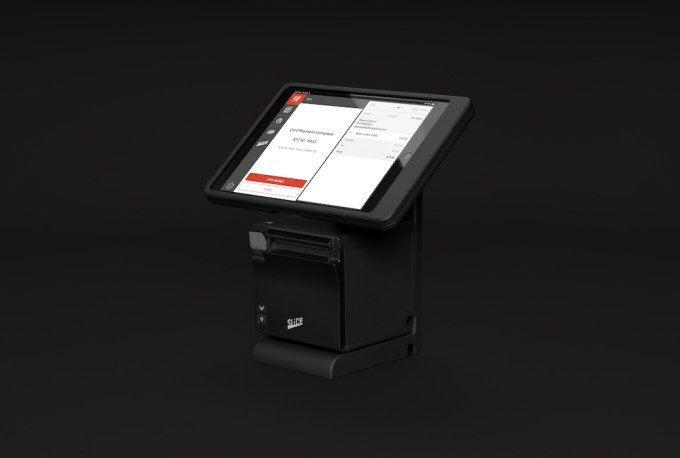
Slice, the online ordering platform for independent pizzerias, announced two new offerings this morning — a point-of-sale system designed specifically for those businesses, as well as a rewards program for diners. The launch of the new Slice Register builds on last year’s acquisition of point-of-sale company Instore, and the appointment of its CEO Matt Niehaus

Slice, the online ordering platform for independent pizzerias, announced two new offerings this morning — a point-of-sale system designed specifically for those businesses, as well as a rewards program for diners.

The launch of the new Slice Register builds on last year’s acquisition of point-of-sale company Instore, and the appointment of its CEO Matt Niehaus as Slice’s senior vice president for payments.

Pizzerias might seem to be a narrow focus for a point-of-sale system, particularly given all the other POS products out there, but Niehaus suggested that many of the 15,000 pizzerias in Slice’s network are still relying on cash registers and pen-and-paper: “If you run a pizzeria, you are certainly great at making pizza, but you are typically less comfortable with the accounting side.”

He also said that existing POS systems aren’t really designed for the needs and workflows of a pizzeria. Slice founder and CEO Ilir Sela added that most of them were designed for offline ordering first, with online support added later. And Niehaus suggested that the average local pizzeria is only seeing 19% of their orders coming from online sources (compared to 75% for the average Domino’s location), that’s a real problem.

“Domino’s is really the competition, not the POS companies,” he said.

Slice Register

Image Credits: Slice

So the Slice Register is a combined software and hardware (including an iPad) solution. Naturally, it integrates with Slice’s online ordering and also includes support for email and mobile marketing, as well as a consolidated view of each customer. Niehaus said that among other things, it’s designed to “grab those customers on one platform and nudge them online.”

Slice Register is available to pizzerias at no initial charge for the hardware or software. The only fee in 2021 will be for payment processing, with additional pricing announced coming next year.

As for the new Slice Rewards program, diners who order pizzas through Slice will get a free large cheese pizza for every eight orders of $15 or more. (Slice, not the restaurant, is paying for the free pizza.) Sela described this as a “very Domino’s-like program,” except that it works across independent pizzerias.

“What we’re learning the local consumer has up to four local favorites, and they love all of these locations equally,” he said. “What we think is really cool is, you’re going to get rewarded for buying at all four of your local favorites.”


News: Spotify is getting into live audio because of course it is

Shares of Spotify are up a fraction this morning after the company announced that it will acquire Betty Labs, the company behind the Locker Room, which focuses on live audio. Prior to the deal, Betty Labs had raised more than $9 million, per Crunchbase data. Spotify is best known for its music streaming business, but

Shares of Spotify are up a fraction this morning after the company announced that it will acquire Betty Labs, the company behind the Locker Room, which focuses on live audio. Prior to the deal, Betty Labs had raised more than $9 million, per Crunchbase data.

Spotify is best known for its music streaming business, but has expanded into new audio formats while hunting for both a competitive edge in its core market, and methods of generating pricing leverage.

The European tech giant has spent heavily in recent years on its podcast efforts, bringing marquee shows to its platform on an exclusive basis. By making its own audio-world as differentiated as possible, Spotify may be able to charge more over time, creating future growth opportunities.

The Swedish public company was not shy in describing its goals for the Betty Labs deal, writing on its own blog that it will “evolve and expand Locker Room into an enhanced live audio experience for a wider range of creators and fans,” with forthcoming content including “a range of sports, music, and cultural programming, as well as a host of interactive features that enable creators to connect with audiences in real time.”

A mix of radio and Clubhouse, perhaps? TechCrunch will tinker with the tech when possible, as we have in recent weeks with Clubhouse and Twitter’s equivalent product, Spaces.

Clubhouse, which helped boost the present-day audio craze to new heights, has attracted heavyweight backers and a good number of early fans. But the app has also seen its audience level off in recent weeks (AppAnnie data), perhaps leaving room in the market for Spotify or another audio incumbent to step in and steal its thunder.

Spotify has a history of entering new audio categories and taking over. As TechCrunch reported earlier this month, “Spotify’s U.S. podcast listenership will surpass Apple Podcasts for the first time this year when 28.2 million U.S. users will listen to podcasts on Spotify at least monthly, compared with 28.0 million via Apple Podcasts,” per data from eMarketer.

Sure, it wasn’t cheap, but Spotify wants to lead all audio categories it appears, so its planned move into Clubhouse territory should worry current startups in the space.

If Spotify’s distribution advantage of working on every platform, and having a huge install base, will work in its efforts to own a new slice of the audio world is something we’ll find out this year. Until then, if you have an iOS device, you can still use Clubhouse.

News: Apple’s WWDC stays online-only, kicking off June 7

Apple this morning announced that it will be returning to an all-virtual format for a second year. The company went online-only for the first time in 2020, as Covid-19 ground in-person events to a halt. While vaccine rollouts have begun in much of the world, the return of the in-person event industry still seems iffy

Apple this morning announced that it will be returning to an all-virtual format for a second year. The company went online-only for the first time in 2020, as Covid-19 ground in-person events to a halt. While vaccine rollouts have begun in much of the world, the return of the in-person event industry still seems iffy for most of the rest of the year. The event will run June 7-11.

“We are working to make WWDC21 our biggest and best yet, and are excited to offer Apple developers new tools to support them as they create apps that change the way we live, work, and play,” Developer Relations VP Susan Prescott said in a release tied to the news.

The virtual format certainly has its advantage — accessibility being at the top of the list. Apple said last year’s was its “biggest ever,” and expects roughly 28 million developers from around the world at this one. In addition to not having to deal with traveling — not to mention the South Bay hotel crunch — the company offers up free access to the event for all qualified developers.

The event spans Apple’s different operating systems, bringing new versions of iOS/iPadOS, macOS, watchOS and tvOS. Last year also delivered the big, long awaited arrival of Apple’s transition to first-part silicon for its Macs. Hardware news has otherwise been fairly hit or miss at the event, but after a bottleneck in H1 2020, the company could have some surprises on the way on that front.

Along with the big keynote and a week’s worth of developer-themed programming, the company hosts events like the Swift Student Challenge, a competition focused on young coders. Apple notes that it will also being using the opportunity to donate $1 million to SJ Aspires, an education initiative based in San Jose, where the in-person event has been held in recent years.

News: 6sense raises $125M at a $2.1B valuation for its ‘ID graph’, an AI-based predictive sales and marketing platform

AI has become a fundamental cornerstone of how tech companies are building tools for salespeople: they are useful for supercharging (and complementing) the abilities of talented humans, or helping them keep themselves significantly more organised; even if in some cases — as with chatbots — they are replacing them altogether. In the latest development, 6sense,

AI has become a fundamental cornerstone of how tech companies are building tools for salespeople: they are useful for supercharging (and complementing) the abilities of talented humans, or helping them keep themselves significantly more organised; even if in some cases — as with chatbots — they are replacing them altogether. In the latest development, 6sense, one of the pioneers in using AI to boost the sales and marketing experience, is announcing a major round of funding that underscores the traction AI tools are seeing in the sales realm.

The startup has raised $125 million at a valuation of $2.1 billion, a Series D being led by D1 Capital Partners, with Sapphire Ventures, Tiger Global and previous backer Insight Partners also participating.

The company plans to use the funding to expand its platform and its predictive capabilities across a wider range of sources.

For some context, this is a huge jump for the company compared to its last fundraise: at the end of 2019, when it raised $40 million, it was valued at a mere $300 million, according to data from PitchBook.

But it’s not a big surprise: at a time when a lot of companies are going through “digital transformation” and investing in better tools for their employees to work more efficiently remotely (especially important for sales people who might have previously worked together in physical teams), 6sense is on track for its fourth year of more than 100% growth, adding 100 new customers in the fourth quarter alone. It caters to small, medium, and large businesses, and some of its customers include Dell, Mediafly, Sage and SocialChorus.

The company’s approach speaks to a classic problem that AI tools are often tasked with solving: the data that sales people need to use and keep up to date on customer accounts, and critically targets, lives in a number of different silos — they can include CRM systems, or large databases outside of the company, or signals on social media.

While some tools are being built to handle all of that from the ground up, 6sense takes a different approach, providing a way of ingesting and utilizing all of it to get a complete picture of a company and the individuals a salesperson might want to target within it. It takes into account some of the harder nuts to crack in the market, such as how to track “anonymous buying behavior” to a more concrete customer name; how to prioritizes accounts according to those most likely to buy; and planning for multi-channel campaigns.

6sense has patented the technology it uses to achieve this and calls its approach building an “ID graph.” (Which you can think of as the sales equivalent of the social graph of Facebook, or the knowledge graph that LinkedIn has aimed to build mapping skills and jobs globally.) The key with 6sense is that it is building a set of tools that not just sales people can use, but marketers too — useful since the two sit much closer together at companies these days.

Jason Zintak, the company’s CEO (who worked for many years as a salesperson himself, so gets the pain points very well), referred to the approach and concept behind 6sense as “revtech”: aimed at organizations in the business whose work generates revenue for the company.

“Our AI is focused on signal, identifying companies that are in the market to buy something,” said Zintak in an interview. “Once you have that you can sell to them.”

That focus and traction with customers is one reason investors are interested.

“Customer conversations are a critical part of our due diligence process, and the feedback from 6sense customers is among the best we’ve heard,” said Dan Sundheim, founder and chief investment officer at D1 Capital Partners, in a statement. “Improving revenue results is a goal for every business, but it’s easier said than done. The way 6sense consistently creates value for customers made it clear that they deliver a unique, must-have solution for B2B revenue teams.”

Teddie Wardi at Insight highlights that AI and the predictive elements of 6sense’s technology — which have been a consistent part of the product since it was founded — are what help it stand out.

“AI generally is a buzzword, but here it is a key part of the solution, the brand behind the platform,” he said in an interview. “Instead of having massive funnels, 6sense switches the whole thing around. Catching the right person at the right time and in the right context make sales and marketing more effective. And the AI piece is what really powers it. It uses signals to construct the buyer journey and tell the sales person when it is the right time to engage.”

News: SpaceX flies 11th Starship prototype, but loses the spacecraft during the landing

SpaceX conducted yet another high-altitude test flight of its Starship prototype spacecraft on Tuesday, the fourth of these so far. Like all the flight testing and construction of Starship prototypes, this one took off from SpaceX’s Boca Chica, Texas development facility – a location recently renamed ‘Starbase’ by SpaceX CEO Elon Musk. Unfortunately, things didn’t

SpaceX conducted yet another high-altitude test flight of its Starship prototype spacecraft on Tuesday, the fourth of these so far. Like all the flight testing and construction of Starship prototypes, this one took off from SpaceX’s Boca Chica, Texas development facility – a location recently renamed ‘Starbase’ by SpaceX CEO Elon Musk. Unfortunately, things didn’t go great for SpaceX — the SN11 prototype was lost during its final descent. Reports from the scene suggest a large explosion that scattered debris around the landing site.

At this point in the program, SpaceX’s aim is to fly Starship to a high altitude (roughly 32,000 – 40,000 feet), execute a ‘belly flop’ maneuver and then bring it back to Earth with a controlled re-orientation to vertical, followed by a soft landing on its feet. Before today, SpaceX has made progress towards that goal, with the first two attempts exploding on a harder-than-landing impact, and the third landing vertically, before also exploding just under 10 minutes later after resting apparently secure before that.

SpaceX’s stated specific goals at this point are around testing is to gather data on the control flaps that Starship uses to control its orientation and prepare for that soft landing. SpaceX wants to study this with low altitude flights so that it has the data it needs to make it more likely to pull this off once it starts orbital flight testing later on.

Because of foggy conditions this AM in Texas at the launch site, SpaceX didn’t have great views of the flight test, and the company hasn’t yet revealed what went wrong during the mission, but will be investigating and sharing details later on. UPDATE: Musk now says there was an issue on the second engine used during the landing burn:

Looks like engine 2 had issues on ascent & didn’t reach operating chamber pressure during landing burn, but, in theory, it wasn’t needed.

Something significant happened shortly after landing burn start. Should know what it was once we can examine the bits later today.

— Elon Musk (@elonmusk) March 30, 2021

SpaceX CEO Elon Musk tweeted this shortly after the incident:

At least the crater is in the right place!

— Elon Musk (@elonmusk) March 30, 2021

News: Living Security raises $14M for gamified cybersecurity training

Cybersecurity training is one of those things that everyone has to do but not something everyone necessarily looks forward to. Living Security is an Austin-based startup out to change cybersecurity training something you look forward to, not dread. And the company has just closed on a $14 million Series B to continue its expansion beyond

Cybersecurity training is one of those things that everyone has to do but not something everyone necessarily looks forward to.

Living Security is an Austin-based startup out to change cybersecurity training something you look forward to, not dread. And the company has just closed on a $14 million Series B to continue its expansion beyond cybersecurity awareness training into human risk management.

Washington, D.C. based-Updata Partners led the financing, which also included participation from existing backers previous investors Silverton Partners, Active Capital, Rain Capital and SaaS Venture Partners. The investment comes after $5 million series A, led by Austin-based Silverton, raised last April.

Husband and wife Drew and Ashley Rose founded Living Security in June 2017 with the mission of making cybersecurity training less boring and more effective via gamified learning with live action immersive storylines, role-based micro modules and reporting.

Living Security launched with its flagship product — Cyber Escape Room. When the pandemic hit, the startup brought its in-person training sessions online through the launch of CyberEscape Online.

With more people working remotely, the need for the type of offering Living Security provides has become even more paramount, considering how many people use personal devices for professional reasons, among other things. Employees are more vulnerable than ever to inadvertently providing entry points into the networks of the enterprises where they work — whether through social engineering, phishing or other methods.

Today, Living Security works with over 100 large enterprises to train their global workforces to better protect sensitive data and secure their organizations. The startup’s customer list is impressive, and includes large enterprises such as CVS Health, Mastercard, Verizon, MassMutual, Biogen, AmerisourceBergen, Hewlett Packard, JPMorgan and Target.

So it’s not a big surprise that in 2020, Living Security tripled its revenue and employee headcount and more than doubled its customer count. The company declined to provide hard revenue figures, saying only that ARR grew nearly 200% last year.

“We have seen a significant increase in account growth and expansion in existing accounts..largely in part due to the scalability of our digital solution,” CEO Ashley Rose said.

With the success of its escape rooms and gamified training, Living Security’s team then asked themselves how they could make their efforts “more predictable.”

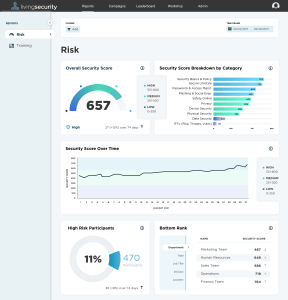
“We added risk management and scoring so program and security owners could become more targeted and focused on the delivery of their training,” Rose said.

So now Living Security aims to use behavioral data and analytics to measure and manage human risk. It plans to take that data and provide “predictive interventions” to employees. 

“We’re focused on ‘How do we turn people from our greatest risk, to our greatest assets in cybersecurity?” Rose said. “That’s our big vision for the company.”

Image Credits: Living Security

With its “Unify” human risk management platform, Living Security wants to provide an even more scalable solution. The company also plans to use its new capital toward expanding its geographic reach and scaling both direct and channel sales efforts.

Currently, Living Security has 55 employees with the goal of having 90 by year’s end.

Deb Walter, director of information security training and awareness at AmerisourceBergen, said she first engaged with Living Security in 2017 when she requested its CyberSecurity Card game. 

“I wanted to gamify how I presented training,” she recalls.

Introducing episodic gamification and its “bingeable” content into her training program was a big hit with employees, according to Walter.

“Their new platform is enabling us to deploy an ‘Information security academy’ to encourage associates and contractors to use several modes of training to earn points and track themselves on a leaderboard,” she said.

Updata General Partner Jon Seeber, who is taking a seat on Living Security’s board with the funding, said his firm saw “breakout potential” in the startup’s platform.

“It comes as close as you can to closing the loop between people and the systems on which they’re operating,” he said. 

Plus, he said, it does it in a way that avoids the compliance-focused, “check-the-box” mindset that so often dominates employee-focused cybersecurity solutions.

News: Atlanta’s early stage investment renaissance continues with Overline’s $27 million fund close

Michael Cohn became a celebrity in the Atlanta startup ecosystem when the company he co-founded was sold to Accenture in a deal valued somewhere between $350 million and $400 million nearly six years ago. That same year, Sean O’Brien also made waves in the community when he helped shepherd the sale of the  collaboration software

Michael Cohn became a celebrity in the Atlanta startup ecosystem when the company he co-founded was sold to Accenture in a deal valued somewhere between $350 million and $400 million nearly six years ago.

That same year, Sean O’Brien also made waves in the community when he helped shepherd the sale of the  collaboration software vendor, PGi, to a private equity firm for $1.5 billion.

The two men are now looking to become fixtures in the city’s burgeoning new tech community with the close of their seed-stage venture capital firm’s first fund, a $27.4 million investment vehicle.

Overline’s first fund has already made commitments to companies that are expanding the parameters of what’s investible in the Southeast broadly and Atlanta’s startup scene locally.

These are companies like Grubbly Farms, which sells insect-based chicken feed for backyard farmers, or Kayhan Space, which is aiming to be the air traffic control service for the space industry. Others, like Padsplit, an Atlanta-based flexible housing marketplace, are tackling America’s low income housing crisis. 

“Our business model is very different from that of a traditional software startup, and the Overline team’s unique strengths and operator mindset have been invaluable in helping us grow the company,” said Sean Warner, CEO and co-founder of Grubbly Farms. 

That’s on top of investments into companies building on Atlanta’s natural strengths as a financial services, payments and business software powerhouse.

For all of the activity in Atlanta these days, the city and the broader southeastern region is still massively underfunded, according to O’brien and Cohn. The region only received less than 10 percent of all the institutional venture investments that were committed in 2020. Indeed, only seven percent of Atlanta founders raise money locally when they’re first starting out, an Overline survey suggested.

“The data reflects what we have seen throughout our careers building, growing, and investing in startups. There is no shortage of phenomenal founders and businesses coming out of Atlanta and the Southeast, but they often struggle to find institutional capital at their earliest stages,” said O’Brien, in a statement. “Overline will lead as the first institutional check for these companies and be a true partner to the Founders throughout their lifecycle—supporting them on the strategic and operational business initiatives and decisions that are critical to a company’s success.” 

The limited partners in Overline’s first fund also reflects the firm’s emphasis on regional roots. The privately held email marketing behemoth Mailchimp anchored the fund, which also included partners like Cox Enterprises, Social Leverage,

Overline is supported by a bench of impressive partners that reflects the firm’s roots in the Southeast. Anchored by marketing platform, Mailchimp, additional partners include Cox Enterprises, Scottsdale, Ariz.-based Social Leverage, Wilmington, Del.-based Hallett Capital, and Atlanta Tech Village founder David Cummings, along with Techstars co-founder David Cohen. 

“At Mailchimp, we love our hometown of Atlanta, and are proud of the robust startup ecosystem that’s growing in our city. The Overline founding team’s vision of deploying smart, local capital into startups in Atlanta and the Southeast aligns with our goals of promoting and advancing local innovation,” said Rick Lynch, CFO, Mailchimp, in a statement.

The firm expects to make investments of between $250,000 to $1.5 million into seed stage companies and has already backed 11 companies including, Relay Payments, a logistics fintech company that has raised over $40 million from top-tier investors. 

“When we set out to build Atlanta Tech Village almost a decade ago, one of our primary goals was to help Atlanta develop into a top 10 startup city, where all entrepreneurs would thrive. We’re making tremendous strides as a community, as evidenced by the number of newly minted unicorns,” said serial entrepreneur and Atlanta Tech Village founder David Cummings. “I believe in Overline’s thesis that value-add institutional early-stage capital is critical to the ecosystem’s continued development. Since the early days, Michael and Sean have been an active presence in our community in a way that goes far beyond being a source of capital—as mentors, advisors, and champions of Atlanta founders. I am proud to be one of their first investors.”

WordPress Image Lightbox Plugin