Tag Archives: Blog

News: Diversity-focused Harlem Capital raises $134M

Harlem Capital is announcing that it has raised $134 million for its second fund — well above its target of $100 million and its initial cap of $125 million. The firm was founded in 2015 by managing partners Henri Pierre-Jacques and Jarrid Tingle. It started out as an angel syndicate with the goal of investing

Harlem Capital is announcing that it has raised $134 million for its second fund — well above its target of $100 million and its initial cap of $125 million.

The firm was founded in 2015 by managing partners Henri Pierre-Jacques and Jarrid Tingle. It started out as an angel syndicate with the goal of investing in founders from diverse backgrounds, then announced its first VC fund of $40 million at the end of 2019. The firm’s investments include e-commerce companies Pangaea, CashDrop, Malomo and Repeat, as well as wellness startups, Wellory, Expectful, Wagmo and Shine. 

It hasn’t invested all of that initial $40 million yet — the firm says it’s aiming to make five more investments from Fund I. Apparently 61% of Harlem Capital’s Fund I portfolio companies are led by Black or Latinx executives, while 43% are led exclusively by women. While the firm was founded in New York City’s Harlem neighborhood — where I live and am typing these words — it invests in startups across the United States.

Meanwhile, with Fund II, it’s shifting its focus to seed stage investments in companies that are post-product, aiming to invest between $750,000 and $1.5 million and take a 10% stake or more. The firm says it’s industry agnostic, but will be focusing on both consumer and enterprise tech with the new fund. It will also introduce the idea of “culture carry,” where the founders backed by the fund will split 1% of the carry — basically, they’re getting a stake in the fund’s profits and in each other’s success.

The focus on diversity extends to the limited partners who invested in Fund II, with 42% of LPs being women or people of color.

“We are focused on building an institution and platform to support diverse founders for many generations,” said Managing Partner Henri Pierre-Jacques in a statement. “Fund II is one step closer to our mission, but we know the work and journey continues. We are excited to provide more capital and resources to even more diverse founders tackling unique problems.”

Last week, Harlem Capital also announced that it had promoted Brandon Bryant to partner and Gabby Cazeau and Kelly Goldstein to principal.

News: Moveworks expands IT chatbot platform to encompass entire organization

When investors gave Moveworks a hefty $75 million Series B at the end of 2019, they were investing in a chatbot startup that to that point had been tuned to answer IT help question in an automated way. Today, the company announced it had used that money to expand the platform to encompass employee questions

When investors gave Moveworks a hefty $75 million Series B at the end of 2019, they were investing in a chatbot startup that to that point had been tuned to answer IT help question in an automated way. Today, the company announced it had used that money to expand the platform to encompass employee questions across all lines of business.

At the time of that funding, nobody could have anticipated a pandemic either, but throughout last year as companies moved to work from home, having an automated systems in place like Moveworks became even more crucial, says CEO and company co-founder Bhavin Shah.

“It was a tragic year on a variety of fronts, but what it did was it coalesced a lot of energy around people’s need for support, people’s need for speed and help,” Shah said. It helps that employees typically access the Moveworks chatbot inside collaboration tools like Slack or Microsoft Teams, and people have been spending more time in these tools while working at home.

“We definitely saw a lot more interest in the market, and part of that was fueled by the large scale adoption of collaboration tools like Slack and Microsoft Teams by enterprises around the world,” he said.

The company is working with 100 large enterprise customers today, and those customers were looking for a more automated way for employees to ask questions about a variety of tooling from HR to finance and facilities management. While Shah says expanding the platform to move beyond IT into other parts of an organization had been on the roadmap, the pandemic definitely underscored the need to expand even more.

While the company spent its first several years tuning the underlying artificial intelligence technology for IT language, they had built it with expansion in mind. “We learned how to build a conversational system so that it can be dynamic and not be predicated on some person’s forethought around [what the question and answer will be] — that approach doesn’t scale. So there were a lot of things around dealing with all these enterprise resources and so forth that really prepared us to be an enterprise-wide partner,” Shah said.

The company also announced a new communications tool that enables companies to use the Moveworks bot to communicate directly with employees to get them to take some action. Shah says companies usually send out an email that for example, employees have to update their password. The bot tells you it’s time to do that and provides a link to walk you through the process. He says that beta testers have seen a 70% increase in responses using the bot to communicate about an action instead of email.

Shah recognizes that a technology that understands language is going to have a lot of cultural variances and nuances and that requires a diverse team to build a tool like this. He says that his HR team has a set of mandates to make sure they are interviewing people in under-represented roles to build a team that reflects the needs of the customer base and the world at large.

The company has been working with about a dozen customers over the last 9 months on the platform expansion, iterating with these customers to improve the quality of the responses, regardless of the type of question or which department it involves. Today, these tools are generally available.

News: Zapp, the on-demand delivery and ‘dark’ store operator, picks up backing from Lightspeed and Atomico

Zapp, one of a number of startups currently battling it out in London and beyond by promising to let you order everyday items on-demand from its own delivery-only stores, has quietly raised a new round of funding from leading VCs, TechCrunch has learned. According to multiple sources, Silicon Valley’s Lightspeed and Europe’s Atomico (the VC

Zapp, one of a number of startups currently battling it out in London and beyond by promising to let you order everyday items on-demand from its own delivery-only stores, has quietly raised a new round of funding from leading VCs, TechCrunch has learned.

According to multiple sources, Silicon Valley’s Lightspeed and Europe’s Atomico (the VC firm started by Skype founder Niklas Zennström) have invested in Zapp’s unannounced Series A. Those same sources have also confirmed that Zapp has raised around $100 million in total, including via an earlier seed round.

In addition to Lightspeed and Atomico, other investors in Zapp include 468 Capital, and Burda, alongside notable angels such as Mato Peric, Christopher North (former Amazon UK CEO), and Stefan Smalla (Westwing CEO). One source tells me that the startup’s Series A is the first deal that consumer-focused partner, Sasha Astafyeva, has led on Atomico’s behalf since joining the London-headquartered VC firm.

“We’re relentlessly focused on delighting our customers and generally do not comment on our capital structure. We are excited to bring Zapp to millions of customers in London and beyond this year,” said Zapp, in a statement issued to TechCrunch when asked about the Series A and list of investors.

Started last summer, Zapp’s founders are Joe Falter, who was part of the founding team at Jumia where he led the on-demand services business through to the group’s IPO, and Navid Hadzaad, who most recently was a product leader at Amazon’s Seattle HQ after founding GoButler and scaling several ventures at Rocket Internet. The leadership team also spans ex-employees of Deliveroo, Just Eat, Dominoes and Tesco, to name just a few.

Zapp operates a vertical or “dark store” model, seeing it set up its own micro fulfillment centers. They include several locations in London already: Kensington, Chelsea, Fulham, Notting Hill, Hammersmith, Shepherd’s Bush, Shoreditch, Islington and Angel.

Shunning the gig economy model used by companies like Deliveroo, Zapp employs its riders directly. It also emphasises sustainability and utilises an all-electric fleet.

From what we can glean online and through conversations with sources, Zapp also looks to be focusing less on fresh food/groceries and more on convenience a la goPuff in the U.S., thus targeting impulse purchases rather than trying to usurp the traditional grocery shop. This is in contrast to many of the other dark store competitors, although there is clearly cross-over in all of the offerings from a multitude of players.

Alongside Zapp, dark store operators in London alone include Getir, Gorillas, Jiffy, Dija and Weezy — with some also raising and deploying significant amounts of capital, including, in some instances, employing heavy discounting as the land grab accelerates.

News: Strength-training startup Tonal crosses unicorn status after raising $250M

When the pandemic unfolded last year, demand for at-home fitness equipment skyrocketed, and Tonal was no exception. The maker of a smart home fitness trainer experienced an explosive increase in sales, and now the six-year-old San Francisco-based startup is gearing up for its next stage of growth. Tonal is adding $250 million of new funding

When the pandemic unfolded last year, demand for at-home fitness equipment skyrocketed, and Tonal was no exception. The maker of a smart home fitness trainer experienced an explosive increase in sales, and now the six-year-old San Francisco-based startup is gearing up for its next stage of growth. Tonal is adding $250 million of new funding in a Series E round valuing the startup at $1.6 billion.

Participants in the round include Dragoneer, Cobalt Capital, L Catterton, Sapphire Ventures, and athlete investors Drew Brees, Larry Fitzgerald, Maria Sharapova, Mike Tyson and Sue Bird. According to Tonal, the new funds will allow it to spend more on marketing its strength-training product to shoppers to increase brand visibility, grow its catalog of streamed fitness classes, and invest further in operations and scaling its business to meet increased demand. To date, the at-home fitness tech startup has raised $450 million.

“We’re really getting ready to scale the business: we’re pouring a lot more capital into marketing and brand awareness, and we’re pouring a lot more capital into scaling our supply chain to get ready for the next phase, which I really think is the next two holiday seasons,” says Orady.

As part of its efforts to increase staffing across the organization, Tonal also added three new executives to its bench: COO Shannon Crespin, a former Johnson & Johnson executive; Chief Strategy Officer Gregory de Gunzburg, who previously served as Head of Corporate Strategy and Development at NBCUniversal; and CTO Bryan James, whose previous employers include Google, Nest, and Apple. Ostensibly, Crespin, de Gunzburg, and James will be crucial to Tonal’s next chapter, as the startup continues to scale on all fronts, including hardware and content production.

This latest round of funding and set of new hires are all steps the startup is taking as part of a slow march towards an IPO, says Orady, although Tonal’s chief executive declined to give a timeline regarding when the startup may go public.

“We’re going to IPO at a time when it’s best for the business, because being a public company can be incredibly distracting,” adds Orady. “I get SPAC offers, or inquiries almost daily, and our answer is consistently ‘no.’ While an IPO Is a great milestone for the business and gives us access to a certain class of capital and liquidity, we also know that you’ve got to do it at the right time.”

Founded in March 2015 by Orady, who was motivated to start Tonal by his own personal quest to shed weight and strength train, Tonal has since carved out a reputation among fitness enthusiasts for an all-in-one design and digital weights system that enables the device to replicate different gym weight stations. Extra Crunch’s EC-1 on Tonal, published earlier this week, offers a unique deep dive into this rapidly growing fitness startup, exploring Tonal’s origin story, product launch, customer engagement strategy, and future outlook.

Tonal’s Series E follows an extremely eventful year-and-a-half for the startup, which saw sales increase 800% from December 2019 to December 2020, causing delivery delays of between 10 to 12 weeks — an issue the company previously told TechCrunch it’s working to address by ramping up production of devices, increasing employee headcount, and air-shipping equipment from Taiwan to the U.S. to meet demand. This March, Tonal also announced a new partnership with Nordstrom, placing 50-square-foot stations in the women’s activewear departments of at least 40 Nordstrom locations across the U.S., bringing the total number of Tonal physical locations to 60 by the end of 2021.

News: Clocktower Technology Ventures makes $25M bet on Latin American fintechs

The fintech space and the Latin American venture scene are both booming. So it’s no surprise that an increasing number of global investors are investing in fintech startups based in Latin America. The latest is Clocktower Technology Ventures (CTV), the investing affiliate of Santa Monica, California-based macro investment firm Clocktower Group.  Since launching in 2015,

The fintech space and the Latin American venture scene are both booming.

So it’s no surprise that an increasing number of global investors are investing in fintech startups based in Latin America.

The latest is Clocktower Technology Ventures (CTV), the investing affiliate of Santa Monica, California-based macro investment firm Clocktower Group

Since launching in 2015, Clocktower Technology Ventures has invested in a total of 92 fintech companies in North America, Europe and Latin America — eight of which are in LatAm specifically. Those investments include Flink, a neobank, commission-free trading platform that recently raised a $12 million Series A; Habi, an iBuyer and listing service; Kushki, a digital payments processor; and ontop, an automated taxes, payroll and onboarding service for employers.

Now CTV is launching its first fund focused on investing exclusively in Latin American fintechs at the seed and Series A stages. The fund has a target of $25 million. Most of the capacity of the vehicle has already been taken by existing investors and a few strategics.

The firm is targeting about 40 investments out of the new fund “in the coming years.”

CTV Partner Ben Savage said the affiliate’s strategy for Latin America is consistent with its approach to its flagship funds. 

“Across our investments, we’ve led zero deals, and we’ve taken zero board seats,” Savage said. “We expect to replicate this approach for our strategy in Latin America. We recognize it’s an unusual approach, but we believe we can add more incremental value by doing other things.”

By other “things,” the firm believes its ability to connect founders and startups to other players in the financial services space such as CIOs of “globally significant investors, hedge fund managers thought leaders and academics” can be even more beneficial than if it led a round or took a board seat.

CTV will be looking at consumer and enterprise companies in Latin America, across the “entire spectrum” of financial services, including insurance, payments, personal finance, lending and credit, asset management, real estate finance and banking. 

“Some fintech VCs narrow the scope, we go the opposite direction,” Savage said. “We attempt to see as much as possible in the early-stage fintech landscape.”

CTV made its first investment in the region about one year ago (in Kushki). 

“We had spent time before then getting to know the landscape and exploring it,” Savage told TechCrunch. “About six months ago, we realized just how good we believed the opportunity in Latin America to be, and we thought it made sense to pursue a purpose built financial innovation strategy in the region.”

CTV believes financial innovation in Latin America is “on the cusp of exponential growth” considering that a significant portion of the population is underbanked or unbanked. The COVID pandemic is expected to only accelerate the shift away from brick-and-mortar financial services there and everywhere, really.

The firm is also operating under the premise that “the oligopoly of financial services institutions has not been able to provide quality and robust services to its customers.”

“We believe this is partially attributed to regulation and market forces,” Savage said.

“In the same way the modern tech stack unlocked a wave of tech startups at a high velocity, new fintech entrants, we think, will change the competitive dynamics for the financial services industry, especially in a region like Latin America,” he added.

Also, the quality of entrepreneurial talent in the region has continued to grow, largely a byproduct of a number of well-established tech companies in the region (such as Rappi, Nubank and Loft) “having seeded the next generation of talent,” according to Savage.

“Some really exciting tech companies, all of which have a financial services angle to them, are spitting out teams of very talented engineers and operators — this trend we’ve seen occur in the same fashion in Silicon Valley, New York, Los Angeles, etc., has generated an ecosystem of fintech alumni that go on and do great things,” he said. “In fact, in some cases we see entrepreneurs who have been successful in the U.S. return home to Latin America to build a new company. We think over time a large cohort of the next wave of technology companies will be folks who spun out of great businesses.”

LPs in the new fund include institutions such as Hirtle Callaghan, an outsourced investment office for families and institutions that manages about $18 billion, along with hedge fund CIOs such as Alan Howard, Philippe Jabre, Glen Kacher and John Burbank’s Passport Foundation.


News: Huawei seeks growth in internet of things as phone business suffers

Huawei’s struggles amid U.S.-China trade tensions are driving it to seek opportunities in other smart devices, setting itself up against a raft of hardware makers at home and abroad. The Chinese tech giant recorded sluggish revenue growth in 2020, climbing just 3.8% to 891.4 billion yuan ($136 billion), as its net profit grew 3.2% to

Huawei’s struggles amid U.S.-China trade tensions are driving it to seek opportunities in other smart devices, setting itself up against a raft of hardware makers at home and abroad.

The Chinese tech giant recorded sluggish revenue growth in 2020, climbing just 3.8% to 891.4 billion yuan ($136 billion), as its net profit grew 3.2% to 64.6 billion yuan. The results were in line with Huawei’s forecasts, the company said Wednesday at its annual report day in Shenzhen, a rare occasion to get a glimpse into the private entity’s financials.

To put the numbers in comparison, Huawei’s revenues were up 19% and 19.5% in 2019 and 2018, respectively.

The slowdown in 2020 was primarily due to a slump in Huawei’s overseas smartphone sales after U.S. export controls cut the firm off core chipsets and Google services critical to consumers. But the challenge has also sped up the firm’s pace to diversify and offset losses from its phone business.

For the past two years, Huawei’s has been ratcheting up efforts in a multitude of smart devices, including AR/VR headsets, tablets, laptops, TVs, smartwatches, speakers, headphones and in-car systems.

Huawei’s foray into the automotive industry has in particular attracted much limelight as the global smart vehicle industry booms. Reuters reported recently that Huawei would be producing its own branded cars, which the company denied. At today’s event, the firm’s rotating chairman Ken Hu reiterated that Huawei would play to its own strengths and only be supplying certain car components and services, such as the in-car operating system and smart cockpit.

Huawei’s matrix of connected products is reminiscent of Xiaomi’s IoT strategy built around its smartphones and operating system, with the difference being that Huawei is also a telecom infrastructure supplier.

Despite moves by a few countries, such as the United Kingdom, to exclude Huawei from their 5G rollout plans, Huawei’s carrier segment in 2020 generated revenues on par with the year prior. The COVID-19 pandemic was a boon to the bsuiness, Hu said, which saw global demand in network solutions rise as people worked and learned from home.

Huawei’s IoT push has shown some early traction but competition is fierce. Smartwatches, it said, was one of its major revenue drivers from last year.

Globally, Apple held onto its leading position in wearables with 34.1% of the market in 2020, according to research firm IDC. Huawei ranked third at 9.8%, trailing its domestic rival Xiaomi which accounted for 11.4% of total shipments last year.

Overall, Huawei was leaning heavily on its home market to sustain growth in 2020. China accounted for 65.5% of its total revenues, growing by 15.4% year-over-year. Meanwhile, revenues fell 12.2% in Europe, the Middle East and Africa, was down 8.7% in the rest of Asia and down 24.5% in the Americas.

News: Apple invests $50M into music distributor UnitedMasters alongside A16z and Alphabet

Independent music distribution platform and tool factory UnitedMasters has raised a $50M series B round led by Apple. A16z and Alphabet are participating again in this raise. United Masters is also entering a strategic partnership with Apple alongside this investment.  If you’re unfamiliar with UnitedMasters, it’s a distribution company launched in 2017 by Steve Stoute,

Independent music distribution platform and tool factory UnitedMasters has raised a $50M series B round led by Apple. A16z and Alphabet are participating again in this raise. United Masters is also entering a strategic partnership with Apple alongside this investment. 

If you’re unfamiliar with UnitedMasters, it’s a distribution company launched in 2017 by Steve Stoute, a former Interscope and Sony Music executive. The focus of UnitedMasters is to provide artists with a direct pipeline to data around the way that fans are interacting with their content and community, allowing them to connect more directly to offer tickets, merchandise and other commercial efforts. UnitedMasters also generally allows artists to retain control of their own masters.

Neither of these conditions are at all typical in the music industry. In a typical artist deal, recording companies retain all audience and targeting data as well as masters. This limits an artist’s ability to be agile, taking advantage of new technologies to foster a community. 

While Apple does invest in various companies, it typically does so out of its Advanced Manufacturing Fund to promote US manufacturing or strategically in partners that make critical components of its hardware like silicon foundries or glass manufacturing. Apple does a lot more purchasing than investing, typically, buying a company every few weeks or so to supplement one product effort or another. UnitedMasters, then, would be a relatively unique partnership, especially in the music space. 

I spoke to UnitedMasters CEO Steve Stoute about the deal and what it means for the businesses 1M current artists and new ones. Stoute credits Apple executive Eddy Cue having a philosophy aligned with the UnitedMasters vision with getting this deal done. 

“We want all artists to have the same opportunity,” says Stoute. “Currently, independent artists have less opportunity for success and we’re trying to remove that stigma.”

This infusion, Stoute says, will be used to hire talent that are mission oriented to take UnitedMasters global. They’re seeking local technical talent and artists talent to build out the platform worldwide. 

“Every artist needs access to a CTO,” Stoute says. “Some of the value of what a manager is today for an artist needs to be transferred to that role.”

UnitedMasters wants to provide that technical edge at scale, allowing artists to build out their fanbase at a community level.

Currently, UnitedMasters has deals with the NBA, ESPN, TikTok, Twitch and others that allow artists to tap big brand deals that would normally be brokered by a label and manager. It also has a direct distribution app that allows publishing to all of the major streaming services. Most importantly, they can check stream, fan and earnings data at a glance. 

“Steve Stoute and UnitedMasters provide creators with more opportunities to advance their careers and bring their music to the world,” said Apple’s Eddy Cue in a release statement. “The contributions of independent artists play a significant role in driving the continued growth and success of the music industry, and UnitedMasters, like Apple, is committed to empowering creators.”

“UnitedMasters has completely transformed the way artists create, retain ownership in their work, and connect with their fans,” said Ben Horowitz, Co-Founder and General Partner of Andreessen Horowitz in a release. “We are excited to work with Steve and team to build a better, bigger, and far more profitable world for musical artists.” 

We are currently at an inflection point in the way that artists and fans connect with one another. Though there have been seemingly endless ways for artists to get their messages out or speak to fans using social media and other platforms, the actual business of distributing work to a community and making money from that work has been out of their hands completely since the beginning of the recording industry. Recent developments like NFTs, DAOs and social tokens, as well as an explosion of DTC frameworks have begun to re-write that deal. But the major players have yet to make the truly aggressive strides they need to in order to embrace this ‘artist centric’ new world. 

The mechanics of distribution have been based on a framework defined by DRM and the DMCA for decades. This framework was always marketed as a way to protect value for the artist but was in fact architected to protect value for the distributor. We need a rethinking of the entire distribution layer.

As I mentioned when reporting the UnitedMasters + TikTok deal, it’s going to be instrumental in a more equitable future for artists:

It’s beyond time for the creators of The Culture to benefit from that culture. That’s why I find this UnitedMasters deal so interesting. Offering a direct pipeline to audiences without the attendant vulture-ism of the recording industry apparatus is really well-aligned with a platform like TikTok, which encourages and enables “viral sounds” with collaborative performances. Traditional deal structures are not well-suited to capturing viral hype, which can rise and fall within weeks without additional fuel.

In music, Apple is at the center of this maelstrom along with a few other major players like Spotify. One of the big misses in recent years for Apple Music, in my opinion, was Apple’s failure to turn Apple Music Connect into an industry-standard portal that allowed artists to connect broadly with fans, distribute directly, sell tickets and merchandise but — most importantly — to foster and own their community. 

A UnitedMasters tie up isn’t a straight line to that goal, but it’s definitely got the ingredients. I’m looking forward to seeing what this produces. 

Image Credits: Steve Stoute

News: Accel-backed mobile money platform NALA to start offering remittance services to East Africa

According to a McKinsey report, the total number of mobile money services worldwide was 282 in 2017, with more than half of those operating in sub-Saharan Africa.  In 2020, these numbers increased significantly, but the ratio remained similar.  In 96 countries, there are 310 live mobile money services, according to a GSMA report. Out of

According to a McKinsey report, the total number of mobile money services worldwide was 282 in 2017, with more than half of those operating in sub-Saharan Africa. 

In 2020, these numbers increased significantly, but the ratio remained similar.  In 96 countries, there are 310 live mobile money services, according to a GSMA report. Out of that number, 171 are from Africa, while 157 are in sub-Saharan Africa.

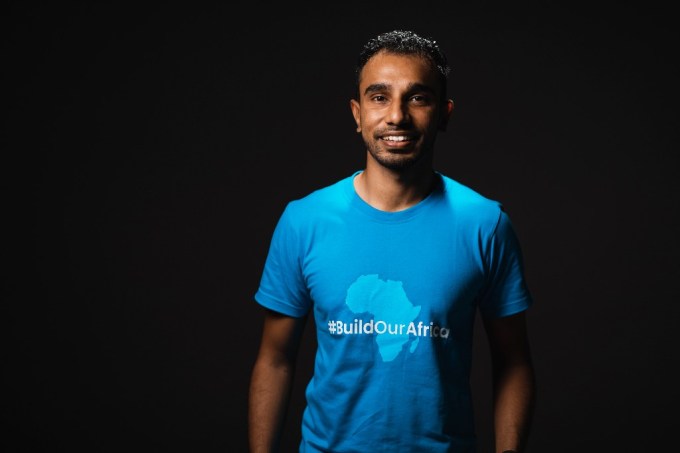
In Tanzania, mobile money services can be relatively difficult to use due to unstable internet and high service fees. Benjamin Fernandes noticed this as a national television host while building a mobile money service to enable people to pay for TV subscriptions in East Africa back in 2011

Six years later, he would start his own mobile money and wallet aggregator, NALA, to solve these issues. Its first mobile application allowed users to make mobile money payments and utilize mobile banking without an internet connection. The business grew to 250,000 users in over a year after its official launch.

Last year, the WorldBank predicted a sharp decline of international remittances to Africa. But even though Africa is still the most expensive region to send money to with averages of 10.6% in transaction fees, the opposite happened. There was an increase in remittance activity on the continent.

Kenya, for instance, had its highest-ever inbound remittance at $3 billion, while WorldRemit acquired Sendwave in August 2020 for $500 million and Mama Money claimed to have grown 500% within the year.

NALA also noticed an uptick in remittance requests where 1 in 7 users wanted to receive money internationally. This happened despite not being in that business at the time. It’s not hard to see why: Presently, over 70% of money sent to Sub-Saharan Africa is transacted through physical stores. When many over-the-counter services were suspended or limited due to coronavirus restrictions, people were left with expensive, unreliable or hard-to-access alternatives.

Combined with the increasing trend for digital-first financial services and listening to some users’ requests, NALA began testing international money transfers in August 2020 to facilitate payments from the U.K. to Kenya, Uganda and Tanzania. By building a multi-currency ledger where people can send money from the U.K. to Tanzania and back to the U.K., Fernandes says NALA can build a Wise for Africa.

I believe international payments are only 1% built today. Until you can send money both ways seamlessly, our work isn’t done,” Fernandes told TechCrunch. We believe African markets should be ‘sender’ markets, too; there is a lot of trade happening with other countries, and most of the money is sent via costly bank wires or at physical stores. It doesn’t need to be this way; it’s time for something better.” 

Various platforms are trying to achieve this, but none specifically targets the East African region. That is NALA’s play, according to the CEO. “This is where we see a big advantage for us. We are local, we understand mobile money, we built bill payments on our previous product, and this is an extension of that,” he added.

Benjamin Fernandes (CEO, Nala)

Since graduating as the first East African company from Y Combinator in 2019, NALA has brought other interesting investors on board to support its mission. The most notable is Accel, which has been kept under wraps for some time. The VC firm rarely makes deals on the continent and has only invested in NALA and Egypt’s Instabug. Other backers include NYCA Partners and angel investors like Shamir Karkal (co-founder of Simple), Peeyush Ranjan (former Flipkart CTO and current head of Google Payments), and Thomas Stafford (DST Global)

NALA also enlisted the services of Nicolas Esteves, who was the VP of engineering at Osper and had a stint at Monzo to become the company’s CTO which, according to Fernandes, will considerably improve the company’s chances of achieving its goal. “When we brought someone of his calibre on our team, it just opened up the doors of what we could accomplish because he has built multi-currency ledgers across different large companies.”   

For now, though, the company will be rolling out a beta product next month for U.K.-based customers sending money to Kenya and Uganda (Tanzania will come later). The company claims that the service will support instant payments to all major mobile money accounts and says it is closing some banking partnerships that will allow it to facilitate money transfers from East Africa to the U.K.

News: Kaya VC launches its new $80M fund, focusing on Prague, Warsaw and the CEE region

Kaya VC’s new €72 million ($80m) fund will focus on startups in Prague, Warsaw and the wider CEE region. Previously called Enern, the Central and Eastern European VC — which, historically, started out investing in wind-farms and ended up invested in software — has changed its name to better reflect its modern focus. The firm

Kaya VC’s new €72 million ($80m) fund will focus on startups in Prague, Warsaw and the wider CEE region. Previously called Enern, the Central and Eastern European VC — which, historically, started out investing in wind-farms and ended up invested in software — has changed its name to better reflect its modern focus. The firm will also back startups “at any stage” of funding. LPs in the fund include the EIF and a number of successful entrepreneurs from the region.

This is the team’s fourth fund, and together with the previous funds, the AUM is around €250m. The fund has invested in 27 companies with the latest investments into B2B marketplaces, healthtech and blockchain. 

The decade-old Prague-based VC (“KAYA” will be the official naming format) has previously invested in Booksy (raised $70 million in January 2021), Twisto (€16 million this year), DocPlanner (€80m in 2019), and Rohlik ($230m this year). Kaya previously participated in liquidity events for Skype, Wise (formerly TransferWise) and Bolt, UiPath which recently raised $750 million at a $35 billion valuation ahead of an IPO.

Kaya says it will be sector agnostic, with partners following some personal passions: Tomas Obrtac on agri-tech; Pavel Mucha on next-generation consumer experiences; Tomas Pacinda on fintech, and Martin Rajcan focuses on energy transition. All other areas of tech will be looked at. Similar to funds such as Point Nine in Berlin, Kaya says it is an ‘equal partnership’ meaning each partner can make decisions on what to back.

The firm plans to be able to write the first cheque and is also backing super-early ‘studio projects’ which have gone on to raise subsequent funding rounds.

Pavel Mucha, partner at Kaya VC, commented in a statement: “When I initially started investing in local startups in Prague and Warsaw, it was because there was a need to work with people to build something valuable that didn’t exist already. Over the past 10 years, we’ve seen this sector grow and mature, and with that our strategy of backing intrepid founders who are making a difference from Booksy’s Stefan Batory to Rohlik’s Tomáš Čupr.”

Kaya is also part of the Included VC, network, a mentor network for underrepresented groups such as women and people of color. Mucha told me: “We’ve hired through their program, been closely involved and big supporters. We think it’s a great addition to the ecosystem within Europe, and hope to do more. It’s definitely a very meaningful initiative we stand fully behind.”

Martin Rajcan, partner at Kaya VC, added: “Founders coming out of Central and Eastern Europe are globally-orientated, have strong technical skills, and an unmatched hunger for success. It’s these strong fundamentals paired with a next-level intensity that makes them so exciting to work with and we want to support such talent in any way we can. With partners, venture partners, advisors, and scouts across Europe, we’re in a unique position to support founders in the diaspora outside of core cities such as Prague and Warsaw.” 

In Turkish the word Kaya means ‘rock’, in Japanese, it’s ‘sanctuary’. Whatever the case, Kaya is in a good position to take advantage of the burgeoning startups in the CEE region. According to Dealroom there has been 5x more foreign investment in the CEE region than in 2015.

News: Cryptocurrency wallet and blockchain tech startup imToken raises $30 million Series B

imToken, the blockchain tech startup and crypto wallet developer, announced today it has raised $30 million in Series B funding led by Qiming Venture Partners. Participants included returning investor IDG Capital, and new backers Breyer Capital, HashKey, Signum Capital, Longling Capital, SNZ and Liang Xinjun, the co-founder of Fosun International. Founded in 2016, the startup’s

imToken, the blockchain tech startup and crypto wallet developer, announced today it has raised $30 million in Series B funding led by Qiming Venture Partners. Participants included returning investor IDG Capital, and new backers Breyer Capital, HashKey, Signum Capital, Longling Capital, SNZ and Liang Xinjun, the co-founder of Fosun International.

Founded in 2016, the startup’s last funding announcement was for its $10 million Series A, led by IDG, in May 2018. imToken says its wallet for Ethereum, Bitcoin and other cryptocurrencies now has 12 million users and over $50 billion in assets are currently stored on its platform, with total transaction value exceeding $500 billion.

The company was launched in Hangzhou, China, before moving to it current headquarters to Singapore, and about 70% of its users are in mainland China, followed by markets including South Korea, the United States and Southeast Asia.

imToken will use its latest funding to build features for “imToken 3.0.” This will include keyless accounts, account recovery and and a suite of decentralized finance services. It also plans to expand its research arm for blockchain technology, called imToken Labs and open offices in more countries. It currently has a team of 78 people, based in mainland China, the United States and Singapore, and expects to increase its headcount to 100 this year.

In a press statement, Qiming Venture Partners founding managing partner Duane Kuang said, “In the next ten to twenty years, blockchain will revolutionize the financial industry on a global scale. We believe that imToken is riding this trend, and has strongly positioned itself in the market.”

WordPress Image Lightbox Plugin