Tag Archives: Blog

News: Charles raises €6.4M seed to bring ‘conversational commerce’ to WhatsApp

Charles, a Berlin-based startup that offers a “conversational-commerce” SaaS for businesses that want to sell on WhatsApp and other chat apps, has raised €6.4 million in funding. Led by Accel and HV Capital, the seed funding will be used by the company to scale and meet existing demand for its conversational commerce platform. Launched in

Charles, a Berlin-based startup that offers a “conversational-commerce” SaaS for businesses that want to sell on WhatsApp and other chat apps, has raised €6.4 million in funding.

Led by Accel and HV Capital, the seed funding will be used by the company to scale and meet existing demand for its conversational commerce platform.

Launched in 2020 by Artjem Weissbeck and Andreas Tussing after the pair had run a year-long experiment running a store in WhatsApp, Charles enables businesses to sell products and services via WhatsApp and other chat apps in order to “increase conversion rate, customer loyalty and ultimately revenue”.

The SaaS connects chat app APIs, such as WhatsApp and Messenger, with shop and CRM systems, like Shopify, SAP and HubSpot, all delivered through a user-friendly interface. The idea is to make it easier for businesses to meet their customers on the channels they already use and to bridge the gap between sales enquiries and support, and actual conversions.

” ‘Traffic’ and with it ‘conversion’ will exponentially move from the streets (retail) and the browser/native apps into chat apps,” says Weissbeck. “Thereby, conversational commerce will be the third big pillar of commerce, gluing together all channels and unlocking the full potential of personalization via the unique identification of customers via their phone number”.

This transition, argues the Charles founder, creates “tremendous challenges and opportunities” for companies in terms of customer journey design and the tech stack, which to date — Asia, aside — has been predominantly tailored around webshops and e-mail.

“Ultimately our technology provides the operating system for companies to master this challenge,” adds Tussing. “The core of our software integrates chat apps with shop/CRM backends in an intuitive interface that puts the human chat sales agent in the center, supported by chatbots and AI”.

Luca Bocchio, partner at Accel, says that conversational commerce is emerging as a “critical channel for brands,” and is a trend that will reshape the way brands interact with customers. [This is] paving the way for potential new category-defining tools to emerge,” he says, noting that Charles has the potential to be one of those tools.

“When we talk to potential clients it’s mostly existing customer service tools like Zendesk who are starting to add chat apps as an additional channel,” says Weissbeck, when asked to cite direct competitors. “These tools are usually built upon a ‘ticketing’ logic, optimized to solve customer inquiries as quickly as possible and with a clear focus on service cases, not sales”.

In contrast, Weissbeck says Charles is built upon a “feed” logic, showing customer interaction as an ongoing conversation and end-to-end relationship — in the same way as the customer sees it.

“Further we deeply integrate into shop/CRM-backends to make it easy for agents to sell product and create carts or contracts — all in a very design-driven and intuitive interface, that is fun to use for the agent and puts her/him in the center,” says Tussing. “Supported by chatbots, not replaced”.

Meanwhile, the revenue model is simple enough: Businesses pay a monthly base fee to cover Charles’ fixed costs and on top of this the startup earns money on conversions. “We take a small share of the net sales, ensuring we are co-incentivised,” explains Weissbeck.
News: Egyptian VC firm Sawari Ventures finally closes $71M fund for North African startups

Egyptian-based VC firm Sawari Ventures has closed its $71 million fund for North Africa’s rapidly growing startup ecosystem. The firm first announced its fund in 2018, when it closed an initial $35 million (which subsequently increased to $41 million) in hopes to close at $70 million, per Menabytes. The investors in the first tranche included

Egyptian-based VC firm Sawari Ventures has closed its $71 million fund for North Africa’s rapidly growing startup ecosystem.

The firm first announced its fund in 2018, when it closed an initial $35 million (which subsequently increased to $41 million) in hopes to close at $70 million, per Menabytes. The investors in the first tranche included CDC (which forked over $12 million), European Investment Bank, Proparco and the Dutch Good Growth Fund.

Having closed an additional $30 million, Sawari Ventures’ total raise is $1 million more than its original target. And it has added a range of new backers that includes Banque Misr, Banque du Caire, Ekuity, Misr Insurance Group, National Bank of Egypt and Suez Canal Bank.

Ahmed El Alfi, Hany Al-Sonbaty and Wael Amin launched Sawari Ventures in 2010. Before venturing into the world of venture capital, El Alfi and Al-Sonbaty were investment professionals in the Egyptian tech space for more than two decades. Amin, meanwhile, was a founder of a tech company called ITWorx that made notable acquisitions in the Egyptian tech ecosystem.

In addition to Egypt, Sawari Ventures focuses on Morocco and Tunisia. For the firm, these three countries represent one of the best investment opportunities around given the mismatch between the capital available (amounts and variation at every stage) and the market opportunity. They also share common traits such as language, culture, business, governance norms and market dynamics, making it easier for cross-border cooperation

Since launching the firm over 10 years ago, Sawari claims to have invested in more than 30 companies, mostly in Egypt. Some of these companies include ride-hailing service SWVL, software startup Instabug, and AI chat-based personal assistant Elves, but its sweet spots are the hardware, education, healthcare, cleantech and fintech sectors.

“We try to cast a wide net given that, in essence, this is a transformative moment in emerging markets tech with the rapid digitization of the underlying economy,” a company spokesperson told TechCrunch. “So as expected, we’re seeing a great deal flow in the digitization of financial services, health care and education technologies. Also, given the engineering talent, there are unique opportunities in SaaS products, semiconductors and IoT.”

Sawari Ventures invests in growth-stage companies, in particular. But it also operates Flat6Labs, a seed VC firm akin to an accelerator that has been used to perform its seed investments since establishing both Cairo and Tunis offices in 2011 and 2016.

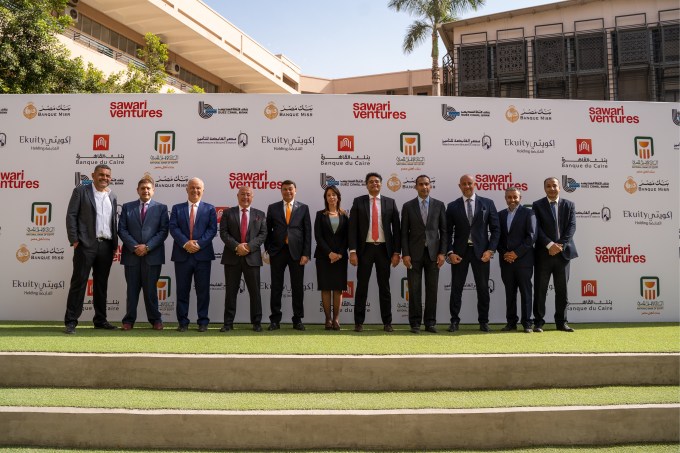
Sawari Ventures

Image Credits: Sawari Ventures

Sawari says 10% of the now-closed investments will be earmarked for seed-stage companies as investments through Flat6Labs Cairo and Tunis. Flat6Labs Cairo will seed between 80 to 100 companies and offer follow-on investments to between 30 and 40. Flat6Labs Tunisia will seed 60 to 70 companies and offer follow-on investments for 30 to 40. The remaining 90% will be used to invest in 20 to 25 growth-stage companies across Egypt, Tunisia and Morocco, with a median investment range of $2 million to $3 million

The investment range is a continuation of how Sawari typically cut checks for portfolio startups since closing the first tranche three years ago. The firm said it has invested between $1 million and $4 million in Elves, Brantu, and ExpandCart, Almentor, SWVL and MoneyFellows, among others

“The Egypt-based fund is a privately held fund regulated by the Financial Regulatory Authority of Egypt (FRA), which allowed us to attract capital from top-tier local financial institutions to co-invest with foreign capital from international development financial institutions, doubling our allocation to invest in Egyptian high-growth companies to $68 million,” El Alfi said in a statement.

“Our aim is to create exceptional returns through investing in knowledge-driven companies, which have the potential of bringing transformational changes to the Egyptian economy. The fund will support local companies with dedicated capital, in addition to quality expertise from our seasoned and specialized team, and the value-add of our investors.”

News: Taiwan-based MLOps startup InfuseAI raises $4.3M Series A led by Wistron Corporation

AI models not only take time to build and train, but also to deploy in an organization’s workflow. That’s where MLOps (machine learning operations) companies come in, helping clients scale their AI technology. InfuseAI, a MLOps startup based in Taiwan, announced today it has raised a $4.3 million Series A, led by original design manufacturer

AI models not only take time to build and train, but also to deploy in an organization’s workflow. That’s where MLOps (machine learning operations) companies come in, helping clients scale their AI technology. InfuseAI, a MLOps startup based in Taiwan, announced today it has raised a $4.3 million Series A, led by original design manufacturer Wistron Corporation, with participation from Hive Ventures, Top Taiwan Venture Capital Group and Silicon Valley Taiwan Investments.

Founded in 2018, InfuseAI says the market for MLOps solutions is worth $30 million a year in Taiwan, with the global market expected to reach about $4 billion by 2025, according to research firm Cognilytica. Its clients include E.SUN, one of Taiwan’s largest banks, SinoPac Holdings and Chimei.

InfuseAI helps companies deploy and manage machine learning models with turnkey solutions like PrimeHub, a platform that includes a model training environment, cloud or on-premise cluster computing (including container orchestration with Kubernetes) and collaboration tools for teams. Another product, called PrimeHub Deploy, lets clients train, deploy, update and monitor AI models.

In a press statement, Hive Ventures founder and managing partner Yan Lee said, “As enterprises from manufacturing, healthcare, finance and other sectors seek to scale their AI operations and model deployments, they will require a platform like InfuseAI to allow seamless collaboration between developers and data scientists. InfuseAI fits perfectly into our investment thesis which is focused on platforms and software in the enterprise adoption cycle.”

News: Singapore-based career platform Glints gets $22.5M in Series C funding

Glints, the Singapore-based career platform, announced today it has raised $22.5 million in Series C funding led by Japanese human resources management firm PERSOL Holdings. The new capital will be used on Glints’ expansion in Singapore, Indonesia, Vietnam and Taiwan and hiring for its product and engineering teams. Glints co-founder and chief executive officer Oswald

Glints, the Singapore-based career platform, announced today it has raised $22.5 million in Series C funding led by Japanese human resources management firm PERSOL Holdings. The new capital will be used on Glints’ expansion in Singapore, Indonesia, Vietnam and Taiwan and hiring for its product and engineering teams.

Glints co-founder and chief executive officer Oswald Yeo said this is the largest funding round to date for a talent platform in Southeast Asia, and brings the startup’s total raised to $33 million. Other participants included returning investors Monk’s Hill Ventures, Fresco Capital, Mindworks Ventures, Wavemaker Partners, Flipkart co-founder Binny Bansal and former Goldman Sachs TMT China head and partner Xiaoyin Zhang.

Founded in 2013, Glints says it has been used by more than 1.5 million professionals and 30,000 organizations, including Gojek, Tokopedia, Starbucks and Mediacorp. Most of its current users are from the tech and financial services sectors, but Glints has a “broad horizontal focus on young to mid-level professionals,” and its long-term goal is to be sector agnostic, Yeo told TechCrunch.

One of the ways Glints differentiates from other job platforms active in its markets, like LinkedIn, JobStreet and CakeResume, is by building a “full-stack” of services for people who want to advance their careers. In addition to its job marketplace, which the company says has more than 7,000 active listings and 4 million visitors each month, Glints also offers community features and skills education, like online classes.

One of Glints’ value propositions is helping companies, especially in tech, cope with the regional talent shortage, a topic it recently covered in a comprehensive report with Monk’s Hill Ventures.

One of the solutions the report highlighted is hiring teams based in different Southeast Asian countries to address talent crunches in specific markets, like Singapore. Glints says its cross-border remote work hub, TalentHub, doubled its business in 2020 as the pandemic also made employers more open to hiring remotely.

News: KKR closes $15 billion fund targeting consumption and urbanization in Asia

KKR has just closed $15 billion for its Asia-focused private equity fund, exceeding its original target size after receiving “strong support” from new and existing global investors, including those in the Asia Pacific region. The new close came nearly four years after KKR raised its Asian Fund III of $9.3 billion and marks the New

KKR has just closed $15 billion for its Asia-focused private equity fund, exceeding its original target size after receiving “strong support” from new and existing global investors, including those in the Asia Pacific region.

The new close came nearly four years after KKR raised its Asian Fund III of $9.3 billion and marks the New York-based alternative asset management titan’s ongoing interest in Asia. It also makes KKR Asian Fund IV one of the largest private equity funds dedicated to the Asia Pacific region.

KKR itself will inject about $1.3 billion into Fund IV alongside investors through the firm and its employees’ commitments. The new fund will be on the lookout for opportunities in consumption and urbanization trends, as well as corporate carve-outs, spin-offs, and consolidation.

KKR has been a prolific investor in Asia-Pacific since it entered the region 16 years ago with a multifaceted approach that spans private equity, infrastructure, real estate and credit. It currently has $30 billion in assets under management in the region.

The firm has been active during COVID-19 as well. On the one hand, the pandemic has accelerated the transition to online activities and singled out tech firms that proved resilient during the health crisis. Market disruption in the last year has also made valuations more attractive and pressured companies to seek new sources of capital. All in all, these forces provide “increasingly interesting opportunities for flexible capital providers like KKR,” the firm’s spokesperson Anita Davis told TechCrunch.

Since the pandemic, KKR has deployed about $7 billion across multiple strategies in Asia.

While KKR looks for deals across Asia, each market provides different opportunities pertaining to the state of its economy. For deals in consumption upgrades, KKR seeks out companies in emerging markets like China, Southeast Asia and India, said Davis. In developed countries like Japan, Korea and Australia, KKR observed that continued governance reform, along with a focus on return on equity (ROE), has driven carve-outs from conglomerates and spin-offs from multinational corporations, Davis added.

Specifically, KKR’s private equity portfolio in Asia consists of about 60 companies across 11 countries. Some of its more notable deals include co-leading ByteDance’s $3 billion raise in 2018 amid the TikTok parent’s rapid growth and bankrolling Reliance Jio with $1.5 billion in 2020.

“The opportunity for private equity investment across Asia-Pacific is phenomenal,” said Hiro Hirano, co-head of Asia Pacific Private Equity at KKR. “While each market is unique, the long-term fundamentals underpinning the region’s growth are consistent — the demand for consumption upgrades, a fast-growing middle class, rising urbanization, and technological disruption.”

The Asian Fund IV followed in the footsteps of KKR’s two other Asia-focused funds that closed in January, the $3.9 billion Asia Pacific Infrastructure Investors Fund and the $1.7 billion Asia Real Estate Partners Fund.

News: Hipmunk’s founders launch Flight Penguin to bring back Hipmunk-style flight search

Hipmunk’s founders are building a successor to their now-defunct flight search service. The startup was acquired by SAP-owned travel and expense platform Concur in 2016, and its CEO Adam Goldstein departed in 2018. But Goldstein told me he and his co-founder Steve Huffman (also co-founder and CEO of Reddit) were still disappointed when Concur shut

Hipmunk’s founders are building a successor to their now-defunct flight search service.

The startup was acquired by SAP-owned travel and expense platform Concur in 2016, and its CEO Adam Goldstein departed in 2018. But Goldstein told me he and his co-founder Steve Huffman (also co-founder and CEO of Reddit) were still disappointed when Concur shut the service down at the beginning of last year.

“Over the years, there were millions and millions of people who used it and loved it,” Goldstein said. (I was one of those people — even before I knew what he was working on, I started out our call by telling Goldstein how much I miss Hipmunk.)

So the pair seed funded a project called Flight Penguin, with Goldstein serving as the new company’s chairman. And he said the actual product was built by former Hipmunk developer Sheri Zada.

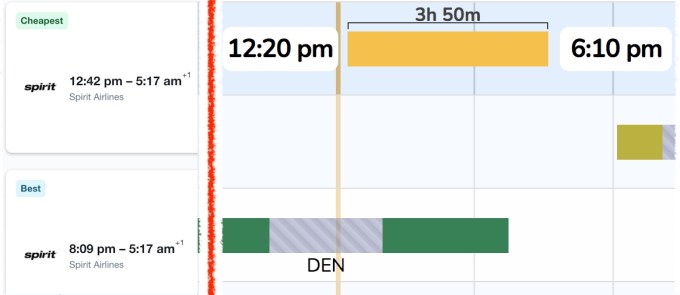
The Flight Penguin interface will be very familiar to old Hipmunk users, with a visual layout that makes it easy to see the timing of flights and length of layovers. And just as Hipmunk allowed users to organize results by “agony” (so that the top results aren’t just cheap flights with inconvenient timing or ridiculous layovers), Flight Penguin allows them to sort their flights by “pain.”

Flight Penguin screenshot

Image Credits: Flight Penguin

But this isn’t just the old experience with a fresh coat of paint — it’s also meant to improve on Hipmunk in a few key ways. For one thing, it allows users to search by Chase Ultimate Rewards Points (as well as U.S. dollars, with the goal of adding more currencies and rewards programs in the future).

And the product itself is a Google Chrome extension, rather than a traditional flight search website. The extension actually presents a full, standalone web experience (rather than an overlay on another website), but Goldstein said this approach is still important, because it allows Flight Penguin to pull its data “through the frontend instead of the backend,” giving it the most up-to-date information. This helps to avoid situations where a flight or price shows up in search results but isn’t available on the airline’s or other seller’s website.

In addition, Goldstein said Flight Penguin will show “all the flights.” In other words, it won’t be making any deals with the airlines to hide certain flights or prices, and it will also show airlines that don’t normally make their flights available on other search platforms.

“There are actually many, many flights available but consumers don’t see them because travel search sites work out these deals,” he said. “We’re choosing not to play that game.”

That has the obvious benefit of offering more comprehensive results, but also the disadvantage that Flight Penguin will not be able to collect affiliate fees for flight purchases. Instead, after a 30-day trial period, it will charge users $10 per month. (This is an introductory fee and will likely change in the future.)

Goldstein acknowledged that this is probably “not going to be a mainstream product that 50 million Americans use,” but he’s hoping that it can attract a significant subscriber base of frequent travelers who “value their time and care about the flight booking experience.”

“What we learned from Hipmunk was […] the way business has traditionally been done in online travel worked for consumers in an era with lots of competition between airlines and travel agencies,” he added. “In a world where there’s much less competition, you’re basically becoming an agent for the people you’re working with, and it’s hard to build a business model around providing a great user experience. That’s why we’re saying that we’re going to opt out of this game and play by our own rules.”

Flight Penguin is currently accepting signups for its waitlist, but Goldstein said the company is simply using this to bring users on-board in a controlled fashion, and that it plans to move people off the wait list pretty quickly.

News: Clubhouse launches payments so creators can make money

Clubhouse, a one-year-old social audio app reportedly valued at $1 billion, will now allow users to send money to their favorite creators — or speakers — on the platform. In a blog post, the startup announced the new monetization feature, Clubhouse Payments, as the “the first of many features that allow creators to get paid

Clubhouse, a one-year-old social audio app reportedly valued at $1 billion, will now allow users to send money to their favorite creators — or speakers — on the platform. In a blog post, the startup announced the new monetization feature, Clubhouse Payments, as the “the first of many features that allow creators to get paid directly on Clubhouse.”

Clubhouse declined to comment. Paul Davison, the co-founder of Clubhouse, mentioned in the company’s latest town hall that the startup wants to focus on direct monetization on creators, instead of advertisements.

Here’s how it will work: A user can send a payment in Clubhouse by going to the profile of the creator to whom they want to give money. If the creator has the feature enabled, the user will be able to tap “Send Money” and enter an amount. It’s like a virtual tip jar, or a Clubhouse-branded version of Venmo (although the payments feature doesn’t currently let the user send a personalized message along with the money).

“100% of the payment will go to the creator. The person sending the money will also be charged a small card processing fee, which will go directly to our payment processing partner, Stripe,” the post reads. “Clubhouse will take nothing.”

Stripe CEO Patrick Collison tweeted shortly after the blog post went up that “It’s cool to see a new social platform focus first on participant income rather than internalized monetization / advertising.”

It’s cool to see a new social platform focus first on *participant* income rather than internalized monetization / advertising. Excited for the burgeoning creator economy and next era of internet business models.

— Patrick Collison (@patrickc) April 5, 2021

When the startup raised a Series B led by Andreessen Horowitz in January, part of the reported $100 million funding was said to go to a creator grant program. The program would be used to “support emerging Clubhouse creators,” according to a blog post. It’s unclear how they define emerging, but cultivating influencers (and rewarding them with money) is one way the startup is promoting high-quality content on its platform.

The synergies here are obvious. A Clubhouse creator can now get tips for a great show, or raise money for a great cause, while also being rewarded by the platform itself for being a recurring host.

The fact that Clubhouse’s first attempt at monetization includes no percentage cut of its own is certainly noteworthy. Monetization, or Clubhouse’s lack thereof, has been a topic of discussion about the buzzy startup since it took off in the early pandemic months. While it currently relies on venture capital to keep the wheels churning, it will need to make money eventually in order to be a self-sustaining business.

Creator monetization, with a cut for the platform, has led to the growth of large businesses. Cameo, a startup that sends personalized messages from creators and celebrities, takes about a 25% cut of each video sold on its platform. The startup reached unicorn status last week with a $100 million raise. OnlyFans, another platform that helps creators directly raise money from fans in exchange for paywalled contact, is projecting $1 billion in revenue for 2021.

Clubhouse’s payments feature will first be tested by a “small test group” starting today, but it is unclear who is in this group. Eventually, the payments feature will be rolled out to other users in waves.

News: Daily Crunch: The Supreme Court sides with Google in Oracle suit

The Supreme Court announces several tech-related rulings, LG will shut down its smartphone business and we take a deep dive into the story of StockX. This is your Daily Crunch for April 5, 2021. The big story: The Supreme Court sides with Google in Oracle suit The U.S. Supreme Court announced a couple of tech-related

The Supreme Court announces several tech-related rulings, LG will shut down its smartphone business and we take a deep dive into the story of StockX. This is your Daily Crunch for April 5, 2021.

The big story: The Supreme Court sides with Google in Oracle suit

The U.S. Supreme Court announced a couple of tech-related rulings today. In one, it overturned Oracle’s victory in its copyright battle with Google, which would have otherwise required Google to pay Oracle $8 billion for incorporating pieces of Oracle’s Java software language into the Android mobile operating system.

“In reviewing that decision, we assume, for argument’s sake, that the material was copyrightable,” wrote Justice Stephen Breyer. “But we hold that the copying here at issue nonetheless constituted a fair use. Hence, Google’s copying did not violate the copyright law.”

In addition, the court vacated a ruling declaring that then-President Donald Trump had violated the First Amendment by clocking critics on Twitter. In his opinion on the case, Justice Clarence Thomas argued that companies like Facebook and Google are “at bottom communications networks, and they ‘carry’ information from one user to another” and can therefore be regulated in the same way as telecom carriers.

The tech giants

LG is shutting down its smartphone business worldwide — LG said it will focus its resources in “growth areas” such as electric vehicle components.

Labor relations board sides with Amazon employees over firing — Before being fired last year, Emily Cunningham and Maren Costa had been among the company’s most outspoken critics on staff.

Spotify opens a second personalized playlist to sponsors, after Discover Weekly in 2019 — On Repeat is now open to advertising sponsorships.

Startups, funding and venture capital

India’s Swiggy nears $5B valuation in new $800M fundraise — Swiggy is preparing to expand its business after cutting its workforce to navigate the pandemic.

Knotel co-founder leaves company, describes investor Newmark as ‘a stalking horse’ — The startup filed for bankruptcy earlier this year, its assets acquired by investor and commercial real estate brokerage Newmark.

Byju’s acquires Indian tutor Aakash for nearly $1B — Akash is a 33-year-old chain of physical coaching centers.

Advice and analysis from Extra Crunch

The StockX EC-1 — Now valued at $2.8 billion, StockX has facilitated over 10 million transactions.

Chinese startups rush to bring alternative protein to people’s plates — 2020 could well have been the dawn of alternative protein in China.

(Extra Crunch is our membership program, which helps founders and startup teams get ahead. You can sign up here.)

Everything else

What happens to your NFTs and crypto assets after you die? — A new study finds that only one in four consumers have someone in their life who knows all of their passwords and account details.

Fueled by pandemic, contactless mobile payments to surpass half of all smartphone users in US by 2025 — According to a recent report by analyst firm eMarketer, in-store mobile payments usage grew 29% last year in the U.S.

Start your engines, TechCrunch is (virtually) headed to Detroit — Mark April 15 on your calendars!

The Daily Crunch is TechCrunch’s roundup of our biggest and most important stories. If you’d like to get this delivered to your inbox every day at around 3pm Pacific, you can subscribe here.

News: LG’s exit from the smartphone market comes as no surprise

It was time for LG to move on. Frankly, the only surprise was that it didn’t do so sooner.

For those who follow the space, LG will be remembered fondly as a smartphone trailblazer. For a decade-and-a-half, the company was a major player in the Android category and a driving force behind a number of innovations that have since become standard.

Perhaps the most notable story is that of the LG Prada. Announced a month before the first iPhone, the device helped pioneer the touchscreen form factor that has come to define virtually every smartphone since. At the time, the company openly accused Apple of ripping off its design, noting, “We consider that Apple copycat Prada phone after the design was unveiled when it was presented in the iF Design Award and won the prize in September 2006.”

LG has continued pushing envelopes – albeit to mixed effect. In the end, however, the company just couldn’t keep up. This week, the South Korean electronics giant announced it will be getting out of the “incredibly competitive” category, choosing instead to focus on its myriad other departments.

The news comes as little surprise following months of rumors that the company was actively looking for a buyer for the smartphone unit. In the end, it seems, none were forthcoming. This July, the company will stop selling phones beyond what remains of its existing inventory.

The smartphone category is, indeed, a competitive one. And frankly, LG’s numbers have pretty consistently fallen into the “Others” category of global smartphone market share figures ruled by names like Samsung, Apple, Huawei and Xiaomi. The other names clustered beneath the top five have been, more often than not, other Chinese manufacturers like Vivo.

News: Tim Cook drops hints about autonomous tech and the Apple car

Apple CEO Tim Cook dropped a few hints in an interview released Monday about the direction of the much-anticipated Apple car, including that autonomous vehicle technology will likely be a key feature. “The autonomy itself is a core technology, in my view,” Cook told Kara Swisher in an interview on the “Sway” podcast. “If you

Apple CEO Tim Cook dropped a few hints in an interview released Monday about the direction of the much-anticipated Apple car, including that autonomous vehicle technology will likely be a key feature.

“The autonomy itself is a core technology, in my view,” Cook told Kara Swisher in an interview on the “Sway” podcast. “If you sort of step back, the car, in a lot of ways, is a robot. An autonomous car is a robot. And so there’s lots of things you can do with autonomy. And we’ll see what Apple does.”

Cook was careful not to reveal too much, declining to answer Swisher’s question outright if Apple is planning to produce a car itself or the tech within the car. What clues he did drop, suggests Project Titan is working on something in the middle.

“We love to integrate hardware, software and services, and find the intersection points of those because we think that’s where the magic occurs,” said Cook. “And we love to own the primary technology that’s around that.”

To which Swisher responded: “I’m going to go with car for that, if you don’t mind. I’m just going to jump to car.”

We are, too.

Many people in the micromobility industry like to say that e-scooters are basically iPhones on wheels, but it’s more likely that the Apple car will actually be the iPhone on wheels. Apple is generally known for owning all of its hardware and software, so it wouldn’t be surprising to see Apple engineers working closely with a manufacturer to produce an Apple car, with the potential to one day cut out the middle man and become the manufacturer.

The so-called Project Titan appeared at risk of failing before a car was ever seen by the public with mass layoffs in 2019. However, more recent reports suggest that the project is alive and well with plans to make a self-driving electric passenger vehicle by 2024.

Earlier this year, CNBC reported that Apple was close to finalizing a deal with Hyundai-Kia to build an Apple-branded self-driving car at the Kia assembly plant in West Point, Georgia. Sources familiar with Apple’s interest in Hyundai say the company wants to work with an automaker that will let Apple hold the reins on the software and hardware that will go into the car.

The two companies never reached a deal and talks fell apart in February, according to multiple reports. That hasn’t stopped the flow of rumors and reports about Apple and its plans, which have previously been linked to other suppliers, automakers such as Nissan and even startups.

It’s still unclear what the Apple car will look like, but as a passenger vehicle, rather than a robotaxi or delivery vehicle, it will be going up against the likes of Tesla.

“I’ve never spoken to Elon, although I have great admiration and respect for the company he’s built,” said Cook. “I think Tesla has done an unbelievable job of not only establishing the lead, but keeping the lead for such a long period of time in the EV space. So I have great appreciation for them.”

Project Titan is being led by Doug Field, who was formerly senior vice president of engineering at Tesla and one of the key players behind the Model 3 launch.

WordPress Image Lightbox Plugin