Tag Archives: Blog

News: Understanding how fundraising terms can affect early-stage startups

Fenwick & West partner Dawn Belt breaks down some of the terms that trip up first-time entrepreneurs.

You’ve got a great idea and a strong founding team. So now what? When VCs come knocking, it’s important to make sure you’re well positioned to make deals. Fenwick & West partner (and business lawyer) Dawn Belt joined us at TechCrunch Early Stage to break down some of the terms that trip up first-time entrepreneurs.

Belt has been involved in a number of key Silicon Valley moves, including EV company Proterra’s recent decision to go public via SPAC, as well as IPOs for Bill.com and Facebook. Here, she discusses key concepts like equity and the right of first refusal, and the role they play in the early stages of startup funding.


How financially savvy should founders be?

When it comes to navigating early-stage deals, how important is it to have someone on the founding team with a deep knowledge of these financial guidelines?

I actually don’t think that’s really necessary. I think that it’s nice to have, and it’s good to be able to do this, but that’s not the core competency of the company. That’s actually a function. It’s pretty easy for you to outsource to somebody like me at the time when you need it and get the advice then. It’s more important for you to be really focused on building a good business, and then being open minded and a good listener and learner. (Time stamp: 27:48)


Getting legal help early on

News: Apply to Startup Battlefield at TechCrunch Disrupt 2021

Do you have what it takes to be a Startup Battlefield champion? All you need is a killer pitch, an MVP, nerves of steel and the drive and determination to take on all comers to claim the coveted Disrupt Cup. If you fit the description, apply to compete in Startup Battlefield at TC Disrupt 2021

Do you have what it takes to be a Startup Battlefield champion? All you need is a killer pitch, an MVP, nerves of steel and the drive and determination to take on all comers to claim the coveted Disrupt Cup.

If you fit the description, apply to compete in Startup Battlefield at TC Disrupt 2021 on September 21-23.

Top early-stage startups from around the world — from any country and industry — will compete for a shot at $100,000 in equity-free prize money. That’s a huge bottom-line boost, and it also comes with global exposure, massive media attention and invaluable investor interest. Oh, and let’s not forget the bragging rights associated with winning the Disrupt Cup.

Here’s a quick run-down on how it all works. First and foremost: applying to and participating in Startup Battlefield is free — no fees, no equity cut. The TechCrunch editorial team reviews all applications and will choose roughly 25 stand-out startups to participate in tech’s top pitch competition.

Competing founders receive several weeks of intense training with the Startup Battlefield team — again at no cost. Your presentation skills, pitch and business models will be honed and burnished to perfection. You’ll be more than ready to virtually step onto the tech world’s most famous stage.

You’ll face a panel of judges consisting of leading VCs and have six minutes to pitch and demo. The judges will then put you through your paces with a Q&A. If you make the first cut, you’ll repeat the experience in round two with a fresh set of judges. In round three — a.k.a. the finals — another set of judges will hear the pitches and then declare the Startup Battlefield champion.

If you’re wondering how Startup Battlefield plays out as a virtual competition, here’s a perspective that Rachael Wilcox, a creative producer at Volvo Cars, shared with us after watching last year’s competition.

“The Startup Battlefield translated easily to the virtual format. You could see the excitement, enthusiasm and possibility of the young founders, and I loved that. You could also ask questions through the chat feature, and you don’t always have time for questions at a live event.”

Here’s another important aspect of competing in Startup Battlefield. Every team receives a VIP experience at Disrupt. What’s that look like? Global exposure to for starters — to journalists hungry to cover game-changing startups and VCs eager to expand their portfolios with top talent.

Then there’s free exhibition space on the virtual show floor, access to the CrunchMatch networking platform, complimentary tickets to future TC events and a free subscription to Extra Crunch. You’ll also receive invitations to private events — like the Startup Battlefield reception with members of the Startup Battlefield alumni community.

That’s an impressive group of 922 companies — including Vurb, Dropbox, Mint, Yammer and many others that have collectively raised $9.5 billion and generated 117 exits. It’s rarified territory and a prime networking opportunity.

TC Disrupt 2021 takes place September 21-23, and there are just two questions you need to ask yourself. Are you ready? Do you have what it takes? Alrighty then — apply to Startup Battlefield and prepare to take your startup to a new level of success. We can wait to see you bring the heat!

Is your company interested in sponsoring or exhibiting at Disrupt 2021? Contact our sponsorship sales team by filling out this form.

News: Formation raises $4M led by Andreessen Horowitz to train truly ‘exceptional’ software engineers

Sophie Zhou Novati worked as a senior engineer at Facebook and then Nextdoor, where she struggled to hire great engineers for her team. Frustrated, she decided to try training engineers to meet her team’s hiring standards by mentoring at a local coding bootcamp. After two and a half years of mentoring on nights and weekends,

Sophie Zhou Novati worked as a senior engineer at Facebook and then Nextdoor, where she struggled to hire great engineers for her team.

Frustrated, she decided to try training engineers to meet her team’s hiring standards by mentoring at a local coding bootcamp. After two and a half years of mentoring on nights and weekends, Novati decided to turn her passion into a career.

She and her husband, Michael, founded Formation with a couple of goals in mind. For one, they wanted to offer personalized training to help people not just learn to code, but to become “exceptional” software engineers. Sophie was also struck by the diversity of the people she witnessed going through coding bootcamps, but she realized that those graduates weren’t getting access to the same opportunities that students from traditional universities do.

Formation co-founder and CEO Sophia Zhou Navati

Formation co-founder and CEO Sophia Zhou Navati

With Formation, her goal is to personalize the training experience via a remote fellowship program that combines automated instruction with access to a “network of top tier mentors” from companies such as Facebook and Google. After one year in beta, Formation is unveiling its Engineering Fellowship, where every fellow gets a “personalized training plan tailored to their unique career ambitions.” So far, it’s placed just over 30 people in engineering roles at companies such as Facebook, Microsoft and Lyft with an average starting salary of $120,000.

Formation aims to offer an experience beyond bootcamps, which Sophie argues “have gotten too big, too fast, churning hundreds or thousands of students through fixed curriculums without individualized attention.”

The startup attracted the attention of Andreessen Horowitz, which just led its $4 million seed round. Designer Fund, Combine, Lachy Groom, Slow Ventures and engineers from Airbnb, Notion, Rippling and others also participated in the financing.

“The first thing that really struck me about this community is just how diverse it is. Forty-four percent of graduates are reporting that they identify as nonmale, and the percentage of Black and Latinx graduates is nearly double the national average at traditional universities,” Sophie told TechCrunch. “But the problem is that only about 55% of bootcamp grads are getting a job as a software engineer, and of the ones that do, their median salary is only about $65,000. At the same time, companies everywhere are just desperately looking for ways to diversify their talent pool.”

Instead of having students follow a fixed curriculum, Formation leverages adaptive learning technology to build a personalized training plan tailored to each student’s specific skillset and career goals. The platform continuously assesses their skills and adapts their roadmap, according to Sophie.

About half of the people participating in Formation’s program are current engineers already working in the industry in some capacity. 

Connie Chan, general partner at Andreessen Horowitz, said she’s been examining the edtech space for a while, including companies building new tools for teaching and upleveling coding skills. 

Formation stood out to her as the “only true tech-based and scalable solution that optimizes each student’s mastery of important skills.” Its ability to dynamically change based on a student’s performance in particular was compelling.

“The founder-product fit is also super clear — Sophie brings her own best-in-class engineering experience to Formation, as well as her long-time passion for mentoring,” Chan wrote via email.

News: Education nonprofit Edraak ignored a student data leak for two months

Edraak, an online education nonprofit, exposed the private information of thousands of students after uploading student data to an unprotected cloud storage server, apparently by mistake. The nonprofit, founded by Jordan’s Queen Rania and headquartered in the kingdom’s capital, was set up in 2013 to promote education across the Arab region. The organization works with

Edraak, an online education nonprofit, exposed the private information of thousands of students after uploading student data to an unprotected cloud storage server, apparently by mistake.

The nonprofit, founded by Jordan’s Queen Rania and headquartered in the kingdom’s capital, was set up in 2013 to promote education across the Arab region. The organization works with several partners, including the British Council and edX, a consortium set up by Harvard, Stanford and MIT.

In February, researchers at U.K. cybersecurity firm TurgenSec found one of Edraak’s cloud storage servers containing at least tens of thousands of students’ data, including spreadsheets with students’ names, email addresses, gender, birth year, country of nationality and some class grades.

TurgenSec, which runs Breaches.UK, a site for disclosing security incidents, alerted Edraak to the security lapse. A week later, their email was acknowledged by the organization but the data continued to spill. Emails seen by TechCrunch show the researchers tried to alert others who worked at the organization via LinkedIn requests, and its partners, including the British Council.

Two months passed and the server remained open. At its request, TechCrunch contacted Edraak, which closed the servers a few hours later.

In an email this week, Edraak chief executive Sherif Halawa told TechCrunch that the storage server was “meant to be publicly accessible, and to host public course content assets, such as course images, videos, and educational files,” but that “student data is never intentionally placed in this bucket.”

“Due to an unfortunate configuration bug, however, some academic data and student information exports were accidentally placed in the bucket,” Halawa confirmed.

“Unfortunately our initial scan did not locate the misplaced data that made it there accidentally. We attributed the elements in the Breaches.UK email to regular student uploads. We have now located these misplaced reports today and addressed the issue,” Halawa said.

The server is now closed off to public access.

It’s not clear why Edraak ignored the researchers’ initial email, which disclosed the location of the unprotected server, or why the organization’s response was not to ask for more details. When reached, British Council spokesperson Catherine Bowden said the organization received an email from TurgenSec but mistook it for a phishing email.

Edraak’s CEO Halawa said that the organization had already begun notifying affected students about the incident, and put out a blog post on Thursday.

Last year, TurgenSec found an unencrypted customer database belonging to U.K. internet provider Virgin Media that was left online by mistake, containing records linking some customers to adult and explicit websites.

More from TechCrunch:


Send tips securely over Signal and WhatsApp to +1 646-755-8849. You can also send files or documents using our SecureDrop. Learn more

News: Mercato raises $26M Series A to help smaller grocers compete online

The pandemic upended the way people shop for their everyday needs, including groceries. Online grocery sales in the U.S. are expected to reach 21.5% of the total grocery sales by 2025, after leaping from 3.4% pre-pandemic to 10.2% as of 2020. One business riding this wave is Mercato, an online grocery platform that helps smaller

The pandemic upended the way people shop for their everyday needs, including groceries. Online grocery sales in the U.S. are expected to reach 21.5% of the total grocery sales by 2025, after leaping from 3.4% pre-pandemic to 10.2% as of 2020. One business riding this wave is Mercato, an online grocery platform that helps smaller grocers and specialty food stores get online quickly. After helping grow its merchant sales by 1,300% in 2020, Mercato has now closed on $26 million in Series A funding, the company tells TechCrunch.

The round was led by Velvet Sea Ventures with participation from Team Europe, the investing arm of Lukasz Gadowski, co-founder of Delivery Hero. Seed investors Greycroft and Loeb.nyc also returned for the new round; Gadowski and Mike Lazerow of Velvet Sea Ventures have also now joined Mercato’s board.

Mercato itself was founded in 2015 by Bobby Brannigan, who had grown up helping at his family’s grocery store in Brooklyn. But instead of taking over the business, as his Dad had hoped, Brannigan left for college and eventually went on to bootstrap a college textbook marketplace, Valore Books, to $100 million in sales. After selling the business, he returned his focus to the family’s store and found that everything was still operating the way it had been decades ago.
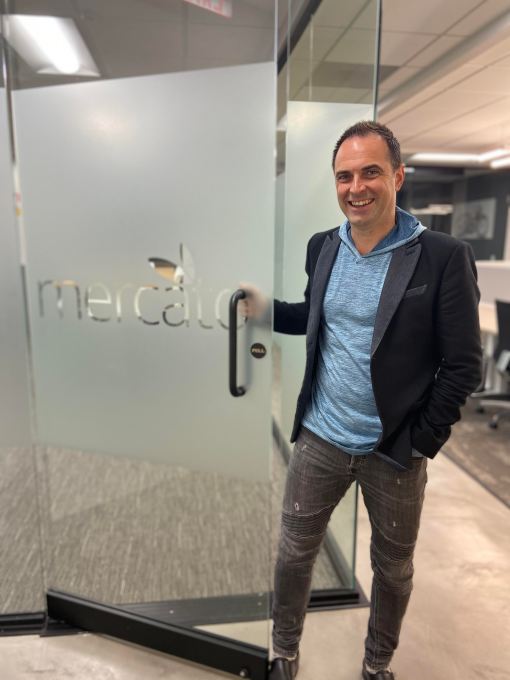
Image Credits: Bobby Brannigan of Mercato

“He had a very basic website, no e-commerce, no social media and no point-of-sale system,” explains Brannigan. “I said, ‘I’m going to build what you need.’ This was my opportunity to help my dad in an area that I knew about,” he adds.

Brannigan recruited some engineers from his last company to help him build the software systems to modernize his dad’s store, including Mercato’s co-founders Dave Bateman, Michael Mason and Matthew Alarie. But the team soon realized it could do more than help just Brannigan’s dad — they could also help the 40,000 independent grocery stores just like him better compete with the Amazon’s of the world.

The result was Mercato, a platform-as-a-service that makes it easier for smaller grocers and specialty food shops to go online to offer their inventory for pickup or delivery, without having to partner with a grocery delivery service like Instacart, Amazon Fresh or Shipt.

The solution today includes an e-commerce website and data analytics platform that helps stores understand what their customers are looking for, where customers are located, how to price their products and other insights that help them to better run their store. And Mercato is now working on adding a supply platform to help the stores buy inventory through their system, Brannigan notes.

“Basically, the vision of it is to give them the tech, the systems and the platform they need to be successful in this day and age,” notes Brannigan.

He likens Mercato as a sort of “Shopify for groceries,” as it gives stores their own page on Mercato where they can reach customers. When the customer visits Mercato on the web or via its app, they can enter their ZIP code to see which local stores offer online shopping. Some stores simply redirect their existing websites to their Mercato page, as they can continue to offer other basic information, like address, hours and other details about their stores on the Mercato-provided site, while gaining access to Mercato’s more than 1 million customers.

However, merchants also can opt for a white-label solution that they can plug into their own website, which uses their own branding.

The stores can further customize the experience they want to offer customers, in terms of pickup and delivery, and the time frames for both that they want to commit to. If they want to ease into online grocery, for example, they can start with next-day delivery services, then speed thing up to same-day when they’re ready. They also can set limits on how many time slots they offer per hour, based on staffing levels.
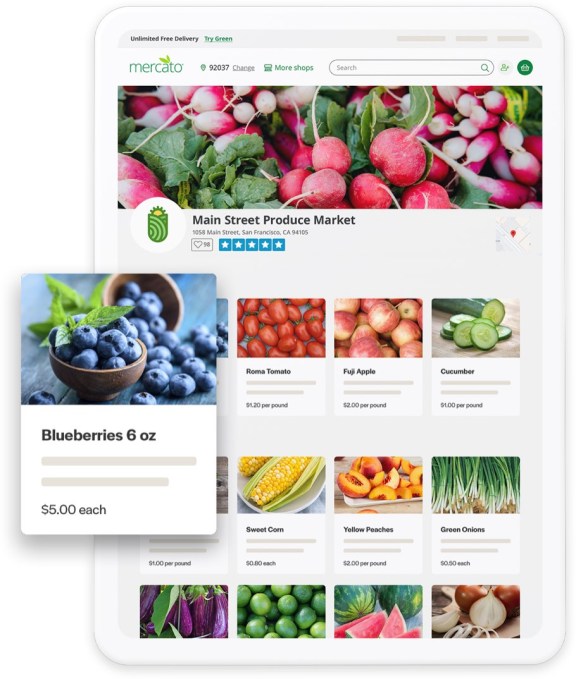
Image Credits: Mercato

Unlike Instacart and others which send shoppers to stores to fill the orders, Mercato allows the merchants themselves to maintain the customer relationship by handling the orders themselves, which they can receive via email, text or even robo-phone calls.

“They’re maintaining that relationship,” says Brannigan. “Usually, it’s a lot better if it’s somebody from the store [doing the shopping] because they might know the customer; they know the kind of product they’re looking for. And if they don’t have it, they know something else they can recommend — so they’re like a really efficient recommendation engine.”

“The big difference between an Instacart shopper and the worker in the store is that the worker in the store understands that somebody is trying to put a meal on the table, and certain items could be an important ingredient,” he notes. “For the shoppers at Instacart, it’s about a time clock: how quickly can they pick an order to make the most money.”

The company contracts with both national and regional couriers to handle the delivery portion, once orders are ready.

Mercato’s system was put to the test during the pandemic, when demand for online grocery skyrocketed.

This is where Mercato’s ability to rapidly onboard merchants came in handy. The company says it can take stores online in just 24 hours, as it has built out a centralized product catalog of over a million items. It then connects with the store’s point-of-sale system, and uploads and matches the store’s products to their own database. This allows Mercato to map around 95% of the store’s products in a matter of minutes, with the last bit being added manually — which helps to build out Mercato’s catalog even further. Today, Mercato can integrate with virtually all point-of-sale (POS) solutions in the grocery market, which is more than 30 different systems.
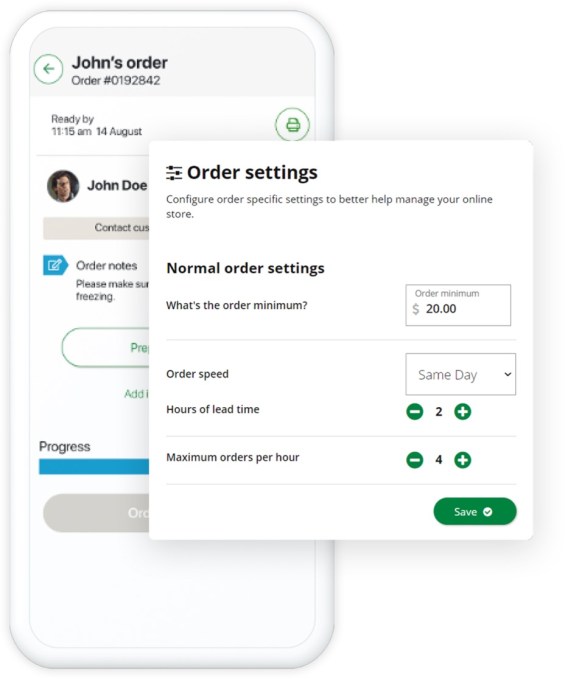
As customers shop, Mercato’s system uses machine learning to help determine if a product is likely in stock by examining movement data.

“One of the challenges in grocery is that most stores actually don’t know how many quantities they have in stock of a product,” explains Brannigan. “So we launch a store, we integrate with the POS. And with the POS we can see how quickly a product is moving in-store and online. Based on movement, we can calculate what is in stock.”

This system, he says, continues to get smarter over time, too.

“We’re certainly three to five years ahead, and we’re not going back,” says Brannigan of the COVID impacts to the online grocery business. “It’s very plentiful now in many places, in terms of e-commerce offerings. And the nature of retail businesses is competitive. So if 1% of people are online, it might not drive other people. But if you have 15% of stores online, then other stores have to get online or they won’t be able to compete,” he notes.

Mercato generates revenue both from its consumer-facing membership program, with plans that range from $96/year – $228/year, depending on distance, and from the merchants themselves, who pay a single-digit percentage transaction fee on orders — a lower percentage than what restaurant delivery companies charge.

The company has now scaled its service to more than 1,000 merchants across 45 U.S. states, including big cities like New York, Chicago, LA, DC, Boston, Philadelphia and others.

With the additional funding, Mercato aims to expand its remotely distributed team of now 80 employees, as well as its data analytics platform, which will help merchants make better decisions that impact their business. It also plans to refresh the consumer subscription to add more benefits and perks that make it more compelling.

Mercato declined to share its valuation or revenue, but as of the start of the pandemic last year, the company had said it was reaching a billion in sales and a $700 million run rate.


News: Private chef parties at home startup Yhangry raises $1.5M Seed from VC angels and Ollie Locke

There’s an “uber for everything” these days and now there are “Ubers for personal chefs”. Just take a look at PopTop or 100 Pleats for instance. Now in London, there is Yhangry (which brands itself as the appropriately shouty YHANGRY). This is a “private chef parties at home” website, and no doubt an app at

There’s an “uber for everything” these days and now there are “Ubers for personal chefs”. Just take a look at PopTop or 100 Pleats for instance. Now in London, there is Yhangry (which brands itself as the appropriately shouty YHANGRY). This is a “private chef parties at home” website, and no doubt an app at some point. The startup has now raised a $1.5 million Seed round from a number of notable UK angels which also includes a few UK VCs for good measure, as well as ‘Made In Chelsea’ TV star Ollie Locke.

Founders Heinin Zhang and Siddhi Mittal created the startup before the pandemic, which lets people order a made-to-measure dinner party online. Although it trundled along until Covid, it had to pivot into virtual chef classes during lockdowns last year and this. The company is now poised to take advantage of London’s unlocking, which will see legal outdoor and indoor dining return.

The startup also speaks to the decentralization of experiences going on in the wake of the pandemic. In 2019 we were working out in gyms and going to restaurants. In 2021 we are working out at home and bringing the restaurant to us.

Normally booking private dinner parties involves a lot of hassle. The idea here is that Yhangry makes the whole affair as easy to order as an Uber Eats or Deliveroo.

Investors in the Seed round include Carmen Rico (Blossom Capital), Eileen Burbidge (Passion Capital), Orson Stadler (Antler) and Martin Mignot (Index Ventures), Made In Chelsea star Ollie Locke, plus fellow tech founders including Jack Tang (Urban), Adnan Ebrahim (MindLabs), Alex Fitzgerald (Cuckoo Internet), Georgina Kirby (Vinehealth) and Deepali Nangia (Alma Angels). Yhangry’s statement said all the investors are also keen customers. I bet they are.

Co-founder Mittal said in a statement: “By making private chef experiences more accessible and affordable, our customers regularly tell us they are finally able to catch up with friends at home… 70% of our customers have never had a private chef before and for them, the freedom and flexibility to curate their own evening is priceless.”

Yhangry now has 130 chefs on its books. Chefs have to pass a cooking trial and adhere to Covid rules. The funding will be used to double the size of the startup’s team.

The menus start at £17pp for six people. The price of the booking covers everything, including the cost of the fresh ingredients, but customers can add extras, such as wine etc. Since its launch in December 2019, the firm says it has served more than 7,000 Londoners.

Yhangry says it will enter key European markets, such as Paris, Berlin, Lisbon and Barcelona.

How will Yhangry survive post-Covid, with restaurants/bars opening up again?

Mittal said: “When restaurants were open between our launch and March 2020, we saw demand because people want to be able to spend time with their friends in a relaxed setting, and aren’t limited to the two-hour slot you get in a restaurant. Once places start to open up again, we believe Yhangry will follow this trend of at-home dining and socializing – not to mention for people who are not ready yet to go out to a busy pub or restaurant.”

News: Yext co-founder unveils Dynascore, which dynamically synchronizes music and video

Howard Lerman, the co-founder and CEO of Yext, has a new startup called Wonder Inventions, which is officially launching its first product today — Dynascore. Let’s focus on Dynascore first. Lerman said he and his team created the product to solve the problem of the ever-growing demand for video content, which often relies on stock

Howard Lerman, the co-founder and CEO of Yext, has a new startup called Wonder Inventions, which is officially launching its first product today — Dynascore.

Let’s focus on Dynascore first. Lerman said he and his team created the product to solve the problem of the ever-growing demand for video content, which often relies on stock music. But by its nature, stock music isn’t designed for a specific video or a specific length, which can lead to some awkward fits, or require producers to edit their videos to match the music since “you can’t just chop three seconds out of a song and put it together.”

Dynascore, however, can take an existing piece of music and adapt it to a video of any length. It can also adjust the music to put the transitions, pauses and endings where you want them.

Lerman and his team demonstrated this for me, taking a fitness commercial and fitting different pieces of music to it, as well as adjusting the length of the commercial and where the transitions fell. Each time, Dynascore would generate a new version of the track that flowed well with the commercial (though I got the sense that if you’ve picked the wrong song for the video, no amount of adjustment can help).

To achieve this, Lerman said Dynascore examines a song and breaks it down to “the smallest unit of music that makes musical sense,” which it calls at a “morphone.” So depending on the specifications, it can assemble those morphones in ways that maximize what the company calls “musicoherence” — basically, to make sure it still flows like a real song.

Dynascore

Image Credits: Dynascore

Lerman emphasized that Dynascore’s technology isn’t trying to write music from scratch. Instead, it’s adapting human compositions — there are Masterworks, a.k.a. classic compositions that are in the public domain, as well as around 1,000 original compositions to start.

“There’s a lot of companies out there that use AI to write music,” he said. “They train their models on Bach, Mozart and Beethoven, but the stuff that comes out of it is trash […] The critical breakthrough we realized is that computers cannot write music, the same way that AI can’t write a film and can’t write a book. But AI can reconstruct music in a way that the human ear responds to.”

After a free trial, pricing for Dynascore starts at $19 per month. It’s available as a desktop app for Mac and Windows, as well as an extension for editing software Adobe Premiere Pro. The company has also built a Developer API to integrate into other apps, starting with video builder Biteable and marketing production tool Rocketium.

Dynascore is just the first product that we should expect from Wonder Inventions, which Lerman said will develop a whole portfolio of new products.

Dynascore

Image Credits: Dynascore

“We’re not starting Wonder Inventions for a single idea,” he said. “Wonder Inventions is 20 master inventors who are some of the most creative and brilliant and people we’ve ever met, and they will develop many products that will have synergies.”

Lerman himself is serving as Wonder’s chairman while he remains CEO at Yext, which he described as his full-time job. When pressed on whether there’s a unifying vision for the company beyond making cool stuff, he replied, “Thirty years ago, when people started a business, it would be about the company. Now when a company is started, it’s about the product” — something he attributed to venture capitalists’ focus on a single, scalable idea.

“I don’t think any VC would fund Dynascore — it’s too goofy and someone would look at the [total addressable market] and say, ‘I don’t think this is a multi-billion dollar category,’” Lerman continued. He doesn’t necessarily disagree with that assessment, but he added, “It can be great first product, with more hits to come.”

News: How to get into a startup accelerator

Neal Sáles-Griffin, managing director of Techstars Chicago, hands out essential tips and tricks for when you’re applying to an accelerator

Should you try to get your company into an accelerator? How far along should your idea and your team be before applying? When it is time to apply, how do you make your application stand out from hundreds or thousands of others? How fancy do you need to get with the application video?

For answers, we spoke with Neal Sáles-Griffin, managing director of Techstars Chicago, and the founder of one of the earliest coding bootcamps with Code Academy (later known as The Starter League). He is an adjunct professor at Northwestern University and was a mayoral candidate in Chicago’s 2019 election. He’s got an incredible wealth of knowledge about all things startups — our chat was only about 40 minutes long, but he absolutely crammed it with insights.

Here are some highlights from our conversation at TC Early Stage — Extra Crunch members will find the full video and a transcript below.


Why (or why not to) join an accelerator

Throughout the talk, Neal shares plenty of reasons why you might want to join an accelerator. The connections! The shared knowledge! The support network! The funding is nice too, of course — but he’s quick to point out that it shouldn’t be your sole motivation.

It can’t just be about the money. If it’s just about fundraising and you don’t really want any of the other parts of the experience, you’re probably setting yourself up to not have a very good time. I would highly recommend reconsidering that and instead focusing more on talking to early-stage investors who might be interested in providing more hands-on and specific support that you would need.

That being said, doing an accelerator can be amazing, because all those things that you would naturally do as a startup in your local ecosystem or community, or wherever you’re trying to grow your business … all of that happens in a far more immersive, effective and accelerated way. The mentors that you get connected to, the investors that you get introduced to, the level of knowledge, the holistic educational experience that you gain from being a part of an accelerator can be a game changer for so many startups that are in those early days of trying to figure out and find their path.
(Time stamp: 2:30)


Be prepared and follow up

It’s important to think through the entire interview process — not just your answers to the questions that might pop up. Knowing a little bit about the person interviewing you and showing that you really know what you’re getting into can go a long way.

News: Both& introduces a line of D2C transmasculine clothing

Historically, the transmasculine community has been neglected by the fashion world. But Both& is a new brand looking to offer clothing tailored specifically for transmasculine bodies. The company was founded by Finnegan Shepard, a trans man who started Both& after going through top surgery and feeling like he still couldn’t find clothing that fit his

Historically, the transmasculine community has been neglected by the fashion world. But Both& is a new brand looking to offer clothing tailored specifically for transmasculine bodies.

The company was founded by Finnegan Shepard, a trans man who started Both& after going through top surgery and feeling like he still couldn’t find clothing that fit his body. The items are designed to emphasize a masculine figure, disguise bindings, and the line is size inclusive.

The general idea is that our clothing is a representation of who we are, and no one should have their clothing options limited based on their body.

Both& is fully bootstrapped and sells direct to consumer through the website. The strategy is to do super small batches of capsule lines, with the first going on pre-order today.

The first line is comprised of three basic t-shirts.

The Finnegan is an everyday basics shirt. The Tyla is similar to the Finnegan, but has a ribbed sleeve cuff for a tighter fit around the biceps. The Khazeel is designed for an oversize fit, and is designed to cover bindings and appear boxy. These items range from $39 to $45.

Both& wants to start with simple designs and forget about color and prints for now.

“Let’s get the basics right in terms of shape, and focus on relatively minimalist-ish colors, and then once we have those nailed, then we move on to a lot more colorful stuff,” said Shephard. “We’re not really interested in prints. That was one of the things that I actually had an adverse reaction to. There are a lot of companies out there that are printing sort of Trans Pride stuff on t-shirts, but they’re not really changing the shapes or making them fit better.”

The plan is to release new designs every six to eight weeks.

One of the challenges for Both& is that the target demographic is very focused on sustainability, but traditionally doesn’t have a lot of disposable income, according to Shepard.

“We’re making it at an accessible price point and also sustainable and we’re building items that can also be produced in small batch,” said Shepard. “That’s a lot of different things to try and juggle at once.”

News: Comet announces $13M Series A for ML model building tool

There’s been a lot of investment in machine learning startups recently as companies try to push the notion into a wider variety of endeavors. Comet, a company that helps customers iterate on models in an experimentation process designed to eventually reach production, announced a $13 million Series A today. Scale Venture Partners led the round

There’s been a lot of investment in machine learning startups recently as companies try to push the notion into a wider variety of endeavors. Comet, a company that helps customers iterate on models in an experimentation process designed to eventually reach production, announced a $13 million Series A today.

Scale Venture Partners led the round with help from existing investors Trilogy Equity Partners and Two Sigma Ventures. The startup has raised almost $20 million, according to Crunchbase data.

Investors saw a company that has grown revenue over 500% over the last year, says Gideon Mendels, co-founder and CEO. “Things have been working very well for us. On the product side, we’ve continued to double down on what we call experimentation management where we are really tracking these models — data that came into them, the hyper parameters and helping teams to debug and understand what’s going on with their models,” he said.

In addition to the funding, the company is also announcing an expansion of the platform to follow the models into post production with a product they are calling Comet Model Production Monitoring (MPM).

“The model production monitoring product essentially focuses on models post production. The original product was more around how multiple offline experiments are modeled during training, while MPM is focused on these models once they hit production for the first time,” Mendels explained.

Andy Vitus, partner at investor Scale Venture Partners, sees model lifecycle management tooling like Comet’s as a developing market. “Machine learning and AI will drive the future of enterprise software, and ensuring that organizations have full visibility and control of a model’s life cycle will be imperative to it,” Vitus said in a statement

As the company grows, it’s opening a new engineering hub in Israel in addition to its office in NYC. While these offices are closed for now, Mendels says that they will have a hybrid office when the pandemic ebbs.

“Moving forward we are planning to have an office in New York City and another office in Tel Aviv. But we’re not going to require anyone to work from the office if they choose not to, or, they can come in a couple days a week. And we’re still going to support hires from around the world.”

WordPress Image Lightbox Plugin