Tag Archives: Blog

News: GM idles more North American plants as chip shortage drags on

General Motors is idling more plants and extending shutdowns at other facilities in North America due to a continued shortage of semiconductor chips that are used to control myriad operations in vehicles, including the infotainment, power steering and brake systems. In an update Thursday, GM indicated that eight assembly plants are affected by the temporary

General Motors is idling more plants and extending shutdowns at other facilities in North America due to a continued shortage of semiconductor chips that are used to control myriad operations in vehicles, including the infotainment, power steering and brake systems.

In an update Thursday, GM indicated that eight assembly plants are affected by the temporary closures. CNBC was the first to report on the temporary plant closures. GM confirmed the shutdowns to TechCrunch and added that it plans to restart production next week at its Wentzville Assembly plant in Missouri.

“GM continues to leverage every available semiconductor to build and ship our most popular and in-demand products, including full-size trucks and SUVs for our customers,” a spokesperson wrote in an email. “Our intent is to make up as much production lost at these plants as possible.”

As global chip shortage has dragged on, automakers including GM and Ford have had to idle plants and shuffle resources to the production of higher margin vehicles like SUVs. GM told TechCrunch that it has not taken downtime or reduced shifts at any of its full-size truck or full-size SUV plants due to the shortage. It’s also prompted automakers to build vehicles without specific parts. For instance, GM said last month that certain pickup trucks would be produced without a fuel management module, a device that will prevent these vehicles from achieving top fuel economy performance.

Automakers have also issued guidance on how the shortage will affect financial results in 2021. Ford has said that if the semiconductor shortage scenario is extended through the first half of 2021, the shortage could lower its earnings between $1 billion and $2.5 billion, net of cost recoveries and some production make-up in the second half of the year.

GM said in February that the global shortage of semiconductors will have a short-term impact on its production, earnings and cash flow in 2021.

GM’s Spring Hill Assembly in Tennessee, which builds the Cadillac XT5, Cadillac XT6 and GMC Acadia, will shut down for two weeks beginning April 12. GM is temporarily halting production of the Chevrolet Blazer at the Ramos Assembly in Mexico and Chevrolet Traverse and Buick Enclave at the Lansing Delta Township factory during the week of April 19.

GM also extended downtime at Lansing Grand River Assembly through the week of April 26. This plant, which builds the Chevrolet Traverse and Buick Enclave, has been down since March 15.

The automaker is extending the shutdown at its CAMI Assembly plant in Canada and the Fairfax Assembly plant in Kansas, which is where the Chevrolet Malibu and Cadillac XT4 are extended through May 10. Both CAMI and Fairfax have been down since the week of February 8, GM said.

GM’s Bupyeong 2 Assembly in Korea has been operating at half capacity since February 8, and its Gravataí plant in Brazil is taking downtime for the months of April and May.

News: The Cult of CryptoPunks

Last month, hours before news of Beeple’s $69 million NFT sale grabbed the front pages of newspapers across the country, a pair of 24 x 24 pixel portraits of aliens wearing little hats sold separately for around $7.5 million each. The sales, which occurred within 20 hours of each other, didn’t garner the same headlines

Last month, hours before news of Beeple’s $69 million NFT sale grabbed the front pages of newspapers across the country, a pair of 24 x 24 pixel portraits of aliens wearing little hats sold separately for around $7.5 million each.

The sales, which occurred within 20 hours of each other, didn’t garner the same headlines that the Beeple auction received, but there was a bit of coverage in the tech press, mostly because one of the aliens was sold by Dylan Field, the CEO of design software startup Figma. In a Clubhouse conversation following the sale, Field said he hoped that a century from now the blocky image he had sold would be seen as the “Mona Lisa of digital art.”

Punk #7804, which recently sold for 4,200 Ether (about $7.5M at the time of sale)

The pixelated alien portraits belonged to an NFT platform called CryptoPunks. In the world of NFTs, the platform is as close to ancient history as it gets, meaning it’s almost four years old. There are 10,000 punks, all of which were procedurally generated and claimed for free when the project launched in 2017.

Since then, the economy built around trading these images has sauntered on with a small but passionate community, at least until a few months ago. That’s when it suddenly exploded, dragging into the fray Silicon Valley CEOs, prominent venture capitalists, famous YouTubers, poker stars and major business personalities. The platform has seen nearly $200 million worth of transaction volume in official deals since launch, according to NFT tracking site CryptoSlam, with 98% of that volume flowing through the platform in the past few months.

The sudden rise in punk prices is owed to an explosion of interest in NFTs largely brought about by climbing cryptocurrency prices, the rise in popularity of Dapper Labs’ NBA Top Shot and the resurgence of the physical collectibles markets, all of which have made some investors more comfortable with the idea of betting on digital goods.

Today, the cheapest punk you can buy will run you about $30,000 in Ethereum cryptocurrency, while the rarest may be worth just shy of $10 million.

CryptoPunks have captured plenty of attention, but even with all eyeballs on the project, people still aren’t sure exactly what they’re looking at.

“In NFT world, people are talking about selling Jack Dorsey tweets, Top Shots and Beeple in the same sentence right now,” Sotheby’s CEO Charles Stewart told TechCrunch in an interview. “The lines can get a little blurry. When you look at CryptoPunks, are they art? Are they collectibles? Are they… you know, well… what are they exactly?”

Image Credits: Lucas Matney

A ‘more honest’ stock market

Back in early 2017, John Watkinson and Matt Hall were playing with a pixelated character generator they built, and they were pretty enthusiastic about the fun little pop art portraits they had been cooking up. By June, they had created 10,000 characters with different hairstyles, hats and glasses for a project called CryptoPunks that would be hosted on the nascent Ethereum blockchain. Some punks had a handful of attributes, some had none, some were apes, some were aliens. While the creators had a hand in curating some elements, they let their generator take control of the creativity.

They launched to modest interest from a small community of blockchain enthusiasts who only had to pay a few pennies in Ethereum “gas” transaction fees to own their own punk. It was a novel idea, pre-dating the NFT platform CryptoKitties by months and NBA Top Shot by years, but it arrived at the cusp of crypto’s 2017 wave during the early throes of initial coin offerings, where scams were plentiful and attention was hard to come by. Hall said that about 20-30 punks were claimed in the days following launch.

Then a week later Mashable wrote a story about the fledgling crypto art project, and within hours every punk was gone.

Some users went all-in immediately. One user that went by the username hemba has become something of a cautionary figure in the CryptoPunks community, claiming more than 1,000 punks at launch and selling every one of them before the market took off this year, missing out on tens of millions of dollars in profits at current prices. Another user who goes by mr703 claimed some 703 punks in total at launch, hundreds of which they are still holding onto years later in a collection similarly worth tens of millions.

In a Discord chat with the pseudonymous mr703, we asked whether they felt they had enough or if there were any punks they still intended to buy. “I own all the punks I ever really want,” they typed back. Their public wallet shows they paid more than $37,000 for a punk in the minutes in between our question and their answer. They spent $35,000 on another one several hours later.

Some investors who have already gone all-in backing risky cryptocurrencies see NFTs as a way to diversify their crypto holdings. Others see CryptoPunks as more of a game.
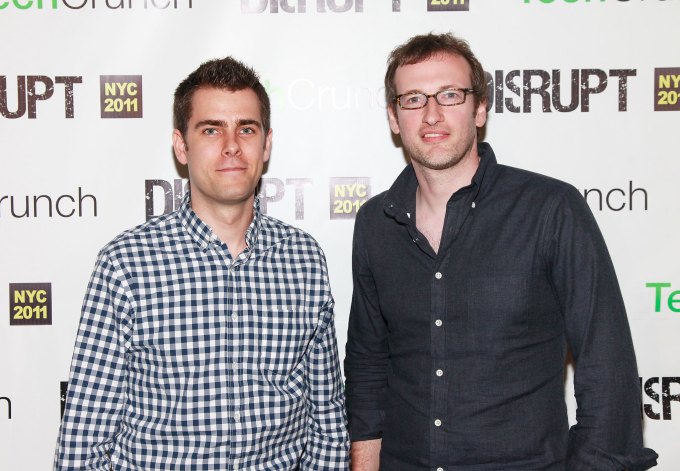
CryptoPunks creators Matt Hall and John Watkinson

“I think that with each year that passes the definition of what is gambling and what is investing move closer and closer together,” says Mike McDonald, a 31-year-old professional poker player who recently bought his first punk.

Why are some punks worth tens of thousands of dollars while others are worth millions? Users in the thriving CryptoPunks Discord community have had to decide that on their own, combining objective analysis of the rarity of certain design attributes with the more subjective impressions of punk “aesthetics.”

Things aren’t always predictable. Earrings are the most common attribute for punks, commanding much lower price floors than those with beanie hats, which are the rarest attribute. But hundreds of punks are wearing 3D glasses, yet they tend to earn a hefty premium over those with green clown hair even though fewer of those punks exist. Some attributes gain market momentum randomly; for instance, the market for punks wearing hoodies has been particularly hot in recent weeks.

“Obviously this is a very speculative market… but it’s almost more honest than the stock market,” user Max Orgeldinger tells TechCrunch. “Kudos to Elon Musk — and I’m a big Tesla fan — but there are no fundamentals that support that stock price. It’s the same when you look at GameStop. With the whole NFT community, it’s almost more honest because nobody’s getting tricked into thinking there’s some very complicated math that no one can figure out. This is just people making up prices and if you want to pay it, that’s the price and if you don’t want to pay it, that’s not the price.”

As prices have surged, owning a piece of the CryptoPunks’ finite supply has become a “digital flex” in its own right, especially when used as an avatar on social media sites, several punk owners told us. That has drawn plenty of wealthy buyers outside the blockchain world, including influencers like YouTuber Logan Paul who uploaded a video last month detailing his $170,000 purchase of several punks.

“When you don’t have a punk, the ecosystem seems like this gentlemen’s club of the 10,000 people that can afford these kinds of avatars,” says McDonald.

There is some concern among the community whether all of this outside attention is a sign of an impending crash in prices, though many investors feel reassured by the historical value of CryptoPunks among NFTs. Nevertheless, some of the investors have a hard time convincing those in their lives that what they’re doing is anything but reckless.

After a recent six-figure punk purchase, user Chris Mintern says his girlfriend was exasperated that he had just dropped more money on a punk than her house was worth. “She says it’s all just a bunch of internet nerds who don’t appreciate the value of money. That to them, it’s just a game and numbers on a screen,” he told TechCrunch.

The community surrounding CryptoPunks has largely bloomed on the chat app Discord in a dedicated group where users that are verified as punk owners tend to drive conversations and can gather attention for up-and-coming NFT projects they’re betting on.

“It’s a bit of a cult,” said user thebeautyandthepunk in an interview.

Like many early users, thebeautyandthepunk has stayed pseudonymous since claiming a couple dozen punks at launch, telling us that no one in her life has any idea she’s sitting on an NFT collection likely worth millions — except her accountant. She did recently decide to make it known that she was one of the few female traders who have been present in the overwhelmingly male CryptoPunks community since the beginning.

“I really try to keep my real life and my crypto life completely separate,” she says. “But people need to know that women have been [in this space] for a while and we’re not going anywhere.”

Today, all 10,000 punks are scattered across some 1,889 wallets, according to crypto tracker Etherscan. Some of those accounts are inactive and feared dead, with the punks inside them lost on the blockchain forever. The largest single wallet of punks today belongs to the platform’s creators, holding some 488 punks. It’s their only ownership in a blockchain-based marketplace where most mechanics are already set in stone.

“We’re just users now, too. Nothing about our website is specific to us having created the project,” Watkinson tells TechCrunch. “Our only equity is through the punks we own. We don’t take a cut of the market or anything.”

Image Credits: Lucas Matney

The NFT high-rollers table

Today, CryptoPunks’ creators are working on NFTs full time. While they can’t make any underlying changes to the CryptoPunks contract, they have aimed to improve the website’s marketplace while hopping into the Discord group to keep an eye on the ever-growing community of users.

“It was never our intention for this to sort of be our careers,” Watkinson says.

In 2019, the duo debuted a follow-up project called Autoglyphs, which brought generative art to the blockchain. It didn’t boast the pop aesthetic of CryptoPunks, but it added a new layer to their exploration of blockchain art. Hall and Watkinson have built up a company around their various projects called Larva Labs, and they are in the process of building up a new NFT project that they hope will have a lower barrier of entry than CryptoPunks and Autoglyphs.

“As the CryptoPunks get more and more expensive, they’re just hard to get into,” Hall says.

At around $200 million in official marketplace sales, CryptoPunks’ total lifetime sales volume is about 40% of what Dapper Labs’ NBA Top Shot has achieved in its past several months. Though CryptoPunks has done so with 0.35% of Top Shot’s total transaction volume, which is fewer than 12,000 trades compared to more than 3.3 million, according to CryptoSlam. Those high transaction numbers spread across millions of NFTs mean much less value per transaction on Top Shot, but a much, much bigger pool of active users.

Last month, Dapper Labs announced they had raised $305 million at a $2.6 billion valuation as they look to expand their private Flow blockchain to other blockchain “games” through more high-profile partnerships. Hall and Watkinson have been watching Dapper Labs’ success, but don’t think Larva Labs will need venture funding to continue exploring what’s next for NFTs.

“Rather than looking at becoming a large company and doing a deal with the NBA or something like that, we’re more just looking forward to kind of just continuing to explore the tech possibilities,” Watkinson said. “What we love about CryptoPunks is the action, and so we’d like to find a way back to sort of that level of action, and our next project is going to try to find ways to sort of keep the deal flow going.”

They have few details to share on the new project, which they said will debut “relatively soon” this year.

Image Credits: Lucas Matney

The origin of the species

CryptoPunks lore is largely steeped in the assertion that they are the oldest NFT project on the Ethereum blockchain. It’s a line that was floated by almost all of the punk owners I spoke with as the main reason they had dumped hundreds of thousands of dollars into the platform. In Paul’s recent YouTube video, he justified prices to his skeptical friends by noting, “[CryptoPunks] is the first and that makes it special.”

But over the past few weeks, holes in that narrative have begun to emerge, as “crypto archaeologists” have begun to unearth abandoned NFT projects that were created in Ethereum’s earliest days, with at least one arriving before CryptoPunks. We recently spoke with Cyrus Adkisson, the creator of a project called Etheria, which he debuted back in 2015, just three months after Ethereum’s mainnet went live. The project allowed users to buy up, sell and build on hexagonal swaths of digital land on a large map. It didn’t develop much of a following at launch and sat abandoned for years on the Ethereum blockchain until Adkisson saw the “fever pitch” developing around NFTs and started searching for the passcode to his old account.

“I remember calling my parents toward the end of February, telling them I may be sitting on a goldmine here,” Adkisson told TechCrunch.

After ultimately gaining access to his Etheria account, he then fired off a few tweets from Etheria’s long-dormant Twitter account, detailing that the bulk of the 914 tiles across two externally tradeable versions were still available and could be claimed for 1 Ether each. Adkisson says by the end of that weekend, his previously empty wallet was filled with $1.4 million worth of Ethereum.

1/ I hear that NFTs have become a thing. Here is some essential about Etheria, the first NFT project ever deployed to the Ethereum blockchain all the way back in October 2015 and presented at DEVCON1. pic.twitter.com/aBZghPdFbS

— Etheria (the OG NFTs) (@etheria_feed) March 13, 2021

Age alone won’t make Etheria a hit; the major challenge from here is building up a community around the project that brings in more users and pushes the prices of land tiles higher. A tile recently sold for nearly $25,000 worth of Ether, but early adopters are struggling to balance waiting out the market’s development with liquidating enough tiles so that new users can get involved and the project can build hype. 

“With these projects, it’s like, yeah, you have the historical context, but now you need to build a solid foundation with your communities because your real measure is not now, but it’s going to be what your community, size and engagement look like in a year,” says Allen Hena, an NFT enthusiast who helped attract attention to the Etheria community last month with a series of blog posts.

 In the days following the project’s resurrection, the young community has already seen plenty of disagreement and infighting as Adkisson aims to maintain some level of control over the platform on which plenty have already pinned their retirement plans. Owners are mainly frustrated by Adkisson’s attempts to make an older version of Etheria externally tradeable, something that would likely make land tiles on the existing contracts considerably less valuable. Since our interview, Adkisson has left Etheria’s Discord server and admins in the group have vowed to continue on without him as he decides which direction he wants to take Etheria 1.0.

While punk owners we talked with are keeping an eye on these newly reemerged projects, they’re also skeptical that Etheria’s older status will do much to impact CryptoPunks’ value to NFT history.

“On paper it looks cool but it didn’t actually do anything for the community,” says user Daniel Maegaard. “CryptoPunks did all the hard work.”

Punk #6487, which Daniel Maegaard recently sold for 550 Ether (about $1.05M at the time of sale)

Maegaard, a 30-year-old crypto investor based in Brisbane, Australia, is more tied up in the value of CryptoPunks than most. He recently sold a particularly rare female “zero-trait” punk for more than $1 million. He’s also the owner of one of the rarest — some argue the rarest — punks, the only one with seven unique attributes, a qualifier that has earned it the nickname “7-atty” and a sacred place in punk lore. When he bought the punk for about $18,000 in Ethereum last year, it was the most anyone had ever paid. He isn’t keen to let it go anytime soon, saying he recently turned down a private offer for $4.2 million from a group of investors that hoped to tokenize the NFT and sell fractional shares of it to other users. Part of holding onto it is the potential for further gains, but the real reason, he says, is that he’s beginning to feel an emotional bond with his collection of digital files.

“These little pixelated faces, it should be easy to give them up. I’ve sold a few punks and I’ve regretted every sale, I experienced that when I sold my zero-trait punk,” Maegaard says. “Like, yeah, a million dollars is nice, but I really liked her.”


News: Rocket Lab to recover the booster from its next Electron launch as it pursue reusability

Rocket Lab is preparing for its next launch, currently set to take place in May from its launch facility in New Zealand. The payload for the flight are two satellites to join BlackSky’s Earth observation constellation, but Rocket Lab has a secondary goal crucial to its aim of adding reusability to its Electron launch vehicle:

Rocket Lab is preparing for its next launch, currently set to take place in May from its launch facility in New Zealand. The payload for the flight are two satellites to join BlackSky’s Earth observation constellation, but Rocket Lab has a secondary goal crucial to its aim of adding reusability to its Electron launch vehicle: Recovering the booster stage after its return from space.

This isn’t the first time Rocket Lab has done a booster recovery; last December, it fished one out of the sea following its aptly-named ‘Return to Sender’ mission. For this flight, dubbed ‘Running Out of Toes,’ the goal is roughly the same, but the Electron vehicle has some upgrades and modifications that will help Rocket Lab gather even more data, and make progress towards actually fully reusing one of these boosters once they get it back.

“We were very, very pleased with the condition of the [first] booster we got back with basically no modifications to any of the thermal protection systems,” Rocket Lab CEO and founder Peter Beck explained in an interview. “The way that we enter with the booster is obviously engines-first and propagate a big shockwave forward. This next flight is the next iteration where we’ve upgraded the heat shield to be able to actually carry those loads, because we know those loads now.”

Flight one provided plenty of valuable data about what the actual stresses were on the Electron booster during re-entry — information that engineers on the ground could make educated guesses about, but couldn’t actually really know without a real-world test. The data collected by sensors onboard the rocket during that December flight provided Rocket Lab the ability to redesign Electron’s heat shield for a “major increase in performance and strength,” according to Beck.

This second flight will test the efficacy of those improvements, and provide even more data to the Rocket Lab team, which will be used to inform the design of the third and final planned recovery test. That will focus on adjusting the re-entry procedure so that the Electron booster sheds even more of its speed while coming back into the atmosphere, which makes Rocket Lab’s final recovery steps — a parachute-assisted slowdown and a mid-air helicopter capture — more viable.

“There’ll be one other design iteration after this, where we will look to scrub even more velocity in the air for more heat off the stage, to get us to that point where it really is worth introducing the other elements of the helicopter to go and pick up a stage that we feel like we could go and re-fly,” Beck said.

That third and final splashdown test should happen sometime later this year, if all goes to plan. And while Rocket Lab doesn’t aim to actually re-fly any of the boosters from these three development tests, Beck told me that certain components from the first booster they got back have been re-integrated into this second test vehicle, and the plan is to recover and re-use even more parts for test #3.

Beck said that bringing the booster back to the Rocket Lab factory and essentially cutting it into tiny pieces is actually the best way for the company’s engineers to learn about what happens during re-entry, and what parts of the rocket are affected most.

“There’s nothing like putting a stage back in the factory to really understand,” he explained. “You can have all the instrumentation you want, but we brought that stage back here and the first thing we did is, we cut it up. We cut all the heat-affected areas, all of the areas that are in the shadow of flow, and then start doing tensile polls on them to understand the material properties.”

All of this work drives towards the end goal of re-flying a recovered Electron booster — which will be a major accomplishment not only because it should help Rocket Lab increase its launch pace, but also because the vehicle was never designed for reusability to begin with. I asked Beck whether that first re-flight of a recovered Electron will be a commercial mission, or just a test without a customer payload.

“I would imagine it would be a commercial mission, simply because we’re not going to put anything on the pad that we don’t have really high confidence in anyway,” he said. “I suspect the first reused vehicles will have quite a lot of refurbishment on them, because if you look at the only other company that has demonstrated reusability [SpaceX], it’s been many, many years of learning and understanding. You don’t just kind of grab a launch vehicle, say it looks good, put it back on the pad and fly again. It’s a very iterative process of building confidence and assurance.”

While introducing reusability to Electron has benefits in its own right for that launch vehicle, the process of developing that capability has also been invaluable for Rocket Lab’s efforts to build out its next spacecraft, the higher-capacity Neutron launch system, according to Beck. Neutron is designed to launch and land propulsively, and to include a lot more usability by design from the very start.

“Electron was designed to be the world’s most manufacturable launch vehicle — Neutron is designed to be the most reusable launch vehicle,” Beck said. “They’re very different paradigms, but unusually we now have experience in both. For Neutron, the innovation really is around reusability, and there’ll be some interesting bits shortly, when we we reveal a little bit more about the vehicle architecture, that will make it very obvious to what degree we’re going to make this a reusable launch vehicle.”

News: Setting up a management board for success with Dave Easton

Generation Investment Management partner Dave Easton talks about how to build a board as a founder, and specifically how to build a board you can live with.

Viewed from the outside, board selection and corporate governance can seem like a bit of a black box — particularly at a startup. Generation Investment Management partner Dave Easton spoke at TechCrunch Early Stage about how to build a board as a founder, and specifically how to build a board you can live with. Easton’s own ample experience serving on boards as both a full member and as an observer, as well as Generation’s focus on building sustainable, ethically managed, mission-driven businesses helped peel back the curtain on the murky topic of good governance.


On the composition of boards

Easton noted that many boards end up overcrowded — in terms of both the number of people and also the background of those present. Mixing up the type of board members you have managing your corporate governance is key, he said, especially as a company grows in size and maturity.

In terms of fields, the sorts of things that we find that often go wrong is when your board is stacked full of investors. I think investors are great — I’m an investor. I think there are super useful things investors do. But five investors is not very useful, right — it’s just more people who will generally think the same. So a typical thing that we’re doing when we come in is, we’re saying we’re not taking a board seat, we’re gonna give our board seats to an operator — someone who actually knows what they’re doing. When you’re in the earliest stages it’s probably fine to avoid operators and just have one or two investors. Particularly operators who come from, like bigger company backgrounds, they’re not necessarily so helpful when you’re getting product-market fit. But as you get bigger and bigger, you know, operators start to trump investors, and we think boards need to move more heavily in that direction. (Time stamp: 09:34)


Don’t put settled topics up for debate

On the subject of what should actually take place at well-run board meetings, Easton said that one of the most common pitfalls he’s encountered is when management sort of performatively offers up subjects for debate. It’s something that’s easy to do, but it also ends up not only being wasteful of the time of those present, it also leaves a bad taste in basically everyone’s mouths.

News: Discover how Duolingo started with CEO Luis von Ahn at Disrupt 2021

Before Luis von Ahn co-founded Duolingo, a gamified language-learning app used by hundreds of millions around the world, he was fixated on squiggly letters. The entrepreneur was a co-inventor of CAPTCHA and reCAPTCHA, or those security prompts you get while browsing the web to verify if you are a human or if you are a

Before Luis von Ahn co-founded Duolingo, a gamified language-learning app used by hundreds of millions around the world, he was fixated on squiggly letters. The entrepreneur was a co-inventor of CAPTCHA and reCAPTCHA, or those security prompts you get while browsing the web to verify if you are a human or if you are a robot.

And while von Ahn often jokes that his early inventions were considered annoying (it causes friction when consumers have to decipher letters before logging into their email) reCAPTCHA was impressive enough that Google scooped it up. Since then, von Ahn has moved on to creating another iconic company, this time, one that consumers are happy to see pop up on their screens: Duolingo.

Von Ahn is joining us at TechCrunch Disrupt 2021 this September 21-23 to talk about the making of a gamified edtech unicorn. The pre-IPO company started as a grad school project, and over the years has become a behemoth enjoyed by more than 500 million users.

We’ll get into how von Ahn leveraged crowdsourced translation to grow the app, its roller coaster route to monetization and, of course, the iconic — and often sassy — green owl, Duo. We’ll also discuss the broader edtech market for language learning, how the pandemic impacted business and why Duolingo sees opportunity in disrupting not just language, but the tests associated with it, as well.

While part of Duolingo fits into the edtech category, some see the startup as it currently stands as a consumer subscription product with a learning hook. Von Ahn can clear the air on what Duolingo is truly solving for — and what’s ahead for the business.

Von Ahn first presented Duolingo on the Disrupt stage nine years ago, with a website and goal to teach 100 million people a new language. Now, nearly a decade later, he’ll be coming back to explain what happened next. He doesn’t hold back — so you don’t want to miss this.

Disrupt 2021 runs September 21 -23 and will be 100% virtual this year. Get your front-row seat to see von Ahn and many, many more for less than $100! Secure your seat now.

News: Grasping at hidden objects

Happy Robotics Week, to those who celebrate. I know a lot of us are unable to be with our loved ones this year, which means no robotics tree, robotics baskets full of robot eggs and green robot beer. Still, the National Robotics Week organization is putting on a bunch of virtual events across 50 states

Happy Robotics Week, to those who celebrate. I know a lot of us are unable to be with our loved ones this year, which means no robotics tree, robotics baskets full of robot eggs and green robot beer. Still, the National Robotics Week organization is putting on a bunch of virtual events across 50 states through April 11.

There’s been a bit of financial news over the past week, also worth noting. On Tuesday, Sarcos joined the rarified air of robotic SPACs. While it’s true there’s been a flurry of activity on that front in the startup world, robotics companies have been slower to embrace the whole blank-check-reverse-merger deal. Berkshire-Grey is the one company that immediately springs to mind.

Image Credits: Sarcos Robotics

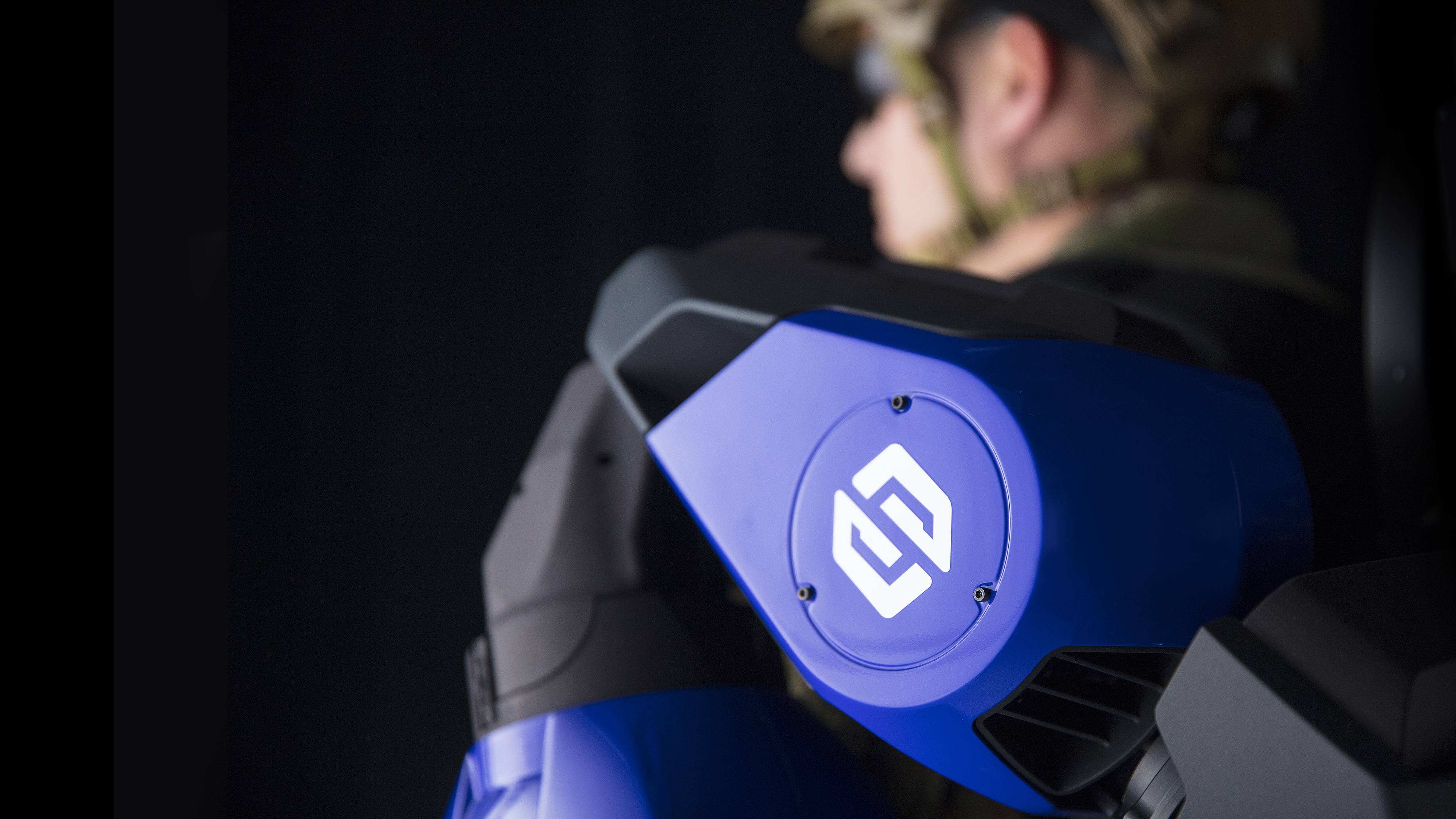
Sarcos builds robotics and robotic exoskeletons that look like they were designed for a James Cameron movie. The company has already raised a bunch of money, including a $40 million round, back in September, but is probably most notable to mainstream readers for being at the center of Delta’s recent high-tech push. The airline plans to use some of the company’s tech to help employees lift large payloads.

Image Credits: Rapid Robotics

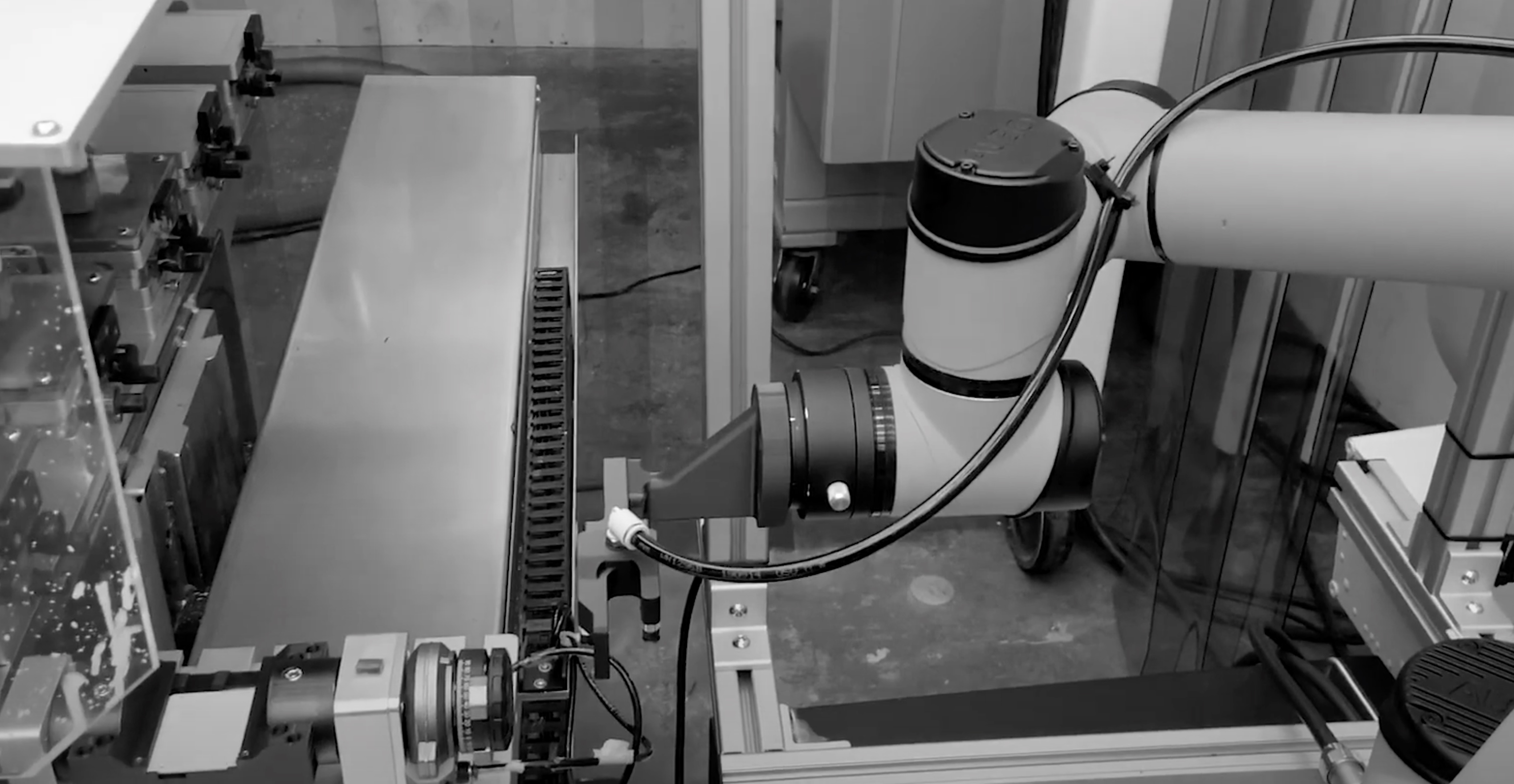
San Francisco-based Rapid Robotics, meanwhile, announced a $12 million Series A. That brings the company’s funding to date up to $17.5 million, hot on the heels of a decent-sized seed round. The company’s objective is providing a kind of plug and play solution for robotics manufacturing, and essentially lowering the barrier of entry for manufacturing automation across a range of industries.

SoftBank, which continues to be quite bullish on the space, just acquired 40% of AutoStore for a cool $2.8 billion, putting the Norwegian company’s valuation at $7.7 billion. The company uses robotics to maximize warehouse storage, consolidating it into around a quarter of the space. It already has a sizable footprint, as well — 20,000 robots deployed at around 600 locations. Per SoftBank CEO Masayoshi Son:

We view AutoStore as a foundational technology that enables rapid and cost-effective logistics for companies around the globe. We look forward to working with AutoStore to aggressively expand across end markets and geographies.

And because it can’t all be investment news (I mean, it can, but who wants that?), some cool research out of MIT. Researchers from the school, along with ones from Harvard and Georgia Tech, showcased a robot that uses radio waves to sense hidden objects. The tech allows RF-Grasp to pick up things that are covered up or otherwise out of its line of vision. MIT Associate Professor Fadel Adib describes it as “superhuman perception.”

News: Samsung’s AirTags rival, the Galaxy SmartTag+, arrives to help you find lost items via AR

Samsung’s Galaxy SmartTag+, the company’s competitor to Apple’s forthcoming lost-item finder known as AirTags, has now arrived. Samsung had first announced its Tile competitor known as the Galaxy SmartTag, a Bluetooth-powered locator, during its press event in January. At the time, it teased that a ultra-wideband (UWB) powered version called the Galaxy SmartTag+ would arrive

Samsung’s Galaxy SmartTag+, the company’s competitor to Apple’s forthcoming lost-item finder known as AirTags, has now arrived. Samsung had first announced its Tile competitor known as the Galaxy SmartTag, a Bluetooth-powered locator, during its press event in January. At the time, it teased that a ultra-wideband (UWB) powered version called the Galaxy SmartTag+ would arrive sometime later in the year, without giving a specific time frame.

Now it’s here. The newly launched iteration will offer support for both Bluetooth Low Energy (BLE) and UWB, and can be attached to the everyday items you want to keep track of — like backpacks or keychains, for example.

Like Apple’s rumored (and accidentally confirmed) AirTags, the SmartTag+ for Samsung device owners offers more precise finding capabilities because of its use of UWB technology, which the recently launched Galaxy SmartTag doesn’t include.

When items go missing, SmartTag+ users will be able to use AR technology to help locate the tags more easily using their Samsung phone, because of its spatial awareness capabilities. As you get closer to the tag’s location, you can also opt to have it make a loud ring — which can help if it’s fallen under something, like a sofa cushion.

Like Tile’s UWB device, SmartTag+ also supports a sort of community find type of feature where any nearby Galaxy device that’s opted in will be able to help locate lost items and notify their owners through the SmartThings Find network. Samsung says this data is encrypted so the tag’s location is only known to its owner.

But unlike the earlier SmartTag, which has expanded to include tags that come in pink and green, the SmartTag+ comes only in black and gray at launch.

Because the new beacons rely on UWB, Samsung says they will only work with Galaxy devices that include UWB technology, including the Galaxy Note20 Ultra, Galaxy S21+, Galaxy S21 Ultra, and Galaxy Z Fold2.

The SmartTag+’s arrival comes at a time when the lost item beacon market is poised for a shakeup.

Apple’s plans to enter this space, where today businesses like Tile dominate, could be fairly disruptive. Apple’s AirTags will leverage UWB to capture spatial and directional data, which will make finding lost items with the tags attached easier and more accurate. But AirTags will also integrate with Apple’s Find My app, which has now opened up to third-party manufacturers as of this week, including the makers of earbuds and e-bikes, among others.

Notably absent from that early lineup is Tile, which also has its own UWB tracker on the way. Tile doesn’t want to give up the customer relationship it has already established via its own app and hand that over to Apple instead, we understand. Instead, it plans to offer its own UWB tracker and AR finding features through its own iOS app.

Samsung, however, doesn’t have that issue as its first-party trackers are designed for its own devices. This SmartTag+ is basically the AirTag for Samsung owners, and if and when Apple launches its own beacons, the demand for the Android version could be impacted.

The company will begin to sell the new SmartTag+ on April 16th.

Samsung’s earlier Galaxy SmartTags cost $29.99. The new SmartTag+ are $10 more at $39.99 in the U.S.


News: Andium is watching oil fields for emissions and just got money from the biggest oil companies to do it

Andium, a company focused on remote field monitoring of assets including oil and gas wells has just raised some not-insignificant cash in an investment round led by OGCI Climate Investments, a firm formed by the largest oil companies in the world. Launched in 2014 to “support” the targets laid out in the Paris Agreement to

Andium, a company focused on remote field monitoring of assets including oil and gas wells has just raised some not-insignificant cash in an investment round led by OGCI Climate Investments, a firm formed by the largest oil companies in the world.

Launched in 2014 to “support” the targets laid out in the Paris Agreement to limit global greenhouse gas emissions, OGCI has invested in 21 projects to date.

With Andium, the oil majors join existing investors including Tom Miglis, the former chief investment officer of Citadel Securities and Talis Capital in backing a company developing technologies for natural gas flare monitoring, tank telemetry and object detection.

The company said it provides oil and gas companies with real-time information from remote locations at a far lower cost than other solutions.

Few technologies are less exciting than sensors and monitoring equipment, but there are also few tech services that are more vital to staunching the flow of greenhouse gas emissions. As Mark Tomasovic, a partner at the renewable investment firm, Energize tweeted (to me), “A few companies are involved in monitoring and reducing methane emissions from producing oil and gas wells… Given that there are over [1 million] wells in the U.S. and methane is 28x more potent than CO2, these startups have had more of an impact on global climate change then Tesla.”

A few companies are involved in monitoring and reducing methane emissions from producing oil & gas wells

Given that there are over 1M wells in the U.S. and methane is 28x more potent than CO2, these startups have had more of an impact on global climate change than Tesla

— Mark Tomasovic (@MarkTomasovic) April 6, 2021

“We believe that visibility is paramount in change leadership and operational excellence, and our remote monitoring technologies are specifically designed to offer companies an expedited path to achieve their sustainability goals,” said Jory Schwach, the chief executive of Andium, in a statement.

Schwach, a serial entrepreneur whose previous forays into the business world included GlobalRim, a solar global positioning system company, and an offline communications service, started out developing a battery-powered tracking system for the logistics industry.

“I spent the better part of two years building a battery-powered tracking solution for long haul trailers so the market could replace brokers with ‘shared assets’. I failed fast and often on the hardware and realized that the real value was in the continually changing product requests that would be much more easily solved with a software change,” Schwach told the Medium publication Authority Magazine. “I decided that building a new kind of operating system for small devices could be big business if I leveraged the OS to customize products based on changing use cases while managing the hardware and infrastructure on behalf of the client.”

Andium’s technology uses off the shelf cameras and microphones with an artificial intelligence overlay to provide real-time monitoring of all sorts of industrial assets.

“The transparency created by monitoring and measuring methane is essential to reducing emissions,” said Pratima Rangarajan, CEO of OGCI Climate Investments.  “Andium’s low-cost innovative solution lowers the barrier for operators of all sizes to adopt and implement best practices and we are pleased to support their growth.”

News: Quiq acquires Snaps to create a combined customer messaging platform

At first glance, Quiq and Snaps might sound like similar startups — they both help businesses talk to their customers via text messaging and other messaging apps. But Snaps CEO Christian Brucculeri said “there’s almost no overlap in what we do” and that the companies are “almost complete complements.” That’s why Quiq (based in Bozeman, Montana)

At first glance, Quiq and Snaps might sound like similar startups — they both help businesses talk to their customers via text messaging and other messaging apps. But Snaps CEO Christian Brucculeri said “there’s almost no overlap in what we do” and that the companies are “almost complete complements.”

That’s why Quiq (based in Bozeman, Montana) is acquiring Snaps (based in New York). The entire Snaps team is joining Quiq, with Brucculeri becoming senior vice president of sales and customer success for the combined organization.

Quiq CEO Mike Myer echoed Bruccleri’s point, comparing the situation to dumping two pieces of a jigsaw puzzle on the floor and discovering “the two pieces fit perfectly.”

More specifically, he told me that Quiq has generally focused on customer service messaging, with a “do it yourself, toolset approach.” After all, the company was founded by two technical co-founders, and Myer joked, “We can’t understand why [a customer] can’t just call an API.” Snaps, meanwhile, has focused more on marketing conversations, and on a managed service approach where it handles all of the technical work for its customers.

In addition, Myer said that while Quiq has “really focused on the platform aspect from beginning” — building integrations with more than a dozen messaging channels including Apple Business Chat, Google’s Business Messages, Instagram, Facebook Messenger and WhatsApp — it doesn’t have “a deep natural language or conversational AI capability” the way Snaps does.

Myer said that demand for Quiq’s offering has been growing dramatically, with revenue up 300% year-over-year in the last six months of 2020. At the same time, he suggested that the divisions between marketing and customer service are beginning to dissolve, with service teams increasingly given sales goals, and “at younger, more commerce-focused organizations, they don’t have this differentiation between marketing and customer service” at all.

Apparently the two companies were already working together to create a combined offering for direct messaging on Instagram, which prompted broader discussions about how to bring the two products together. Moving forward, they will offer a combined platform for a variety of customers under the Quiq brand. (Quiq’s customers include Overstock.com, West Elm, Men’s Wearhouse and Brinks Home Security, while Snaps’ include Bryant, Live Nation, General Assembly, Clairol and Nioxin.) Brucculeri said this will give businesses one product to manage their conversations across “the full customer journey.”

“The key term you’re hearing is conversation,” Myer added. “It’s not about a ticket or a case or a question […] it’s an ongoing conversation.”

Snaps had raised $13 million in total funding from investors including Signal Peak Ventures. The financial terms of the acquisition were not disclosed.

News: Industry experts bullish on $500M KKR investment in Box, but stock market remains skeptical

When Box announced it was getting a $500 million investment from private equity firm KKR this morning, it was hard not to see it as a positive move for the company. It has been operating under the shadow of Starboard Value, and this influx of cash could give it a way forward independent of the

When Box announced it was getting a $500 million investment from private equity firm KKR this morning, it was hard not to see it as a positive move for the company. It has been operating under the shadow of Starboard Value, and this influx of cash could give it a way forward independent of the activist investors.

Industry experts we spoke to were all optimistic about the deal, seeing it as a way for the company to regain control, while giving it a bushel of cash to make some moves. However, early returns from the stock market were not as upbeat as the stock price was plunging this morning.

Alan Pelz-Sharpe, principal analyst at Deep Analysis, a firm that follows the content management market closely, says that it’s a significant move for Box and opens up a path to expanding through acquisition.

“The KKR move is probably the most important strategic move Box has made since it IPO’d. KKR doesn’t just bring a lot of money to the deal, it gives Box the ability to shake off some naysayers and invest in further acquisitions,” Pelz-Sharpe told me, adding “Box is no longer a startup its a rapidly maturing company and organic growth will only take you so far. Inorganic growth is what will take Box to the next level.”

Dion Hinchcliffe, an analyst at Constellation Research, who covers the work from home trend and the digital workplace, sees it similarly, saying the investment allows the company to focus longer term again.

“Box very much needs to expand in new markets beyond its increasingly commoditized core business. The KKR investment will give them the opportunity to realize loftier ambitions long term so they can turn their established market presence into a growth story,” he said.

Pelz-Sharpe says that it also changes the power dynamic after a couple of years of having Starboard pushing the direction of the company.

“In short, as a public company there are investors who want a quick flip and others that want to grow this company substantially before an exit. This move with KKR potentially changes the dynamic at Box and may well put Aaron Levie back in the driver’s seat.”

Josh Stein, a partner at DFJ and early investor in Box, who was a long time board member, says that it shows that Box is moving in the right direction.

“I think it makes a ton of sense. Management has done a great job growing the business and taking it to profitability. With KKR’s new investment, you have two of the top technology investors in the world putting significant capital into going long on Box,” Stein said.

Perhaps Stein’s optimism is warranted. In its most recent earnings report from last month, the company announced revenue of $198.9 million, up 8% year-over-year with FY2021 revenue closing at $771 million up 11%. What’s more, the company is cash-flow positive, and has predicted an optimistic future outlook.

“As previously announced, Box is committed to achieving a revenue growth rate between 12-16%, with operating margins of between 23-27%, by fiscal 2024,” the company reiterated in a statement this morning.

Investors remains skeptical, however, with the company stock price getting hammered this morning. As of publication the share price was down over 9%. At this point, market investors may be waiting for the next earnings report to see if the company is headed in the right direction. For now, the $500 million certainly gives the company options, regardless of what Wall Street thinks in the short term.

WordPress Image Lightbox Plugin