Tag Archives: Blog

News: Mortgage is suddenly sexy as SoftBank pumps $500M in Better.com at $6B valuation

Digital mortgage lender Better.com has raised a $500 million round from Japanese investment conglomerate SoftBank that values the company at $6 billion. The financing is notable for a few reasons. For one, that new $6 billion valuation,  is up 50% from the $4 billion it was valued at last November when it raised $200 million

Digital mortgage lender Better.com has raised a $500 million round from Japanese investment conglomerate SoftBank that values the company at $6 billion.

The financing is notable for a few reasons. For one, that new $6 billion valuation,  is up 50% from the $4 billion it was valued at last November when it raised $200 million in Series D financing. It’s also up tenfold from its $600 million valuation at the time of its Series C raise in August 2019.

Secondly, it’s further proof that mortgage – a traditionally “unsexy” industry that has long been in need of disruption – is officially hot. For all its controversy, when SoftBank invests, people pay attention.

The COVID-19 pandemic and historically-low mortgage rates fueled acceleration in the online lending space in a way that no one could have anticipated. That, combined with the general fervour in venture funding, means it’s not a big surprise that Better.com has raised $700 million in just a matter of months.

The investment brings Better.com’s total funding raised to over $900 million since its 2014 inception. Other backers include Goldman Sachs, Kleiner Perkins, American Express, Activant Capital and Citi, among others.

According to the Wall Street Journal, SoftBank is buying shares from Better’s existing investors, and agreed to give all of its voting rights to CEO and founder Vishal Garg “in a sign of its eagerness” to invest in the company. 

During a one-on-one interview at Lendit Fintech’s USA 2020 virtual event in October, Garg had told me that an IPO was definitely in the works.

“We’ll do it when it’s right,” he said. “One of the core tenets of American capitalism is the ability for your customers to buy your stock.”

And in February, Bloomberg had reported that the startup had  tapped Morgan Stanley and Bank of America Corp. for a planned initial public offering in the U.S. But there’s been no further word since. It’s not unusual for companies to raise large sums before an IPO. Affirm did it last year, for example.

Also last October, Varg had told me that before the pandemic, Better was processing about $1.2 billion a month in loans. But as of October 2020, it was funding over $2.5 billion per month, and had gone from 1,500 staffers to about 4,000 worldwide. 

“When the pandemic started we were doing less than sort of like $50 million a month of revenue,” he said. “We’re two-and-a half times that now.”

News: The 2022 Chevrolet Bolt EUV lowers the cost of entry for some of GM’s most advanced tech

The 2022 Chevy Bolt EUV may look like a larger, slightly longer Chevrolet Bolt, but under that boxy exterior lies a whole lot of tech that’s both affordable and very advanced. With the launch of the Chevy Bolt EUV, and its available suite of advanced driver assistance systems, GM is putting both advanced driver assistance

The 2022 Chevy Bolt EUV may look like a larger, slightly longer Chevrolet Bolt, but under that boxy exterior lies a whole lot of tech that’s both affordable and very advanced. With the launch of the Chevy Bolt EUV, and its available suite of advanced driver assistance systems, GM is putting both advanced driver assistance technology and electric drivetrains within reach of the masses.

As part of GMs much-touted goal to introduce 30 new electric vehicles in the next four years, the company recently launched an updated Bolt, as well as the all-new Bolt EUV, or Electric Utility Vehicle. I had two separate opportunities to test prototypes of the Bolt EUV with GM’s advanced Super Cruise system.

While the Bolt and Bolt EUV share similar DNA, they are two different vehicles. The EUV is the longer and larger of the two, with more bells and whistles, like Super Cruise: An advanced driver assistance system that allows for hands-free driving on certain highways, available as a $2,200 option. Super Cruise is not available on the 2022 Bolt.

Nuts and bolts

The Bolt EUV is powered by a 288-cell, 65-kWh battery pack that Chevy says makes 200 hp and 266 lb-ft of torque. Chevrolet estimates that the EUV will get 250 miles on a full charge, and when charging on the go, can regain up to 95 miles of range in 30 minutes on a Level 2 charger.

On household power, (specifically 240V) the EUV will take around 7-8 hours to charge up to 100%, which is how Chevy says it expects most consumers will power their crossover. To assist with that, Chevrolet had teamed up with home charging installer Qmerit to offer free charger installation if you buy or lease a new Bolt or EUV. Installation of a home charger can cost as much as $2,000, so it’s a decent incentive.

The Bolt EUV won’t get the upgraded Ultium battery pack and underlying architecture that’s coming on the Hummer EV, Cadillac Lyric and other future GM electric vehicles. Instead, the Bolt EUV is built on the BEV2 architecture, the same one on which the 2021 Bolt is built. As mentioned, it also gets Super Cruise as an optional add-on.

Since Super Cruise’s introduction in 2017, the system has been siloed in Cadillac products, showing up on the 2018 CT6 and finally expanding to the 2021 CT5. The Bolt EUV is the first production vehicle outside of a luxury GM brand to offer the system even as paid upgrade.

The Bolt EUV starts at $33,995, which is $2,500 less than the 2021 Bolt that is sitting on dealer lots today. The 2022 Chevy Bolt ($31,995) is also around $4,500 cheaper than the 2021 Bolt. Chevy’s press department says that the goal is to “make EVs attainable to everyone.” Although this is also likely an effort to bring the new vehicles in line with earlier Bolt models that qualified for the $7,500 federal tax credit. That incentive in the U.S. disappeared after GM sold 200,000 EVs nationwide.

The Launch Edition, which included the optional Super Cruise, a lighted charging port and special badging, carried a sticker price of $43,495. As of this writing, reservations for the Launch Edition are completely full, but you can still reserve an LT or Premier trim in the 2022 Bolt EUV. Super Cruise, however, is only available as a $2,200 option on the Premier trim, which starts at $38,495. Keep in mind, these prices are all before including any state or local tax incentives or rebates for electric vehicles.

In contrast, a Tesla Model Y Long Range model, the most affordable of the bunch since Tesla dropped that vehicle’s base option, starts at $41,990 before incentives. Getting Tesla’s so called Full-Self Driving feature — which is not self-driving and is actually a driver assistance system — will cost you an additional $10,000.

User experience: Super Cruise

Super Cruise, while impressive, tends to err on the side of caution when it comes to implementing the technology. The system allows for drivers to take their hands and feet off the controls on more than 200,000 miles of mapped divided highway all over the country.

“If we can bring congestion and crashes to zero, then developing fully-autonomous driving is worth it,” Jeremy Short, the vehicle chief engineer who is responsible for the engineering, development, validation, testing and manufacturing of the Bolt EUV, said during my second time with the crossover. “The next 10 years are going to get really interesting in the autonomy space. Five years ago, would you have thought we would have what we have now with Super Cruise?”

That being said, Super Cruise isn’t perfect, and GM continues to iterate the product, even on the Bolt EUV. During my first drive in a Bolt EUV prototype from Marina Del Rey to Burbank and back in peak Los Angeles rush hour traffic, Super Cruise seemed a little bit “off.” The system ping-ponged in the wide lanes on the highway. When the vehicle was moving under 30 mph, the system lost track of the lane markings on mapped highways like the extremely busy 405, causing it to drift toward the other lanes and switch off a number of times.

2022 Chevrolet Bolt EUV

2022 Chevrolet Bolt EUV. Image Credits: GM

A few weeks later, on a second prototype drive that followed a 50-mile loop originating in Carson, the system appeared to have gained its sea legs. However, both Short, who was following in another prototype vehicle, and I noted that Super Cruise in the EUV still had problems when traffic slowed below 10 mph. When cars ahead slowed, the EUV would slow appropriately, but then begin to drift across the lane once traffic moved forward, as if it had lost the lane markings. Eventually, the alert to take over would sound and Super Cruise would shut off.

“I did notice some ping-ponging at low speeds,” Short said after our drive. He then joked that it will require some more engineers driving that stretch of road to teach the system to navigate it without bouncing around the lane. He also said that speed and California’s strange concrete roadbeds (they have textured surfaces that can look like lane markings to AI) can affect Super Cruise. “Think of it like tracer fire; the more data you have coming in, the more accurate the car can be.”

Short says that the Super Cruise system is continually learning and updating — even if it’s fully baked on vehicles like the CT5 and CT6. Every time Super Cruise is added to a new vehicle, the sensors, software and processing needs to be updated and tweaked because each car has different weights, potential speeds, dimensions, steering and braking, space for sensors and features. For example, you will be able to get a version of Super Cruise on the 2022 Cadillac Escalade which includes automatic lane changing features. The 2022 Bolt EUV, however, doesn’t get those sensors and therefore can’t automatically change lanes.

“Each vehicle that has Super Cruise implemented has different anatomy so it needs to process and do different things,” Short said. “The Super Cruise on the Bolt EUV was developed at the same time that engineers were developing it on the Escalade. There’s very different steering and braking in each car so the two systems are different.”

Super Cruise qualifies as an advanced Level 2 autonomous vehicle. As the driver, you still have to remain alert, and attentive, but you can remove your hands from the steering wheel and your feet from the pedals on roads where Super Cruise is available. Sensors embedded in the steering wheel track your eyes (even at night or when you’re wearing dark sunglasses) to ensure that you are paying attention to the road ahead and not watching a movie, napping or glancing at your phone. The system doesn’t give you much leeway to take your eyes off the road while using Super Cruise, either. At 65 mph, you can reach over and change the radio station on the 10.2-inch infotainment screen but alarms will sound if you look away for more than just a few seconds.

“If you were on a long drive from Los Angeles to Las Vegas,” Short explained after I asked about it, “you’d essentially be a front passenger. Both you and your passenger would be looking down the road, keeping your eyes up for any potential issues. When I did that trip with a friend and used Super Cruise, I felt the same level of fatigue that he did, which is to say, not much.”

The other bells and whistles

We haven’t had the typical full week to test the 2022 Bolt EUV to fully evaluate. However, there was enough time to evaluate some of the vehicle’s features.

Chevy’s new onboard infotainment and navigation system runs on the company’s Infotainment 3 software. The system’s voice control, which has natural language processing, allowed me to do a quick search to find local charging stations.

The drawback? The system brought up a number of charging stations, but didn’t indicate which ones were available, in service, out of service, or if they were part of the EvGo system, the charging company that GM has partnered with. Driver’s also can’t page through results while using Super Cruise because the driver monitoring system will notice that their eyes aren’t on the road ahead.

In order to find EvGo chargers, owners need to use the myChevrolet App to locate the chargers and then send the directions to the navigation system. While driving, the system does lock out some features, and Short notes that you won’t be able to flip through pages of apps.

It will be interesting to see how this plays out once we get more time in the EUV. That being said, it’s not likely to be as seamless as the Tesla charging experience.

At its core, the 2022 Chevrolet Bolt EUV offers some of the most advanced driver assistance technology on the market in an EV package for an attainable price. After spending two separate four-hour stints in prototype versions of the EUV, it’s clear that this compact SUV has the space, power and high-tech capability that will allow it to go head-to-head with the likes of the Tesla Model Y, Volvo’s XC40 Recharge, Ford’s Mach-E and Volkswagen’s ID.4.

News: Last call for Detroit startups to apply for TechCrunch’s Detroit City Spotlight pitch-off

TechCrunch is hosting a small virtual event on April 15 for startups in Detroit and we’re still looking for a few startups to pitch at the event. The deadline is today, Friday, April 9th. Apply below. Want to attend the free event? Register here. TechCrunch just published a feature on Detroit-darling StockX and this meetup

TechCrunch is hosting a small virtual event on April 15 for startups in Detroit and we’re still looking for a few startups to pitch at the event. The deadline is today, Friday, April 9th. Apply below. Want to attend the free event? Register here.

TechCrunch just published a feature on Detroit-darling StockX and this meetup will feature those involved in producing that content. The EC-1 can be found here.

Everyone is welcome to attend the event, but we’re looking for startups based in Michigan’s southeast region to pitch at this event. TechCrunch has a long history of hosting small pitch-offs and we’re excited to revive this tradition despite the need to do it virtually.

Not in Michigan? No worries. We’re spinning up similar events in other regions too. Spoiler: Pittsburgh is next.

Qualifications

  • Early-stage startups (Series A or earlier)
  • Startups based in the Detroit region will be given priority
  • Pitch decks are highly recommended
  • Apply for the pitch-off here

The event is online and free, but space is limited. Register early. We hope you can make it.

News: Creator economy’s slow burn

Hello and welcome back to Equity, TechCrunch’s venture capital-focused podcast, where we unpack the numbers behind the headlines. Natasha and Danny and  and Grace were all here to chat through the week’s rigamarole of news. Alex took some well-deserved time off, but that meant we got to poke a little fun at him and create a Special Edition segment

Hello and welcome back to Equity, TechCrunch’s venture capital-focused podcast, where we unpack the numbers behind the headlines.

Natasha and Danny and  and Grace were all here to chat through the week’s rigamarole of news. Alex took some well-deserved time off, but that meant we got to poke a little fun at him and create a Special Edition segment to start off the show.

Jokes aside, this week was yet another spree of creator economy, edtech, and new fund announcements, with fresh and unexpected news hailing from Natasha’s home state, New Jersey.

Here’s what we got into:

What a show! We’ll be back with the full trio next week, and until then, stay safe and thank you for listening.

Equity drops every Monday at 7:00 a.m. PST, Wednesday, and Friday at 6:00 AM PST, so subscribe to us on Apple PodcastsOvercastSpotify and all the casts!

News: 6 VCs talk the future of Austin’s exploding startup ecosystem

For years now, a growing number of tech companies — large and small — have either relocated their headquarters to Austin or opened another office or campus in the Texas capital. They’ve been drawn to the city for a number of factors, including its laid-back lifestyle, no state tax, a business-friendly environment and lower cost

For years now, a growing number of tech companies — large and small — have either relocated their headquarters to Austin or opened another office or campus in the Texas capital. They’ve been drawn to the city for a number of factors, including its laid-back lifestyle, no state tax, a business-friendly environment and lower cost of living (for now).

The impact on the city’s startup ecosystem is noticeable in the growing number of entrepreneurs (many of whom worked at some of the tech giants who have a big presence in the city) and investors calling Austin home.

Most recently, Tesla’s plans to build a gigafactory in the city and Oracle’s announcement that it was relocating its headquarters here have made national headlines.

The comparisons to the Bay Area abound — from the burgeoning and maturing startup scene to an overheated and competitive housing market.

All the while, venture capitalists see several key areas of opportunities. At one point, Austin was once a big enterprise software city. While software is still big here, a number of other sectors are growing including CPG (consumer packaged goods) and real estate tech, among others.

What follows is a survey of some of the top VCs in the city and their projections about the growth of Austin’s ecosystem.

Here’s who we spoke to:

  • Eric Engineer, S3 Ventures
  • Morgan Flager, Silverton Partners
  • Joshua Baer, Capital Factory
  • Carey Smith, Unorthodox Ventures
  • Krishna Srinivasan, LiveOak Venture Partners
  •  Zaz Floreani, Next Coast Ventures

Where do you see Austin’s startup scene five years from now? The city has attracted a wide range of people over the years, including more big tech and startups very recently. How will it add up to something more than the sum of the parts?

Eric Engineer of S3 Ventures believes that by 2030, the Texas startup ecosystem could be the country’s second largest.

“Tech ecosystems benefit from virtuous cycles. As more talented people move to Texas, more capital will follow them, which will then attract more talent, and so on,” he said.

Morgan Flager of 16-year-old Silverton Partners says since Silverton’s inception more than 16 years ago, the state’s largest VC firm has always bet on Austin and, more broadly, on Texas.

“We’ve always felt that if Austin wins, we win, and that’s how we’ve run our business,” he says. “But we are just one organization, and now we are joined by many others who are also betting on Austin and want to do their part to make this ecosystem better…Moving forward, a critical component of success is fostering this existing philosophy of community collaboration, which has already played a part in making Austin such an attractive place to be. Austin is a place where people want to succeed by helping their community succeed, and they aren’t willing to sacrifice the former for the latter. If we continue to hold on to that core philosophy as we grow, we’re in for an amazing future.”

Joshua Baer of Capital Factory believes that in 5 years from now, Austin will have gone from “up and coming” to “arrived” and from the top of the Tier 2 cities to a competitive Tier 1 city. Two of the big signs of this, he predicted, will be a new cohort of Austin unicorns from the likes of Aceable, Apptronik, Disco, Eagle Eye, Everlywell, ICON, and Zen Business combined with big Series A funding rounds of the likes the city has not seen since the days when there was only one big VC firm in town called Austin Ventures.

Unorthodox Ventures Founding Contrarian Carey Smith hesitates to predict, noting that it’s hard enough just to characterize the scene as it is right now.

“There are so many companies of so many different sizes doing so many different things, and there isn’t really a unifying characteristic beyond growth and innovation. It really could go any direction,” he says.

LiveOak Ventures’ Srinivasa points out that Texas has tremendous number of Fortune 500 companies and, as a result, folks with deep domain in major industries such as energy, healthcare, real estate, hospitality and retail.

“This domain knowledge when cross-pollinated with the surging tech talent from big tech and startups has already had a multiplicative effect and is further accelerating entrepreneurial activity,” he said. Besides big tech talent and the continued maturation of the current startup ecosystem that is already underway, we will all continue to spawn an even greater number of incredible category leaders in the years to come. As such, we feel the Austin startup scene is poised to grow faster than ever before.”

Floreani of Next Coast Ventures projects that in five years, Austin will see signs of a maturity of the current market with potentially half a dozen unicorns and half a dozen startups finally going public.

Remote work is pushing and pulling the global workforce. This means that some offices will disappear from Austin, even with more companies moving in, but also more locals who work remotely for companies elsewhere. How do you see these factors impacting the city’s tech evolution?

Eric Engineer of S3 Ventures says that talented people are choosing Austin because of all it has to offer from a lifestyle perspective – not just the job. He believes remote work could ease some of Austin’s growing pains as workers will commute fewer days per week. That will give the city more time to develop the additional transportation infrastructure it needs to handle the continued growth, Engineer said.

Silverton Partners’ Flager thinks remote work shifts the playing field some because it allows workers more choice with respect to where they want to live versus where they have to live to get the job they want.  And while it will give people more freedom and make certain things we do more efficient, he thinks most roles will require a hybrid solution where remote work is complemented by in-person interactions. “Thankfully, Austin has both — it is a desirable place to live and it has a rapidly growing tech community,” he said. “This is part of the reason we’re seeing such an influx of talent moving here at the moment.”

Joshua Baer believes that when people can work anywhere, they won’t actually work everywhere. He thinks there will be big winners that attract much more talent than other places, and that Austin will be one of the biggest winners in the tech migration of the next 5 years. “More companies will move their headquarters here, and more people will choose to work here for offices that have headquarters elsewhere,” he predicts.

Remote work doesn’t work for Unorthodox Ventures’ Carey Smith and he doesn’t believe it will work for Austin long-term. When he briefly worked from home at the start of the pandemic, he felt far less connected to the people I work with — and yet was even busier as remote work added “so much difficulty to even simple tasks.”

“I really thrive with face-to-face meetings and appreciate the hustle and bustle of the office. It keeps all of us motivated,” Smith said. “In short, it’s the lubricant that keeps my wheels turning, and I think it’s required to keep driving innovation in Austin.”

What industry sectors do you focus on within Austin (and beyond)? What is happening in Austin now that you’re most excited to fund?

Over the past 15 years, S3 Ventures has primarily investing in B2B software companies (two-thirds of its portfolio are in this space). But it has also had successful exits in consumer digital experiences and healthcare.

“Texas has an incredibly diverse economy, and so the technology innovation is also broad-based,” Engineer said. “We are seeing huge sectors of the economy (financial services, real estate, health care, education, skilled trades, hospitality, industrial, energy, manufacturing) that were slower to digitize, now start to embrace cloud-based solutions across their entire organizations.”

Silverton Partners has always been a generalist fund. That said, there are several dislocations occurring at the moment that are hard for the firm to ignore, according to Flager. Specifically, he said, there’s rapid disruption in digital health, fintech /insurtech, and education. “The playbooks in these massive industries are being rewritten and we are certainly looking for entrepreneurs who have a strong point of view relative to what the future will look like,” Flager added.

Capital Factory’s Joshua Baer believes the variety of the city’s startup scene is part of what makes it so vibrant. “If it’s hot in tech, it’s happening in Austin,” he said. Some of the areas that have been big recently include artificial intelligence and machine learning, consumer packaged goods, drones, e-commerce, healthcare, marketplaces, robotics and SaaS.

Unorthodox Ventures’ Carey Smith said his firm is focused on investing in companies making tangible products that solve real problems. And unlike many other VCs in the city, and even though it’s a big part of the culture in Austin, he’s not a fan of software. “I prefer the challenge of manufacturing consumer goods,” he said. “Beyond that, software companies lack diversity and only benefit a small sliver of society with the jobs they create. Manufacturing, on the other hand, helps everyone from GEDs to PhDs.”

LiveOak Venture Partners invests across pretty much all industries. In the past year, it has backed companies in proptech, fintech, retail, supply chain, business compliance, cyber security and edtech.

Proptech, in particular, is exciting to LiveOak, and the city has seen success in companies such as Opcity and OJO Labs. Another area with big potential are startups working in legal/compliance. Disco and Mitratech are large companies headquartered in Austin and there are exciting fast growing newcomers like Osano, Eventus and Litlingo.

For Next Coast’s Floreani, the increased number of successful B2C startups in Austin hitting scale is promising “as it cements our talent pool and secret sauce beyond Austin’s early days of being know as a semiconductor and SaaS town.”

“We still have great software entrepreneurs but we also have the DNA to do consumer and media if you consider EverlyWell, Literati, FloSports, Atmosphere, to name a few,” she said.

What are some of the local challenges you’ve encountered or seen founders struggle with? More generally, how should people looking to hire in, invest in, or relocate to Austin think about doing business in the city?

The general consensus among local investors is that Austin’s tech community is welcoming and collaborative and that they all went to serve as a resource to anyone thinking of moving to the city. S3 Ventures’ Engineer said his firm has had several recent transplants from both coasts share how they were pleasantly surprised by this culture – especially compared to what they were used to.

Silverton’s Flager acknowledges that moving is always a challenging event, but moving during COVID is certainly a class of its own.

“I’ve seen some founders struggle with finding strong community ties after relocating to Austin in the midst of a pandemic,” he said. “Almost everything is virtual and that makes integration with a new ecosystem more difficult. Part of my role as an investor and steward of the Austin ecosystem is to facilitate more connectivity within the founder community. As the vaccine rollouts continue and in-person contact becomes safer, Silverton is planning to host a series of community building events to better integrate founders moving here.”

Capitol Factory’s Baer believes Texas investors think about loss prevention more than their peers in Silicon Valley. His advice to companies? Develop two different pitches and know who you are pitching to. “The Texas pitch talks about how you have de-risked the business and the Silicon Valley pitch talks about how big this could be if it works,” he said.

For Unorthodox Ventures’ Smith advises founders to be careful of organizations in Austin or elsewhere that look to help entrepreneurs while “taking equity and not giving enough in return to justify it.”

“Founders need to make sure they are selective about the investors and advisers they take on and that they choose people who offer more than just capital,” he said.

LiveOak Ventures’ Srinivasa warns that people in Austin are not transactional and that if you come across as being transactional and strictly interact with somebody in a transactional way and not a relational way, “it rubs people the wrong way.”

“Outsiders need to be aware of this when they come here,” he said. “When making a hiring decision, it’s important to choose someone who is a good cultural fit, and not hire based solely on resume. From an investor perspective, if you want to do business here, it’s important to focus building strong relationships, besides offering attractive deal terms.”

Next Coast Ventures’ Floreani notes that hiring growth leaders has been a consistent challenge across her firm’s portfolio. “It would be great if Austin had a deeper bench of talented marketing and sales leaders,” she said.

Who are key startup people you see creating success locally, whether investors, founders or even other types of startup ecosystems roles like lawyers, designers, growth experts, etc. We’re trying to highlight the movers and shakers who outsiders might not know.

S3: Founders/CEOs – Leo Resig (Atmosphere), Jag Bath (Favor), Kim Rodriguez (Acessa), Doug Donovan (Interplay Learning), Richard Lebovitz (LeanDNA), Adelle Archer (Eterneva), Andy Ambrose (LiveOak Technology), Adam Berman (TVA Medical), Dion Cornett (Liquibase)

Investors – Rosa McCormick (Wild Basin), Oksana Malysheva (Sputnik), Adam Lipman (Ecliptic Capital), and Josh Baer / Bryan Chambers (Capital Factory)

Service Providers – Marc Nathan (E/N), John Gump (CBRE), Lathrop Smith (MLR), Austin Willis (SVB), Paul O’Brien (Mediatech)

Silverton: Heather Brunner and Jason Cohen @ WP Engine, Chuck Gordon and Mario Feghali @ Sparefoot, Jess Ewing @ Literati, Blake Garrett @Aceable, James Garvey @ Self Financial, Brian Cruver @ Alert Media, John Banczak and T.J. Clark @ TurnKey, Michelle Davey @ Wheel, Rob Taylor @ Convey and several others. 

Capital Factory: http://baer.ly/austinabc

Unorthodox Ventures: Christa Freeland built ATX Kit, a startup that supports more than 40 local food entrepreneurs with her Austin-centric snack boxes.

Bob Bridge and the Southwest Angel Network (SWAN) support startups aiming to solve serious societal challenges, including environmental, health and social justice issues.

LiveOak:  We are fortunate to have many movers and shakers here in our network. We do not wish to include one at the expense of another; that being said, we do want to recognize Dan Graham, who funds social impact startups through Notley Ventures, who has launched a fund to invest in women entrepreneurs, via the BEAM Angel Network and has played an active role in the emergence of CPG. Jim Breyer has been here for only a year and in that period has been an incredible advocate in op-eds, blog posts and interviews for Austin, the local startups and the energy of this town. That has been a big positive addition.

NextCoast Ventures: The founders of these startups have incredible growth plans for Austin: EverlyWell, Upequity, Steadily, Eterneva, Literati, FloSports, and Enboarder. Please note I may be a bit biased here as most of these are companies we have backed.

What do you think of comparisons to Silicon Valley? What impact do you think the influx of (big & small) tech companies is having on the city’s startup scene?

S3’s Engineer believes there is only one Silicon Valley, and that it is highly unlikely there will be anything comparable in the Western world.

But he thinks that while much smaller today, if the trends continue over the next ten years, the Texas ecosystem has a real shot at growing as large, if not larger, than New York and Boston.

Silverton’s Flager was born and raised in Silicon Valley. He went to school there and worked there as well. As a result, he’s not a big fan of the comparison.

“Each place is distinct with different pros and cons,” he said. “Will Austin ever overtake Silicon Valley in terms of size and activity? I really don’t know — we certainly have a long way to go. To some extent, I’m not sure that matters.”

What he does care about is that Austin retains its vibrant character and that its current growth enriches the city, rather than dilutes its energy. “It’s important to recognize that Austin’s culture has not been tech-centric,” Flager said. “Austin is a unique powerhouse of live music, great food, arts, outdoor living and ‘keeping it weird.’ ”

He adds: “As I contemplate what I admire about Silicon Valley and all the things Austin needs to do to be at that level, I tend to spend as much time thinking about what we could do differently.”

Unorthodox Ventures’ Smith believes it’s no surprise that “everyone wants to leave Silicon Valley.

“They finally figured out it’s a disaster,” he said. “As more intelligent, hardworking and curious people gather here, it’s a good thing for Austin and for VCs more broadly. One of the problems with Silicon Valley is that such a strong percentage of VC money stays there or in New York or Boston. We need more capital in Austin and other innovative cities throughout Middle America where we’re solving real problems for the everyday American. As Austin feels more and more influence from Silicon Valley, it’s so important to fund more than tech-oriented projects. Venture capitalists need to focus on basic human needs, too.”

LiveOak’s Srinivasa knows that comparisons to Silicon Valley are inevitable, and for the most part welcome when those comparisons bring broader national and international attention to Austin and reinforces its reputation as a city with a booming startup scene.

“There’s a lot of vibrancy and momentum to the startup scene here that is reminiscent of the early days of Silicon Valley — the growing number businesses being launched, the number of companies being funded, the amount of talent flowing here eager to engrain themselves in the tech community,” he said. “Yet we know there is something unique to Austin that sets it apart from any other tech hub—the collaborative spirit of the people here. There’s also an energy and excitement in this community that’s palpable. Austin has great respect for the successes Silicon Valley has brought forth, and we will incorporate their positive aspects, while forging our own path.”

Next Coast’s Floreani believes that comparison has been overused for a decade. “We are not Silicon Valley and will never be it,” she says. “I am not saying that in a negative sense. I grew up in the Bay Area. I simply believe we grow companies differently here and even though more SV talent and investors are coming to town I don’t think we will suddenly shift to a more Valley like approach to growing companies like blitz-scaling. Rather I think we will find a happy medium that incorporates fast growth and sustainability.”

News: So you want to raise a Series A

Bucky Moore, a partner at Kleiner Perkins, gives founders tactical advice on the process of raising a Series A round.

During a seed funding round, a founder needs to convince a venture capital investor on a vision. But during a Series A fundraise, napkin-stage ideas don’t make the cut — a founder needs product progress, numbers, and revenue (or at least a plan to eventually generate some).

In many ways, the stakes are higher for a Series A — and Bucky Moore, a partner at Kleiner Perkins, joined TechCrunch Early Stage last week to give founders tactical advice on the process of raising one.

Moore spoke about storytelling over semantics, pricing, and where his firm sees itself “raising the bar” for startups.

Here are a few key points; a full video and a transcript of the entire conversation are linked at the bottom.


Explain to investors why you are raising now

More companies will raise seed rounds than Series A rounds, simply due to the fact that many startups fail, and venture only makes sense for a small fraction of businesses out there. Every check is a new cycle of convincing and proving that you, as a startup, will have venture-scale returns. Moore explained that startups looking to move to their next round need to explain to investors why now is their moment.

The way I think about “why now” is [that] it is an opportunity for you as a founder to convey a unique insight and understanding of your market opportunity, the history of the space that you’re in, why companies have succeeded or failed in that space, historically speaking, and what are the known challenges from a go-to-market perspective; what headwinds will you be up against at a macro level. These are all things that I think people like me get really excited about when hearing unique insight from founders, because it suggests that they’ve really studied their market opportunity, and they understand it. (Timestamp: 2:19)

News: NLPCloud.io helps devs add language processing smarts to their apps

While visual ‘no code‘ tools are helping businesses get more out of computing without the need for armies of in-house techies to configure software on behalf of other staff, access to the most powerful tech tools — at the ‘deep tech’ AI coal face — still requires some expert help (and/or costly in-house expertise). This

While visual ‘no code‘ tools are helping businesses get more out of computing without the need for armies of in-house techies to configure software on behalf of other staff, access to the most powerful tech tools — at the ‘deep tech’ AI coal face — still requires some expert help (and/or costly in-house expertise).

This is where bootstrapping French startup, NLPCloud.io, is plying a trade in MLOps/AIOps — or ‘compute platform as a service’ (being as it runs the queries on its own servers) — with a focus on natural language processing (NLP), as its name suggests.

Developments in artificial intelligence have, in recent years, led to impressive advances in the field of NLP — a technology that can help businesses scale their capacity to intelligently grapple with all sorts of communications by automating tasks like Named Entity Recognition, sentiment-analysis, text classification, summarization, question answering, and Part-Of-Speech tagging, freeing up (human) staff to focus on more complex/nuanced work. (Although it’s worth emphasizing that the bulk of NLP research has focused on the English language — meaning that’s where this tech is most mature; so associated AI advances are not universally distributed.)

Production ready (pre-trained) NLP models for English are readily available ‘out of the box’. There are also dedicated open source frameworks offering help with training models. But businesses wanting to tap into NLP still need to have the DevOps resource and chops to implement NLP models.

NLPCloud.io is catering to businesses that don’t feel up to the implementation challenge themselves — offering “production-ready NLP API” with the promise of “no DevOps required”.

Its API is based on Hugging Face and spaCy open-source models. Customers can either choose to use ready-to-use pre-trained models (it selects the “best” open source models; it does not build its own); or they can upload custom models developed internally by their own data scientists — which it says is a point of differentiation vs SaaS services such as Google Natural Language (which uses Google’s ML models) or Amazon Comprehend and Monkey Learn.

NLPCloud.io says it wants to democratize NLP by helping developers and data scientists deliver these projects “in no time and at a fair price”. (It has a tiered pricing model based on requests per minute, which starts at $39pm and ranges up to $1,199pm, at the enterprise end, for one custom model running on a GPU. It does also offer a free tier so users can test models at low request velocity without incurring a charge.)

“The idea came from the fact that, as a software engineer, I saw many AI projects fail because of the deployment to production phase,” says sole founder and CTO Julien Salinas. “Companies often focus on building accurate and fast AI models but today more and more excellent open-source models are available and are doing an excellent job… so the toughest challenge now is being able to efficiently use these models in production. It takes AI skills, DevOps skills, programming skill… which is why it’s a challenge for so many companies, and which is why I decided to launch NLPCloud.io.”

The platform launched in January 2021 and now has around 500 users, including 30 who are paying for the service. While the startup, which is based in Grenoble, in the French Alps, is a team of three for now, plus a couple of independent contractors. (Salinas says he plans to hire five people by the end of the year.)

“Most of our users are tech startups but we also start having a couple of bigger companies,” he tells TechCrunch. “The biggest demand I’m seeing is both from software engineers and data scientists. Sometimes it’s from teams who have data science skills but don’t have DevOps skills (or don’t want to spend time on this). Sometimes it’s from tech teams who want to leverage NLP out-of-the-box without hiring a whole data science team.”

“We have very diverse customers, from solo startup founders to bigger companies like BBVA, Mintel, Senuto… in all sorts of sectors (banking, public relations, market research),” he adds.

Use cases of its customers include lead generation from unstructured text (such as web pages), via named entities extraction; and sorting support tickets based on urgency by conducting sentiment analysis.

Content marketers are also using its platform for headline generation (via summarization). While text classification capabilities are being used for economic intelligence and financial data extraction, per Salinas.

He says his own experience as a CTO and software engineer working on NLP projects at a number of tech companies led him to spot an opportunity in the challenge of AI implementation.

“I realized that it was quite easy to build acceptable NLP models thanks to great open-source frameworks like spaCy and Hugging Face Transformers but then I found it quite hard to use these models in production,” he explains. “It takes programming skills in order to develop an API, strong DevOps skills in order to build a robust and fast infrastructure to serve NLP models (AI models in general consume a lot of resources), and also data science skills of course.

“I tried to look for ready-to-use cloud solutions in order to save weeks of work but I couldn’t find anything satisfactory. My intuition was that such a platform would help tech teams save a lot of time, sometimes months of work for the teams who don’t have strong DevOps profiles.”

“NLP has been around for decades but until recently it took whole teams of data scientists to build acceptable NLP models. For a couple of years, we’ve made amazing progress in terms of accuracy and speed of the NLP models. More and more experts who have been working in the NLP field for decades agree that NLP is becoming a ‘commodity’,” he goes on. “Frameworks like spaCy make it extremely simple for developers to leverage NLP models without having advanced data science knowledge. And Hugging Face’s open-source repository for NLP models is also a great step in this direction.

“But having these models run in production is still hard, and maybe even harder than before as these brand new models are very demanding in terms of resources.”

The models NLPCloud.io offers are picked for performance — where “best” means it has “the best compromise between accuracy and speed”. Salinas also says they are paying mind to context, given NLP can be used for diverse user cases — hence proposing number of models so as to be able to adapt to a given use.

“Initially we started with models dedicated to entities extraction only but most of our first customers also asked for other use cases too, so we started adding other models,” he notes, adding that they will continue to add more models from the two chosen frameworks — “in order to cover more use cases, and more languages”.

SpaCy and Hugging Face, meanwhile, were chosen to be the source for the models offered via its API based on their track record as companies, the NLP libraries they offer and their focus on production-ready framework — with the combination allowing NLPCloud.io to offer a selection of models that are fast and accurate, working within the bounds of respective trade-offs, according to Salinas.

“SpaCy is developed by a solid company in Germany called Explosion.ai. This library has become one of the most used NLP libraries among companies who want to leverage NLP in production ‘for real’ (as opposed to academic research only). The reason is that it is very fast, has great accuracy in most scenarios, and is an opinionated” framework which makes it very simple to use by non-data scientists (the tradeoff is that it gives less customization possibilities),” he says.

Hugging Face is an even more solid company that recently raised $40M for a good reason: They created a disruptive NLP library called ‘transformers’ that improves a lot the accuracy of NLP models (the tradeoff is that it is very resource intensive though). It gives the opportunity to cover more use cases like sentiment analysis, classification, summarization… In addition to that, they created an open-source repository where it is easy to select the best model you need for your use case.”

While AI is advancing at a clip within certain tracks — such as NLP for English — there are still caveats and potential pitfalls attached to automating language processing and analysis, with the risk of getting stuff wrong or worse. AI models trained on human-generated data have, for example, been shown reflecting embedded biases and prejudices of the people who produced the underlying data.

Salinas agrees NLP can sometimes face “concerning bias issues”, such as racism and misogyny. But he expresses confidence in the models they’ve selected.

“Most of the time it seems [bias in NLP] is due to the underlying data used to trained the models. It shows we should be more careful about the origin of this data,” he says. “In my opinion the best solution in order to mitigate this is that the community of NLP users should actively report something inappropriate when using a specific model so that this model can be paused and fixed.”

“Even if we doubt that such a bias exists in the models we’re proposing, we do encourage our users to report such problems to us so we can take measures,” he adds.


News: Vybe raises $2.9 million for its challenger bank for teens

French startup Vybe has raised a $2.9 million funding round (€2.4 million) to build a challenger bank for teens. The company is currently testing its product with a soft launch. Users get a Mastercard payment card paired with an e-wallet. Each Vybe account comes with its own IBAN so that users can send and receive

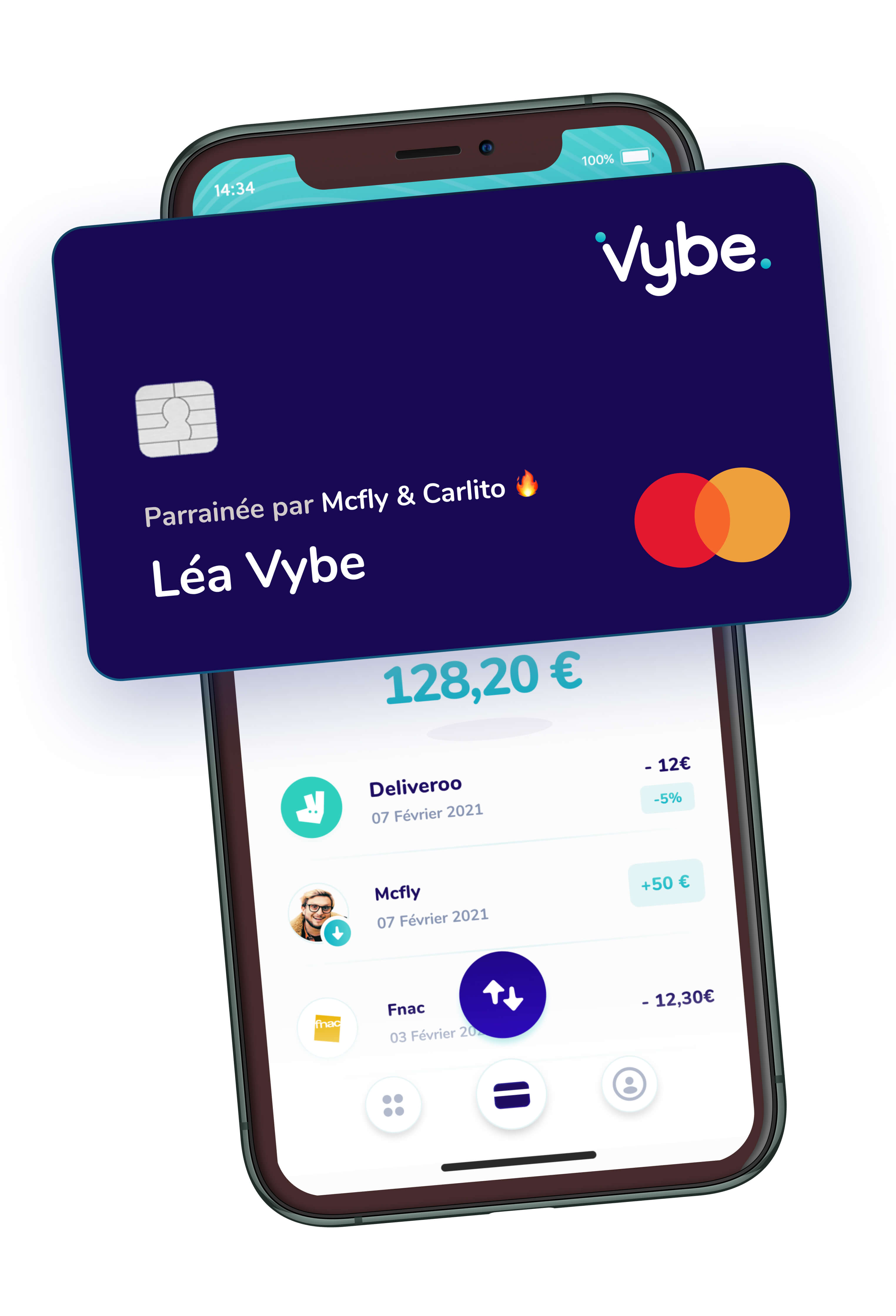
French startup Vybe has raised a $2.9 million funding round (€2.4 million) to build a challenger bank for teens. The company is currently testing its product with a soft launch. Users get a Mastercard payment card paired with an e-wallet.

Each Vybe account comes with its own IBAN so that users can send and receive money. If you want to open an account and you are less than 18 years old, you have to go through the KYC process (know your identity) with your parent.

As for parents, they can set up some limits on card payments or even block the card. Parents can also view transactions. The startup plans to generate revenue from interchange fees as well as partnership with brands and a reward system.

While Vybe isn’t technically live, the company has attracted 375,000 downloads. Overall, 260,000 teens have pre-ordered a card already. Thousands of cards have been delivered and the first metrics are encouraging. Early adopters tend to use their card once every two days.

Today’s fund is a round extension from existing investors. Investors include Ronan Le Moal, the former CEO of Crédit Mutuel Arkéa, Kick Club and Manoel Amorim.

Banking products for teenagers are a lucrative segment. In France, there are several companies trying to position themselves on this segment, such as Kard, PixPay and Xaalys. Most of these companies charge a subscription fee to access the service.

Other fintech companies that aren’t specifically targeting young people could also work well with teenagers. For instance, young users can open a Revolut Junior or Lydia account and receive money from their parents.

In the U.S., startups offering debit cards for children are about to reach unicorn status. As The Information’s Kate Clark reported, Greenlight, Current and Step are all raising new funding rounds with a valuation between $1 billion and $2 billion.

Image Credits: Vybe

News: SnackMagic picks up $15M to expand from build-your-own snack boxes into a wider gifting marketplace

The office shut-down at the start of the Covid-19 pandemic last year spurred huge investment in digital transformation and a wave of tech companies helping with that, but there were some distinct losers in the shift, too — specifically those whose business models were predicated on serving the very offices that disappeared overnight. Today, one

The office shut-down at the start of the Covid-19 pandemic last year spurred huge investment in digital transformation and a wave of tech companies helping with that, but there were some distinct losers in the shift, too — specifically those whose business models were predicated on serving the very offices that disappeared overnight. Today, one of the companies that had to make an immediate pivot to keep itself afloat is announcing a round of funding, after finding itself not just growing at a clip, but making a profit, as well.

SnackMagic, a build-your-own snack box service, has raised $15 million in a Series A round of funding led by Craft Ventures, with Luxor Capital also participating.

(Both investors have an interesting track record in the food-on-demand space: Most recently, Luxor co-led a $528 million round in Glovo in Spain, while Craft backs/has backed the likes of Cloud Kitchens, Postmates and many more).

The funding comes on the back of a strong year for the company, which hit a $20 million revenue run rate in eight months and turned profitable in December 2020.

Founder and CEO Shaunuk Amin said in an interview that the plan will be to use the funding both to continue growing SnackMagic’s existing business, as well as extend into other kinds of gifting categories. Currently, you can ship snacks anywhere in the world, but the customizable boxes — recipients are gifted an amount that they can spend, and they choose what they want in the box themselves from SnackMagic’s menu, or one that a business has created and branded as a subset of that — are only available in locations in North America, serviced by SnackMagic’s primary warehouse. Other locations are given options of pre-packed boxes of snacks right now, but the plan is to slowly extend its pick-and-mix model to more geographies, starting with the U.K.

Alongside this, the company plans to continue widening the categories of items that people can gift each other beyond chocolates, chips, hot sauces and other fun food items, into areas like alcohol, meal kits, and non-food items. There’s also scope for expanding to more use cases into areas like corporate gifting, marketing and consumer services, and analytics coming out of its sales.

Amin calls the data that SnackMagic is amassing about customer interest in different brands and products “the hidden gem” of the platform.

“It’s one of the most interesting things,” he said. Brands that want to add their items to the wider pool of products — which today numbers between 700 and 800 items — also get access to a dashboard where they monitor what’s selling, how much stock is left of their own items, and so on. “One thing that is very opaque [in the CPG world] is good data.”

For many of the bigger companies that lack their own direct sales channels, it’s a significantly richer data set than what they typically get from selling items in the average brick and mortar store, or from a bigger online retailer like Amazon. “All these bigger brands like Pepsi and Kellogg not only want to know this about their own products more but also about the brands they are trying to buy,” Amin said. Several of them, he added, have approached his company to partner and invest, so I guess we should watch this space.

SnackMagic’s success comes from a somewhat unintended, unlikely beginning, and it’s a testament to the power of compelling, yet extensible technology that can be scaled and repurposed if necessary. In its case, there is personalization technology, logistics management, product inventory and accounting, and lots of data analytics involved.

The company started out as Stadium, a lunch delivery service in New York City that was leveraging the fact that when co-workers ordered lunch or dinner together for the office — say around a team-building event or a late-night working session, or just for a regular work day — oftentimes they found that people all hankered for different things to eat.

In many cases, people typically make separate orders for the different items, but that also means if you are ordering to all eat together, things would not arrive at the same time; if it’s being expensed, it’s more complicated on that front too; and if you’re thinking about carbon footprints, it might also mean a lot less efficiency on that front too.

Stadium’s solution was a platform that provided access to multiple restaurants’ menus, and people could pick from all of them for a single order. The business had been operating for six years and was really starting to take off.

“We were quite well known in the city, and we had plans to expand, and we were on track for March 2020 being our best month ever,” Amin said. Then, Covid-19 hit. “There was no one left in the office,” he said. Revenue disappeared overnight, since the idea of delivering many items to one place instantly stopped being a need.

Amin said that they took a look at the platform they had built to pick many options (and many different costs, and the accounting that came with that) and thought about how to use that for a different end. It turned out that even with people working remotely, companies wanted to give props to their workers, either just to say hello and thanks, or around a specific team event, in the form of food and treats — all the more so since the supply of snacks you typically come across in so many office canteens and kitchens were no longer there for workers to tap.

It’s interesting, but perhaps also unsurprising, that one of the by-products of our new way of working has been the rise of more services that cater (no pun intended) to people working in more decentralised ways, and that companies exploring how to improve rewarding people in those environments are also seeing a bump.

Just yesterday, we wrote about a company called Alyce raising $30 million for its corporate gifting platform that is also based on personalization — using AI to help understand the interests of the recipient to make better choices of items that a person might want to receive.

Alyce is taking a somewhat different approach to SnackMagic: it’s not holding any products itself, and there is no warehouse but rather a platform that links up buyers with those providing products. And Alyce’s initial audience is different, too: instead of internal employees (the first, but not final, focus for SnackMagic) it is targeting corporate gifting, or presents that sales and marketing people might send to prospects or current clients as a please and thank you gesture.

But you can also see how and where the two might meet in the middle — and compete not just with each other, but the many other online retailers, Amazon and otherwise, plus the consumer goods companies themselves looking for ways of diversifying business by extending beyond the B2C channel.

“We don’t worry about Amazon. We just get better,” Amin said when I asked him about whether he worried that SnackMagic was too easy to replicate. “It might be tough anyway,” he added, since “others might have the snacks but picking and packing and doing individual customization is very different from regular e-commerce. It’s really more like scalable gifting.”

Investors are impressed with the quick turnaround and identification of a market opportunity, and how it quickly retooled its tech to make it fit for purpose.

“SnackMagic’s immediate success was due to an excellent combination of timing, innovative thinking and world-class execution,” said Bryan Rosenblatt, principal investor at Craft Ventures, in a statement. “As companies embrace the future of a flexible workplace, SnackMagic is not just a snack box delivery platform but a company culture builder.”

News: Elior acquires food delivery startup Nestor

Corporate catering company Elior has acquired French startup Nestor for an undisclosed amount. Nestor originally started with a simple idea to differentiate itself from food delivery giants, such as Deliveroo, Uber Eats and others. Every day, the startup offered a single menu for lunch. If you liked what was on the menu, you could order

Corporate catering company Elior has acquired French startup Nestor for an undisclosed amount. Nestor originally started with a simple idea to differentiate itself from food delivery giants, such as Deliveroo, Uber Eats and others.

Every day, the startup offered a single menu for lunch. If you liked what was on the menu, you could order and get delivered 10 to 20 minutes later. By offering a single menu, a delivery person could deliver several clients in a single ride. Similarly, by managing its own kitchen, Nestor could improve its margins as it didn’t have to pay third-party restaurants.

Since I first covered Nestor in 2016, the company has been capital efficient and mostly focused on this unique product offering. Elior says that Nestor managed to reach 10,000 meals per week.

Over the past few months, Nestor has tried to launch new offers. For instance, companies can switch to Nestor for their canteens. The startup delivers meals in fridges directly. It reminds me of Foodles, another French startup focused on canteen-like services.

Nestor can also deliver individually packed lunches in case you are spending the day with some clients for a big meeting. Popchef has also pivoted to focus more on that segment.

Following the acquisition, Nestor is going to focus more and more on the B2B market. While Elior is working with big companies in glass towers, it has been quite hard to convince small and medium companies to open a canteen in the office.

The sales pitch could be summed up in two sentences. Nestor clients don’t need to have their own kitchen as everything is prepared in advance. And employees don’t have to browse Deliveroo at lunch time to find something that isn’t a burger or a pizza.

WordPress Image Lightbox Plugin