Tag Archives: Blog

News: SambaNova raises $676M at a $5.1B valuation to double down on cloud-based AI software for enterprises

Artificial intelligence technology holds a huge amount of promise for enterprises — as a tool to process and understand their data more efficiently; as a way to leapfrog into new kinds of services and products; and as a critical stepping stone into whatever the future might hold for their businesses. But the problem for many

Artificial intelligence technology holds a huge amount of promise for enterprises — as a tool to process and understand their data more efficiently; as a way to leapfrog into new kinds of services and products; and as a critical stepping stone into whatever the future might hold for their businesses. But the problem for many enterprises is that they are not tech businesses at their cores and so bringing on and using AI will typically involve a lot of heavy lifting. Today, one of the startups building AI services is announcing a big round of funding to help bridge that gap.

SambaNova — a startup building AI hardware and integrated systems that run on it that only officially came out of three years in stealth last December — is announcing a huge round of funding today to take its business out into the world. The company has closed in on $676 million in financing, a Series D that co-founder and CEO Rodrigo Liang has confirmed values the company at $5.1 billion.

The round is being led by SoftBank, which is making the investment via Vision Fund 2. Temasek and the Government of Singapore Investment Corp. (GIC), both new investors, are also participating, along with previous backers BlackRock, Intel Capital, GV (formerly Google Ventures), Walden International and WRVI, among other unnamed investors. (Sidenote: BlackRock and Temasek separately kicked off an investment partnership yesterday, although it’s not clear if this falls into that remit.)

Co-founded by two Stanford professors, Kunle Olukotun and Chris Ré, and Liang, who had been an engineering executive at Oracle, SambaNova has been around since 2017 and has raised more than $1 billion to date — both to build out its AI-focused hardware, which it calls DataScale and to build out the system that runs on it. (The “Samba” in the name is a reference to Liang’s Brazilian heritage, he said, but also the Latino music and dance that speaks of constant movement and shifting, not unlike the journey AI data regularly needs to take that makes it too complicated and too intensive to run on more traditional systems.)

SambaNova on one level competes for enterprise business against companies like Nvidia, Cerebras Systems and Graphcore — another startup in the space which earlier this year also raised a significant round. However, SambaNova has also taken a slightly different approach to the AI challenge.

In December, the startup launched Dataflow-as-a-service as an on-demand, subscription-based way for enterprises to tap into SambaNova’s AI system, with the focus just on the applications that run on it, without needing to focus on maintaining those systems themselves. It’s the latter that SambaNova will be focusing on selling and delivering with this latest tranche of funding, Liang said.

SambaNova’s opportunity, Liang believes, lies in selling software-based AI systems to enterprises that are keen to adopt more AI into their business, but might lack the talent and other resources to do so if it requires running and maintaining large systems.

“The market right now has a lot of interest in AI. They are finding they have to transition to this way of competing, and it’s no longer acceptable not to be considering it,” said Liang in an interview.

The problem, he said, is that most AI companies “want to talk chips,” yet many would-be customers will lack the teams and appetite to essentially become technology companies to run those services. “Rather than you coming in and thinking about how to hire scientists and hire and then deploy an AI service, you can now subscribe, and bring in that technology overnight. We’re very proud that our technology is pushing the envelope on cases in the industry.”

To be clear, a company will still need data scientists, just not the same number, and specifically not the same number dedicating their time to maintaining systems, updating code and other more incremental work that comes managing an end-to-end process.

SambaNova has not disclosed many customers so far in the work that it has done — the two reference names it provided to me are both research labs, the Argonne National Laboratory and the Lawrence Livermore National Laboratory — but Liang noted some typical use cases.

One was in imaging, such as in the healthcare industry, where the company’s technology is being used to help train systems based on high-resolution imagery, along with other healthcare-related work. The coincidentally-named Corona supercomputer at the Livermore Lab (it was named after the 2014 lunar eclipse, not the dark cloud of a pandemic that we’re currently living through) is using SambaNova’s technology to help run calculations related to some Covid-19 therapeutic and antiviral compound research, Marshall Choy, the company’s VP of product, told me.

Another set of applications involves building systems around custom language models, for example in specific industries like finance, to process data quicker. And a third is in recommendation algorithms, something that appears in most digital services and frankly could always do to work a little better than it does today. I’m guessing that in the coming months it will release more information about where and who is using its technology.

Liang also would not comment on whether Google and Intel were specifically tapping SambaNova as a partner in their own AI services, but he didn’t rule out the prospect of partnering to go to market. Indeed, both have strong enterprise businesses that span well beyond technology companies, and so working with a third party that is helping to make even their own AI cores more accessible could be an interesting prospect, and SambaNova’s DataScale (and the Dataflow-as-a-service system) both work using input from frameworks like PyTorch and TensorFlow, so there is a level of integration already there.

“We’re quite comfortable in collaborating with others in this space,” Liang said. “We think the market will be large and will start segmenting. The opportunity for us is in being able to take hold of some of the hardest problems in a much simpler way on their behalf. That is a very valuable proposition.”

The promise of creating a more accessible AI for businesses is one that has eluded quite a few companies to date, so the prospect of finally cracking that nut is one that appeals to investors.

“SambaNova has created a leading systems architecture that is flexible, efficient and scalable. This provides a holistic software and hardware solution for customers and alleviates the additional complexity driven by single technology component solutions,” said Deep Nishar, Senior Managing Partner at SoftBank Investment Advisers, in a statement. “We are excited to partner with Rodrigo and the SambaNova team to support their mission of bringing advanced AI solutions to organizations globally.”


News: Tech talent can thrive in the public sector but government must invest in it

There is no shortage of extremely capable tech workers who want to help solve the biggest issues facing society. Will we give them the legitimate space and opportunity to conquer those problems?

Josh Mendelsohn
Contributor

Josh Mendelsohn is the founder and managing partner of Hangar, a public sector investment firm focused on building and scaling innovative startups.

Building, scaling and launching new tools and products is the lifeblood of the technology sector. When we consider these concepts today, many think of Big Tech and flashy startups, known for their industry dominance or new technologies that impact our everyday lives. But long before garages and dorm rooms became decentralized hubs for these innovations, local and state governments, along with many agencies within the federal government, pioneered tech products with the goal of improving the lives of millions.

Long before garages and dorm rooms became decentralized hubs for innovation, local and state governments, along with many agencies within the federal government, pioneered tech products with the goal of improving the lives of millions.

As an industry, we’ve developed a notion that working in government, the place where the groundwork was laid for the digital assistants we use every day, is now far less appealing than working in the private sector. The immense salary differential is often cited as the overwhelming reason workers prefer to work in the private sphere.

But the hard truth is the private sector brings far more value than just higher compensation to employees. Look no further than the boom in the tech sector during the pandemic to understand why it’s so attractive. A company like Zoom, already established and successful in its own right for years, found itself in a situation where it had to serve an exponentially growing and diverse user base in a short period of time. It quickly confronted a slew of infrastructure and user experience pivots on its way to becoming a staple of work-from-home culture — and succeeded.

That innate ability to work fast to deliver for consumers and innovate at what feels like a moment’s notice is what really draws talent. Compare that to the government’s tech environment, where decreased funding and partisan oversight slow the pace of work, or, worse, can get in the way of exploring or implementing new ideas entirely.

One look (literally, see our graph below) at the trends around R&D spending in the private and government sectors also paints a clear picture of where future innovations will come from if we don’t change the equation.

Chart of Facebook R&D spending vs. DARPA annual budget

Image Credits: Josh Mendelsohn/Hangar

Look no further than the U.S. government’s own (now defunct) Office of Technology Assessment. The agency aimed to provide a thorough analysis of burgeoning issues in science and technology, exposing many public services to a new age of innovation and implementation. Amid a period of downsizing by a newly Republican-led Congress, the OTA was defunded in 1995 with a peak annual budget of just $35.1 million (adjusted for 2019 dollars). The authoritative body on the importance of technology to the government was deemed duplicative and unnecessary. Despite numerous calls for its reinstatement, it has since remained shuttered.

Despite dwindling public sector investment and lackluster political action, the problems that technology is poised to help solve haven’t gone away or even eased up.

From the COVID pandemic to worsening natural disasters and growing societal inequities, public leaders have a responsibility to solve the pressing issues we face today. That responsibility should breed a desire to continuously iterate for the sake of constituents and quality of life, much in the same way private tech caters to the product, user and bottom line.

My own experiences in government have shaped my career and approach to building new technologies more than my time in Silicon Valley. There are plenty of tangible parallels to the private sector that can attract driven and passionate tech workers, but the responsibility of giving government work realistic consideration doesn’t just fall at the feet of talent. The governments that we depend on must invest more capital and pay closer attention to the tech community.

Tech workers want an environment where they can thrive and get to see their work in action, whoever the end user may be. They don’t want to feel hamstrung by the threat of decreased funding or the red tape that comes as a result of government partisanship. Replicating the unimpeded focus of Silicon Valley’s brightest examples is a must if we’re serious about drawing talented individuals into government or public-sector-focused work.

A great example of these ideas in action is one of the most beloved government agencies, NASA. Its continued funding has produced technologies developed for space exploration that are now commonplace in our lives, such as scratch-resistant lenses, memory foam and water filters. These use cases came much later on, only after millions of dollars were invested without knowing what would result.

NASA has continued to bolster its ability to stay nimble and evolve at a rapid pace by partnering with private companies. For talent in the tech sphere, the ability to leverage outside resources in this way, without compromising the product or work, is a boon for ideation and iteration.

One can also point to the agency when considering the importance of keeping technology research and innovation as apolitical as possible. It’s one of the few widely known public entities to prosper on the back of bipartisan support. Unfortunately, politicians typically do all of us a disservice, particularly tech workers in government, when they too closely connect themselves or their parties to a particular program or platform. It hinders innovation — and the ensuing mudslinging can detract from talented individuals jumping into government service.

There is no shortage of extremely capable tech workers who want to help solve the biggest issues facing society. Will we give them the legitimate space and opportunity to conquer those problems? There’s been some indication that we can. These ambitious and forward-looking efforts matter today more than ever and show all of us in the tech ecosystem that there’s a place in government for tech talent to grow and flourish.

News: ConsenSys raises $65M from JP Morgan, Mastercard, UBS to build infrastructure for DeFi

ConsenSys, a key player in crypto and a major proponent of the Ethereum blockchain, has raised a $65 million funding round from J.P. Morgan, Mastercard, and UBS AG, as well as major blockchain companies Protocol Labs, the Maker Foundation, Fenbushi, The LAO and Alameda Research. Additional investors include CMT Digital and the Greater Bay Area Homeland Development

ConsenSys, a key player in crypto and a major proponent of the Ethereum blockchain, has raised a $65 million funding round from J.P. Morgan, Mastercard, and UBS AG, as well as major blockchain companies Protocol Labs, the Maker Foundation, Fenbushi, The LAO and Alameda Research. Additional investors include CMT Digital and the Greater Bay Area Homeland Development Fund. As well as fiat, several funds invested with Ethereum-based stablecoins, DAI and USDC, as consideration.

Sources told TechCrunch that this is an unpriced round because of the valuation risk, and the funding instrument is “full”, so the round is being closed now.

The fundraise looks like a highly strategic one, based around the idea that traditional institutions will need visibility into the increasingly influential world of ‘decentralized finance’ (DeFi) and the Web3 applications being developed on the Ethereum blockchain.

In a statement on the fundraise, ConsenSys said it has been through a “period of strategic evolution and growth”, but most outside observers would agree that this is that’s something of an understatement.

After a period of quite a lot of ‘creative disruption’ to put it mildly (at one point a couple of years ago, ConsenSys seemed to have everything from a VC fund, to an accelerator, to multiple startups under its wing), the company has restructured to form two main arms: ConsenSys, the core software business; and ConsenSys Mesh, the investment arm, incubator, and portfolio. It also acquired the Quorum product from J.P. Morgan which has given it a deeper bench into the enterprise blockchain ecosystem. This means it now has a very key product suite for the Etherum platform, including products such as Codefi, Diligence, Infura, MetaMask, Truffle, and Quorum.

This suite allows it to serve both public and private permissioned blockchain networks. It can also support Layer 2 Ethereum networks, as well as facilitate access to adjacent protocols like IPFS, Filecoin, and others. ConsenSys is also a major contributor to the Ethereum 2.0 project, for obvious reasons.

Commenting on the fundraise, Joseph Lubin, founder of ConsenSys and co-founder, Ethreum said in a statement: “When we set out to raise a round, it was important to us to patiently construct a diverse cap table, consistent with our belief that similar to how the web developed, the whole economy would join the revolutionaries on a next-generation protocol. ConsenSys’ software stack represents access to a new automated objective trust foundation enabled by decentralized protocols like Ethereum. We are proud to partner with preeminent financial firms alongside leading crypto companies to further converge the centralized and decentralized financial domains at this particularly exciting time of growth for ConsenSys and the entire industry.”

With financial institutions able to see, ‘in public’ DeFi happening on Ethereuem, because of the public chain, they can see how much of the financial system is gradually starting to merge with the blockchain world. So it’s becoming clearer what attracts these major institutions.

Mike Dargan, Head of Group Technology at UBS said: “Our investment in ConsenSys adds proven expertise in distributed ledger technology to our UBS Next portfolio.”

For MasterCard this appears to be not just a pure investment – Consensys has been working with it on a private permissioned network.

Raj Dhamodharan, executive vice president of digital asset and blockchain products and partnerships at Mastercard said: “Enterprise Ethereum is a key infrastructure on which we and our partners are building payment and non-payment applications to power the future of commerce… Our investment and partnership with ConsenSys helps us bring secure and performant Enterprise Ethereum capabilities to our customers.”

Colleen Sullivan, Co-Founder and CEO of CMT Digital said: “ConsenSys is the pioneer in bridging the gaps across traditional finance, centralized crypto, and DeFi, and more broadly, between Web 2.0 and Web 3.0. We are proud to participate in this funding round as the ConsenSys team continues to pave the way for global users  — retail and institutional — to easily access the crypto ecosystem.”

TechCrunch understands that the fundraise was started around the time of the Quorum acquisition, last June. The $65 million round is in majority fiat currency as opposed to cryptocurrency and is an adjunct to the round done with JP Morgan last summer.

The presence of significant crypto players such as Maker Protocol Labs shows the significance of the fund-raise, beyond the simple transaction. The announcement also comes just ahead of the Coinbase IPO, which makes for interesting timing.

ConsenSys’ products have become highly significant in the world where developers, enterprises, and consumers meet blockchain and crypto. In its statement, the company claims MetaMask now has over three million monthly active users across mobile and desktop, a 3x increase in the last five or six months, it says. This is roughly the same amount of monthly active customers as Coinbase.

The ConsenSys announcement comes just ahead of the Coinbase IPO. While Coinbase is acting as an exchange to turn fiat into crypto and vice versa, it has also been getting into DeFi of late. Where there are also resemblances with ConsenSys, is that Coinbase, with 3 million users, is used as a wallet, and MetMask, which also has 3 million users, can also be used as a wallet. The comparison ends there, but it’s certainly interesting, given Coinbase’s $100 billion valuation.

As Jeremy Millar, Chief Development Officer, told me: “Coinbase has pioneered an exchange, in one of the world’s was regulated financial markets, the US. And it has helped drive significant interest in the space. We enjoy a very positive relationship with Coinbase, trying to further enable the ecosystem and adoption of the technology.”

The background to this raise is that a lot of early-stage blockchain and crypto companies have been raising a lot of money recently, but much of this has been through crypto investment firms. Only a handful of Silicon Valley VCs are backing blockchain, such as Andreessen Horowitz.

What’s interesting about this announcement is that these incumbent financial giants are not only taking an interest, but working alongside ConsenSys to both invest and build products on Ethereum.

It’s ConsenSys’ view that every payment service provider, banks will need this financial infrastructure in the future, especially for DeFI.

Given there is roughly $43 billion collateralized in DeFi, it’s increasingly the case that major investors are involved, and there are increasingly higher returns than traditional yield and bond or bond yields.

The moves by Central Banks into digital currencies is also forcing companies and governments to realize digital currency, and the ‘blockchain rails’ on which it runs, is here to stay. This is what is suggested by the Greater Bay Area Homeland Development Fund’s (a Shenzhen / Hong Kong joint partnership) decision to get involved.

Another aspect of this story is that ConsenSys is sitting on some extremely powerful products. Consensys has six products that serve three different types of people.

Service developers who are building on Ethereum are using Truffle to develop smart contracts. Users joining the NFT hype are using MetaMask underneath it all.

The MetaMask wallet allows users to swap one token for another. This has proved quite lucrative for ConsenSys, which says it has resulted in $1.8 billion in volume in decentralized exchange use. ConsenSys takes a 0.875 percent cut on every swap that it serves.

And institutions are using Consensys’ products. The company says more than 150,000 developers use Infura’s APIs, and 4.5 million developers create and deploy smart contracts using Truffle, while its Protocols group — developer of Hyperledger Besu and ConsenSys Quorum — are building Central Bank Digital Currencies (CBDCs) for six central banks, says Consensys.

Consensys is also making hay with the NFT boom. Developers are using Consensys products for the nodes and infrastructure on Ethereum which stores the NFT files.

Consensys is also riding two waves. One is the developer eave and the other is the financial system wave.

As a spokesperson said: “Where the interest in money and invention started happening was on public networks like Ethereum. So we really believe that these are converging and they will continue to, and every one of our products offers public main net compatibility because we think this is the future.”

Millar added: “If we want to help the world adopt the technology we need to meet it at its adoption point, which for many large enterprises means inside the firewall first. But similarly, we think, just like the public Internet, the real value – the disruptive value – changes the ability to do this on a broader permissionless basis, especially when you have sufficient privacy and authentication available.”

News: Spotify launches an in-car entertainment system, ‘Car Thing’

Spotify this morning officially announced the limited U.S. release of its first hardware device, the oddly named Car Thing, aimed at Spotify Premium subscribers. The new device — which Spotify is surprisingly offering for free plus shipping — has evolved substantially from the version that first began testing in 2019. This upgraded model has a

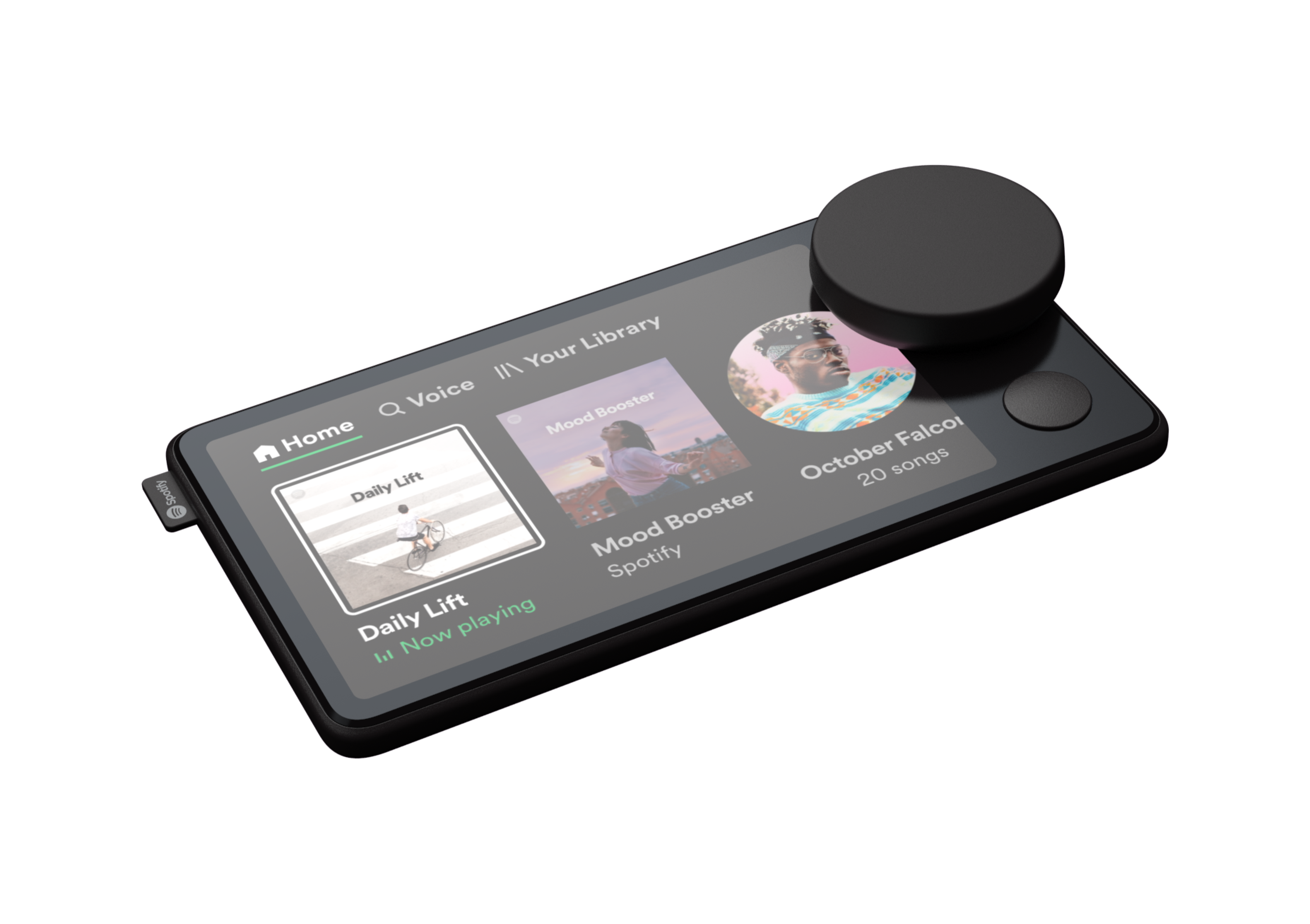
Spotify this morning officially announced the limited U.S. release of its first hardware device, the oddly named Car Thing, aimed at Spotify Premium subscribers. The new device — which Spotify is surprisingly offering for free plus shipping — has evolved substantially from the version that first began testing in 2019. This upgraded model has a touchscreen, a big, grippable knob for navigation, voice control features, and four preset buttons at the top for favorite music, podcasts or playlists, similar to Spotify on mobile devices.

The company explained its interest in Car Thing is about solving a need for customers who want a “more seamless” and personalized in-car listening experience. Although many cars today support Apple CarPlay or Android Auto, Spotify points out that the average age of a car in the U.S. is actually 11 years old and the average lifetime of cars is 18 years. That means there are still a large number of cars on the road that don’t support modern, in-car infotainment systems.

Car Thing is being introduced to serve this market — and likely, to give Spotify the opportunity to explore future business models where it has a more direct relationship with customers inside the vehicle, though the company isn’t speaking to its longer-term ambitions at this time.

Image Credits: Spotify

The new Car Thing itself is a lightweight (3.4 oz.), thin (4.6″ x 2.5″ x 0.7″) music and podcast player that offers a combination of voice control, knobs, buttons, and a touchscreen display for navigating its menus and selecting the media you want to hear. You can choose to use set up the device to work via Bluetooth or an AUX or USB cable, depending on how you usually connect your phone to your car stereo to play music.

You’re also able to mount Car Thing to your dash in a variety of ways as the device ships with three different types of dash and vent mounts to choose from, along with a car charger and USB-C cable.

Image Credits: Spotify

At launch, Car Thing will walk you through a quick tour where it explains how to get started. The user interface recalls the Spotify mobile app, so it isn’t difficult to get used to for first-time users. Here, you can tap, swipe and use your voice to interact with the screen. The knob lets you quickly move through your choices — an experience that may be more comfortable to those used to interacting with knobs on their car’s built-in stereo.

Across the top of the device are four preset buttons that let you save your favorite content for easy access. By default, these are configured with your Liked Songs and Spotify’s Daily Drive and Morning Commute playlists, with the last preset empty. Many users may just keep these selections, but you can change them at any time, Spotify says.

Image Credits: Spotify

Ahead of the device’s launch, Spotify quietly began rolling out support for its “Hey Spotify” voice command, which Car Thing leverages, too. This lets you speak your requests directly to Spotify, by asking for a song, album, artist, playlist, station or podcast, which Car Thing “hears” by way of its four microphones at the top. (Four, because Spotify wants Car Thing to respond even if you’re blasting your music or have the windows down, which creates additional noise.)

On mobile devices, using “Hey Spotify” is an opt-in option that you can shut off from the app’s settings. But Car Thing represents a smarter, not to mention more safety-focused, use case for voice control. Instead of fiddling with the screen or knobs, you can speak your commands — or allow your kids to shout out their options from the backseat, perhaps.

Image Credits: Spotify

Spotify’s policy regarding its use of voice data explains the company will collect recordings and transcripts of what you say along with information about the content it returned to you, and may use the data to improve the feature over time. The company told us that beyond the voice data, the device isn’t collecting any more information that it does already in the mobile app. Still, Car Thing does give Spotify a more direct window into what people listen to during commutes and longer road trips, which could inform its future products, programmed playlists and other features.

“In a typical year, Americans spend over 70 billion hours in their cars and there are 250 million cars on America’s roads today,” noted Spotify’s Head of Global Culture and Trends, Shanon Cook. “That’s a lot of time spent on the road. So what you do and what you listen to, to help you get through those hours in the car really matters.”

Initially, Car Thing is being made available during this limited release period for free, as selected users will just pay the cost of shipping — a choice Spotify made because Car Thing is still somewhat experimental.

“This is Spotify’s first hardware, and we obviously want to get things right,” said Spotify’s Head of Hardware Products, Andreas Cedborg. “And we want to learn quite a lot here in the beginning, so it’s a natural way for us to start,” he said.


Spotify says the current retail price for the device is $80. It doesn’t know if or when it will begin to retail the device, however. But it can roll out updates to its software so at least the device won’t be immediately obsolete, if Spotify decides to go in a different direction one day.

Despite Spotify’s exploration into hardware, the company stressed it doesn’t aim to be a hardware company. If anything, it’s seems more likely that Spotify is toying with the idea of becoming the next SiriusXM by way of a specialized in-car experience — although one that’s even more of an add-on than SiriusXM is as you physically have to attach the thing — the Car Thing — to your dash. Longer-term, it’s not clear it makes much sense to develop a Car Thing product line as cars get smarter every year and infotainment systems become more standard.

Car Thing will only be offered on an invite-only basis via carthing.spotify.com to U.S. Spotify Premium subscribers with a smartphone. The company declined to say how many units would be shipped, so you’ll probably want to jump on the waitlist sooner rather than later if such a device interests you.

News: Willo launches its tooth-brushing robot for kids

Are you 100% sure that your children are brushing their teeth properly? A New York-based startup called Willo has been working for several years on a device that should transform the tooth-brushing experience for children. Willo isn’t a new toothbrush — electric or not. It’s an oral care device that doesn’t look like a toothbrush

Are you 100% sure that your children are brushing their teeth properly? A New York-based startup called Willo has been working for several years on a device that should transform the tooth-brushing experience for children.

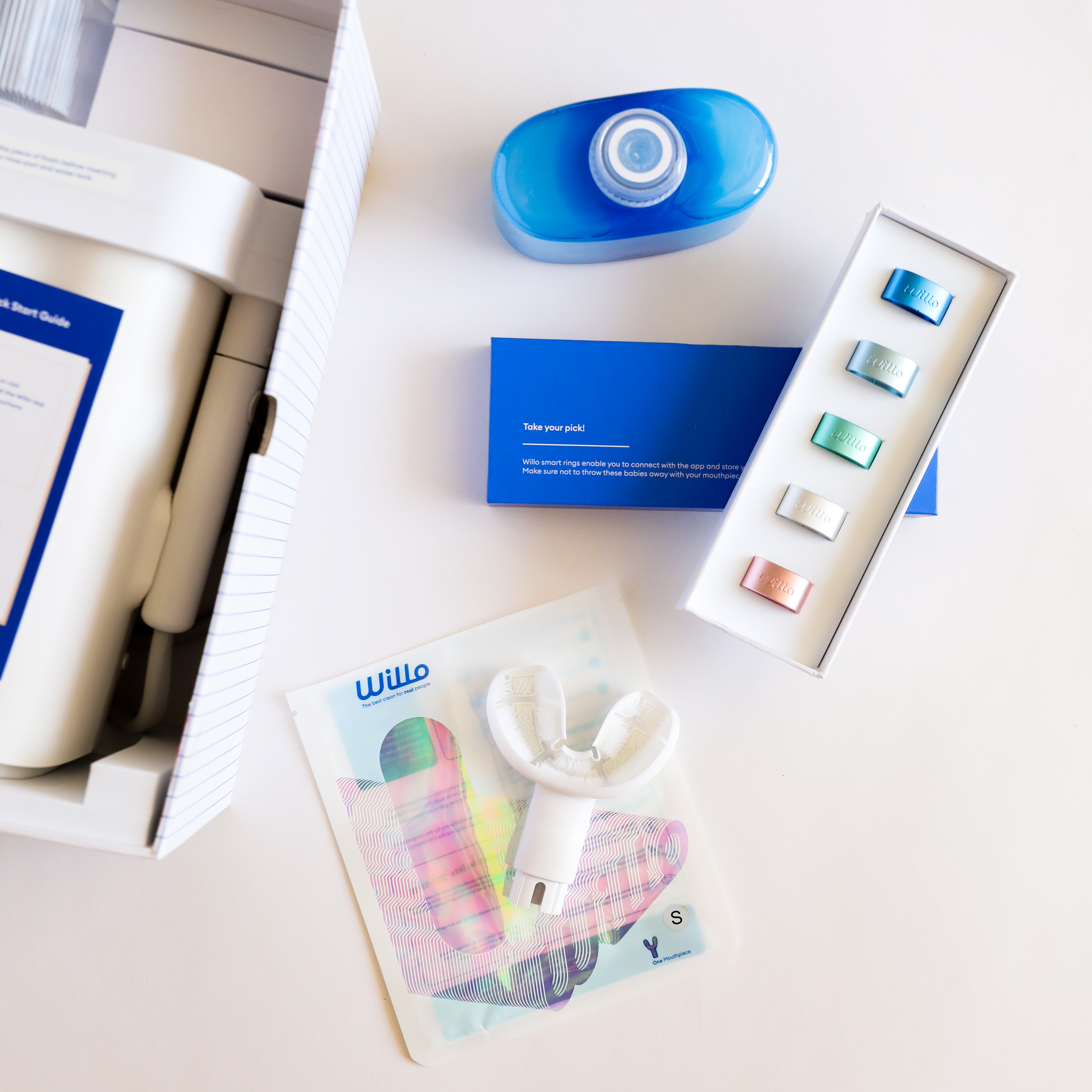
Willo isn’t a new toothbrush — electric or not. It’s an oral care device that doesn’t look like a toothbrush at all. The startup has worked with dental professionals to start from scratch with oral care in mind.

The device can be quite intimidating when you don’t see it in action as it takes quite a bit of shelf space and you don’t know what you’re supposed to do. But when you see it in action, it looks easier than expected. Willo specifically targets children because they tend to struggle to reach every tooth and brush properly.

Kids are supposed to grab the handle and put the mouthpiece in their mouth. They can start brushing by pressing the button and that’s it. They don’t have to do anything else. The silicone-based mouthpiece also features soft bristles. It starts vibrating in your kid’s mouth when they press the button.

The handle is connected to a bigger home station that contains a water tank with a special rinse liquid. Kids don’t have to use toothpaste and don’t have to rinse their mouth. Everything is handled by the device.

Finally, Willo is a connected device, which means that parents can track oral care in a mobile app. You can also set up multiple users — your kids will have to swap the mouthpiece before using the device.

Image Credits: Willo

If you’re thinking about buying a device for your children, Willo costs $199. You then have to pay $13 per month to receive rinse pods as well as new mouthpieces that always fit.

While the product is going live today, the startup has already tested it with real families. These children rated the device 4.73/5 and parents gave an NPS of 70+. They’ve all kept using Willo after the testing phase.

Behind this product, there’s a team of 33 people in France and the U.S. They have filed over 50 patents over the past 7 years — 30 of them have been granted so far. The company has raised $17 million in total funding from Kleiner Perkins, Bpifrance and Matt Rogers’ fund Incite.

It’s true that the concept of a toothbrush hasn’t changed at all. Making a device that changes the way you brush your teeth is an ambitious bet. But it’s clear that the startup has made a lot of efforts to tackle this challenge. Now let’s see if they manage to convince parents.

Image Credits: Willo

News: Meroxa raises $15M Series A for its real-time data platform

Meroxa, a startup that makes it easier for businesses to build the data pipelines to power both their analytics and operational workflows, today announced that it has raised a $15 million Series A funding round led by Drive Capital. Existing investors Root, Amplify and Hustle Fund also participated in this round, which together with the

Meroxa, a startup that makes it easier for businesses to build the data pipelines to power both their analytics and operational workflows, today announced that it has raised a $15 million Series A funding round led by Drive Capital. Existing investors Root, Amplify and Hustle Fund also participated in this round, which together with the company’s previously undisclosed $4.2 million seed round now brings total funding in the company to $19.2 million.

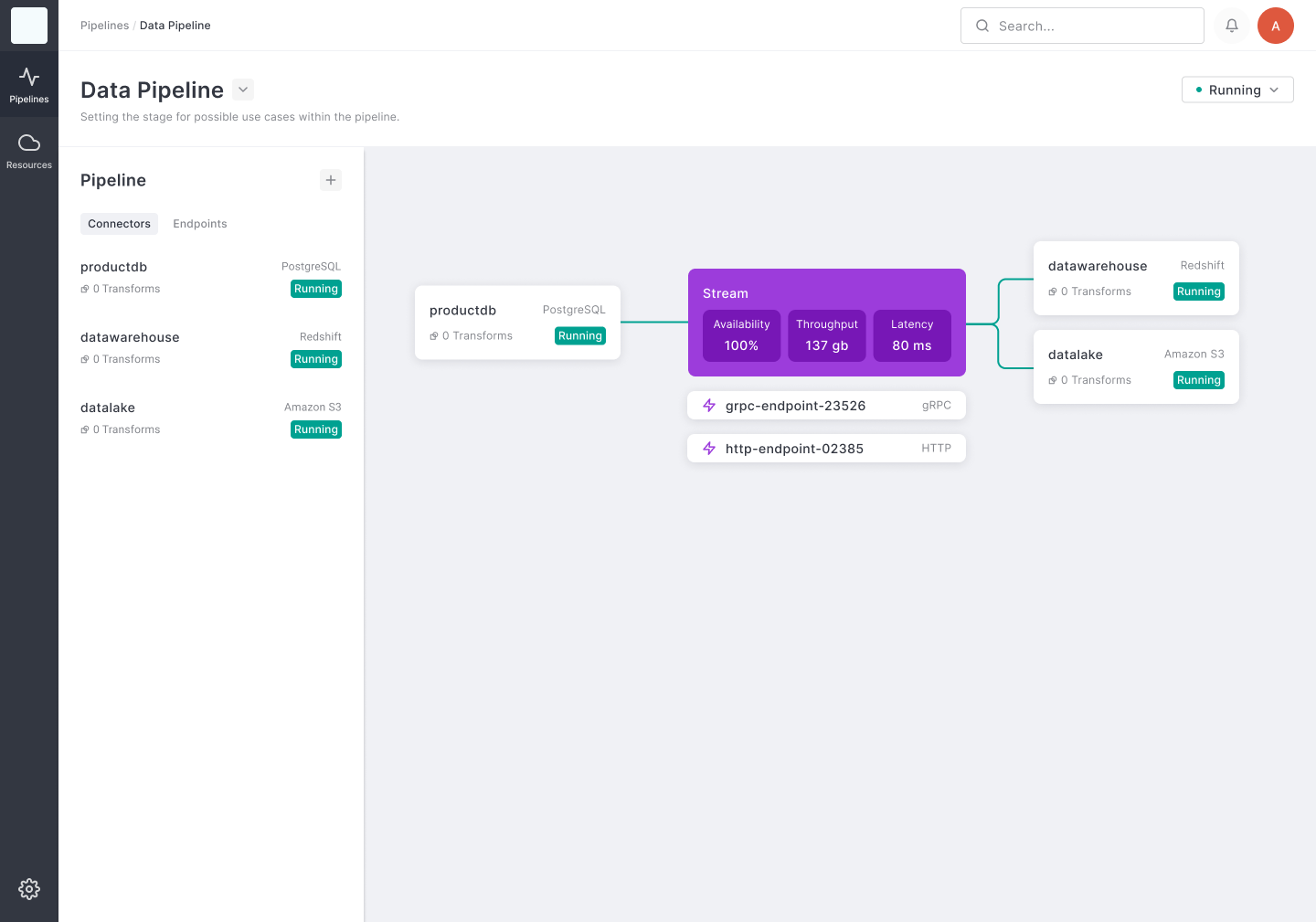
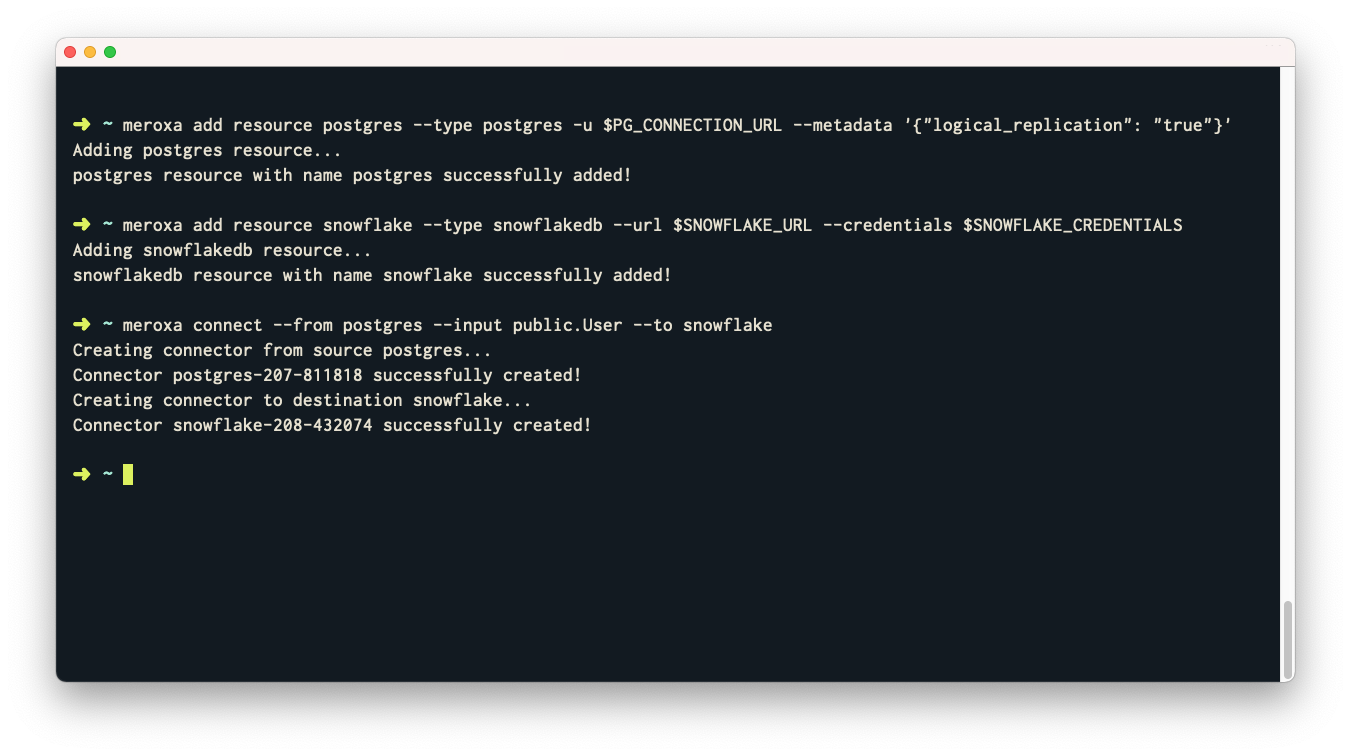
The promise of Meroxa is that can use a single platform for their various data needs and won’t need a team of experts to build their infrastructure and then manage it. At its core, Meroxa provides a single Software-as-a-Service solution that connects relational databases to data warehouses and then helps businesses operationalize that data.

Image Credits: Meroxa

“The interesting thing is that we are focusing squarely on relational and NoSQL databases into data warehouse,” Meroxa co-founder and CEO DeVaris Brown told me. “Honestly, people come to us as a real-time FiveTran or real-time data warehouse sink. Because, you know, the industry has moved to this [extract, load, transform] format. But the beautiful part about us is, because we do change data capture, we get that granular data as it happens.” And businesses want this very granular data to be reflected inside of their data warehouses, Brown noted, but he also stressed that Meroxa can expose this stream of data as an API endpoint or point it to a Webhook.

The company is able to do this because its core architecture is somewhat different from other data pipeline and integration services that, at first glance, seem to offer a similar solution. Because of this, users can use the service to connect different tools to their data warehouse but also build real-time tools on top of these data streams.

Image Credits: Meroxa

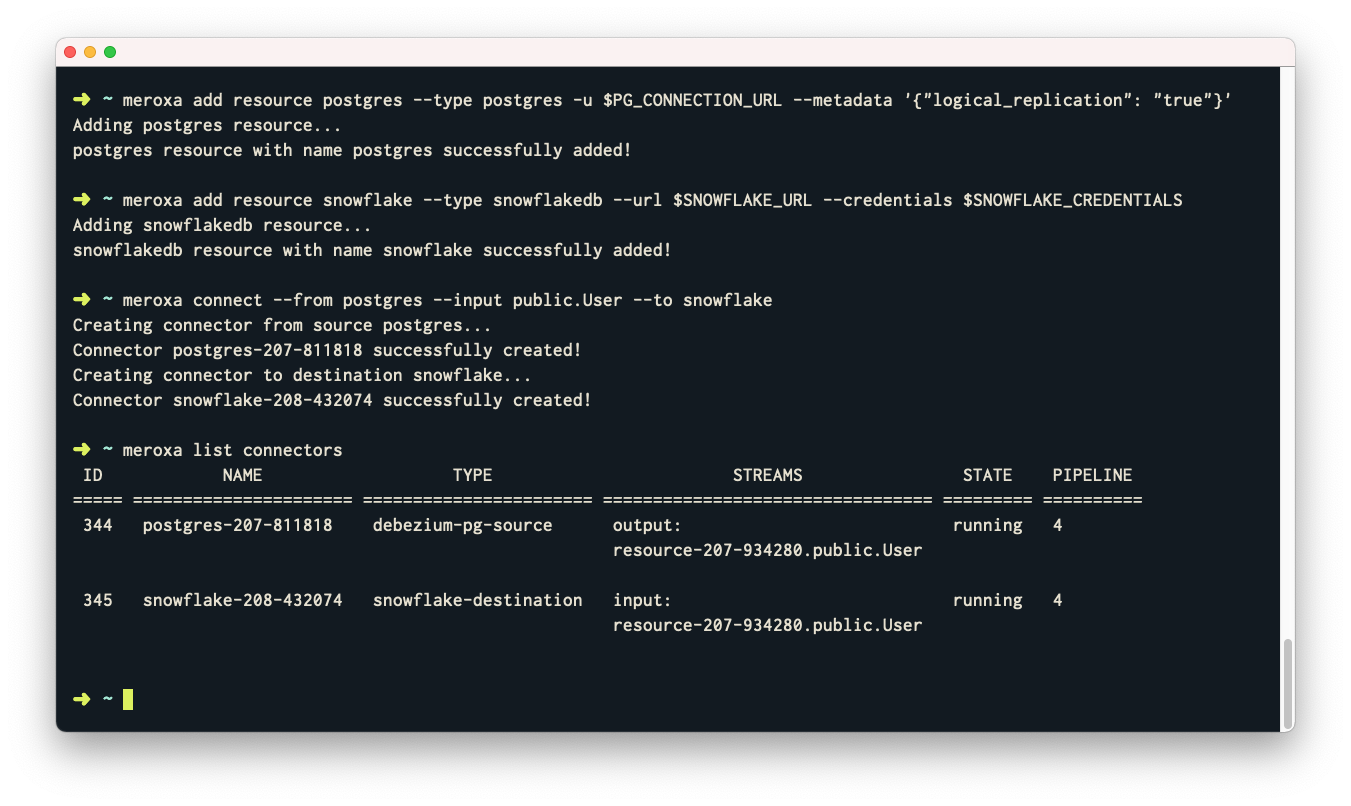
“We aren’t a point-to-point solution,” Meroxa co-founder and CTO Ali Hamidi explained. “When you set up the connection, you aren’t taking data from Postgres and only putting it into Snowflake. What’s really happening is that it’s going into our intermediate stream. Once it’s in that stream, you can then start hanging off connectors and say, ‘Okay, well, I also want to peek into the stream, I want to transfer my data, I want to filter out some things, I want to put it into S3.”

Because of this, users can use the service to connect different tools to their data warehouse but also build real-time tools to utilize the real-time data stream. With this flexibility, Hamidi noted, a lot of the company’s customers start with a pretty standard use case and then quickly expand into other areas as well.

Brown and Hamidi met during their time at Heroku, where Brown was a director of product management and Hamidi a lead software engineer. But while Heroku made it very easy for developers to publish their web apps, there wasn’t anything comparable in the highly fragmented database space. The team acknowledges that there are a lot of tools that aim to solve these data problems, but few of them focus on the user experience.

Image Credits: Meroxa

“When we talk to customers now, it’s still very much an unsolved problem,” Hamidi said. “It seems kind of insane to me that this is such a common thing and there is no ‘oh, of course you use this tool because it addresses all my problems.’ And so the angle that we’re taking is that we see user experience not as a nice-to-have, it’s really an enabler, it is something that enables a software engineer or someone who isn’t a data engineer with 10 years of experience in wrangling Kafka and Postgres and all these things. […] That’s a transformative kind of change.”

It’s worth noting that Meroxa uses a lot of open-source tools but the company has also committed to open-sourcing everything in its data plane as well. “This has multiple wins for us, but one of the biggest incentives is in terms of the customer, we’re really committed to having our agenda aligned. Because if we don’t do well, we don’t serve the customer. If we do a crappy job, they can just keep all of those components and run it themselves,” Hamidi explained.

Today, Meroxa, which the team founded in early 2020, has over 24 employees (and is 100% remote). “I really think we’re building one of the most talented and most inclusive teams possible,” Brown told me. “Inclusion and diversity are very, very high on our radar. Our team is 50% black and brown. Over 40% are women. Our management team is 90% underrepresented. So not only are we building a great product, we’re building a great company, we’re building a great business.”  

News: Microsoft’s latest Surface Laptop goes on sale this week, starting at $999

Microsoft is understandably positioning the latest additions to its Surface line as productivity devices. Laptop sales, in particular, have jumped amid the pandemic, as many have scrambled to shift to a work from home setting. With that in mind, the latest version of the Surface Laptop is far and away the headline item amid a

Microsoft is understandably positioning the latest additions to its Surface line as productivity devices. Laptop sales, in particular, have jumped amid the pandemic, as many have scrambled to shift to a work from home setting. With that in mind, the latest version of the Surface Laptop is far and away the headline item amid a new batch of devices.

The Surface Laptop 4 doesn’t seem to mark a massive upgrade to the line, arriving about a year and half after the previous model. Of course, the product has been one of the better received among the company’s proprietary hardware offerings, swapping the more creator-focused convertible models for a more straightforward approach. Sometimes the classics are classics for a reason.

Image Credits: Microsoft

Available with either a 13.5- or 15-inch touchscreen, the new Laptop sports either an 11th Gen Intel Core or AMD Ryzen processor. The system’s lowest configuration will run $999, but Microsoft has yet to break down the pricing from there. The company is promising improved performance and increased battery life, over the 11.5 posted hours on the Laptop 3. The below video puts the new time at “up to 19 hours,” which big if true — and nice for when we all start traveling again.

The system builds on its predecessor’s HD webcam with the addition of improved low-light capabilities. That’s paired with a studio mic array. Again, nothing groundbreaking, but it’s nice to see companies paying attention to this stuff in the age of COVID-19, when a concerning percentage of our interpersonal communication occurs via webcam.

The design language is similar to earlier versions, though the company has swapped in a new Ice Blue color option. Microsoft is keeping that proprietary charging port around (fast charging will get you up to 80% in an hour). That’s coupled with USB A and C. There are a pair of Dolby Atmos speakers on board and the touchscreen works with the Surface Pen.

The Laptop is available for preorder today in the U.S., Canada and Japan, and starts shipping on April 15. The 13.5-inch AMD Ryzen with 8GB of RAM and 256GB of storage runs $999. On the high end, the 15-inch Intel Core i7 with 32GB of RAM and 1TB of storage is $2,399 (plus another $100 if you want to upgrade Windows 10 Home to Pro). The company is tossing in Surface Earbuds for early preorders.

News: Microsoft is really pushing Teams with its latest accessories

The new Surface Laptop was the marquee arrival in today’s Microsoft announcement, but boy howdy, the company also dropped a whole bunch of new accessories. It’s a pretty broad range of new devices, including some small updates to existing products and entirely new entries. But there’s one clear through line across them all: Teams. Microsoft

The new Surface Laptop was the marquee arrival in today’s Microsoft announcement, but boy howdy, the company also dropped a whole bunch of new accessories. It’s a pretty broad range of new devices, including some small updates to existing products and entirely new entries. But there’s one clear through line across them all: Teams.

Microsoft is, after all, a software company at heart. That’s always fueled the company’s hardware products. So it’s really not a major surprise that its productivity software is the driving force here. After all, this is the company that was pushing Office integration on its earbuds.

Image Credits: Microsoft

Matter of fact, the company’s actually debuting a slight upgrade to its Surface Headphone line. The Headphones 2+ for Business. The big distinction here is the addition on-ear Teams control. The other additions to the well-received over-ear headphones are fairly minor (hence the telling “2+” name), including improved remote calling. They also run a bit of a premium at $299 to the Headphone 2’s $250. They’re shipping later this month.

Image Credits: Microsoft

The remainder of the new products fall under the “Modern” line, which currently also includes the Modern Mouse. Joining the Headphones are the Microsoft Modern USB and Wireless Headsets. Here the products get a dedicated Teams button for joining calls on MS’ platform. They’ll ship in June for $50 and $100, respectively.


Microsoft is also adding a 1080p webcam to the mix. The Modern Webcam has a 78-degree field of view and can shoot in HDR. There’s a privacy shutter on board, as well as software settings for things like auto white balance and facial retouching, if you’re so inclined. And yes, Teams certification. Can’t help but think this would have been a big hit this time last year, but for many working from home will be the new normal, going forward. That will ship in June for a reasonable $70.

Image Credits: Microsoft

The oddest addition is probably the Microsoft Modern USB-C Speaker. With Cortana seemingly dead in the water, Teams is once again the driving force here. It’s a desktop speaker with dual microphones designed for Teams calls and some light music listening. That one is also arriving in June, priced at $100.

News: Netflix gives its Kids’ profiles a visual upgrade

Netflix is giving its Kids’ profiles a revamp, the company announced today. While adults’ profiles are personalized with horizontal rows of recommendations that appear as they scroll down, the Kids profiles’ redesign is more visual in nature. When kids now log in to their account on a TV, they’ll be greeted with their favorite titles

Netflix is giving its Kids’ profiles a revamp, the company announced today. While adults’ profiles are personalized with horizontal rows of recommendations that appear as they scroll down, the Kids profiles’ redesign is more visual in nature. When kids now log in to their account on a TV, they’ll be greeted with their favorite titles and characters right at the top of the screen, Netflix says.

Previously, the layout for the Kids profile was similar to an adult’s, with rows that showed Trending shows and other suggestions from Netflix’s library (See below). Now, the top row will feature the kid’s most-watched content — and for early readers, the characters will help direct kids to the show they want to watch.

Image Credits: Netflix old Kids profile

Image Credits: Netflix new Kids profile

To customize this row for each user, Netflix uses information about what was watched to improve its recommendations. It notes that the favorite shows featured at the top of the screen will come from the full Netflix catalog, not just its original programming. For the title to appear in their row, a child must watch a show at least once, Netflix says. When selected, the background updates to reflect the chosen show, as well.

Younger kids often navigate Netflix visually. Even toddlers can be found using iPads or TV remotes, moving through Netflix like a pro, at times. And during the COVID era where parents were stuck at home trying to both entertain their little kids while homeschooling older ones and somehow also finding time to work, it makes sense to update one of the most popular “TV babysitter” apps to make it something that younger children could use on their own without parental assistance. The need to serve the overwhelmed parent was part of the thinking behind the upgrade, pitching how the update would give parents who “need 30 minutes of uninterrupted time to knock out some work” time to do so. (Uninterrupted time during the pandemic? What’s that?)

Netflix says the new profiles are rolling out now to TV devices globally, but will be tested on tablets and mobile devices in the coming months.

News: Zoho launches new low code workflow automation product

Workflow automation has been one of the key trends this year so far, and Zoho, a company known for its suite of affordable business tools has joined the parade with a new low code workflow product called Qntrl (pronounced control). Zoho’s Rodrigo Vaca, who is in charge of Qntrl’s marketing says that most of the

Workflow automation has been one of the key trends this year so far, and Zoho, a company known for its suite of affordable business tools has joined the parade with a new low code workflow product called Qntrl (pronounced control).

Zoho’s Rodrigo Vaca, who is in charge of Qntrl’s marketing says that most of the solutions we’ve been seeing are built for larger enterprise customers. Zoho is aiming for the mid-market with a product that requires less technical expertise than traditional business process management tools.

“We enable customers to design their workflows visually without the need for any particular kind of prior knowledge of business process management notation or any kind of that esoteric modeling or discipline,” Vaca told me.

While Vaca says, Qntrl could require some technical help to connect a workflow to more complex backend systems like CRM or ERP, it allows a less technical end user to drag and drop the components and then get help to finish the rest.

“We certainly expect that when you need to connect to NetSuite or SAP you’re going to need a developer. If nothing else, the IT guys are going to ask questions, and they will need to provide access,” Vaca said.

He believes this product is putting this kind of tooling in reach of companies that may have been left out of workflow automation for the most part, or which have been using spreadsheets or other tools to create crude workflows. With Qntrl, you drag and drop components, and then select each component and configure what happens before, during and after each step.

What’s more, Qntrl provides a central place for processing and understanding what’s happening within each workflow at any given time, and who is responsible for completing it.

We’ve seen bigger companies like Microsoft, SAP, ServiceNow and others offering this type of functionality over the last year as low code workflow automation has taken center stage in business.

This has become a more pronounced need during the pandemic when so many workers could not be in the office. It made moving work in a more automated workflow more imperative, and we have seen companies moving to add more of this kind of functionality as a result.

Brent Leary, principal analyst at CRM Essentials, says that Zoho is attempting to remove some the complexity from this kind of tool.

“It handles the security pieces to make sure the right people have access to the data and processes used in the workflows in the background, so regular users can drag and drop to build their flows and processes without having to worry about that stuff,” Leary told me.

Zoho Qntrl is available starting today starting at just $7 per user month.

WordPress Image Lightbox Plugin