Tag Archives: Blog

News: What’s fueling hydrogen tech?

Hydrogen is capturing the attention of governments and private sector players, fueled by new tech, global green energy legislation, and post-pandemic “green recovery” schemes.

Hydrogen — the magical gas that Jules Verne predicted in 1874 would one day be used as fuel — has long struggled to get the attention it deserves. Discovered 400 years ago, its trajectory has seen it mostly mired in obscurity, punctuated by a few explosive moments, but never really fulfilling its potential.

Now in 2021, the world may be ready for hydrogen.

This gas is capturing the attention of governments and private sector players, fueled by new tech, global green energy legislation, post-pandemic “green recovery” schemes and the growing consensus that action must be taken to combat climate change.

Joan Ogden, professor emeritus at UC Davis, started researching hydrogen in 1985 — at the time considered “pretty fringy, crazy stuff”. She’s seen industries and governments inquisitively poke at hydrogen over the years, then move on. This new, more intense focus feels different, she said.

The funding activity in France is one illustration of what is happening throughout Europe and beyond. “Back in 2018, the hydrogen strategy in France was €100 million — a joke,” Sabrine Skiker, the EU policy manager for land transport at Hydrogen Europe, said in an interview with TechCrunch. “I mean, a joke compared to what we have now. Now we have a strategy that foresees €7.2 billion.”

The European Clean Hydrogen Alliance forecasts public and private sectors will invest €430 billion in hydrogen in the continent by 2030 in a massive push to meet emissions targets. Globally, the hydrogen generation industry is expected to grow to $201 billion by 2025 from $130 billion in 2020 at a CAGR of 9.2%, according to research from Markets and Markets published this year. This growth is expected to lead to advancements across multiple sectors including transportation, petroleum refining, steel manufacturing and fertilizer production. There are 228 large-scale hydrogen projects in various stages of development today — mostly in Europe, Asia and Australia.

Hydrogen breakdown

When the word “hydrogen” is uttered today, the average non-insider’s mind likely gravitates toward transportation — cars, buses, maybe trains or 18-wheelers, all powered by the gas.

But hydrogen is and does a lot of things, and a better understanding of its other roles — and challenges within those roles — is necessary to its success in transportation.

Hydrogen is already being heavily used in petroleum refineries and by manufacturers of steel, chemicals, ammonia fertilizers and biofuels. It’s also blended into natural gas for delivery through pipelines.

Hydrogen is not an energy source, but an energy carrier — one with exceptional long-duration energy storage capabilities, which makes it a complement to weather-dependent energies like solar and wind. Storage is critical to the growth of renewable energy, and greater use of hydrogen in renewable energy storage can drive the cost of both down.

However, 95% of hydrogen produced is derived from fossil fuels — mostly through a process called steam methane reforming (SMR). Little of it is produced via electrolysis, which uses electricity to split hydrogen and oxygen. Even less is created from renewable energy. Thus, not all hydrogen is created equal. Grey hydrogen is made from fossil fuels with emissions, and blue hydrogen is made from non-renewable sources whose carbon emissions are captured and sequestered or transformed. Green hydrogen is made from renewable energy. 

Where the action is

The global fuel cell vehicle market is hit or miss. There are about 10,000 FCVs in the U.S., with most of them in California — and sales are stalling. Only 937 FCVs were sold in the entire country in 2020, less than half the number sold in 2019. California has 44 hydrogen refueling stations and about as many in the works, but a lack of refueling infrastructure outside of the state isn’t helping American adoption.

News: Startup Alley at TechCrunch Disrupt 2021 is filling up fast. Apply today.

Startup Alley — the very name conjures up images of early-stage startups demonstrating game-changing products, platforms and services to thousands of Disrupt attendees and industry influencers. It’s where you’ll find envelope pushing and boundary breaking going down. If you’re busy shoving envelopes and busting down boundaries, don’t miss your chance to exhibit in Startup Alley

Startup Alley — the very name conjures up images of early-stage startups demonstrating game-changing products, platforms and services to thousands of Disrupt attendees and industry influencers. It’s where you’ll find envelope pushing and boundary breaking going down.

If you’re busy shoving envelopes and busting down boundaries, don’t miss your chance to exhibit in Startup Alley at TechCrunch Disrupt 2021 in September. But here’s the thing. We’re limiting the number of exhibitors this year, and Startup Alley spots are filling up fast.

Apply for Startup Alley now to secure your place. Budget-friendly tip: Grab your Startup Alley Pass for just $199 — but that deal expires on May 13 at 11:59 p.m. (PDT).

Startup Alley will still have plenty of amazing companies. But we want to showcase the very best and give those exhibiting companies the focused exposure they so richly deserve.

What can you expect when you exhibit in Startup Alley this year? For starters, high visibility. Every exhibiting startup gets two minutes to pitch to a global audience during featured breakout feedback sessions. Disrupt attendees include all kinds of influencers — investors, tech icons, the media — and potential customers.

You’ll receive two lists that define opportunity — press and investors. Pitch your story to members of the press and increase your brand exposure. Schedule meetings with investors to explore funding options or to get feedback on your startup.

“Disrupt is a great avenue to network with potential investors. It carries a lot of street cred and talking about our CEO’s experience pitching in Startup Alley helps us make those connections and start important conversations.” — Jessica McLean, Director of Marketing and Communications, Infinite-Compute.

You’ll also have a shot to be featured in one of the many Startup Alley Crawls. Every tech category will have its own 1-hour crawl. The TechCrunch team will interview a select number of exhibiting founders within each category live from the Disrupt stage.

You just might be one of only two exhibiting startups chosen as a Startup Battlefield Wild Card select. The TechCrunch editorial team makes that call, and the anointed ones will participate in the legendary Startup Battlefield pitch competition for a chance to win the $100,000 prize. Win or lose, Startup Battlefield is a solid launchpad.

And here’s a big reason not only to exhibit, but to get your Startup Alley pass ASAP. TechCrunch will choose 50 exhibiting startups to participate in Startup Alley+. That cohort will see benefits kick in at TC Early Stage in July — before Disrupt even begins. We’re talking founder masterclasses, pitch-offs at Extra Crunch Live and very warm introductions to top, relevant investors.

TechCrunch Disrupt 2021 takes place on September 21-23. Push those envelopes, break those boundaries and don’t miss your chance to exhibit in Startup Alley. Don’t forget: tickets are limited this year and the early bird price ends on May 13 at 11:59 p.m. (PDT).

Is your company interested in sponsoring or exhibiting at Disrupt 2021? Contact our sponsorship sales team by filling out this form.

News: 5 questions about Grab’s epic SPAC investor deck

Grab is going public via a SPAC, so let’s talk through key points from the investor deck — we’ll discuss growth, segment profitability, aggregate costs and COVID-19.

As expected, Southeast Asian super-app Grab is going public via a SPAC, or blank check company.

The combination, which TechCrunch discussed over the weekend, will value Grab on an equity basis at $39.6 billion and will provide around $4.5 billion in cash, $4.0 billion of which will come in the form of a private investment in public equity, or PIPE. Altimeter Capital is putting up $750 million in the PIPE — fitting, as Grab is merging with one of Alitmeter’s SPACs.

Grab, which provides ride-hailing, payments and food delivery, will trade under the ticker symbol “GRAB” on Nasdaq when the deal closes. The announcement comes a day after Uber told its investors it was seeing recovery in certain transactions, including ride-hailing and delivery.

Uber also told the investing public that it’s still on track to reach adjusted EBITDA profitability in Q4 2021. The American ride-hailing giant did a surprising amount of work clearing brush for the Grab deal. Extra Crunch examined Uber’s ramp towards profitability yesterday.

This morning, let’s talk through several key points from Grab’s SPAC investor deck. We’ll discuss growth, segment profitability, aggregate costs and COVID-19, among other factors. You can read along in the presentation here.

How harshly did COVID-19 impact the business?

The impact on Grab’s operations from COVID-19 resembles what happened to Uber in that the company’s deliveries business had a stellar 2020, while its ride-hailing business did not.

From a high level, Grab’s gross merchandise volume (GMV) was essentially flat from 2019 to 2020, rising from $12.2 billion to $12.5 billion. However, the company did manage to greatly boost its adjusted net revenue over the same period, which rose from $1.0 billion to $1.6 billion.

News: Clubhouse rolls out payments to over 60K creators following initial test

Clubhouse is rapidly expanding access to payments, its first revenue-generating feature for creators, since its launch into testing earlier this month. At the beginning of April, Clubhouse said it would give a “small test group” of creators the ability to accept payments from their fans and supporters through the social audio app. These donations go

Clubhouse is rapidly expanding access to payments, its first revenue-generating feature for creators, since its launch into testing earlier this month. At the beginning of April, Clubhouse said it would give a “small test group” of creators the ability to accept payments from their fans and supporters through the social audio app. These donations go 100% to the creators, Clubhouse noted at the time. Though tests began with just 1,000 users, Clubhouse this weekend rolled out payments to another 60,000-plus users in the U.S., the company said during its Town Hall weekly event. And it expects to have payments roll out to everyone over the next few weeks.

That’s a fast pace of development for an app that’s now being challenged on all sides from companies including Twitter, Facebook, Spotify, Reddit, Discord and even LinkedIn. By making payments more quickly available, Clubhouse could potentially better retain its top creators who could otherwise be influenced to jump ship for a rival app with a broader reach.

During Clubhouse’s Town Hall event, co-founder Paul Davison noted that another 66,000 creators gained the ability receive payments this weekend, following the launch of the original test. To send a payment, users can visit a creator’s profile, then tap on the button at the bottom that says “Send Money.” This will launch a screen that suggests amounts like $5, $10, or $20, or you can fill in your own amount. The feature is being powered by Stripe and currently requires a debit or credit card to work.

Image Credits: Clubhouse screenshot

Davison again noted that creators will receive the full amount users send, while the fees paid on transactions will go to its partner Stripe to cover the payment processing fees. He added, too, that users should not send Clubhouse team members like himself payments, even though their profiles include the feature. Though he didn’t say why — only noting that all such donations would be given to charity — the reason has to do with how in-app purchases work on the App Store.

Apple a couple of years ago carved out an exception to its rules around commissions on in-app purchases in those cases where the business wasn’t profiting in any way from the donations or tips being sent to creators using the app. That’s why Clubhouse has stressed that it doesn’t take a cut of creator revenue at this time and why it’s emphasizing that it doesn’t keep any donations sent its way, either.

The company also cleared up some rumors around who would first gain access to payments, noting that users didn’t have a start a “club” on Clubhouse in order to be considered. Instead, Davison said the app was prioritizing those users who had been recently active and who didn’t have any violations. But otherwise, the initial testers have been a largely random sampling.

In-app payments are only one of the avenues Clubhouse plans to explore to generate revenue both for creators, and longer-term, for itself. The company is also considering features like subscriptions for creators and clubs, ticketed events, and brand deals.

Clubhouse also offered an update on its plans for Creator First program. The company last month announced the program, which will help creators get their first shows off the ground with Clubhouse’s help. Selected creators will receive equipment, promotional and marketing support, help with booking guests, and even income.

To date, Clubhouse has fielded over 5,000 submissions from interested users. To narrow down the field, the company said it will host a “pilot season” of sorts beginning April 23, where 60 yet-to-be-announced creators will debut shows at a pace of one episode over a three-week period. The Creator First program participants will then be selected based on feedback from a panel of judges and the Clubhouse community. Those initial 60 finalists will be announced April 23, the company said.

News: Apple’s next event is April 20

Apple only dropped info about WWDC two weeks back, but the company just announced another event – this one happening much sooner. After Siri spilled the beans this morning, the company has officially confirmed its next event for April 20. Invites for its “Spring Loaded” event went out just now, sporting what appears to be

Apple only dropped info about WWDC two weeks back, but the company just announced another event – this one happening much sooner. After Siri spilled the beans this morning, the company has officially confirmed its next event for April 20. Invites for its “Spring Loaded” event went out just now, sporting what appears to be a doodle drawn on an iPad.

Of course, the assistant’s earlier suggestion that the event is being held at “Apple Park in Cupertino” was only true from a certain point of view, to quote a famous space wizard. It’s 2021, after all, and everything still very much happens online, which means some snazzily edited drone shots of the Spaceship Apple.

As for what this all means from a product perspective, all signs appear to point to new iPads. Specifically, the company is rumored to be releasing a 12.9-inch version of the Pro, sporting a Mini LED, improved cameras and faster chips in-line with what we’ve seen on recent Macs. Continued supply constraints, however, could present an issue.

Another long-standing rumor is the arrival of AirTags. Yes, we’ve heard that one before, but the company just laid the groundwork for some big Find My improvements. Along with opening the app to other companies, the company announced a bunch of third-party hardware sporting the tech. The list includes the Chipolo ONE Spot, which beats Apple to the punch as the first device tag to use the tech.

The event kicks off 10AM PT. We’ll (virtually) see you there.

News: JXL turns Jira into spreadsheets

Atlassian’s Jira is an extremely powerful issue tracking and project management tool, but it’s not the world’s most intuitive piece of software either. Spreadsheets, on the other hand, are pretty much the de facto standard for managing virtually anything in a business. It’s maybe no surprise then that there are already a couple of tools

Atlassian’s Jira is an extremely powerful issue tracking and project management tool, but it’s not the world’s most intuitive piece of software either. Spreadsheets, on the other hand, are pretty much the de facto standard for managing virtually anything in a business. It’s maybe no surprise then that there are already a couple of tools on the market that bring a spreadsheet-like view of your projects to Jira or connect it to services like Google Sheets.

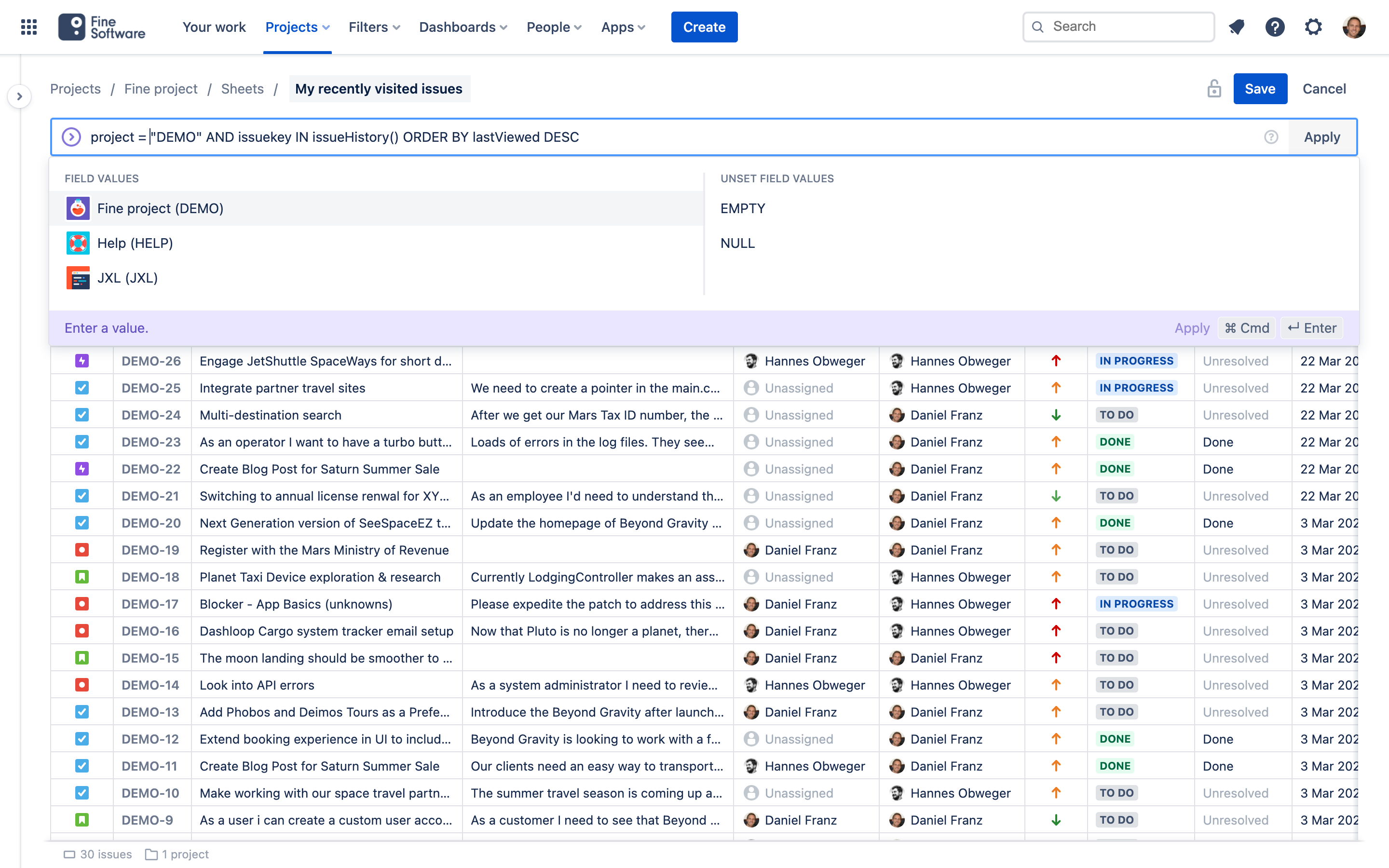
The latest entrant in this field is JXL Spreadsheets for Jira (and specifically Jira Cloud), which was founded by two ex-Atlassian employees, Daniel Franz and Hannes Obweger. And in what has become a bit of a trend, Atlassian Ventures invested in JXL earlier this year.

Franz built the Good News news reader before joining Atlassian while his co-founder previously founded Radiant Minds Software, the makers of Jira Roadmaps (now Portfolio for Jira), which was acquired by Atlassian.

Image Credits: JXL

“Jira is so successful because it is awesome,” Franz told me. “It is so versatile. It’s highly customizable. I’ve seen people in my time who are doing anything and everything with it. Working with customers [at Atlassian] — at some point, you didn’t get surprised anymore, but what the people can do and track with JIRA is amazing. But no one would rock up and say, ‘hey, JIRA is very pleasant and easy to use.’”

As Franz noted, by default, Jira takes a very opinionated view of how people should use it. But that also means that users often end up exporting their issues to create reports and visualizations, for example. But if they make any changes to this data, it never flows back into Jira. No matter how you feel about spreadsheets, they do work for many people and are highly flexible. Even Atlassian would likely agree because the new Jira Work Management, which is currently in beta, comes with a spreadsheet-like view and Trello, too, recently went this way when it launched a major update earlier this year.

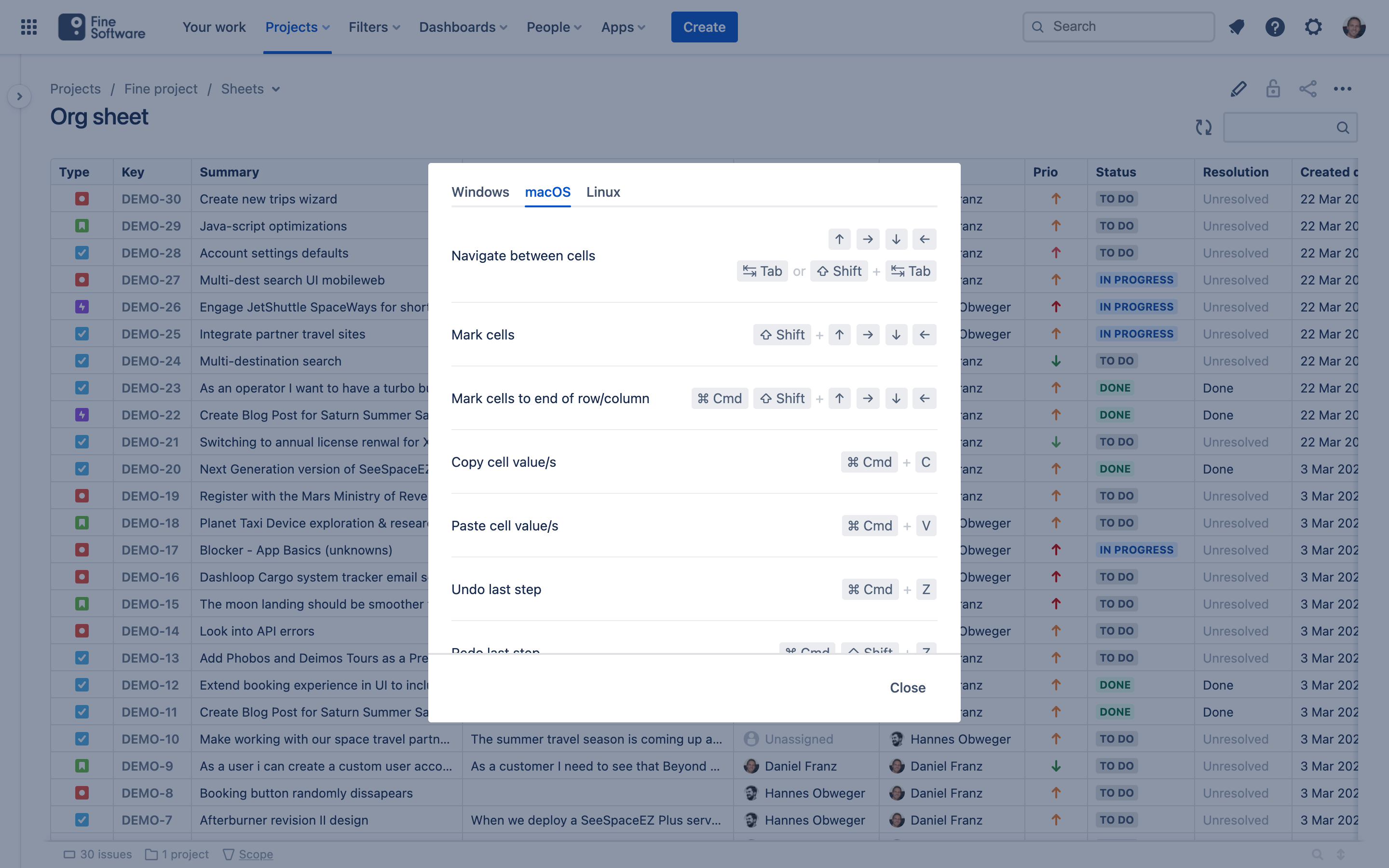
Image Credits: JXL

Over the course of its three-month beta, the JXL team saw how its users ended up building everything from cross-project portfolio management to sprint planning, backlog maintenance, timesheets and inventory management on top of its service. Indeed, Franz tells me that the team already has some large customers, with one of them having a 7,000-seat license.

Pricing for JXL seems quite reasonable, starting at $1/user/month for teams with up to 10 users. Larger teams get increasingly larger discounts, down to $0.45/user/month for licenses with over 5,000 seats. There is also a free trial.

One of the reasons the company can offer this kind of pricing is because it only needs a very simple backend. None of a customer’s data sits on JXL’s servers. Instead, it sits right on top of Jira’s APIs, which in turn also means that changes are synced back and forth in real time.

JXL is now available in the Atlassian Marketplace and the team is actively hiring as it looks to build out its product (and put its new funding to work).

News: SpaceX’s Falcon Heavy rocket to deliver an Astrobotic lander and NASA water-hunting rover to the Moon in 2023

SpaceX is set to send a payload to the Moon in 2023, using its larger (and infrequently used) Falcon Heavy launch vehicle. The mission will fly a lander built by space startup Astrobotic, which itself will be carrying NASA’s VIPER, or Volatiles Investigating Polar Exploration Rover (this is the agency that loves torturing language to

SpaceX is set to send a payload to the Moon in 2023, using its larger (and infrequently used) Falcon Heavy launch vehicle. The mission will fly a lander built by space startup Astrobotic, which itself will be carrying NASA’s VIPER, or Volatiles Investigating Polar Exploration Rover (this is the agency that loves torturing language to come up with fun acronyms, after all).

The launch is currently set for later in the year, and this would be Falcon Heavy’s first Moon mission if all goes to plan. It would not, however, be SpaceX’s first lunar outing, since the company has booked missions to launch lunar landers as early as 2022 on behalf of both Masten and Intuitive Machines. Those would both employ Falcon 9 rockets, however, at least according to current mission specs. Also, all of the above timelines so far exist only on paper, and in the business of space, delays and schedule shifts are far from unusual.

This mission is an important one for all involved, however, so they’re likely to prioritize its execution. For NASA, it’s a key mission in its longer-term goals for Artemis, the program through which it seeks to return humans to the Moon, and eventually establish a more permanent scientific presence there both in orbit and on the surface. Part of establishing a surface station will rely on using in-situ resources, of which water would be a hugely important one.

Astrobotic's Griffin lunar lander in development.

Image Credits: Astrobotic

Astrobotic won the contract to deliver VIPER on behalf of NASA last year. The mission profile includes landing the payload on the lunar South Pole, which is the intended target landing area for NASA’s Artemis missions involving human astronauts. The lander Astrobotic is sending for this task is its Griffin model, which is a larger craft vs. its Peregrine lander, giving it the extra space required to carry the VIPER, and making it necessary to use SpaceX’s heavier lift Falcon Heavy launch vehicle.

NASA’s ambitious target of landing astronauts back on the Moon by 2024 is in flux as the new administration looks at timelines and budgets, but it still seems committed to making use of public-private partnerships to pave the way, whenever it does attain that goal. This first Griffin mission, along with an earlier planned Peregrine landing, are part of NASA’s Commercial Lunar Payload Services (CLPS) program, which sought private sector partners to build and deliver lunar landers with NASA as one customer.

News: Expect an even hotter AI venture capital market in the wake of the Microsoft-Nuance deal

In light of the Microsoft-Nuance deal, we dug into the AI venture capital market. What’s happening on the startup side in the artificial intelligence and machine learning (AI/ML) space?

Microsoft’s huge purchase of healthtech AI company Nuance led the technology news cycle this week. The $19.7 billion transaction is Microsoft’s second-largest to date, only beaten by its purchase of LinkedIn some years ago.

For the AI space, the sale is a coup. Nuance was already a public company, but to see Microsoft offer a firm premium over its public-market value demonstrates the value that AI technology can have to wealthy companies. For startups working in the AI space, the Nuance deal is good news; the value of AI revenue was repriced by the acquisition’s announcement — and for the better.

In light of the mega-deal, The Exchange dug into the AI venture capital market. What’s happening on the startup side of the coin in the artificial intelligence and machine learning (AI/ML) space?


The Exchange explores startups, markets and money. Read it every morning on Extra Crunch, or get The Exchange newsletter every Saturday.


To get a handle on the situation, we’ve compiled Q1 2021 and historical venture capital investment data via PitchBook, spoken to an active venture capitalist with a focus on AI-powered startups, and heard from a couple of startups recently featured on CB Insights’ list of leading AI upstarts for their take on the recent news.

The picture that emerges is one of strong investor interest and the expectation of even more in the wake of the Microsoft-Nuance tie-up. For AI startups, it’s a great time to be in the market.

This morning, we’ll start with a look into recent venture capital activity in the AI/ML market and its historical context. Then we’ll talk to Zetta Ventures’ Jocelyn Goldfein and a few companies in the AI space. Let’s go!

A venture capital rush

According to historical data compiled by PitchBook, venture capital investment into U.S.-based, AI-focused startups is enjoying a strong start to the year. Per the group’s provided dataset, from the start of 2021 through April 12, or the first 101 days of the year, 442 deals in the space were worth $11.65 billion.

In 2020, the same query for U.S.-based startups working in the AI and ML space — the line between ML and AI is blurrier than ever — turned up 1,601 rounds worth $27.49 billion.

News: 1Password acquires SecretHub and launches new enterprise secrets management tool

1Password, the password management service that competes with the likes of LastPass and BitWarden, today announced a major push beyond the basics of password management and into the infrastructure secrets management space. To do so, the company has acquired secrets management service SecretHub and is now launching its new 1Password Secrets Automation service. 1Password did

1Password, the password management service that competes with the likes of LastPass and BitWarden, today announced a major push beyond the basics of password management and into the infrastructure secrets management space. To do so, the company has acquired secrets management service SecretHub and is now launching its new 1Password Secrets Automation service.

1Password did not disclose the price of the acquisition. According to CrunchBase, Netherlands-based SecretHub never raised any institutional funding ahead of today’s announcement.

For companies like 1Password, moving into the enterprise space, where managing corporate credentials, API tokens, keys and certificates for individual users and their increasingly complex infrastructure services, seems like a natural move. And with the combination of 1Password and its new Secrets Automation service, businesses can use a single tool that covers them from managing their employee’s passwords to handling infrastructure secrets. 1Password is currently in use by more then 80,000 businesses worldwide and a lot of these are surely potential users of its Secrets Automation service, too.

“Companies need to protect their infrastructure secrets as much if not more than their employees’ passwords,” said Jeff Shiner, CEO of 1Password. “With 1Password and Secrets Automation, there is a single source of truth to secure, manage and orchestrate all of your business secrets. We are the first company to bring both human and machine secrets together in a significant and easy-to-use way.”

In addition to the acquisition and new service, 1Password also today announced a new partnership with GitHub. “We’re partnering with 1Password because their cross-platform solution will make life easier for developers and security teams alike,” said Dana Lawson, VP of partner engineering and development at GitHub, the largest and most advanced development platform in the world. “With the upcoming GitHub and 1Password Secrets Automation integration, teams will be able to fully automate all of their infrastructure secrets, with full peace of mind that they are safe and secure.”

News: Hatch, a neobank for SMBs, launches with $20M in funding from investors like Kleiner Perkins, Foundation and Plaid’s founders

After his last startup, Framed Data, was acquired by Square, Thomson Nguyen began exploring new ideas. While an entrepreneur-in-residence at Kleiner Perkins, Nguyen interviewed hundreds of small business owners and realized that many pay hundreds of dollars in fees to maintain a business checking account. “Most small businesses are low margin, high cash flow, so

After his last startup, Framed Data, was acquired by Square, Thomson Nguyen began exploring new ideas. While an entrepreneur-in-residence at Kleiner Perkins, Nguyen interviewed hundreds of small business owners and realized that many pay hundreds of dollars in fees to maintain a business checking account. “Most small businesses are low margin, high cash flow, so they don’t have $4,000 just laying around,” Nguyen told TechCrunch. “We found in our analysis that micro-SMBs actually end up paying on average $450 in overdraft fees a year.”

Nguyen’s new startup Hatch recently launched its first two products and announced today it has secured a total of $20 million in funding from investors like Kleiner Perkins, Foundation Capital, SVB and Plaid’s founders. The fintech’s Hatch Business Checking accounts cost $10 a month, don’t charge non-sufficient funds (NSF) or overdraft fees and includes cashback offers. Eligible account holders can also enroll in Hatch Cover, which covers overdrafts up to $100, or apply for lines of credit.

Some of Hatch’s customers have hundreds of employees, but Nguyen said the startup primarily focuses on businesses with up to 20 people. Many are run by only one person, who might be setting up a business account for the first time.

Hatch draws on Nguyen’s professional and personal backgrounds. Framed Data, a predictive analytics company, was acquired by Square in 2016. He worked as Square Capital’s head of data science before becoming an entrepreneur-in-residence at Kleiner Perkins in 2018, focusing on fintech and machine learning problems. As a child of immigrants, Nguyen saw firsthand the challenges small businesses can face.

“During my time at Kleiner, the goal was to think about what other problems I wanted to solve. I definitely wanted to solve additional problems within small businesses. I think a lot of what I appreciate about Square’s mission of economic empowerment for small businesses also really resonated with my own family story,” he said. “My parents immigrated here from Vietnam after the war and were like so many immigrants to the States to start small businesses. Figuring out how to use whatever talents I had to try to make it easier to start small businesses was definitely something I wanted to pursue.”

Hatch’s leadership team, including alumni of fintech companies and major financial institutions like Square, Stripe, Morgan Stanley and JP Morgan, talked to small business owners, and found that recent immigrants or people without credit histories were paying the majority of bank fees. The startup raised a $5 million seed round from Kleiner Perkins, Abstract Ventures and former Square executive Gokul Rajaram in January 2019, then a $14 million Series A round from Foundation Capital, SVB and Plaid founders William Hockey and Zack Perret in February 2020.

Hatch Business Checking began rolling out in January and currently has 4,000 users. The company’s inception coincided with an especially brutal time for many small business owners, as they weathered the COVID-19 pandemic’s economic impact and navigated the process of getting government aid through the Coronavirus Aid, Relief and Economic Security (CARES) Act.

“Initially I was a little worried, but as I was talking to all of our small business customers and even as I was doing these interviews, I realized that amidst a global pandemic, it’s been humbling to see the grit and perseverance of small business owners trying to innovate and learn,” Nguyen said.

For example, some of Hatch’s users are restaurants that hadn’t done deliveries before, but quickly signed up for multiple on-demand platforms like Postmates or Uber Eats. Others include accountants and lawyers who figured out how to move their practices online.

Hatch serves businesses in a wide range of sectors, including first-time entrepreneurs.

“There’s been this interesting trend of sole proprietors and individual creators who maybe had a side hustle, and after they were laid off during COVID, they decided, okay, I’m going start a small business,” Nguyen said. “Through our research, that’s actually how a lot of small businesses think of themselves, not as Thomson Tacos LLC for example, but just as myself, as Thomson, a person who is running this business.”

The startup uses machine learning to automate Hatch Business Checking’s online sign-up process and its know your customer (KYC) and know your business (KYB) requirements. This includes confirming business incorporation paperwork, social security or employer ID numbers and regulatory compliance like Office of Foreign Asset Control (OFAC) checks. Hatch can approve applications in less than five minute. Once that process is complete, customers get a MasterCard virtual number and can link external bank accounts. Hatch also uses machine learning for real-time fraud and risk monitoring.

Nguyen said Hatch launched its overdraft coverage program because “we found it is a really great way for folks to get themselves out of a bind, finish the point sale and then top up their account later.”

If a business with a Hatch Business Checking account needs more working capital, it can apply for a Hatch Business Line of Credit, or loans between $200 to $5,000 at an APR of 18% to 24%. Hatch does not do hard credit checks and sees the credit lines as an alternative to the payday lenders or check cashers that customers without a FICO score or subprime ratings often use.

To screen loan applicants, Hatch uses information from their Business Checking accounts, including activity from connected point-of-sale systems. This allows Hatch to see real-time data and forecast a business’ potential forward revenue. It also enables the company to approve credit lines in as little as two hours.

“A hard credit check is actually quite difficult for recent immigrants or Americans who had trouble in their recent history. If you declare bankruptcy, it takes seven years to get it struck off your credit history,” said Nguyen. “To us, I think the more important factors are whether you actually have a business and whether that business is growing. We have a couple of examples of folks who declared bankruptcy three or four years ago, but they have a business that is booming and growing, and we’re happy to underwrite or originate that line of credit for them.”

But he emphasizes that Hatch, a signatory of the Small Business Owner’s Bill of Rights, does not see lending as permanent solution and will not encourage its users to take on unnecessary debt.

“I think the reason we feel so strongly about this is that we want to win when our customers win,” Nguyen said. “If all we did was lending, then you would almost have a misalignment of incentives where you want to encourage lending retention. Given our business bank accounts and our revenue model, which is $10 a month and debit interchange, we really win when the business continues to exist. So for us, it’s almost a matter of building that financial independence for our customers.”

Hatch currently covers overdrafts and credit lines with its own balance sheet. “Because we’re using machine learning data to understand our own risk position, the main focus right now is to understand how businesses grow and model those products accordingly,” said Nguyen.

In an emailed statement, Kleiner Perkins partner Ilya Fushman told TechCrunch, “Small businesses account for nearly half of all economic activity in the U.S., but are often hamstrung by the banking ecosystem today. Hatch is democratizing access to the financial resources that small businesses need to start out and grow. Thomson and team are already working with thousands of SMBs and are uniquely suited with the technology and industry expertise to help them grow with the financial resources they need to be successful.”

In his statement about Foundation Capital’s investment, partner Charles Moldow said, “Our view at Foundation Capital is that the next phase of financial innovation is confluence: a coming together of lending and mobile banking. Hatch is a breaker wave of this movement for small businesses. That Thomson and his team were able to so rapidly stand up the only full-solution, mobile-first bank offering for SMBs is a testament to what they can and will accomplish.”

Since Hatch’s Series A, it has grown its team from eight people to 48, hiring remotely during the pandemic. Its plan is to expand its Business Checking accounts and continue building products for the estimated 40 million small businesses in the United States.

“When I think of the future products we can provide, it really centers around how do we make sure that a small business succeeds in starting up correctly and efficiently, and scaling their business,” said Nguyen. “Sometimes that’s financial products like our business accounts. Potentially, it could be software products that help you actually start that business. So there’s a wealth of different ideas and directions in which we can take Hatch.”


WordPress Image Lightbox Plugin