Tag Archives: Blog

News: Amazon is opening a London hair salon to test AR and other retail technologies

Amazon announced this morning it’s opening Amazon Salon, the retailer’s first hair salon and a place where Amazon aims to test new technologies with the general public. The salon will occupy over 1,500 sq. ft on Brushfield Street in London’s Spitalfields, where Amazon says it will initially be trialing the use of augmented reality (AR)

Amazon announced this morning it’s opening Amazon Salon, the retailer’s first hair salon and a place where Amazon aims to test new technologies with the general public. The salon will occupy over 1,500 sq. ft on Brushfield Street in London’s Spitalfields, where Amazon says it will initially be trialing the use of augmented reality (AR) and “point-and-learn” technology — the latter being a system that allow customers to point to products on a display shelf in order to learn more through videos and other content that then appears on a display screen.

To then order the products, the customers will scan the QR code on the shelf, which takes them to the Amazon.co.uk shopping page for the item where they can add it to their cart and check out.

Image Credits: Amazon

The salon’s AR technology, meanwhile, will be used to allow customers to experiment by virtually trying on different hair colors before making a commitment to a new shade.

Amazon has already entered the convenience store market, grocery business and other physical retail, where it’s innovating with new technologies like cashierless checkout, smart grocery carts, and biometric systems. But it’s not clear that Amazon actually has ambitions to be in the salon business itself. Instead, it seems the salon will largely serve as a testing ground for new technologies that Amazon will likely want to sell to other retail clients in the future, or perhaps implement in its own stores. And in the case of AR, Amazon may want to gather data on customers’ experiences it can use on its own shopping site, too.

Hinting that its goals are not about the salon business itself, Amazon today describes the salon as an “experiential venue where we showcase new products and technology,” and notes that it has no other plans to open more salons at this time.

The company has also recruited an existing salon owner, Elena Lavagni of Neville Hair & Beauty Salon, to help with this project, instead of hiring a new staff to run it long-term. Lavagni and her team have previously provided hairdressing services for other events, like Paris Fashion Week and the Cannes Film Festival.

Image Credits: Amazon

Amazon has not detailed what sort of data it will collect from customers who use the salon, but it’s clearly there to learn about how new retail technologies would work in a real-world environment. But the fact that Amazon is capturing customer images for its hair color virtual try-on should raise questions about what it plans to do with the data it collects from the new salon. Will it only be used to learn about the specific technology being tested, or will it be put to other uses, too?

As many recall, Amazon has a complicated history with its use of technologies like facial recognition and biometrics, having sold biometric facial recognition services to law enforcement in the U.S., while its facial recognition technology was the subject of a data privacy lawsuit. And its Ring camera company continues to work in partnership with police. Customers should be told if they’re participating in an Amazon research project, not just having fun with new tech products.

Like other Amazon physical stores, the salon will first be open to Amazon employees only before offering bookings to the wider public in the weeks to come.


News: Watch Apple’s Spring Loaded event light right here

Today, Apple is holding a (virtual) keynote at 10 AM PT (1 PM in New York, 6 PM in London, 7 PM in Paris). And you’ll be able to watch the event right here as the company is streaming it live. Rumor has it that Apple plans to unveil a brand new iPad Pro. In

Today, Apple is holding a (virtual) keynote at 10 AM PT (1 PM in New York, 6 PM in London, 7 PM in Paris). And you’ll be able to watch the event right here as the company is streaming it live.

Rumor has it that Apple plans to unveil a brand new iPad Pro. In particular, Apple’s tablet could get a big display update as the company could switch to mini-LED displays. You can expect some better specifications as well.

But that’s not all, we expect to see a refreshed iPad mini. Apple could also be ready to release AirTags after many months of rumors and leaks. As always, the only way to find out is by watching the event.

You can watch the live stream directly on this page, as Apple is streaming its conference on YouTube.

If you have an Apple TV, you don’t need to download a new app. You can open the Apple TV app and find the Apple Events section. It lets you stream today’s event and rewatch old ones.

And if you don’t have an Apple TV and don’t want to use YouTube, the company also lets you live stream the event from the Apple Events section on its website. This video feed now works in all major browsers — Safari, Firefox, Microsoft Edge and Google Chrome.

News: Cape Privacy announces $20M Series A to help companies securely share data

Cape Privacy, the early stage startup that wants to make it easier for companies to share sensitive data in a secure and encrypted way, announced a $20 million Series A today. Evolution Equity Partners led the round with participation from new investors Tiger Global Management, Ridgeline Partners and Downing Lane. Existing investors Boldstart Ventures, Version

Cape Privacy, the early stage startup that wants to make it easier for companies to share sensitive data in a secure and encrypted way, announced a $20 million Series A today.

Evolution Equity Partners led the round with participation from new investors Tiger Global Management, Ridgeline Partners and Downing Lane. Existing investors Boldstart Ventures, Version One Ventures, Haystack, Radical Ventures and a slew of individual investors also participated. The company has now raised approximately $25 million including a $5 million seed investment we covered last June..

Cape Privacy CEO Ché Wijesinghe says that the product has evolved quite a bit since we last spoke. “We have really focused our efforts on encrypted learning, which is really the core technology, which was fundamental to allowing the multi-party compute capabilities between two organizations or two departments to work and build machine learning models on encrypted data,” Wijesinghe told me.

Wijesinghe says that a key business case involves a retail company owned by a private equity firm sharing data with a large financial services company, which is using the data to feed its machine learning models. In this case, sharing customer data, it’s essential to do it in a secure way and that is what Cape Privacy claims is its primary value prop.

He said that while the data sharing piece is the main focus of the company, it has data governance and compliance components to be sure that entities sharing data are doing so in a way that complies with internal and external rules and regulations related to the type of data.

While the company is concentrating on financial services for now because Wijesinghe has been working with these companies for years, he sees uses cases far beyond a single vertical including pharmaceuticals, government, healthcare telco and manufacturing.

“Every single industry needs this and so we look at the value of what Cape’s encrypted learning can provide as really being something that can be as transformative and be as impactful as what SSL was for the adoption of the web browser,” he said.

Richard Seewald, founding and managing partner at lead investor Evolution Equity Partners likes that ability to expand the product’s markets. “The application in Financial Services is only the beginning. Cape has big plans in life sciences and government where machine learning will help make incredible advances in clinical trials and counter-terrorism for example. We anticipate wide adoption of Cape’s technology across many use cases and industries,” he said.

The company has recently expanded to 20 people and Wijesinghe, who is half Asian, takes DEI seriously. “We’ve been very, very deliberate about our DEI efforts, and I think one of the things that we pride ourselves in is that we do foster a culture of acceptance, that it’s not just about diversity in terms of color, race, gender, but we just hired our first non binary employee,” he said,

Part of making people feel comfortable and included involves training so that fellow employees have a deeper understanding of the cultural differences. The company certainly has diversity across geographies with employees in 10 different time zones.

The company is obviously remote with a spread like that, but once the pandemic is over, Wijesinghe sees bringing people together on occasion with New York City as the hub for the company where people from all over the world can fly in and get together.

News: Grip Security raises $6M to improve SaaS security

Many large enterprises now rely on hundreds of third-party SaaS applications to do business, but their security organizations can barely keep pace. Right now, the state of the art for SaaS enterprise security are cloud access security brokers (CASBs) that act as intermediaries between users and the actual service. But they don’t provide the kind

Many large enterprises now rely on hundreds of third-party SaaS applications to do business, but their security organizations can barely keep pace. Right now, the state of the art for SaaS enterprise security are cloud access security brokers (CASBs) that act as intermediaries between users and the actual service. But they don’t provide the kind of visibility that enterprises want since employees will often route around their IT departments. Tel Aviv-based Grip Security aims to make this a lot easier by providing enterprises with full visibility into their SaaS portfolios through enforceable endpoint-centric access controls and new data governance capabilities that work across devices and locations.

Grip Security today announced that it has raised a $6 million seed round led by cybersecurity-focused YL Ventures, with participation from CrowdStrike CEO and co-founder George Kurtz and a group of other angel investors with deep roots in the cybersecurity industry. These include the likes of former Akamai CSO Andy Ellis, former Zscaler CISO Michael Sutton, former Bank of America Chief Security Scientist Sounil Yu and Amazon Whole Foods CISO Sameer Sait.

Image Credits: Grip Security

“The founding team at Grip Security brings deep technical acumen to disrupt the SaaS security market,” said Ofer Schreiber, partner at YL Ventures. “Grip will not only upend antiquated SaaS security solutions, but they’ll also help enterprises implement much needed automated and granular security for SaaS, the fastest growing segment in information technology.”

Before starting Grip Security, co-founder and CEO Lior Yaari actually spent some time as the CTO of YL Ventures (though he says he still had to go through the firm’s standard vetting procedure to get funding). In that role, he talked to a lot of CISOs, and, again and again, they talked to him about the problems with current SaaS security solutions. Like his co-founders, Idan Fast (CTO) and Alon Shenkler (VP R&D), Yaari also has a deep cybersecurity background. But it was during his time YL Ventures that the idea for Grip Security was born.

“Within YL Ventures, we were always looking for the next interesting sub-market and we knew from our conversation with CISOs  […] that people know SaaS is a problem and they did not like the existing solutions — many of them being CASBs,” Yaari told me. “From this view of an investment team that not only talks with customers but also sees some technical teams that try to solve this problem and then go back and look for other solutions because they didn’t find a good fit within the market, I eventually wanted to do it myself. Last July, I actually told [YL Ventures partner Ofer Schreiber] that if no one solved this until October, I will. That was a joke back then — and then, three or four months later, it became reality. It’s hard to look at hard and interesting problems without trying to solve them.”

Most of the popular CASBs today were founded around 2013 and 2014 and then later acquired by other major players like Microsoft, Cisco and Proofpoint. But Yaari argues that the problems with protecting SaaS today is fundamentally different from those 10 years ago. These solutions, he argues, worked for protecting a dozen applications or so.

The promise of Grip Security is that after a quick installation, enterprises get full visibility into which applications their employees actually use. Yaari wasn’t quite ready to give away the secret sauce of how Grip does this, though. But he noted that this is a non-intrusive solution. “We do not install anything on user devices or corporate networks, but we follow the footprints left by SaaS applications and use this data to identify with extreme accuracy what applications were used.” He noted that Grip Security’s solution travels with the users, no matter which device they use.

Grip Security currently has about 15 employees and plans to use the new funding to build out its platform with additional capabilities, especially around providing access governance and data governance to applications. The plan is to grow to 20 to 25 employees within the next year.

News: Clearbanc rebrands its way into a unicorn

After five years of providing non-dilutive financing for founders, Clearbanc is tired of being only a bank. So, it’s rebranding, and has just raised $100 million Series C at a $2 billion valuation off of its broader ambitions. The new valuation is five times larger than it was when Clearbanc closed a Series B in

After five years of providing non-dilutive financing for founders, Clearbanc is tired of being only a bank. So, it’s rebranding, and has just raised $100 million Series C at a $2 billion valuation off of its broader ambitions. The new valuation is five times larger than it was when Clearbanc closed a Series B in 2019.

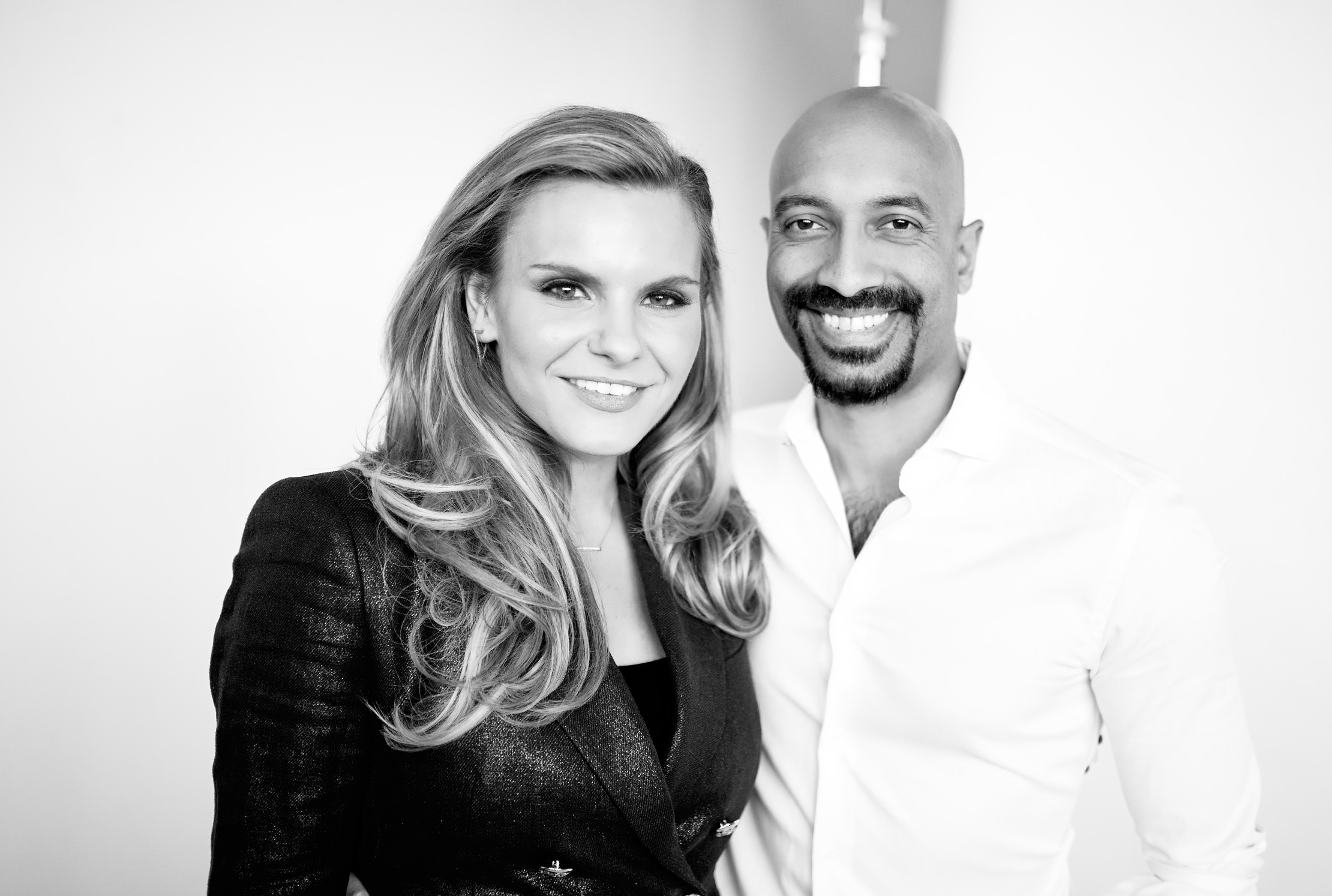
Clearbanc has renamed itself Clearco, a move that is more in line with the company’s long-term vision of providing data-driven solutions for founders, say co-founders Michele Romanow and Andrew D’Souza.

“We’re moving from just being a capital provider and [having] sort of a transactional relationship with our customers to really using data, our network, guidance, [and] capital to be a long-term partner,” D’Souza said. In other words, Clearco wants founders to think of the company as more than a check-writing machine.

Today’s news a step away from what Clearco framed itself around just two years ago: the 20-minute term-sheet. The product, perhaps its most well-known in tech, allowed e-commerce companies to raise non-dilutive marketing growth capital between $10,000 to $10 million based on its revenue and ad spend. The founders then flexed rapid investment based on data – and to date, Clearco has put over $2 billion in over 4,600 companies.

“We can provide you the capital, really efficiently but then we can also help you figure out what to do with that capital to grow your business, and increase the value, and that was a big part of the motivation around the rebrand,” D’Souza said.

Clearco has been on a tear of new product launches in the past year. In April 2020, Clearco launched ClearRunway to help SaaS founders secure non-dilutive capital repaid through revenue-share agreements. A few months later, in July, it launched a way for founders to figure out how to value their companies based on benchmarking data and internal metrics. In October, Clearco launched a tool that would purchase a company’s inventory upfront directly from suppliers, and is then paid back as products sell. And in February, the company announced that it had created Clearangel, a product similar to its 20-minute term sheet, but focused on founders who bring in less revenue.

RAW Clearbanc 150519099W

Image Credits: Clearco

The growth hasn’t come without challenges. In April 2020, the same month it launched ClearRunway, Clearco laid off 8% of its workforce, or 17 people. The company said it would be writing more conservative checks, more frequently. At that time, it invested $1 billion across 2,200 companies. By now, it has invested $2 billion across 4,500 companies, a mix between startups and online businesses.

The company, still unprofitable, declined to close ARR, but instead pointed to another proxy: With all of its capital products, Clearco makes 6% in fees when it is repaid. Last year, Clearco invested $1 billion. This means that Clearco brought in around $60 million in sales last year.

“We were very naive when we started the business around the complexity around how fast you could lose a lot of money if you don’t get things right,” he said. Romanow added that in the beginning, Clearco had “very, very high loss rates” and it has gotten better with more data over time. The company is doubling down on different channels to get and shape and convey that data thus feels like a logical next step.

Since inception in 2015, Clearco’s biggest challenge was scaling the capital market side of its business and making sure it consistently had funds available. With the new product suite, Clearco’s new biggest challenge will be providing valuable services, consistently, to companies and balancing that mentorship with rapid investments.

Many of Clearco’s newest products are still in their infancy, but the potential success of the startup could nearly be tied to the general growth of startups looking for alternatives to venture capital when financing their startups. Similar to how AngelList’s growth is neatly tied to the growth of emerging fund managers, Clearco’s growth is cleanly related to the growth of founders who see financing as beyond a seed check from Y Combinator.

“I don’t believe anyone becomes a founder because they’re like, ‘I can’t wait to fundraise right now and can’t wait to like figure out which software to use’,” Romanow said. “They just want to build products and market incredible products [and] we’re just trying to make it easier.”

Its latest round was led by Oak HC/FT, which closed a $1.2 billion fund in February. In other words, a traditional venture capital firm backed a company that is betting that the future of raising financing for a startup is beyond venture capital. And, while meta, it’s a signal worth pointing out.

FF -> growth capital -> exit. that should be the gold standard

— Clearbanc (@clearbanc) April 15, 2021

News: Alphabet’s CapitalG leads $40 million round in fintech Mantl

Community banks and credit unions aim to be the heart of the, well, communities, they serve. But without the big budgets of larger institutions, keeping up technology-wise can be a challenge. And not only are they competing with legacy players, there is also a slew of digital banks that have emerged in recent years, as

Community banks and credit unions aim to be the heart of the, well, communities, they serve. But without the big budgets of larger institutions, keeping up technology-wise can be a challenge. And not only are they competing with legacy players, there is also a slew of digital banks that have emerged in recent years, as well.

Enter Mantl, a startup that has developed technology to make it easier for people to open accounts digitally at community banks and credit unions so that those institutions can increase deposits and ultimately, profits. Founded in 2016, New York-based Mantl has been described by some as “the Shopify of account opening.” 

Community banks and credit unions make up a big percentage of all banking institutions, which means Mantl’s market opportunity is pretty darn large. The fintech’s revenue increased by 213% in 2020 as financial institutions clamored to meet increased demand for digital offerings from consumers in the wake of the COVID-19 pandemic. 

And today, the company is announcing it has raised $40 million in a Series B round of funding led by Alphabet’s independent growth fund, CapitalG, to help it grow even more. The financing brings Mantl’s total funding raised since inception to $60.7 million and included participation from D1 Capital Partners, BoxGroup and existing backers Point72 Ventures, Clocktower Technology Ventures and OldSlip Group. The company raised $19 million last July after growing deposit volume by 705% in April of that year.

The startup declined to reveal hard revenue figures.

Mantl originally set out to build its own challenger bank, but in doing so realized there are 10,000 banks and credit unions in the U.S., and that 96% of them outsourced their technology to third-party legacy vendors such as Fiserv and Jack Henry, many of which have technology that is in some cases “decades old,” according to Nathaniel Harley, co-founder and CEO at Mantl.

Such outdated technology has kept many financial institutions such as community banks and credit unions from competing online, and also limits the digital banking options available to consumers, the company said.

So the company pivoted, based on the premise that most community banks and credit unions are critical to maintaining competition and equity in the United States’ financial system. 

“At a high level, Mantl is an enterprise software company that is really focused on helping traditional financial institutions modernize and grow,” Harley told TechCrunch. “Our mission at the end of the day is to really expand the access to financial services by taking on the legacy infrastructure, which has really hindered access to digital banking.”

The company claims that its white-labeled account opening software allows banks and customers “to open an account from anywhere at any time, on any device in less than three minutes.” 

Through its flagship account opening software, Mantl claims to have helped community institutions — many of which are competing online for the first time — establish efficient and profitable digital operations. Among the community banks it works with are Cross River Bank, Quontic and Midwest BankCentre

“Banks are naturally very risk averse, and we need to build in order to fully take on that full infrastructure that they’re working in,” Harley said. “Account opening is low risk, but it’s also extremely high value considering that less than 50% of banks actually have online account opening today.”

Mantl integrates directly into the legacy infrastructure, also known as a core banking system, in order to enhance that system and help institutions launch digital products quickly. 

The company says its software also automates application decisioning for over 90% of cases while also reducing fraud by more than 60%. This results in deposit growth that’s “typically 4x faster than other solutions on the market and up to 10x more cost-effective than building a new branch,” the company said. 

Combined, the institutions it works with have onboarded hundreds of thousands of new customers and raised billions of dollars in core deposits, the company claims. 

“We’re challenging the legacy infrastructure that is holding community institutions back,” Harley said,” and we see account opening as just the beginning.”

The startup plans to use its new capital to do some hiring and expand its product offerings, including software that it says would be able to improve and digitize the onboarding experience for not just financial institutions but businesses of all sizes, from sole proprietors to complex commercial enterprises.

CapitalG partner Jesse Wedler shares Mantl’s belief that banks form the backbone of this nation’s economy, both on a local and national level. 

While digitization has long been a priority for banks, it has become an urgent imperative as branches close and digital disruptors grow,” he said.

As CapitalG reviewed the landscape of companies helping banks with digital transformation, Mantl stood out, Wedler said, due to its “user experience, resulting deposit growth and time-to-value for banks of all sizes.”

But what has his firm most excited, he added, is the team’s vision for “transforming adjacent core banking applications.”

Since its founding in 2013, CapitalG has invested in a number of fintechs, including MX, Stripe, Robinhood, Credit Karma, Albert, Aye Finance and LendingClub. 

News: Pulumi launches version 3.0 of its infrastructure-as-code platform

Pulumi was one of the first of what is now a growing number of infrastructure-as-code startups and today, at its developer conference, the company is launching version 3.0 of its cloud engineering platform. With 70 new features and about 1,000 improvements since version 2.0, this is Pulumi’s biggest release yet. The new release includes features

Pulumi was one of the first of what is now a growing number of infrastructure-as-code startups and today, at its developer conference, the company is launching version 3.0 of its cloud engineering platform. With 70 new features and about 1,000 improvements since version 2.0, this is Pulumi’s biggest release yet.

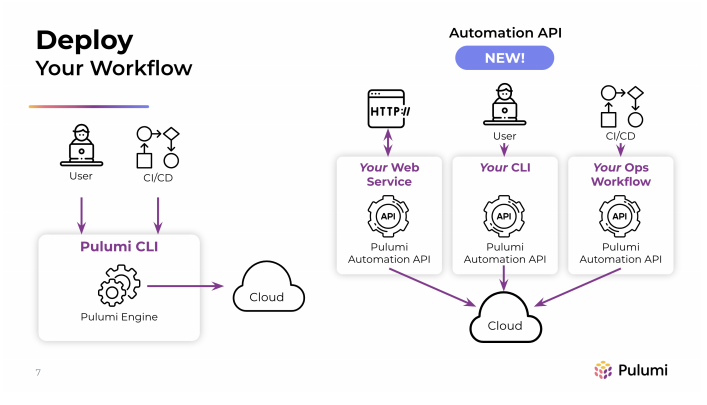
The new release includes features that range from support for Google Cloud as an infrastructure provider (now in preview) to a new Automation API that turns Pulumi into a library that can then be called from other applications. It basically allows developers to write tools that, for example, can then provision and configure their own infrastructure for each customer of a SaaS application, for example.

Image Credits: Pulumi

The company is also launching Pulumi Packages and Components for creating opinionated infrastructure building blocks that developers can then call up from their preferred languages.

Also new is support for Pulumi’s CI/CD Assistant across all the company’s paid plans. This feature makes it easier to deploy cloud infrastructure and applications through more than a dozen popular CI/CD platforms, including the likes of AWS Code Service, Azure DevOps, CircleCI, GitLab CI, Google Cloud Build, Jenkins, Travis CI and Spinnaker. Until now, you needed to be on a Team Pro or Enterprise plan to use this, but it’s now available to all paying users.

In addition, the company is expanding some of its enterprise features with, for example, SAML SSO, SCIm synchronization and new role types.

“When we started out on Pulumi, we knew we wanted to enable developers and infrastructure teams to
collaborate more closely to build more innovative software,” said Joe Duffy, Pulumi co-founder and
CEO. “What we didn’t know yet is that we’d end up calling this ‘Cloud Engineering,’ that our customers
would call it that too, and that they would go on this journey with us. We are now centering our entire
platform around this core idea which is now accelerating as the modern cloud continues to disrupt
entire business models. Pulumi 3.0 is an exciting milestone in realizing this vision of the future —
democratizing access to the cloud and helping teams build better software together — with much more
to come.”

News: After a decade of bootstrapping, Octopus Deploy raises $172.5M from Insight Partners

Founded almost a decade ago, Octopus Deploy has grown to serve 25,000 organizations, including Microsoft, NASA, Xero, Disney and Stack Overflow, through bootstrapping. Today the company announced its first outside investment. Insight Partners has taken a minority stake in Octopus Deploy for $172.5 million and will help the automated enterprise software deployment company embark on


A photo of Octopus Deploy's chief financial officer Sonia Stovell and chief executive officer Paul Stovell

Octopus Deploy’s chief financial officer Sonia Stovell and chief executive officer Paul Stovell

Founded almost a decade ago, Octopus Deploy has grown to serve 25,000 organizations, including Microsoft, NASA, Xero, Disney and Stack Overflow, through bootstrapping. Today the company announced its first outside investment. Insight Partners has taken a minority stake in Octopus Deploy for $172.5 million and will help the automated enterprise software deployment company embark on its next stage of growth.

Octopus Deploy was launched after founder and chief executive officer Paul Stovell observed that many software teams were able to set up continuous integration (CI) servers, but struggled to achieve full continuous deployment (CD). Stovell and his wife Sonia Stovell, Octopus Deploy’s chief financial officer, began working on the company as a “nights-and-weekend” project in 2011. By the next year, it had reached profitability. Now Octopus Deploy employs more than 100 people in Australia, the United States and the United Kingdom.

Insight Partners works with software companies to scale up their operations. Other portfolio companies in its ScaleUp Network include Pluralsight, Shopify, Twitter, Calm and Qualtrics. Octopus Deploy plans to use its investment to increase its enterprise market share, especially in the United States.

Stovell told TechCrunch in an email that Octopus Deploy has “declined venture approaches and have been turning away VC firms for years. However, the growth path we’ve been on meant that at some point, it might make sense to bring on an investor.”

“Our largest customer segment was the enterprise, and after consideration, we decided it was the right step to bring on board an investor that understood enterprise go-to-market, scaling up a company, and a partner that understood what the next 5-10 years of growth will look like for Octopus,” he added.

In a press statement, Insight Partners managing director Michael Triplett said, “We routinely talk to our portfolio companies about the products they use or that their customers are using and Octopus Deploy came up over and over. The company has flown under the radar, but when you talk to their customers, they are huge fans. It is clear to us that Octopus is the leader in enterprise deployment automation.”

News: Cannabis banking act passes U.S. House with bipartisan support

The U.S. House of Representatives passed a landmark bill aimed at easing restrictions placed on the cannabis industry. The SAFE ACT (Secure and Fair Enforcement) banking act provides safe harbor for financial institutions to work with cannabis operators. If passed by the Senate and approved by President Biden, this bill would allow the cannabis industry

The U.S. House of Representatives passed a landmark bill aimed at easing restrictions placed on the cannabis industry. The SAFE ACT (Secure and Fair Enforcement) banking act provides safe harbor for financial institutions to work with cannabis operators. If passed by the Senate and approved by President Biden, this bill would allow the cannabis industry to access traditional banking services, which has so far been forced to do much of their business with cash.

This is the fourth time the SAFE ACT passed the House of Representatives. A previous version of the bill passed the House in 2019, but later died in a Senate committee and never reached then-President Trump’s desk.

Under the current bill, the SAFE ACT would protect banks and credit unions from federal prosecution when operating with cannabis companies compliant with their state’s laws. This would open up traditional lines of capital from financial institutions, which have been unavailable since cannabis is still considered illegal on a federal level. The SAFE ACT would allow these banks to work with operators in states where cannabis is legal.

Cannabis is currently legal for medical purposes in thirty-six states, four territories, and the District of Columbia. Recreational use is legal for adults in eighteen states, two territories, and D.C.

The bill passed the House with broad bipartisan support and was approved by 321-101. Before the bill’s passing, a letter showing support of the legislation was sent to House leadership from 20 state governors and one U.S. Territory and bankers from each state and a coalition of state treasurers.

With support from both parties, advocates and industry experts feel more confident that this bill will pass the Senate and reach President Biden’s desk.

News: Chargebee valued at $1.4 billion in new $125 million fundraise

A startup that enables businesses to set up and manage their billing, subscription, revenue operations and compliance has become the newest firm to earn the much coveted unicorn status. Chennai and San Francisco-headquartered Chargebee said on Tuesday it has raised $125 million in its Series G financing round led by Sapphire Ventures and existing investors

A startup that enables businesses to set up and manage their billing, subscription, revenue operations and compliance has become the newest firm to earn the much coveted unicorn status.

Chennai and San Francisco-headquartered Chargebee said on Tuesday it has raised $125 million in its Series G financing round led by Sapphire Ventures and existing investors Tiger Global and Insight Venture Partners.

The new financing round valued the 10-year-old startup at $1.4 billion, a 3x increase since the Series F round six months ago. Some other existing investors also participated in the new round, said Chargebee, which has raised $230 million to date.

If you’re a business, setting up and managing a subscription service — to ensure recurring revenue — could prove to be a complex process. You may want to offer a free 30-day trial to new potential customers. What if some customers want to move to a different pricing tier? These are some of the problems Chargebee is equipped to handle.

Chargebee helps individuals, small and medium-sized businesses and enterprises set up, manage, and automate subscriptions, billing, invoicing, and payments.

One of the key strengths of Chargebee is that it can help even large enterprises move to a subscription model within 10 days.

The industry is going through a “significant change” with businesses digitally transforming themselves and moving to the SaaS model, Krish Subramanian, co-founder and chief executive of Chargebee, told TechCrunch in an interview. And it’s this change that has made Chargebee so vital to thousands of companies today.

Chargebee was founded in an apartment in Chennai, a city on India’s southeastern coast. Subramanian has credited reading blog posts by Joel Spolsky, founder of Trello, as an early inspiration to start his own venture.

“He was solving a very boring problem but in very interesting ways, and he used to share the story of how he is building a company,” he said in an earlier interview. “That was my inspiration that I should start my company like that. So while working at other companies we saved enough and acquired skills to start this.”

The startup’s offerings today are not limited to just billing. It also helps businesses plug revenue leakage, increase customer loyalty, expand into new categories with the backend ready, and experiment with pricing plans — introducing and removing them within 30 minutes.

It supports over 100 currencies, and dozens of popular payment gateways, including Stripe, Braintree, WorldPay and PayPal, and its global tax management coverage also helps businesses to expand to new markets. MakeSpace, an on-demand storage company, used Chargebee’s services to scale from four markets to 31 in one year, for instance.

The startup has amassed over 3,000 customers, most of whom are based in the U.S. and Europe. Some of these customers include brands such as cloud software Okta, business software firm Freshworks, calendar invites manager Calendly, training platform Linux Academy, and Japanese tech giant Fujitsu.

Subramanian said Chargebee’s revenue has doubled in the past 12 months and customer’s revenue has grown by 125%, though he didn’t disclose figures.

He said that like other businesses, Chargebee has been cautiously navigating the global pandemic. The fundraise six months ago ensured that the startup had enough capital in the bank to operate comfortably, he said.

But the recent growth Chargebee has seen prompted the startup to grow more aggressive. “There’s a window of opportunity for the next five years for us to build out this category beautifully and serve a lot of customers,” he said. “And that’s what led the startup to explore the new financing round, he said, adding that the fact that the cost of capital is lower currently in the market also played a role.

“As the global shift to subscription-first models continue to grow in popularity, Chargebee has an incredibly bold vision for new products for multiple market segments,” said Rajeev Dham, Partner at Sapphire Ventures, in a statement. “After years of knowing them, I’ve been most impressed by their thoughtfulness and execution in building Chargebee as the emerging category leader that is reinventing the broader space.”

Chargebee will deploy the fresh capital to expand its suite of products and work on new capabilities to help enterprises in even more ways.

Tuesday’s announcement comes at a time when a slice of Indian startups are raising large amounts of capital at a much more frequent pace and at increased valuations as investors double down on promising bets in the world’s second-largest internet market. Chargebee is the seventh Indian startup to turn a unicorn this month, and 11th this year.

Indian startups social commerce Meesho, fintech firm CRED, e-pharmacy firm PharmEasy, millennials-focused Groww, business messaging platform Gupshup and social network ShareChat attained the unicorn status earlier this month. TechCrunch reported last week that SoftBank is in talks to invest in Zeta and Swiggy. Razorpay on Monday announced new fundraise that valued it at $3 billion.

WordPress Image Lightbox Plugin