Tag Archives: Blog

News: The M1 iMac’s power supply sports magnetic connector, Ethernet port

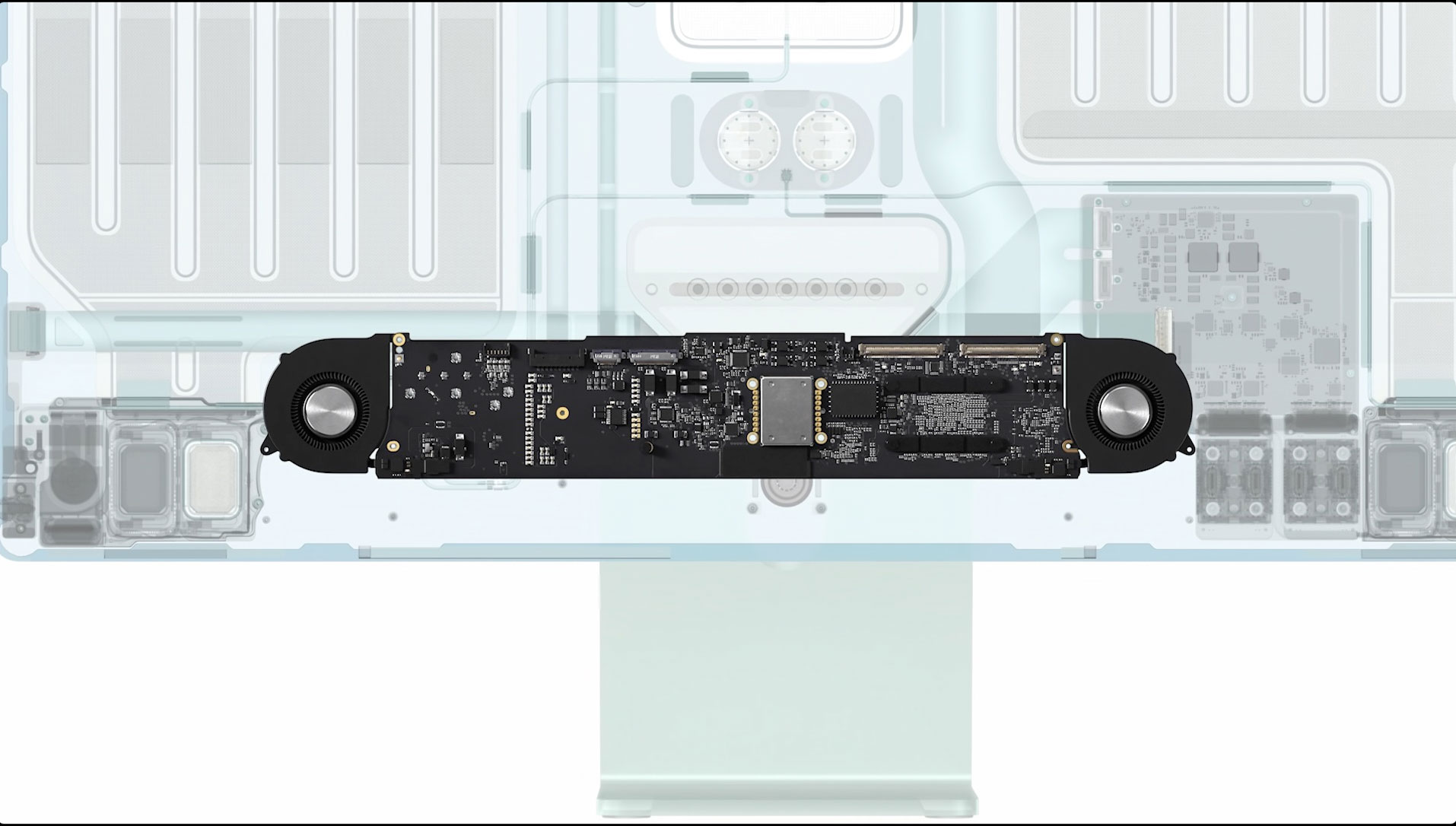
Apple just announced the new iMac powered by Apple’s own M1 silicon. Among the numerous updates and upgrades is a new power brick that sports something special to Apple’s lineup: an Ethernet port. On the surface, this seems like a silly placement of a critical I/O port, but there’s a good chance this feature could

Apple just announced the new iMac powered by Apple’s own M1 silicon. Among the numerous updates and upgrades is a new power brick that sports something special to Apple’s lineup: an Ethernet port. On the surface, this seems like a silly placement of a critical I/O port, but there’s a good chance this feature could hit future Apple laptops where it makes much more sense.

The M1 iMac sports a new design that’s much thinner than the last generation and Apple likely didn’t want to make room for the Ethernet port. The only I/O ports appear to be a 3.5mm jack and several USB-C ports. The power adapter itself has a new magnetic connector and doesn’t use one of the computer’s USB-C port. The Ethernet port was relegated to the power supply.

There are several advantages for this placement. It reduces clutter on the back of the computer and streamlines connectivity — items that are even more critical in a portable computer.

Apple famously shares components and accessories across its product line, making it very likely this power brick will come to other products. Apple started removing the magnetic MagSafe power connector when its laptops adopted USB-C in 2016, and it would be fantastic to see a similar product return to the product line. Apple removed the Ethernet port on the MacBook Pro in 2012.

Several companies offer add-ons for Apple power adapters. These, like the Twelve South PlugBug Duo, adds USB ports to the adapters, but none have yet to offer Ethernet.


News: The new iPad Pro features Apple’s M1 chip

The big news from today’s Spring Loaded event is, as anticipated, a new version of Apple’s high-end tablet. The new iPad Pro is the first in the line to adopt the M1 chip introduced on the company’s Mac line. The device further blurs the line between the company’s tablet and desktop offerings, as well as

The big news from today’s Spring Loaded event is, as anticipated, a new version of Apple’s high-end tablet. The new iPad Pro is the first in the line to adopt the M1 chip introduced on the company’s Mac line. The device further blurs the line between the company’s tablet and desktop offerings, as well as improved battery life now listed as “all day.” The Pro also swaps the standard USB-C for Thunderbolt, which allows for a number of new features including external display support.

The Pro also joins the iPhone line with the addition of 5G connectivity. Like the new iMac, the pro features improved imaging, courtesy of the new ISP aboard the Apple silicon. That’s coupled with a new ultra-wide camera. That should allow for improved teleconferencing ability, with a 120-degree field of view and the new “Center Stage” feature, which follows the users around, similar to tech we’ve seen on some smart displays. That’s coupled with a Dolby Atmos powered four speaker array.

As reported, the new tablet (12.9-inch only for now) features an improved display — Liquid Retina XDR, according to Apple’s marketing terms. Among other things that brings much improved high dynamic range. The display is powered by 10,000 micro-LED. That allows for, among other things, a hugely improved contrast ratio and 1,000 nits of brightness, without hammering the battery life.

The 11-inch version starts at $799 and the 12.9-inch, which adds the Liquid Retina display, starts at $1,099. Pre-orders on the tablets starts April 30 and the product is set to start shipping in the second half of May — along with a number of other products introduced at today’s show.

Developing…


News: Apple brings Touch ID to the Magic Keyboard

Apple has unveiled a new, colorful iMac today with an Apple-designed M1 chip. But that was just part of the story as the company used that opportunity to release new Mac accessories. In addition to a Magic Trackpad and a Magic Mouse with multiple color options, Apple is bringing Touch ID to desktop Macs with

Apple has unveiled a new, colorful iMac today with an Apple-designed M1 chip. But that was just part of the story as the company used that opportunity to release new Mac accessories. In addition to a Magic Trackpad and a Magic Mouse with multiple color options, Apple is bringing Touch ID to desktop Macs with a new Magic Keyboard.

Touch ID on desktop works as expected. There’s a fingerprint sensor located at the top right of the keyboard. It replaces the ‘Eject’ key that you can find on existing Apple keyboards. It lets you unlock your computer, pay with Apple Pay, unlock a password manager and more.

Interestingly, Touch ID works wirelessly, which means that you don’t have to connect your keyboard to your Mac with a Lightning cable. There’s a dedicated security component built in the keyboard. It communicates directly with the Secure Enclave in the M1, which means that it only works with modern Mac computers with an M1 chip. It’s going to be interesting to see the security implementation of this new take on Touch ID.

Customers can choose between three keyboard models when they buy a new iMac. Some iMac models probably don’t come with Touch ID by default. You may be able to buy the keyboard separately, but we’ll have to wait for the event to end to find out how much the new keyboard costs.

Image Credits: Apple

News: The new Apple TV 4K comes with a new Siri Remote

Apple announced a new Apple TV 4K today, which will come with a new Siri Remote. In addition to the existing Siri support, this new aluminum remote features a redesigned clickpad that allows for circular gestures in the outer ring, which viewers can use to quickly find the scene they’re looking for. And to eliminate

Apple announced a new Apple TV 4K today, which will come with a new Siri Remote.

In addition to the existing Siri support, this new aluminum remote features a redesigned clickpad that allows for circular gestures in the outer ring, which viewers can use to quickly find the scene they’re looking for. And to eliminate the need to reach for another remote, it also includes a mute button and a power button for your actual TV.

The new Apple TV 4K is built with Apple’s A12 Bionic chip, which the company says will allow it to support higher-quality video, specifically high frame rate HDR and Dolby Vision at 60 frames per second.

Of course, picture quality also depends on the TV itself. But Apple announced a new feature to address the situation, and it’s not limited to people who purchase the new device. To improve the color balance on their TV, any Apple TV owner should be able to use the light sensor in their iPhone to measure their current balance, and the output from their Apple TV will be adjusted accordingly.

The new Apple TV 4K will be available for $179 for 32 gigabytes (or $199 if you want to double the storage capacity), with orders starting on April 30 and availability in the second of May. You’ll also be able to buy an Apple TV HD with the new Siri Remote for $149, or the remote alone for $59.

“With the A12 Bionic and the all-new Siri Remote, Apple TV 4K lets customers enjoy their favorite shows, movies, and more in the highest quality, with simple and intuitive controls,” said Apple Vice President of Worldwide Marketing Bob Borchers in a statement. “And of course, Apple TV 4K offers easy access to Apple services, along with thousands of apps on the App Store for even more entertainment options.”

News: Apple’s new iMac finally gets an actually good webcam

Apple introduced new iMacs at its event on Tuesday, outfitted with its M1 processor and redesigned inside and out from the ground up. The hardware is impressive, but one of the biggest improvements for everyone’s Zoom-heavy life might be the webcam. Apple said it’s the “best camera ever in a Mac,” which honestly wouldn’t take

Apple introduced new iMacs at its event on Tuesday, outfitted with its M1 processor and redesigned inside and out from the ground up. The hardware is impressive, but one of the biggest improvements for everyone’s Zoom-heavy life might be the webcam. Apple said it’s the “best camera ever in a Mac,” which honestly wouldn’t take much, but its specs suggest it actually is a big upgrade.

The camera finally achieves 1080p video capabilities, and Apple has also equipped it with a larger sensor that should provide greatly-improved low light performance. The M1 chip has better image signal processing capabilities, and uses computational video powers to correct and improve the image on the fly, which has brought benefits to the image quality even on existing MacBook Air and MacBook Pro hardware with the same old, bad webcam equipment.

That should mean this iMac actually has really good image quality — or at least not image quality you need to be embarrassed about. The on-board machine learning processor in the M1, which Apple calls the Neural Engine, will be working in real-time to optimize lighting and do noise reduction, too.

On top of the camera, Apple touts new beam forming mics in a three-mic array that will optimize audio, focusing on your voice and eliminating background noise. All told, this should finally be a Mac that provides a videoconferencing experience that doesn’t feel like it’s stuck in the early 2000s.

News: Deep Science: Introspective, detail-oriented and disaster-chasing AIs

Research papers come out far too frequently for anyone to read them all. That’s especially true in the field of machine learning, which now affects practically every industry and company.

Research papers come out far too frequently for anyone to read them all. That’s especially true in the field of machine learning, which now affects (and produces papers in) practically every industry and company. This column aims to collect some of the most relevant recent discoveries and papers — particularly in, but not limited to, artificial intelligence — and explain why they matter.

It takes an emotionally mature AI to admit its own mistakes, and that’s exactly what this project from the Technical University of Munich aims to create. Maybe not the emotion, exactly, but recognizing and learning from mistakes, specifically in self-driving cars. The researchers propose a system in which the car would look at all the times in the past when it has had to relinquish control to a human driver and thereby learn its own limitations — what they call “introspective failure prediction.”

For instance, if there are a lot of cars ahead, the autonomous vehicle’s brain could use its sensors and logic to make a decision de novo about whether an approach would work or whether none will. But the TUM team says that by simply comparing new situations to old ones, it can reach a decision much faster on whether it will need to disengage. Saving six or seven seconds here could make all the difference for a safe handover.

It’s important for robots and autonomous vehicles of all types to be able to make decisions without phoning home, especially in combat, where decisive and concise movements are necessary. The Army Research Lab is looking into ways in which ground and air vehicles can interact autonomously, allowing, for instance, a mobile landing pad that drones can land on without needing to coordinate, ask permission or rely on precise GPS signals.

Their solution, at least for the purposes of testing, is actually rather low tech. The ground vehicle has a landing area on top painted with an enormous QR code, which the drone can see from a fairly long way off. The drone can track the exact location of the pad totally independently. In the future, the QR code could be done away with and the drone could identify the shape of the vehicle instead, presumably using some best-guess logic to determine whether it’s the one it wants.

Illustration showing how an AI tracks cells through a microscope.

Image Credits: Nagoya City University

In the medical world, AI is being put to work not on tasks that are not much difficult but are rather tedious for people to do. A good example of this is tracking the activity of individual cells in microscopy images. It’s not a superhuman task to look at a few hundred frames spanning several depths of a petri dish and track the movements of cells, but that doesn’t mean grad students like doing it.

This software from researchers at Nagoya City University in Japan does it automatically using image analysis and the capability (much improved in recent years) of understanding objects over a period of time rather than just in individual frames. Read the paper here, and check out the extremely cute illustration showing off the tech at right … more research organizations should hire professional artists.

This process is similar to that of tracking moles and other skin features on people at risk for melanoma. While they might see a dermatologist every year or so to find out whether a given spot seems sketchy, the rest of the time they must track their own moles and freckles in other ways. That’s hard when they’re in places like one’s back.

News: Apple announces Apple Card Family for spouses to build credit together, and over-13s to use it too

Apple has been slowly building a position for itself as a financial services giant, banked around its digital wallet for storing a user’s payment cards and the launch of its own Apple Card in 2019. Today during Apple’s spring event, the company announced the newest chapter in that functionality: the launch of Apple Card Family,

Apple has been slowly building a position for itself as a financial services giant, banked around its digital wallet for storing a user’s payment cards and the launch of its own Apple Card in 2019. Today during Apple’s spring event, the company announced the newest chapter in that functionality: the launch of Apple Card Family, which will let partners/spouses build joint credit, and give family members aged over 13 access to using Apple Card, too.

Apple Card Family will launch first in the US in May after users update to the latest version of iOS.

“One of the things that became apparent to us in the beginning [of launching Apple Card] was a lack of fairness in the way the industry calculated credit scores when there were two holders of a credit card,” said CEO Tim Cook today. “One of you got the benefit of building a good credit history, and the other did not. We want to reinvent the way this works.”

Some of this is not coming as a surprise: developer previews of iOS 14.5 revealed that Apple was building in multi-user support for Apple Cards, laying the groundwork for joint accounts for adults and wider family usage.

As Cook described it, spouses and partners will be allowed to share and merge their credit lines have equal rights on their account, in order to “build credit equally.”

“This solution helps deliver financial equity, and it’s a game changer,” he said. Indeed, in cases where either one partner has outstanding debts, or has defaulted on some of that debt, or doesn’t have the same earning power, this move is way to confer the stronger spending power of one partner on another, in cases where partners are actually combining their finances anyway. It makes sense and frankly is long overdue.

The ability to give Apple Card access to over-13s will come with spending limits if you want to put them in, along with other controls in terms of how it can be used.

This is also smart, an extension of how Apple has built a role for itself as the “responsible” technology company with privacy controls for all users, and parental controls for devices, and now it’s adding on a new angle to this provide, becoming an educative tool. Many parents are turning to technology and apps to build more financial nous among their children, and so it makes sense for Apple to position itself as a partner in this effort.

While letting families run their finances in a more equitable way, there is of course another, more business-minded strategy here: it’s clearly giving Apple a much, much bigger pool of potential consumers using its Apple Card, using services like Daily Cash (which gives up to 3 percent of every purchase as cash on users’ Apple Cash card each day) and access to using the secure titanium Apple Card that comes without a visible card number, CVV security code, expiration date, or signature.

On that subject, we don’t quite know how many people are using that Apple Card today. Cook simply called Apple Card, which was estimated to be used by over 3.1 million people as of March 2020, “the most successful credit card launch ever.”

News: Apple introduces a colorful new iMac

After years of waiting, Apple has finally given the world a dramatic new iMac redesign, aimed at the company’s long-standing goal of “making the computer disappear.” That, of course, only applies to the the thin new design, because these things are eye-popping. Naturally, the latest version of the 24-inch all-in-one desktop is built around the

After years of waiting, Apple has finally given the world a dramatic new iMac redesign, aimed at the company’s long-standing goal of “making the computer disappear.” That, of course, only applies to the the thin new design, because these things are eye-popping. Naturally, the latest version of the 24-inch all-in-one desktop is built around the company’s new proprietary M1 chips.

The screen sports a 4.5K Retina Display, coupled with a 1080p camera — a first for the Mac line, and a sign the company is taking both audio and video more seriously as these products are serving as a kind of life line for the work from home crowd. True Tone is, naturally, on board for better color balance, and sound have been improved with six-speaker setup.

The new devices are significantly thinner — with overall volume reduced by half, according to the company. The rear is also flat, instead of curved. In addition to allowing for a much thinner design, the new chip allows for far faster performance than previous models — a huge performance bump we’ve seen in our own testing of the most recent generation of Macs. All told, the company says it’s up to 85% faster than the last model, coupled with a GPU that’s up to twice as fast and 3x the machine learning.

Around back are two Thunderbolt ports and a new magnetic power adapter that also delivers Ethernet.

The system comes in seven colors. It starts at $1,299 (with four colors — you unlock all seven at $1,499). It goes up for pre-order April 30 and starts shipping in the second half of May.

Developing…

News: Tom Brady and Salesforce Ventures pour millions into Class, a Zoom-friendly edtech startup

Class, an edtech startup that integrates exclusively with Zoom to make remote teaching more elegant, has raised $12.25 million in new financing. The round brings Salesforce Ventures, Sound Ventures and Super Bowl champion Tom Brady onto its capital table. CEO and founder Michael Chasen said that Marc Benioff, the CEO of Salesforce, approached the company

Class, an edtech startup that integrates exclusively with Zoom to make remote teaching more elegant, has raised $12.25 million in new financing. The round brings Salesforce Ventures, Sound Ventures and Super Bowl champion Tom Brady onto its capital table.

CEO and founder Michael Chasen said that Marc Benioff, the CEO of Salesforce, approached the company about investing in Class. Salesforce Ventures launched a $100 million Impact Fund in October 2020, a month after Class launched, to back edtech companies and cloud enterprises businesses with an impact lens.

As for Tom Brady entering the edtech world, Chasen said that the famous football player has made tech investments in the past and, “as the father of three is passionate about helping people through education.”

“Tom Brady and I are both fathers to three kids and like all parents, we get the need to add teaching and learning tools to Zoom,” Chasen added.

Class has now raised $58 million in less than a year, with a $30 million Series A in February 2021 and a $16 million seed round in September 2020. Today’s raise is less than its Series A round, which signals it was likely more done strategically to bring on investors than out of necessity.

The money will be used to help roll out Class to K-12 and higher-ed institutions across the world. The startup’s software publicly launched on the Mac a few months ago, and will exit beta for Windows, iPhone, Android and Chromebook in the next few weeks, Chasen said. The larger public launch will help scale the some 7,500 schools that have shown interest in adopting Class.

The big hurdle for Class, and any startup selling e-learning solutions to institutions, is post-pandemic utility. While institutions have traditionally been slow to adopt software due to red tape, Chasen says that both of Class’ customers, higher ed and K-12, are actively allocating budget for these tools. The price for Class ranges between $10,000 to $65,000 annually, depending on the number of students in the classes.

“We have not run into a budgeting problem in a single school,” Chasen said in February. “Higher ed has already been taking this step towards online learning, and they’re now taking the next step, whereas K-12, this is the first step they’re taking.” So far, Class has more than 125 paying clients with even-split between K-12 and higher ed, and 10% of customers using it for corporate teams.

It’s not the only startup that is trying to reinvent Zoom University. A number of companies are trying to serve the same market of students and teachers who are fatigued by current video conferencing solutions which — at best — often look like a gallery view with a chat bar. Three companies that are gaining traction include Engageli, Top Hat and InSpace.

While each startup has its own unique strategy and product, the founders behind them all need to answer the same question: Can they make digital learning a preferred mode of pedagogy and comprehension — and not merely a backup — after the pandemic is over?

As that question continues to get explored, today’s news shows that Class isn’t having any trouble recruiting people to believe the answer is yes. In just nine months, the company has gone from two to more than 150 employees and contractors.

News: Apple adds a new purple color option to its iPhone 12 and iPhone 12 mini lineup

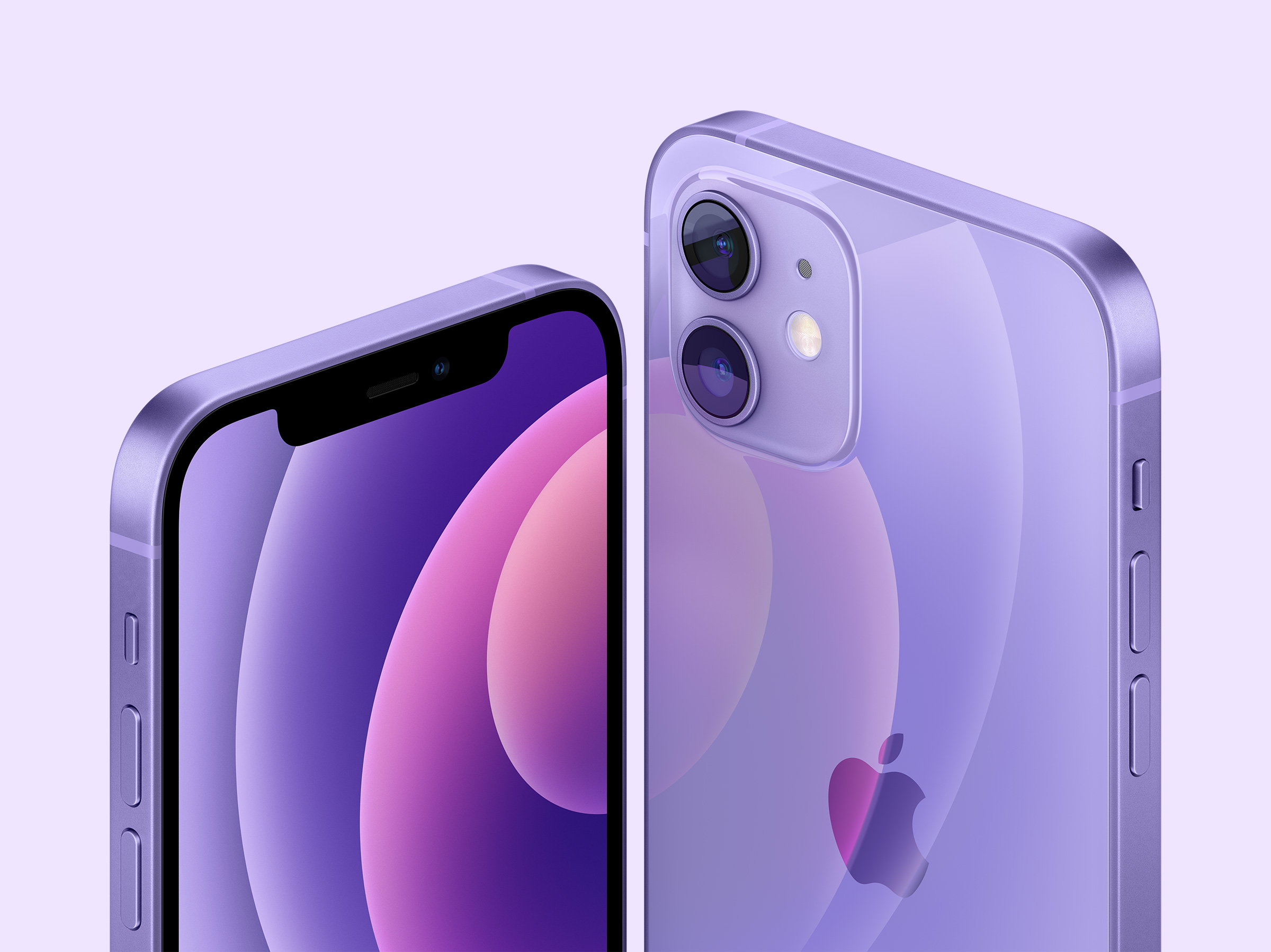
Apple has added a new color option to the iPhone 12 lineup — a rare mid-cycle facelift for the company’s flagship product. The new color is purple, and looks like a lavender-ish pastel hue, which is in keeping with the tones on the rest of the color options on the 12 lineup, which include a

Apple has added a new color option to the iPhone 12 lineup — a rare mid-cycle facelift for the company’s flagship product. The new color is purple, and looks like a lavender-ish pastel hue, which is in keeping with the tones on the rest of the color options on the 12 lineup, which include a mint green and a red that leans towards the pink end of the spectrum.

The purple iPhone 12 is going on sale starting this Friday, April 23, and will begin shipping out to customers on April 30. It’s available for iPhone 12 and 12 mini, but the iPhone 12 Pro isn’t getting any new color options to match.

It’s a small thing, but not a bad way for Apple to jazz up their hardware mid-cycle in a bid to excite general consumers. Also, it suggests Apple is leaning in even more to a multicolor aesthetic for its hardware, which is a refreshing change after a mostly monochrome approach in recent years.

Image Credits: Apple

WordPress Image Lightbox Plugin