Tag Archives: Blog

News: Ornikar raises $120M as its driving school marketplace goes up a gear with car insurance

A French startup that set out to bring a new approach to driver education and road safety, and then used that foothold to expand into the related area of car insurance, is today announcing a big round of funding to continue building its service across Europe. Ornikar, which prepares people for driving tests by providing

A French startup that set out to bring a new approach to driver education and road safety, and then used that foothold to expand into the related area of car insurance, is today announcing a big round of funding to continue building its service across Europe.

Ornikar, which prepares people for driving tests by providing online drivers education courses, lets those users organize in-person lessons with driving instructors, provides a booking system for taking their written and practical examinations, and finally provides them with competitive rates for getting car insurance as new drivers, has raised €100 million ($120 million).

The company intends to use the funding to expand its business. Drivers education services are live today in France and Spain, while insurance is offered today only in France: the plan will be to expand both of those to more markets.

The Series C is being led by KKR, with previous investors Idinvest, BPI, Elaia, Brighteye, and H14 also participating. Benjamin Gaignault, Ornikar’s CEO who co-founded the company with Flavien LeRendu (who also jointly holds the title of CEO), said the startup is not disclosing its valuation, but we understand from a source that it is around $750 million. The company has raised $175 million to date.

Ornikar has been around since 2013 and was founded, in Gaignault’s words, “to disrupt driving education.”

Coming into the market at a time when most of the process of organizing, learning and booking your driving education was not only very fragmented but completely offline, Ornikar’s internet-based offering represented a step change in how French people learned to drive: the process not only became easier, but on average about 40% cheaper to arrange.

Ornikar’s driving education business today includes not just online course materials and booking services, but a network of instructors across 1,000 towns and cities in France, and a business that launched last year in Spain, under the Onroad brand. Some 1.5 million people have taken Ornikar’s driving education courses to date, with another 2 million using its driving school, with growth accelerating: 420,000 new customers signed up with Ornikar in the last year alone.

Last year was a tricky one for companies in the business of transportation. People were generally staying put and not traveling anywhere, but when they were getting around, they wanted plenty of their own space to do so.

Translating that to markets like France and Spain where many towns will have solid public transportation and taxi services, people might have opted to use these less, looking instead to private vehicles in their place. And translating that to Ornikar, Gaignault said that people being at home more, and looking to use the time productively with a view to driving more in the future, the startup saw business growing by 30% each month last year.

Interestingly, it was in the middle of the pandemic that Ornikar launched its car insurance product, which came out of the same impetus as the driver education services: it was built to fill a hole in the market rethought with Ornikar’s users in mind.

Car insurance in France — a €17 billion ($20 billion) market annually — is dominated by big players, and when it comes to first-time drivers and looking for competitive rates, “the bigger companies are not comfortable with user experience,” said Gaignault. “It’s pretty poor and not aligned with expectations of the customers.”

The car insurance product — sold as Ornikar Assurance — is now on track to hit some 20,000 users by August (when it will have been in the market for a year).

While it accounts today for a small fraction of Ornikar’s revenues compared to its driver education platform, that take up — not just from alums of Ornikar’s drivers ed, but from those who had never used an Ornikar service before — is a good sign that it’s on to something big, Gaignault said.

“In October we noticed that 80% of our new insurance customers were not coming from Ornikar but from social media, Google ads and other outside sources,” he said. “That’s why we decided to create a new business unit and explore a business as an insuretech.”

But, he added, that will not be at the expense of the driving education: the two go hand in hand for a common goal of improving how people drive and improving road safety. Indeed, Gaignault said he envisions a time when one will feed into the other: not only will the driving school serve as a way of bringing in new insurance customers, but insurance rates can be impacted by how many driving courses a person takes to keep their knowledge of the driving code and best practices fresh.

“Ornikar has done a tremendous job creating a great experience for students and driving instructors through engaging online education courses and a well-designed marketplace,” said Patrick Devine, director at KKR and member of the Next Generation Technology Growth investment team. “We are thrilled to invest behind Benjamin, Flavien, and their talented team as they expand internationally and accelerate their insurance offering following the successful launches of Onroad in Spain and Ornikar Assurance.”
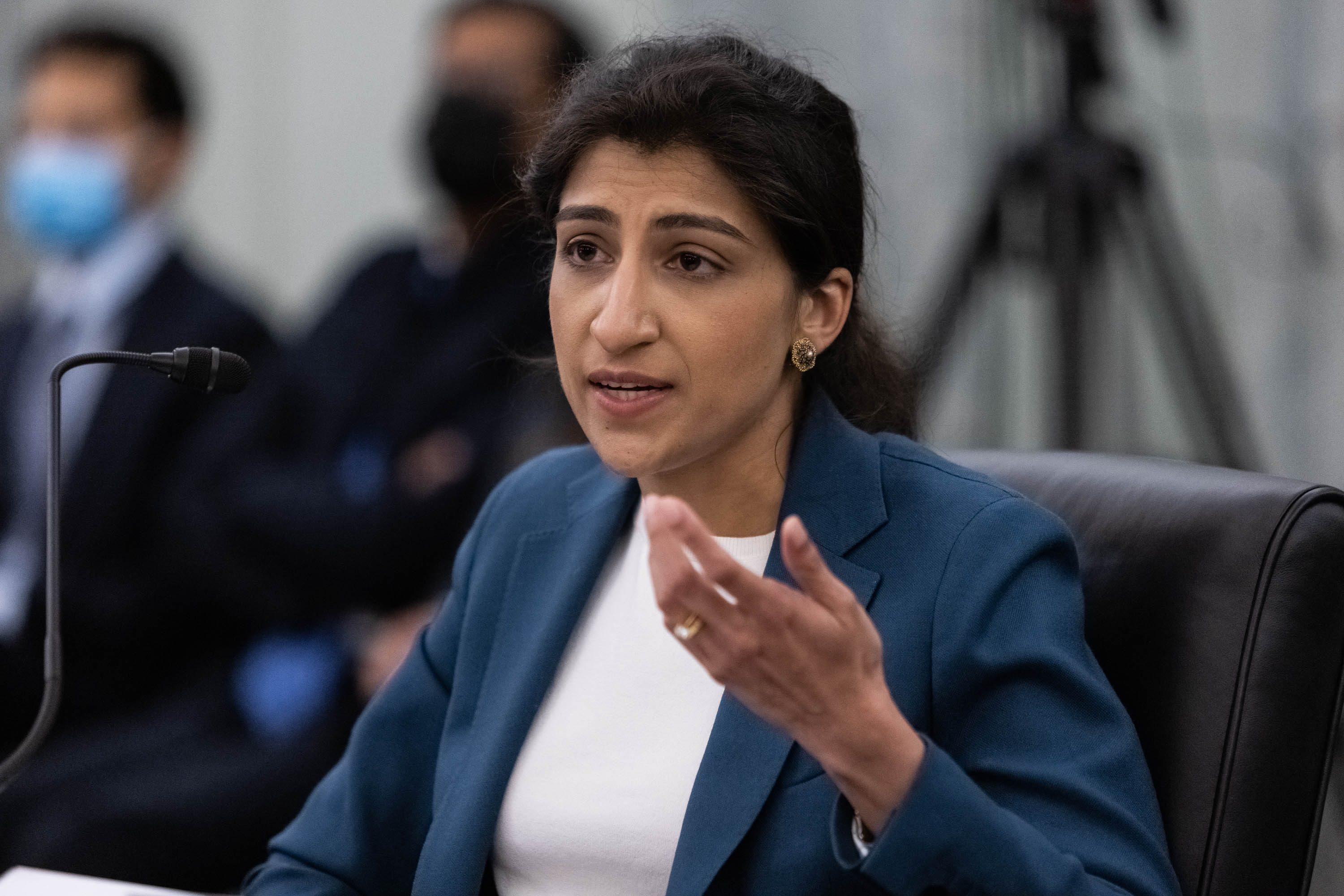

News: Lina Khan’s timely tech skepticism makes for a refreshingly friendly FTC confirmation hearing

One never knows how a confirmation hearing will go these days, especially one for a young outsider nominated to an important position despite challenging the status quo and big business. Lina Khan, just such a person up for the position of FTC Commissioner, had a surprisingly pleasant time of it during today’s Senate Commerce Committee

One never knows how a confirmation hearing will go these days, especially one for a young outsider nominated to an important position despite challenging the status quo and big business. Lina Khan, just such a person up for the position of FTC Commissioner, had a surprisingly pleasant time of it during today’s Senate Commerce Committee confirmation hearing — possibly because her iconoclastic approach to antitrust makes for good politics these days.

Khan, an associate professor of law at Columbia, is best known in the tech community for her incisive essay “Amazon Antitrust’s Paradox,” which laid out the failings of regulatory doctrine that have allowed the retail giant to progressively dominate more and more markets. (She also recently contributed to a House report on tech policy.)

When it was published, in 2018, the feeling that Amazon had begun to abuse its position was, though commonplace in some circles, not really popular in the Capitol. But the growing sense that laissez-faire or insufficient regulations have created monsters in Amazon, Google, and Facebook (to start) has led to a rare bipartisan agreement that we must find some way, any way will do, of putting these upstart corporations back in their place.

This in turn led to a sense of shared purpose and camaraderie in the confirmation hearing, which was a triple header: Khan joined Bill Nelson, nominated to lead NASA, and Leslie Kiernan, who would join the Commerce Department as General Counsel, for a really nice little three-hour chat.

Khan is one of several in the Biden administration who signal a new approach to taking on Big Tech and other businesses that have gotten out of hand, and the questions posed to her by Senators from both sides of the aisle seemed genuine and got genuinely satisfactory answers from a confident Khan.

She deftly avoided a few attempts to bait her — including one involving Section 230; wrong Commission, Senator — and her answers primarily reaffirmed her professional opinion that the FTC should be better informed and more preemptive in its approach to regulating these secretive, powerful corporations.

Here are a few snippets representative of the questioning and indicative of her positions on a few major issues (answers lightly edited for clarity):

On the FTC getting involved in the fight between Google, Facebook, and news providers:

“Everything needs to be on the table. Obviously local journalism is in crisis, and i think the current COVID moment has really underscored the deep democratic emergency that is resulting when we don’t have reliable sources of local news.”

She also cited the increasing concentration of ad markets and the arbitrary nature of, for example, algorithm changes that can have wide-ranging effects on entire industries.

Lina Khan, commissioner of the Federal Trade Commission (FTC) nominee for U.S. President Joe Biden, speaks during a Senate Commerce, Science and Transportation Committee confirmation hearing in Washington, D.C.

Image Credits: Graeme Jennings/Washington Examiner/Bloomberg / Getty Images

On Clarence Thomas’s troubling suggestion that social media companies should be considered “common carriers”:

“I think it prompted a lot of interesting discussion,” she said, very diplomatically. “In the Amazon article, I identified two potential pathways forward when thinking about these dominant digital platforms. One is enforcing competition laws and ensuring that these markets are competitive.” (i.e. using antitrust rules)

“The other is, if we instead recognize that perhaps there are certain economies of scale, network externalities that will lead these markets to stay dominated by a very few number of companies, then we need to apply a different set of rules. We have a long legal tradition of thinking about what types of checks can be applied when there’s a lot of concentration and common carriage is one of those tools.”

“I should clarify that some of these firms are now integrated in so many markets that you may reach for a different set of tools depending on which specific market you’re looking at.”


(This was a very polite way of saying common carriage and existing antitrust rules are totally unsuitable for the job.)

On potentially reviewing past mergers the FTC approved:

“The resources of the commission have not really kept pace with the increasing size of the economy, as well as the increasing size and complexity of the deals the commission is reviewing.”

“There was an assumption that digital markets in particular are fast moving so we don’t need to be concerned about potential concentration in the markets, because any exercise of power will get disciplined by entry and new competition. Now of course we know that in the markets you actually have significant network externalities in ways that make them more sticky. In hindsight there’s a growing sense that those merger reviews were a missed opportunity.”

(Here Senator Blackburn (R-TN) in one of the few negative moments fretted about Khan’s “lack of experience in coming to that position” before asking about a spectrum plan — wrong Commission, Senator.)

On the difficulty of enforcing something like an order against Facebook:

“One of the challenges is the deep information asymmetry that exists between some of these firms and enforcers and regulators. I think it’s clear that in some instances the agencies have been a little slow to catch up to the underlying business realities and the empirical realities of how these markets work. So at the very least ensuring the agencies are doing everything they can to keep pace is gonna be important.”

“In social media we have these black box algorithms, proprietary algorithms that can sometimes make it difficult to know what’s really going on. The FTC needs to be using its information gathering capacities to mitigate some of these gaps.”

On extending protections for children and other vulnerable groups online:

Some of these dangers are heightened given some of the ways in which the pandemic has rendered families and children especially dependent on some of these [education] technologies. So I think we need to be especially vigilant here. The previous rules should be the floor, not the ceiling.


Overall there was little partisan bickering and a lot of feeling from both sides that Khan was, if not technically experienced at the job (not rare with a coveted position like FTC Commissioner), about as competent a nominee as anyone could ask for. Not only that but her highly considered and fairly assertive positions on matters of antitrust and competition could help put Amazon and Google, already in the regulatory doghouse, on the defensive for once.

News: Look at this tiny new Polaroid camera can you believe it

A lot has changed in the last decade-ish of instant photography, yet all the while the boxy build of instant cameras has stayed more or less intact. Modern instant shooters have slimmed down and put on a variety of calming pastel tones, but they’re not exactly slender. But lo, Polaroid — the new Polaroid, not

A lot has changed in the last decade-ish of instant photography, yet all the while the boxy build of instant cameras has stayed more or less intact. Modern instant shooters have slimmed down and put on a variety of calming pastel tones, but they’re not exactly slender.

But lo, Polaroid — the new Polaroid, not the old Polaroid — has done a thing. The company says its latest camera, the Polaroid Go, is the world’s smallest analog instant camera. And you know, yeah, it looks really quite small.

How small is small? It’s 4.1 inches long, 2.4 inches tall and a little over 3 inches wide. The Go is undeniably tiny but boasts a handful of useful features, including a selfie timer, selfie mirror and the ability to take dreamy double exposures.

In the promo photos, Polaroid’s models hold it like a delicate canapé or casually wield it with a few dainty fingers as it dangles from various stylish-looking accessories (camera straps? necklaces?). The company really wants people to wear this thing, it seems, and I for one am not above it.

Polaroid Go

Image Credits: Polaroid

With the Go, Polaroid continues the sort of annoying but I guess necessary instant photography trend of making a new film format, which in this case is basically a miniaturized version of its iconic old-school square film. And while the camera is teeny, TechCrunch’s own tiny camera-haver and forthcoming review writer Devin Coldewey says you don’t actually lose much size in the shots compared to something like the Instax Mini.

Polaroid claims that the Go marks the “most significant and exciting change to the Polaroid form factor in decades” and it’s probably not wrong. The company’s improbable return from the dead was likely more exciting, but we don’t want to undermine how cute this thing is. Let’s just hope it makes pictures good.

The Polaroid Go will join the Polaroid Now, its standard though now hideously bloated sibling, and the OneStep+, which blends digital and analog and connects to a phone over Bluetooth. It’s on preorder now and will retail for $100, which is the same amount you’d pay for the regular old new Polaroid camera. But why would you?

News: As UiPath closes above its final private valuation, CFO Ashim Gupta discusses his company’s path to market

TechCrunch spoke with UiPath CFO Ashim Gupta today to learn more about his company’s foray into the public markets.

After an upward revision, UiPath priced its IPO last night at $56 per share, a few dollars above its raised target range. The above-range price meant that the unicorn put more capital into its books through its public offering.

For a company in a market as competitive as robotic process automation (RPA), the funds are welcome. In fact, RPA has been top of mind for startups and established companies alike over the last year or so. In that time frame, enterprise stalwarts like SAP, Microsoft, IBM and ServiceNow have been buying smaller RPA startups and building their own, all in an effort to muscle into an increasingly lucrative market.

In June 2019, Gartner reported that RPA was the fastest-growing area in enterprise software, and while the growth has slowed down since, the sector is still attracting attention. UIPath, which Gartner found was the market leader, has been riding that wave, and today’s capital influx should help the company maintain its market position.

It’s worth noting that when the company had its last private funding round in February, it brought home $750 million at an impressive valuation of $35 billion. But as TechCrunch noted over the course of its pivot to the public markets, that round valued the company above its final IPO price. As a result, this week’s $56-per-share public offer wound up being something of a modest down-round IPO to UiPath’s final private valuation.

Then, a broader set of public traders got hold of its stock and bid its shares higher. The former unicorn’s shares closed their first day’s trading at precisely $69, above the per-share price at which the company closed its final private round.

So despite a somewhat circuitous route, UiPath closed its first day as a public company worth more than it was in its Series F round — when it sold 12,043,202 shares sold at $62.27576 apiece, per SEC filings. More simply, UiPath closed today worth more per-share than it was in February.

How you might value the company, whether you prefer a simple or fully-diluted share count, is somewhat immaterial at this juncture. UiPath had a good day.

While it’s hard to know what the company might do with the proceeds, chances are it will continue to try to expand its platform beyond pure RPA, which could become market-limited over time as companies look at other, more modern approaches to automation. By adding additional automation capabilities — organically or via acquisitions — the company can begin covering broader parts of its market.

TechCrunch spoke with UiPath CFO Ashim Gupta today, curious about the company’s choice of a traditional IPO, its general avoidance of adjusted metrics in its SEC filings, and the IPO market’s current temperature. The final question was on our minds, as some companies have pulled their public listings in the wake of a market described as “challenging”.

Why did UiPath not direct list after its huge February raise?

News: Daily Crunch: Google Meet will get a new look and new features

Google announces upgrades to Google Meet, Amazon is bringing its palm scanner to Whole Foods and Microsoft looks at the effect of video calls on our brains. This is your Daily Crunch for April 21, 2021. The big story: Google Meet will get a new look and new features Google Meet is getting a number

Google announces upgrades to Google Meet, Amazon is bringing its palm scanner to Whole Foods and Microsoft looks at the effect of video calls on our brains. This is your Daily Crunch for April 21, 2021.

The big story: Google Meet will get a new look and new features

Google Meet is getting a number of updates, including a new user interface that should make the controls more visible (rather than hiding them in menus), the ability to pin multiple video feeds, autozoom (which will automatically place you in the center of the frame) and background replacement, starting with just a few scenes.

It sounds like these changes aren’t happening all at once, but will roll out gradually over the next few months. Google said the goal is to make online meetings “more immersive, inclusive and productive.”

The tech giants

Foxconn’s Wisconsin factory plans scaled back dramatically — The Taiwanese manufacturing giant is scaling back its investment from $10 billion to $672 million.

Amazon is bringing its Amazon One palm scanner to select Whole Foods as a payment option — That means Whole Foods customers could choose to scan their palm over the reader to pay for their purchases.

Instagram launches tools to filter out abusive DMs based on keywords and emojis — It will also allow users to proactively block people, even if they try to make contact from a new account.

Startups, funding and venture capital

Remote hiring startup Deel raises $156M at a $1.25B valuation after 20x growth in 2020 — Deel aims to allow businesses “to hire anyone, anywhere, in a compliant manner.”

Discount grocery startup Misfits Market raises $200M — This round moves the startup known for selling “ugly” fruits and vegetables into unicorn territory.

AppOmni raises $40M for tools to secure enterprise SaaS apps — The startup has built a platform to help monitor SaaS apps and their activity, provide guidance to warn or block when things might go wrong and fix problems when they do occur.

Advice and analysis from Extra Crunch

Four ways martech will shift in 2021 — First and foremost, differentiation is going to be imperative.

Micromobility’s next big business is software, not vehicles — The days of the shared, dockless micromobility model are numbered, at least according to Puneeth Meruva of Trucks Venture Capital.

Dear Sophie: How can I get my startup off the ground and visit the US? — The latest edition of Dear Sophie, the advice column that answers immigration-related questions about working at technology companies.

(Extra Crunch is our membership program, which helps founders and startup teams get ahead. You can sign up here.)

Everything else

This is your brain on Zoom — Microsoft has done a little brain science and found out that yeah, constant video calls do increase your stress and brain noise.

New privacy bill would end law enforcement practice of buying data from brokers — A new bill known as the Fourth Amendment is Not for Sale Act would seal up a loophole that intelligence and law enforcement agencies use to obtain troves of sensitive and identifying information.

The Daily Crunch is TechCrunch’s roundup of our biggest and most important stories. If you’d like to get this delivered to your inbox every day at around 3pm Pacific, you can subscribe here.

News: Apple and Google pressed in antitrust hearing on whether app stores share data with product development teams

In today’s antitrust hearing in the U.S. Senate, Apple and Google representatives were questioned on whether they have a “strict firewall” or other internal policies in place that prevent them from leveraging the data from third-party businesses operating on their app stores to inform the development of their own competitive products. Apple, in particular, was

In today’s antitrust hearing in the U.S. Senate, Apple and Google representatives were questioned on whether they have a “strict firewall” or other internal policies in place that prevent them from leveraging the data from third-party businesses operating on their app stores to inform the development of their own competitive products. Apple, in particular, was called out for the practice of copying other apps by Senator Richard Blumenthal (D-CT), who said the practice had become so common that it earned a nickname with Apple’s developer community: “sherlocking.”

Sherlock, which has its own Wikipedia entry under software, comes from Apple’s search tool in the early 2000s called Sherlock. A third-party developer, Karelia Software, created an alternative tool called Watson. Following the success of Karelia’s product, Apple added Watson’s same functionality into its own search tool, and Watson was effectively put out of business. The nickname “Sherlock” later became shorthand for any time Apple copies an idea from a third-party developer that threatens to or even destroys their business.

Over the years, developers claimed Apple has “sherlocked” a number of apps, including Konfabulator (desktop widgets), iPodderX (podcast manager), Sandvox (app for building websites) and Growl (a notification system for Mac OS X) and, in more recent years, F.lux (blue light reduction tool for screens) Duet and Luna (apps that makes iPad a secondary display), as well as various screen-time-management tools. Now Tile claims Apple has also unfairly entered its market with AirTag.

During his questioning, Blumenthal asked Apple and Google’s representatives at the hearing — Kyle Andeer, Apple’s
chief compliance officer and Wilson White, Google’s senior director of Public Policy & Government Relations, respectively — if they employed any sort of “firewall” in between their app stores and their business strategy.

Andeer somewhat dodged the question, saying, “Senator, if I understand the question correctly, we have separate teams that manage the App Store and that are engaged in product development strategy here at Apple.”

Blumenthal then clarified what he meant by “firewall.” He explained that it doesn’t mean whether or not there are separate teams in place, but whether there’s an internal prohibition on sharing data between the App Store and the people who run Apple’s other businesses.

Andeer then answered, “Senator, we have controls in place.”

He went on to note that over the past 12 years, Apple has only introduced “a handful of applications and services,” and in every instance, there are “dozens of alternatives” on the App Store. And, sometimes, the alternatives are more popular than Apple’s own product, he noted.

“We don’t copy. We don’t kill. What we do is offer up a new choice and a new innovation,” Andeer stated.

His argument may hold true when there are strong rivalries, like Spotify versus Apple Music, or Netflix versus Apple TV+, or Kindle versus Apple Books. But it’s harder to stretch it to areas where Apple makes smaller enhancements — like when Apple introduced Sidecar, a feature that allowed users to make their iPad a secondary display. Sidecar ended the need for a third-party app, after apps like Duet and Luna first proved the market.

Another example was when Apple built screen-time controls into its iOS software, but didn’t provide the makers of third-party screen-time apps with an API so consumers could use their preferred apps to configure Apple’s Screen Time settings via the third-party’s specialized interface or take advantage of other unique features.

Blumenthal said he interpreted Andeer’s response as to whether Apple has a “data firewall” as a “no.”

Posed the same question, Google’s representative, White, said his understanding was that Google had “data access controls in place that govern how data from our third-party services are used.”

Blumenthal pressed him to clarify if this was a “firewall,” meaning, he clarified again, “do you have a prohibition against access?”

“We have a prohibition against using our third-party services to compete directly with our first-party services,” White said, adding that Google has “internal policies that govern that.”

The senator said he would follow up on this matter with written questions, as his time expired.

News: New privacy bill would end law enforcement practice of buying data from brokers

A new bill known as the Fourth Amendment is Not for Sale Act would seal up a loophole that intelligence and law enforcement agencies use to obtain troves of sensitive and identifying information to which they wouldn’t otherwise have legal access. The new legislation, proposed by Senators Ron Wyden (D-OR) and Rand Paul (R-KY), would

A new bill known as the Fourth Amendment is Not for Sale Act would seal up a loophole that intelligence and law enforcement agencies use to obtain troves of sensitive and identifying information to which they wouldn’t otherwise have legal access.

The new legislation, proposed by Senators Ron Wyden (D-OR) and Rand Paul (R-KY), would require government agencies to obtain a court order to access data from brokers. Court orders are already required when the government seeks analogous data from mobile providers and tech platforms.

“There’s no reason information scavenged by data brokers should be treated differently than the same data held by your phone company or email provider,” Wyden said. Wyden describes the loophole as a way that police and other agencies buy data to “end-run the Fourth Amendment.”

Paul criticized the government for using the current data broker loophole to circumvent Americans’ constitutional rights. “The Fourth Amendment’s protection against unreasonable search and seizure ensures that the liberty of every American cannot be violated on the whims, or financial transactions, of every government officer,” Paul said.

Critically, the bill would also ban law enforcement agencies from buying data on Americans when it was obtained through hacking, violations of terms of service or “from a user’s account or device.”

That bit highlights the questionable practices of Clearview AI, a deeply controversial tech company that sells access to a facial recognition search engine. Clearview’s platform collects pictures of faces scraped from across the web, including social media sites, and sells access to that data to police departments around the country and federal agencies like ICE.

In scraping their sites for data to sell, Clearview has run afoul of just about every major social media platform’s terms of service. Facebook, YouTube, Twitter, LinkedIn and Google have all denounced Clearview for using data culled from their services and some have even sent cease-and-desists ordering the data broker to stop.

The bill would also expand privacy laws to apply to infrastructure companies that own cell towers and data cables, seal up workarounds that allow intelligence agencies to obtain metadata from Americans’ international communications without review by a FISA court and ensure that agencies seek probable cause orders to obtain location and web browsing data.

The bill, embedded below, isn’t just some nascent proposal. It’s already attracted bipartisan support from a number of key co-sponsors, including Senate Majority Leader Chuck Schumer and Bernie Sanders on the Democratic side and Republicans Mike Lee and Steve Daines. A House version of the legislation was also introduced Wednesday.


News: The ANYmal inspection robot gives Spot some four-legged competition

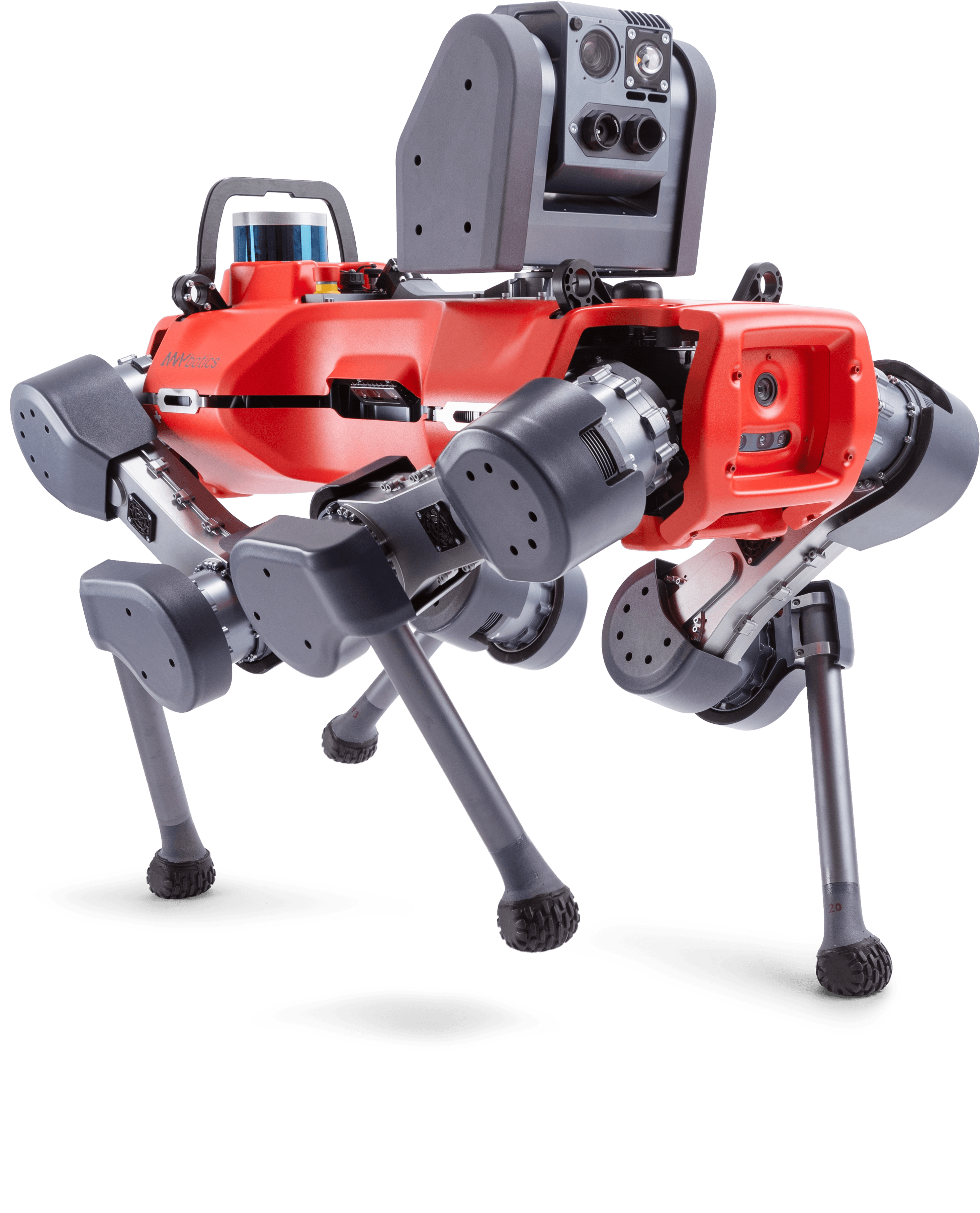
We’ve covered Swiss robotics company ANYbotics with some regularity over the years. The company has offered its own take on the quadrupedal robotics space that has, naturally, drawn comparisons to Boston Dynamics’ Spot. Of course, as we noted earlier, the company’s take on the category has been in development for several years, so there may

We’ve covered Swiss robotics company ANYbotics with some regularity over the years. The company has offered its own take on the quadrupedal robotics space that has, naturally, drawn comparisons to Boston Dynamics’ Spot. Of course, as we noted earlier, the company’s take on the category has been in development for several years, so there may be a case of convergent evolution here.

Today the company announced that it’s ready to take ANYmal to the next level. ANYbotics is positioning its robot as a “end-to-end robotic inspection solution.” Specifically, the robot is designed to inspect places like energy and industrial plants, patrolling areas where it’s not ideal to have a human on-site, 24/7 — if at all.

Image Credits: ANYbotics

Mounted atop the robot is a customizable payload, featuring a number of different sensors for inspection, including visual, acoustic and thermal readings. The on-board camera features remote pan and tilt options for a better picture of an area.

The ANYmal is capable of walking up stairs and squeezing into areas that might otherwise be inaccessible for more traditional wheeled robotics. It can perform inspections autonomously and return to its charging dock when the battery is low.

The robot is currently in pilot deployment and the company has opened it up to preorders. It expects to start delivering units to customers in the second half of the year. The company is also offering a kind of on-boarding to get clients up to speed.

“Acting as a single point-of-contact, ANYbotics’ experts closely work with the customer in evaluating the tasks to be automated and prepare the organization for the deployment of autonomous mobile inspection robots,” it writes in a release. “The team checks the feasibility and impact in simulations, on-site demonstrations, and long-term pilot deployments. Once the implementation roadmap is established, the team trains the customer in commissioning and supports in scaling the system throughout their facilities.”


News: Micromobility’s next big business is software, not vehicles

It’s the software that can determine if a micromobility company breaks out of the rideshare model and into the sales or subscription model, or becomes subsidized by or absorbed into public transit.

The days of the shared, dockless micromobility model are numbered. That’s essentially the conclusion reached by Puneeth Meruva, an associate at Trucks Venture Capital who recently authored a detailed research brief on micromobility. Meruva is of the opinion that the standard for permit-capped, dockless scooter-sharing is not sustainable — the overhead is too costly, the returns too low — and that the industry could splinter.

Most companies playing to win have begun to vertically integrate their tech stacks by developing or acquiring new technology.

“Because shared services have started a cultural transition, people are more open to buying their own e-bike or e-scooter,” Meruva told TechCrunch. “Fundamentally because of how much city regulation is involved in each of these trips, it could reasonably become a transportation utility that is very useful for the end consumer, but it just hasn’t proven itself to be a profitable line of business.”

As dockless e-scooters, e-bikes and e-mopeds expand their footprint while consolidating under a few umbrella corporations, companies might develop or acquire the technology to streamline and reduce operational costs enough to achieve unit economics. One overlooked but massive factor in the micromobility space is the software that powers the vehicles — who owns it, if it’s made in-house and how well it integrates with the rest of the tech stack.

It’s the software that can determine if a company breaks out of the rideshare model into the sales or subscription model, or becomes subsidized by or absorbed into public transit, Meruva predicts.

Vehicle operating systems haven’t been top of mind for most companies in the short history of micromobility. The initial goal was making sure the hardware didn’t break down or burst into flames. When e-scooters came on the scene, they caused a ruckus. Riders without helmets zipped through city streets and many vehicles ended up in ditches or blocking sidewalk accessibility.

City officials were angry, to say the least, and branded dockless modes of transport a public nuisance. However, micromobility companies had to answer to their overeager investors — the ones who missed out on the Uber and Lyft craze and threw millions at electric mobility, hoping for swift returns. What was a Bird or a Lime to do? The only thing to do: Get back on that electric two-wheeler and start schmoozing cities.

How the fight for cities indirectly improved vehicle software

Shared, dockless operators are currently in a war of attrition, fighting to get the last remaining city permits. But as the industry seeks a business to government (B2G) model that morphs into what companies think cities want, some are inadvertently producing vehicles that will evolve beyond functional toys and into more viable transportation alternatives.

The second wave of micromobility was marked by newer companies like Superpedestrian and Voi Technology. They learned from past industry mistakes and developed business strategies that include building onboard operating systems in-house. The goal? More control over rider behavior and better compliance with city regulations.

Most companies playing to win have begun to vertically integrate their tech stacks by developing or acquiring new technology. Lime, Bird, Superpedestrian, Spin and Voi all design their own vehicles and write their own fleet management software or other operational tools. Lime writes its own firmware, which sits directly on top of the vehicle hardware primitives and helps control things like motor controllers, batteries and connected lights and locks.

News: This is your brain on Zoom

We all know these constant video calls are doing something to our brains. How else could we get tired and frazzled from sitting around in your own home all day? Well, now Microsoft has done a little brain science and found out that yeah, constant video calls do increase your stress and brain noise. Tell

We all know these constant video calls are doing something to our brains. How else could we get tired and frazzled from sitting around in your own home all day? Well, now Microsoft has done a little brain science and found out that yeah, constant video calls do increase your stress and brain noise. Tell your boss!

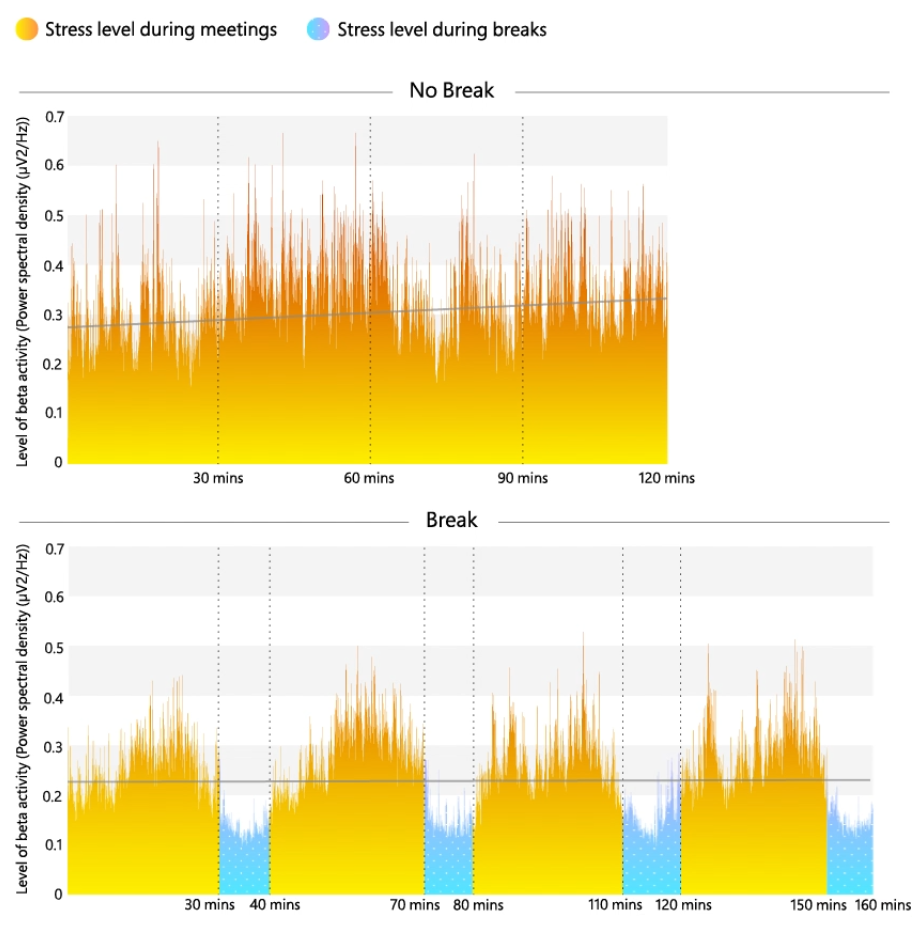
The study had 14 people participate in eight half-hour video calls, divided into four a day — one day with ten-minute breaks between, and the other all in one block. The participants wore EEG caps: brain-monitoring gear that gives a general idea of types of activity in the old grey matter.

What they found is not particularly surprising, since we all have lived it for the last year (or more for already remote workers), but still important to show in testing. During the meeting block with no breaks, people showed higher levels of beta waves, which are associated with stress, anxiety, and concentration. There were higher peaks and a higher average stress level, plus it increased slowly as time went on.

Taking ten-minute breaks kept stress readings lower on average and prevented them from rising. And they increased other measurements of positive engagement.

Graph showing how breaks keep stress low during video calls.

Image Credits: Microsoft/Valerio Pellegrini

It’s certainly validating even if it seems obvious. And while EEG readings aren’t the most exact measurement of stress, they’re fairly reliable and better than a retrospective self-evaluation along the lines of “How stressed were you after the second meeting on a scale of 1-5?” And of course it wouldn’t be safe to take your laptop into an MRI machine. So while this evidence is helpful, we should be careful not to exaggerate it, or forget that the stress takes place in a complex and sometimes inequitable work environment.

For instance: A recent study published by Stanford shows that “Zoom Fatigue,” as they call it (a mixed blessing for Zoom), is disproportionately suffered by women. More than twice as many women as men reported serious post-call exhaustion — perhaps because women’s meetings tend to run longer and they are less likely to take breaks between them. Add to that the increased focus on women’s appearance and it’s clear this is not a simple “no one likes video calls” situation.

Microsoft, naturally, has tech solutions to the problems in its Teams product, such as adding buffer time to make sure meetings don’t run right into each other, or the slightly weird “together mode” that puts everyone’s heads in a sort of lecture hall (the idea being it feels more natural).

Stanford has a few recommendations, such as giving yourself permission to do audio only for a while each day, position the camera far away and pace around (make sure you’re dressed), or just turn off the self-view.

Ultimately the solutions can’t be entirely individual, though — they need to be structural, and though we may be leaving the year of virtual meetings behind, there can be no doubt there will be more of them going forward. So employers and organizers need to be cognizant of these risks and create policies that mitigate them — don’t just add to employee responsibilities. If anyone asks, tell them science said so.

WordPress Image Lightbox Plugin