Tag Archives: Blog

News: AI startup Faculty wins contract to predict future requirements for the UK’s NHS

Faculty, a VC-backed artificial intelligence start-up, has won a tender to work with the NHS to make better predictions about its future requirements for patients, based on data drawn from how it handled the COVID-19 pandemic. In December 2019, Faculty raised a $10.5M Series A funding round from UK-based VCs Local Globe, GMG Ventures, and,

Faculty, a VC-backed artificial intelligence start-up, has won a tender to work with the NHS to make better predictions about its future requirements for patients, based on data drawn from how it handled the COVID-19 pandemic.

In December 2019, Faculty raised a $10.5M Series A funding round from UK-based VCs Local Globe, GMG Ventures, and, Jaan Tallinn, one of Skype’s founding engineers, giving it a valuation of around $100 million.

Faculty will work with NHS England and NHS Improvement to build upon the Early Warning System (EWS) it developed for the service, during the pandemic. Based on Bayesian hierarchical modeling, Faculty says the EWS uses aggregate data (for example, COVID-19 positive case numbers, 111 calls, and mobility data) to warn hospitals about potential spikes in cases so they can divert staff, beds, and equipment needed. This learning will now be applied across the whole of the service, for issues other than the pure pandemic response, such as improving service delivery and patient care and predicting A&E demand and winter pressures.

Faculty also worked with NHSX as a partner for the NHS AI Lab, which developed the National Covid-19 Chest Imaging Database (NCCID).

Faculty has also reportedly worked with the UK Home Office to apply AI to its database of terrorists, as well as the BBC and easyJet.

I asked Richard Sargeant, COO of Faculty, if he thought Faculty was the ‘Palantir for the UK’ (Palantir has also worked with the NHS during the pandemic: “We are, I believe, a really effective and scalable AI company, not just for the UK but we’re working in the US and in Europe, Asia. I think we will continue to scale. We’re growing, and we’re going to grow because I believe that AI can make things better for the citizens, for customers. Palantir doesn’t really do AI, they do data engineering in a big way. And we’ve seen them be effective in the NHS. I think Faculty kind of stands on its own.”

He said that Faculty has a different role to Palantir: “Palantir has helped with the data pipelines, and they’re using their software to pull a lot of data together, but really they’re not a machine learning organization, their specialism is in gathering data together. Data across the NHS is rather an archipelago. It’s in hundreds of different places, and being able to gather together makes it much easier to do machine learning, both centrally and at a local level. One of the things that sets the early warning system apart is not just the use of machine learning, but the use of explainability to give clinicians and managers, some understanding of why the models are forecasting the results that they are, which is relatively cutting edge stuff, and that’s the stuff that Faculty specializes in that Palantir doesn’t.”

I asked him why Faculty had attracted VC when, typically, VCs invest in startups that have scalable products: “It’s a good question and it’s something that we often get asked. I see Faculty as a little bit different from your classic software as a service business, and from a consultancy. AI isn’t a ‘once and done’ product, and neither is it something that people create from scratch every time. But there are core components of what we do, that we can use again and again, but also the models themselves are always bespoke… it’s a combination of the bespoke, and the common, or generic together, that makeup Faculty, and that’s a bit different.”

Faculty is not a stranger to controversy over its government contracts. Last year it was revealed that a a UK cabinet minister owned £90,000 of shares in Faculty, when it was awarded a £2.3m contract from NHSX to help run the NHS Covid-19 Data Store.

News: China’s e-commerce giant JD.com starts paying some staff in digital yuan

China’s plan to introduce its digital currency is getting a lot of help from its tech conglomerates. JD.com, a major Chinese online retailer that competes with Alibaba, said Monday that it has started paying some staff in digital yuan, the virtual version of the country’s physical currency. China has been busy experimenting with digital currency

China’s plan to introduce its digital currency is getting a lot of help from its tech conglomerates. JD.com, a major Chinese online retailer that competes with Alibaba, said Monday that it has started paying some staff in digital yuan, the virtual version of the country’s physical currency.

China has been busy experimenting with digital currency over the past few months. In October, Shenzhen, a southern city known for its progressive economic policies, doled out 10 million yuan worth of digital currency to 500,000 residents, who could then use the money to shop at certain online and offline retailers.

Several other large Chinese cities have followed Shenzhen’s suit. The residents in these regions has to apply through selected banks to start receiving and paying by digital yuan.

The electronic yuan initiative is a collective effort involving China’s regulators, commercial banks and technology solution providers. At first glance, the scheme still mimics how physical yuan is circulating at the moment; under the direction of the central bank, the six major commercial banks in China, including ICBC, distribute the digital yuan to smaller banks and a web of tech solution providers, who could help bring more use cases to the new electronic money.

For example, JD.com partnered up with the Industrial and Commercial Bank of China (ICBC) to deposit the digital income. The online retailer has become one of the first organizations in China to pay wages in electronic yuan; in August, some government workers in the eastern city of Suzhou also began getting paid in the digital money.

Across the board, China’s major tech companies have actively participated in the buildout of the digital yuan ecosystem, which will help the central government better track money flows.

Aside from JD.com, video streaming platform Bilibili, on-demand services provider Meituan and ride-hailing app Didi have also begun accepting digital yuan for user purchases. Gaming and social networking giant Tencent became one of the “digital yuan operators” and will take part in the design, R&D and operational work of the electronic money. Jack Ma’s Ant Group, which is undergoing a major overhaul following a stalled IPO, has also joined hands with the central bank to work on building out the infrastructure to move money digitally. Huawei, the telecom equipment titan, debutted a wallet on one of its smartphone models that allows users to spend digital yuan instantaneously even if the device is offline.

News: India’s LEAD School raises $30 million to reach more students

An Indian startup that is helping digitize and transform affordable private schools to better serve students from middle and low-income groups of families said on Monday it has raised $30 million in a new financing round as it looks to scale its efforts in the world’s second most populous nation. GSV Ventures and WestBridge led

An Indian startup that is helping digitize and transform affordable private schools to better serve students from middle and low-income groups of families said on Monday it has raised $30 million in a new financing round as it looks to scale its efforts in the world’s second most populous nation.

GSV Ventures and WestBridge led the Series D financing round of the Indian startup, which has raised over $69 million to date.

LEAD School, founded by couple Sumeet Mehta and Smita Deorah in 2012, has developed an integrated system to help K-12 schools with the curriculum they teach, how they teach them, secure books and other resources, and better evaluate the learning outcome.

The startup began its journey by setting up its own schools in rural areas in India to identify the challenges that students and teachers faced. A key insight it found was that students struggled with english and needed years-worth of learning to be able to just fully understand any other subject, most of which were taught in english.

“We were always data centric. We measured our performance based on student data. How well our classes looked was not a criteria for success,” said Deorah in an interview with TechCrunch.

“Schools and educators have always known how to measure learning outcome. It’s not new and fairly researched. Whether that’s the core of what you are gunning for, or if it is the scale that you are going after is an organizational choice.”

And that bet is paying off. Even an average student in a LEAD School-powered institution today has over 75% mastery on all subjects and attains over 1.5-year of English learning, said Deorah. “This is not a small cohort data,” she added. (Even since the pandemic, the figure has only changed to 70%.)

Over the years, LEAD School has started to work with affordable private schools. Deorah said the startup’s original mission statement — to work with schools to empower students from low-income families — remains intact even as it scales and that its strategy to partner with schools has helped it serve more students.

Amid the global pandemic, which prompted New Delhi to shut schools last year, LEAD School’s offering has proven even more useful to schools. The startup, which today caters to over 2,000 schools and 800,000 students, grew by 3X last year, it said.

“LEAD School is rapidly emerging as a paradigm for transforming K-12 education. Based in India and partnered with affordable school owners (a segment that is larger than the entire US K-12 system), LEAD serves over 800,000 students today,” said Deborah Quazzo, Managing Partner at GSV Ventures, in a statement.

“LEAD has experienced tremendous growth because of its consistent delivery of high academic outcomes to students and high ‘return on education’ to teachers, school owners and parents. GSV is honored to be investing in an organization that is changing the life trajectory of so many students.”

The startup plans to deploy the fresh capital to strike more partnerships and reach 25,000 schools in the next five years.

India is home to over 250 million students. In recent years, scores of startups have started to explore ways to provide high-class and more affordable education to fractions of these students.

“Globally, GSV is known as a specialised edtech fund that backs innovation oriented education companies. We hope to benefit from their deep insights and leverage their network to bring more innovation to our students in India. WestBridge has been a great partner and their continued support shows their faith in the difference we are making to our schools and students,” said LEAD School’s Mehta in a statement.

This is a developing story. More to follow…

News: Alleged records of 20 million BigBasket users published online

An alleged database of about 20 million BigBasket users has leaked on a well-known cybercrime forum, months after the Indian grocery delivery startup confirmed it had faced a data breach. The database includes users’ email address, phone number, address, scrambled password, date of birth, and scores of interactions they had with the service. TechCrunch confirmed

An alleged database of about 20 million BigBasket users has leaked on a well-known cybercrime forum, months after the Indian grocery delivery startup confirmed it had faced a data breach.

The database includes users’ email address, phone number, address, scrambled password, date of birth, and scores of interactions they had with the service. TechCrunch confirmed details of some customers listed in the database — including those of the author.

BigBasket co-founders did not respond to texts requesting comment.

Infamous threat actor “ShinyHunters” just leaked the database of “BigBasket, a famous Indian 🇮🇳 online grocery delivery service. (@bigbasket_com)

20,000,000+ clients affected and information such as emails, names, hashed passwords, birthdates and phone numbers were leaked. pic.twitter.com/tD5TMxNkH7

— Alon Gal (Under the Breach) (@UnderTheBreach) April 25, 2021

The startup confirmed in November last year that it had suffered a data breach after reports emerged that hackers had siphoned off information of 20 million customers from the platform.

TechCrunch has asked one BigBasket co-founder whether the startup ever disclosed the data breach to customers.

A hacker who goes by the name ShinyHunters published the alleged BigBasket database — and made it available for anyone to download — on a popular cybercrime forum over the weekend. In newer posts on the forum, several threat actors claimed that they had decoded the hashed passwords and were selling it. ShinyHunters didn’t immediately respond to a text requesting comment.

The incident comes weeks after Indian conglomerate Tata Group agreed to acquire BigBasket, valuing the Indian startup at over $1.8 billion. The acquisition proposal is currently awaiting approval by the Indian regulator.

News: YC-backed Kidato raises $1.4M seed to scale its online school for K-12 students in Africa

In public schools across Africa, classrooms are often overcrowded and this affects how teachers and students interact. The large classroom creates too much work for teachers leaving students’ individual problems unattended. Private schools are modeled to fix these issues, but they can be expensive for the average African middle-class professional with kids. Kidato, an online

In public schools across Africa, classrooms are often overcrowded and this affects how teachers and students interact. The large classroom creates too much work for teachers leaving students’ individual problems unattended.

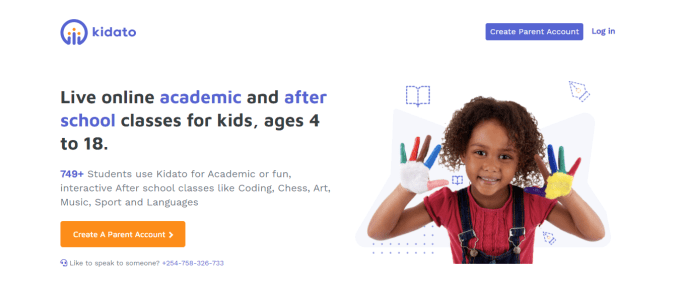
Private schools are modeled to fix these issues, but they can be expensive for the average African middle-class professional with kids. Kidato, an online school for K-12 students in Africa, presents another alternative and is announcing today that it has closed its $1.4 million seed investment.

The investors who participated in the round are Learn Start Capital, Launch Africa Ventures Fund, Graph Ventures and Century Oak Capital, among other notable local and global angel investors.

Kidato was founded by Kenyan serial entrepreneur Sam Gichuru in 2020. As a father of three kids, he encountered similar problems facing the average Kenyan middle-class professional, one of which was struggling to keep up with private school exorbitant tuition fees as high as $8,000 yearly.

“I have three kids. I moved them from private schools to homeschooling because that was the next option to give them the same quality of education but at an affordable price,” Gichuru told TechCrunch. That was when I started noticing the other challenges private schools had.”

First is the overcrowded nature of these schools. Typically, public schools have a teacher-to-student ratio of 1:50 while private schools are at 1:20.  “Depending on how much you pay for school fees. The more prestigious the school, the smaller the teacher-to-student ratio. That for me was a big indicator that you want to have a small number of students per teacher,” added Gichuru.

Then there’s the issue of long and tiring commutes for students. Gichuru tells me that kids going to private schools in Nairobi would have to wake up by 5 a.m., prepare to get on the bus at 6 a.m. to get to school at 7 a.m.

Like any homeschooling model, Gichuru had teachers come to his house to teach his kids what they’d ordinarily learn in school. But when the pandemic hit, he had to find another alternative by building a platform around Zoom for these teachers to continue delivering lessons for his kids. By September, the platform had opened up to accommodate 10 more children outside his home. In January, the number of students in its learning-from-home program increased to 30 students.

It is easy to see why the product is catching on with parents. Due to the pandemic, video services like Zoom have become the norm for the middle class in Africa with high internet accessibility. Also, cutting commute time helps to spend more time with family while reducing costs.

Kidato

Image Credits: Kidato

Building an online school for kids while capitalizing on the advantages of parents’ new remote work culture also got the Kenyan startup accepted into Y Combinator in January. Since then, Kidato has onboarded more than 50 students and claims to be growing at a 100% quarter on quarter. 

Gichuru says Kidata wants to ensure better learning outcomes in smaller personalized class sizes. It is also offering the same international curriculum but with an average of 1:5 teacher-student ratio.

The company has also implemented after-school programs like robotics and chess, art, coding, and debate classes. Typically, they are usually found among students from affluent schools; however, they are being democratized by Kidato to the more than 700 registered students using its platform. The students mainly from Canada, Kenya, Malawi, Switzerland, Tanzania, UK, United States, and UAE pay $5 per lesson, the company revealed.

Kidato wants to make learning fun and gratifying. According to Gichuru, the business trains its 740 teachers on how to make classes interactive by using the context of arcade games like Minecraft and Roblox to tailor lessons taught to students in different subjects.

“Drawing from our understanding about how these platforms work and how kids learn from them, we have built-in behavior reward mechanisms such as lesson merits into our teaching methods resulting in interesting and enjoyable virtual classes,” an excerpt from the statement read.

But what happens when Kidato meets a demand and supply problem. While its product seems appealing for students, will Kidato find enough qualified teachers to meet the growing demand? The CEO holds that his company has it figured out.

Most private schools shut down during the lockdowns. Though some are beginning to re-open gradually, they are embarking on a recovery process with increased school fees and reduced teachers’ salaries. This has presented a big opportunity for Kidato as it currently has a waitlist of 3,000 teachers who are being swayed by Kidato’s promise of better pay. In the long run, this number creates a pipeline for 15,000 students.  

Besides, Kidato doesn’t incur infrastructural costs like real estate, a feature common with traditional schools. Therefore the revenue made from students doesn’t go into any extreme costs, which means more money for teachers.

“Our teachers are paid at least one and a half times more than the average teacher in a private school, and that has driven a great supply of teachers to us.”

Kidato’s revenue split with teachers is 70/30; teachers take the larger percentage. Gichuru adds that if teachers combine their efforts in both normal and afterschool classes, they can earn an average of $2,000 per month.

Image Credits: Sam Gichuru

One would’ve thought that a challenge Kidato would be facing despite its progress would be internet and power but that’s not the case. It is the skepticism of whether Kidato can offer socialization for the students. To solve that, Kidato is adopting an offline approach by leveraging the connections of corporates and align its after-school classes to include monthly educational field trips.

“We’re trying to show them how well kids socialize on our platform. We are partnering with companies that can make it possible to take these kids to plantations, factories, planetariums,” the CEO added.

Kidato is Gichuru’s second stint at Y Combinator. The entrepreneur who founded one of Kenya’s well-known incubator Nailab, also co-founded recruitment platform, Kuhustle. The company which seems to be in pilot mode at the moment, took part in Y Combinator’s batch in 2015.

Kidato has some high expectations given the CEO’s experience and as the only edtech startup in this current batch. The company will use the seed financing for growth and product development as it hopes to replace brick-and-mortar schools. In Gichuru’s words regarding the company’s future, he said, “in the next couple of years, we want to have the biggest online school for K-12 students.” 

News: Robo-advisor StashAway gets $25M Series D led by Sequoia Capital India

Investment app StashAway has raised a $25 million Series D led by Sequoia Capital India, with participation from returning investors Eight Roads Ventures and Square Peg. After regulatory approvals for the funding are completed, Sequoia Capital India managing director Abheek Anand will join StashAway’s board of directors as part of the round. StashAway does not

Investment app StashAway has raised a $25 million Series D led by Sequoia Capital India, with participation from returning investors Eight Roads Ventures and Square Peg. After regulatory approvals for the funding are completed, Sequoia Capital India managing director Abheek Anand will join StashAway’s board of directors as part of the round.

StashAway does not disclose how many investors use its robo-advisor app, but it surpassed $1 billion assets under management in January. It currently has operations in in five markets: Singapore, Malayasia, the United Arab Emirates and Hong Kong, and is preparing to launch in Thailand.

Its Series D brings StashAway’s total paid-up capital to about $61.4 million. The new funding will be used on expanding StashAway’s product and engineering teams to continue feature and product development. Founded in September 2016, the company will also offer to buy back up to $3 million in stock options from its employees. Co-founder and chief executive officer Michele Ferrario told TechCrunch that many of StashAway’s employees have been with the company since the start, so this gives its team members a chance to cash out stock options that have vested while creating a more compelling compensation package for recruiting talent.

StashAway’s products include services for retail investors that focus on wealth-building or specific goals like retirement or buying a house and StashAway Simple, a cash account that can earn a projected rate of 1.2% per annum and allows funds be withdrawn within one to three business days. Its management fees are between 0.2% to 0.8% a year.

Ferrario said that StashAway’s core market is people aged 30 to 45, who are earning enough money to save or invest, but also have obligations like saving for retirement or their childrens’ education. People under 30 account for a smaller portion of StashAway’s assets under management, but are still a significant part of its user base because the app doesn’t require minimum investments, making it accessible to people who recently graduated or are just starting their careers. While StashAway has built an reputation for attracting first-time investors, about 20% of its assets under management come from high-net-worth individuals.

“This is something we didn’t think would happen at the beginning, but then we realized that some of the problems we’re solving are also significant problems for high-net-worth individuals as well,” said Ferrario. “If you have less than $10 million to $15 million in wealth, the services you receive from private banks are not particularly sophisticated or personalized. So we offer a more sophisticated investment at a lower cost.”

At the end of last year, the company launched StashAway WorkPlace, a platform for employers to provide benefits like pensions and vesting schedules. StashAway WorkPlace grew out of the Financial Wellness Program, a set of seminars and workshops on financial planning and investing that has been used in Singapore by about 200 companies, including Salesforce, Twitter, Netflix and LinkedIn.

Since StashAway launched its app in 2017, more robo-advisors have emerged in the same markets it serves. For example, Syfe also caters to new investors. Other investment apps in Singapore include Endowus, Kristal.AI and AutoWealth.


One of the main ways StashAway differentiates is its proprietary asset allocation framework, which looks at how each asset class performs under specific economic conditions, measures uncertainty with leading indicators and patterns in economic data, and adjustments to expected returns based on an asset’s valuation relative to its economic fair value. The company says it has outperformed benchmarks since launching in 2017. At the end of March, its portfolios outperformed their same-risk benchmarks (proxied by MSCI World Equity Index and FTSE World Government Bond Index), with annualized returns ranging from 16.5% (for the highest-risk portfolio) to 4% (the lowest-risk portfolio).

Ferrario said the app also emphasizes customer service, with phone calls typically answered in less than eight seconds, and an in-app WhatsApp link that connects users to a human service representative instead of sending them through a chatbot first.

But StashAway’s main competitor is still traditional banks instead of other investment apps. “In the five countries we are in, there is approximately $5 trillion of personal financial wealth. In Singapore alone, it is around $1.1 trillion,” Ferrario said. A large portion of that cash, or about $400 billion, sits in savings accounts. “That’s money that’s not working for whoever owns it,” he added.

In a press statement, Anand said, “StashAway is growing rapidly as it fulfills an obvious gap in the digital wealth management space, especially in areas where its competitors may be lacking: an easy-to-use platform, robust client relationships and a very sophisticated investing framework. StashAway has built trust with its client base by navigating them through market volatility while providing strong returns.”

News: The #8meals app from Habits of Waste helps people cut back on meaty meals to save the planet

Earth Day may have come and gone, but with apps like #8meals from the non-profit Habits of Waste, anyone can try and do their part to help reduce deforestation and rising greenhouse gas emissions by cutting meat out of their diets for just 8 meals a week. The app, which was created by Habits of

Earth Day may have come and gone, but with apps like #8meals from the non-profit Habits of Waste, anyone can try and do their part to help reduce deforestation and rising greenhouse gas emissions by cutting meat out of their diets for just 8 meals a week.

The app, which was created by Habits of Waste founder Sheila Morovati along with the development shop Digital Pomegranate, gives users a way to schedule which meals of theirs will be meatless and offers recipe suggestions for what to eat to help them stick to their goals.

For Morovati, the #8meals app is only the latest in a series of initiatives that are meant to cut down on waste and consumption. Morovati’s journey to environmental advocacy began with a program to redistribute used crayons from restaurants to schools in the Southern California region.

That program, called Crayon Collection, has redirected over 20 million crayons from landfills, but Morovati’s non-profit push to reduce waste didn’t end there.

The Habits of Waste organization also launched the #cutoutcutlery campaign, which convinced Uber Eats, Postmates, Grubhub and DoorDash to change their default settings to make customers opt-in to receive plastic cutlery. It’s a way to reduce the nearly 40 billion plastic utensils that are thrown away each year, according to the Habits of Waste website.

“We decided to create a whole new arm which is cut out cutlery and eight meals. Trying to shift societal mindset is my goal,” said Morovati. 

Meanwhile, the number of meat replacements available to consumers continues to expand. Everyone from Post Cereal to Anheuser Busch is trying to make a play for replacements to proteins sourced from animals. That’s not to mention the billions raised by companies like Impossible Foods and Beyond Meat to sell replacements direct to consumers.

Going meatless, even for a few meals a week, can make a huge difference for planetary health (and human health). That’s because animal agriculture is responsible for more than 18% of greenhouse gas emissions worldwide — and it contributes to deforestation.

“I always think about this fake person that I’ve created in my mind and I call him Mr. Joe Barbecue,” Morovati said during a YouTube interview with self-described superfood guru, Darien Olien, earlier this year. “How can we get Mr. Joe Barbecue to be on board? Is it possible to tell him to go fully vegan? I don’t think so. Not yet. But I think if we introduce it with eight meals a week, maybe even Mr. Joe Barbecue will be willing to go there and understand it and try it and open up the door a crack to invite people in who may not be willing to do this.”

News: Gardening startups like Neverland want to make every day Earth Day for the home gardener

Vera Kutsenko and Hayley Leibson have incredible tech pedigrees, but their latest venture involves as much digging in dirt as it does digging through lines of code. The two women have founded Neverland, a startup for the home gardener that aims to be a marketplace connecting mom and pop gardening shops with the explosion of

Vera Kutsenko and Hayley Leibson have incredible tech pedigrees, but their latest venture involves as much digging in dirt as it does digging through lines of code.

The two women have founded Neverland, a startup for the home gardener that aims to be a marketplace connecting mom and pop gardening shops with the explosion of amateur horticulturalists that have sprung up since the pandemic began and everyone needed someone (or something) to talk to.

Gardening businesses were among the big winners during the pandemic, with sales at home and lawncare and gardening businesses shooting up 9% in 2020, according to data from the 200 year-old flower retailer, Breck’s.

It’s that surge in business, and the two co-founders own passion for home plants, that led to the launch of Neverland, the two founders said.

For both, it’s a change of pace. Kutsenko studied computer science at Cornell, worked at Facebook on the Internet.org initiative and led teams working on the mobile app at Uber. Meanwhile, Leibson founded LunchClub and served as that company’s chief operating officer.

Kutsenko and Leibson first connected through a women’s tech networking group in San Francisco and bonded over a shared love of plants. Leibson has roughly 24 plants in her apartment while Kutsenko had a plant nursery that she tended to herself.

“We really view the opportunity for Neverland to be the sustainability focused marketplace,” said Leibson. “The power of what we’re doing is we’re able to create a really consistent support network for the consumer.”

It’s a huge market. Kutsenko said that globally plant and gardening spending is roughly $52 billion and $28 billion of that market is indoor and outdoor gardening.

Using customer data, Neverland prompts users on how to optimize their gardens and horticulture activities based on their geography and what plants customers would want to grow. The company also looks to connect would-be green thumbed growers with companies in their region.

“The educational piece we’re pulling from is the USDA agricultural APIs,” said Kutsenko. “We take and translate the super science-y terms into language that [customers] would understand. We’re pulling this from existing government resources and aggregating it and making it accessible to folks.”

It was both the CVs of the founders and the overall size of the market that convinced investors to throw their financial weight behind the company — and it’s an impressive roster of consumer-focused and sustainability minded investors including: Obvious Ventures, Maveron, Kimbal Musk, and Y Combinator, which had Neverland in its most recent cohort. In all, Neverland managed to bring in $3 million for its marketplace and gardening community. 

And since everything starts with community, the company has managed to amass a healthy following on Instagram even before its scheduled launch this summer. Already 140,000 people follow Neverland’s posts. And the company has signed on 50 sellers in the Bay Area and beyond.


News: Interview: Apple executives on the 2021 iPad Pro, stunting with the M1 and creating headroom

When the third minute of Apple’s first product event of 2021 ticked over and they had already made 3 announcements we knew it was going to be a packed one. In a tight single hour this week, Apple launched a ton of new product including AirTags, new Apple Card family sharing, a new Apple TV,

When the third minute of Apple’s first product event of 2021 ticked over and they had already made 3 announcements we knew it was going to be a packed one. In a tight single hour this week, Apple launched a ton of new product including AirTags, new Apple Card family sharing, a new Apple TV, a new set of colorful iMacs, and a purple iPhone 12 shade.

Of the new devices announced, though, Apple’s new 12.9” iPad Pro is the most interesting from a market positioning perspective. 

This week I got a chance to speak to Apple Senior Vice President of Worldwide Marketing Greg Joswiak and Senior Vice President of Hardware Engineering John Ternus about this latest version of the iPad Pro and its place in the working universe of computing professionals. 

In many ways, this new iPad Pro is the equivalent of a sprinter being lengths ahead going into the last lap and just turning on the afterburners to put a undebatable distance between themselves and the rest of the pack. Last year’s model is still one of the best computers you can buy, with a densely packed offering of powerful computing tools, battery performance and portability. And this year gets upgrades in the M1 processor, RAM, storage speed, Thunderbolt connection, 5G radio, new ultra wide front camera and its Liquid Retina XDR display. 

This is a major bump even while the 2020 iPad Pro still dominates the field. And at the center of that is the display.

Apple has essentially ported its enormously good $5,000 Pro Display XDR down to a 12.9” touch version, with some slight improvements. But the specs are flat out incredible. 1,000 nit brightness peaking at 1,600 nits in HDR with 2,500 full array local dimming zones — compared to the Pro Display XDR’s 576 in a much larger scale.

Given that this year’s first product launch from Apple was virtual, the media again got no immediate hands on with the new devices introduced, including iPad Pro. This means that I have not yet seen the XDR display in action. Unfortunately, these specs are so good that estimating them without having seen the screen yet is akin to trying to visualize “a trillion” in your head. It’s intellectually possible but not really practical. 

It’s brighter than any Mac or iOS device on the market and could be a big game shifting device for professionals working in HDR video and photography. But even still, this is a major investment to ship a micro-LED display in the millions or tens of millions of units with more density and brightness than any other display on the market. 

I ask both of them why there’s a need to do this doubling down on what is already one of the best portable displays ever made — if not one of the best displays period. 

“We’ve always tried to have the best display,” says Ternus. “We’re going from the best display on any device like this and making it even better, because that’s what we do and that’s why we, we love coming to work every day is to take that next big step.

“[With the] Pro Display XDR if you remember one thing we talked about was being able to have this display and this capability in more places in the work stream. Because traditionally there was just this one super expensive reference monitor at the end of the line. This is like the next extreme of that now you don’t even have to be in the studio anymore you can take it with you on the go and you can have that capability so from a, from a creative pro standpoint we think this is going to be huge.”

In my use of the Pro Display and my conversations with professionals about it one of the the common themes that I’ve heard is the reduction in overall workload due to the multiple points in the flow where color and image can be managed accurately to spec now. The general system in place puts a reference monitor very late in the production stage which can often lead to expensive and time consuming re-rendering or new color passes. Adding the Liquid Retina XDR display into the mix at an extremely low price point means that a lot more plot points on the production line suddenly get a lot closer to the right curve. 

One of the stronger answers on the ‘why the aggressive spec bump’ question comes later in our discussion but is worth mentioning in this context. The point, Joswiak says, is to offer headroom. Headroom for users and headroom for developers. 

“One of the things that iPad Pro has done as John [Ternus] has talked about is push the envelope. And by pushing the envelope that has created this space for developers to come in and fill it. When we created the very first iPad Pro, there was no Photoshop,” Joswiak notes. “There was no creative apps that could immediately use it. But now there’s so many you can’t count. Because we created that capability, we created that performance — and, by the way sold a fairly massive number of them — which is a pretty good combination for developers to then come in and say, I can take advantage of that. There’s enough customers here and there’s enough performance. I know how to use that. And that’s the same thing we do with each generation. We create more headroom to performance that developers will figure out how to use.

“The customer is in a great spot because they know they’re buying something that’s got some headroom and developers love it.”
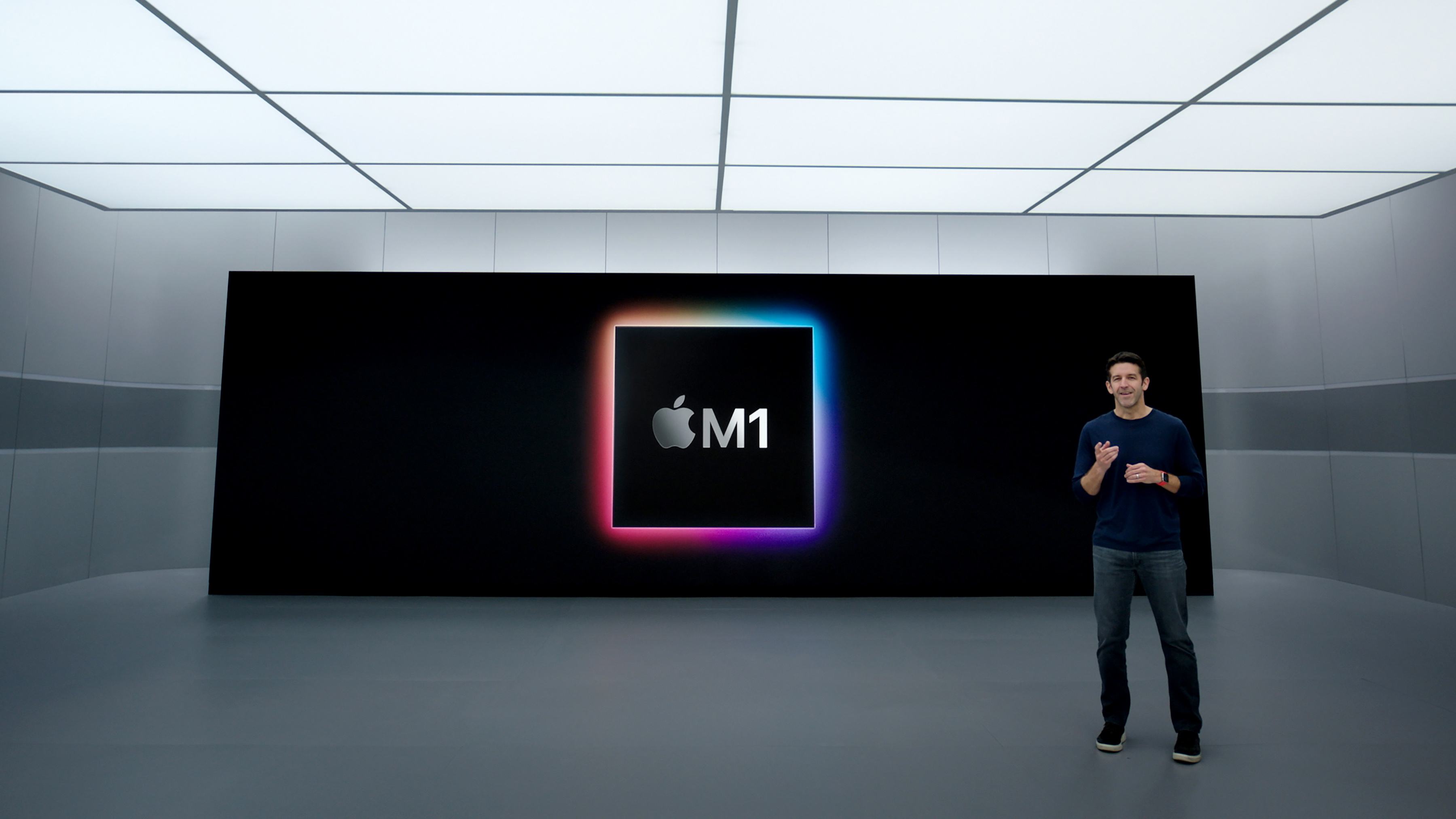
The iPad Pro is now powered by the M1 chip — a move away from the A-series naming. And that processor part is identical (given similar memory configurations) to the one found in the iMac announced this week and MacBooks launched earlier this year.

“It’s the same part, it’s M1,” says Ternus. “iPad Pro has always had the best Apple silicon we make.”

“How crazy is it that you can take a chip that’s in a desktop, and drop it into an iPad,” says Joswiak. “I mean it’s just incredible to have that kind of performance at such amazing power efficiency. And then have all the technologies that come with it. To have the neural engine and ISP and Thunderbolt and all these amazing things that come with it, it’s just miles beyond what anybody else is doing.”

As the M1 was rolling out and I began running my testing, the power per watt aspects really became the story. That really is the big differentiator for M1. For decades, laptop users have been accustomed to saving any heavy or intense workloads for the times when their machines were plugged in due to power consumption. M1 is in the process of resetting those expectations for desktop class processors. In fact, Apple is offering not only the most powerful CPUs but also the most power-efficient CPUs on the market. And it’s doing it in a $700 Mac Mini, a $1,700 iMac and a $1,100 iPad Pro at the same time. It’s a pretty ridiculous display of stunting, but it’s also the product of more than a decade of work building its own architecture and silicon.

“Your battery life is defined by the capacity of your battery and the efficiency of your system right? So we’re always pushing really really hard on the system efficiency and obviously with M1, the team’s done a tremendous job with that. But the display as well. We designed a new mini LED for this display, focusing on efficiency and on package size, obviously, to really to be able to make sure that it could fit into the iPad experience with the iPad experience’s good battery life. 

“We weren’t going to compromise on that,” says Ternus.

One of the marquee features of the new iPad Pro is its 12MP ultra-wide camera with Center Stage. An auto-centering and cropping video feature designed to make FaceTime calling more human-centric, literally. It finds humans in the frame and centers their faces, keeping them in the frame even if they move, standing and stretching or leaning to the side. It also includes additional people in the frame automatically if they enter the range of the new ultra-wide 12MP front-facing camera. And yes, it also works with other apps like Zoom and Webex and there will be an API for it.

I’ve gotten to see it in action a bit more and I can say with surety that this will become an industry standard implementation of this kind of subject focusing. The crop mechanic is handled with taste, taking on the characteristics of a smooth zoom pulled by a steady hand rather than an abrupt cut to a smaller, closer framing. It really is like watching a TV show directed by an invisible machine learning engine. 

“This is one of the examples of some of our favorite stuff to do because of the way it marries the hardware and software right,” Ternus says. “So, sure it’s the camera but it’s also the SOC and and the algorithms associated with detecting the person and panning and zooming. There’s the kind of the taste aspect, right? Which is; how do we make something that feels good it doesn’t move too fast and doesn’t move too slow. That’s a lot of talented, creative people coming together and trying to find the thing that makes it Apple like.”

It also goes a long way to making the awkward horizontal camera placement when using the iPad Pro with Magic Keyboard. This has been a big drawback for using the iPad Pro as a portable video conferencing tool, something we’ve all been doing a lot of lately. I ask Ternus whether Center Stage was designed to mitigate this placement.

“Well, you can use iPad in any orientation right? So you’re going to have different experiences based on how you’re using it. But what’s amazing about this is that we can keep correcting the frame. What’s been really cool is that we’ve all been sitting around in these meetings all day long on video conferencing and it’s just nice to get up. This experience of just being able to stand up and kind of stretch and move around the room without walking away from the camera has been just absolutely game changing, it’s really cool.”

It’s worth noting that several other video sharing devices like the Portal and some video software like Teams already offer cropping-type follow features, but the user experience is everything when you’re shipping software like this to millions of people at once. It will be interesting to see how Center Stage stacks up agains the competition when we see it live. 

With the ongoing chatter about how the iPad Pro and Mac are converging from a feature-set perspective, I ask how they would you characterize an iPad Pro vs. a MacBook buyer? Joswiak is quick to respond to this one. 

“This is my favorite question because you know, you have one camp of people who believe that the iPad and the Mac are at war with one another right it’s one or the other to the death. And then you have others who are like, no, they’re bringing them together — they’re forcing them into one single platform and there’s a grand conspiracy here,” he says.

“They are at opposite ends of a thought spectrum and the reality is that neither is correct. We pride ourselves in the fact that we work really, really, really hard to have the best products in the respective categories. The Mac is the best personal computer, it just is. Customer satisfaction would indicate that is the case, by a longshot.”

Joswiak points out that the whole PC category is growing, which he says is nice to see. But he points out that Macs are way outgrowing PCs and doing ‘quite well’. He also notes that the iPad business is still outgrowing the tablets category (while still refusing to label the iPad a tablet). 

“And it’s also the case that it’s not an ‘either or’. The majority of our Mac customers have an iPad. That’s an awesome thing. They don’t have it because they’re replacing their Mac, it’s because they use the right tool at the right time.

What’s very cool about what [Ternus] and his team have done with iPad Pro is that they’ve created something where that’s still the case for creative professionals too — the hardest to please audience. They’ve given them a tool where they can be equally at home using the Mac for their professional making money with it kind of work, and now they can pick up an iPad Pro — and they have been for multiple generations now and do things that, again, are part of how they make money, part of their creative workflow flow,” says Joswiak. “And that test is exciting. it isn’t one or the other, both of them have a role for these people.”

Since converting over to an iPad Pro as my only portable computer, I’ve been thinking a lot about the multimodal aspects of professional work. And, clearly, Apple has as well given its launch of a Pro Workflows team back in 2018. Workflows have changed massively over the last decade, and obviously the iPhone and an iPad, with their popularization of the direct manipulation paradigm, have had everything to do with that. In the current world we’re in, we’re way past ‘what is this new thing’, and we’re even way past ‘oh cool, this feels normal’ and we’re well into ‘this feels vital, it feels necessary.’ 

“Contrary to some people’s beliefs, we’re never thinking about what we should not do on an iPad because we don’t want to encroach on Mac or vice versa,” says Ternus. “Our focus is, what is the best way? What is the best iPad we can make what are the best Macs we can make. Some people are going to work across both of them, some people will kind of lean towards one because it better suits their needs and that’s, that’s all good.”

If you follow along, you’ll know that Apple studiously refuses to enter into the iPad vs. Mac debate — and in fact likes to place the iPad in a special place in the market that exists unchallenged. Joswiak often says that he doesn’t even like to say the word tablet.

“There’s iPads and tablets, and tablets aren’t very good. iPads are great,” Joswiak says. “We’re always pushing the boundaries with iPad Pro, and that’s what you want leaders to do. Leaders are the ones that push the boundaries leaders are the ones that take this further than has ever been taken before and the XDR display is a great example of that. Who else would you expect to do that other than us. And then once you see it, and once you use it, you won’t wonder, you’ll be glad we did.”

Image Credits: Apple

News: Gillmor Gang: FreeCoin

The current rave about newsletters and so-called or social audio is just the latest version of the story of podcasting. Take the idea that podcasting is experiencing a new wave of popularity and scaffolding. Are you sure? Apple is bent on turning the space into a subscription model, and we’re all going to twist again

The current rave about newsletters and so-called or social audio is just the latest version of the story of podcasting. Take the idea that podcasting is experiencing a new wave of popularity and scaffolding. Are you sure? Apple is bent on turning the space into a subscription model, and we’re all going to twist again like we did last summer. Somehow I doubt it. The basic attraction for me is not paying for podcasts. Subscription startups may be an important step forward, but the heart of the matter is talent formation.

Back when they first started, the real charge was the ability to own the whole stack: writer, producer, editor, star, and marketer. Making money for this may have been a future goal, but right now the real power was in figuring out what might work without the intrusion of what people other than yourself thought about the product. Only if something made itself apparent was it necessary to address the needs and wants of the audience.

Luckily, that ruled out about ninety percent of the resulting wave of stuff. There were Ted talks, or what became Ted talks, well thought out verbal slide decks in an 8 minute payload that grabbed, shook, and exacted payment in credibility and validation of the expertise of the artist. Always lurking was the question of what day job the author was moonlighting from. Many self help business books emerged from this.

Then there were the professionals, the public radio folks who knew how to do this in their sleep but were looking for a role not dependent on grant writing or public liberal funding. Reporters who knew how to squeeze out a story, producers who mined their rolodex to fashion a conversation, screenwriters looking for momentum to bank a shot off studio executives to get a pilot or series starter commitment. Eventually this added up to enough successful podcasts to attract sponsorship support from audiobooks and publishing services. Scripted shows became farm clubs for independent talent aiming for the Big Show. This endured for 20 years.

Meanwhile, the Beatles transformed the music business from a vaudeville-like zero-sum game to a Renaissance of control over writing, performing, promoting, and touring. Aspiration was the fuel of the business model, obviating the need for incremental success in favor of explosive momentum and dominance of the media. Hair, boots, sex, striking fear in the hearts of parents and then politicians everywhere. Sgt. Pepper and Kubrick created a version of the future that made everything else pale by comparison. That it all crashed and burned was just one of the risks of what became the startup culture in Silicon Valley and Route 128.

In today’s world of NFTs and Decacorns, free still has a reason for believing. The old guard of the blogging world have reinvented themselves as Lone Rangers in the creator economy. Slap a badge on that podcast and hitch a ride on the promise of endless subscription growth, minus 10% per newsletter sub or 30% for the first year in the AppStore. It’s not the long tail, so what is it? To be sure, the world will endorse the talented solitary surfers, armed with MG Sieglerian talent for the suite spot of the tech zeitgeist, the revolutionary zeal of the breakthrough synthesists of the political, lyrical, and comic survivalists.

How will the media compensate for the loss of their gatekeeper status? For starters, the more the stampede accelerates, the bundlers will storm the economics with constructs that look very much like the magazines and social destinations they replace. As crypto enters the bloodstream, streaming will generate a new measure of success and equity for the artists. Free will still be the driver of the form, but transitional models like tip jars will migrate to social capital to be banked by investors betting on the future success of the talent.

Even this early, some things have to change. The no recording conceit is an artifact of the launch stage, soon to be jettisoned when the effort reaches escape velocity. Clubhouse gains much of its critical mass from who rather than how many are swarming; interesting combinations of speakers and listeners weigh more tellingly than the raw numbers of name guests and moderators. Live is important, but committing to the voice of the artist is a calculation of time, window of opportunity, relevance to the emotion and tenor of the times. And the competitive landscape for that attention spans so many of the medias being replaced or transformed by the application of free.

None of this means the newsletter and conversation startups won’t succeed. Subscribing gives us something to consume to justify the tithe, and most people who drop streaming subs replace them with another service. As these services proliferate, competition drives innovation and expansion into events and paradigm shifts like Netflix and SPACs. Witness TechCrunch, built on just the dynamics Substack and Revue-Twitter now make accessible to a new wave of Arringtons.

from the Gillmor Gang Newsletter

__________________

The Gillmor Gang — Frank Radice, Michael Markman, Keith Teare, Denis Pombriant, Brent Leary and Steve Gillmor. Recorded live Friday, April 16, 2021.

Produced and directed by Tina Chase Gillmor @tinagillmor

@fradice, @mickeleh, @denispombriant, @kteare, @brentleary, @stevegillmor, @gillmorgang

Subscribe to the new Gillmor Gang Newsletter and join the backchannel here on Telegram.

The Gillmor Gang on Facebook … and here’s our sister show G3 on Facebook.

WordPress Image Lightbox Plugin