Tag Archives: Blog

News: Equity Monday: Social media crackdowns, earnings, and a funding deluge

Hello and welcome back to Equity, TechCrunch’s venture capital-focused podcast where we unpack the numbers behind the headlines. This is Equity Monday, our weekly kickoff that tracks the latest private market news, talks about the coming week, digs into some recent funding rounds and mulls over a larger theme or narrative from the private markets. You

Hello and welcome back to Equity, TechCrunch’s venture capital-focused podcast where we unpack the numbers behind the headlines.

This is Equity Monday, our weekly kickoff that tracks the latest private market news, talks about the coming week, digs into some recent funding rounds and mulls over a larger theme or narrative from the private markets. You can follow the show on Twitter here and myself here.

This weekend had a key story, earnings are on the way, and there is a huge number of funding rounds to talk about. Ready?

  • The Indian government’s move to remove a number of social media posts critical of its handling of COVID-19 was the key news item this weekend. As the country’s healthcare system buckles, and deaths spike, the move by the current administration to censor the Internet was just about as bad a look you could imagine. At least in terms of a tech response.
  • Also this weekend conversation continued about Substack’s recent push to hire away well-known writers from traditionally-respected publications continued, with Insider reporting that six-figure offers to join the paid newsletter platform are the norm.
  • This morning we’re focused on the impending earnings deluge. Major American tech companies, along with some key social media and ecommerce names will report, giving us a look into how tech companies performed in the first quarter of 2021. We already know that the venture market was hot during the period. How business fared, however, is less clear.
  • On the funding round beat, Mighty Networks raised $50 million, LEAD School raised $30 million, Kidato raised $1.4 million, StashAway stashed away $25 million, and Kyligence put together a $70 million Series D of its own.

The Honest Company also set an early IPO price range after we stopped recording. More to come on the IPO front. Chat Wednesday!

Equity drops every Monday at 7:00 a.m. PST, Wednesday, and Friday at 6:00 AM PST, so subscribe to us on Apple PodcastsOvercastSpotify and all the casts!

News: There is no cybersecurity skills gap, but CISOs must think creatively

Many studies claim that millions of jobs are going unfilled because there aren’t enough qualified candidates available for hire. I don’t buy it.

Lamont Orange
Contributor

Lamont Orange is Netskope’s chief information security officer. He has more than 20 years of experience in the information security industry, having previously served as vice president of enterprise security for Charter Communications (now Spectrum) and as senior manager for the security and technology services practice at Ernst & Young.

Those of us who read a lot of tech and business publications have heard for years about the cybersecurity skills gap. Studies often claim that millions of jobs are going unfilled because there aren’t enough qualified candidates available for hire.

I don’t buy it.

The basic laws of supply and demand mean there will always be people in the workforce willing to move into well-paid security jobs. The problem is not that these folks don’t exist. It’s that CIOs or CISOs typically look right past them if their resumes don’t have a very specific list of qualifications.

In many cases, hiring managers expect applicants to be fully trained on all the technologies their organization currently uses. That not only makes it harder to find qualified candidates, but it also reduces the diversity of experience within security teams — which, ultimately, may weaken the company’s security capabilities and its talent pool.

At Netskope, we take a different approach to staffing for security roles. We know we can teach the cybersecurity skills needed to do the job, so instead, there are two traits we consider more important than specific technical expertise: One is a hunger to learn more about security, which suggests the individual will take the initiative to continuously improve their skills. The other is possession of a skill set that no one else on our security team has.

Overemphasis on technical skills creates an artificial talent shortage

To understand why I believe our approach has helped us build a stronger security team, think about the long-term benefits of hiring someone with a specific security skill set: How valuable will that exact knowledge be in several years? Probably not very.

The problem is not that these folks don’t exist. It’s that CIOs or CISOs typically look right past them if their resumes don’t have a very specific list of qualifications.

Even the most basic security technologies are incredibly dynamic. In most companies, the IT infrastructure is currently in the midst of a massive transition from on-premises to cloud-based systems. Security teams are having to learn new technologies. More than that, they are having to adopt an entirely new mindset, shifting from a focus on protecting specific pieces of hardware to a focus on protecting individuals and applications as their workloads increasingly move outside the corporate network.

News: Apple commits to 20,000 US jobs, new North Carolina campus

Apple this morning announced a sweeping plan to invest north of $430 billion over the next five years. The company says the deal involves “economic benefits” in all 50 states and would create, all told, 20,000 additional jobs in the United States over that time period. The plan is an extension of one it announced

Apple this morning announced a sweeping plan to invest north of $430 billion over the next five years. The company says the deal involves “economic benefits” in all 50 states and would create, all told, 20,000 additional jobs in the United States over that time period.

The plan is an extension of one it announced in 2018, raising the original $350 billion goal by 20%. At the center of the announcement is the long anticipated creation of an additional campus in North Carolina. That involves a $1 billion investment in the Research Triangle, including 3,000 jobs that will focus on emerging fields like machine learning and AI.

“Innovation has long been North Carolina’s calling card and Apple’s decision to build this new campus in the Research Triangle showcases the importance of our state’s favorable business climate, world-class universities, our tech-ready workforce, and the welcoming and diverse communities that make so many people want to call North Carolina home,” state leaders said in a joint statement. “This announcement will benefit communities across our state and we are proud to work together to continue to grow our economy and bring transformational industries and good paying jobs to North Carolina.”

The company has also outlined a $100 million fund for community and schools in the surrounding Raleigh-Durham area, as well as a $110 million spend on infrastructure.

“At this moment of recovery and rebuilding, Apple is doubling down on our commitment to US innovation and manufacturing with a generational investment reaching communities across all 50 states,” Tim Cook said in a release tied to the news. “We’re creating jobs in cutting-edge fields — from 5G to silicon engineering to artificial intelligence — investing in the next generation of innovative new businesses, and in all our work, building toward a greener and more equitable future.”

Other US operation initiatives have been outlined for the company’s native California, as well as Colorado, Texas, Washington and Iowa. California gets the biggest initial boost here, with 5,000 more employees being added to its San Diego office and 3,000 more for Culver City. Indiana, Kentucky and Texas has already begun adding positions as part of the $5 billion Advanced Manufacturing Fund the company launched in 2017.

The news comes a week after Wisconsin announced plans to dramatically scale back the creation of a Foxconn plant set to manufacture flatscreen TVs. During his presidency, Donald Trump had called the planned factory, “the eighth wonder of the world,” and central to his plans to return manufacturing to the U.S. while courting various high profile tech executives, including Cook.

News: Founded by Australia’s national science agency, Main Sequence launches $250M AUD deep tech fund

Main Sequence, the venture firm founded by Australia’s national science agency, announced today a new $250 million AUD (about $194.3 million USD) fund to invest in deep-tech startups. This is Main Sequence’s second fund and its oversubscribed raised included returning investors Horizons Ventures, Hostplus, Lockheed Martin, Temasek, private investors from Morgan Stanley Wealth Management and

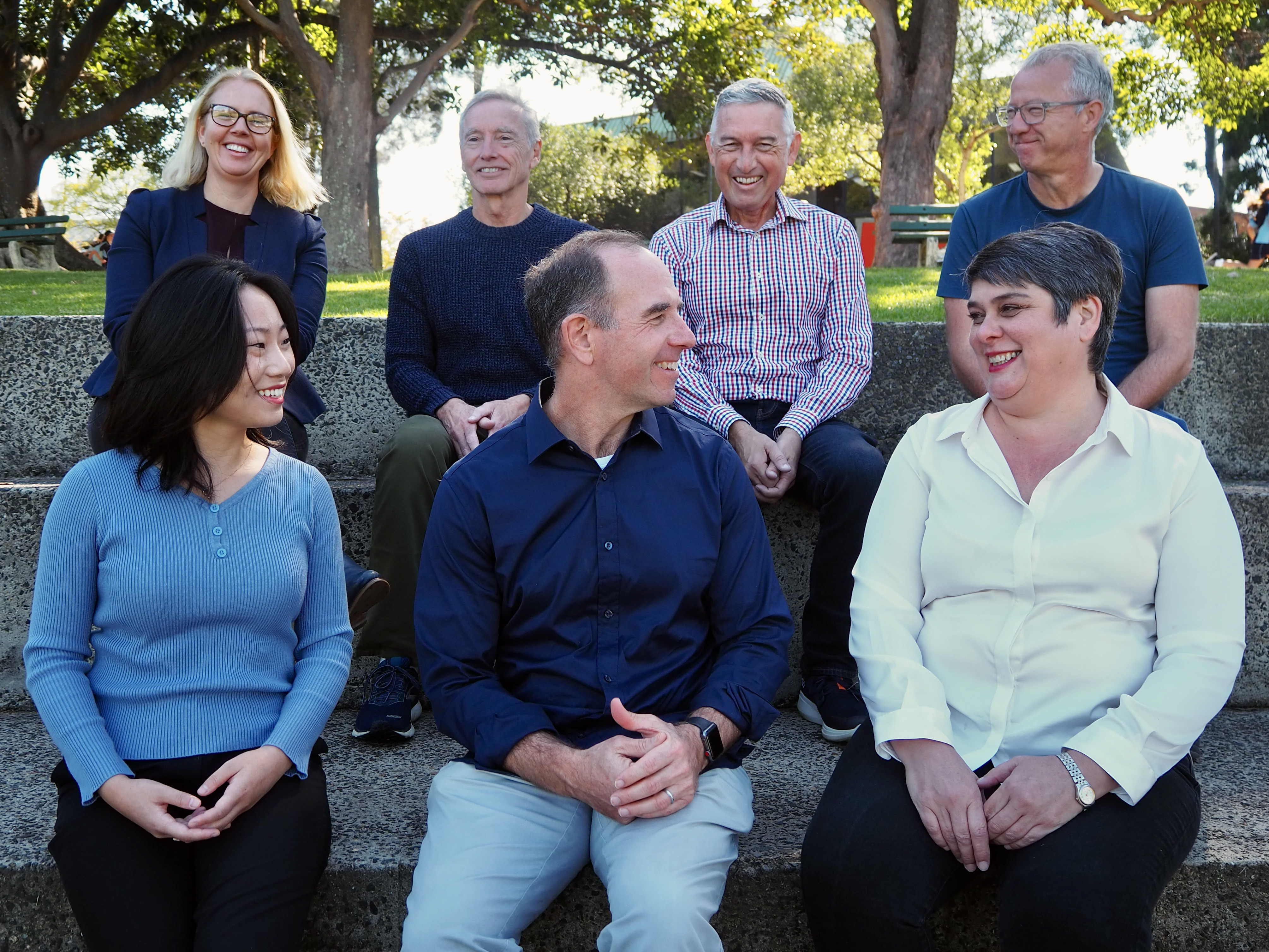
Main Sequence’s team (top row from left to right) Viringa Crawter, Bill Bartee, Mike Nicholls, Phil Morle; (bottom row from left to right) Stella Xu, Mike Zimmerman and Jen Baxter

Main Sequence’s team (top row from left to right) Viringa Crawter, Bill Bartee, Mike Nicholls, Phil Morle; (bottom row from left to right) Stella Xu, Mike Zimmerman and Jen Baxter

Main Sequence, the venture firm founded by Australia’s national science agency, announced today a new $250 million AUD (about $194.3 million USD) fund to invest in deep-tech startups. This is Main Sequence’s second fund and its oversubscribed raised included returning investors Horizons Ventures, Hostplus, Lockheed Martin, Temasek, private investors from Morgan Stanley Wealth Management and Mutual Trust, and family offices.

Launched in 2017 by government agency CSIRO (the Commonwealth Scientific and Industrial Research Organisation), Main Sequence now manages a total of $490 million AUD, including the CSIRO Innovation Fund. The firm works closely with scientists and researchers to commercialize their technology through its “venture science” model.

It starts by identifying challenges, then brings together scientists, a team, industry partners and investors to launch startups. Main Sequence’s second fund will look at issues including healthcare accessibility, increasing the world’s food supply, industrial productivity and space. One major focus will be decarbonization and addressing climate change, and that investment area will be led by Main Sequence partner Martin Duursma.

“Especially in the deep tech space, you don’t always have a company for every problem you’re trying to solve. So in addition to backing great founders who are working in one of our thesis areas, we will create companies to solve the problems and we do that as a partnership instead of on our own,” Main Sequence partner Mike Zimmerman told TechCrunch. Its works with universities, CSIRO’s networks of 3,500 scientists across different sectors and other research agencies to find potential founders.

“We’ll work with a research organization, get an entrepreneur-in-residence in and work with them. Something that is quite different is we’ll also work with industry partners,” Zimmerman added. “We’ll partner with an industry leader and get them fully committed and on the cap table from day one. The idea is that you can go faster when you have all these parties together and everyone is on the cap table.”

For example, Main Sequence helped launched v2food, a plant-based meat company, in January 2019. By October 2019, v2food had started shipping its products to Burger King in Australia, after spending about $2 million AUD. V2food’s other investors include Horizons Ventures, Temasek, Sequoia Capital China and China Renaissance.

“Companies are moving very quickly out of Australia and into China and other parts of Asia, all from the venture science model,” said Zimmerman. “Now that we have locked that down as a methodology, we’ve done several venture science deals already and will be a doing a lot more of that.”

Other Main Sequence portfolio companies include telehealth software platform Coviu, subterrenean drone technology developer Emesent, IoT satellite connectivity startup Myriota and quantum computing firmware designer Q-CTRL.

Main Sequence’s close relationship with CSIRO also gives its startups access to the agency’s ecosystem of research and facilities, including ones that can be used to produce new food tech, synthetic biology or laser tuning. Some of the things the new fund will focus on include ingredients and flavorings for plant-based meat, reversing climate change, agricultural tech for more sustainable farming practices, and synthetic biology like enzymes that can be used for the “circular economy,” or breaking down waste products into new materials.

News: Facebook introduces a new miniplayer that streams Spotify within the Facebook app

Facebook announced last week an expanded partnership with streaming music service Spotify that would bring a new way to listen to music or podcasts directly within Facebook’s app, which it called Project Boombox. Today, the companies are rolling out this integration via a new “miniplayer” experience that will allow Facebook users to stream from Spotify

Facebook announced last week an expanded partnership with streaming music service Spotify that would bring a new way to listen to music or podcasts directly within Facebook’s app, which it called Project Boombox. Today, the companies are rolling out this integration via a new “miniplayer” experience that will allow Facebook users to stream from Spotify through the Facebook app on iOS or Android. The feature will be available to both free Spotify users and Premium subscribers.

The miniplayer itself is an extension of the social sharing option already supported within Spotify’s app. Now, when Spotify users are listening to content they want to share to Facebook, they’ll be able to tap the existing “Share” menu (the three dot-menu at the upper right of the screen) and then tap either “Facebook” or “Facebook News Feed.”

When a user posts an individual track or podcast episode to Facebook through this sharing feature, the post will now display in a new miniplayer that allows other people who come across their post to also play the content as they continue to scroll, or reshare it. (Cue MySpace vibes!)

Spotify’s paid subscribers will be able to access full playback, the company says. Free users, meanwhile, will be able to hear the full shared track, not a clip . But afterwards, they’ll continue to listen to ad-supported content on Shuffle mode, just as they would in Spotify’s own app.

One important thing to note here about all this works is that the integration allows the music or podcast content to actually play from within the Spotify app. When a user presses play on the miniplayer, an app switch takes place so the user can log into Spotify. The miniplayer activates and controls the launch and playback in the Spotify app — which is how the playback is able continue even as the user scrolls on Facebook or if they minimize the Facebook app altogether.

This setup means users will need to have the Spotify mobile app installed on their phone and a Spotify account for the miniplayer to work. For first-time Spotify users, they’ll have to sign up for a free account in order to listen to the music shared via the miniplayer.

Spotify notes that it’s not possible to sign up for a paid account through the mini-player experience itself, so there’s no revenue share with Facebook on new subscriptions. (Users have to download the Spotify app and sign up for Paid accounts from there if they want to upgrade.)

The partnership allows Spotify to leverage Facebook’s reach to gain distribution and to drive both sign-ups and repeat usage of its app just as the Covid bump to subscriber growth may be wearing off. However, it’s still responsible for the royalties paid on streams, just as it was before, the company told TechCrunch, because its app is the one actually doing the streaming. It’s also fully in charge of the music catalog and audio ads that play alongside the content.

For Facebook, this deal means it now has a valuable tool to keep users spending time on its site — a metric that has been declining over the years, reports have indicated.

Spotify and Facebook have a long history of working together on music efforts. Facebook back in 2011 had been planning an update that would allow music subscription users to engage with music directly on Facebook, much like this. But those plans were later dialed back, possibly over music rights’ or technical issues. Spotify had also been one of the first media partners on Facebook’s ticker, which would show you in real-time what friends were up to on Facebook and other services. And Spotify had once offered Facebook Login as the default for its mobile app. Today, as it has for years, Spotify users on the desktop can see what their Facebook friends are streaming on its app, thanks to social networking integrations.

The timing for this renewed and extended partnership is interesting. Now, both Facebook and Spotify have a mutual enemy with Apple, whose privacy-focused changes are impacting Facebook’s ad business and whose investments in Apple Music and Podcasts are a threat to Spotify. As Facebook’s own music efforts in more recent years have shifted towards partnership efforts — like music video integrations enabled by music label agreements — it makes sense that it would turn to a partner like Spotify to power a new streaming feature that supports Facebook’s broader efforts around monetizable tools and services aimed at the creator economy.

The miniplayer feature had been tested in non-U.S. markets, Mexico and Thailand, ahead of its broader global launch today.

In addition to the U.S., the integration is fully rolling out to users in Argentina, Australia, Bolivia, Brazil, Canada, Chile, Colombia, Costa Rica, Dominican Republic, Ecuador, El Salvador, Guatemala, Honduras, Indonesia, Israel, Japan, Malaysia, Mexico, New Zealand, Nicaragua, Panama, Paraguay, Peru, South Africa, Thailand, and Uruguay.

News: Thoma Bravo buys cybersecurity vendor Proofpoint for $12.3B in cash

Moree M&A activity underway in the red-hot field of cybersecurity. In the latest development, private equity giant Thoma Bravo is buying Proofpoint, the SaaS security vendor, for $12.3 billion in cash. Proofpoint is traded publicly on the Nasdaq exchange and as of its closing price on Friday, it had a market cap of $7.5 billion.

Moree M&A activity underway in the red-hot field of cybersecurity. In the latest development, private equity giant Thoma Bravo is buying Proofpoint, the SaaS security vendor, for $12.3 billion in cash.

Proofpoint is traded publicly on the Nasdaq exchange and as of its closing price on Friday, it had a market cap of $7.5 billion. This bid, which will see the company go private, is a big hike on its latest share price. The deal, if approved by shareholders, will close in Q3 of this year.

The news comes at the same time that Proofpoint had released its Q1 earnings, in which it reported revenues of $287.8 million, up 15% versus $249.8 million for the quarter a year ago — and also beating analysts’ expectations, which on average were expecting revenues of $281.6 million, according to Yahoo Finance data.

It also however reported a GAAP net loss of $45.3 million, working out to a loss per share of $0.79. That’s narrowed from a net loss of $66.8 million a year ago, but is still a net loss. Non-GAAP net income for the first quarter of 2021 was $31.5 million, or $0.49 per share, the company said.

The deal is coming in the wake of Proofpoint making a number of acquisitions over the years — its deals have included Cloudmark, Weblife, OberserveIT, and Meta Networks, all deals valued in the hundreds of millions of dollars — but also facing up against not only a growing pool of cybersecurity competitors, but also cyber threats — exacerbated in no small part by the huge shift the world has seen to cloud services, remote working and more transactions carried out online.

Proofpoint CEO Gary Steele said in a statement the acquisition to go private will allow the company to be “more agile with greater flexibility to continue investing in innovation, building on our leadership position and staying ahead of threat actors.”

More to come.

News: Detroit-based Signal Advisors raises $10m Series A led by General Catalyst

Signal Advisors is building a specialized financial platform for financial advisors, and the company is announcing it raised a $10 million Series A led by Brian Ru and Hemant Taneja at General Catalyst. This funding is on top of the $6 million seed round it raised in 2020 from Detroit Venture Partners, Ludlow Ventures, General

Signal Advisors is building a specialized financial platform for financial advisors, and the company is announcing it raised a $10 million Series A led by Brian Ru and Hemant Taneja at General Catalyst. This funding is on top of the $6 million seed round it raised in 2020 from Detroit Venture Partners, Ludlow Ventures, General Catalyst, and others.

In a released statement, new board member and managing partner at Michigan-based Annox Capital Robert Mylod, puts it well: “We’ve seen a lot of capital investment in technologies that promise to replace financial advisors. But the bigger opportunity, by far, is to build technology that empowers advisors.”

Signal was founded following CEO Patrick Kelly’s career as a financial advisor. In this capacity, he discovered the need for an end-to-end platform for financial advisors, specifically those independent and offering annuities and life insurance. Signal’s solution allows these advisors to bypass traditional distributors and simplify the sale of annuities. The company says its product can track commissions in real-time and advance payout ahead of carrier payments.

“We started with annuities because advisors simply don’t have great options for this technology today,” said Pat Kelly, Co-Founder and CEO of Signal Advisors, in a press release. “But that’s just the beginning. We want to provide independent financial advisors with an integrated platform. Whatever their needs, whatever their clients need, the technology and service can provide a seamless experience.”

News: Investors eat up Orbillion Bio’s plans for lab-grown wagyu beef, elk, and bison

Orbillion Bio’s plans to make high end meats in a lab have investors lining up for a seat at the company’s cap table. Mere weeks after launching from Y Combinator’s famous accelerator program, the Silicon Valley-based potential purveyor of premium lamb loins, elk steaks, bison burgers and more has managed to haul in $5 million

Orbillion Bio’s plans to make high end meats in a lab have investors lining up for a seat at the company’s cap table.

Mere weeks after launching from Y Combinator’s famous accelerator program, the Silicon Valley-based potential purveyor of premium lamb loins, elk steaks, bison burgers and more has managed to haul in $5 million in financing.

The company’s led by Patricia Bubner, Gabrial Levesque Tremblay, and Samet Yidrim, who between them have over thirty years working in bioprocessing and the biopharmaceuticals industry.

A little over a month ago, Orbillion held its first public tasting event where meats mixed with its elk, beef, and sheep were on offer straight from the petri dish to the table.

Investors in the $5 million round include: At One Ventures, which has also backed Finless Foods and Wild Earth; Metaplanet Holdings; the European investment firm k16 ventures; FoundersX Ventures, who are also investors in SpaceX; Prithi Ventures, which backed Mission Barns, Turtle Tree Labs; and angel investors including Jonghoon Lim, the CEO of Hanmi Pharmaceuticals; Kris Corzine; Ethan Perlstein, the CEO of Perlara, the first biotech PBC; and a well-known university endowment. 

“We were immediately struck by Orbillion’s focus on high-end, flavorful, hard-to-find meats like lamb, elk, wagyu beef, and bison, their strong science, business, and engineering backgrounds, and the fact that they are so focused on flavor that they literally have a Master Butcher on their advisory board,” said Ali Rohde, GP at Outset Capital, an early-stage venture fund run by Rohde along with repeat entrepreneurs Kanjun Qiu and Josh Albrecht. “Lab-grown meat is the future, and Orbillion Bio is already paving the way.” 

The company said it would use the cash to bring its first product, a Wagyu beef offering, to pilot production.

News: Mighty Networks raises $50M to build a creator economy for the masses

Mighty Networks, a platform designed to give creators and brands a dedicated place to start and grow communities, has closed on $50 million in a Series B funding round led by Owl Ventures. Ziff Capital Partners and LionTree Partners also participated in the financing, along with existing backers Intel Capital, Marie Forleo, Gretchen Rubin, Dan

Mighty Networks, a platform designed to give creators and brands a dedicated place to start and grow communities, has closed on $50 million in a Series B funding round led by Owl Ventures.

Ziff Capital Partners and LionTree Partners also participated in the financing, along with existing backers Intel Capital, Marie Forleo, Gretchen Rubin, Dan Rosensweig, Reid Hoffman, BBG Ventures and Lucas Venture Group. The investment brings Palo Alto-based Mighty Networks’ total raised since its 2017 inception to $67 million. 

Mighty Networks founder and CEO Gina Bianchini — who started the company with Tim Herby and Thomas Aaron — is no stranger to building nurturing environments for community building. Previously, she was the CEO and co-founder of Ning, where she led the company’s rapid growth to three million Ning Networks created and about 100 million users around the world in three years. 

With Mighty Networks, Bianchini’s goal is to build “a creator middle class” founded on community memberships, events and live online courses.  

“Basically we have a platform for people to create communities the way that they would create e-commerce stores,” she told TechCrunch. “So what Shopify has done for e-commerce, we’re doing for digital subscriptions and digital payments where the value is around a community that is mastering something interesting or important together, and not just content alone.”

The company’s flagship Business Plan product is aimed at new creators with the goal of giving them an easy way to get started with digital subscriptions, Bianchini said. Established brands, organizations and successful creators use the company’s Mighty Pro plan to get everything Mighty Networks offers on their own branded iOS, iPad and Android apps. 

Mighty Networks — which operates as a SaaS business — has seen impressive growth. In 2020, ARR climbed by “2.5x” while annual customer growth climbed by 200%. Customers are defined as paying creators who host their community, courses and events on their own Mighty Network. The company also saw a 400% annual growth in payments, or rather in subscriptions and payments where a creator or brand will sell a membership or an online course.

The pandemic was actually a boon to the business, as well as the fact that it launched live events last year.

“We were able to help many businesses quickly move online — from yoga studios to leadership speakers and consultants — and now that the world is coming back, they’ll be able to use the features that we’ve built into the platform from day one around finding members, events and groups near them, as well as making everything via not just the web but mobile apps,” Bianchini said.

One of the startup’s goals is to help people understand that they don’t need massive amounts of followers (such as 1 million followers on TikTok) to be successful creators. For example, a creator charging 30 people for a subscription that amounts to around $1,000 a year can still pull in $30,000 a year. So while it’s not huge, it’s certainly still substantial — hence the company’s intent to build a “creator middle class.”

Mighty Networks has more than 10,000 paying creators, brands and coaches today. Users include established creators and brands such as YouTube star Adriene Mishler, Xprize and Singularity University founder Peter Diamandis, author Luvvie Ajayi Jones, comedian Amanda Seales, Girlboss founder Sophia Amoruso and brands such as the TED conference and wellness scheduling platform MINDBODY.

“Content alone will kill the creator economy,” Bianchini said. “We can’t build a thriving creator movement on an exhausting, unfair dynamic where content creators rent audiences from big tech platforms, are required to produce a never-ending stream of content and get paid pennies for it, if they get paid at all. Creators need to own their own community on the internet, where members meet each other and get results and transformation.” 

Owl Ventures Managing Director Amit Patel said his firm was impressed by Mighty Networks before it even met the company.

“No company in this space has more loyal, passionate believers, and when we saw firsthand that creators could successfully build paid communities and online courses on a Mighty Network with as few as 30 members, we wanted to be a part of unlocking this creator middle class for a million more creators,” Patel said in a written statement.

The company plans to use its new capital on product development across media types, payment options and expansion into new markets. 

Earlier this month, Pico, a New York startup that helps online creators and media companies make money and manage their customer data, announced that it had launched an upgraded platform and raised $6.5 million in new funding. Essentially, the company is building what it considers to be an operating system for the creator market.

News: Insurgent UK broadband startup Cuckoo Internet raises $6M round led by RTP Global, with JamJar Investments

Cuckoo Internet, which is aiming to be an insurgent startup in the broadband provider space in the UK, has closed a $6 million investment round led by RTP Global, along with participation from JamJar Investments. It will also launch on price-comparison site uSwitch. RTP Global was an early backer of Yandex, Delivery Hero, and Datadog.

Cuckoo Internet, which is aiming to be an insurgent startup in the broadband provider space in the UK, has closed a $6 million investment round led by RTP Global, along with participation from JamJar Investments. It will also launch on price-comparison site uSwitch.

RTP Global was an early backer of Yandex, Delivery Hero, and Datadog. JamJar has backed Bulb, Deliveroo, Tails and Oatly. Other individual investors in the round included former executives of Monzo and Stripe,

Cuckoo’s pitch is that it has a simple broadband offering, suppling a single 67 Mb/s fibre deal on a monthly rolling contract with “no hidden fees” it says.

In a statement Alexander Fitzgerald, Founder and CEO at Cuckoo, said: “The broadband market is broken and consumers are being ripped off every day. The importance of fast, reliable and affordable broadband has come into sharper focus with millions of people working from home over the past year. We’re excited that this funding will enable us to help tens of thousands of people across the country make their broadband simple, for good.”

Gareth Jefferies, Partner at RTP Global, said: “Consumer broadband is one of the largest markets yet one of the most poorly served. Consumers are fatiguing of customer-hostile pricing practices, inflexible contracts and deliberately awful customer service, and just as we have seen in insurance, energy and banking, we will see a number of challenger providers come in to eat incumbents’ lunch with differentiated product packagings and a fresh respect for their customers.”

WordPress Image Lightbox Plugin