
Tag Archives: Blog

News: Kry closes $312M Series D after use of its telehealth tools grows 100% yoy

Swedish digital health startup Kry, which offers a telehealth service (and software tools) to connect clinicians with patients for remote consultations, last raised just before the pandemic hit in Western Europe, netting a €140M Series C in January 2020. Today it’s announcing an oversubscribed sequel: The Series D raise clocks in at $312M (€262M) and

Swedish digital health startup Kry, which offers a telehealth service (and software tools) to connect clinicians with patients for remote consultations, last raised just before the pandemic hit in Western Europe, netting a €140M Series C in January 2020.

Today it’s announcing an oversubscribed sequel: The Series D raise clocks in at $312M (€262M) and will be used to keep stepping on the growth gas in the region.

Investors in this latest round for the 2015-founded startup are a mix of old and new backers: The Series D is led by CPP Investments (aka, the Canadian Pension Plan Investment Board) and Fidelity Management & Research LLC, with participation from existing investors including The Ontario Teachers’ Pension Plan, as well as European-based VC firms Index Ventures, Accel, Creandum and Project A.

The need for people to socially distance during the coronavirus pandemic has given obvious uplift to the telehealth category, accelerating the rate of adoption of digital health tools that enable remote consultations by both patients and clinicians. Kry quickly stepped in to offer a free service for doctors to conduct web-based consultations last year, saying at the time that it felt a huge responsibility to help.

That agility in a time of public health crisis has clearly paid off. Kry’s year-over-year growth in 2020 was 100% — meaning that the ~1.6M digital doctors appointments it had served up a year ago now exceed 3M. Some 6,000 clinicians are also now using its telehealth platform and software tools. (It doesn’t break out registered patient numbers).

Yet co-founder and CEO, Johannes Schildt, says that, in some ways, it’s been a rather quiet 12 months for healthcare demand.

Sure the pandemic has driven specific demand, related to COVID-19 — including around testing for the disease (a service Kry offers in some of its markets) — but he says national lockdowns and coronavirus concerns have also dampened some of the usual demand for healthcare. So he’s confident that the 100% growth rate Kry has seen amid the COVID-19 public health crisis is just a taster of what’s to come — as healthcare provision shifts toward more digital delivery.

“Obviously we have been on the right side of a global pandemic. And if you look back the mega trend was obviously there long before the pandemic but the pandemic has accelerated the trend and it has served us and the industry well in terms of anchoring what we do. It’s now very well anchored across the globe — that telemedicine and digital healthcare is a crucial part of the healthcare systems moving forward,” Schildt tells TechCrunch.

“Demand has been increasing during the year, most obviously, but if you look at the broader picture of healthcare delivery — in most European markets — you actually have healthcare usage at an all time low. Because a lot of people are not as sick anymore given that you have tight restrictions. So it’s this rather strange dynamic. If you look at healthcare usage in general it’s actually at an all time low. But telemedicine is on an upward trend and we are operating on higher volumes… than we did before. And that is great, and we have been hiring a lot of great clinicians and been shipping a lot of great tools for clinicians to make the shift to digital.”

The free version of Kry’s tools for clinicians generated “big uplift” for the business, per Schildt, but he’s more excited about the wider service delivery shifts that are happening as the pandemic has accelerated uptake of digital health tools.

“For me the biggest thing has been that [telemedicine is] now very well established, it’s well anchored… There is still a different level of maturity between different European markets. Even [at the time of Kry’s Series C round last year] telemedicine was maybe not something that was a given — for us it’s always been of course; for me it’s always been crystal clear that this is the way of the future; it’s a necessity, you need to shift a lot of the healthcare delivery to digital. We just need to get there.”

The shift to digital is a necessary one, Schildt argues, in order to widen access to (inevitably) limited healthcare resources vs ever growing demand (current pandemic lockdown dampeners excepted). This is why Kry’s focus has always been on solving inefficiencies in healthcare delivery.

It seeks to do that in a variety of ways — including by offering support tools for clinicians working in public healthcare systems (for example, more than 60% of all the GPs in the UK market, where most healthcare is delivered via the taxpayer-funded NHS, is using Kry’s tools, per Schildt); as well as (in a few markets) running a full healthcare service itself where it combines telemedicine with a network of physical clinics where users can go when they need to be examined in person by a clinician. It also has partnerships with private healthcare providers in Europe.

In short, Kry is agnostic about how it helps deliver healthcare. That philosophy extends to the tech side — meaning video consultations are just one component of its telemedicine business which offers remote consultations for a range of medical issues, including infections, skin conditions, stomach problems and psychological disorders. (Obviously not every issue can be treated remotely but at the primary care level there are plenty of doctor-patient visits that don’t need to take place in person.)

Kry’s product roadmap — which is getting an investment boost with this new funding — involves expanding its patient-facing app to offer more digitally delivered treatments, such as Internet Cognitive Based Therapy (ICBT) and mental health self-assessment tools. It also plans to invest in digital healthcare tools to support chronic healthcare conditions — whether by developing more digital treatments itself (either by digitizing existing, proven treatments or coming up with novel approaches), and/or expanding its capabilities via acquisitions and strategic partnerships, according to Schildt.

Over the past five+ years, a growing number of startups have been digitizing proven treatment programs, such as for disorders like insomnia and anxiety, or musculoskeletal and chronic conditions that might otherwise require accessing a physiotherapist in person. Options for partners for Kry to work with on expanding its platform are certainly plentiful — although it’s developed the ICBT programs in house so isn’t afraid to tackle the digital treatment side itself.

“Given that we are in the fourth round of this massive change and transition in healthcare it makes a lot of sense for us to continue to invest in great tools for clinicians to deliver high quality care at great efficiency and deepening the experience from the patient side so we can continue to help even more people,” says Schildt.

“A lot of what we do we do is through video and text but that’s just one part of it. Now we’re investing a lot in our mental health plans and doing ICBT treatment plans. We’re going deeper into chronic treatments. We have great tools for clinicians to deliver high quality care at scale. Both digitally and physically because our platform supports both of it. And we have put a lot of effort during this year to link together our digital healthcare delivery with our physical healthcare delivery that we sometimes run ourselves and we sometimes do in partnerships. So the video itself is just one piece of the puzzle. And for us it’s always been about making sure we saw this from the end consumer’s perspective, from the patient’s perspective.”

“I’m a patient myself and still a lot of what we do is driven by my own frustration on how inefficient the system is structured in some areas,” he adds. “You do have a lot of great clinicians out there but there’s truly a lack of patient focus and in a lot of European markets there’s a clear access problem. And that has always been our starting point — how can we make sure that we solve this in a better way for the patients? And then obviously that involves us both building strong tools and front ends for patients so they can easily access care and manage their health, be pro-active about their health. It also involves us building great tools for clinicians that they can operate and work within — and there we’re putting way more effort as well.

“A lot of clinicians are using our tools to deliver digital care — not only clinicians that we run ourselves but ones we’re partnering with. So we do a lot of it in partnerships. And then also, given that we are a European provider, it involves us partnering with both public and private payers to make sure that the end consumer can actually access care.”

Another batch of startups in the digital healthcare delivery space talk a big game about ‘democratizing’ access to healthcare with the help of AI-fuelled triage or even diagnosis chatbots — with the idea that these tools can replace at least some of the work done by human doctors. The loudest on that front is probably Babylon Health.

Kry, by contrast, has avoided flashy AI hype, even though its tools do frequently incorporate machine learning technology, per Schildt. It also doesn’t offer a diagnosis chatbot. The reason for its different emphasis comes back to the choice of problem to focus on: Inefficiencies in healthcare delivery — with Schildt arguing that decision-making by doctors isn’t anywhere near the top of the list of service pain-points in the sector.

“We’re obviously using what would be considered AI or machine learning tools in all products that we’re building. I think sometimes personally I’m a bit annoyed at companies screaming and shouting about the technology itself and less about what problem you are solving with it,” he tells us. “On the decision-support [front], we don’t have the same sort of chatbot system that some other companies do, no. It’s obviously something that we could build really effortlessly. But I think — for me — it’s always about asking yourself what is the problem that you’re solving for? For the patient. And to be honest I don’t find it very useful.

“In many cases, especially in primary care, you have two categories. You have patients that already know why they need help, because you have a urinary tract infection; you had it before. You have an eye infection. You have a rash —  you know that it’s a rash, you need to see someone, you need to get help. Or you’re worried about your symptoms and you’re not really sure what it is — and you need comfort. And I think we’re not there yet where a chatbot would give you that sort of comfort, if this is something severe or not. You still want to talk to a human being. So I think it’s of limited use.

“Then on the decision side of it — sort of making sure that clinicians are making better decisions — we are obviously doing decision support for our clinicians. But if it’s one thing clinicians are really good at it’s actually making decisions. And if you look into the inefficiencies in healthcare the decision-making process is not the inefficiency. The matching side is an inefficiency side.”

He gives the example of how much the Swedish healthcare system spends on translators (circa €200M) as a “huge inefficiency” that could be reduced simply — by smarter matching of multilingual clinicians to patients.

“Most of our doctors are bilingual but they’re not there at the same time as the patient. So on the matching side you have a lot of inefficiency — and that’s where we have spent time on, for example. How can we sort that, how can we make sure that a patient that is seeking help with us ends up with the right level of care? If that is someone that speaks your native language so you can actually understand each other. Is this something that could be fully treated by a nurse? Or should it be directly to a psychologist?”

“With all technology it’s always about how do we use technology to solve a real problem, it’s less about the technology itself,” he adds.

Another ‘inefficiency’ that can affect healthcare provision in Europe relates to a problematic incentive to try to shrink costs (and, if it’s private healthcare, maximize an insurer’s profits) by making it harder for patients to access primary medical care — whether through complicated claims processes or by offering a bare minimum of information and support to access services (or indeed limiting appointment availability), making patients do the legwork of tracking down a relevant professional for their particular complaint and obtaining a coveted slot to see them.

It’s a maddening dynamic in a sector that should be focused on making as many people as healthy as they possibly can be in order that they avoid as much disease as possible — obviously as that outcome is better for the patients themselves. But also given the costs involved in treating really sick people (medical and societal). A wide range of chronic conditions, from type 2 diabetes to lower back pain, can be particularly costly to treat and yet may be entirely preventable with the right interventions.

Schildt sees a key role for digital healthcare tools to drive a much needed shift toward the kind of preventative healthcare that would be better all round, for both patients and for healthcare costs.

“That annoys me a lot,” he says. “That’s sometimes how healthcare systems are structured because it’s just costly for them to deliver healthcare so they try to make it as hard as possible for people to access healthcare — which is an absurdity and also one of the reasons why you now have increasing costs in healthcare systems in general, it’s exactly that. Because you have a lack of access in the first point of contact, with primary care. And what happens is you do have a spillover effect to secondary care.

“We see that in the data in all European markets. You have people ending up in emergency rooms that should have been treated in primary care but they can’t access primary care because there’s no access — you don’t know how to get in there, it’s long waiting times, it’s just triaged to different levels without getting any help and you have people with urinary tract infections ending up in emergency rooms. It’s super costly… when you have healthcare systems trying to fend people off. That’s not the right way doing it. You have to — and I think we will be able to play a crucial role in that in the coming ten years — push the whole system into being more preventative and proactive and access is a key part of that.

“We want to make it very, very simple for the patients — that they should be able to reach out to us and we will direct you to the right level of care.”

With so much still to do tackling the challenges of healthcare delivery in Europe, Kry isn’t in a hurry to expand its services geographically. Its main markets are Sweden, Norway, France, Germany and the UK, where it operates a healthcare service itself (not necessarily nationwide), though it notes that it offers a video consultation service to 30 regional markets.

“Right now we are very European focused,” says Schildt, when asked whether it has any plans for a U.S. launch. “I would never say that we would never go outside of Europe but for here and now we are extremely focused on Europe, we know those markets very, very well. We know how to manoeuvre in the European systems.

“It’s a very different payer infrastructure in Europe vs the US and then it’s also so that focus is always king and Europe is the mega market. Healthcare is 10% of the GDP in all European markets, we don’t have to go outside of Europe to build a very big business. But for the time being I think it makes a lot of sense for us to stay focused.”

 

News: Wunder Mobility’s new lending business helps micromobility startups finance fleets

Wunder Mobility built its business selling software to shared scooter, e-bike and even short-term car rental startups. Now, it’s banking on a new — and once secret — lending division to bring in more revenue that’ll giving micromobility operators another option to access capital without having pitch venture capitalists and other investors. The company announced

Wunder Mobility built its business selling software to shared scooter, e-bike and even short-term car rental startups. Now, it’s banking on a new — and once secret — lending division to bring in more revenue that’ll giving micromobility operators another option to access capital without having pitch venture capitalists and other investors.

The company announced the official launch of Wunder Capital, a subsidiary that provides micromobility operators with fleet financing solutions. Wunder Capital, which has been operating in stealth mode for two years, has already provided financing to more than 25 businesses, according to the company.

As shared micromobility becomes the norm, the industry has the chance to scale dramatically, Gunnar Froh, Wunder Mobility’s founder and CEO, said in a recent interview. He believes traditional VC-backed funding rounds are too slow to keep up with the level of growth required to keep up with increasing demand.

“Now you can now basically launch in a few weeks on our software platform and also get vehicles through us that are optimized for the sharing case, and then pay for them entirely through revenue share,” Froh told TechCrunch.

Wunder Capital aims to become a one-stop-shop for shared operators looking for operational software, high-quality vehicles and the money to purchase them. Froh estimates that such a package deal would cost an operator about 40% of monthly revenue. 

The founder originally saw the potential to diversify Wunder’s portfolio when he noticed how much influence his sales team had on operators’ vehicle purchasing decisions. After his team would set up new operators with an app and software, operators would inevitably ask for vehicle manufacturer recommendations.

Wunder Mobility said Tuesday it is also partnering with Yadea, a dominant manufacturer of light-duty electric vehicles in China, to co-develop an e-moped that’s been refitted for shared use. The company also intends to co-develop and finance e-bikes and kick scooters this year, but did not specify which manufacturers it would work with. 

“We put reseller agreements in place, so we would always recommend this Yadea moped and then get a margin on it,” said Froh. “Then we’d talk to Yadea and give them modifications to make the mopeds sharing ready, and then we’d have an opportunity to talk to the operators about how they’re going to finance this purchase, what limitations are you facing, and so on.”

Wunder Capital most recently added German electric moped sharing company emmy as a financing customer. Wunder Capital will finance 1,500 refitted Yadea G5L e-mopeds for emmy’s locations in Munich, Hamburg and Berlin. In contrast to Yadea’s consumer models, these mopeds will have a sturdier base, more intuitive controls, doubled range and improved battery management systems.

“Some companies go through venture capital, but it’s very costly in terms of return expectations and the control they want to have, and it’s holding people back from expanding their fleets,” Froh said. “We refinance through banks that would not usually look at a single operator and feel comfortable about the resale of these vehicles. We combine several operators into one portfolio and then we have access to a liquid secondary market.”

In order to ascertain risk and inform loan decisions, Wunder Capital uses APIs to collect anonymized trip data from operators that compares operational efficiency between companies. This data collection also allows the division to flag if an operator isn’t doing well and is at risk of coming up short on payments, in which case Wunder Capital can proactively reach out about restructuring loans. 

“If a default happens, we can take vehicles from one operator and send them to another one somewhere else in the world,” said Froh. “So with this model, we can refinance relatively cheaply.”

News: Tesla sees bitcoin as important financial tool to access cash quickly

Tesla’s relationship with bitcoin is not a dalliance, according to the comments made by the company’s CFO and dubbed “master of coin” Zach Kirkhorn during an earnings call Monday. Instead, the company believes in the longevity of bitcoin, despite its volatility. Tesla invested $1.5 billion in bitcoin this quarter and then trimmed its position by 10%,

Tesla’s relationship with bitcoin is not a dalliance, according to the comments made by the company’s CFO and dubbed “master of coin” Zach Kirkhorn during an earnings call Monday. Instead, the company believes in the longevity of bitcoin, despite its volatility.

Tesla invested $1.5 billion in bitcoin this quarter and then trimmed its position by 10%, Kirkhorn said during the company quarterly earnings call. That sale made a $101 million “positive impact” to the company’s profitability in the first quarter, he added. Tesla also allows customers to make vehicle deposits and final vehicle purchases using bitcoin. 

Tesla turned to bitcoin as a place to store cash and still access it immediately, all while providing a better return on investment than more traditional central bank-backed safe havens. Of course, the higher yields provided by the volatile digital currency comes with higher risk.

Tesla bucks the trend of the more cautionary Federal Reserve Chairman Jay Powell who noted back in March at virtual summit hosted by the Bank for International Settlements that the Fed considers crypto speculative assets that are highly volatile and therefore not useful stores of value. That matters because the basic function of currency is its ability to store value. He also noted that digital currencies are not backed by anything and compared it to gold and not the dollar.

From Kirkhorn:

Elon and I were looking for a place to store cash that wasn’t being immediately used, try to get some level of return on this, but also preserve liquidity, you know, particularly as we look forward to the launch of Austin and Berlin and uncertainty that’s happening with semiconductors and port capacity, being able to access our cash very quickly is super important to us right now.

And, you know, there aren’t many traditional opportunities to do this or at least that we found and and talking to others that we could get good feedback on, particularly with yields being so low and without taking on additional risk or sacrificing liquidity. Bitcoin seemed at the time, and so far has proven to be a good decision, a good place to place some of our cash that’s not immediately being used for daily operations or maybe not needed till the end of the year, and be able to get some return on that.

Tesla is watching the digital currency closely, Kirkhorn said, noting that there is a lot of reason to be optimistic.

“You know, thinking about it from a corporate treasury perspective, we’ve been quite pleased with how much liquidity there is in the bitcoin market,” he said. “Our ability to build our first position happened very quickly. When we did the sale later in March we also were able to execute on that very quickly. And so as we think about kind of global liquidity for the business in risk management, being able to get cash in and out of the market is something that I think is exceptionally important for us.”

While Tesla did trim its position in March, Kirkhorn added that the company’s intent is to hold what it has long term and to continue to accumulate bitcoin from transactions from its customers as they purchase vehicles. Musk, who also goes by Technoking, announced in March that Tesla would accept bitcoin as a form of payment in the United States.

News: Tesla wants to make every home a distributed power plant

Tesla CEO Elon Musk wants to turn every home into a distributed power plant that would generate, store and even deliver energy back into the electricity grid, all using the company’s products. While the company has been selling solar and energy storage products for years, a new company policy to only sell solar coupled with

Tesla CEO Elon Musk wants to turn every home into a distributed power plant that would generate, store and even deliver energy back into the electricity grid, all using the company’s products.

While the company has been selling solar and energy storage products for years, a new company policy to only sell solar coupled with the energy storage products, along with Musk’s comments Monday, reveal a strategy that aims to scale these businesses by appealing to utilities.

“This is a prosperous future both for Tesla and for the utilities,” he said. “If this is not done, the utilities will fail to serve their customers. They won’t be able to do it,” Musk said during an investor call, noting the rolling blackouts in California last summer and the more recent grid failure in Texas as evidence that grid reliability has become a bigger concern.

Last week, the company changed its website to prevent customers from only buying solar or its Powerwall energy storage product and instead required purchasing a system. Musk later announced the move in a tweet, stating “solar power will feed exclusively to Powerwall” and that “Powerwall will interface only between utility meter and house main breaker panel, enabling super simple install and seamless whole house backup during utility dropouts.”

Musk’s pitch is that the grid would need more power lines, more power plants and larger substations to fully decarbonize using renewables plus storage. Distributed residential systems — of course using Tesla products — would provide a better path, in Musk’s view. His claim has been backed up in part by recent studies from the Massachusetts Institute of Technology, which found that the U.S. can reach a zero-carbon grid by more than doubling its transmission capacity, and another from Princeton University showing that the country may need to triple its transmission systems by 2050 to reach net-zero emissions.

Musk is imagining a radically different electricity grid system than the one we have today, which is centrally controlled and run by grid operators, independent organizations such as the California Independent System Operator or the Electric Reliability Council of Texas. It’s a vision that is riddled with bureaucratic and logistical challenges. Utilities and regulatory policy would need to solve how to handle a large influx of so-called “distributed energy resources,” such as solar panels on residential roofs, which may run contrary to utilities’ long-established business models.

It’s important to note that whether renewables-plus-storage will be alone sufficient to decarbonize the energy grid is a contentious question. Many experts believing that the land use demands, storage requirements and intermittency issues of renewables may make their role as the country’s primary electricity generator a pipe dream. But Musk has long been bullish on the renewables-plus-storage model, tweeting last July that “physics favors electric transport, batteries for stationary storage & solar/wind for energy generation.”

News: The big story: iOS 14.5 brings privacy changes and more

Apple’s latest software upgrade brings a big change, Roku accuses Google of anti-competitive behavior and Brex raises a big funding round. This is your Daily Crunch for April 26, 2021. The big story: iOS 14.5 brings privacy changes and more Apple released the latest version of its mobile operating system today, which includes the much-discussed

Apple’s latest software upgrade brings a big change, Roku accuses Google of anti-competitive behavior and Brex raises a big funding round. This is your Daily Crunch for April 26, 2021.

The big story: iOS 14.5 brings privacy changes and more

Apple released the latest version of its mobile operating system today, which includes the much-discussed App Tracking Transparency feature, allowing users to control which apps are sharing their data with third parties for ad-targeting purposes.

Other new features include Watch unlocking (which could help users avoid the annoying “I can’t unlock my phone with my masked face!” phenomenon), new emojis and more.

The tech giants

Roku alleges Google is using its monopoly power in YouTube TV carriage negotiations — Roku is alerting its customers that they may lose access to the YouTube TV channel on its platform after negotiations with Google went south.

Lyft sells self-driving unit to Toyota’s Woven Planet for $550M — Under the acquisition agreement, Lyft’s so-called Level 5 division will be folded into Woven Planet Holdings.

Apple commits to 20,000 US jobs, new North Carolina campus — Apple this morning announced a sweeping plan to invest north of $430 billion over the next five years.

Startups, funding and venture capital

Brex raises $425M at a $7.4B valuation, as the corporate spend war rages on — The company has also put together a new service called Brex Premium that costs $49 per month.

Founded by Australia’s national science agency, Main Sequence launches $250M AUD deep tech fund —  Main Sequence’s second fund will look at issues including healthcare accessibility, increasing the world’s food supply, industrial productivity and space.

Mighty Networks raises $50M to build a creator economy for the masses — The company is led by Gina Bianchini, the co-founder and former CEO of Ning.

Advice and analysis from Extra Crunch

Founders who don’t properly vet VCs set up both parties for failure — Due diligence isn’t a one-way street, and founders must do their homework to make sure they’re not jumping into deals with VCs who are only paying lip service to their value-add.

How Brex more than doubled its valuation in a year — An interview with CEO Henrique Dubugras about that giant funding round.

There is no cybersecurity skills gap, but CISOs must think creatively — Netskope’s Lamont Orange doesn’t buy the idea that millions of cybersecurity jobs are going unfilled because there aren’t enough qualified candidates.

(Extra Crunch is our membership program, which helps founders and startup teams get ahead. You can sign up here.)

Everything else

How one founder partnered with NASA to make tires puncture-proof and more sustainable — This week’s episode of Found features The SMART Tire Company co-founder and CEO Earl Cole.

What the MasterClass effect means for edtech — MasterClass copycats are raising plenty of funding.

Hear about building AVs under Amazon from Zoox CTO Jesse Levinson at TC Sessions: Mobility 2021 — We’ll hear more about Zoox’s mission to develop and deploy autonomous passenger vehicles.

The Daily Crunch is TechCrunch’s roundup of our biggest and most important stories. If you’d like to get this delivered to your inbox every day at around 3pm Pacific, you can subscribe here.

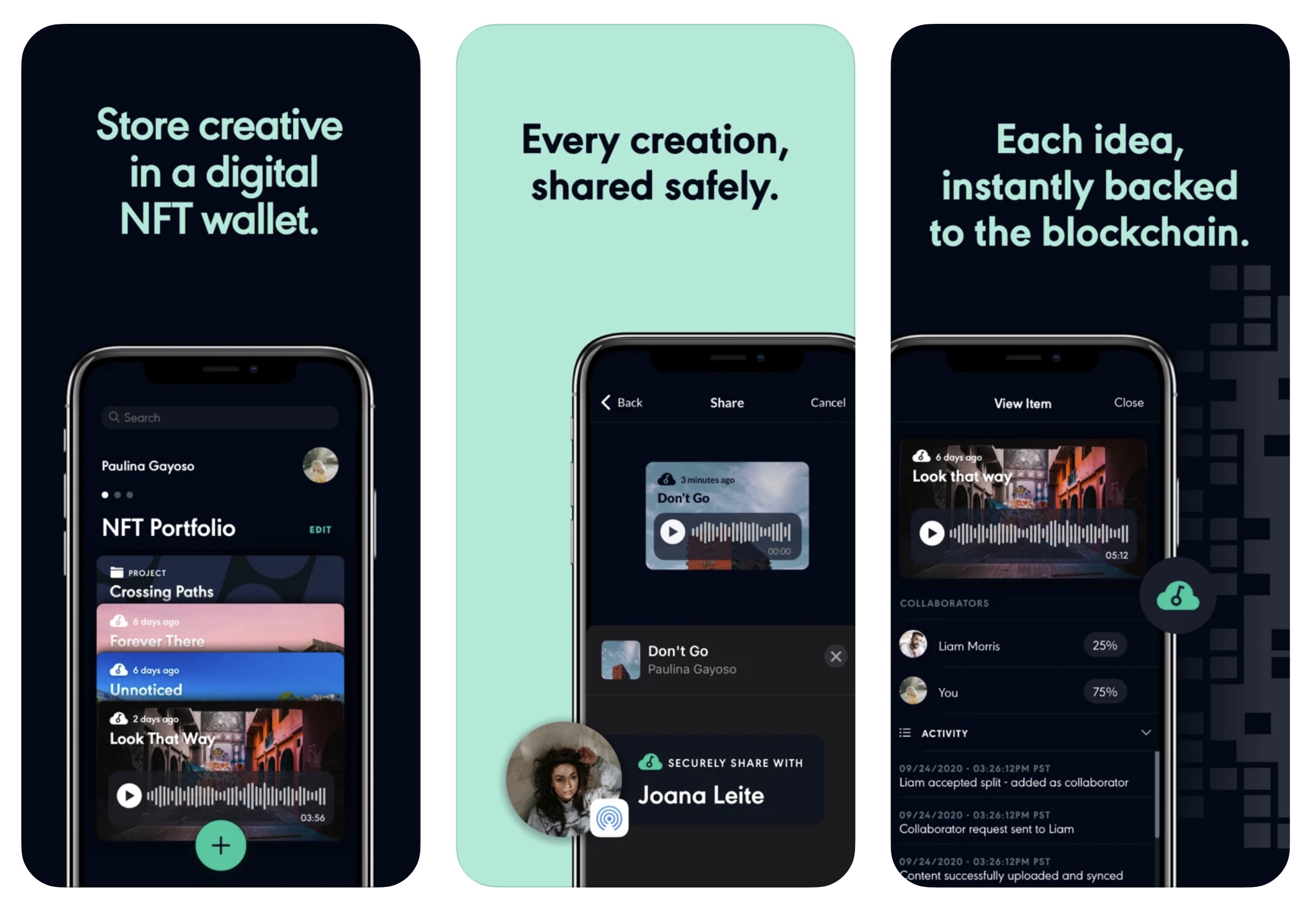
News: Blockchain startup S!NG wants creators to lean on NFTs to protect their intellectual property

After a years-long crypto winter, it been the spring of NFTs, but as digital art prices sober up after an explosion in sales, blockchain founders are looking to find more stable opportunities in the space that can grow over time even as speculative interest in NFTs shifts. One particular interest has been using NFTs to

After a years-long crypto winter, it been the spring of NFTs, but as digital art prices sober up after an explosion in sales, blockchain founders are looking to find more stable opportunities in the space that can grow over time even as speculative interest in NFTs shifts.

One particular interest has been using NFTs to reshape the creator economy in a manner that actually benefits artists more than the platforms that host their work. A new flavor of this pursuit comes from the recently launched S!NG (pronounced sing) which has built a platform around simply letting user upload files to their servers and time-stamp those uploads on the Ethereum blockchain. It’s a dead-simple mechanic with an ambitious framing, ensuring that artists maintain credit for their work as they create it.

The team behind the app sees a future where artists use the platform as an autosave for their intellectual property during the creative process, enabling them to scribble down notes or upload a quick demo and save those moments on the blockchain, a step that they hope can eliminate or expedite rights disputes for creators that can point to a clearly time-stamped breadcrumbs trail. By virtue of the app’s name, it’s clear that they are aiming to attract songwriters and musicians in particular but the company’s onboarding also showcases wider ambition in the creator world, enabling users to designate if they are a photographer, writer or programmer as well.

“You have the best of both worlds with very public witnesses to a very private event,” says CEO Geoff Osler. “Your content is never out there, but you can have this massive attestation to the fact that it exists at a certain point in time.”

The iOS app itself is pretty straightforward. After uploading a piece of media, be it a photo, video, audio or text file, users can tack on additional files, make note of additional collaborators or add notes before submitting it and christening the work on the blockchain. The file itself is private with a hash hosted on the blockchain while the encrypted files are stored on S!NG’s AWS servers, so creators don’t need to worry about their early ideas being served up to a public audience. A concern here for early adopters is what happens if the blockchain startup eventually goes under and those servers go with it, but that’s an issue facing plenty of startups that are backing the underlying media files of NFTs on centralized servers.

Image via S!NG

Rights disputes might be something more top-of-mind to those who have spent substantial time in their specific creative industry, compared to to budding artists who are likely wholly concerned with getting their work seen in the first place. While public links allow a work’s origins to be tracked down once it’s complete and ready for public consumption, S!NG’s aim is to develop those moments earlier in the development of a work and aid artists who might be involved with more collaborative creative processes where ownership of ideas can appear more obfuscated from a legal standpoint.

“If I get something stolen from me, I’ve got a team that’s going to defend me and they’re probably going to win or settle any claims, but if you’re a 16-year-old kid, you don’t have that ability so that’s what we want to provide, but more as a deterrent,” musician and advisor Raine Maida tells TechCrunch. “I think when you see the S!NG watermark or you see that it’s saved and shared through the wallet.. you don’t have to understand blockchain but you’ll know S!NG is that company that protects you.”

For the time being, non-fungible token-based legal defenses are probably a bit unusual, but the team’s founders believe that blockchain-based ownership proofs will be entering case law organically just as technology like DocuSign has been accepted.

If the company can successfully push creators to weave the S!NG platform into their toolkits, the startup will have plenty of ripe opportunities to capitalize on in the incredibly young blockchain creator space. While many artists may see the NFT space as a speculative cash grab, the company’s founders seem publicly focused on sidestepping hype for the time being.

“Frankly I don’t give a shit about all of this crazy NFT stuff with things selling for a bazillion dollars,” Osler says. “I’m interested in the small artist who has 1,000 fans who will eagerly pay up $15 to keep that person in business.”

News: Fifth Wall’s Brendan Wallace and Hippo’s Assaf Wand discuss proptech’s biggest opportunities

What is the biggest opportunity for proptech founders? How should they think about competition, strategic investment vs. top-tier VC firms, and how to build a board? What about navigating regulation?

What is the biggest opportunity for proptech founders? How should they think about competition, strategic investment versus top-tier VC firms, and how to build their board? What about navigating regulation?

We sat down last week with Brendan Wallace, co-founder and general manager of Fifth Wall, and Hippo CEO Assaf Wand for an episode of Extra Crunch Live to discuss all of the above.

Extra Crunch Live goes down every Wednesday at 3 p.m. ET/noon PT. Our next episode is with Forerunner’s Eurie Kim and Oura CEO Harpreet Rai, and you can check out the upcoming schedule right here.

In the meantime, dive into the wide-ranging conversation we had with Wallace and Wand. You can find the full video, including the ECL Live pitch-off, below.

Investing in the board

The first step in running a useful and beneficial board is determining who should be on that board, and that starts with the first round of capital investment and carries on forever.

One of the strategic benefits of Fifth Wall as an investor, according to Wallace, is that the firm was built specifically with strategic LPs in the real estate realm, allowing the firm to connect portfolio companies with massive incumbent players in the industry. Incumbents get access to new tools and software, portfolio companies get big customers, and Fifth Wall gets to reap the benefits of both. It’s a rare win-win-win.

We asked Wand about how he chose his investors, and how to weigh the value of a top-tier VC firm and a strategic angel investor, for example.

He explained that there is no right answer to a question like that, but it should always be thoroughly discussed by the team. One of the benefits of having a top-tier VC firm on board is that it has a signaling effect, helping you to recruit early team members and open doors.

News: The next tech hearing targets social media algorithms — and YouTube, for once

Another week, another big tech hearing in Congress. With a flurry of antitrust reform bills on the way, Democratic lawmakers are again bringing in some of the world’s most powerful tech companies for questioning. In the next hearing, scheduled for Tuesday, April 27 at 10 AM ET, the Senate Judiciary’s subcommittee on privacy and technology

Another week, another big tech hearing in Congress. With a flurry of antitrust reform bills on the way, Democratic lawmakers are again bringing in some of the world’s most powerful tech companies for questioning.

In the next hearing, scheduled for Tuesday, April 27 at 10 AM ET, the Senate Judiciary’s subcommittee on privacy and technology will zero in on concerns about algorithmic amplification. Specifically, the hearing will explore how algorithms amplify dangerous content and shape user behavior on social platforms.

The subcommittee’s chair Sen. Chris Coons previously indicated that he would bring in tech CEOs, but Tuesday’s hearing will instead feature testimony from policy leads at Facebook, Twitter and YouTube.

The hearing might prove a unique opportunity to hold YouTube’s feet to the fire. In spite of being one of the biggest social networks in the world — one without much transparency about its regular failures to control extremism and misinformation — YouTube seldom winds up under the microscope with Congress. The company will be represented by Alexandra Veitch, YouTube’s regional director of public policy.

In past big tech hearings, Google CEO Sundar Pichai has generally appeared on behalf of YouTube’s parent company while YouTube’s chief executive Susan Wojcicki inexplicably escapes scrutiny. Google is a massive entity and concerns specific to YouTube and its policies generally get lost in the mix, with lawmakers usually going after Pichai for concerns around Google’s search and ads businesses.

In a stylistic repeat of last week’s adversarial app store hearing, which featured Apple as well as some of its critics, misinformation researcher Dr. Joan Donovan and ex-Googler and frequent big tech critic Tristan Harris will also testify Tuesday. That tension can create deeper questioning, providing outside expertise that can fill in some lapses in lawmakers’ technical knowledge.

Policy leads at these companies might not make the same flashy headlines, but given their intimate knowledge of the content choices these companies make every day, they do provide an opportunity for more substance. Tech CEOs like Mark Zuckerberg and Jack Dorsey have been dragged in to so many hearings at this point that they begin to run together, and the top executives generally reveal very little while sometimes playing dumb about the day-to-day decision making on their platforms. The subcommittee’s ranking member Ben Sasse (R-NE) emphasized that point, stating that the hearing would be a learning opportunity and not a “show hearing.”

Democrats have been sounding the alarm on algorithms for some time. While Republicans spent the latter half of the Trump administration hounding tech companies about posts they remove, Democrats instead focused on the violent content, extremism and sometimes deadly misinformation that gets left up and even boosted by the secretive algorithms tech companies rarely shed light on.

We haven’t seen much in the way of algorithmic transparency, but that could change. One narrowly targeted Section 230 reform bill in the House would strip that law’s protections from large companies when their algorithms amplify extremism or violate civil rights.

Twitter CEO Jack Dorsey has also hinted that a different approach might be on the horizon, suggesting that users could hand-pick their preferred algorithms in the future, possibly even selecting them from a kind of third-party marketplace. Needless to say, Facebook didn’t indicate any plans to give its own users more algorithmic control.

With any major changes to the way platforms decide who sees what likely a long ways off, expect to see lawmakers try to pry open some black boxes on Tuesday.

News: Tesla grows 74% in the first quarter, besting expectations as its shares ease after hours

Today after the bell, American electric car company Tesla reported its Q1 2021 financial performance. The company lost modest ground on the stock market after its news broke. For the broader electric vehicle and battery startup market that has pursued many SPAC-led combinations in recent months, the generally positive Tesla trailing results could prove a

Today after the bell, American electric car company Tesla reported its Q1 2021 financial performance. The company lost modest ground on the stock market after its news broke.

For the broader electric vehicle and battery startup market that has pursued many SPAC-led combinations in recent months, the generally positive Tesla trailing results could prove a boon, underscoring continued market demand for their category’s hardware.

Turning to the numbers, in the first three quarters of the year, Tesla generated revenues of $10.389 billion, gross profit of $2.215 billion and net income of $438 million.

Tesla earned adjusted net income of $1.052 billion, leading to diluted, non-GAAP earnings per share of $0.93. The street had expected the company to report $10.29 billion in revenue and adjusted earnings per share of $0.79. Shares of Tesla are off around 1% in after-hours trading, after the company reported its top and bottom-line beat.

Tesla grew sharply compared to its year-ago period, in which the company generated $5.985 billion in top-line revenue, leading to just $68 million worth of net income. Compared to that year-ago period, Tesla’s Q1 2021 saw its revenues expand by 74%, its automotive gross margin improve by just under 1% (95 basis points), its aggregate gross margins better themselves by slightly less (70 basis points), and its net income explode 1,850% while its adjusted net income grew by an also impressive 304%.

In the same three-month period, Tesla’s operating cash flow came to $1.641 billion. The company can comfortably self-fund at that pace of cash generation. That’s underscored by the fact that Tesla closed its first quarter with cash and cash equivalents worth a total of $17.1 billion.

Tracking neatly with its 75% revenue growth was automotive production growth of 76% in the first quarter, with the company producing 180,338 cars, far above its year-ago Q1 tally of 102,672 units. Deliveries of vehicles rose 109%, to 184,877, over the same timeframe.

The company’s solar and energy storage businesses also posted material growth: Solar deployments rose 163% to 92 megawatts, while storage deployment rose 71% to 445 megawatt hours.

Turning to outlook, Tesla told investors in its deck that “over a multiyear horizon, [the company expects] to achieve 50% average annual growth in vehicle deliveries.” The company added that it anticipates Tesla Semi deliveries to commence this year, adding another revenue line to the company’s product mix.

Looking ahead, investors expect Tesla adjusted net income to rise to $0.99 per diluted share this quarter, off of revenues totaling $11.39 billion.

News: Founders who don’t properly vet VCs set up both parties for failure

Due diligence isn’t a one-way street, and founders must do their homework to make sure they’re not jumping into deals with VCs who are only paying lip service to their value-add.

Andrés Dancausa
Contributor

Andrés Dancausa is fund partner, EMEA for operator-led international investors TheVentureCity. Before entering the world of VC, he was the CEO of a Spanish fintech company and launched his own startup in the edtech space.

There’s a disconnect between reality and the added value investors are promising entrepreneurs. Three in five founders who were promised added value by their VCs felt duped by their negative experience.

While this feels like a letdown by investors, in reality, it shows fault on both sides. Due diligence isn’t a one-way street, and founders must do their homework to make sure they’re not jumping into deals with VCs who are only paying lip service to their value-add.

Looking into an investor’s past, reputation and connections isn’t about finding the perfect VC, it’s about knowing what shaking certain hands will entail — and either being ready for it or walking away.

Entrepreneurs are increasingly demanding more than a blank check: They want mentorship, product understanding and emotional support, as well as industry connections and expertise. If VCs can’t bring that value, founders now have plenty of other funding routes to choose from, like crowdfunding, angel syndicates, tokenization and SPACs.

To stay competitive, VCs have to at least advertise that they have more than deep pockets. But what if it stops there? Founders have to know exactly what they’re looking for in a VC, which means looking past the front page and vetting their investors.

The ideal investor for modern startups is an operator VC — someone who was a founder or operator at a company before becoming an investor. But even then, ticking boxes isn’t enough to ensure the investor won’t come with their own challenges, like being too hands-on or less strategically minded.

Looking into an investor’s past, reputation and connections isn’t about finding the perfect VC, it’s about knowing what shaking certain hands will entail — and either being ready for it or walking away. There is no single solution to this issue, but here are my recommendations to founders seeking a successful investor relationship in 2021.

Have a guiding framework

No founder-investor relationship can survive misalignment. Because you share responsibility on so many processes, both parties have to be on the same page. So before you even start fundraising, nail down the expectations you need your future investor to meet. What do you need the most? What does your dream investor look like?

WordPress Image Lightbox Plugin