Tag Archives: Blog

News: EasyMile raises $66M for its autonomous people-and-goods shuttles

We may still be a long way off from Level 5, fully self-driving cars on the open road, but companies building autonomous vehicles and shuttles for specific uses within closed-campus deployments say they are on their way to commercial operations and are raising money to get there. In the latest development, a startup out of

We may still be a long way off from Level 5, fully self-driving cars on the open road, but companies building autonomous vehicles and shuttles for specific uses within closed-campus deployments say they are on their way to commercial operations and are raising money to get there. In the latest development, a startup out of Toulouse, France, called EasyMile — which builds shuttles for transporting both people and goods — has closed a Series B of €55 million ($66 million).

The funding is being led by Searchlight Capital Partners — the investor that just earlier this week appointed former FCC chairman Ajit Pai as its newest partner — with McWin and NextStage AM also participating. Previous investors rail industry heavyweight Alstom, Bpifrance and auto giant Continental also participated. Searchlight is also an investor in Get Your Guide and Univision.

EasyMile claims to be the world leader in autonomous shuttles with 60% of the global market using its vehicles. It says that its vehicles have racked up 800,000 kilometers in over 300 locations in 30 countries. But as a mark of how small and nascent that market is today, EasyMile also says that it has just 180 vehicles deployed worldwide. (One big competitor, Navya, also happens to be based out of France, interestingly.)

EasyMile said it will use the funds to scale its business, by securing and building out commercial deployments in closed-campus environments. It will also continue to invest in its longer term strategy, to deploy its vehicles and technology in public transportation networks, although the company said believes its focus on more immediate use cases is what has helped it grow and attract new investment.

“We have stayed focused on what we can deliver in a reasonable timeframe and partnered with leaders in niche markets that are addressable now,” said EasyMile Founder and CEO Gilbert Gagnaire in a statement. “The participation of all of EasyMile’s earlier investors in the round is a strong vote of confidence in our expansion plan, and we are very happy to welcome Searchlight, McWin and NextStage and look forward to accelerating our growth thanks to their expertise.”

EasyMile is not disclosing its valuation, nor how much it has raised to date in what it described as an oversubscribed round. We are asking the company and will update this post as we learn more.

EasyMile’s vehicles include the EZ10 people shuttles and TractEasy, an autonomous “tractor” trailer system for moving goods, and its over the years inked deals with companies like TLD (which runs ground transport and support in air cargo) and is currently working with the Peugeot, Chrysler and Fiat group Stellantis to build an autonomous vehicle using EasyMile technology.

The company has also had some setbacks. Last year, the NHTSA barred EasyMile from running any services with passengers on board after the company had an accident. (It can still operate vehicles without passengers.) We have asked the company to update us on the latest developments on this front.

On that front, it will be interesting to see how and if its new investor will have an impact in terms of helping with regulatory issues.

“We are excited to be investing in EasyMile at this critical juncture in the firm’s trajectory,” said Ralf Ackermann, a partner at Searchlight Capital, in a statement. “Having observed its robust, quality-driven approach and industry-leading technology, we are confident that it is well positioned to scale commercially and are delighted to be part of the journey.”

The fundraising is interesting in that it is coming at a time when we’re seeing some reshuffling and in some cases retrenchment in the autonomous driving space. Just this week Lyft sold off its Level 5 division to Toyota’s Woven Planet for $550 million. EasyMile believes that its continuing focus on specific markets around shuttles in closed-loops has helped it stay the course and build more traction and profile in what is still an early market and bound to go through more changes, and hiccups.

“This injection of capital validates EasyMile’s strategy and will allow us to finalize our technical development and finance our scaleup strategy. We’ll bring the technology up to a level that can be industrialized and deliver a real commercial service,” said GM Benoit Perrin, in a statement.
News: Armed with $160M in funding, LatAm’s Merama enters the e-commerce land grab

Merama, a five-month old e-commerce startup focused on Latin America, announced today that it has raised $60 million in seed and Series A funding and $100 million in debt. The money was raised “at well over a $200 million valuation,” according to co-founder and CEO Sujay Tyle.   “We are receiving significant inbound for a Series

Merama, a five-month old e-commerce startup focused on Latin America, announced today that it has raised $60 million in seed and Series A funding and $100 million in debt.

The money was raised “at well over a $200 million valuation,” according to co-founder and CEO Sujay Tyle.  

“We are receiving significant inbound for a Series B already,” he said.

LatAm firms Valor Capital and Monashees Capital and U.K.-based Balderton Capital co-led the “massively oversubscribed” funding round, which also included participation from Silicon Valley-based Triplepoint Capital and the CEOs of four unicorns in Latin America, including Uala, Loggi, Rappi and Madeira Madeira. 

Tyle, Felipe Delgado, Olivier Scialom, Renato Andrade and Guilherme Nosralla started Merama in December 2020 with a vision to be the “largest and best-selling set of brands in Latin America.” The company has dual headquarters in Mexico City and São Paulo.

Merama partners with e-commerce product sellers in Latin America by purchasing a stake in the businesses and working with their teams to help them “exponentially” grow and boost their technology while providing them with nondilutive working capital. CEO Tyle describes the company’s model as “wildly different” from that of Thras.io, Perch and other similar companies such as Valoreo because it does not aggregate dozens of brands.

“We will work with very few brands over time, and only the best, and work with our entire team to scale and expand these few businesses,” Tyle told TechCrunch. “We’re more similar to The Hut Group in the EU.”

Merama expects to sell $100 million across the region this year, more than two times the year before. It is currently focused on Mexico, Brazil, Argentina and Chile. Already, the company operates “very profitably,” according to Tyle. So the cash raised will go primarily toward partnering with more brands, investing in building its technology platform “to aid in the automation of several facets” of its partners’ brands and in working capital for product innovation and inventory purchases. 

The 42-person team is made up of e-commerce leaders from companies such as Amazon, Mercado Libre and Facebook, among others. Tyle knows a thing or two about growing and building new startups, having co-founded Frontier Car Group, which sold to OLX/Naspers for about $700 million in 2019. He is also currently a venture partner at Balderton. 

It’s a fact that Latin American e-commerce has boomed, particularly during the pandemic. Mexico was the fastest-growing e-commerce market in 2020 worldwide, yet is still in its infancy, Tyle said. Overall, the $85 billion e-commerce market in Latin America is growing rapidly, with projections of it reaching $116.2 billion in 2023.

“Merchants are seeing hypergrowth but still struggle with fundamental problems, which creates a ceiling in their potential,” Tyle told TechCrunch. “For example, they are unable to expand internationally, get reliable and cost-effective working capital and build technology tools to support their own online presence. This is where Merama comes in. We seek to give our partners an unfair advantage. When we decide to work with a team, it is because we believe they will be the de facto category leader and can become a $1 billion business on their own.”

Merama collaborates with e-commerce giants such as Amazon and Mercado Libre, and several executives from both companies have invested in the startup, as well.

Daniel Waterhouse, partner at Balderton Capital, says his firm sees “huge potential” in Merama.

“In our two decades scaling businesses in Europe, we have seen firsthand what defines eCommerce category leaders,” he said in a written statement. “What they have already achieved is breathtaking, and it is just the tip of the iceberg.”

Valor Capital founding partner Scott Sobel believes that creating superior products that connect with consumers is the first key challenge D2C companies face.

“That is why we like Merama’s approach to partnering with these established brands and provide them unparalleled support to scale their operations in an efficient way,” he added.

News: Telegram to add group video calls next month

Group video calls will be coming to Telegram’s messaging platform next month with what’s being touted as a fully featured implementation, including support for web-based videoconferencing. Founder Pavel Durov made the announcement via a (text) message posted to his official Telegram channel today where he wrote “we will be adding a video dimension to our

Group video calls will be coming to Telegram’s messaging platform next month with what’s being touted as a fully featured implementation, including support for web-based videoconferencing.

Founder Pavel Durov made the announcement via a (text) message posted to his official Telegram channel today where he wrote “we will be adding a video dimension to our voice chats in May, making Telegram a powerful platform for group video calls”.

“Screen sharing, encryption, noise-cancelling, desktop and tablet support — everything you can expect from a modern video conferencing tool, but with Telegram-level UI, speed and encryption. Stay tuned!” he added, using the sorts of phrases you’d expect from an enterprise software maker.

Telegram often taunts rivals over their tardiness to add new features but on video calls it has been a laggard, only adding the ability to make one-on-one video calls last August — rather than prioritizing a launch of group video calls, as it had suggested it would a few months earlier.

In an April 2020 blog post, to mark passing 400M users, it wrote that the global lockdown had “highlighted the need for a trusted video communication tool” — going on to dub video calls in 2020 “much like messaging in 2013”.

However it also emphasized the importance of security for group video calling — and that’s perhaps what’s caused the delay.

(Another possibility is the operational distraction of needing to raise a large chunk of debt financing to keep funding development: Last month Telegram announced it had raised over $1BN by selling bonds — its earlier plan to monetize via a blockchain platform having hit the buffers in 2020.)

In the event, rather than rolling out group video calls towards the latter end of 2020 it’s going to be doing so almost half way through 2021 — which has left videoconferencing platforms like Zoom to keep cleaning up during the pandemic-fuelled remote work and play boom (even as ‘Zoom fatigue’ has been added to our lexicon).

How secure Telegram’s implementation of group video calls will be, though, is an open question.

Durov’s post mades repeat mention of “encryption” — perhaps to make a subtle dig at Zoom’s own messy security claims history — but doesn’t specify whether it will use end-to-end encryption (we’ve asked).

Meanwhile Zoom does now offer e2e — and also has designs on becoming a platform in its own right, with apps and a marketplace, so there are a number of shifts in the comms landscape that could see the videoconferencing giant making deeper incursions into Telegram’s social messaging territory.

The one-to-one video calls Telegram launched last year were rolled out with its own e2e encryption — so presumably it will be replicating that approach for group calls.

However the MTProto encryption Telegram uses is custom-designed — and there’s been plenty of debate among cryptography experts over the soundness of its approach. So even if group calls are e2e encrypted there will be scrutiny over exactly how Telegram is doing it.

Also today, Durov touted two recently launched web versions of Telegram (not the first such versions by a long chalk, though) — adding that it’s currently testing “a functional version of web-based video calls internally, which will be added soon”.

He said the Webk and Webz versions of the web app are “by far the most cross-platform versions of Telegram we shipped so far”, and noting that no downloads or installs are required to access your chats via the browser.

“This is particularly good for corporate environments where installing native apps is now always allowed, but also good for users who like the instant nature of web sites,” he added, with another little nod toward enterprise users.

News: Wunderite raises $3M to build software for indie insurance agencies

This morning Wunderite, a Boston-based software startup, announced that it has raised $3 million in an early-stage round led by Spark Capital. Wunderite builds and sells software designed to help insurance agencies more rapidly process insurance applications, and automate some of their processes. With an industry-focus on insurance agencies while providing some API hooks, the

This morning Wunderite, a Boston-based software startup, announced that it has raised $3 million in an early-stage round led by Spark Capital.

Wunderite builds and sells software designed to help insurance agencies more rapidly process insurance applications, and automate some of their processes. With an industry-focus on insurance agencies while providing some API hooks, the startup fits into a number of startup trends, including vertical SaaS, developer-friendly tooling, and insurtech.

TechCrunch caught up with co-founders Peter MacDonald (CEO) and Joe Schnare (COO) about their company and its new investment. MacDonald previously worked for his family’s insurance business, while Schnare earned insurance experience by working for a large player in the market. The two met while at business school.

The pair told TechCrunch that most property and casualty insurance (car, pet, home, and other forms of popular coverage) is still sold by small and mid-sized agencies. That may surprise, but most of the United States is not the Bay Area, Austin, Boston, Chicago, Denver, or Seattle it turns out.

But while that market share point is good news for smaller insurance groups out there, it’s not great news for the staff of those firms as MacDonald and Schnare detailed that many are forced to work with archaic tooling. Like writing with their hands. Or email. A huge market — insurance is a monster industry — with a piecemeal competitive market and antiquated tooling could prove ripe for Wunderite, provided that it can reach a sufficient number of the companies that it hopes will comprise its revenue base.

Spark Capital’s Alex Finkelstein is bullish on the company’s chances. In a conversation with TechCrunch concerning the round, he expressed an interest in what he called “unsexy” business categories that feature extensive fragmentation and either outdated software, or no software at all. That is precisely Wunderite’s thesis.

Finkelstein thinks that such companies can build workflow tooling, grow themselves into being the data hub of their industry customers, leveraging that perch into an even larger enterprise. So he has big hopes for startup past its current product remit.

Today the startup is just seven folks — four in the United States, three in the Philippines — but expects to grow to 15 to 20 this year.

Finally, why did the company raise $3 million in a market when it seems that every round is ten times the size it might have been three years ago? The founders said that they are at the “early stages” of product-market fit, so they want to start building their sales team without overspending. Asked the same question, Finkelstein said that the company had outlined a series of milestones that it wants to meet, and that $3 million was the number it needed to reach them. At which point it can raise more capital at a higher valuation.

Wunderite — a portmanteau of the German word “wonder,” which means wonder or miracle, and “underwrite,” which is English for taking on risk in exchange for a fee — has the funds it needs to stretch its sales legs a bit and put more revenue points on the board. Let’s see how well it can scales its revenue operation with its new capital.

News: Israel’s electric powertrain maker IRP Systems raises a $31M Series C funding

IRP Systems, a maker of innovative electric powertrains for electric vehicles, has raised a $31m Series C funding, bringing its total funding to $57m. The financing was led by Clal Insurance and Altshuler Shaham, which are Israeli institutional investors. Also participating was Samsung Ventures, Renault-Nissan importer Carasso Motors, and Shlomo Group, as well as existing

IRP Systems, a maker of innovative electric powertrains for electric vehicles, has raised a $31m Series C funding, bringing its total funding to $57m.

The financing was led by Clal Insurance and Altshuler Shaham, which are Israeli institutional investors. Also participating was Samsung Ventures, Renault-Nissan importer Carasso Motors, and Shlomo Group, as well as existing investors such as Entrée Capital, Fosun RZ Capital and JAL Ventures.

IRP Systems supplies a whole host of EV manufacturers including Renault. Its electric powertrain claims to have a high performance and efficiency while reducing the weight, size, and overall cost of the powertrain in electric vehicles of several sizes.

Moran Price, CEO and Co-Founder of IRP Systems said in a statement: “The automotive industry is undergoing tectonic shifts in recent years as electrification and digitalization are becoming core automotive technologies. IRP Systems is in the epicenter of this revolution. With the new investment, we will continue to create disruptive solutions as well as penetrate new EV segments.”
 
IRP Systems will use the new case to scale the development of its systems for EVs and reduce the path to mass production, expand R&D, operations and customer support and make a push on global sales and marketing.

News: PayPal’s ambition and uphill battle in China

Over the last few months, PayPal has been quietly gearing up for its expansion in China. At the recent Boao Forum for Asia, China’s answer to Davos, the American payments giant said its strategy for China is not to challenge the duopoly of Alipay and WeChat Pay. Instead, it wants to focus on cross-border business

Over the last few months, PayPal has been quietly gearing up for its expansion in China.

At the recent Boao Forum for Asia, China’s answer to Davos, the American payments giant said its strategy for China is not to challenge the duopoly of Alipay and WeChat Pay. Instead, it wants to focus on cross-border business and provide gateways both for Chinese merchants to collect funds and for Chinese consumers to pay for overseas goods.

It’s certainly a lucrative area. The market size of cross-border e-commerce in China surged from about 3 trillion yuan ($460 million) to nearly 6 trillion yuan between 2016 and 2021, according to market research firm iResearch.

But this space has also become crowded in recent years and PayPal may be late to the fray, said a China-based manager for an American tech giant, who asked for anonymity because he’s not authorized to speak to the media.

On Amazon, one of the largest marketplaces for Chinese exporters to sell online, there are already established options for merchants to collect funds. Setting up a bank account in a foreign country can be difficult for a small-time Chinese exporter, not to mention the high fees for remittance, so such merchants often seek third-party payments transfer solutions such as U.S.-based Payoneer and Chinese equivalents Pingpong and Lianlian, which charge a relatively small fee to deposit merchants’ sales into their bank accounts at home.

China has stringent policies for foreign exchange and electronic payments, but PayPal has already cleared the regulatory hurdles. In January, the American fintech titan became the first foreign firm to hold a license for online payment processor in China after it bought out shares in a local payments firm.

Obtaining the government greenlight is just the first step. The appeal of PayPal hinges largely on what it can offer to Chinese e-commerce exporters, who are now flooding the likes of Amazon and eBay.

“At the end of the day, customers only care which service is the cheapest and easiest to use,” said the China-based manager from the American firm.

“The Chinese cross-border payment solutions have achieved impressive results in terms of products, scale, and fees,” the person said. “I don’t think PayPal stands a chance.”

Exporters who build their own online stores instead of selling on mainstream marketplaces may still find PayPal necessary as a tool to accept payments from customers, given the app’s wide reach.

As for cross-border payments, PayPal is competing with Tencent’s WeChat Pay and Ant Group’s Alipay, which have long been ubiquitous in China. Both e-wallets have been aggressively growing their global partnerships to let China’s outbound travelers pay at overseas retailers like they would at home. Those shopping for overseas products domestically often use Chinese-owned e-commerce apps, which tend to have Alipay or WeChat Pay as their payment processor. Credit cards never became prevalent in China.

Cross-border payments have also become one of Ant’s main growth goals, according to the prospectus of its now-halted initial public offering. While overseas businesses accounted for just about 5% of the firm’s revenue in the second half of 2020, most of that segment came from cross-border payments. At the time, Ant also had plans to spend HK$52.8 billion, or 40%, of the net proceeds from its IPO on expanding its cross-border payment and merchant services as well as other overseas functionalities.

“It depends on whether PayPal is able to offer even lower fees than Ant,” said a person who previously worked on cross-border wallets for a Chinese company. “But PayPal itself is not famous for low fees.”

News: France’s SOS Accessoire raises £12M to help people repair their home appliances themselves

SOS Accessoire, a French startup that helps people diagnose and repair their home appliances, has raised €10M/$12M in a funding round led by ETF Partners. The round was joined by Quadia, Starquest, and Seed for Good. There is now a growing home repair market, powered by startups like this, which allow people to save money,

SOS Accessoire, a French startup that helps people diagnose and repair their home appliances, has raised €10M/$12M in a funding round led by ETF Partners. The round was joined by Quadia, Starquest, and Seed for Good.

There is now a growing home repair market, powered by startups like this, which allow people to save money, but also reduce waste, and ultimately help the environment.

Around 80% of home appliances get replaced instead of repaired, creating an enormous environmental problem. At the same time, says SOS Accessoire, the spare parts market is worth €4.1bn in the European Union alone. So why not tap into that consumer desire? Why indeed not.

However, sourcing spare parts is not easy, there are hundreds of suppliers, and instructions are aimed at professionals, not amateur repairers.

SOS Accessoire provides tools to diagnose home appliance problems, access spare parts, and provides video tutorials for the repair process.

The company says it estimates it has now saved half a million appliances in 2020, equivalent to 20,000 tonnes of CO2 emissions, or the annual equivalent of CO2 emissions from 4,375 French people a year.

Olivier de Montlivault, the founder of SOS Accessoire, said: “We have a huge opportunity to help reduce household appliance waste and, in doing so, disrupt the perceived thinking that once something is broken, it must be replaced.”

Its direct competitors are other digital players focusing on the retail customer such as Spareka and Adepem. But SOS Accessoire says its competitive advantages include its size, availability of spare parts and catalog/database.

Remy de Tonnac, a partner at ETF Partners, said: “We’re seeing an increasingly conscious consumer wanting to maintain their appliances, rather than just throw them away. SOS Accessoire is ideally placed to meet that need, with a management team that has a deep understanding of the market and the business model to not only dominate this niche within the e-commerce sector but disrupt the broader market itself.”

News: Ivorian startup Afrikrea partners with DHL and Visa to launch SaaS e-commerce platform ANKA

In 2016, Ivorian e-commerce startup Afrikrea started as a marketplace for African-based and inspired clothing, accessories, arts, and crafts. Over the past five years, Afrikrea has served more than 7,000 sellers from 47 African countries and buyers from 170 countries. Per the company’s data, it records more than 500,000 visits monthly, with the majority of

In 2016, Ivorian e-commerce startup Afrikrea started as a marketplace for African-based and inspired clothing, accessories, arts, and crafts. Over the past five years, Afrikrea has served more than 7,000 sellers from 47 African countries and buyers from 170 countries.

Per the company’s data, it records more than 500,000 visits monthly, with the majority of its customers from Europe and North America recording over $15 million in transactions.

But while Afrikrea presents African merchants to showcase and sell their products to the world, it is just one of the many channels available, including personal websites and social media.

Co-founder and CEO Moulaye Taboure says that he noticed that merchants were splitting time and concentration across different channels, which affected their engagement with Afrikrea.

“We noticed that it was getting harder for our sellers to make sales because they were losing time, money and energy switching between channels,” Taboure told TechCrunch. “Every time they want to sell a product, they put it on social media, Afrikrea, and other websites. And when one buyer shows interest, there is no single place to track and see all the orders. That’s hard for these businesses to offer quality services and grow effectively.”

Then last year, Afrikrea began testing an all-in-one SaaS e-commerce platform for these merchants. Today, it is announcing its launch. The platform called ANKA will allow users to sell from Africa, ship products to anywhere in the world and get paid through local and international African payment methods.

Afrikrea

Image Credits:

E-commerce, payments and global shipping. That’s ANKA’s play for thousands of micro-retailers and businesses on the continent and around the world.

The platform lets users sell via an omnichannel dashboard with a single inventory, orders and messages management. Customers can carry out transactions via a customized online storefront like Shopify, social media platforms, links such as on Gumroad and the Afrikrea marketplace.

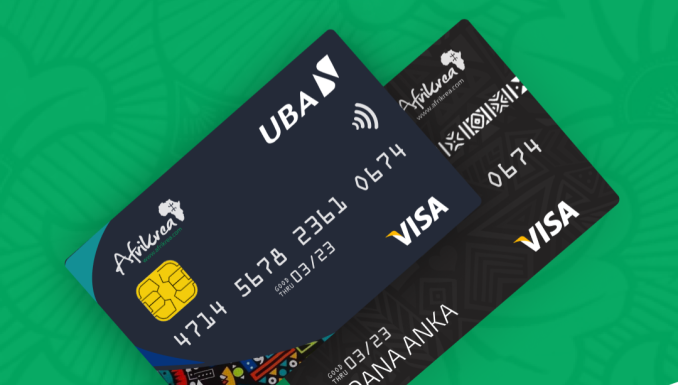
Merchants can carry out payments and payouts via a wallet and an Afrikrea Visa card. The platform, which costs $12, allows customers to perform mobile money and mobile banking transactions with MPesa, Orange, MTN and PayPal

Shipping completes the entire sales life cycle, from the point of sale to receipt of goods. In 2019, Afrikrea partnered with global logistics partner DHL to offer shipping services to its customers.

Fashion is ANKA’s best-selling category because of its affiliation with Afrikrea. The African fashion and apparel market is worth $31billion, per Euromonitor, and Afrikrea estimates the yearly spend of its major markets to be worth $12.5 billion. A breakdown from the company puts “the African diaspora in Europe at $1 billion, those in America and the Caribbean at $9 billion and non-Africans with links to the continent at $2.5 billion.”

But in terms of general e-commerce activities on the continent, McKinsey & Company pegs consumer spending to reach $2.1 trillion by 2025. African e-commerce is also expected to account for up to 10% of retail sales.

Platforms like Jumia, Mall4Africa and Takealot have been at the forefront of this growth over this past decade. MallforAfrica struck a partnership with DHL in 2015, then launched DHL Africa eShop with the logistics giant four years later. More than 200 sellers from the U.S. and U.K. serve African consumers in more than 30 countries on the platform.

Unlike MallforAfrica and other e-commerce platforms, ANKA differentiates itself as a platform for export rather than import, specifically for African products. According to Moulaye, ANKA is currently the largest e-commerce exporter on the continent, and since its partnership with DHL, it has shipped more than 10 tons of cargo monthly from Africa

“We are the biggest client of DHL exporting from Africa. We ship 10 tons every month and have sellers in 47 African countries, with Kenya and Nigeria as our largest markets. We have something African that is going to a global scale. That’s one of the angles we had with Afrikrea, and we want to keep that with ANKA. What sets us apart is that we’re not just trying to solve a purely African problem; we want to solve a global problem for Africans.”

Since launching five years ago, Afrikrea, which Taboure launched with Luc B. Perussault Diallo and Kadry Diallo, has raised a total of $2.1 million per Crunchbase. In this period, the company has seen its revenue grow 5x and claims to have ARR more than it has raised in its lifetime. To continue its growth efforts, Afrikrea is in the process of concluding a Series A round later this year.

News: Greece’s Viva Wallet raises $80M for its neo-bank targeting small business merchants

Challenger banks continue to make significant waves in the world of finance, with smaller outfits luring customers away from incumbents by providing an easier way for them to not only engage with basic banking services, but to tap into a wave of technology that brings more personalization and often better deals into the equation. In

Challenger banks continue to make significant waves in the world of finance, with smaller outfits luring customers away from incumbents by providing an easier way for them to not only engage with basic banking services, but to tap into a wave of technology that brings more personalization and often better deals into the equation. In the latest development, Viva Wallet, a Greek startup building banking services aimed at small and medium merchants, has picked up financing of $80 million, money that it will be using to expand its footprint and the services that it is offering to users, in particular expanding its Merchant Advance loans business.

The company is already live in 23 European markets and plans soon to expand that to Croatia, Hungary and Sweden.

The funding is notable in part because of who is doing the investing. Tencent — the Chinese technology giant behind Wechat that is also making major inroads into financial services — is in the round, alongside the European Bank for Reconstruction and Development (EBRD) and Breyer Capital.

Viva Wallet is not disclosing its valuation right now, but Yannis Larios, the company’s VP of strategy and business development, confirmed to us that it’s in the middle of closing a large Series D — last August sized at €500 million ($603 million) — that will value it at €1.5 billion ($1.8 billion). This is a big leap: he also noted that when Viva Wallet closed its Series C in the second half of 2019, it was valued at €305 million.

When it closes, the Series D will be used, according to a report in Reuters, to help Viva Wallet build out a new kind of loan book around its Merchant Advances and other loans that it provides to customers. Essentially, if approved by regulators, investors would get stakes in a new legal entity, a special purpose vehicle, that will hold the loans. This is not typically how debt from loans is handled by neo-banks, but it seems that the logic is that it could give the startups more agility to scale faster by removing some of the risk from its balance sheet. (The downside: potentially less accountability around those loans?)

The round is notable for coming at a time when Europe is slowly, hopefully poking its head out from under the weight of the Covid-19 pandemic, which has shaken and knocked over many an economy already wobbling even before the public health crisis. Focused primarily on merchants, Viva Wallet is a prime example of the kind of tech business that might help some of these critical businesses recover.

“We are excited to onboard Tencent, EBRD and Breyer Capital to Viva Wallet,” said Haris Karonis, Founder and CEO of Viva Wallet, in a statement. “We are confident that our investors’ extensive know-how and network of partnerships will accelerate Viva Wallet’s plan to unify the fragmented European payments market. The technology innovations that we are bringing forward to European merchants will help them provide a frictionless, localised payment experience to all their clients, and liberate them from the hassle of maintaining legacy card terminals.”

If you think that the world of neo-banks is very crowded — and that specifically neo-banks focussed on the SMB opportunity is also getting crowded (some of the other contenders include Finom, Wise out of the US, Monzo, Penta, Starling, and ANNA among many others)– one reason why Viva Wallet is getting some attention is because of its traction and track record so far.

Larios says that the startup has been profitable as of Q1 of this year, on the back of a business that has grown by more than 40% in the last year, with 60,000 merchants currently active on its books. It’s on track, he said, for that number to be 100,000 by the end of this year.

One reason for its success, he said, is that it’s taken a very localized approach to growth, setting up operations with physical branches in each of the countries where it is active — somewhat of a retro idea in today’s market where banks are regularly shutting down their brick-and-mortar locations and going virtual. “Viva Wallet is proving the resilience of its business model,” he said.

The funding will be used in part to build out its loans program but also to expand areas where Viva Wallet is already strong. One of these is its point of sale Tap-On-Phone solution, which turns any Android device (smartphone, tablet or enterprise device) into a card terminal, to accept both contactless and PIN payments without the need for separate hardware. (Most POS systems use small, separate terminals that will connect to a tablet or phone.)

He also said there will be some M&A in the future to expand to more markets more quickly.

One area where the company will not expand is into the consumer space. Other neo-banks like Revolut and Atom have leveraged their traction with younger consumers to move into providing services for the enterprises that they found, but Larios that that is not a strategy that Viva Wallet will take in the reverse, not least because the consumer market has so far proven to be a tough-margin (or even bad-margin) game.

“Viva Wallet focuses on businesses only and will continue to do so!” he said (exclamation his!). “The consumer segment is not providing any space for profitability and we are seeing that all competing neo-bank business models focusing on consumers are mostly burning money away.

“We are focusing on the SMEs of Europe, providing a pan-European payments solution which however is very much localized to address merchants’ true local needs in terms of local payments acceptance, local IBAN accounts, local BIN business debit cards etc.” But while Viva Wallet may have a lot of SMB customers — and the EBRD investment is definitely being made to endorse that — he points out that it also includes medium businesses and some enterprises — larger merchants like supermarket chains, for example — and that will be an area it will continue to expand in.

This gives Viva Wallet enough specialization and differentiation, alongside its profitability in targeting those areas so far, to bring in the big name investors keen to tap into economic recovery, both to help that along and to ride the wave of that as it pays dividends.

“We are very excited to help Viva Wallet unify the fragmented European payments ecosystem across 23 countries. Viva Wallet is at the forefront of a paradigm shift for fintech and together, we expect to transform the payments industry in Europe” said Jim Breyer of Breyer Capital, in a statement.

“Tencent shares Viva Wallet’s aspirations of creating value for users and partners through innovation. We look forward to supporting Viva Wallet in its expansion across Europe,” added Danying Ma, MD of Tencent Investment.

News: Barkyn, a wellness startups for pets in Southern Europe, hits an $9.6M Series A round

Barkyn, a European subscription service for pets that combines food with tele-vet services, has raised a further €3 milion ($3.6M) from FoodTech investor Five Seasons Ventures, extending its previous Series A to €8M, and total funds raised to date to €10M. Five Seasons Ventures joins previous investors Indico Capital Partners, All Iron Ventures, Portugal Ventures

Barkyn, a European subscription service for pets that combines food with tele-vet services, has raised a further €3 milion ($3.6M) from FoodTech investor Five Seasons Ventures, extending its previous Series A to €8M, and total funds raised to date to €10M. Five Seasons Ventures joins previous investors Indico Capital Partners, All Iron Ventures, Portugal Ventures and Shilling Capital. Barkyn is in the same space as Tails, acquired by Nestlé, and Butternut Box from the UK which has raised $28M.

Launched in 2017, the Portuguese startup currently serves customers in Portugal, Spain and Italy, and is aiming to be a key ‘pet wellness’ brand for Southern Europe.

Barkyn says its subscription service offers “healthy food using fresh meat” plus a dedicated remote online veterinarian. It says personalizing the food to match the dog’s nutritional needs is part of its attraction for customers. It has also created the ‘Barkyn Complex’, a trademarked anti-inflammatory supplement for pets, plus a pet insurance product to its customers in Portugal.

André Jordão, Barkyn’s CEO and Co-Founder said in a statement: “There is no one-size-fits-all when it comes to nutrition and what the body needs, and we solve this based on our knowledge, existing products and continued research and development.”

Barkyn is pushing at an open door. It’s widely acknowledged that during the pandemic, pet ownership has gone up across the world as people fought the lockdown blues.

In 2020 Barkyn says it experienced 40 percent growth each quarter across Southern Europe. 

Commenting on the investment in Barkyn, Five Seasons’ Founding Partner Niccolo Manzoni said: “Barkyn is a unique company within Southern Europe, where the region has higher levels of pet ownership but no inspiring digital pet wellness brands. Combining personalized food with tele-vet services and, in the case of Portugal, insurance, gives customers one destination for the well-being of their pets.”

Speaking to TechCrunch, Jordão said the startup had a shot at over-taking existing pet food brands because it’s “rethinking what the pet market should look like, through technology – building a pet care service and not only a pet food subscription. We’ve developed a 360 holistic experience: a subscription that aligns the best food you could ever give your dog with telemedicine. We’re able to secure a very close relationship while scaling the model.”

WordPress Image Lightbox Plugin