Yearly Archives: 2021

News: Peer into the eyes of Cyberdog

When someone mentioned to me that Xiaomi was launching its own “robot dog,” my mind immediately went to Sony’s Aibo. And honestly, it would have been difficult to be more wrong. Now that the news has been out for a few days, the company’s heard all of your bad Black Mirror jokes, don’t worry. And,

When someone mentioned to me that Xiaomi was launching its own “robot dog,” my mind immediately went to Sony’s Aibo. And honestly, it would have been difficult to be more wrong. Now that the news has been out for a few days, the company’s heard all of your bad Black Mirror jokes, don’t worry.

And, honestly, the Chinese hardware maker didn’t do itself any favors with the design here. Boston Dynamics has done a lot to imbue its quadrupedal robots with personality, through design language and viral videos of Spot and company busting a move to the Dirty Dancing soundtrack.

With Cyberdog, however, Xiaomi’s design team clearly just leaned in and went full-on Robocop (and the Bladerunner pastiche doesn’t help) . I receive a deluge of Metalhead gifs every time I post something about Boston Dynamics — seriously, I’m using Cyberdog as the lead image on this post, just so you can see what I mean. Go check the replies on Twitter. I’ll wait.

Image Credits: Xiaomi

Xiaomi is, of course, far from the first company to release a Spot-like quadrupedal robot. There are a number of companies competing in that space, including ANYmal and Ghost Robotics. For its part, Xiaomi is looking to put a developer spin on the category. Per the Mi blog:

CyberDog is Xiaomi’s first foray into quadruped robotics for the open source community and developers worldwide. Robotics enthusiasts interested in CyberDog can compete or co-create with other like-minded Xiaomi Fans, together propelling the development and potential of quadruped robots.

Image Credits: Xiaomi

The robot is powered by Nvidia’s Jetson Xavier NX platform, coupled with 11-built in sensors, including cameras, touch, GPS and more. The company will be release 1,000 of the robots, price at roughly $1,540 — a fraction of the cost of the advanced Spot system. The robot is also a fraction of the size of Boston Dynamics’ quadruped. And while there are superficial similarities the project really couldn’t be more different.

Xiaomi’s entry into robotics is more about building hardware for Nvidia’s platform. It’s a (relatively) inexpensive way for people to get a hang of programming and, perhaps, protoyping robotics. The likely limited functionality — and availability — are pretty clear indications that that the company’s not trying to put a Cyberdog in every home just yet.

Bear Flag Robotics

A sizable acquisition this week, John Deere announced plans to buy Bear Flag Robotics for $250 million. We’ve been following Bear Flag since it was a member of the YC cohort. The deal seems like a good outcome for both parties. Bear Flag gets a lot of resources from an agricultural giant like John Deere and Deere gets to step another foot into the world of cutting-edge tech with an autonomous tractor startup.

Says co-founder and CEO Igino Cafiero:

One of the biggest challenges farmers face today is the availability of skilled labor to execute time-sensitive operations that impact farming outcomes. Autonomy offers a safe and productive alternative to address that challenge head on. Bear Flag’s mission to increase global food production and reduce the cost of growing food through machine automation is aligned with Deere’s and we’re excited to join the Deere team to bring autonomy to more farms.
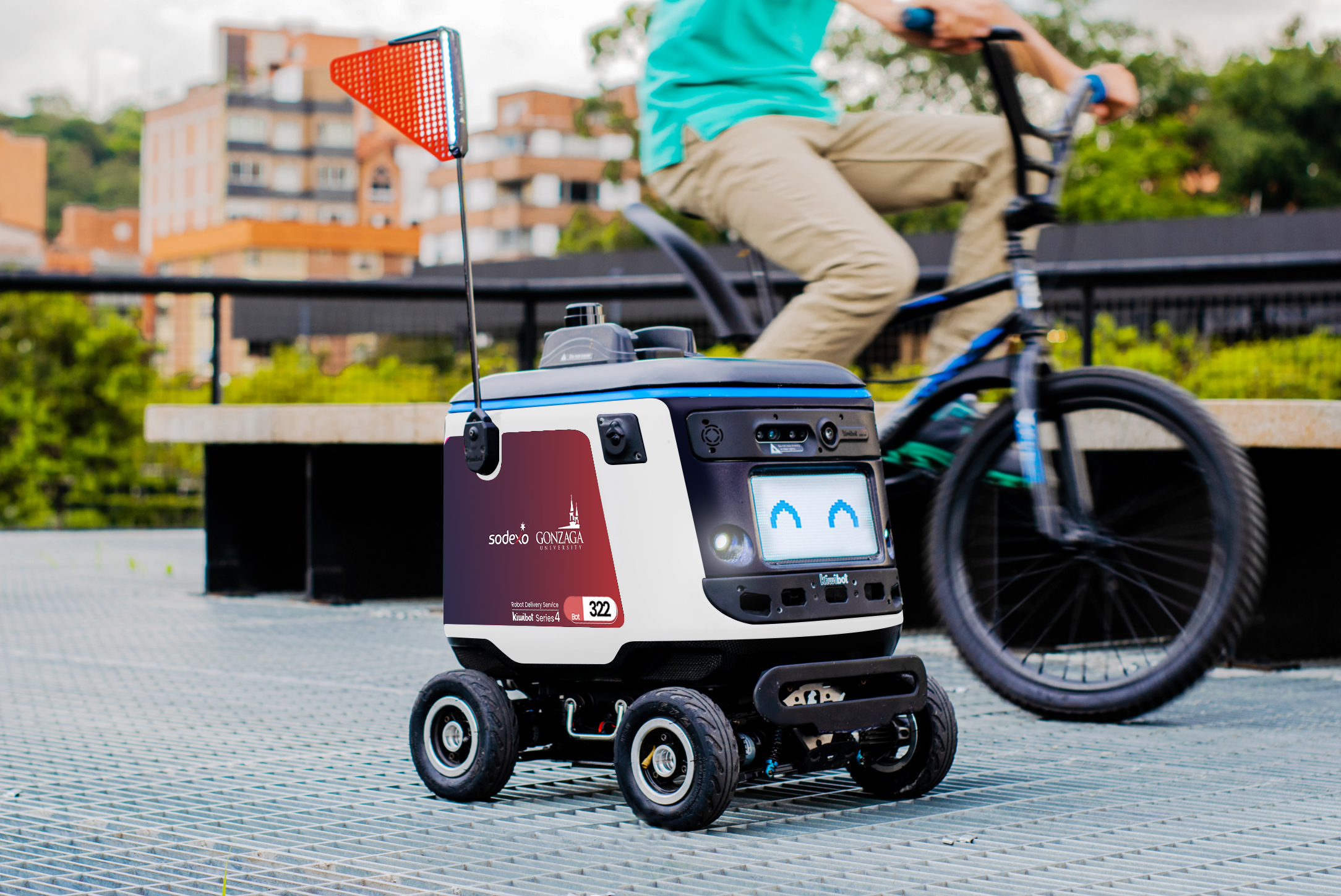
Image Credits: Kiwibot

Another startup we’ve been following since its early days, Kiwibot is seeing expansion to a significant number of campuses. In spite of campus shutdowns last year, the Berkeley-based company is actually seeing something of a boom due to the pandemic. COO Diego Varela Prada tells TechCrunch:

We have a procedure to disinfect the bots between orders. If you’re a student and you don’t want to mix into large crowds, I think it’s much safer to order food through Kiwibot and have it delivered to the library or your dorm.

We’ve written about Lidar company Aeva a few times over the years, including last November, when it announced plans to go public via SPAC. This week, the company announced a deal with Nikon that takes it beyond its existing automotive applications. The company says there are a slew of potential applications, though the chip is still about four years away from production. Fields include, “consumer electronics, consumer health, industrial robotics, and security.”

A whole bunch of robots are making their way to Florida late next year, courtesy of Amazon. The company announced this week that it has chosen Tallahassee (birthplace of T-Pain and objectively the best Mountain Goats album) as the home of its next fulfillment center. The company plans to add to its massive arm of warehouse robots for the 630,000-square-foot space, along with 1,000 human jobs.
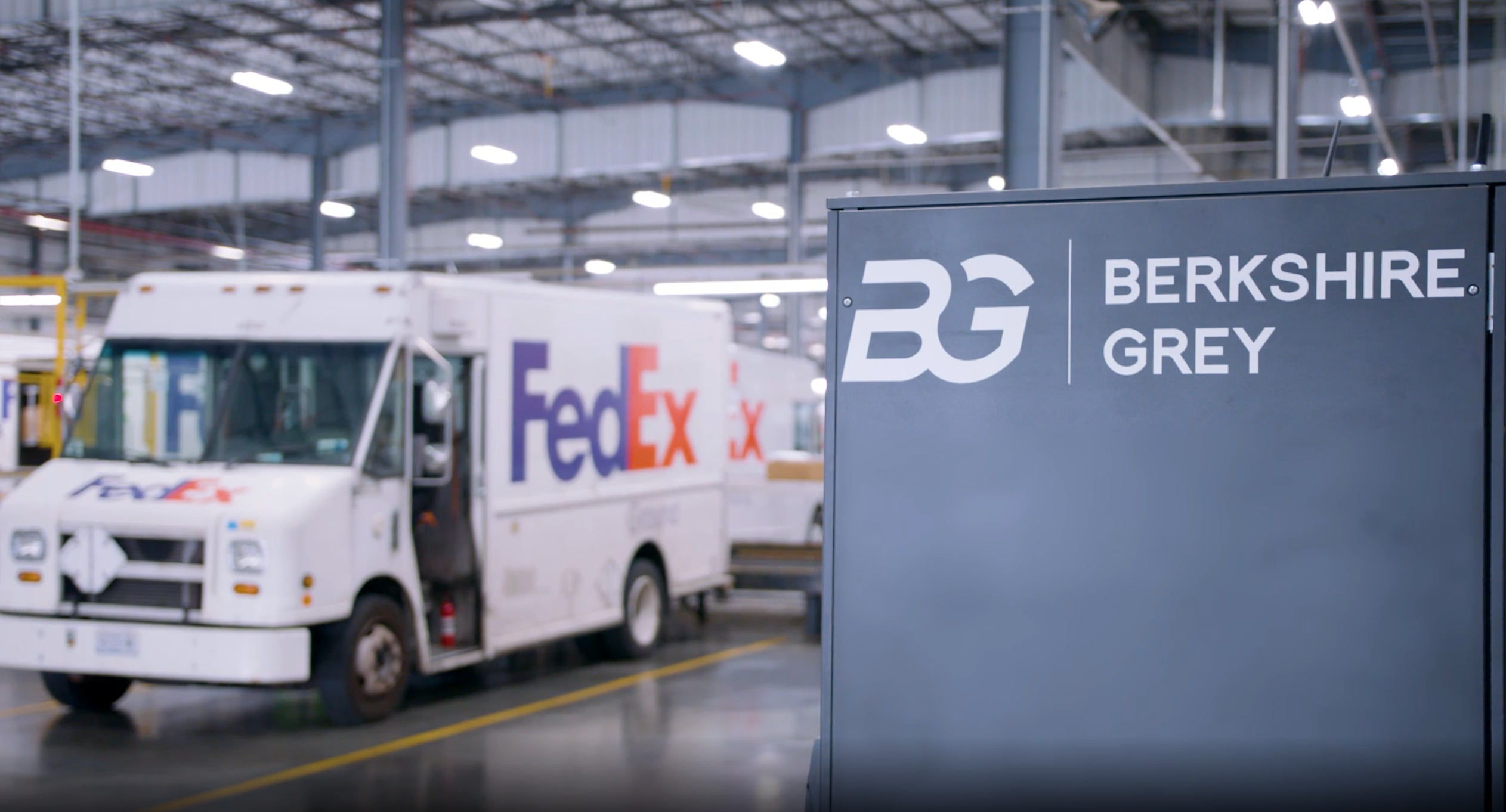
Image Credits: Berkshire Grey

FedEx, meanwhile, has implemented Berkshire Grey robotics at a shipping facility in Queens (the best borough). The systems will identity, pick, sort, collected and containerize primarily small packages like polybags, tubes and padded mailers. The systems are set to roll out to additional locations, including Las Vegas and Columbus, Ohio. Says B.G.,

This technology has been developed and installed as a direct response to the exponential growth of e-commerce, which has accelerated the demand for reliable automated solutions throughout all stages of the supply chain. FedEx Ground believes that continued innovation and automation will improve safety, efficiency, and productivity for its team members as they continue to keep the e-commerce supply chain moving.
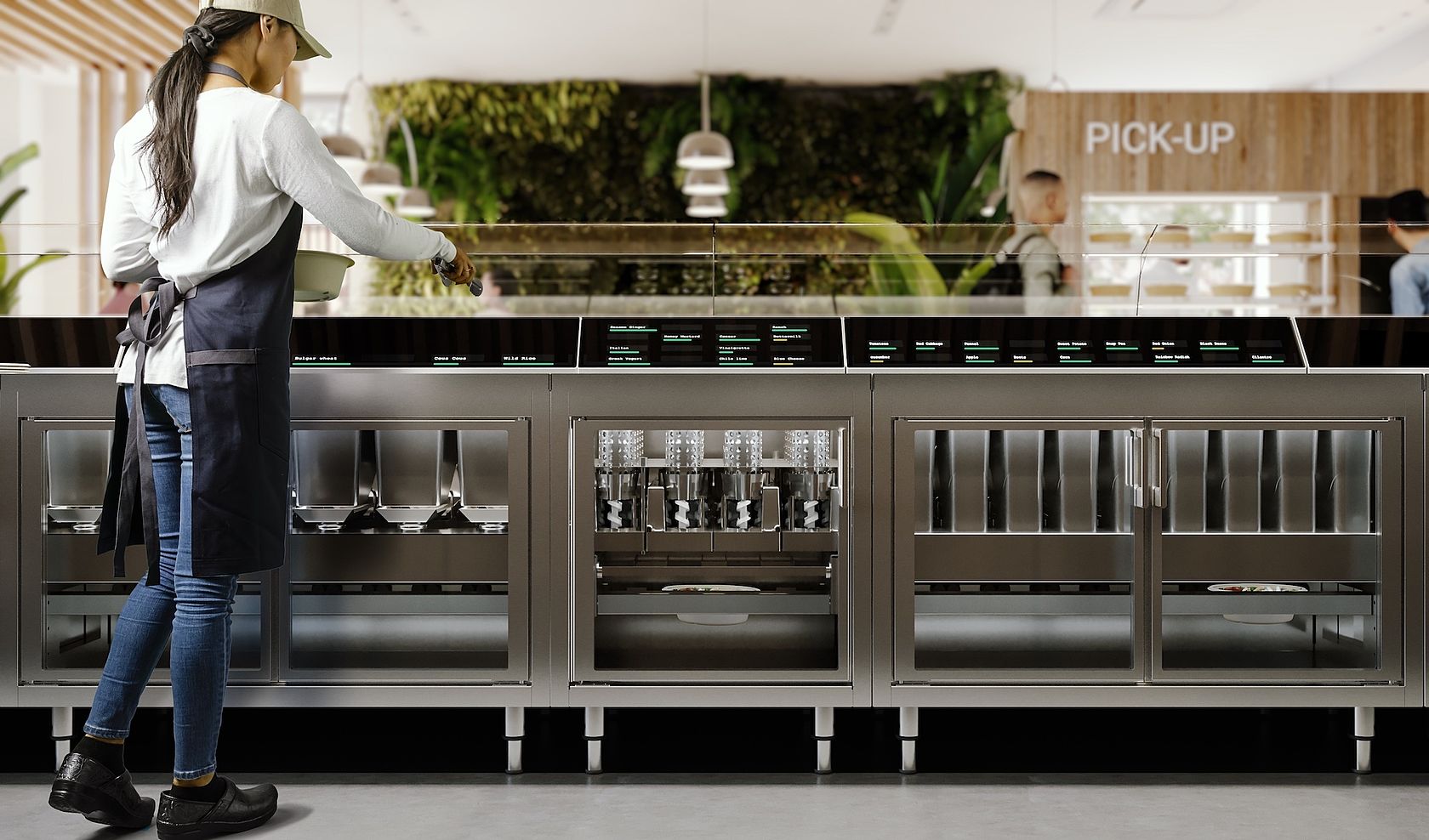
Image Credits: Hyphen

Here’s a new company in the food space worth keeping an eye on. Formerly known as Ono Food Co. (then a food truck company), SF-based Hyphen has come out of stealth with the announcement of its Makeline automated meal platform. The company says the system is able to create up to 350 meals an hour, with the aid of a single staff member.

“[W]e really see ourselves like Shopify,” CEO Stephen Klein said in a release, “but instead of enabling merchants to compete with the likes of Amazon, we’re enabling restaurants to compete with the likes of DoorDash as well as other services and ghost kitchens that have decided to compete with their own customers by offering their own food brands.”

The platform is set to start rolling out this winter with plans for 300 locations in New York City, San Francisco, Los Angeles, Seattle and Phoenix.

News: Affordable student passes available for TC Sessions: SaaS 2021

If you’re a current student or a recent grad with a burning passion for data, software and artificial intelligence, we want you to join us on October 27 for TC Sessions: SaaS 2021. The software-as-a-service sector keeps growing rapidly — both in size and sophistication, and it’s going to require a deep bench of thinkers,

If you’re a current student or a recent grad with a burning passion for data, software and artificial intelligence, we want you to join us on October 27 for TC Sessions: SaaS 2021. The software-as-a-service sector keeps growing rapidly — both in size and sophistication, and it’s going to require a deep bench of thinkers, makers and technologists to create and wrangle a data-driven future.

We want to foster the next generation, and we’ve set aside discounted, budget-friendly passes especially for students. Register for your $35 student pass and get ready to meet, network with and learn from the global SaaS community’s most influential founders, makers and investors.

Your student pass provides full access to all the day’s events — main stage presentations, panel discussions, breakout sessions and networking with CrunchMatch. Video-on-demand takes care of any schedule conflicts — you don’t have to miss a single presentation.

A quick word about networking at TC Sessions: SaaS. Whether you’re hunting for internships, employment, mentorship, a co-founder or investors, you won’t find a better place or opportunity to meet the people who can help you launch your dreams.

Deal Sweetener: Your pass includes a free, one-month subscription to Extra Crunch, our members-only program featuring exclusive daily articles for founders and startup teams.

While we’re not quite ready to reveal the full agenda, we can share some of the speakers we have lined up. And (not-so-humble-brag) what a group it is so far.

We’re talking folks like investors Casey Aylward (Costanoa Ventures) and Sarah Guo (Greylock), Databricks’ Ali Ghodsi, Javier Soltero, Google’s head of Workspace, UiPath’s Daniel Dines, Puppet’s Abby Kearns and Monte Carlo co-founder, CEO and data junkie extraordinaire, Barr Moses.

Who would you love to hear from at TC Sessions: SaaS? The TechCrunch editorial team is accepting recommendations for speakers. Submit your recommendations here no later than 11:59 pm (PT) on September 29.

Register here for updates and keep your fingers on the pulse of this event as we announce new speakers, events and ticket discounts.

TC Sessions: SaaS 2021 takes place on October 27. Jump on this student discount, join the global SaaS community and take advantage of every opportunity.

Is your company interested in sponsoring or exhibiting at TC Sessions: SaaS 2021? Contact our sponsorship sales team by filling out this form.

News: Arrival is on-track to begin production of its electric bus and van next year

Executives from London-based commercial EV company Arrival told investors Thursday the company was on track to meet planned product launch dates, but much will depend on whether or not the company can fulfill orders and turn letters of intent into sales – especially a crucial van order with UPS, which could bring in upwards of

Executives from London-based commercial EV company Arrival told investors Thursday the company was on track to meet planned product launch dates, but much will depend on whether or not the company can fulfill orders and turn letters of intent into sales – especially a crucial van order with UPS, which could bring in upwards of $1 billion in revenue.

The company’s non-binding orders and letters of intent total 59,000 vehicles – a number that includes an agreement with UPS to purchase up to 10,000 vehicles across the U.S. and Europe, and an option in the agreement for an additional 10,000 vehicles. If the logistics giant opts to purchase all 20,000 vehicles, the deal could be worth over $1 billion, the company told investors last year.

The 59,000 figure also includes two sales that have come in since the close of last quarter: an agreement with car leasing company Leaseplan for 3,000 vehicles, which is expected to be completed in the third quarter, and a five-bus order from Anaheim, California’s public transportation network.

The ccompany’s earnings report contains an important asterisk toward the end: “All references to orders and LOIs are non-binding and subject to cancellation or modification at any time.” And there are a number of steps the company must complete before we start to see its vans and buses on the road, including public road trials, completed prototype builds and production certification.

Despite the to-do list, Arrival executives said the Arrival Bus will commence trial productions in the UK at the end of this year, with a planned start of production at the company’s South Carolina microfactory by the second quarter of 2022. The first Arrival Vans will be built in the UK by the third quarter of next year.

Arrival President Avinash Rugoobur also said the company has decided to open a product development R&D center in India, where it has seen an increase in “potential” orders.

“I think the Indian market is extremely important,” Arrival CEO Denis Sverdlov added. “It’s a very market unique in terms of size. Pricing for the product and the certification for the product is very much different than what we’re used to seeing in Europe or the United States. For us it’s an extremely important step because this enables us to create vehicles which can be successful in countries like in Asia and India and so on, so for us it’s a big, big step.”

A different manufacturing approach

Arrival, whose investors include Hyundai Motor Company and Kia Motors Corporation, wants to take what it pitches as a new approach to auto manufacturing. Instead of building a large, centralized factory, it aims to build commercial EVs in scalable, more capex-light regional microfactories – and it wants to open 31 by 2024. Arrival’s factories use autonomous mobile robots, or AMRs, which the company develops in-house. The robots were designed to operate autonomously and run on a single AMR software.

The company already has plans for two microfactories in the U.S.: one in West Charlotte, North Carolina, and a factory in Rock Hill, South Carolina. The company also has a microfactory in Bicester, UK, which the company said has already produced over 500 composite panels.

Construction on the North Carolina site is due to be complete in October this year, with production commencing in the fourth quarter of next year. The EVs built at that location will eventually end up in UPS’s North American fleet.

Like other new EV makers, the company still has no revenue yet to speak of and its earnings report reflects the expenses associated with bringing a new vehicle to market. Arrival reported an EBITDA loss of €29 million ($34 million). Its adjusted EBITDA loss was €35 million ($41 million) which widened from the first quarter’s loss of €27 million ($31 million).

Capex came to €65 million ($76 million), primarily due to the costs of staff working on product development and other costs related to factory equipment. The company anticipates spending between €175 million to €225 million ($205 million to $264 million) on capex in the remainder of the year, versus €106 million ($124 million) for the first half of the year. The increase is due to expenses from the Bicester, UK microfactory being brought forward into this year, as well as planned openings of other factories in South Carolina and one-off tooling costs.

The company is completing the quarter with €445 million ($522 million) in cash.

Since the first quarter, Arrival has announced a number of partnerships, including with Microsoft for an open software platform, Hitatchi and STMicroelectronics. It also counts LG Chem as its battery cell supplier.

The company, founded in 2015, joined a suite of other transportation startups when it merged with a blank-check firm in March. That transaction, with CIIG Merger Corp., had an implied enterprise value of $5.4 billion and injected the company with around $660 million in cash. The company’s also growing fast: it now has over 2,200 full-time employees, versus 1,300 in December 2020.

Its shares soared to $37.18 apiece in December. Today, the share price opened at $12.80. The company trades on the NASDAQ under the ticker symbol “ARVL.”

News: WhatsApp and other social media platforms restricted in Zambia amidst ongoing elections

Several users from Zambia have taken to Twitter informing the general public that WhatsApp has been restricted in the country amidst ongoing general elections holding today. The president and parliamentary elections culminate in a face-off between current President Edgar Lungu and opposition Hakainde Hichilema. Internet monitoring organization Netblocks further corroborated these reports adding that multiple

Several users from Zambia have taken to Twitter informing the general public that WhatsApp has been restricted in the country amidst ongoing general elections holding today.

The president and parliamentary elections culminate in a face-off between current President Edgar Lungu and opposition Hakainde Hichilema.

Internet monitoring organization Netblocks further corroborated these reports adding that multiple internet providers in Zambia had restricted access to the American social messaging platform. Some of these networks include Zambian government-owned Zamtel, Airtel Zambia, Liquid Telecom, and MTN.

⚠ Confirmed: WhatsApp messaging app restricted in #Zambia on election day; real-time network data show loss of service on multiple internet providers as polls get under way, corroborating widespread user reports; incident ongoing #ZambiaDecides2021

📰https://t.co/HZOMpYXdSX pic.twitter.com/9b2GZ87UHO

— NetBlocks (@netblocks) August 12, 2021

Just this week, reports circulated that the Zambian government had threatened to shut down the internet if Zambians “failed to use the cyberspace during this year’s election correctly.” The reports say the government intended to go through with its plans from Thursday, the polling day, till Sunday, when vote counts are expected to have ended.

However, the Zambian government, via its Information and Broadcasting Services Permanent Secretary, Amos Malupenga, came out to deny the reports, calling them ‘malicious.’ Nevertheless, he mentioned that the government would not tolerate abuse of the internet and if any mischief occurred, there would be no hesitation to take appropriate measures.

“The government, therefore, expects citizens to use the internet responsibly. But if some people choose to abuse the internet to mislead and misinform, the government will not hesitate to invoke relevant legal provisions to forestall any breakdown of law and order as the country passes through the election period,” Malupenga said.

Zambia isn’t the first African country to witness this during an election as social media restrictions and internet shutdowns are now a recurring theme for most African states.

Countries like Cameroon, Congo, Uganda, Tanzania, Guinea, Togo, Benin, Mali, Mauritania have faced social media restrictions and internet shutdowns during elections. A handful of others like Chad, Nigeria, and Ethiopia, on the other hand, have experienced similar restrictions for unrelating events.

Most governments argue that they carry out social media restrictions and internet shutdowns to maintain security during elections; however, it’s glaring to see the process as a means to curb the spread of vital information among voters and the media within and outside the country.

Today’s event shows that despite denying reports about an imminent internet shutdown, the Zambian government is heading in that direction by first cutting off WhatsApp. While writing on the WhatsApp restriction, Netblocks also reported that the Zambian government has proceeded to restrict other social media platforms, including Facebook, Instagram, Messenger, and Twitter.

Still, internet users in Zambia are now using VPN services to bypass the restrictions on WhatsApp and these other social media platforms. Yet, it remains to be seen if the government will enforce a full internet shutdown.

News: Pyka shows off its new electric passenger plane, the P3

Pyka appeared out of nowhere in 2019 with an unusual take on electric aircraft: a pilotless crop duster. The success of this first plane led the company to begin developing its next one, the P3: a 9-passenger craft with a totally unique propeller setup aimed at making regional flights cheaper and simpler. It could be

Pyka appeared out of nowhere in 2019 with an unusual take on electric aircraft: a pilotless crop duster. The success of this first plane led the company to begin developing its next one, the P3: a 9-passenger craft with a totally unique propeller setup aimed at making regional flights cheaper and simpler. It could be flying as soon as next year.

The company also has a new president in Dan Grossman, formerly of Zipcar, Ford, and Maven. The transportation sector DNA he brings could help Pyka create the networks and partnerships it needs to get off the ground in local air travel.

The P3 is intended to fly up to 200 nautical miles (about 230 of our lubber miles) at 155 knots, in other words doing the kind of hour-ish hops people opt for instead of a long drive. Currently these routes are served by larger, more expensive aircraft that often fly half-full, making the economics a bit squirrelly. But by Pyka’s estimate its smaller, much less expensive to operate aircraft will allow for more full flights per day between regional hubs.

“It’s mostly places where driving 150 miles is unfeasible,” said founder and CEO Michael Norcia. “The amount of money people spend driving these regional routes, it’s a staggering amount — billions of dollars, and they’re not happy about it.”

Existing small craft flights are prohibitively expensive, but Norcia thinks the P3 will be able to match bulk airfare rates while offering many more flights per day and more destinations.

The aircraft itself looks quite conventional, until you look closely… are those propellers on the fronts and backs of the wings?

CG render of Pyka's P3 plane on a runway with people getting into it.

Image Credits: Pyka

“It hasn’t been done before,” said Norcia. And it bears a brief explanation why.

Small planes like this need to change the pitch of their propellers from one configuration during takeoff and climbing to another during cruising, since a different angle is needed for each task. That means the whole engine has to tilt, which isn’t simple.

“In a normal aircraft, it makes sense to have this quite complex mechanism on your propeller in order to operate optimally over the whole range,” said Norcia. “Electric propulsion provides some opportunities to just massively simplify the aircraft. So all four of the propellers are fixed-pitch: the ones in front are pitched for takeoff and climb out, and the rear ones are for cruising.”

With a heavy, complex, expensive traditional engine, it would be silly to double the number just so you don’t have to tilt them during takeoff. But with light, simple, inexpensive electric engines, it makes perfect sense to do so, even if it looks unusual.

The front propellers are only active during take-off and climbing, and then the rear ones take over completely for cruise, and each folds away when not in use. It mechanically simplifies things — no heavy duty hinges and hydraulics — and in fact putting the prop back there seems to improve efficiency by about 10 percent, said Norcia. “It’s pretty cool,” he added. (And they’ve applied for a patent.)

The general size and shape of the P3 are familiar, however, and that’s not an accident.

CG render of Pyka's P3 plane on a runway with people getting into it.

Image Credits: Pyka

“We’re starting clean sheet,” Norcia said, as the unconventional prop setup attests, “but the approach to this aircraft was talking to customers and regulators and finding out what they want. The answer was resoundingly a nine passenger plane.”

This is partly because of regulatory requirements: planes with certain burdens and passenger counts fall under a simpler, more permissive regulatory regime, as do airlines that fly with less than 19 seats. Therefore the simplest path forwards seems to be a 9-passenger plane that makes big progress on efficiency and affordability while not reinventing the wheel.

Further expediting its transition from twinkle in the eye to actual flying machine is starting the P3 out as an unmanned cargo vehicle, essentially a drone for medium-size payloads. There’s a limited market for this (unmanned small aircraft can’t fly ordinary overland cargo routes) but it’s a way to put the P3 in the air legally and get the ball rolling with regulators before aiming for the more important passenger plane certification.

The Pyka P3 flying in the air.

Image Credits: Pyka

The goal is to have P3 in the air by the end of 2022, which is an extremely aggressive timeline for a brand new aircraft. But Pyka has already shipped two aircraft, the prototype Egret crop dusting craft and the production Pelican version.

“We started the company because we think electric aviation will fundamentally change the way we move for the better,” said Norcia. “It’s unprecedented times for electric aircraft, but most are taking pre-orders for aircraft that may get certified some time in the next decade. We just shipped two Pelicans in the last three months.”

Grossman said that was a major factor in his choice to join the company and help it scale: “They’re shipping right now, and planning on shipping one plane a month next year. They’ve been incredibly efficient with the money they’ve made.”

Of course, launching a new aircraft is an expensive endeavor, and Norcia said that they are in the middle of raising a big round to fund production scaling and to fly a full-sized P3. If all goes well the passenger version could be in the air as soon as 2025.

News: Crypto tax software provider TaxBit raises $130M at a $1.33B valuation

Just five months after raising a $100 million Series A, TaxBit announced today it has raised $130 million in a Series B round of funding. The latest financing officially makes the Salt Lake City, Utah-based provider of crypto tax and accounting software a unicorn, with a valuation of $1.33 billion. It also brings the startup’s

Just five months after raising a $100 million Series A, TaxBit announced today it has raised $130 million in a Series B round of funding.

The latest financing officially makes the Salt Lake City, Utah-based provider of crypto tax and accounting software a unicorn, with a valuation of $1.33 billion. It also brings the startup’s total raised to $230 million since brothers Austin and Justin Woodward founded the company with their cousin Brandon Woodward in 2017.

IVP and Insight Partners co-led the Series B, which also included participation from Tiger Global, Paradigm, 9Yards Capital, Sapphire Ventures, Madrona Venture Group and Anthony Pompliano

TaxBit connects digital asset transactions across exchanges so individuals and enterprises can more accurately file their taxes, manage their portfolios and make tax-optimized trades through its platform, explains CEO and co-founder Austin Woodward. Put simply, its software automates all aspects of cryptocurrency tax compliance. 

Since its early March raise, the company has tripled its headcount to about 100 people, launched an office in Seattle, deployed services with the IRS and inked partnerships with a number of digital asset platforms. For example, it’s connected to exchanges such as Coinbase, BlockFi and Gemini.

The digital economy’s need for tax and accounting software is growing with the industry as regulators require more formal reporting practices. As a result, TaxBit has seen impressive growth. In 2020, it issued over two million tax forms. This year, it is on track to issue over 50 million forms, according to Austin Woodward. 

“The digital asset space experienced a watershed moment during the pandemic, resulting in an accelerated push toward digital payments and alternative stores of value,” Austin Woodward told TechCrunch. “The momentum of adoption across the digital economy is quickly becoming the new normal among the traditional financial institutions and disruptors.”

Indeed, the crypto world can be a very complex one and TaxBit’s products, designed by CPAs and tax attorneys, provide tax filing and accounting services to not just financial institutions but also to individuals and governments so they can “more easily” navigate those digital complexities.  

Those products include Tax Center Suites, which was built for end users and automates back-office accounting functions for finance teams, and TaxBit Consumer, which aims to make filing taxes on digital asset investments “simple and painless, while equipping users with real-time directional insights to optimize their tax liability throughout the year.” 

The startup also works with governmental agencies, including the IRS, to provide data analysis and tax calculation support for taxpayers with digital assets. 

Dozens of financial institutions are integrating TaxBit’s Tax Center Suite technology, the latest being FTX US.

The company plans to use its new capital to scale its tax and accounting offerings across enterprise, consumer and government sectors. TaxBit also plans to double its headcount by year’s end and continue to open new offices in the U.S. and the United Kingdom. Long term, the company has plans for global expansion, with the U.K. “on the horizon and other jurisdictions to quickly follow,” Austin Woodward said.

Its investors are bullish on the company’s offerings, and potential.

Tom Loverro, general partner at IVP, believes TaxBit is in the right place at the right time. He’s taking a seat on the company’s board with the raise.

“Almost every company touching crypto needs tax reporting software. As we all saw with the recent legislation, crypto tax reporting obligations are only getting more rigorous,” he said. 

And crypto-native companies are not the only ones that need tax reporting. Every fintech and financial institution that is rolling out a crypto offering does too, Loverro added.

“And don’t forget about state and federal governments here in the U.S. and abroad,” he said. “Then there is the buy side, which includes both consumers and institutions. It’s a deceptively large and rapidly growing market.”

Loverro went on to say that a common refrain that he hears with regards to anything crypto is “Why can’t [incumbent] just add that as a feature?” 

As a former board observer for Coinbase, the investor can attest that crypto is “incredibly deep and complex.”

“Crypto requires intense dedication and focus. Calculating taxes on buying and selling a single lot of bitcoin may not be that complicated from a tax perspective but what about airdrops, staking and DeFi,” Loverro asked. “Things get pretty complex quickly!”

Nikhil Sachdev, managing partner at Insight Partners, points out that crypto is already a $1.5 trillion market and that is continually expanding as new asset classes begin transacting on blockchains. 

“Our current tax, accounting and ERP software infrastructure isn’t equipped to manage this shift, yet TaxBit has built a platform to help manage tax compliance financial reporting on crypto transactions across industries,” Sachdev said. “TaxBit is the only scaled B2B solution across crypto taxes and already won contracts with blue chip logos.”

News: Motivo raises $12M Series A to speed up chip design with AI

Chip design is a long slog of trial and error, taking years to bring a design to market. Motivo, a five year old startup from a chip industry veteran is creating software to speed up chip design from years to months using AI. Today the company announced a $12 million Series A. Intel Capital led

Chip design is a long slog of trial and error, taking years to bring a design to market. Motivo, a five year old startup from a chip industry veteran is creating software to speed up chip design from years to months using AI. Today the company announced a $12 million Series A.

Intel Capital led the round along with new investors Storm Ventures and Seraph Group, as well as participation from Inventus Capital. The company reports it has now raised a total of $20 million with its previous seed funding.

Motivo co-founder and CEO Bharath Rangarajan has worked in the chip industry for 30 years, and he saw a few fundamental trends and issues. For starters, the chip design process is highly time-intensive, taking years to come up with a successful candidate, and typically the first to market wins.

What’s more, Moore’s Law where you fit more and more electronics onto an increasingly powerful chip increases the complexity of these designs, and once in production, there is a lot of waste producing them. Rangarajan started the company to put artificial intelligence to work on the design process and bring chips to market faster with more accuracy in the production cycle.

“We can train an AI engine to bring about human judgment, and do a lot of design for manufacturability on the design without causing any other issue. So we avoid all these iteration loops [and we can also] design code and validation and timing and again we’re going from weeks and months to days,” he said.

The company’s ultimate goal is to take the chip design process and distill it down using software and intelligence from three years to three months, and while they are not there yet, they have started to attack the problem, and have a working product that looks at chip layout, the underlying RTL code that runs the chip and the netlist, which describes how the various pieces and electronics on the chip connect together.

One other differentiator is that the company is trying to make its AI transparent to explain why it made the decisions it did. “A lot of AI is just a black box. I don’t know why the self-driving car suddenly decided to swerve here. Our AI is understandable. We built the solution so that we can tell you why the AI is saying change the chip this way, or why it’s saying change it that way,” Rangarajan explained.

The company has paying customers. Although it can’t name them, there is probably a limited market for this kind of software, so you could make an educated guess that it’s the chip companies, especially with Intel Capital a lead investor on this round. At this point, the company has 15 employees, 12 of them being full time with plans to double or even triple over the next year, depending on how things go.

Hiring is always challenging for a company with a specific engineering focus like this one, but Rangarajan says that the team is already fairly diverse, and he is definitely looking at keeping that going as he builds the company. “We have to find the right people to join the company and you’re looking for any and all sorts of great people or backgrounds. […] In fact, the more the merrier as far as we’re concerned. We’ve got very experienced people who’ve grown up in the industry and we’ve still built up a fairly diverse team here,” he said.

For now, he plans to keep the office hybrid where people who want to come in can come in, but people who don’t want to like those with younger kids who aren’t vaccinated yet, can continue to work from home, he said. And that flexibility should continue even after offices open more completely.

News: Youreka Labs spins out with $8M to provide smart mobile assistant apps to field workers

The company is developing robotic smart mobile assistants that enable frontline workers to perform their jobs more safely and efficiently.

Mobile field service startup Youreka Labs Inc. raised an $8 million Series A round of funding co-led by Boulder Ventures and Grotech Ventures, with participation from Salesforce Ventures.

The Maryland-based company also officially announced its CEO — Bill Karpovich joined to lead the company after previously holding executive roles with General Motors and IBM Cloud & Watson Platform.

Youreka Labs spun out into its own company from parent company Synaptic Advisors, a cloud consulting business focused on the customer relationship management transformations using Salesforce and other artificial intelligence and automation technologies.

The company is developing robotic smart mobile assistants that enable frontline workers to perform their jobs more safely and efficiently. This includes things like guided procedures, smart forms and photo or video capture. Youreka is also embedded in existing Salesforce mobile applications like Field Service Mobile so that end-users only have to operate from one mobile app.

Youreka has identified four use cases so far: healthcare, manufacturing, energy and utilities and the public sector. Working with companies like Shell, P&G, Humana and the Transportation Security Administration, the company’s technology makes it possible for someone to share their knowledge and processes with their colleagues in the field, Karpovich told TechCrunch.

“In the case of healthcare, we are taking complex medical assessments from a doctor and pushing them out to nurses out in the field by gathering data into a simple mobile app and making it useful,” he added. “It allows nurses to do a great job without being doctors themselves.”

Karpovich said the company went after Series A dollars because it was “time for it to be on its own.” He was receiving inbound interest from investors, and the capital would enable the company to proceed more rapidly. Today, the company is focused on the Salesforce ecosystem, but that can evolve over time, he added.

The funding will be used to expand the company’s reach and products. He expects to double the team in the next six to 12 months across engineering to be able to expand the platform. Youreka boasts 100 customers today, and Karpovich would also like to invest in marketing to grow that base.

In addition to the use cases already identified, he sees additional potential in financial services and insurance, particularly for those assessing damage. The company is also concentrated in the United States, and Karpovich has plans to expand in the U.K. and Europe.

In 2020, the company grew 300%, which Karpovich attributes to the need of this kind of tool in field service. Youreka has a licensing model with charges per end user per month, along with an administrative license, for the people creating the apps, that also charges per user and per month pricing.

“There are 2.5 million jobs open today because companies can’t find people with the right skills,” he added. “We are making these jobs accessible. Some say that AI is doing away with jobs, but we are using AI to enhance jobs. If we can take 90% of the knowledge and give a digital assistant to less experienced people, you could open up so many opportunities.”


News: Wonder Brands picks up $20M, aims to build marketplace of Latin American e-commerce brands

E-commerce roll-up companies are big in the United States, and Wonder Brands wants to be that for Latin America.

E-commerce roll-up companies are big in the United States, and Wonder Brands wants to be that for Latin America.

The Mexico-based company closed on $20 million in seed funding, co-led by ALLVP and Mountain Nazca, with participation from CoVenture, Victory Park Capital, GFC, QED (Fontes), Korify Capital and Endeavor Catalyst.

Wonder Brands co-founders Nicolás Gonzalez Luna and Federico Malek came together to start the company in January 2021 to acquire digital brands in the MercadoLibre and Amazon ecosystem. It then leverages its technology to scale their operations and grow sales by taking care of the marketing, analytics, supply chain management and working capital needs of the companies. It focuses on companies in the areas of home and garden, sports and fitness, beauty and personal care.

“MercadoLibre has a larger share, but Amazon is entering the region quickly, so there is not one dominating marketplace. MercadoLibre may have half the market, but then it is more balanced between a number of different platforms,” Gonzalez Luna told TechCrunch. “That diversification means operations here are more complex than the classic Amazon seller. Negotiations take longer and require more discussion about who you are to get the trust in you. That’s why we will be doing fewer, but larger deals than our U.S. counterparts.”

Malek’s background is on the commerce side, having worked at Argentinian insurtech company iunigo.com before founding e-commerce fulfillment company Avenida.com, which was acquired by Groupon in 2010. He then worked as Groupon’s managing director in the region. He knew Gonzalez Luna, whose background includes Goldman Sachs where he focused on M&A.

Michael Breitstein, principal at CoVenture, said his firm has made a variety of investments on the debt and equity sides of e-commerce and believes Malek and Gonzalez Luna provide a “great one-two punch” with their backgrounds, as well as the ability to raise capital and build out a platform.

Though there is a lot of competition to acquire digitally native companies in the $1 million revenue range, Malek said Wonder Brands will focus on larger sellers and operators, with a deal target of at least $5 million in revenue. They are also taking a “buy and build” approach rather than the “buy and consolidate” business model many of the other roll-up companies have, he added.

With its approach, the company’s goal is to enable its acquired companies to sell on multiple channels. It provides support in four areas: category management and brand development, marketing and performance, technology to automate processes like inventory and logistics and operations to manage all of the channels needed. For example, in Latin America, inventory has to be consolidated into one warehouse, but then separated depending on the sales channel, Malek.

Acquiring and scaling companies is big business. London-based Hahnbeck Business Systems, an e-commerce M&A firm that tracks funding to FBA (fulfillment by Amazon) acquirers all over the world, reports that e-commerce roll-up companies raised $7.24 billion in disclosed funding to date.

According to the different sources, reports say Latin American e-commerce company MercadoLibre has a market cap of between $70 billion and $94.billion. Meanwhile, marketplace merchants accounted for 55% of units sold on Amazon.com, according to the retailer. In 2020, that accounted for $300 billion in sales, according to Marketplace Pulse estimates based on Amazon disclosures.

The seed financing enables Wonder Brands to invest in building a team to focus on the four support areas and marketing. The company has 20 employees currently and plans to triple that in the next month. The funding is also complementing larger debt facilities that the company has available to acquire brands. Its target is to make six or seven acquisitions this year.

The company is on target to achieve $55 million in revenue by the end of the year and will then move toward $100 million in revenue in the next 12 months, Malek said. It currently operates in Mexico and plans to begin operations in Brazil by the end of 2021.


News: Plex’s new feature matches your ‘sonically similar’ music to make playlists

Last year, media software maker Plex released Plexamp, a subscriber-only music app whose name was a nod to the classic Winamp player it aimed to replace. Today, the company is upgrading the app with a new feature called Super Sonic, which offers new ways to mix up your playlists — including by matching songs that

Last year, media software maker Plex released Plexamp, a subscriber-only music app whose name was a nod to the classic Winamp player it aimed to replace. Today, the company is upgrading the app with a new feature called Super Sonic, which offers new ways to mix up your playlists — including by matching songs that are “sonically” similar, instead of by metadata alone — like matching based on musical genre, for example.

The company explains that Super Sonic is designed to use the music’s sound to understand how different tracks relate to one another in your library. This is a different way of approaching a large music catalog and brings to mind something like Pandora’s Music Genome where songs are categorized based on attributes, like mood, tone, or beats per minute, among others.

But unlike the Music Genome, where trained musicologists analyze songs across hundreds of attributes, Super Sonic uses technology.

The new sonic analysis feature in Plexamp leverages a neural network and A.I. to map all the tracks, albums and artists in your library. Super Sonic extracts around 50 parameters from its analysis, which are then weighted appropriately. “Sonically similar” refers to two points in N-dimensional space being close to one another, Plex says.

The setup process for using the new feature is fairly CPU-intensive and can take hours or even days to complete, depending on your library’s size. However, once finished, you’ll be able to use a whole new set of features for discovering music. This can be particularly helpful in particular if you listen to a lot of indie or obscure music, where metadata may be limited or perhaps not available at all.

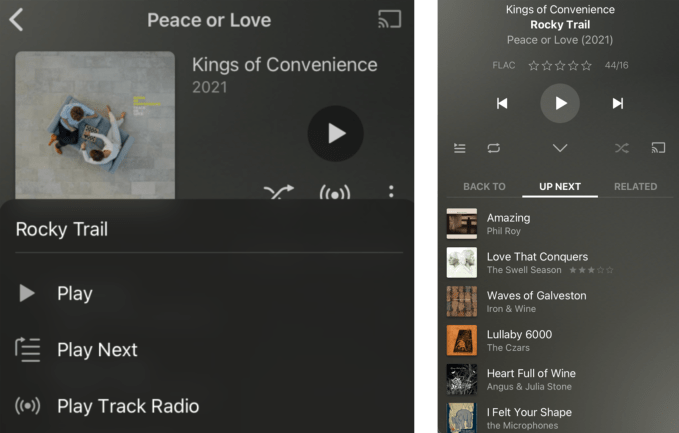
After the analysis is complete, a new “Related Tracks” feature will let you see which tracks you have that are sonically similar, which can sometimes lead to surprises that you wouldn’t have otherwise found if only matching on standard metadata.

Another addition, “Mixes for You,” will cluster the songs you’ve had on heavy rotation into mixes, but then add sonically similar tunes alongside your recent favorites. The server will also look back in time to make a few historical mixes based on past habits, too, so you have more to explore.

The company is also rolling out new radio features to address the removal of the popular Plex Mix feature a few years ago, after a metadata provider change. It now sees the new Sonic data as a way to replace the feature with Track Radio and Album Radio, which play either tracks or full albums that are sonically similar, respectively.

Other additions arriving alongside the Super Sonic launch include a new way to organize and filter albums by type (e.g. demos, live albums, etc.) and an “on this day” feature that reminds you of notable album milestones — like album releases that took place 20, 30 or 50 years ago.

Image Credits: Plex

To use the new sonic analysis feature, Plex users will need to be paid Plex Pass subscribers, and will need to be running Plex Media Server v1.24.0 on a macOS, Windows or Linux machine. ARM CPUs are not supported, however.

Image Credits: Plex

Plex has been working over the years towards making its subscription service more appealing to power users, who are a smaller part of the company’s some 25 million registered users. But the company is no longer fully dependent on subscriber revenue to remain profitable, as it’s expanded into the free, ad-supported streaming market and raised funding.

Today, Plex’s larger focus is on expanding the streaming business into areas like rentals, purchases and subscription content. But as Super Sonic proves, the team at Plex will continue to explore technology that will appeal to its core audience of digital media collectors and enthusiasts.

WordPress Image Lightbox Plugin