Monthly Archives: March 2021

News: ‘Flying taxi’ startup Volocopter picks up another $241M, says service is now two years out

In a year where mass transit on airplanes, trains and buses has had lower traveler numbers in the wake of the Covid-19 pandemic, one of the startups hoping to pioneer a totally new approach to getting individuals from A to B — flying taxis — has raised some significant funding. Volocopter, a startup out of

In a year where mass transit on airplanes, trains and buses has had lower traveler numbers in the wake of the Covid-19 pandemic, one of the startups hoping to pioneer a totally new approach to getting individuals from A to B — flying taxis — has raised some significant funding.

Volocopter, a startup out of southern Germany (Bruchsal, specifically) that has been building and testing electric VTOL (vertical take-off and landing) aircraft, has picked up €200 million (about $241 million) in a Series D round of funding. Alongside its aircraft, Volocopter has also been building a business case in which its vessels will be used in a taxi-style fleet in urban areas. CEO Florian Reuter tells us that live services are now two years out for the two vehicle models it has been developing.

“We are actually expecting to certify our VoloCity in around two years and start commercial air taxi operations right after,” he said. “Paris and Singapore are in pole position [as the first cities], where Paris wants to get have electric air taxis established for the 2024 Olympics. With our VoloDrone we expect first commercial flights even earlier than with our VoloCity.”

To date, Volocopter has shown off its craft in flights in Helsinki, Stuttgart, Dubai, and over Singapore’s Marina Bay. In addition to Europe and Asia, it also wants to launch services in the U.S..

For some context, this is basically on track with what the company had previously projected: in 2019 — when Volocopter raised an initial $55 million in funding for its Series C (finally closed out at €87 million, around $94 million) — the company said it was three years away from service.

This latest (oversubscribed) Series D includes investments from a mix of financial and strategic backers. Funds managed by BlackRock; global infrastructure company Atlantia S.p.A.; Avala Capital; automotive parts behemoth Continental AG; Japan’s NTT via its venture capital arm; Tokyo Century, a Japanese leasing company; multiple family offices are all new investors, among others. Volocopter also said that all of its existing investors — that list includes Geely, Daimler, DB Schenker, Intel Capital, btov Partners, Team Europe, and Klocke Holding and more — also contributed to the round.

If that sounds like a big list, it’s somewhat intentional, as the task of what Volocopter is complex and requires a wide ecosystem of other players, said Rene Griemens, the company’s CFO.

“Getting urban air mobility off the ground requires a full ecosystem that we are developing right now. Many of our strategic partners will support us on different aspects of the supply chain, scaling components, entering markets, improving operations amongst others. Most of them know certain aspects of our business model really well (eg. Japan Airlines for aviation, Atlantia for infrastructure),” he said. “Their investment is a reflection of their excitement about Volocopter as a leader in building the entire ecosystem of UAM, thereby giving credibility and comfort for purely financial investors.”

He added that many of these companies have a very “hands-on partnership” with Volocopter. “DB Schenker, for example, is rolling out leading-edge heavily-load electric logistics drones together with us around the globe.”

The company has now raised nearly $390 million. We’re asking for an updated valuation, but for some context, PitchBook data estimates its valuation now at $624 million.

Moonshots and sunsets

Founded in 2011, Volocopter has now been working on its idea — distinctive for its very wide circular design that sits where the rotor on a helicopter would be — for a whole decade, and in many regards it’s the classic idea of a moonshot in action.

It has yet to make any money, and the product that it’s building to do so is very groundbreaking — flying into completely unchartered territory, so to speak — and therefore ultimately untested.

It’s not the only one working on “flying taxi” concepts — there are other very well-capitalised companies like Lilum, Joby Aviation, Kitty Hawk and eHang.

However, all of these have faced various hurdles ranging from investor lawsuits to bankruptcies, accidents, mothballed projects and divestments (perhaps most notably, Joby scooped up Elevate last year as Uber stepped away from costly moonshots).

And most importantly, none of them are flying commercially yet. With Volocopter (as with the others), investors have taken a long-term bet here on a concept and a team it believes can deliver.

For now, the company says that technology is no longer the barrier, and neither it seems are regulators, who are, in the pandemic, more focused on considering new approaches to old problems to improve efficiency and acknowledge that we might have to do things a little differently from now on, in the wake of new demands from public health, and the public.

In the case of VTOL craft, the promise has always been that they could bypass a lot of the issues with street congestion in urban areas, and provide a more environmental alternative to gas-guzzling, present-day transportation modes.

The challenge, on the other hand, has been determining the safety both of completely new devices, and also of the traffic and other systems that they would operate under. With the idea being that ultimately these craft would be autonomous, that adds another complex twist.

Interestingly, regulators in different markets that might have been more skeptical of new concepts seem to be more open to considering them differently now with the pandemic at hand. This has played out in other arenas, too, such as the electric scooter market in the UK, which saw a bump in activity after regulators long skeptical gave them a provisional nod last year, citing the need for more individualized transportation options in a pandemic-hit country.

Volocopter’s model is based around transporting one person or small parties, so in a sense might be attractive here too.

“There aren’t any major hurdles anymore in terms of the technology as such,” said Retuer. “It is now all about execution. EASA has defined what is necessary to get electric air taxis certified to the highest safety level in aviation. We have the best technology in the market to certify to EASA’s high safety standards and will keep our heads down to finalize the few remaining steps to certification.”

In contrast, he said the other challenges that remain are those of any highly technical startup: “Our largest challenge right now is talent acquisition,” he said. “We are looking for the best talents worldwide and growing our team quickly now, so that we can accelerate on the technical and market development sides. Especially in the markets where we will open early routes, such as Paris, Singapore, China and Japan, we are going full speed in preparing everything necessary from digital infrastructure to landing sites, city approvals and more.”

News: Indonesian supply chain startup Advotics raises $2.75M led by East Ventures

The rapid growth of e-commerce in Indonesia, especially during the pandemic, is placing increasing demands on its supply chain infrastructure. But the country’s logistics industry is highly fragmented, with companies usually relying on multiple providers for one shipment, and many warehouses are still concentrated around major cities. Advotics wants to help with software to make

The rapid growth of e-commerce in Indonesia, especially during the pandemic, is placing increasing demands on its supply chain infrastructure. But the country’s logistics industry is highly fragmented, with companies usually relying on multiple providers for one shipment, and many warehouses are still concentrated around major cities. Advotics wants to help with software to make the whole supply chain easier to track, and recently closed a $2.75 million funding round led by East Ventures.

Founded in 2016 by Boris Sanjaya, Hendi Chandi and Jeffry Tani, Advotics currently counts more than 70 clients, ranging from individual resellers to large corporations like Exxonmobil, Danone, Reckitt Benckiser, Sampoerna, Kalbe and Mulia Group.

According to research institution Statistics Indonesia, there are about 5 million small and medium-sized manufacturers in Indonesia. They use a supply chain with 15 million small to mid-sized distributors and about 288,000 large distribution companies. This fragmentation means higher expenses, with Report Linker estimating that logistics costs range between 25% to 30% of Indonesia’s gross domestic product.

To help make logistics more efficient for its clients, Advotics offers SaaS solutions to monitor almost their entire supply and logistics chain, from warehouse inventory to generating delivery routes for drivers. It includes a product digitalization feature that uses QR codes to track products and prevent counterfeiting. The company’s new funding will be used to launch a online-to-offline system for SMEs and grow its sales team.

Advotics is among several tech startups that are taking different approaches to tackle Indonesia’s logistics infrastructure. For example, Shipper wants to give sellers access to “Amazon-level logistics,” while Logisly is focused on digitizing truck shipments. Waresix recently acquired Trukita to connect businesses to shippers and truck shipment platform Kargo’s backers include Uber co-founder Travis Kalanick.

News: Facebook’s Oversight Board already ‘a bit frustrated’ — and it hasn’t made a call on Trump ban yet

The Facebook Oversight Board (FOB) is already feeling frustrated by the binary choices it’s expected to make as it reviews Facebook’s content moderation decisions, according to one of its members who was giving evidence to a UK House of Lords committee today which is running an enquiry into freedom of expression online.  The FOB is

The Facebook Oversight Board (FOB) is already feeling frustrated by the binary choices it’s expected to make as it reviews Facebook’s content moderation decisions, according to one of its members who was giving evidence to a UK House of Lords committee today which is running an enquiry into freedom of expression online. 

The FOB is currently considering whether to overturn Facebook’s ban on former US president, Donald Trump. The tech giant banned Trump “indefinitely” earlier this year after his supporters stormed the US capital.

The chaotic insurrection on January 6 led to a number of deaths and widespread condemnation of how mainstream tech platforms had stood back and allowed Trump to use their tools as megaphones to whip up division and hate rather than enforcing their rules in his case.

Yet, after finally banning Trump, Facebook almost immediately referred the case to it’s self-appointed and self-styled Oversight Board for review — opening up the prospect that its Trump ban could be reversed in short order via an exceptional review process that Facebook has fashioned, funded and staffed.

Alan Rusbridger, a former editor of the British newspaper The Guardian — and one of 20 FOB members selected as an initial cohort (the Board’s full headcount will be double that) — avoided making a direct reference to the Trump case today, given the review is ongoing, but he implied that the binary choices it has at its disposal at this early stage aren’t as nuanced as he’d like.

“What happens if — without commenting on any high profile current cases — you didn’t want to ban somebody for life but you wanted to have a ‘sin bin’ so that if they misbehaved you could chuck them back off again?” he said, suggesting he’d like to be able to issue a soccer-style “yellow card” instead.

“I think the Board will want to expand in its scope. I think we’re already a bit frustrated by just saying take it down or leave it up,” he went on. “What happens if you want to… make something less viral? What happens if you want to put an interstitial?

“So I think all these things are things that the Board may ask Facebook for in time. But we have to get our feet under the table first — we can do what we want.”

“At some point we’re going to ask to see the algorithm, I feel sure — whatever that means,” Rusbridger also told the committee. “Whether we can understand it when we see it is a different matter.”

To many people, Facebook’s Trump ban is uncontroversial — given the risk of further violence posed by letting Trump continue to use its megaphone to foment insurrection. There are also clear and repeat breaches of Facebook’s community standards if you want to be a stickler for its rules.

Among supporters of the ban is Facebook’s former chief security officer, Alex Stamos, who has since been working on wider trust and safety issues for online platforms via the Stanford Internet Observatory.

Stamos was urging both Twitter and Facebook to cut Trump off before everything kicked off, writing in early January: “There are no legitimate equities left and labeling won’t do it.”

The last reason to keep Trump’s account up was the possibility that he would try to put the genie back in the bottle but as many expected, that is impossible for him.

There will always be the alt-sites and peer-to-peer, but at least the damage he does would be more contained.

— Alex Stamos (@alexstamos) January 6, 2021

But in the wake of big tech moving almost as a unit to finally put Trump on mute, a number of world leaders and lawmakers were quick to express misgivings at the big tech power flex.

Germany’s chancellor called Twitter’s ban on him “problematic”, saying it raised troubling questions about the power of the platforms to interfere with speech. While other lawmakers in Europe seized on the unilateral action — saying it underlined the need for proper democratic regulation of tech giants.

The sight of the world’s most powerful social media platforms being able to mute a democratically elected president (even one as divisive and unpopular as Trump) made politicians of all stripes feel queasy.

Facebook’s entirely predictable response was, of course, to outsource this two-sided conundrum to the FOB. After all, that was its whole plan for the Board. The Board would be there to deal with the most headachey and controversial content moderation stuff.

And on that level Facebook’s Oversight Board is doing exactly the job Facebook intended for it.

But it’s interesting that this unofficial ‘supreme court’ is already feeling frustrated by the limited binary choices it’s asked them for. (Of, in the Trump case, either reversing the ban entirely or continuing it indefinitely.)

The FOB’s unofficial message seems to be that the tools are simply far too blunt. Although Facebook has never said it will be bound by any wider policy suggestions the Board might make — only that it will abide by the specific individual review decisions. (Which is why a common critique of the Board is that it’s toothless where it matters.)

How aggressive the Board will be in pushing Facebook to be less frustrating very much remains to be seen.

“None of this is going to be solved quickly,” Rusbridger went on to tell the committee in more general remarks on the challenges of moderating speech in the digital era. Getting to grips with the Internet’s publishing revolution could in fact, he implied, take the work of generations — making the customary reference the long tail of societal disruption that flowed from Gutenberg inventing the printing press.

If Facebook was hoping the FOB would kick hard (and thorny-in-its-side) questions around content moderation into long and intellectual grasses it’s surely delighted with the level of beard stroking which Rusbridger’s evidence implies is now going on inside the Board. (If, possibly, slightly less enchanted by the prospect of its appointees asking it if they can poke around its algorithmic black boxes.)

Kate Klonick, an assistant professor at St John’s University Law School, was also giving evidence to the committee — having written an article on the inner workings of the FOB, published recently in the New Yorker, after she was given wide-ranging access by Facebook to observe the process of the body being set up.

The Lords committee was keen to learn more on the workings of the FOB and pressed the witnesses several times on the question of the Board’s independence from Facebook.

Rusbridger batted away concerns on that front — saying “we don’t feel we work for Facebook at all”. Though Board members are paid by Facebook via a trust it set up to put the FOB at arm’s length from the corporate mothership. And the committee didn’t shy away or raising the payment point to query how genuinely independent they can be?

“I feel highly independent,” Rusbridger said. “I don’t think there’s any obligation at all to be nice to Facebook or to be horrible to Facebook.”

“One of the nice things about this Board is occasionally people will say but if we did that that will scupper Facebook’s economic model in such and such a country. To which we answer well that’s not our problem. Which is a very liberating thing,” he added.

Of course it’s hard to imagine a sitting member of the FOB being able to answer the independence question any other way — unless they were simultaneously resigning their commission (which, to be clear, Rusbridger wasn’t).

He confirmed that Board members can serve three terms of three years apiece — so he could have almost a decade of beard-stroking on Facebook’s behalf ahead of him.

Klonick, meanwhile, emphasized the scale of the challenge it had been for Facebook to try to build from scratch a quasi-independent oversight body and create distance between itself and its claimed watchdog.

“Building an institution to be a watchdog institution — it is incredibly hard to transition to institution-building and to break those bonds [between the Board and Facebook] and set up these new people with frankly this huge set of problems and a new technology and a new back end and a content management system and everything,” she said.

Rusbridger had said the Board went through an extensive training process which involved participation from Facebook representatives during the ‘onboarding’. But went on to describe a moment when the training had finished and the FOB realized some Facebook reps were still joining their calls — saying that at that point the Board felt empowered to tell Facebook to leave.

“This was exactly the type of moment — having watched this — that I knew had to happen,” added Klonick. “There had to be some type of formal break — and it was told to me that this was a natural moment that they had done their training and this was going to be moment of push back and breaking away from the nest. And this was it.”

However if your measure of independence is not having Facebook literally listening in on the Board’s calls you do have to query how much Kool Aid Facebook may have successfully doled out to its chosen and willing participants over the long and intricate process of programming its own watchdog — including to extra outsiders it allowed in to observe the set up.

The committee was also interested in the fact the FOB has so far mostly ordered Facebook to reinstate content its moderators had previously taken down.

In January, when the Board issued its first decisions, it overturned four out of five Facebook takedowns — including in relation to a number of hate speech cases. The move quickly attracted criticism over the direction of travel. After all, the wider critique of Facebook’s business is it’s far too reluctant to remove toxic content (it only banned holocaust denial last year, for example). And lo! Here’s its self-styled ‘Oversight Board’ taking decisions to reverse hate speech takedowns…

The unofficial and oppositional ‘Real Facebook Board’ — which is truly independent and heavily critical of Facebook — pounced and decried the decisions as “shocking”, saying the FOB had “bent over backwards to excuse hate”.

📝STATEMENT📝 – January 28, 2020

Real Facebook Oversight Board Responds to Facebook @OversightBoard Rulings – “Bent Over Backward to Excuse Hate;” “Shocking;” “Self-Congratulatory”

cc: @MuslimAdvocates, @Avaaz, @ColorOfChange, @freepress pic.twitter.com/sY1c0D4r3F

— The Real Facebook Oversight Board (@FBoversight) January 28, 2021

Klonick said the reality is that the FOB is not Facebook’s supreme court — but rather it’s essentially just “a dispute resolution mechanism for users”.

If that assessment is true — and it sounds spot on, so long as you recall the fantastically tiny number of users who get to use it — the amount of PR Facebook has been able to generate off of something that should really just be a standard feature of its platform is truly incredible.

Klonick argued that the Board’s early reversals were the result of it hearing from users objecting to content takedowns — which had made it “sympathetic” to their complaints.

“Absolute frustration at not knowing specifically what rule was broken or how to avoid breaking the rule again or what they did to be able to get there or to be able to tell their side of the story,” she said, listing the kinds of things Board members had told her they were hearing from users who had petitioned for a review of a takedown decision against them.

“I think that what you’re seeing in the Board’s decision is, first and foremost, to try to build some of that back in,” she suggested. “Is that the signal that they’re sending back to Facebook — that’s it’s pretty low hanging fruit to be honest. Which is let people know the exact rule, given them a fact to fact type of analysis or application of the rule to the facts and give them that kind of read in to what they’re seeing and people will be happier with what’s going on.

“Or at least just feel a little bit more like there is a process and it’s not just this black box that’s censoring them.”

In his response to the committee’s query, Rusbridger discussed how he approaches review decision-making.

“In most judgements I begin by thinking well why would we restrict freedom of speech in this particular case — and that does get you into interesting questions,” he said, having earlier summed up his school of thought on speech as akin to the ‘fight bad speech with more speech’ Justice Brandeis type view.

“The right not to be offended has been engaged by one of the cases — as opposed to the borderline between being offended and being harmed,” he went on. “That issue has been argued about by political philosophers for a long time and it certainly will never be settled absolutely.

“But if you went along with establishing a right not to be offended that would have huge implications for the ability to discuss almost anything in the end. And yet there have been one or two cases where essentially Facebook, in taking something down, has invoked something like that.”

“Harm as oppose to offence is clearly something you would treat differently,” he added. “And we’re in the fortunate position of being able to hire in experts and seek advisors on the harm here.”

While Rusbridger didn’t sound troubled about the challenges and pitfalls facing the Board when it may have to set the “borderline” between offensive speech and harmful speech itself — being able to (further) outsource expertise presumably helps — he did raise a number of other operational concerns during the session. Including over the lack of technical expertise among current board members (who were purely Facebook’s picks).

Without technical expertise how can the Board ‘examine the algorithm’, as he suggested it would want to, because it won’t be able to understand Facebook’s content distribution machine in any meaningful way?

Since the Board currently lacks technical expertise, it does raise wider questions about its function — and whether its first learned cohort might not be played as useful idiots from Facebook’s self-interested perspective — by helping it gloss over and deflect deeper scrutiny of its algorithmic, money-minting choices.

If you don’t really understand how the Facebook machine functions, technically and economically, how can you conduct any kind of meaningful oversight at all? (Rusbridger evidently gets that — but is also content to wait and see how the process plays out. No doubt the intellectual exercise and insider view is fascinating. “So far I’m finding it highly absorbing,” as he admitted in his evidence opener.)

“People say to me you’re on that Board but it’s well known that the algorithms reward emotional content that polarises communities because that makes it more addictive. Well I don’t know if that’s true or not — and I think as a board we’re going to have to get to grips with that,” he went on to say. “Even if that takes many sessions with coders speaking very slowly so that we can understand what they’re saying.”

“I do think our responsibility will be to understand what these machines are — the machines that are going in rather than the machines that are moderating,” he added. “What their metrics are.”

Both witnesses raised another concern: That the kind of complex, nuanced moderation decisions the Board is making won’t be able to scale — suggesting they’re too specific to be able to generally inform AI-based moderation. Nor will they necessarily be able to be acted on by the staffed moderation system that Facebook currently operates (which gives its thousand of human moderators a fantastically tiny amount of thinking time per content decision).

Despite that the issue of Facebook’s vast scale vs the Board’s limited and Facebook-defined function — to fiddle at the margins of its content empire — was one overarching point that hung uneasily over the session, without being properly grappled with.

“I think your question about ‘is this easily communicated’ is a really good one that we’re wrestling with a bit,” Rusbridger said, conceding that he’d had to brain up on a whole bunch of unfamiliar “human rights protocols and norms from around the world” to feel qualified to rise to the demands of the review job.

Scaling that level of training to the tens of thousands of moderators Facebook currently employs to carry out content moderation would of course be eye-wateringly expensive. Nor is it on offer from Facebook. Instead it’s hand-picked a crack team of 40 very expensive and learned experts to tackle an infinitesimally smaller number of content decisions.

“I think it’s important that the decisions we come to are understandable by human moderators,” Rusbridger added. “Ideally they’re understandable by machines as well — and there is a tension there because sometimes you look at the facts of a case and you decide it in a particular way with reference to those three standards [Facebook’s community standard, Facebook’s values and “a human rights filter”]. But in the knowledge that that’s going to be quite a tall order for a machine to understand the nuance between that case and another case.

“But, you know, these are early days.”

News: Atomic, which only funds the startups it launches, just closed its newest fund with $260 million

Jack Abraham has a lot of confidence in what he’s building. Then again, you can’t be immodest or unsure of yourself if you’re going to bet exclusively on your own startups as an investor, which is precisely the model that Abraham’s San Francisco-based venture studio, Atomic, has followed since it was launched nine years ago.

Jack Abraham has a lot of confidence in what he’s building. Then again, you can’t be immodest or unsure of yourself if you’re going to bet exclusively on your own startups as an investor, which is precisely the model that Abraham’s San Francisco-based venture studio, Atomic, has followed since it was launched nine years ago.

It all started with $10 million of Abraham’s own money, capital he amassed by selling his first startup, a local shopping engine called Milo, to eBay in 2010, for $75 million. Abraham had dropped out of Wharton as an undergrad with $500,000 from a professor who believed that Abraham — whose father founded ComScore — would himself be a company-building machine.

The professor had good instincts. After selling Milo at age 24, Abraham spent more than three years building products inside of eBay and learning how to lead multiple teams before beginning to look outward, making angel bets, including on Uber and Pinterest, and, he says, spreading around some of his ideas. (Among these, he says, he “invented Postmates. I gave the founders literally the idea for the company; they were working on a B2B company at the time. I was fairly early on there; that helped spawn the whole food delivery thing.”)

He had so many ideas — hundreds, he says — that not long afterward, he created Atomic with cofounder Andrew Dudum, a Wharton peer who is also the son of entrepreneurs and who also dropped out of college to join the startup world. (Dudum’s first stop was a then-nascent startup backed by Sequoia Capital.)

At first, Atomic worked on one company. The following year, it worked on two. By 2018, the outfit had built out a team that could handle many of the back-end functions that startups need to thrive, from recruiting to accounting, and launched 10 companies. Impressed investors gave the firm $150 million to create even more startups.

By then, Abraham and Dudum had brought in two other general partners: Chester Ng and Andrew Salamon. Salamon left in 2019 to launch his own venture studio, Material, with Blue Apron founder Matt Salzberg. The same year, JD Ross, one of a handful of cofounders of the newly public company Opendoor, joined Atomic as a general partner.

The firm has only picked up speed since. Indeed, at this point, Atomic has created “dozens” of startups — including roughly one per month last year, says Abraham. It also just closed on $260 million in new capital commitments, including from a prominent university that now serves as its anchor investor but would prefer not to be named publicly.

Citing “proprietary aspects” to the model, Abraham declines to explain how Atomic’s economics work, except to acknowledge that it operates in “more of a fund context instead of a holding company” where investors would essentially be buying stakes in Atomic itself.

Certainly, it’s easy to appreciate the enthusiasm of Atomic’s investors, including early backers like Peter Thiel and Marc Andreessen. Abraham and Dudum are both compelling storytellers, as we’ve witnessed first-hand in interviewing them at different times. The firm is also starting to see some exits.

One of Atomic’s creations, the telehealth company Hims, was taken public in January through a blank-check company in a deal that valued the company at $1.6 billion, and its shares have been rising since. As of this writing, the three-and-a-half-year-old outfit — run by Dudum, who is doing double-duty as Hims’s CEO and a general partner with Atomic — boasts a market cap of $2.9 billion.

Atomic also sold a voice-powered sales startup, TalkIQ, to the company Dialpad in 2018 for what Forbes reported at the time to be a “little under $50 million.” TalkIQ had raised $22 million altogether.

More exits are coming, suggests Abraham. “There many companies we have that are now approaching the sort of growth and run rate where they have the ability to go public, even as soon as in the next year,” he says.

One of those eventual prospects is Replicant, an autonomous call center startup that has raised $35 million since its 2017 founding, including a $27 million Series A round led by Norwest Venture Partners back in September. Another Atomic startup, Homebound, a three-year-old home-building outfit that handles everything from financing to construction, has also enjoyed some momentum, as well as attracted $53 million from investors.

Though Atomic prides itself on “pressure testing” its ideas, not every startup has been a hit with users. A photo-sharing app called Ever was quickly shut down after NBC reported that the photos people shared were used to train a facial recognition system — tech the company offered to sell to private companies, law enforcement and the military. A sleep-tracking specialist, Rested, was also shut down.

Meanwhile, ZenReach, a Wi-Fi marketing company that had collected at least $94 million from investors through 2018, laid off 20% of its employees that same year. A CEO who’d been brought aboard by Abraham and who was previously an operating partner with Atomic, has since moved on to a role elsewhere.

If not all of its ideas set the world on fire, Atomic has no shortage of others.

Asked about some of the areas where he sees the most opportunity to innovate, Abraham quickly ticks off “healthcare, finance, education, real estate, and other large industries where truthfully, when you’re inside them, you understand how broken they are, and they are broken up and down the entire stack.

“You study them,” he says, “and then you wonder how is this possible this happened.”

News: Sequoia Capital India’s Surge invests $2M in sales engagement platform Outplay

Sales engagement platforms (SEP) help sales teams automate and track the large number of tasks they need to do each day as they contact leads and home in on potential deals. Focused on small-to-medium-sized companies, SEP startup Outplay announced today it has raised $2 million from Sequoia Capital India’s Surge program for early-stage startups. Outplay

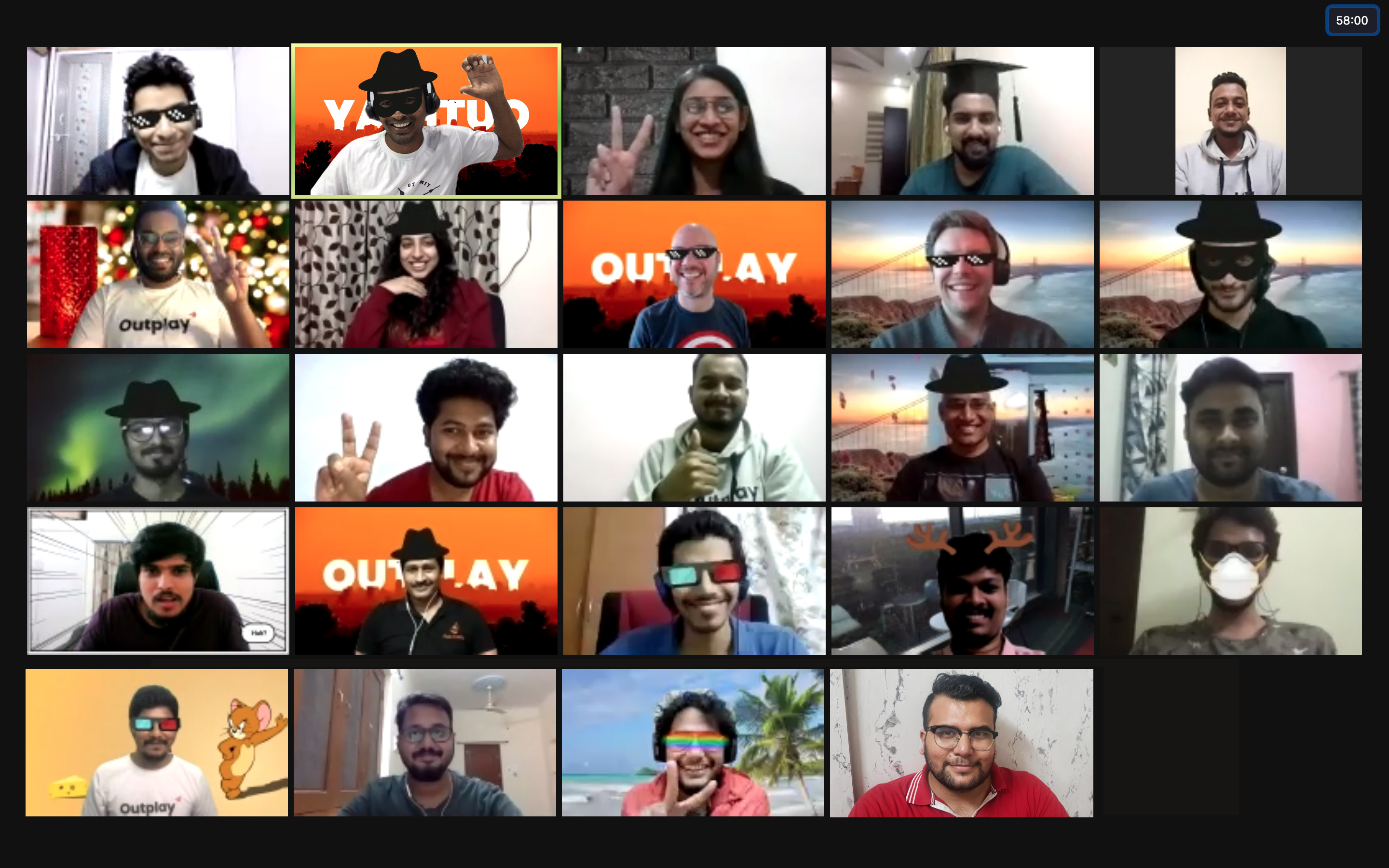
A Zoom screenshot showing members of Outplay's team on a video call

Outplay’s team members on a video call

Sales engagement platforms (SEP) help sales teams automate and track the large number of tasks they need to do each day as they contact leads and home in on potential deals. Focused on small-to-medium-sized companies, SEP startup Outplay announced today it has raised $2 million from Sequoia Capital India’s Surge program for early-stage startups.

Outplay was founded in January 2020 by brothers Ram and Laxman Papineni and now counts more than 300 clients. Before launching Outplay, the Papineni brothers built AppVirality, a referral marketing tool for app developers.

Laxman told TechCrunch that Outplay’s customers come from sectors like IT, computer software, marketing and advertising and recruiting, and most are based in North America and Europe.

Outplay is designed for teams that use multiple channels to reach potential customers, including phone calls, text messages, email, live chats on websites and social media platforms like LinkedIn or Twitter. It integrates with customer relationship management platforms like Salesforce and Pipedrive, giving sales people a new interface that includes productivity and automation tools to cut the time they spend on administrative tasks.

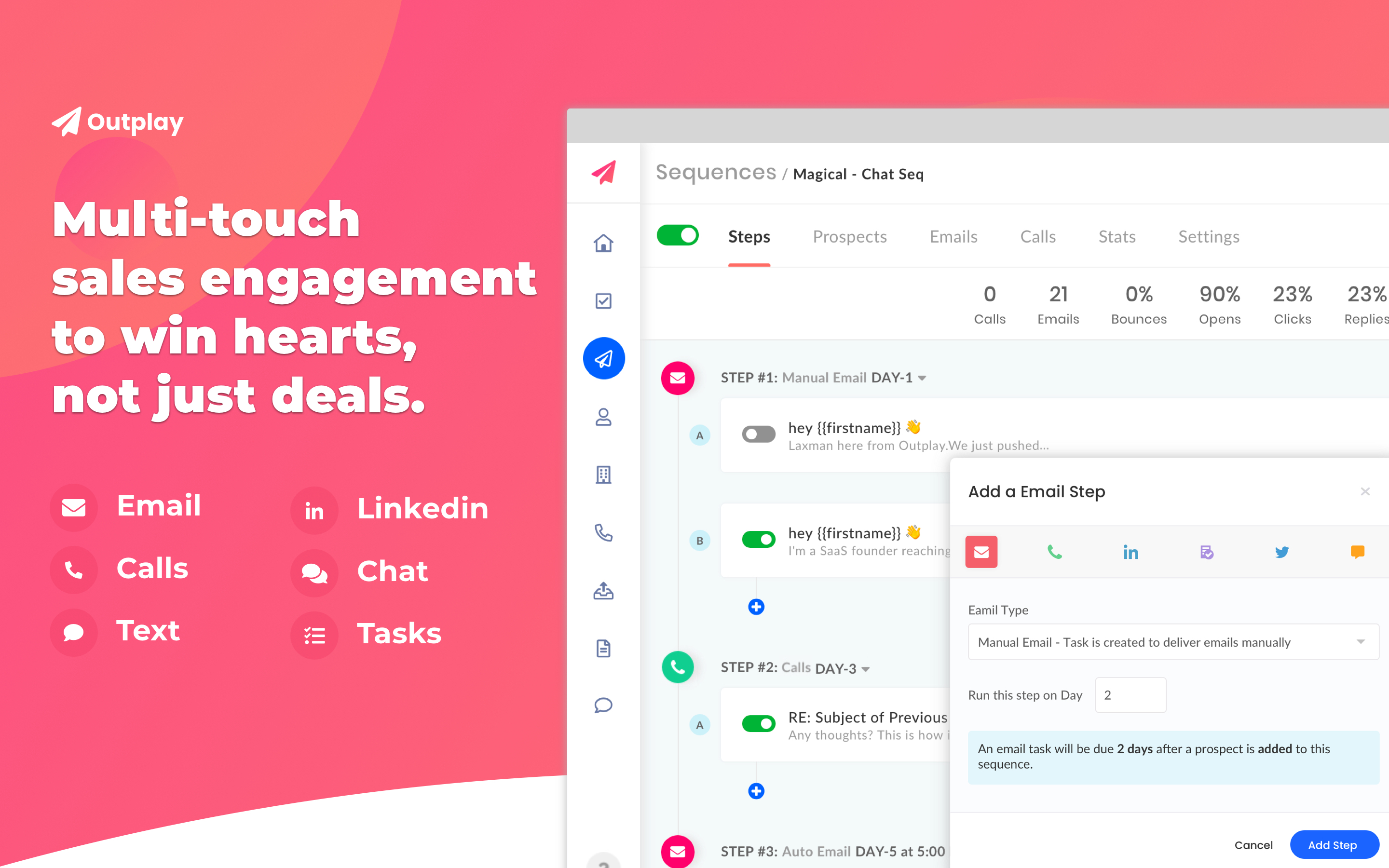
Screenshots of Outplay's sales engagement platform for automating sales tasks

Outplay’s platform

For example, Outplay can be used to create sequences that send initial messages through different platforms, and then automatically follows up with new messages if there isn’t a reply within a pre-set time frame. Outplay also provides analytics to help sales people track how well sales campaigns are working.

Two of Outplay’s biggest competitors are Outreach and SalesLoft, both of which hit unicorn status in recent funding rounds. Laxman said Outplay is focused on ease of use, with other differentiators including more integrations with CRMs and other software, and a strong customer support team.

News: Facebook can save itself by becoming a B Corporation

In changing Facebook into a for-benefit corporation, Mark Zuckerberg could insulate himself against presidential rage while rehabilitating his reputation — and his company’s.

Ann Florini
Contributor

Ann Florini is Clinical Professor at Thunderbird School of Global Management at the Arizona State University.

Brett Hurt
Contributor

Brett Hurt is CEO and co-founder of Data.World.

As Facebook confronts outrage among its employees and the public for mishandling multiple decisions about its role in shaping public discourse, it is becoming clear that it cannot solve its conundrums without a major change in its business model. And a new model is readily available: for-benefit status.

For decades, a misguided ideology has warped companies, economies and societies: that the sole purpose of corporations is to maximize short-term returns to one set of stakeholders — those who have bought shares. Neither law nor history requires this to be true.

But shareholder value-maximization ideology has become cemented in far too much corporate practice at the expense of societal well-being. This is manifested in many ways: a slavish adherence to the judgment of the “market,” even when other social signals are more powerful; executives enriched by stock options; companies fearful of “activist investors” who attack whenever stock prices fail to meet quarterly “expectations” and often-frivolous shareholder lawsuits pushing for stock gains at all costs.

The pandemic, however, has accelerated an already-spreading recognition that shareholder value maximization is often a harmful choice — not by any means a moral imperative or even a fiduciary responsibility.

Major institutions of capitalism are converging on a new vision for it. The 2019 Business Roundtable CEO statement said that corporate strategy should benefit all stakeholders – including shareholders, yes, but equally customers, employees, suppliers, and the communities in which companies operate. BlackRock CEO Larry Fink’s recent annual letters assert new views of how that investment company, the world’s largest, should invest the trillions it oversees.

Fink’s 2019 letter spelled out a new vision for corporate purpose; the subsequent 2020 and 2021 letters focused on business’ responsibility around climate change, particularly in light of the pandemic. The B Corporation and conscious capitalism movements are growing. The World Economic Forum is championing a “Fourth Sector,” combining purpose with profit. Business schools, facing student rebellions against a purely profit-maximizing curriculum, are rapidly changing what they teach.

And with society under siege, many more businesses, including social media, are scrambling to seem like good corporate citizens. They have no choice.

Facebook, for example, has doubled down on philanthropy and new efforts to combat misinformation, even as usage and share price soar. Platforms like WhatsApp (owned by Facebook) have become essential services to connect people whose physical ties have been abruptly severed during the global pandemic. Shelter-in-place has become, in many ways, shelter-in-Facebook-properties.

But Facebook and its brethren remain fragile. Since the 2016 presidential election in the U.S., Facebook has faced governmental hearings and regulation, public uproar (#deleteFacebook), and huge fines for invading privacy and undermining democracy. These calls were amplified in the weeks following the January 6 Capitol riot. Separately, it faces allegations of bias, largely (though not entirely) from the political right. These have led to calls for the revocation or reform of Section 230 of the Communications Decency Act, which grants it immunity from the actions of its users.

A giant company that is simultaneously essential and pilloried is vulnerable. Just ask the ghosts of John D. Rockefeller and his fellow robber barons, whose huge monopolies industrialized America more than 100 years ago. Journalistic muckrakers and public outrage targeted them for their abusive practices until the government finally broke up their companies via antitrust legislation.

Because Mark Zuckerberg maintains complete majority control of Facebook, he could unilaterally quell public opprobrium and fend off heavy-handed regulation singlehandedly by transforming Facebook into a new kind of business: a for-benefit corporation.

Under the Public Benefit Corporation legal model, firms bind themselves to a public benefit mission statement and carry out required ongoing reporting on both the standard financials and on how the company is living up to its mission. That status protects the company against profit-demanding shareholder lawsuits, and also attracts employees and investors who want to combine profit with purpose.

Data.world is one of the thousands of certified B Corporations that have seen good returns on financial metrics. Allbirds, for example, launched in a few sustainable materials using a pro-sustainability process to manufacture comfortable shoes, quickly reaching revenues of $100 million and valuation of $1.7 billion in an industry fraught with sustainability and human rights concerns. Other household names that are B Corps include The Body ShopCourseraDanone, the Jamie Oliver GroupKing Arthur FlourNumi Tea and Patagonia.

Many companies that have not undergone formal B Certification from B Labs have nonetheless done well while transforming their business practices, such as the carpet and flooring company Interface. Some firms incorporate ESG principles into their management systems – the $24 billion (market cap) Dutch life sciences company DSM has for years had meaningful sustainability targets for its senior management that account for fully 50 percent of their annual bonuses. Both Interface and DSM attribute much of their commercial success to their attention to non-financial considerations.

A for-benefit Facebook could similarly relate to the world differently, avoiding many of the reputational shocks and regulatory responses that have led to huge stock dips and enormous fines. Its operations would align with Zuckerberg’s proclaimed purpose to enable the potential abundance that results from connecting everyone in the world.

Imagine a Facebook town hall as a true public square, not just another way to gather and sell people’s data without their explicit consent. Imagine a Facebook that put its users first and its advertisers second; that revealed where ads came from; that earned your attention in a way that you controlled rather than through machine-driven algorithms maximizing your attention for good or ill. Such a for-benefit Facebook could create true buy-in and transparency with its massive community around the world.

Of course, such steps as Facebook’s new Oversight Board, which may provide some meaningful review, don’t require a legal change. But if shareholders and employees continue to be rewarded primarily by the success of the problematic ad revenue model, a continuing conflict between private gain and public benefit makes it impossible to have confidence about what is happening behind the scenes. A shift to for-benefit incorporation and appropriate certification brings with it different performance metrics and accountability systems with public scores.

In changing Facebook into a for-benefit corporation, Zuckerberg could insulate himself against presidential rage while rehabilitating his reputation — and his company’s. It would likely create vast ripples both in Silicon Valley and beyond — and it might help transform capitalism itself.

News: Daily Crunch: Microsoft unveils Mesh for AR/VR meetings

Microsoft shows off a new AR/VR meeting platform, Uber spins out a robotics startup and Compass files to go public. This is your Daily Crunch for March 2, 2021. The big story: Microsoft unveils Mesh for AR/VR meetings Mesh is a platform that allows for shared meetings between Microsoft’s HoloLens (augmented reality) and Windows Mixed

Microsoft shows off a new AR/VR meeting platform, Uber spins out a robotics startup and Compass files to go public. This is your Daily Crunch for March 2, 2021.

The big story: Microsoft unveils Mesh for AR/VR meetings

Mesh is a platform that allows for shared meetings between Microsoft’s HoloLens (augmented reality) and Windows Mixed Reality (virtual reality). Lucas Matney describes it as “pretty standard faire” for spatial computing, but noted that this will also serve as a platform for developers to build their own applications.

This is just one of a long list of announcements that Microsoft made as part of its virtual Ignite conference this week. It’s also updating Teams with new presentation features; introducing a new open-source, low-code language; launching a new NoSQL database offering called Azure Managed Instance for Apache Cassandra; announcing a hardware and software platform called Azure Precept and more.

The tech giants

Uber spins out delivery robot startup as Serve Robotics — Postmates X, the robotics division of the on-demand delivery startup that Uber acquired last year, has officially spun out as an independent company called Serve Robotics.

Amazon issues rare apology in India over drama series — The series, called “Tandav,” has faced criticism over its depiction of Hindu gods and goddesses.

Apple releases results from hearing health study — Hearing loss is an issue Apple has looked to tackle, due in no small part to its growing involvement in the headphone category.

Startups, funding and venture capital

Compass files S-1, reveals $3.7B in revenue on net loss of $270M — Compass is not profitable, but it did see a massive surge in revenue over the past few years.

Vestiaire Collective raises $216M for its second-hand fashion platform — It’s a complicated industry, since you don’t want to buy a damaged item or a cheap knockoff.

Instacart raises $265M at a $39B valuation — What’s behind the massive increase in the value investors are willing to ascribe to the business? Put simply, the pandemic.

Advice and analysis from Extra Crunch

Six tips for SaaS founders who don’t want VC money — JotForm’s Aytekin Tank argues that bootstrapping is a saner, more sustainable way to build and scale a business.

Oscar Health raises IPO price as Coupang releases bullish debut valuation — IPO season is hot and investors are bothered.

Kaltura files to go public on the back of accelerating revenue growth, rising losses — The company’s revenue growth has accelerated yearly since at least 2018, and its final quarter of 2020 placed the company at a new growth rate maximum.

(Extra Crunch is our membership program, which helps founders and startup teams get ahead. You can sign up here.)

Everything else

MIT’s insect-sized drones are built to survive collisions — If you’re going to build something this small, you need to ensure that it doesn’t break down the first time it comes into contact with something.

Volvo to sell only all-electric vehicles by 2030 — This is part of a broader transformation of the automaker that will include shifting sales online.

Attend TechCrunch’s free virtual Miami meetup on March 11 — Even though we can’t be there physically right now, it’ll sure feel like we are.

The Daily Crunch is TechCrunch’s roundup of our biggest and most important stories. If you’d like to get this delivered to your inbox every day at around 3pm Pacific, you can subscribe here.

News: Create a handbook and integrate AI to onboard remote employees

As businesses continue to grapple with this new reality, they must remember the crucial nature of the onboarding process. If they get that right, it will breed trust, information sharing and collaboration, and the organization will see their systems improve ad infinitum.

Chris Buttenham
Contributor

Chris Buttenham is the CEO and co-founder of Obie, a knowledge base software and support accelerator.

The pandemic has forced organizations across the globe to shutter the office environment, and take up a remote-first strategy. Through necessity, professionals have adapted to remote working. But the systems they use are still playing catch up.

One area less readily accommodating to the remote environment is the onboarding process. Given that it is the first sustained contact that a new starter has with a company,  a remote-first strategy is dependent on its success. When looking to onboard new employees, the luxuries of first-day meet and greets, in-person hardware setup, and a team lunch are no longer available. From interview to offer-letter and beyond, any new hire’s early journey is critical to their life at the company, their job satisfaction and ultimately their productivity. The remote induction must be a smooth process, and so needs a thorough rethink.

A cultural shift in the company may be necessary. Organizations need to embrace knowledge-sharing and collaboration, by turning to a “handbook first” approach. A few simple steps can lead them there. Companies also need to analyze their workflow. Are the right systems in place to ensure the seamless flow of both tacit and explicit knowledge?

Perhaps most importantly, artificial intelligence can help transform a clunky old onboarding process into a sophisticated, smooth journey. Naturally the best AI models to use will depend on the business, and department in question. However, with a few pointers business leaders can carve out a path to AI integration.

Let’s dive into the specifics that can transform the remote onboarding process, for the benefit of both the company and the new starter in question.

How to handbook

This is arguably the most important piece of the puzzle when it comes to ensuring newcomers are able to access the right information at the right time; it’s also the most difficult to get right. It is for workers at all levels of an organization to think about how knowledge is shared between teams, and the processes which surround that interchange of ideas.

What is most important is that everyone in an organization prioritizes documentation; exactly how they do it is secondary. You can spin up plenty of free and paid softwares to start creating a handbook. Anything cloud based is suitable, with more sophisticated paid options recommended to keep things easily searchable with documentation sorted into well defined hierarchies, rather than losing those nuggets of information in a sea of folders.

However, this systemic challenge is best addressed from top down. The process should include some checks and balances, with permissioning crucial for parts of the handbook which should remain static, like policies and SLPs. Other parts of the documentation should be kept flexible, like processes and team level knowledge. The majority of the handbook must be democratized as far as possible.

Gitlab, an all-remote company, first coined the term “handbook-first.” The DevOps software provider acts as a great example of a company that lives and breathes through documenting and codifying internal knowledge. Everyone within the organization buys into the mantra of documenting what they know, with subject matter experts assigned to manage knowledge base content. Keeping company documentation up to date is a collaborative task, considered paramount to the company’s livelihood. Softwares give a helping hand, nudging contributors to keep information up to date.

Darren Murph, Head of Remote at GitLab, says that their documentation strategy, twinned with a cooperative approach, helps to build trust with new starters. “When everything a new hire needs to know is written down, there’s no ambiguity or wondering if something is missing. We couple documentation with an Onboarding Buddy – a partner who is responsible for directing key stakeholder conversations and ensuring that acclimation goes well.”

News: SpaceX’s first paying Moon flight customer wants to give away eight seats aboard his spaceship

Yusaku Maezawa, the first paying passenger to book a trip aboard SpaceX’s (still in development) Starship spacecraft around the Moon, has provided a promised update about his mission. It’s still aiming for 2023 for a flight date, and the plan is still to fly a week-long trip around the Moon and back. Now, however, Maezawa

Yusaku Maezawa, the first paying passenger to book a trip aboard SpaceX’s (still in development) Starship spacecraft around the Moon, has provided a promised update about his mission. It’s still aiming for 2023 for a flight date, and the plan is still to fly a week-long trip around the Moon and back. Now, however, Maezawa is looking for crewmates. The full passenger list will include 10 to 12 crew members, Maezawa said in a video about the announcement, but eight will be selected rom the general public.

Back when the mission was first announced in 2018, Maezawa said that he wan†´d to bring between six and eight artists with him as co-astronauts, in order to inspire them to create art based on the experience. That approach has changed somewhat, since he says that he realized anyone who expresses any kind of creativity could be considered an artist. There’s now two criteria for the selection: First, that you can excel at what you do by going to space, and second, that you can support the rest of the crew on the trip.

Maezawa, a billionaire, serial entrepreneur and an artist himself, has paid for the entire trip himself, including the eight passenger seats that he announced today he’d be giving away for free.

Maezawa also detailed the process for selecting the crew members in a new site. It includes pre-registration, which closes on March 14, and then moves into a screening process that ends on March 21. There’s an assignment of some kind that applicants need to complete by March 21, and then there’s an online interview component, followed by final interviews and medical screening to take place late in May.

All of the above timeline is subject to change, according to the application microsite. But once the team is selected, 2022 and 2023 will be focused on training in preparation for the flight. There’s also now a rough flight plan for the mission, which you can see in the graphic below. It’s not too detailed, but does include timestamps and a visual that shows the intended course will indeed loop around the Moon and then return.

Image Credits: dearMoon

One thing that’s notably absent from this call for passenger applications is the ill-advised and definitely creepy call for applicants to be Maezawa’s ‘life partner.’ He made the ask in 2020, seeking single women older than 20 to apply to a ‘match-making’ from which he would choose one romantic potential to join him on the trip, and star in a documentary about the process. Maezawa reversed course on that tactic before the end of the month in which he announced the scheme.

This isn’t the only trip to space with an open application process aiming to give away free seats, oddly enough. There’s also Inspiration4, an orbital mission that will use SpaceX’s Dragon (which is already certified for human flight) and which aims to take off as early as late 2021.


Early Stage is the premier ‘how-to’ event for startup entrepreneurs and investors. You’ll hear first-hand how some of the most successful founders and VCs build their businesses, raise money and manage their portfolios. We’ll cover every aspect of company-building: Fundraising, recruiting, sales, legal, PR, marketing and brand building. Each session also has audience participation built-in – there’s ample time included in each for audience questions and discussion.

News: The explosive (and inclusive) potential of NFTs in the creative world

Digital collectibles are having a very large moment. Just last month, a piece of digital art by Beeple sold for $6.6 million on online art marketplace Nifty Gateway. Meanwhile, Linkin Park’s Mike Shinoda recently sold clips of a song via online marketplace Zora. Over on Dapper Labs’ NBA Top Shot, more than 200,000 people recently

Digital collectibles are having a very large moment. Just last month, a piece of digital art by Beeple sold for $6.6 million on online art marketplace Nifty Gateway. Meanwhile, Linkin Park’s Mike Shinoda recently sold clips of a song via online marketplace Zora. Over on Dapper Labs’ NBA Top Shot, more than 200,000 people recently waited hours for the chance to buy one of just 10,631 packs of digital NBA moments.

Those marketplaces, along with others, are where people go to buy digital assets, or, non-fungible tokens (NFTs) that live on the blockchain. This whole world of NFTs is super new to me (I’ve only been using Top Shot for a couple of weeks now) so I caught up with a couple of NFT creators to break it down for me, as well as share some insights on where they think the space is going, and it’s overall potential.

“The way I like to explain NFTs, they are digital assets with true ownership and provenance,” Ronin the Collector told TechCrunch. “You can track their origin and they can only be owned by one person.”

Many people, myself included, at some point wonder why someone would pay for a short video clip of, for example, Stephen Curry making a three-pointer when you download it to your computer for free.

“Humans inherently, whether we will like to admit it or not, want to own things,” Ronin said. “And I think that that’s part of the human experience is owning things. When you own things, it’s a connection, and it’s like you have reason for being and there’s something unique about ownership. And I think that at the end of the day, yeah, you can you can watch it all you want. But can you sell it?”

This is the one! All the 🔥🔥🔥@nba_topshothttps://t.co/KBFsTK1IIs?

— Big Italy (@BigItaly42) February 26, 2021

With that clip as an NFT, you can. As an example, one user bought a LeBron James dunk for $208,000 a couple of weeks ago, according to CryptoSlam. Last month, Top Shot reached nearly $50 million in marketplace transactions. Then, over a 24-hour period last week, Top Shot saw more than $37 million in sales, according to Cryptoslam.

As to why they’re blowing up right now, Ronin attributes it to a couple of things: the pandemic that’s forced everyone behind a computer screen and an easy entry point. Top Shot, for example, makes it super easy for plebeians like me to sign up and you don’t need to have a crypto wallet. You can just use your credit card. The same goes for Nifty Gateway.

But Top Shot and Nifty are outliers, Ronin said. For the majority of NFT platforms, you need to have an Ethereum wallet. As Cooper Turley, crypto strategy lead at Audius, wrote on TC, “this means collectors need to purchase ETH from an exchange like Coinbase and send it to a non-custodial address that consists of a long string of numbers and letters to get started.”

That sounds like a whole thing that I, for one, am not ready to dive into. In general, barriers to access continue to be a problem in the NFTs space, Ronin said.

“Projects are just now starting to pay attention to the user experience,” he said. “And just barely in time. One of the best rooms I’ve been on Clubhouse was one that talked about how basically, with the whole world watching, how do we not mess this up. So I think when you have a product like Top Shot, which is easy to get into, easy to sign up for, and easy to purchase. You have to use a credit card, you don’t need crypto and throw in the mix that everyone’s online and then Beeple sells $3 million worth of digital art, and all of a sudden, people want to pay attention. So I think that was the catalyst.”


But an even more expansive and interesting arena for NFTs than Top Shot is the world of NFT art. Ameer Carter, an artist that is also known as Sirsu, got into NFTs last summer thanks to a friend, he told TechCrunch. Pretty much immediately, he said, he realized the transformative nature of the technology.

“We literally have creative immortality,” he told me he realized at the time.

But the art world has historically been inhospitable to Black folks and people of color, and especially in the world of NFTs, Carter said. The traditional art scene, Carter said, is elitist. And while Carter himself is a classically trained artist, he hasn’t been able to make his way into the traditional art world, he said.

“And it’s not because of lack of trying,” he said.

Carter said he’s had a number of conversations with art curators who all love his work, but they’ve told him it’s not “something that they could build a whole curriculum around and intellectualize,” he said. What NFTs do is enable artists like Carter to create and share their art in a way that hadn’t previously been afforded to them.

SIRSU Trading Card Series, “Androinomicon” explores themes of human nature through alliteration and android motifs.

Pack two: Pile / Push / Pull.
27 remaining! pic.twitter.com/XwmA04W01J

— (vain) sirsu.eth (@sirsuhayb) January 27, 2021

“And this is a much more open and accessible platform, and environment for them to do so,” Carter said. “And so my goal is to help really give them that type of visibility and empower them to be creatives. My mission is to remove the starving artists stigma. I don’t believe that creativity is cheap. I believe that it is rich. And it enriches and it gives us the reasons why we live in the first place.”

However, Carter said he’s begun to notice white folks taking credit for things Black artists have already done.

“There’s this push and pull between folks who are really about the provenance of the blockchain versus folks who are wanting to predispose themselves as first because they have more visibility,” Carter said.

He pointed to Black artists like Connie Digital, Harrison First and others who were some of the first people to institute social tokens for their fans on the blockchain.

“They were some of the first to deploy and sell albums as NFTs, EPs as NFTs, singular songs,” Carter said. “And now we have Blau that came out and people were saying he’s the first to sell an album. And it’s like, well, that’s not true, technically. But what works and has continued to work is because there’s a lot of hoopla and a lot of money around that sale, that becomes the formative thing as being first because it’s the one that’s made the most noise. And I find it interesting because of the fact that we can literally go back tangibly, and there’s verifiable hash proof that it wasn’t the case.”

These are the types of phenomena pushing Carter to become an NFT archivist of sorts, he said.

“I’m not necessarily a historian, but I think the more and more I get involved in this space, the more and more I feel that pressing role of being an archivist,” he said. “So that culturally, we aren’t erased, even in a space that’s supposed to be decentralized and supposed to be something that works for everyone.”

That’s partly why Carter is building The Well to archive the work of Black artists, like Blacksneakers, for example. The Well will also be a platform for Black artists to mint their NFTs in a place that feels safe, supportive and not exploitative, he said.

On current platforms, Carter said it feels like white artists generally get more promotions on the site, as well as on social media, than Black artists.

“They deserve to have that kind of artists’ growth and development,” Carter said. “Yet it is afforded to a lot of other artists that don’t look like them.”

Carter said he recognizes it’s not the responsibility of platforms like Nifty Gateway, SuperRare and others to provide opportunities to Black artists, but that they do have the ability to put Black artists in a better position to receive opportunities.

That’s partly what Carter hopes to achieve with The Well Protocol. The Well, which Carter plans to launch on Juneteenth, aims to create an inclusive platform and ecosystem for NFT artists, collectors and curators. Carter said he wants artists to not have to feel like they have to constantly leverage Twitter to showcase their work. Instead, they’ll have the full backing of an ecosystem pumping up their work.

“Everywhere else, you look at other artists and they have write-ups, and they have news coverage and things of that nature,” Carter said. “And [Black artists] don’t have a lot of those avenues to compete. You know, I’m in the business of building true equity for us, so part and parcel to that is developing the tools and the ecosystem for us to thrive.”

No longer should art just be for the rich, Carter said.

“We have the ability to completely dismantle that,” he said. “So we have to be very, very, very careful about that and make a concerted effort to make that thing work, but we can’t do it when we have folks entering the space with money erasing folks who were already here. We can’t have that where platforms are not allowing the positioning of artists to grow. You know, we can’t have that when we have folks by and large, fear mongering and trying to get other artists to not be a part of this system.”

It’s also important, he said, for NFTs to not solely be seen as collectible, investable objects.

“Everyone’s getting into the game like it’s a money grab,” he said. “It’s not. It’s playing with artists lives and careers here.”


For those who aren’t yet in on NFTs, there’s still time, Ronin said. Even with the increased attention on NFTs, Ronin says it’s still early days.

“Honestly, I don’t even think we’ve got a full foot into early adoption yet,” he said. “I don’t think you come out of early adoption until we’ve got a solid experience across the board. I think we’re still in alpha.”

That’s partly because Ronin believes the things people will be able to do in five or ten years with this technology will pale in comparison to what’s happening today. For example, Ronin said he spoke with an artist who is experimenting with an NFT experience that will transcend VR, AR and XR.

“And I’m so excited that she chose to work with me and bring me in on this, and use me as kind of an advisor,” he said. “And she can change the world with this technology.”

That’s really what’s so exciting about NFTs for Ronin — the notion that the technology can change your life, and the world, he said.

“And it is a space in which you should feel free to come into and dream big and then figure out how to make those dreams happen,” he said. “You can use AR, VR, mobile, you know, the internet — you can use all these aspects and create an NFT experience that transcends space, transcends time, transcends our life. So it’s a super powerful technology. And I think that people should really pay attention.”

Down the road, Ronin also envisions having connected blockchains “where you can take an NFT from, you know, Bitcoin to Ethereum to WAX to Flow,” he said. “I really think that it’s why this this is that important.”

For Carter, he hopes his work at The Well will help to set a precedent for inclusivity and access in the NFT space. It’s worth mentioning that Carter is also working on the Mint Fund to help minimize the barriers to entry for artists looking to mint their first NFTs. Minting an NFT can be expensive to the tune of $50-$250 depending on how busy the Ethereum network is, and Mint Fund will pay those fees for new artists, making the on-ramp into the world smoother.

“If we don’t do this the right way with the right type of community-driven thinking, then we will lose,” he said. “And it’s not going to look good, it’s going to be ugly. And it’s going to again perpetuate the rich getting richer and the poor getting poorer…We have to find the best ways to redistribute wealth at any given point in time within this economy, within this system. If we do not know how to do that, we are fucked. At least in my opinion.”

There are also conversations in the space around the ecological impact of minting NFTs, which requires a good amount of energy to do. Carter described the existence of two camps: the camp arguing minting NFTs are very ecologically damaging and the ones saying it’s not the fault of minters and you can’t blame them “for minting on a system that is already going to process these transactions, whether they mint or not.”

For Carter, he thinks the first camp could be right, but says there’s just a lot of yelling at this point.

“I think that collectively, us as minters should not feel so fucked up that we can’t do anything anymore,” he said.

Carter also pointed to the energy required to print and ship a bunch of his work.

“To sell one piece of art that I’ve minted versus the energy expenditure and the emissions it takes for me to sell, let’s say 1,000 prints at $20,” he said. “To now shop those to 1,000 different places and for those things to then be transported to 1,000 different homes. Like, maybe they’re comparable, maybe they’re not. I’m not too interested in doing the math at this point.”

Ultimately, Carter thinks there needs to be better access to renewable energy sources and more innovative hardware in the space.

“And the production of creating that innovative hardware also has to be coming from renewable energy sources, like the entire framework should be working to be carbon negative,” he said. “As carbon neutral to carbon negative as possible. And not just the minting side but the mining side. And, you know, the manufacturing side. It’s a cyclical issue.”

WordPress Image Lightbox Plugin