Monthly Archives: March 2021

News: As activist investors loom, what’s next for Box?

Activist investors will only sit still for so long, and when they take action, it usually involves one of two approaches: Replace the leadership team or induce a sale.

Box could be facing troubled times if a Reuters story from last week is accurate. Activist investor Starboard Value took a 7.9% stake in the storage company in September 2019, and a year ago took three board seats as its involvement in the cloud company deepened. It seemed only a matter of time before another shoe dropped.

Activist investor Starboard Value is reportedly after three additional board seats.

That thunk you just heard could be said shoe as Starboard is reportedly after three additional board seats. Those include current CEO Aaron Levie’s and two independent board members, all of whom have their seats coming up for election in June. If the firm were to obtain three additional seats, it would control six of nine votes and could have its way with Box.

What could the future hold for the company given this development (assuming it’s true)? It seems changes are coming for Box.

Below, we’ll explore how Box got to this point. And if an acquisition is in Box’s future, just who might be in the market for a cloud-native content management company built to scale in the enterprise? There would very likely be multiple suitors.

Box’s fickle financial fate

Starboard may have reason to be frustrated by Box’s performance. The cloud company’s stock price and market cap remain stubbornly low. Its share price is mired around $18 a share, not much higher than the price it went public at in 2015 when it was valued at $14 per share. Its market cap today is $3 billion, which is lacking in comparison to fellow cloud stalwarts like Dropbox at $9 billion, Slack at $23 billion or Okta at $34 billion.

Remember back in March 2014 when Box announced it was going public? It then did something highly unusual, delaying the deed 10 months until January 2015. One thing or another kept the company from pulling the trigger and just doing it. Perhaps it was a sign.

Instead, Box raised $150 million more after its S-1 filing received a lackluster response from the market. Looking back, you could argue that the SaaS model was simply less well known in 2014 than it is today. Certainly public investors are more sympathetic to software companies that run deficits in the name of growth than they were back then.

But when Box did file again, finally pricing at $14 per share in 2015, it received a strong welcome. The company had priced above its $11 to $13 per-share IPO range as TechCrunch reported at the time and instantly shot higher. We wrote on its IPO day that the cloud company quickly “surged to over $20 a share and [was then] trading at $23.67.”

A year later, our continuing coverage had flipped with the share price stuck at $10 in January 2016.

When growth won’t come

News: Cashify raises $15 million for its second-hand smartphone business in India

Tens of millions of people each year purchase a second-hand smartphone in India, the world’s second largest market. Phone makers and giant online sellers such as Amazon and Flipkart are aware of it, but it’s too much of a hassle for them to inspect, repair, and resell used phones. But these firms also know that

Tens of millions of people each year purchase a second-hand smartphone in India, the world’s second largest market. Phone makers and giant online sellers such as Amazon and Flipkart are aware of it, but it’s too much of a hassle for them to inspect, repair, and resell used phones. But these firms also know that customers are more likely to buy a smartphone if they are offered the ability to trade-in their existing handsets.

A startup that is helping these firms tackle this challenge said on Thursday it has raised $15 million in a new financing round. New York-based Olympus Capital Asia made the investment through Asia Environmental Partners, a fund dedicated to the environmental sector. The five-year-old startup, which counts Blume Ventures  among its early investors, has raised $42 million to date.

Cashify operates an eponymous platform — both online and physical stores and kiosks — for users to sell and buy used smartphones, tablets, smartwatches, laptops, desktops, and gaming consoles. 90% of its business today surrounds the smartphone category, explained Mandeep Manocha, founder and chief executive of Cashify, in an interview with TechCrunch.

“For consumers, our proposition is that we make it easy for you to sell your devices. You come to our site or app, answer questions to objectively evaluate the condition of your device, and we give you an estimate of how much your gadget is worth,” he said. “If you like the price, we pick it up from your doorstep and give you instant cash.”

A few years ago, I wrote about the struggle e-commerce firms face globally in handling returned items. There are many liability challenges — such as having to ensure that the innards in a returned smartphone haven’t been tempered with — as well as overhead costs in reversing an order.

Manocha said that phone makers and e-commerce firms have found better ways to handle returned items in recent years, but they still lose a significant amount of money on them. These challenges have created a big opportunity for startups such as Cashify.

In fact, Cashify says it’s the market leader in its category in India. The startup has partnerships with “nearly every OEM” including Apple, Samsung, OnePlus, Oppo, Xiaomi, Vivo, and HP. “If you walk into an Apple store today, they use our platform.” For consumers in India, if they opted for the trade-in program, Apple.com also uses Cashify’s trading platform, he said.

The startup also works with top e-commerce firms in India — Amazon, Flipkart, and Paytm Mall. The firms use Cashify’s trading and exchange software, and also rely on the startup for liquidation of devices. The startup then repairs these gadgets and sells the refurbished units to customers.

“Essentially, whether you come directly to us, or go to popular e-commerce firms or phone OEMs, we are handling the majority of the trading,” he said. Even if a customer trades in the device to OEMs, or e-commerce firms, these companies sell the device to players like Cashify, which serves over 2 million customers in more than 1,500 cities.

The startup plans to deploy part of the fresh capital to expand its presence in the offline market. Manocha said Cashify currently has dozens of offline stores and kiosks at shopping malls across the country and it has already proven immensely effective in brand awareness among customers.

The startup also plans to expand outside of India, hire more talent, and invest more in getting the word out about its offerings. Manocha said the team is also working on expanding its expertise to more hardware categories such as cameras.

“The management team at Cashify has an excellent track record in building a strong consumer-facing franchise and building relationships with OEMs, e-commerce companies and electronic product retailers to be present across all touch points for the consumer,” said Pankaj Ghai, Managing Director of Asia Environmental Partners, in a statement.

News: Bank of America is bringing VR instruction to its 4,000 banks

As consumer VR begins to have a moment following years of heavy investment from Facebook and other tech giants, corporate America is similarly beginning to find more utility in the technology, as well. Bank of America announced today that they’ll be working with Bay Area-based VR startup Strivr to bring more of their workplace training

As consumer VR begins to have a moment following years of heavy investment from Facebook and other tech giants, corporate America is similarly beginning to find more utility in the technology, as well.

Bank of America announced today that they’ll be working with Bay Area-based VR startup Strivr to bring more of their workplace training into virtual reality. The financial institution has already used the startup’s tech in a pilot effort with about 400 employees, but a wide-scale rollout means scaling the VR learning platform to more of the company’s 45,000 employees and bringing thousands of VR headsets to its bank branches.

Bank of America exec John Jordan has plenty of ideas of where it will be able to implement the technology most effectively, but is open to experimenting early-on, noting that they’ve developed VR lessons for everything from notary services to fraud detection. Jordan also says that they’re working on more ambitious tasks like helping employees practice empathy with customers dealing with sensitive matters like the death of a relative.

Jordan says the scope of the company’s corporate learning program “The Academy” is largely unmatched among other major companies in the U.S., except perhaps by the employee instruction programs at Walmart, he notes. Walmart has been Strivr’s largest customer since the startup signed the retail behemoth back in 2017 to bring VR instruction to their 200 “Walmart Academy” instruction centers and all Walmart stores.

Virtual reality is a technology that lends itself to capturing undivided attention, something that is undoubtedly positive for increasing learning retention, which Jordan says was one of the central appeals for adopting the tech. For Bank of America, VR offers a platform change to reexamine some of the pitfalls of conventional corporate learning. At the same time, they acknowledge that the tech isn’t a silver bullet and that are plenty of best practices for VR that are still unknowns.

“We’re just taking it slow to be honest,” Jordan says. “We already feel pretty great about how we’ve made investments, but we view this as a way to get better.”

Enterprise VR startups have seen varying levels of success over the years as they’ve aimed to find paying customers that can tolerate the limitations of the technology while buying in on the broader vision. Strivr has raised over $51 million, including a $30 million Series B last year, as it has aimed to become a leader in the workplace training space. CEO Derek Belch tells TechCrunch that the company has big plans as it looks towards raising more funding and works to build out its software toolsets to help simplify VR content creation for its partners.


News: Twitter tests new e-commerce features for tweets

Twitter confirmed it’s testing a new way to display tweets that link out to e-commerce product pages — like products on a Shopify store, for example. With a new Twitter card format, the company is experimenting with tweets that include a big “Shop” button and integrate product details directly into the tweet itself, including the

Twitter confirmed it’s testing a new way to display tweets that link out to e-commerce product pages — like products on a Shopify store, for example. With a new Twitter card format, the company is experimenting with tweets that include a big “Shop” button and integrate product details directly into the tweet itself, including the product name, shop name, and product pricing.

The experiment was spotted by social media consultant Matt Navarra who tweeted out screenshots of the new experience. The original poster, based in Qatar, had seen the experiment on an Android device, he tells TechCrunch.

Twitter is experimenting with new shopping features 🛍

A NEW Twitter Card being tested for tweets containing links to product pages on a shop’s website

New-style Twitter Shopping Card shows
– Product name
– Shop name
– Product price
– ‘Shop’ button

<-Old | New->

ht @YasserM86 pic.twitter.com/8q5xLbbH2m

— Matt Navarra (@MattNavarra) March 2, 2021

While these tweets would work well as ads, Twitter confirmed to us the tweet is an example of a new treatment for “organic” tweets focused on e-commerce.

This format could potentially come into play as part of Twitter’s larger push to become a creator platform, with its recently announced plans for a “Super Follow” subscription. The new product will allow Twitter users to follow a particular account for subscriber-only perks like newsletters, exclusive content, a supporter badge, and other deals and discounts. A more “shoppable” tweet format could allow these creators to direct their fans to products and merchandise, perhaps.

Twitter also briefly touched on its plans for future investments in e-commerce during its Investor Day last week, but not in great detail.

“We’re…starting to explore ways to better support commerce on Twitter,” said Twitter Revenue Lead, Bruce Falck, during the event.

“We know people come to Twitter to interact with brands and discuss their favorite products. In fact, you may have even noticed some businesses already developing creative ways to enable sales on our platform,” he explained.

“This demand gives us confidence in the power of combining real-time conversation with an engaged and intentional audience. Imagine easily discovering, and quickly purchasing a new skincare product or trendy sneaker from a brand you follow with only a few clicks,” Falck added.

But he cautioned investors that while Twitter was “excited about the potential of commerce,” it was still something that’s in “very early exploration.”

The idea that Twitter could become more of discovery network for e-commerce products is an interesting one — especially given the growth in the social commerce sector in recent months. This includes increased investment from Facebook into shopping features across Facebook, Instagram and WhatsApp, as well as the growing attention being paid to video-based shopping.

The latter has been particularly popular, in terms of both live streamed product demos and pre-recorded short-form videos, like those on TikTok.

Shopify, for instance, partnered with TikTok on social commerce last fall. And Walmart — a suitor for TikTok’s potential U.S. spin-out (which is now on hold)ran its own live-streamed shopping event on the video app over the holidays. A number of video shopping startups have been taking on funding in recent months, too.

Twitter, meanwhile, may have dialed down its video ambitions over the years with the closure of Vine and now, Periscope, but it’s not without tools to make shopping more interesting on its platform, if it chose to do so. It still has integrated tools for posting photos, videos and even live video content. Combined with a Twitter Card that includes pricing and a big “Shop” button, people’s tweets could drive sales.

Or, in other words, a Twitter Card that points you directly to a product page could be just the start of what’s to come.

In fact, Twitter itself says it has a number of plans for social commerce.

“This is the first of many experiments in the commerce space and we will enrich the experience as we learn more,” a spokesperson said.

News: Okta acquires cloud identity startup Auth0 for $6.5B

As Okta announced earnings today after the bell, it revealed that it’s buying cloud identity startup Auth0 for a hefty $6.5 billion. The company had a valuation of $1.92 billion when it raised $120 million led by Salesforce Ventures last July. With Auth0, Okta gets a cloud identity company that helps developers embed identity management

As Okta announced earnings today after the bell, it revealed that it’s buying cloud identity startup Auth0 for a hefty $6.5 billion. The company had a valuation of $1.92 billion when it raised $120 million led by Salesforce Ventures last July.

With Auth0, Okta gets a cloud identity company that helps developers embed identity management into applications, adding an entirely new dimension to its identity platform. “Today, we’re taking a significant step forward — I’d go so far to call it a “leap” — to enhance the Okta Identity Cloud. We announced our agreement to join forces with Auth0, a leading identity platform for developers,” Okta co-founder and CEO Todd McKinnon wrote in a blog post announcing the deal.

Auth0 users can breathe a sigh of relief in that McKinnon writes that the company will operate as an independent unit inside of Okta as they look for paths to integration in the coming months.

Eugenio Pace, co-founder and CEO Auth0 sees his company together with Okta as powerful combination in the identity management space, and he’s not just hyping the deal when he says that. “Together, we can offer our customers workforce and customer identity solutions with exceptional speed, simplicity, security, reliability and scalability. By joining forces, we will accelerate our customers’ innovation and ability to meet the needs and demands of consumers, businesses and employees everywhere,” Pace said in a statement.

Okta had a pretty good quarter too while it was at it, announcing $234.7 million in revenue up 40% year over year, but Wall Street appears to be unhappy with the deal with the stock price down 6.9% in after hours trading.

Auth0 was founded in 2013 and raised over $300 million along the way. In addition to Salesforce Ventures, other investors included Sapphire Ventures, Bessemer Venture Partners and Meritech Capital Partners.

This is a breaking story. More to come.

News: Toro acquires robotic tractor/snow blower maker, Left Hand Robotics

Toro this week announced its intentions to acquire Left Hand Robotics. The Colorado-based startup (not to be confused with Righthand Robotics) is a natural fit for the lawn mowing giant, as the producer of the RT-1000, an autonomous system capable of mowing large lawns and clearing snow from sidewalks. Toro is best known for its

Toro this week announced its intentions to acquire Left Hand Robotics. The Colorado-based startup (not to be confused with Righthand Robotics) is a natural fit for the lawn mowing giant, as the producer of the RT-1000, an autonomous system capable of mowing large lawns and clearing snow from sidewalks.

Toro is best known for its personal and professional mowers and various other landscaping machines. The company also has some experience in the robotic category, beating various competitors to the punch by a decade or two with its iMow, but those efforts don’t appear to have made a major dent in its overall offerings.

Left Hand’s primary offering targets professionals. It’s already a category for its new parent company, though it’s easy to see how it might scale down as personal mowers gain in popularity. The RT-1000 is a fully autonomous system designed for a variety of weather conditions that could make a more compact version an appealing option for users — assuming the companies are able to shrink the cost accordingly.

The acquisition comes as companies like John Deere are strategizing their own approach toward robotics, while devoted companies like iRobot have begun to explore the space. Although iRobot’s own mower was delayed due to COVID-19, the Roomba maker believes it has cracked what’s proven to be a difficult market for many.

Left Hand has raised $8.9 million to date. Details of the transaction have not been disclosed.

News: Amazon Fire TV expands live TV features, adds Alexa support for live content

Amazon is rolling out a new experience for its Fire TV platform that puts more focus on subscription-free streaming and other live content. The company today announced several new services are being integrated into its suite of Live features, including Xumo and its own IMDb TV and Amazon news app. The company also soon plans

Amazon is rolling out a new experience for its Fire TV platform that puts more focus on subscription-free streaming and other live content. The company today announced several new services are being integrated into its suite of Live features, including Xumo and its own IMDb TV and Amazon news app. The company also soon plans to add Plex, it notes.

All four of the services are available for free with ads and don’t require a subscription, Amazon says. These channels and their content will appear in Fire TV’s Live tab in the “On Now” rows, as well as in the Universal Channel Guide on the Fire TV app.

With the additions, Amazon says there are now over 400 live streaming channels from across 20 providers that can be accessed from Fire TV’s live channel guide — including services like YouTube TV, Sling TV, Tubi, Pluto TV, Philo, Prime Video Channels, Prime Video Live Events (like Thursday Night Football), and more.

Amazon also notes that more than 200 of those channels are available for free with ads, and don’t need a subscription to watch.

Free, live streaming content is becoming a battleground for both Amazon and Roku, the top two streaming media platforms in the U.S. But they’re taking different approaches to the format.

Amazon’s section showcasing free, live content has become more of a part of its overall Fire TV interface, instead of a separate channel you have to launch. This speaks to Amazon’s design philosophy with Fire TV, whose interface largely resembles that of a streaming service.

“We’ve always taken a content-forward approach when designing Fire TV. When you turn on your TV, you’re going to see shows, movies, and sports — not just rows of apps,” said VP & GM of Amazon Fire TV, Sandeep Gupta. “This philosophy extends to our approach to live content. We’re continuing to invest heavily in Live TV and so are our content partners. We’re expanding that today with the addition of new integrations, Alexa capabilities, and enhanced content discovery mechanisms,” he added.

Meanwhile, Roku offers its own hub with always-on free movies and TV shows, called The Roku Channel, which helps to serve as a starting point for cord cutters who are looking for something to watch after they’ve ditched traditional pay TV. But unlike Fire TV, Roku’s design is, in fact,  “rows of apps.” This makes its interface simple to use and less cluttered — something many people seem to prefer. Here, The Roku Channel is just another app to launch, not a part of the Roku interface.

Roku also makes The Roku Channel available online and as a standalone mobile app, just like other free streaming services. And this week, it integrated most of The Roku Channel’s free content with its main Roku.com website, in order to reach more consumers.

Separately, Fire TV offers its own app, but limits itself to live content, not on-demand, ad-supported shows and movies.

In addition to today’s newly announced live TV integrations, Amazon also says its live TV programs are now Alexa-enabled.

That means you can say things like “Alexa, play Good Morning America” or “Alexa, play the Seahawks game,” to launch a specific live TV program by name. This will work with the Alexa Voice Remote, on the Fire TV Cube, and with Fire TVs paired with an Echo device.

Live TV programs will also appear in the “App Peak” (hover) feature on the newly updated Fire TV interface. This feature will show you what’s on a given channel when you hover over it in the main navigation, and works on Fire TV Stick (3rd gen.) and Fire TV Stick Lite, for the time being.

As a result of its expansions and live TV integrations — not to mention the pandemic that’s kept people at home for entertainment — Amazon says that engagement with live streaming apps on Fire TV has more than doubled in the last 12 months, up by over 130%.

Amazon says the new features are rolling out today to Fire TV devices.

News: Dear Sophie: Can you demystify the H-1B process and E-3 premium processing?

Can you help demystify the H-1B process and provide any tips? We also want to hire an Australian and transfer their E-3. How quickly can this be done?

Sophie Alcorn
Contributor

Sophie Alcorn is the founder of Alcorn Immigration Law in Silicon Valley and 2019 Global Law Experts Awards’ “Law Firm of the Year in California for Entrepreneur Immigration Services.” She connects people with the businesses and opportunities that expand their lives.

Here’s another edition of “Dear Sophie,” the advice column that answers immigration-related questions about working at technology companies.

“Your questions are vital to the spread of knowledge that allows people all over the world to rise above borders and pursue their dreams,” says Sophie Alcorn, a Silicon Valley immigration attorney. “Whether you’re in people ops, a founder or seeking a job in Silicon Valley, I would love to answer your questions in my next column.”

Extra Crunch members receive access to weekly “Dear Sophie” columns; use promo code ALCORN to purchase a one- or two-year subscription for 50% off.


Dear Sophie:

Our startup is planning on registering an international student employee in this year’s H-1B lottery. This will be our first H-1B.

Can you help demystify the H-1B process and provide any tips? We also want to hire an Australian and transfer their E-3. How quickly can this be done?

— Plucky in Pleasanton

Dear Plucky:

Thanks for your timely questions! There’s some great news for Australian citizens currently in the U.S. and looking for job transfers, amendments and extensions. Premium processing is now available for the E-3 working visa category! This means that transfers, changes of status, and extensions of status for Australians in the U.S. seeking an E-3 can now obtain adjudications from USCIS in as little as 15 days, making it much easier to hire an Australian who is currently in the U.S. for a new role. Go for it!

On the topic of H-1Bs, the registration period for this year’s H-1B lottery will open at 9 a.m. PST on March 9 and will close at 9 a.m. on March 25. Startups need to make sure they’re registering anybody they want to sponsor during this window. Take a listen to my recent podcast on H-1B Lottery Planning, Part 1 and Part 2, for a general explanation of how this year’s process will work and how best to prepare.

Planning is key for implementing a successful immigration strategy. As always, I suggest you consult with an experienced immigration attorney ASAP to help get organized for registering your H-1B candidate for the March lottery and doing as much prep work as possible so that you can put together a strong H-1B petition in the event your candidate is selected in the lottery.

An attorney will also be up to date on all the recent changes to immigration policy, such as USCIS rescinding a Trump-era policy that went into effect in 2017 that effectively made computer programming positions ineligible for an H-1B visa. You will also want to discuss backup options for the international student employee if they are not selected in this year’s lottery.

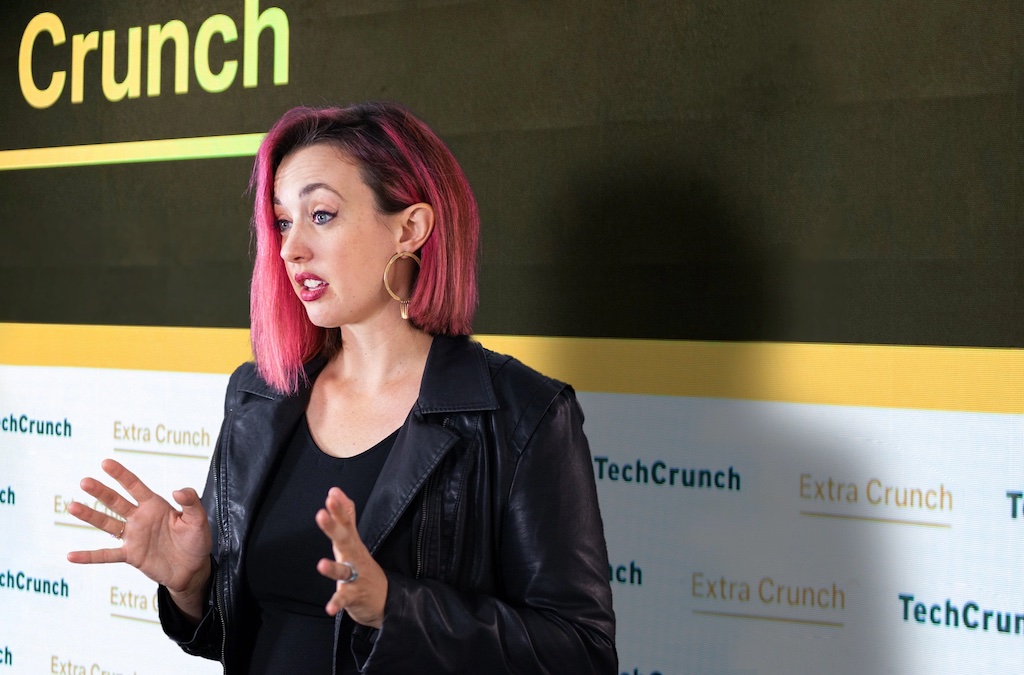
A composite image of immigration law attorney Sophie Alcorn in front of a background with a TechCrunch logo.

Image Credits: Joanna Buniak / Sophie Alcorn (opens in a new window)

Registration and lottery process

Recently, U.S. Citizenship and Immigration Services (USCIS) announced it will delay until next year the plan to shift from a random H-1B lottery to a wage-based one that would have selected registrants who would be paid the highest wage for their position and location. In January, the previous administration had finalized the rule implementing the wage-based lottery. The latest announcement ended weeks of speculation whether USCIS under the Biden administration would retain a wage-based H-1B allocation process, which falls in line with President Biden’s presidential campaign platform.

The random H-1B lottery in March means that H-1B candidates with the same education level who will be paid more will have no greater advantage than those being paid less. However, next year that may not be the case.

Regardless of whether there’s a random or wage-based lottery, individuals with a master’s or higher degree from a U.S. university will continue to have the best chance of being selected in the H-1B lottery. The annual cap on H-1Bs remains at 85,000 and of those, 20,000 H-1Bs are reserved for individuals with a master’s degree or higher from a U.S. university. USCIS randomly selects enough registered candidates from the entire pool of registrants to reach the 65,000 regular H-1B cap first. Then it randomly selects another 20,000 registered candidates holding a U.S. master’s degree or higher, in what is called the advanced-degree cap exemption. Therefore, individuals with a U.S. advanced degree have two chances to be selected. To be eligible, your international student employee must have earned their advanced degree from an eligible and accredited U.S. institution by the time the H-1B petition is filed.

After the online registration period closes on March 25, USCIS will conduct a random computerized selection of registrations and will notify those selected by March 31. A completed H-1B petition must be filed within 90 days of being notified that the H-1B candidate was selected in the lottery, which means the filing deadline will be June 30.

In order to register your candidate for the H-1B lottery, your company will need to set up an online USCIS account if it does not already have one. This can be done at any time between now and the end of the registration period. Your attorney can help you with this and the online registration process.

For the online registration process, your company will have to provide the following information:

  • Full legal name of the candidate.
  • Gender.
  • Date of birth.
  • Country of birth.
  • Country of citizenship.
  • Passport number.
  • If the candidate is eligible for inclusion in the U.S. advanced-degree cap.

In addition, your company will have to pay the $10 registration fee, which can be submitted by entering a credit card, debit card, checking or savings account directly into the H-1B registration portal.

Tips for preparing

Generally, your startup and your H-1B candidate should start assembling documents you will need to submit. Your startup will need to get its tax identification number verified by the U.S. Department of Labor to prove that your startup is capable of sponsoring an individual for an H-1B. This needs to be done before your company can submit a Labor Condition Application (LCA), which is also sent to the Labor Department. An approved LCA must be submitted with your H-1B petition to USCIS. In addition to your startup’s tax ID, it will need the following:

  • If your startup formed recently, articles of incorporation, pitch deck, business plan, term sheet, cap tables.
  • Documentation showing your company can pay the prevailing wage for the H-1B candidate’s position and location: bank statements, tax returns, other financial documents.
  • Documents to prove your company is operating within the normal course of business, including marketing materials, company reports, screenshots of the company website.
  • Job offer letter to the H-1B candidate, including job title, detailed duties, benefits, salary and start date.
  • Minimum requirements for the position.

Your H-1B candidate will need:

  • An up-to-date resume.
  • Originals of diplomas, certificates, and transcripts (also scanned copies).
  • Past immigration documents, such as Form I-20 (certificate of eligibility for F-1 student status) or Form DS-2019 (certificate of eligibility for J-1 status.
  • Translations of any documents not in English along with a certified translation document.

For tips for filing the H-1B petition, listen to my podcast episodes on “Your Startup’s First H-1B” and “What Makes a Strong H-1B Petition.” Your attorney will be able to make the case that your H-1B candidate and the position your startup is offering meet the requirements of the H-1B specialty occupation visa.

As of now, premium processing for H-1B petitions remains available. Currently, USCIS is severely backlogged in all case types, so I often suggest using it, depending on the H-1B candidate’s start date and current geographic location. With premium processing, which is an optional service for a $2,500 fee, USCIS guarantees it will make a decision on a case within 15 days. If USCIS approves your H-1B petition, the earliest the international student employee can begin working under the H-1B visa is Oct. 1, 2022, which is the first day of the federal government’s new fiscal year.

Fingers crossed for you in this year’s H-1B lottery

All the best,

Sophie


Have a question for Sophie? Ask it here. We reserve the right to edit your submission for clarity and/or space.

The information provided in “Dear Sophie” is general information and not legal advice. For more information on the limitations of “Dear Sophie,” please view our full disclaimer. You can contact Sophie directly at Alcorn Immigration Law.

Sophie’s podcast, Immigration Law for Tech Startups, is available on all major platforms. If you’d like to be a guest, she’s accepting applications!


TC Early Stage: The premier how-to event for startup entrepreneurs and investors

From April 1-2, some of the most successful founders and VCs will explain how they build their businesses, raise money and manage their portfolios.

At TC Early Stage, we’ll cover topics like recruiting, sales, legal, PR, marketing and brand building. Each session includes ample time for audience questions and discussion.

Use discount code ECNEWSLETTER to take 20% off the cost of your TC Early Stage ticket!

News: Bottomless closes $4.5M Series A to scale its subscription coffee business

As a devoted coffee drinker I was enthused by the idea of Bottomless. The Y Combinator-backed startup sends its users coffee as they run low so that they never run out of the Magic Juice of Life. What could be better? Because life is somewhat funny, after signing up for its service the company reached

As a devoted coffee drinker I was enthused by the idea of Bottomless. The Y Combinator-backed startup sends its users coffee as they run low so that they never run out of the Magic Juice of Life. What could be better?

Because life is somewhat funny, after signing up for its service the company reached out to share that it had raised a Series A. So I got on the phone with Liana Herrera, the company’s co-founder, to chat about the startup, which is part coffee-sourcing engine, part subscription/e-commerce play and part hardware effort.

So before we talk about its Series A, let’s work better to understand what Bottomless is building, and how it works.

What’s Bottomless?

Born from its founders’ issues ordering the right amount of Soylent when they actually needed it, and wondering why there wasn’t a better way to subscribe to goods consumed on a regular basis, Herrera uncovered the idea for Bottomless.

Today the product works by letting users pick the type of coffee they are interested in, be it caffeine level, price and the like. The company then provides customers with a small digital scale that they connect to their home internet. And then as users consume coffee that Bottomless sends them, placing the bag on the hardware in between uses, the scale notes how much is left and orders more before they run out.

A Bottomless scale, via the company as my kitchen lighting is bad.

You can set the sensitivity of the scale, asking it to either be ambitious in keeping you from running out of beans or ground coffee, or more relaxed. As I write to you today, I think that my third bag of decaf has arrived. It’s a neat system.

And from a business perspective, the Bottomless model has plusses. I honestly do not recall the price range of coffee that I picked, and do not know how much I am actually paying Bottomless at the moment. But I do know that having different types of coffee arrive at the house as I run low is pretty damn cool.

To make that happen, however, is not easy. The startup’s business is a little complex. Before and even after Bottomless went through Y Combinator back in 2019, the company hand-built its coffee-weighing scales. Herrera told TechCrunch that the old Silicon Valley saw that hardware is hard is in fact an understatement. After all the soldering she described during an interview, I believe her.

Still, after finishing the accelerator program the company managed to grow in 2019 by what Herrera said was around 10x. That customer expansion allowed the company to order bulk hardware from China in early 2020. After its first production run finished — a few thousand units — COVID-19 shut down that country’s supply chain. Happily for the startup, by the time COVID-19 had taken over America, the Chinese economy opened up and production could begin again.

Per the company, Bottomless scaled another 5-7x in 2020. An October 2020 CNN piece notes that the company had around 750 customers in late 2019, and some 6,000 by the time of publication. Herrera wants to massively expand that number, telling TechCrunch that she’d like to grow by 10x again this year, and that 5x expansion was the lower-end of her expectations.

Powering that growth are a host of coffee companies that Bottomless works with. Those companies handle roasting the beans and sending them to different Bottomless customers. So that no one reaches a zero-coffee state. And dies. Or whatever happens when one actually runs out of coffee.

The startup told TechCrunch that there are some 500 roasters on their wait list, implying that it will have the capacity to take on more customers this year.

Despite all the growth, the company still has some edges to refine. Setting up Wi-Fi on my scale wasn’t super-simple, for example. Herrera did note that her firm has a new scale coming out in the next three months. That could lower the difficulty barrier for new customers. Still, with 6,000 customers last October ordering three to four bags of coffee monthly, per Herrera’s estimate, the company had reached a comfortable seven-figure GMV run-rate before 2021 began.

For coffee roasters who may have seen their customer base slow during the pandemic, and consumers increasingly willing to dive into e-commerce, the company’s model could have long-term legs. Which brings us to the investors making that bet.

The round

Bottomless raised a $4.5 million Series A in January of 2021. It’s a smaller A than we tend to see in recent years, but Herrera said that her company has always been scrappy, which we take to mean that it has a history of being frugal. Patrick OShaughnessy led the round.

TechCrunch asked if the $4.5 million was a lot of money for the startup, as we didn’t have a clear picture at the time of its fundraising history. Herrera said that Bottomless has gotten to where it is today on just $2 million. So, the Series A is more than double all the money that the company as raised to date. It’s a lot of money, in other words.

Besides the new scale design, when asked about what the company intends to do with its funds, Herrera detailed the type of person she’s looking to hire — namely intellectually flexible folks who are informal, scrappy and very hack-y. More staff, in other words.

Let’s see how far Bottomless can get with its new check. Apparently I will be helping its KPIs for the foreseeable future as a customer.

News: 11 words and phrases to cut from your VC pitch deck

Weeks or even months of working on your pitch deck could come down to the 170 seconds (on average) that investors spend looking at it. 

May Habib
Contributor

May Habib is co-founder and CEO of Writer.com, an AI writing assistant for teams that helps everyone at a company write with the same style, terminology and brand voice. She graduated with high honors from Harvard, is a member of the World Economic Forum and is a Fellow of the Aspen Global Leadership Network.

You have just 170 seconds. Weeks or even months of working on your pitch deck could come down to the 170 seconds (on average) that investors spend looking at it.

“Investors see a lot of pitches,” VC and LinkedIn co-founder Reid Hoffman noted. “In a single year, the classic general partner in a venture firm is exposed to around 5,000 pitches … and ends up doing between zero and two deals.”

With all that pressure to make an impact quickly, founders spend an incredible amount of time on the design of their slides. Less consideration, however, is usually spent on the words on the slide. That’s a mistake, especially when you only have 170 seconds.

When not used intentionally, the words in your deck can be distracting or downright off-putting. We used what we know about language and healthy communication from the millions of documents we’ve processed at Writer to come up with 11 words and phrases to remove from your VC pitch deck:

Negative associations

1. “runway”

Pitching VCs is a balancing act: You want to position your idea in the best light, but also show that you’ve thought things through. However, volunteering certain types of information can have the opposite effect. Don’t write: I’m seeking $X in funding to provide Y months of runway. You certainly need to show how you’re going to use the funding you’re asking for, but you don’t want to frame things in terms of runway in a pitch deck. The word is associated with a looming cash-out date, which can put an investor in a negative state of mind.

This HappySignal slide is a solid example of keeping your messaging positive and using uplifting language.

2. “exit strategy”

Don’t write: Our exit strategy is… Yes, thinking through your business means knowing how you’ll handle worst-case and best-case scenarios. But putting exit strategy in your deck can only get investors thinking about the inherent risks. You want them focused on the opportunity. You need to know what to say when the topic comes up — just don’t volunteer the information on a slide.

Clichés

3. “just X percent”

A pitch deck is a tool to show VCs why your idea merits investment. Using clichés can work against that goal. Don’t write: If we could capture X percent of the market… It’s not only a cliché, it’s wishful thinking — not a plan. Keep the text on your slides grounded in relevant facts and figures. Other clichés to cut include: the Amazon of X, imagine a future, and moving Y to blockchain.

Absolutes

WordPress Image Lightbox Plugin