Monthly Archives: March 2021

News: German InsureTech platform Hepster raises $10M Series A led by Element Ventures

Hepster, an insurtech platform from Germany, has raised $10 million in a Series A funding led by Element Ventures. Also participating was Seventure Partners, MBMV, and GPS Ventures, as well as previous investors. The funds will be used to broaden the Hepster insurance ecosystem and scale up its network, with an emphasis on automation. The

Hepster, an insurtech platform from Germany, has raised $10 million in a Series A funding led by Element Ventures. Also participating was Seventure Partners, MBMV, and GPS Ventures, as well as previous investors. The funds will be used to broaden the Hepster insurance ecosystem and scale up its network, with an emphasis on automation.

The German insurance market is famously slow at adopting new practices, and Hepster is part of a new wave of insurtech startups in the country taking advantage of this. It allows businesses to build insurance policies from scratch, matched specifically to the needs of their individual service or industry. E-commerce players, for instance, can then embed these insurance products into the e-commerce journey.

Its products are therefore better suited to the new sector of, for example, shared e-bike schemes and peer-to-peer rental platforms, which are rarely covered by traditional brokers in Germany. However, it also caters to traditional, established industries as well.

It now has more than 700 partners, including European bike retailers and rental companies Greenstorm Mobility and Baron Mobility, as well as Berlin-based cargo bike provider Citkar and Munich e-bike startup SUSHI.

Christian Range, Hepster co-founder and CEO, said in a statement: “Hepster is now a key player within the European insurance market. Our state-of-the-art technology with our API-driven ecosystem, as well as our highly service-oriented approach, sets us apart.” 

In interview, he told me: “Germany is the toughest market with the most regulations, the most laws. We have a saying in Germany if you can make it in Germany, you can make it everywhere. Also, it’s a big market in terms of selling insurance products because Germans really like insurance in every regard. So there is huge market potential in Germany I think.”

Michael McFadgen, partner at Element Ventures, said: “As new industries and business models emerge, companies need much more flexible insurance propositions than what is currently being offered by traditional brokers. Hepster is the breakout company in the space, and their focus on embedded insurance will pay dividends in years to come.”

News: Google speeds up its release cycle for Chrome

Google today announced that its Chrome browser is moving to a faster release cycle by shipping a new milestone every four weeks instead of the current six-week cycle (with a bi-weekly security patch). That’s one way to hasten the singularity, I guess, but it’s worth noting that Mozilla also moved to a four-week cycle for

Google today announced that its Chrome browser is moving to a faster release cycle by shipping a new milestone every four weeks instead of the current six-week cycle (with a bi-weekly security patch). That’s one way to hasten the singularity, I guess, but it’s worth noting that Mozilla also moved to a four-week cycle for Firefox last year.

“As we have improved our testing and release processes for Chrome, and deployed bi-weekly security updates to improve our patch gap, it became clear that we could shorten our release cycle and deliver new features more quickly,” the Chrome team explains in today’s announcement.

Google, however, also acknowledges that not everybody wants to move this quickly — especially in the enterprise. For those users, Google is adding a new Extended Stable option with updates that come every eight weeks. This feature will be available to enterprise admins and Chromium embedders. They will still get security updates on a bi-weekly schedule, but Google notes that “those updates won’t contain new features or all security fixes that the 4 week option will receive.”

The new four-week cycle will start with Chrome 94 in Q3 2021, and at this faster rate, we’ll see Chrome 100 launch into the stable channel by March 29, 2022. I expect there will be cake.

News: How to successfully dance the creator-brand tango

Without the understanding of engagement metrics, brands often end up partnering with creators at a life stage that could be incompatible with their goals.

Ashwin Ramasamy
Contributor

Ashwin Ramasamy is the co-founder of PipeCandy, an online merchant graph company that discovers and analyzes business and consumer perception metrics about D2C brands and e-commerce companies.

I have been thinking about creators.

I am one: I put out an e-book on Gumroad about cold emailing. That is actually the low point of creativity in my whole life, considering I think I have it in me to be a scriptwriter, a stand-up artist or at least a mediocre YouTuber. I created a piece of art about spamming. What a fall!

There are successful creators, unlike me. But what makes them succeed, and how should brands work with them? Let’s get the definitions in place first.

Creators create and hence have an influence over their fans. Influencers exist. That’s the working definition we’ll go with.

Where brands go astray is when they expect creators to obtain products for their brands in the way that influencers do.

Brands work with influencers all the time. It doesn’t take a special skill to have a rotund posterior on which a wine glass can be balanced. Most of us don’t try such things. Yet some do, post it on Instagram and build multibillion-dollar fashion brands.

It’s art if an influencer does it. You and I have no business here, but brands embrace such influencers. Influencers monetize eyeballs directly (through brand partnerships) or through platform ad revenue.

Creators are morally superior — they earnestly create good, mediocre or bad content/art/internet moments through their good, bad or mediocre skills. That builds a niche fan following. 

They monetize through ads, brand partnerships or subscriptions 

Where brands go astray is when they expect creators to obtain products for their brands in the way that influencers do. Influencers influence. Creators endear themselves to their audience. Creators evolve and their audience base evolves along with them.

I have a framework for how brands can think about creator relationships and how to set goals for such relationships. 

Let’s call it FFS (Fan Follower Strength 🤦‍♂️) Framework.

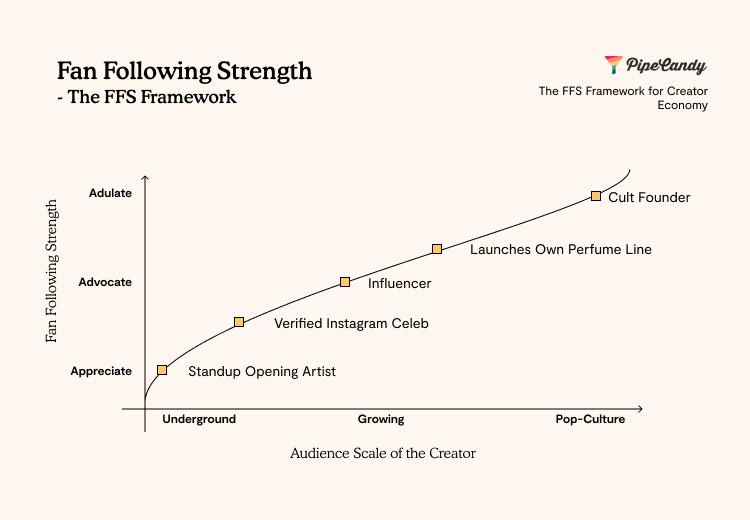
Fans of a creator manifest their liking for the creator in one of these ways:

  • Appreciate
  • Advocate
  • Adulate

Depending on the scale of the audience base and their fan following strength, creators’ alternative revenue streams could be anywhere between that of a guy who does the opening act at an obscure club’s stand-up night to that of a cult founder.

fan following strength the fan following framework

Image Credits: Ashwin Ramasamy

How much influence a creator has depends on the distribution of fans they have in these stages.

The more adulation they get, the more they are ready to carry a brand or monetize on their own. While the number of fans decides the scale of an outcome (exposure, sales, etc.), at any scale a creator can monetize if they have more fans in the advocate or adulate stages.

A brand has to choose its creators both on the scale and the goals they have for the relationship.

A creator with millions of merely appreciative followers could be good for brand exposure but not immediate sales, whereas a niche creator who receives great adulation from their audience could not just move products but move their audience to visit your store to buy a product they promote.

Such creators — if they are able to maintain a high proportion of advocates and adulatory followers as they hit scale — could launch their own brands.

The relationship becomes troublesome when brands simply look at influencer marketing metrics (engagement, clicks, etc.) and ignore the FFS metrics (intensity of fan following as measured from comments, organic shares and engagement for those shares; the shelf life of the content measured by the longevity of comment interaction; fanfic creations around the creator’s content or about the creator, etc.)

Without the understanding of FFS metrics, brands end up partnering with creators at a life stage that could be incompatible with brand goals. A creator with a huge following does not automatically translate to sales if their fan following strength is skewed more toward appreciation than advocacy or adulation.

News: TikTok launches ‘TikTok Q&A,’ a new feature for creators to engage with viewers’ questions

Earlier this year, TikTok was spotted testing a new Q&A feature that would allow creators to more directly respond to their audience’s questions using either text or video. Today, the company has announced the feature is now available to all users globally. With the release of TikTok Q&A, as the feature is officially called, creators

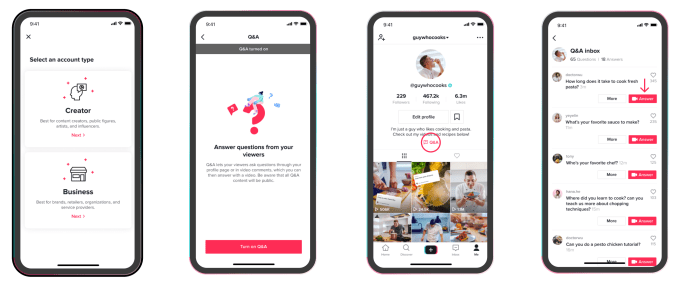
Earlier this year, TikTok was spotted testing a new Q&A feature that would allow creators to more directly respond to their audience’s questions using either text or video. Today, the company has announced the feature is now available to all users globally. With the release of TikTok Q&A, as the feature is officially called, creators will be able to designate their comments as Q&A questions, respond to questions with either text comments or video replies, and add a Q&A profile link to their bios, among other things. The feature also works with live videos.

TikTok Q&A grew out of a way that creators were already using the video platform to interact with viewers. Often, after posting a video, viewers would have follow-up questions about the content. Creators would then either respond to those questions in the comments section or, if the response was more involved, they might post a second video instead.

The Q&A feature essentially formalizes this process by making it easier for creators — particularly those with a lot of fans — to identify and answer the most interesting questions.

Image Credits: TikTok

To use Q&A, viewers will first designate their comment as a Q&A question using a new commenting option. To do so, they’ll tap the Q&A icon to the right side of the text entry field in comments. This will also label their comment with the icon and text that says “Asked by” followed by the username of the person asking the question. This makes it easier for creators to see when scanning through a long list of comments on their video.

The feature will also feed the question into the creator’s new Q&A page where all questions and answers are aggregated. Users can browse this page to see all the earlier questions and answers that have already been posted or add a new question of their own.

Creators will respond to a Q&A question with either text or video replies, just as they did before — so there isn’t much new to learn here, in terms of process.

They can also add Q&A comments as stickers in their responses where the new video will link back to the original, where the question was first asked, similar to how they’re using comment stickers today.

The feature will also be available in TikTok LIVE, making it easier for creators to see the incoming questions in the stream’s chat from a separate panel.

Image Credits: TikTok

As a part of this launch, a Q&A profile link can be added to creators’ Profile bios, which directs users to the Q&A page where everything is organized.

During tests, the feature was only made available to creators with public accounts that had more than 10,000 followers and who opted in. Today, TikTok says its available to all users with Creator Accounts.

To enable the feature on your own profile, you’ll go to the privacy page under Settings, then select “Creator,” tap “Q&A” and then “Turn on Q&A.” (If users don’t already have a Creator account, they can enable it for themselves under settings.)

The feature is rolling out to users worldwide in the latest version of the TikTok app now, the company says.

@tiktokYou can now ask and answer any questions on LIVE with the new Q&A feature. Check it out now!

♬ original sound – TikTok

News: Microsoft Edge now starts up faster and gets vertical tabs

A year ago, Microsoft announced that its Edge browser would get vertical tabs and here we are: Microsoft today announced that vertical tabs in Edge are now generally available. In addition, the Edge team also announced a few under-the-hood changes that will allow the browser to startup significantly faster (up to 41% faster according to

A year ago, Microsoft announced that its Edge browser would get vertical tabs and here we are: Microsoft today announced that vertical tabs in Edge are now generally available.

In addition, the Edge team also announced a few under-the-hood changes that will allow the browser to startup significantly faster (up to 41% faster according to Microsoft’s preliminary tests, to be precise). Since Microsoft can’t speed up your hard drive or significantly shrink Edge, though, the way the team achieves this is by loading the browser in the background when you sign in and then it’ll continue running when you close all browser windows. If that’s not to your liking, you can always turn this feature off, too.

While vertical tabs are available for you to play with now, though, the startup improvements will roll out over the course of this month.

Image Credits: Microsoft

Vertical tabs, of course, are nothing new. Other browsers have long supported them, either as a built-in feature or through extensions. But it’s nice to see them finally becoming a reality in Edge, too.

“Most websites follow a conventional grid that leaves plenty of whitespace on either end of the page,” Microsoft’s Michele McDanel writes in today’s announcement. “As we began working with our users, we realized that this vertical real estate could be a better location for tabs, rather than the traditional horizontal list of tabs at the top. While vertical tabs may not be an entirely new concept, we saw an opportunity to improve the browser experience and tested several prototypes with our users.”

Image Credits: Microsoft

In its research, Microsoft discovered that users who like vertical tabs also like to switch between them and standard horizontal tabs, so it added an always-visible toggle to do so. And since users sometimes want to reclaim all of their screen estate, the team added the ability to collapse the sidebar, too.

For those of you who use Bing, Microsoft is also adding a few nifty new features to its search engine. There’s a new recipe view for when you’re once again out of ideas for what to make for dinner, improved visual search results, and the company has spruced up some of its rich sidebar snippets with a more infographic-like feel. But let’s face it: you’re not using Bing. If perchance you do, you can find more details about the udpates here.

News: With $19M A round, Halo Dx combines data streams to better diagnose cancers, dementia and more

Healthcare is one of the most complex industries out there, creating frustration on the consumer side but also the opportunity for huge improvements from, in a way, rather simple methods. Halo Diagnostics (or Dx for short) has raised a $19M series A to improve diagnosis of several serious illnesses by crossing the streams from multiple

Healthcare is one of the most complex industries out there, creating frustration on the consumer side but also the opportunity for huge improvements from, in a way, rather simple methods. Halo Diagnostics (or Dx for short) has raised a $19M series A to improve diagnosis of several serious illnesses by crossing the streams from multiple tests and making the improved process easily available to providers. They’ve also taken the unusual step of taking out an eight-figure line of credit to buy outright the medical facilities they’ll need to do it.

As anyone who’s had to deal with major health concerns can attest, the care you get differs widely from one provider to another depending on many factors, not least of which are what your insurance covers and what methods are already in use by the provider.

For men going in to get a prostate cancer screening, for instance, the common bloodwork and rectal exam haven’t changed in years, and really aren’t that great at predicting problems, leading to uncertainty and unnecessary procedures like biopsies.

Of course, if you’re lucky, your provider might offer multiparametric MRIs, which are much better at finding problems —and if you combine that MRI with a urine test that checks for genetic markers, the detection accuracy rises to practically foolproof levels.

But these tests are more expensive, take special facilities and personnel, and may otherwise not fit into the provider’s existing infrastructure. Halo aims to provide that infrastructure by revamping the medical data stream to allow for this kind of multi-factor diagnosis.

“Basically doctors and imaging centers aren’t offering latest level of care. If you’re lucky you might get it, but in community medicine you’re not going to,” said Brian Axe, co-founder and chief product officer at Halo Dx. “As perverse as it sounds, what the healthcare industry needs is financial alignment, not just outcomes. The challenge is the integrated diagnostic solution — how do you get these orders, go to market and talk with primary care providers?”

An added obstacle is that multi-modal testing isn’t really the kind of thing medical imaging or testing providers just decide to get into. An imaging center isn’t going to hear that a urine test improves reliability and think “well let’s buy the building next door and start doing that too!” It’s costly and complex to build out testing facilities, and getting the expertise to run them and combine the results is another hurdle.

So Halo Dx is parachuting in with tens of millions of dollars and purchasing the imaging and testing centers themselves (four so far), taking over their operations and combining them with other tests.

Assuming that much liability as a young company may seem like folly, but it helps that these imaging centers are strong businesses already — not derelict, half-paid-off MRI machines being operated at a loss.

“The imaging orders are coming in already; the centers are profitable. They’re coming on board because they see how technology is coming to disrupt them, and they want to help,” said Axe.

Prostate and breast cancers are the first target, but more and better data produce similarly improved diagnosis and treatment planning for more conditions, potentially (these are still being proven out) Multiple Sclerosis, Parkinson’s, and other neurodegenerative diseases.

With one company running multiple intake, imaging, and testing facilities and integrating the results, it’s much more likely that providers will sign up. And Halo Dx is trying to bring some of the enterprise-grade software expertise to bear on the historically neglected field of medical data storage and communication.

Axe deferred to the company’s chief medical officer, Dr John Feller, on the perils of that aspect of the field.

“Dr Feller describes this so well: ‘I have this state of the art MRI machine that can see inside your body, but because of the fragmented solutions that are out there, from intake to the storage centers, I feel like I’m living with pre-dot-com era tech and it’s crippling,’ ” Axe recalled. “If you want to look at records or recommend additional tests, software vendors don’t talk to each other or integrate. You have three providers that need to talk to each other and there’s a dozen systems between them.”

Axe compared the company’s approach here to One Medical’s — increasing efficiency and using that to make the relationship with the consumer lighter and easier, leading to more interactions.

In some ways it seems like a risky move, taking on nearly a hundred million in obligations and jumping into a hugely complex and highly regulated space. But the team is accomplished, the backers are notable, the potential for growth is there, and the success of the likes of One Medical have likely emboldened all involved.

Zola Global Investors led the round, and a who’s-who in medical and tech participated: Anne Wojcicki, Fred Moll, Stephen Pomeranz, Bob Reed, Robert Ciardi, Jim Pallotta, and believe it or not Ronnie Lott of 49ers fame.

These and others involved make for a strong statement of confidence in both the model and the specific approach Halo Dx is taking to expanding and advancing care. Here’s hoping, however, that you won’t have to make use of their services.


News: Bain’s Sarah Smith, former head of HR at Quora, will share the recruiting playbook at Early Stage

If you’re a startup that’s worried about building your team today for tomorrow’s successes you’re not going to want to miss our session with Bain Capital Ventures’ Sarah Smith at TechCrunch Early Stage on April 1 & 2. The current Bain Capital Ventures partner who invests in early to mid-stage companies saw what it was

If you’re a startup that’s worried about building your team today for tomorrow’s successes you’re not going to want to miss our session with Bain Capital Ventures’ Sarah Smith at TechCrunch Early Stage on April 1 & 2.

The current Bain Capital Ventures partner who invests in early to mid-stage companies saw what it was like to grow a startup business firsthand as the vice president of human resources at Quora, a position she held from 2012 to 2016.

While at Quora, Sarah built the HR and operations teams responsible for company culture, compensation, benefits, equity refreshers, performance reviews, HRIS/ATS implementation, people development, policy enforcement and content moderation.

She scaled the company from 40 to 200 employees across all hiring from university to executive search.

After that, she became the vice president of advertising sales and operations, where she led the launch of monetization and onboarding of more than 500 advertisers to the self-service ads platform.

Smith joins an all-star cast of speakers at Early Stage. They range from Zoom CRO Ryan Azus (“How to build a sales team”) to Calendly founder Tope Awotona (“How to bootstrap”) to Kleiner Perkins’ Bucky Moore (“How to prep for Series A fundraising”), are making themselves available to answer your burning questions on just about any topic. And that’s just the tip of the iceberg.

Unlike other TechCrunch events, there is no “main stage” at our TC Early Stage events. Each session is designed to tackle one of the many core competencies any startup needs to be successful. But this isn’t just about listening — every session includes plenty of time built in for audience Q&A. Essentially, it’s all breakout sessions, all day.

What’s more — everyone who buys a ticket to TC Early Stage gets free access to Extra Crunch! Folks who buy a ticket to one of the two events get three months free, and folks who purchase a combination ticket (to both events) get six months free! An Extra Crunch membership includes:

Of course, TC Early Stage dual event ticket holders will get access to both events (April 1-2 and July 8-9) and have access to all the content that comes out of the event on demand. Plus you can take advantage of additional savings with Early Bird pricing for another couple of weeks!

Mercenary CEOs know all too well that this is about the most bang you can get for your buck. Period.

Check out the full list of speakers here and you can get your ticket now!

News: Apple clarifies you can’t actually set a ‘default’ music service in iOS 14.5

Apple has clarified that the iOS 14.5 beta is not actually allowing users to select a new default music service, as has been reported. Following the beta’s release back in February, a number of beta testers noticed that Siri would now ask what music service they would like to use when they asked Siri to

Apple has clarified that the iOS 14.5 beta is not actually allowing users to select a new default music service, as has been reported. Following the beta’s release back in February, a number of beta testers noticed that Siri would now ask what music service they would like to use when they asked Siri to play music. But Apple doesn’t consider this feature the equivalent to “setting a default” — an option it more recently began to allow for email and browser apps.

Instead, the feature is Siri intelligence-based, meaning it can improve and even change over time as Siri learns to better understand your listening habits.

For example, if you tell Siri to play a song, album or artist, it may ask you which service you want to use to listen to this sort of content. However, your response to Siri is not making that particular service your “default,” Apple says. In fact, Siri may ask you again at some point — a request that could confuse users if they thought their preferences had already been set.

Image Credits: iOS 14.5 screenshot

Apple also points out there’s no specific setting in iOS where users can configure a “default” music service, the way there is with email and browser apps. While many earlier reports did note this difference, they still referred to the feature as “setting a default,” which is technically incorrect. 

More broadly, the feature is an attempt to help Siri to learn the listening apps you want to use for different types of audio content — not just music. Perhaps you want to use Spotify to listen to music, but prefer to keep up with your podcasts in Apple Podcasts or some other third-party podcasts app. And you may want to listen to audiobooks in yet another app.

When Siri asks you the which service you want to use for these sorts of audio requests, it will present a list of the audio apps you have installed for you to choose from.

Image Credits: iOS 14.5 screenshot

In addition to Siri’s understanding of your habits — which are based on your responses and choices — app developers can optionally use APIs to provide Siri with access to more intelligence about what people listen to in their app and why. This could allow Siri to fulfill users’ requests with more accuracy. And all this processing takes place on the device.

The audio choice feature, of course, doesn’t prevent users from requesting a particular service by name, even if it’s not their usual preference.

For instance, you can still say something like “play smooth jazz radio on Pandora” to launch that app instead. However, if you continued to request Pandora by name for music requests — even though you had initially specified Apple Music or Spotify or some other service when Siri had first prompted you — then the next time you asked Siri to play music without specifically a service, the assistant may ask you again to choose a service.

Image Credits: iOS 14.5 screenshot

Although this may seem like a minor clarification, it has a greater importance given the increased regulatory scrutiny Apple is under these days over how its App Store and app ecosystem work. Spotify, in particular, has alleged that Apple is behaving in anti-competitive ways — for instance by requiring a commission on Spotify’s in-app purchases even though Apple runs a rival music service that Spotify claims has first-party advantages.

The audio choice feature had first appeared in iOS 14.5 beta 1, but had been pulled in beta 2. It has since returned with the release of beta 3, which again drew attention and headlines — as well as Apple’s response.

Although it’s not technically allowing you to set a “default,” the Siri-powered feature could eventually feel like one for users with consistent listening behavior. The iPhone will simply become smarter about how to play what you want to hear, without necessarily forcing you to use Apple’s own apps if you don’t want to.


News: Fintech startup ClearGlass Analytics closes $3.6M for pension funds transparency platform

Fintech startup ClearGlass Analytics has closed a £2.6 million ($3.6M) funding round for its platform, which aims to create greater transparency on fees in the long-term savings market, such as pensions and the wider asset management market.  The £2.6m seed round includes European VC Lakestar and Outward VC, the venture arm of Investec, as well

Fintech startup ClearGlass Analytics has closed a £2.6 million ($3.6M) funding round for its platform, which aims to create greater transparency on fees in the long-term savings market, such as pensions and the wider asset management market. 

The £2.6m seed round includes European VC Lakestar and Outward VC, the venture arm of Investec, as well as several angels from both the asset management and pension fund worlds. These include Ruston Smith, a pension trustee; Richard Butcher, Chair of the PLSA (UK pension trade body); Chris Wilcox, former Global Head of JP Morgan Asset Management; and Rob O’Rahilly, Sikander Ilyas and Alex Large, also former JP Morgan employees.

ClearGlass is targeting the £1.5trillion mature ‘Defined Benefit’ pension schemes market and claims to now work with over 500 DB pension funds. It will use the funding to expand into the UK Defined Contribution pension market, and consolidate its early footprint in Europe and Africa.

How ClearGlass works is that it acts as a data interface between asset managers and their clients. Pension funds then use the platform to see all of their investment costs in one place, thus getting more data than usual from more asset managers and other suppliers. This helps the funds see the ‘true cost’ of what they are paying for the management of their investments. ClearGlass claims to be able to uncover the kinds of costs of asset management that, in some instances, can be more than double those expected.

The startup recently did an analysis of the cost and performance of over 400 asset managers. It found that while most UK asset managers were meeting minimum standards for data delivery, quality, and accuracy, 30 (including some powerful players) did not pass their tests.

The company was founded by Dr. Christopher Sier, a World Bank and FCA expert who previously developed the cost transparency standard at the request of the FCA, and co-founders Ritesh Singhania and Kunal Varma.

Sier, founder and CEO, said: “Finding your costs are so much larger is shocking, but also something to be celebrated. These incremental costs were always there, they just weren’t exposed, and now you can identify those and bring about change. You can’t manage what you don’t measure.”

In an interview with TechCrunch, Ritesh Singhaniam, COO, said getting the data about pension funds is normally “super challenging and complicated. And second of all, even when you got the data, you couldn’t make head nor tail of it because you can’t compare it across funds. What we have done is that we have been the line of communication between the manager and the pension fund. So we have built a piece of technology that helps with the communication between the asset managers, and the pension funds to be able to collect that data, check that data. And finally, give them something that doesn’t require them to spend 20 hours to understand it.”

ClearGlass was incubated by the Founders Factory accelerator.

News: Social commerce startup Elenas raises $6M and plans for international expansion

Colombian startup Elenas says it’s helping tens of thousands of women make money by selling products online. And today, it announced that it has raised $6 million in Series A funding. That’s on top of the $2 million seed round that Elenas announced last fall. Founder and CEO Zach Oschin said that demand continues to

Colombian startup Elenas says it’s helping tens of thousands of women make money by selling products online. And today, it announced that it has raised $6 million in Series A funding.

That’s on top of the $2 million seed round that Elenas announced last fall. Founder and CEO Zach Oschin said that demand continues to grow, particularly with high unemployment levels (particularly among women), while consumers remain nervous about in-person shopping during the pandemic.

“We’ve been able to provide opportunities for tens of thousands of women to earn extra income,” Oschin said.

He suggested that Elenas is essentially a reinvention of the direct sales/catalog sales model that 11 million women participate in across the Latin America. The idea is that independent seller/entrepreneurs (often but not always women) can browse a catalog of products in categories like beauty, personal care and electronics, from more than 250 distributors and brands, all available at a discounted wholesale price. They decide what they want to sell, how much they want to mark the price up and then promote the products on social channels like WhatsApp and Facebook.

Besides its digital focus, Oschin said said Elenas is better for the resellers because there’s less risk: “We don’t hold inventory for the company, which is very different than traditional direct sales, and our entrepreneurs don’t ever hold inventory.” Nor do those entrepreneurs need to get involved in things ose like payment collection or delivery, because Elenas and its distributor partners handle all of that.

“For us, the goal is to provide this backend operating system that gives women everything they need to run their store,” he added.

Elenas offers an automated on-boarding process for the sellers, but Oschin said that within the app, “we do a lot of work to train our sellers how to sell.”

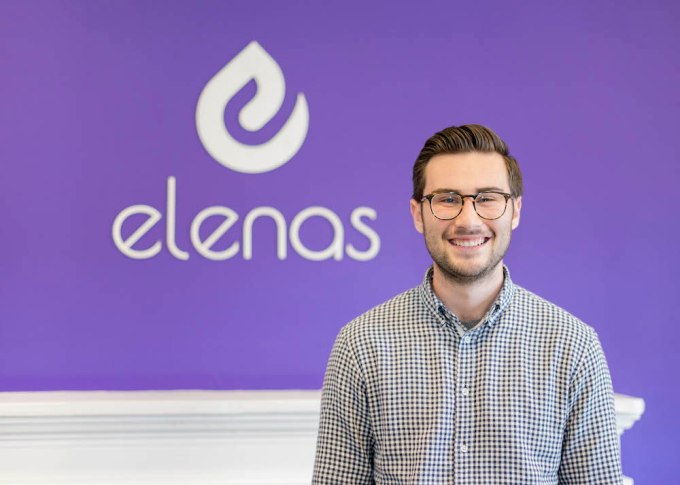
Elenas CEO Zach Oschin

Elenas CEO Zach Oschin

The company (which participated in our Latin American Startup Battlefield in 2018) says it’s now paid out more than $7 million to its sellers. It doesn’t limit participation by gender, but Oschin estimated that more than 95% of sellers are women, with 80% of them under the age of 30 and about a third of them without any previous direct sales experience.

The new funding comes from Leo Capital, FJ Labs, Alpha4 Ventures and Meesho. Oschin said the company’s investors have a presence across six different continents, reflecting its international vision. Indeed, one of its next steps is expanding across Latin America, starting with Mexico and then Peru.

“Having seen the meteoric growth of social commerce in India and China we are excited to partner with Elenas as they have demonstrated the right product and operating model for the region.”  said Leo Capital co-founder Shwetank Verma in a statement. “The Elenas team has built a solution that’s inclusive, impactful and is well positioned for exponential growth.”


Early Stage is the premier ‘how-to’ event for startup entrepreneurs and investors. You’ll hear first-hand how some of the most successful founders and VCs build their businesses, raise money and manage their portfolios. We’ll cover every aspect of company-building: Fundraising, recruiting, sales, product market fit, PR, marketing and brand building. Each session also has audience participation built-in – there’s ample time included for audience questions and discussion.

WordPress Image Lightbox Plugin