Monthly Archives: March 2021

News: In a first for Europe, Passion Capital will crowd-fund part of its new $62M fund from retail investors

Passion Capital, one of the UK’s first early-stage VCs, is to crowd-fund the final stage of its latest £45 million fund ($62.5m), Passion Capital Fund III. TechCrunch understands this is the first time retail investors have been invited to become LPs in a VC fund, at least in Europe. Passion says it will use the

Passion Capital, one of the UK’s first early-stage VCs, is to crowd-fund the final stage of its latest £45 million fund ($62.5m), Passion Capital Fund III. TechCrunch understands this is the first time retail investors have been invited to become LPs in a VC fund, at least in Europe.

Passion says it will use the Seedrs platform, which is normally used by startups themselves for crowd-equity funding campaigns. The move is a highly unusual one for a VC, where LPs are normally drawn from Pension funds and family offices, rather than the ‘person on the street’.

Seedrs was previously used by the Seedcamp venture accelerator in the UK to allow its founders to participate in a fund-raise, but this was allocated privately. What’s different about Passion’s move is that almost anyone will be able to become an LP in their new fund, albeit even a very small one.

A £350,000 allocation will be made available to the public. The offer may well prove tantalizing to retail investors as their single investment would be applied across a range of startups rather than through the direct single company investment traditionally made via Seedrs.

Any investors who self-certifies as ‘high net worth’ or ‘sophisticated’ will be able to invest in the fund. Passion Capital’s portfolio of 81 tech investments is worth an estimated £3 billion and includes Monzo, GoCardless, Butternut Box, Adzuna, and Marshmallow. 

Passion says it has already made 11 new investments from Fund III, which investors via the Seedrs platform will automatically become a part of, with a further 15-20 new investments planned.

Eileen Burbidge, Passion Capital partner said in a statement: “Investment into a private venture fund is usually reserved for institutions. We are throwing our doors open to a much wider range of investors in this unique collaboration with Seedrs as we look to diversify our investor base and increase access for investors who might be interested in partnering with us.”

Jeff Kelisky, CEO at Seedrs, added: “This is a very innovative collaboration for both the venture capital and the equity crowdfunding space… It presents our community with another avenue to participate in SME equity finance that delivers additional investment opportunities and the potential for exceptional returns, beyond the direct investment campaigns we also run.”

Speaking to me in an interview, Burbidge added: “We’d been seeing what’s been happening in the States, with Angellist Rolling Funds and then the SEC expanding the definition of qualified investors, and, basically, this democratization of retail investors finally getting access to venture funds and to GPs. It’s kind’ve breaking down these age-old dynamics of where institutional investors pick and choose these age-old fund managers, and the whole notion that venture has been this elite, inaccessible asset class for retail investors.”

Burbidge said she talked to Angellist about doing something similar in Europe and realized it wasn’t legally possible right now, so she asked Seedrs, who confirmed they could do it.

“We closed the fund first in August 2019, it was 25 million, then August 2020 with another 20, so 45 million, which is the same size as our second fund. And during the pandemic.” But, she says, after dealing with their LPs, they eventually found they had a £350,000 allocation left over, so this became the germination of the crowdfunding idea.

“I thought, we’ve got 350,000 left, why don’t we crowd-fund it. This whole movement of letting retail investors get access to venture funds and invest – to get that exposure to a whole portfolio- I just think is a really good thing. I think it’s great for everyone involved. Obviously, as long as they’re educated and they know that capital is at risk and it’s not pensioners putting their last savings in, and those usual kinds of warnings about crowdfunding. But I love the idea of people getting exposure to tech, and not having to do £150,000 as a minimum check.”

Although Burbidge declined to comment further on the subject, there is of course the implication that this allocation could be increased, if the crowd-funding takes off.

She added: “There’s not a retail investor in the world who wouldn’t want access to the latest Sequoia fund, or the Accel fund right or Andreessen Horowitz funds… we think it’s great to give retail investors exposure to a portfolio. I think it’d be great if more funds did it.”

Burbidge believes actions like Passion’s will “increase the diversity of the LP base. It increases inclusion and gives people more access. It just creates more participation and breaks down the old barriers. We’ll have the Seedrs platform for Q and A’s. It is going to be up to us how much we want to engage with that community, the same as Monzo does with its crowdfunded investors. Monzo holds a public event every year for all of its crowdfund investors. I would love to do an event… it’d be great to meet people who have invested in this fashion.”

News: African payments company Flutterwave raises $170M, now valued at over $1B

The proliferation of fintech services across Africa remains in full swing as investors remain bullish about the opportunities that abound in the sector. Today we behold another unicorn: African payments company Flutterwave announced that it has closed $170 million, valuing the company over $1 billion. New York-based private investment firm Avenir Growth Capital and US

The proliferation of fintech services across Africa remains in full swing as investors remain bullish about the opportunities that abound in the sector. Today we behold another unicorn: African payments company Flutterwave announced that it has closed $170 million, valuing the company over $1 billion.

New York-based private investment firm Avenir Growth Capital and US hedge fund and investment firm Tiger Global led the Series C round. New and existing investors who participated include DST Global, Early Capital Berrywood, Green Visor Capital, Greycroft Capital, Insight Ventures, PayPal, Salesforce Ventures, Tiger Management, WorldpayFIS 9yards Capital

The Series C round comes a year after Flutterwave closed its $35 million Series B and $20 million Series A in 2018. In total, Flutterwave has raised $225 million and is one of the few African startups to have secured more than $200 million in funding

Launched in 2016 as a Nigerian and U.S.-based payments company with offices in Lagos and San Francisco, Flutterwave helps businesses build customizable payments applications through its APIs.

When the company raised its Series B, we reported that Flutterwave had processed 107 million transactions worth $5.4 billion. Right now, those numbers have increased to over 140 million transactions worth over $9 billion. The company, which also helps businesses outside Africa to expand their operations on the continent, has an impressive clientele of international companies. Some of them include Booking.com, Facebook, Flywire, and Uber.

Flutterwave says over 290,000 businesses use its platform to carry out payments. And according to the company’s statement, they can do so “in 150 currencies and multiple payment modes including local and international cards, mobile wallets, bank transfers, Barter by Flutterwave.”

While its website shows an active presence in 11 African countries, Flutterwave CEO Olugbenga Agboola, also known as GB, told TechCrunch the company is live in 20 African countries with an infrastructure reach in over 33 countries on the continent.

Last year was a pivotal one for the five-year-old company. Its second investment came just in time before the COVID-19 pandemic hit Africa, negatively impacting some businesses but not payments companies like Flutterwave.

Agboola says his company grew more than 100% in revenue within the past year due to the pandemic without giving specifics on numbers. It also contributed to its compound annual growth rate (CAGR) of 226% from 2018.  

According to the CEO, this growth resulted from an increase in activities in “COVID beneficiary sectors”  — a term used by Flutterwave to describe sectors positively impacted by the pandemic. They include streaming, gaming, remittance, e-commerce, among others. Agboola adds that the company plans to ride on these sectors’ growth and continue in that trajectory.

Besides, Flutterwave’s response in introducing the Flutterwave Store for merchants during pandemic-induced lockdowns was instrumental as well. The product, which went live across 15 African countries, helps over 20,000 merchants to create storefronts and sell their products online.

Image Credits: Flutterwave

Flutterwave wants to become a global payments company, and the Series C investment helps to reach that goal. The company says it plans to use the funds to speed up customer acquisition in its present markets. It will also improve existing product offerings like Barter, where it has over 500,000 users, and introduce new offerings. One such is Flutterwave Mobile, which in the founder’s words “will turn merchants’ mobile devices into a point of sale, allowing them to accept payments and make sales.”

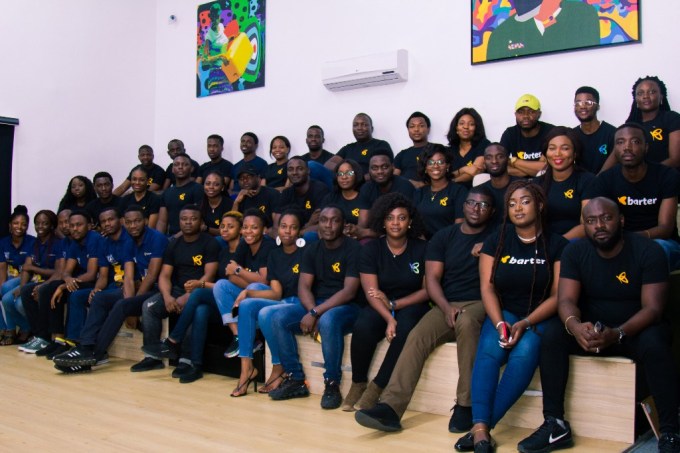
In a statement, Agboola gives credit to the company’s more than 300 staff, investors, customers, and regulatory bodies like the Central Bank of Nigeria (CBN) for creating the backbone for Flutterwave’s success.

For some, it would come off as strange that the CEO mentioned the last stakeholder given the unfavourable and questionable regulations it has recently placed on fintechs in Nigeria.

However, Agboola thinks the reverse is the case. He makes a bold statement by saying that under the current CBN governor’s current administration, the Central Bank has shown a consistent regulatory framework that has allowed fintechs like Flutterwave to thrive.

“Flutterwave, for instance, launched when the governor just came in. We got our license and scaled our business because of a favourable regime that allowed it to be possible. There are so many trailblazing innovations that we don’t talk about a lot about Nigeria, like the BVN and the NIP system. Nigeria has consistently been at the forefront of payments innovation for over a decade, and all it was possible because of the forward-looking CBN policies,” he said.

On exits, acquisitions, and the billion-dollar club

One fintech company that has unquestionably championed payments in this timeframe is Interswitch. The payments giant is currently worth $1 billion after Visa acquired a 20% stake in 2019 and Flutterwave joins the company as the only fintechs in Nigeria to have reached that valuation. This number increases to four in Africa when including publicly traded African e-commerce company, Jumia and Egyptian payments company Fawry.

Flutterwave’s $170 million mammoth raise and its billion-dollar valuation represent a landmark achievement for the African startup scene. While the aforementioned companies’ valuations can’t be disputed, there are question marks on whether some are startups or others, African companies.

Interswitch, for instance, was founded in 2002, which doesn’t necessarily make it a startup despite still being private. Fawry was launched in 2007 but didn’t become a billion-dollar company until 2020, a year after going public. Jumia, albeit public, reached unicorn status as a private company in 2016; however, there are varying consensus if it is an African company or not.

Unlike the others, Flutterwave checks all the boxes of what a billion-dollar African startup should ideally look like — founded by Africans in Africa while reaching a $1 billion valuation in fewer than 10 years.

Most stakeholders in Africa’s tech ecosystem knew this would happen, but the timing expected was later rather than sooner. After raising $35 million in a Series B in 2020, who would have thought Flutterwave was going to raise almost five times that amount the following round and be valued at more than $1 billion the next year? Maybe just a few.

Well, these numbers rarely matter to Agboola, as I ask him what he thinks of Flutterwave’s new growth metric. “I’ll say valuation is both art and science. At some point, we were also the most valuable African company at YC, but it’s not really a metric we’re focused on at Flutterwave because they move up and down,” he smiles. “Our key metrics have always been revenue, customer growth and retention.”

Aptly said, but as the company continues to grow, questions around profitability and exit will become more frequent.

Paystack, another Nigerian payments company that is often compared to Flutterwave got acquired by Stripe for more than $200 million last year. At the time, there were also rumours of Flutterwave taking the same route, but this Series C raise suggests that the company is not looking to exit at the moment. However, if the YC-backed company indeed does, it might be through an IPO.

“Like every other startup, we’re thinking about ways to create exit tools for our investors. So, a listing is very much in our plans, but for now, we’re focused on giving the best value to our customers,” Agboola said. 

In the course of the company’s journey to this point, it has remained big on partnerships. In 2019, Flutterwave partnered with Visa to launch Barter and Alipay to offer digital payments between Africa and China. Then last year, the company announced a partnership with Worldpay FIS for payments in Africa.

Although Flutterwave has done this with bigger establishments, Agboola says the company will be looking to do the same with smaller companies, opening the doors to potential acquisitions.

We believe in payments in partnership as you have to partner to scale. So, if in the course of making partnerships and scaling and we identify promising companies with a similar ethos and have our vision in mind, that is in making Africa a country, an acquisition isn’t off the table,” he said.

After capturing much of Sub-Saharan Africa, Agboola says Flutterwave’s next plan is to go live in North Africa. There, it will likely face competition from a local leader, Fawry, but that doesn’t matter. The African fintech market is large enough to accommodate multiple players.

That’s one reason why it has also been a popular bet with investors. The sector, which is both local and international investors’ top destination, attracted between 25% to 31% of the total VC funding last year from varying sources.

But from the information on their websites, this is the first time Flutterwave’s lead investors —  Avenir Growth Capital and Tiger Global — are backing an African fintech startup. For the former, Flutterwave represents the first African startup in its portfolio, but Tiger Global is known to have invested in Nigerian media company iROKOtv and South African e-commerce company, Takealot.

Via their partners — Jamie Reynolds of Avenir Growth Capital and Scott Shleifer of Tiger Global, both firms said they’re backing Flutterwave on its quest to build a global and world-class payments company.

Looking into the future, Agboola insists that the company’s focus remains to support its 290,000 merchants and help them build global businesses.

“We look forward to increasing our investments across the continent and deepening the impact our platform has on lives and livelihoods as we take more businesses in Africa to the world, and at the same time continue to bring more of the world to Africa,” he said.


News: Audi’s all-electric Q4 e-tron crossover will have a dynamic AR windshield display

Along with a more spacious cockpit, more storage and some upgraded cupholders, Audi has packed in some serious new tech into its upcoming all-electric Q4 e-tron compact crossover, including an augmented reality head-up display (HUD) that’s reactive enough to accurately stick to a driver’s real environment.  Audi revealed Tuesday the interior of the Q4 e-tron,

Along with a more spacious cockpit, more storage and some upgraded cupholders, Audi has packed in some serious new tech into its upcoming all-electric Q4 e-tron compact crossover, including an augmented reality head-up display (HUD) that’s reactive enough to accurately stick to a driver’s real environment. 

Audi revealed Tuesday the interior of the Q4 e-tron, the fifth electric vehicle in its lineup and part of the German automaker’s plan to launch more than 30 EVs and plug-in hybrids by 2025. The Q4 e-tron has been expected for some time; it was first revealed as a concept at the 2019 Geneva International Motor Show.

The exterior of the production version of the Q4 is still camouflaged, but we know its dimensions. The takeaway: An electric vehicle that fits in the larger compact SUV segment with a short overhang and wheelbase of 9.1 feet — a combination that gives it a rather stout look. However, that allows for an interior of 6 feet in length, the kind of space found in a large full-size class SUV.

The underlying architecture of the vehicle is based on its parent company VW’s modular electric drive toolkit chassis, or MEB platform. This flexible modular system, first introduced by VW in 2016, was developed to make it more efficient and cost-effective to produce a variety of EVs. It has also given designers more room to play with thanks to the flat floor. And they took advantage of that space, popping in a center console with two cup holders, a 4.4-liter stowage compartment with a cover, two (or four as an option) USB-C sockets and the Audi phone box (which charges wirelessly and boosts your phone’s signal) upon request.

Head-up-Display. Image Credits: Audi

The real story here is the tech — and most notably an option to add an AR-enabled windshield. The AR windshield provides a wider field of view and more accurate and dynamic animations versus a standard windshield HUD. The Q4 e-tron will break down important displayed information via two sections: one for status and one for AR. The former, appearing about 3 meters ahead of the driver, will display the driving speed, traffic signs, the assist system and navigation symbols as static displays. 

With the AR section, the driver will perceive the floating symbols to be about 10 meters away. That’ll display information like lane departure warnings that superimpose a red line on the real-life lane marking and a colored stripe over an active car driving in front when in adaptive cruise control.

“Head-up displays aren’t new,” states Audi. “This just takes the field of vision farther out so it enables more active use.”

The AR will also display navigation information. Audi calls the turning arrows “drones,” probably because the arrows fly ahead when driving straight and then disappear, reappearing before the next point of action. When the driver approaches an intersection, the drone announces the turn before steering the driver onto the road with precision.

Head-up-Display. Image Credits: Audi

On the software side of things, the Q4 e-tron’s processing unit, called the AR Creator, picks up raw data from the car’s front camera, radar sensor and GPS navigation to render display symbols at a rate of 60 frames per second and adapt them to the surrounding environment. The quality of these displays, shown via a bit of advanced smoke and mirrors on what Audi calls the EV’s “picture generation unit (PGU)” — basically, a lot of mirrors — will obviously be key to how well it works in real life. With only simulations to show for it currently, it’s not clear how well Audi will pull this off. A wider frame with dynamic symbols must deliver on its promise to show up “just as clearly as their real-life environment” otherwise they’ll become a hindrance to the driver, and if they don’t pull off the depth effect exactly, they could even cause driver discomfort.

The Q4 e-tron also features updated natural-language voice control, activated by saying “Hey Audi.” The new car will also ditch physical buttons on the steering wheel in favor of touch-sensitive ones. But with a haptic feedback loop, it’ll still feel somewhat like you’re pressing a button. 

About 3% of the company’s sales in 2020, or 47,000 vehicles, were the electric e-tron SUV and the e-tron Sportback, a number that will surely increase as the company continues to roll out luxury EVs. 

News: MobileCoin, a cryptocurrency involving Signal founder Moxie Marlinspike, just raised venture funding

MobileCoin, a cryptocurrency that has received technical guidance from Moxie Marlinspike, the creator of private messaging app Signal, has raised $11.35 million in fresh venture funding across two rounds from Future Ventures and General Catalyst. The round, shared with us by a source familiar with the company, seems to suggest the cryptocurrency is one step

MobileCoin, a cryptocurrency that has received technical guidance from Moxie Marlinspike, the creator of private messaging app Signal, has raised $11.35 million in fresh venture funding across two rounds from Future Ventures and General Catalyst.

The round, shared with us by a source familiar with the company, seems to suggest the cryptocurrency is one step closer to its possible use on the Signal platform, where it does not appear to be available currently.

We were unable to reach Marlinspike today. MobileCoin founder Joshua Goldbard, who lists himself as “janitor” of MobileCoin on LinkedIn, declined to answer questions this afternoon after being reached on Signal. Investors pointed us back to the company when asked about how MobileCoin compares to other crypto-related outfits.

It was back in 2017 that Wired first profiled MobileCoin, describing it as on a mission to overcome many of the early, and in some cases, lingering, challenges with cryptocurrencies, including that they’re too complicated for most people and merchants to use, they aren’t adequately scalable and transaction times take too long.

For example, Dapper Labs, the company behind the ventures CryptoKitties and NBA Top Shot, developed its own blockchain and “Flow” token last year owing to scalability issues it encountered with Ethereum, as well as its interest in developing a platform that was more “consumer oriented.”

At the time, Wired noted that while it “may feel like the last thing the world needs is yet another cryptocurrency” — there are now more than 4,000 of them in digital circulation —  Marlinspike’s track record with Signal “makes this a project worth watching.”

Based on its website, MobileCoin’s ambition appears to be focused around privacy-protecting payments made through “near instantaneous transactions” over one’s phone, even while the risks involved in storing cryptocurrency on a phone include potentially losing that value if the phone is left unlocked or the radio on the phone is hacked or if, say, iOS itself is hacked. (It happens, despite the robust permissions system that iOS uses to grant apps access to particular services and information.)

According to the site, one feature of MobileCoin is that it allows users to “securely recover” their wallet if they lose their phone, though it isn’t immediately clear how without trusting a provider with private keys, which MobileCoin says isn’t necessary. (More on this soon, presumably.)

If MobileCoin becomes a de facto way to transact over Signal — Goldbard and Marlinspike told Wired they envisioned it first as an integration in chat apps like Signal or WhatsApp — its reach could potentially be massive.

Though Signal doesn’t disclose how many users are on the platform, an estimated 40 million people now use its encrypted messaging app, which saw a surge in downloads earlier this year, in the waning days of the Trump presidency. According to Sensor Tower, which provides mobile app analytics, Signal was downloaded 17.8 million times during the week of January 5, compared to the 50,000 downloads per day it typically sees.

Still, if heavy use over Signal is how MobileCoin aims to gain value, the currency — which became available to purchase on the exchange FTX after launching on the platform in early December — would seemingly have an upward battle.

While Marlinspike’s early involvement is a definite plus, cryptocurrencies and messaging apps haven’t historically mixed well together, owing to regulators. Kik Messenger, the mobile messaging app founded by a group of University of Waterloo students in 2009, created a digital currency called Kin for its users to spend inside the platform. The project ultimately led to a years-long battle with the Securities & Exchange Commission that nearly decimated the company, though it’s currently mounting a comeback.

(In fairness to MobileCoin, which has turned to venture capitalists, Kik tried raising money from Kin through an initial coin offering or ICO, a relatively untested and unregulated type of funding mechanism at the time.)

Telegram, a much bigger messaging app than Signal — it had an estimated 400 million users as of last April — similarly abandoned plans to offer its own decentralized cryptocurrency to anyone with a smartphone after years of battling with the SEC. Like Kik, part of Telegram’s drama dated to early sales of its tokens through ICOs.

Even Facebook, despite scaling back more ambitious plans around a new cryptocurrency and resolving instead to launch a single digital coin backed by the dollar, hasn’t launched anything yet, though it’s expected soon.

Possibly, MobileCoin simply plans to operate outside of the U.S. Indeed, in December, according to a public post on Medium, the MobileCoin Foundation wrote that the project is not available to U.S. users or “persons or entities in other prohibited jurisdictions.”

Either way, the new round is not, notably, MobileCoin’s first outside round. In May 2018, it disclosed in an SEC filing that it had raised a $29.7 million from investors. Reportedly, Binance Labs, the venture arm of the cryptocurrency exchange giant Binance, led that financing.

News: Former head of the World Resources Institute has a new role leading Bezos’ $10 billion Earth Fund

The $10 billion Bezos Earth Fund has a new chief executive and it’s Andrew Steer, the former head of the World Resources Institute — an organization that Bezos described as “working to alleviate poverty while protecting the natural world.” As the head of the fund, Steer will be responsible for spending that money down by

The $10 billion Bezos Earth Fund has a new chief executive and it’s Andrew Steer, the former head of the World Resources Institute — an organization that Bezos described as “working to alleviate poverty while protecting the natural world.”

As the head of the fund, Steer will be responsible for spending that money down by the end of 2030, according to a tweet from none other than Steer himself.

I am deeply honored to have been invited by @JeffBezos to become the first President and CEO of the $10B Earth Fund. It will address climate, nature and environmental justice. Jeff’s goal is to spend it down between now and 2030, the date by which the SDGs must be achieved. [2/5]

— Dr. Andrew Steer (@AndrewSteerWRI) March 9, 2021

“The Earth Fund will invest in scientists, NGOs, activists, and the private sector to help drive new technologies, investments, policy change and behavior. We will emphasize social justice, as climate change disproportionately hurts poor and marginalized communities,” Steer wrote.

With a $100 million award from the first rounds of grants the Bezos Fund issued in November, the World Resources Institute was one of the largest recipients of Bezos’ largesse. Other big recipients from the first block of grants included the Environmental defense Fund, The Natural Resources Defense Council, The Nature Conservancy and The World Wildlife Fund.

“I feel incredibly fortunate to join the Bezos Earth Fund as its CEO, where I will focus on driving systemic change to address the climate and nature crises, with a focus on people. Too many of the most creative initiatives suffer for a lack of finance, risk management or the right partnerships. This is where the Earth Fund will be helpful,” Steer said in a statement issued by the WRI.

While at the WRI, Steer oversaw its international expansion from an advocacy organization centered primarily in Washington to a global organization with offices in Indonesia, the UK and Colombia along with hubs in Ethiopia and the Netherlands. Steer also expanded the offices in Brazil, China, India, Indonesia and Mexico.

His tenure also involved creating coalitions and initiatives that changed the understanding around the economics of climate change, including the launch of a $10 million annual initiative to support the implementation of climate plans by 100 countries, according to a statement from the WRI.

“The $10 billion Bezos Earth Fund has the potential to be a transformative force for good at this decisive point in history. Andrew’s global reputation, deep technical knowledge and experience, and commitment to social justice make him a perfect leader for the fund,” said Christiana Figueres, co-founder of Global Optimism and former Executive Security of the UNFCCC.

News: Your deal flow is not diverse enough

Recognizing the issue is the first step to solving any problem. The increase in awareness and action is sure to bring forth important development that makes the future brighter for women entrepreneurs everywhere.

Michaela Villaroman
Contributor

Michaela Villaroman is the Media Relations Coordinator for Seedstars.

Alisee de Tonnac
Contributor

Alisee de Tonnac is co-founder and co-CEO of Seedstars, a Swiss-based group with a mission to impact people’s lives in emerging markets through technology and entrepreneurship. Seedstars group is present in 90+ countries with activities that include the largest entrepreneurship competition in emerging markets.

H2″ option to demote all headings by one level.

—–>

In light of Women’s History Month, we’re taking a look at the status of gender diversity in investment portfolios because women remain underrepresented in the field of entrepreneurship. Let’s delve into the numbers — and why your deal flow may not be diverse enough.

Women entrepreneurs and fundraising

There is an unmet need of $260 billion to $320 billion for women-owned company funding, according to a 2013 study conducted by the International Finance Corporation. A survey of women from 350 tech startups reinforced this: 72% of women respondents said that they faced difficulty attaining financial capital when they were starting their businesses and nearly 80% of them had to rely on personal funding. Furthermore, women founders receive less than 3% of all VC dollars.

The stark contrast between the ease of fundraising for men compared to women is apparent. Data show that men were four times as likely as women to access equity financing from angel investors or VCs (14.4% against 3.6%). The ease with which men tap into multiple sources for capital explains why they start companies with almost twice the capital of women founders on average.

So, why is fundraising harder for women-led startups?

Women’s struggle to attain capital can perhaps be explained by looking into the diversity in fund management firms. Fund managers’ lack of diversity ultimately contributes to the resulting funding inequality when it comes to their portfolios. Data from Women in VC show that only 5.6% of U.S. VC firms are women-led and only 4.9% of VC partners in the U.S. are women.

“Empowering women and people of color to drive the investment strategy of venture firms is the fastest and most effective course correction” for the lack of gender-diverse portfolios, the Women in VC report said. “Venture investors have extraordinary power to impact broader society norms. They decide what founders get funded, what businesses stand a chance at success, and what products get brought to market. These things, in turn, exert a determining influence on our culture.”

Investors must address the diversity issue within their ranks first; they must be aware of the existing unconscious bias and take extra actions toward improving their efforts in actively trying to source and invest in women-led startups.

Why is diverse deal flow important?

Diversifying an investment portfolio to include more women-led ventures means trusting in the leadership of women, which research has shown to be worth believing in. A 2012 study of company performance showed that more than 150 listed German firms excelled when they had at least 30% women representation on their executive boards.

Even more interesting, another study argues that women make better board directors than men. The findings revealed that women are more effective at accounting for multiple competing interests, solving problems creatively and building consensus. By comparison, male directors often made decisions based on rules, regulations and tradition.

Undeniably, companies managed by effective women leaders are set to provide a lucrative return on investment. Roy Adler, a Fulbright scholar and professor of marketing at Pepperdine University, conducted a 19-year study that found a correlation between companies with the best record of promoting women to senior positions and higher profitability — between 18% to 69% higher than the median Fortune 500 companies in their respective industries.

While the numbers prove that the financial returns can be promising, the bigger impact and importance of investing in gender diversity is the overall economic growth and prosperity that follows. Increasing opportunities for women entrepreneurs sets off a domino effect that local and global markets can benefit from.

McKinsey estimated that if total gender equality was achieved, the global gross domestic product (GDP) could be increased by up to $28 trillion globally by 2025. In fact, by not investing in women, the downsides prove to be quite massive. A study by the United Nations showed that the Asia-Pacific region, including China and the United States, loses at least $42 billion annually in GDP by not fully engaging women’s participation in their economy.

Seedstars, the Swiss investment holding group that focuses on investing in tech high-growth companies from emerging markets, provides a more in-depth view of the benefits of developing women entrepreneurship, specifically in developing countries.

The numbers make it evident that gender diversity is underutilized but highly valuable. In Melanne Verveer and Kim K. Azzarelli’s book “Fast Forward,” experts weigh in on the topic of gender inclusivity.

“The biggest destroyer of wealth creation is patriarchy,” Pax World Funds CEO Joseph Keefe said. “It’s not just up to women to ‘lean in’. Shareholders seeking better returns would do well to lean on companies to appoint and promote more women.”

“Women remain hugely underrepresented at positions of power in every single sector across this country,” Barnard College president Debora Spar noted. “We have fallen into what I call the 16% ghetto, which is that if you look at any sector, be it aerospace engineering, Hollywood films, higher education, or Fortune 500 leading positions, women max out at roughly 16%. That is a crime, and it is a waste of incredible talent.”

Moving gender inclusivity forward

Taking active measures to ensure that we are fully including women is necessary to make an impact. Since 2018, Seedstars has been actively working on gender equity within its core activities, highlighted in the group’s theory of change, such as sourcing of ventures, capacity-building programs and investment activities.

To date, Seedstars has supported more than 600 women-led enterprises and invested in 14 businesses co-founded by women. Additionally, Seedstars is working on gender equity when it comes to mentors, jury members and training delivery experts. Recent numbers show that about 30% of all Seedstars program participants are women, a number that Seedstars is proud to have increased over the past years (2018 numbers were more around 20%, depending on the region) and is committed to increasing that figure in the coming years.

Through the combined efforts of our own initiatives and those from investors who do their part in promoting gender diversity, the world is bound to reap the benefits of investing in what is proving to be one of the most powerful demographic groups the world is yet to fully embrace.

Recognizing the issue is the first step to solving any problem. The increase in awareness and action is sure to bring forth important development that makes the future brighter for women entrepreneurs everywhere.

News: Mercado Libre taps Pachama to monitor and manage its $8 million investment in Latin American rainforest restoration

Mercado Libre, one of the largest e-commerce and financial services company from Latin America by market cap, has selected the startup and Y Combinator alumni Pachama as its strategic partner in developing projects to restore ecosystems in Latin America. The selection of Pachama is part of a program initiated by Mercado Libre, Latin America’s answer

Mercado Libre, one of the largest e-commerce and financial services company from Latin America by market cap, has selected the startup and Y Combinator alumni Pachama as its strategic partner in developing projects to restore ecosystems in Latin America.

The selection of Pachama is part of a program initiated by Mercado Libre, Latin America’s answer to Amazon, which is called Regenera America. The $8 million that Mercado Libre is investing will be in two reforestation projects: the “Mantiqueira Conservation Project”, organized under the auspices of The Nature Conservancy and the “Corridors of Live Project”, designed and implemented by the Instituto de Pesquisas Ecologicas.

Both projects will focus on the reforestation of over three thosuand hectares, through natural regeneration and planting over 1 million trees, restoring biodiversity corridors and protecting hydrological basins in the Atlantic Forest region of Brazil, the two companies said in a statement.

Pachama will provide satellite and machine learning technologies to verify and monitor the carbon sequestration produced by the sweeping reforestation efforts in a deal which leapfrogs Mercado Libre ahead of Microsoft as the young startup’s largest customer.

Software tools provided by Pachama will also increase the efficiency and transparency of the actual reforestation efforts on the ground, the companies said in a joint statement.

The deal between the two companies, and Mercado Libre’s big buy was announced earlier today at a press conference in Argentina and the agreement marks the first time Mercado Libre has tapped money from a recently issued $400 million Sustainability Bond that was designed to finance projects of what the e-commerce giant called “triple impact” in the Latin American region. The bond was issued by JP Morgan and BNP Paribas.

“We’re taking our first steps. We have always tried to do things the hard way and go to the core of problems. We have had a very interesting debate internally about when is the right time to start buying carbon offsets and carbon credits but we also realize that the … getting up and running of projects that generate carbon credits in Latin America was potentially even more of a challenging situation and more of a longterm solution,” said Mercado Libre chief financial officer Pedro Arnt.

“This is a building block of a longer term strategy thinking through not just what we can do for the next two or three years,” Arnt said. 

The Regenera America project has four pieces, Arnt said: measuring and reporting emissions internally for the company; buying clean energy for the company’s operations; providing electric vehicles for its own fleet and assisting its last mile and logistics partners in electrifying their own transportation; and the development of reforestation efforts across Latin America.

“This is setting up an example for more traditional industries across Latin America,” said Diego Saez-Gil, the co-founder and chief executive of Pachama. MercadoLibre is the largest company by market cap in Latin America and serves as a standard bearer for the forward thinking businesses in the region, he said. “Latin America is one of the biggest holders of biodiversity and carbon stocks in the world, and should be playing a more active role in climate mitigation.”

It’s a big step for Pachama as well. The deal marks the first time the young company has involved itself in project origination and provide a new revenue stream to compliment its existing lines of business.

“We are incredibly excited to start helping new reforestation projects get off the ground that have the capabilities to plant millions of trees and remove millions tons of CO2 from the atmosphere. If we are to solve climate change we need more projects like these to start as soon as possible,” said Saez-Gil in a statement. “We are confident that technologies such as AI and satellite imagery are key to scaling these efforts with high integrity, efficiency and transparency. Partnering with world-class organizations such as Mercado Libre, The Nature Conservancy and IPE for our first projects represents an incredible opportunity for us.” 

News: Sonos goes full portable Bluetooth speaker with the $169 Roam

Introduced in late-2019, the Move was a very Sonos approach to the Bluetooth speaker. It was an attempt to bring the company’s long-standing premium approach to a more portable form factor. Accordingly, the press photos feature a lot of shots of the product on porches and around pools. Today’s arrival of the Roam, however, takes

Introduced in late-2019, the Move was a very Sonos approach to the Bluetooth speaker. It was an attempt to bring the company’s long-standing premium approach to a more portable form factor. Accordingly, the press photos feature a lot of shots of the product on porches and around pools.

Today’s arrival of the Roam, however, takes an even bigger step to full portability, with a smaller, lighter, more ruggedized and waterproof design that puts it more in line with popular offerings from companies like JBL. It’s also priced at a much more palatable $169, more than half the Move’s starting price.

Image Credits: Sonos

Of course, you can still get plenty of cheaper (and quite good) portable Bluetooth speakers. JBL’s Flip 5, for instance, retails for about $40 less. But what you’re paying for, in part, is the Sonos ecosystem. As such, I suspect the clearest play from the outset here is Sonos’ base. And thankfully, for the company, there are no doubt a lot of Sonos users who have been waiting for a long time for a compatible speaker they can toss in their suitcase — or, rather, will be able to toss into their suitcases when they use suitcases again.

In addition to the standard Bluetooth and Wi-Fi connections, the system utilizes Sonos’ new Sound Swap feature, which switches the music to the next closest speaker when the play/pause button is held down. The speaker works with more than 100 streaming services, per the company’s count, including, of course Sonos Radio. It also can be controlled with Alexa and Google Assistant or via AirPlay 2.

Image Credits: Sonos

I got all of this information by way of a virtual briefing, as is how business is done these days, so I can’t speak specifically to the sound. That said, I’d imagine it’s a step down from the very good and quite expensive Move. But again, this is a speaker you’re buying specifically with flexibility in mind. On that note, the speaker gets about 10 hours of playback on a charge and can go 10 days when not in use.

The speaker arrives on April 20th.

News: Blue Origin will upgrade New Shepard rocket with the ability to simulate lunar gravity

Jeff Bezos’ Blue Origin will be providing NASA with a valuable scientific tool ahead of the U.S. space agency’s goal of returning to the Moon: The ability to run experiments in simulated lunar gravity much closer to home, in suborbital space. NASA revealed that Blue Origin will be modifying its reusable New Shepard sub-orbital launch

Jeff Bezos’ Blue Origin will be providing NASA with a valuable scientific tool ahead of the U.S. space agency’s goal of returning to the Moon: The ability to run experiments in simulated lunar gravity much closer to home, in suborbital space.

NASA revealed that Blue Origin will be modifying its reusable New Shepard sub-orbital launch vehicle to add Moon gravity approximation via rotation of the spacecraft’s capsule. That’ll effectively turn it into one big centrifuge, which will mean that objects inside will experience a gravitational force very close to that found on the lunar surface.

It’s not like there aren’t already ways to simulate lunar gravity, but the way that New Shepard will implement its system will provide two benefits that none of these existing methods can match: Longer duration, offering over two minutes of continuous artificial Moon gravity exposure, and larger payload capacity, which will unlock experimental capabilities that are currently impossible just due to space restrictions.

Blue Origin anticipates that this new capability for New Shepard will be ready to roll by 2022 – important timing because the whole idea is to help support NASA’s Artemis program, which is its mission series that will see a return to human Moon exploration, including establishment of a more permanent crewed research presence both in lunar orbit and on the surface.

Gravity on the surface of the Moon is about one-sixth as powerful as that here on Earth. NASA also points out that it will require experimentation not only in preparation for lunar missions, but also to support eventually crewed launches to Mars, which has gravity that’s just over one-third as strong as it is here.

Blue Origin is also working with NASA on human landers for its lunar missions, through a space industry team-up that includes Lockheed Martin, Northrop Grumman and Draper.

News: Memes for sale

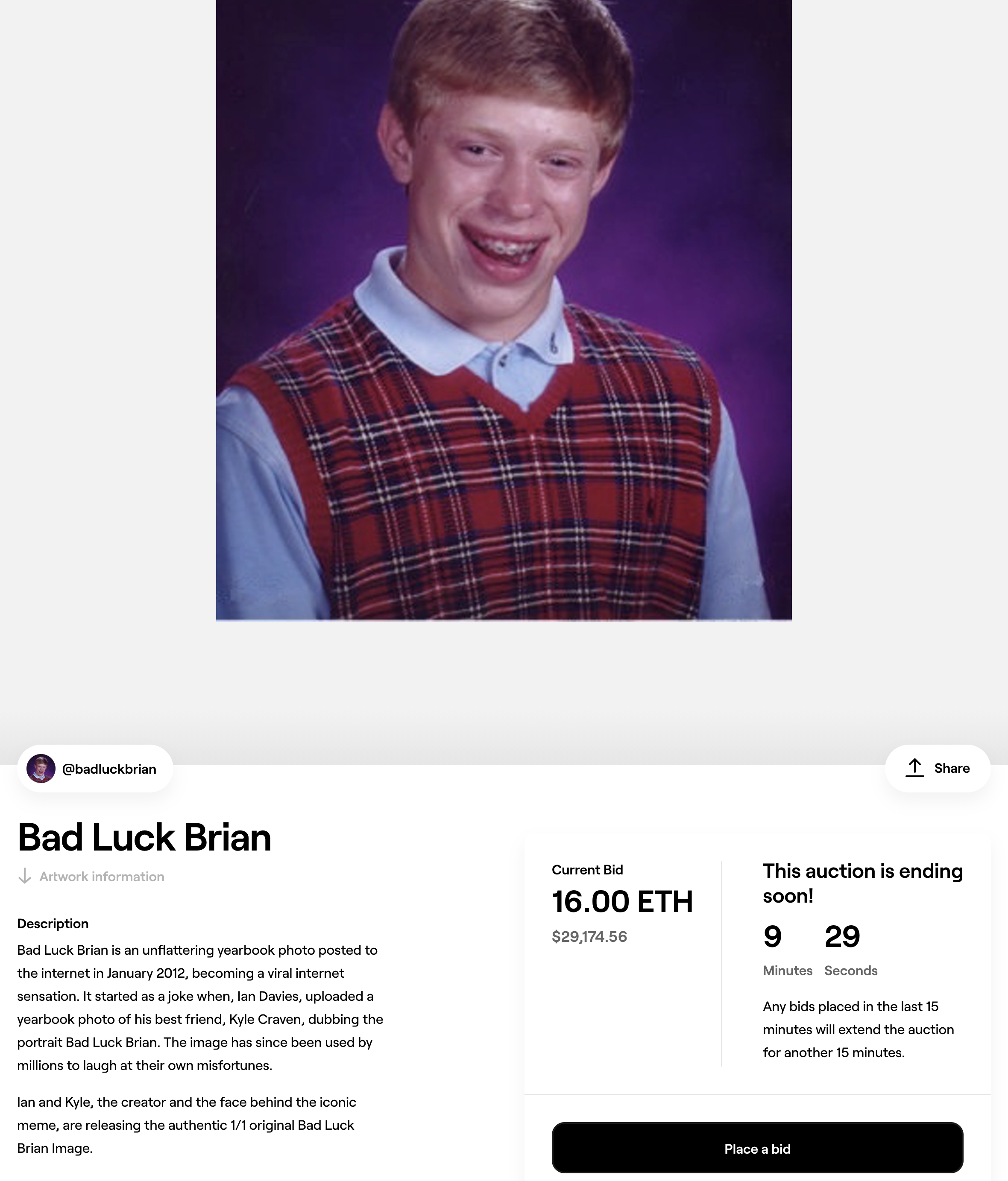
The creator of the Nyan Cat, Chris Torres, has organized an informal collection of meme originators – the creators or original popularizers of meme images — into a two-week-long auction of their works. Under the hashtag #memeconomy the creators of memes like Bad Luck Brian, Coughing Cat, Kitty Cat Dance, Scumbag Steve, Twerky Pepe and

The creator of the Nyan Cat, Chris Torres, has organized an informal collection of meme originators – the creators or original popularizers of meme images — into a two-week-long auction of their works. Under the hashtag #memeconomy the creators of memes like Bad Luck Brian, Coughing Cat, Kitty Cat Dance, Scumbag Steve, Twerky Pepe and some others are finally finding a way to monetize the creation of genuine cultural phenomenons that have been used freely for decades.

They’re mostly being hosted on booming new crypto art and collectibles platform Foundation, which launched in February and has already hosted $6M in sales of over 1,000 NFTs. I have a lot to say about NFTs and can’t say them all here, but I found this project fascinating and wanted to note it. The fact is that memes are Internet art (sorry). They are unique creations that took elements of participatory and performance art and injected them into the veins of the internet. In many ways, they have millions of creators, as the original editions may have planted the seed but every use and permutation gave them additional strands of DNA, crafting their cultural importance upload by upload. They have let us express ourselves — our desire, disgust, joy and lust — when words just wouldn’t suffice.

These “originals” are made original by the act of them being minted on the blockchain by the original artists. I know, it’s a distinction that may seem slim when the same images can be had anywhere at any time, but that’s the beauty of the re-organization that is happening within all of DeFi and crypto at the moment. We are stripping out layers of commerce and communication that benefited only platforms and participants that took part in the origination and sale of art from the perspective of frameworks like the DMCA and DRM. Those relationships are being rethought. The recapture of value for works that have already been broadly distributed has been historically relegated to ‘licensing them for t-shirts’. And extremely rarely elevated to the level of fine art sale.

Now that we’re all living on the Internet, Internet art is just art. And so are memes.

That’s why it’s fascinating to see some of the people who have created things that have let so m​any of us express ourselves get paid.

One famous case of this, of course, is the Pepe and its creator Matt Furie. Though Furie’s attempts to redeem Pepe have focused on attempting to reclaim him from a legacy of racist and hateful memes, Pepe and his friends are a cool cast of characters and it would be heartening to see Furie reclaim them by minting them himself.


I spoke a bit to Torres about the project and why he got interested in it.

TC: Why did you decide to organize this informal schedule of meme NFTs?

Torres: The idea has always kind of been in the back of my mind since discovering the NFT universe. The idea of NFTs were always so attractive to me, a place where you can create your own original art and gain proper attribution for your work. Memes have always had a rough time on the Internet, because their creators are usually taken advantage of, and I have personally seen artists have their works stolen and monetized to the tune of millions of dollars without even proper credit. So the idea has always been down deep in my subconscious but this week things have really amped up enough to finally give me the power I need to make it happen!

TC: How did you get in contact with the creators?

Actually, they all contacted me! It’s unbelievable knowing I’m in direct contact with some fantastic iconic internet legends from the past. Some of these have existed solely as enigmas on the Internet, it’s great connecting with them. Things started with casual conversations with Bad Luck Brian, but then Trollface messaged me, then Me Gusta, then Kitty Cat Dance, then things just kept amping up.

TC: How has it felt to have your creation formally rewarded after spending so long in the cultural meme-ory?

It’s still very surreal, to be honest. The NFT community is full of very talented people with so many thoughts and ideas on how to build a better future for the crypto space. I’ve actually used this power for good this week by starting up #Memeconomy with all these talented meme creators and will be trying my hardest to get these guys the recognition they deserve.

TC: What excites you about NFTs and art?

The number one thing that’s kept me excited for NFTs is just knowing that it’s a perfect way to empower artists to take ownership of their own works. I’ve been hanging out in the Clubhouse chats, reading everything I can on Twitter, and just have been losing sleep being so enthralled by it all. Every day I wake up and there’s a new meta of NFTs out there. It’s cool to see all this artistic knowledge evolving in real time. I absolutely live off that energy, and it’s inspired me to be more creative than ever.

The world of NFTs is complex and fascinating and deserves a deeper look that looks at the economic, ecological and technical aspects. We’ve already hosted and written about various projects in the space. Stay tuned for more.

🌐#MEMECONOMY WEEK 1 🌈 by @NyanCat

6 OG memes. 1 brand new NFT. We’re seeing the rise of the meme economy on Foundation. 📈@solidbadluck @idascreatures @steveibsen @realgrumpycat @keyboardcatreal @twerkypepe @blakeboston617

Only on → https://t.co/A7bTOLs99m pic.twitter.com/XVaUZrDoQI

— Foundation (@withFND) March 9, 2021


WordPress Image Lightbox Plugin