
Monthly Archives: March 2021

News: Via buys mapping startup Remix for $100 million

Remix, the startup that developed mapping software used by cities for transportation planning and street design, was born out of a hackathon during a Code for America fellowship. Nearly seven years later, the San Francisco-based startup is being acquired by Via for $100 million in cash and equity. Remix will become a subsidiary of Via,

Remix, the startup that developed mapping software used by cities for transportation planning and street design, was born out of a hackathon during a Code for America fellowship. Nearly seven years later, the San Francisco-based startup is being acquired by Via for $100 million in cash and equity.

Remix will become a subsidiary of Via, an arrangement that will let the startup maintain its independent brand. Remix’s 65 employees and two of its co-founders — CEO Tiffany Chu and CTO Dan Getelman — will stay on.

The acquisition adds yet another service to Via’s ever-expanding business as well as customer base of more than 350 local governments in 22 countries.

Remix’s strength is in planning, while Via brings expertise in software and operations, Chu said in a recent interview.

“By having those two strengths come together, we can be much stronger as an end-to-end solution — from the initial genesis of this idea around transportation planning and carrying that through to operations — in a way that we, individually, would not have been able to achieve otherwise,” Chu said.

Via-Remix_Founders_03-2021

Image Credits: Remix 

Via started as a on-demand shuttle operator in 2012. The company, which last year hit a $2.25 billion valuation after raising $400 million in a Series E round, has evolved from its initial consumer-facing focus.

Today, Via’s core business is its software and operations platform, which is used by cities and transportation authorities to plan, schedule and deploy their own on-demand and fixed route transit, paratransit and school buses. Via has 200 partners in 24 countries.

Via is backed by Exor, the Agnelli family holding company that owns stakes in PartnerRe, Ferrari and Fiat Chrysler Automobiles as well as Macquarie Capital, Mori Building, Shell 83North, Broadscale Group, Ervington Investments, Hearst Ventures, Planven Ventures, Pitango and RiverPark Ventures.

Accidental founders

Remix’s Silicon Valley-esque origin story was driven by some unlikely entrepreneurs.

Chu had been a user experience designer at Zipcar when she moved to San Francisco to complete a one-year fellowship with Code for America. In the middle of the fellowship, Chu along her eventual co-founders Getelman, Sam Hashemi and Danny Whalen were working on a hackathon project that to help citizens of San Francisco suggest better transit routes to the San Francisco Municipal Transportation Agency.

The transportation planning tool was shared on Twitter and it went viral. Within two weeks, 30,000 maps had been created.

“It became this funny, unexpected armchair transportation planning tool that people explored online,” Chu recalled. But it wasn’t just the local citizenry who took notice. About 200 urban planners reached out, asking the team to build extra features that could be used by agencies for their own transportation planning projects.

“It was kind of a mind blowing moment for us when we realized the project that was supposed to be a grassroots kind of civic project actually had implications around solving real needs and problems in transportation,” Chu said.

Remix was founded shortly after and the company’s founders applied and were accepted into Y Combinator. The company went on to raise a total of $27 million in investments from Y Combinator, Sequoia and Energy Impact Partners.
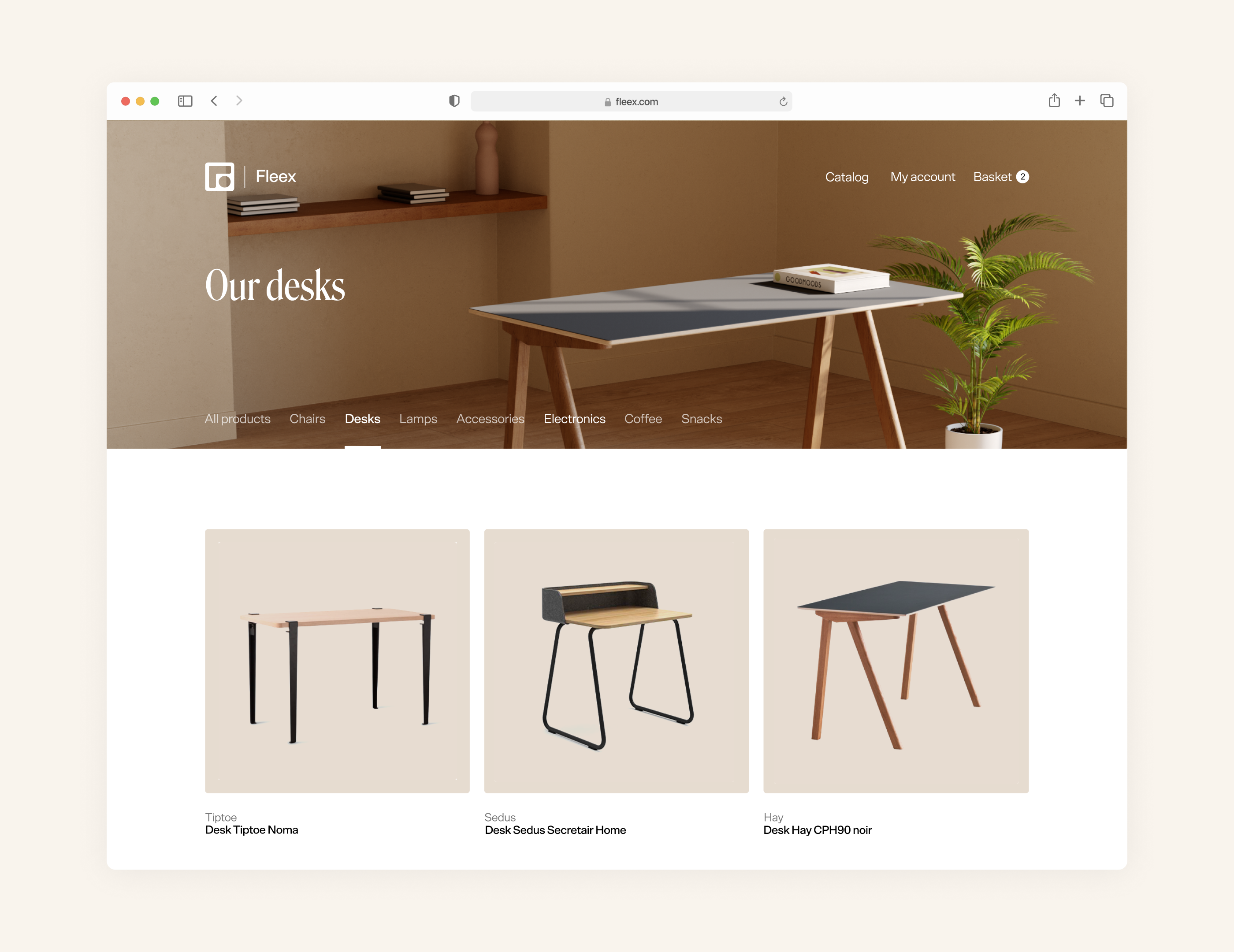

News: Fleex lets you allocate a monthly budget for work from home equipment

Meet Fleex, a French startup that was formally named Flexlab. The company wants to make it easier to give some cash to your employees so that they can spend it on a desk, an external monitor, some computer peripherals, a nice chair, etc. Essentially, Fleex wants to make it easier to turn remote work into

Meet Fleex, a French startup that was formally named Flexlab. The company wants to make it easier to give some cash to your employees so that they can spend it on a desk, an external monitor, some computer peripherals, a nice chair, etc. Essentially, Fleex wants to make it easier to turn remote work into work.

If you work for a big company and have the ability to work from home, chances are your employer has sent you an email saying that you can request an external monitor or an office chair to make work easier during the pandemic. And if you work for a small company, it probably depends on your employer.

Either way, some IT and facility departments now have to deal with a huge inventory of devices and furniture that is spread around everyone’s homes. Setting up policies, ordering portals and inventory can be quite difficult as well.

Fleex basically wants to help you with that situation. The company lets you allocate a monthly budget for your employees. People can then choose to spend that budget on several products and services.

The startup works directly with suppliers to put together a product catalog. For now, Fleex is starting with IT supplies and furniture.

Fleex then buys supplies for you and sends stuff to your home — it takes care of the full lifecycle of the products. When an employee leaves the company, they have to send equipment back to Fleex.

As you can see, Fleex has a different business model compared to your average software startup. The company has to allocate some capital to buy desks, chairs, screens, printers, etc. It has to figure out whether employees efficiently spend their budget or if they leave some money sitting on their Fleex account.

It has to find out whether products can last for a while before they have to be decommissioned. In other words, it’s going to take a bit of time to figure out the unit economics behind Fleex.

The company is just getting started and is working with a few companies to try out its offering. So far, Swile, Back Market and Shine have been using Fleex. They allocate a monthly budget of €55 per employee on average.

Fleex has raised a $2 million seed round (€1.7 million) and has joined eFounders, a European startup studio focused on software-as-a-service companies.

Image Credits: Fleex

News: Apple starts assembling iPhone 12 in India

Apple is beginning to assemble the iPhone 12 in India as it ramps up its production capacity in the world’s second largest smartphone market. Foxconn, a contract manufacturing partner of Apple, is assembling the iPhone 12 model — though currently no other iPhone 12 model — Pro and Pro Max, and Mini — in the

Apple is beginning to assemble the iPhone 12 in India as it ramps up its production capacity in the world’s second largest smartphone market. Foxconn, a contract manufacturing partner of Apple, is assembling the iPhone 12 model — though currently no other iPhone 12 model — Pro and Pro Max, and Mini — in the country.

The move underscores how India is emerging as a big production hub for global smartphone makers. Samsung, Xiaomi, Oppo, Vivo, and OnePlus have been assembling their smartphone models in India for more than half a decade and have increased their production capacities in recent years.

To attract global giants, New Delhi has been offering tax benefits to firms that locally produce in India and in recent quarters has significantly increased the perks.

“We are optimistic and looking forward to building a strong ecosystem across the value chain and integrating with the global value chains, thereby strengthening electronics manufacturing ecosystem in the country,” said India’s IT Minister Ravi Shankar Prasad last year.

Apple began locally assembling select iPhone models in India in 2017 — beginning with the iPhone SE — though for the initial years the company’s contract partners locally produced only older iPhone models in the country.

Analysts have estimated that Apple, which launched its online store in India last year and is working to set up its first physical retail store in the country this year, plans to move between seven to 10% of its iPhone production to India as it looks to cut reliance on China. TechCrunch understands the figure is “wild speculation.”

The iPhone maker suffered a setback in India late last year after a violent protest broke at a facility in Wistron, one of its key manufacturing partners of Apple, near Bangalore last year. But the Taiwanese firm appears to have resolved the issues. It said last month that it was rehiring workers and will soon be resuming production at its facility.

“Apple is dedicated to making the best products and services in the world to delight our customers. We are proud to be starting production of iPhone 12 in India for our local customers,” said an Apple spokesperson in India in a statement.

Apple assumes just 2% of the Indian smartphone market, but it has grown in recent quarters. Apple shipped more than 1.5 million iPhone units in India in the quarter that ended in December, up 100% year-on-year, making this its best quarter in the world’s largest smartphone market to date, according to research firms Counterpoint and CyberMedia Research.

Unlike several foreign firms that offer their products and services at low prices in India, Apple has focused entirely on a small fraction of the population that can afford to pay big bucks, said Jayanth Kolla, chief analyst at Convergence Catalyst. And while it took several years, Apple has carved out a slice of the market that is growing, he said.

News: Songclip raises $11M to bring more licensed music to social media

The team behind Songclip thinks that social media could use more music. Yes, music is a big part of the experience on a handful of apps like TikTok and Triller, but Songclip co-founder and COO John vanSuchtelen told me, “That is not the end of how music is going to be a feature, that is

The team behind Songclip thinks that social media could use more music.

Yes, music is a big part of the experience on a handful of apps like TikTok and Triller, but Songclip co-founder and COO John vanSuchtelen told me, “That is not the end of how music is going to be a feature, that is a beginning.”

He added, “In the next nine to 12 months … just like you never have a phone without a camera, you’re not going to have an app without music clips as a feature when you make videos.”

That’s what vanSuchtelen and his co-founder and CEO Andy Blacker are hoping to enable with Songclip, which announced today that it has raised $11 million in new funding.

The startup has created an API that, when integrated with other apps (current integrations include photo- and video-editing app PicsArt), allows users to search for and share music. VanSuchtelen said that like Giphy, Songclip plans to popularize a new media format — the short audio clip — and make it accessible across a wide range of services.

“If I were to say, I’m going to send you a four-minute song,’ it’s just not going to work that way, that’s not how we communicate anymore,” vanSuchtelen said. “How do you take the music and turn it into the bite that you want to use in a social context?”

To do this, Blacker said Songclip doesn’t just license music, it also does its own tagging and clipping, while offering tools for music labels to protect their intellectual property and providing data on how people are interacting with the music. And unlike Giphy, Songclip isn’t looking to build a consumer brand.

All of this involves a combination of human editors and technology. Blacker said the human element is key to understand the nuances of songs and their association, like the fact that Simon & Garfunkel’s “Bridge Over Troubled Water” isn’t really about bridges or water, or that Katrina and the Waves’ “Walking on Sunshine” is a happy song even though it doesn’t have the word “happy” in it.

Songclip has now raised a total of $23 million. The new round was led by Gregg Smith of Evolution VC Partners. The Kraft Group, Michael Rubin, Raised in Space, Gaingels and ​Forefront Venture Partners​ also participated, as did industry executives Jason Flom and Steve Greenberg and the band AJR.


News: Zego, the tech-enabled commercial motor insurer, raises $150M at $1.1B valuation

Zego, the insurtech that got its start by offering flexible motorbike insurance for gig economy workers but has since expanded with a range of tech-enabled commercial motor insurance products, has raised $150 million. Leading the London-based company’s C round — giving it a $1.1 billion valuation and a unicorn status — is DST Global. Other

Zego, the insurtech that got its start by offering flexible motorbike insurance for gig economy workers but has since expanded with a range of tech-enabled commercial motor insurance products, has raised $150 million.

Leading the London-based company’s C round — giving it a $1.1 billion valuation and a unicorn status — is DST Global. Other new backers include General Catalyst, whose founder and MD, Joel Cutler, joins Zego’s board.

Notably, I’m told all existing investors followed on, including Wise’s Taavet Hinrikus, who is also on the Zego board, and Target Global, Balderton Capital and Latitude. Zego has now raised more than $200 million since launching in 2016.

The insurance company says it will use the funding to “rapidly expand across Europe and beyond”. It will also double its workforce, which currently stands at 265 employees, to over 500 employees by the end of 2021, and continue to invest in technology. Late last year, Zeho acquired telematics company Drivit.

Zego offers commercial motor insurance for businesses, from self-employed drivers and riders to fleets of vehicles, spanning pay-as-you-go insurance to annual policies. It combines tech with multiple data sources to offer insurance products that it claims save time and are more cost-effective. It earned its own insurance license in 2019, enabling it to build and sell its own policies, in addition to working alongside other insurers.

Technical/data integrations include those with companies in the ride-hailing space, such as Uber, Ola and Bolt, and in the delivery space, such as Deliveroo, Uber Eats and Just Eat. More recently, Zego has become a key partner in the U.K.’s burgeoning e-scooter rental market, partnering with companies like Tier, Voi and Dott.

Next up, the insurtech is betting big on offering insurance for fleets. “Over the past couple of years, Zego’s focus on powering opportunities for businesses has expanded to include not just self-employed drivers and riders, but also entire fleets of vehicles,” Sten Saar, CEO and co-founder of Zego, tells me, noting that 80% of new vehicles are now sold to commercial customers.

“This has been both a natural progression for the company, with the only real difference being distribution, as well as a focused effort, as Zego aims to capitalise on an ever-growing market currently underserved by the insurance sector”.

To date, Zego has provided more than 17 million insurance policies and covered more than 200,000 vehicles in five countries.

“While most traditional insurers price their insurance products based purely on factors such as age and vehicle type, and while others may use telematics-based driver behaviour data too, Zego is able to price policies based not only on traditional factors, but also driver behaviour data and working habits data,” adds Saar.

“In fact, overall, the information Zego can collect amounts to five times more data per vehicle than competitors, or 50 data points per second. This means that we have a much more comprehensive understanding of risk than competitors, enabling us to provide best-value insurance coverage, from policies ranging from one hour to one year”.

Cue statement from Tom Stafford, managing partner of DST Global: “The shift to digital is occurring across multiple industry categories and is increasingly occurring in the insurance industry. We are excited to partner with Sten and the team at Zego as they leverage internet, technology, telematics and data-driven decisions to provide the best insurance products at the best pricing for their customers.”

News: Jobandtalent takes $120M from Softbank to enter the US market

Spain’s Jobandtalent, a digital temp staffing agency startup which operates a dual-sided platform that matches temps with employers needing casual labor in sectors like ecommerce, warehousing, logistics and manufacturing, has grabbed €100 million (~$120M) in Series D funding from SoftBank’s Vision Fund 2. Previous investors — including Atomico, Seek, DN Capital, InfraVia, Quadrille, Kibo and

Spain’s Jobandtalent, a digital temp staffing agency startup which operates a dual-sided platform that matches temps with employers needing casual labor in sectors like ecommerce, warehousing, logistics and manufacturing, has grabbed €100 million (~$120M) in Series D funding from SoftBank’s Vision Fund 2.

Previous investors — including Atomico, Seek, DN Capital, InfraVia, Quadrille, Kibo and FJ Labs — also participated in the round.

The new raise fast-follows a $108M top up to Jobandtalent’s Series C round, which we reported on back in January. In total, the company has raised a total of €310M (just under $370M) since being founded back in 2009.

Today Jobandtalent is also announcing a ~$100M (€83M) in debt financing from BlackRock.

The startup tells us the mix of debt and equity will help it step on the gas and accelerate growth of its marketplace faster than if it took in less capital at this point, as well as enabling it to plough more resource into its product and tech development.

On the tech side its platform uses learning algorithms to match temps with jobs — speeding the hiring process up. It also offers a CRM for employers which bakes in analytics for tracking workforce performance in real time — which it says can help them monitor workplace satisfaction, reduce attrition and track metrics such as absences and late arrivals.

For temps there’s the promise of steadier and easy to obtain shift work — as Jobandtalent streamlines job application admin and payroll into a one-stop shop, and it suggests its marketplace/workforce-as-a-service model can provide temps with continuous employment (i.e. through consecutive temp roles).

Its marketing also talks in terms of offering these workers a level of job security and benefits typically associated with full time employment — such as pensions, sick and holiday pay, health insurance (in some markets) and training courses.

With the new Series D funds in the bank Jobandtalent is preparing to enter the U.S. market “in the next year”, per co-CEO and co-founder, Juan Urdiales — expanding out from the eight markets it’s currently operating in (namely: Spain, the UK, Germany, France, Sweden, Mexico, Colombia, and Portugal).

He confirms it’s also now eyeing entering two more markets in Europe: Italy and the Netherlands.

“We are not yet seeing any competitor operating in the US at large scale and in multiple states in the verticals where we operate (e-commerce, logistics, etc). This is one of the reasons why we believe that we have a great opportunity there,” Urdiales tells TechCrunch.

“The U.S. can be a very difficult market to break into. However, we are starting to see more and more European companies going to the U.S. and being successful (Spotify, Klarna, Adyen, etc),” he adds.

“We believe that in our case, after having operated our model in Europe with high standards on labour rights and complex regulatory environments, we are in a great position to launch our platform in the US and offer a great value proposition to workers and employers there.”

Jobandtalent’s platform will offer temps equivalent perks and benefits in the U.S. as it offers elsewhere, per Urdiales.

“The perks and benefits offered into our marketplace meet the same principles everywhere, all of them aim to bring to the workers a similar status as a permanent worker, with the same type of benefits and perks,” he says, adding: “There are some adaptations in every country to do this, and it would be the same with the US.”

In the past year Jobandtalent says that more than 80,000 workers have used its marketplace to find temporary roles (its website says it has 10M+ registered users) — while more than 850 companies, including the likes of XPO, Ceva Logistics, eBay, Ocado, Sainsbury’s, Bayer and Santander, have used its platform to locate temp workers.

The startup’s revenue run rate has grown from €5M in 2016 to €500M in 2020 — which it says has resulted in a positive EBITDA. It also touts a growth rate of over 100% year on year.

Commenting in a statement, Yanni Pipilis, managing partner at SoftBank Investment Advisers, said: “Jobandtalent is addressing a crucial challenge facing the modern workforce — how to balance flexibility with high quality, reliable job opportunities. The company has developed a data-driven platform that has a track record of providing high fulfilment and low attrition staffing for businesses with temporary roles to fill, while securing income stability and benefits for workers. We are incredibly excited to partner with Juan, Felipe and the team on the next phase of the company’s growth.”

Asked about its decision to take funding from SoftBank for the Series D — and whether it was largely about the scale the investor could offer or whether Jobandtalent also sees potential synergies with other SoftBank portfolio companies (in sectors like logistics) — Urdiales also tells us: “We believe the Vision Fund team can add a lot of value to the company in this new stage of our growth as they have a lot of experience with companies of our size. We can learn a lot from the companies and management teams that they have invested in over the past few years. They have an entrepreneurial mindset and a clear vision on how technology and AI is going to disrupt many industries, and we share the same vision around our category.”


News: Investors get a rise out of Walmart’s agreement to stock more Beyond Meat

Beyond Meat shares soared today on the heels of an announcement that Walmart is beefing up its relationship with the purveyor of meatless protein patties, sausages, and balls. 900 stores will now be stocking Beyond Meat’s hot Italian sausages and its party packs of beefless burgers — those grilling delectations for the omnivores, vegetarians and

Beyond Meat shares soared today on the heels of an announcement that Walmart is beefing up its relationship with the purveyor of meatless protein patties, sausages, and balls.

900 stores will now be stocking Beyond Meat’s hot Italian sausages and its party packs of beefless burgers — those grilling delectations for the omnivores, vegetarians and vegans who no longer want to ask “Where’s the beef?”

Beyond Meat’s increased distribution at Walmart stores is the second jump in production over the past year and part of the company’s efforts to lock down the market for plant-based meat substitutes.

The company’s foods are now sold in over 28,000 stores, and it’s also pulling ahead in the food service industry, where it recently announced deals with Yum Brands and McDonalds.

Shares of the company’s stock ended the day up 3.16% or $4.28 as investors ate up the news.


“We are thrilled by the continued growth with Walmart and the opportunity to offer Walmart customers increased accessibility to a larger selection of our delicious and better-for-you plant-based products,” said Chuck Muth, Chief Growth Officer, Beyond Meat. “As more households continue to buy our products and buy them more frequently, we’re excited to satisfy the growing demand through increased product offerings and distribution.”

The partnership with Walmart, which dates back to 2015 is significant, but not nearly as attention grabbing as the company’s elaboration on recent agreements with McDonalds and Yum! Brands — the brains behind KFC and the two franchises that launched America’s greatest fast food hip hop anthem.

In late February, Beyond Meat opened up about its deals with Yum! Brands and McDonald’s that would see the company work to co-create plant-based protein menu items for KFC, Pizza Hut, and Taco Bell along with the famous golden arches fo McDonald’s.

That details of the agreement withYum! included the expansion of testing the company’s Beyond Fried Chicken in other U.S. cities with KFC. And the launch of the Beyond Italian Sausage Pizza and the Great Beyond Pizza nationwide, becoming the first national pizza chain to introduce a plant-based meat pizza coast-to-coast, the company’s said in a statement at the time.

The McDonald’s announcement fleshed out the meatless details of a partnership that was previously announced when the fast food giant unveiled its McPlant sandwich — a kind of face plant for Beyond given that it couldn’t confirm the details of the agreement at the time.

Now, other plant-based menu items — including options for chicken, pork, and egg products, have been unveiled as part of the broader McPlant platform, the companies said in February.

“Our new McPlant platform is all about giving customers more choices when they visit McDonald’s,” said Francesca DeBiase, McDonald’s Executive Vice President and Chief Supply Chain Officer, said at the time. “We’re excited to work with Beyond Meat to drive innovation in this space, and entering into this strategic agreement is an important step on our journey to bring delicious, high quality, plant-based menu items to our customers.”

It’s been a busy year for the branding geniuses at Beyond Meat, who also inked a deal with Pepsi to develop protein enhanced snacks and beverages under the tragically named PLANeT Partnership.


News: Daily Crunch: Dropbox acquires DocSend for $165M

Dropbox acquires a secure document-sharing startup, Sonos announces a new speaker and Google makes hotel listings free. This is your Daily Crunch for March 9, 2021. The big story: Dropbox acquires DocSend for $165M Dropbox already acquired electronic signature company HelloSign in 2019. By acquiring DocSend — which allows customers to share and track documents

Dropbox acquires a secure document-sharing startup, Sonos announces a new speaker and Google makes hotel listings free. This is your Daily Crunch for March 9, 2021.

The big story: Dropbox acquires DocSend for $165M

Dropbox already acquired electronic signature company HelloSign in 2019. By acquiring DocSend — which allows customers to share and track documents using a secure link — it’s giving its platform an end-to-end, secure document-sharing workflow.

“We’re announcing that we’re acquiring DocSend to help us deliver an even broader set of tools for remote work, and DocSend helps customers securely manage and share their business-critical documents, backed by powerful engagement analytics,” said Dropbox CEO Drew Houston.

One thing the two companies have in common: Both of them launched, years apart, at TechCrunch events.

The tech giants

Sonos goes full portable Bluetooth speaker with the $169 Roam — The smaller, lighter, more ruggedized and waterproof design puts it more in line with popular offerings from companies like JBL.

After similar moves for Shopping and Flights, Google makes hotel listings free — This change should give users a more comprehensive look into hotel room availability.

French startup lobby targets Apple with ‘privacy hypocrisy’ complaint — Apple is facing another privacy complaint in Europe.

Startups, funding and venture capital

Wefarm adds $11M to expand its network for independent farmers, now at 2.5M users — The startup has built a social networking platform to help independent farmers meet each other, exchange ideas and sell or trade equipment and supplies.

Entertainment payroll startup Wrapbook raises $27M round led by a16z — The money comes from noteworthy names in both the tech and entertainment worlds.

Eye surgery robotics startup ForSight raises $10M — ForSight looks to bring its offerings to international markets, pending the sorts of regulatory approvals that go into launching a robotic surgery platform.

Advice and analysis from Extra Crunch

Four ways startups will drive GPT-3 adoption in 2021 — The introduction of GPT-3 in 2020 was a tipping point for artificial intelligence.

Global-e files to go public as e-commerce startups enjoy a renaissance — The company’s business exploded in 2020.

(Extra Crunch is our membership program, which helps founders and startup teams get ahead. You can sign up here.)

Everything else

Memes for sale — We talk to Chris Torres, the Nyan Cat creator who has organized an informal collection of meme originators into a two-week-long auction of their works.

Backstage Capital’s Arlan Hamilton discusses how to find the next unicorn — Hamilton joined us at TC: Sessions Justice to chat about how she vets founders, the changing role of venture capital and how raising money from the community versus institutional LPs can impact Backstage strategy.

The Daily Crunch is TechCrunch’s roundup of our biggest and most important stories. If you’d like to get this delivered to your inbox every day at around 3pm Pacific, you can subscribe here.

News: Audience engagement startup Trufan raises $2.3M

Trufan, a startup selling tools helping marketers analyze their social followings and collect audience data, announced today that it has raised a $2.3 million seed round. Despite raising a relatively small amount of funding ($4.1 million total), Trufan has already made two notable acquisitions. First, it acquired the SocialRank product and business in 2019, allowing

Trufan, a startup selling tools helping marketers analyze their social followings and collect audience data, announced today that it has raised a $2.3 million seed round.

Despite raising a relatively small amount of funding ($4.1 million total), Trufan has already made two notable acquisitions. First, it acquired the SocialRank product and business in 2019, allowing it to offer capabilities like showing brands their most valuable social media followers. Then last year, it acquired Playr.gg, which marketers use to run giveaways that consumers enter by providing information such as their email addresses.

Across its products, Trufan says it has more than 10,000 free users and more than 600 paying customers, including Netflix, NBA, NFL, Sony Music and United Talent Agency.

Next up, the startup plans to integrate the two main products and launch a consolidated, privacy-compliant customer data and audience engagement platform with new branding and pricing. Co-founder and CEO Swish Goswami told me that the platform should be particularly attractive as regulators introduce new privacy regulations, Apple and Google add new restrictions to ad targeting based on third-party data and as consumers become more sensitive to how their data is used.

Trufan Founders

Trufan founders Aanikh Kler and Swish Goswami. Image Credits: Trufan

“People do not want to be tracked anonymously,” Goswami said. “People do not want their data taken away, but most of those people are attracted to the idea of data sharing if they get something in exchange.”

He added that it’s particularly important for brands to build up first-party customer data given the limitations of social networks: “You can have 50 million followers, but every time you post you don’t reach 50 million people.” If you’ve got 50 million email or phone numbers, on the other hand, you might actually reach most of those inboxes or phones.

The new funding comes from Moneta Ventures, with Moneta partner Sabya Das joining Trufan’s board of directors. GP Ventures, Protocol Ventures and Athlete Technology Group also participated, as did angel investors including Innovative Fitness founder Curtis Christophersen, Utah Jazz forward Derrick Favors and Chicago Bulls forward Thaddeus Young.

“Trufan is miles ahead in recognizing and removing roadblocks in the customer data space,” Das said in a statement. “We are excited to be backing them because they truly are all-star founders with an incredible team alongside them, and we believe in their conviction and ability to solve the first-party data problem.” 


News: Proactive CEOs should prioritize European expansion

The best CEOs are globally ambitious, and they know that unlocking Europe’s growth potential remains a critical step on the road to IPO.

Brennan O’Donnell
Contributor

As a partner in FrontlineX, Brennan O’ Donnell is focused on helping growth stages companies expand into Europe. Previously, he spent nearly a decade at Google, where he held multiple go-to-market leadership roles in the U.S. and EMEA, building teams across both the Cloud and Ads businesses.

In 2008, I was moving to London as the global financial crisis slammed the brakes on growth for millions of businesses.

Five years earlier, I had been sent to Dublin from headquarters in Mountain View to help manage Google’s European expansion, and despite our incredible growth, the macroeconomic situation put us in an immediate defensive posture and led us to throttle back our ambitious plans.

Nearly one year ago, faced with the uncertainty of a global pandemic, companies across the world again moved into triage mode. Employees were laid off, budgets were slashed and growth opportunities were pushed down the priority list.

However, as we enter the spring of 2021, the world is a dramatically different place. Tech stocks are stronger than ever amid record-setting IPOs, vaccines are here and revenue growth is again a top priority for B2B SaaS startups.

There are ultimately three ways to drive growth in a technology startup: extend your product offering, move into new segments or expand into new markets. Developing new products or moving into new segments may seem like a more comfortable path, but scaling a high-performing business into new markets represents massive financial upside, particularly when well-executed.

Look at some of the top-performing SaaS businesses of the past few years — 31% of Zoom’s revenue comes from outside the U.S. International revenue is 38% for Slack, 39% for Asana and 48% for Dropbox. If your company survived the past year, now is the time to shift from defense to offense and prioritize international expansion.

Your best growth lever is Europe

At $27.5 trillion, EMEA represents 38% of the world’s GDP and is the largest addressable market outside of America. Europe is the world’s second-largest B2B software market, and for more than two decades has been the location of choice when U.S. companies look beyond their own borders. With the democratization of software distribution, it’s now common for companies to discover 10-12% of their business comes from Europe organically.

By IPO, however, these same companies average 30% of their revenue from Europe. What changes, and how do you capitalize on this massive growth opportunity in a cost-effective way? High-performing companies are making the investment today and prioritizing European expansion despite the lingering challenges of the past year.

For example, Figma, one of the most exciting companies of the past several years, announced its new EMEA headquarters in September. *Clearbanc expanded into Europe in Q4 and will be investing £500m into UK startups over the next year. Nearly all growth-stage CEOs made the decision to postpone international expansion plans over the past 12 months, and for many, “testing remotely” has been an effective tactic — but it’s only a temporary solution.

The best CEOs are globally ambitious, and they know that unlocking Europe’s growth potential remains a critical step on the road to IPO.

Expand the moment you’re ready

After months of focusing on survival, it’s not always easy to recognize the right time to invest in growth. However, the key indicators that the time is right to expand into Europe are easy to identify.

First, your customer and revenue growth have stabilized and are accelerating again.

WordPress Image Lightbox Plugin