Monthly Archives: March 2021

News: Now approved in LA, Abodu’s backyard homes can now go from contract to completion in as little as 30 days

Abodu, one of a slew of startup companies pitching backyard homes and office spaces to Californians in an effort to help address the state’s housing shortage, has instituted a new “Quickship” program that can take an order from contract to construction and installation in about thirty days. Behind the quick turnaround time is a pre-approval

Abodu, one of a slew of startup companies pitching backyard homes and office spaces to Californians in an effort to help address the state’s housing shortage, has instituted a new “Quickship” program that can take an order from contract to construction and installation in about thirty days.

Behind the quick turnaround time is a pre-approval process that was first rolled out in Santa Fe and came to Los Angeles in recent weeks.

Abodu began installing homes through a pre-approval process back in 2019, when the city of San Jose created a program that allowed developers of alternative dwelling units to submit plans for pre-approval to cut the time for homeowners.

That approval process means that ADU developers like Abodu can be permitted in one hour. Other ADU developers pre-approved in San Jose, Calif. include Acton ADU, the venture backed Connect Homes, J. Kretschmer Architect, Mayberry Workshop, Open Remodel, and prefabADU. In Los Angeles, La Mas, IT House, Design, Bitches, Connect Homes, Welcome Projects and First Office have all had homes pre-approved for construction.

Beyond the cities where Adobu’s ADUs have received pre-approval, the company has built across California in cities ranging from, Palo Alto, Millbrae, Orange County, to LA and Oakland. Units in the Bay Area cost roughly $189,000 as a starting price, compared to the $650,000 to $850,000 it takes to build units in a mid-rise apartment building, or $1 million per unit in a steel-reinforced highrise, according to the company.

“Our Quickship program is the fastest way to add housing,” said John Geary, CEO at Abodu.  “Homeowners with immediate needs, be it family situations or those looking for investment income, can now complete an ADU project in as little as four weeks. A key mission for Abodu is to make a serious dent in our state’s housing deficit while providing people and municipalities the necessary blueprint to enact real change. ”

For Initialized partner (and former TechCrunch writer) Kim-Mai Cutler, who serves on the Abodu board of directors, the achievement of a 30 day construction milestone is almost a dream come true. Cutler wrote the book (or the equivalent of a book) on the housing crisis and its impact on the Bay Area and California broadly.

That piece led Cutler to work in public service “on boards and commissions overseeing the spending of federal dollars on homelessness and the proceeds of municipal bonds directed at financing affordable housing (because yes, for some segments of residents, you do have to explicitly subsidize housing at the local level.),” as she noted in a blog post about her investment in Abodu.

The interior of an Abodu home. Photo via Abodu.

Cutler backed the company because of her deep knowledge of the issues associated with housing.

“The reason this is a big deal is because Northern California has been the most expensive and unpredictable place to build new housing in the world. Projects typically take several years because of uncertainty with entitlements and materials,” Cutler wrote. “Over the past year, Abodu co-founders John Geary and Eric McInerney have put homes in the backyards of parents bringing kids home from college, a mother-and-son pair that each bought one for their homes in Millbrae, a couple looking to eventually house a grandmother in San Jose and on and on.”

The key inspiration that Abodu’s founders hit on was their concentration on granny flats, casitas and backyard dwellings. “While deliberations over mid-rise density were stalling in Sacramento, the state legislature (and legislatures up north in the Pacific Northwest) were passing bill after bill, including Phil Ting’s AB 68 and Bob Wieckowski’s SB 1069, to make it really easy to add backyard units,” Cutler wrote. “This is the kind of change that suburban America wants, is comfortable with and can politically pass and implement easily.”

To Cutler’s thinking, Adobu’s 30 day construction schedule will change consumer behavior, thanks to the fact that the home can be craned in and installed in less than a day on a foundation constructed in less than two weeks. Its incredibly low cost will enable a lot of opportunities to develop new inventory and the simple fact is that inventory remains a scarce commodity. As Cutler noted, only half as many homes are trading across the United States as were available a year ago, which is happening at the same time as when millennials are entering prime family formation years. 

News: It’s time to abandon business intelligence tools

Organizations spend ungodly amounts of money — millions of dollars — on business intelligence tools. Yet, adoption rates are still below 30%. Why is this the case? Because BI has failed businesses.

Charles Caldwell
Contributor

Charles Caldwell is VP of product management at Logi Analytics, which empowers the world’s software teams with intuitive, developer-grade embedded analytics solutions. He has more than 20 years’ experience in the analytics market, including 10+ years of direct customer implementation experience.

Organizations spend ungodly amounts of money — millions of dollars — on business intelligence (BI) tools. Yet, adoption rates are still below 30%. Why is this the case? Because BI has failed businesses.

Logi Analytics’ 2021 State of Analytics: Why Users Demand Better survey showed that knowledge workers spend more than five hours a day in analytics, and more than 99% consider analytics very to extremely valuable when making critical decisions. Unfortunately, many are dissatisfied with their current tools due to the loss of productivity, multiple “sources of truth,” and the lack of integration with their current tools and systems.

A gap exists between the functionalities provided by current BI and data discovery tools and what users want and need.

Throughout my career, I’ve spoken with many executives who wonder why BI continues to fail them, especially when data discovery tools like Qlik and Tableau have gained such momentum. The reality is, these tools are great for a very limited set of use cases among a limited audience of users — and the adoption rates reflect that reality.

Data discovery applications allow analysts to link with data sources and perform self-service analysis, but still come with major pitfalls. Lack of self-service customization, the inability to integrate into workflows with other applications, and an overall lack of flexibility seriously impacts the ability for most users (who aren’t data analysts) to derive meaningful information from these tools.

BI platforms and data discovery applications are supposed to launch insight into action, informing decisions at every level of the organization. But many are instead left with costly investments that actually create inefficiencies, hinder workflows and exclude the vast majority of employees who could benefit from those operational insights. Now that’s what I like to call a lack of ROI.

Business leaders across a variety of industries — including “legacy” sectors like manufacturing, healthcare and financial services — are demanding better and, in my opinion, they should have gotten it long ago.

It’s time to abandon BI — at least as we currently know it.

Here’s what I’ve learned over the years about why traditional BI platforms and newer tools like data discovery applications fail and what I’ve gathered from companies that moved away from them.

The inefficiency breakdown is killing your company

Traditional BI platforms and data discovery applications require users to exit their workflow to attempt data collection. And, as you can guess, stalling teams in the middle of their workflow creates massive inefficiencies. Instead of having the data you need to make a decision readily available to you, instead, you have to exit the application, enter another application, secure the data and then reenter the original application.

According to the 2021 State of Analytics report, 99% of knowledge workers had to spend additional time searching for information they couldn’t easily locate in their analytics solution.

News: Facebook showcases wrist-worn AR interface concept

Facebook’s hardware strategy often looks pretty opaque from the outside. The company has done fairly well with Oculus sales amid pandemic demand. Even its Echo Show competitor Portal has seen a bump as people have been forced to socially distance. The company’s smartphone partnership with HTC, meanwhile, fell flat eight or so years back. Earlier

Facebook’s hardware strategy often looks pretty opaque from the outside. The company has done fairly well with Oculus sales amid pandemic demand. Even its Echo Show competitor Portal has seen a bump as people have been forced to socially distance. The company’s smartphone partnership with HTC, meanwhile, fell flat eight or so years back.

Earlier this year, reports surfaced that the company was working on its own Apple Watch competitor. The smartwatch was said to have a health focus, running on an open-source version of Android. That, of course, would mark an interesting alternative from Google’s chosen wearOS.

This week, the company highlighted another wrist-based wearable. The specifics of the project don’t line up super closely with earlier reports, which could well mean two separate projects. Facebook is a big company, after all.

This particular project out of Facebook Reality Labs is more focused on providing an alternative computer interface. Specifically, it seems in line with the company’s augmented reality efforts.

Per yesterday’s blog post:

A separate device you could store in your pocket like a phone or a game controller adds a layer of friction between you and your environment. As we explored the possibilities, placing an input device at the wrist became the clear answer. The wrist is a traditional place to wear a watch, meaning it could reasonably fit into everyday life and social contexts. It’s a comfortable location for all-day wear. It’s located right next to the primary instruments you use to interact with the world — your hands. This proximity would allow us to bring the rich control capabilities of your hands into AR, enabling intuitive, powerful and satisfying interaction.

I will say that, based on the information presented, this seems more conceptual. As in, this could be the key to offering more seamless control for some future augmented reality system. And even still, it’s presented as a step on the way to a more deeply integrated human-computer solution. How deeply you want Facebook to integrate with your neurons is apparently a question we’re all going to have to ask ourselves in the not too distant future.

This interface specifically is designed to use electromyography (EMG) sensors to interpret motor nerve signals and interact with the interface accordingly. The subject interestingly came up during a Clubhouse event featuring Mark Zuckerberg last night. After Pebble founder/YC partner Eric Migicovsky discussed experiences dealing with Apple for his own smartwatch startup, the Facebook CEO said the following:

If you’re trying to build a watch, which we’re exploring as we talked about the wrist thing and I don’t want to call it a watch, but it’s the basic neural interfaces work that our Facebook reality labs team demoed some of our research about today. With the neural interface on the wrist, if you want that to integrate with the phone in any way, it’s just so much easier on Android than iOS. My guess is that this is an area where there probably should be a lot more focus. And I do think the private APIs are just something that makes it really difficult to have a healthy ecosystem.

“Exploring” seems like an operative word here. But it’s always cool/fascinating to see these projects in their early stages. Even if the promises might still seem a tad…overzealous.

EMG will eventually progress to richer controls. In AR, you’ll be able to actually touch and move virtual UIs and objects, as you can see in this demo video. You’ll also be able to control virtual objects at a distance. It’s sort of like having a superpower like the Force.


News: Sidekick Browser wants to be a productivity-honed ‘work OS’ on Chromium

The paradox of connected computing is how much information is made available to us in just a few clicks or taps — but also how this ocean of available data can overwhelm and lap over a particular bit of intel the moment we need to lay our fingers back on it. Fire up a web

The paradox of connected computing is how much information is made available to us in just a few clicks or taps — but also how this ocean of available data can overwhelm and lap over a particular bit of intel the moment we need to lay our fingers back on it.

Fire up a web browser and it’s hard to deny it’s the best of times for knowledge work. Yet working across multiple browser tabs and windows can feel like the friction-filled, frustrating worst.

This is the problem Sidekick Browser is taking aim at by adding a productivity-focused layer atop Chromium that it bills as a “work OS”.

Multiple tab hell? Sidekick’s answer is to let you work from inside apps that live in the browser, rather than scattered across multiple windows and tabs.

Apps like Slack and Skype and WhatsApp can be pinned in the sidebar in a vertical stack where you can easily find and switch between them. It also has support for multiple logins, granular notification controls and the ability to search across all these third-party apps (it offers “hundreds” currently but says users can add custom adds “which would function just like a bookmark”) right from the browser.

And for all those tabs you open up every time you go down an internet browsing rabbit hole, Sidekick offers a Sessions feature that lets you save them as a collective bundle for easy filing away — with ofc the ability to reopen and revisit again at a later click.

The built-in search also spans these Sessions so there’s no need to manually scroll back through the browser’s search history to try to track down where exactly it was you saw that reference to that randomly relevant bit of intel you breezed across one online day.

“Search across all your apps, tabs and workspaces in seconds,” is Sidekick’s alternative fix.

It’s also tackling productivity on the technical side — taking aim at browser-based lag with an “AI based tab suspension” feature that’s designed to improve on how Google’s Chrome browser hogs RAM by predicting which tabs the user is not going to use and dumping them from memory.

“Sidekick is the fastest browser built especially for work,” is its elevator-pitchy promise.

Collaboration is another core focus with features intended to help knowledge working teams be more productive as a unit; offering stuff like team role provisioning and custom workspaces to support different Session, app Sidebar and tabs set-ups, such as for a project or client.

There’s also remote configuration tools for device security; a baked-in password manager for collaborative convenience to support teams needing to share passwords; and an embedded video chat platform so you can do team chats right from the exact same browser-based workspace you’re all using.

Sidekick comes with its own ad blocker and anti-fingerprinting tech too — for a stated privacy purpose but also for an extra speed bump (i.e. via better page load times).

Also on privacy, the startup’s very public promise is “we’ll never sell your data” (and it further specifies this includes “searches, browsing history, or any personal information”).

The business model is SaaS and B2C for now, but Sidekick has designs on B2B — touting a pipeline of business-friendly features coming down the line.

And — yes, before you ask — Chrome extensions are supported.

Sidekick is announcing $2 million in seed funding led by KPCB — along with Remote First Capital and other angel investors.

Founder Dmitry Pushkarev has played and won at the startup game before, in some very different areas — having founded a DNA sequencing company (Moleculo) back in 2011, which was quickly acquired by Illumina.

Then in 2013 he left to found another business, ClusterK — focused on optimizing cloud computing resources across multiple cloud providers — which was acquired by Amazon in 2016, where Pushkarev stayed for a couple of years before getting the founder itch again.

A stint as entrepreneur in residence (EIR) at Kleiner Perkins investigating the future of work was where the germ of the idea for Sidekick was born.

The tool grabbed some early eyeballs a few months ago via Product Hunt — where Chris Messina was among its early fans, lauding the team for shaking up the browser space by combining “so many components that are essential to finding productivity as a modern knowledge worker!”.

Though Pushkarev was careful to course-correct Messina that it’s not building a full-fat browser to challenge Chrome itself (or any other internet browser).

“We do not intend to compete with browsers, they are a great choice for browsing,” he wrote. “Our goal is improve the browsing experience for work and productivity — something that, regretfully, browsers cannot do.”

The San Francisco-based startup says it’s now being used by teams at companies including Microsoft, Dropbox, Slack and Lyft. It has around 30,000 users at this point a few months after its November 2020 launch, per Pushkarev, who says the team is mostly focused on product (“activation, retention, virality”) at this early stage.

“The typical user is a knowledge worker — product managers, engineers, marketers, a fair number of students. Basically, prosumers who don’t just browse online, but do productive work and utilize communication tools,” he tells TechCrunch.

“During my EIR at KPCB, we thought a lot about the future of work, and one striking aspect of it is that today knowledge workers spend most of their time working in Browsers — a tool designed for Browsing,” he goes on, explaining the genesis of the idea for Sidekick.

“There are some important differences between how we browse and how we work, in particular — knowledge workers, spend more time working in web applications, with documents, using communications tools, accessing multiple accounts, and having to navigate a vast array of documents and projects. Unlike browsing — which is mostly search-based consumption of information.

“Clearly, these are very different use cases, but companies who make browsers today have no ability to invest in making browser better for work due to their business model — they are paid by Google or Microsoft for searches, and any complication of the UX would mean that millions of users would turn to simpler browsers and they will lose search revenue.

“We thought that it’s an unprecedented situation, where 200M professionals don’t have access to professional tools, and that the industry is so heavily disincentivized to build those. As a result, we decided to change this and invent a new category of software — Browser for Work, or how we call it internally — a Work OS.”

So what type of work/worker is Sidekick made for? “Online work with Web applications, lots of documents, communication apps, multiple accounts, and different work streams. It’s designer for prosumers and wouldn’t be the best choice for just browsing — something that would be better served by other browsers,” he says.

While the laser focus is work and productivity, Sidekick users can create multiple environments within the software — so could make other spaces more geared toward chilling out/downtime, or other purposes than work too, for use at other times.

While browsers do offer a variety of features like shortcuts and other elements aimed at increasing convenience, Pushkarev argues they simple can’t go as far as Sidekick intends to in honing a great work environment because their business model is too focused on search ads (in the case of Google Chrome) — or just because they need to be a more generalist tool for web browsing. Sidekick is therefore very much a “standalone business,” not just a nice set of enhancements any existing browser could make, in his view.

“Unfortunately, extending other browsers is not a viable path here, one has to go deep inside Chrome codebase and re-think performance, memory optimization, security, support for multiple accounts, and privacy to build a comprehensive solution,” he says.

One example of going above and beyond what a browser could or would do itself is the support it’s built for “hundreds” of third-party apps. “The reason we built this support is for better integrations — being able to display and control badges and notifications, integrate with our search, support multiple accounts and add helpful extensions,” he explains.

He also points to the New Tab Page (shown in the feature image at the top of this post), which is due to launch for all users by the end of the month and which displays “all documents that work with organized according to type, with human-readable titles, and instant search across it”.

“Without deep integration with these apps we wouldn’t be able to provide this experience and display barely usable browser history instead,” he notes.

On the business model front, Pushkarev is confident that SaaS can work — and that Sidekick doesn’t have to monetize like other browsers do (i.e. “through data and searches”) — arguing: “We are making a tool that saves hours to potentially millions of knowledge workers.”

“Another piece of the story is our B2B business, which we are building as we speak, but it’s still in early beta. In B2B, product browsers become a sort of company-provisioned remote workstations, that can be remotely configured and secured according to a role,” he adds.

“This is where the majority of our revenue comes from at the moment, but we are launching our first attempts at B2C monetization in March, by offering a subscription.”

News: The lightning-fast Series A (that was 3 years in the making)

It took Christine Tao, founder of Sounding Board, just over three years to recognize the value of executive coaching and get her company to a Series A. Here’s how she did it.

Nathan Beckord
Contributor

Nathan Beckord is CEO of Foundersuite.com, a software platform for raising capital and managing investors that has helped entrepreneurs raise over $2 billion since 2016. He is also the host of Foundersuite’s How I Raised It podcast.

Christine Tao runs Sounding Board, a business founded in 2016 that offers executive coaching services to leaders at major companies like Kraft and Heinz. But not long ago, she was the one in need of a coach.

But prior to that, Tao found herself in a new high-powered position at the mobile advertising company Tapjoy. Although she had plenty of sales experience, she was now working in an executive role leading the company’s entire sales staff. It was a tough learning curve. But the company’s board paired her with an executive coach, Lori Mazan, who ultimately helped Tao succeed.

“That really had a profound impact, not just on my professional development, but my personal development as well,” Tao said.

Show investors that you’re committed to following through. That makes all the difference.

Later on, Tao and Mazan teamed up to launch Sounding Board, a service with a proprietary algorithm that matches participants with coaches. Its capabilities-driven model can even measure the impact of the coaching.

At the beginning, Tao didn’t have many resources. Ultimately, she raised $15 million in a pre-seed and Series A round. An impressive group of investors got in on the action, including Roy Bahat of Bloomberg Beta, Charles Hudson of Precursor Ventures and Maha Ibrahim of Canaan.

On an episode of the “How I Raised It” podcast, Tao talked about raising money quickly, honing your strategy and getting back on your feet after all you hear is “no.”

Start out scrappy

From the very beginning, Tao had big ideas.

She wanted to make coaching accessible to all sorts of executive leaders. The service wouldn’t just be for correcting bad behavior, as coaching had been in the past, but about helping executives grow and develop so that they could lead their businesses with their best foot forward. Tao also aimed to make coaching available through remote technology.

The problem was, Tao didn’t quite have the resources to get started. Initially, turning those ideas into a functioning business seemed about as realistic as climbing Mount Everest.

News: Superpedestrian positions itself as the go-to partner for cities with new e-scooter safety upgrades

Superpedestrian, the startup that makes e-scooters equipped with self-diagnostic software, is upgrading its product as it prepares for a major expansion into 10 new cities within the next two weeks. Considered an up-and-coming player in the micromobility world, Superpedestrian says it has figured out how to build AI to monitor and correct scooter safety issues,

Superpedestrian, the startup that makes e-scooters equipped with self-diagnostic software, is upgrading its product as it prepares for a major expansion into 10 new cities within the next two weeks.

Considered an up-and-coming player in the micromobility world, Superpedestrian says it has figured out how to build AI to monitor and correct scooter safety issues, directly and in real time. The next-generation operating system that will provide those upgrades, codenamed “Briggs,” will be uploaded to its global fleet of LINK e-scooters. It includes improvements to geofencing capabilities and battery life, making Superpedestrian more attractive to cities looking for partners who can provide assurances around safety and reliability.

“The scooter market has shifted in its short lifespan from a B2C to, in a lot of ways, more like a B2G [business-to-government],” said David Zipper, visiting fellow at the Taubman Center for State and Local Government at the Harvard Kennedy Center. “The trend has been for cities to reduce the number of concessions they grant to scooter operators, which puts more pressure on scooter operators to get one of those declining numbers of contracts available. You can’t really overstate how important it is, which technologies will rise and fall, and how companies position themselves.”

Superpedestrian is currently one of the underdog e-scooter companies that are in the running for partnerships with cities like New York, which will soon be announcing the specifics of its e-scooter pilot program in the Bronx. Micromobility giants like Bird, Lime and Voi have also placed bids. 

The company currently operates in cities across the U.S., including Seattle, Oakland, San Jose and San Diego, as well as European cities like Madrid and Rome. 

“Cities love our 100% compliance record,” Ross Ringham, Superpedestrian’s EMEA director of communications, told TechCrunch. “We have never been censured, suspended nor expelled from any of our markets. We believe it is critical to work hand-in-hand with regulators to provide a successful service.”

City officials today are most concerned with complaints about scooters cluttering up sidewalks, so being able to clear the sidewalk or diagnose a broken scooter right away and summon someone to come and collect it would be an appealing value proposition for Superpedestrian, said Zipper.

The LINK scooters are powered by a Vehicle Intelligent Safety (VIS) system, which combines AI, 73 sensors and five microprocessors to run 1,000 vehicle health checks every second a ride is taking place. The software is constantly self-monitoring and self-correcting, looking out for things like brake issues, battery cell temperature imbalances, cut internal wires and water penetration. 

“VIS is as big a step-change in scooter safety as the seat belt was for cars, refined over four million miles of testing and service since 2013,” said Ringham. “As a result, we’ve had zero vehicle recalls or manufacturing defects globally.”

The new update also includes 22% faster geofence reaction, three time more capacity for onboard geofences and sevenfold more precision when it comes to geofence accuracy. That means the scooter is able to better recognize a no-ride zone, and improve rider compliance by slowing down speeds and prohibiting riding or parking in certain areas. 

The fact that these computations are done in real time, locally on the scooter itself, accounts for the speed and accuracy of LINK’s system, which reacts in as little as 0.7 seconds, and as few as 4.6 meters away from where a geofence-related issue was first detected. Other scooter companies tend to rely on cloud computing to calculate and enforce geofences, which can be too slow to stop riders from speeding through pedestrian areas or busy traffic. 

“Our competitors typically buy off-the-shelf products and commonly use white label apps,” said Ringham. “We do not outsource safety in this manner, meaning the information flows from our operations team and global fleets are used by our engineering teams to sustain continuous improvement.”

Companies like Bird, Atom and Joyride offer white label operating systems that allow independent operators to launch their own rideshares and manage fleets, but not many players offer the type of safety-focused tech you see with LINK.

Detailed logs are also pulled by engineering teams to enhance performance with each updates, so the scooters get smarter over time, according to founder and CEO Assaf Biderman. The aggregated and anonymized data collected from LINK’s onboard software is also shared with city partners to help them design better infrastructure to support this emerging transport form.

“If a city partner comes to us with a new idea, we can easily add that, thanks to VIS,” Biderman said in a statement. “This makes for constantly-improving vehicles for riders, better protection for pedestrians and more robust safety performance for cities. Cities should demand nothing less for their citizens.”

News: 5 trends in the boardrooms of high-growth private companies

Just as countless aspects of corporate life have been reshaped over the course of the last year, boards of directors are undergoing significant and lasting transformation.

Ann Shepherd
Contributor

Ann Shepherd is co-founder of social impact venture Him For Her. She serves on the board of fintech startup HoneyBook.
More posts by this contributor

Jocelyn Mangan
Contributor

Jocelyn Mangan is the founder and CEO of social impact venture Him For Her. She serves on the boards of ChowNow and Papa John’s.

“Your board will never be the same.”

With that prediction, Nigel Travis, board director and former CEO of Dunkin’ and Papa John’s, kicked off a recent discussion about the future of corporate governance with chief executives and current and aspiring board members.

Just as countless aspects of corporate life have been reshaped over the course of the last year, boards of directors are undergoing significant and lasting transformation. Through our conversations with more than 500 business leaders and work on nearly 300 board searches over the last year, as well as findings from our recent board benchmarking study, we’ve identified five trends in the boardrooms of the United States’ high-growth private companies.

1. Board diversity is imperative

Historically, board members have been tapped from the personal networks of those already in the boardroom. This approach optimizes for trust and convenience at the expense of diversity.

We expect to see continued improvement when it comes to racial and ethnic diversity in the years ahead.

As pressure to diversity the boardroom mounts and societal challenges underscore the risks of the all-male board, companies are starting to take a more inclusive approach to board design. They are reaching outside their networks to appoint women and people of color, discovering that it’s not a pipeline problem — it’s a network problem. In one year’s time, the percentage of late-stage private companies with all-male boards declined from 60% to 49%.

While that’s progress, the fact that nearly half of the most heavily funded venture-backed companies lack a single woman on the board underscores the enormous work still to be done. Today, only 11% of high-growth private company board seats are held by women and only 3% by women of color.

However, we expect to see continued improvement when it comes to racial and ethnic diversity in the years ahead. Demand for Him For Her referrals to female board candidates nearly quadrupled in that last quarter of 2020 compared with a year prior, and among the new directors appointed, a quarter identify as Black or African American.

2. Source candidates from across the entire C-suite

When seeking independent directors, boards have traditionally favored CEO experience. Given the gender imbalance among CEOs, preference for that title instantly tips the scales in favor of male candidates.

As boards look to add women, many have discovered the value of taking a more strategic approach to defining criteria for the next director. Instead of relying on the CEO title as a proxy for the desired qualities, boards now conduct a gap analysis, identifying the mix of key competencies that would be most valuable.

The result: a rich pipeline of executive operators who contribute strategic perspective combined with cutting-edge best practices. In addition to CFOs ready to chair an audit committee, we’ve had requests for operators with go-to-market expertise, product leaders known for driving innovation, and people officers who know how to build corporate culture. We’ve even helped companies seeking, for example, business-savvy doctors, nurses and law-enforcement officers to bring the voice of their customers into the boardroom.

3. Independents come earlier

As CEOs look to add diversity and operating expertise to their boards, many are adding independent directors at an earlier stage. How early? “It’s never too early to have an independent director on the board,” according to Brad Garlinghouse, CEO of Ripple, where the first independent was appointed only a year after the company’s founding.

Over the last year, the percentage of the heavily funded private companies with at least one independent director grew from 71% to 84%, and the percentage of board seats held by independents grew from 20% to 25%, according to the 2020 Study of Gender Diversity on Private Company Boards. Among the board searches we’ve conducted for privately held companies, more than 40% were Series B or earlier.

4. The board Zoom is here to stay

The pandemic drove boards onto screens, but even when health risks are mitigated, many will continue to convene virtually at least some of the time. The last year has caused companies to rethink the role of the physical office, and the importance of the physical boardroom is getting new scrutiny. Though most CEOs and directors will still favor in-person attendance for formal board meetings, we expect a new tolerance for remote participation and an increase in ad-hoc virtual meetings.

Beyond reduced travel and ease of scheduling, there’s a hidden benefit to virtual meetings that leaders would be wise to exploit: the reduced opportunity cost of more attendees. The impact of “another body in the boardroom” has long been an argument against allowing company executives to attend board meetings. We expect that, with a virtual format, CEOs will take advantage of the development opportunity to expose more of their leaders to board discussions.

On the flip side, virtual meetings require a more conscious effort to build relationships. Boards will need to balance the convenience of virtual meetings with the value of in-person interactions in building rapport and fostering collaborative decision-making.

5. Stakeholder capitalism takes root

Propelled by increasing pressure in the public markets and by the growing number of consumers who make value-based purchasing decisions, private company boards will give sustainability more overt consideration in their decision-making. In his annual letter, BlackRock CEO Larry Fink pointed to evidence of a “sustainability premium” for companies that outperform their industry peers on ESG measures. As public companies standardize on metrics and disclosure around ESG performance, that discipline will extend into the boardrooms of companies that aim to compete in the global marketplace.

Private companies drive innovation in nearly every corner of the economy, yet their boardrooms have remained remarkably unchanged over the last several decades. We expect that 2020 will prove to be an inflection point in corporate boardrooms; this period of board transformation will be defined by increased diversity and inclusion and a growing emphasis on sustainable value creation. As these initiatives take root, beneficiaries will include not just the companies and their investors, but employees, customers, suppliers and society at large.

News: Instagram and WhatsApp hit by outage

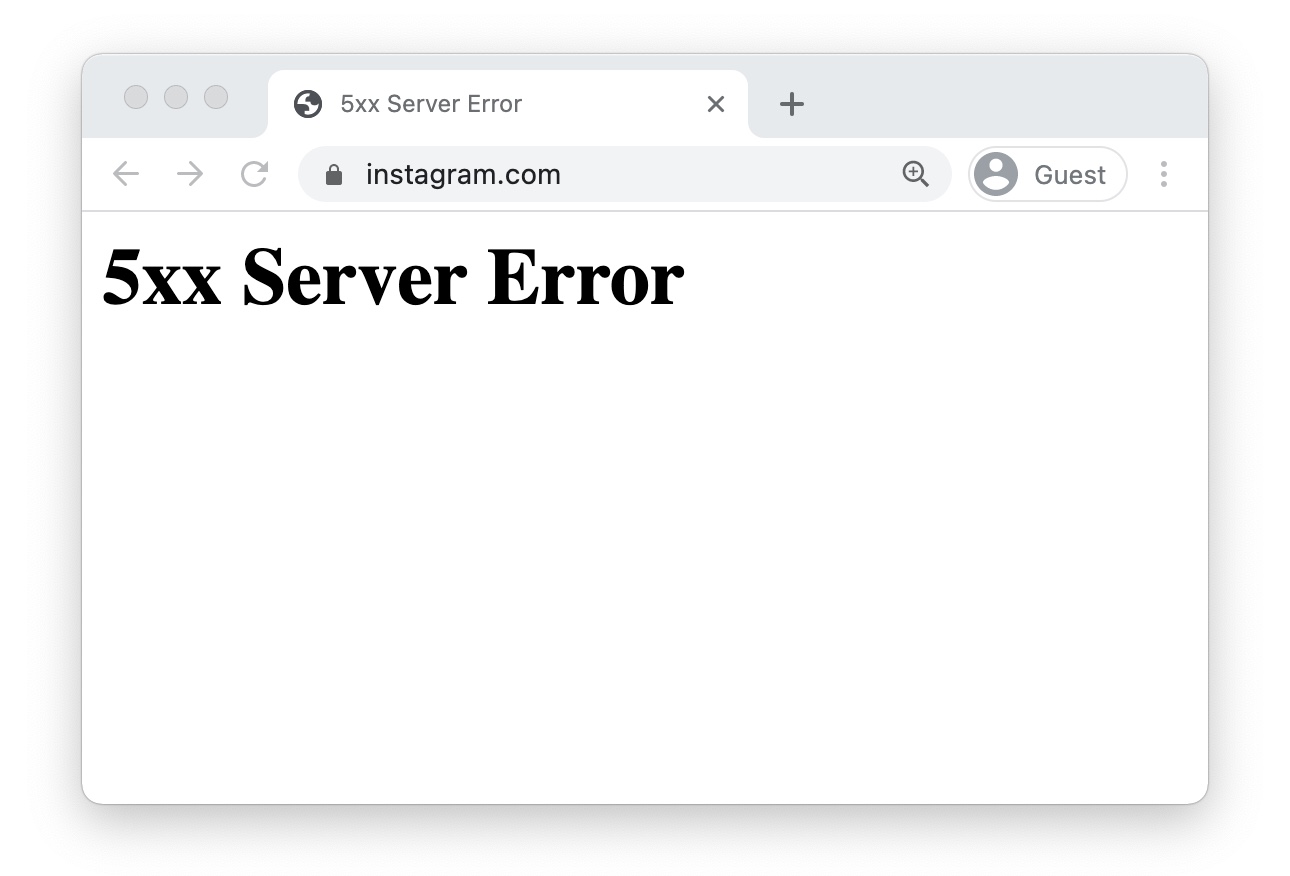
Instagram and WhatsApp are currently experiencing an apparent outage. It began around 1:40 pm ET. At the time of writing, Instagram was showing a 500 message, suggesting a back-end server error. WhatsApp meanwhile was unable to connect to the server, and messages are not being delivered. It’s not clear if the issue also affects Facebook

Instagram and WhatsApp are currently experiencing an apparent outage. It began around 1:40 pm ET.

At the time of writing, Instagram was showing a 500 message, suggesting a back-end server error. WhatsApp meanwhile was unable to connect to the server, and messages are not being delivered. It’s not clear if the issue also affects Facebook Messenger, which last year rolled out new functionality to allow cross-platform messaging between Facebook, WhatsApp and Instagram.

Instagram currently looks like this.

Instagram's error page

Instagram’s error page. (Image: TechCrunch)

WhatsApp has more than two billion users, and Instagram has about one billion users. Facebook’s developer status page did not show any immediate outages.

We’ve reached out to Facebook, which owns the two units, but did not immediately hear back. We’ll update when we know more.

More on TechCrunch:

News: Social+ payments: Why fintechs need social features

The shift toward social+ is not going anywhere, and the fintech vertical is no exception. The good news is the social+finance trend is still in its infancy, which means there are opportunities to gain a first-mover advantage by acting now.

John S. Kim
Contributor

John S. Kim is CEO of Sendbird, makers of a customizable chat and messaging API service for mobile and web applications.

Social+ companies are upping the stakes for everyone by giving consumers multiple benefits at once: products that serve a purpose but also meet our need for belonging to a community.

But what exactly is a social+ company? One for which social engagement is an inextricable component of the product. That is to say: If you removed the social element, the product would cease to make sense. You can find plenty of examples in gaming (Fortnite), fitness (Strava, Peloton), commerce (Pinduoduo), audio (Clubhouse) and more. As noted in Andreessen Horowitz’s recent series Social Strikes Back, “The best version of every consumer product is the one that’s intrinsically social.”

Social+ products are seeing mass adoption because they marry community with functionality.

The benefits of a social+ company

Social+ products are seeing mass adoption because they marry community with functionality. Users form meaningful connections — and engage in value-adding conversations — within the context of the goal they’re trying to achieve. Whether it’s shopping for a deal or growing their assets, social+ products help users gain new knowledge, find motivation, garner status, form friendships and generally feel like they’re part of something.

Companies that base their business model on social+ products enjoy a variety of benefits:

Growth

When the social aspect of a product is integral to its function, users will often drive growth on their own steam, inviting their friends and family to join the community.

Members of highly engaged communities are inspired and fired up by their interactions with other members, and when they’re fired up about something, they talk about it. Participating in these communities makes users feel like they’re part of something, which can have a powerful effect on your growth.

Retention

Relationships matter. The relationship your users have with your brand is ultimately what will determine whether they stick with you or leave you for a competitor offering the same service — particularly at a more attractive price. If you provide your customers with access to a community they relate to and resources that make their lives easier, they’re more likely to be loyal.

The beauty of social+ is that embedding social interaction within your product or app allows you to own that conversation and build a community around your brand. In the absence of built-in communities, these users are forced to turn to places like Reddit or WhatsApp to discuss, among other things, the relative advantages of competitors’ apps.

Harnessing the creativity of your users

User-generated content (UGC) is the lifeblood of any social+ product, driving user engagement and fostering connections among users. UGC means the company can harness the creativity and popularity of its users and doesn’t have to expend as many resources creating content users find valuable. Plus there’s the added bonus that authentic UGC — whether it’s a screenshot or a meme — lends the product far greater credibility than any marketing initiatives you could launch.

News: Uber under pressure over facial recognition checks for drivers

Uber’s use of facial recognition technology for a driver identity system is being challenged in the U.K., where the App Drivers & Couriers Union (ADCU) and Worker Info Exchange (WIE) have called for Microsoft to suspend the ride-hailing giant’s use of B2B facial recognition after finding multiple cases where drivers were mis-identified and went on

Uber’s use of facial recognition technology for a driver identity system is being challenged in the U.K., where the App Drivers & Couriers Union (ADCU) and Worker Info Exchange (WIE) have called for Microsoft to suspend the ride-hailing giant’s use of B2B facial recognition after finding multiple cases where drivers were mis-identified and went on to have their licence to operate revoked by Transport for London (TfL).

The union said it has identified seven cases of “failed facial recognition and other identity checks” leading to drivers losing their jobs and licence revocation action by TfL.

When Uber launched the “Real Time ID Check” system in the U.K. in April 2020, it said it would “verify that driver accounts aren’t being used by anyone other than the licensed individuals who have undergone an Enhanced DBS check”. It said then that drivers could “choose whether their selfie is verified by photo-comparison software or by our human reviewers”.

In one misidentification case the ADCU said the driver was dismissed from employment by Uber and his licence was revoked by TfL. The union adds that it was able to assist the member to establish his identity correctly, forcing Uber and TfL to reverse their decisions. But it highlights concerns over the accuracy of the Microsoft facial recognition technology — pointing out that the company suspended the sale of the system to U.S. police forces in the wake of the Black Lives Matter protests of last summer.

Research has shown that facial recognition systems can have an especially high error rate when used to identify people of color — and the ADCU cites a 2018 MIT study that found Microsoft’s system can have an error rate as high as 20% (accuracy was lowest for dark-skinned women).

The union said it’s written to the mayor of London to demand that all TfL private-hire driver licence revocations based on Uber reports using evidence from its Hybrid Real Time Identification systems are immediately reviewed.

Microsoft has been contacted for comment on the call for it to suspend Uber’s licence for its facial recognition tech.

The ADCU said Uber rushed to implement a workforce electronic surveillance and identification system as part of a package of measures implemented to regain its license to operate in the U.K. capital.

Back in 2017, TfL made the shocking decision not to grant Uber a licence renewal — ratcheting up regulatory pressure on its processes and maintaining this hold in 2019 when it again deemed Uber “not fit and proper” to hold a private hire vehicle licence.

Safety and security failures were a key reason cited by TfL for withholding Uber’s licence renewal.

Uber has challenged TfL’s decision in court and it won another appeal against the licence suspension last year — but the renewal granted was for only 18 months (not the full five years). It also came with a laundry list of conditions — so Uber remains under acute pressure to meet TfL’s quality bar.

Now, though, Labor activists are piling pressure on Uber from the other direction too — pointing out that no regulatory standard has been set around the workplace surveillance technology that the ADCU says TfL encouraged Uber to implement. No equalities impact assessment has even been carried out by TfL, it adds.

WIE confirmed to TechCrunch that it’s filing a discrimination claim in the case of one driver, called Imran Raja, who was dismissed after Uber’s Real ID check — and had his licence revoked by TfL.

His licence was subsequently restored — but only after the union challenged the action.

A number of other Uber drivers who were also misidentified by Uber’s facial recognition checks will be appealing TfL’s revocation of their licences via the U.K. courts, per WIE.

A spokeswoman for TfL told us it is not a condition of Uber’s licence renewal that it must implement facial recognition technology — only that Uber must have adequate safety systems in place.

The relevant condition of its provisional licence on “driver identity” states:

ULL shall maintain appropriate systems, processes and procedures to confirm that a driver using the app is an individual licensed by TfL and permitted by ULL to use the app.

We’ve also asked TfL and the U.K.’s Information Commissioner’s Office for a copy of the data protection impact assessment Uber says was carried before the Real-Time ID Check was launched — and will update this report if we get it.

Uber, meanwhile, disputes the union’s assertion that its use of facial recognition technology for driver identity checks risks automating discrimination because it says it has a system of manual (human) review in place that’s intended to prevent failures.

Albeit it accepts that that system clearly failed in the case of Raja — who only got his Uber account back (and an apology) after the union’s intervention.

Uber said its Real-Time ID system involves an automated “picture matching” check on a selfie that the driver must provide at the point of log in, with the system comparing that selfie with a (single) photo of them held on file. 

If there’s no machine match, the system sends the query to a three-person human review panel to conduct a manual check. Uber said checks will be sent to a second human panel if the first can’t agree. 

In a statement the tech giant told us:

Our Real-Time ID Check is designed to protect the safety and security of everyone who uses the app by ensuring the correct driver or courier is using their account. The two situations raised do not reflect flawed technology — in fact one of the situations was a confirmed violation of our anti-fraud policies and the other was a human error.

“While no tech or process is perfect and there is always room for improvement, we believe the technology, combined with the thorough process in place to ensure a minimum of two manual human reviews prior to any decision to remove a driver, is fair and important for the safety of our platform.

In two of the cases referred to by the ADCU, Uber said that in one instance a driver had shown a photo during the Real-Time ID Check instead of taking a selfie as required to carry out the live ID check — hence it argues it was not wrong for the ID check to have failed as the driver was not following the correct protocol.

In the other instance Uber blamed human error on the part of its manual review team(s) who (twice) made an erroneous decision. It said the driver’s appearance had changed and its staff were unable to recognize the face of the (now bearded) man who sent the selfie as the same person in the clean-shaven photo Uber held on file.

Uber was unable to provide details of what happened in the other five identity check failures referred to by the union.

It also declined to specify the ethnicities of the seven drivers the union says were misidentified by its checks.

Asked what measures it’s taking to prevent human errors leading to more misidentifications in the future, Uber declined to provide a response.

Uber said it has a duty to notify TfL when a driver fails an ID check — a step that can lead to the regulator suspending the license, as happened in Raja’s case. So any biases in its identity check process clearly risk having disproportionate impacts on affected individuals’ ability to work.

WIE told us it knows of three TfL licence revocations that relate solely to facial recognition checks.

“We know of more [UberEats] couriers who have been deactivated but no further action since they are not licensed by TfL,” it noted.

TechCrunch also asked Uber how many driver deactivations have been carried out and reported to TfL in which it cited facial recognition in its testimony to the regulator — but again the tech giant declined to answer our questions.

WIE told us it has evidence that facial recognition checks are incorporated into geo-location-based deactivations Uber carries out.

It said that in one case a driver who had their account revoked was given an explanation by Uber relating solely to location but TfL accidentally sent WIE Uber’s witness statement — which it said “included facial recognition evidence”.

That suggests a wider role for facial recognition technology in Uber’s identity checks versus the one the ride-hailing giant gave us when explaining how its Real-Time ID system works. (Again, Uber declined to answer follow-up questions about this or provide any other information beyond its on-the-record statement and related background points.)

But even just focusing on Uber’s Real-Time ID system there’s the question of how much say Uber’s human review staff actually have in the face of machine suggestions combined with the weight of wider business imperatives (like an acute need to demonstrate regulatory compliance on the issue of safety).

James Farrer, the founder of WIE, queries the quality of the human checks Uber has put in place as a backstop for facial recognition technology, which has a known discrimination problem.

“Is Uber just confecting legal plausible deniability of automated decision making or is there meaningful human intervention,” he told TechCrunch. “In all of these cases, the drivers were suspended and told the specialist team would be in touch with them. A week or so typically would go by and they would be permanently deactivated without ever speaking to anyone.”

“There is research out there to show when facial recognition systems flag a mismatch humans have bias to confirm the machine. It takes a brave human being to override the machine. To do so would mean they would need to understand the machine, how it works, its limitations and have the confidence and management support to over rule the machine,” Farrer added. “Uber employees have the risk of Uber’s license to operate in London to consider on one hand and what… on the other? Drivers have no rights and there are in excess so expendable.”

He also pointed out that Uber has previously said in court that it errs on the side of customer complaints rather than give the driver benefit of the doubt. “With that in mind can we really trust Uber to make a balanced decision with facial recognition?” he asked.

Farrer further questioned why Uber and TfL don’t show drivers the evidence that’s being relied upon to deactivate their accounts — to given them a chance to challenge it via an appeal on the actual substance of the decision.

“IMHO this all comes down to tech governance,” he added. “I don’t doubt that Microsoft facial recognition is a powerful and mostly accurate tool. But the governance of this tech must be intelligent and responsible. Microsoft are smart enough themselves to acknowledge this as a limitation.

“The prospect of Uber pressured into surveillance tech as a price of keeping their licence… and a 94% BAME workforce with no worker rights protection from unfair dismissal is a recipe for disaster!”

The latest pressure on Uber’s business processes follows hard on the heels of a major win for Farrer and other former Uber drivers and labor rights activists after years of litigation over the company’s bogus claim that drivers are “self employed”, rather than workers under U.K. law.

On Tuesday Uber responded to last month’s Supreme Court quashing of its appeal saying it would now treat drivers as workers in the market — expanding the benefits it provides.

However, the litigants immediately pointed out that Uber’s “deal” ignored the Supreme Court’s assertion that working time should be calculated when a driver logs onto the Uber app. Instead Uber said it would calculate working time entitlements when a driver accepts a job — meaning it’s still trying to avoid paying drivers for time spent waiting for a fare.

The ADCU therefore estimates that Uber’s “offer” underpays drivers by between 40%-50% of what they are legally entitled to — and has said it will continue its legal fight to get a fair deal for Uber drivers.

At an EU level, where regional lawmakers are looking at how to improve conditions for gig workers, the tech giant is now pushing for an employment law carve out for platform work — and has been accused of trying to lower legal standards for workers.

In additional Uber-related news this month, a court in the Netherlands ordered the company to hand over more of the data it holds on drivers, following another ADCU+WIE challenge. Although the court rejected the majority of the drivers’ requests for more data. But notably it did not object to drivers seeking to use data rights established under EU law to obtain information collectively to further their ability to collectively bargain against a platform — paving the way for more (and more carefully worded) challenges as Farrer spins up his data trust for workers.

The applicants also sought to probe Uber’s use of algorithms for fraud-based driver terminations under an article of EU data protection law that provides for a right not to be subject to solely automated decisions in instances where there is a legal or significant effect. In that case the court accepted Uber’s explanation at face value that fraud-related terminations had been investigated by a human team — and that the decisions to terminate involved meaningful human decisions.

But the issue of meaningful human invention/oversight of platforms’ algorithmic suggestions/decisions is shaping up to be a key battleground in the fight to regulate the human impacts of and societal imbalances flowing from powerful platforms which have both god-like view of users’ data and an allergy to complete transparency.

The latest challenge to Uber’s use of facial recognition-linked terminations shows that interrogation of the limits and legality of its automated decisions is far from over — really, this work is just getting started.

Uber’s use of geolocation for driver suspensions is also facing legal challenge.

While pan-EU legislation now being negotiated by the bloc’s institutions also aims to increase platform transparency requirements — with the prospect of added layers of regulatory oversight and even algorithmic audits coming down the pipe for platforms in the near future.

Last week the same Amsterdam court that ruled on the Uber cases also ordered India-based ride-hailing company Ola to disclose data about its facial-recognition-based “Guardian” system — aka its equivalent to Uber’s Real-Time ID system. The court said Ola must provide applicants with a wider range of data than it currently does — including disclosing a “fraud probability profile” it maintains on drivers and data within a “Guardian” surveillance system it operates.

Farrer says he’s thus confident that workers will get transparency — “one way or another”. And after years fighting Uber through U.K. courts over its treatment of workers his tenacity in pursuit of rebalancing platform power cannot be in doubt.


 

WordPress Image Lightbox Plugin