Monthly Archives: March 2021

News: Binance-backed Xend Finance launches DeFi platform for credit unions in Africa

Nigerian startup Xend Finance uses decentralized finance (DeFi) to address currency devaluation. DeFi aims to bridge the gap between decentralized blockchains and financial services. Aronu Ugochukwu and Abafor Chima founded the startup in 2019, and Ugochukwu is quite familiar with currency devaluation.  Currency devaluation is a common economic nightmare faced in most African countries and

Nigerian startup Xend Finance uses decentralized finance (DeFi) to address currency devaluation. DeFi aims to bridge the gap between decentralized blockchains and financial services. Aronu Ugochukwu and Abafor Chima founded the startup in 2019, and Ugochukwu is quite familiar with currency devaluation. 

Currency devaluation is a common economic nightmare faced in most African countries and other developing countries worldwide. It has become imperative for organisations like credit unions to hedge their collective funds against their local currency’s devaluation.

“We’ve experienced three massive currency devaluations in the last three years in Nigeria, and this is similar to different economies in the world with unstable economies,” Ugochukwu said to TechCrunch. “My mother and I belong to different cooperatives where we save and make monthly contributions to help one another in the cooperative. Realizing that despite saving regularly, we were losing more value for our money. This gave birth to Xend Finance.”

Today, the company announced its mainnet launch, opening up the ability for credit unions to access DeFi for their members by using decentralized stablecoins such as DAI and BUSD.

Not only is Xend Finance trying to protect credit unions from fluctuation, but it is also changing how they operate. In these unions, groups of individuals contribute to informal savings for their different mutual benefits.

However, they are often limited by three factors. One is in its size — only a small knit of people in a particular locale can access the service. The second is lack of insurance which means people don’t have the confidence to join saving cycles. The third has to do with how credit union members default in payments, affecting how much is paid down the line.

Image Credits: Xend Finance

Xend Finance is plugging these gaps using blockchain technology. The platform allows credit unions to have over 1,000 members who don’t stay in the same geographical location. It also employs smart contracts to lock each member’s contribution and enable flexible payouts when a payment cycle is due, which reduces default payment rates. The company also says it offers decentralized insurance to protect members against any form of asset loss that results from contract failures. However, this isn’t a traditional insurance contract from an insurance company. 

Besides, the company says credit union members can earn interests in their savings by exchanging their crypto or fiat currency for stable cryptocurrencies and locking crypto assets on lending platforms. According to the company, there’s a possible 15% available annual percentage yield on the platform.

The company claims to be the world’s first decentralized finance (DeFi) credit union platform and the first DeFi company to launch out of Africa. Its technology is built on Binance Smart Chain (BSC), a blockchain for developing high-performance decentralized applications.

In 2019, the startup based in Enugu, Nigeria, took part in the Google Launchpad Africa accelerator and the Binance Incubation Programme. It has since secured $2.2 million from Binance, Google Launchpad, NGC Ventures, Hashkey, and AU21 Capital, amongst others.

From December 2020 to January 2021, Xend Finance executed a testnet with over 1,500 participants in 75 countries. This helped them find product-market fit, and last week, the company did a beta launch of its mainnet where it received over $500,000 in deposits. They also signed a credit union partnership with a software service provider, TechFusion Africa and its 5,000 members

Image Credits: Xend Finance

The company intends to onboard a lot of customers now and focus on revenue later, Ugochukwu says. And when it does, the play will be to charge a commission (not more than 5%) on the return on investment when members of cooperatives or regular individuals save or perform contributions on the platform.

Having run some tests and passed several iterations, Xend Finance is fully going public today, and Changpeng “CZ” Zhao, CEO of Binance, expects the platform to show what can be built on BSC.

“Africa is one of the most important continents, representing the future and emergence of DeFi and blockchain capabilities,” said Zhao. “We are very excited about the mainnet launch of Xend Finance, with a team we backed early on that has a strong foothold in Africa and have been strong advocates for what Binance Smart Chain can accomplish. With their platform, they can bring stable currency and DeFi investment opportunities to those who normally wouldn’t have them.”

Along with the mainnet launch, Xend Finance will introduce the $XEND token through a Token Generation Event (TGE) on Balancer. The company says the token will reward users for performing different operations in “the protocol, as well as allows a decentralized governance of the Xend Finance ecosystem.”

For Ugochukwu, Xend Finance presents people with the opportunity to channel their savings into stablecoins without worry that their money will devalue overnight and earn higher interest rates through DeFi. “We are very excited that blockchain will have a positive impact on the people of Africa,” he said. 

News: The Station: Uber’s new battles in the UK, Lucid Motors’ second life plans and Cruise acquires Voyage

The Station is a weekly newsletter dedicated to all things transportation. Sign up here — just click The Station — to receive it every Saturday in your inbox. Hi friends and new readers, welcome to The Station, a newsletter dedicated to all the present and future ways people and packages move from Point A to Point

The Station is a weekly newsletter dedicated to all things transportation. Sign up here — just click The Station — to receive it every Saturday in your inbox.

Hi friends and new readers, welcome to The Station, a newsletter dedicated to all the present and future ways people and packages move from Point A to Point B. Before I forget, scroll all the way down to the bottom of the newsletter, if you’re interested in attending our upcoming early-stage conference. I have a gift for you.

Um, there is a #$@% ton of mobility news to get to, including a few scoops, some investment news, and a new “market map” that takes a deep look into the business of Mobility-as-a-service apps. Buckle up.

First up, here’s the market maps story (I just mentioned) from writer Jason Plautz. The upshot: As transit agencies seek to win back riders, a flurry of platforms — some backed by giants like Uber, Intel and BMW — are offering new technology partnerships. Whether it’s bundling bookings, payments or just trip planning, startups are selling these mobility-as-a-service (MaaS) offerings as a lifeline to make transit agencies the backbone of urban mobility. Third-party platforms have become more appealing to transit agencies as they scramble to keep buses, trains and rail full of customers.

And yep, this is an Extra Crunch story, which requires a subscription. As I’ve shared in here before, we’re bringing more transportation analysis to Extra Crunch. Last month, we had Mark Harris’ market analysis on solid state batteries. Next week, Extra Crunch will feature stories on the state of holographic tech in vehicles, the second-life battery marketplace and software plays in the micromobility industry.

Email me at kirsten.korosec@techcrunch.com to share thoughts, criticisms, offer up opinions or tips. You can also send a direct message to me at Twitter — @kirstenkorosec.

Micromobbin’

Bird peeped up this week (they’ve been sorta quiet lately) and announced it is investing $150 million into a European expansion plan that will include launching in more than 50 cities this year, a move that it says will double its footprint in the region.

According to Bird, this growth plan is already underway, with the shared micromobility company recently bringing its scooters to Bergen, Norway; Tarragona, Spain; and Palermo, Italy.

Bird emphasized that its European expansion will be more than just a geographic one. The company said it is adding more scooters to its existing fleets and made several other promises as part of its announcement, including plans to launch new mobility products and safety initiatives, “the next generation of recycling and second-life applications for vehicles,” investing in equity programs and “securing partnerships across the region.”

I might have raised an eyebrow or two when I first read this announcement. Why? Welp, for one it isn’t clear what these new mobility products or initiatives around safety or recycling will be. A Bird spokesperson told me these will be new vehicles and “transport modes” in the region. Bird didn’t provide details about what it means by “securing partnerships,” a phrase that could mean an extension of its franchise program called the Bird Platform or some other kind of arrangement with local governments or operators.

And then there’s the bit about that $150 million. A Bird spokesperson told TechCrunch it’s using “existing resources” to fund these various initiatives. However, the pandemic, its acquisition of Circ and its effort to launch operations in new cities while maintaining existing fleets have depleted its funds. (Last June, Bird shut down scooter sharing in several cities in the Middle East, an operation that was managed by Circ.) The company’s last public fundraising announcements were more than a year ago. The company raised $275 million in a Series D round back in September 2019. That round was later extended to $350 million.

Now, this could be the $100 million in convertible debt that Bird reportedly was close to finalizing (per The Information’s reporting back in January). But something tells me there is more to this. Stay tuned.

A few other interesting micromobbin’ nugs for you … 

Lime and Lyft appear to have secured a license that will allow the companies to exclusively operate scooter and bike share services in Denver. The city’s Department of Transportation & Infrastructure said it is moving two licensing agreements through the Denver City Council approval process. On March 23, he DOTI will present the licensing agreements to Denver City Council’s Land Use, Transportation & Infrastructure Committee  for approval before heading to full council for consideration.

The “license” term is important here and marks a shift in how Denver is thinking about dockless shared scooters and bikes. A license would replace how dockless electric scooter and bike companies currently operate in Denver, which is through a permit. If the licenses are approved by Council, Lyft and Lime would be the only two companies operating vehicles in Denver under the new bike and scooter share program. The license would be valid for 5 years.

Superpedestrian, the startup that makes e-scooters equipped with self-diagnostic software, is upgrading its product as it prepares for a major expansion into 10 new cities within the next two weeks, TechCrunch’s Rebecca Bellan reported. Superpedestrian might not be a household name, but it is an up-and-coming player in the micromobility world. The company has developed AI — which is integrated into the vehicle — that monitors and corrects scooter safety issues in real time.

The next-generation operating system that will provide those upgrades, codenamed “Briggs,” will be uploaded to its global fleet of LINK e-scooters. It includes improvements to geofencing capabilities and battery life, making Superpedestrian more attractive to cities looking for partners who can provide assurances around safety and reliability.

SMART, a startup founded in 2020, revealed its first product: An airless bicycle tire based on technology NASA engineers created to make future lunar and Martian rovers even more resilient. This nifty tech that shows how NASA investments towards space exploration can end up improving life on Earth. SMART has a partnership with NASA through the Space Act Agreement and is part of the agency’s formal Startup Program that aims to commercialize some of its innovations.

SMART's METL tire close up

Image Credits: SMART Tire Company

The company’s “METL tire” came out of its work with NASA’s Glenn Research Center, where NASA engineers Dr. Santo Padula and Colin Creager first developed their so-called “shape memory alloy” (SMA) technology. SMA allows for a tire constructed entirely of interconnected springs, which requires no inflation and is therefore immune to punctures, but which can still provide equivalent or better traction when compared to inflatable rubber tires, and even some built-in shock-absorbing capabilities, TechCrunch’s Darrell Etherington reports.

SMART’s  co-founders, Survivor: Fiji” champion Earl Cole and engineer Brian Yennie, are targeting the cycling market first with their METL tire, which is set to become available to the general public by early next year. SMART intends to bring SMA tires to the automotive and commercial vehicle industries.

Deal of the week

money the station

Typically, my “deal of the week” has a financial figure tied to it. This time, I don’t have those terms. (Feel free to share,  if you do.) This deal made it to the top of the list because of its importance in the autonomous vehicle industry.

I am, of course, talking about Cruise acquiring Voyage, a four-year-old autonomous vehicle startup that is well-known in the industry despite its size relative to other major players. Voyage had 60 employees and raised about $52 million compared to giants like Cruise that has a nearly 2,000-person workforce and is valued at $30 billion. But Voyage made an indelible mark on the industry, in large part because of its co-founder and CEO Oliver Cameron. The company, which spun out of Udacity in 2017, is best known for its operations in two senior living communities. Voyage tested and gave rides to people within a 4,000-resident retirement community in San Jose, California, as well as The Villages, a 40-square-mile, 125,000-resident retirement city in Florida.

I’ve been told the majority of Voyage’s team will move over to Cruise and Cameron will take on a new role as vice president of product. Basically, Cameron will be in charge of anything that touches the customer.

Importantly, Voyage’s ride-hailing service (which always included a human safety driver behind the wheel) at the two senior communities, one in California and the other in Florida, will be ending before summer. The Villages community in Florida is massive and its where Voyage scaled up and at one point had “hundreds” of riders. The shuttering of this service would seem to open up the opportunity to other AV companies; my guess is that Cameron has already fielded a few inquiries.

Voyage’s partnership with FCA, now called Stellantis, will also end once the acquisition with Cruise closes.

Other deals that stood out …

Aerovel, the manufacturer of uncrewed vertical take-off and landing aircraft designed for surveillance, has raised $2.5 million in Series B capital. The investment is from undisclosed leaders in aviation, according to the company.

Arbe Robotics, a company that sells long-range 4D imaging radar, has agreed to merge with special purpose acquisition company Industrial Tech Acquisitions Inc. The transaction is expect4ed to deliver about $177 million in gross cash  proceeds that includes Industrial Tech’s $77 million cash-in-trust as well as $100 million in private investment in public equity, or PIPE, M&G Investment Management, Varana Capital, Texas Ventures and Eyal Waldman, the founder and CEO of Mellanox Technologies. You can check out their investor presentation here.

For a little insight into Arbe, check out this Autonocast podcast episode from 2018, when I — along with my co-hosts Alex Roy and Ed Niedermeyer — interviewed Arbe CEO Kobi Marenko about his company’s high-resolution radar technology.

Charge Amps, the Swedish maker of smart charging stations, cables, and cloud software, raised 130 million crowns ($15.3 million) in a funding round led by Swedbank Robur. The company raised the funds ahead of a planned IPO next year, Reuters reported.

Fort Robotics raised $13 million in a round led by Prime Movers Lab, the round also features Prologis Ventures, Quiet Capital, Lemnos Labs, Creative Ventures, Ahoy Capital, Compound, FundersClub and Mark Cuban. The Philadelphia-based company was founded in 2018 by Samuel Reeves, who previous headed up Humanistic Robotics. That fellow Pennsylvania startup is focused on landmine and IED-clearing remote operating robotic systems.

Momenta, the five-year-old Chinese autonomous driving startup, closed another massive round of nearly $500 million. The funding lifts its total funding to more than $700 million and in its short life has attracted a dazzling list of investors, including Kai-Fu Lee’s Sinovation Ventures, the government of Suzhou and Daimler.

Momenta’s chief of business development Sun Huan told TechCrunch’s Rita Liao that the investment marks an important step toward the firm’s international expansion. In a few months’ time, Sun will head to Stuttgart, the German hometown of Mercedes-Benz, and open Momenta’s first European office.

Unagi, the startup behind the portable, design-centric electric scooters, raised $10.5 million in a Series A round led by led by the Ecosystem Integrity Fund with participation from Menlo Ventures, Broadway Angels and Gaingels, among others. Unagi, which was launched in late 2018 by former Beats Music CEO and MOG co-founder David Hyman, plans to use the money to fund its expansion and bring  its subscription service to six more U.S. cities, including Austin, Miami, Nashville, Phoenix, San Francisco and Seattle. Unagi will also be expanding its existing service in the New York and LA metropolitan regions, including all five NYC boroughs, Long Island, Westchester and Northern New Jersey, as well as the Westside and Southeast LA, the San Fernando Valley and Orange County.

Notable reads and other tidbits

the-station-delivery

Lots. of. news. Let’s get to it.

Autonomous vehicles and robotics

Ford Motor announced plans to embed 100 of its researchers and engineers in a new $75 million robotics and mobility facility on the University of Michigan’s Ann Arbor campus. The arrangement will give Ford space to conduct robotics research and access to students — and vice versa — from the top floor of the four-floor, 134,000 square-foot building. In addition to its fourth-floor lab, Ford will have access to a high-bay garage space to test autonomous vehicles.

Shortly after the event wrapped up, TechCrunch hardware editor Brian Heater hopped on the phone with Ford’s Technical Expert Mario Santillo, who will help head up the expanded robotics efforts. Here’s what Santillo had to say.

Electric

Amazon is expanding customer deliveries via electric cargo vehicle to San Francisco, making the Bay Area the second of 16 total cities the company expects to bring its Rivian-sourced EVs to in 2021. San Francisco’s unique terrain and climate were a couple of the reasons Amazon said it chose the city for its second round of testing. Its EVs, which were designed and built in partnership with Rivian, can last up to 150 miles on a single charge.

BMW takes the wraps off of the all-electric i4 sedan. The German automaker also announced version 8 of its iDrive operating system, which will feature a new dashboard layout and visual design, with two curved screens. It will make its debut in the i4 and iX.

Chanje, EV startup that emerged from stealth in 2017 and is owned by Chanje is owned by Chinese automotive company  FDG, is being sued by truck rental company Ryder for alleged failing to deliver 100 of the 125 vans it was promised, The Verge reported. Ryder says it’s owed nearly $4 million. Chanje was on The Autonocast waayyyyy back in 2018. At the time, I was impressed by the idea and the van, which I drove with co-host Alex Roy around downtown Los Angeles. But it seems that Chanje is riddled with problems — and lawsuits. The Verge reported that Chanje has been sued more than once in Los Angeles Superior Court by former employees who say they’re owed tens of thousands in back pay and bonuses. The company has also been hit with liens from the California Secretary of State for not paying taxes.

Lucid Motors, which is already experimenting with energy storage systems for commercial and residential customers, is also eyeing ways to repurpose batteries from its electric vehicles, according to this scoop by TechCrunch’s Aria Alamalhodaei. While Lucid CEO and CTO Peter Rawlinson has previously discussed plans to eventually build energy storage systems like Tesla that uses new batteries, this is the first time the company has talked about second-life applications for the product.

This is interesting because Lucid is still years from having to contend with a large number of used batteries. After all, its first EV, the luxury Lucid Air sedan, isn’t coming to market until the second half of 2021.

Hyundai is offering owners of the 2021 Kona Electric and Ioniq Electric access to 250 kWh of complimentary charging (approximately 1,000 miles of EPA estimated driving range) on the  Electrify America fast-charging network.

Rivian plans to install more than 10,000 chargers by the end of 2023. The network will have a dual purpose: quickly power its electric vehicle models with fast chargers installed along highways and provide Level 2 chargers at further afield locations next to parks, trailheads and other adventurous destinations. The company said that its so-called Rivian Adventure Network will include more than 3,500 DC fast chargers at over 600 sites, which will only be accessible to owners of its electric vehicles. Each site will have multiple chargers and located on highways and main roads, often by cafes and shops.

Rivian is also installing thousands of “waypoint” Level 2 AC chargers throughout the United States and Canada. These waypoint chargers will have a 11.5 kW charging speed, which should be able add up to 25 miles of range every hour for its R1T pickup truck and R1S SUV. The waypoint chargers will be strategically located along and near routes that Rivian customers are likely to take. They will be found at shopping centers restaurants, hotels, campsites and parks.

Volkswagen AG revealed how it aims to seize the top spot as the world’s largest electric vehicle manufacturer, outlining plans to have six 40 gigawatt hour (GWh) battery cell production plants in operation in Europe by 2030. To get there, the automaker put in a 10-year, $14 billion order with Swedish battery manufacturer Northvolt — and that’s only one of the six planned factories. A second plant in Germany will commence production in 2025.

Volkswagen Power Day 2021

Thomas Schmall, VW Group board member and CEO of Volkswagen Group Components. Image credits: Volkswagen

Ride-hailing

Uber says that drivers in the U.K. who use its ride-hailing app will be treated as workers, a designation that will give them some benefits such as holiday pay. However, even as Uber seemingly concedes to a Supreme Court ruling last month, a new fight could already be brewing over the company’s decision to calculate working time from the point a trip commences — rather than when drivers log on to the app.

All drivers in the U.K. will be paid holiday time based on 12.07% of their earnings, which will be paid out every two weeks. Drivers will also be paid at least the minimum wage after accepting a trip request and after expenses. Eligible drivers in the U.K. will automatically be enrolled into a pension plan with contributions from Uber. These contributions will represent approximately 3% of a driver’s earnings.

However … Uber will only guarantee that drivers’ working time and other benefits will accrue once they accept a trip and not based on when they have signed into the app to begin working. That already has labor activists fuming.

Meanwhile, Uber’s use of facial recognition technology for a driver identity system is being challenged in the U.K., where the App Drivers & Couriers Union (ADCU) and Worker Info Exchange (WIE) have called for Microsoft to suspend the ride-hailing giant’s use of B2B facial recognition after finding multiple cases where drivers were mis-identified and went on to have their licence to operate revoked by Transport for London (TfL).

The union said it has identified seven cases of “failed facial recognition and other identity checks” leading to drivers losing their jobs and licence revocation action by TfL, TechCrunch reporter Natasha Lomas writes.

Attention early-stage founders!

TechCrunch Early Stage is returning to offer founders an unrivaled opportunity to learn from top experts how best to move ahead in the startup game. I participated last year as a moderator. There was an abundance of information. And I’m here to help ya’ll access this by offering you a discount.

Early Stage is the premier ‘how-to’ event for startup entrepreneurs and investors. You’ll hear first-hand how some of the most successful founders and VCs build their businesses, raise money and manage their portfolios. We’ll cover every aspect of company-building: Fundraising, recruiting, sales, product market fit, PR, marketing and brand building. Each session also has audience participation built-in – there’s ample time included for audience questions and discussion. Use code “TCARTICLE” at checkout to get 20 percent off tickets right here.


News: Astroscale launches its ELSA-d orbital debris removal satellite

Space startup Astroscale has launched ELSA-d, the demonstration mission for its End-of-Life Services by Astroscale (ELSA) technology, which aims to dock with, and then safely remove, orbital debris. Astroscale’s demonstrator package includes two separate payloads, a servicer that represents its future production spacecraft, and a ‘client’ satellite that’s meant to represent the debris satellites it’ll

Space startup Astroscale has launched ELSA-d, the demonstration mission for its End-of-Life Services by Astroscale (ELSA) technology, which aims to dock with, and then safely remove, orbital debris. Astroscale’s demonstrator package includes two separate payloads, a servicer that represents its future production spacecraft, and a ‘client’ satellite that’s meant to represent the debris satellites it’ll be de-orbiting on behalf of customers in future.

The Astrocale payload was launched via a Soyuz rocket that took off early this morning from Kazakhstan carrying 38 commercial satellites from 18 countries. It’s the first Astroscale spacecraft to reach orbit, since the startup’s founding in 2013 by Japanese entrepreneur Nobu Okada. Astroscale had launched a micro satellite designed to measure small-scale debris in 2017, but all 18 of the satellites on that particular mission failed to reach orbit, due to human error in the launch vehicle’s programming.

This ELSA-d mission is a much more ambitious effort, and involves what amounts to an active on-orbit demonstration of the technology that Astroscale ultimately hopes to commercialize. The mission profile includes repeat docking and release maneuvers between the servicer satellite and the simulated client satellite, which is equipped with a ferromagnetic plate to assist the servicer with its magnetic docking procedure.

Astroscale hopes to prove out a range of its advertised capabilities with this demonstration, including the servicer’s ability to search out and located the client satellite, inspect it for damage, and then dock with it as mentioned, in both non-tumbling and tumbling scenarios (ie., a payload that’s maintaining a stable orbit, and one that’s spinning end-over-end in space with no ability to control its own attitude).

There’s a lot riding on this mission, which will be controlled from a ground center established by Astroscale in the UK. Aside from its long-term commercial ambitions, the startup is also contracted to partner with JAXA on the Japanese space agency’s first orbital debris removal mission, which aims to be the first in the world to remove a large object from orbit, representing the spent upper stage of a launch rocket.

News: The ‘Frankencloud’ model is our biggest security risk

The SolarWinds attack was successful because it took advantage of a vast, intermixed supply chain of technology vendors. The lesson? Complexity is the enemy of security.

Howard Boville
Contributor

Howard Boville is the senior vice president of IBM Hybrid Cloud. He directs IBM’s global network of more than 60 cloud data centers across 19 countries and 18 availability zones across six regions.

Recent testimony before Congress on the massive SolarWinds attacks served as a wake-up call for many. What I saw emerge from the testimony was a debate on whether the public cloud is a more secure option than a hybrid cloud approach.

The debate shouldn’t surround which cloud approach is more secure, but rather which one we need to design security for. We — enterprise technology providers — should be designing security around the way our modern systems work, rather than pigeonholing our customers into securing one computing model over the other.

An organization’s security needs to be designed with one single point of control that provides a holistic view of threats and mitigates complexity.

The SolarWinds attack was successful because it took advantage of a vast, intermixed supply chain of technology vendors. While there are fundamental lessons to be learned on how to protect the code supply chain, I think the bigger lesson is that complexity is the enemy of security.

The “Frankencloud” model

We’ve seen our information technology environments evolve into what I call a “Frankenstein” approach. Firms scrambled to take advantage of the cloud while maintaining their systems of record. Similar to how Frankenstein was assembled, this led to systems riddled with complexity and disconnected parts put together.

Security teams cite this complexity as one of their largest challenges. Forced to rely on dozens of vendors and disconnected security products, the average security team is using 25 to 49 tools from up to 10 different vendors. This disconnect is creating blind spots we can no longer afford to avoid. Security systems shouldn’t be piecemealed together; an organization’s security needs to be designed with one single point of control that provides a holistic view of threats and mitigates complexity.

Hybrid cloud innovations

We’re seeing hybrid cloud environments emerging as the dominant technology design point for governments, as well as public and private enterprises. In fact, a recent study from Forrester Research found that 85% of technology decision-makers agree that on-premise infrastructure is critical to their hybrid cloud strategies.

A hybrid cloud model combines part of a company’s existing on-premise systems with a mix of public cloud resources and as-a-service resources and treats them as one.

How does this benefit your security? In a disconnected environment, the most common path for cybercriminals to compromise cloud environments is via cloud-based applications, representing 45% of cloud-related incidents analyzed by our IBM X-Force team.

Take, for instance, your cloud-based systems that authenticate that someone is authorized to access systems. A login from an employee’s device is detected in the middle of the night. At the same time, there may be an attempt from that same device, seemingly in a different time zone, to access sensitive data from your on-premise data centers. A unified security system knows the risky behavior patterns to watch for and automatically hinders both actions. If these incidents were detected in two separate systems, that action never takes place and data is lost.

Many of these issues arise due to the mishandling of data through cloud data storage. The fastest-growing innovations to address this gap are called Confidential Computing. Right now, most cloud providers promise that they won’t access your data. (They could, of course, be compelled to break that promise by a court order or other means.) Conversely, it also means malicious actors could use that same access for their own nefarious purposes. Confidential Computing ensures that the cloud technology provider is technically incapable of accessing data, making it equally difficult for cybercriminals to gain access to it.

Creating a more secure future

Cloud computing has brought critical innovations to the world, from the distribution of workloads to moving with speed. At the same time, it also brought to light the essentials of delivering IT with integrity.

Cloud’s need for speed has pushed aside the compliance and controls that technology companies historically ensured for their clients. Now, those requirements are often put back on the customer to manage. I’d urge you to think of security first and foremost in your cloud strategy and choose a partner you can trust to securely advance your organization forward.

We need to stop bolting security and privacy onto the “Frankencloud” environment that operates so many businesses and governments. SolarWinds taught us that our dependence on a diverse set of technologies can be a point of weakness.

Fortunately, it can also become our greatest strength, as long as we embrace a future where security and privacy are designed in the very fabric of that diversity.

News: Equity Monday: Deliveroo sets IPO price range as we gear up for Y Combinator week

Hello and welcome back to Equity, TechCrunch’s venture capital-focused podcast where we unpack the numbers behind the headlines. This is Equity Monday, our weekly kickoff that tracks the latest private market news, talks about the coming week, digs into some recent funding rounds and mulls over a larger theme or narrative from the private markets. You

Hello and welcome back to Equity, TechCrunch’s venture capital-focused podcast where we unpack the numbers behind the headlines.

This is Equity Monday, our weekly kickoff that tracks the latest private market news, talks about the coming week, digs into some recent funding rounds and mulls over a larger theme or narrative from the private markets. You can follow the show on Twitter here and myself here.

If you are paying attention to Y Combinator’s demo day this week, our primer is here. And our Friday news roundup is here. With that, let’s get into the news:

Coming Wednesday we are digging into equity crowdfunding. Which is going to be hot shit. Get ready.

Equity drops every Monday at 7:00 a.m. PST, Wednesday, and Friday at 6:00 AM PST, so subscribe to us on Apple PodcastsOvercastSpotify and all the casts!

News: NFTs could bridge video games and the fashion industry

Non-fungible tokens (NFTs) offer new ways for consumers to collect, wear and trade fashion online. Now that most fashion shows have scaled back or gone virtual, they may become an important tool for the industry.

Non-fungible tokens (NFTs) offer new ways for consumers to collect, wear and trade fashion online, and now that most fashion shows have scaled back or gone virtual, they may become an important tool for the industry.

Because some of the most profitable NFTs are produced by celebrities with teams, it makes sense that music corporations, fashion brands and designers are venturing into the NFT market as well. Just this month, sneaker brand RTFKT Studios garnered $3.1 million in seven minutes by selling crypto collectibles. In December 2020, NFT startup Enjin partnered with Netherlands-based fashion house The Fabricant on a virtual collection. Real-life fashion brands use NFTs for marketing in virtual worlds like Minecraft, plus several Atari and Microsoft video games.

The fundamental value NFTs offer to bridge virtual fashion items with video games is the option to secure custody of the item for use in other games or mobile apps.

“Brands are coming up with some creative solutions because the pandemic is persistent, and fashion is something that is so close to our identities,” said Bryana Kortendick, Enjin’s VP of operations and communications. “You can snap a photo of yourself wearing your Atari-branded NFTs. You’ll also be able to wear them in video games.”

Breakout NFT star Beeple said he imagines a future where fashion NFTs could be redeemed for specific items in physical stores, especially at luxury retailers like his former client Louis Vuitton.

“You can relate NFTs to clothing in new and interesting ways,” he said. “This will be seen as the next chapter of digital art history. This is a continuation of digital art history that started decades ago, by that I mean art made on a computer and distributed through the internet.”

Fashion designers like Schirin Negahbani are already creating NFTs that represent actual clothing. Precisely because multimillion-dollar NFT sales are breaking records, spectators have been prompted to question the role speculative trading plays in this trend.

Textile designer Amber J. Dickinson says fashionable NFTs shouldn’t primarily be viewed as speculative trading opportunities. “The way I think fashion translates to the digital world is to view an NFT as a collectible piece of the garment for history,” said Dickinson, known for hand-made silk scarves and her work with Alexander McQueen. “I would only buy art as a piece that I liked. Whether digital or in the real world, I don’t take an investor’s point of view.”

There are many fashion fans who disagree with Dickinson, preferring to invest through assets like Birkin bags. They may have a different approach to NFTs. The DIGITALAX crypto fashion platform, for example, is being built with a plethora of trading features. As for Dickinson, she said she is still looking for her tribe of crypto-savvy artists on Twitter.

News: Tile brings its lost item-tracking service to wearables with Google Fitbit deal for Inspire 2 owners

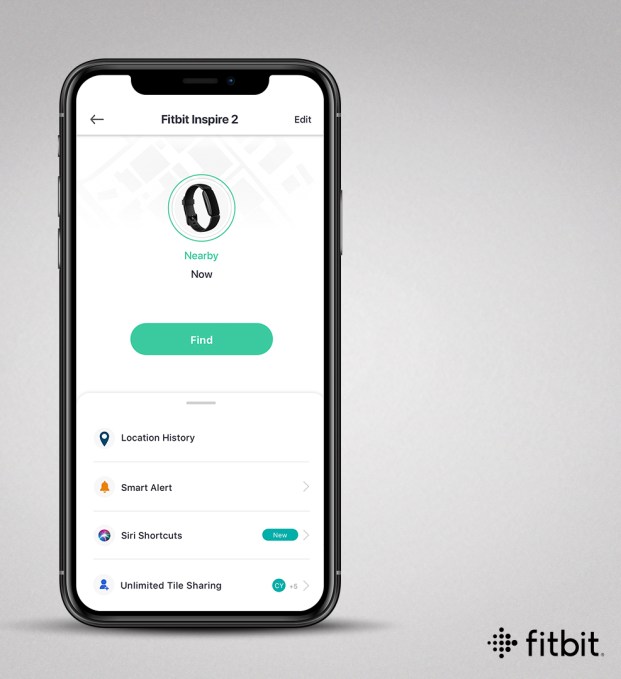
Lost item finder Tile, the maker of the popular Bluetooth-powered tracker that can help you find your misplaced keys, bag, wallet or more, is bringing its tracking service to a wearable device for the first time with the launch of its Fitbit partnership. Starting today, all new and current Fitbit Inspire 2 users will gain

Lost item finder Tile, the maker of the popular Bluetooth-powered tracker that can help you find your misplaced keys, bag, wallet or more, is bringing its tracking service to a wearable device for the first time with the launch of its Fitbit partnership. Starting today, all new and current Fitbit Inspire 2 users will gain access to Tile’s Bluetooth-finding technology at no extra cost, the company says.

As a result of the deal, existing Inspire 2 users will soon be prompted to update their device’s software via the Fitbit app, which will make the new Tile feature available. Once updated, users will be directed to download Tile’s mobile app for access to the lost item finding features. From the Tile app, Inspire 2 users will then be able to locate their misplaced Fitbit when they’re within Bluetooth range — for example, if the device has been lost somewhere inside their home. If the device is further away, users will be able to tap into Tile’s broader finding network which leverages the Tile app installed on all Tile users’ smartphones. When anyone with the app is near the lost item, its location is shared back through the network to the original owner.

At present, Tile says it’s locating up to 6 million unique items per day across 195 countries.

Tile’s service is made available for free to Fitbit users and other customers, but it monetizes through a combination of device sales, in-app subscriptions, and other partnerships. The Tile Premium subscription will also be available to Inspire 2 users as an optional upgrade from within the Tile app at $2.99 per month or $29.99 per year. This service, originally targeted towards Tile tracker owners, includes free battery replacements for Tile devices, access to 30-day location history, item reimbursements, and smart alerts that remind you when you’ve left home without important things.

“Now with Tile technology, we’re adding even more convenience and helpful tools to Inspire 2, our accessible, easy-to-use activity and sleep tracker,” said Larry Yang, Director of Product Management of Fitbit Devices at Google, which finalized its Fitbit acquisition in early 2021. “We’re excited to partner with Tile so our users can focus on building healthy habits without worrying about not being able to find their misplaced device, with the potential to bring Tile’s finding technology to more Fitbit devices in the future,” he added.

Image Credits: Tile

Tile’s partnership with Fitbit is now one of over 20 partners who are leveraging Tile’s technology in some way across audio, travel, smart home and PC categories. And while technically Fitbit is the first “wearable” partner, Tile has worked with others in the consumer electronics space, including headphone makers like Skullcandy, Bose and Sennheiser.

The company’s ability to expand its reach through industry partners may become even more critical to its future in the face of new competition from Apple, and to some extent, Samsung. Apple has been developing its own Tile competitor, AirTags, which the company accidentally disclosed in a YouTube video last year. These will leverage both Bluetooth and newer ultra-wideband technology to more precisely locate lost items. Meanwhile, Samsung’s newest Tile competitor, the Galaxy SmartTag, will also come in an UWB-powered version later this year.

This competition, specifically from Apple, could spell trouble for Tile, which has become a vocal participant in the U.S. antitrust investigations against Apple. The company has testified against Apple in congressional hearings about how its business has been negatively impacted by Apple in the past, and it pushed for third-party access to Apple’s “Find My” app as a means of evening the playing field between Apple’s upcoming trackers and its own. Tile also joined the Coalition for App Fairness, an advocacy group that’s now pushing for legislation to regulate the app stores in various U.S. states.

Partnering with Apple’s competitor, Google (by way of Fitbit), could be seen as another way for Tile to shore up a position for itself within a key section of the wearables market before AirTags arrive.

News: Revolut applies for bank charter in the US

London-based fintech startup Revolut has announced that it is applying for a bank charter in the U.S. The company has submitted a draft application with the FDIC and the California Department of Financial Protection and Innovation. If the company manages to get a charter in California, it would let the company operate throughout the U.S.

London-based fintech startup Revolut has announced that it is applying for a bank charter in the U.S. The company has submitted a draft application with the FDIC and the California Department of Financial Protection and Innovation.

If the company manages to get a charter in California, it would let the company operate throughout the U.S. as an independent bank. The discussions are still ongoing, which means it could take a while before the authorities grant a charter to the company.

After obtaining a charter in the U.S., Revolut could start offering more financial services. In particular, it would open up more opportunities when it comes to lending and savings products.

Right now, Revolut partners with Metropolitan Commercial Bank in the U.S. — they handle your deposits and they are insured by the FDIC. They also issue cards for Revolut.

In the U.S., Revolut is also launching Revolut Business. These accounts let a company send and receive international payments more easily. Companies can also use the service for payments with virtual and physical debit cards. Revolut Business is available across all 50 states. There are 500,000 companies using Revolut Business in Europe.

Revolut currently has 15 million customers for its financial super app — most of them are in the U.K. and the European Union. The company recently announced that it was applying for a banking license in the U.K., its home country and its biggest market. In Europe, Revolut has a specialized license from the Bank of Lithuania — some customers are already moving their account to Revolut Bank.

Revolut isn’t the only fintech startup applying for a bank charter in the U.S. Last month, Brex announced that it would apply for a bank charter in Utah. Varo Bank also obtained its own bank charter last year.

It proves that leveraging another bank’s charter is great for growth. But at some point, if you want to launch new products and generate more revenue from those products, you have to get your own charter.

News: Zoom introduces new SDK to help developers tap into video services

One clear sign of a maturing platform is when the company exposes the services it uses for its own tools to other developers. Zoom has been doing that for some time introducing Zoom Apps last year and the Marketplace to distribute and sell these apps. Today, the company introduced a new SDK (software development kit)

One clear sign of a maturing platform is when the company exposes the services it uses for its own tools to other developers. Zoom has been doing that for some time introducing Zoom Apps last year and the Marketplace to distribute and sell these apps. Today, the company introduced a new SDK (software development kit) to help developers embed Zoom video services inside another application.

“Our Video SDK enables developers to leverage Zoom’s industry-leading HD video, audio, and interactive features to build video-based applications and desktop experiences with native user interfaces,” Zoom’s Natalie Mullin wrote in a blog post announcing the new SDK.

If you want to include video in your app, you could try and code it yourself, or you could simply take advantage of Zoom’s expertise in this area and use the SDK to add video to the application and save a lot of time and effort.

The company envisions applications developers embedding video in social, gaming or retail applications where including video could enhance the user experience. For example, a shop owner could show different outfits to an online shopper in a live video feed, and discuss their tastes in real time.

Zoom CTO Brendan Ittelson said the SDK is actually part of a broader set of services designed to help developers take advantage of all the developer tooling that the company has been developing in recent years. As part of that push, the company is also announcing a central developer portal.

“We want to be able to have a single point where developers can go to to learn about all of the tools and resources that are available for them in the Zoom platform for their work in development, so we’re launching developer.zoom.us as that central hub for all developer resources,” Ittelson told me.

In addition, the company said that it wanted to give developers more data about how people are using the Zoom features in their applications, so they will be providing a new analytics dashboard with usage statistics.

“We are adding additional tools and actually providing developers with analytic dashboards. So folks that have developed apps for the Zoom ecosystem are able to see information about the usage of those apps across the platform,” Ittelson said.

He believes these tools combined with the new video SDK and existing set of tools will provide developers with a variety of options for building Zoom functionality into their applications, or embedding their application into Zoom as they see fit.

News: No-code business intelligence service y42 raises $2.9M seed round

Berlin-based y42 (formerly known as Datos Intelligence), a data warehouse-centric business intelligence service that promises to give businesses access to an enterprise-level data stack that’s as simple to use as a spreadsheet, today announced that it has raised a $2.9 million seed funding round led by La Famiglia VC. Additional investors include the co-founders of

Berlin-based y42 (formerly known as Datos Intelligence), a data warehouse-centric business intelligence service that promises to give businesses access to an enterprise-level data stack that’s as simple to use as a spreadsheet, today announced that it has raised a $2.9 million seed funding round led by La Famiglia VC. Additional investors include the co-founders of Foodspring, Personio and Petlab.

The service, which was founded in 2020, integrates with over 100 data sources, covering all the standard B2B SaaS tools from Airtable to Shopify and Zendesk, as well as database services like Google’s BigQuery. Users can then transform and visualize this data, orchestrate their data pipelines and trigger automated workflows based on this data (think sending Slack notifications when revenue drops or emailing customers based on your own custom criteria).

Like similar startups, y42 extends the idea data warehouse, which was traditionally used for analytics, and helps businesses operationalize this data. At the core of the service is a lot of open source and the company, for example, contributes to GitLabs’ Meltano platform for building data pipelines.

y42 founder and CEO Hung Dang

y42 founder and CEO Hung Dang.

“We’re taking the best of breed open-source software. What we really want to accomplish is to create a tool that is so easy to understand and that enables everyone to work with their data effectively,” Y42 founder and CEO Hung Dang told me. “We’re extremely UX obsessed and I would describe us as no-code/low-code BI tool — but with the power of an enterprise-level data stack and the simplicity of Google Sheets.”

Before y42, Vietnam-born Dang co-founded a major events company that operated in over 10 countries and made millions in revenue (but with very thin margins), all while finishing up his studies with a focus on business analytics. And that in turn led him to also found a second company that focused on B2B data analytics.

Image Credits: y42

Even while building his events company, he noted, he was always very product- and data-driven. “I was implementing data pipelines to collect customer feedback and merge it with operational data — and it was really a big pain at that time,” he said. “I was using tools like Tableau and Alteryx, and it was really hard to glue them together — and they were quite expensive. So out of that frustration, I decided to develop an internal tool that was actually quite usable and in 2016, I decided to turn it into an actual company. ”

He then sold this company to a major publicly listed German company. An NDA prevents him from talking about the details of this transaction, but maybe you can draw some conclusions from the fact that he spent time at Eventim before founding y42.

Given his background, it’s maybe no surprise that y42’s focus is on making life easier for data engineers and, at the same time, putting the power of these platforms in the hands of business analysts. Dang noted that y42 typically provides some consulting work when it onboards new clients, but that’s mostly to give them a head start. Given the no-code/low-code nature of the product, most analysts are able to get started pretty quickly  — and for more complex queries, customers can opt to drop down from the graphical interface to y42’s low-code level and write queries in the service’s SQL dialect.

The service itself runs on Google Cloud and the 25-people team manages about 50,000 jobs per day for its clients. the company’s customers include the likes of LifeMD, Petlab and Everdrop.

Until raising this round, Dang self-funded the company and had also raised some money from angel investors. But La Famiglia felt like the right fit for y42, especially due to its focus on connecting startups with more traditional enterprise companies.

“When we first saw the product demo, it struck us how on top of analytical excellence, a lot of product development has gone into the y42 platform,” said Judith Dada, General Partner at LaFamiglia VC. “More and more work with data today means that data silos within organizations multiply, resulting in chaos or incorrect data. y42 is a powerful single source of truth for data experts and non-data experts alike. As former data scientists and analysts, we wish that we had y42 capabilities back then.”

Dang tells me he could have raised more but decided that he didn’t want to dilute the team’s stake too much at this point. “It’s a small round, but this round forces us to set up the right structure. For the series, A, which we plan to be towards the end of this year, we’re talking about a dimension which is 10x,” he told me.

WordPress Image Lightbox Plugin