Monthly Archives: March 2021

News: Twitter acquihires team from Reshuffle to work on its API platform

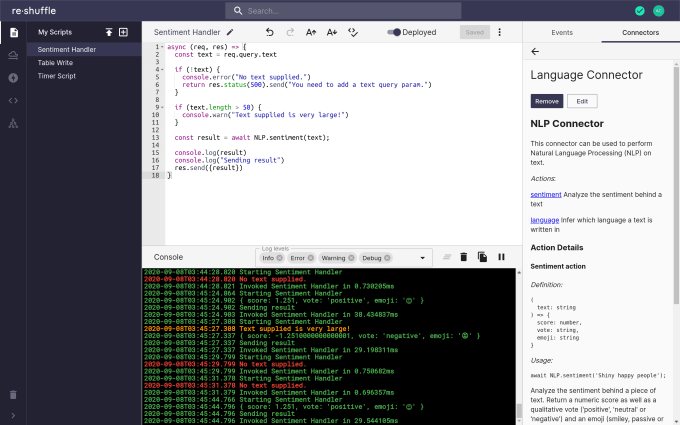
Twitter today is announcing what the company calls a “strategic acquihire” of the API integration platform Reshuffle. The startup’s commercial technology, which allows developers to build workflows and connect systems using any API, will be wound down as a result of Twitter’s deal. However, Reshuffle’s entire team of seven, including co-founders Amir Shevat and Avner

Twitter today is announcing what the company calls a “strategic acquihire” of the API integration platform Reshuffle. The startup’s commercial technology, which allows developers to build workflows and connect systems using any API, will be wound down as a result of Twitter’s deal. However, Reshuffle’s entire team of seven, including co-founders Amir Shevat and Avner Braverman, will be joining Twitter where they’ll work to accelerate the work being done to modernize Twitter’s new, unified API.

The new Twitter API 2.0 was first introduced last year, having been rebuilt from the ground up for the first time since 2012. It now includes features missing from the older version, like conversation threading, poll results, pinned tweets, spam filtering, and more powerful stream filtering and search query language. It’s also been designed in a way that will allow Twitter to release new functionality faster as the company itself rolls out more features. For example, the API has added new support for newer features like “hide replies” and tweet annotations. And as Twitter’s pace of development has recently been sped up, the company now has even more significant product launches on the horizon, including the public release of Twitter Spaces (audio rooms) and soon, Super Follow (a subscription service for creators and their fans).

In addition, Twitter’s API team is working to develop products that meet the various needs of different types of developers, including consumer-facing app developers, business and enterprise developers, and academic researchers. In January, Twitter’s API opened up to researchers, and Twitter promised more functionality would soon be on the way.

Reshuffle’s team will be immediately tasked with helping Twitter accelerate its API efforts and building tools for developers.

Reshuffle’s CEO Avner Braverman, who has nearly two decades of experience in both engineering and technical consumer-facing roles across startups and larger companies like IBM, will join Twitter’s Developer Platform team. Meanwhile, Reshuffle’s CPO Amir Shevat, whose previous roles included VP of Platform for Twitch, Head of Developer Relations at Slack, and Senior Developer Relations Manager at Google, will join Twitter as a senior member of the Developer Platform team.

“We’re doubling down on our investment and ambitions by bringing the Reshuffle team on board,” noted a Twitter blog post announcing the deal, co-authored by Twitter Revenue Product Lead Bruce Falck and Twitter Developer Platform Lead Sonya Penn. “Their experience building developer platforms will accelerate and enhance our work by building the tools that will make it easier and quicker for developers to find value on our platform,” it read.

Reshuffle’s existing product will wind down operations over the coming weeks, following the acquihire. However, the team will continue to maintain its open source project for the developer community, Twitter notes.

Image Credits: A photo of Reshuffle’s product


Twitter has been on an acquisition and acquihire spree in recent months, having bought newsletter platform Revue, which is already integrated into Twitter’s website; as well as teams from social podcasting app Breaker, screen sharing social app Squad, creative design agency Ueno; and last year, stories template maker Chroma Labs.

Twitter says it will continue to look for more acquihire opportunities in the future as a means of scaling its own teams and accelerating their work.

The company declined to share deal terms for the Reshuffle acquihire.

According to Pitchbook, Reshuffle was backed by $6.35 million in funding from investors including Cardumen Capital, Cerca Partners, Maverick Ventures, Meron Capital, Dell Technologies Capital, Engineering Capital, and Lightspeed Venture Partners. Pitchbook says the business was valued at $11.85 million.

News: The next era of moderation will be verified

Verification goes beyond the “blue checkmark,” and the urgency to implement verification is bigger than just stopping the spread of questionable content. It can also help companies ensure they’re staying on the right side of the law.

Rick Song
Contributor

Rick Song is co-founder and CEO of Persona.

Since the dawn of the internet, knowing (or, perhaps more accurately, not knowing) who is on the other side of the screen has been one of the biggest mysteries and thrills. In the early days of social media and online forums, anonymous usernames were the norm and meant you could pretend to be whoever you wanted to be.

As exciting and liberating as this freedom was, the problems quickly became apparent — predators of all kinds have used this cloak of anonymity to prey upon unsuspecting victims, harass anyone they dislike or disagree with, and spread misinformation without consequence.

For years, the conversation around moderation has been focused on two key pillars. First, what rules to write: What content is deemed acceptable or forbidden, how do we define these terms, and who makes the final call on the gray areas? And second, how to enforce them: How can we leverage both humans and AI to find and flag inappropriate or even illegal content?

While these continue to be important elements to any moderation strategy, this approach only flags bad actors after an offense. There is another equally critical tool in our arsenal that isn’t getting the attention it deserves: verification.

Most people think of verification as the “blue checkmark” — a badge of honor bestowed upon the elite and celebrities among us. However, verification is becoming an increasingly important tool in moderation efforts to combat nefarious issues like harassment and hate speech.

That blue checkmark is more than just a signal showing who’s important — it also confirms that a person is who they say they are, which is an incredibly powerful means to hold people accountable for their actions.

One of the biggest challenges that social media platforms face today is the explosion of fake accounts, with the Brad Pitt impersonator on Clubhouse being one of the more recent examples. Bots and sock puppets spread lies and misinformation like wildfire, and they propagate more quickly than moderators can ban them.

This is why Instagram began implementing new verification measures last year to combat this exact issue. By verifying users’ real identities, Instagram said it “will be able to better understand when accounts are attempting to mislead their followers, hold them accountable, and keep our community safe.”

It’s important to remember that verification is not a single tactic, but rather a collection of solutions that must be used dynamically in concert to be effective.

The urgency to implement verification is also bigger than just stopping the spread of questionable content. It can also help companies ensure they’re staying on the right side of the law.

Following an exposé revealing illegal content was being uploaded to Pornhub’s site, the company banned posts from nonverified users and deleted all content uploaded from unverified sources (more than 80% of the videos hosted on its platform). It has since implemented new measures to verify its users to prevent this kind of issue from infiltrating its systems again in the future.

Companies of all kinds should be looking at this case as a cautionary tale — if there had been verification from the beginning, the systems would have been in a much better place to identify bad actors and keep them out.

However, it’s important to remember that verification is not a single tactic, but rather a collection of solutions that must be used dynamically in concert to be effective. Bad actors are savvy and continually updating their methods to circumvent systems. Using a single-point solution to verify users — such as through a photo ID — might sound sufficient on its face, but it’s relatively easy for a motivated fraudster to overcome.

At Persona, we’ve detected increasingly sophisticated fraud attempts ranging from using celebrity photos and data to create accounts to intricate photoshopping of IDs and even using deepfakes to mimic a live selfie.

That’s why it’s critical for verification systems to take multiple signals into account when verifying users, including actively collected customer information (like a photo ID), passive signals (their IP address or browser fingerprint), and third-party data sources (like phone and email risk lists). By combining multiple data points, a valid but stolen ID won’t pass through the gates because signals like location or behavioral patterns will raise a red flag that this user’s identity is likely fraudulent or at the very least warrants further investigation.

This kind of holistic verification system will enable social and user-generated-content platforms to not only deter and flag bad actors but also prevent them from repeatedly entering your platform under new usernames and emails, a common tactic of trolls and account abusers who have previously been banned.

Beyond individual account abusers, a multisignal approach can help manage an arguably bigger problem for social media platforms: coordinated disinformation campaigns. Any issue involving groups of bad actors is like battling the multiheaded Hydra — you cut off one head only to have two more grow back in its place.

Yet killing the beast is possible when you have a comprehensive verification system that can help surface groups of bad actors based on shared properties (e.g., location). While these groups will continue to look for new ways in, multifaceted verification that is tailored for the end user can help keep them from running rampant.

Historically, identity verification systems like Jumio or Trulioo were designed for specific industries, like financial services. But we’re starting to see the rise in demand for industry-agnostic solutions like Persona to keep up with these new and emerging use cases for verification. Nearly every industry that operates online can benefit from verification, even ones like social media, where there isn’t necessarily a financial transaction to protect.

It’s not a question of if verification will become a part of the solution for challenges like moderation, but rather a question of when. The technology and tools exist today, and it’s up to social media platforms to decide that it’s time to make this a priority.

News: Top tech CEOs will testify about social media’s role in the Capitol attack this week

Social media executives will be answering to Congress directly for their role in January’s deadly attacks on the U.S. Capitol this week. Facebook’s Mark Zuckerberg, Twitter’s Jack Dorsey and Google’s Sundar Pichai will all appear virtually before a joint House committee Thursday at 12 p.m. Eastern Time. The hearing, held by the House’s Subcommittee on

Social media executives will be answering to Congress directly for their role in January’s deadly attacks on the U.S. Capitol this week. Facebook’s Mark Zuckerberg, Twitter’s Jack Dorsey and Google’s Sundar Pichai will all appear virtually before a joint House committee Thursday at 12 p.m. Eastern Time.

The hearing, held by the House’s Subcommittee on Communications and Technology and the Subcommittee on Consumer Protection and Commerce, will focus on social media’s role in spreading disinformation, extremism and misinformation. The Energy and Commerce Committee previously held a parallel hearing reckoning with traditional media’s role in promoting those same social ills.

Earlier this month, Energy and Commerce Chairman Frank Pallone Jr., joined by more than 20 other Democrats, sent a letter to Zuckerberg pressing the Facebook CEO for answers about why tactical gear ads showed up next to posts promoting the Capitol riot. “Targeting ads in this way is dangerous and has the potential to encourage acts of violence,” the letter’s authors wrote. In late January, Facebook said that it would pause ads showing weapon accessories and related equipment.

While the subcommittee has signaled its interest in Facebook’s ad practices, organic content on the site has historically presented a much bigger problem. In the uncertain period following the election last year, the pro-Trump “Stop the Steal” movement swelled to massive proportions on social media, particularly in Facebook groups. The company took incremental measures at the time, but that same movement, born of political misinformation, is what propelled the Capitol rioters to disrupt vote counting and enact deadly violence on January 6.

The hearing is likely to go deep on extremists organizing through Facebook groups too. Chairs from both subcommittees that will question the tech CEOs this week previously questioned Facebook about reports that the company was well aware that its algorithmic group recommendations were funneling users toward extremism. In spite of warnings from experts, Facebook continued to allow armed anti-government militias to openly organize on the platform until late 2020. And in spite of bans, some continued to do so.

The Justice Department is reportedly considering charging members of the Oath Keepers, one prominent armed U.S. militia group involved in the Capitol attack, with sedition.

Facebook plays a huge role in distributing extremist content and ferrying it to the mainstream, but it isn’t alone. Misinformation that undermines the integrity of the U.S. election results is generally just as easy to find on YouTube and Twitter, though those social networks aren’t designed to connect and mobilize people in the same way that Facebook groups do.

Facebook began to course-correct its own rules around extremism, slowly through 2020 and then quickly this January when the company removed former President Trump from the platform. Facebook’s external policy oversight board continues to review that decision and could reverse it in the coming weeks.

Over the course of the last year, Twitter made an effort to demystify some of its own policy decisions, transparently communicating changes and introducing ideas it was considering. Under Dorsey’s guidance the company treated its platform rules like a living document — one it’s begun to tinker around with in an effort to shape user behavior for the better.

If Twitter’s recent policy decision making is akin to thinking out loud, YouTube took the opposite approach. The company wasn’t as proactive in shoring up its defenses ahead of the 2020 elections and rarely responded in real-time to events. YouTube waited a full month after Biden’s victory to articulate rules that would rid the platform of disinformation declaring that the election was stolen from Trump.

Hopefully the joint hearing can dig a bit more into why that was, but we’re not counting on it. The subcommittees’ decision to bring Google CEO Sundar Pichai to testify is a bit strange considering that YouTube’s CEO Susan Wojcicki — who has yet to be called to Congress for one of these high profile tech hearings — would make the better witness. Pichai is ultimately accountable for what YouTube does too, but in past hearings he’s proven a very polished witness who’s deft at neutralizing big picture criticism with technical detail.

Ultimately Wojcicki would have more insight into YouTube’s misinformation and extremism policies and the reason the platform has dragged its feet on matters of hate and misinformation, enforcing its own policies unevenly when it chooses to do so at all.

News: ‘Black Widow’ and ‘Cruella’ will get Premier Access releases on Disney+

In what looks like both an endorsement of its Premier Access streaming strategy and a tacit acknowledgement that theatrical moviegoing won’t be returning to normal anytime soon, Disney just announced that its movies “Black Widow” and “Cruella” will be coming to Disney+ at the same time that they’re released in theaters. That means Disney+ subscribers

In what looks like both an endorsement of its Premier Access streaming strategy and a tacit acknowledgement that theatrical moviegoing won’t be returning to normal anytime soon, Disney just announced that its movies “Black Widow” and “Cruella” will be coming to Disney+ at the same time that they’re released in theaters.

That means Disney+ subscribers will have the option to pay an additional, one-time $29.99 fee to watch the live action remake of “Cruella” at home on May 28, or to do the same for “Black Widow” on July 9. (The movies will later become available to all Disney+ subscribers at no extra charge.)

Disney first tested out this strategy with the release of the live action “Mulan” last fall, followed by the animated “Raya and the Last Dragon” earlier this month. The studio has released other movies, like Pixar’s “Soul,” directly to Disney+ without an extra fee, and it says it will do the same for Pixar’s “Luca” on June 18.

Other big Disney releases have been pushed back repeatedly — “Black Widow,” for example, was originally supposed to be released on May 1 of last year, and Marvel Studios head Kevin Feige has reportedly resisted sending it straight to Disney+. (This will be the first Marvel Studios film released since the beginning of the pandemic.)

However, Disney executives may only be willing to wait for so long. And because Marvel’s movies and new Disney+ shows are often interconnected, delaying one release can also require pushing back several others at the same time.

As vaccinations continue and COVID-19 case numbers decline from their peaks, movie theaters are reopening in major markets like Los Angeles and New York — but at reduced capacity, with box office numbers still far below what they were pre-pandemic.

In the face of this uncertainty (as well as a general shift to streaming), other Hollywood studios have adopted a variety of hybrid strategies for their 2021 theatrical slates. All Warner Bros. movies will be released simultaneously on HBO Max this year, while Paramount will be bringing its films to Paramount+ in an accelerated fashion, 30 to 45 days after the theatrical release.

News: NASA plans first flight of Mars helicopter Ingenuity on April 8

As exciting as the entire Perseverance mission to Mars is, one of the events most looked forward to by us Earthlings must be the first flight of Ingenuity. After conducting numerous checks and double-checks, the Perseverance team has set April 8 as the date on which they hope to attempt the first controlled powered flight

As exciting as the entire Perseverance mission to Mars is, one of the events most looked forward to by us Earthlings must be the first flight of Ingenuity. After conducting numerous checks and double-checks, the Perseverance team has set April 8 as the date on which they hope to attempt the first controlled powered flight on another planet.

If all goes well, then in about two weeks Ingenuity will make its first hovering flight about 10 feet above the Martian soil. But the meantime will be chock full of preparation.

In the first place the team had to identify an “airfield,” a ten-meter-square space of flat ground close at hand to Perseverance’s landing zone. Having done so, the rover will soon make its way to the exact center and confirm its location.

Then the helicopter itself must be detached from the belly of the rover, to which it is apparently locked, bolted, and cabled. These are meant to keep it secure during the chaotic landing process, and are irreversible — so the team has to be 100 percent sure this is the spot and the conditions are right. The process should take about five days.

Once Ingenuity has been detached from Perseverance and rotated to flight-ready position, it will hang just five inches above the surface and use its few remaining connections with the rover to charge its batteries. Perseverance will then set it down and quickly drive away.

“Every step we have taken since this journey began six years ago has been uncharted territory in the history of aircraft,” said Bob Balaram, chief engineer of the project at JPL, in a NASA news release. “And while getting deployed to the surface will be a big challenge, surviving that first night on Mars alone, without the rover protecting it and keeping it powered, will be an even bigger one. Once we cut the cord with Perseverance and drop those final five inches to the surface, we want to have our big friend drive away as quickly as possible so we can get the Sun’s rays on our solar panel and begin recharging our batteries.”

Once the helicopter detaches, it has 30 Martian days, or sols, in which it is sure to have enough power to work — beyond that they can’t be sure.

The next couple days will involve tests of Ingenuity’s systems and a test spin-up of its rotors to 2,537 RPM. The atmosphere of Mars is only a tiny fraction of that on Earth, making flight considerably more difficult in many ways. But that’s what makes it so fun to try!

If all the tests and checks are green, then on April 8 at the earliest Ingenuity will attempt to lift off, going up to 3 meters and staying for 30 seconds. The team should know if the flight was a success within a couple hours — and maybe even get some black and white imagery from the Ingenuity’s on-board cameras. Color imagery will come a few days later.

The team will evaluate what to do next based on this first flight, and the next weeks may bring more — and farther — forays around the airfield. We’ll know more after the data comes back.

A touching inclusion on Ingenuity’s chassis is a tiny scrap of the material from the Wright brothers’ first aircraft, the Flyer. So the machine that flew first on Earth will be present in a small way at the first on another planet.

News: Y Combinator’s new batch features its largest group of Indian startups

Y Combinator’s latest batch — W21 — features 350 startups from 41 nations. 50% of the firms, the highest percentage to date, in the new batch are based outside of the United States. India is the second largest demographic represented in the new batch. The world’s second largest internet market has delivered 43 startups in

Y Combinator’s latest batch — W21 — features 350 startups from 41 nations. 50% of the firms, the highest percentage to date, in the new batch are based outside of the United States.

India is the second largest demographic represented in the new batch. The world’s second largest internet market has delivered 43 startups in the new batch, another record figure in the history of the storied venture firm. (For comparison, the W20 batch had 25 Indian startups, up from 14 in S20, 12 each in S19 and W19 and one each in W16, S15, and W15.)

“YC going remote has helped make YC more attractive to companies at different stages and far away geographies. For companies in India, founders no longer have to spend three months away from their customers or teams. Covid has also taught us that building a program that is remote and more software based makes YC more accessible to founders around the globe,” the firm said in a statement to TechCrunch.

“When it comes to choosing founders in India, we accept them based on the same criteria we judge companies from anywhere else. Founders must be able to communicate their local context to investors. That is an important skill.”

Here’s a list of startups, in no particular order, from India that have made it to YC W21, with some context — wherever possible — on what they are attempting to build.

QuestBook, from CreatorOS, is an app for professionals to teach in bite-sized courses using chat and a mobile-first experience. We wrote about CreatorOS last year.

Leap Club is attempting to build a Good Eggs for India. Leap Club users can order fresh and organic groceries sourced from local farms through the startup’s website or through WhatsApp. The startup says it delivers the item to customers within 12 hours of harvesting. Leap Club is already garnering over $14,000 in monthly revenue.

CashBook is building a cash account app for small businesses in India. There are over 60 million small businesses in the country, nearly all of which currently rely on traditional ways — pen and paper — for bookkeeping. The startup launched its app just six months ago and has already amassed 200,000 monthly active users. In the month of February, CashBook logged cash transactions of $511 million.

GimBooks is attempting to solve a similar problem as CashBook, though from a different angle. The startup says it offers industry-based invoicing and bookkeeping with integrated banking and payments. Its app has been downloaded over 1.4 million times, amassed over 11,000 paying customers and clocked revenues of over $450,000.

BusinessOnBot is banking on the popularity of WhatsApp in India, where the Facebook-owned app has amassed over 450 million monthly active users. BusinessOnBot says it is building Shopify on WhatsApp for direct-to-consumer brands and small and medium sized businesses, helping them acquire users and automate sales.

ZOKO is helping businesses do sales, marketing, and customer support on WhatsApp.

Prescribe is a Shopify for hospitals. Its platform is aimed at helping doctor’s offices run their business online. Users can book appointments, chat with the doctor, pay and refer friends on WhatsApp.

Chatwoot is an open source customer engagement suite alternative to Intercom and Zendesk. Over 1,000 companies are already using Chatwoot and it’s clocking $32,000 in ARR from six customers.

Weekday is helping companies hire engineers who are crowdsourced by their network of scouts. The startup says it has found a way to solve the biggest problem with referrals — that it doesn’t scale.

Fountain9 helps food brands and retailers reduce food wastage. According to some estimates, over $260 billion worth of food is wasted every year due to mismanaged inventory.

Dyte is attempting to build a Stripe for live video calls. The startup says a firm can integrate its branded, configurable and programmable video calling service within 10 minutes using the Dyte SDK.

YourQuote has built a writing platform, with over 100 million posts. It has over 250,000 daily active users. The startup clocked revenues of $200,000 last year and is profitable.

Fifthtry is building a Github for product documentation. The tool blocks code changes until documentation has been approved. It has piloted its tool with three companies, all of which have over 100 developers. The startup plans to launch its tool publicly next month.

Voosh is building a OYO for restaurants and dark kitchens in India, helping them improve their economics using tech.

Kodo is building a Brex for India, helping Indian startups and small businesses secure corporate credit cards. (Banks and other credit card companies are still not addressing this opportunity. The problem Brex solved in the U.S. is even acute in India, Deepti Sanghi, co-founder and chief executive of Kodo, said in the presentation.

Krab provides instant loans for trucking companies in India. India’s logistics market, despite being valued at $160 billion, remains one of the most inefficient sectors that continues to drag the economy. In recent years, a handful of startups have started to explore ways to work with trucking companies.

Bueno Fiance says it wants to help the next billion users in India get access to financial services. It says it wants to solve for short term cash needs of customers by using digital credit card over UPI. It was to build a Chime for India, and has amassed 70,000 customers.

Betterhalf is building a Match.com for 100 million Indians. It says it is generating $75,000 in monthly revenues, a figure that is growing 30% every month.

Pensil is helping teachers who use YouTube monetize their courses. “YouTube is the largest education platform in India — but it’s not built for teachers,” said Surender Singh, co-founder of Pensil, at the presentation on Tuesday. The startup has built tools to allow teachers to create content, facilitate discussions, and collect payments.

AcadPal operates an eponymous app for India’s 10 million teachers to share homework with a tap. The startup is attempting to target a $1.4 billion market, which consists of over 400,000 private schools.

Pragmatic Leaders is attempting to build a platform to provide cost-effective alternative to an MBA. It is already clocking a monthly revenue of $112,000 and is cash-flow positive.

Splitsub is addressing a problem that tens of millions of users in India face — subscription fatigue. It says it has built a Pinduoduo for online subscriptions in India, allowing group buying and sharing of online subscriptions for services such as Netflix and Spotify.

Zingbus has built a platform for bus travel between Indian cities. (Several startups in India are helping users get cabs, three-wheelers autos, and two-wheelers bikes. Buses have remained largely untapped.)

Tilt is building a docked bike-sharing platform for Indian campuses. The startup, which has generated about $20,000 in revenues this month so far, says it has been profitable for the past 18 months.

FanPlay is a platform for social media influencers, helping them monetize by playing mobile games with their fans and followers.

(Also read: Why Y Combinator Went 8,725 Miles Away From Mountain View To Find The Next Big Startup)

In India only a fraction of the nation’s 1.3 billion people currently have access to insurance and some analysts say that digital firms could prove crucial in bringing these services to the masses. According to rating agency ICRA, insurance products had reached less than 3% of the population as of 2017.

An average Indian makes about $2,100 a year, according to the World Bank. ICRA estimated that of those Indians who had purchased an insurance product, they were spending less than $50 on it in 2017.

Three startups in the current batch are planning to disrupt this market, which is largely commanded by state and bank-backed insurers.

GroMo is an app for independent agents to sell insurance in India. Most insurance policies in India are sold by agents. The startup says it is already generating monthly revenues of over $200,000.

Bimaplan is attempting to replace the agents with an app and reach users by a referral network. The app launched last month and has already sold 700 policies this month.

BimaPe helps users better understand their policies, and make informed decisions about whether those policies are right for them. The startup, leveraging New Delhi’s new regulations, is using a government issued ID card to fetch insurance policies.

Codingal is an online, after school program K-12 students in India to learn computer science. There are roughly 270 million K-12 students in the country.

Unschool provides professional education for college students in India. The founders say, “As former leaders in youth-run organisations with 3,000 members and edtech startups in India, we saw how colleges are not preparing students for the real world.”

Flux Auto builds self-driving kits for trucks.

SigNoz is an open-source alternative to DataDog, a $30 billion company, helping developers find and solve issues in their software deployed on cloud. The startup says recent laws such as GDPR and CPRA have helped drive adoption of SigNoz.

Pibit.ai are APIs to turn unstructured documents into structured data.

Invoid creates identity workflows in India. It’s tapping into a huge market opportunity: About 11 billion know-your-customers authentication is conduced by firms in India each year.

Redcliffe Lifesciences performs genetic testing and IVF treatments across India. Its revenue in March has topped $600,000.

Veera Health is an online clinic that treats Polycystic Ovary Syndrome (PCOS), a lifelong condition that affects 10-20% women in India. The startup says it launched 12 weeks ago, and 85% members have reported feeling “in control” of their PCOS after 1 month.

Snazzy is SmileDirectClub for India. The startup says it sells clear aligners that are 70% cheaper than those sold by dentists.

BeWell Digital is building the operating system for India’s 1.5 million hospitals, labs, clinics and pharmacies by starting with insurance regulatory compliance.

Triomics is operating a SaaS platform for end-to-end automation of clinical trials.

News: Pre-seed round funding is under scrutiny: Is VC pandemic posturing here to stay?

In 2020, investors became laser-focused on sections of the pitch deck that address monetization and business viability — signs that founders need to present better-defined businesses to succeed.

Russ Heddleston
Contributor

Russ is the co-founder and CEO of DocSend. He was previously a product manager at Facebook, where he arrived via the acquisition of his startup Pursuit.com, and has held roles at Dropbox, Greystripe and Trulia. Follow him here: @rheddleston and @docsend

All successful companies start off as a great idea, scribbled on the back of a cocktail napkin during a late-night meeting of the minds or gleaned from a fleeting inspiration that leaves you with a feeling of “I could do that better.”

For most, that’s as far as entrepreneurship ever goes, because, unfortunately, a great idea can’t raise money, develop a product or disrupt an industry.

It’s only an idea.

Investors’ heightened expectations for monetization potential and a company’s positioning within its competitive landscape are unlikely to lessen in the years to come, even in a post-COVID economy.

New data from the DocSend Startup Index show that for early-stage fundraising, particularly in the pre-seed round, founders need to approach VCs with much more than a great idea to secure funding. Our newest report on the state of pre-seed fundraising shows that investors became laser-focused on sections of the pitch deck that address monetization and business viability — signs that founders need to come to the table with better-defined businesses in order to succeed.

Do not pass go — VCs insist pitch decks meet 3 key criteria

According to the data, overall founder and VC activity took a nosedive in early 2020 once the serious nature of the pandemic became apparent. But as the year progressed and investors adjusted to the new market conditions and remote dealmaking, overall activity quickly surpassed pre-pandemic levels.

Despite this flurry of activity and an unprecedented appetite for new startup pitches, investors made it very clear that strong positioning in three sections of the pitch deck was nonnegotiable.

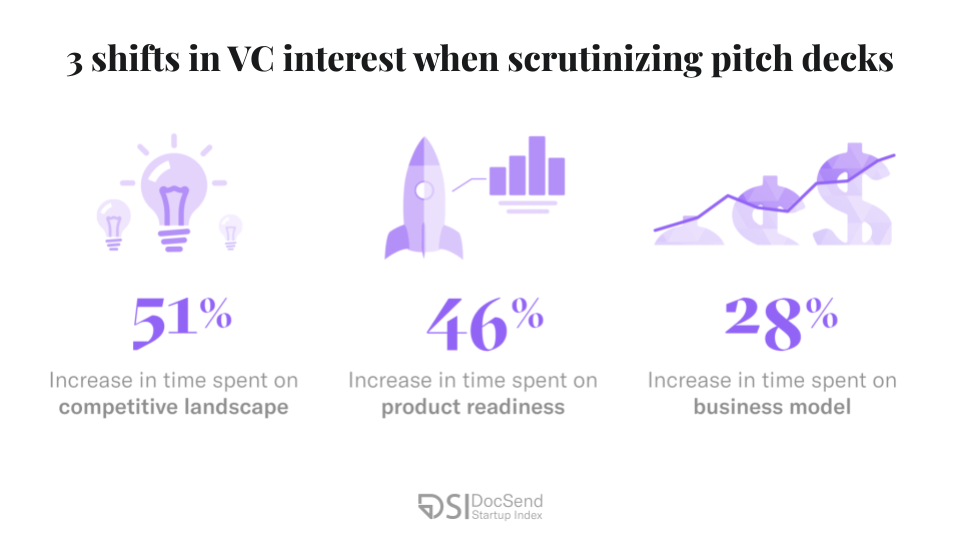
Image Credits: DocSend(opens in a new window)

  1. Competitive landscape — When we published our 2019 pre-seed report, the competitive landscape section of pitch decks was firmly in the middle of the pack in terms of time spent reviewing by investors: They averaged around 35 seconds to clearly articulate their own uniqueness and product-market fit. In 2020, the VC time spent on the same section increased by 51% to an average of 53 seconds across both successful and unsuccessful decks (those that did or did not lead to a funding offer).

News: New York’s Department of Financial Services says Apple Card program didn’t violate fair lending laws

The New York State Department of Financial Services (NYDFS) released a report today that cleared the Apple Card credit card program of discriminatory practices and specifically, gender-based discrimination, following an investigation triggered by online complaints back in November 2019. At the time, tech entrepreneur David Heinemeier Hansson had called out Apple Card program, jointly run by

The New York State Department of Financial Services (NYDFS) released a report today that cleared the Apple Card credit card program of discriminatory practices and specifically, gender-based discrimination, following an investigation triggered by online complaints back in November 2019. At the time, tech entrepreneur David Heinemeier Hansson had called out Apple Card program, jointly run by Apple and Goldman Sachs, for gender-based discrimination after he received a credit limit that was 20 times higher than what his wife was offered — even though the couple filed joint tax returns and his wife had a higher credit score than he did.

Hansson’s tweet storm detailing the problem ending up going viral, generating responses from several others, including Apple co-founder Steve Wozniak, who claimed they had similar experiences when applying for the Apple Card with their partners.

The @AppleCard is such a fucking sexist program. My wife and I filed joint tax returns, live in a community-property state, and have been married for a long time. Yet Apple’s black box algorithm thinks I deserve 20x the credit limit she does. No appeals work.

— DHH (@dhh) November 7, 2019

We are 10x on the Apple Card credit limit. We have no assets or accounts at all that are separate. Except for this Apple Card that didn’t have a joint account. I’m with you.

— Steve Wozniak (@stevewoz) November 10, 2019

David’s wife, Jamie Heinemeier Hansson, had also penned a blog post documenting her experiences in more detail.

The numerous consumer complaints soon drew the attention of the New York Department of Financial Services, which then launched an investigation into Goldman Sachs’ credit card practices in order to see if gender-based discrimination was taking place, as alleged.

The NYDFS report, first spotted today by Appleinsider, notes that Goldman Sachs re-reviewed the credit files of the some of the women who had been initially been offered dramatically lower credit scores than their spouses, and decided to raise their limits to match those of their spouses. At the time, the bank also eliminated the six-month waiting period for appeals on credit decisions.

These actions seemed to indicate that the Apple Card algorithms were making bad calls on credit worthiness, potentially even on the basis of gender; but the Department says that’s not the case — though it did stress the need or credit score reforms and updating existing laws around credit access.

The NYDFS said it reviewed several thousands pages of record and written responses from Apple and Goldman Sachs, interviewed witnesses, met with representatives from Apple and the bank, and analyzed the bank’s underwriting data using a data set covering nearly 400,000 New York applicants. It also interviewed the consumers who had complained of discrimination.

The Department concluded that there was no “unlawful discrimination” against applicants under fair lending law. However, statements made by the Superintendent of Financial Services Linda A. Lacewell, did stress that there is still discrimination built into the credit lending system itself, and the way credit scores can lead to unequal access to credit.

“While we found no fair lending violations, our inquiry stands as a reminder of disparities in access to credit that continue nearly 50 years after the passage of the Equal Credit Opportunity Act (ECOA) ,” Lacewell said. “The report also notes that the use of credit scoring in its current form and laws and regulations barring discrimination in lending are in need of strengthening and modernization to improve access to credit. Consumer frustration with the Apple Card policy of not permitting an account holder to add an authorized user drew attention to the following: a person who relies on a spouse’s access to credit, and only accesses those accounts as an authorized user, may incorrectly believe they have the same credit profile as the spouse. This is one part of a broader discussion we must have about equal credit access,” she added.

One common factor among the consumers who complained was a belief that a spouse who had access to the same shared bank account or other shared assets, like credit cards — even if only as authorized users — would receive the same credit terms as their spouses. But the way the system works today, underwriters don’t have to consider an authorized user the same as an account holder, and they may consider other factors, too. Combined, these are what led to the lower lending decisions, the investigation found.

The Department said that, when asked, Goldman Sachs was able to document underwriting that determined its lending decisions for the consumer complaints. Gender was not a factor, but spouses’ credit scores, indebtedness, income, credit utilization, missed payments and other credit history elements were. None of the factors identified was an “unlawful basis” for a credit determination, the Department said.

Of course, the credit score system itself is one that overall, favors men. (And specifically, white men). There is no one single reason as to why that’s the case, but often has to do with women’s role as a primary caregiver, combined with how the credit scoring model operates. This is a system that needs reform, but as it relates to the Apple Card program and discrimination complaints, it was “lawfully” used to make the Apple Card lending decisions.

However, the Department did point out that there was a lack of transparency around Apple Card’s lending decisions — noting that although it was able to obtain the data about the bank’s decision for these complaints, the impacted consumers could not. It also suggested Apple could have offered a more robust appeals process, instead of requiring a six-month wait.

Apple has since responded to some of the issues raised, including by launching “Path to Apple Card” last year, which helps applicants follow steps that lead to an Apple Card approval. To date, more than 70K consumers have enrolled in this program and nearly 5,000 have been approved. Apple also updated its website with more information about how Apple Card approvals work. And now it’s in the process of adding support for Apple Card family sharing features — meaning, authorized users. This would address issues around spouses not being able to gain access to the higher credit lending limits at least.

But this investigation highlighted the problems Apple faced by pairing its trusted brand with a credit card issued by a traditional lender and the accompanying crummy banking practices consumers hate, as well as how a lack of transparency had undermined trust in the lending decisions that were made.

Apple hasn’t commented on the NYDHS report at this time.


News: Superhuman CEO Rahul Vohra is coming to TechCrunch Early Stage in July

The frequent difficulty of founders finding product-market fit has been a topic of constant (and ever-evolving) discussion at TechCrunch conferences over the years. Superhuman founder and CEO Rahul Vohra will be joining us at TechCrunch Early Stage: Marketing & Fundraising in July to dive into the much-obsessed topic of product-market fit. We’re looking to dig

The frequent difficulty of founders finding product-market fit has been a topic of constant (and ever-evolving) discussion at TechCrunch conferences over the years.

Superhuman founder and CEO Rahul Vohra will be joining us at TechCrunch Early Stage: Marketing & Fundraising in July to dive into the much-obsessed topic of product-market fit. We’re looking to dig into what exactly finding product-market fits means to the startup ecosystem of 2021.

The repeat founder’s email service platform has raised more than $33 million in funding from firms like Andreessen Horowitz and First Round Capital, providing users with an algorithmically-sorted email app that has set a lot of trends in emerging enterprise software on both the design and go-to-market strategy front.

The startup is oft-referenced as a prime example of the “consumerization” of enterprise software trend which has seen more and more workplace SaaS apps level-up their focus on user-centric design. We’ll ask him how he feels about the fact that “Superhuman for X” has grown to be a fairly common formula for workplace elevator pitches.

We’ll also talk with him about how he found an audience for a $30 per month subscription app and how the company has scaled its product to meet their customers’ other needs. In addition to the hat he wears as the founder of Superhuman, we’ll ask him about how he views the challenge from the other side of the table as a prolific angel investor. The fund that he manages with Eventjoy founder Todd Goldberg announced a $7 million fund last year and the duo has backed several startups, including Clubhouse, Mercury and Coda.

We think it’s going to be a conversation you can’t miss and it’s just one part of a two-day event exploring the many aspects of early-stage startups this July. And if you move fast, you can check out Rahul’s session in July as well as all of the great content happening at TC Early Stage: Operations & Fundraising in April with a dual event ticket — check out the entire April event agenda lineup here.

Our first TC Early Stage event is coming up fast, so be sure to grab your dual event ticket to TC Early Stage on April 1-2 and July 8-9 to save $100 or more before prices increase this Friday.

News: Eat Just (the alt-protein company formerly known as Hampton Creek) has raised another $200 million

Eat Just, the purveyor of eggless eggs and mayonnaise and the first government-approved vendor of lab-grown chicken, has raised $200 million in a new round of funding, the company said. The funding was led by the Qatar Investment Authority, the sovereign wealth fund of the state of Qatar, with additional participation from Charlesbank Capital Partners

Eat Just, the purveyor of eggless eggs and mayonnaise and the first government-approved vendor of lab-grown chicken, has raised $200 million in a new round of funding, the company said.

The funding was led by the Qatar Investment Authority, the sovereign wealth fund of the state of Qatar, with additional participation from Charlesbank Capital Partners and Vulcan Capital, the investment arm of the estate of Microsoft co-founder Paul G. Allen.

Since its launch in 2011 as Hampton Creek, the company has raised more than $650 million all to build out capacity for its egg replacement products and its new line of lab-grown meat.

“We are very excited to work with our investors to build a healthier, safer and more sustainable food system. Their knowledge and experience partnering with companies that are transforming numerous industries were fundamental in our decision to partner with them,” said Josh Tetrick, co-founder and CEO of Eat Just, in a statement.

Eat Just’s evolution hasn’t been without controversy. In 2017, the company and its chief executive withstood a failed coup, which forced the firing of several executives. The company also saw its entire board resign in the aftermath of those firings, only to replace them with a new slate of directors months later.

In the aftermath, Hampton Creek rebranded and refocused. These days the company’s products fall into two somewhat related categories. There’re the plant-based egg replacement products and eggless mayonnaise and the lab grown chicken products that are meant to replace poultry farmed chicken meat.

Since the egg side of Eat Just’s chicken and egg business definitely came first, it’s worth noting that the company’s products are sold in more than 20,000 retail outlets and 1,000 foodservice locations. since it began selling the product, the company has moved more than 100 million eggs to roughly one million U.S. households.

The company’s eggs are also on offer in Dicos, a fast food chain in China, and it’s got a deal to put out a sous vide egg replacement product with Cuisine Solutions. The eggs are also available in Peet’s Coffee locations around the country and Eat Just has expanded its eggless distribution platform into Canada.

Then there’s the company’s GOOD Meat product. That was available for a short time in Singapore. The company expects to slash production costs and expand its commercial operations while working on other kinds of meats as well, according to a statement.

It’s a long way from where the Eat Just started, when it raised its first millions from Khosla Ventures and Founders Fund.

WordPress Image Lightbox Plugin