Monthly Archives: March 2021

News: Neighbor raises $53M for self-storage marketplace after 5x YoY revenue growth

Neighbor, which operates a self-storage marketplace, announced Wednesday that it has raised $53 million in a Series B round of funding. Fifth Wall led the financing, which notably also included participation from returning backer Andreessen Horowitz (a16z) and new investors DoorDash CEO Tony Xu and StockX CEO Scott Cutler. Xu and Cutler will join former

Neighbor, which operates a self-storage marketplace, announced Wednesday that it has raised $53 million in a Series B round of funding.

Fifth Wall led the financing, which notably also included participation from returning backer Andreessen Horowitz (a16z) and new investors DoorDash CEO Tony Xu and StockX CEO Scott Cutler. Xu and Cutler will join former Uber CEO Ryan Graves as investors and advisors to the Lehi, Utah-based startup. A16z led Neighbor’s $10 million Series A in January of 2020.

At a time when the commercial real estate world is struggling, self-storage is an asset class that continues to perform extremely well. Neighbor’s unique model aims to repurpose under-utilized or vacant space — whether it be a person’s basement or the empty floor of an office building — and turn it into storage.

Colton Gardner, Joseph Woodbury and Preston Alder co-founded Neighbor.com in 2017 with the mission of giving people a more accessible and personal alternative to store their belongings. 

Image Credits: Neighbor

The $40 billion self-storage industry is ripe for a shake-up, considering that most people are used to renting space out of buildings located in not necessarily convenient locations. 

Neighbor has developed a unique peer-to-peer model, connecting “renters” in need of storage space with “hosts” in their neighborhood who are willing to lease storage space in their home, garage or even driveway. The company says it has hosts on the platform making more than $50,000 a year in passive income.

“We really grew into a national business over the last year and now have active renters in more states than Public Storage, which is a $43 billion publicly traded company,” CEO Woodbury said.

Neighbor makes money by charging a service fee (a sliding-scale percentage) of each rent. Its algorithms provide suggested rental fees for hosts.

COVID has only accelerated Neighbor’s business, with revenue growing “5x” and organic reservations increasing “7x” year over year.

“If you think about it, fundamentally on the demand side, everyone’s moving out of these major metro areas like New York and San Francisco, and are moving to these more rural locations. All that moving activity has created a lot more storage demand,” Woodbury told TechCrunch. “In addition to that, people are just spending more time at home and cleaning out their homes more. And they no doubt need storage as a result of that.”

 It also doesn’t hurt that the company claims the self-storage offered on its marketplace on average is priced about 40% to 50% less than traditional storage facilities.

Neighbor also partners with commercial real estate operators to turn their under-utilized or vacant retail, multifamily or office space into self-storage. This provides new revenue streams to landlords hurting from the pandemic keeping so many people at home. And that increased demand led to Neighbor’s commercial real estate footprint growing 10x in 2020. 

With its new capital, the company plans to expand its nationwide network of hosts and renters as well as continue to spread awareness of its marketplace.

“We have tens of millions of square feet of self storage on the platform,” Woodbury said. “The beauty of that square footage is that it’s in every single state. But we want to continue to expand nationally and as we grow and mature, we’ll turn our eyes globally as well.”

Interestingly, before leading the round for Neighbor, Fifth Wall approached the company about business development opportunities. Partner Dan Wenhold said he offered to introduce the concept to the real estate venture firm’s LPs, which include more than 65 of the world’s largest owners and operators of real estate from 15 countries. For example, Fifth Wall partners Acadia Realty Trust and Jamestown are already onboarding properties onto Neighbor’s platform. 

“We are sort of the bridge between the largest owners and operators of physical real estate assets and the most disruptive technologies that are impacting those property managers and landlords, Wenhold said. “And Neighbor fits perfectly into that thesis for us.”

After introducing Neighbor to a short list of Fifth Wall’s strategic LP partners, the feedback the firm got “was fantastic,” Wenhold said. 

“A lot of owners in retail, office and even multi-family expressed interest in working with Neighbor to help monetize space,” he added.

The company’s mission also has a sustainable component considering that creating self-storage space out of existing property can help minimize the amount of new construction that takes place.

Fifth Wall, Wenhold added, is aware of the waste and the emissions that come from the construction process to build new space and admires Neighbor’s role in minimizing that.

“Our firm ardently pursued the opportunity to invest in a transformative proptech business like Neighbor,” he said.

News: Feedzai raises $200M at a $1B+ valuation for AI tools to fight financial fraud

On the heels of Jumio announcing a $150 million injection this week to continue building out its AI-based ID verification and anti-money laundering platform, another startup in the space is levelling up. Feedzai, which provides banks, others in the financial sector, and any company managing payments online with AI tools to spot and fight fraud

On the heels of Jumio announcing a $150 million injection this week to continue building out its AI-based ID verification and anti-money laundering platform, another startup in the space is levelling up. Feedzai, which provides banks, others in the financial sector, and any company managing payments online with AI tools to spot and fight fraud — its cornerstone service involves super quick (3 millisecond) checks happening in the background while transactions are being made — has announced a Series D of $200 million. It said that the new financing is being made at a valuation of over $1 billion.

The round is being led by KKR, with Sapphire Ventures and strategic backer Citi Ventures — both past investors — also participating. Feedzai said it will be using the funds for further R&D and product development, to expand into more markets outside the U.S. — it was originally founded in Portugal but now is based out of San Mateo — and towards business development, specifically via partnerships to integrate and sell its tools.

One of those partners looks to be Citi itself:

“Citi is committed to advancing global payments anchored on transparency, efficiency, and control, and our partnership with Feedzai is allowing us to provide customers with technology that seamlessly balances agility and security,” said Manish Kohli, Global Head of Payments and Receivables, with Citi’s Treasury and Trade Solutions, in a statement.

The funding is coming at a time when the need for fraud protection for those managing transactions online has reached a high watermark, leading to a rush of customers for companies in the field.

Feezai says that its customers include 4 of the 5 largest banks in North America, 80% of the world’s Fortune 500 companies, 154 million individual and business taxpayers in the U.S., and has processed $9 billion in online transactions for 2 of the world’s most valuable athletic brands. In total its reach covers some 800 million customers of businesses that use its services.

In addition to Citibank, its customers include Fiserv, Santander, SoFi, and Standard Chartered’s Mox.

The round comes nearly four years after Feedzai raised its Series C, a $50 million round led by an unnamed investor and with an undisclosed valuation. Sapphire also participated in that round.

While money laundering, fraud and other kinds of illicit financial activity were already problems then, in the interim, the problem has only compounded, not least because of how much activity has shifted online, accelerating especially in the last year of pandemic-driven lockdowns. That’s been exacerbated also by a general rise in cybercrime — of which financial fraud remains the biggest component and motivator.

Within that bigger trend, solutions based on artificial intelligence have really emerged as critical to the task of identifying and fighting those illicit activities. Not only is that because AI solutions are able to make calculations and take actions and simply process more than non-AI based tools, or humans for that matter, but they are then able to go head to head with much of the fraud taking place, which itself is being built out on AI-based platforms and requires more sophistication to identify and combat.

For banking customers, Feedzai’s approach has been disruptive in part because of how it has conceived of the problem: it has built solutions that can be used across different scenarios, making them more powerful since the AI system is subsequently “learning” from more data. This is in contrast to how many financial service providers had conceived and tackled the issue in the past.

“Until now banks have used solutions based on verticals,” Nuno Sebastiao, co-founder and CEO of Feedzai, said in the past to TechCrunc. “The fraud solution you have for an ATM wouldn’t be the same fraud solution you would use for online banking which wouldn’t be the same fraud solution would have for a voice call center.” As these companies have refreshed their systems, many have taken a more agnostic approach like the kind the Feedzai has built.

The scale of the issue is clear, and unfortunately also something many of us have experienced first-hand. Feedzai says its data indicates that the last quarter of 2020 that show consumers saw a 650% increase in account takeover scams, a 600% in impersonation scams, and a 250% increase in online banking fraud attacks versus the first quarter of 2020.  (Those periods are, essentially, before pandemic and during pandemic comparisons.)

“The past 12 months have accelerated the world’s dependency on electronic financial services – from online banking to mobile payments, and in turn have increased fraud and money laundering activity. Our services are in more demand than ever,” said Sebastiao in a statement today.

Indeed, yesterday, when I covered Jumio’s $150 million round, I said I wouldn’t consider its funding to be an outlier (even though Jumio made clear it was the largest funding to date in its space): the fast follow from Feedzai, with an even higher amount of financing, really does underscore the trend at the moment.

In addition to these two, one of Feedzai’s biggest competitors, Kount, was acquired by credit ratings giant Equifax earlier this year for $640 million to move deeper into the space. (And related to that field, in the area of identity management, which goes hand-in-hand with tools for laundering and fraud, Okta acquired Auth0 for $6.5 billion.)

Other big rounds for startups in the wider space have included included ForgeRock ($96 million round), Onfido ($100 million), Payfone ($100 million), ComplyAdvantage ($50 million), Ripjar ($36.8 million) Truework ($30 million), Zeotap ($18 million) and Persona ($17.5 million).

KKR’s involvement in this round is notable as another example of a private equity firm getting in earlier with venture rounds with fast-scaling startups, similar to Great Hill’s investment in Jumio yesterday and a number of other examples. The firm says it’s making this investment out of its Next Generation Technology Growth Fund II, which is focused on making growth equity investment opportunities in the technology space.

“Feedzai offers a powerful solution to one of the biggest challenges we are facing today: financial crime in the digital age. Global commerce depends on future-proof technologies capable of dealing with a rapidly evolving threat landscape. At the same time, consumers rightfully demand a great customer experience, in addition to strong security layers when using banking or payments services,” said Stephen Shanley, Managing Director at KKR, in a statement

“We believe Feedzai’s platform uniquely meets these expectations and more, and we are looking forward to working with Nuno and the rest of the team to expand their offering even further,” added Spencer Chavez, Principal at KKR.

News: Nigerian fintech of the unbanked Bankly raises $2M led by Vault and Flutterwave

Nigeria remains a largely cash-dominated country. There are over 100 million adult Nigerians, of which more than half have little or no access to financial services.  Today, Bankly, a Nigerian fintech startup digitizing cash for the unbanked, announced that it has closed a $2 million seed round. Founded by Tomilola Adejana and Fredrick Adams in

Nigeria remains a largely cash-dominated country. There are over 100 million adult Nigerians, of which more than half have little or no access to financial services

Today, Bankly, a Nigerian fintech startup digitizing cash for the unbanked, announced that it has closed a $2 million seed round. Founded by Tomilola Adejana and Fredrick Adams in 2018, Bankly is digitizing the informal thrift collections system known with different names such as esusu or ajo in Nigeria.

In the absence of a banking system nearby or a disregard for one, the unbanked resort to these traditional systems because they work completely offline. The system allows them to collate and save cash with a thrift collector responsible for disbursing funds when due.

However, there are issues around this system. First is the security issues that arise when the thrift collector goes missing with the money or is feared dead, leaving no clue where the savings are kept. There’s also limited access where members cannot consistently save if absent from a particular location. The third is the lack of customer data since most don’t have an online banking presence.

What Bankly has done is to digitize their whole process of collating money and allow these unbanked people to save using online and offline methods.

Over the past 18 months, the company has been building out its distribution and agent networks. Here, customers can deposit and withdraw cash with a Bankly agent anytime. This solves the issue of access as there are thousands of agents in these cash-dependent communities.

When the information of this new set of customers is collected and saved on its platform, Bankly starts to build engaging communities where these people can collectively save their income with the agents. Slowly, an online banking presence is built for them.

With most of their money in a bank and little or no cash to buy airtime or make payments, they would frequently opt to access these services online via their mobile phones.

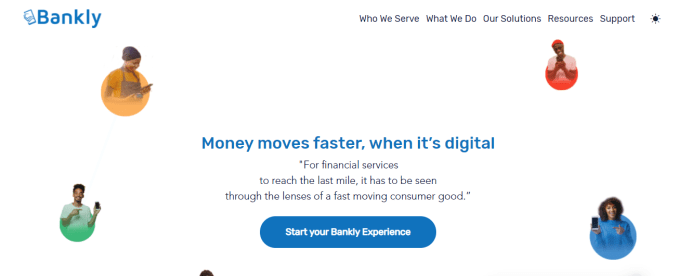
Image Credits: Bankly

Onboarding these new set of customers means they get to save and transact more over time. This opens up access to credit and with more value created, there’s a new set of banked people, which leads to financial inclusion in the long run

“The first phase is building agent networks which is good but that’s not the goal,” CEO Adejana said to TechCrunch. Just in the same way mobile inclusion happened, you need to then focus on acquiring customers who, after transferring cash to their mobile accounts, use it to buy airtime or make payments. We call that the three-phase process. The distribution first, then focusing on the consumer, after that full digitization. This is how we reach financial inclusion.”

With its insights into customer behaviour and transactions, Bankly also provides “data-as-a-service” to other service providers to offer tailored products and services to Nigeria’s informal sector

Bankly operates like a traditional bank but with fewer assets, revenue, customers and operational costs. But because it doesn’t spend a lot in acquiring customers and building physical presences, it can pass on those cost savings to customers as interests and still make decent margins.

Agents on the platform also take commissions for any transaction a customer makes through them. This time last year, the company had a little over 2,000 agents across the country. Now, that number has grown to 15,000.

The company still plans to add more agents with the new investment received. To increase its 35,000 customer base in cash-dependent communities, Bankly will also provide direct-to-consumer products in the coming months.

L-R: Fredrick Adams (CPO) and Tomilola Adejana (CEO)

In Bankly’s three years of operation, Adejana cites finding the right partners, talent, and most importantly, the right investors as challenges that the company has faced. Due to the nature of Bankly’s business, Adejana didn’t accept some of the investments offered to the company and only let in investors who aligned with the company’s plans for the unbanked.

“We’ve had to be patient to make sure that we were talking to people who deeply understand the problem and are passionate about solving it and are not about getting returns as soon as possible,” she said.

These investors include co-leads Vault, the holding company of VANSO, a fintech that was sold to Interswitch in 2016; and African payments company Flutterwave. While both companies have pioneered the technology the banked enjoy by building payment rails, they’ve done little to move the needle for the unbanked. With Bankly, there’s a chance to do so.

“Given our over twenty years experience in Nigeria’s fintech industry and previous exits, we strongly believe that Bankly understands the nuanced needs of this market — not to mention the team, strategy, and technology — to succeed in bringing affordable financial services to the unbanked. We are delighted to participate in this financing round as Bankly moves into its next growth stage,” Idris Alubankudi Saliu, partner at Vault said.

For Flutterwave, this marks its first disclosed investment into another company. When it raised a $170 million Series C last month, CEO Olugbenga Agboola mentioned to TechCrunch that Flutterwave might explore some partnerships with smaller companies and potential acquisitions in the coming years. So while the investment comes as a surprise, it’s not rare to see startups invest in other startups, particularly in the ones they hope to acquire in the future—case in point, Stripe and Paystack.

Other investors who took part in the round include Plug and Play Ventures, Rising Tide Africa and Chrysalis Capital.

Bankly aims to grow its customer base to 2 million unbanked Nigerians over the next three years. The goal is to support the Central Bank of Nigeria’s National Financial Inclusion Strategy of increasing the number of banked Nigerians from 60% to 80% by 2020. A year on, that strategy is yet to be actualized. But Adejana says Bankly is working with these regulators towards a more realistic target of 2025.

“We’re thrilled to have closed this milestone fundraise and to have such seasoned fintech investors who understand the market join us on this journey to bank Nigeria’s unbanked. Now we have built the agent network and are poised to serve customers directly via offline and online channels. Partnerships, collaboration, and a deep understanding of the needs of the unbanked will be vital to our success,” said Adejana.

Before Bankly, the CEO was an investment banker but it was during her masters’ program in Sydney she got into the world of fintech. After returning to Nigeria, Adejana worked on a product that offered loans to small businesses, then later joined Accion Venture Lab, a program focused on products that foster financial inclusivity. It was there Bankly started.

The product has caught on well. And while there are lots of fintech products in the Nigerian market pitching to reach the unbanked, Bankly remains one of the very few that can boldly stake a claim to that.

To truly attain financial inclusion in Nigeria, Adejana believes the onus lies with the fintechs to have long-term views just as the telcos and fast-moving customer goods did in the past. This increases the pie of customers fintechs can serve instead of taking a slice of an existing one. “For financial services to reach the last mile, it has to be distributed the same way fast-moving consumer goods are distributed,” she added

News: Indonesian social commerce app KitaBeli gets $10M led by Go Ventures

KitaBeli, an Indonesian social commerce app for group buying, announced today it has raised a $10 million Series A. The round was led by Gojek’s investment arm Go Ventures, with participation from returning investors AC Ventures and East Ventures. KitaBeli currently focuses on selling fresh produce and fast-moving consumer goods (FMCG) in areas outside of

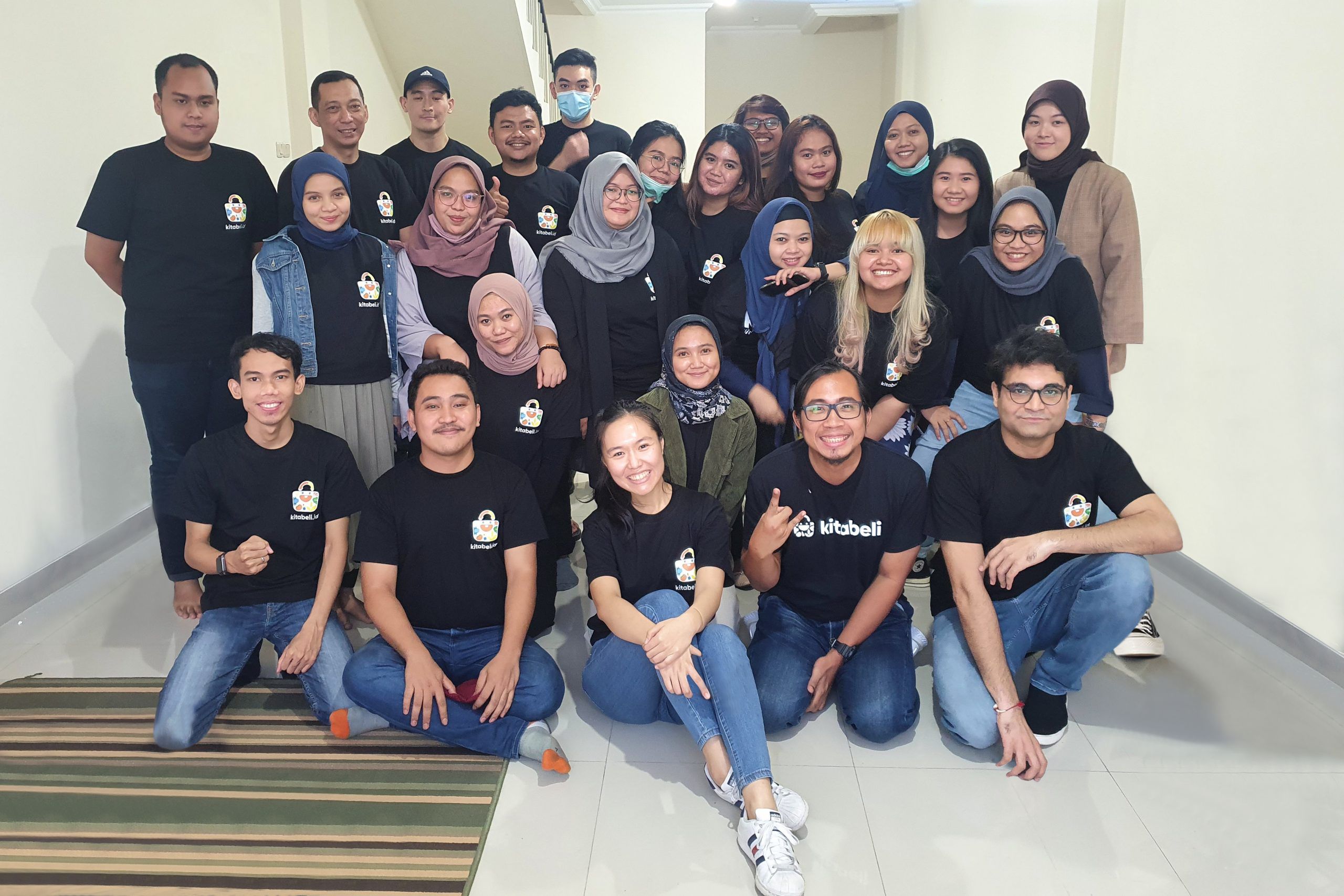
Indonesian social commerce app KitaBeli's team, including

Indonesian social commerce app KitaBeli’s team, including founders Prateek Chaturvedi (seated, right front row and Ivana Medea Tjandra (center front row)

KitaBeli, an Indonesian social commerce app for group buying, announced today it has raised a $10 million Series A. The round was led by Gojek’s investment arm Go Ventures, with participation from returning investors AC Ventures and East Ventures. KitaBeli currently focuses on selling fresh produce and fast-moving consumer goods (FMCG) in areas outside of Indonesia’s major cities, including to people who have never shopped online before.

Launched in March 2020 in Jarkata, KitaBeli then entered the cities of Solo and Malang. Its new funding will be used to expand KitaBeli’s operations in Java, growing its logistics network and developing its mobile app. KitaBeli claims it has grown 80% month over month since launch, with a cost-per-install rate of just 10 cents USD per customers.

Unlike other social e-commerce apps, including ChiliBeli and Woobiz in Indonesia, that build networks of resellers or agents who market items through their social media profiles and take a cut of sales, KitaBeli’s buyers place orders directly through its app, participating in group deals for lower prices. For farmers and suppliers, KitaBeli’s value comes from the ability to reach new customers in more areas of Indonesia. It says users spend an average of USD $70 per month on the app and plans to add new categories like beauty, fashion and accessories.

Co-founder and chief executive officer Prateek Chaturvedi said KitaBeli focuses on direct relationships with end customers because “this enables greater customer loyalty and the ability to become the go-to e-commerce platform for new online shoppers. We don’t run the risk of losing our customers if an agent decides to stop working with us.”

While it doesn’t have a reseller network, KitaBeli works with delivery partners for last-mile deliveries, presenting the gig as an opportunity to earn extra money. It plans to continue building its delivery network across Indonesia to help KitaBeli solve the challenges of reaching smaller cities and more rural areas.

An obvious comparison to KitaBeli is Pinduoduo, the fast-growing Chinese e-commerce player that launched in 2015 as a group-buying service for fresh produce, and also focuses on growth in smaller cities.

On the other hand, “tier 2-4 cities in Indonesia still lack the digital and logistical infrastructure that similar cities in China have,” Chaturvedi said. “Indonesian customers are also new to the internet and need to be educated on how e-commerce works.” KitaBeli’s app is designed to be approachable for first-time e-commerce shoppers, and only takes 6MB to download, making it more accessible to people who have older smartphone models or slower internet connections.

KitaBeli will continue focusing on Indonesia instead of expanding into other Southeast Asia countries because “the Indonesian market is a massive and underpenetrated market,” he added.

In a press statement, Go Ventures’ senior vice president of investments Aditya Kumar said, “E-commerce penetration beyond the large metros has remained low, predominantly because of lack of trust, poor product availability, and high logistics costs. Kitabeli is well positioned to address these challenges through the social nature of its product, accelerating online shopping for a new generation of users and bringing the benefits of e-commerce to a wider population across Indonesia.”

News: Lime launches app-less rides and no fee reservations to get more people riding

Lime is rolling out several new features, including the ability to rent electric scooters without downloading the app, in an effort to attract more riders.  The micromobility company announced Wednesday a series of product features that aims to remove barriers to entry for new users, while increasing accessibility to its vehicles. The new features include

Lime is rolling out several new features, including the ability to rent electric scooters without downloading the app, in an effort to attract more riders. 

The micromobility company announced Wednesday a series of product features that aims to remove barriers to entry for new users, while increasing accessibility to its vehicles. The new features include free vehicle reservations up to 10 minutes, closest vehicle recommendations and the option to view the app in dark mode.

The app-less experience is already live in more than half of Lime’s 130 markets, where developers have been monitoring and analyzing its usage. This feature is only available on e-scooters. The free vehicle reservations and recommendations features can be used when renting Lime’s e-scooters and e-bikes — and across every market and language, according to Lime developers.  

“We use rider feedback to build out the app or any features associated with it,” senior product manager Vijay Murali told TechCrunch. App store reviews, customer service tickets complaining about a feature or a lack of it, customer surveys and research sessions with riders from around the world all inform the direction developers take with new features. In the case of these latest updates, Murali said the team identified three goals their customers were trying to accomplish. 

“The first is that many users are ready to try this new form of transport, but they don’t want to download the app and make the commitment,” said Murali. “The second is a price concern for those who ride with us frequently, and the third is about making it easier, especially in a big city, to find the closest vehicle to you.”

Image Credits: Lime

Now when a customer open the apps, they’ll be directed towards the nearest vehicle and offered the option of reserving it for free, which Murali said streamlines the process of just jumping on a scooter and helps make riding a daily habit.

The app-less riding feature is geared towards those who are new to micromobility, might not have any space on their phones to download the app or are on an expensive international data plan.

To use the feature, customers need to scanning a QR code with their camera app which connects to Apple’s App Clips or Android’s Instant App features. Customers can then confirm the ride and use Apple Pay or Google Pay to start riding. Technically, users are actually downloading a sliver of the app — only 10 megabytes versus 100 megabytes for the full app, and only for eight hours. To the average rider, it just appears as if they’re opening a file or app on their phone, which is a lot quicker than downloading the app, creating an account, adding a payment method and reading a tutorial, which takes about five minutes rather than 30 seconds.

This feature will result in less Lime app downloads, and thus less user data. But Lime says it is more interested in hard sales at the moment. 

“We also see a relatively high download conversion rate,” said another senior product manager, Zach Kahn. “The reduction in friction and needing to choose a payment method or vehicle drastically increases that conversion and makes up a meaningful percentage of our first trips now.” 

Kahn declined to provide conversion rates for those who were introduced to Lime via app-less rides. Murali also noted that more riders in test cities began reserving vehicles when Lime removed the cost. Previously, adoption was low at around 3%.  

“It’s all about ensuring people from different segments of society, in particular underserved areas, have less friction to access Lime vehicles,” said Murali. “In an underserved community, how much a scooter costs to ride is top of mind, so removing these unnecessary reservation fees makes them more likely to ride now.”

Lime, which is backed by Uber and Alphabet, is one of the companies in the running for the coveted New York City pilot e-scooter program in the Bronx, a borough with many low-income communities and transit deserts. Each company has its own unique selling points. Superpedestrian, for example, chooses to err on the side of first-class safety features and geofencing compliance. But Murali says Lime’s leg up comes in its sheer size and ability to quickly execute new features.  

“We don’t just say we put riders first, but we figure out exactly how to do it, and then we make those features and improvements in the app happen,” said Murali. “That’s what differentiates us; how much meaningful progress we are making, at what scale and how fast. We have this new tech in the form of App Clips, for example, and we tested it fast, brought a product to market and now we’re rolling it out in every market we can.”

In a statement, Lime claims to be the first micromobility company to introduce app-less riding, however Apple appears to have demoed App Clips by renting a scooter from Spin, which also responded to New York’s RFP. A spokesperson from Spin said the company is working with Apple to bring the App Clip experience to its e-scooters in the future.

News: Indian social network Public App raises $41 million

Public App, a location-based social network that connects individuals to people in their vicinity, has raised $41 million in a new round, just six months after securing $35 million as the hyper-local Indian startup looks to expand its presence in the world’s second largest internet market. A91 Partners led the new round in Public App,

Public App, a location-based social network that connects individuals to people in their vicinity, has raised $41 million in a new round, just six months after securing $35 million as the hyper-local Indian startup looks to expand its presence in the world’s second largest internet market.

A91 Partners led the new round in Public App, valuing the Indian startup at over $250 million. The Indian startup, which also operates popular news aggregator app InShorts, said some of its existing investors also participated in the round but did not identify them. Public App counts Lee Fixel’s Addition, SIG, and Tanglin Venture Partners among its investors.

Azhar Iqubal, founder and chief executive of Public App, said the new social network has amassed over 50 million users already and he aims to expand it outside the country eventually. The platform has already attracted individuals such as politicians and several major firms such as Amazon, HDFC Bank, and GSK are using Public App to reach their audience.

“Public has continued to maintain best in class retention and engagement metrics while scaling. We look forward to working closely with the founders to help build an outstanding company,” said Gautam Mago, General Partner at A91 Partners, in a statement.

Public App, which is available in several major Indian languages (including Hindi, Bengali, Punjabi, Telugu, Tamil, Kannada, Malayalam, Odia, Assamese, Gujarati and Marathi), allows shop owners and other local businesses to drive e-commerce and hire local talent, and political leaders, government authorities, and media houses to reach local audiences.

“The app is already being used by over 50,000 elected officials, government authorities and citizen journalists to connect with their locality. Additionally, many local businesses have also started to use the app to reach their customers in the locality,” the startup said.

The app, which also provides entertainment and news services, sees more than 1 million videos being created on the platform each month.

The startup plans to deploy the new capital to expand its tech infrastructure, broaden its content offerings, and hire more talent.

Once thought of a crowded space, several Indian startups have launched their social networks in recent years. Kutumb, an eight-month-old startup, is in talks with Tiger Global to raise funds in a round that values it about $170 million, TechCrunch reported earlier this month.

News: TechCrunch, still not dead

You may have seen an article over at Axios today about the rebrand of many of the Verizon Media products under a new Yahoo+ banner. I would like to congratulate all of the teams that have worked hard to build a cohesive brand identity and a new plan for a bunch of great properties with

You may have seen an article over at Axios today about the rebrand of many of the Verizon Media products under a new Yahoo+ banner. I would like to congratulate all of the teams that have worked hard to build a cohesive brand identity and a new plan for a bunch of great properties with fine individuals at the helm.

Unfortunately, some of the wording in the article, and a subsequent Techmeme headline on the old twitter dot com have led some people to believe that TechCrunch would now be YahooCrunch or some such situation. That is not correct. TechCrunch is a brand that, against all odds, has stood the test of time in a radically changing and challenging landscape. That’s thanks to the bold idea of its founder as well as the tireless efforts of every member of the TC staff past and present who are all immensely talented, generous, multi-hyphenates that I have taken intense satisfaction from working with every day.

Since we’ve been around a while we have had the pleasure of being called dead a bunch of times by critics, owners, cynics and fans. But I just checked, and we’re still here.

See you tomorrow, and the next day, and the next day. I leave you with our motto of this day:

News: Our favorite companies from Y Combinator’s W21 Demo Day: Part 2

We’ve reached the end of Y Combinator’s biggest Demo Day, which saw more than 300 companies pitching back-to-back over eight hours.

We’ve reached the end of Y Combinator’s biggest Demo Day, which saw more than 300 companies pitching back-to-back over eight hours.

Earlier, we highlighted some of the companies that caught our eye in the first half of the day. Now we’re back with our favorite companies from the second half. From a marketplace to help you resell formalwear to a startup that offers self-driving street cleaners, it’s quite the mix.

If you’d like to browse all of the companies from this batch YC has a catalog of publicly-launched W21 companies here.

Terra

Heading into this particular demo day, I had my eyes peeled for startups focused on delivering services via an API instead of offering managed software. Happily, there have been a number to dig into, including Pitbit.ai, Bimaplan, Enode and Terra.

Terra stood out to me because it solves a problem I care deeply about, namely fitness data siloization. My running data is stuck in one app, biking data in another, and my weight-lifting data is stuck in my head, though I doubt Terra has an API for that interface quite yet.

What Terra does is permit fitness app developers to better connect their services, which permits the sharing of data back and forth. Presenters likened their startup to Plaid — a popular thing to do in recent quarters — saying that what the fintech startup did for banking data, Terra would do for fitness and health information.

Getting developers to sign on will be tricky, as I presume all of the apps I use in an exercise context would prefer to be my main workout home. But I don’t want that, so here’s hoping Terra realizes its vision.

— Alex

AgendaPro

Calling itself “Shopify for beauty and wellness” in Latin America, AgendaPro wants to help small businesses in the region book customers online and collect payments. 

The company’s idea isn’t as radical as some companies that we heard from today — Carbon capture! Faster drug discovery! — but the company did share several metrics that made us sit up. First, AgendaPro has reached $152,000 in MRR, or just over $1.8 million in ARR. And representatives shared that its gross margins are 89%. As far as software margins goes, that’s pretty damn good.

The startup has more than 3,000 merchants using its service at the moment, and it claims that there are more than four million businesses that it could service. If AgendaPro can get software and payments revenues from even a respectable fraction of those companies, it will be a big, big business. And who doesn’t love vertical SaaS?

— Alex

Atom Bioworks

One of the holy grails of biochemistry is a programmable DNA machine. These tools can essentially “code” a molecule so that it reliably sticks to a specific substance or cell type, which allows a variety of follow-up actions to be taken.

For instance, a DNA machine could lock onto COVID-19 viruses and then release a chemical signal indicating infection before killing the virus. The same principle applies to a cancer cell. Or a bacterium. You get the picture — and it looks like Atom Bioworks has something a lot like this.

News: Cross-border fintech Airwallex raises $100M Series D extension at new valuation of $2.6B

Airwallex, the fintech company for cross-border businesses, announced today it has added $100 million more to its Series D round, bumping its valuation up to $2.6 billion. The extension was led by Greenoaks, with participation from Grok Ventures and returning investors Skip Capital and ANZi Ventures. Co-founder and chief executive officer Jack Zhang told TechCrunch

Airwallex, the fintech company for cross-border businesses, announced today it has added $100 million more to its Series D round, bumping its valuation up to $2.6 billion. The extension was led by Greenoaks, with participation from Grok Ventures and returning investors Skip Capital and ANZi Ventures.

Co-founder and chief executive officer Jack Zhang told TechCrunch that the new funding will be used for Airwallex’s United States launch in the second quarter of this year, expand its payment coverage to new regions like the Middle East, Africa, Eastern Europe and Latin America, and add more products, including physical cards.

This latest extension brings Airwallex’s Series D round to $300 million, and total equity raised so far to $500 million. Airwallex first announced its Series D in April 2020 after raising $160 million, then another tranche that added $40 million in September 2020.

Airwallex reached unicorn valuation after its Series C in March 2019. The company was founded in Melbourne in 2015, and now has more than 600 employees across 12 offices in Australia, China, Hong Kong, the United Kingdom, Japan and the United States. In its announcement today, Airwallex said it is also hiring for more than 500 positions.

Airwallex’s products for cross-border businesses include foreign currency accounts and multi-currency debit cards with Visa, international money transfers and a suite of APIs that allow companies to do things like accept and manage international payments, and manage their foreign exchange risk.


News: Y Combinator widens its bet in edtech in latest batch

Y Combinator is slowly growing its stake in education companies, as the sector balloons with newfound demand from remote learners. In its latest batch, the famed accelerator had its highest number of edtech startups yet: 14 companies from around the world, working on everything from teacher monetization to homework apps to ways to train software

Y Combinator is slowly growing its stake in education companies, as the sector balloons with newfound demand from remote learners. In its latest batch, the famed accelerator had its highest number of edtech startups yet: 14 companies from around the world, working on everything from teacher monetization to homework apps to ways to train software engineers in an affordable fashion.

While Y Combinator isn’t the definitive source on what success in early-stage startups looks like — it quite literally has a post-mortem dinner after Demo Day to celebrate failure — it does serve well in providing an illustrative glance of how entrepreneurs are thinking about certain sectors in a given moment in time. Managing director Michael Seibel said that the number of startups in each sector isn’t a Y Combinator choice, but is in line with the concentration of applicants in each sector. In other words, YC is backing more edtech companies because more edtech companies are applying to the accelerator.

One dynamic worth pointing out here is that, of the 14 edtech startups in this batch, only two have a woman founder, UPchieve and Degrees of Freedom. Y Combinator provided aggregate batch diversity, stating that 19% of companies in W21 include a woman founder, and 10% of founders in the entire batch are women. It’s a slight uptick from the last batch, but not an immense jump.

diversity of the @ycombinator w21 batch:

📈 19% of the companies have a woman founder (16% S20)


📈 7% have a Black founder (6% S20)
📈 13% have a Latinx founder (10% S20)

— natasha (@nmasc_) March 23, 2021

With this context, I will use the current edtech cohort within the batch to sketch out one version of the future of education in the eyes of this specific demographic of early-stage founders.

Internationalization is a factor

The current YC batch has 50% of its startups based outside of the United States, a first for the accelerator. The growing internationalization of Y Combinator might help partially explain the uptick in edtech companies. The growth of companies like India’s Byju’s, one of the most valuable edtech companies in the world, shows how consumer spending in education companies internationally is impressive, and it’s clear that early-stage edtech startups are taking note.

Only two of Y Combinator’s 14 edtech investments are from the United States, with the highest concentrations in South America and India.

  • Manara: A marketplace to connect Middle East talent to tech jobs.
  • Prendea: Peru-based startup that offers live, online after-school classes for Spanish-speaking kids.
  • Avion School: The education startup teaches Filipino students to be remote software engineers around the world.
  • Poliglota: A language school for Latin America.

The future is consumer over B2B

The vast majority of startups in the current edtech batch charge consumers, instead of institutions or enterprises, for services. In some ways, edtech startups going for consumers instead of institutions isn’t new: it’s always been easier to convince a parent instead of a public school to pay for a service simply due to red tape. Consumers are an easier way to reach a venture-demanded scale, and that’s always been a truth of edtech.

  • Kidato: Targeting the middle class of Africa, Kidato is an online school for K-12 students. The startup has a focus on quality and affordability.
  • Codingal: An afterschool program for Indian kids to learn coding.

Still, it’s noteworthy that we’re not seeing too much experimentation in business model here, despite the pandemic and that some schools have begun to invest more in edtech services.

A potential hurdle that these companies might face is access. If it costs to use your service, you can only educate so many people from specific income groups. As a result, income share agreements, or ISAs, were especially present in this batch, a set-up that allows a student to hold off on paying for an education until they are employed. Upon employment, said student has to give a percentage of their income to the company until their debt is paid. While the model is controversial, it was popularized by YC graduate Lambda School and continues to be one way to make the upfront cost of school more popular.

  • Pragmatic Leaders: The startup wants to build a more cost-effective MBA, which is free until the student is hired post-grad.
  • Awari: The São Paulo-based startup uses income share agreements to help students in Brazil afford a tech education. Courses range from data analytics to product UX and growth marketing.

Acadpal, mentioned later, is an outlier here selling to schools in India. Before I move on to our next section, I do want to shout out two startups that I think embody the most ambitious bets in business model:

Zoom University lives on

Despite the struggles of “Zoom University,” this batch of edtech founders clearly believe that the future of instruction is through online courses. This was perhaps the most overwhelming thread tying together all the companies in the sector: a bet on one of these companies is a bet that remote education will become status quo.

As previous sections show, a number of startups are offering online coding platforms for specific demographics. Now, I always have my inbox filled with different “Lambda School for X” startups, so seeing a variety of these startups pop up yet again isn’t exactly exciting. However, the pandemic did show how much community and network enhances a school experience. If these online schools can pull off strong partnerships with employers and alumni, I think there’s a huge opportunity here.

  • Turing College: The Lithuania-based online data science school uses income-share agreements to bring affordability to education.
  • Coderhouse: An Argentina-based startup that wants to build a live, online tech education for the Spanish-speaking populations of the world.

That said, where there’s big opportunity there’s always a lot of competition. These startups will have to find a way to differentiate themselves, like the one below:

  • Unschool: The startup wants to tie higher education to employment outcomes, so it’s building a platform to increase completion rates in India with a guarantee of internships.

There were bets on the infrastructure of how courses get done online, from course creation to completion.

  • Pensil: A platform that helps YouTube teachers in India monetize their courses.
  • Acadpal: A learning app for teachers in India to create and share homework, and for students to complete and discuss assignments.
  • CreatorOS – Questbook: This company wants to make it easier for teachers to teach online courses. It gives professionals the tools they need to launch a course within minutes, with a focus on a bite-sized end-product.

In conclusion

To end, the edtech startups in the current YC batch are more complementary to each other than competitive. For a homework platform like Acadpal to succeed, it would be good news for a company like Codingal, which helps bring afterschool learning online, to get funding as well. For Unschool, which ties higher-ed to employment, a company like Degrees of Freedom could be a key partner or integration for students from a low-income background.

Edtech is growing — and fast — so the fragmentation of different plays is somewhat expected. And while this batch’s hard work starts now, it’s illuminating to understand where the earliest entrepreneurs out there are seeing promise.

WordPress Image Lightbox Plugin