
Monthly Archives: March 2021

News: These House hearings on tech are a waste of time and everyone knows it

If Congress wants to write laws that effectively regulate companies like Facebook, Google and Twitter, it needs to change the ways it interacts with those companies, because these hearings ain’t it. They’re a waste of everyone’s time, and no one is even pretending otherwise. To truly put Big Tech on the spot, future hearings need

If Congress wants to write laws that effectively regulate companies like Facebook, Google and Twitter, it needs to change the ways it interacts with those companies, because these hearings ain’t it. They’re a waste of everyone’s time, and no one is even pretending otherwise. To truly put Big Tech on the spot, future hearings need to do — at the very least — these three things.

Change the format

Five minutes of free-form questioning by 60 or 70 representatives sequentially is the current format for House hearings, and it’s a disaster — especially on Zoom or Bluejeans or whatever Congress uses.

Over and over again we get representatives who spend three-fourths of their time on de facto opening statements that are as likely as not to be pandering bloviations redundant with what’s already been said. Once that’s finished, the short remaining time forces them to require yes or no answers to poorly posed questions about complex topics.
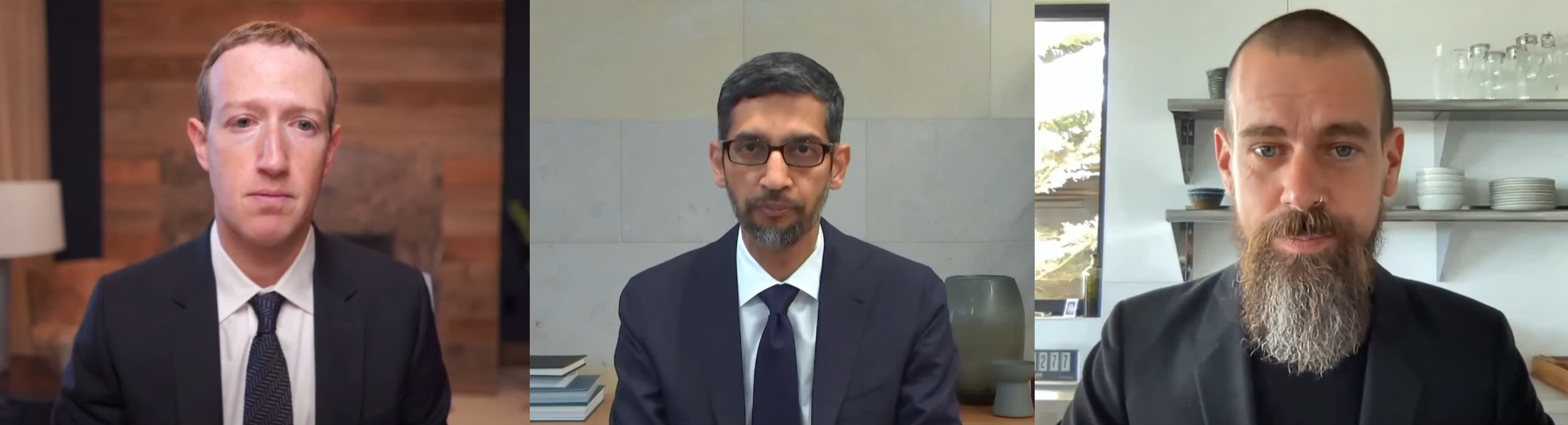
Mark Zuckerberg, Sundar Pichai, and Jack Dorsey in video calls with Congress.Because there’s nothing compelling these CEOs to actually respond with yes or no, they always, always respond with a longer answer. Have done for years, yet representatives still complain about it, even when their questions can’t conceivably be answered with a yes or no without over-committing or self-incrimination.

When you ask, and this was an actual question, “Do you think the law should allow you to be the arbiters of truth, as they have under section 230?” — you cannot seriously expect a yes or no answer. It’s the tech equivalent of “Have you stopped beating your dog?”

Faced with pointless or impossible questions, Zuckerberg maintained a sort of perpetually aggrieved countenance, looking more like the dog than the beater. Pichai tuned out, missing questions or offering obvious platitudes when called on. Dorsey, plainly bored, tweeted his way through the hearing and answered in monosyllables even when it was not required of him.
As irritating as this political theater is to watch, it must surely be more so to take part in. Seeing that nothing worthwhile can be said or done in these five-minute abuse sessions, the highly visible chief goal of the CEOs is to run out the clock — safe and incredibly easy to do. Sometimes they appeared to be barely paying attention, secure in the knowledge that they can respond “these are nuanced issues… we take this very seriously, Congresswo—” before being cut off. Begging off based on being “unsure about the exact details” and saying you’ll follow up is another zero-commitment option.

The format needs to be changed to allow for substantive discussion, firstly by extending each member’s questioning time limit to eight or 10 minutes at least; secondly, by providing some kind of guideline for answering, for instance guaranteeing 10 seconds but silencing them after 30. So much is lost to crosstalk in these video hearings that ultimately it’s better to allow a bad answer to go for 20 seconds than to object to it for 25.

It may also pay to limit the participants, allowing the leaders of the Committee to allocate time as they see fit to a smaller number of representatives who have more than boilerplate outrage to put on the record. How exactly this could be accomplished is probably subject to a raft of rules and procedural things, but seriously, there’s no point in having most of these people involved. Keep it fair, keep it bipartisan and let each party either exclude its cranks or own them.

Real consequences or legally extracted promises need to exist as well. One questioner brought up an independent audit Jack Dorsey promised — on the record, to Congress — in 2018. It never took place, with Dorsey saying they decided to do something else instead. So it wasn’t a promise, it wasn’t a requirement and there was no legal compulsion to do anything at all. Why even bother asking if all you’re doing is asking for a favor? Lawmakers need bite to back up their bark, and if that doesn’t exist, they should refrain from barking so much.

Have a real agenda

If the format changes, the agenda needs to as well. Because if we simply allow these clueless lawmakers more time to read their scripts, the scripts will, like legislative goldfish, expand to fill the time allotted to them.

We’ve seen hearings that have made a difference, usually because the people involved have evidence to present and arguments to accompany it. Vice President Kamala Harris was great at this, having a background as a prosecutor — she made it pretty hot for Zuckerberg back in 2018. Reps. Pramila Jayapal (D-WA) and David Cicilline (D-RI) made Jeff Bezos look like he was either ignorant or had something to hide last year by confronting him with incriminating testimony and requiring a real answer.

Unfortunately, we can’t trust our legislators to be informed (or truthful) on these issues or really to even care. Most of the time their questions come off like something anyone could throw together an hour before the hearing with some quick background searches. Some of it (like hammering on the long-settled NY Post/Hunter Biden debacle) is so out of date that it proves beyond a doubt that the questioner had no intention of addressing the issues ostensibly at hand. Why let them waste everyone’s time on irrelevant topics?

Subpoena power comes with its own problems — no one wants to fight a court battle every time they want to ask a few questions — but if Congress is not going to use the tools available to it in the pursuit of legislating these issues, what exactly do they bring to the table?

If hearings don’t have a driving force behind them, such as an event, investigation or document release, they are almost by definition just a way for representatives to generate sound bites and appear concerned to their constituency. Today’s event is very much an example of this.

Bring in principals, not figureheads
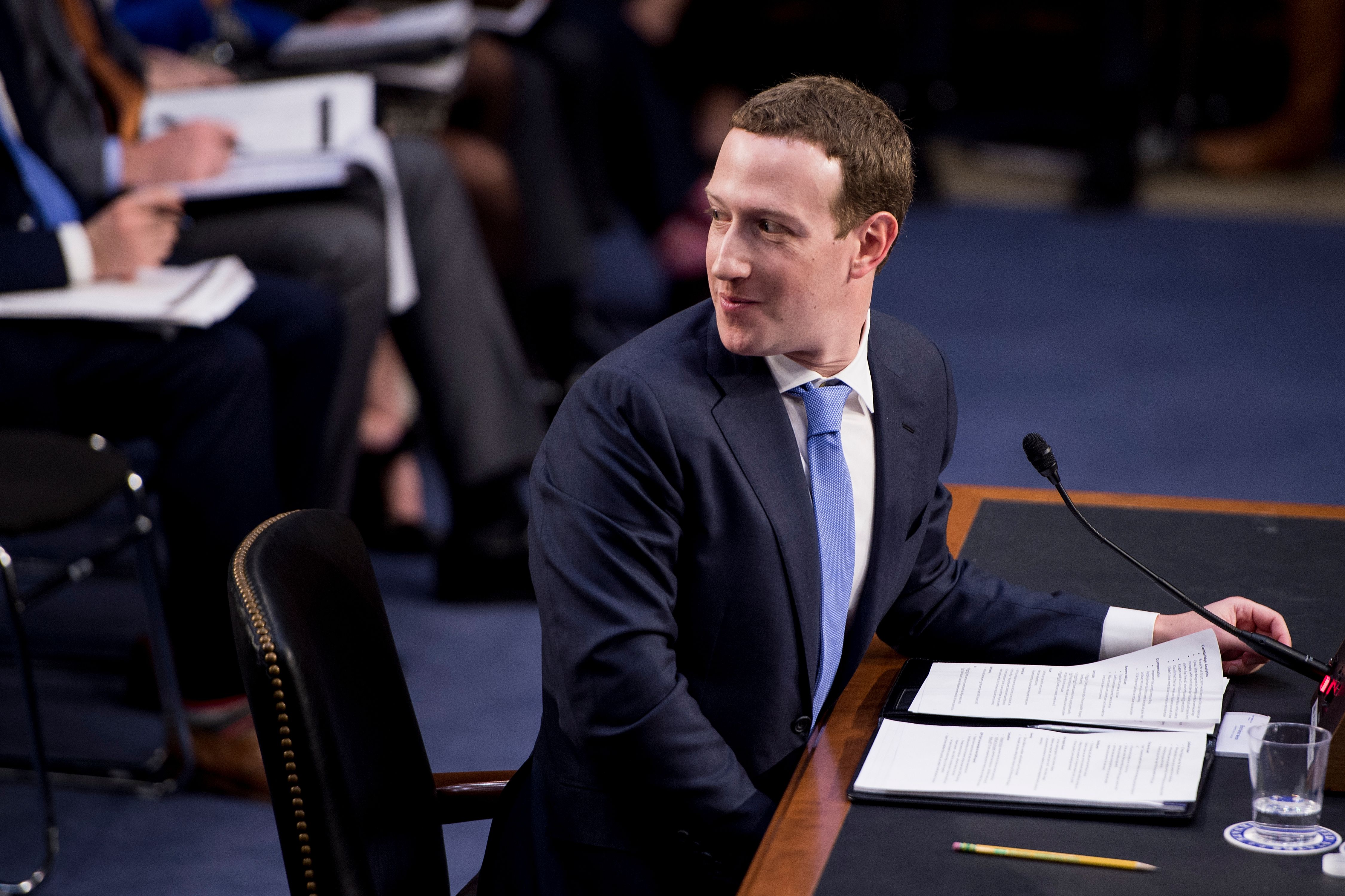
Facebook CEO Mark Zuckerberg listens during a joint hearing of the Senate Commerce, Science and Transportation Committee and Senate Judiciary Committee on Capitol Hill April 10, 2018 in Washington, DC. Facebook chief Mark Zuckerberg took personal responsibility Tuesday for the leak of data on tens of millions of its users, while warning of an “arms race” against Russian disinformation during a high stakes face-to-face with US lawmakers. (Photo: BRENDAN SMIALOWSKI/AFP/Getty Images)

Mark Zuckerberg, Sundar Pichai and Jack Dorsey are very smart. Very well-informed. Very important. But their roles as figureheads as well as decisionmakers in their companies and industries makes it nearly impossible for them to say anything that hasn’t been drafted and cleared ahead of time, and they are also free to not remember or defer to an absent colleague.

There’s no blood to squeeze from these stones, so invite someone else. This was a hearing about disinformation — these companies have people making everyday decisions and directly overseeing projects on that topic. They should be the ones being asked to answer Congress’s questions.

It’s conceivable, if almost certainly untrue, that Zuckerberg “doesn’t recall” conversations about hiding abuse of Facebook data from users. Getting him to take that position is a victory of a sort, but it would be better to have the person whose responsibility this actually was, someone who can’t take refuge in hysterical ignorance.

Certainly these VPs and heads of what have you would also be media trained and prepped with canned statements, but it’s better than the alternative. These CEOs are Teflon-coated and this isn’t their first time in front of the shouting squad. They no longer care about anything but keeping the hearings as boring as possible and avoiding a news cycle. (Dorsey’s weird clock was a great blow-off valve for this. Pichai’s aggressively ordinary background gave you nothing to focus on but his answers — wrong play. And Zuckerberg’s high-quality camera setup only made him look more damp and robotic.)


Every time one of these hearings takes place, the overwhelming impression one gets from them is of a lost opportunity. Here are elected lawmakers given a chance to speak directly to some of the most powerful people in the tech industry, and perhaps nine out of 10 use that time to retread old topics, thrust dubious information into the record, or simply relish their chance to push around someone like Mark Zuckerberg. The temptation is understandable but legislators must put the country first.

Though some representatives raised important issues today, the format prevented them from extracting substantive answers; the lack of a cohesive agenda or central documents meant they had no compelling evidence to put forth; the subjects of their questioning were bored and had no reason to say anything beyond what they put in their carefully prepared opening statements. If future hearings — concerning this or other industries — don’t change things up, no one should be surprised if they, like this one, yield nothing but hot air.


News: Porsche adds the all-electric Taycan to its subscription program

Porsche has added its first all-electric vehicle, the Taycan sports sedan, to its subscription and short-term rental program as part of a broader expansion that aims to build a new customer base of U.S. owners. The German automaker said Thursday it is also expanding the Porsche Drive subscription and rental programs to five more cities

Porsche has added its first all-electric vehicle, the Taycan sports sedan, to its subscription and short-term rental program as part of a broader expansion that aims to build a new customer base of U.S. owners.

The German automaker said Thursday it is also expanding the Porsche Drive subscription and rental programs to five more cities — up from four. It’s now offered to customers living in Atlanta, Houston and Phoenix, and in California in Irvine, Los Angeles, Monterey, San Diego, San Francisco and San Jose. Porsche said it plans to continue its expansion in the United States throughout this year and into 2022.

Porsche’s programs are all about flexibility — and that comes with a price. The Taycan 4S model, which will initially only be available under the single-vehicle subscription or rental plans, cost about 20% more than the monthly cost of a comparable two-year lease. The Taycan 4S fee is $3,250 per month and the Taycan rear-wheel drive will be $2,500 monthly.

Renting a Taycan 4S under the short-term plan costs $335 per day for one to three days and $295 a day for more than four days. All prices exclude taxes and fees and any subscriber has to pay a $595 activation fee. Porsche is adding the Taycan rear-wheel drive model later this spring.

Despite the eye-popping price of these programs, they have been popular enough to warrant an expansion. Porsche Drive is booked out one to two months ahead in most markets, a company spokesperson told TechCrunch.

The automaker views these programs as a complement to selling and leasing cars, not a replacement, according to Porsche Cars North America President and CEO Kjell Gruner. About 80% of Drive customers are new to Porsche, Gruner said.

Porsche first piloted a subscription program in 2017 and has been tinkering ever since. There are now three plans, or tiers, that are all housed under its Porsche Drive vehicle subscription program, which was rebranded in 2020. The most robust plan is Porsche Drive – Multi-Vehicle Subscription, which offers customers the ability to swap through a variety of vehicles on a monthly basis. Porsche Drive-single vehicle subscription gives access to one vehicle for one or three months with an option to extend. Then there’s Porsche Drive – Rental, which as the name indicates, offers shorter-term rentals that are targeted to those who want access to the brand’s luxury sports cars and SUVs for a week or just a weekend.

All of these plans are accessed by the Porsche Drive app. Users can pick their vehicle and schedule concierge service for vehicle delivery and pick-up through the app. The subscription plans are all based on a flat monthly fee that covers vehicle maintenance and insurance.


News: Twitter CEO Jack Dorsey busted for tweeting during congressional hearing

Twitter CEO Jack Dorsey got called out by Rep. Kathleen Rice (D-NY) for tweeting during today’s congressional hearing on disinformation and extremism. The tech exec’s tweet was likely expressing frustration with the format of the hearing, which once again saw the tech CEOs forced to boil down their answers to complicated questions into simple “yes”

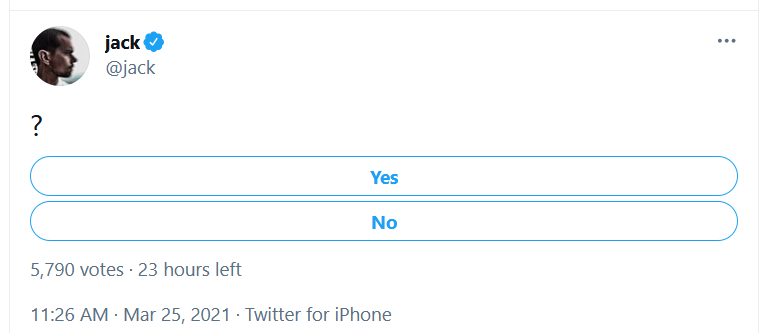
Twitter CEO Jack Dorsey got called out by Rep. Kathleen Rice (D-NY) for tweeting during today’s congressional hearing on disinformation and extremism. The tech exec’s tweet was likely expressing frustration with the format of the hearing, which once again saw the tech CEOs forced to boil down their answers to complicated questions into simple “yes” or “no” answers — or otherwise be cut off from responding. Cryptically, Dorsey this afternoon tweeted out a Twitter poll with just one question: “?” that had only two answers to choose from: either a “Yes” or “No.”

His post — or social commentary, if you will — did not go unnoticed.

Before Rice moved into her line of questioning, which focused on platforms’ ability to radicalize U.S. veterans’ and military service members, she asked the Twitter CEO about his tweet.

“Mr. Dorsey, what is winning — yes or no — on your Twitter account…poll?,” asked Rice, who sat in front of colorful wallpaper covered with flowers, butterflies, bugs and maybe snakes (??), which we agree was one of the better web conferencing backgrounds of the day — perhaps even besting Dorsey’s decision to zoom from his kitchen with a cleverly placed blockchain clock behind him. (Because of course it’s a blockchain clock. Of course.)

“Yes,” Dorsey answered simply, in same monotone he used throughout the hearing, which tends to give the impression of someone who just can’t get worked up over yet another congressional dog-and-pony show.

“Hmmm,” Rice admonished.

“Your multitasking skills are quite impressive,” she snarked, in a tone that did not seem to indicate she was actually impressed.

In case you’re wondering, “Yes” was winning then and continues to win now, with 65.7% of the 65,626 total votes so far, compared with the just 34.3% who voted “No,” as of the time of writing.

?

— jack (@jack) March 25, 2021

Perhaps there’s some optimism left for social media after all?

News: Former Blue Apron CEO Matt Salzberg raises $25M for his new venture studio Material

Matt Salzberg, who co-founded and served as CEO of meal kit startup Blue Apron until 2017, is back in the startup business with a new venture studio called Material. Along with Salzberg, Material is led by partners Andy Salamon (formerly a general partner at Atomic Labs who backed Hims and Terminal) and Danielle David Parks

Matt Salzberg, who co-founded and served as CEO of meal kit startup Blue Apron until 2017, is back in the startup business with a new venture studio called Material.

Along with Salzberg, Material is led by partners Andy Salamon (formerly a general partner at Atomic Labs who backed Hims and Terminal) and Danielle David Parks (co-founder of Jane Strategy). The studio has been operating for the past year and just closed its first $25 million fund.

Salzberg told me that Material will have “a very slow and deliberate approach to company creation.” That means deeply researching an industry (“We do more private equity-style due diligence than venture capital-style diligence”), identifying an opportunity and recruiting an executive to found the company alongside the Material team.

“We act as their co-founders, literally, whether with respect to talent and recruiting or resources at our fund, we help help very much with investor connections, we help with strategy, we help with relationships,” he said. “We let the co-founding CEOs handle the day-to-day decisions and as they bring in outside capital in future rounds, we transition into being more like board members.”

Salzberg added that his goal “isn’t to be a factory that churns out five companies a year, six or seven companies a year,” he said. And instead of being slightly involved in a lot of companies,”We like to have a lot to do with very few companies.”

Specifically, the Material team plans to launch two new startups every year. For the most part, Salzberg said the ideas for these companies will “almost always” originate within Material, because the goal is to start the companies “from scratch” rather than make seed investments. He admitted that this approach allows him to “derive personal satisfaction” from the process, but he argued that it’s financially sound as well.

“It’s also the right investment strategy to create great risk-adjusted returns,” he said. “We de-risk the startup process with better vetted ideas, more experienced founders and we’re giving them a good amount of capital, $2 to $4 million, from day one.”

Startups launched from Material include delivery-focused restaurant startup Kitchen to Kitchen (led by former FreshDirect CEO Dean Furbish), an Amazon brand acquirer called Suma Brands (led by former Dolls Kill COO Andrew Savage) and sales startup that’s still in stealth mode.

New Material startups could be in any industry, but Salzberg said the team is particularly interested in e-commerce (not too surprising, given his background and Salamon’s) and the future of work.

News: Pussy Riot shows the cypherpunk power of feminist NFTs

It might seem like everyone and their mom is selling a non-fungible token (NFT) these days, but Pussy Riot co-founder Nadya Tolokonnikova is one of the few strategizing beyond the hype cycle. The NFT market is just getting started, but where is it headed? “I’ve been using cryptocurrency before this,” Tolokonnikova told TechCrunch, noting Pussy

It might seem like everyone and their mom is selling a non-fungible token (NFT) these days, but Pussy Riot co-founder Nadya Tolokonnikova is one of the few strategizing beyond the hype cycle.

“I’ve been using cryptocurrency before this,” Tolokonnikova told TechCrunch, noting Pussy Riot members have been interested in blockchain technology since around 2015. “Masha [Alyokhina, Pussy Riot co-founder] had problems with her bank accounts. Whenever she would open one, the government would shut it down because she would use some of her money for protestors. Right now she can’t even have her own credit card.”

Now Tolokonnikova is raising hundreds of thousands of dollars worth of ether this month by dropping a four-part series of NFTs for the group’s newest music video, “Panic Attack.” She says these profits will be donated to a clandestine women’s shelter in Eastern Europe, which caters to women who violated social norms.

“Women in this region are still being treated as property. There’s a stigma. A lot of these women are queer or did something like smile at a stranger, things that are associated with shame on the whole family. If we publicized the location of this shelter, it would motivate people to find the shelter and try to destroy it,” Tolokonnikova said. “As an activist, it’s really exciting to see a tool that’s not controlled by any government.”

It might be easy to dismiss this NFT initiative as a publicity stunt for Pussy Riot’s first studio album, “Rage,” scheduled for release in May. Plus, the NFT platform the group is using, Foundation, could censor the group and make it difficult for buyers to view or trade NFTs. Crypto collectibles, and any corresponding cryptocurrency earnings, are only censorship resistant when held in a creator’s personal wallet, not on a private company’s platform.

On the other hand, Tolokonnikova said her “interest in the technology is long-lasting,” and that she’s already exploring ways to utilize crypto tools to subvert sexist power structures. In addition to donating cryptocurrency to activists, Pussy Riot is also sponsoring an NFT scholarship program to cover the Ethereum transaction fees for feminist artists.

“Right now it’s now only for activists and political art works,” she said. “It’s also about educating the Pussy Riot community … we are looking at ways to make NFTs more accessible at a lower price point.”

Nadya Tolokonnikova of Pussy Riot performs in Birmingham, Alabama. (Photo by David A. Smith/Getty Images)

In the meantime, the group is working on collaborations with other NFT artists like Viktoria Modesta, known for avant-garde fashions for people with disabilities. From Tolokonnikova’s perspective, NFTs offer a way for women artists to gain recognition from the traditional art world. She said that because Pussy Riot focused on performance art and digital art, traditional galleries and collectors rarely took her work seriously. Now, with crypto collectibles, museums and galleries are taking note.

“That is a game-changing dynamic for so many artists who, for the first time in their careers, will be recognized as artists,” Tolokonnikova said. “Before, as part of Pussy Riot, I would use speaking fees or other types of event fees and use that to fund the performance art. I was never paid for the art directly. Now I’m focused on these NFT drops and I’m treating it really seriously.”

While many of the NFT boom’s breakaway stars are white men with traditional credentials and years of professional experience, like Beeple and Trevor Jones, women like Tolokonnikova are a fast-growing segment of the crypto ecosystem. Crypto exchange surveys show women make up roughly 15 to 50 percent of tallied users, depending on the region. Organizations like Metapurse, She256 and Meta Gamma Delta offer some mentorship and funding opportunities for women, as well.

“Metapurse is already doing some of this work, but we want to make our own tiny steps to bring more female and queer artists in the space,” Tolokonnikova concluded. “I think it provides amazing tools for the business of the creators’ market. It’s more than just for art. It enhances a creator’s power.”

News: Social media CEOs hedge on whether they’d boot the 12 anti-vax ‘super spreaders’ cited by states’ attorneys general

On Wednesday, a coalition of a dozen state attorneys general called on Facebook and Twitter to step up their enforcement of their community guidelines to curtail the spread of Covid-19 vaccine misinformation on their platforms. Their letter specifically identified 12 “anti-vaxxer” accounts that were responsible for a sizable 65% of public anti-vaccine content on Facebook,

On Wednesday, a coalition of a dozen state attorneys general called on Facebook and Twitter to step up their enforcement of their community guidelines to curtail the spread of Covid-19 vaccine misinformation on their platforms. Their letter specifically identified 12 “anti-vaxxer” accounts that were responsible for a sizable 65% of public anti-vaccine content on Facebook, Instagram, and Twitter. In today’s House hearing on disinformation and extremism, Twitter and Facebook’s CEOs, along with Google CEO Sundar Pichai, were directly asked if they would be willing to take down these 12 accounts.

Their answers were a mixed bag and a demonstration of social media execs’ unwillingness to take a simple action — taking down a handful of disinformation sources — that could have a significant impact on Americans’ willingness to get vaccinated to end the pandemic.

Over the course of the hearing, Congressman Mike Doyle (D-PA) pointed out that nearly 550,000 Americans had lost their lives to Covid-19, and an independent study found that Facebook users in five countries, including the U.S., had been exposed to Covid-19 disinformation 3.8 billion times. Now that the U.S. is rushing to get shots into people’s arms to reduce the spread of the deadly virus, it’s still having to deal with social media sites continuing to promote and recommend content leading to vaccine hesitancy.

“My staff found content on YouTube telling people not to get vaccines, and was recommended to similar videos. The same was true on Instagram, where it was not only easy to find vaccine disinformation, but platforms recommended similar posts,” said Doyle. “The same thing happened on Facebook, except they also had anti-vax groups to suggest, as well. And Twitter was no different.”

“You can take this content down,” Doyle said. “You can reduce the vision. You can fix this, but you choose not to,” he told the CEOs.

He later directly asked the CEOs if they would be willing to take down the 12 accounts the attorneys general had identified in their letter as the so-called “super-spreaders” of misinformation.

The coalition had written that both Facebook and Twitter had yet to remove the accounts of 12 prominent anti-vaxxers, who repeatedly violated the company’s terms of service. These users’ accounts, associated organizations, groups and websites, were responsible for 65% of public anti-vaccine content across Facebook, Twitter and Instagram, as of March 10, the letter noted.

In response to the question of taking down these dozen accounts, Zuckerberg hedged. He said that Facebook’s team would have to first look at the exact examples being referenced, leading to Doyle cutting him off.

Pichai tried to start his answer by noting that YouTube had removed over 850,000 videos with misleading coronavirus information, but was also cut off as Doyle re-asked the question as to whether or not YouTube would take down the accounts of the 12 super-spreaders.

“We have policies to take down content,” Pichai said, but added that “some of the content is allowed, if it’s people’s personal experiences.”

When Twitter CEO Jack Dorsey was posed the same question, he said, “yes, we remove everything against our policy” — a better answer, but als. one that’s not necessarily a confirmation that Twitter would, indeed, remove those specific 12 accounts.

Dorsey, earlier in the hearing, had also spoken broadly about Twitter’s long-term vision for dealing with misinformation, “Bluesky,” its vision for a decentralized future. He explained how Bluesky would leverage a base, open source protocol that’s shared, allowing for “increased innovation around business models, recommendation algorithms, and moderation controls which are placed in the hands of individuals, rather than private companies,” Dorsey said. The answer indicated Twitter’s vision for moderation was ultimately about handing off the responsibility to others — something Facebook has also done in recent months with its Oversight Committee, an external body that will weigh in on the hardest moderation decisions.

These moves indicate that social networks have decided for themselves that they’re not capable of handling the responsibilities of content moderation on their own. But whether the U.S. government will actually step in to regulate them as result still remains to be seen.


News: Zuckerberg blames Trump, not Facebook, for the Capitol attack

In an interview with Reuters six days after the attack on the U.S. Capitol, Facebook Chief Operating Officer Sheryl Sandberg infamously downplayed her company’s role in the day’s horrific events, which left five people dead. “I think these events were largely organized on platforms that don’t have our abilities to stop hate and don’t have

In an interview with Reuters six days after the attack on the U.S. Capitol, Facebook Chief Operating Officer Sheryl Sandberg infamously downplayed her company’s role in the day’s horrific events, which left five people dead.

“I think these events were largely organized on platforms that don’t have our abilities to stop hate and don’t have our standards and don’t have our transparency,” Sandberg said at the time, touting Facebook’s very recent and far from thorough efforts to remove QAnon, conspiracies and violent militias.

At Thursday’s hearing with the House Energy and Commerce committee, lawmakers circled back to Sandberg’s denial, but Facebook still didn’t have a good answer.

In his opening statements, Zuckerberg said that Facebook “did our part” to protect the U.S. election and placed the blame on the actions of former President Donald Trump.

“I believe that the former president should be responsible for his words and that the people who broke the law should be responsible for their actions,” Zuckerberg wrote.

Asked if Facebook “bears some responsibility” for spreading election misinformation and the Stop the Steal movement, Zuckerberg deflected, declining to answer directly.

“How is it possible for you not to at least admit that Facebook played a leading role in the recruitment, planning and execution of the attack on the capitol?” Rep Mike Doyle (D-PA) asked.

Pressed again, Zuckerberg passed the buck.

“I think the responsibility lies with the people who took the actions to break the law and do the insurrection,” he said. “Secondarily, also with the people who spread that content, including the President but others as well, with repeated rhetoric over time, saying that the election was rigged and encouraging people to organize, I think that those people bear the primary responsibility as well.”

Doyle wasn’t having it, arguing that Facebook “supercharged” the dangerous rhetoric, which spread like wildfire on the platform before the January 6 attack. As Doyle pointed out, the FBI showed that insurrectionists used Facebook during the “recruitment, planning, and execution” stages of the attack. 

Rep. Jan Schakowsky (D-IL) brought up the Sandberg interview specifically, 

“My question for you is, will you admit today that Facebook groups in particular played a role in fomenting the extremism that we saw, and that led to the Capitol siege?” Schakowsky asked.

“The comment that Sheryl made, what I believe that we were trying to say and what I stand behind is what was widely reported at the time…” Zuckerberg began, before Schakowsky told him to get to the point.

“Certainly there was content on our services,” Zuckerberg said vaguely. “And from that perspective, I think that there’s further work we need to do to make our services and moderation more effective.”

Beyond the fact that the Stop the Steal movement swelled to enormous numbers in Facebook groups, insurrectionist leaders relied on Facebook to communicate and hunt for lawmakers on the day of the attack.

That shouldn’t have come as a surprise to the company: The militia members who hatched a plot to capture or kill Michigan Governor Gretchen Whitmer last year also relied on the platform to organize and communicate, according to FBI affidavits. 

News: EV makers oppose delay to automotive emissions penalty increase

Electric vehicle manufacturers are pushing back against a decision to delay penalty increases for automakers who fail to meet fuel efficiency standards. A lobbying group representing legacy automakers – many of whom are now making substantial investments in zero-emissions vehicles – said the increase would have a significant economic impact during a time when the

Electric vehicle manufacturers are pushing back against a decision to delay penalty increases for automakers who fail to meet fuel efficiency standards.

A lobbying group representing legacy automakers – many of whom are now making substantial investments in zero-emissions vehicles – said the increase would have a significant economic impact during a time when the industry is facing mass disruption from the COVID pandemic. But new EV entrants say the penalty mechanism is a powerful performance incentive to decrease tailpipe emissions and encourage investment in lower- or zero-emissions technology.  

The decision, issued in January by the National Highway Traffic Safety Administration (NHTSA), postpones imposing a penalty increase from the beginning of model year 2019 to model year 2022. Tesla is petitioning the Second Circuit U.S. Court of Appeals to review the ruling, saying that the delay “inflicts ongoing, irreparable injury” on the company and creates an “uneven playing field” by reducing the consequences of non-adherence.

The Corporate Average Fuel Economy (CAFE) penalty has been increased just once – from $5 to $5.50 for every 0.1 mile per gallon that doesn’t meet the standard – since its instatement in 1975. Congress acted to rectify the effects of inflation on the penalty by raising it to $14 in 2015, but NHTSA and the courts have ping-ponged about the increase ever since. A decision from the Second Circuit last August seemed to settle the issue in favor of instating the higher penalty starting with model year 2019, but automakers last October successfully petitioned that the increase be delayed.

The CAFE penalty can be a huge boon for zero emissions automakers, who receive credits that they can then sell to other OEMs who fail to meet the fuel efficiency target. In a recent report to regulators, Tesla said it earned $1.58 billion from selling regulatory credits to other automakers in 2020, up from $594 million in 2019. Delaying the increase harms companies that have made economic decisions on the basis of an increase to the credit, Tesla said.  

EV start-ups Rivian and Lucid Motors told TechCrunch they also oppose any delay to increasing the CAFE penalty.

“The credit market is very beneficial for the entire EV industry, so every company that is looking to start building EVs, either as a startup or the existing manufacturers, when they build EVs it’s to their benefit to have robust credits,” Kevin Vincent, Lucid Motor’s Associate General Counsel, told TechCrunch. “A lot of existing manufacturers end up selling credits themselves, so it benefits the forward-thinking companies that are improving fuel economy.”

James Chen, Rivian’s VP of Public Policy and Chief Regulatory Counsel, said in a statement to TechCrunch that any rollback of the CAFE or other emission standard “only sets the U.S. backwards in terms of emission reductions ([greenhouse gas] and criteria pollutants), increased fuel efficiency, reduction of dependence on foreign oil, technology leadership and EV proliferation.” He added that the company “strongly supports efforts to bolster EV adoption that includes more stringent emission standards and higher penalties for failure to meet those standards.”

NHTSA postponed the increase on the grounds that the penalty should not be retroactively applied to model years that had already been manufactured. As manufacturers have no way to increase the fuel economy level in these vehicles, “it would be inappropriate to apply the adjustment to model years that could have no deterrence effect and promote no additional compliance with the law,” NHTSA said.

Automakers, in a petition filed by the lobbying group Alliance for Automotive Innovation and in supplemental comments, also cited economic hardship due to the COVID-19 pandemic. Mercedes-Benz told NHTSA that the pandemic caused disruptions to its supply chain, workforce and production.

“We believe that retroactively applying an increased penalty rate in such a tenuous financial climate is unconscionable and inconsistent with this Administration’s efforts to promote regulatory relief in light of the economic consequences of COVID-19,” the automaker said.

Tesla maintained in its court filing that relying on the COVID pandemic “falls flat” in the absence of specific evidence as to why it warrants the delay.  

Attorney generals from 16 states, including California and New York, as well as environmental groups Sierra Club and the Natural Resources Defense Council, have also objected to the delay.

The NHTSA decision was issued in docket no. NHTSA-2021-0001. Tesla filed with the second circuit under case no. 21-593.

News: Investors and business leaders: It’s time to take coaching mainstream

Business leaders are led to believe that reaching out for support is a sign of weakness. That stigma is a huge part of the problem.

Ariane de Bonvoisin
Contributor

Ariane de Bonvoisin is an executive coach to top CEOs, startup founders and VCs. She has keynoted the Oprah conference, given a TED talk, and been invited to Google, Amazon, the World Bank, Union Square Ventures and Red Bull to teach about navigating change and founder and startup wellness.

The business world has a love-hate relationship with coaching. Founders are visionaries: They start with an idea, a talent, a dream, but not necessarily the business know-how. Because being an entrepreneur doesn’t require a license or training — Jeff Bezos is an engineer and computer scientist; Elon Musk is an economist and physicist, and so on.

In any other industry, when someone with raw talent — an athlete, a singer, an actor — furthers their career, the first thing they receive is a coach. And it doesn’t stop once they get their first Olympic gold or Grammy.

Coaches don’t leave their side until they hang up their gloves. Tiger Woods is famous for having worked with many coaches to switch up his tactics and keep exceeding in his performance.

In any other industry, when someone with raw talent — an athlete, a singer, an actor — furthers their career, the first thing they receive is a coach.

Despite a culture that pushes founders to the edge of their physical, mental and personal limits as they build their company, we insist that they fly solo. They’re led to believe that reaching out for support is a sign of weakness.

That stigma is a huge part of the problem. We look up to business magnates, believing that they sailed from a college dorm to the C-suite without breaking a sweat. But we don’t see the vigorous kicking that goes on beneath the surface. As a client of mine once mused, even the best leaders are self-sabotaging themselves at least 30% of the time. I know for a fact that top Silicon Valley billionaires have nutrition, parenting, meditation and life coaches, but they — like half of my own clients — are reluctant to embrace this out in the open.

VCs know that they don’t invest in the business; they invest in the person. Record amounts of money are being funneled into mental wellness startups right now, but investors also need to direct that awareness toward their founders’ well-being. By offering access to a coach to all your portfolio founders, you’ll be tackling the real problems stopping them from pouring their energy into their business, and you’ll without a doubt improve your returns.

1. Business is not always a founder’s main problem

I coach founders and CEOs of startups, and more than half their main life challenges are not work related. They’re getting pulled in multiple directions — some have cancer, others are having an affair, a few are going through IVF, others still are dealing with past grief and traumas.

And when a problem is work related, it’s often a communication or psychological issue: How do I face my fear of failure? How do I lead a team of 50 for the first time? Should I trust my gut?

All this is happening in the midst of Series A raises, hiring and firing employees, acquisitions, and deciding whether to bridge or shut down the business. Imagine how much emotional energy and hours it takes for founders — or anyone, really — to face those intimate issues in isolation while putting on a brave face with investors or at board meetings.

One of the most recurring concerns founders share with me is that they feel alone.

VCs, when you choose to fund someone, you’re also marrying into their past, their family, their personal issues. The full package. Ask yourself — do you currently know the major distractions in the lives of all your portfolio founders? If you don’t, start with the assumption that something is going on in their life other than work and make coaching available to them at any time.

If you commit to helping founders manage their fears, limiting beliefs and blind spots, you’re committing to their potential as a company and industry leader. A healthy leadership is a healthy company.

2. Return on coaching (ROC)

As with elite soccer coaches, the benefits of business coaching are highly visible, without the million-dollar expense. Founders start to make better decisions the first time around. They hire the right talent, rather than hiring, onboarding and firing someone within a month.

They have more honest conversations with stakeholders, avoiding conflict and allowing more people to contribute meaningfully to the business’ growth. They have the proper mindset to fundraise, and their attitude matches the money they’re asking for.

That’s before getting to the physical improvements. My founders have lost weight, stopped smoking and drinking, and have more energy to build a business. If a founder works with chronic fatigue, which many are, it won’t be long before their body cracks. I get calls from clients caught in panic attacks before big meetings, struggling to steady their frayed nerves.

You can fund your founders’ well-being in a variety of ways. In the same way your firm might offer marketing or PR services to portfolio companies, coaching should be part of the package. Firms can make executive coaches available on retainer. You may choose to have a full-time resident coach, available whenever someone needs them.

At the very least, firms should make available a list of recommended coaches. Some coaches specialize in leadership coaching, female founders or health specifically, while others cover various personal and professional skills.

Investors will sometimes offer a handful of free sessions to their founders, but if they want to continue, they are then forced to decide between their personal health and the health of the business — which other people (including your firm) have staked millions of dollars on. It should never be a case of one or the other.

My hope is that in the future, VCs will set aside a percentage of their funds exclusively for mental wellness for founders and executives.

A few VCs have already taken a 1% pledge, but it’s the Europeans who are leading the charge here, with funds from Estonia to Ireland generously covering all founder coaching fees and other support programs. Those I know talk about how 10x growth is possible without burnout.

3. Cut through the stigma to enable founders to make the most of coaching

Founders are resistant to hiring a coach themselves because they’re worried about what their investors and board will think of them. They tell themselves: “If I were normal, and good enough, I wouldn’t need one.”

It’s not just their inner voice talking. When a client of mine joined a Silicon Valley startup, he asked his superiors if coaching could be part of his comp package. They wondered why he needed a coach.

In other industries, connecting someone with a coach is proof of their worth. That’s the conversation investors should be having: You’re good enough for us to give you money, so we’re going to give you someone to accompany you on your journey, so you don’t pretend you can figure it out at every step.

There’s also a negative connotation around the term “mental health” that we should be reframing. Those two words tend to make people think about depression, suicidal thoughts or addiction. Which is mental unhealth. Let’s talk more about mental wellness and founder well-being, which focuses us on the goal we’re working toward.

Eliminating the stigma can start with open conversations about well-being between investors and executives, as well as inviting a coach to talk to your founders about what these sessions entail, and why everyone has something to gain. By shattering the taboo, you’ll enable founders to make the absolute most of that experience, rather than hold back to keep up appearances.

If we start making coaching mainstream today, we might eventually see it as obligatory for all founders.

4. Lead by example

Finally, business leaders and investors need to set an example for the startup community, and especially people at the start of their journeys, that it’s OK to ask for assistance in bettering yourself.

Many VCs, like top CEOs, have coaches. If more simply owned it, they’d have so much power to normalize coaching, and even make #IHaveACoach fashionable. After all, we’re talking about the same industry that made meditation rooms trendy and kombucha an office feature.

Why not make coaching a central topic in future investor conferences, or, as a VC firm, publish a study on how portfolio founders who followed a coaching program saw greater business success?

For example: For years, Union Square Ventures has invested in providing value to their founders and has built a team whose responsibilities include developing leadership training, fostering mentorship circles and connecting founders to coaches. If you let founders see your commitment to human issues, it won’t occur to them that being human is being weak.

These approaches are also important self-promotion for VCs positioning themselves as the next generation of ethical investors. With so many alternative funding options becoming available, founders are seeking VCs who give them more than just capital and who see wellness and diversity and inclusion as inextricable from success.

Founder health and startup health can’t be separated from each other. On some level, all investors know this. So let’s give the people shaping tomorrow’s world the tools to be more comfortable in their own skin and more masterful in leading teams to achieve greatness and incredible returns.

News: Automakers, suppliers and startups see growing market for in-vehicle AR/VR applications

While it’s not likely that we’ll be driving around wearing VR headsets anytime soon, in-car AR is already changing the way we travel, and it promises to continue to evolve.

Augmented and virtual reality have been used for years in gaming, design and shopping. Now, a new battle for market share is emerging — inside vehicles.

Safety-glass windshields offer a new opportunity for suppliers, manufacturers and startups that are starting to adapt this technology: AR overlays digital information or images on what a user sees in the real world, while VR creates a seemingly real experience that changes as they move through it.

Despite all of the pomp and promises about the technology’s potential, there isn’t a clear understanding of market demand for bringing AR and VR to cars, trucks and passenger vans.

The potential for monetizing AR/VR is hamstrung by a number of factors: The long, expensive timelines required to develop, tool and test an automotive-grade product has constrained development to a small subset of startups and several large suppliers.

Despite all of the pomp and promises about the technology’s potential, there isn’t a clear understanding of market demand for bringing AR and VR to cars, trucks and passenger vans. Estimates of the global market range from $14 billion by 2027 to as much as $673 billion by 2025. That wide range shows just how nascent the market currently is and how much opportunity is present.

“At the vehicle manufacturer level, companies are witnessing a complete shift of emphasis of what their product offering is, to the user. Because of that change of emphasis, there’s a whole new paradigm of what the car is,” said Andy Travers, the CEO of Ceres, a Scottish company that specializes in creating holographic glass for AR applications. “There is a huge interest in AR and transparent displays because a car is no longer really differentiated by its engine size, especially as we get into electric vehicles. They are going to be identical skateboards. The question then becomes, how do you differentiate an electric car? You push it toward the user experience.”

It’s no surprise that the implementation of automotive AR (and in limited situations, VR) has been and will continue to be slow. It will largely lag the wider AR and VR market for a number of reasons. Vehicle systems — especially those using computing power and technology needed for AR and VR — must be robust enough to handle tremendous temperature swings, rough jostling and impacts over anywhere from three to 10 years, even if Tesla says that “it is economically, if not technologically, infeasible to expect that such components can or should be designed to last the vehicle’s entire useful life.”

These systems have to be nearly indestructible in extreme conditions for a very long period of time. They must also be compact and power-efficient, especially as electric vehicles become more prevalent. You don’t want your AR or VR system draining your battery and leaving you stranded.

As an example of just how much the automotive technology landscape differs from the consumer realm, consider how long it took for touchscreens to show up in vehicle cockpits. While Buick offered a rudimentary touchscreen in its 1986 Riviera, it was not the easy-to-use interface we’re used to today thanks to the advent of the iPhone.

This is partially due to the three- to seven-year iteration cycles most vehicle makers are on and because the technology simply wasn’t familiar enough to the consumer market to make widespread adoption profitable. In their current form, AR and VR have seen a far more successful uptake rate in industrial usage and application, in part because the technology is still so pricey.

It would be a mistake to exclude a discussion about the development of autonomous driving in this AR and VR conversation, too. The technology is instrumental in the development of fully autonomous vehicles, and while there are no full-autonomous vehicles on the road today, automakers are pushing to make them more than just vaporware.

The players

Many well-established brands like Audi, Mercedes-Benz and Volkswagen already offer a suite of AR features in their top-end vehicles. Automotive suppliers like Continental, Denso, Visteon, ZF, Nvidia, Bosch, Panasonic and others are the biggest players in the AR and VR automotive space, supplying and making head-up displays (HUDs) and related components for a variety of established automakers.

Most of the AR features in these vehicles are focused on overlaying directional guides over camera images to help drivers navigate in unfamiliar territories or identify a particular building or landmark. Virtual reality, thus far, has been largely applied to the design, sales, demonstration and education of consumers about new technology and features in vehicles, although companies like Audi spinoff Holoride are working to offer passengers VR experiences that can help cut down on in-car motion sickness while simultaneously offering gaming, entertainment or business applications. Even ride-hailing companies are getting in on the AR and VR game, with Lyft and Uber exploring AR and VR options for riders.

WordPress Image Lightbox Plugin