Yearly Archives: 2020

News: There’s no ‘hacker house’ geared toward undergraduate women, so they created one of their own

Hacker houses are making a comeback for entrepreneurs as remote work drags on. While founders are adapting to quarantine in style, a group of college women in their 20s aren’t waiting until they are done with undergraduate to plunge into the lifestyle themselves. Started by college juniors Coco Sack and Kendall Titus, Womxn Ignite is

Hacker houses are making a comeback for entrepreneurs as remote work drags on. While founders are adapting to quarantine in style, a group of college women in their 20s aren’t waiting until they are done with undergraduate to plunge into the lifestyle themselves.

Started by college juniors Coco Sack and Kendall Titus, Womxn Ignite is a house for female and non-binary college undergraduates studying computer science. The idea was born out of Sack and Titus’s exhaustion with remote school at Yale and Stanford respectively. After too many boring Zoom lectures, they took gap semesters and searched for a productive way to spend their time off.

“There are a lot of [programs] that target younger women to get them into coding in high school, and there’s a lot of syndicates and founder groups for women late into their careers,” Titus said. “But there was nothing for anyone in the age range of 20 to 25 where you’re trying to find your way, raise your voice, and hold your ground.”

So, they started their own program. The duo rented out a wedding resort space in California and searched for other women who would experiment the lifestyle and take a gap year. As over 40% of students consider a gap year, the demand became apparent very fast: over 500 people applied for a spot in the house, and just 20 were chosen.

Womxn Ignite is organized as a live-in incubator. Participants are sorted into teams based on their interest areas, and are then pushed to solve a certain problem.

To do so, teams go through a variety of mentor sessions. On Mondays, Tuesdays, and Thursdays, Womxn Ignite sets up mentorship sessions from a revolving-base of female entrepreneurs. There are also guest speaker talks sprinkled throughout the week for high-profile entrepreneurs, including Melinda Gates and bumble’s Whitney Wolfe Herde.

At the end of each week, a team gives a presentation on their progress around problem statements, solution, customer validation, and product development.

Titus says that the goal is not for everyone to come out with a company, but instead to leave with more people in your network and ideas on how to approach starting your business. One participant is writing a TV show about being a Black woman in tech; another is creating a company meant to make programs like Womxn Ignite easier to launch at scale.

In between those sessions is largely spent on team-based collaboration and networking. There are themed-dinners and “platonic date nights” where participants are paired up and encouraged to explore the area or do an activity together to get to know one another. On weekends, women are invited to talk about their niche obsessions, whether it’s the ethical concerns of facial recognition or materials at the nanoscale.

Titus and Sack say that they charge no more than $5,000 for entrance into the program, but over half of participants are on scholarships given by unnamed investors.

Diversity of a cohort matters when trying to create a community that will systemically empower women of all backgrounds. Racial diversity of Womxn Ignite ranges from majority white, but is closely met by Black and LatinX, followed by Middle Easter and Asian Indian. The participants came from all top-tier schools, including Stanford, Yale, Georgetown, Columbia, Harvard, Dartmouth and MIT.

A team photo

The community of women, many of whom plan to return to school, aren’t focused on classic accelerator tropes like Demo Days or first checks simply because of the stage of life they are in. Instead, the program ends with an optional-ask: will each participant dedicate 1% of their annual income for the next 5 years into a syndicate fund? So far, most have signed yes, the co-founders said, even though the majority will return to school in some capacity.

The fund will be used to invest in other female founders, and grow as Womxn Ignite members grow in their careers, too.

“That number will hopefully grow,” Titus said. “We’ll have pooled what we can collectively think about how we want to spend and invest to help elevate other female founders like ourselves.”

Clara Schwab, a participant in Womxn Ignite, said that the contract will help women get more involved in venture capital, a male-dominated field, earlier in their careers.

“And I don’t know any other environment or situation in which myself and 19 other really talented and smart and ambitious women who are all interested in tech, we come together and like, discuss such a thing,” she said.

The co-founders plan to host another cohort in February, and then focus on building out a digital community for the participants.



News: No Google-Fitbit merger without human rights remedies, says Amnesty to EU

Human rights NGO, Amnesty International, has written to the EU’s competition regulator calling for Google’s acquisition of wearable maker Fitbit to be blocked — unless meaningful safeguards can be baked in. The tech giant announced its intent to splash $2.1BN to acquire Fitbit a year ago but has yet to gain regulatory approval for the

Human rights NGO, Amnesty International, has written to the EU’s competition regulator calling for Google’s acquisition of wearable maker Fitbit to be blocked — unless meaningful safeguards can be baked in.

The tech giant announced its intent to splash $2.1BN to acquire Fitbit a year ago but has yet to gain regulatory approval for the deal in the European Union.

In a letter addressed to the blocs competition chief, Margrethe Vestager, Amnesty writes: “The Commission must ensure that the merger does not proceed unless the two business enterprises can demonstrate that they have taken adequate account of the human rights risks and implemented strong and meaningful safeguards that prevent and mitigate these risks in the future.”

The letter urges the Commission to take heed of an earlier call by a coalition of civil society groups also raising concerns about the merger for “minimum remedies” which regulators must guarantee before any approval.

In a report last year the NGO attacked the business model of Google and Facebook — arguing that the “surveillance giants” enable human rights harm “at a population scale”.

Amnesty warns now that Google is “incentivized to merge and aggregate data across its different platforms” as a consequence of that surveillance-based business model.

“Google’s business model incentivizes the company to continuously seek more data on more people across the online world and into the physical world. The merger with Fitbit is a clear example of this expansionist approach to data extraction, enabling the company to extend its data collection into the health and wearables sector,” it writes. “The sheer scale of the intrusion of Google’s business model into our private lives is an unprecedented interference with our privacy, and in fact has undermined the very essence of privacy.”

We’ve reached out to the Commission and Google for a response to Amnesty’s letter.

Google’s plan to gobble Fitbit and its health tracking data has been stalled as EU regulators dig into competition concerns. Vestager elected to open an in-depth probe in August, saying she wanted to make sure the deal wouldn’t distort competition by further entrenching Google’s dominance of the online ad market.

The Commission has also voiced concerns about the risk of Google locking other wearable device makers out of its Android mobile ecosystem.

However concerns over Google’s plan to gobble up Fitbit range wider than the risk of it getting more market muscle if the deal gets waved through.

Put simply, letting sensitive health data fall into the hands of an advertising giant is a privacy trashfire.

Amnesty International is just the latest rights watcher to call for the merger to be blocked. Privacy campaign groups and the EU’s own data protection advisor have been warning for months against letting the tech giant gobble up sensitive health data.

The Commission’s decision to scrutinize the acquisition rather than waiving it through with a cursory look has led Google to make a number of concessions in an attempt to get it cleared — including a pledge not to use Fitbit data for ad targeting and to guarantee support for other wearables makers to operate on Android.

In its letter, Amnesty argues that the ‘safeguards’ Google has offered are not enough.

“The company’s past practice around privacy further heighten the need for strict safeguards,” it warns, pointing to examples such as Google combining data from advertising network DoubleClick after it had acquired that business with personal data collected from its other platforms.

“The European Data Protection Board has recognized the risks of the merger, stating that the “combination and accumulation of sensitive personal data” by Google could entail a “high level of risk” to the rights to privacy and data protection,” it adds.

As well as undermining people’s privacy, Google’s use of algorithms fed with personal data to generate profiles of Internet users in order to predict their behavior erodes what Amnesty describes as “the critical principle that all people should enjoy equal access to their human rights”.

“This risk is heightened when profiling is deployed in contexts that touch directly on people’s economic, social and cultural rights, such as the right to health where people may suffer unequal treatment based on predictions about their health, and as such must be taken into account in the context of health and fitness data,” it suggests.

“This power of the platforms has not only exacerbated and magnified their rights impacts but has also created a situation in which it is very difficult to hold the companies to account, or for those affected to access an effective remedy,” Amnesty adds, noting that while big tech companies have faced a number of regulatory actions around the world none has so far been able to derail what it calls “the fundamental drivers of the surveillance-based business model”.

So far the Commission has stood firm in taking its time to consider the issue in detail.

A series of extensions mean a decision on whether to allow the Google-Fitbit merger may not come until early 2021. Though we understand the bloc’s national competition authorities are meeting to discuss the merger at the start of December so it’s possible a decision could be issued before the end of the year.

Per EU merger law, the Commission college takes the final decision — with a requirement to take “utmost account” of the opinion of the Member States’ advisory committee (though it’s not legally binding).

So it’s ultimately up to Brussels to determine whether Google-Fitbit gets green lit.

In recent years, competition chief Vestager, who is also EVP for the Commission’s digital strategy, has said she favors tighter regulation as a tool for ensuring businesses comply with the EU’s rules, rather than blocking market access or outright bans on certain practices.

She has also voiced opposition to breaking up tech giants, again preferring to advocate for imposing controls on how they can use data as a way to rebalance digital markets.

To date, the Commission has never blocked a tech merger. Though it has had its fingers burnt by big tech’s misleading filings — so has its own reputation to consider above reaching for the usual rubberstamp.

Simultaneously, EU lawmakers are working on a proposal for an ex ante regulation to address competition concerns in digital markets that would put specific rules and obligations on dominant players like Google — again in areas such as data use and data access.

That plan is due to be presented early next month — so it’s another factor which may be adding to the delay to the Commission’s Google-Fitbit decision.

News: Is Slack overpriced now that the market knows Salesforce might buy it?

The Exchange is technically off today, but we’re here anyway because there’s neat stuff in the world of startups and money to talk about. So, let’s yammer this morning about Slack’s new valuation and what the market is telling us about what the venerable SaaS company is really worth. The Exchange explores startups, markets and

The Exchange is technically off today, but we’re here anyway because there’s neat stuff in the world of startups and money to talk about. So, let’s yammer this morning about Slack’s new valuation and what the market is telling us about what the venerable SaaS company is really worth.


The Exchange explores startups, markets and money. Read it every morning on Extra Crunch, or get The Exchange newsletter every Saturday.


Recall that on Wednesday, news broke that Salesforce is considering buying Slack, a move that has potential merit and some question marks.

The merits could include bringing Slack’s startup mindshare to Salesforce, and bringing Salesforce’s enterprise reach to Slack. In terms of questions, precisely how Slack fits into Salesforce’s CRM-and-platform play isn’t clear; Salesforce’s own Slack-ish competitor, Chatter, hasn’t taken control of its market in the more than decade since its release (here’s TechCrunch covering its launch back in 2009), making the possible home of Slack inside Salesforce slightly suspect.

Still, Slack investors cheered the concept of Salesforce paying up for their company, while investors in the latter company knocked nearly $20 off its share price, perhaps worried about the very thing that Slack’s owners were stoked to consider.

So, price. What’s Slack worth? This is a question that’s fun in both academic terms, and also for understanding the current dynamics in the software M&A market — what do you have to pay to take a large chess piece off the software market’s board?

Let’s take a look at what we can learn from Slack’s pre-news price, and its current, changed valuation.

What’s it worth?

Here’s a chart of Slack’s value before, and after the Salesforce news, just to give you a taste of how big an impact the reporting had:

News: Wall Street needs to relax, as startups show remote work is here to stay

We are hearing that a COVID-19 vaccine could be on the way sooner than later, and that means we could be returning to normal life some time in 2021. That’s the good news. The perplexing news, however, is that each time some positive news emerges about a vaccine — and believe me I’m not complaining

We are hearing that a COVID-19 vaccine could be on the way sooner than later, and that means we could be returning to normal life some time in 2021. That’s the good news. The perplexing news, however, is that each time some positive news emerges about a vaccine — and believe me I’m not complaining — Wall Street punishes stocks it thinks benefits from us being stuck at home. That would be companies like Zoom and Peloton.

While I’m not here to give investment advice, I’m confident that these companies are going to be fine even after we return to the office. While we surely pine for human contact, office brainstorming, going out to lunch with colleagues and just meeting and collaborating in the same space, it doesn’t mean we will simply return to life as it was before the pandemic and spend five days a week in the office.

One thing is clear in my discussions with startups born or growing up during the pandemic: They have learned to operate, hire and sell remotely, and many say they will continue to be remote-first when the pandemic is over. Established larger public companies like Dropbox, Facebook, Twitter, Shopify and others have announced they will continue to offer a remote-work option going forward. There are many other such examples.

It’s fair to say that we learned many lessons about working from home over this year, and we will carry them with us whenever we return to school and the office — and some percentage of us will continue to work from home at least some of the time, while a fair number of businesses could become remote-first.

Wall Street reactions

On November 9, news that the Pfizer vaccine was at least 90% effective threw the markets for a loop. The summer trade, in which investors moved capital from traditional, non-tech industries and pushed it into software shares, flipped; suddenly the stocks that had been riding a pandemic wave were losing ground while old-fashioned, even stodgy, companies shot higher.

News: UK to set up ‘pro-competition’ regulator to put limits on big tech

The UK is moving ahead with a plan to regulate big tech, responding to competition concerns over a ‘winner takes all’ dynamic in digital markets. It will set up a new Digital Market Unit (DMU) to oversee a “pro-competition” regime for Internet platforms — including those funded by online advertising, such as Facebook and Google

The UK is moving ahead with a plan to regulate big tech, responding to competition concerns over a ‘winner takes all’ dynamic in digital markets.

It will set up a new Digital Market Unit (DMU) to oversee a “pro-competition” regime for Internet platforms — including those funded by online advertising, such as Facebook and Google — the Department of Digital, Culture, Media and Sport (DCMS) announced today.

It’s moving at a clip — with the new Unit slated to begin work in April. Although the necessary law to empower the new regulator to make interventions will take longer. The government said it will consult on the Unit’s form and function in early 2021 — and legislate “as soon as parliamentary time allows”.

A core part of the plan is a new statutory Code of Conduct aimed at giving platform users more choice and third party businesses more power over the intermediaries that host and monetize them.

The government suggests the code could require tech giants to allow users to opt out of behavioral advertising entirely — something Facebook’s platform, for example, does not currently allow.

It also wants the code to support the sustainability of the news industry by “rebalancing” the relationship between publishers and platform giants, as it puts it.

Concern over how to support quality public interest journalism in an era of ad-funded user-generated-content giants has been stepping up in recent years as online disinformation has been actively weaponized to attack democracies and try to influence votes.

“The new code will set clear expectations for platforms that have considerable market power — known as strategic market status — over what represents acceptable behaviour when interacting with competitors and users,” DCMS writes in a press release.

It suggests the DMU will have powers to “suspend, block and reverse decisions of tech giants, order them to take certain actions to achieve compliance with the code, and impose financial penalties for non-compliance”. Although full details are set to be worked out next year.

Digital Markets Taskforce, which the government set up earlier this year to advise on the design of the competition measures, will inform the Unit’s work, including how the regime will work in practice, per DCMS.

The taskforce will also come up with the methodology that’s used to determine which platforms/companies should be designated as having strategic market status.

On that front it’s all but certain Facebook and Google will gain the designation, and be subject to the code and oversight by the DMU, although confirmation can only come from the Unit itself once it’s up and running. But UK policymakers don’t appear to have been fooled by bogus big tech talking points of competition being ‘only a click away’.

The move to set up a UK regulator for big tech’s market power follows a competition market review chaired by former U.S. president Barack Obama’s chief economic advisor, professor Jason Furman, which reported last year. The expert panel recommended existing competition policy was fit for purpose but that new tools were needed for it to tackle market challenges flowing from platform power and online network effects.

Crucially, the Furman report advocated for a ‘broad church’ interpretation of consumer welfare as the driver of competition interventions — encompassing factors such as choice, quality and innovation, not just price.

That’s key given big tech’s strategic application of free-at-the-point-of-use services as a tool for dominating markets by gaining massive marketshare which in turn gives it the power to set self-serving usage conditions for consumers and anti-competitive rules for third party businesses — enabling it to entrench its hold on the digital attention sphere.

The UK’s Competition and Markets Authority (CMA) also undertook a market study of the digital advertising sector — going on to report substantial concerns over the power of the adtech duopoly. Although in its final report it deferred competitive intervention in favor of waiting for the government to legislate.

Commenting on the announcement of the DMU in a statement, digital secretary Oliver Dowden said: “I’m unashamedly pro-tech and the services of digital platforms are positively transforming the economy – bringing huge benefits to businesses, consumers and society. But there is growing consensus in the UK and abroad that the concentration of power among a small number of tech companies is curtailing growth of the sector, reducing innovation and having negative impacts on the people and businesses that rely on them. It’s time to address that and unleash a new age of tech growth.”

Business secretary Alok Sharma added: “The dominance of just a few big tech companies is leading to less innovation, higher advertising prices and less choice and control for consumers. Our new, pro-competition regime for digital markets will ensure consumers have choice, and mean smaller firms aren’t pushed out.”

The UK’s move to regulate big tech means there’s now broad consensus among European lawmakers that platform power must be curtailed — and that competition rules need properly resourcing to get the job done.

A similar digital market regime is due to be presented by EU lawmakers next month.

The European Commission has said the forthcoming ex ante pan-EU regulation — which it’s calling the Digital Markets Act — will identify platforms which hold significant market power, so-called Internet gatekeepers, and apply a specific set of fairness and transparency rules and obligations on them with the aim of rebalancing competition. Plans to open algorithmic blackboxes to regulatory oversight is also on the cards at the EU level.

A second piece of proposed EU legislation, the Digital Services Act, is set to update rules for online businesses by setting clear rules and responsibilities on all players in specific areas such as hate speech and illegal content.

The UK is also working on a similar online safety-focused regime — proposing to regulate a range of harms in its Online Harms white paper last year. Though it has yet to come forward with draft legislation.

This summer the BBC reported that the government has not committed to introduce a draft bill next year either — suggesting its planned wider Internet regulation regime may not be in place until 2023 or 2024.

It looks savvy for UK lawmakers to prioritize going after platform power since many of the problems that flow from harmful Internet content are attached to the reach and amplification of a handful of tech giants.

A more competitive landscape for social media could encourage competition around the quality of the community experienced for users — meaning that, for example, smaller platforms which properly enforce hate speech rules and don’t torch user privacy could gain an edge.

Although rules to enable data portability and/or interoperability are likely to be crucial to kindling truly vibrant and innovative competition in markets that have already been captured by a handful of data-mining adtech giants.

Given the UK’s rush to address the market power of big tech, it’s interesting to recall how many times the Facebook CEO Mark Zuckerberg snubbed the DCMS committee’s calls for him to give evidence over online disinformation and digital campaigning (including related to the Cambridge Analytica data misuse scandal) — not once but so many times we lost count.

It seems UK lawmakers kept a careful note of that.


News: Alibaba vies for a piece of China’s booming EV market

There’s no lack of news these days on China’s tech giants teaming up with traditional carmakers. Companies from Alibaba to Huawei are striving to become relevant in the trillion-dollar auto industry, which itself is seeking an electric transition and intelligent upgrade as 5G comes of age. State-owned automaker SAIC Motor, a major player in China,

There’s no lack of news these days on China’s tech giants teaming up with traditional carmakers. Companies from Alibaba to Huawei are striving to become relevant in the trillion-dollar auto industry, which itself is seeking an electric transition and intelligent upgrade as 5G comes of age.

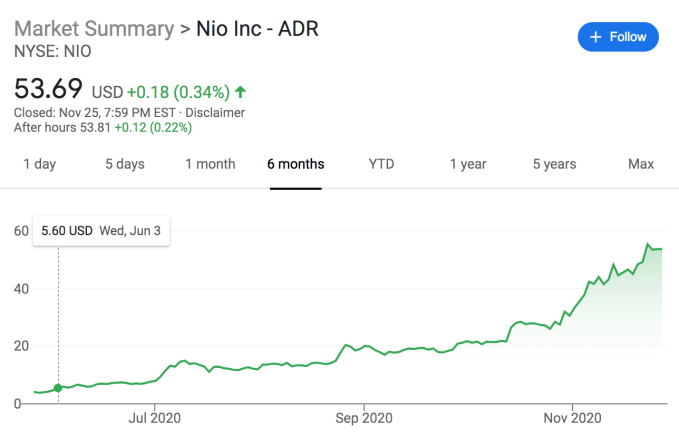
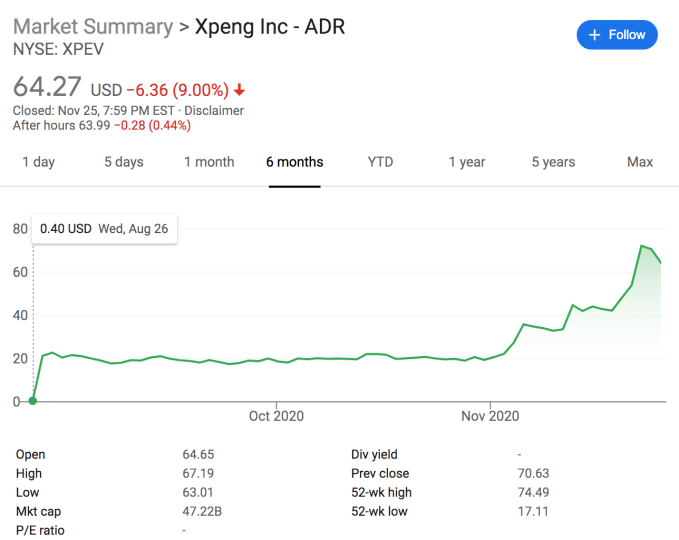
State-owned automaker SAIC Motor, a major player in China, unveiled this week a new electric vehicle arm called Zhiji, in which Alibaba and a Shanghai government-backed entity are minority shareholders. The tie-up comes as Chinese EV startups like Xpeng and Nio and their predecessor Tesla see their stocks soaring in recent months.

Alibaba’s ties with SAIC can be traced back to 2015 when they jointly announced a $160 million investment in internet-connected cars. The partners moved on to form a joint venture called Banma (or ‘Zebra’) and Alibaba has since developed a slew of auto solutions for the Banma platform to enable everything from voice-activated navigation to voice ordering coffee, which is, of course, linked to the Alipay e-wallet.

Alibaba is certainly not SAIC’s exclusive supplier, as it’s also worked closely with the likes of BMW and Audi as well over the years.

For SAIC’s new EV brand, Alibaba will continue to be its “technology solution provider,” an Alibaba spokesperson told TechCrunch.

The other tech giant making big moves in auto is Huawei. Just this week, the telecoms equipment and smartphone maker announced it would fold its smart car unit into its consumer business group, which previously focused on handsets. The expanded group will continue to be steered by Richard Yu, regarded as the man who helped grow Huawei from an underdog in the mobile industry to a leading global player.

Huawei’s ambition in auto is “not to manufacture cars but to focus on developing ICT [information and communications technology] to assist automakers in producing cars,” the firm asserts in the statement, addressing rumors that it wants to encroach on traditional carmakers’ turf.

Huawei’s phone business has taken a hit since U.S. sanctions hobbled its supply chain. It sold its budget phone brand Honor recently in the hope that the spinoff, independent from Huawei, will be free from trade curbs.

News: Gift Guide: Black Friday tech deals that are actually worth checking out

Black Friday approaches! In a year where asking Alexa what day today is feels totally normal, this Black Friday seems like it came out of nowhere. As we say pretty much every year, a lot of Black Friday deals are… not that good. While there are certainly deals to be found, there’s also a lot

Black Friday approaches! In a year where asking Alexa what day today is feels totally normal, this Black Friday seems like it came out of nowhere.

As we say pretty much every year, a lot of Black Friday deals are… not that good. While there are certainly deals to be found, there’s also a lot of hand-waving going on to help retailers and manufacturers clear out the old models and get that Q4 numbers boost.

It can also be a day where it’s way too easy to buy junk just because it’s got a 40% off tag on it. With that in mind, we’ve tried to limit this list to the stuff we’d recommend even when it’s not on sale. If we see anything else worthwhile over the next day or two, we’ll add it — so feel free to check back in.

This article contains links to affiliate partners where available. When you buy through these links, TechCrunch may earn an affiliate commission.

A few tips to keep in mind today:

  • If you see something is on sale and want to check if the “sale” price is really any better than normal, pop it into a price tracker like camelcamelcamel. If the price suddenly increased last week only to be “reduced” by whatever percent this week, you know somethings up.
  • Be at least a little wary of TV deals. There are TV deals to be had, for sure — but the most eye-popping deals tend to be surplus panels with a new model number slapped on them. Google the model number; if that specific TV seems to only exist for the sake of Black Friday, think twice.


Apple

Airpods Pro

Image Credits: Brian Heater

Once unheard of, Apple deals on Black Friday are now a little easier to find. They tend to go fast though!

  • Both Amazon and Walmart are selling AirPods Pro for $170 — a super steep discount from the usual $250. The stock seems to be coming and going fast, so this one might be tough to get.
  • The 40mm, GPS version of the latest Apple Watch (Series 6) is down to $379 from $399 on Amazon right now. While that’s only a drop of $20, these things only just hit the shelves back in September.
  • Best Buy has some pretty solid deals on the latest (8th gen) iPads, like a 10.2″ 32GB model for $280 (usually $330), or the 128GB model for $360 (usually $430.)

Amazon

Image Credits: Amazon

With people already flocking to Amazon on Black Friday, the company usually offers some pretty massive discounts on its Amazon-branded devices as a means of seizing the moment and getting more people into their ecosystem. Sure enough:

Google

google nest hub

Image Credits: Brian Heater

Google tends to go pretty big with the Black Friday discounts, and this year is no exception. Some examples:

  • The Nest Hello doorbell is down to $179, normally $229.
  • Nest Hub is down to $50 (normally $90), and its bigger brother the Nest Hub Max (pictured above) is down to $179 (normally $229.)
  • The latest generation of the Nest Mini smart speaker is $19, down from $50. The beefier Nest Audio speaker, meanwhile, is down to $85 each (usually $99) with the catch that you’ve got to buy two.
  • Stadia Premiere Edition — effectively a starter kit for Google’s gaming-in-the-cloud service Stadia, including both a Stadia controller and a Chromecast Ultra — is down to $70 from $100. The controller alone would normally cost you $70, so if you were already considering giving Stadia a spin it’s sort of like getting a free Chromecast Ultra?

Roku

Image Credits: Roku

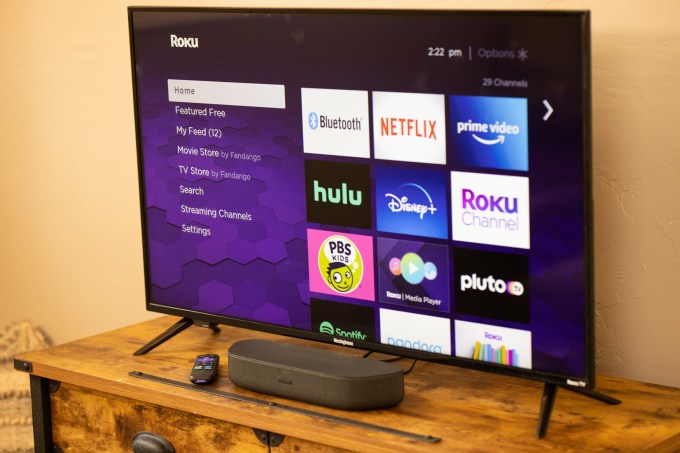
Roku’s new Streambar — basically a Roku box and a soundbar crammed into one package — is going for $100 today, down from its normal price of $130.

Sonos

Sonos Move 11

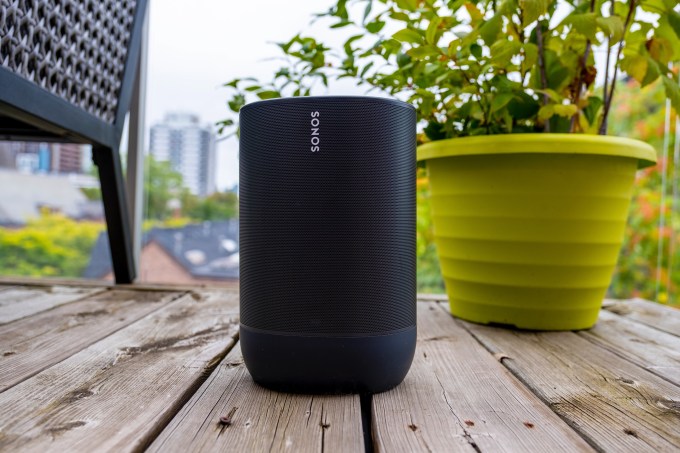
If you’re going to expand your Sonos system (which, hey, is sort of the point of having a Sonos system), Black Friday is usually a good day to do it. Alas, this years Sonos sales are a bit limited, but there are still savings to be found. Amazon has the portable Sonos Move down to $299 (normally $399) and the Sonos SUB down to $599 (usually $699), while Sonos itself is also selling its Beam Playbar for $299 (usually $399.)

Hulu

Image Credits: Hulu

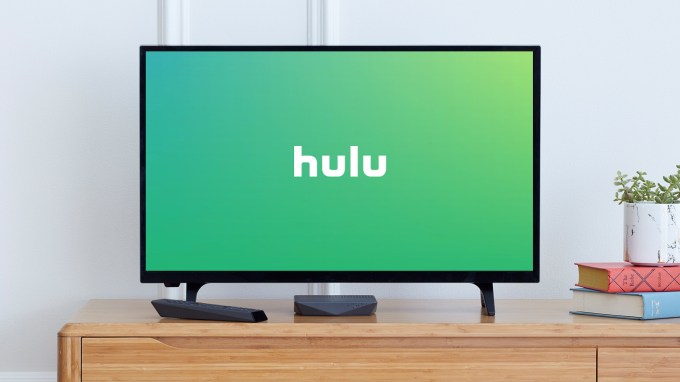
If you don’t mind ads, Hulu is slashing the price of its ad-supported plan from $6 a month to $2 a month for 1 year. Sadly, no deal for the ad-free plan, which is still at its normal $12 a month — but if you were planning on checking out the ad-supported plan anyway, you might as well save a couple bucks.

Calm

Image Credits: Calm

Calm, the popular subscription-based meditation/sleep sounds service, is offering up a pair of promos: they’ll cut the price on a one year membership down by 50% (from $70 to $35), or a lifetime membership by 60% ($399 to $159.)

Video Games

You probably won’t be finding any deals on this year’s new Xboxes or Playstations because… well, they already couldn’t keep up with demand. This year’s best deals are going to be on games, services, and in a few cases, accessories.

Hell, the same goes for the Nintendo Switch. Even without a new hardware release this season, Nintendo’s console is flying off the shelves. If you’re looking for big savings on a Switch itself this year, know that the inventory is incredibly low — any retailer offering a Switch deal is really just doing it to get your hopes up and get you on the site. We’re having a hard time finding any in stock even at full price.

Xbox Deals:

  • Microsoft is selling Xbox controllers (which will work with the next-gen Xbox Series consoles!) for $40, down from the usual $60.
  • Best Buy is selling 3 months of Xbox Game Pass (Microsoft’s Netflix-style game subscription service) for $23, down from the usual $45.
  • Gears 5 is $5 (usually $40) at Best Buy, Doom Eternal is $20 (usually $60) at GameStop, and Microsoft is taking $10 off the newly remastered Tony Hawk’s Pro Skater 1 + 2.

Playstation Deals

  • Sony is selling 12 months of Playstation Plus (its service that lets you play multiplayer games online) for $45, down from $60.
  • Amazon is selling Last of Us Part II for $30 (normally $60), and GameStop and a number of other retailers have Ghost of Tsushima going for $40 (normally $60). Sony has the oh-so-hard-but-oh-so-addicting Cuphead for $15, down from $20. Most retailers will also have sales on Star Wars Jedi: Fallen Order, Watch Dogs Legion, and Star Wars Squadrons.

Switch Deals:

  • Nintendo is selling Luigi’s Mansion, Super Mario Maker 2, Yoshi’s Crafted World, Mario Tennis Aces, and Zelda Link’s Awakening for $40 (normally $60) through Amazon and most other retailers. All of these are fantastic!

News: Facebook’s latest ad tool fail puts another dent in its reputation

Reset yer counters: Facebook has had to ‘fess up to yet another major ad reporting fail. This one looks like it could be costly for the tech giant to put right — not least because it’s another dent in its reputation for self reporting. (For past Facebook ad metric errors check out our reports from

Reset yer counters: Facebook has had to ‘fess up to yet another major ad reporting fail.

This one looks like it could be costly for the tech giant to put right — not least because it’s another dent in its reputation for self reporting. (For past Facebook ad metric errors check out our reports from 2016 here, here, here and here.)

AdExchanger reported on the code error last week with Facebook’s free ‘conversion lift’ tool which it said affected several thousand advertisers.

The discovery of the flaw has since led the tech giant to offer some advertisers millions of dollars in credits, per reports this week, to compensate for miscalculating the number of sales derived from ad impressions (which is, in turn, likely to have influenced how much advertisers spent on its digital snake oil).

According to an AdAge report yesterday, which quotes industry sources, the level of compensation Facebook is offering varies depending on the advertiser’s spend — but in some instances the mistake means advertisers are being given coupons worth tens of millions of dollars.

The issue with the tool went unfixed for as long as 12 months, with the problem persisting between August 2019 and August 2020, according to reports.

The Wall Street Journal says Facebook quietly told advertisers this month about the technical problem with its calculation of the efficacy of their ad campaigns, skewing data advertisers use to determine how much to spend on its platform.

One digital agency source told the WSJ the issue particularly affects certain categories such as retail where marketers have this year increased spending on Facebook and similar channels by up to 5% or 10% to try to recover business lost during the early stages of the pandemic.

Another of its industry sources pointed out the issue affects not just media advertisers but the tech giant’s competitors — since the tool could influence where marketers chose to spend budget, so whether they spend on Facebook’s platform or elsewhere.

Last week the tech giant told AdExchanger that the bug was fixed on September 1, saying then that it was “working with impacted advertisers”.

In a subsequent statement a company spokesperson told us: “While making improvements to our measurement products, we found a technical issue that impacted some conversion lift tests. We’ve fixed this and are working with advertisers that have impacted studies.”

Facebook did not respond to a request to confirm whether some impacted advertisers are being offered millions of dollars worth of ad vouchers to rectify its code error.

It did confirm it’s offering one-time credits to advertisers who have been ‘meaningfully’ impacted by the issue with the (non-billable) metric, adding that the impact is on a case by case basis, depending on how the tool was used.

Nor did it confirm how many advertisers had impacted studies as a result of the year long technical glitch — claiming it’s a small number.

While the tech giant can continue to run its own reporting systems for b2b customers free from external oversight for now, regulating the fairness and transparency of powerful Internet platforms which other businesses depend upon for market access and reach is a key aim of a major forthcoming digital services legislative overhaul in the European Union.

Under the Digital Services Act and Digital Markets Act plan, the European Commission has said tech giants will be required to open up their algorithms to public oversight bodies — and will also be subject to binding transparency rules. So the clock may be ticking for Facebook’s self-serving self-reporting.

News: Thanksgiving on track for a record $6B in US online sales, says Adobe

As people prepare and eat their Thanksgiving meals, or just “work” on relaxing for the day, some consumers are going online to get a jump on holiday shopping deals. Adobe, which is following online sales in real time at 80 of the top 100 retailers in the US, covering some 100 million SKUs, says that

As people prepare and eat their Thanksgiving meals, or just “work” on relaxing for the day, some consumers are going online to get a jump on holiday shopping deals. Adobe, which is following online sales in real time at 80 of the top 100 retailers in the US, covering some 100 million SKUs, says that initial figures indicate that we are on track to break $6 billion in e-commerce sales for Thanksgiving Day. Overall, it believes consumers will spend $189.1 billion shopping online this year.

To put that figure into some context, the overall holiday sales season represents a 33.1% jump on 2019. And last year Adobe said shoppers spent $4.2 billion online on Thanksgiving: this years’s numbers represent a jump of 42.3%. And leading up to today, each day this week had sales of more than $3 billion.

What’s going on? The figures are a hopefully encouraging sign that despite some of the economic declines of 2020 caused by the Covid-19 pandemic, retailers will at least be able to make up for some of their losses in the next couple of months, traditionally the most important period for sales.

As we have been reporting over the last several months, overall, 2020 has been a high watermark year for e-commerce, with the bigger trend of more browsing and shopping online — which has been growing for years — getting a notable boost from the Covid-19 pandemic.

The push for more social distancing to slow the spread of the coronavirus has driven many to stay away from crowded places like stores, and it has forced us to stay at home, where we have turned to the internet to get things done.

These trends are not only seeing those already familiar with online shopping spending more. It’s also introducing a new category of shoppers to that platform. Adobe said that so far this week, 9% of all sales have been “generated by net new customers as traditional brick-and-mortar shoppers turn online to complete transactions in light of shop closures and efforts to avoid virus transmission through in-person contact.”

Black Friday, the day after Thanksgiving, has traditionally been marked as the start of holiday shopping, but the growth of e-commerce has given more prominence to Thanksgiving Day, when physical stores are closed and many of us are milling about the house possibly with not much to do. This year seems to be following through on that trend.

“Families have many traditions during the holidays. Travel restrictions, stay-at-home orders and fear of spreading the virus are, however, preventing Americans from enjoying so many of them. Shopping online is one festive habit that can be maintained online and sales figures are showcasing that gifting remains a much beloved tradition this year,” said Taylor Schreiner, Director, Adobe Digital Insights, in a statement.

(That’s not to say that Black Friday won’t be big: Adobe predicts that it will break $10.3 billion in sales online this year.)

Some drilling down into what is selling:

Adobe said that board games and other categories that “bring the focus on family” are seeing a strong surge, with sales up five times over last year.

Similarly — in keeping with how much we are all shopping for groceries online now — grocery sales in the last week were up a whopping 596% compared to October, as people stocked up for the long weekend (whether or not, it seems, it was being spent with family).

Other top items include Hyrule Warriors: Age of Calamity, Just Dance 2021, as well as vTech toys and Rainbow High Dolls.

Amazon’s announcement this week that it would be offering more options for delivery this season speaks to how e-commerce is growing beyond simple home delivery, and how this has become a key part of how retailers are differentiating their businesses from each other. Curbside pickup has grown by 116% over last year this week, and expedited shipping is up 49%. 

Smartphones are going to figure strong once more too. Adobe said $25.5 billion has been spent via smartphones in November to date (up 48% over 2019), accounting for 38.6% of all e-commerce sales.

In the US big retailers continue to dominate how people shop, with the likes of Walmart, Target Amazon and others pulling in more than $1 billion in revenue annually collectively seeing their sales go up 147% since October. Part of the reason: more sophisticated websites, with conversion rates 100% higher than those of smaller businesses. (That leaves a big opening for companies that can build tools to help smaller businesses compete better on this front.)

News: AstraZeneca says it will likely do another study of COVID-19 vaccine after accidental lower dose shows higher efficacy

AstraZeneca’s CEO told Bloomberg that the pharmaceutical company will likely conduct another global trial of the effectiveness of its COVID-19 vaccine trial, following the disclosure that the more effective dosage in the existing Phase 3 clinical trial was actually administered by accident. AstraZeneca and its partner the University of Oxford reported interim results that showed

AstraZeneca’s CEO told Bloomberg that the pharmaceutical company will likely conduct another global trial of the effectiveness of its COVID-19 vaccine trial, following the disclosure that the more effective dosage in the existing Phase 3 clinical trial was actually administered by accident. AstraZeneca and its partner the University of Oxford reported interim results that showed 62% efficacy for a full two-dose regimen, and a 90% efficacy rate for a half-dose followed by a full dose – which the scientists developing the drug later acknowledged was actually just an accidental administration of what was supposed to be two full doses.

To be clear, this shouldn’t dampen anyone’s optimism about the Oxford/AstraZeneca vaccine. The results are still very promising, and an additional trial is being done only to ensure that what was seen as a result of the accidental half-dosage is actually borne out when the vaccine is administered that way intentionally. That said, this could extend the amount of time that it takes for the Oxford vaccine to be approved in the U.S., since this will proceed ahead of a planned U.S. trial that would be required for the FDA to approve it for use domestically.

The Oxford vaccine’s rollout to the rest of the world likely won’t be affected, according to AstraZeneca’s CEO, since the studies that have been conducted, including safety data, are already in place from participants around the world outside of the U.S.

While vaccine candidates from Moderna and Pfizer have also shown very strong efficacy in early Phase 3 data, hopes are riding high on the AstraZeneca version because it relies on a different technology, can be stored and transported at standard refrigerator temperatures rather than frozen, and costs just a fraction per dose compared to the other two leading vaccines in development.

That makes it an incredibly valuable resource for global inoculation programs, including distribution where cost and transportation infrastructures are major concerns.

WordPress Image Lightbox Plugin