Yearly Archives: 2020

News: 2-year-old CRED valued at $800 million after $80 million funding round

CRED, a two-year-old startup that is helping credit card users in India improve their financial behaviour, has raised $80 million in a new financing round, a source familiar with the matter told TechCrunch. The new financing round, a Series C for CRED, was led by existing investor DST Global. Much of the round — in

CRED, a two-year-old startup that is helping credit card users in India improve their financial behaviour, has raised $80 million in a new financing round, a source familiar with the matter told TechCrunch.

The new financing round, a Series C for CRED, was led by existing investor DST Global. Much of the round — in fact, if not whole — has been financed by existing investors including Sequoia Capital and Ribbit Capital that are doubling down on Kunal Shah’s startup, the source said on the condition of anonymity as they are not authorized to speak to the media.

The new round gives CRED a post-money valuation of about $800 million, the source said. That’s up from about $450 million valuation that CRED attained after its $120 million Series B round last year.

A CRED spokesperson declined to comment.

On CRED, customers are offered a range of features, including the ability to better track their spendings across various credit cards, and get reminders. Moreover, CRED incentivizes customers to pay their bill on time by rewarding them points, which they can use to subscribe to a range of premium services and get a discount on purchase of high-quality products.

The platform is not available to all credit card holders in India. The startup requires a customer to have a certain credit score — about 750 — to be able to sign up for the service. This way, CRED has built a customer base that comprise of some of the most sought-after people in India.

CRED is 2 years old now. As a founder it’s a privilege to build a missionary company with immense support from the whole ecosystem. I am eternally grateful to everyone who’s helped us become better everyday.

We are far from perfect, but heading in the right direction. Thank you.

— Kunal Shah (@kunalb11) November 26, 2020

In recent quarters, CRED has introduced a number of additional services including allowing customers to pay their rent using their credit card, and bulked up its e-commerce store. What other ways Shah, who previously ran mobile wallet service Freecharge and is celebrated for delivering one of the few successful exits in the nation’s 15-year-old startup ecosystem, wants to serve these customers remains a big question.

“CRED has the richest Indians as customers already,” wrote Anmol Maini, a San Francisco based engineer, who closely tracks the Indian startup ecosystem. “Kunal Shah has the luxury of time for building CRED into the company he envisions it to be. He has that luxury because he has access to capital and talent, knows how to build and scale companies and he definitely knows how to generate returns for his investors.”

The new funds come at a time when CRED is enjoying a surge in its growth. The startup, which was one of the sponsors of recently concluded IPL cricket tournament, ran a number of clever and fun advertisements during the tournament featuring Indian legends. And those ads worked.

IPL campaigns are on fire .. today I found out @CRED_club is up 6-7x in terms of daily sign ups after launch of IPL campaign 🚀🚀

You guys crushed it @AnilKapoor @kunalb11 🙏🙏

— Shailendra J Singh (@singh_sequoia) September 24, 2020

News: Dozens of tech companies sign ‘Tech for Good Call’ following French initiative

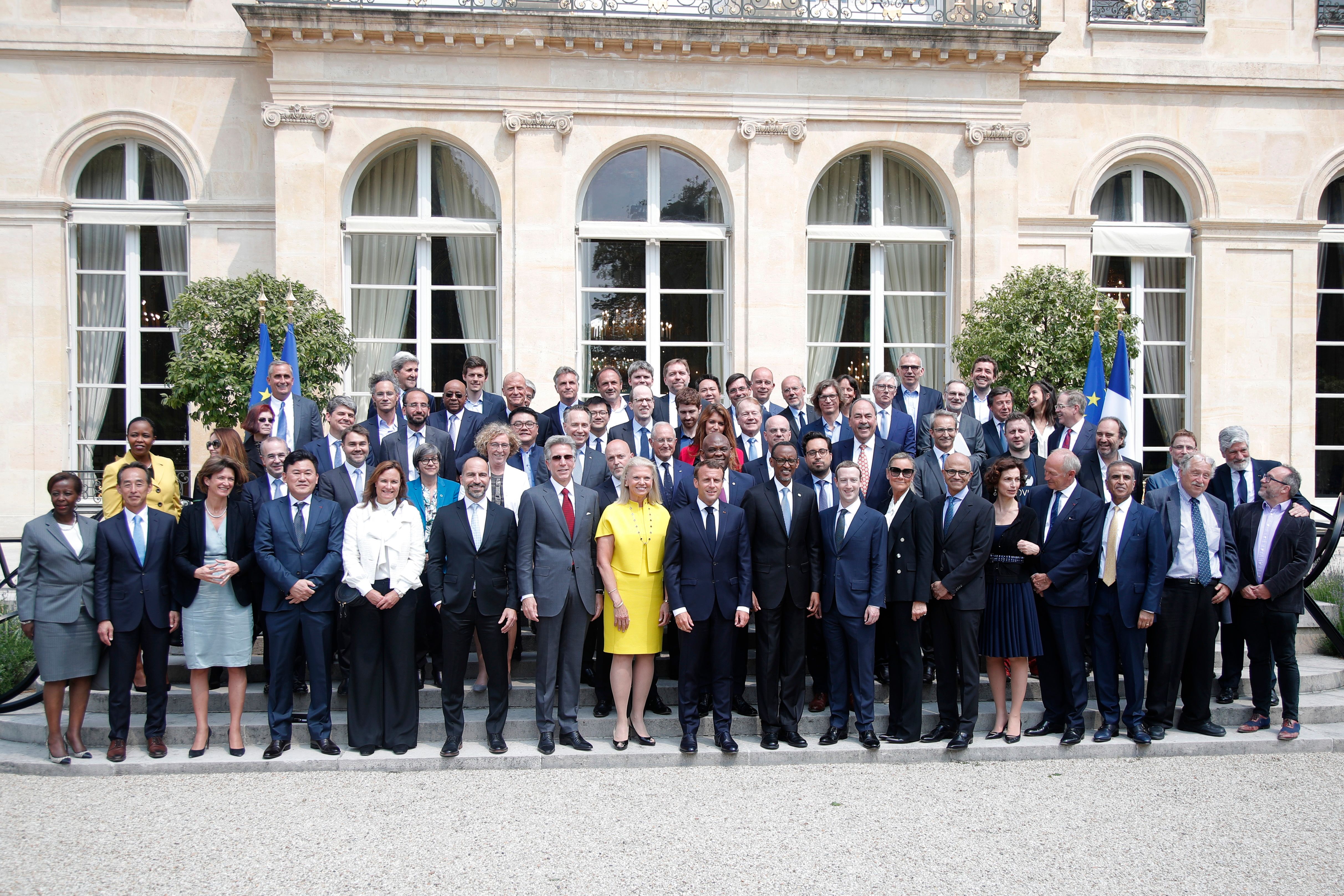
A couple of years ago, French President Emmanuel Macron initiated the Tech for Good Summit by inviting 50 tech CEOs to discuss the challenges in the tech industry and make some announcements. Usually, tech CEOs meet ahead of Viva Technology, a tech event in Paris. This year, Viva Technology had to be canceled, which means

A couple of years ago, French President Emmanuel Macron initiated the Tech for Good Summit by inviting 50 tech CEOs to discuss the challenges in the tech industry and make some announcements.

Usually, tech CEOs meet ahead of Viva Technology, a tech event in Paris. This year, Viva Technology had to be canceled, which means that tech CEOs couldn’t get together, take a group photo and say that they want to make the world a better place.

In the meantime, dozens of tech CEOs have chosen to sign a common pledge. Despite the positive impact of some technological breakthroughs, they collectively recognize that everything is not perfect with the tech industry.

“Recognizing that such progress may be hindered by negative externalities, including unfair competition such as abuse of dominant or systemic position, and fragmentation of the internet; that, without appropriate safeguards, technology can also be used to threaten fundamental freedoms and human rights or weaken democracy; that, unless we implement appropriate measures to combat it, some individuals and organizations inevitably use it for criminal purposes, including in the context of conflicts,” the pledge says.

Among other things, companies that sign the pledge agree to cooperate when it comes to fighting toxic content, such as child sexual abuse material and terrorist content. They promise to “responsibly address hate speech, disinformation and opinion manipulation.”

Interestingly, they also agree that they should “contribute fairly to the taxes in countries where [they] operate.” This has been an ongoing issue between the French government and the U.S. government. The OECD and the European Union have also discussed implementing a tax on tech giants so that they report to tax authorities in each country where they operate.

Other commitments mention privacy, social inclusiveness, diversity and equity, fighting all sorts of discriminations and more. As the name suggests, the pledge revolves around using technology for good things.

Now let’s talk about who signed the pledge. There are some well-known names, such as Sundar Pichai from Alphabet (Google), Mark Zuckerberg from Facebook, Brad Smith from Microsoft, Evan Spiegel from Snap and Jack Dorsey, the CEO of Twitter and Square. Other companies include Cisco, Deliveroo, Doctolib, IBM, OpenClassrooms, Uber, etc.

Some nonprofit organizations also signed the pledge, such as the Mozilla Foundation, Simplon, Tech for Good France, etc.

But it’s more interesting to see who’s not on the list. Amazon and Apple have chosen not to sign the pledge. There have been discussions with Apple but the company eventually chose not to participate.

“Amazon didn’t want to sign it and I invite you to ask them directly,” a source close to the French president said. The French government is clearly finger-pointing in Amazon’s case.

This is an odd move as it’s a non-binding pledge. You can say that you want to “contribute fairly to taxes” and then argue that you’re paying everything that you owe — tax optimization is not tax evasion, after all. Worse, you can say that you’re building products with “privacy by design” in mind while you’re actually building entire companies based on personalized ads and micro-targeting.

In other words, the Tech for Good summit was created for photo opportunities (like this photo from 2018 below). Tech CEOs want to be treated like heads of state, while Macron wants to position himself as a tech-savvy president. It’s a win-win for them, and a waste of time for everyone else.

Some nonprofit organizations and governance groups are actually working hard to build digital commons. But big tech companies are using the same lexicon with these greenwashing-style campaigns.

In 2018, hundreds of organizations signed the Paris Call. In 2019, the biggest social media companies signed the Christchurch Call. And now, we have the Tech for Good Call. Those calls can’t replace proper regulation.

Image Credits: Charles Platiau / AFP / Getty Images

News: The road to smart city infrastructure starts with research

Distributed ledger technology (DLT), when applied correctly, can do for a city’s infrastructure what existing technologies cannot.

Dominik Schiener
Contributor

Dominik Schiener is co-Founder and Chairman of the IOTA Foundation. He has been in the blockchain space since 2011, with several startups in Switzerland, UK and Germany. His primary focus is how to improve physical infrastructure with digital infrastructure such as DLT and AI.

Mathew Yarger
Contributor

Mathew is Head of Mobility and Automotive at the IOTA Foundation, where he develops strategy and solutions around the use of data with distributed ledger technology-based innovations. These solutions focus on enabling flexible and privacy-centric data and value transfer within the public sector for use in smart cities, critical infrastructure, environmental and energy systems, and mobility-focused data industries.

In the United States, critical city, state and federal infrastructure is falling behind. While heavy investment, planning and development have gone into the U.S. infrastructure system, much of it is not keeping up with the pace of new technology, and some of it hasn’t had a proper update in decades, instead just adding new systems onto old systems. This can be allotted to a combination of liability structures in the U.S., difficulty in enabling interconnection between infrastructure in different jurisdictions, worry over introducing large-scale security risks and an attempt to mitigate that risk.

There is interest in upgrading city systems to be more efficient, to be more in line with real-time demand and to move into the 21st century, but it’s going to take work. It’s also going to take new technology.

Distributed ledger technology (DLT), when applied correctly, can do for a city’s infrastructure what existing technologies cannot. Where existing technologies are heavy, requiring expensive servers and a larger energy draw, distributed ledger technology is light and can be implemented on individual nodes (code environments) and directly onto things like traffic light sensors. It also allows for more oversight from a privacy perspective. The ability to bring distributed ledger technology into lightweight frameworks allows for more security and upgrades to critical infrastructure.

Benefits of smart infrastructure

The biggest impact of smart infrastructure is that it enables local governments to focus on the reason they’re there in the first place; to increase the quality of life of the local residents, bring stability and culture to local businesses, and create a welcoming and frictionless environment for tourists or visitors. Governments can create stability, streamline sources of revenue, and integrate a frictionless operational environment for people and organizations in their jurisdiction.

Consider transportation infrastructure. A lot of revenue in cities and states comes from things like tolls and roadside parking, and of course taxes. States control the highways, interstates, and tolling infrastructure commonly through collaboration with service providers. Cities control the local roadside and passthrough streets and the revenue accrued through parking solutions. With the pandemic, these resources have dried up due to people staying at home, social distancing, using less public transit and working remotely.

This now offers an opportunity for an expanded example of the desire to understand the transportation flow. If cities had more real time insights into this, they’d be able to understand the demand and have a more fluidly flowing traffic condition. This can be done through new technologies such as what are seen deployed in Singapore like green link determinings systems, parking guidance systems, and expressway monitoring systems allowing for enhanced traffic awareness and guidance.

There are also keen ways to incentivize traffic guidance while bringing stability to local small and medium businesses throughout cities such as using parking guidance systems to enable local businesses to offer discounts for parking nearby.

An open transportation grid (in the sense of data points gathered for streamlining and managing) can create smoother traffic patterns in cities with smaller road grids. Transportation centers could communicate with delivery services, understanding their routes and setting up parking reservation windows. Traffic flow could be managed so that delivery services are able to get in and out without causing back-ups on tight, busy roads.

Another offering of smart infrastructure can be seen with cross border connections for transportation of goods and services. The ownership of infrastructure in the U.S. is highly fragmented; with cities owning local and neighborhood roadsides, and states owning highways and interstates. This also means that the infrastructure supporting this is highly distributed, because each entity has to have it’s own systems in place to support their infrastructure, typically using different solutions, services and data structures.

News: Alphabet’s DeepMind achieves historic new milestone in AI-based protein structure prediction

DeepMind, the AI technology company that’s part of Google parent Alphabet, has achieved a significant breakthrough in AI-based protein structure prediction. The company announced today that its AlphaFold system has officially solved a protein folding grand challenge that has flummoxed the scientific community for 50 years. The advance inn DeepMind’s AlphaFold capabilities could lead to

DeepMind, the AI technology company that’s part of Google parent Alphabet, has achieved a significant breakthrough in AI-based protein structure prediction. The company announced today that its AlphaFold system has officially solved a protein folding grand challenge that has flummoxed the scientific community for 50 years. The advance inn DeepMind’s AlphaFold capabilities could lead to a significant leap forward in areas like our understanding of disease, as well as future drug discovery and development.

The test that AlphaFold passed essentially shows that the AI can correctly figure out, to a very high degree of accuracy (accurate to within the width of an atom, in fact), the structure of proteins in just days – a very complex task that is crucial to figuring out how diseases can be best treated, as well as solving other big problems like working out how best to break down ecologically dangerous material like toxic waste. You may have heard of ‘Folding@Home,’ the program that allows people to contribute their own home computing (and formerly, game console) processing power to protein folding experiments. That massive global crowdsourcing effort was necessary because using traditional methods, portion folding prediction takes years and is extremely expensive in terms of straight cost, and computing resources.

DeepMind’s approach involves using an “Attentionb-basd neural network system” (basically a neural network that can focus on specific inputs in order to increase efficiency). It’s able to continually refine its own predictive graph of possible protein folding outcomes based on their folding history, and provide highly accurate predictions as a result.

How proteins fold – or go from being a random string of amino acids when originally created, to a complex 3D structure in their final stable form – is key to understanding how diseases are transmitted, as well as how common conditions like allergies work. If you understand the folding process, you can potentially alter it, halting an infection’s progress mid-stride, or conversely, correct mistakes in folding that can lead to neurodegenerative and cognitive disorders.

DeepMind’s technological leap could make accurately predicting these folds a much less time- and resource-consuming process, which could dramatically change the pace at which our understanding of diseases and therapeutics progresses. This could come in handy to address major global threats including future potential pandemics like the COVID-19 crisis we’re currently enduring, by predicting viral protein structures to a high degree of accuracy early in the appearance fo any new future threats like SARS-CoV-2, thus speeding up the development of potential effective treatments and vaccines.

News: As Slack acquisition rumors swirl, a look at Salesforce’s six biggest deals

The rumors ignited last Thursday that Salesforce had interest in Slack. This morning, CNBC is reporting the deal is all but done and will be announced tomorrow. Chances are, this is going to a big number, but this won’t be Salesforce’s first big acquisition. We thought it would be useful in light of these rumors

The rumors ignited last Thursday that Salesforce had interest in Slack. This morning, CNBC is reporting the deal is all but done and will be announced tomorrow. Chances are, this is going to a big number, but this won’t be Salesforce’s first big acquisition. We thought it would be useful in light of these rumors to look back at the company’s biggest deals.

Salesforce has already surpassed $20 billion in annual revenue, and the company has a history of making a lot of deals to fill in the road map and give it more market lift as it searches for ever more revenue.

The biggest deal by far so far was the $15.7 billion Tableau acquisition last year. The deal gave Salesforce a missing data visualization component and a company with a huge existing market to feed the revenue beast. In an interview in August with TechCrunch, Salesforce president and chief operating officer Bret Taylor (who came to the company in the $750 million Quip deal in 2016), sees Tableau as a key part of the company’s growing success:

“Tableau is so strategic, both from a revenue and also from a technology strategy perspective,” he said. That’s because as companies make the shift to digital, it becomes more important than ever to help them visualize and understand that data in order to understand their customers’ requirements better.”

Next on the Salesforce acquisition hit parade was the $6.5 billion Mulesoft acquisition in 2018. Mulesoft gave Salesforce access to something it didn’t have as an enterprise SaaS company — data locked in silos across the company, even in on-prem applications. The CRM giant could leverage Mulesoft to access data wherever it lived, and when you put the two mega deals together, you could see how you could visualize that data and also give more fuel to its Einstein intelligence layer.

In 2016, the company spent $2.8 billion on Demandware to make a big splash in e-Commerce, a component of the platform that has grown in importance during the pandemic when companies large and small have been forced to move their businesses online. The company was incorporated into the Salesforce behemoth and became known as Commerce Cloud.

In 2013, the company made its first billion dollar acquisition when it bought ExactTarget for $2.5 billion. This represented the first foray into what would become the Marketing Cloud. The purchase gave the company entree into the targeted email marketing business, which again would grow increasingly in importance in 2020 when communicating with customers became crucial during the pandemic.

Last year, just days after closing the Mulesoft acquisition, Salesforce opened its wallet one more time and paid $1.35 billion for ClickSoftware. This one was a nod to the company’s Service cloud, which encompasses both customer service and field service. This acquisition was about the latter, and giving the company access to a bigger body of field service customers.

The final billion deal (until we hear about Slack perhaps) is the $1.33 billion Vlocity acquisition earlier this year. This one was a gift for the core CRM product. Vlocity gave Salesforce several vertical businesses built on the Salesforce platform and was a natural fit for the company. Using Vlocity’s platform, Salesforce could (and did) continue to build on these vertical markets giving it more ammo to sell into specialized markets.

While we can’t know for sure if the Slack deal will happen, it sure feels like it will, and chances are this deal will be even larger than Tableau as the Salesforce acquisition machine keeps chugging along.

News: Materialize scores $40 million investment for SQL streaming database

Materialize, the SQL streaming database startup built on top of the open source Timely Dataflow project, announced a $32 million Series B investment today led by Kleiner Perkins with participation from Lightspeed Ventures. While it was at it, the company also announced a previously unannounced $8 million Series A from last year that had been

Materialize, the SQL streaming database startup built on top of the open source Timely Dataflow project, announced a $32 million Series B investment today led by Kleiner Perkins with participation from Lightspeed Ventures.

While it was at it, the company also announced a previously unannounced $8 million Series A from last year that had been led by Lightspeed, bringing the total raised to $40 million.

These firms see a solid founding team that includes CEO Arjun Narayan, formerly of Cockroach Labs, and chief scientist Frank McSherry, who created the Timely Dataflow project on which the company is based.

Narayan says that the company believes fundamentally that every company needs to be a real-time company and it will take a streaming database to make that happen. Further, he says the company is built using SQL because of its ubiquity, and the founders wanted to make sure that customers could access and make use of that data quickly without learning a new query language.

“Our goal is really to help any business to understand streaming data and build intelligent applications without using or needing any specialized skills. Fundamentally what that means is that you’re going to have to go to businesses using the technologies and tools that they understand, which is standard SQL,” Narayan explained.

Bucky Moore, the partner at Kleiner Perkins leading the B round sees this standard querying ability as a key part of the technology. “As more businesses integrate streaming data into their decision making pipelines, the inability to ask questions of this data with ease is becoming a non-starter. Materialize’s unique ability to provide SQL over streaming data solves this problem, laying the foundation for them to build the industry’s next great data platform,” he said.

They would naturally get compared to Confluent, a streaming database built on top of the Apache Kafka open source streaming database project, but Narayan says his company uses straight SQL for querying, while Confluent uses its own flavor.

The company still is working out the commercial side of the house and currently provides a typical service offering for paying customers with support and a service agreement (SLA). The startup is working on a SaaS version of the product, which it expects to release some time next year.

They currently have 20 employees with plans to double that number by the end of next year as they continue to build out the product. As they grow, Narayan says the company is definitely thinking about how to build a diverse organization.

He says he’s found that hiring in general has been challenging during the pandemic, and he hopes that changes in 2021, but he says that he and his co-founders are looking at the top of the hiring funnel because otherwise, as he points out, it’s easy to get complacent and rely on the same network of people you have been working with before, which tends to be less diverse.

“The KPIs and the metrics we really want to use to ensure that we really are putting in the extra effort to ensure a diverse sourcing in your hiring pipeline and then following that through all the way through the funnel. That’s I think the most important way to ensure that you have a diverse [employee base], and I think this is true for every company,” he said.

While he is working remotely now, he sees having multiple offices with a headquarters in NYC when the pandemic finally ends. Some employees will continue to work remotely, but the majority coming into one of the offices.

News: Equity Monday: HungryPanda raises $70M, trade tensions, and cross-border VC

Hello and welcome back to Equity, TechCrunch’s venture capital-focused podcast where we unpack the numbers behind the headlines. This is Equity Monday, our weekly kickoff that tracks the latest big news, chats about the coming week, digs into some recent funding rounds and mulls over a larger theme or narrative from the private markets. You can

Hello and welcome back to Equity, TechCrunch’s venture capital-focused podcast where we unpack the numbers behind the headlines.

This is Equity Monday, our weekly kickoff that tracks the latest big news, chats about the coming week, digs into some recent funding rounds and mulls over a larger theme or narrative from the private markets. You can follow the show on Twitter here and myself here — and don’t forget to check out last Thursday’s edtech deep dive from our own Natasha Mascarenhas.

Right, now through the first of America’s national Q4 feast days, it’s time to get back to business. Namely, the business of VC and startups. Here’s what we got into this morning:

Equity drops every Monday at 7:00 a.m. PST and Thursday afternoon as fast as we can get it out, so subscribe to us on Apple PodcastsOvercastSpotify and all the casts.

News: DoorDash aims to add $11 billion to its valuation during public offering

This morning, DoorDash filed a new S-1 document, this time updating the market about the price it expects to command during its public offering. The food-delivery giant gave a range of $75 to $85 per share, which would revalue the company sharply higher than its final private price, set during a June Series H that

This morning, DoorDash filed a new S-1 document, this time updating the market about the price it expects to command during its public offering. The food-delivery giant gave a range of $75 to $85 per share, which would revalue the company sharply higher than its final private price, set during a June Series H that valued DoorDash at $16 billion.

The company intends to sell 33 million shares, raising between $2.475 billion and $2.805 billion in the process. Notably, there are no shares set aside for its underwriting banks to buy at its IPO price.


The Exchange explores startups, markets and money. Read it every morning on Extra Crunch, or get The Exchange newsletter every Saturday.


After the public offering, DoorDash expects to have 317,656,521 shares outstanding across various classes, giving it a valuation of between $23.8 billion and $27 billion at the two extremes of its IPO range, not counting shares that have not yet vested or are set aside for future employee compensation. CNBC calculates that the company could be worth up to $30 billion on a fully-diluted basis.

What matters more than the raw dollar amounts, however, is what we can learn from them. Let’s get into the guts of the valuation range and find out if it’s bullish or if we should anticipate DoorDash to raise its range before it goes public.

Valuations, ranges

The new DoorDash S-1/A filing, it doesn’t appear to contain new financial information, so we can keep our prior notes on the company’s health and performance in mind. Recall that we were generally impressed by DoorDash’s growth and its improving profitability.

Other on-demand food services are doing well: HungryPanda just raised $70 million, and on the back of Uber Eats’ growth — and optimism that its ride-hailing business will return with the market-readiness of strong COVID-19 vaccines — shares of Uber are at all-time highs.

So you can taste the optimism that DoorDash is riding as it looks to list. Given our take, you would be forgiven for presuming that DoorDash is targeting an aggressive price.

Is it?

News: Nikola shares drop as GM pulls plug on investment deal

GM is backing away from an agreement to take a stake in electric automaker Nikola Corp, marking the collapse of a deal that has been problematic since it was announced just two months ago. Shares of Nikola plummeted more than 20% in pre-market trading Monday morning. GM has instead signed a non-binding memorandum of understanding

GM is backing away from an agreement to take a stake in electric automaker Nikola Corp, marking the collapse of a deal that has been problematic since it was announced just two months ago.

Shares of Nikola plummeted more than 20% in pre-market trading Monday morning.

GM has instead signed a non-binding memorandum of understanding to supply Nikola with its Hydrotec fuel cell system. This supplier agreement replaces its previous transaction announcement made on Sept. 8, 2020 to take a 11% stake in Nikola and produce a fuel cell pickup for the company by the end 2022. The investment was valued at $2 billion at the time.

Speculation that GM would pull the plug on the deal has been rampant almost from the start. Just days after GM announced the investment, a noted short-seller Hindenburg Research accused the Nikola of fraud. The U.S. Securities and Exchange Commission opened up an inquiry in the matter and within two weeks Nikola’s founder Trveor Milton had stepped down as executive chairman.

Stephen Girsky, a former General Motors executive who was already on the company’s board and who introduced Nikola to GM, took over as executive chairman.

Nikola’s troubles aren’t over. GM’s wording in its announcement suggests as much. GM describes the non-binding MoU as a “potential agreement.” If it goes through, GM would engineer its Hydrotec fuel cell system to the specifications mutually agreed upon by both companies. It is expected that the potential arrangement would be “cost plus,” meaning that Nikola would pay upfront for the capital investment for the capacity. The companies are also discussing the potential of a supply agreement for GM’s Ultium battery system for Nikola’s Class 7 and Class 8 trucks.

Doug Parks, GM executive vice president of global product development, purchasing and supply chain said supplying the Hydrotec fuel cell systems to heavy-duty class of commercial vehicles is an important part GM’s growth strategy and reinforces the company’s commitment toward an all-electric, zero-emissions future.”

GM’s Hydrotec fuel cell system will be engineered at its Michigan technical facilities in Pontiac and Warren and manufactured at its Brownstown Charter Township battery assembly plant, the company said.

News: Raspberry Pi Foundation releases case fan to prevent overheating

The Raspberry Pi Foundation has released a new product today. It’s a tiny $5 fan combined with a small heatsink for the Raspberry Pi 4. It works with the official case, below the top cover. That accessory should prevent the Raspberry Pi from overheating. If you’re not familiar with the Raspberry Pi, it’s a cheap,

The Raspberry Pi Foundation has released a new product today. It’s a tiny $5 fan combined with a small heatsink for the Raspberry Pi 4. It works with the official case, below the top cover. That accessory should prevent the Raspberry Pi from overheating.

If you’re not familiar with the Raspberry Pi, it’s a cheap, single-board computer with a lot of connectors that is the size of a deck of cards. You can give it to a kid so they can play around with a terminal, you can use it for your weekend projects as the computing brain and more.

The Raspberry Pi 4 is the most recent Raspberry Pi device in its classic form factor. And it’s a huge performance improvement over the Raspberry Pi 3.

And yet, shortly after its release last year, the community of Raspberry Pi users noticed that the single-board computer tends to get hot. In some cases, it becomes so hot that the device has no choice but to throttle the frequency of the CPU.

That problem is particularly noticeable if you’re using the official case as it prevents proper ventilation. Over the past year, the foundation has released a software update focused on power optimization.

While it solves the issue in some cases, it’s not a magic fix for all situations. Some users tend to use the computing power of the Raspberry Pi for long periods.

There are some third-party cases with a big heatsink. But the Raspberry Pi Foundation didn’t have its own solution for the issue.

According to the foundation, the tiny fan should be enough to prevent throttling. “It draws air in over the USB and Ethernet connectors, passes it over a small finned heatsink attached to the processor, and exhausts it through the SD card slot,” the Raspberry Pi Foundation says.

It’s a cheap stopgap solution, but I hope the Foundation will prioritize heat dissipation for the next iteration of the Raspberry Pi.

WordPress Image Lightbox Plugin