Yearly Archives: 2020

News: With an eye for what’s next, longtime operator and VC Josh Elman gets pulled into Apple

Josh Elman is moving over to Apple, he announced on Twitter today, saying he will be focused on the company’s App Store and helping “customers discover the best apps for them.” Asked for more details about his new role, Elman referred us to Apple, which confirmed his employment but declined to offer more, including about

Josh Elman is moving over to Apple, he announced on Twitter today, saying he will be focused on the company’s App Store and helping “customers discover the best apps for them.”

Asked for more details about his new role, Elman referred us to Apple, which confirmed his employment but declined to offer more, including about his new title. (This is typical operating procedure for the tech giant.)

Certainly, Elman has plenty of experience with fast-growing technologies and popular apps in particular.  One of his first jobs out of Stanford was with RealNetworks, a bubble-era internet streaming company that went public in 1997, three years after it was founded. (It remains publicly traded, though its market cap is just $60 million these days.)

After RealNetworks, it was on to LinkedIn, which Elman joined in 2004 as a senior product manager when the company was just two years old.  From there, Elman worked in product management at the custom apparel and accessories company Zazzle, then at Facebook, then Twitter.

Perhaps unsurprisingly, the venture firm Greylock brought Elman into the fold in 2011 as a principal, and by 2013, he was a general partner, investing in social networking deals throughout like Musical.ly (Bytedance acquired the company and turned it into TikTok); Nextdoor (which is reportedly eyeing ways to go public); Houseparty (acquired last year by Epic Games, which is now suing Apple); and Discord (which is sewing up a private funding deal at a valuation of roughly $7 billion).

Somewhat unexpectedly, in 2018, Elman left his full-time role with Greylock to join a company notably not in the firm’s portfolio, the stock-trading platform Robinhood. As interesting, though he took on the role of VP of product at the popular and fast-growing startup, he didn’t cut ties with Greylock entirely, taking on the title of venture partner and remaining on as a board member to his companies.

Asked about the move, Elman told TC at the time that he had “started talking with a few of my partners about how I want to spend the next decade of my professional life. What gets me the most energized is when I can dig in on product with a hyper-growth company.”

Ultimately, the role didn’t last long, with Elman leaving last November after less than two years on the job. Now Elman — who said he’s stepping away from some of his Greylock-related board seats —  has a new chance to do what he loves most that from one of the most powerful perches in the world, the App Store.

“I’m really excited to get to build ways to help over a billion customers and millions of developers connect,” he tweeted earlier. He added in the same thread: “I recently found my college resume. My career objective was ‘To create great technology that changes people’s lives’. Still at it :)”

News: Vista acquires Gainsight for $1.1B, adding to its growing enterprise arsenal

Vista Equity Partners hasn’t been shy about scooping up enterprise companies over the years, and today it added to a growing portfolio with its purchase of Gainsight.  The company’s software helps clients with customer success, meaning it helps create a positive customer experience when they interact with your brand, making them more likely to come

Vista Equity Partners hasn’t been shy about scooping up enterprise companies over the years, and today it added to a growing portfolio with its purchase of Gainsight.  The company’s software helps clients with customer success, meaning it helps create a positive customer experience when they interact with your brand, making them more likely to come back and recommend you to others. Sources pegged the price tag at $1.1 billion.

As you might expect, both parties are putting a happy face on the deal, talking about how they can work together to grow Gainsight further. Certainly, other companies like Ping Identity seem to have benefited from joining forces with Vista. Being part of a well capitalized firm allowed them to make some strategic investments along the way to eventually going public last year.

Gainsight and Vista are certainly hoping for a similar outcome in this case. Monti Saroya, co-head of the Vista Flagship Fund and senior managing director at the firm sees a company with a lot of potential that could expand and grow with help from Vista’s consulting arm, which helps portfolio companies with different aspects of their business like sales, marketing and operations.

“We are excited to partner with the Gainsight team in its next phase of growth, helping the company to expand the category it has created and deliver even more solutions that drive retention and growth to businesses across the globe,” Saroya said in a statement.

Gainsight CEO Nick Mehta likes the idea of being part of Vista’s portfolio of enterprise companies, many of whom are using his company’s products.

“We’ve known Vista for years, since 24 of their portfolio companies use Gainsight. We’ve seen Gainsight clients like JAMF and Ping Identity partner with Vista and then go public. We believe we are just getting started with customer success, so we wanted the right partner for the long term and we’re excited to work with Vista on the next phase of our journey,” Mehta told TechCrunch.

Brent Leary, principle analyst at CRM Essentials, who covers the sales and marketing space says that it appears that Vista is piecing together a sales and marketing platform that it could flip or go public in a few years.

“It’s not only the power that’s in the platform, it’s also the money. And Vista seems to be piecing together an engagement platform based on the acquisitions of Gainsight, Pipedrive and even last year’s Acquia purchase. Vista isn’t afraid to spend big money, if they can make even bigger money in a couple years if they can make these pieces fit together,” Leary told me.

While Gainsight exits as a unicorn, the deal might not have been the outcome it was looking for. The company raised over $187 million, according to Pitchbook data, though its fundraising had slowed in recent years. Gainsight raised $50 million in April of 2017 at a post-money valuation of $515 million, again per Pitchbook. In July of 2018 it added $25 million to its coffers, and the final entry was a small debt investment raised in 2019.

It could be that the startup saw its growth slow down, leaving it somewhere between ready for new venture investment and profitability. That’s a gap that PE shops like Vista look for, write a check, shake up a company and hopefully exit at an elevated price.

Gainsight hired a new chief revenue officer last month, notably. Per Forbes, the company was on track to reach “about” $100 million ARR by the end of 2020, giving it a revenue multiple of around 11x in the deal. That’s under current market norms, which could imply that Gainsight had either lower gross margins than comparable companies, or as previously noted, that its growth had slowed.

A $1.1 billion exit is never something to bemoan — and every startup wants to become a unicorn — but Gainsight and Mehta are well known, and we were hoping for the details only an S-1 could deliver. Perhaps one day with Vista’s help that could happen.

News: Infogrid raises $15.5M from Northzone to retrofit buildings with ‘smart’ IoT

Infogrid, an IoT startup which can retrofit an existing building to make it ‘smart’, has raised $15.5 million. The Series A funding round was led by Northzone with participation from JLL Spark, Concrete VC, The Venture Collective, Jigsaw VC, an unarmed real estate investment group, and an unnamed large international asset owner, although one report

Infogrid, an IoT startup which can retrofit an existing building to make it ‘smart’, has raised $15.5 million. The Series A funding round was led by Northzone with participation from JLL Spark, Concrete VC, The Venture Collective, Jigsaw VC, an unarmed real estate investment group, and an unnamed large international asset owner, although one report speculated that it is Starwood Capital, the property-focused investor.

Infogrid’s platform combines IoT sensors with proprietary AI analysis and has had some success re-vamping facilities management (FM) for some of the world’s largest FM providers, such as global banks, supermarkets, restaurant chains, and the NHS. Infogrid also has an ‘impact-style’ mission to enable businesses to reduce the environmental and social cost of their buildings while simultaneously benefitting their bottom line and asset values.

Infogrid’s system can detect when refrigerated products are being kept outside the required temperature range, measure air quality and check for virus risk indicators such as legionnaires’ disease in water pipes.

William Cowell de Gruchy, founder/CEO and a former British Army officer, said in a statement: “Until now, the lack of viable and scalable technology has meant that facilities management is one of the last industries to be enhanced by digitization, despite covering the world’s largest asset class. Infogrid’s end-to-end smart building system finally arms organizations with insight to take control and take action. This new era of insight and automation will bring about a positive impact on the efficiencies of businesses, the wellbeing of employees, and the environmental footprint of buildings.”

Jeppe Zink, Partner at Northzone added: “With the world undergoing the largest wave of urban growth in history, the built environment already generates 39% of annual global carbon emissions. We were instantly drawn to Infogrid for its ability to future-proof buildings in the long-term.”

News: Union Labs believes uniting VC and corporate expertise can help startups solve “hard tech” problems

Chris Kim and Nate Williams formed Union Labs with the conviction that investors and companies aren’t collaborating closely enough to ensure the success of the startups they back. Kim is the former co-founder and chief technology officer at the automatic lock company August. He first met Williams when the company was attempting to create a

Chris Kim and Nate Williams formed Union Labs with the conviction that investors and companies aren’t collaborating closely enough to ensure the success of the startups they back.

Kim is the former co-founder and chief technology officer at the automatic lock company August. He first met Williams when the company was attempting to create a consortium of stakeholders for the Internet of Things market.

Nate loved the go-to-market side when he came on board. He led the charge for us getting into retail,” Kim said. 

Later, when August was acquired in 2017, the two men continued to work together after Williams took a role as an entrepreneur in residence at Kleiner Perkins. Kim would assist in due diligence as the two continued to refine the thesis that they’d worked on at August — that uniting stakeholders was a critical component of success for new technology companies.

That thesis became the organizing principle for their Union Labs fund, which has raised $29 million of a targeted $50 million fund. 

“We’re starting to see this bifurcation between really, really hard deep tech firms versus other firms that might [have] one out of five of their deals being deep tech. Chris and I saw a lane for ‘applied’ deeptech,” said Williams.

This lane runs through the early-stage technology firms that need guidance from operators at hardware companies rather than the software-as-a-service experts that Williams and Kim said populate most venture capital firms. “Educating a SaaS partnership about ‘hard tech’ is super hard,” said Williams.

In addition to Williams and Kim, Union Labs has two directors: Thomas Lee, who spent years working at Enphase Energy, and Annie Le, a former chief operating officer at Pryze.

One example of the kinds of startups that the new Union Labs fund is hoping to back is Strella Biotechnology, a company that has developed sensors to monitor the ethylene gas emitted by produce to determine the freshness of fruits and vegetables.

Union Labs is targeting 20 investments with the first fund, including 15 direct investments and another three-to-five companies that it intends to incubate.

The other public investments in the company’s portfolio include the car rental optimization service Carnect and a toolkit for home safety called Encircle Labs (that’s not revealing too much about its business).

A fourth portfolio company, that has yet to publicly reveal its services, is working on solving problems in field service management related to training.

While these issues have presented challenges for industry, with the exception of the sensor business, none of them could be considered “hard tech” from a hardware perspective… and indeed, many of them resemble the software-as-a-service businesses that many firms are writing checks to support.

For its part, Union Labs is writing pre-seed and seed-stage checks with an average size of $890,000 for an 11% ownership stake. Williams says the firm will invest anywhere from $500,000 to $1.5 million.

For startups, one selling point for the firm is the connection it still maintains with the Internet of Things consortium Williams helped to establish for August Homes. Through the consortium Williams has been able to pull together corporate backers in telecommunications, utilities, consumer electronics and insurance, along with Kleiner Perkins and GV (which Williams said are investors).

“One of the things we’ve seen is the rise of corporate venture capital firms,” said Williams. And both Kim and Williams want their firm to act as a hybrid, between corporate venture capital and a traditional venture firm. 

Time will tell if they can turn their mission into something more than a marketing message.

News: Strike first, strike hard, no mercy: How emerging managers can win

In the pursuit of striking first, striking hard and never letting up, it’s critical to avoid getting caught up in the day-to-day execution and losing sight of the bigger picture.

TX Zhuo
Contributor

TX Zhuo is the managing partner of Fika Ventures, focusing on fintech, enterprise software and marketplace opportunities.
Huston Collins
Contributor

Huston Collins is an investor at Fika Ventures. He was previously an associate at Greenspring Associates where he started the firm’s machine learning platform.

Like many of us during COVID-19, I’ve found myself watching a bit more TV than I’m typically accustomed to. My latest binge? “The Karate Kid” series continuation “Cobra Kai” on Netflix.

A long-time fan of “The Karate Kid,” I find my style’s a bit more Miyagi-Do, but, in reflecting upon my last few years as a founding GP at a young VC firm, I see some parallels between what it takes to win as an emerging manager and the mantras by which the Cobra Kai school abides.

Before diving into that, let me quickly set the stage for what the competitive landscape looks like for emerging managers these days. I’ll focus primarily on the seed landscape here, but the Cobra Kai framework applies just as readily to later stage funds as well.

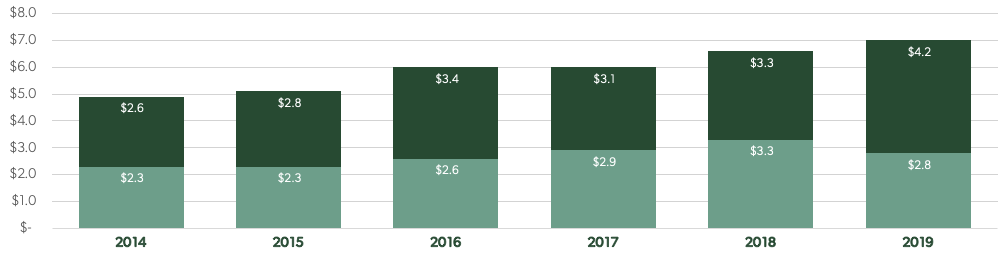
Leading up to the coronavirus pandemic, the venture industry saw a record number of dollars raised by seed funds less than $100 million in size. As is the case across stages however, there has been a notable decline in seed volume in the wake of COVID-19.

US fundraising activity for sub $100M seed rounds

U.S. fundraising activity for sub-$100M seed rounds. Data source: PitchBook-NVCA Venture Monitor. Image Credits: Fika Ventures

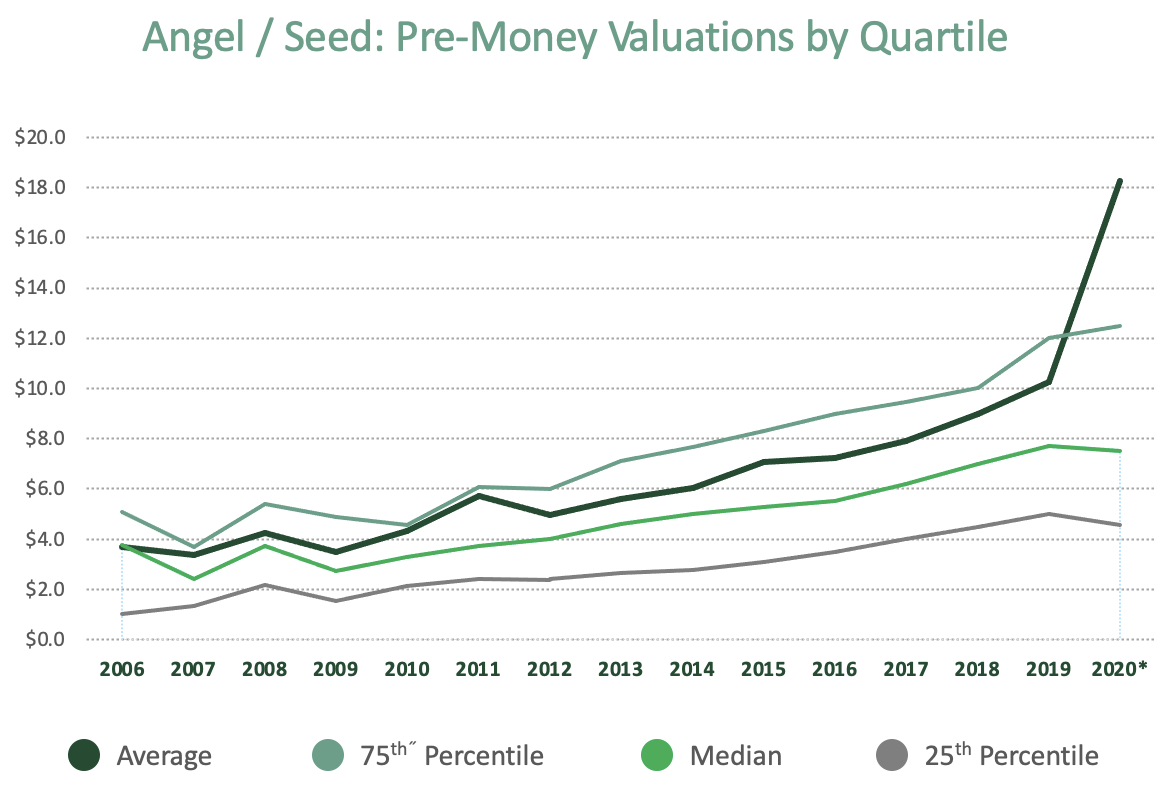
The opposing dynamics of a contraction in deal volume and an unprecedented amount of readily available investable capital has led to a tremendous amount of competition for the highest-quality deals. This flight to quality can be clearly seen in the rise of seed valuations in the upper quartile compared to the decline in other cohorts. Amid a backdrop of COVID chaos, upper quartile valuations have hit an all-time high.

angel/seed pre-money valuations by quartile

Angel/seed pre-money valuations by quartile. Data source: PitchBook-NVCA Venture Monitor. Image Credits: Fika Ventures

Due to their smaller fund size and prescriptive portfolio construction mandates, emerging managers have little leeway in terms of the valuations at which they can invest — their ownership requirements and check size limits impose a hard ceiling to which their investors hold them strictly accountable.

If budging on valuation is not a viable tactic to compete against established firms — which, in addition to their ability to be less price sensitive also boast more recognizable brand names, larger teams and higher AUM that affords them higher budgets for platform resources — how can emerging managers win? Enter Cobra Kai.

Strike first

Let’s face it. As an emerging manager, the chances of you winning a deal once the established players start to circle drops precipitously. In order to win, you need to have a first-mover advantage.

On a practical level, there are two windows of opportunity to achieve this:

News: EveryAction acquires Mobilize, the Democratic volunteering platform

Nonprofit donor management platform EveryAction is buying Mobilize, a company that connects Democratic campaigns to volunteers and helps marshal activists toward progressive causes. Mobilize, formerly known as MobilizeAmerica, grew out of Higher Ground Labs, an incubator focused on leveraging tech for left-leaning political causes and campaigns. With the acquisition, EveryAction can now extend Mobilize’s organizing

Nonprofit donor management platform EveryAction is buying Mobilize, a company that connects Democratic campaigns to volunteers and helps marshal activists toward progressive causes. Mobilize, formerly known as MobilizeAmerica, grew out of Higher Ground Labs, an incubator focused on leveraging tech for left-leaning political causes and campaigns.

With the acquisition, EveryAction can now extend Mobilize’s organizing tools to its existing base of more than 15,000 clients, which includes the Sierra Club and the Human Rights Campaign. EveryAction is a nonprofit-focused wing of NGP VAN, a company that provides much of the digital infrastructure for the Democratic Party. The terms of the Mobilize deal were not disclosed.

Mobilize, founded in early 2017, rode the wave of Trump-era activism on the left to become a ubiquitous tool helping progressive campaigns translate online interest and energy into action. The platform powered outreach for many candidates in 2020’s Democratic primary, including now President-elect Joe Biden’s campaign, who continued to use Mobilize into the general election.

After Trump’s surprise win in 2016 — and the surprising strategies that got the campaign there — Democrats turned to the startup scene to hone new tools. If the last four years served as a testing ground for Democratic political startup, 2020 sees them on the cusp of a new era altogether.

Earlier this year, Mobilize raised a $3.75 million Series A round led by progressive tech incubator Higher Ground Labs. Chris Sacca’s Lowercase Capital and LinkedIn co-founder Reid Hoffman, a prominent Democratic donor, also participated in the Series A. Mobilize’s acquisition follows another recent exit connected to Higher Ground Labs: In August, Social Capital, founded by billionaire ex-Facebooker Chamath Palihapitiya, picked up text banking platform Hustle.

Within EveryAction, Mobilize will become its own unit led by Mobilize CEO and co-founder Alfred Johnson. The company’s existing team will move over into the new division under EveryAction’s umbrella. Mobilize co-founder and President Allen Kramer will also move over to EveryAction as deputy general manager of organizing.

“EveryAction is the leading software provider to nonprofits with clients like the National Audubon Society, Planned Parenthood Federation of America, and the United Nations Foundation,” Johnson told TechCrunch. “They are uniquely poised to bring our best-in-class offering for events and volunteer management to these very deserving organizations.”

Prior to the acquisition, EveryAction was already connected to Mobilize as an integration on its platform and Johnson called the news a “natural evolution” of that relationship. “Our two companies are extremely aligned in mission: to help cause-driven organizations build bigger movements by driving and deepening supporter engagement,” Johnson said. “Together, we can help more people do more good.”

News: 5 reasons you don’t want to miss out on TC Sessions: Space 2020

We’re just about two weeks away from launching TC Sessions: Space 2020, our first focused foray into early-stage space startups and the essential satellite industries that support them. Buy your pass and join us on December 16 – 17 for two days packed with all the right stuff, including untapped opportunity. Still looking for a

We’re just about two weeks away from launching TC Sessions: Space 2020, our first focused foray into early-stage space startups and the essential satellite industries that support them. Buy your pass and join us on December 16 – 17 for two days packed with all the right stuff, including untapped opportunity.

Still looking for a reason to initiate your launch sequence? We’ll go you four better. Here are five stellar reasons to attend TC Sessions: Space 2020.

1. Top innovators in the space scene

You’ll hear from and engage with the top minds, makers and investors in the space community. We’re talking the leaders of public, private and government agencies; the people making it happen and looking to share their expertise and insight with you — the up-and-coming minds and makers.

A quick for instance includes General Jay Raymond (U.S. Space Force), Lisa Callahan (Lockheed Martin), Jim Bridenstine (NASA), Peter Beck (Rocket Lab) and investors like Chris Boshuizen (Data Collective DCVC), Mike Collett (Promus Ventures) and Tess Hatch (Bessemer Venture Partners).

2. Out-of-this-world networking

Connect and build relationships and opportunities with the global space startup community. CrunchMatch, our free, AI-powered platform, simplifies finding and connecting with the people who align with your goals. Send invitations, schedule 1:1 video calls, meet VCs, founders, engineers, potential customers or employees — you never know who you’ll meet or where one connection can take your business.

3. Fast Money for your startup

An early-stage space startup burns through money like a rocket burns through, well, rocket fuel. Don’t miss Fast Money — a series of six breakout sessions. Presenters from leading space accelerators and funding programs will talk about government accelerators, partnering with the Air Force and how to access grant money. Afterward, you can schedule individual appointments with representatives from each program. Look for the Fast Money sessions in the event agenda.

4. Space expo

Explore more than 30 early-stage startups pushing the boundaries of space technology in the expo area. Check out the competition, start a conversation or kick off a collaboration. Hold up, are you a boundary-pushing founder, too? Then get yourself a Space Startup Exhibitor Package, showcase your talent and take advantage of two expo-only opportunities. See details in reason #5 below!

5. Pitch, pitch, pitch

  • Founders who exhibit in the expo area get 5 minutes to pitch live to attendees tuning in from around the globe. Increase your exposure, spotlight your technology and open the door to opportunities.
  • Looking for ways to improve your pitch? On December 16 from 2:30 – 3:30 p.m., Stephan Reckie, Executive Director of GEN Space, will moderate a pitch feedback session for startup founders exhibiting in the expo area.
  • Are you feeling lucky? Your promising early-stage space startup might be one of 10 selected for a pitch competition — a joint mission between TechCrunch and Starburst Aerospace — called Pitch Me to the Moon. Starburst will choose the competitors, and they will each pitch live to a panel of high-profile judges from across the industry.

Spend two days learning, connecting and engaging with the space startup community. Buy your pass and tap into a galaxy of opportunity at TC Sessions: Space 2020.

Is your company interested in sponsoring TC Sessions: Space 2020? Click here to talk with us about available opportunities.

News: Reminder: Last chance to save 25% on Extra Crunch membership

Today is the final day of the Green Days Sale. Don’t miss out on an opportunity to save 25% on annual Extra Crunch membership. You can claim the deal here. Extra Crunch helps you spot technology trends and opportunities, build better startups, get ahead at your job and stay connected to a growing community of founders,

Today is the final day of the Green Days Sale. Don’t miss out on an opportunity to save 25% on annual Extra Crunch membership.

You can claim the deal here.

Extra Crunch helps you spot technology trends and opportunities, build better startups, get ahead at your job and stay connected to a growing community of founders, investors and startup teams. It features thousands of articles, including weekly investor surveys, daily market analysis and expert interviews on fundraising, growth, monetization and other work topics.

Find answers to your burning questions about startups and investing through Extra Crunch Live, and stay informed with our members-only Extra Crunch newsletters. Other benefits include an improved TechCrunch.com experience, 20% off future TechCrunch  events and savings on software services from DocSend, Crunchbase and more.

Join our growing community at a discounted rate here.

The Green Days sale is our biggest discount of the year, so don’t snooze on the savings. The sale ends on November 30. If you have questions about the sale or Extra Crunch membership, please contact our customer support team at extracrunch@techcrunch.com.

News: Virgin Orbit targets launch window on December 19 for second orbital test launch

Virgin Orbit has announced the target timing for its next orbital flight attempt, which follows a demonstration launch earlier this year that went mostly well — right up until its rocket separated from the carrier launch craft and fired up its own engines for the crucial rest of the trip to space. The company says

Virgin Orbit has announced the target timing for its next orbital flight attempt, which follows a demonstration launch earlier this year that went mostly well — right up until its rocket separated from the carrier launch craft and fired up its own engines for the crucial rest of the trip to space. The company says that it’s undertaken a number of upgrades based on that first try, however, including updates to the engine systems, carrier aircraft and data systems to hopefully have a better demo flight the second time around.

The new launch window is December 19, between the hours of 10 a.m. to 2 p.m. PST. There’s also a backup window set for December 20 ranging across similar hours, the company says, and others in the following weeks, in case it needs to be rescheduled for any reason. This demonstration will involve a full launch cycle of the entire Virgin Orbit launch system, including its Cosmic Girl launch aircraft (a modified 747 passenger airliner) and LauncherOne, the rocket that detaches from Cosmic Girl at cruising altitude before firing up its own engines to make the rest of the trip to space with small satellite payloads on board.

Virgin Orbit’s system is unique because it takes off and lands from a traditional airport, eliminating the need for specialized launch sites and opening up the potential of relatively low-lift global launch flexibility. It also has the potential to offer cost and scheduling advantages to small satellite companies looking to launch just one or a few spacecraft, without having to wait for timing on a ride-share mission on a larger rocket like one from SpaceX, or pay a premium for something like Rocket Lab’s offering.

Last time around in May, Virgin Orbit’s flight went perfectly from takeoff through the separation of LauncherOne from the carrier aircraft. The rocket even fired up its engines on time as planned, but the engines cut off essentially right away due to a built-in safety system that also worked as planned when it detected some unusual readings.

With this second attempt, Virgin Orbit wants to show that it’s system works from that point on, as well, with a full first-stage powered flight and operation of the upper stage. Stakes are a bit higher this time around, as on board will be actual customer satellites, even though this is technically still a demonstration mission — the primary purpose of which is to collect data.

The 10 payloads on board are from NASA and represent a number of different scientific and educational programs created entirely by U.S.-based universities and academic institutions.

News: Dear Sophie: What I’m thankful for

This Thanksgiving, I hope you caught a glimpse of this feeling of appreciation for people and experiences in your life.

Sophie Alcorn
Contributor

Sophie Alcorn is the founder of Alcorn Immigration Law in Silicon Valley and 2019 Global Law Experts Awards’ “Law Firm of the Year in California for Entrepreneur Immigration Services.” She connects people with the businesses and opportunities that expand their lives.

Here’s another edition of “Dear Sophie,” the advice column that answers immigration-related questions about working at technology companies.

“Your questions are vital to the spread of knowledge that allows people all over the world to rise above borders and pursue their dreams,” says Sophie Alcorn, a Silicon Valley immigration attorney. “Whether you’re in people ops, a founder or seeking a job in Silicon Valley, I would love to answer your questions in my next column.”

Extra Crunch members receive access to weekly “Dear Sophie” columns; use promo code ALCORN to purchase a one- or two-year subscription for 50% off.


Dear Reader,

Thank you so much for being a part of the genesis of “Dear Sophie” over the course of this year. As I reflect on the Thanksgiving holiday weekend, I’m appreciative of how much all of us around the world have come to know in 2020. We are all interconnected, regardless of where we were born or wherever we currently reside. This year has included major, transformative events. These changes serve us to better know what we want and what we don’t. As a result, I am positive that our future experiences will be enhanced.

Looking back over the last year, I’m appreciative of President Trump’s digitization effort to improve the H-1B lottery process.

Looking forward, it’s exhilarating that increasing access to immigration opportunities is a major priority for President-elect Biden. I’m confident the Biden-Harris administration will support the U.S. embracing our roots as a land of opportunity. Moving into 2021 we will recognize our immigrant heritage, welcome newcomers and recognize the important contributions of immigrants for a better world.

There’s so much to be thankful for:

I’m appreciative of you, my readers, and the messages and feedback I receive from you about this column, questions you have and topics you would like to see covered. I appreciate TechCrunch and Extra Crunch for this platform to share my thoughts, experiences and knowledge.

I’m appreciative of all of our clients from around the world who we’ve been able to successfully support. Many moments this year seemed bleak, but we were able to come through. I appreciate their many contributions to the U.S. and creating health solutions and jobs as they have gone on to launch and scale innovative startups in Silicon Valley and beyond.

I’m appreciative of my amazing team at Alcorn Immigration Law and for our successes in supporting folks to come to live and work in the U.S. and achieve their dreams. And I’m appreciative of our team to compile a “64 Questions to Ask Your Immigration Attorney,” a checklist of questions you should ask when interviewing immigration attorneys before starting the immigration process. I’m appreciative for having the opportunity to share my knowledge on my podcast, Immigration Law for Tech Startups — this week’s podcast is all about appreciation!

And finally, I’m appreciative of my amazing job. I have the privilege of supporting people from all around the world to create their dreams. It’s humbling and inspiring to listen to my clients’ stories, hopes and dreams. It’s the most magnificent chess game to identify and tailor immigration strategies that best fit their unique situation, priorities and timing.

Part of why being an immigration attorney inspires me is because our amazing clients entrust us to support them in navigating the U.S. immigration system to make their dream a reality. We had many major legal victories this year:

I appreciate the client who was on an E-2 Visa for Treaty Investors as an employee. He was desperate to join an early-stage startup and was in a difficult bind of needing to get expedited approval in the pandemic and be able to provide his contractual notice to his current employer. We all knew it was risky, so I’m proud of our team for successfully petitioning for the startup to sponsor him in O-1A Visa for Extraordinary Ability status.

I also appreciate the aspiring startup founder we helped to gain independence from a corporate employer by assisting him with self-petitioning his green card. We succeeded in getting him approved for an EB-2 NIW (National Interest Waiver) exceptional ability green card.

I am also appreciating that we successfully supported a prospective startup co-founder to remain in the U.S. while maintaining his position in line for a green card. A prominent VC required that he immediately leave his current employer and begin working full time for the very early-stage startup prior to investing $6 million. This founder had been bound at a prior company in L-1A Visa for Intracompany Transferee Managers and Executives, and he didn’t want to lose his midstream green card process. We successfully transitioned him to the new company quickly and secured him green card portability. He can now focus on the startup and spending time with his family.

While most U.S. consulates remained closed, I appreciate that we were able to support our client to get an E-3 Visa interview, have her visa approved and be able to move to the U.S., even in the middle of the pandemic.

Notably, we helped a client avoid having to return to her home country for two years after her J-1 Educational and Cultural Exchange Visa was set to expire, and her employer was about to do a round of layoffs. We guided her through the green card process, including helping her prepare for an interview at U.S. Citizenship and Immigration Services (USCIS), as well as accompanying her to the interview. Instead of being banished from the U.S., now she is celebrating that it is her permanent home.

And there are so many more stories like these.

I’m also appreciative that we launched our first online immigration course, Extraordinary Ability Bootcamp. Many of our client successes stem from options such as the O-1A nonimmigrant visa, as well as the EB-1A extraordinary ability green card and the EB-2 NIW green card. I’m grateful to have had the opportunity to record a series of classes that can help anybody meet the criteria for U.S. immigration.

This Thanksgiving, I hope you caught a glimpse of this feeling of appreciation for people and experiences in your life. I feel exhilarated and eager about the future and to see what’s ahead. 2020 has taught me that we are empowered at this moment because we have the freedom to choose how we feel. We can always choose to love and appreciate unconditionally. New opportunities are ahead that will support us all.

Thank you for being a part of “Dear Sophie.”

Joyfully,

Sophie


Have a question? Ask it here. We reserve the right to edit your submission for clarity and/or space. The information provided in “Dear Sophie” is general information and not legal advice. For more information on the limitations of “Dear Sophie,” please view our full disclaimer here. You can contact Sophie directly at Alcorn Immigration Law.

Sophie’s podcast, Immigration Law for Tech Startups, is available on all major podcast platforms. If you’d like to be a guest, she’s accepting applications!


WordPress Image Lightbox Plugin