Yearly Archives: 2020

News: Google delays mandating Play Store’s 30% cut in India to April 2022

Google is postponing the enforcement of its new Play Store billing policy in India to April 2022, days after more than 150 startups in the world’s second largest internet market forged an informal coalition to express concerns over the 30% charge the Android-maker plans to mandate on its store and started to explore an alternative

Google is postponing the enforcement of its new Play Store billing policy in India to April 2022, days after more than 150 startups in the world’s second largest internet market forged an informal coalition to express concerns over the 30% charge the Android-maker plans to mandate on its store and started to explore an alternative marketplace for their apps.

The company, which is going live globally with the new Play Store rule in September 2021, is deferring the enforcement of the policy only in India, it said. It is also listening to developers and willing to engage to allay their concerns, it said.

“We are setting up listening sessions with leading Indian startups to understand their concerns more deeply. We will be setting up Policy Workshops to help clear any additional questions about our Play Store policies. And we’re also extending the time for developers in India to integrate with the Play billing system, to ensure they have enough time to implement the UPI for subscription payment option that will be made available on Google Play — for all apps that currently use an alternative payment system we set a timeline of 31st March 2022,” said Purnima Kochikar, Director of Business Development of Games & Applications at Google Play, in a statement.

“We have always said developers should have a choice in how they distribute their apps, and that stores should compete for consumers’ and developers’ business,” she added.

Last week, Google said it would no longer allow any apps to circumvent its payment system within the Play Store. The move, pitched by Google as a “clarification” of its existing policy, would allow the company to ensure it gets as high as a 30% cut on in-app purchases made through Android apps operating in a range of a categories.

Google’s announcement today is a direct response to the loudest scrutiny it has received in a decade in India — its biggest market by users but also a place where, compared to Western markets, it generates little revenue. More than 150 startups in India last week formed an informal coalition to fight the company’s strong hold on Indian app ecosystem. Google commands 99% of the smartphone market in India, according to research firm Counterpoint.

Among the startups that have expressed concerns over Google’s new policy are Paytm, India’s most valuable startup, payments processor Razorpay, fantasy sports firm Dream11, social network ShareChat, and business e-commerce IndiaMART.

More than 50 Indian executives relayed these concerns to India’s Ministry of Electronics and Information Technology over a video call on Saturday, according to three people who attended the call.

Several businesses in India have long expressed concerns with the way Google has enforced its policies in India, but the matter escalated last month after the company temporarily pulled Paytm app from the Play Store for promoting gambling.

Google said Paytm had repeatedly violated its policies, and the company’s Play Store has long prohibited apps that promote gambling in India. Google has sent notices about warnings over gambling to several more firms in India in recent weeks.

A senior industry executive told TechCrunch that the company should have expressed these concerns months before the popular cricket tournament IPL was scheduled to commence. Fantasy sports apps allow users to pick their favorite players and teams. These players stand to win real money or points that they can redeem for physical goods purchase based on the real-world performance of their preferred teams and players. IPL season sees a huge surge in popularity of such fantasy sports apps.

“The IPL even got delayed by months. Why did Google wait for so long? And why does the company have a problem with so-called gambling in India, when it permits such activities in other markets? The Indian government has no problem with it,” the executive said, requesting anonymity.

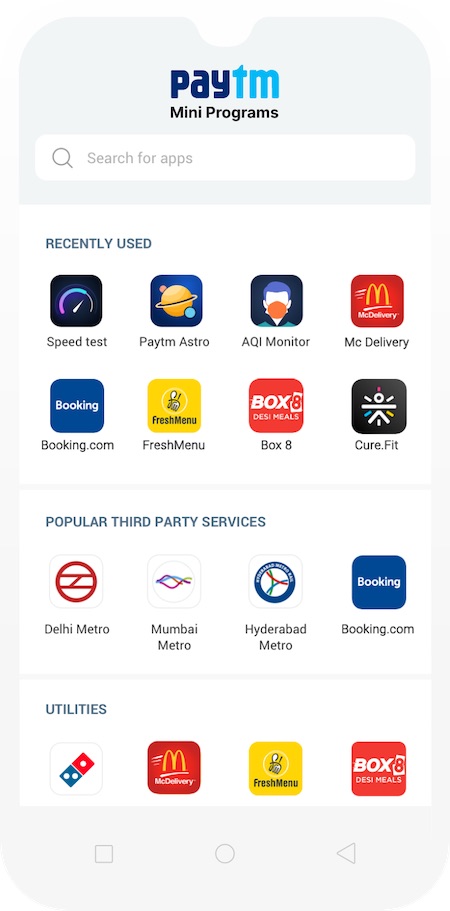
Paytm on Monday announced its own mini-app store featuring several popular services including ride-hailing firm Ola, health care provides 1mg and Practo, fitness startup Cure.fit, music-streaming service Gaana, car-rental provider Zoomcar, Booking.com, and eateries Faasos, Domino’s Pizza, and McDonald’s. The startup claimed that more than 300 firms have signed up for its mini store and that its app reaches more than 150 million users each month. (In a written statement to TechCrunch, Paytm said in June its app reached more than 50 million users in India each month.

Paytm, which says its mini-app store is open to any developer, will provide a range of features including the ability to support subscriptions and one-step login. The startup, which claims  said it will not charge any commission to developers for using its payments system or UPI payments infrastructure, but will levy a 2% charge on “other instruments such as credit cards.”

“There are many challenges with traditional mobile apps such as maintaining multiple codebases across platforms (iOS, Android or Web), costly user acquisition and requirement of app release and then a waiting period for user adoption for any change made in the app. Launching as a Mini Apps gives you freedom from all these hassles: implying lesser development/testing and maintenance costs which help you reach millions of Paytm users in a Jiffy,” the Indian firm said in its pitch.

The launch of a mini-store further cements Alibaba-backed Paytm’s push into turning itself into a super-app. Its chief rivals, Walmart-backed PhonePe and Google Pay, also operate similar mini stores on their apps.

Whether Paytm’s own mini app store and postponement of Google’s new Play Store policy are enough to calm other startups’ complaints remain to be seen. PhonePe is not one of the mini apps on Paytm’s store, a Paytm spokesperson told TechCrunch.

“I am proud that we are today launching something that creates an opportunity for every Indian app developer. Paytm mini app store empowers our young Indian developers to leverage our reach and payments to build new innovative services,” said Vijay Shekhar Sharma, co-founder and chief executive of Paytm, in a statement.

News: Ola fails to get ride-hailing license renewed in London, says it will appeal and continues to operate

Just six days after Uber won its appeal against London transportation regulators to continue operating in London for another 18 months, one of its bigger rivals has found itself in the hot seat. Ola, the India-based ride-hailing startup, is not getting its Transport for London ride-hailing license renewed, after failing to meet some of TfL’s

Just six days after Uber won its appeal against London transportation regulators to continue operating in London for another 18 months, one of its bigger rivals has found itself in the hot seat. Ola, the India-based ride-hailing startup, is not getting its Transport for London ride-hailing license renewed, after failing to meet some of TfL’s public safety requirements specifically around licensing for drivers and vehicles.

Ola told TechCrunch it plans to appeal the decision, and as was the case with Uber, under TfL’s rules, a company is allowed to continue operating while appealing a decision.

Sky News, which had first reported the news of Ola failing to get renewed, noted that TfL said it discovered multiple failures in how Ola operates, specifically around its use of unlicensed drivers and vehicles covering more than 1,000 passenger trips, “which may have put passenger safety at risk,” according to a statement from Helen Chapman, TfL’s director of licensing, regulation and charging. It’s not clear if there were other violations involved. We have contacted TfL and will update this post as we learn more.

From what we understand, Ola plans to defend itself by claiming that the issue was partly technical: the company and TfL used different conventions in its databases to track licensing for drivers and vehicles, and Ola was not seeing licensing expirations come through in a timely enough way. The gap between having licensed and unlicensed drivers appeared to create a big enough safety issue for TfL, which it did not believe Ola was working to fix as a priority going forward. (And indeed, this also meant that Ola could conveniently continue to have those drivers, uninterrupted, on its books and working.)

As with Uber and its own run-in with TfL, Ola is already preparing to appeal TfL’s decision.

“At Ola, our core principle is to work closely, collaboratively and transparently with regulators such as TfL,” Marc Rozendal, Ola’s UK MD, said in a statement. “We have been working with TfL during the review period and have sought to provide assurances and address the issues raised in an open and transparent manner. Ola will take the opportunity to appeal this decision and in doing so, our riders and drivers can rest assured that we will continue to operate as normal, providing safe and reliable mobility for London.”

Ola — which has raised some $3.8 billion in funding over the years, partly to shore up its business to compete heavily against the likes of Uber — has been running commercial services in London since February of this year and in that time has signed up more than 25,000 drivers, the company said, but it has not disclosed how many rides it has completed, nor how many passengers it has amassed, nor any other metrics.

In addition to its own direct customers, Ola also partners with other on-demand ride services, such as Gett, as an extra capacity provider for services for Gett’s customers. It also operates in other cities in the UK, one of the SoftBank-backed company’s few big international forays outside of India (the others are Australia and New Zealand). The UK, and London specifically — even now, as many cut down their movements due to Covid-19 — represent one of the biggest and more lucrative markets in the world for ride-hailing services. But as with all ride-hailing companies, Ola’s position in the UK market is not always secured and it has made multiple efforts to plead its case with lawmakers in its time here.

News: Lime and Scoot veterans have built Ridepanda, a one-stop micromobility marketplace

Chinmay Malaviya and Charlie Depman found themselves at the center of the shared micromobility industry just as it took off, working for companies like Bird, Lime and Scoot. They experienced a rollercoaster ride of venture funding and skyrocketing demand, product pitfalls and regulatory hurdles. It was in the midst of this activity that the pair

Chinmay Malaviya and Charlie Depman found themselves at the center of the shared micromobility industry just as it took off, working for companies like Bird, Lime and Scoot. They experienced a rollercoaster ride of venture funding and skyrocketing demand, product pitfalls and regulatory hurdles. It was in the midst of this activity that the pair noted a shift in the industry and an opportunity. 

“From our vantage point there was a massive shift happening in mobility and transportation, in terms of personal ownership,” Malaviya told TechCrunch in an interview last month. “People were looking for their own electric scooter, electric bike and electric moped.”

Malaviya and Depman, who met on LinkedIn, determined there wasn’t a suitable way to research, vet and buy e-bikes, e-mopeds or e-scooters beyond Google and Amazon searches. And Ridepanda, an online marketplace for light electric vehicles, was born.

It’s safe to call the pair “light electric vehicle” evangelists. They see Ridepanda, which raised an undisclosed amount of seed funding from General Catalyst and Will Smith’s Dreamers Fund, as the best way to deliver on the mission of getting more electric bikes, scooters and mopeds in the public’s hands.

“We are all for cities that can be happier and efficient, if they run on these vehicles that are small, quiet eco-friendly and also a lot more fun,” said Malaviya, who added that light electric  vehicles are particularly well-suited for the majority of trips people take, which data shows is up five miles.

The startup, which the pair launched in early 2020 and recently came out of stealth, aims to be one-stop “e-ride” shop where customers can find a curated set of expert-vetted e-rides and a customization feature that helps shoppers home in on the right product. Ridepanda launched in late September, a new site with an improved user interface, a “ridefinder quiz” that helps people find the right product as well as other support services. These support services, which are bundled and branded “pandacare,” connects users with information on insurance, home assembly, repair and maintenance plans as well as help finding the right helmet.

Ridepanda electric scooter bike

The Ridepanda homepage.

Visitors to Ridepanda will spot the “ridefinder quiz,” which lets users select the electric bike, moped or scooter icon, their height and weight, top uses and finally, preferences like foldable or cargo and budget. The user is then given a few results that best match their selections. Users can skip this process and just conduct searches based on the three product types or use cases such as “commute,” “adventure,” “delivery,” or “accessibility.”

Not just any electric bike, scooter or moped qualifies for Ridepanda’s site, said Depman, who is the company’s CTO.

“We’ve seen like a Cambrian explosion of different vehicle types; there are literally hundreds of options out there,” said Depman. “If you go on Amazon website, you’re going to see 150-plus in each category, and it’s really hard to sift through them. So what we’ve been building on the back end is a vetting system.”

For a product to be included on the platform, it must meet certain criteria and rating. The company rates vehicles across performance, safety, sustainability, durability and repairability, Depman said. That rating is achieved by evaluating all the different components of the vehicle, including the battery, motor and brakes.

Ridepanda is focused on the U.S. market for now, particularly cities like Chicago, Los Angeles, New York, Portland, San Francisco and Seattle. The company offers customers financing and it’s even looking into a subscription service, although it’s unclear when or if that will roll out.

“Basically I think we are fighting the noise and the decision fatigue,” Malaviya said.

News: Einride raises $10 million to fast track its autonomous electric cargo pods

For the past four years, Swedish startup Einride has captured interest, investment and even a few customer contracts for its unusual-looking pods — electric and autonomous vehicles that are designed to carry freight. But progress in developing, testing and validating autonomous vehicles — particularly ones that don’t even have space for a driver and rely

For the past four years, Swedish startup Einride has captured interest, investment and even a few customer contracts for its unusual-looking pods — electric and autonomous vehicles that are designed to carry freight. But progress in developing, testing and validating autonomous vehicles — particularly ones that don’t even have space for a driver and rely on teleoperations — is an expensive and time-consuming task.

The company has made some progress with its T-Pod vehicles; four of them are on public roads today and even carry freight for customer Oatly, the Swedish food producer. Now, a year after raising $25 million, the company said it has another $10 million coming in from its existing investors.

The announcement comes ahead of a new vehicle the Einride will unveil October 8. Not much is known about the vehicle; Einride has only supplied a short and obscure teaser video.

Einride said the $10 million in new funding was led by impact fund Norrsken VC and included participation from  EQT Ventures fund, Nordic Ninja VC and Ericsson Ventures. Norrsken VC is also joining Einride’s advisory board.

The capital will be used to fast track the official launch of its Einride Pods, the company said. Einride acknowledged that startups in AI and robotics were upended, and even shuttered altogether, in the early days of the COVID-19 pandemic. The company contests that demand for contactless delivery options — not coincidentally the kind it hopes to provide — has grown because of COVID-19. Einride said it’s maintained a “strong stream of new partnerships,” including onboarding partners Oatly and supermarket chain Lidl as well as launching a freight mobility platform designed to give customers information on shipping volume, distance driven and associated emissions and help pick the most efficient routes.

“There is both a lot of excitement and a lot of uncertainty about autonomous trucking, but the fact remains: this is one of the largest business opportunities in the history of mankind,” said Einride CEO Robert Falck said in a statement, who added that the company expects to see the autonomous transport industry expand exponentially in the coming years, especially in the wake of a global pandemic.

News: Original Content podcast: Netflix’s ‘Away’ deftly balances space exploration and human drama

“Away,” a new drama on Netflix, tells the story of the first manned expedition to Mars — Emma Green (played by Hilary Swank) leads an international team of astronauts on the three-year mission, while her husband Matt (Josh Charles) is part of the support team back on Earth. As we explain on the latest episode

“Away,” a new drama on Netflix, tells the story of the first manned expedition to Mars — Emma Green (played by Hilary Swank) leads an international team of astronauts on the three-year mission, while her husband Matt (Josh Charles) is part of the support team back on Earth.

As we explain on the latest episode of the Original Content podcast, the show starts a bit slowly, and its space sequences (particularly an early space walk) aren’t quite as thrilling as we’d hoped.

But “Away” excels at creating compelling human drama — there’s believable tension on the spaceship and in mission control, and pain and guilt on both sides as the astronauts are separated from their loved ones for the long journey to-and-from Mars.

Anthony admitted that before watching, he worried that the show might be a bit too weepy and melodramatic. Instead, he was impressed by the way it made all the storylines feel natural and important, no matter how high or low the stakes. And we also appreciated how the astronauts’ backstories are filled in via flashbacks — the third episode, focused on Chinese astronaut Lu Wang (Vivian Lu), was an early highlight.

In addition to reviewing “Away,” we also caught up on what we’ve been up to since the last regular episode two weeks ago, and we discussed a new Disney+ co-watching feature called GroupWatch.

You can listen to our review in the player below, subscribe using Apple Podcasts or find us in your podcast player of choice. If you like the show, please let us know by leaving a review on Apple. You can also follow us on Twitter or send us feedback directly. (Or suggest shows and movies for us to review!)

If you’d like to skip ahead, here’s how the episode breaks down:
0:00 Intro/catch-up
5:55 Disney+ discussion
9:19 “Away” review
41:41 “Away” spoiler discussion

News: Accel VCs Sonali De Rycker and Andrew Braccia say European deal pace is ‘incredibly active’

The other week TechCrunch’s Extra Crunch Live series sat down with Accel VCs Sonali De Rycker and Andrew Braccia to chat about the state of the global startup investing ecosystem. Given their firm’s broad geographic footprint, we wanted to know what was going on in different startup markets, and inside a number of business-model varietals

The other week TechCrunch’s Extra Crunch Live series sat down with Accel VCs Sonali De Rycker and Andrew Braccia to chat about the state of the global startup investing ecosystem. Given their firm’s broad geographic footprint, we wanted to know what was going on in different startup markets, and inside a number of business-model varietals that we are tracking, like API-focused startups and low-code work.

As with all Extra Crunch Live episodes, we’ve included the full video below, along with a number of favorite quotes from the conversation.

Above the paywall, I wanted to share what De Rycker said about the European startup ecosystem: It’s been stuck in my head for the last day, because her comments points to a future where there is no single center of startup gravity.

Instead, considering her bullishness on her local scene, we’re going to see at least three major hubs, namely North America with a locus in the United States, Asia with a possible capital in India, and Europe, with a somewhat distributed layout.

Here’s De Rycker from our chat, responding to my question about how active the European venture and startup scene is today (transcript has been lightly edited for clarity):

What has surprised me even more [than change in the European startup scene over time] is the acceleration in the last couple of years. And I think it’s continued in the last few months, despite the COVID environment.

And that’s really because Europe isn’t just one location, right? It’s a collection of different ecosystems, different locations, different hubs. At any point in time there are 15 to 20 cities that are relevant, and they’ve all sort of reached this tipping point. And together, Europe is at this inflection point, in terms of the quality of entrepreneurs, [and] the number of opportunities. And it feels like it’s all come together with the digitization that’s going on that we’re all, you know, very much believing in right now. And the fact that there’s a ton of capital around. So I would say that we’re seeing a pretty frenetic pace, more than, candidly, pre-COVID, which is not something we expected. […]

But I would say that overall, Europe is incredibly active [regarding] deal pace, deal count, I wouldn’t say it’s very different from what I understand to be the situation in the U.S.

Undergirding what De Rycker said above, TechCrunch recently reported on the financial results of TransferWise, a European fintech unicorn that grew 70% in the last year, to £302.6 million in revenue. Toss in Adyen’s epic run as a public European tech company and there’s lots to celebrate from the continent, even if we don’t read enough about here in the States.

Extra Crunch Live continues with some really damn fun stuff coming up (including a few more that I am hosting). So, make sure you’re in and ready for the next edition as we dig deeper into season two.

Hit the jump for the full chat and some further bits from the transcript.

Sonali De Rycker and Andrew Braccia

Here’s the full video:

News: Digging into the next wave of tech IPOs

Welcome back to The TechCrunch Exchange, a weekly startups-and-markets newsletter for your weekend enjoyment. Let’s talk money, startups and spicy IPO rumors.

After taking five consecutive business days off from my work laptop — and to shout at my personal laptop while losing games on Dominion online — I am back. I missed you. And while The Exchange’s regular columns were off this week (Friday aside, which you can read here), there’s still a hell of a lot to talk about.

First, a new website. If you click here, you’ll be taken to a sortable list (spreadsheet? database?) of startups with Black founders. Dubbed The Black Founder List, it’s a great asset and tool.

For folks like myself with a research and reporting focus, the list’s sortability of companies founded by Black entrepreneurs by gender, stage and market focus is amazing. And, for investors, it should provide potential dealflow. Do you write lots of Series C checks? The Black Founder List has 23 Series B startups with Black founders. Or if you prefer Series D checks, there are 11 Series C startups with Black founders to check out.

Who is writing the most checks to Black founders? Among the top names are M25, a midwest VC group, Techstars Boston and a number of angels.

The website was compiled by much the same team that TechCrunch highlighted earlier this year, when their data collection work concerning Black founders was more spreadsheet than app. So, please point your thanks for the new resource to Yonas Beshawred, Sefanit Tades, James Norman and Hans Yadav.

The Black Founder List also has a data submission button, so if you notice a missing name, add it. I want the data set to be as robust as possible, as, I reckon, it will prove a great reporting resource. And public data like this obviates certain excuses from the investing class.

Market Notes

  • I missed a lot this week that I was looking forward to, including the Asana and Palantir IPOs. For fuller thoughts, head here. Summaries follow:
  • Asana’s direct listing and resulting valuation and implied revenue multiples make its direct listing a win for the company, and the model. If other SaaS companies have the ability to raise ample pre-debut cash, perhaps the direct listing is not as dead as it seemed a few months ago when SPACs stole its spotlight, and most companies were pursuing traditional IPOs regardless.
  • Palantir’s direct listing did not feel hot until it dropped some strong revenue guidance. With that, its direct listing went fine despite its cosmically comedic voting structure. Watching Palantir’s higher-ups try to snuff public input while still providing a thin patina of democracy made me think more about Russia or Texas than a functioning democratic system.
  • Looking ahead, Airbnb is said to be hunting up $3 billion for its own IPO. Airbnb had to take on a lot of expensive cash when its business collapsed in the early COVID days. It wanted to direct list. Now it’s going to cash in a huge pile during its debut.
  • Good. More capital > less capital.
  • Sticking to our late-stage theme, when I left, Root was said to be pursuing an IPO, and when I came back, Roblox is now also tipped to be plotting with the public markets. (Root’s IPO in the wake of the successful Lemonade debut made sense. Insurtech is hot.)
  • The news should not be a surprise; Roblox’s model has found cachet with young gamers and has found a great way to make money at the same time. With a mix of Legos and video game design and Minecraft, perhaps it’s not a surprise that the company is doing well.
  • Reuters reports that Roblox could be worth $4 billion when it goes public. I believe it.
  • Datto is going public. Ron and Danny have the details here.
  • And I chatted with a few Accel investors, the juicy bits from which you can find here.

Various and Sundry

  • Draper Esprit, a Europe-focused venture capital fund that trades on the London Stock Exchange, raised £110 million this week. Esprit is a fun shop to track (I’ve known its denizen James since his LSE days), because it’s more transparent than most VC firms than you’re familiar with thanks to its structure.
  • According to the firm’s release, its share sale was “oversubscribed.” Tech.eu has more.
  • Mobile app spend grew to $29.3 billion in Q3, driven by 36.5 billion installs, per SensorTower. Revenue was up 32% year-over-year.
  • Uber sold $500 million worth of Uber Freight to a PE firm.
  • As noted, tech stocks had a bad September, but just how bad might surprise you.
  • And I covered Noyo’s Series A before I left, with the post going up on Monday.
  • In short, Noyo is doing the hard work to build APIs to connect the world of health insurance. It’s a huge, hard task.
  • The $12.5 million was “led by Costanoa Ventures and Spark Capital. Prior investors Core Innovation Capital, Garuda Ventures, the Webb Investment Network, Precursor Ventures and Homebrew upped their investment in the new round.”
  • (I can’t shake the thought that there’s something in the middle of the no-code/low-code boom, and startups delivering more of their products via APIs instead of as managed services. And please don’t say mashups, we left that phrase behind ages ago.)
  • I missed the window for officially commenting on the Coinbase culture dustup — the Equity crew did talk about it while I was AFK — so I will merely share this thread as my $0.02.
  • Also, read this from Eileen Burbidge on TechCrunch concerning the same matter. It’s good.

Regular morning Exchange columns return Monday morning. It’s good to be back.

By the way, TechCrunch Sessions: Mobility is coming up next week. I am going! To help you get there, here’s a 50% off code for you to get full access to the event. Or if it’s your jam, this code will get you into the expo and breakout sessions for free.

Chat soon,

Alex

News: Meet Cocoa Press, the Philly startup making a 3D printer for chocolate

Evan Weinstein, the founder of the Philadelphia-based startup, Cocoa Press, which makes a 3D printer for chocolate, doesn’t have much of a sweet tooth. But the young founder was fascinated by 3D printing technologies and was looking for a way to move the technology forward. “I stumbled on chocolate,” Weinstein said. And the result, was

Evan Weinstein, the founder of the Philadelphia-based startup, Cocoa Press, which makes a 3D printer for chocolate, doesn’t have much of a sweet tooth. But the young founder was fascinated by 3D printing technologies and was looking for a way to move the technology forward. “I stumbled on chocolate,” Weinstein said. And the result, was Cocoa Press.

The chocolate printer takes advantage of the fact that there’s something about food that people connect to, Weinstein has said, and that’s especially true of chocolate.

Worldwide, chocolate was a $130.5 billion industry in 2019, according to a report by GrandView Research, and Weinstein thinks that his printers can help amateur hobbyists and chocolate enthusiasts bite into that market.

The University of Pennsylvania graduate started developing the technology that would become his first business as a high school student at Springside Chestnut Hill Academy, a private school in Northwest Philadelphia.

After documenting his progress on his personal blog, Weinstein hung up his cocoa nibs at Penn while he pursued his undergraduate degree. But he could never fully rid himself of the chocolate addiction, so he picked the project back up as a senior and returned to the chocolate shop.  A 2018 video from Weinstein shows the printer at work.

With a few grants from the University and a bit of funding from its Pennovation Accelerator, Weinstein began building in earnest and the company is now ready to take pre-orders for his $5,500 printer.

As he moves toward commercialization of his confectionary creation, Weinstein is following in some illustrious cocoa-dusted footprints. Five years ago, none other than Pennsylvania’s most famous chocolatier, Hersheys, tried its hand at a chocolate 3D printer. The company took its novel technology on the road and showcased its technical feat at a number of demonstrations, but the project melted under the harsh glare of unfeasible economic realities.

Weinstein has actually talked to the Hersheys folks and believes that his product can be a stickier proposition for consumers and businesses.

“They never ended up creating a sellable printer,” Weinstein said. “I’ve been able to connect with Hershey because they’re the main sponsors of the Pennovation Center… [they said] the limitations at the time were technical limitations, but the customer feedback that they got was really positive.”

That means, as far as Weinstein is aware, his is the only chocolate printing company in the U.S.

Sweet business model 

The first chocolate bar was created by the British chocolatier J.S. Fry and Sons in 1847, molded from a paste made of sugar, cocoa butter, and chocolate liquor. But it wasn’t until Daniel Pieter and Henri Nestle brought milk chocolate to the mass market in 1876 and Rudolf Lindt invented the conch machine to mix and aerate chocolate in 1879 that the bars really took off.

Form factors haven’t changed much since then, but Cocoa Press promises to change that, according to Weinstein.

The company sources its chocolate from the biggest white label chocolate providers on the market, The Guittard Chocolate Company and Callebaut Chocolate and will resell chocolate refills to its customers to create a recurring revenue model. Companies can make their own chocolate and use that as well, Weinstein said.

“We don’t want to be competing with the thousands of chocolate shops already out there,” he said. “We just want to get the chocolate printer out into the world. The business model is the machines plus the consumables for people who don’t have a background in chocolate.”

Weinstein envisions the Cocoa Press becoming an all-in-one chocolate shop, where customers can buy the printer and the chocolate from the company and then make their own. There are even plans to work with a couple of bean-to-bar chocolate manufacturers to distribute some of their own single origin chocolates.

Image Credits: Noah Weinstein / Cocoa Press (opens in a new window)

Chocolate shops can spend roughly $57,000 to buy the equipment they need, according to Weinstein, and at $5,500 the Cocoa Press begins to look like a bargain.

Weinstein expects to be shipping the printers by the middle of next year and will be launching pre-orders on October 10. 

The young entrepreneur estimates that the market for 3D-printed confections would be half-a-billion dollar industry worldwide, but that doesn’t take into account chocolates, which have been too difficult for developers to manufacture an economical machine to produce.

And while Weinstein may not have started out with a sweet tooth, he’s certainly developed a taste for the industry now. And is looking forward to bringing the chocolates from small producers to a wider audience of connoisseurs who could potentially become entrepreneurs using his machine.

“I’m really excited about working with these small shops because they make some interesting stuff,” Weinstein said. “There’s a cinnamon cumin flavor… it’s just wonderful.”

News: Airbnb nears IPO as Asana and Palantir land their direct listings

World events have so far not stopped the enthusiasm for tech investing, and really, where else are those dollars going to go?

Editor’s note: Get this free weekly recap of TechCrunch news that any startup can use by email every Saturday morning (7 a.m. PT). Subscribe here.

The going has not always been easy but the tech IPOs keep coming. Airbnb itself is almost here, in what is likely to be the ultimate stock market listing of this dramatic year. After the pandemic triggered mass layoffs for the short-term rental marketplace, it has managed to make up all of the lost ground to pre-pandemic projections, TechCrunch and others have reported. Now, news is leaking out that it could seek to raise up to $3 billion at a $30 billion valuation.

The US presidential election in a month, Trump’s positive COVID-19 diagnosis, and various other world events have yet to stop the tech IPO momentum.

This past Wednesday, Palantir and Asana both opted to put a limited number of shares up for sale directly instead of working with a bank to pre-sell portions to favored clients, following in the direct-listings footsteps of Spotify and Slack.

Palantir, which is continuing to get political scrutiny around its government data businesses, and Asana both finished the first few days of trading without any pop to speak of for initial public investors (although other things have been impacting markets in the same time frame). However, both companies have already turned billions of paper funding rounds into liquid money that can start going back to the employees and investors, as intended. And now, each can sail the high seas of public markets with a smaller, friendlier group of stockholders than many, many other public companies have.

We’ve been covering Palantir in great detail recently, but Asana’s entrance provides a broader lesson for the many aspiring SaaS startups out there.

Dustin Moskovitz, who has retained a huge amount of control as a cofounder/investor, told Danny Crichton for Extra Crunch that more than 40% of the task-focused work management provider’s revenue is now coming from outside of North America, with ongoing growth, high customer loyalty and big integrations with other SaaS providers. The results bode well for other SaaS companies considering direct listings, as Alex Wilhelm analyzes for EC:

Asana grew 63% in the six months ending July 31, 2020, compared to the same period of 2019, though that growth rate decelerated to around 57% when only looking at the most recent quarter and its historical analog. Good growth then, if slowing. And Asana’s gross margins were good and improving, coming in at 86% in the six months ending July 31, 2019, and 87% in the same period of 2020. But the company’s net losses were rising in gross and relative terms at the same time. In the six months ending July 31, 2020, Asana lost $76.9 million, up from $30.5 million in the same period of 2019. And, the company’s 77% net loss as a percent of revenue in the two quarters ending in July of 2020 was up from a 50% loss during the same period of the preceding year. Asana also consumed more cash this year than last year, with its operating cash burn rising from $13.1 million during the six months ending July 31, 2019 to $40.3 million in the same period of 2020.

And yet, from a reference price of $21, valuing the company at around $4 billion on a fully diluted basis, shares of Asana have risen to $25.14 at the open of trading this morning (though Asana lost several points today thanks to general market carnage). Current market trackers value the company at $3.86 billion.

Now, on to Airbnb! (And also, Datto!)

Source: Getty Images

Pandemic upsides arrive for cannabis, mental health and language learning

As the world tries to make sense of fresh Q3 data, we took a closer look at a few fresh startup trends. First, the cannabis market seems to be as strong as you’d expect. Matt Burns caught up with a range of weed-tech founders, investors and analysts, who shared almost entirely good news for the emerging sector. Here’s a highlight from Andy Lytwynec, VP, Global Vape Business at Canopy Growth, the cannabis holding company for a range of brands, including the vaporizer preferred by your self-medicated correspondent:

Lytwynec points to Storz & Bickle as a barometer of sorts in judging the impact of COVID-19. The German-based vaporizer company saw an uptick in sales, as reported in Canopy Growth’s latest quarterly report. The company reported a 71% increase during the first quarter ending on June 30. The financial report pointed to Storz & Bickel’s increased sales and distribution expansion as a primary reason for the increase. 

Just try getting a replacement for that mouthpiece you tragically broke at the start of quarantine. And don’t fall for that fake stuff on Amazon or you’ll be huffing plastic. Anyway…

Alex also checked in on mental health funding, which were already coming into their own before the pandemic. The first half of the year was the sector’s biggest yet, with a focus on remote therapy, virtual coaching and anxiety alleviation, although Q2 was down slightly from Q1. More, from Extra Crunch:

Investors are putting dollars to work in 2020 to further the growth mental health startups managed in 2018 and 2019. Per the CB Insights dataset, in Q1 and Q2 2020, these startups saw 106 rounds worth $1.08 billion. In the year-ago period, the figures were 87 rounds worth $750 million. (Unlike some subcategories of wellness startups that CB Insights detailed, mental health upstarts have enough regular VC volume to make year-over-year comparisons reasonable.)

In a different sector of tech-powered mind improvement, Duolingo is now on track to hit $180 million bookings, chief executive Luis von Ahn tells Natasha Mascarenhas for EC. While the language-learning company has seen usage surge from 30 million to 42 million monthly active users this year, it only makes money from 3% of them (those who want to pay to avoid seeing ads, get download access, and other features).

The future of transportation

From Kirsten Korosec, our resident mobility expert and host of our next event:

If you’re interested in tech, transportation and startups — of course you are — you should make our next event a priority. And it’s coming up in just a few days. TechCrunch is hosting TC Sessions: Mobility 2020 on October 6 & 7, a virtual event that will bring together the best and brightest minds working on automated vehicle technology, shared micromobility and electrification. We’ll be talking to former Tesla co-founder and CTO JB Straubel about his new venture Redwood Materials, the CEOs of EV newcomers Polestar and Lucid Motors, Formula E driver Lucas di Grassi about a new kind of racing event (hint, scooters!), early stage-investors from Trucks VC, Hemi Ventures and Maniv as well as Uber’s director of policy for cities Shin-Pei Tsay, to name a few. Plus there will be a dedicated networking time, a pitch night on October 5 and a virtual expo. There are a variety of ticket prices to meet your budget, including one for students. But I’m also here bearing gifts: Startups Weekly readers can get 50% off the full price at this link. If you’d just like to check out the startups expo portion, Startups Weekly readers can get in free with this link.
Photographer: Anindito Mukherjee/Bloomberg via Getty Images

Top Indian app developers join global platform rebellion

Manish Singh, our lead reporter covering Indian startups, has been breaking news on the growing dissent against app platform policies. It’s getting epic:

More than 150 startups and firms in India are working to form an alliance and toying with the idea of launching an app store to cut their reliance on Google, five people familiar with the matter told TechCrunch.

The list of entrepreneurs includes high-profile names, such as Vijay Shekhar Sharma, co-founder and chief executive of Paytm (India’s most valuable startup); Deep Kalra of travel ticketing firm MakeMyTrip; and executives from PolicyBazaar, RazorPay and ShareChat. The growing list of founders expressed deep concerns about Google’s “monopolistic” hold on India, home to one of the world’s largest startup ecosystems, and discussed what they alleged was unfair and inconsistent enforcement of Play Store’s guidelines in the country.

Their effort comes days after a small group of firms — including Epic Games, Spotify, Basecamp, Match Group and ProtonMail — forged their own coalition to pressure Apple and Google to make changes to their marketplace rules.

“Where else do these dollars go?”

Danny interviewed SF-based Index Ventures partners Nina Achadjian and Sarah Cannon about the latest trends in startup fundraising. Here’s a key part about the macro trends, that also explains why all those tech IPOs continue to happen (and do well):

TechCrunch: Given the amount of capital flowing into venture these days, have you noticed any LPs starting to pull back from the market?

Cannon: They’re not pulling back. In fact, it’s like, “Could you potentially take more allocation? And what do you think of these other seed managers?”

I think the way that I’ve got my mind around this is, where else would these dollars go? What are the alternatives for the dollars that are rushing into tech? I don’t know the latest numbers, but it was something like 40% of stock market returns are actually concentrated in Apple [and FAANG]. And then we’re seeing IPOs perform the same.

We’re in a global pandemic that could easily cause [another] recession. A lot of industries like airlines and travel have more exposure. Tech is just relatively more attractive. So if the interest rates are low, which they are, and [economists] have said that they’re going to be low for the coming decades, then you’re going to have lots of capital chasing returns.

Across the week

TechCrunch

Allbirds CEO Joey Zwillinger on the startup’s $100 million round, profitability and SPAC mania

How Twilio built its own conference platform

Working for social justice isn’t a ‘distraction’ for mission-focused companies

Apple removes two RSS feed readers from China App Store

Calling VCs in Rome and Milan: Be featured in The Great TechCrunch Survey of European VC

Extra Crunch

News apps in the US and China use algorithms to drive engagement, discovery

Which neobanks will rise or fall?

9 VCs in Madrid and Barcelona discuss the COVID-19 era and look to the future

Spain’s startup ecosystem: 9 investors on remote work, green shoots and 2020 trends

Healthcare entrepreneurs should prepare for an upcoming VC/PE bubble

#EquityPod

From Natasha:

Hello and welcome back to Equity, TechCrunch’s VC-focused podcast (now on Twitter!), where we unpack the numbers behind the headlines.

This week, Alex is on a much-deserved vacation (but not from Twitter, it seems) so Danny Crichton and I chatted through the news and happenings of the week. Somehow we winded our way through the latest tech controversies, gave Chris Wallace a shout out and ended with some funding rounds. I’ll be out next week so don’t miss me too much, but expect the entire Equity team to be back full-speed in mid-October. Thanks, as always, to our producer Chris Gates for his patience and diligence.

Now, onto a sneak peek of what we got into:

  • Moderation continues to be the root of all problems. We got into the anti-semitic comments that were spewed on Clubhouse, and what that means for the future of the audio-only platform. As Danny so eloquently put it: if Clubhouse is having moderation problems even with an exclusive invite-only user base, the problem will grow.
  • We also talked about Coinbase CEO Brian Armstrong’s blog post, which triggered a debate between us on whether tech companies can even choose to not be political. For the record, Black Lives Matter is not a political statement. It’s a human statement. Read this op-ed for more.
  • I wrote a piece about how a new program wants to be the Y Combinator for emerging fund managers. The whole “YC for X” model usually makes me roll my eyes, but listen to hear why I’m actually optimistic and bullish on programs like these taking off within tech.
  • Silver Lake added a $2 billion “long-term” hedge fund backed by Abu Dhabi to its tech finance toolkit. The strategy is a signal to privately backed startups, and potentially a slap in the face to SoftBank.
  • For a quick edtech note, I caught up with Duolingo’s CEO this week in one of his rare press interviews. Luis von Ahn explained the app’s surge in bookings, and there’s one key metric we pull out to noodle over.
  • Danny explained Gusto’s latest product launch with, wait for it, Gusto. In all seriousness, he brings up interesting points about the future of fintech feeling more full-suite, and free.
  • Funding round chatter continued when we unpacked Lee Fixel’s latest investment in India’s Inshorts.
  • Finally, we ended with LiquidDeath, which is not the name of a drinking game, but instead the name of a startup that has successfully attracted millions in venture capital for mountain water.

And with that, we will be back next week. Vote like your life depends on it, because it does.

Equity  drops every Monday at 7:00 a.m. PDT and Thursday afternoon as fast as we can get it out, so subscribe to us on Apple PodcastsOvercastSpotify and all the casts.

News: This Week in Apps: Google Play gets new rules, Apple launches app marketing tools, EU looks to reign in tech giants

Welcome back to This Week in Apps, the TechCrunch series that recaps the latest OS news, the applications they support and the money that flows through it all. The app industry is as hot as ever, with a record 204 billion downloads and $120 billion in consumer spending in 2019. People are now spending three hours and 40 minutes per day

Welcome back to This Week in Apps, the TechCrunch series that recaps the latest OS news, the applications they support and the money that flows through it all.

The app industry is as hot as ever, with a record 204 billion downloads and $120 billion in consumer spending in 2019. People are now spending three hours and 40 minutes per day using apps, rivaling TV. Apps aren’t just a way to pass idle hours — they’re a big business. In 2019, mobile-first companies had a combined $544 billion valuation, 6.5x higher than those without a mobile focus.

In this series, we help you keep up with the latest news from the world of apps, delivered on a weekly basis.

Top Stories

Google changes its app store rules, too

Google Play Store screen

Google Play Store screen

Just a couple of weeks ago, Apple revised its App Store rules to permit game streaming apps and clarify rules around in-app purchases, among other things. Now, Google has updated its rules, as well.

Under threat of regulation, Google announced this week it’s updating its Google Play billing policies to better clarify which types of transactions will be subject to Google’s commissions on in-app purchases. While the more detailed language doesn’t actually change the earlier policy’s intention, it will impact a percentage of developers who don’t currently use Google Play’s billing system when selling digital goods in their app.

In addition, the company announced it will make changes in Android 12 that will make it easier for users to install and use third-party app stores as an alternative to Google Play.

The company says that its current billing policies only apply to less than 3% of apps on Google Play. Of those apps, 97% already use Google Play’s billing library. That means there’s only a small percentage of apps that will need to come into compliance under the clarified terms.

The rules seem to want to bring into compliance larger services skirting in-app purchase rules, like Netflix and Spotify. But it’s not clear yet how permissive Google will be about allowing apps to communicate alternative ways to pay. Currently, Google says developers can tell users about how to sign up and use alternative payments outside of the Google Play app. But we don’t know if Google will allow such a link to be prominently placed on an app’s home screen, how it will allow such a link to be worded or whether an app can cater only to existing subscribers, and other key factors.

EU rule could force Apple and Google to share customer data, ban pre-installed apps

app store icon 2

Image Credits: TechCrunch

Major tech companies, including Apple and Google, may be required to share customer data with rivals, if a proposed EU rule, the Digital Services Act, comes to pass. The rule takes aim at anticompetitive business practices among tech’s top players, like Apple, Google, Amazon and Facebook. One measure, detailed by The Financial Times, says platforms can’t use the data they collect for their own commercial activities unless that’s shared with businesses pursuing the same activities.

The draft also currently recommends that big tech companies could be prohibited from favoring their own services on their websites and platforms, meaning they couldn’t pre-install their own apps on laptops or phones, or forced businesses to pre-install their apps to gain access to their platform. In practice, that could mean Android phones that ship without Google apps, like Gmail or Drive, or iPhones without stock apps beyond those that offer core functionality, like the Camera.

In addition, another clause would ban the tech companies from blocking rivals that offer their products to customers outside the gatekeeper’s own platform, Reuters reports. This could impact the current app store rules around payments and in-app purchases.

Anticipating regulatory pushback, Apple has made small concessions with iOS 14. Already, Apple had allowed users to delete some, but not all, of its stock apps. In iOS 14, Apple now lets users select their preferred web browser and email app, too. And both it and Google (see above) recently modified their app store guidelines to offer more clarity with regard to their right to collect platform fees in specific circumstances.

Apple and Google will, of course, object to any attempts at regulation. Google, in a submission to the Act, argued that a platform may only have market power in some sectors, but could be a new entrant or marginal player in others.

Weekly News Round-up

Platforms

Image Credits: Apple screenshot via TechCrunch

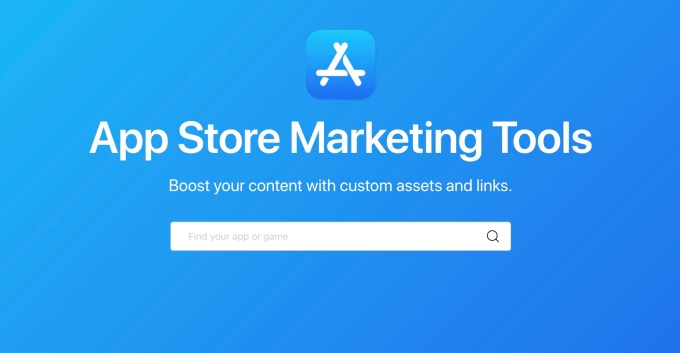
  • Apple releases new app marketing tools. Apple introduced new tools that allow developers to generate short links or embeddable codes that link to their App Store product page. These can also display your app icon, a QR code or an App Store badge.
  • Second public beta of iOS 14.2 and iPadOS 14.2 arrive. The releases bring new emoji (see below), plus changes to the Now Playing screen in the Control Center and the Home app.
  • Apple’s iOS 14.2 will bring new emoji. A new set of emoji are being tested in the beta version of iOS 14.2. The update will include the transgender flag, a smiling face with tear, pinched fingers, two people hugging, some insects and animals, a disguised face and more.
  • Google takes aim at beauty filters. Pixel phones will update to ensure face retouching features are off by default while labels and icons use “value-free” descriptions. The company said the decision to tweak the interface was based on expert recommendations over filters’ impact on people’s self-confidence and mental health.
  • Android Partner Vulnerability Initiative launches. The program will focus on managing security issues specific to Android OEMs, drive remediation and provide transparency to users about issues Google discovered that affect device models shipped by Android partners.
  • Apple bans more RSS readers in China App Store. Apple is still scouring its App Store for any services that don’t comply with Chinese censorship laws. This week, RSS reader apps — Reeder, Fiery Feeds and otherssaid their apps had been removed from the China App Store over content deemed “illegal.” Fiery Feeds only had around 1,000 MAUs, but Feedly’s latest app had 100K downloads.

Services

  • Google Play Pass launches in 24 new European countries. The deal brings Google’s subscription-based apps and games store to 34 total markets, including the U.S.
  • Twilio launches an app for frontline workers, a new IoT platform and a free video service, Video Web RTC Go. The latter allows you to add 1:1 video chat to mobile and web apps, like those aimed at distance learning or remote client consultations. It also launched Twilio Frontline, a React Native-based app for frontline workers who need to communicate with customers.

Trends

Image Credits: Sensor Tower

  • Designer earns six figures in six days for iOS 14 icon set. In a blog post, indie designer @traf details his experience building custom icons for the iOS home screen redesign trend. After a tweet showing off his home screen gained interest, he quickly created a website to sell his icon packs. Then YouTuber MKBHD linked to him and soon, he was making big sales. The day after the video, sales jumped from $6K to $40K, and as of the time of writing the post this week, the set had earned him $116,147.
  • Global app revenue up 32% year-over-year in Q3. Sensor Tower reports worldwide consumer spend grew to $29.3B and installs reached 36.5B across the App Store and Google Play in the third quarter. TikTok aws the highest-earning non-game app globally and the most downloaded.

Other News

  • Indian startups explore alternative app store to fight Google’s monopoly. More than 150 startups and firms in India are working to form an alliance and toying with the idea of launching an app store to cut their reliance on Google, TechCrunch reported this week. Participants include Paytm co-founder and CEO Vijay Shekhar Sharma, Deep Kalra of travel ticketing firm MakeMyTrip, and executives from PolicyBazaar, RazorPay and ShareChat.
  • App Store fees legal battle to be tried by a judge, not jury. Apple and Epic Games agreed this week that their court battle should be decided in a bench trial by a judge, not a jury. Apple had previously been pushing for a jury trial, but withdrew its request. The judge suggested a jury trial is preferred, as it would have allowed real people to have a voice on what’s shaping up to be a major anti-trust case. She also had harsh words for many of Epic’s tactics and arguments presented so far, noting that walled gardens already exist elsewhere and Fortnite players have many other places to play besides iOS.
  • Astropad comes to Windows. A company sherlocked by Apple brought its Astropad system to Windows. The company’s dongle turns an iPad into a second display, now for a Windows PC, a market Apple’s Sidecar doesn’t address.
  • TikTok’s U.K. numbers revealed. A leaked marketing presentation revealed that 1 in 4 U.K. users now launch TikTok every months, with 17 million users spending over an hour per day on the app. That means the app has achieved a following almost half as big as Facebook in the market in just three years.
  • TikTok launches a U.S. elections guide. The company promised not to save users’ political affiliations for use in ad targeting or recommendations.
  • Google Maps rolls out improved AR directions. Google Maps updated Live View, its AR walking directions feature that launched last year. The feature, which uses the camera and GPS to help you navigate, can now be invoked from the transit tab, identify landmarks in major cities, and use Live View in combination with Google Maps’ location sharing feature.
  • Microsoft’s Bing search app will appear as a download prompt on new Android phones in Germany, the U.K. and France after it won slots in a Google auction for rivals.

Funding and M&A, Etc.

  • Jamf acquires Mondada. MDM solution provider Jamf bought Melbourne-based Mondada, the maker of patch management solutions, Kinobi and Kinobi Pro. The deal will allow Jamf to expand Jamf’s application lifecycle capabilities, it said.
  • Bloomscape raises $15 million, acquires plant care app Vera. Online garden shop Bloomscape raised a $15 million Series B from General Catalyst and others for its e-commerce business that ships live plants to customers’ homes. It also bought Vera, a plant care and tips app, for an undisclosed sum.
  • Homer raises $50 million. Early learning app maker raised $50 million from Lego, Sesame Workshop and Gymboree for its apps that focus on early literacy and soon, more.
  • Humane raises $30 million Series A to build the next iPhone…or something. Humane’s ex-Apple founders, Imran Chaudhri and Bethany Bongiorno, haven’t revealed what they’re working on, but are promising to build something that’s as groundbreaking as the iPhone. Chaudhri had worked on the original UI design of iPhone and iPad and Bongiorno helped launch iPad. They believe technology is a net negative for society as it’s been built today, and their idea is to come up with a new computing vision entirely.
  • Macrometa raises $7 million. An edge computing service for app developers, Macrometa raised a $7 million seed round led by DNX Ventures for its Global Data Network that allows developers to send app requests to regions closest to them.
  • Beijing-based Sina Corp. agrees to go private in $2.6 billion deal. The company is the latest to delist following growing scrutiny from U.S. regulators.

Downloads

HoloVista

Mixed reality storytelling developer Aconite launched its new, story-driven puzzle game HoloVista on iOS, where players explore environments with the iPhone’s 360-degree camera in a mysterious mansion full of secrets. The game combines elements of hidden object search, puzzles and social media as you play as Carmen, a junior architect and new hire at an exclusive firm. The game also touches on themes like society’s focus on social media, for example, and our relationship with technology ($4.99 on the App Store).

WordPress Image Lightbox Plugin