Yearly Archives: 2020

News: Spotify’s new Soundtrap capture app offers collaborative voice notes for songwriters

Acquired in 2017, Soundtrap more or less serves a similar role as Anchor under the larger Spotify banner — albeit largely focused on music creation, instead of podcasting. The company’s software of the same name is a cloud-based service designed to let musicians remotely collaborate on a song, track by track. It is, honestly, a

Acquired in 2017, Soundtrap more or less serves a similar role as Anchor under the larger Spotify banner — albeit largely focused on music creation, instead of podcasting. The company’s software of the same name is a cloud-based service designed to let musicians remotely collaborate on a song, track by track. It is, honestly, a perfect tool for this moment of social distancing.

Announced this morning, the new Soundtrap Capture builds on that idea, making it more mobile and addressing the earliest stage of the songwriting process. As someone who interviews a lot of musicians on my podcast, I can certainly attest to the fact that Voice Memo has become an increasingly important tool in songwriting. Being in a creative field is a bit of a double-edged sword, in that you’re often able to make your own hours, but inspiration can (and often does) arrive when you least expect it.

The smartphone has become a pretty necessary part of the process for many musicians, as an always-present blank slate into which they can sing or hum inspiration. That’s the underlying principle for Capture. At its heart, the app is a pretty simple Voice Memo tool, with an interface that is basically a giant red record button. Tapping that, the users sings a line, which is saved as a track that can be shared with others. They can then record an overlay. It’s a bit like Voice Memos meets Google Docs.

The app has been in development since last year and in beta since the spring, and honestly, the timing is pretty perfect for many musicians seeking ways to work in the seemingly endless era of social distancing. The app is really just meant for that initial moment of inspiration, which means the controls are pretty limited. You can, for instance, adjust the volume of the tracks, but can’t adjust other levels. You can’t create loops of your found sounds, either — that would be a fun and useful trick, I think, but co-founder Per Emanuelsson tells TechCrunch that Soundtrap considers it an aspect of the songwriting process that generally comes later.

The app features live storage for memos and will add integration to the main Soundtrap Studio app at some point later this year.

News: Spacebit books a second trip to the Moon via NASA’s commercial lunar payload program

UK-based robotic rover startup Spacebit has booked a second payload delivery to the Moon, aboard the Nova-C lander that Intuitive Machines is planning to send in 2021 as part of NASA’s Commercial Lunar Payload Services (CLPS) program. Spacebit already has a berth aboard the Astrobotic Peregrine lander that’s set to go to the Moon in

UK-based robotic rover startup Spacebit has booked a second payload delivery to the Moon, aboard the Nova-C lander that Intuitive Machines is planning to send in 2021 as part of NASA’s Commercial Lunar Payload Services (CLPS) program. Spacebit already has a berth aboard the Astrobotic Peregrine lander that’s set to go to the Moon in July 2021, flying atop a Vulcan Centaur rocket, and so this would follow quickly on the heels of that mission, with a current mission timeframe of October 2021 to deliver the Intuitive Machines lander via a SpaceX Falcon 9.

Spacebit’s Asagumo 4-legged walking rover is set to fly on that first CLPS mission (which NASA created to source commercial partners for delivering experiments and payloads to the Moon along with over private cargo ahead of its Artemis crewed Moon missions). For this second Nova-C lander launch, Spacebit is preparing a wheeled rover that will carry a small NASA scientific module. Both the wheeled and the walking rover are designed to help assess what kind of resources are available on the surface of the Moon, with the aim of providing support for the Artemis program.

This will provide Spacebit with multiple opportunities to assess the makeup of the regolith (the equivalent of soil for other planets), which is its primary goal with these missions. The different rover designs will also mean it can better assess which is more amenable to the task. The 4-legged design is intended to make the walking rover better able to deal with uneven surfaces, allowing it to potentially even explore lava flow tubes and other cave-like areas that could be suitable for natural shelter and future lunar habitat creation.

News: Security flaw left ‘smart’ chastity sex toy users at risk of permanent lock-in

Just because almost every gadget or appliance can be connected to the internet, doesn’t mean they should be. Outages can render these “smart” devices useless, and many use weak security that can make them easily hackable. And as security researchers recently found out, the consequences of having a major security flaw in one popular sex

Just because almost every gadget or appliance can be connected to the internet, doesn’t mean they should be. Outages can render these “smart” devices useless, and many use weak security that can make them easily hackable.

And as security researchers recently found out, the consequences of having a major security flaw in one popular sex toy could have been catastrophic for tens of thousands of users.

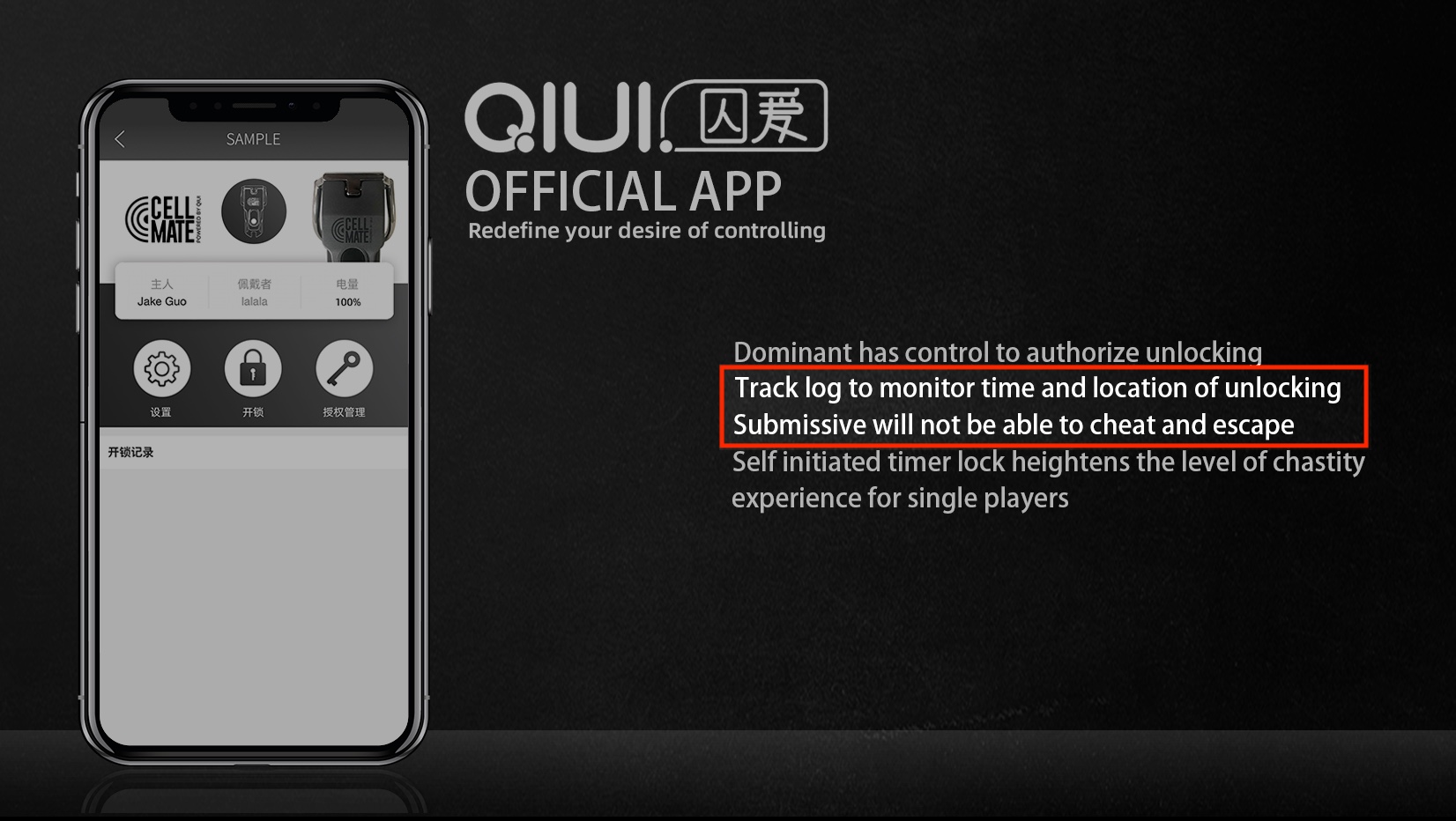
U.K.-based security firm Pen Test Partners said the flaw in the Qiui Cellmate internet-connected chastity lock, billed as the “world’s first app controlled chastity device,” could have allowed anyone to remotely and permanently lock in the user’s penis.

The Cellmate chastity lock works by allowing a trusted partner to remotely lock and unlock the chamber over Bluetooth using a mobile app. That app communicates with the lock using an API. But that API was left open and without a password, allowing anyone to take complete control of any user’s device.

Because the chamber was designed to lock with a metal ring underneath the user’s penis, the researchers said it may require the intervention of a heavy-duty bolt cutter or an angle grinder to free the user.

Alex Lomas, a researcher at Pen Test Partners, said in a blog post that an attacker could lock “everyone in or out” very quickly. “There is no emergency override function either, so if you’re locked in there’s no way out,” he wrote.

The unsecured API also allowed access to the private messages and the precise location from the user’s app.

A vulnerability in the Qiui’s Cellmate app allowed anyone unauthenticated access to the private messages and location of any user. The lock on the chastity device can also be remotely controlled, researchers said. (Image: Qiui)

TechCrunch first learned of the vulnerability in June. The researchers contacted Qiui, based in China, about the flawed API. Taking the vulnerable API offline would have locked in anyone using the device. The developer pushed out a new API for new users, but left the unsecured API up for existing users.

Qiui chief executive Jake Guo told TechCrunch that a fix would arrive in August, but that deadline came and went. “We are a basement team,” he said. In a follow-up email explaining the risks to users, Guo said: “When we fix it, it creates more problems.”

In the end, Qiui missed the three self-imposed deadlines to fix the vulnerable API, said Lomas.

The decision to go public was made after Pen Test Partners learned of a separate security issue from another researcher, who also found it difficult to get a response from Qiui. “This reinforced our decision to publish: clearly others were likely to find these issues independent of us, so the public interest case was made in our minds,” wrote Lomas.

It’s not known if anyone maliciously exploited the vulnerable API. Several user reviews of the app complained that the app had bugs that would cause the device to stay locked.

“The app stopped working completely after three days and I am stuck!” said one user. Another said they “got already stuck twice when wearing it due to the unreliable app.”

“It worked for about a month until I almost got stuck in it. Thankfully it unlocked itself randomly and I was able to get out of it. The device left a bad scar that took nearly a month of recovery,” said another review.

Qiui joins a long list of sex toys with security problems that inherently don’t exist in non-internet-connected devices. In 2016, researchers say a bug in a Bluetooth-powered “panty buster” let anyone remotely control the sex toy over the internet. In 2017, a smart sex toy maker settled a lawsuit after it was accused of collecting and recording “highly intimate and sensitive data” of its users.

Practice safe sex; don’t use a smart device.

Related stories:

News: Dialpad raises $100M Series E at a $1.2B valuation

Dialpad, the business-centric voice, video and contact-center service, today announced that it has raised a $100 million Series E funding round led by OMERS Growth Equity. Andreessen Horowitz, Google Ventures, ICONIQ Capital and Work-Bench also participated. The company says its valuation is over $1.2 billion after it has now raised a total of $245 million.

Dialpad, the business-centric voice, video and contact-center service, today announced that it has raised a $100 million Series E funding round led by OMERS Growth Equity. Andreessen Horowitz, Google Ventures, ICONIQ Capital and Work-Bench also participated. The company says its valuation is over $1.2 billion after it has now raised a total of $245 million.

The funding news comes only a few weeks after the company also announced its acquisition of video conferencing service Highfive, a move that brought deeper expertise in mobile video and conferencing room devices to the company.

Recently, Dialpad has put a lot of emphasis on its AI solutions. Back in 2018, it launched its VoiceAI service, for example, and it now offers a number of AI solutions as part of its Voice Intelligence service (or Vi, as the company calls it). This includes a note-taking service, for example, as well as call transcripts and sentiment analysis, among other features.

“We have seen a huge increase in demand for cloud communications tools, and we are raising additional capital to meet this demand,” said Craig Walker, CEO of Dialpad. “Users want a single platform to handle voice, video and messaging. They also want that platform to be smart; to do things like automate note taking and provide real-time insights and answers in response to what’s happening on a call or meeting. We have invested in real-time speech recognition, natural language processing and voice analytics on a system that works anywhere, on any device. Our goal has always been to empower the future of work, and we are thrilled to join the OMERS Growth Equity portfolio and to continue to innovate.”

The company says it now has an annual run rate of over $100 million and its customers include the likes of Uber, Motorola Solutions, Domo and Xero. In total, the 500-employee company says it now has more than 70,000 customers.

“We are excited to become an investor in Dialpad. Craig and his team have built an impressive company, offering a leading product in a market with a long growth runway. We believe cloud-based software and artificial intelligence are in the early stages of widespread adoption, and Dialpad is playing a leading role in this change,” said Mark Shulgan, Managing Director and Head of OMERS Growth Equity, who will join the company’s board. We are proud to join Dialpad’s impressive roster of existing investors, and look forward to taking this journey with the company.”

News: Europe’s top court confirms no mass surveillance without limits

Europe’s top court has delivered another slap-down to indiscriminate government mass surveillance regimes. In a ruling today the CJEU has made it clear that national security concerns do not exclude EU Member States from the need to comply with general principles of EU law such as proportionality and respect for fundamental rights to privacy, data

Europe’s top court has delivered another slap-down to indiscriminate government mass surveillance regimes.

In a ruling today the CJEU has made it clear that national security concerns do not exclude EU Member States from the need to comply with general principles of EU law such as proportionality and respect for fundamental rights to privacy, data protection and freedom of expression.

However the court has also allowed for derogations, saying that a pressing national security threat can justify limited and temporary bulk data collection and retention — capped to ‘what is strictly necessary’.

While threats to public security or the need to combat serious crime may also allow for targeted retention of data provided it’s accompanied by ‘effective safeguards’ and reviewed by a court or independent authority.

#ECJ: Judgment in cases C-511/18 La Quadrature du Net, C-512/18 French Data Network, C-520/18 Ordre des barreaux francophones et germanophone and C-623/17 Privacy International pic.twitter.com/eB95ymLyCt

— EU Court of Justice (@EUCourtPress) October 6, 2020

The reference to the CJEU joined a number of cases, including legal challenges brought by rights advocacy group Privacy International to bulk collection powers baked into the UK’s Investigatory Powers Act; a La Quadrature du Net (and others’) challenge to a 2015 French decree related to specialized intelligence services; and a challenge to Belgium’s 2016 law on collection and retention of comms data.

Civil rights campaigners had been eagerly awaiting today’s judgements from the Grand Chamber, following an opinion by an advisor to the court in January which implied certain EU Member States’ surveillance regimes were breaching the law.

At the time of writing key complainants had yet to issue a response.

Of course a government agency’s definition of how much data collection is ‘strictly necessary’ in a national security context (or, indeed, what constitutes an ‘effective safeguard’) may be rather different to the benchmark of civil rights advocacy groups — so it seems unlikely this ruling will be the last time the CJEU is asked to clarify where the legal limits of mass surveillance lie.

3) For instance it is huge that the Court says that while States have the possibility to order general retention of data in some exceptional cases, this decision “must be subject to effective review by a court or an independent administrative body WHOSE DECISION IS BINDING”…

— Theodore CHRISTAKIS (@TC_IntLaw) October 6, 2020

Additionally, the judgement raises interesting questions over the UK’s chances of gaining a data protection adequacy agreement from the European Commission — as it leaves the EU in 2021 at the end of the brexit transition process this year — something it needs for digital data flows from the EU to continue uninterrupted as now.

The problem is the UK’s Investigatory Powers Act (IPA) gives government agencies broad powers to intercept and retain digital communications — but here the CJEU is making it clear that such bulk powers must be the exception, not the statutory rule.

So, again, a battle over definitions could be looming…

This wouldn’t be a surprise — it has been done before, and met with judicial approval — but could well be one of the next battlegrounds.

I think it’s fair to say it is unlikely that the HO is going to strike out Part 4 IPA (nor, based on this, need it do).

— Neil Brown (@neil_neilzone) October 6, 2020

Questions have also been raised, via a legal challenge to the IPA in the UK, over its security agencies’ handling of intercepted data — with a court being told last year of systematic breaches of safeguards set out in the legislation. Such revelations also do not bode well for ‘adequacy’.

Another interesting component of today’s CJEU judgement suggests that in EU states with indiscriminate mass surveillance regimes there could be grounds for overturning individual criminal convictions which are based on evidence obtained via such illegal surveillance.

On this, the court writes in a press release: “As EU law currently stands, it is for national law alone to determine the rules relating to the admissibility and assessment, in criminal proceedings against persons suspected of having committed serious criminal offences, of information and evidence obtained by the retention of data in breach of EU law. However, the Court specifies that the directive on privacy and electronic communications, interpreted in the light of the principle of effectiveness, requires national criminal courts to disregard information and evidence obtained by means of the general and indiscriminate retention of traffic and location data in breach of EU law, in the context of such criminal proceedings, where those persons suspected of having committed criminal offences are not in a position to comment effectively on that information and evidence.”

News: Ÿnsect, the makers of the world’s most expensive bug farm, raises another $224 million

Ÿnsect, the startup building the world’s most high tech bug colony, have added $224 million in equity and debt to an already impressive $148 million cash haul as it looks to commercialize its business. Investors backing the company include the Los Angeles-based investment firm Upfront Ventures and the FootPrint Coalition, an investment vehicle financed by

Ÿnsect, the startup building the world’s most high tech bug colony, have added $224 million in equity and debt to an already impressive $148 million cash haul as it looks to commercialize its business.

Investors backing the company include the Los Angeles-based investment firm Upfront Ventures and the FootPrint Coalition, an investment vehicle financed by celebrity superhero Robert Downey Jr.

The financing, which includes $139 million in debt and another $65 million in equity will be used to fund the construction of the world’s largest insect farm in Amiens, France — set to open in early 2022.

Why invest a total of $372 million in equity and debt into bug farms? For Ÿnsect, it’s all about protein… and fish. Lots of fish.

See fish farming is an exploding industry even as the numbers of wild caught fish dwindle thanks to rising consumer demand and declining supplies thanks to ocean acidification and warming waters caused by climate change.

Industrial fish farming requires a lot of protein — and the sources of that protein are not good enough to keep industrial farmed fish healthy.

Ÿnsect hopes to change that by providing insect protein for things like fish food and fertilizer — and eventually pet food and (farther down the road) even food for people.

“Ÿnsect isn’t just about insect farming: With climate change and increasing populations worldwide, we need to produce more food with less available land and fewer resources, so that we’re not clearing forests and emptying our oceans. We believe Ÿnsect can play a pivotal role in this global solution,” co-founder and CEO Antoine Hubert said in a statement.

The company’s high-tech, vertical insect farms (primarily raising mealworms) are perfect proteins for the fish and can replace the limited sources of protein the industry currently relies on, according to investors like Upfront Ventures’ Yves Sisteron.

“Oceans are emptying and fish farms are taking over. We’re approaching 50 percent of fish coming from fish farms,” said Sisteron. “One of the main ingredients of fish feed comes from fish. These are from trawlers that rake the bottom of the ocean for anchovies that are combined with a protein paste that is fed to fish for fish farms. And that is basically not sustainable. The amounts in question are gigantic. Globally there’s about 44 million tons of fishfeed per year that is fed to farmed fish.”

Ÿnsect’s mealworms actually provide the fish with a lower-cost, higher quality protein, Sisteron said. “What Ÿnsect is solving is: Can we feed those fish a different kind of protein that will be scalable and also nutrient rich for the fish,” he said.

Ÿnsect transforms insects (and mealworms in particular) into proteins for animals and plants. The company is building full-stack factories that are fully automated, from insect reproduction to sterilization, sorting and packaging.

When the Amiens-based farm is open for business, the company expects to produce 100,000 tons of insect products annually. 500 people will work directly and indirectly on the project.

For the Downey Jr.-backed FootPrint Coalition Ventures, Ÿnsect’s combination of sustainable protein cultivation and massive end markets represented a compelling investment opportunity and a chance to back another company doing its part to combat climate change, according to founding partner Jonathan Schulhof.

It’s the firm’s second publicly disclosed investment after the bamboo-based toilet paper company Cloud Paper.

“We find the aquaculture industry to be absolutely fascinating and we think what they’re doing in that industry is vital,” Schulhof said.

Upfront and FootPrint are joining previous investors like Astanor Ventures along with other financial backers including Happiness Capital, Supernova Invest and Armat Group.

Caisse des Dépôts, Crédit Agricole Brie Picard and Caisse d’Epargne Hauts-de-France are the top banks contributing to today’s financing by providing a credit line. Some of them are taking some equity and other banks are also participating. Overall, Ÿnsect has raised $425 million since 2011.

Companies have already committed $105 million worth of contracts. Clients include wine growing company Torres, fish feed company Skretting and plant fertilizer company Compo Group.

In the future, Ÿnsect also plans to expand to the U.S. and manufacture new products, such as wet pet food.

News: Calling Amsterdam VCs: Be featured in The Great TechCrunch Survey of European VC

TechCrunch is embarking on a major new project to survey the venture capital investors of Europe, and their cities. Our <a href=”https://forms.gle/k4Ji2Ch7zdrn7o2p6”>survey of VCs in Amsterdam will capture how the city is faring, and what changes are being wrought amongst investors by the coronavirus pandemic. (Please note, if you have filled the survey out already,

TechCrunch is embarking on a major new project to survey the venture capital investors of Europe, and their cities.

Our <a href=”https://forms.gle/k4Ji2Ch7zdrn7o2p6”>survey of VCs in Amsterdam will capture how the city is faring, and what changes are being wrought amongst investors by the coronavirus pandemic. (Please note, if you have filled the survey out already, there is no need to do it again).

We’d like to know how Amsterdam’s startup scene is evolving, how the tech sector is being impacted by COVID-19, and, generally, how your thinking will evolve from here.

Our survey will only be about investors, and only the contributions of VC investors will be included. More than one partner is welcome to fill out the survey.

The shortlist of questions will require only brief responses, but the more you can add, the better.

You can fill out the survey here.

Obviously, investors who contribute will be featured in the final surveys, with links to their companies and profiles.

What kinds of things do we want to know? Questions include: Which trends are you most excited by? What startup do you wish someone would create? Where are the overlooked opportunities? What are you looking for in your next investment, in general? How is your local ecosystem going? And how has COVID-19 impacted your investment strategy?

This survey is part of a broader series of surveys we’re doing to help founders find the right investors.

https://techcrunch.com/extra-crunch/investor-surveys/

For example, here is the recent survey of London.

You are not in Amsterdam, but would like to take part? Or you are in another part of the country? That’s fine! Any European VC investor can STILL fill out the survey, as we probably will be putting a call out to your city next anyway! And we will use the data for future surveys on vertical topics.

The survey is covering almost every European country on the continent of Europe (not just EU members, btw), so just look for your country and city on the survey and please participate (if you’re a venture capital investor).

Thank you for participating. If you have questions you can email mike@techcrunch.com

News: Picker, an app to discover products recommended by people you follow, picks up €1.3M seed

Picker, an app that lets you discover and buy products recommended by people you follow, has raised €1.3 million in seed funding. Backing the Barcelona-based startup is Berlin’s Btov. The company has received €2 million in funding to date, mainly from various angel investors. Founded in 2018 by Daniel Ramos, Conan Moriarty and Enric Gabarró,

Picker, an app that lets you discover and buy products recommended by people you follow, has raised €1.3 million in seed funding. Backing the Barcelona-based startup is Berlin’s Btov. The company has received €2 million in funding to date, mainly from various angel investors.

Founded in 2018 by Daniel Ramos, Conan Moriarty and Enric Gabarró, Picker offers a curated marketplace that enables you to discover and buy products based on the recommendations of influencers, friends or the wider Picker community. The iOS and Android app is currently live in Spain, Germany, Austria and Switzerland.

“We live in a world where buying online is an overcrowded experience, [and] good products are hidden under a mountain of junk,” says CEO Enric Gabarró, who previously worked at Zalando and has a background in influencer marketing. “Try searching for a camera on the biggest seller online, you will get more than 200,000 results. Which one is the best for you? It is impossible to know; reviews are anonymous and not related to you. As I always say, Picker is for finding the best products for you, because one trusted person beats 500 reviews”.

More broadly, Gabarró believes that “empowering good products” by sharing them with our friends, family and communities is the best way to save money and the planet, while also “supporting responsible and good manufacturers and helping our loved ones”. Or, as the company likes to say, “stop buying more, buy better”.

With that said, Picker users appear to be buying quite a lot of stuff, regardless, with the startup disclosing that it is on track to generate over €2 million in sales globally this year. Further country launches are also underway.

“We make money since the very first day,” says Gabarró, before explaining that the company has partnerships with various brands, e-commerce sites, marketplaces and resellers, and receives a cut on every sale. He tells me that brands are also interested in running campaigns together with its users, although this is something Picker is only just testing.

“Our main customers are women above 25 years old, [who are] super interested in decoration, makeup and stuff for the kids,” he adds. “We also have super niche categories where people share their favourite startup books, gardening stuff, favourite whiskeys, the hammers and screwdrivers for the backyard or even sexual toys”.

(Gabarró reveals that Spain saw a big increase in orders of sex toys during quarantine, while in Germany there was a big increase in DIY equipment during the same time period. Just shows there’s more than one way to get busy.)

Meanwhile, competitors are cited as Pinduoduo in Asia, which is more focused on discounts, and a few smaller players emerging in Europe. And of course there’s Instagram and Pinterest.

“We believe their core as a social media platform focused on making money with advertising (average time spent) offers us the big possibility of creating something new with a completely different approach based on purchase rather than advertising,” says the Picker CEO. “We are 100% aligned with the users, we want them to enter the app, find the product they want to buy or share and then leave the platform. We want to help them find the best fit for them as fast as possible without being addicted to our platform. Our focus on discovering products with social leverage is the key differentiator”.

News: G Suite is now Google Workspace

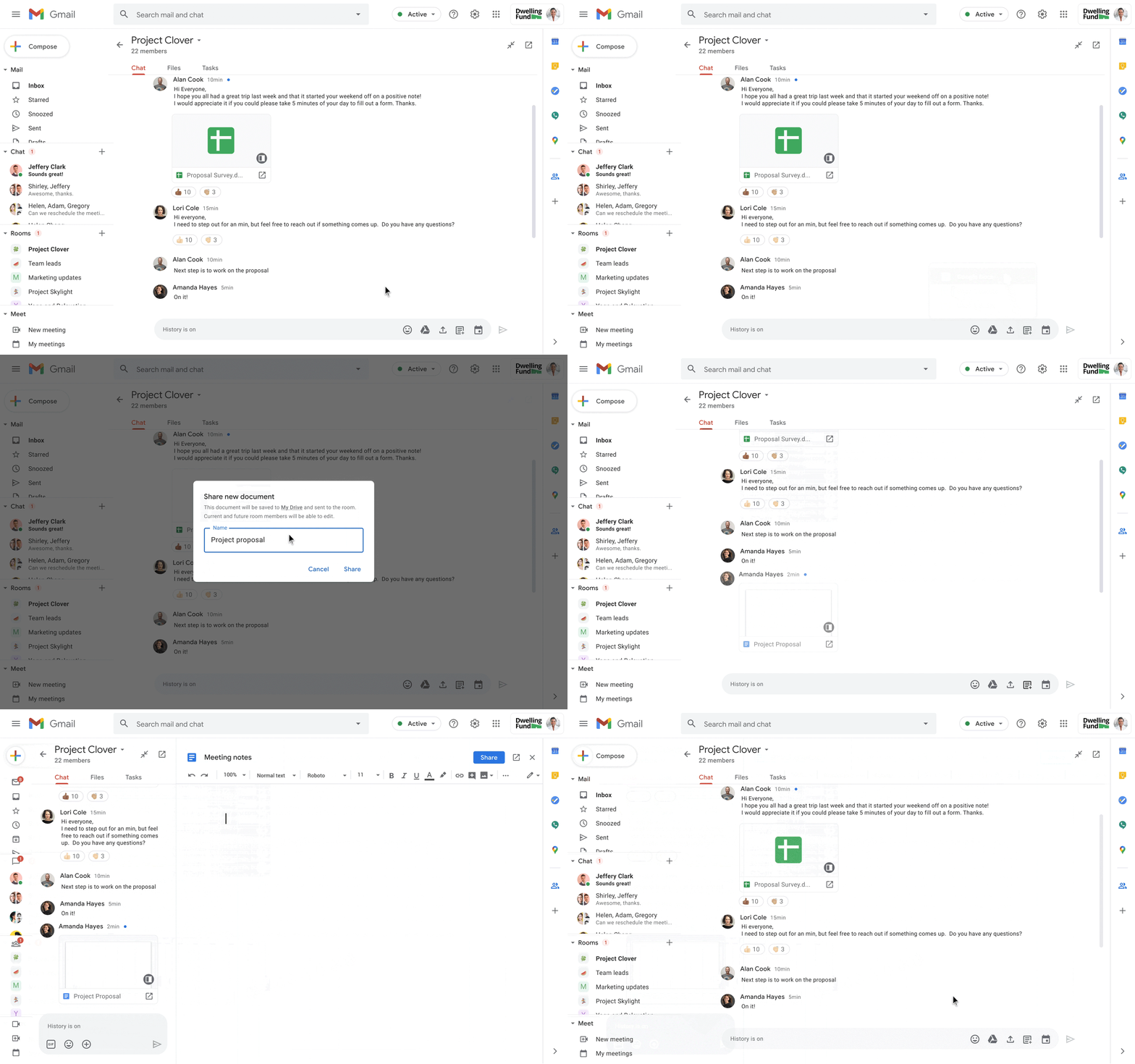
Google is rebranding G Suite, its set of online productivity and collaboration tools for businesses that include the likes of Gmail, Drive, Docs and Meet. The new name is Google Workspace, a name the company already hinted at when it first introduced a set of new collaboration tools and Google Meet integrations for the service

Google is rebranding G Suite, its set of online productivity and collaboration tools for businesses that include the likes of Gmail, Drive, Docs and Meet. The new name is Google Workspace, a name the company already hinted at when it first introduced a set of new collaboration tools and Google Meet integrations for the service earlier this year. Now those new tools are coming out of preview and with that, the company decided to also give the service a new name and introduce new logos for all the included productivity apps, which are now being used — and paid for — by more than 6 million businesses.

Image Credits: Google

G Suite, as the brand for Google’s paid offering, originally launched in 2016. In a press briefing ahead of today’s announcement, Google’s Javier Soltero, the company’s VP and GM for what is now Google Workspace, noted that the company wanted to ensure that the service that people use is the same thing that people buy.

Image Credits: Google

“By selecting Google Workspace, we get the brand association with Google, which is really important to us,” he said. “These products are flagship products for Google itself — and the ability to actually describe the product in the same way, whether it’s to a buyer or to a user.” Google, he added, wants its customers to see Workspace as a product that brings together all the tools they need to get their work done.

What’s maybe far more important than the brand, though, is that Google is also launching a few new features for G Suite Workplace today. For the most part, these are the Meet, Chat and Rooms integrations the company already announced earlier this summer. Google is now integrating all of these collaboration tools across its applications, with Gmail currently being the one service where they all come together.

Image Credits: Google

Among the new features that are coming soon are the ability to create and collaborate on documents with guests in Chat rooms and to preview linked files in Docs, Sheets and Slides without having to open them in a new tab. Whenever you @mention somebody in a document, Workplace will also pop up a smart chip, as Google calls it, to show you contact details and suggest actions (think starting a video call or chat — or to email them if you’re old school).

Gmail and Chat already feature a picture-in-picture mode that allows you to have Google Meet video calls in those services. This feature will roll out to Docs, Sheets and Slides in the coming months, too.

Pricing will mostly remain the same, though the naming is changing here a bit, too. The cheapest plan, Business Starter, starts at $6/month and users who need more storage and support for larger meetings can opt for the Business Standard plan for $12/user/month. What’s new is the $18/user/month Business Plus plan that includes additional security features and compliance tools like Vault and mobile device management capabilities.

News: Cryptocurrency wallet BRD reaches 6 million users, driven by growth in Latin America and India

Mobile cryptocurrency wallet BRD announced today that it now has more than six million users worldwide, thanks to strong growth in India and Latin America. With this momentum, the company expects to reach 10 million users by early 2021. Founded in 2015, Zurich-based BRD also said it now adds about one million new users every

Mobile cryptocurrency wallet BRD announced today that it now has more than six million users worldwide, thanks to strong growth in India and Latin America. With this momentum, the company expects to reach 10 million users by early 2021.

Founded in 2015, Zurich-based BRD also said it now adds about one million new users every two months, after initially taking more than four years to hit the one million user mark. It reached 550,000 monthly active users at the beginning of July. Co-founder and chief executive officer Adam Traidman attributes the increased interest in cryptocurrency, especially among first-time users, to the COVID-19 pandemic.

“It’s causing a lot of people who are staying at home and sheltering in place to reconsider a lot of fundamental questions about their life and family right now,” he told TechCrunch. “It’s causing a lot of thinking about money and finances. People have had a lot more time over the last six months to look at their investments and as a result of that, we found that for cryptocurrency in general, but especially for BRD’s business, we’ve been growing dramatically.”

An image of mobile cryptocurrency wallet BRD's user interface

An image of mobile cryptocurrency wallet BRD’s user interface

He added that BRD, which has raised $55 million in funding from investors like SBI Crypto Investment and East Ventures, has two main groups of users. The first are millennials who have discretionary income that they invest using apps like Robinhood instead of traditional brokerages. The second group are people who have been more financially impacted by the pandemic and are turning to Bitcoin and other cryptocurrencies to cope with currency fluctuations in their countries or as a more cost-effective alternative to international wire transfers to send money to family members. Falling bank interest rates have also prompted many people to consider alternative places to put their money.

While Bitcoin and Ethereum are still the most popular purchases through BRD, in countries with volatile currency fluctuations, like Venezuela, Argentina and India, interest in stablecoins, which are pegged to the U.S. dollar, is growing. The company is also seeing more adoption in Eastern European countries.

BRD is a non-custodial wallet and cryptocurrencies are stored on users’ devices, which makes it more accessible to users in countries who need to undergo lengthy registration processes to use custodial wallets. The app also allows people to use Apple Pay or their bank cards to buy cryptocurrency. This ease of use is one of the reasons for its growth, Traidman said.

The company’s most recent funding announcement was a $15 million Series B announced in January 2019 for expansion in Asian markets. BRD also offers enterprise blockchain tools called Blockset and says it is currently used to store the equivalent of about $6 billion in cryptocurrencies.

WordPress Image Lightbox Plugin