Yearly Archives: 2020

News: Microsoft is building a price comparison engine into its Edge browser

With its Edge browser now stable, Microsoft’s current focus for its Chromium-based browser is to build features that differentiate it from the competition. With the holiday season coming up fast (though who knows what that will actually look like this year), it’s maybe no surprise that one of the first new features the company is

With its Edge browser now stable, Microsoft’s current focus for its Chromium-based browser is to build features that differentiate it from the competition.

With the holiday season coming up fast (though who knows what that will actually look like this year), it’s maybe no surprise that one of the first new features the company is announcing is a price comparison tool as part of its ‘Collections’ bookmarking service. That was always an obvious next step, but it’s nice to see Microsoft add some more functionality here.

Also coming to Edge is the general availability of its integration between Collections and Pinterest, as well as a new screenshot tool for capturing web content, improved PDF support and an update to its Teleparty extension for streaming TV shows in sync with your friends and chat about it in your browser’s sidebar.

In addition, you can now also start free video meetings with your friends and family (or co-workers), right from the browsers through an integration with Microsoft’s Meet Now service. You can have up to 50 people in these video chats, share screens and record these sessions. While this is rolling out in Edge first, it’s also coming to Outlook on the web and the Windows 10 taskbar in the next few weeks.
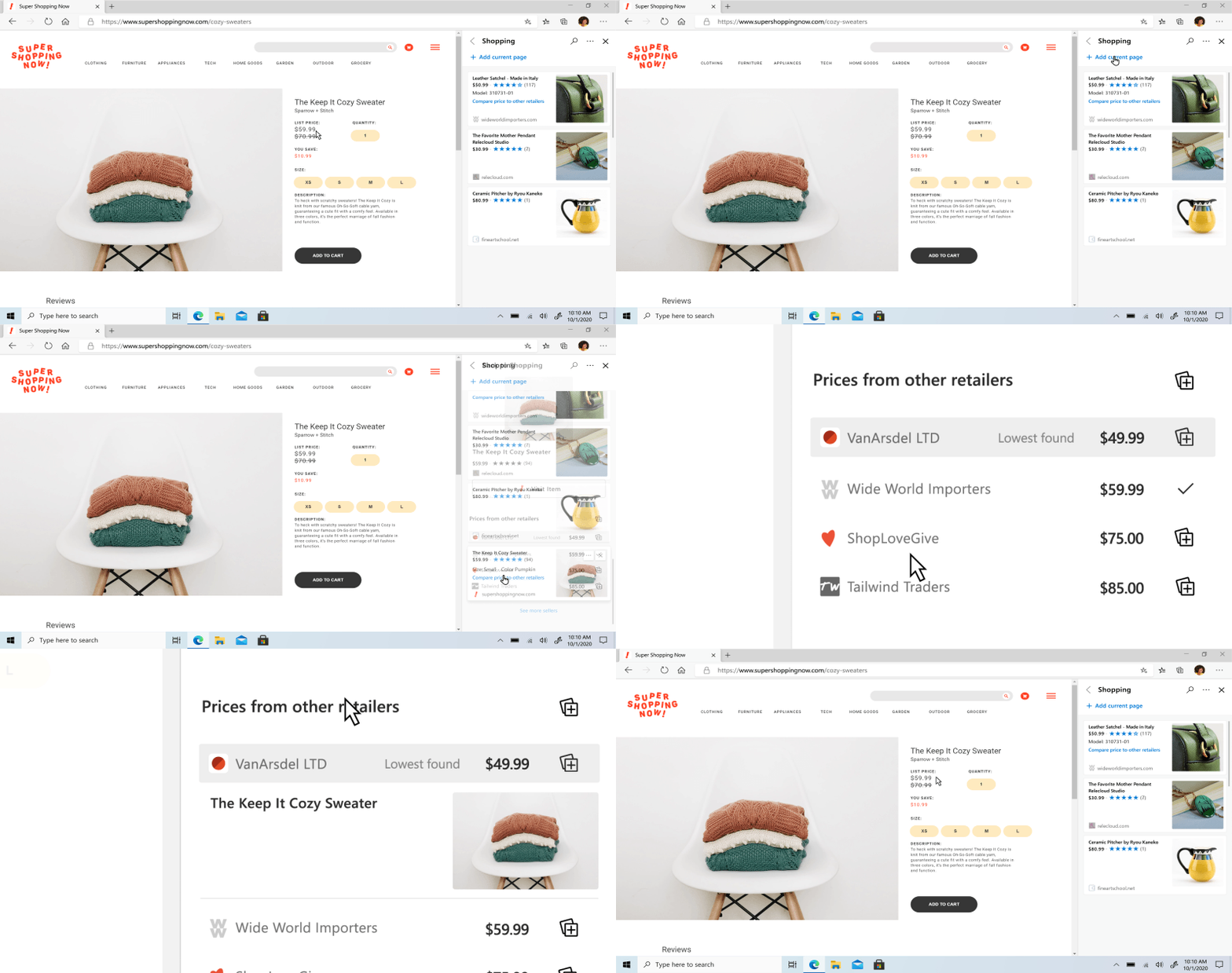
Image Credits: Microsoft

You can’t say Microsoft held back on new features with this release, but the highlight is surely the new price comparison engine, though.

“We’ve been talking about how collections is a great feature for anyone who wants to do research — whether that’s research in education or work, but a lot of people do research for shopping,” said Divya Kumar, Microsoft’s Director of Product Management for its browser and search tools. “We’ve really started to talk about this rhythm of, ‘okay, if use drop things into Collections, we should be really smart enough to give you the data that you’re looking for.’ This felt like a really natural next step for us to do.”

As long as Edge — through its connection with Microsoft Bing‘s existing price comparison engine — recognizes that you’re saving a product site, maybe from Amazon or Best Buy, it’ll show you the option to compare prices right in the browser tools bar. The next logical step now is for the team to add alerts when prices change and Kumar tells me that this is on the roadmap, together with several other features the team wasn’t ready to discuss yet.

Microsoft says it does not get affiliate fees when you buy through one of the links in Collections.

Talking about shopping, the team is also launching its Bing Rebates cashback program out of beta now (after shutting down a somewhat similar program a while back). The company signed up the likes for Walmart, Expedia, Walgreens and Nvidia for this program (though Nvidia only gives you a whopping 0.5% cashback). Still, it may just get some people to use Bing, though you have to sign up as a Microsoft Rewards member to participate.

“Rebates is a great part of the shopping story that we’re trying to land in terms of enabling smarter shopping experiences in the browser,” said Kumar.

In addition, through its Give with Bing program, you can now use your Microsoft Rewards points to donate to charitable organizations and until the end of the year, Microsoft will match your gift. This is live in the including: U.S., UK, Canada, Australia, France, Italy, Germany and Spain.

As somebody who works on the web and takes screenshots all day, the updated screenshotting tool is also worth a look. Edge could already help you take screenshots, but until now, all you could do was copy what was on your screen. Now, you can also grab content from further down the page and then save it or share it directly from Edge.

Image Credits: Microsoft

If you’re an iOS user and have switched to Edge there — or thought about it — the news here is that you can now select Edge as your default browser there, a feature Apple finally enabled with the launch of iOS 14.


News: Headroom, which uses AI to supercharge videoconferencing, raises $5M

Videoconferencing has become a cornerstone of how many of us work these days — so much so that one leading service, Zoom, has graduated into verb status because of how much it’s getting used. But does that mean videoconferencing works as well as it should? Today, a new startup called Headroom is coming out of

Videoconferencing has become a cornerstone of how many of us work these days — so much so that one leading service, Zoom, has graduated into verb status because of how much it’s getting used.

But does that mean videoconferencing works as well as it should? Today, a new startup called Headroom is coming out of stealth, tapping into a battery of AI tools — computer vision, natural language processing and more — on the belief that the answer to that question is a clear — no bad WiFi interruption here — “no.”

Headroom not only hosts videoconferences, but then provides transcripts, summaries with highlights, gesture recognition, optimised video quality, and more, and today it’s announcing that it has raised a seed round of $5 million as it gears up to launch its freemium service into the world.

You can sign up to the waitlist to pilot it, and get other updates here.

The funding is coming from Anna Patterson of Gradient Ventures (Google’s AI venture fund); Evan Nisselson of LDV Capital (a specialist VC backing companies buidling visual technologies); Yahoo founder Jerry Yang, now of AME Cloud Ventures; Ash Patel of Morado Ventures; Anthony Goldbloom, the cofounder and CEO of Kaggle.com; and Serge Belongie, Cornell Tech associate dean and Professor of Computer Vision and Machine Learning.

It’s an interesting group of backers, but that might be because the founders themselves have a pretty illustrious background with years of experience using some of the most cutting-edge visual technologies to build other consumer and enterprise services.

Julian Green — a British transplant — was most recently at Google, where he ran the company’s computer vision products, including the Cloud Vision API that was launched under his watch. He came to Google by way of its acquisition of his previous startup Jetpac, which used deep learning and other AI tools to analyze photos to make travel recommendations. In a previous life, he was one of the co-founders of Houzz, another kind of platform that hinges on visual interactivity.

Russian-born Andrew Rabinovich, meanwhile, spent the last five years at Magic Leap, where he was the head of AI, and before that, the director of deep learning and the head of engineering. Before that, he too was at Google, as a software engineer specializing in computer vision and machine learning.

You might think that leaving their jobs to build an improved videoconferencing service was an opportunistic move, given the huge surge of use that the medium has had this year. Green, however, tells me that they came up with the idea and started building it at the end of 2019, when the term “Covid-19” didn’t even exist.

“But it certainly has made this a more interesting area,” he quipped, adding that it did make raising money significantly easier, too. (The round closed in July, he said.)

Given that Magic Leap had long been in limbo — AR and VR have proven to be incredibly tough to build businesses around, especially in the short- to medium-term, even for a startup with hundreds of millions of dollars in VC backing — and could have probably used some more interesting ideas to pivot to; and that Google is Google, with everything tech having an endpoint in Mountain View, it’s also curious that the pair decided to strike out on their own to build Headroom rather than pitch building the tech at their respective previous employers.

Green said the reasons were two-fold. The first has to do with the efficiency of building something when you are small. “I enjoy moving at startup speed,” he said.

And the second has to do with the challenges of building things on legacy platforms versus fresh, from the ground up.

“Google can do anything it wants,” he replied when I asked why he didn’t think of bringing these ideas to the team working on Meet (or Hangouts if you’re a non-business user). “But to run real-time AI on video conferencing, you need to build for that from the start. We started with that assumption,” he said.

All the same, the reasons why Headroom are interesting are also likely going to be the ones that will pose big challenges for it. The new ubiquity (and our present lives working at home) might make us more open to using video calling, but for better or worse, we’re all also now pretty used to what we already use. And for many companies, they’ve now paid up as premium users to one service or another, so they may be reluctant to try out new and less-tested platforms.

But as we’ve seen in tech so many times, sometimes it pays to be a late mover, and the early movers are not always the winners.

The first iteration of Headroom will include features that will automatically take transcripts of the whole conversation, with the ability to use the video replay to edit the transcript if something has gone awry; offer a summary of the key points that are made during the call; and identify gestures to help shift the conversation.

And Green tells me that they are already also working on features that will be added into future iterations. When the videoconference uses supplementary presentation materials, those can also be processed by the engine for highlights and transcription too.

And another feature will optimize the pixels that you see for much better video quality, which should come in especially handy when you or the person/people you are talking to are on poor connections.

“You can understand where and what the pixels are in a video conference and send the right ones,” he explained. “Most of what you see of me and my background is not changing, so those don’t need to be sent all the time.”

All of this taps into some of the more interesting aspects of sophisticated computer vision and natural language algorithms. Creating a summary, for example, relies on technology that is able to suss out not just what you are saying, but what are the most important parts of what you or someone else is saying.

And if you’ve ever been on a videocall and found it hard to make it clear you’ve wanted to say something, without straight-out interrupting the speaker, you’ll understand why gestures might be very useful.

But they can also come in handy if a speaker wants to know if he or she is losing the attention of the audience: the same tech that Headroom is using to detect gestures for people keen to speak up can also be used to detect when they are getting bored or annoyed and pass that information on to the person doing the talking.

“It’s about helping with EQ,” he said, with what I’m sure was a little bit of his tongue in his cheek, but then again we were on a Google Meet, and I may have misread that.

And that brings us to why Headroom is tapping into an interesting opportunity. At their best, when they work, tools like these not only supercharge videoconferences, but they have the potential to solve some of the problems you may have come up against in face-to-face meetings, too. Building software that actually might be better than the “real thing” is one way of making sure that it can have staying power beyond the demands of our current circumstances (which hopefully won’t be permanent circumstances).

News: Delivery startup goPuff raises $380M at a $3.9B valuation

GoPuff is a Philadelphia-headquartered startup that delivers products like over-the-counter medicine, baby food and alcohol (basically, the stuff you’d buy at a convenience store) in 30 minutes or less. Yakir Gola, who serves as co-CEO with his co-founder Rafael Ilishayev, told me that their goal is to create “the go-to platform for over-the-counter medicine or

GoPuff is a Philadelphia-headquartered startup that delivers products like over-the-counter medicine, baby food and alcohol (basically, the stuff you’d buy at a convenience store) in 30 minutes or less.

Yakir Gola, who serves as co-CEO with his co-founder Rafael Ilishayev, told me that their goal is to create “the go-to platform for over-the-counter medicine or household products or baby food or ice cream or even alcohol — goPuff will deliver all these products in under 30 minutes, 24/7.”

While the startup has kept a relatively low profile in the media, it’s already available in more than 500 U.S. cities (recent launches include Dallas, Miami, Detroit, Minneapolis and Houston). And it’s raised $1.35 billion in total funding, including a just-announced $380 million round that values the company at $3.9 billion.

The new round was led by Accel and D1 Capital Partners, with participation from Luxor Capital and Softbank Vision Fund. (Accel and Softbank were both invested previously as well.)

“Accel first invested in goPuff in 2018 because of the team’s visionary approach to on-demand delivery and its commitment to building the infrastructure needed to create its unique, vertically integrated model,” said Accel partner Ryan Sweeney in a statement. “Because of goPuff’s focused approach, they have consistently delivered some of the best unit economics we’ve seen, while growing nationwide. We’re thrilled to remain a committed partner to Yakir, Rafael and the rest of the goPuff team on their journey.

goPuff

Image Credits: goPuff

Gola said that he and Ilishayev created the company in 2013 when they were attending Drexel University together and thought, “There has to be a better way to get convenience products delivered.”

Despite the company’s impressive war chest, Gola said goPuff has had “a huge focus on fiscal responsibility” from the start. At first, the founders were the ones making the deliveries, and they funded their initial expansion with cashflow and profits.

“What was important for us from day one was to start a business that makes money, that has real margins,” he said.

To achieve that, Gola touted the startup’s “vertically integrated model,” where it buys products directly from manufacturers, then gets those products to consumers through a network of 200 “micro-fulfillment” centers (staffed with goPuff employees) and a network of independent drivers.

Besides meaning that goPuff “makes money off the products we sell” (rather than simply charging a fee on deliveries), Gola said this model allows the company to mix products from national and local brands, and it’s “constantly introducing new products and discontinuing things that don’t sell.”

As you’d expect, demand increased significantly during the pandemic, but Gola said the company also made sure to provide protective equipment to all its employees and drivers, and it created an emergency fund to provide financial assistance for any of them who got sick.

In addition to the funding, goPuff is announcing that it has hired former Lowe’s CMO Jocelyn Wong as its first chief customer officer, former Uber global head of fintech and U.S. business development Jonathan DiOrio as its first chief business officer and former TripAdvisor engineering executive Rekha Singh as vice president of engineering.

Looking ahead, as companies like Amazon and Uber are also looking to deliver more and more products in less and less time, Gola said goPuff will continue to differentiate itself in a few key ways.

“There’s nothing like goPuff, so we had to build everything from scratch,” he said. “Whether it’s our location-based inventory system or many things related to our technology, that’s all ours. And then when you talk about differentiation from the customer side, we control the inventory and can make sure that the customers get exactly what they ordered. That focus on our customer is how we’re going to win long-term, and it’s how we got to the point of where we are today.”

News: Density’s Open Area radar tracks people in a space, precisely but anonymously

Everyone in the world is rethinking shared spaces right about now, and part of that rethink is understanding how they’re used, minute by minute and day by day. Density’s tiny ceiling-mounted radar finds and tracks people unobtrusively but with great precision, letting the powers that be monitor every table, chair, and office. Okay, in some

Everyone in the world is rethinking shared spaces right about now, and part of that rethink is understanding how they’re used, minute by minute and day by day. Density’s tiny ceiling-mounted radar finds and tracks people unobtrusively but with great precision, letting the powers that be monitor every table, chair, and office.

Okay, in some ways that doesn’t sound great. But don’t worry, we’ll get to that.

Density began looking into creating large-scale people-monitoring tech after seeing the possibilities latent in its entryway-monitoring Entry device, which tracks people coming and going using infrared imagery. They settled on radar as a technology that has the range and precision to cover hundreds of square feet from a single point, but also lacks any capability of easily identifying someone.

That’s an important point, as many are wary of installing people-monitoring software on ordinary security cameras. The potential for abuse is high simply because the imagery is easy to match with identities. So while it may be cheaper to layer some computer vision on top of a regular camera, there are non-trivial risks and shortcomings.

Image Credits: Density

Not to mention few like the idea of security cameras watching over every desk and computer, able to read confidential documents and see every minute motion. The system Density has created is very much focused on presence — is someone in that chair? Is someone in that office? How many people are in this room?

The radar produces point clouds, but not the detailed ones you see in the lidar systems of self-driving cars. It really is more like a cloud than anything else — a small, upright cloud standing near the fridge in the office kitchen. When someone else comes in to grab a coffee, there’s another, separately tracked cloud. But there’s not enough detail to tell people apart, or, without careful scrutiny anyway, features like size or clothing.

A GIF showing a person sitting down at a desk and the radar point cloud of her.

Image Credits: Density

Of course you could track the clouds back to their desks and retroactively identify them, but really there’s no shortage of ways to track people now. Why install a new one that’s more useful for other things?

Because the data from something like this is certainly valuable. Cafes can watch occupancy rates of seats and A-B test different layouts; gyms can see which machines are used the most and require maintenance or cleaning; offices can repurpose unpopular meeting rooms or furniture; retail stores can find cold racks. The software that comes with the devices can also tell how far people are from each other, how long they tend to stay at various spots, and whether certain thoroughfares are used more than others.

A screenshot of the Density software in action.

The data is aggregated in real time, so a shared office space can easily tell — without asking or double-checking — which desks are empty and have been all morning. Restaurants similarly wouldn’t have their table counts at the host station lag behind reality. (As you can imagine these applications are primarily for non-pandemic times, but now may be the perfect chance to install the devices.)

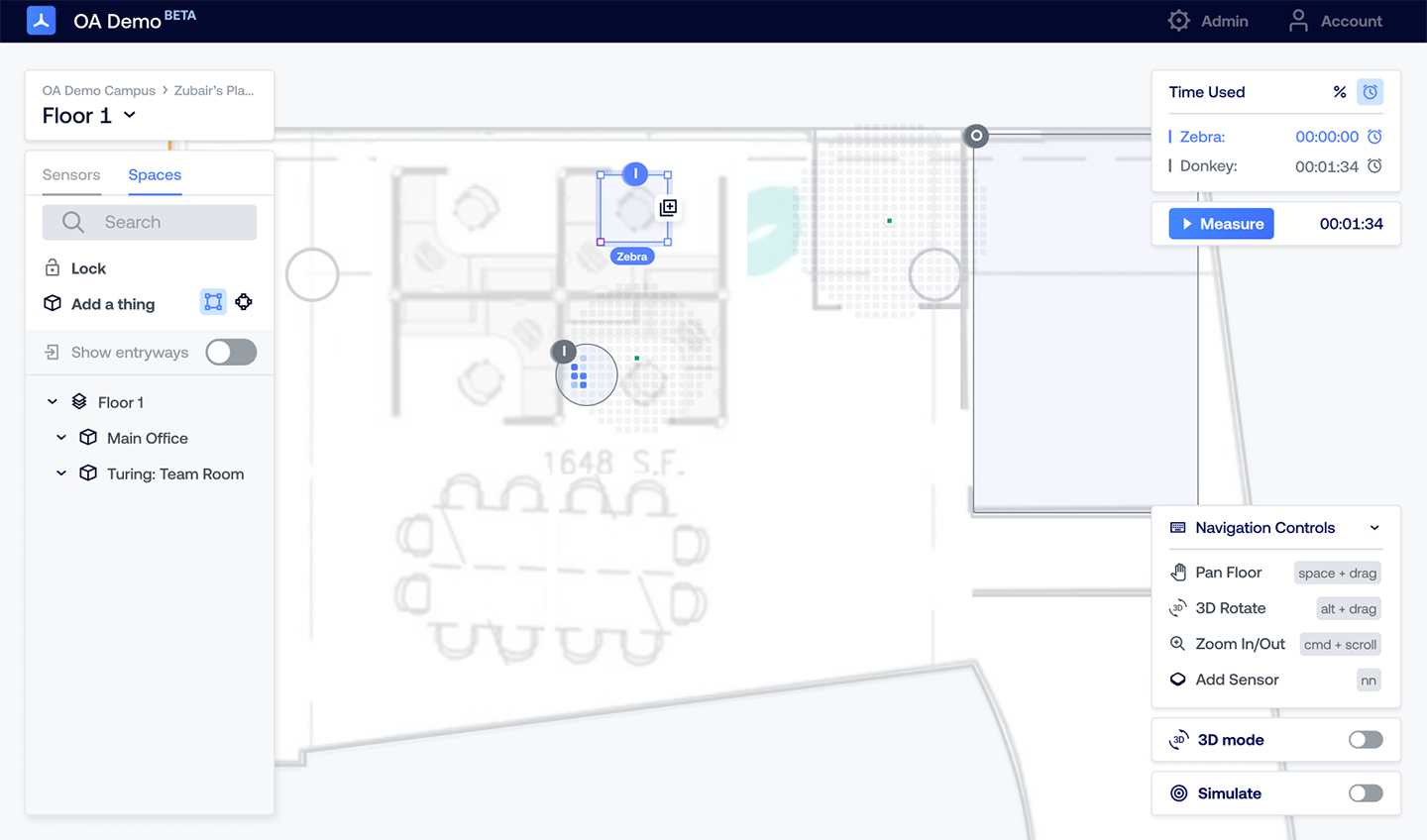
Add a layout image to the real-time cloud and all of a sudden things get really real:

Image Credits: Density

Each of the Open Area sensors, which are about the size of a BLT, can cover 1,325 square feet from up to 20 feet off the ground. That’s a circle about 38-40 feet in diameter, into which you can fit a couple meeting rooms or about 20 desks. That’s more than competitive with overhead optical cameras, plus the privacy benefit.

If you’re curious how they look in a real office area, here’s a little “seek and find” puzzle for you. They’re hidden in each of the following office photos. I’ve put them in this gallery in order of difficulty.

Be ready for a bit of sticker shock at first, though. An Open Area sensor costs $399 and there’s a $199 yearly license fee for each one you use. So kitting out a decent size office will probably get you well into the five-figure range. Of course, anyone who runs a space that large knows the costs of things like doing space usage studies (people actually sitting there, watching who uses what) and other useful gear like badge-based entry.

“We’re an order of magnitude less expensive and an order of magnitude more useful,” said CEO Andrew Farah.

Density already counts some major enterprises among its customers, and while the entire office and retail world is being turned upside-down right now, tools like this are likely to figure into whatever comes next. Being smart about how you use a space not only saves money, it’s safer and probably makes for happier people in it.

News: Harbor, the app that gamifies emergency preparedness, launches

Harbor, an emergency-preparedness company that just raised $5 million in seed, has today publicly launched its app. The app gamifies the process of preparing your home and family for whatever crisis may befall them, including common emergencies like house fires and more widespread disasters like earthquakes, fires, etc. Led by former Headspace exec Dan Kessler,

Harbor, an emergency-preparedness company that just raised $5 million in seed, has today publicly launched its app.

The app gamifies the process of preparing your home and family for whatever crisis may befall them, including common emergencies like house fires and more widespread disasters like earthquakes, fires, etc.

Led by former Headspace exec Dan Kessler, Harbor has also partnered with Team RUBICON, an organization that mobilizes veterans to serve communities during natural disasters and/or humanitarian crises.

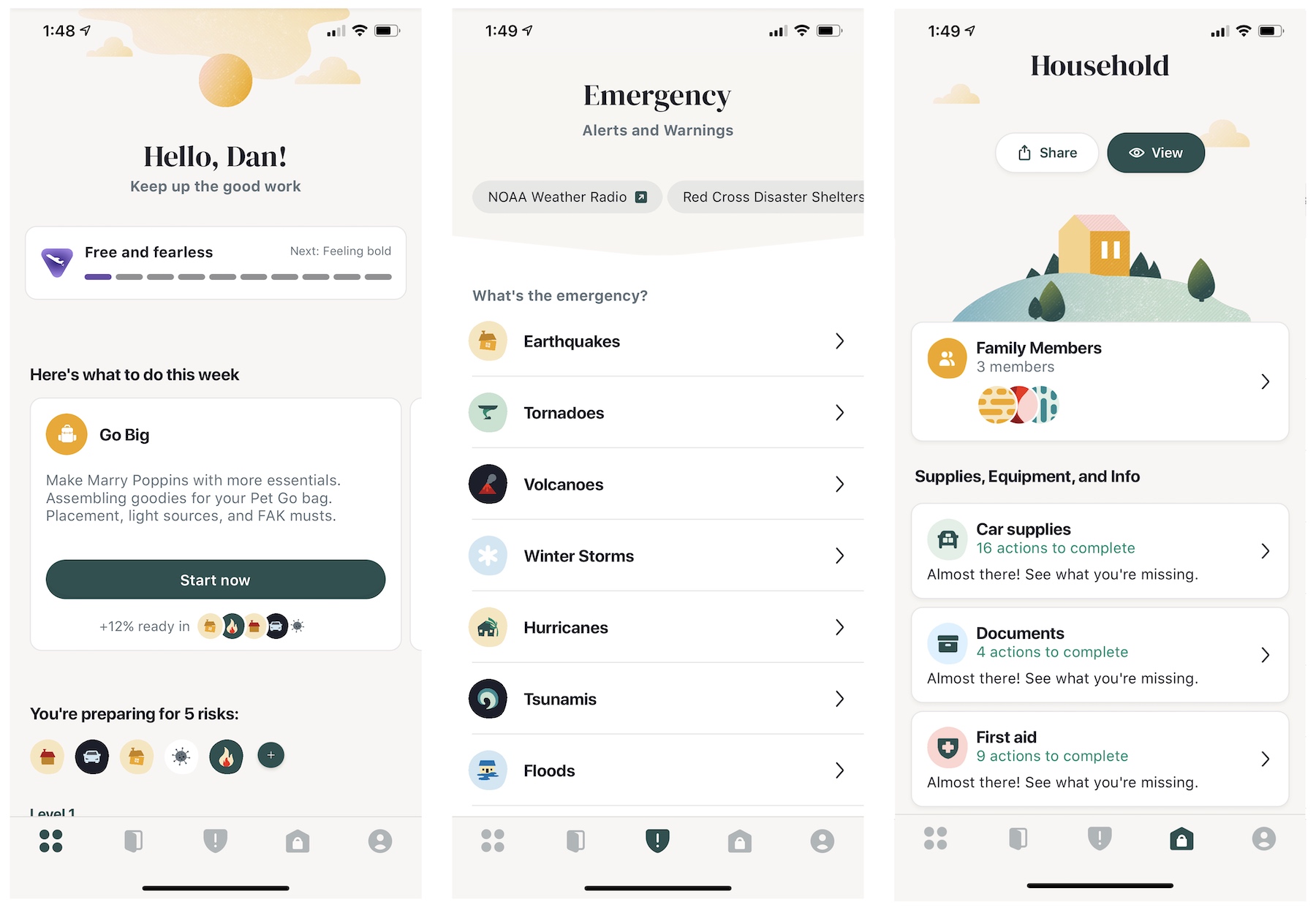
When a user first joins Harbor, they enter in their zip code and the app automatically determines the most likely potential emergencies based on location. Users can also manually add in emergency types. Kessler says that the app will get even more granular about this process as it layers in more data about individual addresses.

Once emergencies have been selected, the user is given weekly tasks based on the various preparedness involved, such as storing water or checking smoke detectors or having a stocked go-bag.

Screenshots of the new Harbor Protect app. (Image: Harbor)

Rather than asking the user to do everything at once, Harbor breaks the process into bite-sized activities that only take a couple of minutes and that the user should do each week.

“Our mentality is that this should be a habit-forming thing,” said Kessler. “It’s like brushing your teeth or working out or meditating. It’s not about doing it once and being done with it. We will help you form a habit as you go through it every single week.”

As the user progresses further through the app, tasks may become a bit more time-intensive, such as learning CPR.

Each activity also comes with associated learning. For example, the app may quiz a user on how to purify water for drinking — the answer may surprise you.

The app also has an associated retail storefront for third-party brands that Harbor approves as best in class. For now, a small commission on those products is the only revenue source for the company, but Kessler sees the opportunity to introduce new features to the app and go freemium.

Some additional features of Harbor include offline use and encrypted storage of important documents like Social Security cards, birth certificates, etc. Whether or not those features will remain free or be swept into the premium subscription version of the app is TBD. The company is testing everything, according to Kessler.

News: Understanding Airbnb’s summer recovery

New numbers concerning Airbnb’s summer performance were reported this week, with The Information adding to the performance figures that Bloomberg previously detailed earlier this year. Airbnb announced that it filed privately to pursue a debut this August. We have yet to see its public IPO filing, but, all the same, the flotation is coming. The Exchange

New numbers concerning Airbnb’s summer performance were reported this week, with The Information adding to the performance figures that Bloomberg previously detailed earlier this year.

Airbnb announced that it filed privately to pursue a debut this August. We have yet to see its public IPO filing, but, all the same, the flotation is coming.


The Exchange explores startups, markets and money. Read it every morning on Extra Crunch, or get The Exchange newsletter every Saturday.


If you’re like me, this year’s chaotic news cycles have made it hard to track any single story well. So this morning I want to put together a financially-focused chronology of Airbnb’s year, including the new data. Enough has happened over the past few months that any prior work we’ve done is too dated to use.

So, let’s rewind the clock and dig into the biggest financial moment from Airbnb’s 2020, capping off with the latest reporting, including details from the company itself on booking volume recovery as we go.

This should be easy, fun and useful. Let’s go!

Airbnb’s 2020

Heading into 2020, Airbnb promised to go public in 2020. Given that there’s technical pressure from holders of Airbnb stock options for the company go public inside the year, the vow made sense. Airbnb was founded around 12 years ago, meaning that the company was already a bit aged for a private firm on an IPO path. Toss in the options issue, and if Airbnb wanted to hold onto its workforce, this was the year to go.

And Airbnb was well-capitalized heading into this year, so a direct listing was in the cards.

Enter 2020 and a few unexpected events. When COVID-19 hit Airbnb’s key markets it took the travel market with it, leading to this column asking on March 18th whether the company could go public this year given the state of its industry. At that point we knew that Airbnb’s cash balance was about $2 billion heading into the start of the year, and that the company had reported Q4 2019 revenue of around $1.1 billion (+32% YoY, per Bloomberg) and negative earnings before interest, taxes, depreciation and amortization of $276.4 million (+92.4% YoY, per Bloomberg).

The company’s persistent lack of profits heading into 2020 was the subject of our curiosity at the start of the year.

In late March, Airbnb announced that it would pay out $250 million to hosts to soften the blow of the pandemic’s travel declines. That was not a cheap move, and when the company expanded the policy this column wrote that it was “an intelligent if expensive way to help preserve user trust.”

News: Lime revamps its app to include competitors, starting with Wheels ebikes

Lime might best known for its bright green micromobility devices, or more recently, its ownership of the iconic red Jump electric bikes. But now, the company is expanding in a way that could see it “housing” numerous other micromobility brands on its own app. The Lime app, which is used by customers to find and

Lime might best known for its bright green micromobility devices, or more recently, its ownership of the iconic red Jump electric bikes. But now, the company is expanding in a way that could see it “housing” numerous other micromobility brands on its own app.

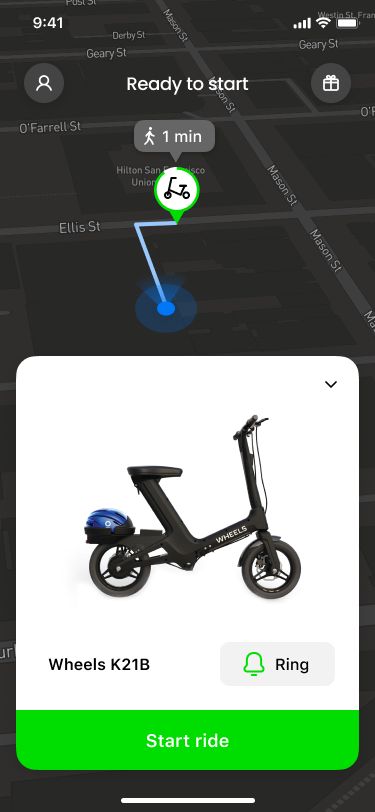
The Lime app, which is used by customers to find and rent its bikes and scooters, will start to include Wheels -branded electric bikes in certain cities. This winter, when a user in Austin, Berlin, Miami and Seattle opens the Lime app nearby Wheels vehicles will be automatically populate on the map along with pricing information. Customers can then use the Lime app to rent a Wheels ebike.

Wheels is just the beginning. Lime plans to add more shared micromobility providers as well as expand into other markets.

Wheels eBike -

Image Credits: Wheels

Lime said it chose Wheels to be the first to join its platform because of “Wheels’ unique design, and the safety and accessibility benefits it provides.” Wheels, which was started by Wag founders Jonathan and Joshua Viner, has a pedal-less e-bike that is designed to be easier to use. Wheels also developed a shareable helmet system that integrates onto the bike. The helmet, which can be unlocked with a smartphone, comes with removable hygienic liner.

“People are demanding more shared, electric and affordable transportation options to make short trips around their cities,” said Lime CEO Wayne Ting said in a statement. “In the near future, Lime will be the one-stop-shop for anyone looking to take a car-free trip under five miles. We’re excited to launch a platform that offers riders even more options given the vast and growing demand for alternative modes of urban transportation.”

The move isn’t signaling acquisition plans. Wheels will continue to be its own company. Instead, Viner, who is Wheels’ CEO, said partnering with Lime to be included on its app supports the company mission to  ensure that everyone has access to safe micromobility options.

“Given that Lime is the largest provider of shared micromobility services, we’re excited to partner with it in advancing our mission,” Viner said,

Wheels vehicles will also continue to be available for use on the Wheels app.

News: Virgin Hyperloop to safety test its hyperloop technology at new West Virginia certification center

Virgin Hyperloop announced a key step in its long-term goal of making hyperloop transportation a reality in the U.S. on Thursday. The company revealed it will be doing its certification testing at a new West Virginia facility. This will be crucial to the creation of a national safety certification framework for the U.S., which will

Virgin Hyperloop announced a key step in its long-term goal of making hyperloop transportation a reality in the U.S. on Thursday. The company revealed it will be doing its certification testing at a new West Virginia facility. This will be crucial to the creation of a national safety certification framework for the U.S., which will involve working directly with the U.S. Department of Transportation – a process already underway thanks to the DOT’s issuance of guidance documentation in advance of a framework this past July.

Before now, Virgin Hyperloop has been developing and testing its hyperloop technology at its full-scale proving ground in North Las Vegas. The company created a 500-meter long ‘development loop’ for running its tests, and performed its first full-scale system test in 2017. This new facility will be used specifically for certification, but will involve similar large-scale systems testing and involve ‘thousands’ of new jobs created, according to the company.

Virgin Hyperloop ultimately hopes to fully safety certify its system by 2025, and then ultimately enter into commercial operation with a real system by 2030, if all goes well.

News: A developer of therapy devices for athletes is now worth $700 million thanks to superstar backers like Naomi Osaka

A crew of high-wattage celebrity athletes have teamed up to invest $47.8 million into Hyperice, a developer of medical devices designed to help players and fitness buffs recover after workouts or games. Backing the company are some of the biggest names in baseball, basketball, football, surfing, and tennis including: Seth Curry, Anthony Davis, Rickie Fowler, DeAndre

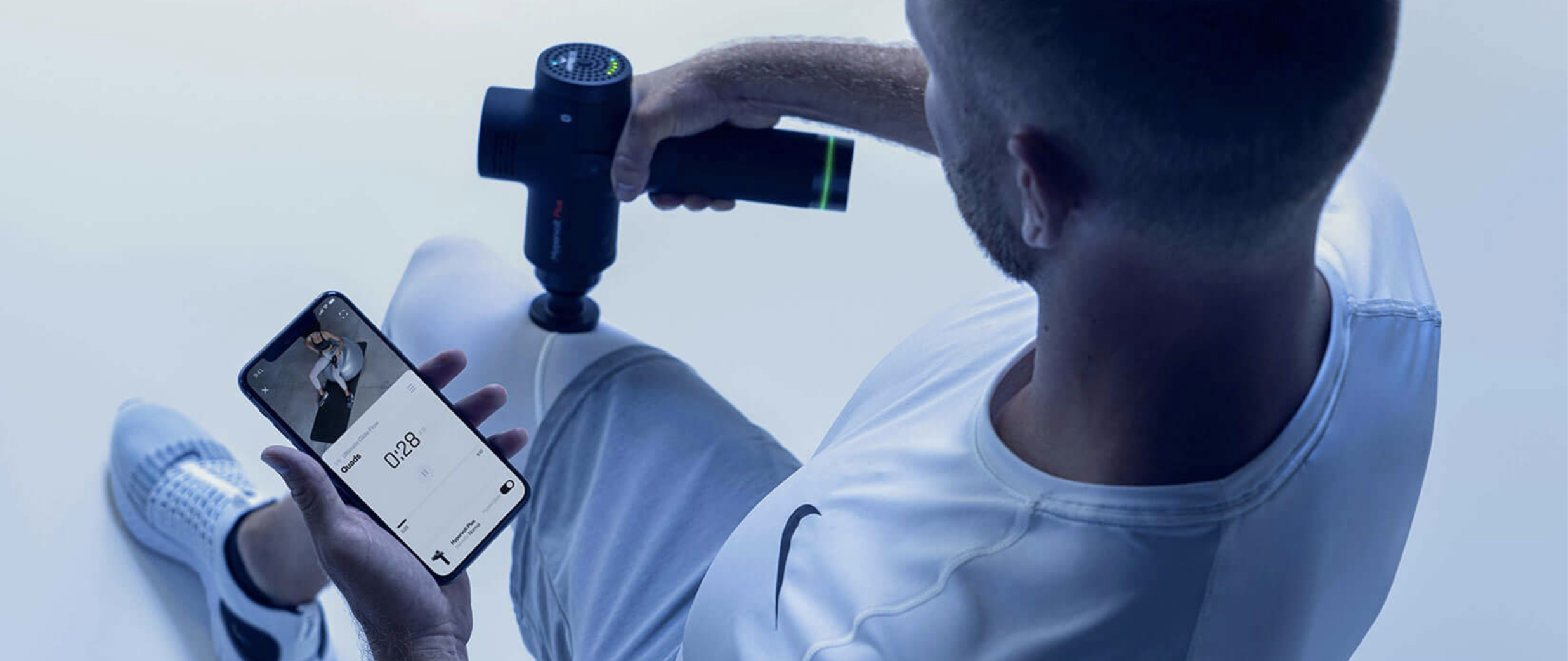
A crew of high-wattage celebrity athletes have teamed up to invest $47.8 million into Hyperice, a developer of medical devices designed to help players and fitness buffs recover after workouts or games.

Backing the company are some of the biggest names in baseball, basketball, football, surfing, and tennis including: Seth Curry, Anthony Davis, Rickie Fowler, DeAndre Jordan, Jarvis Landry, Patrick Mahomes, Christian McCaffrey, Ja Morant, Naomi Osaka, Chris Paul, Doc Rivers, Ben Simmons, Kelly Slater, Fernando Tatis Jr., J.J. Watt, Russell Westbrook, and Trae Young. 

The new investment gives the Irvine, Calif.-based company a valuation of $700 million, according to a statement from the company, and will be used for sales and marketing and product development, the company said.

And it wasn’t just the players that came on as investors behind the sports medicine tech developer. The investment arms of the nation’s biggest sporting leagues are also backing Hyperice. That group includes 32 Equity, which leads strategic investments for the NFL’s 32 Member Clubs; OneTeam, an investment group for the players’ associations representing baseball, basketball, soccer, football, and tennis; and the NBA itself.

The financial advisory and investment firms, Main Street Advisors and SC Holdings led the round, according to a statement.

Alongside its new cash, Hyperice has inked some key partnerships as the official recovery technology partner of the NBA and UFC leagues.

Image Credit: Hyperice

“We started Hyperice not only to help improve athletes’ performance and longevity, but to offer the same level of technology to everyday people,” said Anthony Katz, the company’s founder, in a statement. “Over the years, we have developed strong relationships with the athletes that use our products every day. Bringing them into the company as investors was a natural fit because of the authentic connection the athletes have with our brand.”

The next big push for the company is a software service to monitor and manage an athlete’s performance and recommend optimal rest and recuperation times based on information coming from integrated wearable devices and services like Apple Health and Strava, the company said.

“Since I’ve started using Hyperice, I’ve realized how crucial recovery is to getting the most out of my training and preparing my body for competition,” said tennis superstar Naomi Osaka, in a statement. “Hyperice has improved my body and overall health and I know will be fundamental to having a long and healthy career, which is why I invested and want to use my platform to encourage every athlete to take recovery seriously.”

News: As IBM spins out legacy infrastructure management biz, CEO goes all in on the cloud

When IBM announced this morning that it was spinning out its legacy infrastructure services business, it was a clear signal that new CEO Arvand Krishna, who took the reins in April, was ready to fully commit his company to the cloud. The move was a continuation of the strategy the company began to put in

When IBM announced this morning that it was spinning out its legacy infrastructure services business, it was a clear signal that new CEO Arvand Krishna, who took the reins in April, was ready to fully commit his company to the cloud.

The move was a continuation of the strategy the company began to put in place when it bought Red Hat in 2018 for the princely sum of $34 billion. That purchase signaled a shift to a hybrid-cloud vision, where some of your infrastructure lives on-premises and some in the cloud — with Red Hat helping to manage it all.

Even as IBM moved deeper into the hybrid cloud strategy, Krishna saw the financial results like everyone else and recognized the need to focus more keenly on that approach. In its most recent earnings report overall IBM revenue was $18.1 billion, down 5.4% compared to the year-ago period. But if you broke out just IBM’s cloud and Red Hat revenue, you saw some more promising results: cloud revenue was up 30 percent to $6.3 billion, while Red Hat-derived revenue was up 17%.

Even more, cloud revenue for the trailing 12 months was $23.5 billion, up 20%.

You don’t need to be a financial genius to see where the company is headed. Krishna clearly saw that it was time to start moving on from the legacy side of IBM’s business, even if there would be some short-term pain involved in doing so. So the executive put his resources into (as they say) where the puck is going. Today’s news is a continuation of that effort.

The managed infrastructure services segment of IBM is a substantial business in its own right, but Krishna was promoted to CEO to clean house, taking over from Ginni Rometti to make hard decisions like this.

While its cloud business is growing, Synergy Research data has IBM public cloud market share mired in single digits with perhaps 4 or 5%. In fact, Alibaba has passed its market share, though both are small compared to the market leaders Amazon, Microsoft and Google.

Like Oracle, another legacy company trying to shift more to the cloud infrastructure business, IBM has a ways to go in its cloud evolution.

As with Oracle, IBM has been chasing the market leaders — Google at 9%, Microsoft 18% and AWS with 33% share of public cloud revenue (according to Synergy) — for years now without much change in its market share. What’s more, IBM competes directly with Microsoft and Google, which are also going after that hybrid cloud business with more success.

While IBM’s cloud revenue is growing, its market share needle is stuck and Krishna understands the need to focus. So, rather than continue to pour resources into the legacy side of IBM’s business, he has decided to spin out that part of the company, allowing more attention for the favored child, the hybrid cloud business.

It’s a sound strategy on paper, but it remains to be seen if it will have a material impact on IBM’s growth profile in the long run. He is betting that it will, but then what choice does he have?

WordPress Image Lightbox Plugin