Yearly Archives: 2020

News: AC Ventures announces the first close of its $80 million fund for Indonesian startups

As one of the world’s most populated countries, with a fast-growing internet economy, Indonesia offers plenty of opportunity for startups. AC Ventures wants to tap into that with its $80 million ACV Capital III L.P. fund. The firm announced the first close of the fund today, with $56 million already committed. The capital will be

As one of the world’s most populated countries, with a fast-growing internet economy, Indonesia offers plenty of opportunity for startups. AC Ventures wants to tap into that with its $80 million ACV Capital III L.P. fund. The firm announced the first close of the fund today, with $56 million already committed.

The capital will be invested into 30 Indonesian startups over the next three years, with first checks of up to $3 million going to seed to Series A-stage companies.

Based in Jakarta with a team of twelve people, ACV is a strategic alliance between AC Ventures and Indies Capital. ACV’s founding partners are Adrian Li and Michael Soerijadji, both founders and managing partners at AC Ventures, and Indies Capital managing partner Pandu Sjahrir. Sjahrir is also on the board of two Indonesian unicorns, Gojek and Sea.

The alliance has already made investments in nine startups: Shipper, Kargo, Stockbit, Bukuwarung, ESB, Co-Learn, KitaBeli, Aruna and Soul Parking. It will focus on e-commerce, financial tech, startups that serve MSMEs (or micro, small and medium-sized enterprises) and digital media-enabled services, which Li told TechCrunch could encompass sectors like education and healthcare, in addition to entertainment.

ACV also plans to work closely with the companies it invests in, guiding them through business development, key executive hires and later rounds of funding. Its also launched programs like AC Academy to coach founders on skills like growth hacking and fundraising.

Internet penetration and online payments have grown a lot over the past five years, but e-commerce still accounts for a tiny fraction of Indonesia’s overall retail market. This gives startups plenty of room to innovate. For example, logistics is very fragmented in Indonesia, because it has 600 inhabited islands. Shipper, another ACV investment, offers a platform to help sellers manage multiple shipments through different providers at once.

Fundraising for ACV Capital III began before the COVID-19 pandemic and despite the crisis’ economic toll, Li said that in countries like Indonesia, it may speed up the adoption of many kinds of technology. For example, BukuWarung, which focuses on digitizing operations for neighborhood shops and other small businesses, recently launched digital payments in response to demand for online orders and contactless payments. Another ACV portfolio company, ESB, is doing the same thing for restaurants, and Li said interest in its services increased as food and beverage businesses turned to online orders and deliveries during social distancing measures.

“We’re really seeing some great opportunities in Indonesia, and we’re seeing more interest globally going into startups in Indonesia,” said Li. “This is the world’s fourth most populous country and there are so many products and services which can be delivered better and more efficiently through technology.”

News: India’s Razorpay becomes unicorn after new $100 million funding round

Bangalore-headquartered Razorpay, one of the handful of Indian fintech startups that has demonstrated accelerated growth in recent years, has joined the coveted unicorn club after raising $100 million in a new financing round, the payments processing startup said on Monday. The new financing round, a Series D, was co-led by Singapore’s sovereign wealth fund GIC

Bangalore-headquartered Razorpay, one of the handful of Indian fintech startups that has demonstrated accelerated growth in recent years, has joined the coveted unicorn club after raising $100 million in a new financing round, the payments processing startup said on Monday.

The new financing round, a Series D, was co-led by Singapore’s sovereign wealth fund GIC and Sequoia India, the six-year-old Indian startup said. The new round valued the startup at “a little more than $1 billion,” co-founder and chief executive Harshil Mathur told TechCrunch in an interview.

Existing investors Ribbit Capital, Tiger Global, Y Combinator, and Matrix Partners also participated in the round, which brings Razorpay’s total to-date raise to $206.5 million.

Razorpay accepts, processes, and disburses money online for small businesses and enterprises. In recent years, the startup has expanded its offerings to provide loans to businesses and also launched a neo-banking platform to issue corporate credit cards, among other products.

Mathur and Shashank Kumar (pictured above), who met each other at IIT Roorkee, started Razorpay in 2014. They began to explore opportunities around payments processing business after realizing just how difficult it was for small businesses such as young startups to accept money online less than a decade ago. There were very few payment processing firms in India then and startups needed to produce a long-list of documents.

The early team of about 11 people at Razorpay shared a single apartment as the co-founders rushed to meet with over 100 bankers to convince banks to work with them. The conversations were slow and remained in a deadlock for so long that the co-founders felt helpless explaining the same challenge to investors numerous times, they recalled in an interview last year.

To say things have changed for Razorpay would be an understatement. It’s become the largest payments provider for business in India, said Mathur. Razorpay, which competes with Prosus Ventures’ PayU, accepts a wide-range of payment options including credit cards, debit cards, mobile wallets, and UPI.

“Razorpay has established itself as a clear leader, with its strong focus on customer experience and product innovation,” said Choo Yong Cheen, Chief Investment Officer for Private Equity at GIC, in a statement. “GIC has a long track record of partnering with leading fintech companies globally and is delighted to partner with Razorpay in its journey to transform payments and banking.”

Some of Razorpay’s clients include budget lodging decacorn Oyo, e-commerce giant Tokopedia, top food delivery startups Zomato and Swiggy, online learning platform Byju’s, ride-hailing giant Gojek, supply chain platform Zilingo, caller ID service Truecaller, travel ticketing firms Yatra and Goibibo, and telecom giant Airtel.

The startup expects to process about $25 billion in transactions — up five times from last year — for nearly 10 million of its customers this year, said Mathur.

He attributed some of the growth to the coronavirus pandemic, which he said has accelerated the digital adoption among many businesses.

On the neo-banking and capital side, Mathur said, Razorpay expects RazorpayX and Razorpay Capital to account for about 35% of the startup’s revenue by the end of March next year.

Mathur said the startup’s payment processing service continues to be its fastest growing business and does not need much capital to grow, so the startup will be deploying the fresh funds to expand its neo-banking offerings to include vendor payment, and expense and tax management and other features.

The startup, which aims to work with over 50 million businesses by 2025, may also acquire a few firms as it explores opportunities around inorganic expansion in the neo-banking category, said Mathur.

“We will continue to make an impactful contribution to the growth of the industry, aid adoption in the under-served markets and drive new practices and a new thinking for the industry to follow. And this investment fits perfectly with our growth strategy,” he said.

While the coronavirus pandemic has slowed down deal-makings in India, about half a dozen startups in the country including online leaning platform Unacademy, and Pine Labs have secured the unicorn status.

News: Twilio is buying customer data startup Segment for between $3B and $4B

Sources have told TechCrunch that Twilio intends to acquire customer data startup Segment for between $3 and $4 billion. Forbes broke the story on Friday night, reporting a price tag of $3.2 billion. We have heard from a couple of industry sources that the deal is in the works and could be announced as early

Sources have told TechCrunch that Twilio intends to acquire customer data startup Segment for between $3 and $4 billion. Forbes broke the story on Friday night, reporting a price tag of $3.2 billion.

We have heard from a couple of industry sources that the deal is in the works and could be announced as early as Monday.

Twilio and Segment are both API companies. That means they create an easy way for developers to tap into a specific type of functionality without writing a lot of code. As I wrote in a 2017 article on Segment, it provides a set of APIs to pull together customer data from a variety of sources:

Segment has made a name for itself by providing a set of APIs that enable it to gather data about a customer from a variety of sources like your CRM tool, customer service application and website and pull that all together into a single view of the customer, something that is the goal of every company in the customer information business.

While Twilio’s main focus since it launched in 2008 has been on making it easy to embed communications functionality into any app, it signaled a switch in direction when it released the Flex customer service API in March 2018. Later that same year, it bought SendGrid, an email marketing API company for $2 billion.

Twilio’s market cap as of Friday was an impressive $45 billion. You could see how it can afford to flex its financial muscles to combine Twilio’s core API mission, especially Flex, with the ability to pull customer data with Segment and create customized email or ads with SendGrid.

This could enable Twilio to expand beyond pure core communications capabilities and it could come at the cost of around $5 billion for the two companies, a good deal for what could turn out to be a substantial business as more and more companies look for ways to understand and communicate with their customers in more relevant ways across multiple channels.

As Semil Shah from early stage VC firm Haystack wrote in the company blog yesterday, Segment saw a different way to gather customer data, and Twilio was wise to swoop in and buy it.

Segment’s belief was that a traditional CRM wasn’t robust enough for the enterprise to properly manage its pipe. Segment entered to provide customer data infrastructure to offer a more unified experience. Now under the Twilio umbrella, Segment can continue to build key integrations (like they have for Twilio data), which is being used globally inside Fortune 500 companies already.

Segment was founded in 2011 and raised over $283 million, according to Crunchbase data. Its most recent raise was $175 million in April on a $1.5 billion valuation.

Twilio stock closed at $306.24 per share on Friday up $2.39%.

Segment declined to comment on this story. We also sent a request for comment to Twilio, but hadn’t heard back by the time we published.  If that changes, we will update the story.

News: Hands on with Telepath, the social network taking aim at abuse, fake news and, to some extent, ‘free speech’

There’s no doubt that modern social networks have let us down. Filled with hate speech and abuse, moderation and anti-abuse tools were an afterthought they’re now trying to cram in. Meanwhile, personalization engines deliver us only what will keep us engaged, even if it’s not the truth. Today, a number of new social networks are

There’s no doubt that modern social networks have let us down. Filled with hate speech and abuse, moderation and anti-abuse tools were an afterthought they’re now trying to cram in. Meanwhile, personalization engines deliver us only what will keep us engaged, even if it’s not the truth. Today, a number of new social networks are trying to flip the old model on its head — whether that’s attempting to use audio for more personal connections, like Clubhouse, eliminate clout chasing, like Twelv, or, in the case of new social network Telepath, by designing a platform guided by rules that focus on enforcing kindness, countering abuse, and disabling the spread of fake news.

Many of these early efforts are already facing challenges.

Private social network Clubhouse has repeatedly demonstrated that allowing free-flowing communication in the form of audio conversations is an area that’s notoriously difficult to moderate. The app, though still unavailable to the broader public, courted controversy in September when it allowed anti-Semitic content to be discussed in one of its chat rooms. In the past, it had also allowed users to harass an NYT reporter openly.

Meanwhile, Twelv, a sort of Instagram alternative, ditches the “Like” button concept and all the other features now overloading Instagram, which had once been just a photo-sharing network. But, unfortunately, this also means there’s no easy way to find and follow interesting users or trends on Twelv — you have to push friends to join the app with you or know someone’s username to look them up, otherwise it shows you no content. The result is a social network without the “social.”

Telepath, meanwhile, is a more interesting development.

It’s pursuing an even loftier goal in social networking — creating a hate speech-free platform where fake news can’t be distributed.

No social network to date has been able to accomplish what Telegraph claims it will be able to do in terms of content moderation. Its ambitions are optimistic and, as the network remains in private beta, they’re also untested at scale.

Though positioned as a different kind of social network, Telepath isn’t actually focused on developing a new sharing format that could encourage participation — the way TikTok popularized the 15-second video clip, for example, or how Snapchat turned the world onto “Stories.”

Instead, Telepath, at first glance, looks very much like just another feed to scroll through. (And given the amount of linked Twitter content in Telepath posts, it’s almost serving as a backchannel for the rival platform.)

The startup itself was founded by former Quora employees, including former Quora Business & Community head, Marc Bodnick, now Telepath Executive Chairman; and former Quora Product Lead, Richard Henry, now Telepath CEO. They’re aided by former Quora Global Writer Relations Lead, Tatiana Estévez, now Telepath Head of Community and Safety; and Ro Applewhaite, previously research staff for Pete Buttigieg for America, now Telepath Head of Outreach.

It’s backed by a couple million in seed funding, led by First Round Capital (Josh Kopelman). Other backers include Unusual Ventures (Andy Johns), Slow Ventures (Sam Lessin), and unnamed angels. Bodnick and his wife, Michelle Sandberg, also invested.
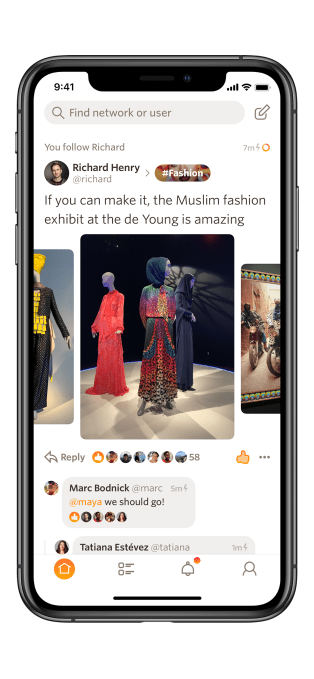
Image Credits: Telepath

When talking about Telepath, it’s clear the founders are nostalgic for the early days of the web — before all the people joined, that is. In smaller, online communities in years past, people connected and made internet friends who would become real-world friends. That’s a moment in time they hope to recapture.

“I’ve benefited a lot by meeting people through the internet, forming relationships and having conversations — that sort of thing,” says Henry. “But the internet just isn’t fun in the ways that it used to be fun.”

He suggests that the anonymity offered by networks like Reddit and Twitter make it more difficult for people to make real-world connections. Telepath, with its focus on conversations, aims to change that.

“If we facilitate a really fun, kind, and empathetic conversation environment, then lots of good things can happen. And it might be that you potentially find someone you want to work with, or you end up getting a job, or you meet new friends, or you end up meeting offline,” Henry says.

Getting Started

To get started on Telepath, you join the network with your mobile phone number and name, find and follow other users, similar to Twitter, then join interest-based communities as you would on Reddit. When you launch the app, you’re meant to browse a home feed where conversation topics from your communities and interesting replies are highlighted — orange for those replies from people you follow and gray for those that Telepath has determined are worth being elevated to the home screen.

As you read through the posts and visit the communities, you can “Thumbs Up” content you like, downvote what you don’t, reply, mute, block, and use @usernames to flag someone.

Image Credits: Telepath, screenshot via TechCrunch

Another interesting design choice: everything on Telepath disappears after 30 days. No one will get to dig through your misinformed posts from a decade ago to shame you in the present, it seems.

What’s most different about Telepath, however, is not the design or format. It’s what’s taking place behind the scenes, as detailed by Telepath’s rules.

Users who join Telepath must agree to “be kind,” which is rule number one. They must also not attack one another based on identity or harass others. They must use a real name (or their preferred name, if transgender), and not post violent content or porn. “Fake news” is banned, as determined by a publisher’s attempts at disseminating misinformation on a regular basis.

Telepath has even tried to formalize rules around how polite conversations should function online with rules like “don’t circle the drain” — meaning don’t keep trying to have the last word in a contentious debate or circumvent a locked thread; and “stay on topic,” which means don’t bombard a pro-x network with an anti-x agenda (and vice versa.)

Image Credits: Telepath

To enforce its rules, Telepath begins by requiring users to sign up with a mobile phone number, which is verified as a “real” number associated with a SIM card, and not a virtual one — like the kind you could grab through a “burner” app.

In order to the create its “kind environment,” Telepath says it will sacrifice growth and hire moderators who work in-house as long-term, trusted employees.

“All the major social networks essentially grew in an unbounded way,” explains Henry. “They had 100 million-plus active users, then were like, ‘okay, now how do we moderate this enormous thing?’,” he continues. “We’re in a lucky position because we get to moderate from day one. We get to set the norms.”

Moderation

“Day one” was a long time in the making, however. The team rebuilt the product four times over a couple of years. Now, they say they’ve developed internal tools that provide moderators with visibility into the system.

According to moderator head Estévez, these include a reporting system, real-time content streams organized in to buckets (e.g. a bucket for “only new users”), as well as various searchable ways to get context around a report or a particular problematic user.

“Really good tools — including real-time streams of content, classifiers for problematic behavior, searchable context, and making it hard for banned users to return — mean that each moderator we hire will be quite scalable. We think that there are network effects around positive behavior,” she says.
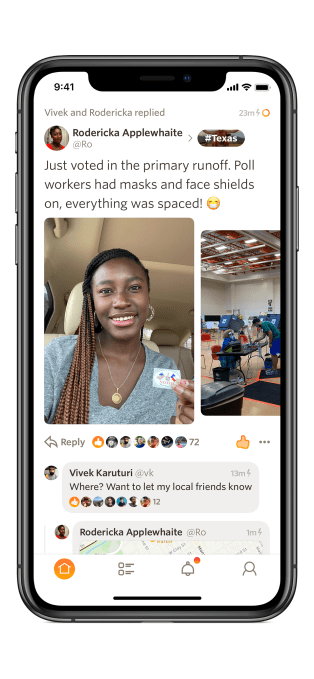
Image Credits: Telepath

“It’s our intention to scale up fast and high accuracy moderation decision-making, which means that we’re going to be investing a lot of engineering effort in getting these tools right,” she adds.

The founders have decided not to use any third-party systems to aid in moderation at this time, they told TechCrunch.

“We looked at a bunch of off-the-shelf [moderation systems], and we’re basically building everything that we need from scratch,” says Henry. “We just need more control over being able to tweak how these systems work in order to get the outcome that we want.”

The investment in human moderation over automation will also require additional capital to scale. And Telepath’s decision to not run ads means it will eventually need to consider alternative business models to sustain itself. The company, for now, is interested in subscriptions, but hasn’t made decisions on this front yet.

Banning the trolls

Though Telepath has only 4,000-plus users in its private beta, the two-person moderation team is already tasked with moderating posts from across the thousands of pieces of content shared on a daily basis. (The company doesn’t disclose how many violations it takes action against per day, on average.)

When a user breaks the rules, moderators may first warn them about the violation and may require them to take down or edit a specific post. No one is punished for making a mistake or being unaware of the rules — they’re first given a chance to fix it.

But if a user breaks the rules repeatedly or in a way that seems intentional, such as engaging in a harassment campaign around another user, they are banned entirely. Because of the phone number verification system, they also can’t easily return — unless they go out and purchase a new phone, that is.

These moderation actions don’t necessarily have to follow strict guidelines, like a “three strikes rule,” for example. Instead, the way the rules may be enforced are determined on a case-by-case basis. Where Telepath leans towards stricter enforcement is around intentional and flagrant violations, or those where there’s a pattern of bad behavior. (As with Reply Guys and sealioning behavior.)

In addition, unlike on Facebook and Twitter — platforms that sometimes seem to be caught off guard by viral trends in need of moderation — Telepath intends for nothing to go viral on its platform without having been seen by a human moderator, the company says.

Fake News

Telepath is also working to develop a reputation score for users and trust scores for publishers.

In the case of the former, the goal is help the company determine how likely the user is to break Telepath’s rules. This isn’t developed yet, but would be something used behind the scenes, not put on display for all to see.

For publishers, the trust score will be how factually correct they are what percentage of the time.

Image Credits: Thomas Faull (opens in a new window) / Getty Images

“For example, if the most popular article in terms of views from the publisher is just completely factually incorrect or intentionally misleading…that should have a bigger penalty on the trust score,” explains Henry. “The problem is that the incumbent platforms have rules against disinformation, but the problem is that they don’t enforce them out of this desire to appear balanced.”

Bodnick adds this challenge is not as insurmountable as it seems.

“Our view is that, actually, a handful of outlets are responsible for most of the disinformation…I don’t think our intent is to build out some modern-day truth system that will figure out if The Washington Post is slightly more accurate than The New York Times. I think the main goal will be to identify repeat disinformation publishers — determine that they are perpetual publishers of disinformation, and then crush their distribution,” says Bodnick.

This plan, however, involves setting rules on Telepath that fly in the face of what many today consider “free speech.” In fact, Telepath’s position is that free speech-favoring social networks are a failed system.

“The problem, in our view, is that when you take this free-speech centered approach that sort of says: ‘I don’t care how many disinformation posts Breitbart has published in the last — three years, three months, three weeks — we’re going to treat every new post as if it could be equally likely to be truthful as any other post in the system,’” says Bodnick. “That is inefficient.”

“That’s how we will scale this disinformation rule — by determining which relatively small group of publishers — I’m guessing it’s hundreds, low hundreds — are responsible for publishing lots of disinformation. And then take their distribution down,” he says.

This opinion on free speech is shared by the team.

“We’re trying to build a community, which means that we have to make certain tradeoffs,” adds Estévez. “In the rules we refer to Karl Popper’s paradox of tolerance — to maintain a tolerant society, you have to be intolerant of intolerance. We have no interest in giving a platform to certain kinds of speech,” she notes.

This is the exact opposite approach that conservative social media sites are taking, like Parler and Gab. There, the companies believe in free speech to the point that they’ve left up content posted by an alleged Russian disinformation campaign, saying that no one filed a report about the threat, and law enforcement hadn’t reached out. These MAGA-friendly social networks are also filled with conspiracies, un-fact checked reports, and, frankly, a lot of vitriol.

The expectation is that if you go on their platforms, you’re in charge of muting and blocking trolls or the content you don’t like. But by their nature, those who join these platforms will generally find themselves among like-minded users.

Twitter, meanwhile, tries to straddle the middle ground. And in doing so, has alienated a number of users who think it doesn’t go far enough in counteracting abuse. Users report harassment and threats, then wait for days for their report to be reviewed only to be told the tweet in question didn’t break Twitter’s terms.

Telepath sits on the other end of the spectrum, aggressively moderating content, blocking and banning users if needed, and punishing publications that don’t fact check or those that peddle misinformation.

“Kindness” carve-outs

And yet, despite all this extra effort, Telepath doesn’t always feature only thoughtful and kind-hearted conversations.

That’s because it has carved out an exception in its kindness rule that allows users to criticize public figures, and because it doesn’t appear to be taking action on what could be problematic, if not violating, conversations.
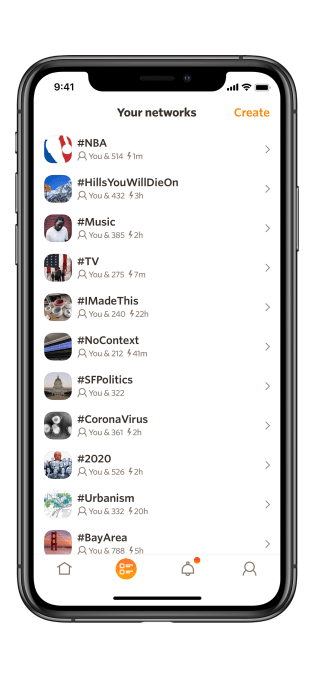
Image Credits: Telepath

A user’s experience in these “gray” areas may vary by community.

Telepath’s communities today focus on hobbies and interests, and can range from the innocuous — like Books or Branding or Netflix or Cooking, for example — to the potentially fraught, like Race in America. In the latter, there have been discussions about the capitalization of “Black” where it was suggested that maybe this wasn’t a useful idea. In another, sympathy is expressed for a person who was falsely pretending to be a person of color.

In a post about affordable housing, someone openly wondered if a woman who said she didn’t want to live near poor people was actually racist. Another commenter then noted that gang members can bring down property values.

A QAnon community, meanwhile, discusses the movement and its ridiculous followers from afar — which is apparently permitted — though supporting it in earnest would not be.

There are also nearly 20 groups about things that “suck,” as in GOPSucks or CNNSucks or QuibiSucks.

Anti-Trump content, meanwhile, can be found on a network called “DumbHitler.”

Meanwhile, online publishers who routinely post discredited information are banned from Telepath, but YouTube is not. So if feel you need to share a link to a video of Rudy Giuliani accusing Biden of dementia, you can do so — so long as you don’t call it the truth.

And you can post opinions about some terrible people in which you describe them as terrible, thanks to the public figure carve-out.

Cheater and deadbeat dad? Go ahead and call them a “disgusting human being.” VP Pence was referred to by a commenter as “SmugFace mcWhitey” and Ronny Jackson is described as “such a piece of sh**.”

Explains Estévez, that’s because Telepath’s “be kind” rule is not intended to protect public figures from criticism.

“It is important to note that toxicity on the internet around politics isn’t because people are using bad words, but because people are using bad faith arguments. They are spreading misinformation. They are gaslighting marginalised groups about their experiences. These are the real issues we’re addressing,” she says.

She also notes that online “civility” is often used to silence people from marginalized groups.

“We don’t want Telepath’s focus on kindness to be turned against those who criticize powerful people,” she adds.

In practice, the way this plays out on Telepath today is that it’s become a private, closed door network where users can bash Trump, his supporters and right-wing politicians in peace from Twitter trolls. And it’s a place where a majority agrees with those opinions, too.

It has, then, seemingly built the Twitter that many on the left have wanted, the way that conservative social media, like Gab and Parler, built what the right had wanted. But in the end, it’s not clear if this is the solution for the problems of modern social media or merely an escape. It also remains to be seen whether a mainstream user base will follow.

Telepath remains in a closed beta of indefinite length. You need an invite to join.

News: Venture capital gets less diverse in 2020

Welcome back to The TechCrunch Exchange, a weekly startups-and-markets newsletter. It’s broadly based on the daily column that appears on Extra Crunch, but free, and made for your weekend reading.

Welcome back to The TechCrunch Exchange, a weekly startups-and-markets newsletter. It’s broadly based on the daily column that appears on Extra Crunch, but free, and made for your weekend reading. You can subscribe here.


First, a big congrats on making it through the week. If you live in the United States, you just endured one of the wildest news weeks ever. Rapid-fire headlines and nigh-panic have been our lot since last Friday when the president announced he was COVID-19 positive. We’re all very tired. You get points for just surviving.

Second, I wanted to bring you something uplifting this weekend, as you deserve it. Sadly, that’s not what we’re going to talk about.

On Friday, The Exchange covered new data concerning the venture capital results of female founders during the third quarter. The data set was U.S.-focused, but we can presume that it is illustrative of global trends. Regardless of that nuance, the data was depressing.

In the third quarter, U.S.-based female founders and co-founders raised 136 rounds worth $434 million, per PitchBook data. That was a handful more rounds than Q2 2020, but far fewer dollars. And it was down across the board compared to Q3 2019. Even more, as we noted in the piece, the aggregate venture capital world did very well.

Here’s some PwC data making that point, and a bit more from my old employer Crunchbase. What matters is that female founders are doing worse when VCs are super active. This will only perpetuate inequalities and inequities in the startup market.

Speaking of which, here’s some more bad news. Vern Howard Jr., the co-founder and CEO of Hallo, a startup that has raised nearly $2 million, according to Crunchbase, compiled some data on Black founders’ VC performance in Q3. Here’s what he set out to do:

[W]e wanted to put hard numbers behind the promises of so many venture capitalists and create a benchmark for how we can track the investment into black founders over time. So our team pulled a list from Crunchbase of all the startups globally with a total funding amount of $500,000 — $20,000,000 and who raised a round between July 1 and October 1. There were over 1383 companies here and our team went through one by one, to see how many Black founders there were.

There were 31.

Now, you could open up the funding bands to include both smaller and larger funding events, but regardless of the data boundaries, the resulting number — just 2.2% of the total — is a disgrace.

Market Notes

Various and Sundry

  • Continuing our coverage of the savings and investing boom that fintech startups around the world have been riding this year, Freetrade, a British Robinhood if you will, told The Exchange that it crossed £1 billion in September order volume. That’s not bad!
  • Freetrade also recently launched a paid version of its service, as the payment-for-order-flow method of generating revenue that Robinhood is growing on the back of is not allowed across the pond.
  • Sticking to the fintech world, Yotta Savings is a startup that provides a savings option to its users, with the added chance of winning a big monetary prize for having stored their money with the startup. Folks have been whispering in my ear about the company for a bit, but I’ve held off writing about it until now as it was not clear to me if the model was merely a gimmick, or something that would actually attract customers.
  • Well, Yotta grew from 8,000 accounts to more than 30,000 in the past few weeks and has reached the $100 million deposit mark. So, I guess we now care.
  • Coinbase lost one in 20 employees to its new strategy of standing neutral during political times on anything that its CEO deems as unrelated to its core mission, which, as a for-profit company with tectonic financial backing, is making money.
  • On the same topic, Can from The Margins made a salient point that “no politics is a political stance.” Correct, and it is a very conservative one at that.
  • Even more, Coinbase’s CEO made noise about how his company will “work to create an environment where everyone is welcome and can do their best work, regardless of background, sexual orientation, race, gender, age, etc.” Whether he likes it or not, this is a political stance, and one that has nothing to do with the company’s stated core mission. And a political fight earned it — namely, equal access to the workplace.
  • I’ll toss in a plug for this piece on the matter from a VC that TechCrunch published, and these thoughts from a tech denizen on how to guarantee that your company lands on the wrong side of history on essentially everything.
  • Wrapping our grab-bag this week, Ping Identity bought ShoCard. Ping is now a public company, so normally its deals would land outside our wheelhouse. But we care in this case because TechCrunch has covered ShoCard (2015: “ShoCard Is A Digital Identity Card On The Blockchain”), and because the startup does crypto-related work.
  • Seeing a public company snap up a blockchain startup for real money, on purpose and out loud, doesn’t happen every day. More here if you want to read about the deal.

Wrapping, this newsletter is a lot of fun and I appreciate your reading it. It is, also, a work in progress. So feel free to hit respond to it and let me know what you want to see more of. Or hit respond and send me a cute pic of your pet. Either is fine by me.

Chat soon,

Alex

News: Public investors stay in love with tech, as Root and Affirm file to IPO

Why there are so many tech IPOs right now.

Editor’s note: Get this free weekly recap of TechCrunch news that any startup can use by email every Saturday morning (7 a.m. PT). Subscribe here.

Why are there so many tech IPOs right now? Startups are finding that they can get higher valuations from public markets than private ones these days, because so many public investors want to put serious money in tech. Also, the lure of the future, the benevolence of the Fed, the retail investor boom, the sheer number of unicorns that have been waiting for any decent moment to go, the new ways a company can go public… these are some of the reasons Alex Wilhelm found after reviewing the latest listings and quarterly data about tech in public markets.

Various political and economic turmoils threaten to end the run, but the impact to the startup world has arrived. Consider it for a minute before the newsletter dives into stocks, SPACs, emerging industries and other useful startup news.

From this IPO boom, there’ll be another wave of startup employee wealth flooding into adjacent real-world spaces, but spread more broadly outside of the Bay Area than the days of Facebook and Twitter IPOs. Some of those employees will become investors and maybe founders, and the now-public startups will replace those positions with big-company people. The dynamics around tech hiring will be further reshaped in surprising new ways, all combined with the other changes happening like remote work.

Today, if you’re founding a startup now, you can now confidently chart new ways to build your company long-term that previous generations of founders could barely imagine.

This coming decade, we might see a startup go public that raises from pre-seed rolling funds first, pulls in newly legalized crowdfunding, matches with the right VCs from among the thousands that have are operating these days — or perhaps the startup raises debt because it’s doing that well. It could stay private as long as it wants using the various financing and secondary market possibilities that have been figured out over the last decade. Then, when it is ready to go public, it could choose between traditional options, the perfect SPAC and a direct listing, and keep the shareholder pool in favor of the true believers who have been with the company over the course of the journey.

This current group of IPOs also demonstrates something else. Tech is no longer defined as some profitless, highly valued consumer tech startup in San Francisco. It can come from anywhere, it can solve practical problems, it can make real money, and it can keep building and growing — provided you’re okay with some ongoing risk. No wonder public markets like tech these days.

Take a look at Root Insurance, an insurtech unicorn that has already helped define the Columbus, Ohio startup scene. It’s a “startup Rorscach test,” as Alex details this week about its new IPO filing. “You can find things to like (improving adjusted margins! revenue growth!), and you can find things to not like (spiraling losses! negative margins!) very easily.”

Here’s more from the Extra Crunch article:

It appears that the tailwind that many insurance providers have seen during COVID-19 has provided Root with a nice boost (driving fell during the pandemic, leading some insurance providers to return premiums.) Root is taking advantage of the moment by filing when it can show sharply improved economics.

That’s smart. But how do those improved economics bear out in traditional accounting? Let’s find out:

  • Root’s revenue has skyrocketed from $43.3 million in 2018 to $290.2 million in 2019. In the first half of 2020, Root managed $245.4 million in revenue, up 135.73% from what it managed in the first half of 2019.
  • Root’s losses have also shot higher, from a net loss of $69.1 million in 2018 to $282.4 million in 2019. The startup has managed to consistently lose more money over time. This was also true more recently, when its H1 2020 net loss of $144.5 million dwarfed its H1 2019 loss of $97.0 million.

The other filing this week is for Affirm, which provides a point-of-sale credit for customers (without all the tricks of credit cards). It’s also a symbol of how innovation works across the decades, for those future founders who are studying the IPO experiments of unicorns today.

The company is a high-flying unicorn with a practical purpose from serial entrepreneur Max Levchin, who has also helped shape the concept of the modern startup — from cofounding Paypal and making numerous angel investments over the years, to Slide, a profitless, highly valued consumer tech company in San Francisco a decade ago. It’s not widely understood outside of tech, Slide and other social media companies helped pioneer the growth and engagement techniques that subsequent startups applied across SaaS, e-commerce, fintech and real-world sectors. Today, Root and Affirm and many of the other companies in this era of IPOs are standing on the lessons of those years.

Image Credits: Getty Images

SPAC growing pains

Special Purpose Acquisition Companies are sure to provide valuable lessons, as a growing group of startups use these investment vehicles to ease into public markets. Here’s the latest look at the action, starting with this disturbing quote that Connie Loizos got from one expert this week.

According to Kristi Marvin, a former investment banker who now runs the data site SPACInsider, she’s having, and hearing about, conversations with a much wider range of people interested in launching SPACs than in past years — and not all of them are necessarily equipped to manage the vehicles.

“You ask, ‘Have you ever acquired a company for $500 million or more? Do you have operating experience in the vertical that you’re targeting? Do you understand the reporting requirements involved?’ Often,” she says, “the answers are no.”

That was in the context of a controversial former Uber executive starting a SPAC; Connie also looked at gender representation in this emerging slice of high finance. Like other parts of that world, the people involve are almost entirely men (which is also continuing to be the case in startup funding, actually, Alex reports).

Meanwhile, Catherine Shu examined how troubled electric vehicle startup Faraday Futures is approaching SPAC plans, while Alex took a closer look at the challenges and opportunities facing Opendoor.

micromobility-ebikes-scooters

Image Credits: Getty Images

The future of mobility

Our annual conference on mobility and the future of transportation happened online this year, which means we have lots of easily accessible conference coverage to share for readers (and for Extra Crunch subscribers). Here are a few key headlines to help you focus your clicks:

What micromobility is missing

Quarantine drives interest in autonomous delivery, but it’s still miles from mainstream

Transportation VCs suggest frayed US-China ties will impact mobility markets (EC)

GettyImages 1063730694

Image Credits: Getty Images

Investor Surveys: APIs, Helsinki and Amsterdam

“I am surprised at how open companies are to a SaaS API for something as critical as cybersecurity,” Skyflow founder Anshu Sharma explains about the explosion of SaaS companies, and specifically API service providers like his company. “While I have spent over a decade in SaaS including some very large deals during my time at Salesforce, the scope of the projects by large companies including banks and healthcare companies is simply beyond what was a possibility just a few years ago. We have truly moved from ‘why SaaS’ to a ‘why not SaaS’ era.” Alex and Lucas Matney surveyed a range of top investors and founders in this exploding niche, and you can read the full thing on Extra Crunch.

Elsewhere in investor surveys, Mike Butcher checked out the Helsinki startup scene and has another about Amsterdam in progress.

Across the week

TechCrunch

Nobel laureate Jennifer Doudna shares her perspective on COVID-19 and CRISPR

Podcast advertising has a business intelligence gap

Standing by developers through Google v. Oracle

Dear Sophie: Now that a judge has paused Trump’s H-1B visa ban, how can I qualify my employees?

A clean energy company now has a market cap rivaling ExxonMobil

Extra Crunch

Understanding Airbnb’s summer recovery

Accel VCs Sonali De Rycker and Andrew Braccia say European deal pace is ‘incredibly active’

4 sustainable industries where founders and VCs can see green by going green

Six favorite Techstars startups ahead of its next rush of demo days

To fill funding gaps, VCs boost efforts to find India’s standout early-stage startups

#EquityPod

From Alex:

Hello and welcome back to Equity, TechCrunch’s venture capital-focused podcast (now on Twitter!), where we unpack the numbers behind the headlines.

This week Natasha was on vacation, so Danny and your humble servant had to endeavor alone. She’s back next week, so we’ll be back to full strength as a collective soon enough.

But even with a depleted hosting crew, we had a mountain of news to get through. And to joke about, as Danny was in the mood for a laugh. Here’s the rundown:

That was a lot. We did our best. Hugs and chat with you next week!

Equity drops every Monday at 7:00 a.m. PT and Thursday afternoon as fast as we can get it out, so subscribe to us on Apple PodcastsOvercastSpotify and all the casts.

News: This Week in Apps: Antitrust investigation dubs App Store a monopoly, Microsoft adopts ‘app fairness’ rules, pandemic boosts Q3 app revenues

Welcome back to This Week in Apps, the TechCrunch series that recaps the latest OS news, the applications they support and the money that flows through it all. The app industry is as hot as ever, with a record 204 billion downloads and $120 billion in consumer spending in 2019. People are now spending three hours and 40 minutes per day

Welcome back to This Week in Apps, the TechCrunch series that recaps the latest OS news, the applications they support and the money that flows through it all.

The app industry is as hot as ever, with a record 204 billion downloads and $120 billion in consumer spending in 2019. People are now spending three hours and 40 minutes per day using apps, rivaling TV. Apps aren’t just a way to pass idle hours — they’re a big business. In 2019, mobile-first companies had a combined $544 billion valuation, 6.5x higher than those without a mobile focus.

In this series, we help you keep up with the latest news from the world of apps, delivered on a weekly basis.

Top Stories

Apple declared monopoly by U.S. House Judiciary subcommittee on antitrust

Apple was one of the four big tech companies the House Judiciary subcommittee on antitrust declared as having enjoyed monopoly power in the U.S. The report suggests that Congress make changes to break up their businesses. In Apple’s case, the company was deemed to have market power in the app distribution business, meaning its App Store. The report agrees that while the App Store provides significant benefits to both consumers and developers, Apple has also controlled the App Store in a way that allows it to create barriers to competition and exploits developer data to its advantage.

Apple responded that it “vehemently” disagrees with the report’s conclusions…”with respect to Apple.”:

Our company does not have a dominant market share in any category where we do business. From its beginnings 12 years ago with just 500 apps, we’ve built the App Store to be a safe and trusted place for users to discover and download apps and a supportive way for developers to create and sell apps globally. Hosting close to two million apps today, the App Store has delivered on that promise and met the highest standards for privacy, security and quality. The App Store has enabled new markets, new services and new products that were unimaginable a dozen years ago, and developers have been primary beneficiaries of this ecosystem. Last year in the United States alone, the App Store facilitated $138 billion in commerce with over 85% of that amount accruing solely to third-party developers. Apple’s commission rates are firmly in the mainstream of those charged by other app stores and gaming marketplaces. Competition drives innovation, and innovation has always defined us at Apple. We work tirelessly to deliver the best products to our customers, with safety and privacy at their core, and we will continue to do so.

Apple in the past year has received an increasing number of complaints from iOS app developers over its rules to include in-app purchases and to remove any mentions from their app as to where consumers could pay for a subscription outside the App Store. The company has had high-profile debacles with Basecamp’s email app Hey, Spotify, Epic Games (where it’s engaged in a lawsuit) and cloud gaming services, like xCloud and Stadia.

This week, more developer complaints also surfaced related to how Apple can abuse its power.

In one, ProtonMail’s CEO shared what it was like to work with Apple, where he compared the company’s business practices to “Mafia extortion.” The company said Apple made it add in-app purchases, even though its app had been a largely free app, like WordPress, for years. When ProtonMail alerted its customers over email, Apple threatened to remove the app and block all updates.

In another, Apple told private messaging app Telegram what’s allowed on its channels. Specifically, it wanted channels closed where Belarusian protesters were identifying members of the country’s oppressive regime.

Microsoft digs at Apple with adoption of “App Fairness” principles

Last month, a number of top app makers came together to launch the “Coalition for App Fairness,” an advocacy group fighting back at market power abuses by the tech giants, namely Apple and to some lesser extent, Google. This week Microsoft joined Apple’s critics by announcing it would adopt 10 “app fairness” principles in its own Microsoft Store for Windows 10. The company didn’t reference Apple by name, but said it had “concerns about app stores on other digital platforms.”

In a blog post, Microsoft wrote:

Windows 10 is an open platform. Unlike some other popular digital platforms, developers are free to choose how they distribute their apps. The Microsoft Store is one way. We believe that it provides significant benefits to consumers and to developers by ensuring that the available apps meet strong privacy, security and safety standards, while making them easier to find and providing additional tools and services so developers can focus on development.

The company pointed out that it allows third-party app stores, like those from Epic and Steam, on Windows. It also says users can pick their own payment method and notes that developers are allowed to distribute their apps on their own terms via the internet without restrictions. And, Microsoft stressed that it would not use its market power to “tilt the playing field to our advantage.”

Though it is admirable for Microsoft to take a stand, the company is likely more concerned with ensuring U.S. regulators don’t turn their eyes to its own storefronts as they investigate tech giants for anticompetitive behavior. In particular, it wants to avoid scrutiny of its Xbox store, which will not apply these same principles.

It’s worth noting, too, that Apple’s own desktop platform, macOS, doesn’t restrict developers from offering their apps for installation via the web, so the Microsoft Store is not the most apt comparison to what’s taking place on the iOS App Store.

Consumers spent a record $28 billion in apps in Q3

app store icon 2

Image Credits: TechCrunch

Mobile usage continues to remain high amidst the COVID-19 pandemic, which has prompted social distancing measures and lockdown policies, and has pushed consumers to connect online for work, school and socializing. This, in turn, has helped drive record spending in apps during the quarter, as well as a huge surge in time spent in apps. According to a new report from App Annie, consumers in the third quarter downloaded 33 billion new apps globally and spent a record $28 billion in apps — up 20% year-over-year. They also spent more than 180 billion collective hours each month of July, August and September 2020 using apps, an increase of 25% year-over-year.

For comparison, Sensor Tower’s Q3 report had estimated app revenue grew to over $29 billion in Q3, while it pegged new app downloads higher at 36.5 billion.

Weekly News Round-up

Mobile industry Lawsuits

  • TikTok vs. the U.S. government. The U.S. government on Thursday appealed the judge’s ruling that prevented the Trump administration from banning TikTok. The White House has said TikTok represents a threat to national security. Meanwhile, the app has just been banned in Pakistan.
  • Google faces antitrust lawsuit in India where it’s accused of having abused its Android OS’s position in the smart TV market.
  • Philip Shoemaker testifies in Apple vs. Epic. Shoemaker, who headed App Store Review from March 2009 to April 2016 said that the App Store had been used to protect Apple’s interests, saying that Apple had not been honest about treating all developers the same. He also said the App Store rules were arbitrary and Apple has “struggled with using the App Store as a weapon against competitors.” He also argued that Apple Arcade would violate the same policies that are keeping Stadia and Game Pass off the App Store.
  • Judge denied Epic’s request to force Apple to allow Fortnite back into the App Store. This means Fortnite will not return to the App Store before the trial begins; a court filing this week stated that the two companies will go to trial on May 3, 2021.

Platforms & Services

  • Apple extended the deadline for app updates using the UIWebView API to beyond the end of 2020. Apple designed WKWebView in 2014 to integrate web content into an app “quickly, securely, and consistently across iOS and macOS,” the company says. Its since recommended that developers adopt WKWebView instead of UIWebView and WebView — both of which were formally deprecated. Maybe Apple didn’t want any more stories about app rejections right now?
  • Apple launches new subscription server notifications for testing. The new notifications can offer real-time updates on a subscriber’s status, so developers can create customized user experiences. Initially, developers can get a notification about a subscriber who auto-renews and another that lets them be alerted to when the App Store starts asking users to agree to a new subscription price.
  • Apple Developer app now supports enrollment in the U.K. and Ireland.
  • Google hiring for Android Security team. A job posting indicates Google Play is staffing up an Android Security team that looks for vulnerabilities in Android apps, including COVID-19 apps, election apps, and those dealing in sensitive data.
  • Google Assistant can control Android apps. Google’s voice command “Hey Google” can now not just launch by also search within and perform common tasks in apps. Users can also set their own voice commands as shortcuts.
  • Android launches sound notifications. The OS can help people hard of hearing by alerting them to sounds like appliances beeping, water running, baby sounds, fire alarms, dogs barking, and knocks on the door, among others. iPhone offers a similar feature.

Trends

  • TikTok passes Instagram as second-most popular social app for U.S. teens. A new report from Piper Sandler says 34% of teens list Snapchat as their favorite social app followed by 29% picking TikTok, then 25% picking Instagram.
  • Google is latest to adopt “Stories” format. The company added Stories to its main search app on iOS and Android, featuring AMP-based visual content from a range of publishers.
  • Instagram embraces home screen customization trend with launch of custom icons. For the app’s 10th anniversary, the company added a time-traveling Stories map, anti-bullying features, and a big set of custom icons that users can easily swap to, including the classic brown instant camera icon. The app declined to talk about its user numbers or revenues, however.
  • Microsoft joins Amazon in working around App Store rules on gaming services. Microsoft gaming head Phil Spencer told employees the company is targeting 2021 for a web-browser based solution for its Xbox Game Pass streaming service. Amazon had earlier said it would bring its cloud gaming service Luna to iPhone by offering it as a web app.

Other News

  • Over 240 Android apps were caught showing “out-of-context” ads in violation of a Google Play Store policy. These ads are shown outside of the app’s container, like pop-ups or full-screen ads. Google banned this advertising type in February 2020, when more than 600 apps were found to be spamming users. (ZDNet)
  • Baidu launches a Douyin and Kuaishou rival called Kankan, which is mostly just a video search engine for the time being. The app looks a lot like Baidu’s main search app, but focuses on videos and live streaming. (SCMP)
  • Google Fi comes to more phones, including new 5G phones from Samsung and Google. (Galaxy Note20 5G, Galaxy Note20 Ultra 5G, Galaxy S20 5G, Galaxy S20+ 5G, Galaxy S20 Ultra 5G, Galaxy A71 5G, Pixel 5 and Pixel 4a 5G) (Google)
  • Instagram Threads turns into Instagram Direct. The formerly “friends-only” messaging app now lets you use it as a direct messenger for all your IG contacts. The company plans to bring some of IG’s other new messaging features soon, meaning it would be tied to the new IG infrastructure that currently allows cross-platform messaging between IG and Facebook Messenger. But IG says Threads won’t support cross-platform messaging. We’ll see! (TechCrunch)
  • Mobile RPG Genshin Impact becomes world’s No. 2 top-grossing game in first week. The game Chinese publisher miHoYo generated $60 million across the App Store and Google Play. (Sensor Tower)
  • Spotify launches collaborative music app Soundtrap Capture. The company acquired Sountrap in 2017. The new app is meant to take the place of Voice Memo to save tracks that can then be shared with others. The app has been in beta since this spring. (TechCrunch)
  • Triller is paying for TikTok talent. The U.S.-based rival is shelling out cash, cars, fine dining and creator mansions to lure creators to its app at a time when TikTok’s U.S. future remains uncertain. The app offers a similar experience, but without support for duets or an as extensive library. A related report claims Triller inflated its user numbers in the past. (The New York Times)

Funding and M&A

  • Picker raises €1.3 million seed round. The app lets you discover and buy products recommended by people you follow. Backers in the round include Berlin’s Btov and other angels.
  • Zynga acquires game maker Rollic. Zynga completed its acquisition of hyper-casual game maker Rollic, based in Istanbul. Its titles include Go Knots 3D and Tangle Master 3D. Zynga doesn’t fully own Rollic, but has purchased 80% of the company for $180 million with additional payments to acquire the remaining portion over the next three years.
  • GoPuff raises $380 million. The Philadelphia-headquartered startup offers an app that lets you buy over-the-counter medicine, baby food and alcohol — basically, convenience store items — and have them delivered to your door in 30 minutes or less. The new round was led by Accel and D1 Capital Partners.
  • Camera app Dispo raises $4 million seed. Seven Seven Six fund, the Reddit co-founder Alexis Ohanian’s new venture fund, made its first investment in LA-based social media platform, Dispo. The app, previously known as David’s Disposable, was created by popular YouTuber David Dobrik and friend Natalie Mariduena. The app’s gimmick is to make you wait until the next day to see your photos, which are shared without editing.
  • Healthcare app Your.MD raises €25 million. The London-based company’s Healthily app uses A.I. to help users check symptoms before visiting a doctor. Funding was led by global health and hygiene company Reckitt Benckiser (RB).

Downloads

Up Spell

Image Credits: Up Spell

Noted Apple software engineer and designer Ken Kocienda, whose work included the original iPhone and the development of touchscreen autocorrect, launched his first iOS app, a word game called Up Spell. The game challenges users to spell all the words you can in two minutes and uses a lexicon of words Kocienda built to allow for the inclusion of proper names and words with apostrophes, like S’Mores.

Bold icons

Hey! 👋 Today I’m launching 𝗕𝗼𝗹𝗱: a beautiful set of friendly and balanced icons for iOS 14.

Most iOS stock icons are now 7 years old 😳 Bold reimagines these icons in the design language of iOS today ✨

🎨https://t.co/1gj1wTVzb8

Enjoy 🤗pic.twitter.com/I44a0XR3Di

— Doney den Ouden (@doney) October 8, 2020

Tapping into the iOS 14 home screen redesign trend, designer Doney den Ouden released his own set of new icons for iOS devices, a bright one called “Bold,” a dark version called “Bold Dark,” and all-white background icons “Bold Light.” Designers have regularly dabbled in redesigns of the iOS interface, but the ability to now create Shortcuts to launch apps using custom icons has inspired designers to turn these side projects into a side hustle.

Google Arts & Culture

Image Credits: Google

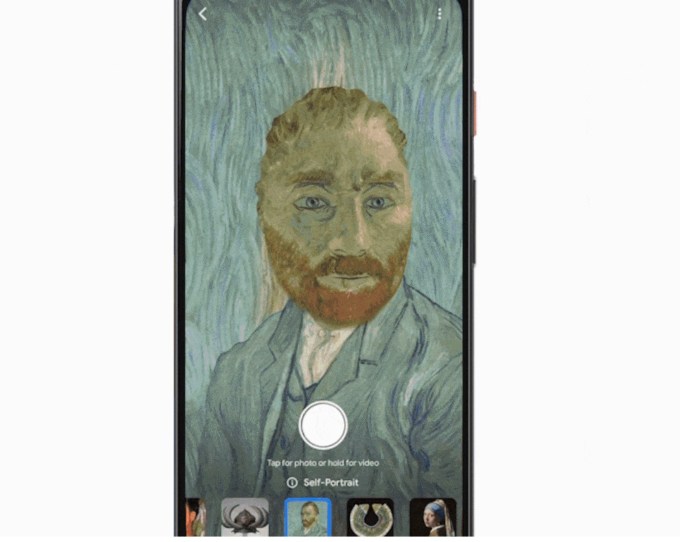
While not a new app, the art appreciation and educational app this week introduced a new “Art Filter” that uses 3D-modelled AR filters based on iconic paintings, objects and accessories from all over the world. You can use the filter to become Van Gogh or Frida Kahlo’s self-portraits, or the famous Girl with a Pearl Earring. You can also step into history with a traditional Samurai helmet or a remarkable Ancient Egyptian necklace, Google says. The app is a free download on Android or iOS.

Harbor

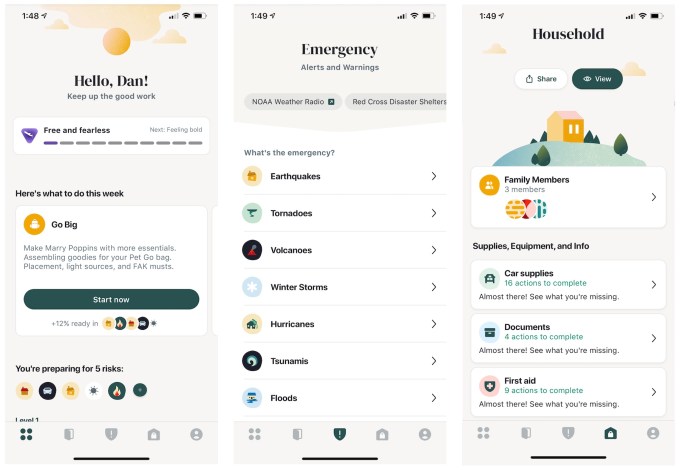
Prepper app Harbor, backed by $5 million in funding, launched its emergency-preparedness app that gamifies the tasks you need to get done in order to have fully prepared for an emergency. The app determines the most likely emergencies you’d face based on your location.


News: A prison video visitation service exposed private calls between inmates and their attorneys

Exclusive: Calls supposed to be protected by attorney-client privilege were recorded and transcribed.

Fearing the spread of coronavirus, jails and prisons remain on lockdown. Visitors are unable to see their loved ones serving time, forcing friends and families to use prohibitively expensive video visitation services that often don’t work.

But now the security and privacy of these systems are under scrutiny after one St Louis-based prison video visitation provider had a security lapse that exposed thousands of phone calls between inmates and their families, but also calls with their attorneys that were supposed to be protected by attorney-client privilege.

HomeWAV, which serves a dozen prisons across the U.S., left a dashboard for one of its databases exposed to the internet without a password, allowing anyone to read, browse and search the call logs and transcriptions of calls between inmates and their friends and family members. The transcriptions also showed the phone number of the caller, which inmate, and the duration of the call.

Security researcher Bob Diachenko found the dashboard, which had been public since at least April, he said. TechCrunch reported the issue to HomeWAV, which shut down the system hours later.

In an email, HomeWAV chief executive John Best confirmed the security lapse.

“One of our third-party vendors has confirmed that they accidentally took down the password, which allowed access to the server,” he told TechCrunch, without naming the third-party. Best said the company will inform inmates, families and attorneys of the incident.

Somil Trivedi, a senior staff attorney at the ACLU’s Criminal Law Reform Project, told TechCrunch: “What we see again and again is that the rights of incarcerated people are the first to be trampled when the system fails — as it always, invariably does.”

“Our justice system is only as good as the protections for the most vulnerable. As always, people of color, those who can’t afford lawyers, and those with disabilities will pay the highest price for this mistake. Technology cannot fix the fundamental failings of the criminal legal system — and it will exacerbate them if we’re not deliberate and cautious,” said Trivedi.

Inmates have almost no expectations of privacy, and nearly all prisons in the U.S. record the phone and video calls of their inmates — even if it’s not disclosed at the beginning of each call. Prosecutors and investigators are known to listen back to recordings in case an inmate incriminates themselves on a call.

HomeWAV, a prison video visitation tech company, exposed thousands of phone calls between inmates and their families, but also calls with their attorneys that were supposed to be protected by attorney-client privilege. (Image: HomeWAV/YouTube)

The calls between inmates and their attorneys, however, are not supposed to be monitored because of attorney-client privilege, a rule that protects the communications between an attorney and their client from being used in court.

Despite this, there are known cases of U.S. prosecutors using recorded calls between an attorney and their incarcerated clients. Last year, prosecutors in Louisville, Ky., allegedly listened to dozens of calls between a murder suspect and his attorneys. And, earlier this year defense attorneys in Maine said they were routinely recorded by several county jails, and their calls protected under attorney-client privilege were turned over to prosecutors in at least four cases.

HomeWAV’s website says: “Unless a visitor has been previously registered as a clergy member, or a legal representative with whom the inmate is entitled to privileged communication, the visitor is advised that visits may be recorded, and can be monitored.”

But when asked, HomeWAV’s Best would not say why the company had recorded and transcribed conversations protected by attorney-client privilege.

Several of the transcriptions reviewed by TechCrunch showed attorneys clearly declaring that their calls were covered under attorney-client privilege, effectively telling anyone listening in that the call was off-limits.

TechCrunch spoke to two attorneys, whose communications with their clients in prison over the past six months were recorded and transcribed by HomeWAV, but asked that we not name them or their clients as doing so might harm their client’s legal defense. Both expressed alarm that their calls had been recorded. One of the attorneys said that they had verbally asserted attorney-client privilege on the call, while the other attorney also considered that their call was protected by attorney-client privilege but declined to comment further until they had spoken to their client.

Another defense attorney, Daniel Repka, told TechCrunch confirmed one of his calls with a client in prison in September was recorded, transcribed and subsequently exposed, but said that the call was not sensitive.

“We did not relay any information that would be considered protected by attorney-client privilege,” said Repka. “Anytime I have a client who calls me from a jail, I’m very conscious and aware of the possibility not only of security breaches, but also the potential ability to access these phone calls by the county attorney’s office,” he said.

Repka described attorney-client privilege as “sacred” for attorneys and their clients. “It’s really the only way that we’re able to ensure that attorneys are able to represent their clients in the most effective and zealous way possible,” he said.

“The best practice for attorneys is always, always, always to go visit your client at the jail in person where you’re in a room, and you have far more privacy than over a telephone line that you know has been designated as a recording device,” he said.

But the challenges brought by the pandemic has made in-person visits difficult, or impossible in some states. The Marshall Project, a non-partisan organization focusing on criminal justice in the U.S., said several states have suspended in-person visitation because of the threat posed by coronavirus, including legal visits.

Even prior to the pandemic, some prisons ended in-person visitation in favor of video calls.

Video visitation technology is now a billion-dollar industry, with companies like Securus making millions each year by charging callers often exorbitant fees to call their incarcerated loved ones.

HomeWAV isn’t the only video visitation service to have faced security issues.

In 2015, an apparent breach at Securus resulted in the leak of some 70 million inmate phone calls by an anonymous hacker and shared with The Intercept. Many of the recordings in the cache also contained calls designated protected by attorney-client privilege, the publication reported.

In August, Diachenko reported a similar security lapse at TelMate, another prison visitation provide, which saw millions of inmate messages exposed because of a passwordless database.


You can send tips securely over Signal and WhatsApp to +1 646-755-8849 or you can send an encrypted email to: zack.whittaker@protonmail.com

News: Original Content podcast: Netflix’s ‘Enola Holmes’ is thoroughly mediocre

There’s nothing excessively bad about “Enola Holmes,” a new film about Sherlock Holmes’ younger sister Enola. But there’s nothing particularly good, either. The film was originally planned for a theatrical release from Warner Bros., but Netflix picked it up earlier this year, after the pandemic shuttered theaters around the world. “Enola Holmes” stars Millie Bobby

There’s nothing excessively bad about “Enola Holmes,” a new film about Sherlock Holmes’ younger sister Enola. But there’s nothing particularly good, either.

The film was originally planned for a theatrical release from Warner Bros., but Netflix picked it up earlier this year, after the pandemic shuttered theaters around the world.

“Enola Holmes” stars Millie Bobby Brown as titular adolescent detective, along with Henry Cavill as Sherlock, and they’re both … fine? Neither of them seems to be phoning it in, and Cavill is downright charming at times. And although Brown has admitted that she struggled to reacquire her English accent, she brings plenty of energy to her role, which includes plenty of fourth-wall-breaking monologues that fill the audience in on backstory and explain the solutions to not-particularly-puzzling mysteries.

As we explain on the latest episode of the Original Content podcast, the film seems competent in virtually every respect, but thoroughly inspired, leaving us underwhelmed by the results — Anthony to the point where he was pacing around the room and wondering about his life choices. But hey, maybe kids will enjoy watching it?

In addition to reviewing the movie, we also discuss Netflix’s recent discussion to cancel “Glow” and “Teenage Bounty Hunters.”

You can listen to our review in the player below, subscribe using Apple Podcasts or find us in your podcast player of choice. If you like the show, please let us know by leaving a review on Apple. You can also follow us on Twitter or send us feedback directly. (Or suggest shows and movies for us to review!)

If you’d like to skip ahead, here’s how the episode breaks down:
0:00 Intro
0:37 “Away” listener response
4:04 “Glow”/”Teenage Bounty Hunters” discussion
12:43 “Enola Holmes” review
29:17: “Enola Holmes” spoiler discussion

News: Brian Armstrong’s new problem: 60-plus free agents

A lot has been made of the open memo that CEO Brian Armstrong published nearly two weekends ago, essentially barring political activism at work because he sees it as a distraction. He also made it clear that employees who disagreed with the decision — and he foresaw that some would not be happy — were

A lot has been made of the open memo that CEO Brian Armstrong published nearly two weekends ago, essentially barring political activism at work because he sees it as a distraction. He also made it clear that employees who disagreed with the decision — and he foresaw that some would not be happy — were free to leave.

“I recognize that our approach is not for everyone, and may be controversial. I know that many people may not agree, and some employees may resign. I also know that some of what I’ve written above will be misinterpreted, whether accidentally or on purpose. But I believe it’s the right approach for Coinbase that will set us up for success long term, and I would rather be honest and transparent about that than equivocate and work in a company that is not aligned,” he wrote.

Perhaps owing to an almost immediate backlash, Armstrong sent a separate, internal memo several days later detailing separation packages for employees who might be upset and want to leave. Coinbase was willing to be very generous, too, offering four months’ severance pay for those who have been at the exchange for less than three years, and paying longer-term employees six months of severance. (Worth noting: Coinbase also gives employees up to seven years to exercise their stock options.)

Whether Armstrong expected that more than 60 employees of Coinbase’s staff of 1,200 would take him up on the offer is something only he knows. As he disclosed in a follow-up post yesterday, that’s how many people have alerted the company that they are leaving, and Coinbase expects the number to inch higher, based on a “handful” of ongoing conversations.

Employees had until this past Wednesday to submit a form to begin the process of receiving severance.

Either way, if I were Armstrong, I might be a little nervous about that number. Though small in the grand scheme of the company’s ambitions, that’s 60-plus people who have Coinbase on their resume, institutional knowledge about the company and potentially money in the bank, between their severance and equity.

Most dangerously, they might also have a bit of an axe to grind against a company that told them it was changing the world, then changed the terms of its pact with employees in the middle of an already trying time for most people.

That frustration — if it exists — can come out in potential leaks to the press, though presumably every employee had to sign a lengthy non-disparagement agreement on their way out the door.

The bigger threat is that one or numerous of these employees might now start their own crypto-related business, or else join rival companies that could use their skills. (Non-compete agreements are famously difficult to enforce in the state of California.)

Certainly, taking on Coinbase is a very tall order at this point. Two years ago, when the company closed on $300 million in Series E funding, it did so at a post-money valuation of more than $8 billion, putting it leaps and bounds ahead of numerous other crypto exchanges.

No matter what you think of Armstrong’s new policy, there aren’t a lot of founders with the stuff to grow a company as strong and fast as he has, either.

Still, it happens all the time that people launch companies to take down other companies. It’s human nature. Given that a number of former Coinbase employees has already raised funding for projects after leaving Coinbase, combined with so many investing dollars sloshing around out there, the risk of this happening to Coinbase because of Armstrong’s memo and its aftermath may be small, it’s true. But it isn’t zero.

WordPress Image Lightbox Plugin