Yearly Archives: 2020

News: Spotify introduces a new music-and-spoken word format, open to all creators

Spotify today is launching a new feature that combines spoken word audio commentary with music tracks. The new format will allow Spotify to reproduce the radio-like experience of listening to a DJ or a music journalist offering their perspective on the music. But Spotify is also making it possible for anyone to use the format

Spotify today is launching a new feature that combines spoken word audio commentary with music tracks. The new format will allow Spotify to reproduce the radio-like experience of listening to a DJ or a music journalist offering their perspective on the music. But Spotify is also making it possible for anyone to use the format to create a music-filled podcast through an integration with Spotify’s own DIY podcasting app, Anchor.

Spotify says the new shows will still compensate the artist the same as if the track was streamed normally, as the format relies on Spotify’s music catalog licenses just like regular streams.

However, the experience will be customized to listeners based on what tier of Spotify’s service they use.

Image Credits: Spotify

Premium subscribers will be able to hear the full tracks as part of the shows, Spotify explains, while free listeners will only hear the 30-second previews.

Listeners can also interact with the music content within the shows as they otherwise could in a playlist — by liking the songs, saving the track, or viewing more information about the track without having to leave the episode page or do a search. To do this, you’ll hit “Explore Episode” on the show’s episode page, or tap the play bar at the bottom of the screen to pull up the track list.

Image Credits:

The format is similar in some ways to Pandora’s Stories, also a combination of music and podcasting, introduced last year. But Pandora’s effort focused on allowing artists to add narratives to their music — like talking about the meaning of a song or what inspires them. Other creators could also apply for access.

Spotify’s new format, meanwhile, is immediately open to all users in supported regions.

As of today, the Anchor app will now allow any user to create a show using this format in the U.S., U.K., Canada, Australia, New Zealand, and Ireland, to start.

The app’s update will allow users to select a new “Music” tool, which then connects them with the entire Spotify music catalog of over 65 million tracks. Users will also be able to connect their Spotify account to browse and select songs from their own playlists to add to shows.

This is a significant update, as limitations around streaming rights had previously limited podcast creators from being able to easily integrate licensed music in their programs.
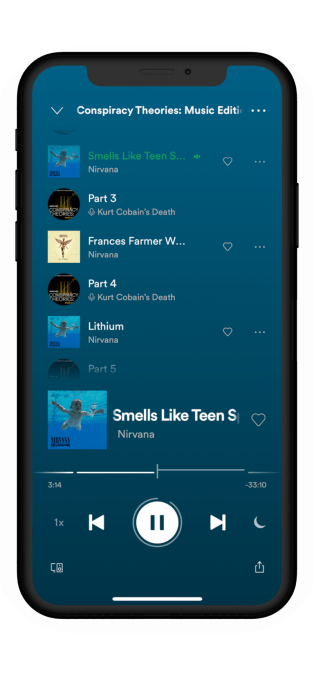
Image Credits: Spotify

Creators will also be about to insert ads in their shows, via Anchor Sponsorships. The company notes that this process is still considered a beta, and it will be manually reviewing shows using the format for now. The review process can take up to 24 hours.

Spotify says the feature will expand to more markets soon.

At launch, Spotify is also launching its own set of seven Spotify Original Shows that put the new format to work, which can be found in the new “Shows With Music” hub in the Browse section of the Spotify app or in a programmed shelf in your Home tab.

These first seven shows include (descriptions via Spotify):

  • Halleloo Happy Hour with DJ Shangela – Grab a drink and join our effervescent host, “Shangela” (A Star is Born, Ru Paul’s Drag Race), for her weekly happy hour playlist! Featuring games, guests, and tea. Halleloo!
  • Murder Ballads – Explore the history and folklore behind some of America’s most mysterious and violent songs.
    60 Songs That Explain the 90s – The 1990s were a turning point in music. Listen along as The Ringer’s preeminent music critic Rob Harvilla curates and explores 60 iconic songs from the ‘90s that define the decade.
  • Our Love Song – Every week a couple shares the soundtrack that defines their love story. As a culture we are fascinated by love and romance. It is why the majority of songs are about love and heartbreak. This show will not only explore entertaining love stories, but also the classic songs that define these relationships.
  • Conspiracy Theories: Music Edition – A deeper look at some of the most fascinating theories surrounding famous artists and the music industry as it affects the world.
  • Rock This with Allison Hagendorf – Rock This with Allison Hagendorf is a weekly show celebrating all things Rock & Alternative culture, featuring one of a kind interviews and highlighting music from your favorite and emerging artists.
  • 10 Songs That Made Me – An artist or celebrity creates a storytelling playlist of 10 songs that mark meaningful moments in their lives, providing personal insights into each song choice.


 

News: With a new focus on marketing software, NewsCred relaunches as Welcome

The company formerly known as NewsCred has a new name and a new product: Welcome. Co-founder and CEO Shafqat Islam explained that this follows a broader shift in the company’s strategy. While previously known as a content marketing business, Islam said NewsCred has been increasingly focused on building a broader software platform for marketers (a

The company formerly known as NewsCred has a new name and a new product: Welcome.

Co-founder and CEO Shafqat Islam explained that this follows a broader shift in the company’s strategy. While previously known as a content marketing business, Islam said NewsCred has been increasingly focused on building a broader software platform for marketers (a platform that it uses itself).

Eventually, this led the company to sell its content services business to business journalism company Industry Dive and its owner Falfurrias Capital Partners over the summer. Now Welcome is officially unveiling its new brand, which it’s also using for its new marketing orchestration software.

“It’s not often not often that startups like ours get to close one chapter and open another chapter,” Islam said. “We kind of went back to being a Series A, Series B startup, iterating and working very closely with our customers.”

While today is the official launch of Welcome platform, Islam said the company has been moving the software in this direction for the past year, and that this side of the business has already seen significant growth, with daily average users up 300% year-over-year.

Islam also suggested that while this was the right time to come up with a new company name, it’s something that’s been discussed repeatedly in the past.

Welcome Gantt Calendar

Image Credits: Welcome

“Every time we raised money ever in last 10 years, the new investor would say, ‘What about the name? Can we change it?’” he recalled. “We could never do it, because we had this content heritage built up and enough brand equity. Finally, with this deal, and with the launch of the new software … we came up with the name Welcome.”

While there’s no shortage of marketing software out there already, Islam said marketers need an orchestration system to manage their projects and workflows — most of them, he said, are stuck using “horizontal” project management tools that aren’t really built for their needs, such as Asana or Jira.

“Marketers have very specific needs,” Islam said. “It could be a simple thing like … marketers work with campaigns, so what are your specific campaigns, marketing briefs or marketing-specific workflows? Our approach was: How do we create something that’s really specific to marketers versus all horizontal solutions out there?”

He also noted that “close to half the engineering team works on the interoperability problem,” so that Welcome can integrate all the other tools that marketers are using, like HubSpot and Marketo. The goal, Islam said, is to become “something marketers standardize on,” the way that salespeople log into their Salesforce accounts every day.

Islam also argued Welcome will take advantage of the way that the pandemic has accelerated changes in the enterprise sales process.

“I personally believe the way people buy software is changing,” he said. “The days of wining and dining and selling to the CMO, that still exists, but that’s not how everyone wants to buy anymore.”

To adapt to this new world, Islam said the startup is adopting a more “bottoms up” sales approach, with a free version of the platform due for release next month.

News: Twitter hack probe leads to call for cybersecurity rules for social media giants

An investigation into this summer’s Twitter hack by the New York State Department of Financial Services (NYSDFS) has ended with a stinging rebuke for how easily Twitter let itself be duped by a “simple” social engineering technique — and with a wider call for key social media platforms to be regulated on security. In the

An investigation into this summer’s Twitter hack by the New York State Department of Financial Services (NYSDFS) has ended with a stinging rebuke for how easily Twitter let itself be duped by a “simple” social engineering technique — and with a wider call for key social media platforms to be regulated on security.

In the report, the NYSDFS points, by way of contrasting example, to how quickly regulated cryptocurrency companies acted to prevent the Twitter hackers scamming even more people — arguing this demonstrates that tech innovation and regulation aren’t mutually exclusive.

Its point is that the biggest social media platforms have huge societal power (with all the associated consumer risk) but no regulated responsibilities to protect users.

The report concludes this is a problem U.S. lawmakers need to get on and tackle stat — recommending that an oversight council be established (to “designate systemically important social media companies”) and an “appropriate” regulator appointed to ‘monitor and supervise’ the security practices of mainstream social media platforms.

“Social media companies have evolved into an indispensable means of communications: more than half of Americans use social media to get news, and connect with colleagues, family, and friends. This evolution calls for a regulatory regime that reflects social media as critical infrastructure,” the NYSDFS writes, before going on to point out there is still “no dedicated state or federal regulator empowered to ensure adequate cybersecurity practices to prevent fraud, disinformation, and other systemic threats to social media giants”.

“The Twitter Hack demonstrates, more than anything, the risk to society when systemically important institutions are left to regulate themselves,” it adds. “Protecting systemically important social media against misuse is crucial for all of us — consumers, voters, government, and industry. The time for government action is now.”

We’ve reached out to Twitter for comment on the report

Among the key findings from the Department’s investigation are that the hackers broke into Twitter’s systems by calling employees and claiming to be from Twitter’s IT department — through which simple social engineering method they were able to trick four employees into handing over their log-in credentials. From there they were able to access the Twitter accounts of high profile politicians, celebrities, and entrepreneurs, including Barack Obama, Kim Kardashian West, Jeff Bezos, Elon Musk, and a number of cryptocurrency companies — using the hijacked accounts to tweet out a crypto scam to millions of users.

Twitter has previously confirmed that a “phone spear phishing” attack was used to gain credentials.

Per the report, the hackers’ “double your bitcoin” scam messages, which contained links to make a payment in bitcoins, enabled them to steal more than $118,000 worth of bitcoins from Twitter users.

Although a considerably larger sum was prevented from being stolen as a result of swift action taken by regulated crypto companies — namely: Coinbase, Square, Gemini Trust Company and Bitstamp — who the Department said blocked scores of attempted transfers by the fraudsters.

“This swift action blocked over 6,000 attempted transfers worth approximately $1.5 million to the Hackers’ bitcoin addresses,” the report notes.

Twitter is also called out for not having a cybersecurity chief in post at the time of the hack — after failing to replace Michael Coates, who left in March. (Last month it announced Rinki Sethi had been hired as CISO).

“Despite being a global social media platform boasting over 330 million average monthly users in 2019, Twitter lacked adequate cybersecurity protection,” the NYSDFS writes. “At the time of the attack, Twitter did not have a chief information security officer, adequate access controls and identity management, and adequate security monitoring — some of the core measures required by the Department’s first-in-the-nation cybersecurity regulation.”

European Union data protection law already bakes in security requirements as part of a comprehensive privacy and security framework (with major penalties possible for security breaches). However an investigation by the Irish DPC of a 2018 Twitter security incident is still yet to conclude after a draft decision failed to gain the backing of the other EU data watchdogs this August — triggering a further delay to the pan-EU regulatory process.

News: Shure’s SRH1540 headphones can upgrade your home setup with quality sound and all-day comfort

We’re going checking out a range of different headphones on TC this week and next as part of our ‘Headphone Week’ series, and today I’m checking out the Shure SRH1540 ($499). These aren’t new – they’ve been a stand-by among audiophiles in their price range for years now. But there’s a great reason for that:

We’re going checking out a range of different headphones on TC this week and next as part of our ‘Headphone Week’ series, and today I’m checking out the Shure SRH1540 ($499). These aren’t new – they’ve been a stand-by among audiophiles in their price range for years now. But there’s a great reason for that: They offer fantastic sound quality and value, as well as amazing comfort and wearability.

The basics

The SRH1540 from Shure are closed-back headphones that provide premium sound suitable either just for people who really like high-quality audio, or for those who actually have to work with audio on a regular basis, including sound engineers and podcast producers. They manage to produce a soundstage that’s very comparable to what you get out of open-back headphones, albeit with less noise leakage (great for shared work-from-home offices).

In the box, Shure includes not one but two cables, as well as a spare set of the Alcantara-covered ear-ads. They come with a hard-sided plastic carrying case, and a threaded adapter for using them with a 6.3mm audio jack (the cable is 3.5mm out of the box).

Design and features

Shure’s design with the SRH1450 is all about comfort and quality. The headphones are extremely lightweight – but don’t let that fool you into thinking it’s made of cheap materials. The frame uses aircraft-grade aluminum and carbon fiber to offer the most strength without creating something that’s going to weigh heavy on your head for long listening sessions.

The Alcantara material used in the earpads is also very durable, while offering a pleasantly soft-touch feel. There’s ample padding in the cups, too, and they rest lightly on your head while providing necessary give to accommodate a number of different head and ear shapes.

Shure uses a dual-connector cord design here, with each gold-plated end of the headphone side clipping in securely. They’re color-coded for accurate placement, and the cable itself is kevlar-wrapped to ensure the cord will last a long time. There’s a twin backup in the box as well just in case.

Sound-wise, these are excellent headphones that should please even the most discerning audiophiles, especially when paired with a DAC or USB audio interface like the Focusrite Scarlett 2i2 I mostly tested them with. They provide an amazing level of clarity and detail, and great bass without being totally overwhelming or washing out the soundstage. I’ve long used open-back headphones as my standard wired cans for audio editing and all-day wear, but the SRH1450s have converted me.

Bottom line

These are an amazing choice for anyone looking to spend a bit of money (but not too much, in the world of premium audio equipment) in order to get a pair of headphones that offer great sound quality along with durability and all-day comfort. The one caveat to keep in mind is that they aren’t really at all sound-isolating, though they’re better in this regard than open-back headphones.

News: Celonis acquires Czech startup Integromat to accelerate move to process automation

Celonis began as a company to help customers understand how work flowed through your company by building a process map. This was valuable in itself, but the next logical step was to not only analyze the processes, but find ways to make them more efficient. Today, the company announced it has acquired Czech startup Integromat

Celonis began as a company to help customers understand how work flowed through your company by building a process map. This was valuable in itself, but the next logical step was to not only analyze the processes, but find ways to make them more efficient. Today, the company announced it has acquired Czech startup Integromat to help speed up the automation side of the house, which they started building into the platform last year.

The terms of the deal were not disclosed, but Celonis co-founder and CEO Alexander Rinke said the deal was over $100 million. “It was a three digit amount of over $100 million. We can’t disclose the exact price, but we’re just giving this range,” he said. The deal has already closed.

Rinke describes Integromat as an enterprise version of Zapier, one that has been quite successful, building a $10 million business with over 11,000 customers, and will help the company automate processes across applications, something that is difficult to do.

“They really develop what I believe is a disruptive approach to automation. And obviously it’s very important for us because we are we looking to expand our product from being primarily a process mining tool that is focused on surfacing the insights as to how processes executed today, and evolve that into what we call an execution management system, which is on an ongoing basis really helping you to optimize the execution of your key processes,” Rinke explained.

Rinke says that every company has a key set of operations, and if you can begin to automate across these systems, as Integromat enables them to do now, you can begin to squeeze out ways to make your business more efficient through automation.

“We believe that there needs to be a layer that comes in on top of that [key set of operations] to first of all understand what’s going on, measure the capacity that organizations executes with today, measure where the biggest gaps are and where the capacity is trapped, and then also unleash that automation. This is an important piece because when you figure that out, you ideally want to automate as much as possible,” he said.

Integromat’s 60 employees will become part of Celonis, but Rinke says the company’s technology will be both incorporated into the Celonis platform and continue to service current customers as a separate stand-alone product, which has to be good news for those customers.

Celonis launched in 2011 and has raised over $364 million. It raised $290 million last November on a valuation of $2.5 billion. Integromat was launched in 2012 and has not raised any money. Both company’s financial information is according to Pitchbook.

News: What the iPhone 12 tells us about the state of the smartphone industry in 2020

The smartphone industry was in transition well before COVID-19 was a blip on anyone’s radar. More than 13 years after the launch of the original iPhone, these products have long since transitioned from luxury items to commodities, losing some of their luster in the process. The past several years have seen slower upgrade cycles as

The smartphone industry was in transition well before COVID-19 was a blip on anyone’s radar. More than 13 years after the launch of the original iPhone, these products have long since transitioned from luxury items to commodities, losing some of their luster in the process. The past several years have seen slower upgrade cycles as consumers grew reluctant to pay $1,000 or more for new devices.

And while the iPhone 12 was no doubt in development long before the current pandemic, the pandemic’s global shutdown has only exacerbated many existing problems for smartphone makers. The clearest representation of Apple’s reaction is in the sheer number of iPhones announced at today’s “Hi Speed” event. Long gone are the days when a company could rest on a single flagship or two.

Today’s event brought a grand total of four new iPhone models, ranging in price from $699 to $1,099: the 12, 12 mini, 12 Pro and 12 Pro Max. As with the Apple Watch, the company is keeping last year’s iPhone 11 around and has cut the price to $599. That puts the older model in the high-mid-range for Android devices, but represents a far cheaper entry point than we’re accustomed to for Apple phones.

News: Google launches a suite of tech-powered tools for reporters, Journalist Studio

Google is putting A.I. and machine learning technologies into the hands of journalists. The company this morning announced a suite of new tools, Journalist Studio, that will allow reporters to do their work more easily. At launch, the suite includes a host of existing tools as well as two new products aimed at helping reporters

Google is putting A.I. and machine learning technologies into the hands of journalists. The company this morning announced a suite of new tools, Journalist Studio, that will allow reporters to do their work more easily. At launch, the suite includes a host of existing tools as well as two new products aimed at helping reporters search across large documents and visualizing data.

The first tool is called Pinpoint and is designed to help reporters work with large file sets — like those that contain hundreds of thousands of documents.

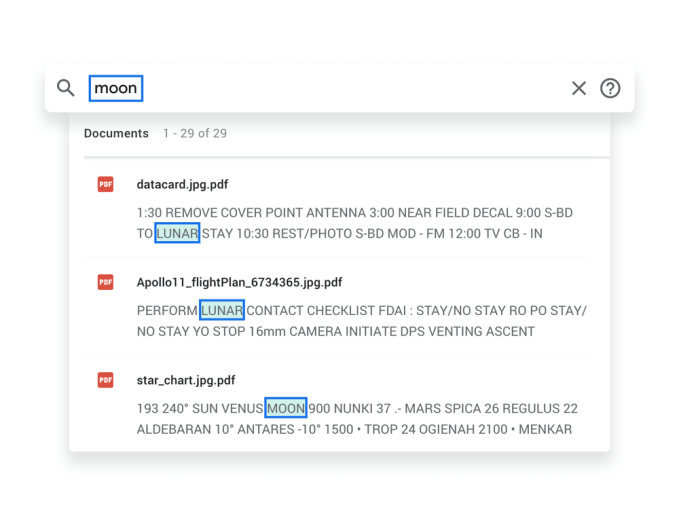
Pinpoint will work as an alternative to using the “Ctrl + F” function to manually seek out specific keywords in the documents. Instead, the tool takes advantage of Google Search and its A.I.-powered Knowledge Graph, along with optical character recognition and speech-to-text technologies.

It’s capable of sorting through scanned PDFs, images, handwritten notes, and audio files to automatically identify the key people, organizations, and locations that are mentioned. Pinpoint will highlight these terms and even their synonyms across the files for easy access to the key data.

Image Credits: Google

The tool has already been put to use by journalists at USA Today, for its report on 40,600 COVID-19-related deaths tied to nursing homes. Reveal also used Pinpoint look into the COVID-19 “testing disaster” in ICE detention centers. And The Washington Post used it for a piece about the opioid crisis.

Because it’s also useful for speeding up research, Google notes Pinpoint can be used for shorter-term projects, as well — like Philippines-based Rappler’s examination of CIA reports from the 1970s or Mexico-based Verificado MX’s fast fact checking of the government’s daily pandemic updates.

Pinpoint is available now to interested journalists, who can sign up to request access. The tool currently supports seven languages: English, French, German, Italian, Polish, Portuguese, and Spanish.

Google has also partnered with The Center for Public IntegrityDocument Cloud, Stanford University’s Big Local News program and The Washington Post to create shared public collections that are available to all users.

The second new tool being introduced today is The Common Knowledge Project, still in beta.

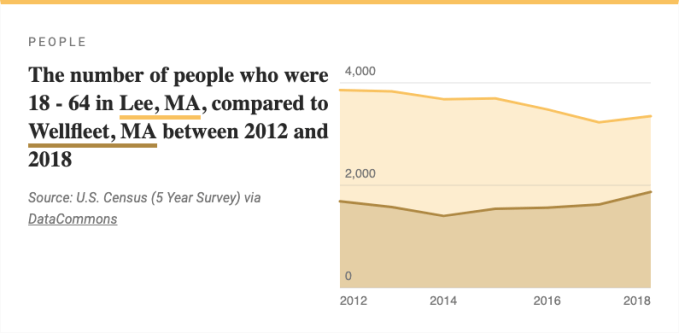
The tool allows journalists to explore, visualize and share data about important issues in their local communities by creating their own interactive charts using thousands of data points in a matter minutes, the company says.

Image Credits: Google

These charts can then be embedded in reporters’ stories on the web or published to social media.

This particular tool was built by the visual journalism team at Polygraph, supported by the Google News Initiative. The data for use in The Common Knowledge Project comes from Data Commons, which includes thousands of public datasets from organizations like the U.S. Census and the CDC.

At launch, the tool offers U.S. data on issues including demographics, economy, housing, education, and crime.

As it’s still in beta testing, Google is asking journalists to submit their ideas for how it can be improved.

Google will demonstrate and discuss these new tools in more detail during a series of upcoming virtual events, including the Online News Association’s conference on Thursday, October 15. The Google News Initiative training will also soon host a six-part series focused on tools for reporters in seven different languages across nine regions, starting the week of October 20.

The new programs are available on the Journalist Studio website, which also organizes other tools resources for reporters, including Google’s account security system, the Advanced Protection Program; direct access to the Data Commons; DataSet Search; a Fact Check Explorer; a tool for visualizing data using customizable templates, Flourish; the Google Data GIF Maker; Google Public Data Explorer; Google Trends; DIY VPN Outline; DDoS defense tool, Project Shield; and tiled cartogram maker Tilegrams.

The site additionally points to other services from Google, like Google Drive, Google Scholar, Google Earth, Google News, and others, as well as training resources.


News: Turbo Systems becomes Appify and launches app marketplace

When Jen Grant joined Turbo Systems, the no-code mobile application platform, as CEO in March, she came on board just as COVID was shutting down businesses, but she went straight to work and over the last six months she has led two major initiatives that the company announced today: a name change and a new

When Jen Grant joined Turbo Systems, the no-code mobile application platform, as CEO in March, she came on board just as COVID was shutting down businesses, but she went straight to work and over the last six months she has led two major initiatives that the company announced today: a name change and a new app marketplace.

For starters, the company is changing its name to Appify to more accurately reflect its mission around building mobile apps. She says that they found most people related the term “turbo” to cars. They began looking for a better name that was more closely aligned with what they do when her team stumbled across Appify.

“We had been playing around with different names and what are we were about, and a lot of what we’re about is amplifying your business and your systems and your people with apps. And so when we kind of stumbled across Appify and the domain name was available, we moved quite quickly,” Grant explained.

While she was at it, Grant was talking to customers, and while the core company mission is to make it easy to build mobile apps, especially in the field service space, she felt that they could make it even easier. Rather than asking customers to build the apps themselves, they could provide a marketplace with some pre-built apps and simply let them customize them for their workflows.

“What we have done with the Appify Marketplace is instead of saying, here’s a box of parts, now fix your business problem, we’re saying, here’s an app that you can launch in minutes. It has all of the functionality that you will need […] and you can then very easily customize it using this no code platform to make it specific to your business,” she said.

The marketplace is launching today with a couple of apps aimed at the company’s core field service market including Field Sales, which allows salespeople in the field to send a bid or quote from a tablet directly from the field without having to return to the office. The other is a Field Service app for repair people, which provides all of the information about the repair, while allowing the service rep to update the customer record from the field using a mobile device.

Grant says this is just the start and there are many apps on the road map that they will be releasing in the coming months. Eventually, they may have systems integrators use the platform to build apps for specific industries as they move forward.

Appify was born as Turbo Systems in 2017 and has raised over $11 million, according to Pitchbook data.

News: Playbook, a fitness platform that puts creators first, raises $9.3 million

Playbook, aiming to be the Patreon of fitness content, has raised an additional $9.3 million in Series A funding from E.ventures, Michael Ovitz, Abstract, Algae Ventures, Porsche Ventures and FJ Labs. The pandemic has hit the personal trainer and fitness industry incredibly hard. With gyms closed, trainers’ primary funnel for new customers has been shut

Playbook, aiming to be the Patreon of fitness content, has raised an additional $9.3 million in Series A funding from E.ventures, Michael Ovitz, Abstract, Algae Ventures, Porsche Ventures and FJ Labs.

The pandemic has hit the personal trainer and fitness industry incredibly hard. With gyms closed, trainers’ primary funnel for new customers has been shut down or slowed. Playbook looks to give them a revenue stream through their content.

Playbook creators are given tools to create videos and grow their audience. Unlike many fitness startups, Playbook really focuses on the creator side of the business rather than the final end user, believing that trainers can attract their own audience if they have the right tools and a platform to monetize them.

The company pays creators who bring their own audience to the platform (via their own unique link) an 80 percent cut of all revenue from those users. If users come to the platform agnostic of a certain creator, the trainer gets paid out based on seconds watched.

For the end user, the pricing is simple — it’s an all-you-can-eat model with a monthly subscription priced at $15/month or $99/year.

Playbook raised $3 million in seed back in June. The company has also attracted an impressive roster of trainers to the platform, including Boss Everline, trainer to Kevin Hart; Magnus Lydgback, trainer to Gal Gadot and Alicia Vikander; and Don Saladino, trainer to Ryan Reynolds and Blake Lively.

Playbook cofounder and CEO Jeff Krahel said that the main focus for the company is to double down on the technology services offered to creators, and the rest will follow.

“That’s part of the reason we brought on Michael Ovitz as a strategic investor,” said Krahel. “We are a tech-driven talent agency, a great tech platform with tools for creators. The future of the company is around supporting creators, almost like an accelerator, to maximize impact.”

Krahel is joined by two cofounders: Michael Wojcieszek and Kasper Ødegaard.

This latest round brings Playbook’s total funding to $12.3 million.

News: Twentyeight Health is a telemedicine company expanding access to women’s health and reproductive care

New York’s Twentyeight Health is taking the wildly telemedicine services for women’s health popularized by companies like Nurx and bringing them to a patient population that previously hadn’t had access.  The mission to provide women who are Medicaid or underinsured should not be deprived of the same kinds of care that patients who have more income

New York’s Twentyeight Health is taking the wildly telemedicine services for women’s health popularized by companies like Nurx and bringing them to a patient population that previously hadn’t had access. 

The mission to provide women who are Medicaid or underinsured should not be deprived of the same kinds of care that patients who have more income security or better healthcare coverage enjoy, according to the company’s founder, Amy Fan.

The mission, and the company’s technology, have managed to convince a slew of investors who have poured $5.1 million in seed funding into the new startup. Third Prime led the round, which included investments from Town Hall Ventures, SteelSky Ventures, Aglaé Ventures, GingerBread Capital, Rucker Park Capital, Predictive VC, and angel investors like Stu Libby, Zoe Barry, and Wan Li Zhu.

“Women who are on Medicaid, who are underinsured or without health insurance often struggle to find access to reproductive health services, and these struggles have only increased with COVID-19 pandemic limiting access to in-person appointments,” said Amy Fan, co-founder of Twentyeight Health, in a statement. “We are fighting for healthcare equity, ensuring that all women, particularly BIPOC women and women from low-income backgrounds, can access high quality, dignified and convenient care.”

To ensure that its catering to underserved communities, the company works with Bottomless Closet, a workforce entry program for women, and the 8 colleges in the City University of New York ecosystem including LaGuardia College, which has 45,000 students with 70% coming from families making less than $30,000 in annual income.

The company’s services are currently available across Florida, Maryland, New York, New Jersey, North Carolina and Pennsylvania and it’s the only telemedicine company focused on contraception services to accept Medicaid.

In another example of how awesome this company is, it’s also working to provide free birth control for women who aren’t able to pay out of pocket and are uninsured through a partnership with Bedsider’s Contraceptive Access Fund. The company also donates 2% of its revenue to Bedsider and the National Institute for Reproductive Health. (Y’all, this company is amaze.)

To sign up for the service, new customers fill out a medical questionnaire online. Once the questionnaire is reviewed by a US board-certified doctor within 24 hours customers can access over 100 FDA-approved brands of birth control pills, patches, rings, shots, and emergency contraception and receive a shipment within three days.

Twentyeight Health provides ongoing care through online audio consultations and doctor follow up messages to discuss issues around updating prescriptions or addressing side effects, the company said.

“Today, low-income women are three times more likely to have an unintended pregnancy than the average woman in the U.S., and nearly one-third of physicians nationwide aren’t accepting new Medicaid patients,” said Bruno Van Tuykom, co-founder of Twentyeight Health, in a statement. “This underscores why offering high-quality reproductive care that is inclusive of people across race, income bracket, or health insurance status is more important than ever.”

Launched in 2018, Twentyeight Health said it would use the new cash to continue to expand its services across the U.S.


WordPress Image Lightbox Plugin