Yearly Archives: 2020

News: Khosla Ventures seeks $1.1 billion for its latest fund

Khosla Ventures, the eponymous venture firm helmed by longtime Silicon Valley rainmaker, Vinod Khosla, is raising  $1.1 billion for its latest venture fund, according to documents from the Securities and Exchange Commission. The filing was first spotted by Ari Levy over at CNBC. Khosla Ventures files to raise $1.1 billion fund. Some beach reading: https://t.co/eKXq92kDMP

Khosla Ventures, the eponymous venture firm helmed by longtime Silicon Valley rainmaker, Vinod Khosla, is raising  $1.1 billion for its latest venture fund, according to documents from the Securities and Exchange Commission.

The filing was first spotted by Ari Levy over at CNBC.

Khosla Ventures files to raise $1.1 billion fund.

Some beach reading: https://t.co/eKXq92kDMP

— Ari Levy (@levynews) October 14, 2020

Khosla, whose investing career began at Kleiner Perkins Caufield & Byers (back when it was still called Kleiner Perkins Caufield & Byers) is rightly famous for a number of bets on enterprise software companies and was a richly rewarded co-founder of Sun Microsystems before venturing into the world of venture capital.

Like his former partner, John Doerr, Khosla also went all-in on renewable energy and sustainability both at Kleiner Perkins and then later at his own fund, which he reportedly launched with several hundreds of millions of dollars from his personal fortune.

Over the years Khosla Ventures has placed bets and scored big wins across a wide range of industries including cybersecurity (with the over $1 billion acquisition of portfolio company Cylance), sustainability (with the Climate Corp. acquisition), and healthcare (through the public offering of Editas).

And the current portfolio should also have some big exits with a roster that includes: the unicorn lending company, Affirm; the nuclear fusion technology developer, Commonwealth Fusion Systems (maybe not a winner, but so so so cool); delivery company, DoorDash; the meat replacement maker, Impossible Foods; grocery delivery service, Instacart; security technology developer, Okta; the health insurance provider, Oscar; and the payment companies Square and Stripe .

That’s quite a string of unicorn (and would-be unicorn) investments. And it speaks to the breadth of the firm’s interests that run the gamut from healthcare to fintech to sustainability and the future of food.

Khosla will likely benefit from the surge of interest in investments that adhere to new environmental, social responsibility and corporate governance standards.

There are billions of dollars that are looking for a home that can invest along those criteria, and for the last 16 years or so, that’s exactly what Khosla Ventures has been doing.

News: Brighteye Ventures sees $54M first close of its second fund to back edtech startups in Europe

Brighteye Ventures, the European edtech VC firm, is announcing the $54 million first close of its second fund, bringing total assets under management to over $112 million. Backing comes from a mixture of existing and new investors, made up primarily of unnamed international family offices. The fund’s second close is expected to take place next

Brighteye Ventures, the European edtech VC firm, is announcing the $54 million first close of its second fund, bringing total assets under management to over $112 million.

Backing comes from a mixture of existing and new investors, made up primarily of unnamed international family offices. The fund’s second close is expected to take place next year and will include additional institutional investors.

Founded in 2017, Brighteye describes itself as a thesis-driven fund investing in startups that enhance learning. Unsurprisingly, the VC says it sees an unprecedented opportunity within the $7 trillion global education sector “as educators and students are adapting to distance learning en masse and millions of displaced workers are seeking to upskill’.

Out of this new fund, Brighteye will invest in 15-20 companies over the next three years at the seed and Series A stage and write cheques of up to $5 million.

“We invest in startups that use technology to directly enable learning, skills acquisition or research as well as companies whose products address structural needs in the education sector,” Alex Spiro Latsis, managing partner at Brighteye Ventures, tells me.

“For example, Zen Educate addresses the systemic issue of teacher supply shortages in the U.K., via an on-demand platform that saves schools money whilst allowing educators to earn more. Litigate is an AI-driven coach and workflow tool improving results for legal associates, while Ironhack, the largest tech bootcamp in Europe and Latin America, gives young professionals the skills needed to enter the innovation economy and connects them to employers with a 90% job placement rate”.

The VC’s investments also includes Ornikar, the online driving school in France and Spain serving more than 1.6 million students; Tandem, the Berlin-based peer-to-peer language learning platform with over 10 million members; and Epic!, a reading platform said to be used in more than 90% of U.S. schools.

“Sector specialisation means that our entire team is devoted to mapping, evaluating and building networks in the learning industry,” adds Spiro Latsis, when asked how Brighteye will compete for edtech deals when many generalist VCs are eyeing up the sector. “We understand what a differentiated approach looks like, can develop conviction quickly and make an offer based on that conviction. Once we invest, portfolio companies benefit from a network that includes not just potential clients and investors but also some of the best performing edtech companies in Europe”.

Meanwhile, Brighteye says it will be expanding its advisory team to support the new fund and expects to grow from three members to 10 within the next 12 months. In addition, David Guerin has been promoted to principal to manage deal making and portfolio support in Paris, and the firm expects to open a DACH region presence by summer 2022.

News: Daily Crunch: Zoom launches its events marketplace

Zoom has a new marketplace and new integrations, Spotify gets a new format and we review Microsoft’s Surface Laptop Go. This is your Daily Crunch for October 14, 2020. The big story: Zoom launches its events marketplace Zoom’s new OnZoom marketplace allows anyone to host and sell tickets for virtual events. It’s also integrating the

Zoom has a new marketplace and new integrations, Spotify gets a new format and we review Microsoft’s Surface Laptop Go. This is your Daily Crunch for October 14, 2020.

The big story: Zoom launches its events marketplace

Zoom’s new OnZoom marketplace allows anyone to host and sell tickets for virtual events. It’s also integrating the ability for nonprofits to accept donations.

The company made a couple other announcements at its Zoomtopia user conference. For one thing, it’s also integrating with a starting lineup of 35 third-party “Zapps,” allowing products like Asana and Dropbox to integrate directly into the Zoom experience.

In addition, Zoom said it will begin rolling out end-to-end encryption (a feature it’s been promising since acquiring Keybase in May) to users next week.

The tech giants

Spotify introduces a new music-and-spoken word format, open to all creators — The new format is designed to reproduce the radio-like experience of listening to a DJ talk about the music, and it also enables the creation of music-filled podcasts.

Microsoft reverse engineers a budget computer with the Surface Laptop Go — Brian Heater writes that the Laptop Go is a strange and sometimes successful mix of Surface design and budget decisions.

Google launches a suite of tech-powered tools for reporters, Journalist Studio — The suite includes a host of existing tools as well as two new products aimed at helping reporters search across large documents and visualizing data.

Startups, funding and venture capital

Getaround raises a $140M Series E amid rebound in short-distance travel — The rebound is real: I took my first Getaround this weekend.

Augury taps $55M for tech that predicts machine faults from vibration, sound and temperature — The startup works with large enterprises like Colgate and Heineken to maintain machines in their production and distribution lines.

Plenty has raised over $500M to grow fruits and veggies indoors — The funding was led by existing investor SoftBank Vision Fund and included the berry farming giant Driscoll’s.

Advice and analysis from Extra Crunch

What the iPhone 12 tells us about the state of the smartphone industry in 2020 — While the iPhone 12 was no doubt in development long before the current pandemic, the pandemic’s global shutdown has only exacerbated many existing problems for smartphone makers.

Databricks crossed $350M run rate in Q3, up from $200M one year ago — The data analytics company scaled rapidly to put itself on an obvious IPO path.

Dear Sophie: I came on a B-1 visa, then COVID-19 happened. How can I stay? — The latest advice from immigration lawyer Sophie Alcorn.

(Reminder: Extra Crunch is our subscription membership program, which aims to democratize information about startups. And we’re having a fall sale!)

Everything else

NASA loads 14 companies with $370M for ‘tipping point’ technologies — NASA has announced more than a third of a billion dollars’ worth of “Tipping Point” contracts awarded to over a dozen companies pursuing potentially transformative space technologies.

Harley-Davidson should keep making e-motorcycles — That’s Jake Bright’s takeaway after three weeks with the LiveWire e-motorcycle.

The Daily Crunch is TechCrunch’s roundup of our biggest and most important stories. If you’d like to get this delivered to your inbox every day at around 3pm Pacific, you can subscribe here.

News: The Wing co-founder admits the coworking space upheld ‘the kind of social inequality we set out to upend’

Audrey Gelman, the former CEO of The Wing who resigned in June, today posted a letter she sent to former employees of The Wing last week. In it, Gelman apologized for not taking action to combat mistreatment of women of color at The Wing. She also acknowledged that her drive for success and scaling quickly

Audrey Gelman, the former CEO of The Wing who resigned in June, today posted a letter she sent to former employees of The Wing last week. In it, Gelman apologized for not taking action to combat mistreatment of women of color at The Wing. She also acknowledged that her drive for success and scaling quickly “came at the expense of a healthy and sustainable culture that matched our projected values, and workplace practices that made our team feel valued and respected.”

That meant, Gelman said, The Wing “had not subverted the historical oppression and racist roots of the hospitality industry; we had dressed it up as a kindler [sic], gentler version.”

Here are some other highlights from her letter:

  • “Members’ needs came first, and those members were often white, and affluent enough to afford The Wing’s membership dues.”
  • “White privilege and power trips were rewarded with acquiescence, as opposed to us doubling down on our projected values.”
  • “When the realization set in that The Wing wasn’t institutionally different in the ways it had proclaimed, it hurt more because the space we claimed was different reinforced the age-old patterns of women of color and especially Black women being disappointed by white women and our limited feminist values.”

A public apology from Gelman and The Wing COO Lauren Kassan is just one of the demands from members of Flew The Coup, a group of former staffers at The Wing. Another demand is for The Wing to drop the non-disclosure agreements in their contracts.

“Collectively, we have faced racism and anti-LGBTQIA rhetoric from management, HQ staff, and members,” the group wrote on Instagram back in June. “We have faced physical and psychological violence within the various Wing locations, and discrimination when attempting to move up within the company.”

The group went on to say that while The Wing was built on the idea of being a safe and inclusive place for women and non-binary folks, “we have continuously seen the exact opposite of this mission.”

The Wing has raised $117.5 million from a number of investors, including New Enterprise Associates, AlleyCorp, Sequoia Capital, Serena Williams and Kerry Washington. At TechCrunch Disrupt, Washington told me a bit about how she felt about the drama at The Wing.

“Well, you know, I’m not new to scandal, so there’s that,” Washington said. “I was and I am really deeply still inspired by the original vision of the company. And, I think like a lot of companies in this time, because of the several pandemics that we’re facing, whether it’s our awareness around racial injustice, or COVID, lots of people are in a moment of recalibration and self-reflection. So I think that there is incredible space to improve the dynamics. And as somebody who’s an investor, as a woman of color, it’s important to me that there is increased transparency and also accountability.”

Over the past few months, Washington said her role as an investor has been “really just supporting leadership in this transition,” as well as expressing to those leaders a “deep desire” for transparency and accountability.

The Wing, like many other tech companies, struggled during the COVID-19 pandemic. In April, The Wing laid off or furloughed “the majority” of its workers, the company said. Then, in July, The Wing laid off another 56 people.

As part of Flew The Coup’s organizing, it’s also raising money to help support people who were laid off from The Wing. As of today, the group has raised more than $15,000 for its grant program. Its goal is to raise $100,000.

We’ve reached out to The Wing and will update this story if we hear back.

News: Google Pixel 5 review: keeping it simple

I’m going to be totally honest with you. I don’t really understand Google’s phone strategy right now. And for what it’s worth, I’m not really sure Google does either. I wrote about it here, but I’ll save you from having to read an additional 800 words on top of all these. The short version is

I’m going to be totally honest with you. I don’t really understand Google’s phone strategy right now. And for what it’s worth, I’m not really sure Google does either. I wrote about it here, but I’ll save you from having to read an additional 800 words on top of all these. The short version is that Google has three phones on the market, and there isn’t a whole heck of a lot of distinction between them.

The Pixel is a portrait of a hardware division in transition. That applies to a number of aspects, from strategy to the fact that the company recently saw a minor executive exodus. It’s pretty clear the future of Google’s mobile hardware division is going to look quite different from its present — but 2020’s three phones are most likely a holdover from the old guard.

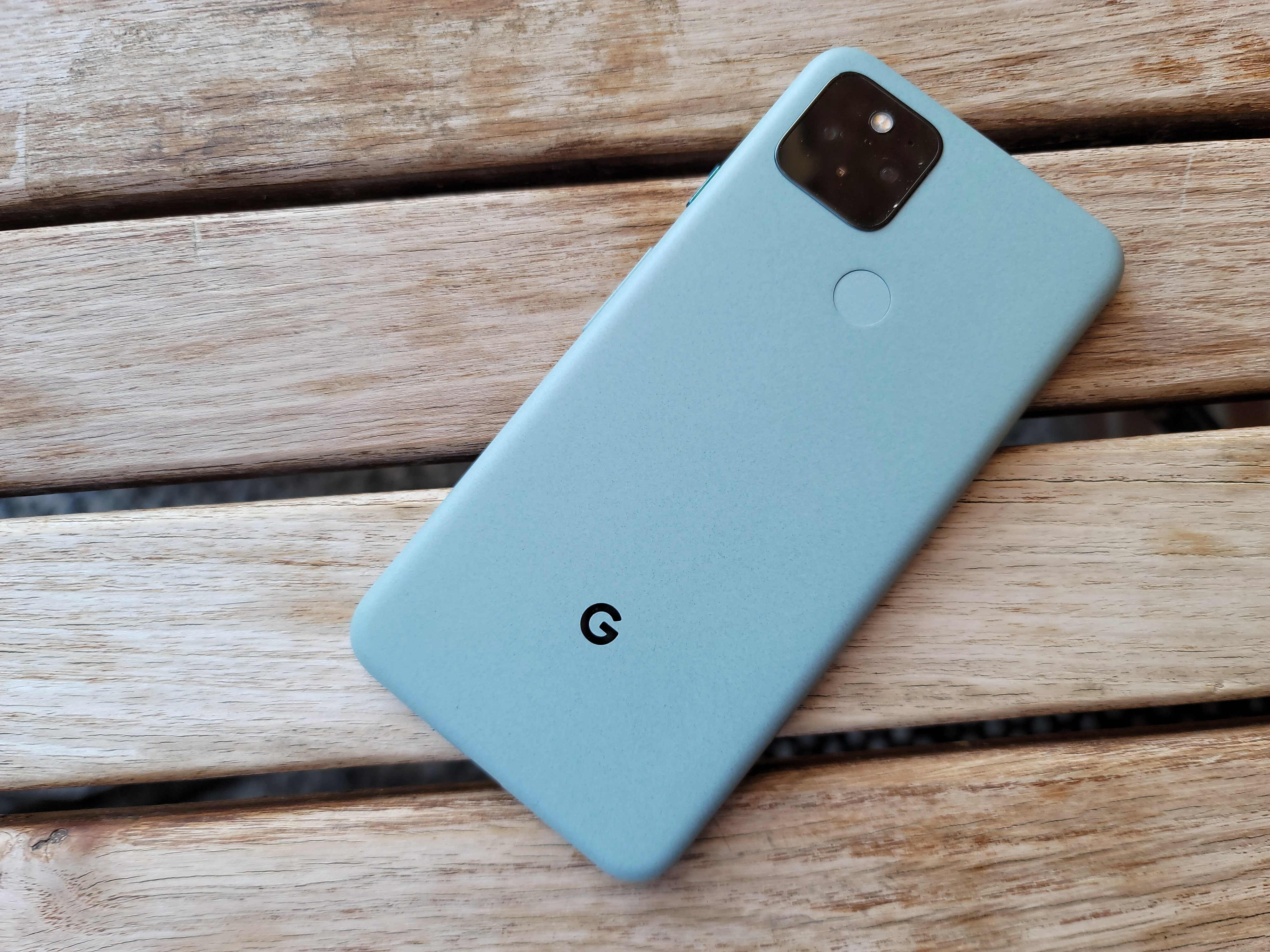
What you’re looking at here is the Pixel 5. It’s Google’s flagship. A device that sports — among other things — more or less the same mid-range Qualcomm processor as the 4a announced earlier this year. It distinguishes itself from that budget handset, however, with the inclusion of 5G. But then here comes the 4a 5G to further muddy the waters.

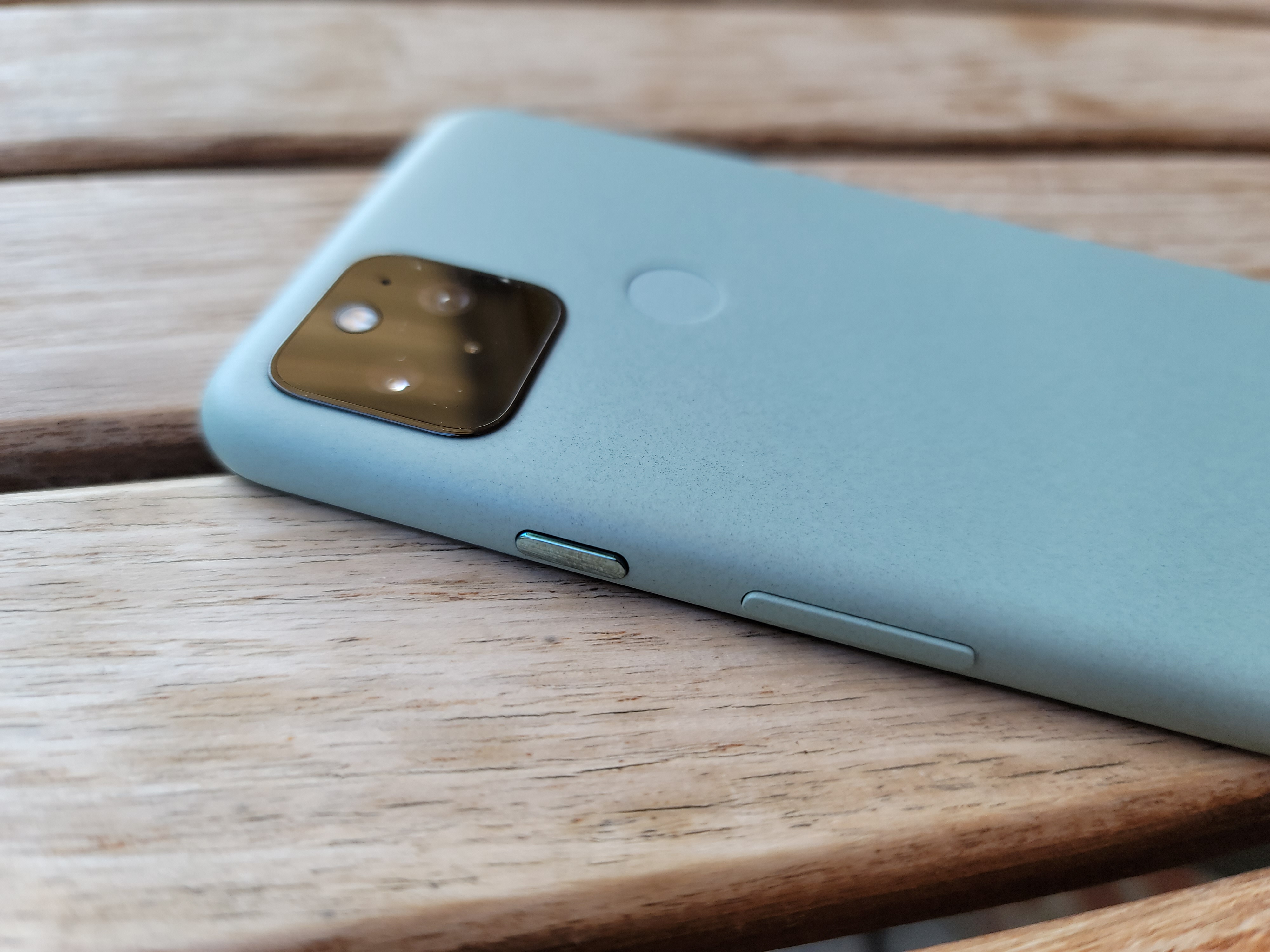
There are some key distinctions that separate the 5 and 4a 5G, which were announced at the same event. The 5’s got a more solid body, crafted from 100% recycled aluminum to the cheaper unit’s polycarbonate. It also has waterproofing and reverse wireless charging, a fun feature we’ve seen on Samsung devices for a few generations now. Beyond that, however, we run into something that’s been a defining issue since the line’s inception. If you choose not to use hardware to define your devices, it becomes difficult to differentiate your devices’ hardware.

Image Credits: Brian Heater

Since the very beginning of the Pixel line, the company has insisted that it will rely on software advances to push the products forward. It’s a nice sentiment after years of feature arms races between the likes of Apple and Samsung. But that means when it comes time to introduce new devices, the results can be fairly lackluster. That certainly applies to the Pixel 5.

From a hardware perspective, it’s not a particularly exciting phone. That’s probably fine for many. Smartphones have, after all, become more commodity than luxury item, and plenty of users are simply looking for one that will just get the job done. That said, Google’s got some pretty stiff competition at the Pixel 5’s price point — and there are plenty of Android devices that can do even more.

There are certainly some upgrades in addition to the above worth pointing out, however. Fittingly, the biggest and most important of all is probably the least exciting. The Pixel 4 was actually a pretty solid device hampered by one really big issue: an abysmal battery life. The 2,800mAh capacity was a pretty massive millstone around the device’s neck. That, thankfully, has been addressed here in a big way.

Google’s bumped things up to 4,080mAh. That’s also a pretty sizable bump over the 4a and 4a 5G, which sport 3,885mAh and 2,130mAh, respectively. That extra life is extra important, given the addition of both Battery Share and 5G. For the sake of disclosure, I should mention that I still live in an area with basically no 5G (three cheers for working from home), so your mileage will vary based on coverage. But using LTE, I was able to get about a day and a half of use out of the handset, besting the stated “all-day battery).

This is helped along by a (relatively) compact display. Gone are the days of the XL (though, confusingly, the 4a 5G does have a larger screen with a bit lower pixel density). The flagship is only available in a six-inch, 2,340 x 1,080 size. It’s larger than the Pixel 4’s 5.7 inches, but at a lower pixel density (432 versus 444 ppl). The 90Hz refresh rate remains. Compared to all of the phones I’ve been testing lately, the Pixel 5 feels downright compact. It’s a refreshing change to be able to use the device with one hand.

Image Credits: Brian Heater

The camera is probably the aspect of the handset where the opposing hardware-first and software-first approaches are the most at conflict with one another. Google was fairly convinced it could do everything it wanted with a single lens early on, but eventually begrudgingly gave in to a two-camera setup. The hardware is pretty similar to last year’s model, but the 16-megapixel 2x optical telephoto has been replaced by a 16-megapixel ultra-wide. Whether that represent progress is largely up to your own personal preference. Frankly, I’d prefer a little more non-distorted zooming.

Google, of course, is building on a solid foundation. I really loved the Pixel 4’s photos. The things Google’s imaging team has been able to do with relative hardware constraints is really impressive, and while you’re lacking the scope of a premium Samsung device or high-end iPhone, casual photo snappers are going to be really happy with the shots they get on the Pixel 5.

Night Sight has been improved and now turns on when the phone’s light sensor detects a dark scene. My morning walks have gotten decidedly darker in recent weeks as the season has changed, and the phone automatically enters the mode for those pre-dawn shots (COVID-19 has made me an early riser, I don’t know what to tell you). The feature has also been added to portrait mode for better focused shots.

The Pixel’s Portrait Mode remains one of the favorites — though it’s still imperfect, running into issues with things like hair or complex geometries. It really doesn’t know what to do with a fence much of the time, for instance. The good news is that Google’s packed a lot of editing options into the software here — particularly for Portrait Mode.

You can really go crazy in terms of bokeh levels and placement and portrait lighting, a relatively subtle effect that lends the appearance of changing a light source. Changing the effects can sometimes be a bit laggy, likely owing to the lower-end processing power. All said, it’s a good and well-rounded photo experience, but as usual, I would really love to see what Google’s imaging team would be able to do if the company ever gives it a some real high-end photography hardware to play around with. Wishful thinking for whatever the Pixel 6 becomes, I suppose.

In the end, the two biggest reasons to recommend upgrading from the Pixel 4 are 5G and bigger battery. The latter is certainly a big selling point this time out. The former really depends on what coverage is like in your area. The 5G has improved quite a bit of late, but there are still swaths of the U.S. — and the world — that will be defaulting to LTE on this device. Also note that the $200 cheaper 4a 5G also offers improvements in both respects over last year’s model.

Still, $700 is a pretty reasonable price point for a well-rounded — if unexciting — phone like the Pixel 5. And Google’s got other things working in its favor, as well — pure Android and the promise of guaranteed updates. If you’re looking for something with a bit more flash, however, there are plenty of options in the Android world.

News: Suspect provenance of Hunter Biden data cache prompts skepticism and social media bans

A cache of emails and other selected data purportedly from a laptop owned by Hunter Biden were published today by the New York Post. Ordinarily a major leak related to a figure involved in a controversy of Presidential importance would be on every front page — but the red flags on this one are so

A cache of emails and other selected data purportedly from a laptop owned by Hunter Biden were published today by the New York Post. Ordinarily a major leak related to a figure involved in a controversy of Presidential importance would be on every front page — but the red flags on this one are so prominent that few editors would consent to its being published as-is.

Almost no news outlets have reported the data or its origin as factual, and Facebook and Twitter have both restricted sharing of the Post articles pending further information. Here’s why.

When something of this nature comes up, it pays to investigate the sources very closely: It may very well be, as turned out to be the case before, that foreign intelligence services are directly involved. We know that Russia, among others, is actively attempting to influence the election using online influence campaigns and hackery. Any report of a political data leakage — let alone one friendly to Trump and related to Ukraine — must be considered within that context, and the data understood to be either purposefully released, purposefully edited, or both.

But even supposing no global influence effort existed, the provenance of this so-called leak would be difficult to swallow. So much so that major news organizations have held off coverage, and Facebook and Twitter have both limited the distribution of the NY Post article.

In a statement, Twitter said that it is blocking links or images of the material “in line with our hacked materials policy.” The suspicious circumstances surrounding the data’s origin apparently do not adequately exclude the possibility of their having been acquired through hacking or other illicit means. (I’ve asked Twitter for more more clarity on this; Facebook has not responded to a request for comment.)

The story goes that a person dropped off three MacBook Pros to a repair shop in Delaware in April of 2019, claiming they were water damaged and needed data recovery services. The owner of the repair shop “couldn’t positively identify the customer as Hunter Biden,” but the laptop had a Beau Biden Foundation sticker on it.

On the laptops were, reportedly, many emails including many pertaining to Hunter Biden’s dealings with Ukrainian gas company Burisma, which Trump has repeatedly alleged were a cover for providing access to Hunter’s father, who was then Vice President. (There is no evidence for this, and Joe Biden has denied all this many times. Today the campaign specifically denied a meeting mentioned in one of the purported emails.)

In addition, the laptops were full of private and images and personal videos that are incriminating of the younger Biden, whose drug habit at the time has become public record.

The data was recovered, but somehow the client could not be contacted. The repair shop then apparently inspected the data, found it relevant to the national interest, and made a copy to give to Trump ally Rudy Giuliani before handing it over to the FBI. Giuliani, through former Trump strategist Steve Bannon, shared the data with the New York Post, which published the articles today.

There are so many problems with this story it is difficult to know where to begin.

  1. The very idea that a laptop with a video of Hunter Biden smoking crack on it would be given to a random repair shop to recover is absurd. It is years since his drug use and Burisma dealings became a serious issue of international importance, and professionals would long since have taken custody of any relevant hardware or storage. It is beyond the worst operational security in the world to give an unencrypted device with confidential data on it to a third party. It is, however, very much a valid way for someone to make a device appear to be from a person or organization without providing any verification that it is so.
  2. The repair shop supposedly could not identify Hunter Biden, who lives in Los Angeles, as the customer. But the invoice (for $85 — remarkably cheap for diagnosis, recovery, and backup of three damaged Macs) has “Hunter Biden” written right on it, with a phone number and one of the email addresses he reportedly used. It seems unlikely that Hunter Biden’s personal laptop — again, loaded with personal and confidential information, and possibly communications with the VP — would be given to a small repair shop rather (than an Apple Store or vetted dealer) and that shop would be given his personal details for contact. Political operators with large supporting organizations simply don’t do that — though someone else could have.
  3. Even if they did, the idea that Biden or his assistant or whoever would not return to pick up the laptop or pay for the services is extremely suspicious. Again, these are supposedly the personal devices of someone who communicated regularly with the VP, and whose work had come under intense scrutiny long before they were dropped off. They would not be treated lightly or forgotten. On the other hand, someone who wanted this data to be inspected would do exactly this.
  4. That the laptops themselves were open and unencrypted is ridiculous. The serial number of the laptop suggests it was a 2017 MacBook Pro, probably running Mojave. Every Mac running Lion or later has easily enabled built-in encryption. It would be unusual for anyone to provide a laptop for repair that had no password or protection whatsoever on its files, let alone a person like Hunter Biden — again, years into efforts to uncover personal data relating to his work in Ukraine. An actor who wanted this data to be discovered and read would leave it unencrypted.
  5. That this information would be inspected by the repair shop at all is very suspect indeed. Recovery of an ostensibly damaged Mac would likely take the form of cloning the drive and checking its integrity against the original. There is no reason the files or apps themselves would need to be looked at in the course of the work in the first place. Some shops have software that checks file hashes, if they can see them, against a database of known child sex abuse material. And there have been notable breaches of trust where repair staff illicitly accessed the contents of a laptop to get personal data. But there’s really no legitimate reason for this business to inspect the contents of the devices they are working on, let alone share that information with anyone, let alone a partisan operative. The owner, and avid Trump supporter, gave an interview this morning giving inconsistent information on what had happened and suggested he investigated the laptops of his own volition and retained copies for personal protection.
  6. The data itself is not convincing. The Post has published screenshots of emails instead of the full text with metadata — something you would want to do if you wanted to show they were authentic. For stories with potential political implications, it’s wise to verify.
  7. Lastly, the fact that a copy was given to Giuliani and Bannon before being handed over to the FBI, and that it is all being published two weeks before the election, lends the whole thing a familiar stink — one you may remember from other pre-election shenanigans in 2016. The choice of the Post as the outlet for distribution is curious as well; one need only to accidentally step on one in the subway to understand why.

As you can see, very little about the story accompanying this data makes any real sense as told. None of these major issues is addressed or really even raised in the Post stories. If however you were to permit yourself to speculate even slightly as to the origin of the data, the story starts to make a lot of sense.

Say, for example, that Hunter Biden’s iCloud account was hacked, something that has occurred to many celebrities and persons of political interest. This would give access not only to the emails purported to be shown in the Post article, but also personal images and video automatically backed up from the phone that took them. That data, however, would have to be “laundered” in order to have a plausible origin that did not involve hackers, whose alliance and intent would be trivial to deduce. Loaded on a laptop with an obvious political sticker on it, with no password, left at a demonstrably unscrupulous repair shop with Hunter Biden’s personal contact details, it would be trivial to tip confederates off to its existence and vulnerability.

That’s pure speculation, of course. But it aligns remarkably well with the original story, doesn’t it? It would be the duty of any newsroom with integrity to exclude some or all of these very distinct possibilities or to at least explain their importance. Then and only then can the substance of the supposed leak be considered at all.

This story is developing. Inquiries are being made to provide further information and context.

News: Mycons makes it easy to create and buy custom icons for your iOS homescreen

A new app called Mycons, launched today, is tapping into the iOS 14 homescreen customization trend by making it easier for anyone, including non-designers, to quickly create their own custom icons, as well as shop premade icon-and-wallpaper packs from designers. With the release of iOS 14 in mid-September, millions of users began to take advantage

A new app called Mycons, launched today, is tapping into the iOS 14 homescreen customization trend by making it easier for anyone, including non-designers, to quickly create their own custom icons, as well as shop premade icon-and-wallpaper packs from designers.

With the release of iOS 14 in mid-September, millions of users began to take advantage of new functionality like iOS widgets to customize their iPhone homescreens. As a part of this trend, users also rediscovered how to use Apple’s Shortcuts app to create custom icons for their favorite apps in order to match their new homescreen aesthetic.

As a result, homescreen customization apps shot to the top of the App Store in the days and weeks following the iOS 14 launch.

The trend doesn’t seem to be a flash-in-the-pan, either. Today, top custom widget provider Widgetsmith continues to rank at No. 8 on the App Store’s (non-game) top free apps chart, as of the time of writing.

But while most of the new customization apps focus on creating your own iOS 14 widgets, those that help users design their own icon sets are more difficult to find. Some existing apps have retooled to address user demand for icons, like Launcher, while others have debuted paid icon marketplaces, like Brass.

Mycons, meanwhile, offers both an icon customization toolset and the option purchase premade icon packs.
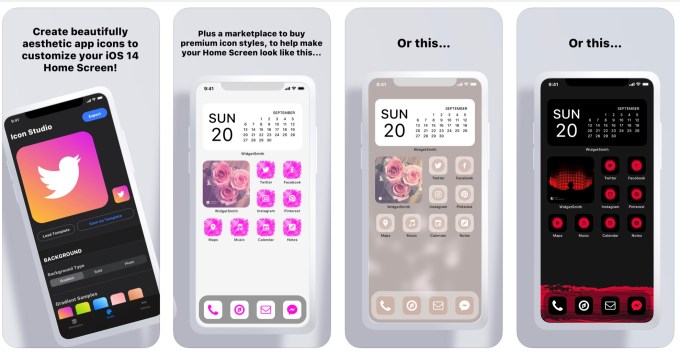
Image Credits: Mycons, via the App Store

If you want to build your own icons, you can use the “Icon Studio” section in Mycons to get started. Some introductory functionality is offered for free, and a one-time upgrade of $9.99 unlocks the full functionality.

“I wanted to release the app with a handful of basic design features available for free, so users can get a feel for how things work and still be able to make their homescreens look beautiful, without coughing up their hard earned cash,” explains Mycons developer Daniel McCarthy.
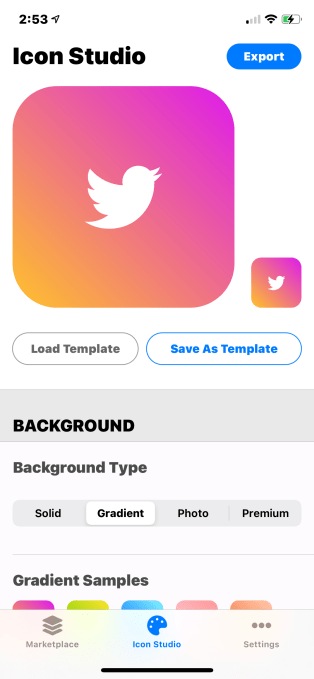
Image Credits: Mycons app

Once the Icon Studio’s full customization capabilities are unlocked, you’ll find them to be fairly extensive.

You can pick solids, gradients or even a photo as your icon background, or opt to use a premium background you’ve purchased.

And if you’re setting your own color as the background, Mycons lets you choose between using a color grid, color spectrum, adjusting sliders or entering a specific Hex Color number to get exactly the right shade.

The app also includes a searchable database with thousands of symbols and logos to choose from — including symbols for your most-used apps as well as harder-to-find generic symbols, like the RSS symbol, for instance. For some of the more popular apps — like Facebook, Twitter, YouTube or Snapchat, for example — you’ll even find a few different options to choose from.

You can then choose to place the symbol in the center, the top or bottom left, or the top or bottom right. You can also adjust the symbol’s color, size and transparency.
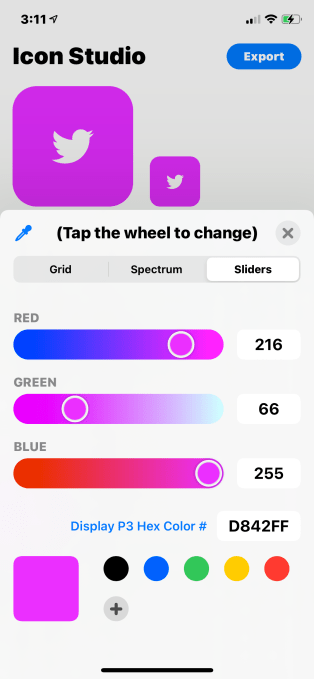
Image Credits: Mycons app

Mycons makes it easy to create a whole set of custom icons at once, too.

After you design your icon template style, you can toggle an option, “Enable Batch Export,” to select multiple symbols then apply the same background to all. You then tap the “Export” button to send all the icons to your Camera Roll at once.

If you’re not up for building your own icons, Mycons also offers packs you can buy.

In a separate tab from the Icon Studio, Mycons lets you shop icon packs from designers via one-time in-app purchases. These range in price from $7.99 to $9.99 and include a set of backgrounds (wallpapers) to match the custom icons. In some cases, these are available in multiple colors and styles, too.


Once purchased, you can use the style with your own custom icon designs. That’s an advantage over buying an icon pack off Etsy, for instance, where you only get a set number of icons — but no tools to build your own to match, in the case you’re missing a few.

At launch, the designs offered come from just three creators, Mycons developer Daniel McCarthy, artist Alanna Ranellone, and painter and photographer Jenna McCarthy.

Image Credits: Mycons

Now that the app is live, Mycons is opening up to other designers who can apply to join the marketplace through a link in the Settings tab of the app.

Not all designs will be accepted, however, McCarthy says. Instead, the marketplace will be curated to ensure all the designs are unique and high-quality.

McCarthy, who previously worked as designer himself, says he plans to offer Mycons’ designer partners how they want to be paid: either as contract work at a competitive market rate or as a percentage of sales.

A performance bonus will also be offered in the case that an icon pack becomes a hit, but the designer had opted for the contract rate option.

“I always try to do what’s fair and right,” McCarthy explains. “If a design partner opts for contract work and their designs end up being wildly successful, I’m not going to let them get screwed,” he says.

Designers will also be credited in the app and allowed to link out to their own websites or social media accounts, if they choose. In this way, their Mycons marketplace listing could serve as lead gen for their own design business.

Mycons is a free download with in-app purchases on the App Store.

News: Elon Musk tweets the Model S will be priced at $69,420 because he’s a child

The Tesla Model S is about to get a bit less expensive. Tesla CEO and resident meme maker, Elon Musk just tweeted that the Model S sedan will soon be priced at $69,420. This pricing wasn’t done on a whim and a joint. The price cut is likely in response to Lucid undercutting Tesla on

The Tesla Model S is about to get a bit less expensive.

Tesla CEO and resident meme maker, Elon Musk just tweeted that the Model S sedan will soon be priced at $69,420. This pricing wasn’t done on a whim and a joint. The price cut is likely in response to Lucid undercutting Tesla on pricing a few hours ago.

The gauntlet has been thrown down!

The prophecy will be fulfilled.

Model S price changes to $69,420 tonight!

— Elon Musk (@elonmusk) October 14, 2020

As you can see in the tweet above, Elon Musk declares that “The gauntlet has been thrown down.”

Earlier today, Lucid announced that its entry level sedan will cost $77,400 minus a $7,500 U.S. tax credit. Since most buyers qualify for the credit, that brings the effective price down to $69,900. You see where this is headed, right?

With a new starting price of $69,420, this would be the second Model S price cut this week. Roadshow by CNET reported yesterday the automaker quietly cut $3,000 off the Model S earlier this week, potentially in a bid to outdo Lucid before its announcement today. Earlier this year, Tesla cut $2,000 off the starting price of the Model 3.

The Lucid Air is shaping up to be a serious contender to Tesla’s Model 3. The Air has all of the range of the Model 3 — even the entry-level version priced today matches the Model S’s 400+ range. The Air is also lighter, faster, and, frankly, newer. The Model S still has the same overall shape and feel since its 2012 introduction.

During a recent interview with TechCrunch, Lucid CEO Peter Rawlinson told editor Darrell Etherington that the Air would be available at a price “surprisingly lower than $80,000.” Though today’s pricing is hardly “surprising,” it puts the Lucid Air in the same price range as well-equipped mid-size European sports cars and, more importantly, the Tesla Model S.

News: Trump’s latest immigration restrictions are bad news for American workers

To shutter employment-based visa programs, even temporarily, is to shut out the innovation and entrepreneurialism our economy desperately needs.

Jay Srinivasan
Contributor

Jay Srinivasan is co-founder and CEO of atSpoke.

I’m an immigrant, and since arriving from India two decades ago I’ve earned a Ph.D., launched two companies, created almost 100 jobs, sold a business to Google and generated a 10x-plus return for my investors.

I’m grateful to have had the chance to live the American dream, becoming a proud American citizen and creating prosperity for others along the way. But here’s the rub: I’m exactly the kind of person that President Trump’s added immigration restrictions that require U.S. companies to offer jobs to U.S. citizens first and narrowing the list of qualifications to make one eligible for the H-1B visa, is designed to keep out of the country.

In tightening the qualifications for H-1B admittances, along with the L visas used by multinationals and the J visas used by some students, the Trump administration is closing the door to economic growth. Study after study shows that the H-1B skilled-worker program creates jobs and drives up earnings for American college grads. In fact, economists say that if we increased H-1B admittances, instead of suspending them, we’d create 1.3 million new jobs and boost GDP by $158 billion by 2045.

Barring people like me will create short-term chaos for tech companies already struggling to hire the people they need. That will slow growth, stifle innovation and reduce job creation. But the lasting impact could be even worse. By making America less welcoming, President Trump’s order will take a toll on American businesses’ ability to attract and retain the world’s brightest young people.

Consider my story. I came to the United States after earning a degree in electrical engineering from the Indian Institute of Technology (IIT), a technical university known as the MIT of India. The year I entered, several hundred thousand people applied for just 10,000 spots, making IIT significantly more selective than the real MIT. Four years later, I graduated and, along with many of the other top performers in my cohort, decided to continue my studies in America.

Back then, it was simply a given that bright young Indians would travel to America to continue their education and seek their fortune. Many of us saw the United States as the pinnacle of technological innovation, and also as a true meritocracy — somewhere that gave immigrants a fair shake, rewarded hard work and let talented young people build a future for themselves.

I was accepted by 10 different colleges, and chose to do a Ph.D. at the University of Illinois because of its top-ranked computer science program. As a grad student, I developed new ways of keeping computer chips from overheating that are now used in server farms all over the world. Later, I put in a stint at McKinsey before launching my own tech startup, an app-testing platform called Appurify, which Google bought and integrated into their Cloud offerings.

I spent a couple of years at Google, but missed building things from scratch, so in 2016 I launched atSpoke, an AI-powered ticketing platform that streamlines IT and HR support. We’ve raised $28 million, hired 60 employees and helped companies including Cloudera, DraftKings and Mapbox create more efficient workplaces and manage the transition to remote working.

Stories like mine aren’t unusual. Moving to a new country takes optimism, ambition and tolerance for risk — all factors that drive many immigrants to start businesses of their own. Immigrants found businesses at twice the rate of the native born, starting about 30% of all new businesses in 2016 and more than half of the country’s billion-dollar unicorn startups. Many now-iconic American brands, including Procter & Gamble, AT&T, Google, Apple, and even Bank of America, were founded by immigrants or their children.

We take it for granted that America is the destination of choice for talented young people, especially those with vital technical skills. But nothing lasts forever. Since I arrived two decades ago, India’s tech scene has blossomed, making it far easier for kids to find opportunities without leaving the country. China, Canada, Australia and Europe are also competing for global talent by making it easier for young immigrants to bring their talent and skills, often including an American education, to join their workforces or start new businesses.

To shutter employment-based visa programs, even temporarily, is to shut out the innovation and entrepreneurialism our economy desperately needs. Worse still, though, doing so makes it harder for the world’s best and brightest young people to believe in the American dream and drives many to seek opportunities elsewhere. The true legacy of Trump’s executive order is that it will be far harder for American businesses to compete for global talent in years to come — and that will ultimately hamper job creation, slow our economy and hurt American workers.

News: Tesla to begin production on 7-seat Model Y in November, with deliveries in early December

Elon Musk has shared some updated info about the timeline for the seven-seat version of the Model Y, Tesla’s more affordable electric SUV. The Model Y began deliveries to customers in March of this year in the U.S., but Musk said in June that he anticipated the company would start shipping seven row variants of

Elon Musk has shared some updated info about the timeline for the seven-seat version of the Model Y, Tesla’s more affordable electric SUV. The Model Y began deliveries to customers in March of this year in the U.S., but Musk said in June that he anticipated the company would start shipping seven row variants of the vehicle by sometime in the fourth quarter of this year.

A seven-seater Model Y would up the total passenger capacity of the vehicle by two, and we’ve known that it supports such a configuration ever since its official unveiling in 2019. The seven seat version will include a third row, though it isn’t yet entirely clear what that will look like in the vehicle. The larger Model X offers a third row, but there’s less space to work with in the Model Y. There’s also a seven-seat Model S design for the Plaid variant that Tesla showed off last year.

Still, additional seats could be a key addition for anyone looking for a premium, but lower-priced SUV that can handle the whole family – including a couple young kids. And if production sticks to Musk’s timeline, it won’t be long before we start to see the seven seat version of the Model Y on roads. Typically, his timing projections have been overly optimistic, but the Model Y actually started being delivered earlier than anticipated, so maybe these dates will stick.

WordPress Image Lightbox Plugin