Yearly Archives: 2020

News: IAB Europe’s ad tracking consent framework found to fail GDPR standard

A flagship framework for gathering Internet users’ consent for targeting with behavioral ads — which is designed by ad industry body, the IAB Europe — fails to meet the required legal standards of data protection, according to findings by its EU data supervisor. The Belgian DPA’s investigation follows complaints against the use of personal data

A flagship framework for gathering Internet users’ consent for targeting with behavioral ads — which is designed by ad industry body, the IAB Europe — fails to meet the required legal standards of data protection, according to findings by its EU data supervisor.

The Belgian DPA’s investigation follows complaints against the use of personal data in the real-time bidding (RTB) component of programmatic advertising which contend that a system of high velocity personal data trading is inherently incompatible with data security requirements baked into EU law.

The IAB Europe’s Transparency and Consent Framework (TCF) can be seen popping up all over the regional web, asking users to accept (or reject) ad trackers — with the stated aim of helping publishers comply with the EU’s data protection rules.

It was the ad industry standard’s body’s response to a major update to the bloc’s data protection rules, after the General Data Protection Regulation (GDPR) came into application in May 2018 — tightening standards around consent to process personal data and introducing supersized penalties for non-compliance — thereby cranking up the legal risk for the ad tracking industry.

The IAB Europe introduced the TCF in April 2018, saying at the time that it would “help the digital advertising ecosystem comply with obligations under the GDPR and ePrivacy Directive”.

The framework has been widely adopted, including by adtech giant, Google — which integrated it this August.

Beyond Europe, the IAB has also recently been pushing for a version of the same tool to be used for ‘compliance’ with California’s Consumer Privacy Act.

However the findings by the investigatory division of the Belgian data protection agency cast doubt on all that adoption — suggesting the framework is not fit for purpose.

The inspection service of the Belgium DPA makes a number of findings in a report reviewed by TechCrunch — including that the TCF fails to comply with GDPR principles of transparency, fairness and accountability, and also the lawfulness of processing.

It also finds that the TCF does not provide adequate rules for the processing of special category data (e.g. health information, political affiliation, sexual orientation etc) — yet does process that data.

There are further highly embarrassing findings for the IAB Europe, which the inspectorate found not to have appointed a Data Protection Officer, nor to have a register of its own internal data processing activities.

Its own privacy policy was also found wanting.

We’ve reached out to the IAB Europe for comment on the inspectorate’s findings.

A series of complaints against RTB have been filed across Europe over the past two years, starting in the UK and Ireland.

Dr Johnny Ryan, who filed the original RTB complaints — and is now a senior fellow at the Irish Council for Civil Liberties — told TechCrunch: “The TCF was an attempt by the tracking industry to put a veneer or quasi-legality over the massive data breach at the heart of the behavioral advertising and tracking industry and the Belgian DPA is now peeling that veneer off and exposing the illegality.”

Ryan has previously described the RTB issues as “the greatest data breach ever recorded”.

Last month he published another hair-raising dossier of evidence on how extensively and troublingly RTB leaks personal data — with findings including that a data broker used RTB to profile people with the aim of influencing the 2019 Polish Parliamentary Election by targeting LGBTQ+ people. Another data broker was found to be profiling and targeting Internet users in Ireland under categories including “Substance abuse”, “Diabetes,” “Chronic Pain” and “Sleep Disorders”.

In a statement, Ravi Naik, the solicitor who worked on the original RTB complaints, had this to say on the Belgian inspectorate’s findings: “These findings are damning and overdue. As the standard setters, the IAB is responsible for breaches of the GDPR. Their supervisory authority has rightly found that the IAB ‘neglects’ the risks to data subjects. The IAB’s responsibility now is to stop these breaches.”

Following the filing of RTB complaints, the UK’s data watchdog, the ICO, issued a warning about behavioural advertising in June 2019 — urging the industry to take note of the need to comply with data protection standards.

However the regulator has failed to follow up with any enforcement action — unless you count multiple mildly worded blog posts. Most recently it paused its (still ongoing) investigation into the issue because of the pandemic.

In another development last year, Ireland’s DPC opened an investigation into Google’s online Ad Exchange — looking into the lawful basis for its processing of personal data. But that investigation is one of scores that remain open on its desk. And the Irish regulator continues to face criticism over the length of time it’s taking to issue decisions on major cross-border GDPR cases pertaining to big tech.

Jef Ausloos, a postdoc researcher in data privacy at the University of Amsterdam — and one of the complainants in the Belgian case — told TechCrunch the move by the DPA puts pressure on other EU regulators to act, calling out what he described as “their complete, deer-in-the-headlights inaction“.

“I think we’ll see more of this in the coming months/year, i.e. other DPAs sick and tired, taking matters into their own hands — instead of waiting on the Irish,” he added.

“We are happy to finally see a data protection authority having the resolved to take on the online advertisement industry at its roots. This may be the first important step in taking down surveillance capitalism,” Ausloos also said in a statement.

There are still several steps to go before the Belgian DPA takes (any) action on the substance of its inspectorate’s report — with a number of steps outstanding in the regulatory process. We’ve reached out to the Belgian DPA for comment.

But, per the complainants, the inspectorate’s findings have been forwarded to the Litigation Chamber, and action is expected in early 2021. Which suggests privacy watchers in the EU might finally get to uphold their rights against the ad tracking industry/data industrial complex in the near future.

For publishers the message is a need to change how they monetize their content: Rights-respecting alternatives to creepy ads are possible (e.g. contextual ad targeting which does not use personal data).

Some publishers have already found the switch to contextual ads to be a good news story for their revenues. Subscription business models are also available (even if not all VCs are fans).

News: Future raises $24M Series B for its $150/mo workout coaching app amid at-home fitness boom

With thousands of gyms across the country forced to close down during the pandemic, there’s been an unprecedented opportunity for fitness companies pitching an at-home solution. This moment has propelled public companies like Peloton to stratospheric highs — its market cap is about to eclipse $40 billion — but it has also pushed venture capitalists

With thousands of gyms across the country forced to close down during the pandemic, there’s been an unprecedented opportunity for fitness companies pitching an at-home solution. This moment has propelled public companies like Peloton to stratospheric highs — its market cap is about to eclipse $40 billion — but it has also pushed venture capitalists towards plenty of deals in the fitness space.

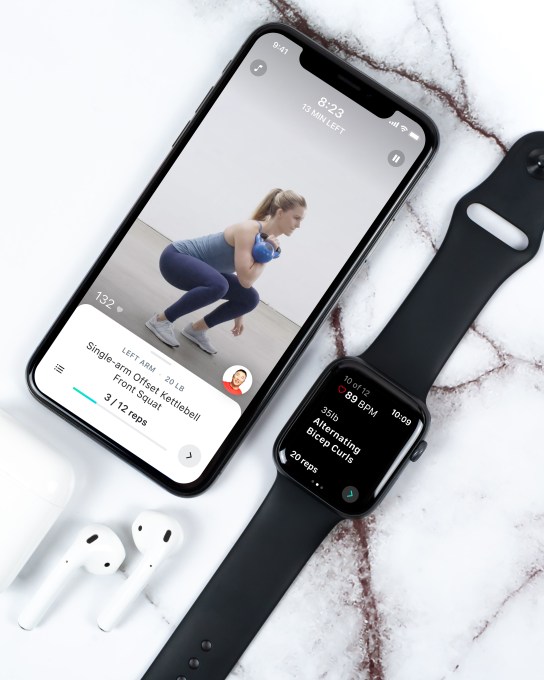
Future launched with a bold sell for consumers, a $150 per month subscription app that virtually teamed users up with a real life fitness coach. Leaning on the health-tracking capabilities of the Apple Watch, the startup has been aiming to build a platform that teams motivation, accountability and fitness insights.

via Future

Close to 18 months after announcing a Series A led by Kleiner Perkins, the startup tells TechCrunch they’ve closed a $24 million Series B led by Trustbridge Partners with Caffeinated Capital and Kleiner Perkins participating again.

Amid the at-home fitness boom, Future has seen major growth of its own. CEO Rishi Mandal says that the company’s growth rate has tripled in recent months as thousands of gyms closed their doors. He says shelter-in-place has merely accelerated an ongoing shift towards tech-forward fitness services that can help busy users find time during their day to exercise.

The operating thesis of the company is that modern life is inherently crazy not just during pandemic times but in normal times,” Mandal says. “The idea of having a set routine is a complete fallacy.”

At $149 per month, Future isn’t aiming for mass market appeal the same way other digital fitness programs being produced by Peloton, Fitbit or Apple are. It seems to be more squarely aimed at users that could be a candidate for getting a personal trainer but might bot be ready to make the investment or don’t need the guided instruction so much as they need general guidelines and some accountability.

As the startup closes on more funding, the team has big goals to expand its network. Mandal aims to have 1,000 coaches on the Future platform by this time next year. Reaching new scales could give the service a chance to tackle new challenges. Mandal sees opportunities for Future to expand its coaching services beyond fitness as it grows, “there’s a real opportunity to help people with all aspects of their health.”

News: Shure’s Aonic 50 wireless noise cancelling headphones offer best-in-class audio quality

The noise-cancelling over-ear headphone category is an increasingly competitive one, and consumers have never been more spoiled for choice. Shure entered the market this year with the Aonic 50, a premium-priced headset ($399) that offers active noise cancelling, Bluetooth connectivity and USB-C charging. Shure’s reputation for delivering top-quality sound is definitely part of the package,

The noise-cancelling over-ear headphone category is an increasingly competitive one, and consumers have never been more spoiled for choice. Shure entered the market this year with the Aonic 50, a premium-priced headset ($399) that offers active noise cancelling, Bluetooth connectivity and USB-C charging. Shure’s reputation for delivering top-quality sound is definitely part of the package, and there’s a lot more to recommend the Aonic 50 as well.

Basics

Shure offers the Aonic 50 in either black or brown finishes, and they have physical controls on the right ear cup for volume, turning noise cancellation on and off, power, activating voice assistances and skipping tracks. There’s a USB-C port for charging, and a 2.5mm stereo connector on the left ear cup for using the included cable to connect via wire, which allows you to use them even while the internal battery is depleted or the headset is powered down (albeit without active noise cancelling obviously).

The Aonic 50 also comes with a round, flat carrying case – the ear cups swivel to fit in the zippered storage compartment. This takes up more of a footprint than the typical folding design of these kind of ANC headphones, but it’s less bulky, too, so it depends on how you’re packing them whether this is good or bad.

Shure offers a mobile app for iOS and Android called ShurePlus Play that can provide EQ controls, as well as more specific tuning of both the active noise cancelling, and the environmental mode that pipes in outside sound. This allows for a lot of customization, but with one major caveat – EQ settings only apply when playing music via the app itself, which is an unusual and disappointing choice.

Design and performance

Shure’s Aonic 50 excel in a couple of areas where the company has a proven track record: Sound quality and comfort/wearability. The ample faux leather-wrapped padding on both the headband and the ear cups make them very comfortable to wear, even for longer sessions, which is great for work for home practicality. I often forgot I had them on while moving around the house, which gives you an idea of how well they fit.

As for sound, Shure has aimed for a relatively neutral, flat tone that provides an accurate recreation of what the original producer intended for any track, and the results are great. Music detail is clear, and they’re neither too heavy on bass or overemphatic on treble. This is a sound profile that audiophiles will appreciate, though it might not be the best for anyone who’s looking for a bass-heavy soundstage. That said, bass-favoring headphones are easy to find in this category, so Shure’s offering, with its clear highs, stands apart from the field in the ANC arena. To be clear, the bass is excellent, but overall the market has moved towards muddy, artificially enhanced bass vs. true rendering, which the Aonic 50 delivers.

The button controls on the Aonic 50 are well-placed and cover the spectrum in terms of what you’d want to be able to control right from the headset. USB-C charging is much-appreciated in an era where that’s far and away the standard for most of the mobile devices in your life, as well as many computers. The included stereo cable is a great addition for when the battery runs out – but Shure’s advertised 20-hour or so battery life estimate is accurate, so it’ll be quite a while before you have to resort to that as long as you remember to charge once in a while.

If there’s one place where Shure’s performance falls a bit short, it’s in noise cancellation. The ANC does a decent job of blocking out unwanted environmental sound, but it’s not quite up to the standard of the like of Bose or Sony’s top-end ANC headphones. It still gets the job done most of the time, and the trade-off is better sound.

Bottom line

As I said above, people looking for active noise cancelling headphones are spoiled for choice these days. But the Shure Aonic 50 offers something that discerning audio pros won’t be able to find from alternatives including those from Bose or Sony, and that’s an excellent soundstage and sound quality that just can’t be beat. Wearability is also tops, which makes these a great options for audiophiles who want a wire-free, sound-blocking solution for a home office.

News: Atlanta’-based Speedscale now has $2.2 million more to grow its API test automation business

It only took a few weeks after its Y Combinator demo day debut for the Atlanta-based API test automation company Speedscale to raise its first $2.2 million. Founded by longtime developers and Georgia Institute of Technology alumni, Ken Ahrens, Matthew LeRay and Nate Lee had known each other for roughly twenty years before making the

It only took a few weeks after its Y Combinator demo day debut for the Atlanta-based API test automation company Speedscale to raise its first $2.2 million.

Founded by longtime developers and Georgia Institute of Technology alumni, Ken Ahrens, Matthew LeRay and Nate Lee had known each other for roughly twenty years before making the jump to working together.

A circuitous path of interconnecting programming jobs in the devops and monitoring space led the three men to realize that there was an opportunity to address one of the main struggles new programmers now face — making sure that updates to api integrations in a containerized programming world don’t wind up breaking apps or services.

“We were helping to solve incident outages and incidents that would cause downtime,” said Lee. “It’s hard to ensure the quality between all of these connection points [between applications]. And these connection points are growing as people add apis and containers. We said, ‘How about we solve this space? How could we preempt all of this and ensure maintaining release velocity with scalable automation?’”

Typically companies release new updates to code in a phased approach or in a test environment to ensure that they’re not going to break anything. Speedscale proposes test automation using real traffic so that developers can accelerate the release time.

“They want to change very frequently,” said Ahrens, speaking about the development life cycle. “Most of the changes are great, but every once in a while they make a change and break part of the system. The state of the art is to wait for it to be broken and get someone to fix it quickly.”

The pitch SpeedScale makes to developers is that its service can give coders the ability to see the problems before the release. They automate the creation of the staging environment, automation suite and orchestration to create that environment.

“One of the big things for me was when I saw the rise of Kubernetes was what’s really happening is that engineering leaders have been able to give more autonomy to developers, but no one has come up with a great way to validate and I really think that Speedscale can solve that problem.”

The Atlanta-based company, which only just graduated from Y Combinator a few months ago, is currently in a closed alpha with select pilot partners, according to LeRay. And the nine month-old company has raised $2.2 million from investors including Sierra Ventures from the Bay Area and Atlanta’s own Tech Square Ventures to grow the business.

“Apis are a huge market,” Ahrens said of the potential opportunity for the company. “there’s 11 million developers who develop against apis… We think the addressable market for us is in the billions.”

News: UK’s ICO downgrades British Airways data breach fine to £20M, after originally setting it at £184M

One of the biggest data breaches in UK corporate history has been closed off by regulators not with a bang, but a whimper — as a result of Covid-19. Today the Information Commissioner’s Office, the UK’s data watchdog, announced that it would be fining British Airways £20 million for a data breach in which the

One of the biggest data breaches in UK corporate history has been closed off by regulators not with a bang, but a whimper — as a result of Covid-19. Today the Information Commissioner’s Office, the UK’s data watchdog, announced that it would be fining British Airways £20 million for a data breach in which the personal details of more than 400,000 customers were leaked after BA suffered a two-month cyberattack and lacked adequate security to detect and defend itself against it. It had originally planned to fine BA nearly £184 million, but it reduced the penalty in light of the economic impact that BA (like other airlines) has faced as a result of Covid-19.

The major step down in the fine underscores what kind of an impact the coronavirus pandemic is having on regulations. In some cases, in order more quickly address issues that potentially impact business growth, we’ve seen regulators try to speed up their responsiveness and even leave behind some previous reservations to green light activities, as in the case of e-scooters.

But in the case of the BA fine, we’re seeing the other side of the Covid-19 impact: regulators are taking a less hard line with penalties on companies that are already struggling. That raises questions of how impactful their decisions are, and what kind of a precedent they are setting for future security and data protection neglect.

Even with the reduced penalty size, the ICO is sticking by its original conclusions:

“People entrusted their personal details to BA and BA failed to take adequate measures to keep those details secure,” said Information Commissioner Elizabeth Denham in a statement. “Their failure to act was unacceptable and affected hundreds of thousands of people, which may have caused some anxiety and distress as a result. That’s why we have issued BA with a £20m fine – our biggest to date. When organisations take poor decisions around people’s personal data, that can have a real impact on people’s lives. The law now gives us the tools to encourage businesses to make better decisions about data, including investing in up-to-date security.”

The fine is the highest-ever leveled by the ICO. But it’s a major step down from the £184 million penalty — 1.5% of BA’s revenues in the 2018 calendar year — that the regulator had originally set last year. That was, of course, before the coronavirus pandemic hit, halting travel globally and bringing many airlines to their knees. The original order went through a process of appeal, which included an assessment of the state of the company in the current market.

“In June 2019 the ICO issued BA with a notice of intent to fine,” the ICO noted in its statement on the reduced fine. “As part of the regulatory process the ICO considered both representations from BA and the economic impact of COVID-19 on their business before setting a final penalty.”

The salient facts of the investigation’s findings remained the same: the ICO had determined that BA had “weaknesses in its security” that could have been prevented with security systems — procedures and software — that were available at the time.

As a result, data from 429,612 customers and staff was leaked, including “names, addresses, payment card numbers and CVV numbers of 244,000 BA customers,” the ICO said, adding that the combined card and CVV numbers of 77,000 customers and card numbers only for 108,000 customers were also believed to be a part of the breach, as well as the usernames and passwords of BA employee and administrator accounts, and the usernames and PINs of up to 612 BA Executive Club accounts (these last two were also not completely verified, it seems).

On top of that, BA never detected the attack, it said: it was notified of the breach by a third party.

The ICO said that its action has been approved by other DPA’s in the European Union: this is because the attack happened while the UK was still in the EU, and so the investigation was carried out by the ICO on behalf of the EU authorities, it said.

News: Twitter changes its hacked materials policy in wake of New York Post controversy

Twitter has announced an update to its hacked materials policy — saying it will no longer remove hacked content unless it’s directly shared by hackers or those “acting in concert with them”. Instead of blocking such content/links from being shared on its service it says it will label tweets to “provide context”. Wider Twitter rules

Twitter has announced an update to its hacked materials policy — saying it will no longer remove hacked content unless it’s directly shared by hackers or those “acting in concert with them”.

Instead of blocking such content/links from being shared on its service it says it will label tweets to “provide context”.

Wider Twitter rules against posting private information, synthetic and manipulated media, and non-consensual nudity all still apply — so it could still, for example, remove links to hacked material if the content being linked to violates other policies. But just tweeting a link to hacked materials isn’t an automatic takedown anymore.

Over the last 24 hours, we’ve received significant feedback (from critical to supportive) about how we enforced our Hacked Materials Policy yesterday. After reflecting on this feedback, we have decided to make changes to the policy and how we enforce it.

— Vijaya Gadde (@vijaya) October 16, 2020

The move comes hard on the heels of the company’s decision to restrict sharing of a New York Post article this week — which reported on claims that laptop hardware left at a repair shop contained emails and other data belonging to Hunter Biden, the son of U.S. presidential candidate Joe Biden.

The decision by Twitter to restrict sharing of the Post article attracted vicious criticism from high profile Republican voices — with the likes of senator Josh Hawley tweeting that the company is “now censoring journalists”.

Twitter’s hacked materials policy do explicitly allow “reporting on a hack, or sharing press coverage of hacking” but the company subsequently clarified that it had acted because the Post article contained “personal and private information — like email addresses and phone numbers — which violate our rules”. (Plus the Post wasn’t reporting on a hack; but rather on the claim of the discovery of a cache of emails and the emails themselves.)

At the same time the Post article itself is highly controversial. The scenario of how the data came to be in the hands of a random laptop repair shop which then chose to hand it over to a key Trump ally stretches credibility — bearing the hallmarks of an election-targeting disops operation, as we explained on Wednesday.

Given questions over the quality of the Post’s fact-checking and journalistic standards in this case, Twitter’s decision to restrict sharing of the article actually appears to have helped reduce the spread of disinformation — even as it attracted flak to the company for censoring ‘journalism’.

(It has also since emerged that the harddrive in question was manufactured shortly before the laptop was claimed to have been dropped off at the shop. So the most likely scenario is Hunter Biden’s iCloud was hacked and doctored emails planted on the drive where the data could be ‘discovered’ and leaked to the press in a ham-fisted attempt to influence the U.S. presidential election. But Twitter is clearly uncomfortable that enforcing its policy led to accusations of censoring journalists.)

In a tweet thread explaining the change to its policy, Twitter’s legal, policy and trust & safety lead, Vijaya Gadde, writes: “We want to address the concerns that there could be many unintended consequences to journalists, whistleblowers and others in ways that are contrary to Twitter’s purpose of serving the public conversation.”

She also notes that when the hacked materials policy was first introduced, in 2018, Twitter had fewer tools for policy enforcement than it does now, saying: “We’ve recently added new product capabilities, such as labels to provide people with additional context. We are no longer limited to Tweet removal as an enforcement action.”

Twitter began adding contextual labels to policy-breaching tweets by US president Donald Trump earlier this year, rather than remove his tweets altogether. It has continued to expand usage of these contextual signals — such as by adding fact-checking labels to certain conspiracy theory tweets — giving itself a ‘more speech to counteract bad speech’ enforcement tool vs the blunt instrument of tweet takedowns/account bans (which it has also applied recently to the toxic conspiracy theory group, QAnon).

“We believe that labeling Tweets and empowering people to assess content for themselves better serves the public interest and public conversation. The Hacked Material Policy is being updated to reflect these new enforcement capabilities,” Gadde also says, adding: “Content moderation is incredibly difficult, especially in the critical context of an election. We are trying to act responsibly & quickly to prevent harms, but we’re still learning along the way.”

The updated policy is clearly not a free-for-all, given all other Twitter Rules against hacked material apply (such as doxxing). Though there’s a question of whether tweets linking to the Post article would still be taken down under the updated policy if the story did indeed contain personal info (which remains against Twitter’s policy).

At the same time, the new ‘third way’ policy for hacked materials does leave Twitter’s platform to be a conduit for the spread of political disinformation (just with a little contextual friction) — in instances where it’s been credulously laundered by the press. (Albeit, Twitter can justifiably point the finger of blame at poor journalist standards at that point.)

The new policy also raises the question of how Twitter will determine whether or not a person is working ‘in concert’ with hackers? Just spitballing here but if — say — on the poll’s eve, Trump were to share some highly dubious information that smeared his key political rival and which he said he’d been handed by Russian president, Vladimir Putin, would Twitter step in and remove it?

We can only hope we don’t have to find out.

News: Miniso, the Japanese-looking variety store from China, sees shares jump in US IPO

Investors are jumping aboard a value store chain that is bringing Japanese-inspired lifestyle goods to consumers around the world. The company, Miniso, raised $608 million from an initial public offering in New York on Thursday. It debuted at $24.40, above its pricing range of $16.50 to $18.50, and finished the day up 4.4%. Everything about

Investors are jumping aboard a value store chain that is bringing Japanese-inspired lifestyle goods to consumers around the world. The company, Miniso, raised $608 million from an initial public offering in New York on Thursday. It debuted at $24.40, above its pricing range of $16.50 to $18.50, and finished the day up 4.4%.

Everything about the seven-year-old firm — from its name, branding, products, to its website — suggests it is Japanese, except in fact it was born and bred in China. It bears a striking similarity to Muji, Uniqlo and dollar store Daiso in many ways, and has been called a copycat of its Japanese lifestyle predecessors.

The company, backed by Tencent and Hillhouse Capital, seems to intentionally, albeit misleadingly, brand itself as Japanese. In its public messaging, such as this press release and its country-specific site, it describes itself as a firm co-founded by Chinese entrepreneur Ye Guofu and Japanese designer Miyake Junya in Tokyo in 2013. But its Japanese origin is nowhere to be seen in its IPO prospectus.

Instead, the document lists the southern Chinese metropolis Guangzhou as the firm’s first base and Ye as the sole founder and current chief executive. All key directors and executives appear to be Chinese.

Branding confusion aside, there’s no denying Miniso has successfully wooed many young, price-sensitive consumers who welcome choice overload. Over 80% of its store visitors in China are under the age of 40. As of June, more than 95% of its products in China were below 50 yuan or $7.08 — thanks to the vicinity of abundant manufacturers — and the firm prides itself on the goal to launch 100 new SKUs every seven days.

Miniso’s revenue reached $1.4 billion in 2019, compared to $17.85 billion for 71-year-old Uniqlo and $4.17 billion for 39-year-old Muji. It recorded a loss of $44 million last year. 

The firm’s retail stores, decorated by its iconic bright red color reminiscent of the Uniqlo brand, span over 80 countries today. 40% of its 4,200 stores are outside of China. Over 90% of its outlets are franchise stores, one reason why it’s able to expand rapidly, but the model also means Miniso has limited control over its large network of third-party operators.

News: Sony’s $5,000 3D display (probably) isn’t for you

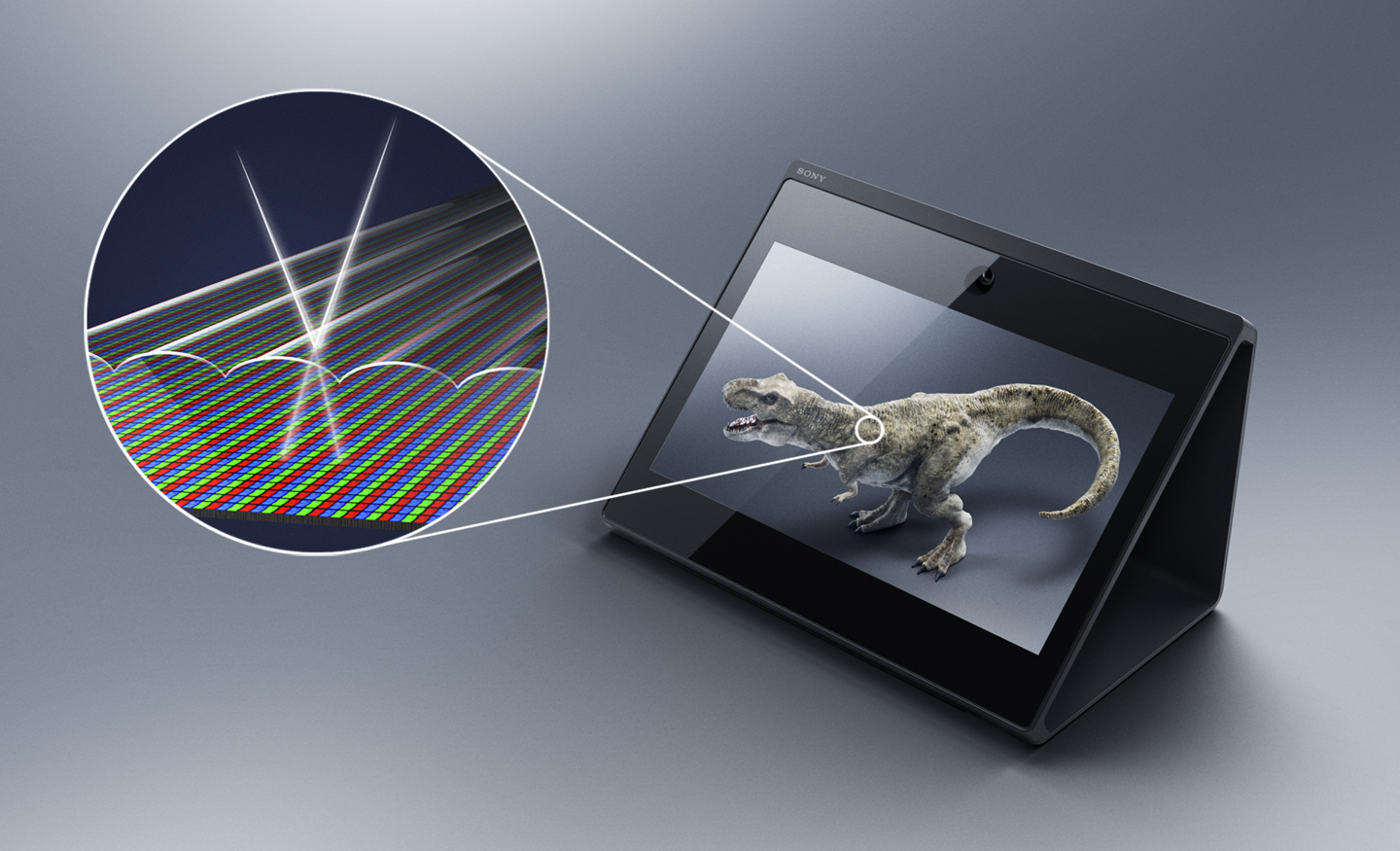
Sony just announced a $5,000 3D display, but odds are it’s probably not for you. Primarily known for its consumer goods, the company is targeting creative professionals with the Spatial Reality Display — more specifically, those working in fields like computer graphics and visual effects for films. Basically it’s a way for artists to view

Sony just announced a $5,000 3D display, but odds are it’s probably not for you. Primarily known for its consumer goods, the company is targeting creative professionals with the Spatial Reality Display — more specifically, those working in fields like computer graphics and visual effects for films. Basically it’s a way for artists to view their 3D creations without having to wear a VR headset.

The company’s not the first to offer up this kind of technology for a fairly niche audience. The Looking Glass display is probably the best-known offering in the space up to this point. But unlike that massive 8K screen, Sony’s product is actually designed for a single user — specifically as a screen for their desktop PC. Also, it kind of looks like an Amazon Echo Show.

Image Credits: Sony

The big differentiator between the product and existing devices is the inclusion of a sensor that determines the user’s viewing position, including vertical and horizontal access, along with distance, and tailors the image to that specific angle, adjusting within the millisecond.

Sony says it’s a “highly-realistic, virtual environment.” It showed off an earlier version of the technology at CES this year, using a rendering of the Ecto-1 from the upcoming Ghostbusters sequel, and planned to give the press a demo of the final version of the screen, but we all had to settle for conference calls instead, because of the COVID-19 pandemic. For that reason, I can’t really speak to the efficacy of the 3D imaging as of this writing.

The company consulted with its Sony Pictures wing, which used the technology for the development of CG effects for the aforementioned Ghostbusters film. Volkswagen has also been involved since the project’s early stages, looking toward the technology’s potential use in the ideation and design processes.

For everyone else, the display goes up for sale through Sony next month.

News: FAA streamlines commercial launch rules to keep the rockets flying

The FAA has published its updated rules for commercial space launches and reentries, streamlining and modernizing the large and complicated set of regulations. With rockets launching in greater numbers and variety, and from more providers, it makes sense to get a bit of the red tape out of the way. The rules provide for licensing

The FAA has published its updated rules for commercial space launches and reentries, streamlining and modernizing the large and complicated set of regulations. With rockets launching in greater numbers and variety, and from more providers, it makes sense to get a bit of the red tape out of the way.

The rules provide for licensing of rocket launch operators and approval of individual launches and reentry plans, among other things. As you can imagine, such rules must be complex in the first place, more so when they’ve been assembled piecemeal for years to accommodate a quickly moving industry.

U.S. Transportation Secretary Elaine Chao called the revisions a “historic, comprehensive update.” They consolidate four sets of regulations and unify licensing and safety rules under a single umbrella, while allowing flexibility for different types of operators or operations.

According to a press release from the FAA, the new rules allow:

  • A single operator’s license that can be used to support multiple launches or reentries from potentially multiple launch site locations.
  • Early review when applicants submit portions of their license application incrementally.
  • Applicants to negotiate mutually agreeable reduced time frames for submittals and application review periods.
  • Applicants to apply for a safety element approval with a license application, instead of needing to submit a separate application.
  • Additional flexibility on how to demonstrate high consequence event protection.
  • Neighboring operations personnel to stay during launch or reentry in certain circumstances.
  • Ground safety oversight to be scoped to better fit the safety risks and reduce duplicative requirements when operating at a federal site.

In speaking with leaders in the commercial space industry, a common theme is the burden of regulation. Any reform that simplifies and unifies will likely be welcomed by the community.

The actual regulations are hundreds of pages long, so it’s still hardly a simple task to get a license and start launching rockets. But at least it isn’t several sets of 500-page documents that you have to accommodate simultaneously.

The new rules have been submitted for entry in the Federal Register, and will take effect 90 days after that happens. In addition, the FAA will be putting out Advisory Circulars for public comment — additions and elaborations on the rules that the agency says there may be as many as two dozen of in the next year. You can keep up with those here.

News: Twitter is investigating widespread outage reports

If you’re reading this, you probably didn’t get here from Twitter . The service has been experiencing widespread reports of outages for at least an hour. The issue has impact a range of different activities on the site, ranging from newsfeeds to the ability to tweet. The company has acknowledged the on-going problem, noting that

If you’re reading this, you probably didn’t get here from Twitter . The service has been experiencing widespread reports of outages for at least an hour. The issue has impact a range of different activities on the site, ranging from newsfeeds to the ability to tweet. The company has acknowledged the on-going problem, noting that it is investigating things on its official status page,

Update – We are continuing to monitor as our teams investigate. More updates to come.
Oct 15, 22:31 UTC
Investigating – We are currently investigating this issue. More updates to come.
Oct 15, 21:56 UTC

Twitter responded to our request for comment, stating, “We know people are having trouble Tweeting and using Twitter. We’re working to fix this issue as quickly as possible. We’ll share more when we have it and Tweet from @TwitterSupport when we can – stay tuned.”

We’ll update as we hear more.

WordPress Image Lightbox Plugin