Yearly Archives: 2020

News: Google calls DOJ’s antitrust lawsuit “deeply flawed” in GIF-laden blog response

Google was clearly anticipating today’s U.S. Department of Justice antitrust complaint filing – the company posted an extensive rebuttal of the lawsuit to its Keyword company blog. The post, penned by SVP of Global Affairs and Google Chief Legal Officer Kent Walker, suggests that the DOJ’s case is “deeply flawed” and “would do nothing to

Google was clearly anticipating today’s U.S. Department of Justice antitrust complaint filing – the company posted an extensive rebuttal of the lawsuit to its Keyword company blog. The post, penned by SVP of Global Affairs and Google Chief Legal Officer Kent Walker, suggests that the DOJ’s case is “deeply flawed” and “would do nothing to help consumers,” before going into a platform-by-platform description of why it thinks its position in the market isn’t representative of unfair market dominance that would amount to antitrust.

Google’s blog post is even sprinkled with GIFs – something that’s pretty common for the search giant when it comes to its consumer product launches. These GIFs include step-by-step screen recordings of setting search engines other than Google as your default in Chrome on both mobile and desktop. These processes are both described as “trivially easy” by Walker in the post, but they do look like a bit of an own-goal when you notice just how many steps it takes to get the job done on desktop in particular, including what looks like a momentary hesitation in where to click to drill down further for the “Make Default” command.

Image Credits: Google

Google also reportedly makes reference to companies choosing their search engine as default because of the quality of their service, including both Apple and Mozilla (with a link drop for our own Frederic Lardinois). Ultimately, Google is making the argument that its search engine isn’t dominant because of a lack of viable options fostered by anti-competitive practices, but that instead it’s a result of building a quality product that consumers then opt in to using from among a field of choices.

The DOJ’s full suit dropped this morning, and an initial analysis suggests that this scrutiny is perhaps inopportunely timed in terms of its proximity to the election to actually have any significant teeth. There is some indication that a more broad, bipartisan investigation with support from state level attorney generals on both sides of the aisle could follow later, however, so it’s not necessarily all just going to go away regardless of election outcome.

News: Google Photos revives its prints subscription service, expands same-day print options

Google Photos is reviving its photo printing subscription service and introducing same-day prints. The company earlier this year had briefly tested a new program that used A.I. to suggest the month’s 10 best photos, which were then shipped to your home automatically. But Google ended the test on June 30. During the trial, Google had

Google Photos is reviving its photo printing subscription service and introducing same-day prints. The company earlier this year had briefly tested a new program that used A.I. to suggest the month’s 10 best photos, which were then shipped to your home automatically. But Google ended the test on June 30.

During the trial, Google had offered users a $7.99 per month subscription that would automatically select 10 photos from one of three themes, including people and pets, landscapes, or “a little bit of everything” mix. The 4×6 photos were printed on matte, white cardstock with a 1/8-inch border.

Image Credits: Google

The new subscription, launching soon, leverages feedback from the early tests to now give users more control over which prints they receive and how they look. It also drops the price to $6.99 per month, including shipping and before tax.

With the new Premium Print Series, as the subscription is called, Google Photos will use machine learning techniques to pick 10 of your recent photos to print. But users can edit the photo selection and they can choose either a matte or glossy finish or add a border before the photos ship.

The photos can optionally be turned into postcards, thanks to the cardstock paper backing, Google notes.

Subscribers can also opt to skip a month and can easily cancel the service, if they’re no longer using it.

This updated version of service was recently discovered by reverse engineer Jane Manchun Wong, who detailed the new customization options and the lower price point.

Google Photos is working on “Premium Print Series”,

a subscription service for shipping prints of your photos that Google suggested for you monthly for $6.99/month… nice!

the finish and border are adjustable. you can also skip a month of prints if you’d like

tip @Techmeme pic.twitter.com/b6fQpEZl7O

— Jane Manchun Wong (@wongmjane) October 7, 2020

Google says the Premium Print Series will make its ways to Google Photos users in the next few weeks.

The company today is also launching same-day printing at Walgreens, available immediately. This expands Google Photos’ existing same-day options, which already included same-day pickup from CVS and Walmart.

Using the Google Photos app, customers can now order 4×6, 5×7, or 8×10 photo prints for same-day pickup at Walgreens . This nearly doubles the number of stores offering same-day prints to Google Photos users, Google says.

In addition to prints and subscriptions, Google Photos continues to offer canvas prints and photo books — the latter now with up to 140 pages — as part of its online print store.

Image Credits: Google

The launch of the expanded photo printing services and subscription comes at a time when people are traveling less often, due to the pandemic, and are attending fewer large events where photo-taking may take place — like parties or concerts, for example.

But even if times have changed, people are continuing to take photos — though they may not be posting them across social media in order to avoid judgement.The subject of the photos may have changed, too, to now include more family and pets or nature scenes, instead of large, crowded places or big social gatherings, for instance.

The nostalgia for pre-pandemic times could see users turning to prints to help them relive fond memories, too.

Google didn’t say exactly when the new subscription will launch, but said users should be able to access the feature in the coming weeks.


News: Beam is building a web browser that gathers knowledge from your web activity

Remember Netscape Navigator and Internet Explorer? Those applications from the 1990s used emphatic metaphors in their names to talk about a simple task — browsing the web. Today, nobody would say that Google Chrome is a web explorer. Browsing the web has become an effortless — and often mindless — task. You grab your phone or

Remember Netscape Navigator and Internet Explorer? Those applications from the 1990s used emphatic metaphors in their names to talk about a simple task — browsing the web. Today, nobody would say that Google Chrome is a web explorer.

Browsing the web has become an effortless — and often mindless — task. You grab your phone or computer, you open a new tab and you type a few words in the address bar.

Beam, a new startup founded by Dom Leca and Sébastien Métrot, is working on a brand new app that is both a web browser and a note app. Dom Leca previously founded Sparrow, an email app for macOS and iOS that was acquired by Google in 2012. Sébastien Métrot has been working for Apple for several years.

“Everybody complains that Instagram and Facebook fry your brain and make you waste time,” Leca told me. And yet, web browsers represent infinite knowledge and infinite possibilities.

If you’re very passionate about a niche topic, chances are you can learn a ton of things by reading stuff, watching videos, interacting on forums and more. But when you close your browser window, everything disappears.

Sure, there’s a web history feature — but it’s a long list of links with no connection. Sure, you can bookmark pages or take notes in another app — but it’s a cumbersome process.

More importantly, you might not know what’s important and what’s not. Most passion projects start with meaningless search queries.

Beam’s mysterious logo. Image Credits: Beam

Beam aims to bring meaning to your web history. Every time you search for something, it creates a new note card. Beam passively follows users as they click on links, open new pages and spend time looking at stuff.

When you close the tab, you have a new card — your search query is the title of the card and you can see all links under that note. You can then add text, remove links that weren’t that relevant, etc.

By combining passive note creation with a tiny nudge when you close a tab, you get to reflect on your web activity. It’s a way to learn more about yourself and your habits. Sure, you may realize that you waste a ton of time. But you might also realize that you care more than you thought about cooking and Russian classical music.

“From a certain point of view, I’m designing this for people who don’t take notes,” Leca said.

But even if you use a note app, they interrupt you as you need to switch between multiple apps. Leca invested in Roam Research and likes it a lot. But he doesn’t think it solves that amnesia affect when you browse the web.

The startup is already thinking about ways to expand beyond that simple concept. You could imagine a way to interact with content directly from your notes — click on a YouTube link to view the video directly in your card, click on a podcast link to see an automated transcript, etc.

Eventually, Beam could let you share cards with other users. You could browse other user profiles based on matches with your interests.

Beam is leveraging WebKit as the browser engine and is working on a Mac app for now. It’s going to take a few months before a public release, but it’s going to be an interesting company to follow.

The company raised $3.5 million (€3 million) from Spark, Alven, C4V, Amaranthine, Tiny Capital (Andrew Wilkinson), Tiny vc, Secret Fund, Antoine Martin, Simon Dawlat, Nicolas Cohen and Spetses. Loren Brichter (remember Tweetie for Mac?) and Oliver Reichenstein (iA Writer) are advising the company.

News: Robotic kitchen startup YPC raises a $1.8M seed round

Montreal-based YPC Technologies today announced that it has raised a $1.8 million seed round. Led by Hike Ventures and Real Ventures, the funding includes participation from Toyota AI Ventures and Uphill Capital, among others, designed to help the company pilot its kitchen robotics technology. Toyota’s funding came as part of the company’s “Call of Innovation,”

Montreal-based YPC Technologies today announced that it has raised a $1.8 million seed round. Led by Hike Ventures and Real Ventures, the funding includes participation from Toyota AI Ventures and Uphill Capital, among others, designed to help the company pilot its kitchen robotics technology.

Toyota’s funding came as part of the company’s “Call of Innovation,” which finds it investing in early state AI, robotics and other cutting edge technologies. “At TRI, we’re always searching for ways to amplify human ability and help improve quality of life,” TRI’s Gil Pratt said in a statement. “Through the call for innovation, we got a first-hand look at how startups like YPC Technologies are addressing the needs of people in urban communities, and we’re encouraged and excited by their efforts.”

Robotics and automation generation has been a fairly hot category for VC investment, amid the on-going COVID-19 shut down. Food robotics, in particular, have been a focus. And it makes sense, certainly. After all, providing people with sustenance is about as essential as services get. The startup’s solution is built around a robotic arm that can prepare recipes with a variety of different ingredients — similar to other models we’ve seen.

One of the subscription-based service’s selling points is that it requires a relatively small amount of space, versus a standard commercial kitchen. That makes is a bit more versitile in applications, allowing it to be deployed in not only restaurants but smaller facilities like ghost kitchens and hotels.

The company also points out that the system is designed to work collaboratively with humans, replacing repetitive tasks rather than staff positions outright.

News: As Blizzard sunsets StarCraft II, some of its key creators raise cash for a new gaming studio

Even as Blizzard pulls the plug on new updates for its StarCraft II game, nearly a decade after its launch, gaming investors are financing the next new thing coming from key members of the game’s early development team. Blizzard vets Tim Morten, the former production director for StarCraft II; and Tim Campbell, the lead campaign

Even as Blizzard pulls the plug on new updates for its StarCraft II game, nearly a decade after its launch, gaming investors are financing the next new thing coming from key members of the game’s early development team.

Blizzard vets Tim Morten, the former production director for StarCraft II; and Tim Campbell, the lead campaign designer for WarCraft III; have launched a new studio with a number of colleagues from Blizzard to bring real time strategy games to a bigger audience.

The new company, Frost Giant Studios, has picked up $4.7 million in seed funding from the gaming and synthetic media focused investment firm, Bitkraft Ventures, along with participation from 1 Up Ventures, GC Tracker, Riot Games, and Griffin Gaming Partners, the company said.

“Frost Giant Studios is on a mission to bring one of the most beloved genres to a broader audience,” said Scott Rupp, Founding General Partner at Bitkraft Ventures. “We are excited to see some of the most experienced leaders in real-time strategy game development come together to build a game that will secure the future growth of the RTS genre while staying true to the core player fantasy of RTS.”

Building on their experience developing StarCraft II over the past ten years, the Frost Giant Studios strategy is focused on making gameplay better, easier, and more collaborative.

Think of it as taking some of the best elements of the battle royal genre and bringing them into real-time strategy games with an eye toward playability and competitive opportunities in esports.

“Real-time strategy players are an incredibly passionate community, and they deserve not just a great new game, but one they can share broadly with friends. Building a worthy successor will take time, but we’re incredibly excited and grateful to carry real-time strategy forward at Frost Giant Studios,” said Tim Morten, Frost Giant Studios CEO.

News: As startups accelerate in record Q3, Europe and Asia rack up huge VC results

Venture capital activity in Europe and Asia saw a strong return to form in Q3, data indicates. The two continents enjoyed more venture capital investment into their local startups than in some time, underscoring that strong VC results the United States saw in the third quarter were not a fluke, but part of a broader

Venture capital activity in Europe and Asia saw a strong return to form in Q3, data indicates.

The two continents enjoyed more venture capital investment into their local startups than in some time, underscoring that strong VC results the United States saw in the third quarter were not a fluke, but part of a broader trend.


The Exchange explores startups, markets and money. Read it every morning on Extra Crunch, or get The Exchange newsletter every Saturday.


Data compiled by CB Insights shows a global acceleration in the number of dollars venture capitalists are putting to work around the globe as 2020 chews through its second half. The record figures that Q3 supplied stand in stark contrast to the fear that overtook startup-land in late Q1 and early Q2, when COVID-19 threw some young technology companies surprise turbulence.

But the dip in venture capital activity was short-lived. As many startups sold software, they found their wares suddenly in greater demand; across a host of verticals, startups benefited from an accelerated digital transformation as the world adapted to a new work environment. Aside from clear winners like video conferencing tools, other categories from remote learning to security tooling also got a bump.

The COVID-tailwind, as it is sometimes called, does not appear to be specific to the United States or North America. Instead, given what the venture capital data states, we can infer that startups the world around are enjoying a similar boost.1

Let’s get into the numbers to better understand what’s up in Europe and Asia. (As an aside, if you have data on African startups’ venture capital results, please email me as I am starting to poke around for a more global picture. Recent deal activity makes it plain that American media needs to do more and better reporting on the continent.)

A strong Q3

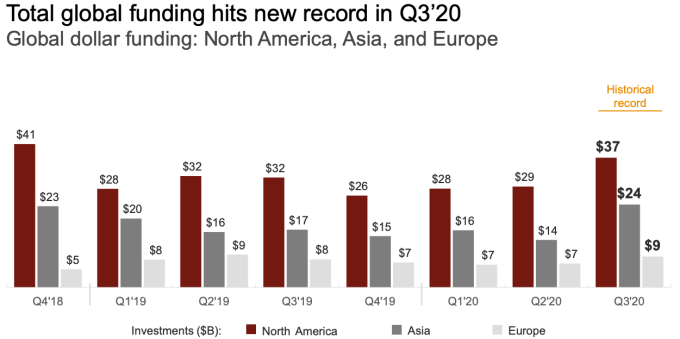
The venture capital world’s center of gravity still lands somewhere in the United States, but here’s how the three continents managed in Q3 2020, looking at their raised venture capital dollars:

  • North America: $37 billion
  • Asia: $24 billion
  • Europe: $9 billion

Asia’s result was its best since at least Q4 2018, as far back as our dataset goes. Europe’s total tied its high-water mark set in Q2 2019. But as a combined pair, venture capital outside North America might have just had its best quarter in years, if not ever.

Here’s the data in graphical format:

Via CB Insights, shared with permission.

News: Leading a $15 million round, Prosus Ventures makes the challenger bank Klar its first bet in Mexico

Klar, a new online bank based in Mexico City, has become the first big bet that Prosus Ventures (the firm formerly known as Naspers Ventures) is taking in Latin America outside of Brazil. Founded by Stefan Moller, a former consultant at Bain & Co. who advised large banks, Klar blends Moller’s work experience in Mexico

Klar, a new online bank based in Mexico City, has become the first big bet that Prosus Ventures (the firm formerly known as Naspers Ventures) is taking in Latin America outside of Brazil.

Founded by Stefan Moller, a former consultant at Bain & Co. who advised large banks, Klar blends Moller’s work experience in Mexico with his connections to the German banking world and the tech team at Berlin -based n26, to create a challenger bank offering deposit and credit services for Mexican customers.

The Mexican market is woefully underserved when it comes to the finance industry, according to Moller. Only 10% of Mexican adults have a credit card, something Moller said is the cheapest consumer lending instrument around.

That’s why Klar launched last year with both credit and debit services. The company has 200,000 banking customers and roughly 27,000 of those customers have taken out loans through the bank. A typical loan is roughly $110, according to Moller, and each loan comes with a 68% annual percentage rate. 

If that sounds usurious, that’s because it is — at least by U.S. standards. In the U.S. a typical credit card will run somewhere between 16% and 24%, according to data from WalletHub. In Mexico, Moller said the typical interest rate is 70% (no wonder only 10% of adults have credit cards).

Still, the opportunity to expand credit and debit services made sense to Prosus, which led the company’s Series A round alongside investors including the International Finance Corporation and former investors Quona capital, who led Klar´s SEED round, Mouro Capital (formerly Santander Innoventures) and aCrew.

Banafsheh Fathieh, the Prosus Ventures principal who led the investment for the firm, said that the commitment to Klar will likely be the first of many investments that her firm makes in the region — both in fintech and likely in Mexico’s tech ecosystem more broadly.

Prosus is famous for making early bets on emerging technology companies in developing markets. Perhaps most famously the firm’s parent company was an early investor in Tencent — a multi-million dollar bet that has generated billions in returns.

Before this investment, Prosus had confined its work in the Latin American region to investments in Brazilian technology companies like Creditas and Movile .

“Prosus Ventures partners with entrepreneurs that are solving big societal problems with technology, in a uniquely local way. We invest in sectors of the economy where technology can lead to meaningful change in the lives of consumers. Klar has identified a massive need in the Mexican financial market and brings a unique solution through their credit and debit offering,” said Banafsheh Fathieh from Prosus Ventures, in a statement. “In less than a year, the team has shown an ability to build a world-class digital bank for the masses, one focused on financial access and inclusion. We are very excited to partner with them on that mission.”

News: Sym raises $9M Series A for its security workflow platform

Sym, a new platform that makes it easier for developers to integrate security and privacy workflows into their process, today announced that it has raised a $9 million Series A round led by Amplify Partners. Earlier this year, the company announced its $3 million seed round lead by Andy McLoughlin of Uncork Capital and Robin

Sym, a new platform that makes it easier for developers to integrate security and privacy workflows into their process, today announced that it has raised a $9 million Series A round led by Amplify Partners. Earlier this year, the company announced its $3 million seed round lead by Andy McLoughlin of Uncork Capital and Robin Vasan of Mango Capital. Angel investors include former Google CISO Gerhard Eschelbeck, Atlassian CTO Sri Viswanath and Jason Warner, the CTO of GitHub.

Sym co-founder Yasyf Mohamedali spent the last few years as CTO of health tech company Karuna Health. In that role, he became intimately familiar with working in a high-compliance industry, handling vendor reviews and security audits. To make those processes more efficient, his team built lots of small tools, but he realized that everybody else in the industry was doing the same.

Image Credits: Sym

“As an engineer, it’s frustrating when you see people building the same thing over and over,” Mohamedali told me. “For years, I had this kind of concept in my head of, ‘what if we just built it all once, and then people didn’t have to keep redoing the same thing over and over?’ And so when I stepped away from Karuna to start Sym, originally, what I wanted to do was exactly that — and specifically for HIPAA. It’s kind of a naïve approach where I was like, ‘you know, what, I’m just going to build all the tools, someone needs to do HIPAA and open source it as like a black box thing.”

What he realized, though, is that companies have their own security and governance workflows that tend to share the same core but also a lot of variabilities. So what Sym now does is offer these core tools and lets companies mix and match what they need from this developer-centric toolbox the company has created.

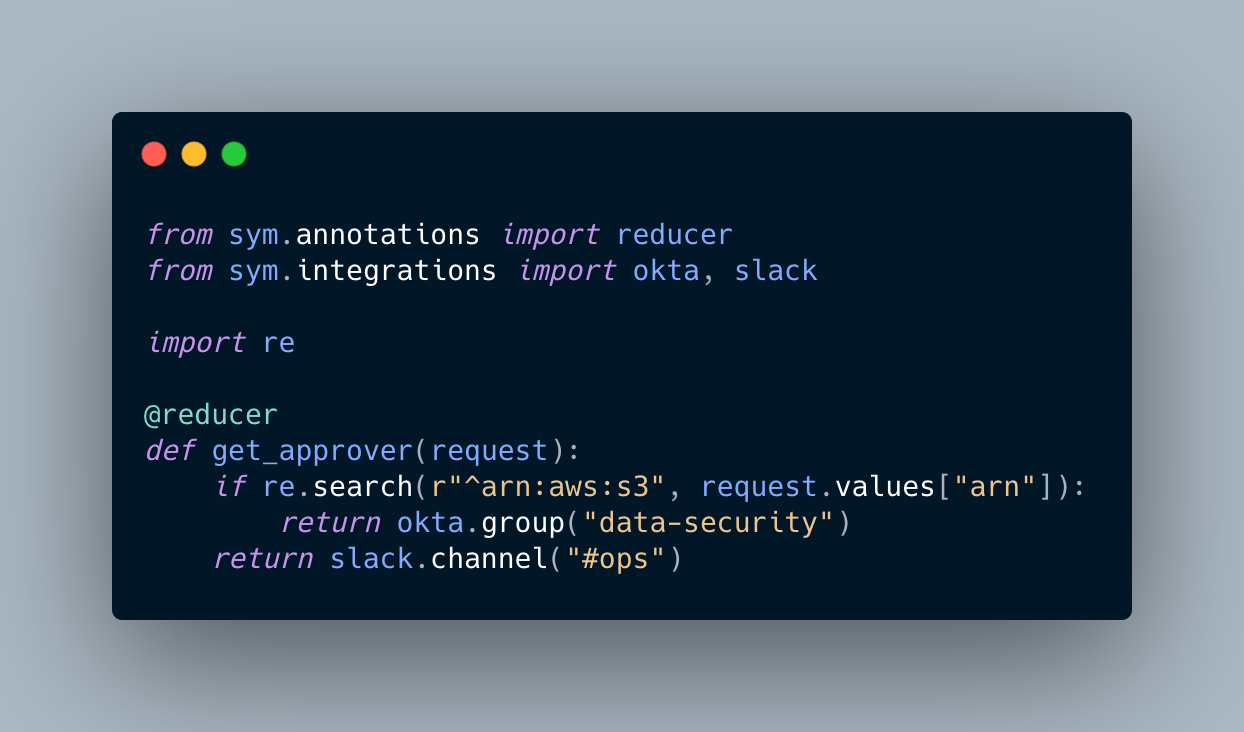
“What we’re building is a set of workflow templates and primitives that map to that shared 20% core — and then a set of integrations that you can use to pull down those workflow templates, and codify that last mile variance by connecting those templates to all your different services,” Mohamedali explained.

What’s interesting about this approach is that Sym offers a Python SDK and lets developers create these workflows and integrations with only a few lines of code. In part, that’s due to the company’s philosophy of putting engineers back into control of security — the same way DevOps allowed them to reclaim control over infrastructure and Q&A. “DevOps is a thing. So now, DevSecOps needs to be a thing. We need to reclaim security. And we want to be the tool to do that with,” he said.

Mohamedali stressed that this was very much an opportunistic round, and for the next few months this raise won’t change anything in the company’s road map. But because Sym started signing up large customers — and had made commitments to them — now was a good time to raise, especially because the right partners came along. That means hiring more engineers, but over time, the company obviously also plans to build out its sales and marketing teams. The product itself, though, will remain in private beta until about the middle of next year. At that time, Sym will also launch a self-serve version of its platform.

News: Unusual Ventures’ Sarah Leary and John Vrionis join Extra Crunch Live today at 2 p.m. ET/11 a.m. PT

Today at 2 p.m. ET/11 a.m. PT, Unusual Ventures’ Sarah Leary and John Vrionis are joining us over at the Extra Crunch Live stage! The Unusual Ventures team has investments spanning the consumer and enterprise space, including Robinhood, AppDynamics, Mulesoft, Winnie and more. That short list could be the basis for a fascinating chat, but

Today at 2 p.m. ET/11 a.m. PT, Unusual Ventures’ Sarah Leary and John Vrionis are joining us over at the Extra Crunch Live stage!

The Unusual Ventures team has investments spanning the consumer and enterprise space, including Robinhood, AppDynamics, Mulesoft, Winnie and more. That short list could be the basis for a fascinating chat, but I also want to hear their thoughts on the democratization of venture capital, their appetite ahead of the election and the future of remote work. A big goal of mine is to squash some of the buzzwords we hear on tech Twitter so we can get an honest take on where one VC firm is sitting right now in a chaotic year.

As we wrote last week, this year has been everything but business as usual for the venture and tech community. And we still have an election ahead of us! I’ll ask Leary and Vrionis to share their framework for working through a looming event such as a presidential election and get their ideas on how early-stage is working more broadly.

Thanks to all of you who have joined us for our ongoing live chat series, which has brought on big names in tech such as Sydney SykesAlexia von TobelMark Cuban, and more (all recordings are still accessible for Extra Crunch subscribers to watch and learn from).

If you’re new, welcome! You’ll be able to ask our experts questions live as long as you’re an EC member (sign up for Extra Crunch here).

Come hang, bring snacks and prep some good questions. We’d love to have you.

Details

Below are links so you can make it:

News: Pickle app puts on users, as millennials/Gen-Z latch onto location apps to fight Covid lockdowns

As the coming of winter combined with the coronavirus continues to put new restrictions on peoples’ movements, location-based apps are on the rise again. People are looking to find out who is close to them. Who is in their community. People are understandably looking for new friends and resources close to them. Apps that connect

As the coming of winter combined with the coronavirus continues to put new restrictions on peoples’ movements, location-based apps are on the rise again. People are looking to find out who is close to them. Who is in their community. People are understandably looking for new friends and resources close to them.

Apps that connect young mums locally (Pumpspotting, Peanut), professionals (Fishbowl, Lunchclub), Jetset daters (Raya, Bumble), digital nomads (Homeis), locals (Nextdoor ) and millennials (Friended) are all being dialed-up.

And with government lockdowns coming back for their “2nd album” the UK’s millennials and Gen-Zs are increasingly turning to location-based apps to try and hang out with each other and burst the so-called ‘rule of six’ bubble, whether the government wants them to or not.

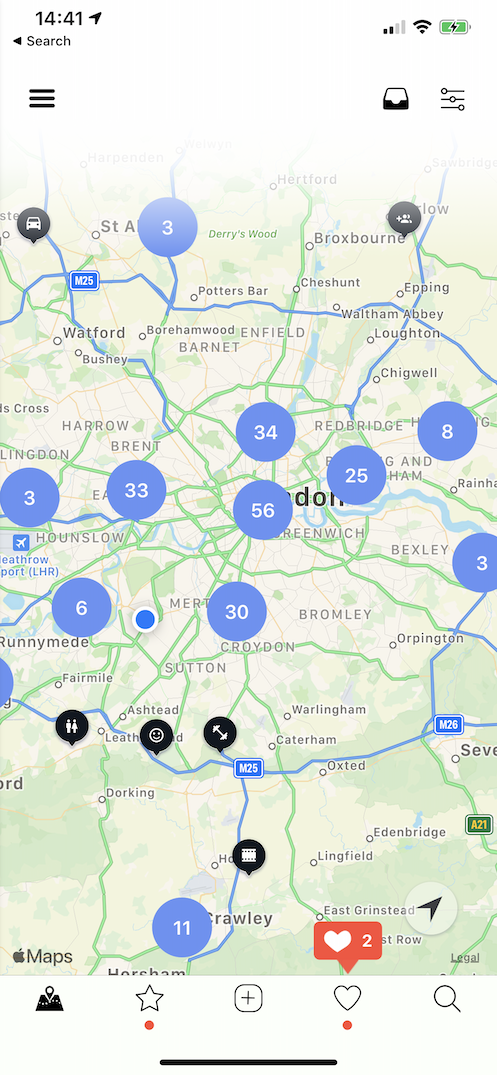
Pickle is fast making a name for itself amongst an estimated 350,000 millennials and Gen-Zs for that reason. After starting out as a taskrabbit-style app for Gen-Z, it is now seeing growth as an app for that generation to find fellow travelers locally, even as their normal travel has been curtailed by COVID-19.

Founder Daneh Westropp says: “Loneliness is the number one fear of young people today – ranking ahead of losing a home or a job. 71% of millennials reported feeling lonely [survey conducted by Cigna] and 69% of millennials experience FOMO when they can’t attend something that their family or friends are going to [study by Eventbrite]. So it comes as no surprise that people genuinely hate doing certain activities alone.” That’s why, she says, Pickle is climbing up app-store rankings.

Westropp understands the feeling of alienation. She ran away from Tehran during the 1988 Iran/Iraq war with her mother and sister, and was raised by a single mother who suffered from loneliness and depression. After dropping out of school at the age of 15 she went on to join the ranks of other entrepreneurs.

But a few problems remain with the Pickle app that are cause for concern. It has no 2FA for starters. Plus, the lack of regulation or content filtering means it’s anyone’s guess who users might be arranging to meet. Those are big red flags for the average observer.

Whether Gen-Z cares or not during a global pandemic that has shut down their lives, remains to be seen.

WordPress Image Lightbox Plugin