Yearly Archives: 2020

News: Ubisoft’s subscription service comes to Stadia and Luna

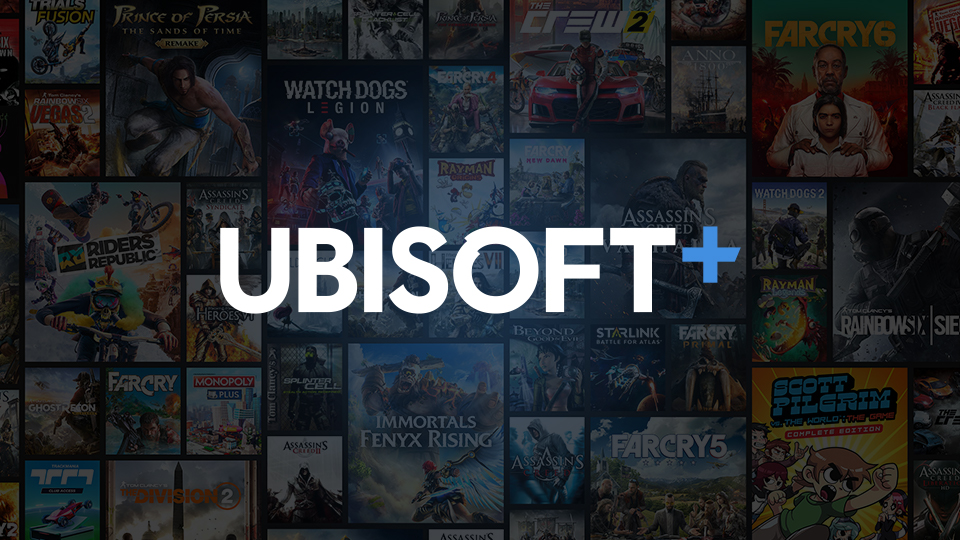
Ubisoft originally announced its subscription service back in June. Today, the company is rebranding the service from UPlay+ to Ubisoft+. The service is also on its way to Amazon’s Luna and Google’s Stadia. Ubisoft is betting on a multi-platform subscription, which means that you’ll be able to subscribe once and play Ubisoft+ games on PC,

Ubisoft originally announced its subscription service back in June. Today, the company is rebranding the service from UPlay+ to Ubisoft+. The service is also on its way to Amazon’s Luna and Google’s Stadia. Ubisoft is betting on a multi-platform subscription, which means that you’ll be able to subscribe once and play Ubisoft+ games on PC, Amazon Luna and Stadia.

Ubisoft+ is already available on PC. For $14.99 a month, you can download and play more than 100 games — the service includes both classics and newly released titles, such as games in the Splinter Cell and Prince of Persia franchises as well as the company’s upcoming releases. Assassin’s Creed Valhalla, Watch Dogs Legion and Immortals Fenyx Rising will be available in the Ubisoft+ library on their respective launch days.

Ubisoft is trying to include premium editions of the games so that you don’t have to pay for game passes to access additional content. For instance, you can play the ultimate editions of Rainbow Six Siege, The Division 2, Assassin’s Creed Odyssey, etc.

On November 10, you’ll be able to access Ubisoft+ games on Amazon Luna is you’re beta testing Amazon’s cloud gaming service. And Google will also let you connect your Ubisoft+ account with Stadia by the end of the year. Interestingly, you don’t need to pay for Stadia Pro to access Ubisoft+ titles.

Ubisoft is working on cross-platform progression, starting with upcoming titles. It’s a subscription focused on content, not platforms.

As you can see, Microsoft and Sony don’t support Ubisoft+. It means that you won’t be able to subscribe and play on your Xbox or PlayStation. Console manufacturers take a cut on game purchases. That’s why negotiations between third-party game studios and console manufacturers are more complicated.

Image Credits: Ubisoft

News: Hands-on: Sony’s DualSense PS5 controller could be a game changer

After spending a few hours with the PlayStation 5 and its completely redesigned DualSense controller, I can say with confidence that the new haptics and audio features certainly work — and could become integral to the gaming experience. But only if — and it’s a big if — developers truly embrace the tech. The DualSense

After spending a few hours with the PlayStation 5 and its completely redesigned DualSense controller, I can say with confidence that the new haptics and audio features certainly work — and could become integral to the gaming experience. But only if — and it’s a big if — developers truly embrace the tech.

The DualSense controller replaces the extremely familiar and beloved design of the DualShock, which has remained largely the same shape since the first one shipped for the original PlayStation 25 years ago.

While the general layout is the same, the feel of the new controller is significantly different and the appearance is aligned with the PS5’s distinctive but questionable hyper-futuristic look. I’m not entirely sold on the new shape but I’ve also had a long time to get used to the old one, so I’m withholding judgment while I work on the full review.

Shipping with every PS5 is Astro’s Playroom, which like Nintendoland and Wii Sports is intended to provide a reference experience for all the controller’s new features. It may not be quite as original or persistently enjoyable as Nintendo’s pack-ins (which still number among the best games for their platforms), but it’s a fun little playroom that does a good job showing off the DualSense.

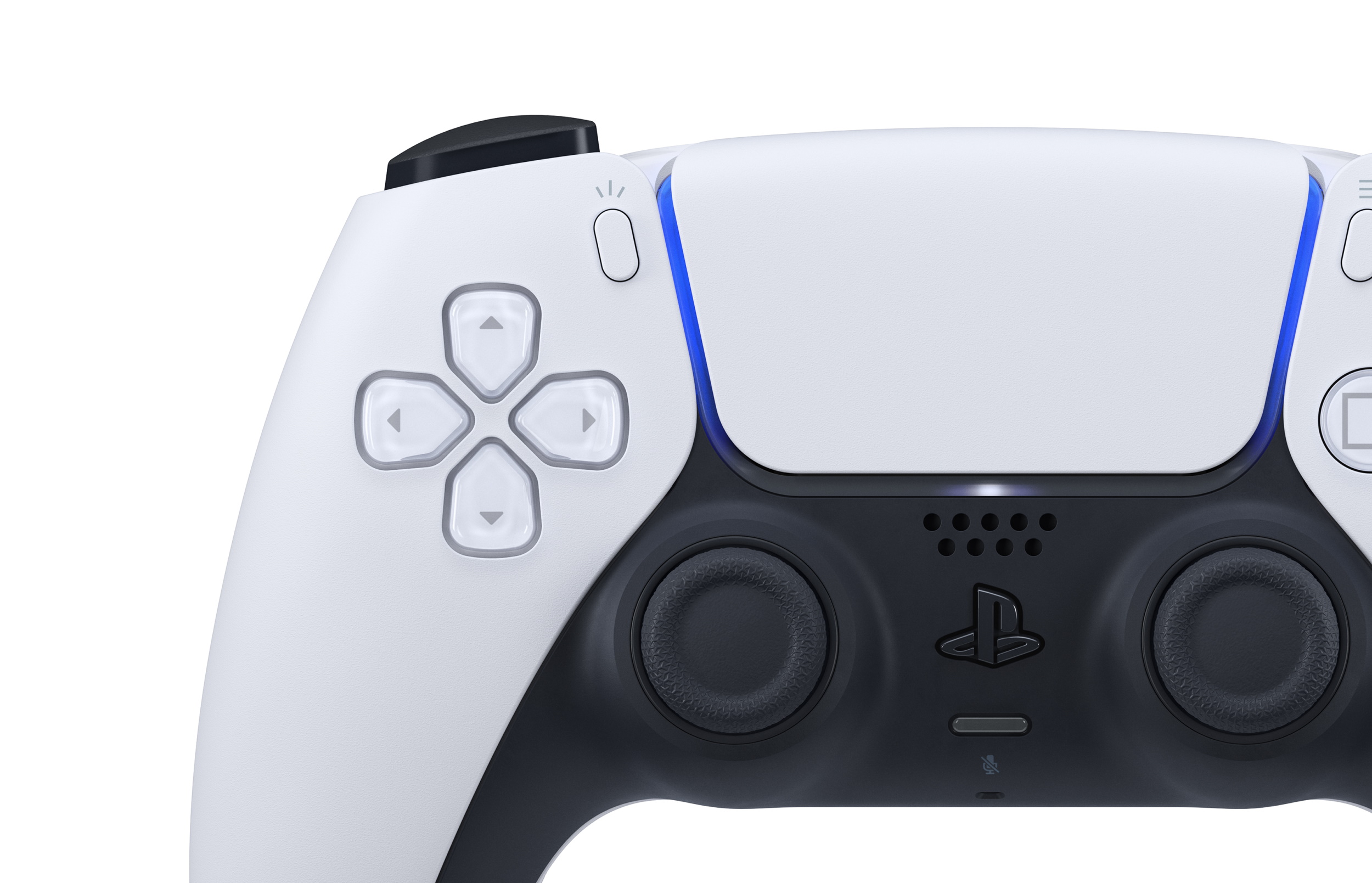
A Sony DualSense controller seen from above.

Image Credits: Sony

The first and perhaps most immediately compelling feature is the haptic feedback on the trigger buttons, L2 and R2. It’s one of those things that when you feel it working, you immediately start thinking about how it could be used.

What it does is allow not just precision vibration but actual resistance to be added to the triggers, something that sounds vague in theory but is very easy to grasp, so to speak, in practice.

For instance, in the setup process for Astro’s Playroom the feature is introduced by simply asking you to pull the triggers and feel it. You’ll certainly have pulled them before that, so you know that they’re nearly frictionless normally. But suddenly they’re pushing back against your finger — then a click, and the resistance is gone.

“What is this sorcery?” I recall saying out loud at the time, or something like it but more profane. It really is that immediately compelling.

Image Credits: Sony

Later, in the first stage I tried of the game, your little robot jumps into a sort of spring suit (a metal spring, not a linen two-piece) and you have to pull the trigger to make it jump. The haptics in this case truly give a feel of compressing something (though, having played with springs before, I know they don’t feel like this), and importantly give you a non-visual, intuitive indicator of how far you’ve depressed the trigger. My brain was quicker to register how far I’d pulled it with the combination of sound, haptics and graphics than graphics alone. And because the feeling is localized to the trigger you’re using, there’s no confusion with the greater vibrations of the all-purpose rumble system.

The Switch’s Joy-Cons have a sort of precision haptics in them, and while the demo of that feature was interesting — feeling little objects rattle around “inside” the controller — it’s actually quite hard to think of ways it could be used in gameplay. And indeed few games have done so, though to be fair rumble in general is probably better because of it.

In the DualSense’s case, I was immediately thinking, “this would be great for…” and wishing I’d had it in this or that game in the past. It opens up possibilities I’ve never liked the idea of, like “pull the trigger halfway to do one thing, all the way to do another. It’s also potentially a great accessibility feature.

Having a speaker and microphone in the controller is nothing new, though they appear to have been upgraded for the DualSense. Few games have been able to use these features properly, and Astro’s Playroom resorts to the old “blow on the controller to make a propeller go” thing. I can’t imagine anyone wanting to do that in any real game — but why can’t I yell “Go, cyberdog! Attack the monster on the right” to direct my (sadly fictitious) companion, or something like that?

Unfortunately that gets to the heart of what makes even the excellent haptic feature a potentially lost cause. Developers need to design for them in a big way, and that’s difficult when you can’t guarantee that people will want or be able to use them. Not only that, but if you want to release on Xbox and PC too, you have to remove them. So they become optional features… and since they’re optional, they can’t be integrated into the game as deeply to begin with, making them less compelling overall. It’s happened over and over with various innovations gaming companies have come up with over the years, and it may happen with this generation’s gimmicks as well.

Sony’s best bet is to make integration painless and highly incentivized, though it’s hard to imagine how multi-platform developers like Ubisoft can do much more than the minimum. Serious use will likely be limited to a handful of top-shelf Sony-funded PS5 exclusives that players will marvel at.

It’s an interesting new gameplay feature, but hardly one that screams “next-generation.” Indeed little about the next consoles from Sony or Microsoft screams that except the specs. That doesn’t mean they aren’t worth buying — but don’t expect anything transformative.

News: SpaceX launches Starlink app and provides pricing and service info to early beta testers

SpaceX has debuted an official app for its Starlink satellite broadband internet service, for both iOS and Android devices. The Starlink app allows users to manage their connection – but to take part you’ll have to be part of the official beta program, and the initial public rollout of that is only just about to

SpaceX has debuted an official app for its Starlink satellite broadband internet service, for both iOS and Android devices. The Starlink app allows users to manage their connection – but to take part you’ll have to be part of the official beta program, and the initial public rollout of that is only just about to begin, according to emails SpaceX sent to potential beta testers this week.

The Starlink app provides guidance on how to install the Starlink receiver dish, as well as connection status (including signal quality), a device overview for seeing what’s connected to your network, and a speed test tool. It’s similar to other mobile apps for managing home wifi connections and routers. Meanwhile, the emails to potential testers that CNBC obtained detail what users can expect in terms of pricing, speeds and latency.

The initial Starlink public beta test is called the “Better than Nothing Beta Program,” SpaceX confirms in their app description, and will be rolled out across the U.S. and Canada before the end of the year – which matches up with earlier stated timelines. As per the name, SpaceX is hoping to set expectations for early customers, with speeds users can expect ranging from between 50Mb/s to 150Mb/s, and latency of 20ms to 40ms according to the customer emails, with some periods including no connectivity at all. Even with expectations set low, if those values prove accurate, it should be a big improvement for users in some hard-to-reach areas where service is currently costly, unreliable and operating at roughly dial-up equivalent speeds.

Image Credits: SpaceX

In terms of pricing, SpaceX says in the emails that the cost for participants in this beta program will be $99 per moth, plus a one-time cost of $499 initially to pay for the hardware, which includes the mounting kit and receiver dish, as well as a router with wifi networking capabilities.

The goal eventually is offer reliably, low-latency broadband that provides consistent connection by handing off connectivity between a large constellation of small satellites circling the globe in low Earth orbit. Already, SpaceX has nearly 1,000 of those launched, but it hopes to launch many thousands more before it reaches global coverage and offers general availability of its services.

SpaceX has already announced some initial commercial partnerships and pilot programs for Starlink, too, including a team-up with Microsoft to connect that company’s mobile Azure data centers, and a project with an East Texas school board to connect the local community.

News: Netflix is developing a live action ‘Assassin’s Creed’ show

Netflix announced this morning that it’s partnering with Ubisoft to adapt the game publisher’s “Assassin’s Creed” franchise into a live action series. The franchise jumps around in history, telling the story of a secret society of assassins with “genetic memory” and their centuries-long battle the knights templar. It has sold 155 million games worldwide and

Netflix announced this morning that it’s partnering with Ubisoft to adapt the game publisher’s “Assassin’s Creed” franchise into a live action series.

The franchise jumps around in history, telling the story of a secret society of assassins with “genetic memory” and their centuries-long battle the knights templar. It has sold 155 million games worldwide and was also turned into a nearly incomprehensible 2016 film starring Michael Fassbender and Marion Cotillard, which underperformed at the box office.

The companies say that they’re currently looking for a showrunner. Jason Altman and Danielle Kreinik of Ubisoft’s film and television division will serve as executive producers. (In addition to working on adaptations of Ubisoft’s intellectual property, the publisher is also involved in the Apple TV+ industry comedy “Mythic Quest.”)

“We’re excited to partner with Ubisoft and bring to life the rich, multilayered storytelling that Assassin’s Creed is beloved for,” said Netflix’s vice president of original series Peter Friedlander in a statement. “From its breathtaking historical worlds and massive global appeal as one of the best selling video game franchises of all time, we are committed to carefully crafting epic and thrilling entertainment based on this distinct IP and provide a deeper dive for fans and our members around the world to enjoy.”

It sounds like there could be follow-up shows as well, with the announcement saying that Netflix and Ubisoft will “tap into the iconic video game’s trove of dynamic stories with global mass appeal for adaptations of live action, animated, and anime series.”

Netflix recently placed an eight-episode order for “Resident Evil,” another video game franchise that was previously adapted for the big screen. And it also had a big hit with its adaptation of “The Witcher,” which is based on a fantasy book series that was popularized via video games.

News: Facetune maker’s new app Filtertune let anyone create and share personalized photo filters

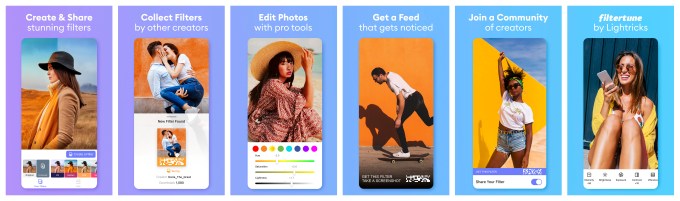
Facetune maker Lightricks is out today with a new app, Filtertune, designed to create a community around custom photo filters. With the app, creators can make their own personalized preset photos filters, then share them across social media as photos that have a special QR code attached. When others see a filter they like, they

Facetune maker Lightricks is out today with a new app, Filtertune, designed to create a community around custom photo filters. With the app, creators can make their own personalized preset photos filters, then share them across social media as photos that have a special QR code attached. When others see a filter they like, they can screenshot it to import it back into the Filtertune app for their own use.

While it would be easier to create some sort of in-app system for sharing filters — similar to Instagram’s “Effect Gallery,” for example — Lightricks’ user base isn’t concentrated in one single app.

Instead, it offers an ever-expanding suite of mobile photo and video editing apps, including its flagship Facetune and sequel, Facetune2, as well as Facetune Video, Enlight Quickshot, Photofox, Videoleap, Pixaloop, Boosted, Seen, PosterBoost, Artleap, and Beatleap.

Image Credits: Lightricks

Combined, its collection of apps have seen over 400 million downloads to date, but its active user numbers are much smaller. Lightricks this summer said its collection of apps had 200 million registered users. Paid subscribers had reached 3 million as of last year.

While these numbers and the apps’ growth helped to turn Lightricks into a unicorn, Instagram offers access to a much larger photo sharing community. That’s why it makes sense for Filtertune to provide tools that allow users to tap into existing social media platforms to share their filters and discover new ones.

In fact, Lightricks says the idea for the app was actually prompted by social media trends where online influencers were posting “How I Edit My Photos,” and offering their own presets for fans to download or purchase.

Filtertune, however, isn’t a marketplace for filters. It’s just a tool for creation, editing and sharing.

Using the app, you can either edit an existing filter or create one of your own from scratch.

The app focuses on realistic photo editing, not using overlays of digital assets to create new styles — like apps that swap out the background, for example, or those that use AR.

When your filter is complete, you tap the sharing button which adds a banner to your photo that reads: “Get this filter,” and offers download instructions along with a QR code. You then save this image to your iPhone Camera Roll, then post it anywhere you want — like Facebook, Instagram, Twitter, Snapchat, in an email, in a messaging app, or on your own website.

When others see the shared image, they save it to their own Camera Roll by taking a screenshot.

The next time those users open the Filtertune app, it will scan for new filters by looking for images with a QR code. When it finds them, the new filters will be added to the in-app collection.

Image Credits: Lightricks

Users can then use Filtertune to edit photos with any of the custom filters discovered from across social media.

It is interesting to see how much Filtertune leans on Instagram to drive discovery here. Even the “Discover” button in the app, when tapped, takes you directly to the #filtertune hashtag on Instagram, instead of a dedicated section within its own app where users could find new filters to try.

“Filtertune represents a natural evolution of our growing product experiences, and with it, Lightricks will continue fostering a culture of online community, sharing, and collaboration that is necessary for young artists, creators, and anyone who enjoys social media,” said Zeev Farbman, co-founder and CEO at Lightricks, in a statement about the new app’s launch.

Farbman also noted that Lightricks’ Facetune2 and Quickshot apps have seen a 30% increase and a 35% increase in users in 2020, respectively. The company also told TechCrunch that Ligthtricks, overall, has seen a 45% increase in monthly active users this year.

The new app is a free download on iOS. 

News: Backed by Mr. Beast and Nadeshot, Backbone One could finally crack mobile gaming

I get to play with a lot of new hardware from startups and it runs the gamut from super polished to barely working, neither of which is a value judgement! But every once in a while I get to mess with a new piece of kit that is just so fully realized that I am

I get to play with a lot of new hardware from startups and it runs the gamut from super polished to barely working, neither of which is a value judgement! But every once in a while I get to mess with a new piece of kit that is just so fully realized that I am literally shocked. 

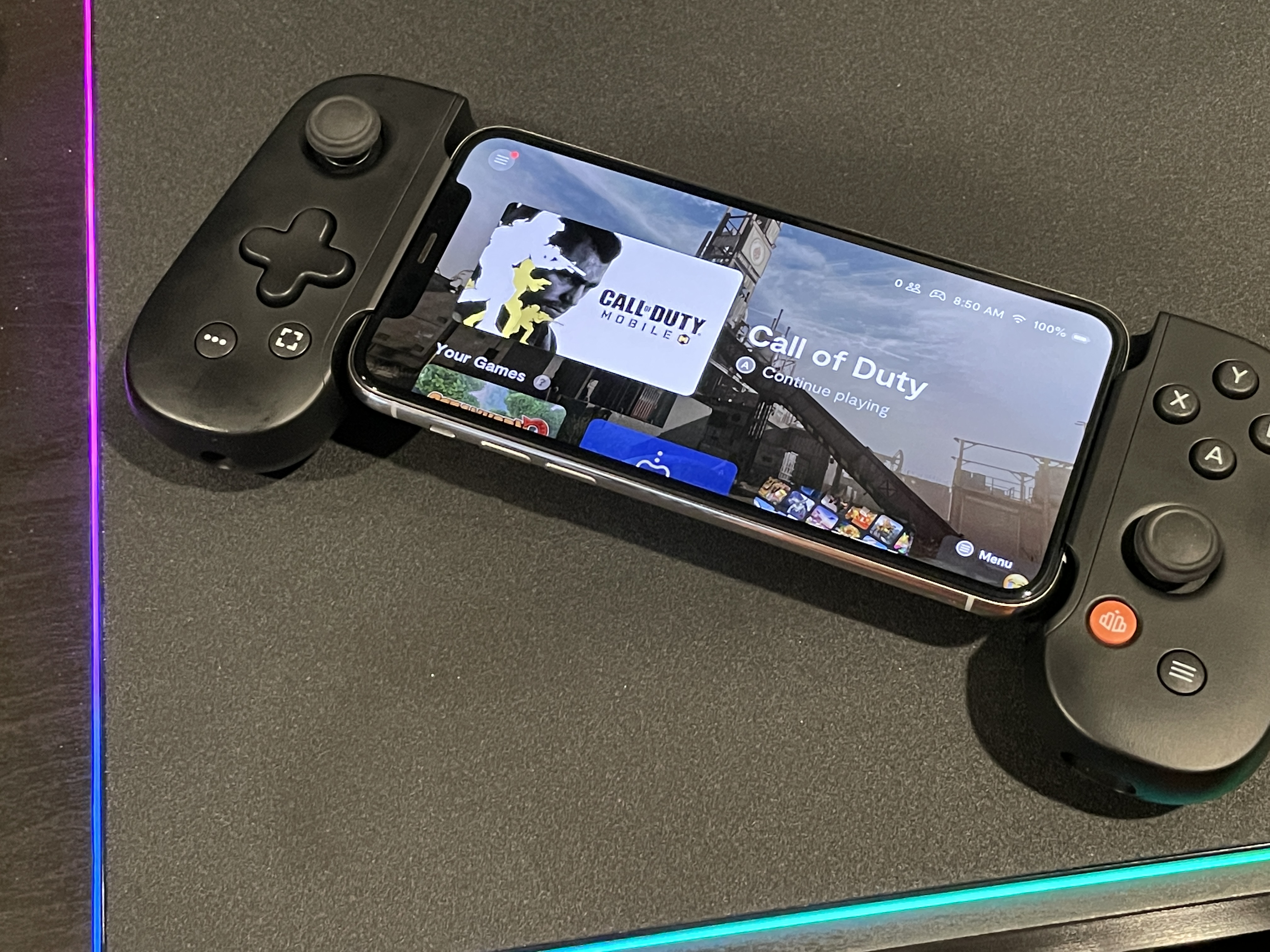
The Backbone One controller is one of those situations. It’s a game controller for iPhones that has slick ergonomics, solid button feel, sensitive analog triggers and great build quality. But what makes Backbone One special is the companion app and service that ships with it and enables a truly clever software layer enabling cross-app multiplayer, game recording, highlight editing and quick swap. 

Designers from Ideo and Astro Studios helped realize Backbone and the pedigree of people who have crafted devices like the Xbox 360 controller really show here. Wide L1/R1 buttons make it easy to tap on mobile. Analog L2/R2 triggers feel deep but tight. The latest Lightning connector standard means extremely low latency for control signals. 

The controller is around 7” long in its compact state and uses a clever sliding mechanism to expand outwards to up to 10” in size. It easily fits Apple’s “Plus” sized phones and when you’re using one of those it feels like a full on game console for the first time I can remember.

There are acoustic tunneling scoops at the inside edges that direct sound forward from the phone speakers and there is work being done behind the scenes to cancel out the specific sounds the Backbone One’s buttons make so that you don’t hear those while you’re playing. 

But it’s the software that makes Backbone One really special.

To co-opt a biblical phrase, hardware without software is dead. And the Backbone One is really, really alive.

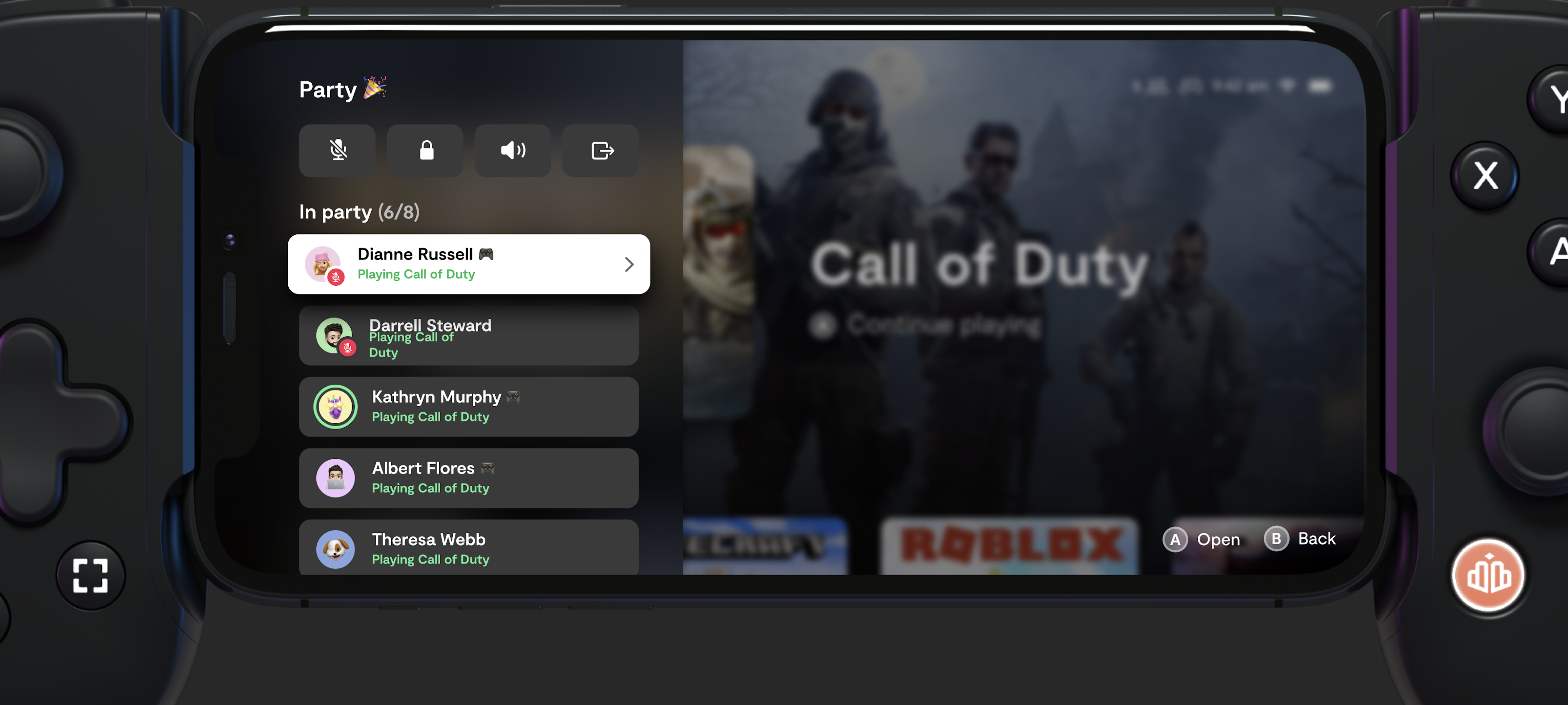
Behind the Backbone One is Backbone itself, which is a ‘companion app’ but is really a live gaming service. It has integrated cross-game voice chat, game switching, parties and a friends list. It lets you get push notifications when your friends are on and slide right into a game with them with a single tap. It’s remarkably slick and feels as first-party as you could make something that is literally not first-party feel.

Backbone was founded by Maneet Khaira in the summer of 2018 while interning at YouTube and wrapping up at Columbia. 

Khaira notes that one of the biggest issues in mobile gaming is that there is a ton of activation energy when it comes to jumping in and playing with friends. The major games are there: Call of Duty, Fortnite (eventually, again), PUBG — but the last mile issue is major. 
Khaira points out that while there are plenty of examples of top-tier gaming titles on iPhone, there is just a desert of content created on these platforms available to watch on Twitch or YouTube. He likens it to a hysteresis — a lagging behind of an effect from its cause. There are so many mobile gamers that there should be a ton of mobile content shared, but because the mechanisms to do so have been so poor and so under-crafted, we have next to nothing. 

Backbone changes that completely. 

Here are the basic pillars of Backbone:

  1. Gameplay has to feel good. The Backbone controller had to be best-in-class hardware.
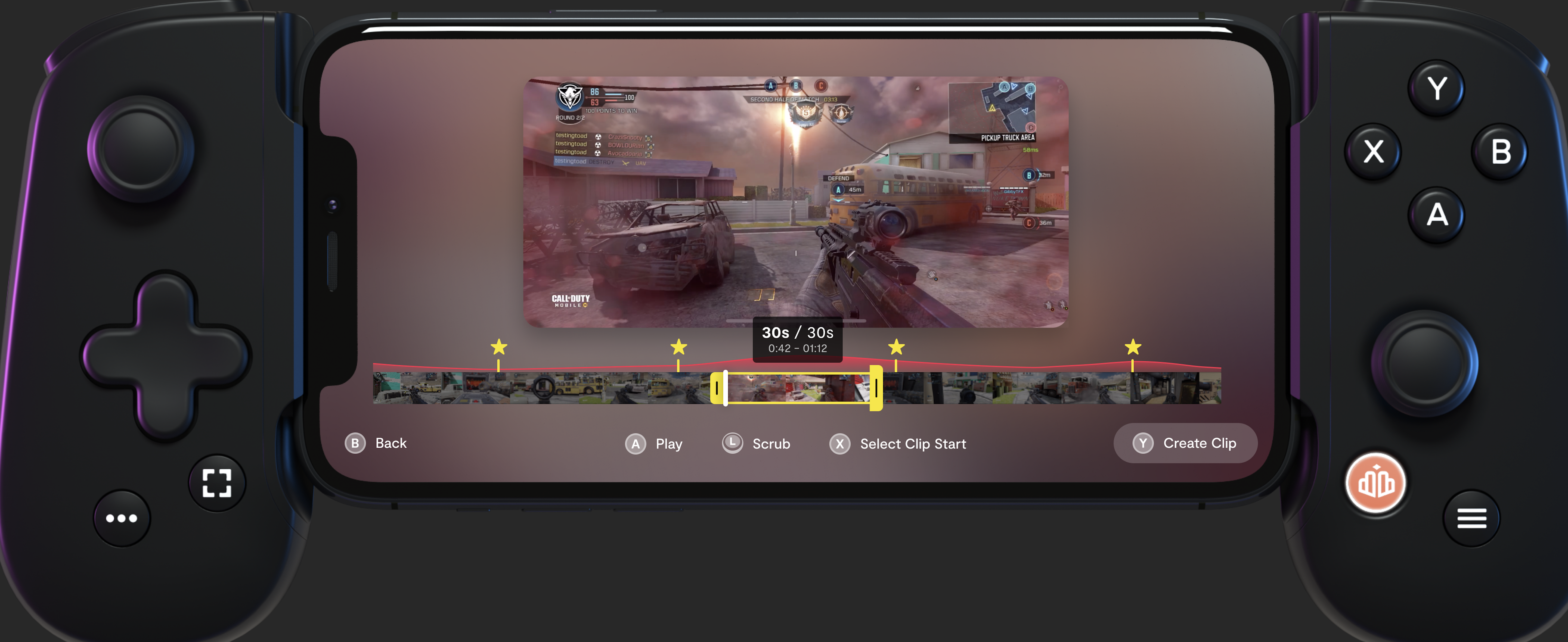
  2. Content creation. It had to be easy and seamless to capture highlights, clips and footage and share them to your preferred platform. 
  3. Playing with friends has to be instantaneous. Backbone uses notifications about when friends start playing across any game and you can do so from one central friends list. 

Because Backbone is a support app, it gets a bunch of special privileges that would normally not be granted to a ‘regular’ class of app. Backbone One is always on while it’s attached, which means that the app can do whatever it needs to do no matter what app you’re in or for how long. This is huge because it enables the Backbone button on the controller to add games to your dashboard, swap easily between them and lets you get at your friends list contained in Backbone.

The stopwatch time for attaching the Backbone One to your phone and beginning to play a game in multiplayer is measured in seconds, not minutes. It’s exactly what you need in the mobile context.

It also enables any-time recording of clips and highlights that store locally on your device but can be uploaded anywhere at 1080p/30fps HEVC. When you’re in game you can just smash the Capture button to start recording and tap it to screenshot. The Backbone app also has some ML work going on to identify highlight-worthy clips and mark them automatically. You can also tag them yourself while you play.

And Backbone One does this on less power than the crap earbuds that (used to) come in an iPhone box. You won’t notice any major power drain from the accessory itself. 

If Backbone can manage to get a partnership with one or two majors to have a built-in control scheme that takes advantage of the proper dead zones and timing it could be a real watershed moment for mobile gaming. 

But right now it works with most games that have controller support right out of the box. No game needs to do anything special to take advantage of the majority of Backbone features. This basically adds on a layer of inter-game social and clip sharing. 

It’s all of the basic features of Game Center, Twitch, PSN and Xbox Live rolled into one — but on iPhone. And, of course, the BackBone one works just fine with Xbox and PlayStation remote play apps.
Sometimes a list of investors can tell you a lot about how serious a company is about getting the right kind of money. For a company building a gaming service and peripheral hardware, Backbone couldn’t have a more solid column. Backbone is backed by MrBeast, Preston, Kwebbelkop, Typical Gamer, Night Media, Nadeshot, and Ludlow Ventures, as well as Ashton Kutcher and Guy Oseary’s Sound Ventures. Pretty much exactly the profile I would want to see for a company serious about social and mobile gaming. 

In many ways, Backbone feels like a spiritual successor to OpenFeint. If you’re not familiar, OpenFeint was the first modern mobile gaming network. It launched the year after the iPhone App Store and was part of a game called Aurora Feint. It enabled multiplayer, scoreboards and messaging. The founder of OpenFeint? Jason Citron. Jason’s current startup, that also shares a lot of spiritual luggage with OpenFeint? Discord.

It’s hard to overstate how important OpenFeint was at the time. As the app ecosystem was emerging it was clear that games would be a big part of what made the iPhone successful and this was the first cross-game network that allowed people to take advantage of one of the first phones to have a persistent, high-quality (ish) internet connection. Apple launched Game Center as a basic response to this need but it has never put any real investment behind it since. Backbone is so good that I could actually see Apple hauling out the repo and assigning engineering talent to get it working well again. The time has come for this idea and Backbone’s execution is so top notch here that it makes the case open and shut.
I’ve been testing the controller for a few weeks now with a variety of games. I played a quick match of Call of Duty Warzone with Khaira and even though we didn’t secure the dub it was massively more playable than running with touch controls. My very first session of CoD I had a 28 kill game in cod mobile and, even though I was put into a lobby that prioritizes controller users the other players had like 5 kills each. Though you can now pair console controllers to iPhone, the Backbone is so much better than any of the other integrated controllers on the market that it will quickly become a must have for any mobile player that actually wants to be competitive. I have spent as much time with Apple mobile hardware and the people that have created it as probably anyone on the planet so please understand that I don’t say this lightly but this really feels like the game controller and network Apple would have made if it understood competitive games.

The Backbone One controller runs $99 and can be purchased via the free Backbone app today.

News: LA’s Replicated looks to increase R&D and hiring for its operations management software after raising $25 million

The Los Angeles-based operations and security management software service, Replicated has raised $25 million to ramp up its staffing and scale its sales and marketing efforts. The funding, which was led by Two Sigma Ventures and included existing investors like Plexo Capital, Amplify, and BoldStart values the company at over $100 million. Replicated began as

The Los Angeles-based operations and security management software service, Replicated has raised $25 million to ramp up its staffing and scale its sales and marketing efforts.

The funding, which was led by Two Sigma Ventures and included existing investors like Plexo Capital, Amplify, and BoldStart values the company at over $100 million.

Replicated began as a developer of software security and management services for Docker containerized development tools, but as the market shifted to Kubernetes, the company shifted to service those applications.

Last year, the company unveiled its tools for managing Kubernetes deployments and immediately saw sales increase.

“That new offering changed the direction of the company and added velocity and customers and the market responded so well to it,” said Replicated chief executive, Grant Miller. “Once we started building on that success.. We brought on UIPath, Puppet, who created the software automation stuff, TripWire, and then these cool emerging software companies like FlatFile and Fishtown Analytics.”

Replicated now counts 85 customers who pay for access to the platform and for every on-premise deployment that customers develop through the platform. “If you are a company like Puppet, you have hundreds of on-premise customers.”

The company has already been staffing up with key c-suite hires including a chief product officer, a chief revenue officer and vice presidents of marketing and sales. Some of the money will support Replicated’s continued hiring push, while another chunk will go into product development.

“We’re automating as much of the manual software processes that require IT admins to put their hands on keyboards to adjust and optimize things,” said Miller. “With Replicated, half of the services are for tooling for the software vendor to manage release and licensing and the other half is for the IT admin. It’s about how they automate the integration of the applications.” 

The company, which currently has 28 employees expects to grow to 75 staff members by the end of 2021, Miller said.

“The on-prem software market is four times larger than the SaaS market,” Miller said in a statement. “Replicated lets software vendors unlock the opportunity of the on-prem software category with lower engineering overhead and faster time to market. This is a market change made possible by the convergence of cloud native computing and Kubernetes.”

News: Rockset announces $40M Series B as data analytics solution gains momentum

Rockset, a cloud-native analytics company, announced a $40 million Series B investment today led by Sequoia with help from Greylock, the same two firms that financed its Series A. The startup has now raised a total of $61.5 million, according to the company. As co-founder and CEO Venkat Venkataramani told me at the time of

Rockset, a cloud-native analytics company, announced a $40 million Series B investment today led by Sequoia with help from Greylock, the same two firms that financed its Series A. The startup has now raised a total of $61.5 million, according to the company.

As co-founder and CEO Venkat Venkataramani told me at the time of the Series A in 2018, there is a lot of manual work involved in getting data ready to use and it acts as a roadblock to getting to real insight. He hoped to change that with Rockset.

“We’re building out our service with innovative architecture and unique capabilities that allows full-featured fast SQL directly on raw data. And we’re offering this as a service. So developers and data scientists can go from useful data in any shape, any form to useful applications in a matter of minutes. And it would take months today,” he told me in 2018.

In fact, “Rockset automatically builds a converged index on any data — including structured, semi-structured, geographical and time series data — for high-performance search and analytics at scale,” the company explained.

It seems to be resonating with investors and customers alike as the company raised a healthy B round and business is booming. Rockset supplied a few metrics to illustrate this. For starters, revenue grew 290% in the last quarter. While they didn’t provide any foundational numbers for that percentage growth, it is obviously substantial.

In addition, the startup reports adding hundreds of new users, again not nailing down any specific numbers, and queries on the platform are up 313%. Without specifics, it’s hard to know what that means, but that seems like healthy growth for an early stage startup, especially in this economy.

Mike Vernal, a partner at Sequoia, sees a company helping to get data to work faster than other solutions, which require a lot of handling first. “Rockset, with its innovative new approach to indexing data, has quickly emerged as a true leader for real-time analytics in the cloud. I’m thrilled to partner with the company through its next phase of growth,” Vernal said in a statement.

The company was founded in 2016 by the creators of RocksDB. The startup had previously raised a $3 million seed round when they launched the company and the $18.5 million A round in 2018.

News: Amazon adds device dashboard in bid to make Fire tablets a smart home control center

It’s been a busy few weeks for the smart home race. Amazon, Google and Apple have all announced new smart speakers aimed at — among other things — cementing their respective positions at the center of users’ connected households. Adding onto the introduction of a whole bunch of new Echo devices, Amazon is also improving

It’s been a busy few weeks for the smart home race. Amazon, Google and Apple have all announced new smart speakers aimed at — among other things — cementing their respective positions at the center of users’ connected households.

Adding onto the introduction of a whole bunch of new Echo devices, Amazon is also improving what its famously inexpensive Fire Tablets can do. Today the company will be rolling out a free software update to select slates that brings a smart home device dashboard. The system essentially serves as a one-stop shop for connected devices that work with Alexa.

It’s similar to the sorts of control centers Google and Apple offer with their respective Home apps, with access to things like smart lights, plugs, cameras, thermostats, you name it. Similar functionality can also be found on the Echo Show devices. Fire tablets offer a pretty cheap way in to that functionality (so, too, might Fire TVs, going forward). And, of course, Amazon has also made efforts to improve Alexa functionality on the devices, essentially letting them double as inexpensive smart displays.

Perhaps the biggest piece of the puzzle, however, is the addition of smart home hub functionality on the new Echo. The fact was a bit under reported (Amazon, after all, started adding this functionality with previous Echo Plus models), but adding zigbee functionality for the $99 device should go a ways toward lowering that barrier of entry.


News: Upstream aims to be the new home for your professional social life

Last fall, social analytics startup SocialRank sold its product and business to Trufan, allowing the team to focus on something new: a professional social network. Today, they’re officially unveiling Upstream to the public. To be clear, CEO Alex Taub told me that he’s not trying to replace LinkedIn — he acknowledged that thanks to network effects,”If you

Last fall, social analytics startup SocialRank sold its product and business to Trufan, allowing the team to focus on something new: a professional social network. Today, they’re officially unveiling Upstream to the public.

To be clear, CEO Alex Taub told me that he’s not trying to replace LinkedIn — he acknowledged that thanks to network effects,”If you want to go and try to take down LinkedIn, you’re not going to be able to take them down.”

Instead, the goal is to create something that fulfills a different need. Where LinkedIn works primarily as an online résumé and rolodex, Upstream aims to help users build the connections and relationships that are important to their careers — something that’s sorely needed at a time when large-scale meetups and conferences aren’t really possible (though we’re certainly trying to create the virtual equivalent at TechCrunch).

“This is the place for your professional social life,” Taub said.

Upstream’s first product focused on professional groups and communities, allowing users to post what the company called Professional Asks, like if they’re looking to hire someone for a certain position or need an introduction at another company.

Taub suggested that things really took off with Upstream’s next product, Upstream Events, where Upstream would host a guest speaker, then attendees were matched up for five-minute, one-on-one video chats with the other people at the event.

Upstream

Image Credits: Upstream

Upstream says it’s already hosted more than 100 events, with 72% of people who who attend one event subsequently attending another.

While the team has built multiple products (and we’ve covered some of them already), they’re outlining the broader vision today and launching some new features at the same time.

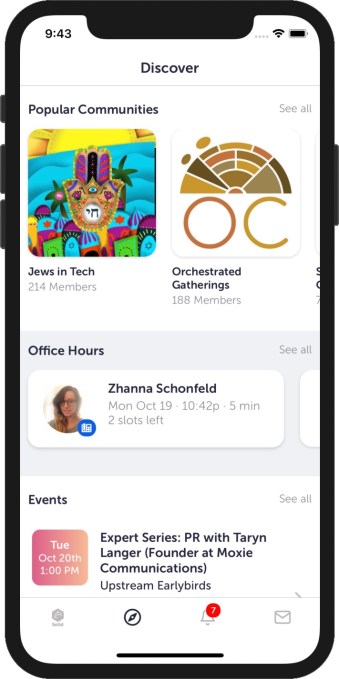
For one thing, while communities were previously shared via a private, unlisted link, you can now browse all the different communities in a Discovery section. At the same time, community organizers will be still be able to control who joins by approving or rejecting new members.

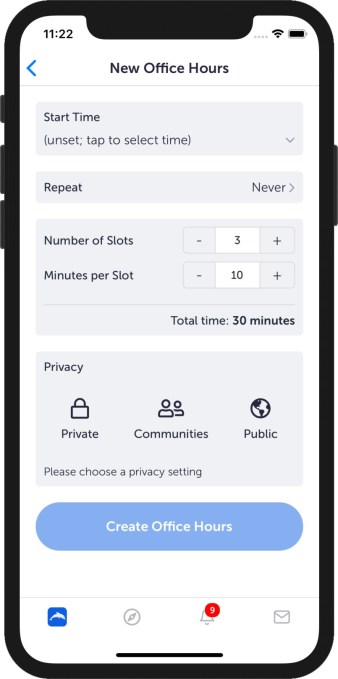
There’s also a new spin on Events called Office Hours, allowing users to set aside structured time for virtual one-on-one sessions with anyone who’s interested in speaking to them. These sessions can be listed publicly, or they can be unlisted, so that you only share them via email or within a certain community.

Upstream screenshot

Image Credits: Upstream

In a blog post, Taub noted that he met his SocialRank/Upstream co-founder and CTO Michael Schonfeld via Ohours.org, and they’re trying to replicate that experience here:

Let’s say you are the CMO of a large company and you want to give your people the opportunity to meet 1:1. The thought of coordinating the individual scheduling of ten minute blocks using your Outlook calendar and email is not attractive. But with Upstream, you are able to choose the 30min block you want to offer and how long you want the sessions to be. You decide you want to run your office hours every other Friday at 2pm ET for the rest of the year. The event is built and able to be shared seamlessly to whoever you choose to offer the Office Hours to.

In fact, Taub’s post lists more than 30 different people who are already offering office hours on Upstream, including New York Times reporter Taylor Lorenz, Foursquare co-founder/Expa partner Naveen Selvadurai and Amazon Photo Head of Product Nate Westheiemer.

Upstream is also announcing that it has raised an undisclosed amount of pre-seed funding from 8-Bit Capital, Human Ventures, Basement Fund, NYVP and various angel investors.

Looking ahead, Taub said that the next big priority is launching a web version of Upstream (which is currently available via mobile app), and to continue building live experiences, asynchronous experiences and features that provide real utility.

“We imagine a future when professionals come to Upstream for an event or Ask, and stay for the compelling opportunities that make Upstream an energizing and beneficial experience for them,” he wrote.

WordPress Image Lightbox Plugin