Yearly Archives: 2020

News: Loon sets stratospheric sustained flight record with 312 day balloon trip

Alphabet’s Loon, the company focused on creating new networking capabilities using stratosphere-based infrastructure, has set a new world record for a continuous stratospheric flight. One of Loon’s ultra high-altitude balloons flew for 312 days straight, beating the existing record of 223 days by a considerable margin, and nearly racking up a full year of sustained

Alphabet’s Loon, the company focused on creating new networking capabilities using stratosphere-based infrastructure, has set a new world record for a continuous stratospheric flight. One of Loon’s ultra high-altitude balloons flew for 312 days straight, beating the existing record of 223 days by a considerable margin, and nearly racking up a full year of sustained time aloft.

The balloon in question took off from Puerto Rico in May 2019, and then made its way to Peru where it took part in a service test for three months, it then headed south over the Pacific Ocean, and finally ended up in Baja, Mexico for a landing in March this year. Loon’s CTO Sal Candido said in a blog post that the record-setting flight that it’s the result of the company’s continued work on advancing its technology and pushing both hardware and software forward in new and innovative ways.

Part of that means learning as much as possible from balloons that break records like this one, and Candido points out that Loon has a unique advantage over more traditional high-altitude balloons designed for weather observation because it recovers just about all of them, and can study the best performers in extreme detail. That allows it to replicate and improve on what’s going right when balloons are staying aloft for long periods.

Long-lasting stratospheric balloons are useful because they mean that Loon can provide connectivity to target area for longer, at lower costs, which hopefully means more affordable connectivity for everyone, including those in hard-to-reach areas where ground infrastructure is prohibitively expensive. There’s plenty of additional potential for science, Earth observation and weather tracking/modelling, but Loon’s squarely focused on the connectivity piece of the puzzle at the moment, and replicating this will help tremendously in that regard.

News: Former Uber CTO Thuan Pham joins South Korean e-commerce leader Coupang

Thuan Pham, who stepped down as Uber’s chief technology officer and longest-serving top executive in May, has a new job in South Korea. Coupang, the country’s largest e-commerce company by market share, announced today it has hired Pham as its new CTO. For Pham, joining Coupang, a SoftBank-backed unicorn that holds a 24.6% market share

Thuan Pham, who stepped down as Uber’s chief technology officer and longest-serving top executive in May, has a new job in South Korea. Coupang, the country’s largest e-commerce company by market share, announced today it has hired Pham as its new CTO.

For Pham, joining Coupang, a SoftBank-backed unicorn that holds a 24.6% market share in South Korea, the fifth-largest e-commerce in the world, is a departure from his original post-Uber plans. In an interview with Bloomberg after leaving Uber, which Pham joined in 2013, he expressed relief about his decision, describing leading the ride-hailing giant’s technology division as “a very heavy burden.” After leaving, Pham intended to spend his time teaching university students and mentoring entrepreneurs instead of joining another large tech company.

“I thought that there was a slim opportunity that I would take on another operational role again, but the bar for that would have been super high,” Pham told TechCrunch. “It had to be even more interesting than what I did at Uber for me to jump in.”

After meeting Coupang chief executive officer Bom Kim, who founded the company in 2010, however, Pham said he was intrigued by the opportunity to apply his experience at Uber to a company in a different sector.

Coupang is known for its very fast delivery services. These include Dawn Delivery, which drops off packages, including fresh groceries, ordered by midnight at customers’ doors before 7 AM. It is currently available in Seoul, where Coupang is headquartered, and several other cities. Pham said Coupang’s ability to guarantee early morning deliveries was a major hook.

“I thought, holy smokes, this is actually really innovative. Maybe it’s not a technology innovation, but it’s a business innovation, and of course technology has to enable that at scale,” he said.

Pham said he wasn’t interested in working at another ride-sharing company, but “a lot of the concepts are similar” in on-demand e-commerce. For example, both have to route drivers to pick up passengers (or, in Coupang’s case, packages) and drop them off as efficiently as possible, and both need to use dynamic pricing to respond to demand and supply, which Pham said is especially relevant to deliveries of fresh groceries.

“There a lot of challenges that you have to worry about, from the talent perspective, technology perspective, logistics process perspective and so on,” he said. “I figured a lot of things I learned at my previous company could really be applied to help, even though it’s a different domain.”

Despite Coupang’s position as the largest e-commerce player in one of the world’s largest e-commerce markets, Pham said he thinks the company is “still in the very early days.” For example, there are opportunities for building out its logistics infrastructure, inventory and verticals, including its third-party marketplace, which includes warehouse and fulfillment capability for sellers.

Pham, who recently spent five weeks in Seoul before returning home to California, rode along on a night delivery shift to get a feel for how Coupang’s logistics chain works. One thing that impressed him was the density of Seoul, which creates unique challenges and opportunities for on-demand e-commerce companies there.

“We have a few hundred items on the truck and the truck was in a very small radius area. Sometimes we enter an apartment building and we deliver to two or three homes in that building,” he said. “That kind of density is a huge advantage for a logistics company, compared to where I live in the U.S.”

Using tech to address working conditions

After it launched ten years ago, Coupang initially relied on third-party carriers before building a network of in-house fulfillment centers. This included in-house trucks and drivers referred to as “Coupang men” who also served as customer service representatives.

As the company scaled up, however, it began relying more on third-party logistics providers again. Pham said Coupang currently employs tens of thousands of full-time employees for delivery, but also relies on flex workers in order to meet spikes in demand, for example during holidays. This one of the areas where Pham said his experience at Uber can benefit Coupang.

“A bunch of the stuff I worked on and the problem I solved at the previous company is really applicable because everything there was flex,’ said Pham. “But here you have a set of workers who are on-demand, if you will, and how do you make sure that the proper incentives are there? If you have huge demand and not enough capacity, then you have to pay a higher price for people to take those jobs, those routes and those time blocks.”

But for many companies whose business models are built around on-demand services, the convenience for customers can come at a cost for workers. Like Uber and Amazon, Coupang’s working conditions have also come under attack, especially as the COVID-19 pandemic dramatically increased demand for deliveries.

During the pandemic, Coupang has been criticized for not doing enough to prevent infections at two of its logistics centers. Working conditions at it and other logistics companies, including CJ Logistics, came under scrutiny after worker deaths, which labor groups attributed to overwork (in response, a Coupang official told the Korea Times its delivery and distribution center personnel are all limited to working 52-hour weeks).

Pham said that Coupang has spent heavily on COVID-19 safety precautions, including disinfectants, increasing the spacing of goods in its warehouses and using automated systems to track, pick up and pack inventory in order to maintain social distancing.

To improve working conditions for delivery workers, Pham said the company is continuing to hone the algorithms that direct drivers to customers’ addresses.

“I know this firsthand from Uber, that the clearer the routing instruction, the less stress it puts on drivers mentally,” Pham said.

While riding on an overnight route with a delivery driver, for example, he realized there is room for improvement in Coupang’s packet sorting system, so drivers spend less time looking in bins for small packets when they reach their destination.

Pham said that ultimately, he believes Coupang’s technology can give drivers more control over what they do during their shifts, either decreasing their workload or allowing them to perform more deliveries to make more money.

News: Google’s display advertising business is under antitrust probe in Italy

Italy’s competition authority has opened an antitrust investigation into Google’s display ad business — adding another allegation of abuse of a dominant position to the tech giant’s regulatory woes. In a press release announcing the action the AGCM said it “questions the discriminatory use of the huge amount of data collected through its various applications,

Italy’s competition authority has opened an antitrust investigation into Google’s display ad business — adding another allegation of abuse of a dominant position to the tech giant’s regulatory woes.

In a press release announcing the action the AGCM said it “questions the discriminatory use of the huge amount of data collected through its various applications, preventing rivals from competing effectively as well as adversely affecting consumers”.

The probe follows a complaint by local ad lobby group the IAB Italy, per Reuters, which says the investigation must be concluded by November 2021.

Specifically, the AGCM said it suspects Google of what it refers to as “internal/external discriminatory conduct” — by refusing to provide competitors with Google ID decryption keys and excluding third-party tracking pixels.

“At the same time, Google has allegedly used tracking elements enabling its advertising intermediation services to achieve a targeting capability that some equally efficient competitors are unable to replicate,” it adds.

We’ve reached out to Google for comment on the allegations.

The move comes as Google is being sued on home turf by the US Department of Justice (DoJ), which filed an antitrust case earlier this month — following a 16 month investigation — alleging Google is “unlawfully maintaining monopolies in the markets for general search services, search advertising, and general search text advertising in the United States.”

The Italian case also looks interesting as Google has been seeking to reframe the debate around online ad targeting vs privacy — announcing an initiative called Privacy Sandbox last year.

Its aim is to evolve open web standards towards a middle ground between Internet users’ privacy and content providers’ hunger for information to target visitors with ads (as well as, of course, its own people-profiling monetization model as an adtech giant) — proposing a technique called federated learning of cohorts (FloC) which it bills as a “privacy-preserving” mechanism to enable ad targeting without individual tracking.

But as part of that standards push, this January Google announced it was dialling up a plan to phase out support for third party tracking cookies — saying it now wanted to do so within the next two years. So it’s not so much an ‘evolution’ as Google cranking its market power lever.

While others in the browser space have also been clamping down on trackers, Google’s dominance of the online ad market means there are clear competition risks to it unilaterally shutting the door on third party trackers while maintaining its own lucrative access to Internet users’ data. And that seems to be the crux of the Italian competition authority’s concern.

Google has previously been found to be dominant in search by the European Commission — putting requirements on it to avoid abusing its market power to advance in other verticals.

The AGCM suggests that the conduct it’s investigating could have a significant impact on competition across the digital advertising space, as well as flagging the potential for “wide repercussions on competitors and consumers”.

“The absence of competition in the intermediation of digital advertising, in fact, might reduce the resources allocated to website producers and publishers, thus impoverishing the quality of content directed to end customers,” it writes, also suggesting that a lack of “effective competition based on merits” could discourage the development of innovative new adtech and ad techniques that are less intrusive for consumers. 

So, in other words, Google’s dominance of the digital ad space could be damaging both publishers and Internet users, and holding back the development of genuinely privacy-preserving adtech.

Plenty of such concerns have been raised elsewhere about the market distorting power of the adtech duopoly.

In a final report into the online ad market this summer, the UK’s Competition and Markets Authority (CMA) concluded that the market power of Google and Facebook is now so great that a new regulatory approach — and a dedicated regulator — is needed to address what it described as “wide ranging and self reinforcing” concerns. 

“Weak competition in search and social media leads to reduced innovation and choice and to consumers giving up more data than they would like. Weak competition in digital advertising increases the prices of goods and services across the economy and undermines the ability of newspapers and others to produce valuable content, to the detriment of broader society,” the CMA warned.

“Our concern is that such platforms have an incentive to interpret data protection regulation in a way that entrenches their own competitive advantage, including by denying third parties access to data that is necessary for targeting, attribution, verification and fee or price assessment while preserving their right to use this data within their walled gardens,” it added.

The report concluded that there is a “compelling case for the development of a pro-competition ex ante regulatory regime, to oversee the activities of online platforms funded by digital advertising” — something Google has been lobbying the European Commission not to do as regional lawmakers shape new pan-EU rules for gatekeeper platforms.

News: Scopely raises $340 million at a $3.3 billion valuation as gaming grabs investors’ interest

In a move to shore up institutional support in what’s likely to be it’s last fundraising as a private company, the Los Angeles-based mobile gaming behemoth Scopely has raised $340 million in its latest eye-popping round of funding. Acting as if there’s not still a global pandemic raging throughout the world, some of the largest

In a move to shore up institutional support in what’s likely to be it’s last fundraising as a private company, the Los Angeles-based mobile gaming behemoth Scopely has raised $340 million in its latest eye-popping round of funding.

Acting as if there’s not still a global pandemic raging throughout the world, some of the largest institutional financing firms like Wellington Management, TSG Consumer Partners, CPP Investments, and funds managed by BlackRock poured more money into the gaming giant just one year after the company raised $200 million in another late-stage funding round.

“What we are seeing is that there’s a significant appetite from public market investors to interactive entertainment as a category,” said Scopely co-chief executive Walter Driver. “We were excited to crossover and invest in Scopely.”

These late-stage, traditionally pre-IPO investors joined NewView Capital, Battery Ventures, Greycroft, Revolution Growth and Highland Capital Partners in the funding, which values the company at $3.3 billion, according to a person familiar with the financing.

The massive windfall won’t mean anything for Scopely’s strategy as the already wildly profitable business continues to grow both organically and through its acquisition strategy of major mobile gaming studios, according to co-chief executive, Walter Driver.

Unlike the other big companies that have taken billions of dollars in the gaming market — chiefly Epic Games and Unity — Scopely isn’t making tools for gaming. The focus at the Los Angeles-based company is squarely on the games themselves and the players who spend billions of dollars on them.

Scopely is focused on building the end-to-end publishing capabilities and development capabilities that will result in the longest term relationships with players for years to come,” Driver said. “This space is evolving really quickly and we have grown exponentially. If we want to be the leading company in the space, we have to be capitalized like the leading the company in the space.”

In terms of capitalization, no other mobile gaming studio comes close. The company’s closest competitor, both in proximity and in strategy would probably be the other LA-based mobile gaming company, Jam City, which is reportedly valued at $1.1 billion.

Scopely doesn’t shy away from developing aspects of the platform technologies that have powered Epic and Unity to their own multi-billion valuations, but it isn’t selling those tools to other companies, Driver said.

“Our belief is that over the longterm the most valuable companies in this space are going to be fully vertically integrated and own proprietary technology platforms,” he said.  

For Scopely, technology development is all about user retention, and developing the publishing capabilities and development capabilities that will help the company and its games stay relevant to an increasingly expanding and increasingly savvy audience of gamers.

And the company has an eye on the future. It’s looking at moving more of its games between platforms desktop, mobile, and consoles as games evolve to be played across those different systems. While that doesn’t mean developing for augmented reality or virtual reality hardware yet, Driver doesn’t rule it out.

“We do think there’s going to be continued innovation of new genres and consumer experience and more convergence and cross-pollination between platforms. Scopely is going to be focused on a player-centric approach rather than a device-centric one,” said Driver. 

For Driver and his co-founder, Javier Ferreira, Scopely’s growth — and that of the total gaming industry — represents an evolution in the ways that consumers want to be entertained.

Scopely’s players are spending 80 minutes per-day on games like “Star Trek Fleet Command”, “MARVEL Strike Force”, Scrabble GO” and “YAHTZEE With Buddies” and that time spent is actually spent socially.

“People have found — and investors looking at the space have found also that people value the connection they’re getting from interactive experiences. It’s not just our relationship with the players, but their relationships with each other,” Driver said. “Inside of most passively consumed media experiences, you don’t have an identity. You don’t have friends.

Or, to put in more nakedly capitalist terms, “We believe mobile gaming’s rapid growth makes it one of the most attractive categories in entertainment from an investment standpoint,” as Dan Sundheim the co-founder of late-stage Scopely backer D1 Capital, said in a statement. “We are confident that Scopely’s vision for the future coupled with its strategic approach to creating a vertically integrated game-making ecosystem, differentiated technology platform, and deep relationships with players will continue to cement its status as an industry leader.”


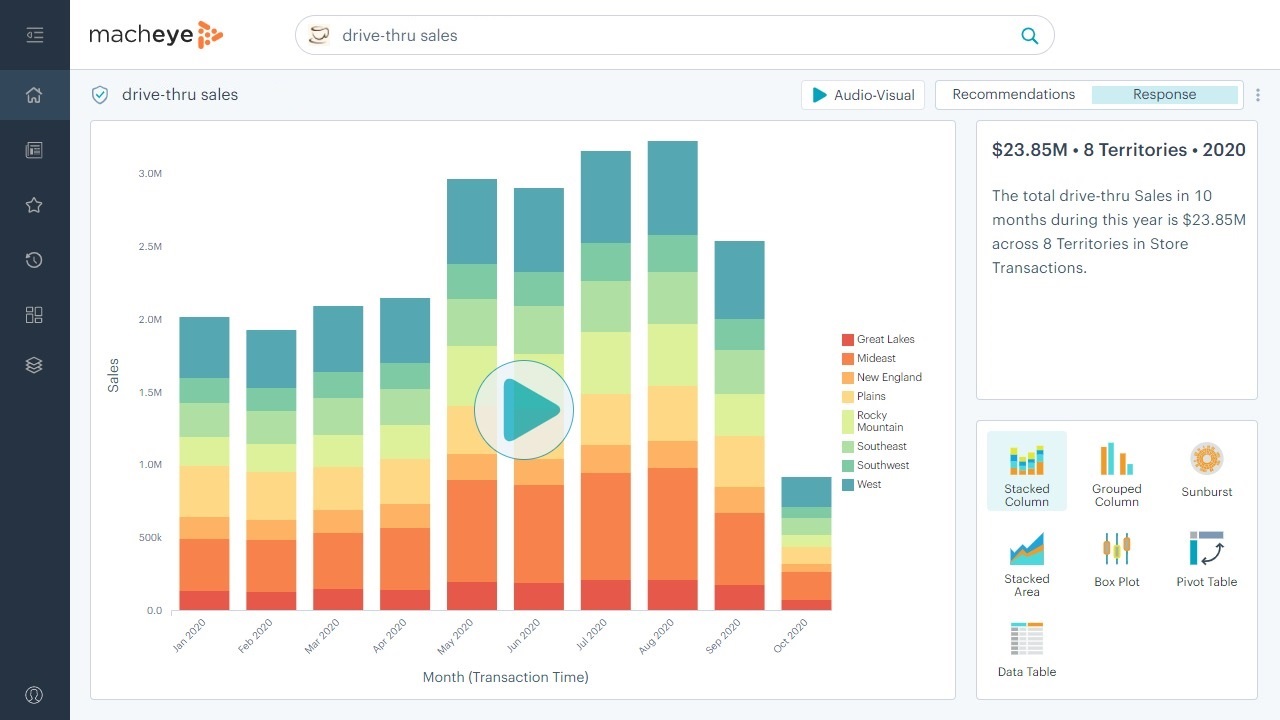
News: MachEye raises $4.6M for its business intelligence platform

We’ve seen our fair share of business intelligence (BI) platforms that aim to make data analysis accessible to everybody in a company. Most of them are still fairly complicated, no matter what their marketing copy says. MachEye, which is launching its AI-powered BI platform today, is offering a new twist on this genre. In addition

We’ve seen our fair share of business intelligence (BI) platforms that aim to make data analysis accessible to everybody in a company. Most of them are still fairly complicated, no matter what their marketing copy says. MachEye, which is launching its AI-powered BI platform today, is offering a new twist on this genre. In addition to its official launch, the company also today announced a previously unreported $4.6 seed funding round led by Canaan Partners with participation from WestWave Capital.

MachEye is not just what its founder and CEO Ramesh Panuganty calls a “low-prep, no-prep” BI platform, but it uses natural language processing to allow anybody to query data using natural language — and it can then automatically generate interactive data stories on the fly that put the answer into context. That’s quite a different approach from its more dashboard-centric competition.

“I have seen the business intelligence problems in the past,” Panuganty said. “And I saw that Traditional BI, even though it has existed for 30 or 40 years, had this paradigm of ‘what you ask is what you get.’ So the business user asks for something, either in an email, on the phone or in person, and then he gets an answer to that question back. That essentially has these challenges of being dependent on the experts and there is a time that is lost to get the answers — and then there’s a lack of exploratory capabilities for the business user. and the bigger problem is that they don’t know what they don’t know.”

Panuganty’s background includes time at Sun Microsystems and Bell Labs, working on their operating systems before becoming an entrepreneur. He build three companies over the last 12 years or so. The first was a cloud management platform, Cloud365, which was acquired by Cognizant. The second was analytics company Drastin, which got acquired by Splunk in 2017, and the third was the AI-driven educational platform SelectQ, which Thinker acquired this April. He also holds 15 patents related to machine learning, analytics and natural language processing.

Given that track record, it’s probably no surprise why VCs wanted to invest in his new startup, too. Panuganty tells me that when he met with Canaan Partners, he wasn’t really looking for an investment. He had already talked to the team while building SelectQ, but Canaan never got to make an investment because the company got acquired before it needed to raise more funding. But after an informal meeting that ended up lasting most of the day, he received an offer the next morning.

Image Credits: MachEye

MachEye’s approach is definitely unique. “Generating audio-visuals on enterprise data, we are probably the only company that does it,” Panuganty said. But it’s important to note that it also offers all of the usual trappings of a BI service. If you really want dashboards, you can build those, and developers can use the company’s APIs to use their data elsewhere, too. The service can pull in data from most of the standard databases and data warehousing services, including AWS Redshift, Azure Synapse, Google BigQuery, Snowflake and Oracle. The company promises that it only takes 30 minutes from connecting a data source to being able to ask questions about that data.

Interestingly, MachEye’s pricing plan is per seat and doesn’t limit how much data you can query. There’s a free plan, but without the natural search and query capabilities, an $18/month/user plan that adds those capabilities and additional search features, but it takes the enterprise plan to get the audio narrations and other advanced features. The team is able to use this pricing model because it is able to quickly spin up the container infrastructure to answer a query and then immediately shut it down again — all within about two minutes.

News: Microsoft says Iranian hackers targeted ‘high profile’ conference attendees

Microsoft says hackers backed by the Iranian government targeted over 100 high-profile potential attendees of two international security and policy conferences. The group, known as Phosphorus (or APT35), sent spoofed emails masquerading as organizers of the Munich Security Conference, one of the main global security and policy conferences attended by heads of state, and the Think

Microsoft says hackers backed by the Iranian government targeted over 100 high-profile potential attendees of two international security and policy conferences.

The group, known as Phosphorus (or APT35), sent spoofed emails masquerading as organizers of the Munich Security Conference, one of the main global security and policy conferences attended by heads of state, and the Think 20 Summit in Saudi Arabia, scheduled for later this month. Microsoft said the spoofed emails were sent to former government officials, academics and policy makers to steal passwords and other sensitive data, like email inboxes.

Microsoft did not comment, when asked, what the goal of the operation was, but the company’s customer security and trust chief Tom Burt said that the attacks were carried out for “intelligence collection purposes.”

“The attacks were successful in compromising several victims, including former ambassadors and other senior policy experts who help shape global agendas and foreign policies in their respective countries,” said Burt. “We’ve already worked with conference organizers who have and will continue to warn their attendees, and we’re disclosing what we’ve seen so that everyone can remain vigilant to this approach being used in connection with other conferences or events.”

Microsoft said the attackers would write emails written in “perfect English” to their target requesting an invitation to the conference. After the target accepted the invitation, the attackers would try to trick the victim into entering their email password on a fake login page. The attackers then later log in to the mailbox to steal the victim’s emails and contacts.

The group’s previous hacking campaigns have also tried to steal passwords from high-profile victims.

Iran’s consulate in New York could not be reached for comment as its website was down.

Phosphorus is known to target high-profile individuals, like politicians and presidential hopefuls. But Microsoft said that this latest attack was not related to the upcoming U.S. presidential election.

Last year, Microsoft said it had stopped over 10,000 victims of state-sponsored hacking, including Phosphorus and another Iran-backed group, Holmium, also known as APT 33. In March, the tech giant secured a court order to take control of domains used by Phosphorus, which were used to steal credentials using fake Google and Yahoo login pages.

News: Hej! Amazon opens Amazon.se in Sweden to expand in Europe

Amazon is the biggest online retailer in Europe, and today it took the next step in making that effort more localized. The company has launched a dedicated portal for Sweden at Amazon.se — giving Swedish shoppers, third-party merchants, and itself, a local URL — and a local logistics system, and a local marketing push —

Amazon is the biggest online retailer in Europe, and today it took the next step in making that effort more localized. The company has launched a dedicated portal for Sweden at Amazon.se — giving Swedish shoppers, third-party merchants, and itself, a local URL — and a local logistics system, and a local marketing push — for buying and selling goods and services online.

Sweden, as the world’s 10th biggest economy by GDP, is a key market for Amazon and its growth strategy.

But the news comes at a time when large tech companies, and Amazon in particular, continue to be scrutinized in Europe over issues of competition and tax payments — or more specifically, the lack of tax payments. On the former, the European Commission earlier this year opened an investigation into antitrust practices of the company. And on the latter point, Amazon is currently contesting a €250 million tax bill from the EU that goes back several years to when the company was much smaller, but potentially has wider implications for how Amazon is taxed today.

Amazon said that the local storefront will launch with 150 million+ products in 30 categories — examples of the popular Swedish brands that it will feature include Electrolux, Lagerhaus, OBH Nordica, Ellos, BRIO, Bonnierförlagen and Ifö — and it will provide free delivery on eligible orders above SEK229 ($26) that are fulfilled by Amazon.

It becomes Amazon’s 17th local portal, alongside Australia, Brazil, Canada, China, France, Germany, India, Italy, Japan, Mexico, Netherlands, Singapore, Spain, Turkey, United Arab Emirates and the United States.

Amazon had already been doing a lot of retail business in Sweden.

It has long had a system in Europe where shoppers from individual countries where it didn’t offer direct operations were redirected to those closest to them. Amazon URLs localized to Denmark, Norway, Finland, Switzerland and Poland, for example, all default to Amazon’s German site (Amazon.de) but see the text and some specialized content presented in each respective language. (And this is also where Amazon.se pointed until today.)

But this latest move is about doubling down on the potential of the country, both as a place to tap merchants and shoppers, and compete potentially more aggressively against homegrown merchants like Ikea and H&M.

“We are thrilled to launch Amazon.se and to be able to offer Swedish customers a selection of more than 150 million products, including tens of thousands of products from local Swedish businesses,” said Alex Ootes, Vice President, European Expansion for Amazon, in a statement  “Today is only the start of Amazon.se. We will continue to work hard to earn the trust of Swedish customers by growing our product range, ensuring low prices, and providing a convenient and trusted shopping experience.”

Considering that Sweden is the 10th-biggest economy in terms of GDP, it’s perhaps a surprise that it took so long. Amazon, however, has been known for taking a slow approach to global rollouts of certain products (the Kindle, for example, took years to break out of its home market of the US).

All that is not to say that Amazon hasn’t been operating other direct businesses in the country. It has an extensive set up in Sweden for its AWS cloud business, and just earlier this month it turned on its first European wind farm to produce clean energy, which was built in Sweden to power its Swedish AWS data centers.

For local merchants, it will give them another more direct online marketplace to sell goods to local customers who already know their brands, but have until now getting most of their business through Amazon in other countries.

“The opportunities on Amazon are enormous. Amazon has grown to become our most important channel for exports, and within the first months of working with Amazon we were cash flow positive,” said Pierre Magnusson, head of e-commerce at N!CK’S, a Swedish healthy snack business, in a statement. “N!CK’S continues to grow and has become one of the best-selling brands within our category, and we are still seeing 50% year-on-year growth in the EU Amazon stores alone.”

Elisabet Sandström, CEO of Miss Mary of Sweden AB, a manufacturer of high quality lingerie, added: “Amazon is an important channel for our expansion in Europe and the US, and we now look forward to selling through the Swedish Store when Amazon opens in our home country. Our sales on Amazon have increased steadily by over 50% per year, and Amazon is our fastest growing channel. Germany is currently Miss Mary’s largest customer base, and when we entered Amazon.de we noticed an immediate sales increase. We now appreciate the opportunity to reach new Swedish customers and make them happy.”

News: Streetbees raises $39M in a Series B round as brands race to interrogate Pandemic-hit consumers

Streetbees started out as an app for consumers to snap pictures of supermarket shelf layouts and get paid. Consumer brands wanted to know if the supermarkets really had put them at eye level or not. Quickly, the startup realized it could interrogate consumers about how they felt about the brands themselves, turning their app into a

Streetbees started out as an app for consumers to snap pictures of supermarket shelf layouts and get paid. Consumer brands wanted to know if the supermarkets really had put them at eye level or not. Quickly, the startup realized it could interrogate consumers about how they felt about the brands themselves, turning their app into a new way to track consumer attitudes. With the pandemic hitting, brands now need tools like this to find out about consumer attitudes while they are stuck at home.

Today it announces a £30 million Series B round to accelerate its survey platform. It now has 3.5 million consumers capturing emotion and context ‘in the moment’ when they engage with brands on the app, and get paid small amounts to do so. Since the vast majority of decisions are made offline instead of online, Streetbees says it has a unique way to make the offline world visible and searchable.

This round was led by Lakestar and comes with participation from Latitude,  Atomico, GMG Ventures and Octopus Ventures. Some 8 of the world’s 10 largest consumer goods companies – including PepsiCo, Unilever and Procter and Gamble now use Streetbees, in a market estimated to be worth £300bn. 

Tugce Bulut, CEO, Streetbees said in a statement: “Streetbees is building the world’s first human intelligence platform with a completely proprietary dataset to index these offline moments in consumers’ own words. With this round of funding, we will accelerate the creation of a searchable world where brands can finally decipher human behavior and decode the real reasons why consumers do what they do.”

Christoph Schuh, Partner at Lakestar, says: “We are very proud to lead the Series B round and to join Streetbees on its successful journey. The market for customer research is largely controlled by an oligopoly of legacy panel players and has seen little disruption. Streetbees has an innovative always-on way of engaging with the customer base at global scale to quickly and accurately understand their evolving needs and behaviours. The uncertainty of the global COVID-19 pandemic has demonstrated the value and necessity in having a real-time product suite that turns raw data into customer intelligence and actionable insights.”

George Henry, General Partner, LocalGlobe/ Latitude, Said:“Much like Bloomberg became the platform of choice for professionals requiring up-to-the-minute access to financial market information, we have always felt that Streetbees will become the facto market research platform for brands needing real-time access to rapidly changing consumer markets.”
 
Alan Hudson, Managing Partner, GMG Ventures LLP, an investor in the round, explained: “In the current market environment, more than ever, brands need to obtain qualitative, quantitative, real-time and real-life consumer insights at scale. Streetbees’ global network of engaged consumers and its AI-based platform provide these insights and power its clients decision making, both at the strategic and operational levels.”

News: Sidekick Health scores $20M for its gamified digital care platform

Nordic digital therapeutics company, Sidekick Health, has closed a $20 million Series A led by pan-European VC Wellington Partners and healthcare focused VC Asabys Partners. Existing investors, Novator and Frumtak Ventures, also participated in the oversubscribed round. The 2014-founded startup has built a gamified digital care platform that targets chronic and lifestyle disease management via

Nordic digital therapeutics company, Sidekick Health, has closed a $20 million Series A led by pan-European VC Wellington Partners and healthcare focused VC Asabys Partners. Existing investors, Novator and Frumtak Ventures, also participated in the oversubscribed round.

The 2014-founded startup has built a gamified digital care platform that targets chronic and lifestyle disease management via digital nudges from a helmet-wearing cartoon helper — pushing patients toward relevant information to support more beneficial lifestyle choices (e.g. taking regular exercise, or cutting down on smoking), as well as offering help with patient treatment management, such as via digital reminders for taking medication and remote patient monitoring for clinicians.

Sidekick Health’s platform addresses multiple therapeutic areas — offering what’s described as ‘evidence-based’, custom gamified digital therapeutics packages for conditions including diabetes, ulcerative colitis and smoking cessation.

This year it’s also branched out to offer support for patients with COVID-19 — an acute (rather than chronic) condition, albeit one that’s created huge and pressing challenges for healthcare providers.

The pandemic is of course more generally driving demand for digital care and remote patient monitoring as healthcare providers look for tools to help manage patients off-site — providing another tailwind for Sidekick Health’s business.

And while its gamification approach might seem more immediately suited to younger, app-savvy users, since launching the platform it says it’s worked with patients who are teenagers all the way up to people well over 80 — and now believes there are few limits on who can tap in to its digital care, assuming it can nail designing for easy access. Its software is designed to be accessible via (and integrate with) a range of connected devices.

“Our market, digital heath in general and our part of it, which you can either call digital care or digital therapeutics, has been fast growing over the past few years,” says CEO and co-founder Dr Tryggvi Thorgeirsson. “Obviously with the pandemic the whole trend has just been accelerated. That means accelerated adoption by more or less all the stakeholders in the market. And maybe especially by payers and providers.

“If you look at providers — like hospitals, clinicians — they have of course by necessity had to increase their use of digital health tools due to the pandemic. So the market was very fast growing already but with the pandemic it has really accelerated. So our customer base has been growing quite sharply now in the past six to 12 months.”

Sidekick Health doesn’t break out customer numbers but says it’s working with “several” of the top global pharma companies at this stage. While the platform reaches around 30,000 patients across different therapeutic areas via its b2b customers — with Europe it’s biggest market so far.

The new funding is going towards “further growth”, per Thorgeirsson — “both in terms of expanding the product but also accelerating our growth in both Europe and into the US market”. “We’re investing funds into the growth instead of aiming for profitability at this point,” he adds. 

New conditions he says it’s set to expand into “over the next few months” include heart failure; oncology (supporting patients with different types of cancer); and a number of metabolic conditions.

Within two years he says he wants it to be able to address over 20 different types of chronic illness (plus “a few acute ones like COVID-19”). 

Thorgeirsson also notes that people who are dealing with chronic conditions often suffer from multiple conditions — so being flexible enough to manage patients with comorbidity has been a strong focus for the clinician-founded startup.

“Most of our work is in chronic, lifestyle-related conditions… but when COVID-19 hit we saw that all of this functionality we had built for chronic diseases in our view was quite fitting for COVID-19 as well,” he says, explaining that the platform has been used to support coronavirus patients with educational videos on symptoms and “how to cope with the anxieties of being in home isolation”, as well as offering a reporting conduit to clinical staff to remotely monitor COVID-19 patients.”

“We felt all of these [features] were relevant also for this acute condition, so here in our home country, Iceland, we offered help and were picked up by the national authorities to support with a nationwide program to remotely monitor and support patients with COVID-19. So it definitely can apply in certain acute conditions as well,” he adds.

In addition to expanding the range of conditions the platform can address, the Series A funding will go on more clinical research aimed at validating its approach.

Recent research it’s published includes a random control trial comparing full standard care for type 2 diabetes vs the same full standard care plus its platform on top. (On that study, Thorgeirsson says the addition of the digital tool in the care pathway led to “a very significant drop in average blood glucose” which “translates to about 16% less risk of death and about 30% less risk of serious complications like amputation and blindness”.)

“One of the things we’re going to be using this funding for is to vastly increase our medical and science operations — so launching multiple studies into multiple therapeutic areas,” he tells TechCrunch. “Every condition has different aspects that we do focus on. With cardio and metabolic conditions it’s things like improving weight control, blood glucose, cardiovascular risk factors. Whereas in others it might be more focusing on quality of life or fatigue or anxiety or depression.

“This summer we did feasibility testing with patients with heart failure. And we saw really exciting first indications that we significantly improved one of the main symptoms [shortness of breath]. We saw very significant improvement in those symptoms… We even had a case where the remote patient monitoring of the heart allowed the clinicians to pick up a silent ‘heart attack’ — and led to an immediate hospitalization of a patient.

“So in general what I’m excited about is to see the breadth of the applicability. We started out in the cardiovascular space but over the past two years have been really fast expanding into a bunch of new conditions.”
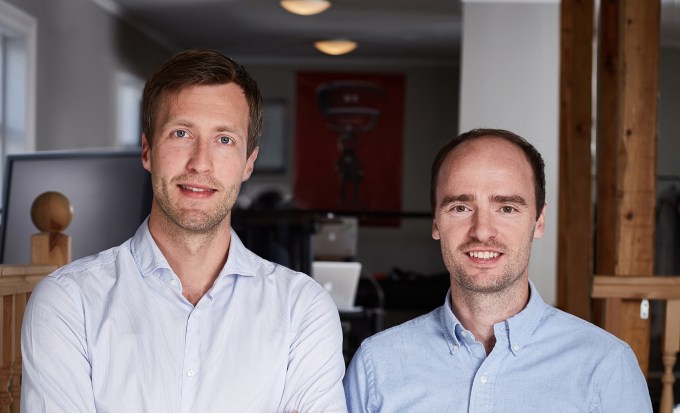
Sidekick Health co-founders, Dr Sam Oddsson and Dr Tryggvi Thorgeirsson (Photo credit: Sidekick Health)

The startup operates a b2b2c model in partnership with pharmaceuticals companies and healthcare providers who then offer the software to patients — recently inking deals with US pharma giant pfizer and German giant Bayer, with more touted in the pipeline.

A line on its website refers to the added “value” its platform can deliver for its business customers. Asked what that means in practice Thorgeirsson argues that digital therapeutics offers “multiple value levers” to pharma partners.

One key point to note here is that digital care/therapeutics tools continue to face regulatory barriers to being directly reimbursed by healthcare payers in many markets. So such businesses typically need to find alternative routes to market.

Working with big pharma is one option. Although some digital health startups are, conversely, aiming to more directly disrupt the pharmaceutical industry — i.e. by offering an alternative to taking drugs (such as in areas like sleep disorders). However Sidekick Health sees its platform as a treatment complement that can augment traditional drug therapies for a wide range of conditions. (While, on the flip side, it says it believes its chosen b2bc route is the best way to get its digital therapeutics in front of as many patients as possible.) 

“Improving patient outcomes has a direct financial benefit for our pharma customers,” says Thorgeirsson, discussing the value proposition Sidekick Health offers its b2b partners. “If you have a drug that might have cost anywhere between $1-$3 billion [to bring to market] and if we can then help improve the efficacy of treatment for patients that are receiving that therapy by adding our digital companion to that drug that has a direct financial benefit in terms of competitive standing for our pharma partners.

“Also when our pharma partners discuss reimbursement for their drug with payers improved patient outcomes of course are key — so it’s the improved patient outcomes, it’s the improved medication adherence (we know that’s a huge problem; about 300,000 people die every year due to lack of medication adherence which is something that we help with); and then of course very interesting insights from real world data that we are able to gather as well.”

The potential for data generated by digital therapeutics to be used to extend the life of existing drug patents also “comes into the discussion” here, per Thorgeirsson — when we ask whether part of its ‘value add’ is the potential to extend the profitable shelf-life of existing drugs by injecting new life into pharmaceutical patents via bolting on a novel digital companion.

“That is one of the things that is extremely exciting in our space — working much more closely with pharmaceutical companies creating combinations of molecule plus digital,” he confirms. “In some cases, yes, this can potentially expand exclusivity or patents. So that’s absolutely a really interesting part of what we see happening in the market.

“This combination where the molecule can impact certain areas of the disease and we impact others — and the combination is more powerful than either alone.”

Drug development and/or finding new applications for existing medications is another area where Sidekick Health reckons that data derived from its platform will be able to aid pharma outcomes.

“The way we see it is that any new drug that’s being developed, in the not too distant future, most likely will have a digital companion when they go to market,” says CMO Gulli Arnason. “[It’s about] getting in early and launching something with a pharmaceutical company that’s augmented by a digital companion — as well as a more defensive play, around margins and patents. So these two areas are extremely important for pharmaceutical companies.”

As for the healthcare payer market, that’s “still maturing” in its response to digital therapeutics, as Thorgeirsson puts it. (Again, though, the coronavirus pandemic is kicking open doors as societies hurry to adopt digital tools to scale to meet the spike in demand for remote care.)

“What we feel is important also is that current value levers which are not dependent on direct reimbursements from payers because we know that the payer market is still maturing — really interesting things happening there but still kind of developing,” he adds.

On the competitive landscape, Thorgeirsson argues that Sidekick’s platform-play is relatively rare — and sets the business apart from digital therapeutics startups with a more niche focus. (One platform competitor he does name-check is France’s Voluntis; a business that’s been working on ’embedding connectivity into therapeutics’ for considerably longer, though with less of a focus on gamification.)

“There are companies that focus more narrowly on certain elements — like only on medication adherence or only on one or two specific conditions but we have this different approach where we believe it’s absolutely key to have a platform approach. And that’s really both when you look at the patient side — patients might have two or more conditions, they might have obesity, type 2 diabetes and smoke, and you don’t want one solution per condition; you want a platform that can tackle all of them,” he suggests, adding: “In general we don’t see strong competition when you combine the gamification, the outcomes that we’re showing and the platform approach.”

The platform approach aligns Sidekick Health with the needs of its target business partners.

“Our business partners have the same [priorities],” argues Thorgeirsson. “They have a portfolio of therapeutic areas that they address and they really don’t want one vendor per therapeutic area but a platform that can tackle across the spectrum. And when it come to the platform breadth we don’t really see a large number of competitors with that size of a platform.”

Commenting on the Series A in a statement, Dr Regina Hodits, managing partner at VC firm Wellington, said: “At Wellington, we are all about improving healthcare for all stakeholders, patients, practitioners, and payors alike. Sidekick’s team has done a remarkable job of creating a product platform with the potential to achieve this aim on a global scale. We are very excited to support the company with their plans for significant growth.”

“We are impressed by the way this team has been able to put together a technology platform delivering evidence-based therapeutic programs, that are effective, adaptive but also valuable for their commercial partners,” added Josep LI. Sanfeliu, managing partner and co-founder of Asabys, in another supporting statement.


News: Harley-Davidson is getting into the electric bicycle business

Harley-Davidson has spun out a new business dedicated to electric bicycles and plans to bring its first line of products to market in spring 2021. The new business called Serial 1 Cycle Company started as a project within the motorcycle manufacturer’s product development center. The name comes from “Serial Number One,” the nickname for Harley-Davidson’s oldest

Harley-Davidson has spun out a new business dedicated to electric bicycles and plans to bring its first line of products to market in spring 2021.

The new business called Serial 1 Cycle Company started as a project within the motorcycle manufacturer’s product development center. The name comes from “Serial Number One,” the nickname for Harley-Davidson’s oldest known motorcycle.

The pedal assist electric bicycle company is being launched amid a booming ebike industry fueled by growing demand in the wake of the COVID-19 pandemic. The global eBicycle market was estimated to be over $15 billion in 2019 and projected to grow at an annual rate of more than 6% from 2020 to 2025, according to Harley-Davidson.

The new Harley-Davidson brand Serial 1 didn’t provide performance details or other specs of its new line of electric bike products. However, the company did release several photos of its first model.

Harley-Davidson-ebike

Image Credits: Harley-Davidson

The new business launch also comes at a critical time for the Milwaukee-based motorcycle manufacturer, which has seen its sales slow as its core customer base ages out of its motorcycles.

In July, Harley-Davidson cut 700 jobs from its global operations as part of an internally branded restructuring plan called “The Rewire.” The plan, which Harley-Davidson chairman, president and CEO Jochen Zeitz first spoke about in the company’s first-quarter earnings call back in April, followed the launch of the company’s first production electric motorcycle the Livewire.

“The formation of Serial 1 allows Harley-Davidson to play a key role in this mobility revolution while allowing Serial 1 to focus exclusively on the eBicycle customer and deliver an unmatched riding experience rooted in freedom and adventure,” Aaron Frank, the new company’s brand director said in a statement.

Harley-Davidson said Jason Huntsman is president of Serial 1 Cycle. The rest of the executive team includes Ben Lund, who is vice president of product development and Hannah Altenburg as lead brand marketing specialist.

WordPress Image Lightbox Plugin