Yearly Archives: 2020

News: The Level Bolt and Level Touch smart locks are a cut above the competition in design and usability

Level is one of the newer players in the smart lock space, but with a design pedigree that includes a lot of former Apple employees, the company’s already attracting a lot of praise for its industrial design. I tested out both of its current offerings, the Level Bolt and the Level Touch, and found that

Level is one of the newer players in the smart lock space, but with a design pedigree that includes a lot of former Apple employees, the company’s already attracting a lot of praise for its industrial design. I tested out both of its current offerings, the Level Bolt and the Level Touch, and found that they’re well-designed, user-friendly smart locks that are a cut above the competition when it comes to aesthetics and feature set.

The basics

Level’s debut product, the $229 Level Bolt, works with existing deadbolts and just replaces the insides with a connected locking mechanism that you can control from your smartphone via the Level app. The newer $329 Level Touch is a full deadbolt replacement, include the faceplates, but unlike most other smart locks on the market it looks like a standard deadbolt from the outside – albeit a very nicely designed one. The Level Touch is available in four different finishes, including satin nickel, satin chrome, and polished brass and matte black (the latter two are listed as ‘coming soon’)
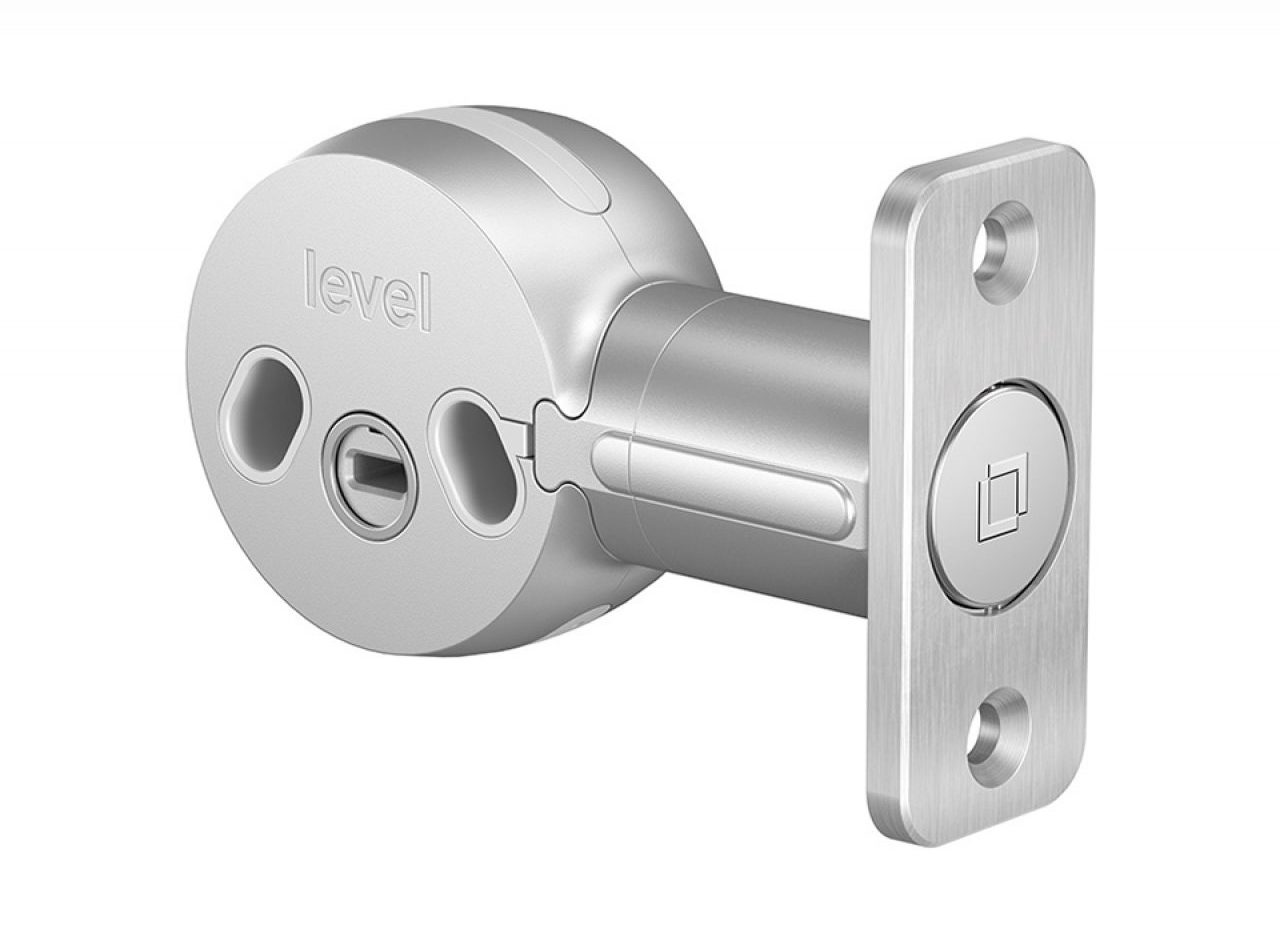
Image Credits: Level

The Bolt is similar in concept to other smart lock products like the August lock, in that you use it with your existing deadbolt, which means no need to replace keys. It also leaves the thumb turn intact, however, meaning from all outward appearance it isn’t at all obvious that you have a smart lock at all. Installing it is relatively simple, and basically amounts to a lock mechanism transplant. Level includes different cam bar adapters that fit the vast majority of available deadlocks, so it should be something most homeowners can do in just a few minutes. The Bolt offers access sharing via the app, auto lock when you depart, Auto Unlock when you arrive, an activity log, temporary passes, and a built-in audio chime. It also works with Apple’s HomeKit for remote control, voice control via Siri, automation and push notifications.

Image Credits: Level

The Level Touch takes everything that’s great about the Bolt, and adds in some super smart additional features like a capacitive external deadbolt housing, which allows an amazing touch-to-lock/touch-to-unlock feature, and NFC that allows you to use programmable NFC cards and stickers to issue revokable passes to unlock your door. On top of all that, it’s probably the most attractive deadbolt I’ve ever owned or used, which is saying a lot in a field of smart locks where most offerings have unsightly large keypads or large battery compartments.

Design and features

The Level Bolt’s design is clever in its ability to be completely invisible when in use. The deadbolt itself is the battery housing, holding one lithium CR123A battery (included in the box, offers over a year’s worth of use). Installing the Bolt was as easy as unscrewing my existing deadbolt, removing the internal deadbolt mechanism, picking out the right adapter for the cam bar, and then inserting it into my door’s deadbolt lock and screwing back together the external face plates. It took under 10 minutes, start to finish.

Setting up the lock was also simple. You just download the app and follow the instructions, and you’ll be able to control your app in just minutes, too. Using the app, you set up a home profile for your lock or locks, and you can also invite others in your household to share access (they’ll have to install the app and get a profile to do so). You can also set up HomeKit if you have an Apple device and a HomeKit hub (this could be an Apple TV, or an iPad) and instantly unlock a lot of features including remote unlocking and locking control when you’re away from home.

Image Credits: Level

Even without HomeKit, you can set up Level to automatically lock once you leave a certain geofenced area around your home, and to automatically unlock once you return within that perimeter. It’s a fantastic convenience feature that works great and offers tons of benefits when it comes to things like coming home with armfuls of groceries, or large packages.

With the Level Touch, you get all of the above, plus a feature I’ve come to find indispensable: touch control. The metal exterior of the Level Touch’s outside cylinder has capacitive touch sensors, which means that like your iPhone’s screen, it can detect when it’s touched by a finger or skin. You can activate a touch-to-lock feature which will allow it to lock whenever people leave and hold their finger to the deadbolt cover, and you can even set it to unlock when it detects a touch combined with immediate proximity of your phone for identity verification purposes.

To me, this is even more useful than auto-lock/auto-unlock, and yet still much more convenient than fumbling with keys or even using the app to manually lock/unlock. It’s one of Level Touch’s unique advantages, and it’s a big one.

As for installation of the Level Touch, it’s also very easy – no more difficult than installing any deadbolt you might buy at the hardware store. Like the Bolt, it uses a single CR123A battery loaded right into the deadbolt itself that should give you enough power for over a year of use.

Bottom line

Smart locks have become a lot more prevalent over the course of the past few years, but they also haven’t really progressed much in terms of functionality or design. Level has upended all that, bringing the best of convenience features and miniaturized hardware technology to smart, modern design that leapfrogs the competition.
News: Juganu begins selling its tunable lighting system for pathogen disinfection and deactivation in the US

Juganu, the venture-backed Israeli company that makes lighting systems capable of emitting light at specified wavelengths, is now selling a product that it claims can disinfect surfaces and deactivate pathogens in an attempt to provide buildings with new safety technologies that can prevent the spread of the coronavirus that causes COVID-19. The company claims that

Juganu, the venture-backed Israeli company that makes lighting systems capable of emitting light at specified wavelengths, is now selling a product that it claims can disinfect surfaces and deactivate pathogens in an attempt to provide buildings with new safety technologies that can prevent the spread of the coronavirus that causes COVID-19.

The company claims that its J.Protect product was clinically validated through a study conducted by Dr. Meital Gal-Tanamy at the Bar-Ilan University Faculty of Medicine (although Dr. Gal-Tanamy’s research typically focuses on the Hepatitis C virus, which has a different transmission vector than airborne viruses like Sars-Cov-2, the coronavirus that causes COVID-19).

Juganu said that the new product has been registered with the US Environmental Protection Agency in 46 states and is currently working with Comcast, Qualcomm, and NCR Corp. to bring its lighting disinfectant and deactivation technology to markets around the country.

The lighting technology uses two kinds of ultraviolet light — A and C — to render viruses inert and kill bacteria on surfaces, according to the company’s claims.

When people are present in a room, the company’s system uses UVA light which can render viruses inert after eight hours of exposure. If the room is empty, the lighting system will use UVC light, which is more potent as disinfectant and more harmful to people, to disinfect a room in under an hour.

The company tested its technology on surfaces, but did not conduct any tests involving their lighting system’s effects on aerosolized viral particles, which have been determined to be the main cause of infections from the novel coronavirus.

“We got an exemption from the FDA and are approved for distribution by the EPA in 48 states,” said Juganu chief executive, Eran Ben-Shmuel in an interview.

The company has already pre-sold the lighting technology in Israel and in India, according to Ben-Shmuel, and is now taking orders for installations in the US.

Juganu, which has raised $53 million to date from investors including Comcast Ventures, Viola Growth, Amdocs, and OurCrowd has offices in Israel, Brazil, Mexico, and the US, has already sold lighting systems to municipalities and businesses around the country.

The new hardware opens up a new line of business in the booming market for technologies targeting the reopening of businesses in the nations that have been hit the hardest by the COVID-19 pandemic.

“Smart lighting will be one of the biggest areas of opportunity for physical spaces. We are evolving from lights simply illuminating spaces to disinfecting and securing them, as well as promoting well-being by recreating natural light shifts based on sunrise and sunset,” said Ben-Shmuel, in a statement. 


News: Shopify stock is up in pre-market trading as earnings blow past estimates

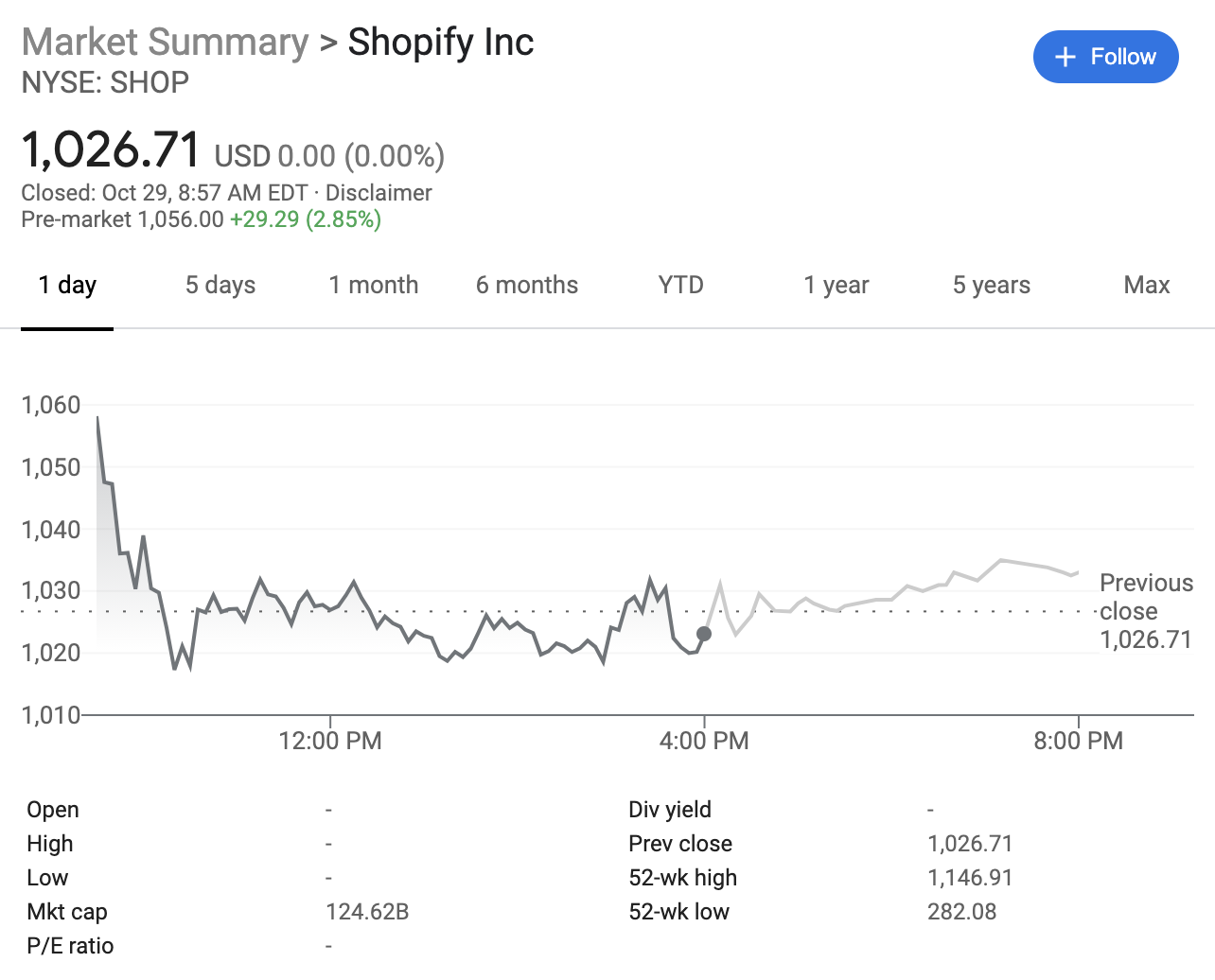
Shopify stock jumped nearly 3% in pre-market trading today after announcing earnings that handily beat the estimates set by Wall Street. The Ottawa-based provider of e-commerce services for retailers reported earnings of $133.2 million, or $1.13 per-share, for the third quarter after posting a loss of $33.6 million, or 29 cents per-share, in the same

Shopify stock jumped nearly 3% in pre-market trading today after announcing earnings that handily beat the estimates set by Wall Street.

The Ottawa-based provider of e-commerce services for retailers reported earnings of $133.2 million, or $1.13 per-share, for the third quarter after posting a loss of $33.6 million, or 29 cents per-share, in the same period last year. Analysts tracking the company had expected earnings per-share of 52 cents.

Pretty much everything about the company’s business looked good, partly driven by plummeting brick-and-mortar retail sales as health regulations to limit the spread of the novel coronavirus like occupancy constraints have slowed down foot traffic.

Shopify’s $767.4 million in revenue for the quarter was up 96% from a year ago and handily beat the expectations of analysts who were predicting for the company to bring in roughly $658 million. Operating income was also up from the year-ago period with Shopify calling about $50 million, or 7% of revenue, compared to a nearly $36 million loss for the year ago period. Adjusted operating income was nearly $131 million.

“The accelerated shift to digital commerce triggered by COVID-19 is continuing, as more consumers shop online and entrepreneurs step up to meet demand,” said Harley Finkelstein, Shopify’s President, in a statement. “Entrepreneurs will be the force in rebuilding economies all over the world, which makes it even more important for Shopify to innovate and build the critical tools that merchants need to succeed in a low-touch retail environment.”

“Shopify’s tremendous third-quarter results reflect the resilience and entrepreneurial spirit of our merchants,” said Amy Shapero, Shopify’s CFO . “More entrepreneurs are signing on to Shopify so they can quickly and easily put their ideas into action. We continue to evolve our global commerce operating system to make it easier for merchants to get online and start selling, get discovered, and get their goods to buyers, while providing a delightful shopping experience.”

Shopify is interesting not only for its own revenue, but what its revenues say about the health of direct-to-consumer retail businesses — some of which have raised significant investment from venture capitalists.

Looking at the company’s merchant solutions revenue, which grew by 132% to $522.1 million — the state of these direct-to-consumer companies’ bottom line must be pretty healthy. Gross merchandise volume, the figure from which Shopify derives its merchant solutions gains, was $30 billion. That figure is an increase of $16.1 billion over the year-ago period.

Shopify is sitting on a pretty hefty financial cushion with $6.12 billion in cash and equivalents, up from $2.46 billion at the start of the year.

Outside its financials, Shopify is making moves to expand its footprint in social commerce, through a recent partnership with TikTok, announced yesterday. The deal should enable more Shopify sellers to reach TikTok’s audience by marketing directly on the platform using a toolkit integrated with Shopify’s dashboard, the two companies said.

“More entrepreneurs are signing on to Shopify so they can quickly and easily put their ideas into action,” said Amy Shapero, Shopify’s chief financial officer. “We continue to evolve our global commerce operating system to make it easier for merchants to get online and start selling, get discovered, and get their goods to buyers, while providing a delightful shopping experience.”

News: Twitter’s API access changes are chasing away third-party developers

For a civil society with healthy online discourse, journalists, academics and human rights workers need tools to fact check the platform’s announcements and policies.

Edward Tian is a computer science student at Princeton and an investigator at Bellingcat who combines technology and investigative journalism.

On August 12, Twitter launched a complete rebuild of its 2012 API, with new endpoints for data collection, new access levels and a new developer portal. Notably, the version 2 API was presented as a step in mending the notoriously fractious relationship between Twitter and its third-party developer community.

Improvements for third-party developers, however, arrived with hints of irony leaving many startup CEOs in the ecosystem unconvinced. Within 35 days of the v2 launch, Twint, a popular data scraping tool for researchers and journalists, stopped working. Twint is the latest casualty in a long string of third-party applications, including Tweetbot, Twitpic and numerous others that have shut down as a result of Twitter’s API restrictions.

“It may be time to get into another game,” says Ben Strick, a BBC investigator specializing in Twitter analytics.

“The game has already changed,” adds Tim Barker, the former CEO of DataSift, who explained that there is rightful skepticism over improvements in Twitter’s treatment of third-party applications. From a purely business standpoint, once Twitter directly entered the data analytics market after its 2014 acquisition of Gnip, it wanted limited players and no longer a competing ecosystem. Under increased public scrutiny of social media platforms post-Cambridge Analytica, Twitter also prioritized guarding its platform’s image, hoping to ward off increased regulation of its data.

“You can look on Crunchbase, but I can guarantee no one is in their bedroom starting a Twitter-centric startup anymore,” says Barker.

The most glaring evidence of Twitter tightening access to its data are massive hikes in pricing, which have pushed several startups out of the market. “In the early days,” Barker explains, “the pricing of Twitter data was volume based, as they were building an economy and an ecosystem.” But once that market matured and was funded by venture capitalists, Twitter was a post-IPO company that saw an opportunity to churn profits.

According to Stuart Shulman, CEO of Texifter, the market price of high-quality metadata for 100,000 tweets in 2011 was around $25-$50 USD. Today, Twitter estimates for the same quantity of data could potentially cost tens of thousands of dollars.

In 2018, Texifter (customer #9 of Gnip) failed to renew its eighth annual agreement for premium Twitter data. During annual contract renegotiations, Twitter sharply increased prices and imposed increasingly stringent regulations, including a quota on the amount of data Texifter could license access to. In Shulman’s words, “Twitter made it mathematically impossible to turn a profit.”

News: Sinch announces Conversation API to bring together multiple messaging tools

As communicating with customers across the world grows ever more challenging due to multiple channels, tools and networking providers, companies are looking for a way to simplify it all. Sinch, a company that makes communications APIs, announced a new tool this morning called the Conversation API designed to make it easier to interact with customers

As communicating with customers across the world grows ever more challenging due to multiple channels, tools and networking providers, companies are looking for a way to simplify it all. Sinch, a company that makes communications APIs, announced a new tool this morning called the Conversation API designed to make it easier to interact with customers across the planet using multiple messaging products.

Sinch chief product officer Vikram Khandpur says that business is being conducted in different messaging channels such as SMS, WhatsApp or Viber depending on location, and businesses have to be able to communicate with their customers wherever they happen to be from a technology and geographic standpoint. What’s more, this need has become even more pronounced during a pandemic when online communication has become paramount.

Khandpur says that up until now, Sinch has concentrated on optimizing the SMS experience for actions like customer acquisition, customer engagement, delivery notifications and customer support. Now the company wants to take that next step into richer omni-channel messaging.

The idea is to provide a set of tools to help marketing teams communicate across these multiple channels by walking them through the processes required by each player. “By writing to our API, what we can provide is that we can get our customers on all these platforms if they are not already on these platforms,” he said.

He uses WhatsApp as an example because it has a very defined process for brands to work with it. “On WhatsApp, there is this concept of creating these pre-approved templates, and they need to be reviewed, curated and finally approved by the WhatsApp team. We help them with that process, and then do the same with other channels and platforms, so we take that complexity away from the brand,” Khandpur explained.

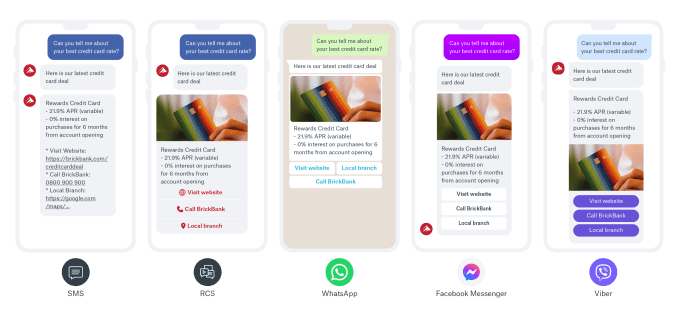
He adds, “By giving us that message once, we take care of all of [the different tools] behind the scenes transcoding when needed. So if you give us a very rich message with images and videos, WhatsApp may want to render it in a certain way, but then Viber renders that in a different way, and we take care of that.

Sinch Conv API Transcoding

Examples of transcoding across messaging channels. Image Credits: Sinch

Marketers can use the Conversation API to define parameters like using WhatsApp first in India, but if the targeted customer doesn’t open WhatsApp, then fall back to SMS.

The company has made four acquisitions in the last year including ACL Mobile in India and SAP’s Interconnect Messaging business to enhance its presence across the world.

Sinch, which competes with Twilio in the communications API space, may be one of the most successful companies you never heard of, generating over $500 million in revenue last year while processing over 110 billion messages.

The company launched in Sweden in 2008 and has never taken a dime of venture capital, yet has been profitable since early days. In fact, it’s publicly traded on the NASDAQ Exchange in Stockholm and will be reporting earnings next week.

News: LightDeck Diagnostics has $11 million for its new, high-speed, way to test for COVID-19, sepsis, and heart attack

LightDeck Diagnostics, a company formed earlier this year from the merger of startups mBio and Brava Diagnostics, has raised $11 million in funding for a new high-speed COVID-19 test, according to a statement. The company’s novel test uses planar wave guide technologies to rapidly assess the presence of specific pathogens in a patient. After collecting

LightDeck Diagnostics, a company formed earlier this year from the merger of startups mBio and Brava Diagnostics, has raised $11 million in funding for a new high-speed COVID-19 test, according to a statement.

The company’s novel test uses planar wave guide technologies to rapidly assess the presence of specific pathogens in a patient.

After collecting a patient sample, a user places the sample in a cartridge and then inserts that wave guide cartridge into the company’s proprietary analyzer. The sample mixes with a reagent pellet in the sample port where the substance is combined with a fluorescent molecule. After a predetermined amount of time, the sample-reagent mixture flows into the cartridge and combines with molecules that are printed as spots in an array on the wave guide cartridge.

“The fluorescent signal is proportional to the concentration of the thing we want to measure and is easily measured and interpreted by our instrument’s software to give the user a final result,” according to LightDeck chief executive, Chris Myatt. “We can measure molecules at very low concentrations reproducibly and quickly, which will make disease diagnosis and management more robust.”

Today, that means that the LightDeck Analyzer can determine whether a sample contains SARS-CoV-2 antibodies with 97.9% sensitivity and 99.6% specificity, the company said in a statement.

“In addition to COVID-19, we’re scaling tests for other indications, including heart disease and sepsis. We’re already shipping thyroid and hormone tests across the veterinary industry, and have received multiple grants to extend our water quality testing across the environmental industry,” Myatt said.

The company holds 30 patents on its technology, which was initially developed at the University of Utah and the Naval Research Laboratory in Washington, and commercialized as Precision Photonics Corp., founded by Myatt. Along with his chief technical officer, Mike Lochhead, and executive vice president Nick Traggis, Myatt spun out the diagnostic technology into mBio in 2009.

Brava Diagnostics co-founders Byron Hewett, Dave Okrongly, and Carrie Mulherin worked together in several prior diagnostics companies, and together they bring decades of experience in the diagnostic industry, Myatt said. Brava had been working with MBio to commercialize its technology, but then to capitalize on the rapid changes in the diagnostic landscape this year the companies combined in July to take advantage of their expertise and synergies across technologies and business segments.

To commercialize its new diagnostic tools, the company has raised $11 million in Series B financing from investors including Incubic, Entrada and Boulder Ventures, the company said.

“This team at LightDeck combines expertise from diagnostic industry veterans with strong clinical backgrounds and the best minds in laser optics,” said Michael Chang, Managing Director at Incubic. “It’s a winning combination and a company well-positioned for growth through the pandemic and beyond.”

News: Gwyneth Paltrow, Rebel Wilson, Darren Criss, and Baron Davis are backing an LA-based weed soda company

Celebrity investors including Gwyneth Paltrow, Rebel Wilson, Ruby Rose, Darren Criss, Baron Davis, Tove Lo, and Casey Neistat have come together to back the Los Angeles-based thc-infused drink company, Cann, the company said. It’s the latest in a string of deals that show the strength of the market for alternative intoxicants — at least in

Celebrity investors including Gwyneth Paltrow, Rebel Wilson, Ruby Rose, Darren Criss, Baron Davis, Tove Lo, and Casey Neistat have come together to back the Los Angeles-based thc-infused drink company, Cann, the company said.

It’s the latest in a string of deals that show the strength of the market for alternative intoxicants — at least in California.

News of the funding follows yesterday’s announcement that the Los Angeles-based, national liquor delivery service Saucey would be merging with a marijuana dispensary and delivery service, Emjay under the mantle of Pacific Coast Holdings.

For its part, Cann has become the fastest growing THC beverage on the market with over 2 million cans of the stuff sold (I’ve had it. It’s good.).

For the company’s backers — and its founders — the pitch that Cann is a better alternative to alcohol simply resonates.

“Cann sits at the intersection of two powerful trends we’ve been monitoring at goop for some time: the
‘sober curious’ and ‘cannabis curious’ movements,” said Gwyneth Paltrow, the multi-hyphenate actress-entrepreneur-musician (she sings!) who founded the lifestyle and wellness brand, goop. “There’s no reason why alcohol should be so much easier to purchase than Cann, and I’m confident the founders will lead the charge in finding ways to integrate it into the same purchasing channels and drinking environments.”

Cann’s not the only company looking to carve out a slice of the liquor market with an alternative intoxicant. There’s also Kin Euphorics, which also pitches itself as an alcohol alternative. Then there’s a slew of CBD and THC infused drinks that have managed to attract venture backing. They include K-Zen Beverages, which has raised $5 million from the investment firm DCM to roll out its line of intoxicants and California Dreamin’ is a Y Combinator-backed intoxicant containing a whopping 10 milligrams of THC. Sweet Reason raised money from Lerer Hippeau for its CBD-sparkling drink and Recess, Daytrip, Infuzed, and Dram all have offerings as well.

Cann’s cans come with 2 milligrams of THC and 4 milligrams of CBD, which, after a few cans of Cann is enough for a light buzz.

Actress Ruby Rose cited the company’s commitment to diversity, with a staff that’s comprised equally of men and women and where people of color make up 33% of the total headcount.

For its next act, Cann is looking to grow its geographic footprint. The company expanded into Nevada in the past year and is eyeing four more states within the next six months, according to a statement.


News: Microsoft now lets you bring your own data types to Excel

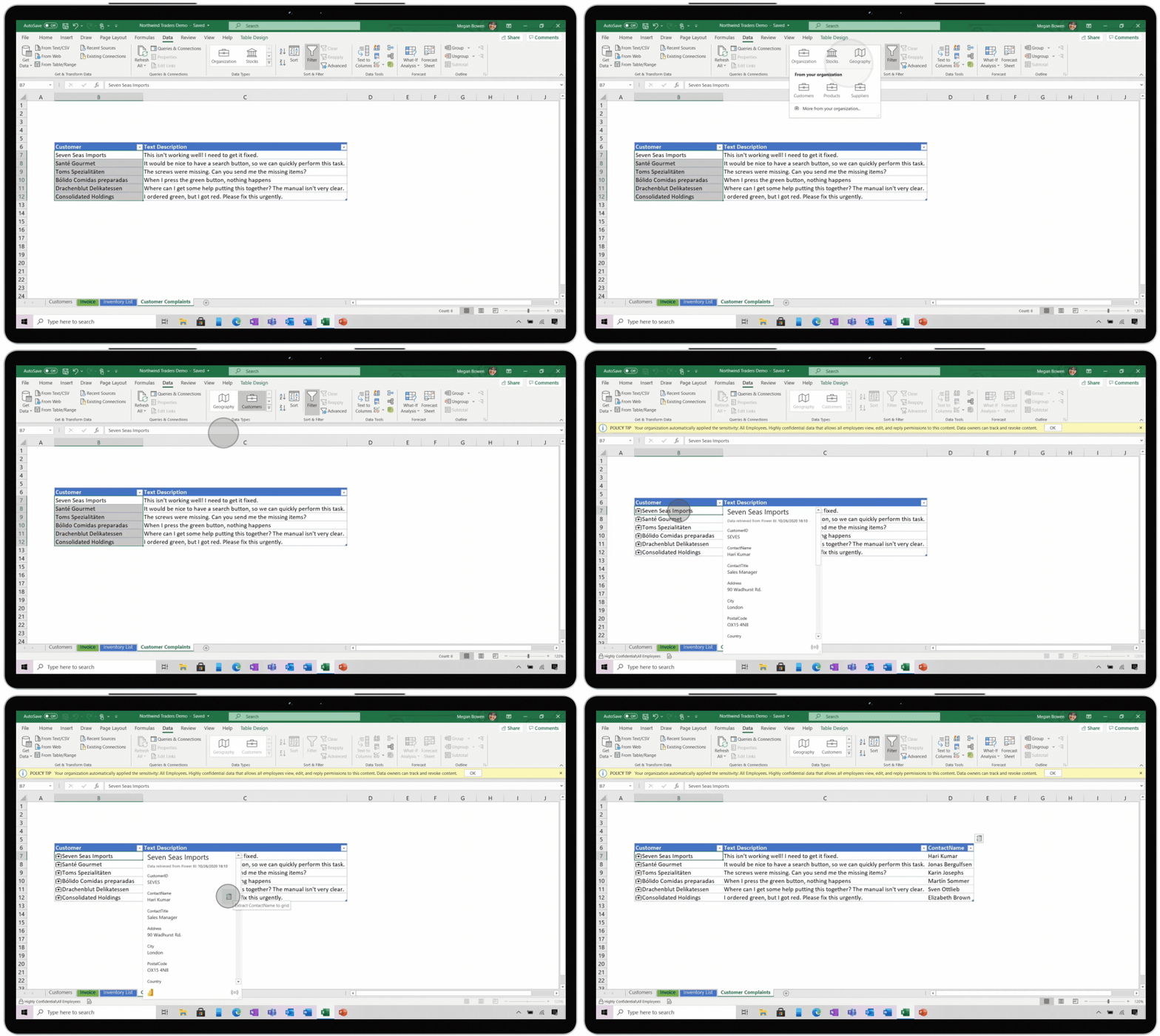
Over the course of the last few years, Microsoft started adding the concept of ‘data types’ to Excel, that is, the ability to pull in geography and real-time stock data from the cloud, for example. Thanks to its partnership with Wolfram, Excel now features over 100 of these data types that can flow into a

Over the course of the last few years, Microsoft started adding the concept of ‘data types’ to Excel, that is, the ability to pull in geography and real-time stock data from the cloud, for example. Thanks to its partnership with Wolfram, Excel now features over 100 of these data types that can flow into a spreadsheet. But you won’t be limited to only these pre-built data types for long. Soon, Excel will also let you bring in your own data types.

That means you can have a ‘customer’ data type, for example, that can bring in rich customer data from a third-party service into Excel. The conduit fort his is either Power BI, which now allows Excel to pull in any data you previously published there, or Microsoft’s Power Query feature in Excel that lets you connect to a wide variety of data sources, including common databases like SQL Server, MySQL and PostreSQL, as well as third-party services like Teradata and Facebook.

“Up to this point, the Excel grid has been flat… it’s two dimensional,” Microsoft’ head of product for Excel, Brian Jones, writes in today’s announcement. “You can lay out numbers, text, and formulas across the flexible grid, and people have built amazing things with those capabilities. Not all data is flat though and forcing data into that 2D structure has its limits. With Data Types we’ve added a 3rd dimension to what you can build with Excel. Any cell can now contain a rich set of structured data… in just a single cell.”

The promise here is that this will make Excel more flexible and I’m sure a lot of enterprises will adapt these capabilities. These companies aren’t likely to move to Airtable or similar Excel-like tools anytime soon but have data analysis needs that are only increasing now that every company gathers more data than it knows what to do with. This is also a feature that none of Excel’s competitors currently offer, including Google Sheets.

News: GetYourGuide closes $133M convertible note as travel startups continue to weather the Covid-19 storm

On the heels of Germany announcing another lockdown to try to contain the rapid rise in Covid-19 cases in the country, one of the hottest startups in its capital city is announcing the closing of a large convertible note to help it keep moving forward. GetYourGuide, which in brighter times runs a thriving and viral

On the heels of Germany announcing another lockdown to try to contain the rapid rise in Covid-19 cases in the country, one of the hottest startups in its capital city is announcing the closing of a large convertible note to help it keep moving forward.

GetYourGuide, which in brighter times runs a thriving and viral business of arranging and running a series of walks and other exploration experiences for people touring different parts of the world — viral because it’s been taken up by a critical mass people who love to share pictures of their experiences on social media — has now closed funding, in the form of a convertible note, of €114 million ($133 million).

The funding is being led by Searchlight Capital, with SoftBank Vision Fund, KKR, Battery Ventures, Highland Europe, Spark Capital, Lakestar, Heartcore Capital, NGP Capital, and the founding team all also investing.

The company tells me that the convertible note will convert into equity when it next raises a round, with the investors getting a stake in the company at that point based on its valuation in that round. That round is not anticipated to be for another 12-18 months, which could be why some might think of a convertible note as a loan (and strictly speaking they are called ).

For some context, the company was last valued at over $1 billion after it raised a Series E of $484 million in 2019.

The funding comes not just at a tumultuous time for Germany amidst the global health pandemic, but the world in general, and also the tourism and travel industry in particular, which has been hit especially hard by the shut down of many flights and the ability to travel places, the closures of many facilities, as well as a general reluctance from consumers to congregate with lots of people who are not already in their “bubble.”

Johannes Reck, the co-founder and CEO of GetYourGuide, described the situation back in March as a “nuclear winter” to us.

However, at least this summer, things slightly started to recover, with GetYourGuide seeing a bounce back in its home country with ticket sales up 60% in Germany over the warmer months, with people also looking at making far-far-foward bookings in general, too.

All that said, GetYourGuide tells me that it’s now seen ticket sales of 45 million in aggregate on its platform, which is only up 5 million on its figures from January this year — a major slowdown in growth that speaks to the struggles companies like it are facing, and very likely far from the projections it had originally made for its expansion.

The plan is still to keep on keeping on, though, with an IPO remaining in its sights for the longer term.

Reck said today that the fundraising is one of the easier rounds it’s closed in its life as a startup — a mark of how investors, who are still flush with lots of money to invest, will continue to use some of it to help shore up the most promising but most hard-hit of its portfolio companies through the current crisis.

“After the pandemic, people will travel again, and experiencing the sights and culture of the world’s iconic destinations will be what they crave the most,” said Reck in a separate statement. “As the global tourism industry prepares to rebuild, GetYourGuide’s mission to give the whole world access to incredible experiences matters more than ever. This new financing is a vote of confidence in GetYourGuide’s readiness to lead the recovery of global tourism.”

It’s also enough of a promise that new backers are also coming in, it seems. Eric Zinterhofer at Searchlight Capital is a first-time backer of the company with this funding. “We have a natural affinity with the talented, entrepreneurial team at GetYourGuide, given Searchlight’s own enterprising culture and our success in partnering with founder-led businesses,” he said. “While 2020 has undoubtedly been a challenging year for the travel sector, we believe GetYourGuide has the right strategy, capabilities and investor support in place to rebound strongly once the pandemic is under control. We are excited to begin our work together.”

News: ByteDance announces its first gadget in a big education push

ByteDance on Thursday unveiled its first consumer hardware product, a smart light lamp with a display, that it says is part of its education technology portfolio as the Chinese internet giant continues to expand to categories beyond social video. The Dali smart lamp features a display, camera, and a built-in digital assistant. The Dali smart

ByteDance on Thursday unveiled its first consumer hardware product, a smart light lamp with a display, that it says is part of its education technology portfolio as the Chinese internet giant continues to expand to categories beyond social video.

The Dali smart lamp features a display, camera, and a built-in digital assistant. The Dali smart lamp (in Chinese), which starts at $119, is aimed at school-going children who can use the device to finish their homework, ByteDance said (in Chinese) at a press conference. The camera will enable parents to tutor their kids and check in remotely via a mobile app.

The smart lamp could prove successful in China where, like many other markets, a large number of parents struggle to find a balance between their work and personal lives, and engage better with their kids.

ByteDance said the smart lamp is part of the company’s push into its education category, which it is now calling Dali Education (Dali is Chinese for big force). The Chinese giant, which owns viral short-video app TikTok, forayed into the education category several years ago.

The company today runs a range of education services including GoGoKid, which teaches kids English classes, and Qingbei, which replicates classroom experience. All of these products, including Guagua Long and Open Language, are now part of Dali Education umbrella.

Last year, ByteDance’s TikTok also expanded its education offerings in India, which until New Delhi banned the app in the country in late June this year was its biggest market outside of China.

The company said more than 10,000 employees are already working on its education arm. No word on whether ByteDance plans to launch the Dali smart lamp outside of China.

Rita Liao contributed to this report.

WordPress Image Lightbox Plugin