Yearly Archives: 2020

News: Tencent claims record 100M daily users on mobile game Honor of Kings

At its five-year anniversary gala graced by celebrities, esports stars and orchestras, Tencent’s mobile game Honor of Kings said it has crossed 100 million daily active users. The title has not only broken user records but generated other unprecedented accomplishments along the way. For one, it consistently ranks among the top-grossing mobile games worldwide, jostling

At its five-year anniversary gala graced by celebrities, esports stars and orchestras, Tencent’s mobile game Honor of Kings said it has crossed 100 million daily active users. The title has not only broken user records but generated other unprecedented accomplishments along the way.

For one, it consistently ranks among the top-grossing mobile games worldwide, jostling with PUBG Mobile made by another Tencent studio Lightspeed & Quantum — gaming has long been the cash cow for Tencent, better known for its WeChat messenger. The brain behind Honor of Kings is TiMi Studios, which ramped up hiring in the U.S. this year to further global expansion.

The game is credited for popularizing the multiplayer online battle arena (MOBA) category in China using clever designs like short sessions, friendly controls, esports integration, and social networking leverage, as games analyst Daniel Ahmad pointed out. The title has an unusually high female player base — around 50% — for a genre dominated by males.

TiMi focused on creating a MOBA that was tailored to the expectations of mobile players. Which included shorter session lengths, touch friendly controls and automated systems.

The game is great for beginners to the MOBA genre, but still requires skill to master. Broad appeal. pic.twitter.com/mSqMOKBEIc

— Daniel Ahmad (@ZhugeEX) November 1, 2020

Though not always seen as an original creator, Tencent pioneers monetization models for mobile games and can be Western studios’ sought-after partner. To name one, it helped develop the mobile version of Activision’s Call of Duty, which surpassed 250 million downloads in June.

Controversy has also arisen amid Honor of Kings’ fervor. A state newspaper chastised it for hooking young users and misrepresenting historical events. Tencent has since tightened age verification checks for players, now standard practice in China’s gaming industry.

TiMi unveiled its milestone at a time when Riot Games is testing a mobile version of League of Legends, widely seen as the desktop blockbuster that had inspired Honor of Kings in the first place. The overseas edition of Honor of Kings, called Arena of Valor, has had limited success outside Asia. It now comes the time for Riot, fully acquired by Tencent in 2015, to test its own interpretation, Wild Rift.

As part of the announcement, TiMi also revealed that it’s capitalizing on Honor of Kings for IP derivative works, including two new games in unspecified new genres, an anime, and a TV series.

News: Startup brands like the shoe company Thousand Fell are bringing circular economics to the fashion industry

Thousand Fell, the environmentally conscious, direct-to-consumer shoe retailer which launched last November, has revealed the details of the recycling program that’s a core component of its pitch to consumers. The company, which has now sold enough shoes to start seeing its early buyers begin recycling them after ten months of ownership, expects to recycle roughly

Thousand Fell, the environmentally conscious, direct-to-consumer shoe retailer which launched last November, has revealed the details of the recycling program that’s a core component of its pitch to consumers.

The company, which has now sold enough shoes to start seeing its early buyers begin recycling them after ten months of ownership, expects to recycle roughly 3,000 pairs per quarter by 2021, with the capacity to scale up to 6,000 pairs of shoes.,

The recycling feature, through partnerships with United Parcel Service and TerraCycle, offers customers the option to avoid simply throwing out the shoes for $20 in cash that the company pays out upon receipt of the old shoes.

With the initiative, Thousand Fell joins a growing number of companies in consumer retail that are experimenting with various strategies to incorporate reuse into the life-cycle of their products. Nike operates a reuse a shoe program at some of its stores, which will collect used athletic shoes from any brand for recycling. And several companies are offering denim recycling drop-off locations to take old jeans and convert the material into other products.

What’s more, Thousand Fell’s recycling partner, TerraCycle, has developed a milkman model for reusing packaging to replace consumer packaged goods like dry goods, beverages, desserts and home and beauty products under its Loop brand (and in partnership with Kroger and Walgreens).

Across retail, zero waste packaging and delivery options (and companies emphasizing a more sustainable, circular approach to consumption) are attracting increased interest from investors across the board, with everyone from delivery companies to novel packaging materials attracting investor interest.


“Thousand Fell owns the material feeds and covers the cost of recycling, as well as the resale or reintegratoin of recycled material back into new shoes and the issuance of the $20 recycling cash that is sent back to the consumer once they recycle,” wrote Thousand Fell co-founder Stuart Ahlum, in an email.

Clothing and textiles account for 17% of all landfill waste and shoes are particularly wasteful. Shoes account for 10% of retail production capacity but about 25% of textile waste, according to Ahlum.

The company sells its environmentally friendly shoes for under $100, a price point that makes them more accessible to price-conscious consumers, according to Ahlum.

Through the program UPS will run shipping for the Thousand Fell sneaker recycling program and making its network of shipping locations — including within Staples stores — available for drop-off of Thousand Fell’s shoes.

With TerraCycle, Thousand Fell will ensure that the old sneakers will be sustainably recycled and diverted from landfills. UPS’ Ware2Go business is also providing fulfillment and warehousing services for Thousand Fell, the companies said in a statement earlier this week.

Meanwhile, TerraCycle and Thousand Fell are developing a closed loop process where old sneakers will be reintegrated into the supply chain to make new sneakers.

Through Thousand Fell, shoe buyers can track their purchase history and the carbon footprint of their sneakers at the company’s website — and register their sneakers once they’ve received them. The registration allows customers to initiate the recycling process at a drop off location or directly shipping their shoes back to TerraCycle.

“This enterprise partnership between UPS, TerraCycle, and Thousand Fell is the reverse logistics engine that powers the circular economy. It solves the critical problem of collecting worn products back from customers — at scale and at cost,” Ahlum wrote in an email.

News: GAIA Design has raised more capital to become the West Elm of Mexico

Designing higher end furniture for Mexico’s rising middle and upper-middle class consumers has netted the Mexico City-based GAIA $15 million in a new round of funding. The bridge round will take the company through to a much larger capital raise planned for 2021 as the company capitalizes on the growth of e-commerce in Mexico. A

Designing higher end furniture for Mexico’s rising middle and upper-middle class consumers has netted the Mexico City-based GAIA $15 million in a new round of funding.

The bridge round will take the company through to a much larger capital raise planned for 2021 as the company capitalizes on the growth of e-commerce in Mexico.

A 2019 report from JP Morgan put the e-commerce market in Mexico at around $22.6 billion, and that’s with online sales only accounting for just 1.7% of the overall retail market. JP Morgan expects the market to increase at a 12.6% growth rate annually.

As with everything else, the COVID-19 pandemic has accelerated the adoption of digital services as the country’s population looks to practice safe social distancing and reduce the spread of the virus. For those consumers who can afford to shop online — even for high value products like furniture — they are, according to GAIA chief executive Philippe Cahuzac.

At GAIA the new funding will be used to add new features to the company’s online service, including consultations with interior designers, the development of curated looks, and the ability for customers to create design sketches and visualizations for products in the home. The company expects to also double down on its sales and marketing efforts with the new cash.

GAIA’s funding also helps extend the company’s vision of supporting small and medium-sized Mexican furniture producers through financial products, training and revenue management tools and educational offerings.

With its investment, IDB Invest joins existing investors in the company including Rise Capital, Capital Invest, VARIV
Capital, French Partners, FJ Labs, and Warby Parker co-founder David Gilboa .

Launched by Raffaello Starace, Hassan Yassine, and Cahuzac the company started as an online retailer exclusively, but now has expanded to 15 showrooms in Monterrey, Mexico City, Guadalajara, Puebla and Queretaro.

“We want to offer a branded and frictionless urban experience to the modern Mexican consumer,” said Cahuzac in a statement. “In five years we built the leading digital player in the home category in Mexico.”

News: WeWork employees used an alarmingly insecure printer password

A shared user account used by WeWork employees to access printer settings and print jobs had an incredibly simple password — so simple that a customer guessed it. Jake Elsley, who works at a WeWork in London, said he found the user account after a WeWork employee at his location mistakenly left the account logged

A shared user account used by WeWork employees to access printer settings and print jobs had an incredibly simple password — so simple that a customer guessed it.

Jake Elsley, who works at a WeWork in London, said he found the user account after a WeWork employee at his location mistakenly left the account logged in.

WeWork customers like Elsley normally have an assigned seven-digit username and a four-digit passcode used for printing documents at WeWork locations. But the username for the account used by WeWork employees was just four-digits: “9999”. Elsley told TechCrunch that he guessed the password because it was the same as the username. (“9999” is ranked as one of the most common passwords in use today, making it highly insecure.)

The “9999” account is used by and shared among WeWork community managers, who oversee day-to-day operations at each location, to print documents for visitors who don’t have accounts to print on their own. The account cannot be used to access print jobs sent to other customer accounts.

Elsley said that the “9999” account could not see the contents of documents beyond file names, but that logging in to the WeWork printing web portal could allow him to release other people’s pending print jobs sent to the “9999” account to any other WeWork printer on the network.

The printing web portal can only be accessed on WeWork’s Wi-Fi networks, said Elsley, but that includes the free guest Wi-Fi network which doesn’t have a password, and WeWork’s main Wi-Fi network, which still uses a password that has been widely circulated on the internet.

Elsley reached out to TechCrunch to ask us to alert the company to the insecure password.

“WeWork is committed to protecting the privacy and security of our members and employees,” said WeWork spokesperson Colin Hart. “We immediately initiated an investigation into this potential issue and took steps to address any concerns. We are also nearing the end of a multi-month process of upgrading all of our printing capabilities to a best in class security and experience solution. We expect this process to be completed in the coming weeks.”

WeWork confirmed that it had since changed the password on the “9999” user account.

News: Is fintech’s Series A market hot, or just overhyped?

While we are encouraged by the progress the industry has made to return to “normal,” the market for Series A fintech remains challenging for the vast majority of startup founders.

Ryan Falvey
Contributor

Ryan Falvey is co-founder and managing partner at Financial Venture Studio, an early-stage fintech venture capital firm.
More posts by this contributor

Theo Katsoulis
Contributor

According to industry reports, venture capital deal-making has notably rebounded since dropping off briefly in March as shelter-in-place orders gripped much of the country.

As seed-stage fintech investors, this has certainly been our experience: “Hot” deals are getting funded faster than ever, and we increasingly see the large multistage global funds competing for the earliest access to companies. However, in our experience and anecdotal conversations with other early-stage investors, that excitement has not been translating to the Series A stage.

We’ve increasingly wondered if the Series A market in fintech is really as hot as it seems. As pre-seed and seed-stage investors, we know that the health of the Series A market is of critical importance.

In early October 2020, the Financial Venture Studio put together a brief survey of the Series A market in fintech and shared it with more than 100 investors with whom we work closely. Despite the high-level numbers indicating a healthy market, our research indicates a market that remains in flux, with significant ramifications for early-stage founders.

Why Series A is so interesting

Although the seed and pre-seed fintech market continues to attract substantial entrepreneurial and investor interest, it is also in some ways one of the easiest parts of the market to fund. The check size is smaller, the velocity of new deals is highest, and while the potential returns are also the highest, this is also the part of the market where information is most scarce. Perhaps counterintuitively, the fact that there is so little information on a business — aside from a plan, a team and maybe some early anecdotal evidence to support the vision — actually makes it easier to “pull the trigger” on deals where those data points align. There just often isn’t a lot more to dig into.

Similarly, by the time a company is raising Series B capital, they typically have some objective evidence that the idea is working. Companies are typically generating revenue, small teams have grown and become more sophisticated in how they operate, and importantly, the governance functions of a company have (hopefully) begun to take shape. The simple existence of a board member with invested capital at stake means that some of the more existential risks of the earliest stage have been mitigated.

In contrast, one of the big milestones for any startup has been to raise a Series A from an institutional investor. Besides an infusion of capital (which is often 2-3x the aggregate capital a company may have raised since its inception), this “stamp of approval” lends credibility to a small company that is trying to hire talent, sell to customers, and, in most cases, raise substantial subsequent capital.

Thus, it’s critical that Series A investors remain active; if not, many of these upstart companies may fail due to a lack of investment, even if they are able to demonstrate early market traction. The Series A funding market is one of — if not the most — critical funding stage in the innovation economy because it acts as a bridge between scrappy early innovation and commercialization at scale.

It stands to reason, then, that dollar amounts invested may not be the best barometer of the ecosystem’s health. What really matters is the volume of companies being funded and the variety of product approaches being pursued.

The post-COVID Series A

Once the initial shock of the pandemic wore off, the VC community had to get back to business, which admittedly is harder to do for funds that write $10 million+ checks and like getting to know founders in person. Still, Series A investors made it a point to let entrepreneurs know they were, and continue to be, “open for business.”

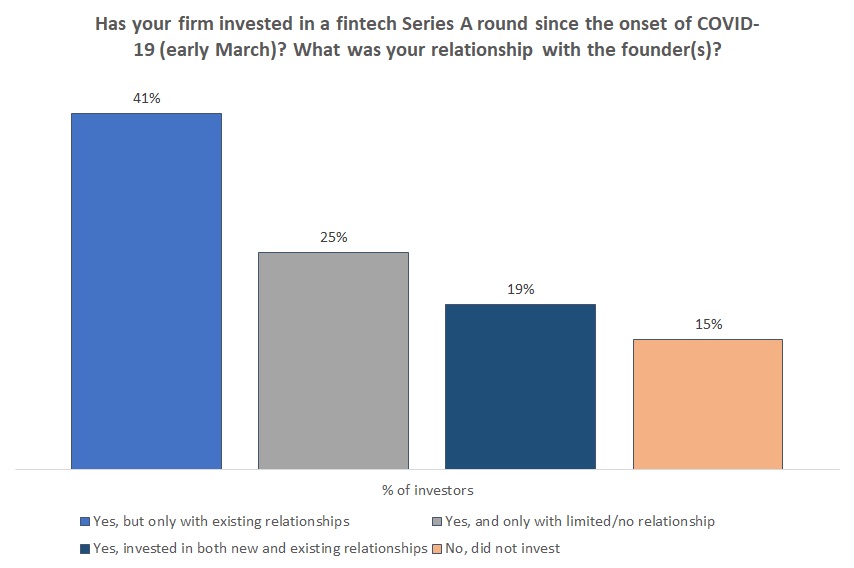
As investors have gotten more comfortable with the new normal, they have been more open to a virtual diligence process. Of the firms we surveyed, only 15% stated they have not completed a Series A investment during COVID-19 work restrictions. Of the firms who completed a Series A investment during COVID-19 (~85%), about half invested in a company whose founder(s) they had a limited or no relationship with prior to the onset of shelter-in-place orders.

The shift to a virtual environment means that process is more important than ever. Numerous investors have cited their renewed focus on following a structured approach to sourcing and diligence. The interpersonal aspect remains important to close a deal, but customer references, referrals from trusted seed-stage investors and a heightened scrutiny of metrics are all at the forefront of investors’ evaluations.

News: Original Content podcast: Bill Murray’s charm can’t hide the sadness of ‘On the Rocks’

“On the Rocks,” a new film on Apple TV+, focuses on a troubled marriage between Laura (a writer played by Rashida Jones) and Dean (a startup executive played by Marlon Wayans). When Laura begins to suspect Dean of cheating on her, she turns to her father Felix (Bill Murray) for help. The film reunites Murray

“On the Rocks,” a new film on Apple TV+, focuses on a troubled marriage between Laura (a writer played by Rashida Jones) and Dean (a startup executive played by Marlon Wayans). When Laura begins to suspect Dean of cheating on her, she turns to her father Felix (Bill Murray) for help.

The film reunites Murray with his “Lost in Translation” director Sofia Coppola. It can feel feather-light at times, thanks to his seemingly effortless charm — it’s hard to resist Felix when he’s singing to a bar full of strangers or devouring caviar during an impromptu stakeout. But the script and performances also make it painfully clear that he’s let Laura down as a father, and that her disappointment hasn’t gone away.

As we discuss on the latest episode of the Original Content podcast, we loved watching beautifully shot footage of Murray and Jones in classic New York City bars and restaurants. We were, however, a bit less satisfied with the ending, which doesn’t really do justice to all the thorny emotional issues that the film raises.

In addition to reviewing “On the Rocks,” we also discuss Netflix’s imminent U.S. price increase and the new trailer for the pandemic thriller “Songbird”.

You can listen to our review in the player below, subscribe using Apple Podcasts or find us in your podcast player of choice. If you like the show, please let us know by leaving a review on Apple. You can also follow us on Twitter or send us feedback directly. (Or suggest shows and movies for us to review!)

And if you’d like to skip ahead, here’s how the episode breaks down:
0:35 “Emily in Paris” listener response
4:50 “Songbird” trailer discussion
9:14 Netflix price discussion
15:50 “On the Rocks” review
33:00 “On the Rocks” spoiler discussion

News: Human Capital: Uber Eats hit with claims of ‘reverse racism’

With less than one week left until the election, DoorDash made a late contribution of $3.75 million to try to ensure California’s gig worker ballot measure Prop 22 passes. Meanwhile, Coinbase is looking for a head of diversity and inclusion and Uber was hit with claims of reverse racism. All that and more in this

With less than one week left until the election, DoorDash made a late contribution of $3.75 million to try to ensure California’s gig worker ballot measure Prop 22 passes. Meanwhile, Coinbase is looking for a head of diversity and inclusion and Uber was hit with claims of reverse racism.

All that and more in this week’s edition of Human Capital, a weekly newsletter where we unpack all-things labor and D&I. To receive this in your inbox every Friday at 1 p.m. PT, be sure to sign up here.

Let’s jump in.

Employees at surveillance startup Verkada reportedly used tech to harass co-workers

Oof. Just when we thought we were safe from surveillance, we’ve found yet another reason not to trust people with facial recognition tech. Just to be clear, the first part of that was sarcasm. Anyway, Vice reported earlier this week that some Verkada employees used the startup’s tech to take photos of their female colleagues and then made sexually explicit jokes.

When other employees reported the incident to human resources, Verkada CEO Filip Kaliszan simply gave the offenders a choice of leaving the company or having their share of stock reduced. After the Vice story went out, however, Verkada fired the three employees in question.

Coinbase is looking for a head of D&I

Coinbase is on the hunt for a director of belonging, inclusion and diversity. It’s worth noting Coinbase previously had a head of D&I, Tariq Meyers, but he began focusing on an employee support task force role as a result of COVID-19 in April, according to his LinkedIn page. Meyers later left the company in August, which was before Coinbase CEO Brian Armstrong took a stance about not speaking out about social issues.

That stance led to 5% of Coinbase’s employees opting to take a severance package to leave the company. Two of those employees were Coinbase Global Head of Marketing, John Russ and Coinbase VP Dan Yoo.

“We believe that it’s possible to be 100% committed to an inclusive workplace that values diversity where everyone is safe and belongs (and as part of that, working to root out and eliminate any intolerance or bias that exists at the company), and simultaneously maintain laser focus on our mission,” the job posting states. “To this end, we have made a public stance that Coinbase won’t issue external statements on topics beyond the scope of our mission of building a more open financial system and expanding economic freedom, while also redoubling our commitment to making the company an amazing place to work for all employees, regardless of background.”

Precursor VC promotes Sydney Thomas to Principal

Image Credits: Precursor Ventures

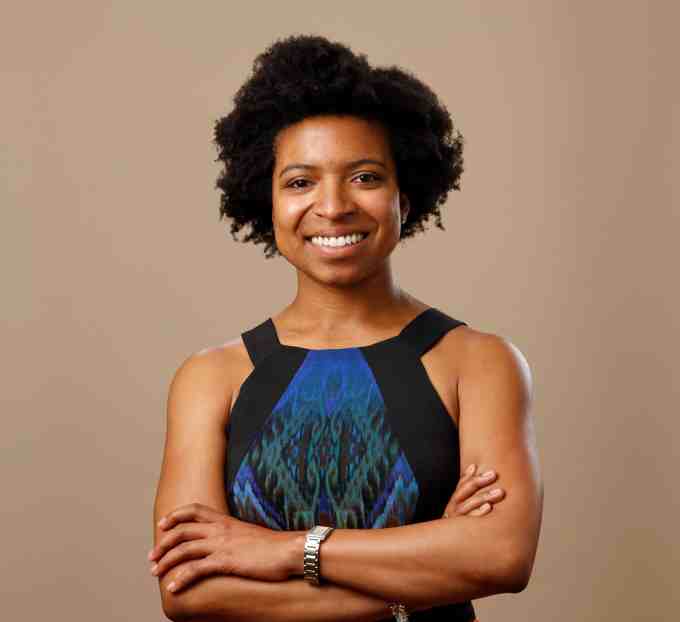
Sydney Thomas, who started her career at Precursor Ventures as an intern, was promoted to Principal. That means she’s able to deploy capital to startups on behalf of the fund.

“This is a promotion that has been earned through hard work, aptitude and a clear demonstration that Sydney embodies all of the values we hold dear here at Precursor,” the firm wrote in a blog post. “She has already made a number of investments on behalf of the firm and will continue to do so going forward.”

Indian engineers allege caste bias in tech industry

The Washington Post’s Nitasha Tiku shed some light on caste-based discrimination in the tech ecosystem. Specifically, 30 female Indian engineers who are part of the Dalit caste and work for companies like Apple, Google, Microsoft and Cisco, say they have faced caste bias. As Tiku explains, those in the Dalit caste are part of the lowest rank castes within India’s social hierarchy.

PayPal puts money into Black and Latinx-led VC funds

PayPal is investing $50 million in a handful of early-stage funds led by Black and Latinx venture capitalists. The investment is part of PayPal’s $530 million commitment to support Black-owned businesses.

The funds receiving money include Chingona Ventures, Fearless Fund, Harlem Capital, Precursor Ventures, Slauson & Co, VamosVenturs, Zeal Capital Partners and another undisclosed fund.

Reddit elevates its VP of people and culture

Nellie Peshkov, formerly Reddit’s VP of People and Culture, is now Chief People Officer. Her appointment to the C-suite is part of the much-needed, growing trend of tech companies elevating employees focused on diversity and inclusion to the highest leadership ranks.

Uber Eats hit with claims of “reverse racism”

Uber said it has received more than 8,500 demands for arbitration as a result of it ditching delivery fees for Black-owned restaurants via Uber Eats.

Uber Eats made this change in June, following racial justice protests around the police killing of George Floyd, an unarmed Black man. Uber Eats said it wanted to make it easier for customers to support Black-owned businesses in the U.S. and Canada. To qualify, the restaurant must be a small or medium-sized business and, therefore, not part of a franchise. In contrast, delivery fees are still in place for other restaurants.

In one of these claims, viewed by TechCrunch, a customer says Uber Eats violates the Unruh civil Rights Act by “charging discriminatory delivery fees based on race (of the business owner).” That claim seeks $12,000 as well as a permanent injunction that would prevent Uber from continuing to offer free delivery from Black-owned restaurants.

Uber driver claims rating system is racially biased
Uber is no stranger to lawsuits, so this one shouldn’t come as a surprise. Uber is now facing a lawsuit regarding its customer ratings and how the company deactivates drivers whose ratings fall below a certain threshold. The suit alleges the system “constitues race discrimination, as it is widely recognized that customer evaluations of workers are frequently racially biased.”

In a statement to NPR, Uber called the suit “flimsy” and said “ridesharing has greatly reduced bias for both drivers and riders, who now have fairer, more equitable access to work and transportation than ever before.”

Yes on Prop 22 gets another $3.75 million influx of cash
DoorDash put in an additional $3.75 million into the Yes on 22 campaign, according to a late contribution filing. Proposition 22 is the California ballot measure that aims to keep gig workers classified as independent contractors.

The latest influx of cash brought Yes on 22’s total contributions north of $200 million. As of October 14, the campaign had raised $189 million. But thanks to a number of late contributions, the total put toward Yes on 22 comes out to about $202,955,106.38, or, $203 million.

Prop 22 hit the most-funded California ballot measure long ago, but it’s now surpassed the $200 million mark.

TechCrunch Sessions: Justice is back

I am pleased to announce TechCrunch Sessions: Justice is officially happening again! Save the date for March 3, 2021.

We’ll explore inclusive hiring, access to funding for Black, Latinx and Indigenous people, and workplace tools to foster inclusion and belonging. We’ll also examine the experiences of gig workers and formerly incarcerated people who are often left out of Silicon Valley’s wealth cycle. Rounding out the program will be a discussion about the role of venture capital in creating a more inclusive tech ecosystem. We’ll discuss all of that and more at TC Sessions: Justice.

News: Is Wall Street losing its tech enthusiasm?

One way to consider how far public valuations rose for tech startups, especially those with a software core in 2020, is to ask yourself how often you heard about a down IPO this year.

This is The TechCrunch Exchange, a newsletter that goes out on Saturdays, based on the column of the same name. You can sign up for the email here.

Over the past few months the IPO market made it plain that some public investors were willing to pay more for growth-focused technology shares than private investors. We saw this in both strong tech IPO pricing — the value set on companies as they debut — and in resulting first-day valuations, which were often higher.

One way to consider how far public valuations rose for tech startups, especially those with a software core in 2020, is to ask yourself how often you heard about a down IPO this year. Maybe a single time? At most? (You can catch up on 2020 IPO performance here, if you need to.)

IPO enthusiasm exposed a gap between what many venture capitalists and private investors were paying for tech shares, and what the public market was doing with its own valuation calculations. Insurtech startup Hippo’s $150 million private round from July is a good example. The company was valued at $1.5 billion in the round, a healthy uptick from its preceding private valuation. But if we valued it like the then-newly-public Lemonade, a related company, at the time, Hippo was priced inexpensively.

This week, however, the concept of private investors being more conservative than public investors in certain cases (some eight-figure private rounds happened this year at valuations that were even more bullish than public investor treatment of IPOs, to be clear) took a ding as most big tech companies lost ground, SaaS stocks sold off, and other tech firms struggled to keep up with investor enthusiasm.

Not only tech companies took a beating, but as I write to you on this Friday afternoon, the American stock markets were on a path for their worst week since March, CNBC reported, “led by major tech shares.”

A change in the wind? Perhaps. 

Notable is that it was just in September that VCs seemed resigned to having startup valuations pulled higher by public markets’ endless optimism for related companies. Canaan’s Maha Ibrahim told me during Disrupt 2020 that it was a time when VCs had to “play the game” and pay up for startups, so long as companies were being “rewarded in the public markets for high growth the way that Snowflake” was at the time. A16z’s David Ulevitch concurred.

Perhaps that dynamic is changing as stocks dip. If so, startup valuations could decline en masse, along with the more exotic areas of startup-related finance. The SPAC boom, for example, may wane. Chatting with Hippo’s CEO Assaf Wand this week, he posited that SPACs were a market-response to the public-private valuation gap, an accelerant-cum-bridge to help startups get public while demand was hot for their equity.

Without the same red-hot demand for growth and risk, SPACs could cool. So, too, could private valuations that the hottest startups have taken for granted. Whether what we’re feeling in the wind this week is a hiccup or tipping point is not clear. But the public market’s fever for tech equities may have broken at a somewhat awkward time for Airbnb, Coinbase, DoorDash and other not-quite-yet-IPOs.

Market Notes

It started to snow this week where I live, putting a somewhat sad cap on an otherwise turbulent week. Still! There’s lots from our world to get into. Here’s our week’s market notes:

  • Remember when we dug into how quickly startups grew in Q3? Another company that I’ve covered before, Drift, wrote in. The Boston-based marketing software company reported to The Exchange that it grew more than 50% in Q3 compared to the year-ago quarter, with its CEO adding that June and Q3 were the strongest month and three-month periods in its history.
  • The fintech boom continued with DriveWealth raising nearly $57 million this week, with the startup being yet another API-driven play. That a company sitting in-between two key startup trends of the year is doing well is not surprising. DriveWealth helps other fintech companies provide users access to the American equities markets. Alpaca, which also recently raised, is working along similar lines.

This week featured two IPOs that we cared about. MediaAlpha’s debut, giving the advertising-and-insurtech company a $19 per-share IPO price, quickly exploded out of the gate. Today the company is worth nearly $38 per share. Why? On its IPO day MediaAlpha CEO Steve Yi said that he had chosen the current moment because public markets had garnered an appreciation for insurtech. His share price growth seems to concur.

Until we look at Root, to some degree. Root, a neo-insurance provider focused on the automotive space, priced at $27 when it debuted this week, $2 above the top-end of its range. The company is now worth less than $24 per share. So, whatever wave MediaAlpha caught appears to have missed Root. 

I honestly don’t know what to make of the difference in the two debuts, but please email in if you do know (you can just reply to this email, and I’ll get your note).

Regardless, I chatted with Root CEO Alex Timm after his company went public. The executive said that Root had laid down plans to go public a year ago, and that it can’t control market noise around the time of its debut. Timm stressed the amount of capital that Root added to its coffers — north of $1 billion — is a win. I asked how the company intended to not fuck up its newly swollen accounts, to which Timm said that his company was going to stay “laser focused” on its core automotive insurance opportunity.

Oh, and Root is based in Ohio. I asked what its debut might mean for Midwest startups. Timm was positive, saying that the IPO could highlight that there are a lot of smart folks and GDP in the middle of the country, even if venture capital tallies for the region remain underdeveloped.

  • I know that by now you are tired of earnings, but Five9 did something that other companies struggled to accomplish, namely, beat expectations and bolstered its forward guidance. Its shares soared. The Exchange got on the phone with the call center software company to chat about its latest acquisition and earnings. How did it crush expectations as it did? By selling a product that its market needed when COVID-19 hit, the accelerating digital transformation more broadly, and rising e-commerce spend, which is driving more customer support work onto phone lines, it said. A lot of stuff at once, in other words. 
  • Five9 took on a bunch of convertible debt earlier this year, despite making gobs of adjusted profit. I asked its CEO Rowan Trollope how he was going to go about investing cash to take advantage of market tailwinds, while not overspending. He said that the company takes very regular looks at revenue performance, helping it tailor new spend nimbly. It’s apparently working.
  • What else? Peek this week at big, important rounds from SimilarWeb, PrimaryBid and EightFold, a company that I have known for some time. Oh, and I covered The Wanderlust Group’s Series B and Teampay’s Series A extension, which were good fun.

Various and Sundry

  • What’s going on in the world of venture debt as VC gets back to form? We dug in.
  • For the Europhiles amongst us, here’s what’s up with the continent’s VC receipts.
  • Here are 10 favorites from recent Techstars demo days.
  • And here’s some mathmagic about Databricks, after it was rumored to have an H1 2021 IPO target.
  • We’re way out of space this week, but I have some fun stuff in the tank for later, including a Capital G investor’s take on RPA, a call with the CEO of Zapier about no-code/low-code growth and notes from a chat about developer ecosystems with Dell Capital. More on all of that when the news calms down.

Stay safe, and vote.

Alex

News: MG Siegler talks portfolio management and fundraising 6 months into the COVID-19 pandemic

This week, GV General Partner (and TechCrunch alum) MG Siegler joined us on Extra Crunch Live for a far-ranging chat about what it takes to foster a good relationship between investor and startup, how portfolio management and investing has changed as the COVID-19 crisis drags on, and what Siegler expects will and won’t stick around

This week, GV General Partner (and TechCrunch alum) MG Siegler joined us on Extra Crunch Live for a far-ranging chat about what it takes to foster a good relationship between investor and startup, how portfolio management and investing has changed as the COVID-19 crisis drags on, and what Siegler expects will and won’t stick around in terms of changes in behavior in investment and entrepreneurship once the pandemic passes.

We last caught up with Siegler on the heels of his investment in Universe, a mobile-focused, e-commerce business-building startup. The coronavirus pandemic was relatively new and no one was sure how long it would last or what measures to contain it would look like. Now, with a few months of experience under his belt, Siegler told me that things have relatively settled into a new normal from his perspective as an investor – sometimes for worse, sometimes for better, but mostly just resulting in differences that require adaptation.

This select transcript has been edited for length and clarity. Aside from section headers, all text below is taken from MG Siegler’s responses to my questions.

Business impacts of coping with the pandemic six months on

Just talking about the business side of the equation, I do think that things have sort of stabilized in the day-to-day world here. For us, certainly, I think it’s it’s just as much of a factor though, of just learning how to operate in this in this weird and surreal environment, and knowing how to do remote meetings better. Knowing how to hop on quick Zoom calls, Hangouts, and phone calls, with portfolio companies, to help put out fires, and doing all board meetings remotely, and all that sort of stuff.

That seems like it’s pretty straightforward on paper, but in day-to-day operations, these are all different little learning things that you have to do and come across. I do feel like things are operating in a pretty streamlined manner, or as much as they can be at this point. But, you know, there’s always going to be some more wildcards – like we’re a week away, today, from from the US election.

News: The 2020s promise better tech solutions to humanity’s biggest problems

Let’s think beyond Monday, for a minute, to the trends playing out in technology this coming decade. While humanity’s problems have never been greater, our tools have never been better.

Editor’s note: Get this free weekly recap of TechCrunch news that any startup can use by email every Saturday morning (7 a.m. PT). Subscribe here.

Let’s think beyond Monday, for a minute, to the trends playing out in technology this coming decade. While humanity’s problems have never been greater, our tools have never been better. Here’s more, from Danny Crichton:

The 2010s were all about executing on the dreams of mobile, cloud, and basic data. Those ideas had historical antecedents going back in some cases decades or more (Vannevar Bush’s description of the internet dates to the 1940s, for instance). But for the first time, we had the infrastructure and the users to actually build these products and make them useful. It was quite possibly the most extensive greenfield opportunity in the history of technology.

Yet, that greenfield is increasingly fallow. Business has cycles and seasonality as much as media reporting does. The easy stuff has been done. Building an app to text people has been done by dozens before. There are a multitude of analytics packages, and payroll providers, and credit card issuers, and more. What’s required this decade is to start to encroach on the harder questions, topics like how we build a better society, make people more empowered to do deep and creative work, and how we can build a more resilient and sustainable planet for all.

None of these topics have pure point solutions — but that is what is going to make this coming decade so damn interesting. It’s going to take intense collaboration, multiple inventions and products, as well as legal and cultural changes, to realize these next improvements. If you have grown sick (as I have) of the latest apps and SaaS products du jour, this decade is going to be an amazing one to experience and build.

In a companion article for Extra Crunch, he explores five key areas of the future, that he calls: Wellness, Climate, Data Society, Creativity and Fundamentals. Here’s an excerpt from the Data Society part:

Data may be ubiquitous, but it’s amazing how much work it can still be to calculate an LTV, or the return on an advertising campaign. No-code tools solve some of these problems, but what we need is a whole revolution in our data tools. We need to be able to sketch out lines of inquiry and have our tools augment our thinking from data. What are we missing? What gaps in our thinking should we be filling in? What data am I lacking to make a fully-formed decision? Am I overly biased toward one statistic versus a more holistic depiction of my situation? From personal decisions to business strategy, we need better tools to abstract the complexity of today’s modern society.

We also need better thinking around how to network knowledge. Roam Research and some other tools are starting to get better at helping users think in terms of a knowledge graph, but there is an incredible amount of potential if these ideas can be democratized and packaged into easier-to-use interfaces. How do we handle the increasing depth of most fields of knowledge and allow more people to get to the frontiers as quickly as possible?

Finally, we need to further our understanding of complexity and chaos and build those theories into the fundamental structures of our society. How do we make governance more adaptable and resilience, so that when massive crises like COVID-19 happen, we don’t see a complete breakdown in our society? Can we create more flexible systems around ownership and property that can create more diverse housing, or material ownership, or intellectual property? Empowering technology (“blockchain!” but could be all kinds of things) coupled with legal changes could dramatically evolve these core elements of our society.

Even today, we are still locked into a mental model built around paper, titles, and maybe if you are lucky, an Excel spreadsheet. There is so much work to be done to empower each of us through data this decade.

Data education

The building blocks of the Data Society concept are getting remade faster than ever this year, as the pandemic has shuttered traditional commerce and education, and forced open alternative approaches. For example, somebody starting a small business today basically has to use a lot of software. But crossing this initial barrier means they can do things like automatically track the lifetime value of each customer. Previous generations of small businesses simply did not have the resources and skills to do such things with the low-tech options available.

That’s the generational power of no-code, as Danny detailed separately on TechCrunch:

In business today, it’s not enough to just open a spreadsheet and make some casual observations anymore. Today’s new workers know how to dive into systems, pipe different programs together using no-code platforms and answer problems with much more comprehensive — and real-time — answers.

It’s honestly striking to see the difference. Whereas just a few years ago, a store manager might (and strong emphasis on might) put their sales data into Excel and then let it linger there for the occasional perusal, this new generation is prepared to connect multiple online tools to build an online storefront (through no-code tools like Shopify or Squarespace), calculate basic LTV scores using a no-code data platform and prioritize their best customers with marketing outreach through basic email delivery services. And it’s all reproducible, as it is in technology and code and not produced by hand.

There are two important points here. First is to note the degree of fluency these new workers have for these technologies, and just how many members of this generation seem prepared to use them. They just don’t have the fear to try new programs, and they know they can always use search engines to find answers to problems they are having.

Second, the productivity difference between basic computer literacy and a bit more advanced expertise is profound. Even basic but accurate data analysis on a business can raise performance substantially compared to gut instinct and expired spreadsheets.

How do we realize this future? Zooming in from the generational perspective, Natasha Mascarenhas takes a closer look at how school teachers are adapting to the pandemic — and the emerging online education world they are entering. Some, at least, seem to be moving into supplemental part-time teaching. While the educational experience is not the same as in-person, it clearly has its own value. Here’s one company as an example:

Outschool is a platform that sells small-group classes led by teachers on a large expanse of topics, from Taylor Swift Spanish class to engineering lessons through Lego challenges. In the past year, teachers on Outschool  have made more than $40 million in aggregate, up from $4 million in total earnings the year prior.

CEO Amir Nathoo estimates that teachers are able to make between $40 to $60 per hour, up from an average of $30 per hour in earnings in traditional public schools. Outschool itself has surged over 2,000% in new bookings, and recently turned its first profit.

Outschool makes more money if teachers join the platform full-time: teachers pocket 70% of the price they set for classes, while Outschool gets the other 30% of income. But, Nathoo views the platform as more of a supplement to traditional education. Instead of scaling revenue by convincing teachers to come on full-time, the CEO is growing by adding more part-time teachers to the platform.

Maybe one day soon, a class about online business will be a graduation requirement for a high school diploma. And we’ll see that sort of education drive more success in the next generation of your local Main Street.

The problems of the coming decade might be harder than ever, but the solutions are there for the making.

Isometric Business data analytics process management or intelligence dashboard showing sales and operations data statistics charts and key performance indicators concept. (Isometric Business data analytics process management or intelligence dashboard

Image Credits: Intpro / Getty Images

How to execute a bottom-up SaaS growth plan

The combination of consumer tech product skills and enterprise revenue models fueled this decade’s explosion of SaaS success stories. This week, Caryn Marooney and David Cahn of Coatue management distilled the lessons of this model into a popular how-to article for Extra Crunch. Here’s an excerpt, showing how market leaders approach key metrics and pricing:

The MAP customer value framework:

Metrics: What are the key metrics the customers care about? Is there a threshold of value associated with this metric? Metrics can include things like minutes, messages, meetings, data and storage. Examples:

  • Zoom — Minutes: Free with a 40-minute time limit on group meetings.
  • Slack — Messages: Free until 10,000 total messages.
  • Airtable — Records: Free until 1,200 records.

Activity: How do your customers really use your product? Are they creators? Are they editors? Do different customers use your product differently? Examples:

  • Figma — Editors versus viewers: Free to view, starts changing after two edits.
  • Monday.com — Creators versus viewers: Free to view, creators are charged $30+/month.
  • Smartsheet — Creators versus viewers: Free to view, creators are charged $10+/month.

People: How do your customers fit into a broader organization? Are they mostly individuals? Groups? Part of an enterprise? Examples:

  • Superhuman — Individuals only: No free version, $30/month.

  • Asana — Small team versus bigger teams: Teams of <15 people can use the product free.

  • Atlassian — Free versus team versus enterprise: Pricing scales with size of team.

Root keeps the IPO market warm

The stock market was off this week, but not entirely. Root Insurance was the big IPO this week, ending at $24 per share. That’s a bit below its aggressive $27 opening price per share, but is still in the range of its target pricing from the other week. It is, in other words, a success already for the company  — and we’ll see what happens when the entire market stops gyrating around the elections.

“For the Midwest, Ohio-based Root’s IPO is a win,” Alex Wilhelm wrote for Extra Crunch. “The company shows that it is possible to build high-growth technology companies worth billions of dollars far from coastal hubs. For the broader insurtech space, Root’s IPO is a win. The company follows Lemonade to the public markets, setting a strong valuation mark again for the neo-insurance startup market. For similar companies like Clearcover, MetroMile and all startups that related to Root and Lemonade, it’s a good day.”

It’s still looking good for any software company with a growth story, as Alex goes on to say, and it’s looking good for more IPOs this year. Like Airbnb.

But enough about IPOs this year — Alex also built on previous coverage to explore Databricks going public next year, which sounds quite likely at this point.

Across the week

TechCrunch

Why you have to pay attention to the Indian startup scene

Yale may have just turned institutional investing on its head with a new diversity edict

Cloud infrastructure revenue grows 33% this quarter to almost $33B

We need new business models to burst old media filter bubbles

Former Facebook and Pinterest exec Tim Kendall traces ‘extractive business models’ to VCs

Extra Crunch

Good and bad board members (and what to do about them)

New GV partner Terri Burns has a simple investment thesis: Gen Z

As venture capital rebounds, what’s going on with venture debt?

In the ‘buy now, pay later’ wars, PayPal is primed for dominance

Dear Sophie: Any upgrade options for E-2 visa holders interested in changing jobs?

#EquityPod

From Alex:

Hello and welcome back to Equity, TechCrunch’s venture capital-focused podcast (now on Twitter!), where we unpack the numbers behind the headlines.

A few notes before we get into this. One, we have a bonus episode coming this Saturday focused on this week’s earnings reports. And, second, we did not record video this week. So, if you like watching the show on YouTube, this is not the week for that!

Right, here’s what NatashaDanny and your humble servant got into this week:

We capped off with the latest from r2c, and then got the hell off the mics. Catch you all Saturday, and then back to regular programming on Monday morning.

Equity drops every Monday at 7:00 a.m. PDT and Thursday afternoon as fast as we can get it out, so subscribe to us on Apple PodcastsOvercastSpotify and all the casts.

WordPress Image Lightbox Plugin